Monthly Archives: February 2013
Writers! Regardless of Where You Stand in the Publishing Game, Enhance Your Social Media Presence.

A Spiegelman fan,I purchased this copy at a used bookstore.
Brilliant best selling graphic artist and Pulitzer prizewinner Art Spiegelman of Maus I and Maus II fame struggled to get his work out there in the early 1970s. It was a process and there was even rejection of his incredible, iconic work. (Words cannot describe the graphic artistry and meaning of what he has done with Maus I and Maus II. You just have to check it out for yourself or not.) When he was attempting to get his book Breakdowns published (before he created Maus I) it didn’t go swimmingly. Decades later, after his many awards, global recognition and other publications, his editor at Pantheon was all for re-issuing Breakdowns and this time, Spiegelman was surprised and hesitant. But things had changed by 2007. You mean publishing and the cultu1re had galactically shifted from the days that Art Spiegelman was first establishing his career? Duh!
In those days, for Spiegelman, getting published was not unimportant. To many today, it is golden. It is the dream of established writers who may have faced writer’s block after years of success. It is the dream of those who have fallen off the charts and out of the hearts of former readers. It is the dream of the published whose first, second and third books have middling sales that tapered to .001% so that literary agents and editors won’t go near them. (Low percentages? Nil profit margins? Are you insane? How can the media CEOs sustain tremendous salaries and bonuses with such schlocky sales numbers?) It is the dream of the working writer who has written and published one book and is working on another in the hope of changing publishers/ agents and getting a better deal, though the first book sales were abysmal. The variables of situation are endless, unless of course, one is a hot name with an extensive platform, i.e. Bill O’Reilly (in which case the greatness of the work is immaterial, as long as there is name recognition and a ready mega platform).
The irony has been that for the last century, concepts and particular literati who have been favored by elites, the wealthy or politicos have been highly publicized. This creates an inherent censorship. The gatekeepers, the literary agents, the large presses have kept it that way to fuel ideas that elitists wanted the public to believe and be bound in by. So traditional media has worked in concert with the very wealthy. (Perhaps it is why Spiegelman was rejected for publication until he found an intelligent, prescient SMALL publisher who took a chance on him.) In many instances the middle class and general public’s reading tastes have been tailored to what elites have deemed, “great,” though their standards are merely opinions and predominately skewed to their agendas. Their concepts of great craft, writing and artistry often beggar the imagination.
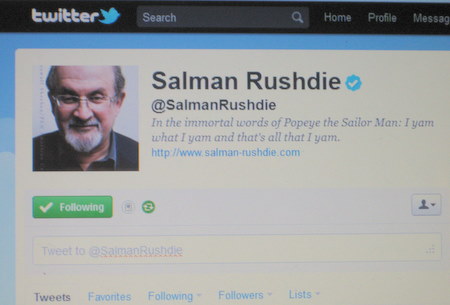
Salman Rushdie tweets with his fans on Twitter and actually did battle last year with Facebook, winning with his great humor, irony and wit. Social media is one of the best ways to connect and keep in touch with your readers.
Needless to say, European publishers, more intellectual, knowledgeable in breadth and scope, courageous and less censoring, have allowed titles in that NEVER WOULD HAVE BEEN ACCEPTED IN THE US. And yet, we think we are a free and open democracy? (We are told that by traditional media hirelings though many medical books and controversial political content find publishing friends overseas or in Canada.) Well…traditional publishing has relied on TV to gather its stable of often un-meritorious but profitable properties. Writers, unfortunately, have been at the mercy of these “experts” in the field who often consider the art and craft of a work last, and consider the saleability first.

Apple was one of the companies sued by the DOJ for price collusion.
This former “state of the art” for the industrial media complex has been upended by Google. It has been overturned by Amazon, undercut by Facebook and thwarted by Twitter and other social media platforms and growing spheres like Storylane. How? Subtly and not so surreptitiously. When traditional media realized it had lost its edge and destroyed the bee hives producing their honey, their fear and greed and inability to ADAPT or wrap their brains around what was happening spurred them into old paradigm interventions that worked before: lobbying and price collusion.
Mistake. They’ve been held accountable and have been sued by the DOJ and a few have had to settle while others collude with the government for the best deal which may not be forthcoming since their profitability is much lower than Google’s and Amazon’s. You see traditional media became so comfy with their century long oligolopoly that they were caught up short without a chamber pot when Amazon undersold them. That’s all they could come up with to compete? While they were riding out the waves of the past, their navigation misdirected by the old paradigm, the innovators, like a huge roller, a mammoth tidal wave, a mega tsunami, capsized their hopes and dreams of profits. Now, they are paddling slowly while growing social media networks and companies like Google continue their innovations, investing money in R & D to create better product and to entice readers, writers and developers to improve.
Bottom line? Google is swamping the media that was! I will not refer to the traditional publishers by name. Unless they begin to accept mid-list and beginning writers, offering them credible crumbs, the writing community will eschew them completely in favor of working with e-publishers, small publishers, Createspace, et. al, and those in the online publishing paradigm. I give these censoring publishers who will have to spend more and more on costly promotions and PR campaigns less than 20 years. Unless they begin to innovate to create the “next best thing,” or unless they merge with Amazon or Google (Why would those companies want to merge with inefficient, ineffective, archaic and intractable platforms?) they will have disappeared, become a ghost memory, a ridiculous faux nightmares of elitism from which we have awakened. What was the name of that book seller that went bankrupt because its innovations were too little too late? Innovate or perish. Big name publishers are slowly writhing in the mud as their hand maidens, the agents, the PR personnel, the editors struggle, sucked downward with them, sinking further into the shifting, miry clay soon to be swallowed up in a sinkhole of their own making.
The diminishing present trend is that,unless you are President Obama or a politico or a faux or worthy celebrity, a salable commodity, a publishing company will not market you. You have to market yourself. Even if you are President Obama, you have to market yourself, appearing on old media, TV, etc. Wasn’t it Michelle Obama I saw ripping open the envelope for the Best Picture Oscar last night, via a feed from the White House? Folks, the President is savvy enough to have his social media hordes and teams busy marketing him online. It’s why the Republicans have been doing unmentionables in the dark. They can’t get into the light of Twitter/ Facebook, et. al. and sound rational.

Kristen Lamb, author, blogger and a member of the online writing community who inspires and nudges writers to get on with the craft and be persistent in achieving their goals.
So, writers, if it’s good enough for the Prez, it should be good enough for you. Kristen Lamb, social media maven and author, in a recent blog post discussed the hard work it takes to position yourself on social media platforms to establish a working, interactive community from which you can promote and sell your books. If you think it will take too much time, then hire a team to help you. Using hashtags, and signings and promotions and launches, you will be able to promote yourself on social media and continue to do so, long after a traditional publishing company has left you to ROT.

Nina Amir is a motivational coach who helps writers and non writers achieve their goals and live inspired lives.
How do you do this if you have been out of the loop for some time and find Facebook, Twitter, Tumblr, Youtube and Reddit loathsome? GET OVER YOURSELF! SNAP OUT OF IT! Swallow, take a deep breath and sign on for social media classes online. If you are a woman writer, then check into WOW Women on Writing. If you prefer live and hands on, there are many Continuing Ed. courses at various universities or colleges near you. Hopefully, you are not in this dire condition.
To help yourself and your writing career regardless of where you are…pick up the bullet at your current situation:
- Read about social media and take classes to learn how to post and interact on the most powerful sites (Twitter, Facebook, Reddit, Tumblr, Instagram, Pinterest, etc.)
- Start a few blogs and blog about subjects related to your writing, making sure to increase your readership and followership daily. Read other blogs faithfully and post comments on them, inviting them to guest on your blog.
- Be willing to spend at least 3-4 hours a day on social media and the same on your writing. Alternate this according to a schedule you make for yourself if you can’t spend the time.
- Once you’ve created a viable interacting platform and joined writers’ groups including those on Linked In and elsewhere, create your book pages and invite your followers.
- Somewhere in between all of this, you are writing your book, editing it or sending it out to be edited or working with an editor or an agent you get along with; one who is a friend and one you can trust.
- If you have done all of the above years ago and are in a slump, change it up and do something different. Shut down all online interaction for a day or a number of hours. Then review what seems to be working and what isn’t and jettison both for another day or period of hours. Go back and reassess and research. The change up will spur you on and revitalize you. If it doesn’t, seek a coach or someone to help you get out of the funk or open this up to your online writing community. Share, ask for comments and advice. Eventually the watershed moment will come. (Skip below as needed and move to the last paragraph.)
This is the beginning of a beautiful relationship with your online writing community and your team of writing friends who are intelligent, creative wordsmiths. You will keep many; you will lose many, but the journey is amazing, and eventually what was the hard work, when you look back after a year of doing this, will not appear to be so arduous after all.

The following 2 sources might be helpful for those who are beginning, or those who have taken a hiatus and need to get back into it especially if you feel overwhelmed. I apologize for not including many more, but these should whet your appetite and they are easy.
Online writing source with classes: WOW Women on Writing. (Men can take these classes as well. They are not maternalistic.) I took classes with WOW and found them to be what I needed. I also had to put in the time to learn by trial and error. I have writing friends who refuse to do this and their many publications languish, but they are trying to use other venues to get going. (traditional media venues)
Helpful Books: How to Blog a Book by Nina Amir
We are Not Alone: The Writer’s Guide to Social Media by Kristen Lamb
Your successful publishing career can take years, but so can publishing via the traditional way, which may never come to pass as the industry is reeling in a downward spiral toward doom. I have a friend who self-published because he said he was getting old and he wanted to see his books in print. That was his dream. What is yours? Are you using your social media presence to achieve it?
EATALY CELEBRATES SAGRANTINO MONTH IN NYC 2nd Annual Event
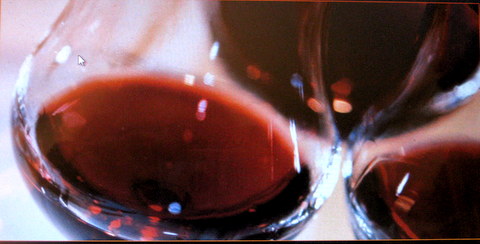
My cousin who is a doctor in Perugia, Umbria is so fortunate. She has the opportunity to enjoy the vino locale whenever she wants. It has been a few years since I have been to visit and I miss everything I enjoyed about the region, the sounds, sights, tastes, smells, all of which combined to take my breath away and create an indelible experience of freshness and beauty.
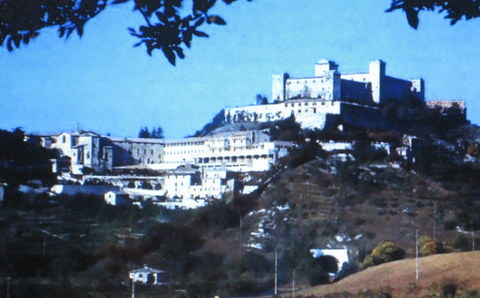
Spoleto, home of the arts and music festival in east central Umbria.
In the region you will find Montefalco and its indigenous wine, the Sagrantino. Umbria, belovedly referred to as “The Green Heart of Italy,” was celebrated in NYC in the fall. It was then I happily took advantage of imbibing Umbrian wines and feasting on the delicious cuisine native to the region. I even purchased some Umbrian products at venues (i.e. Eataly, De Paolo’s Fine Foods) around the city as New York highlighted the month long events that Mayor Bloomberg proclaimed for the celebration of “I Love Umbria Month.”
Growing Popularity of Montefalco’s Signature Wine in the U.S.
By now familiar with the region and its cuisine, I was glad to learn that The Montefalco Consortium announced a 2nd annual ‘Sagrantino Month’ to be held at New York City’s Eataly in March. I have come to love Sagrantino wines, becoming acquainted with various Montefalco wineries which grow the finicky and spare grape vines. Producing these wines is a feat which requires concentrated effort, knowledge and determination to tease out a wonderful harvest that through experience and honed skill rewards us with the sumptuous, full bodied and rich tasting Montefalco Sagrantino.
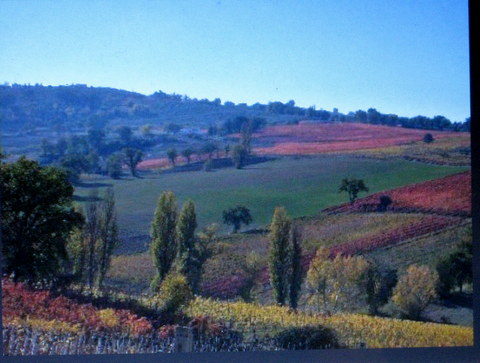
Montefalco Wine Region
This year’s Sagrantino Month celebration is part of a year-long, national Sagrantino campaign that includes events and promotions capitalizing on the momentum created by an increased American interest for the signature wine of Montefalco. Amilcare Pambuffetti, president of the Montefalco Consortium explains this thrust into the U.S. market. “Last year we introduced many Americans, both trade and consumer, to Sagrantino and the response was enthusiastic. This year we plan to build on the foundation we’ve established.”
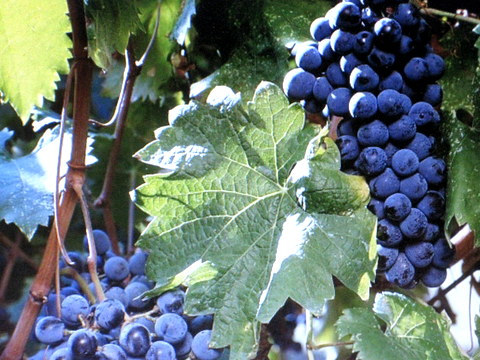
Sagrantino grapes
Sagrantino Month Celebration at Eataly
The Sagrantino Month promotion at Eataly will include a trade seminar, consumer classes, tastings in the Eataly Wine Store, wine by the glass at all of Eataly’s restaurants and tastings in Eataly’s ‘La Piazza.’ The year-long promotion will continue with virtual tastings with US press, trade tastings, dedicated meetings for unrepresented producers, a consumer awareness and education program. From its quiet beginnings as a regional Umbrian wine, Sagrantino has become a favorite in Italy and producers are assured that as the American consumer becomes knowledgeable about Sagrantino it will become equally popular in the U.S.
There consumer classes at Eataly will be held on March 12 and March 28. Starting from March 1 to March 30, there will be free wine tastings at Eataly Vino every Friday, from 6 to 8pm, each time with a different producer.
Every Saturday a wine by the glass will be poured at the Le Eccellenze Corner inside the store, for just $10. Select wines of Montefalco will be available by the glass at each Eataly restaurant throughout the month and on sale at the wine store.
There are five participating wineries in the Sagrantino Month promotion: Antonelli San Marco, Arnaldo Caprai, Perticaia, Scacciadiavoli and Tenuta Castelbuono. Five more wineries will be involved in the other activities throughout the year, these are Colle Ciocco, Colle del Saraceno, Le Cimate, Romanelli and Tenuta Bellafonte.
If you are planning to indulge your love of Sagrantino or would like to have an introductory taste at Eataly and would like more information on the month long activities, visit www.consorziomontefalco.it.
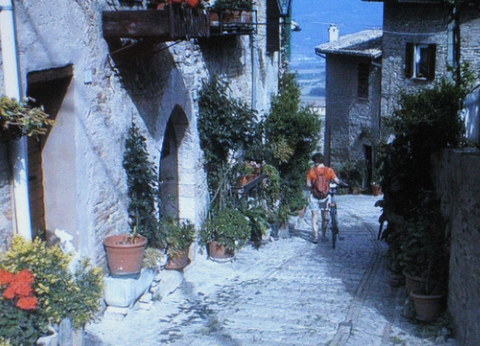
Looking into the valley of wine producers below. (Spello)
About the Wines of Montefalco
Sagrantino grapes are indigenous to the region of Montefalco, Umbria and have a long history there. dating back to the 1700s, where the growing of grapes and wine making was suited to Umbria, the “green heart of Italy” and Montefalco, where documents of the time noted that “fine and delicate wines were produced there in ‘beautiful and good’ vineyards.” So much was this the case that municipal sanctions were strengthened to maintain and sustain the culture of thriving, glorious vineyards and sumptuous wines. If you hampered a winery in its noble and sacred endeavors, you were in big trouble. In 1622 Cardinal Boncompagni, the Pontifical delegate in Perugia, threatened “capital punishment for anyone found cutting down grape vines.” Cutting down a plant was worthy of death? Such was the symbolism, of grape vines and the vitality of wine to the culture and the church.
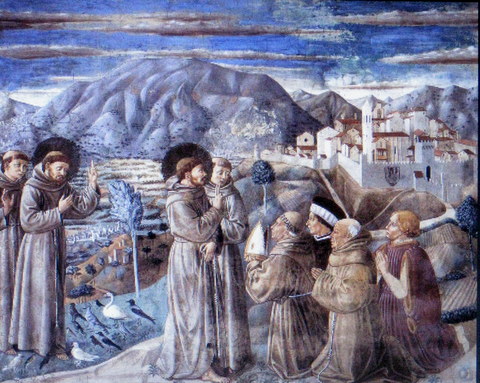
Franciscan monks nurtured the Sagrantino grapes in vineyards like St. Leonard’s in Montefalco to produce their sacramental wines. (Painting: Blessing the birds and the beasts.)
Sagrantino vines were cultivated in monasteries like St. Leonard and St. Claire where monks that made the wine used it for sacramental purposes and local farmers enjoyed the wine during festivals and religious holidays, including Christmas and Easter. The wine had a hearty following during the 20th century until after WWII when the vines and wine fell off and nearly disappeared in the 1960s. Thanks to the dedication of local producers with a romantic imagination and assiduous determination to bring back the Sagrantino grape and its luscious, full bodied wines, the Sagrantino DOC was granted in 1979 and the DOCG in 1992. Producers like Marco Caprai also elicited the help of the University of Milano to ensure that the Sagrantino vines burgeoned to yielding productive harvests. (The grapes are not prodigious and abundant in output and must be carefully nurtured.) As a result Sagrantino wines have become a favorite of Italy and are becoming globally known.
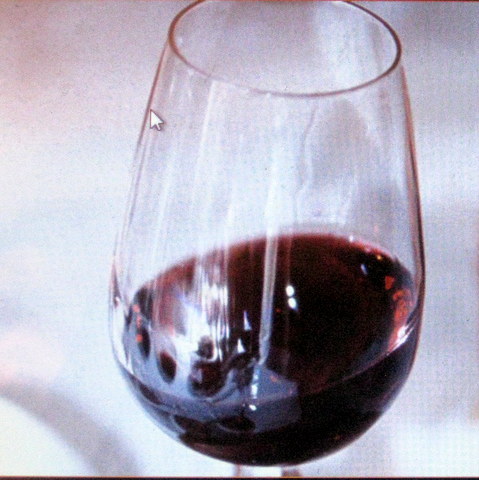
Sagrantino Montefalco DOCG
Wonderful points about Sagrantino is that it is suitable for long aging. It pairs well with many cuisines and is delicious with roasted meats like beef short ribs, pork loins, game and other meats that are juicy with bit of tasty fat. Other friends have told me that Sagrantino is delicious with spicy foods and of course, with cheeses like Granna Padano, Petite Basque, Robiola, or other sharp raw sheep’s or cow’s milk cheeses. I have found that Montefalco wines offer excellent quality without destroying one’s weekly wine budget. Two examples of high quality but affordable wines are the versatile Montefalco Rosso, a blend of principally Sangiovese, and Sagrantino, and the refreshing white blend known as Montefalco Bianco, made of the indigenous Grechetto, combined with Trebbiano and other grapes. The Montefalco Bianco pairs beautifully with fish dishes or light pasta dishes which sparingly use milk or cream.
Participating Wineries of Montefalco Celebrating at Eataly
IL Buco Alimentari & Vineria. A Great Place to Host the “European Winery of the Year 2012.”

I had been to other restaurants on Great Jones Street in that well trafficked section of NoHo, namely Five Points, a restaurant my friend invested in. IL Buco Alimentari & Vineria was just up the block. I had read Pete Wells’ New York Times three star review of Il Buco. Pretty impressive as reviews go, one star away from the four stars which only six other NYC restaurants achieved over the years.
Wells had raved about the bread, “Remarkable stuff, with the gradually unfolding nuances of taste that are achieved only through a slow and patient fermentation of dough with wild yeast.” (Yes, wild yeast! I liked the place already.) He was pumped about the salumi board, “…satiny pink and white folds of lonza and capocollo…melting into a lasting impression…” These were “cured and aged in the basement of IL Buco Alimentari e Vineria,” and “among the finest salumi in the country.” I do enjoy a great salumi board. My taste buds have been cured over the years by exceptional sopressatas, lonzas and capocollo, “home mades” served by Nonna Gabriele (maternal grandmother) and cuigini on both sides of my family. I tucked Wells’ February 2012 review in the back of my mind for later use.
It came when I received an invitation. Roberto Paris and Il Buco were toasting Marco Caprai winemaker and proprietor of Arnaldo-Capri Winery on his “Best European Winery” Wine Star Award from Wine Enthusiast Magazine. My schedule was swamped. Could I squeeze in some time to stop by? I was intrigued about going to a cocktail hour in the “simple and convivial spot” that the food critic claimed, “tastes just like Italy.”

What edged me to RSVP “accept” was my experience of NYC’s “I Love Umbria Month.” During the month’s activities celebrating Umbria in various venues around Manhattan, I attended a kick-off press event at Eataly. I was introduced to Caprai wines and a few native Umbrian dishes prepared by Eataly’s Alex Pilas. The Arnaldo-Caprai Winery is from Umbria, the region known as “the green heart of Italy.” In Umbria classic regional fare includes pork, mushrooms and lentils or legumes. From my Eataly experience, I knew the Sagrantino wines from Arnaldo-Caprai, paired beautifully with these items; I had sampled dishes made with pork, lentils and mushrooms at the press luncheon. The Sagrantino di Montefalco, I remembered Caprai’s signature wine had a rich and powerful mouth feel which heightened the earthiness of mushrooms and lentils. It complimented and lightly cut through the moist and fattiness of the pork. Though the luncheon was before Wine Enthusiast awarded Arnaldo-Caprai with its Wine Star award, I really liked the wines I had tasted.
Truly, the award is well deserved. Arnaldo-Caprai Winery is an “acknowledged leader in the production of top quality Sagrantino di Montefalco,” a wine produced exclusively from Montefalco’s indigenous Sagrantino grape. Arnaldo-Caprai wines have been globally recognized for their quality and production excellence. Caprai’s diligence in helping to restore the Sagrantino grape to a glorious plateau is applauded in the wine trade, and the winery has won many awards. The Wine Enthusiast Magazine’s award was no anomaly. Caprai’s exceptional wines were really taking off and wine lovers were appreciating just how good these wines were. A neophyte wine connoisseur, I was rapidly becoming a fan of Caprai’s wines.

Another venue might hold a slap dash ho hum affair I could easily avoid. This was all too enticing. The range of Caprai wines, its white and reds, would be accompanied by SAVEUR Top 100 Chef Salvatore Denaro’s “Umbrian light bites”and IL Buco chef, Justin Smillie’s delicious appetizers. These chefs? Caprai’s wines? Even the little time I would be able to spend there promised to be an absolutely exceptional rendering. I couldn’t afford to miss it.
I climbed the stairs to IL Buco’s private room with happy anticipation.The crowd kept coming. I mingled in to where Roberto Paris was pouring. He suggested I start with the white, the 2011 Colli Martani Grechetto DOC Grecante. The wine is made from 100% Grechetto grapes. At my first sip there was the pop of crispness and vibrancy on my tongue, refreshing to the palette. A lovely aperitif (one may also have it with fish, veal and poultry) I enjoyed it with Chef Salvatore Denaro’s incredible Grilled Spring Onions Wrapped in Fresh Pancetta, then I moved on to the Umbrian lentil soup the chef was proudly stirring. It was perfectly seasoned to show off the earthy taste of the legumes with just enough cooking time for a savory, luscious texture. Servers were coming around with trays conceived/prepared by Justin Smillie, Crocchette di Baccala, crispy house salted cod, aioli, and there were skewers of Mushroom & Artichoke.Wine and these bites were in the fold.

Back to Roberto Paris for the first of the reds, the 2010 Montefalco Rosso DOC a combination of Sangiovese, Sagrantino and Merlot grapes, followed by the more powerful and full bodied Montefalco Sagrantino Collepiano DOCG with 100 % Sagrantino grapes. I enjoyed the Rosso with a taste of the Salumi della Casa, definitely home made and yum yum lovely. Though I was becoming full and didn’t sample them, it was apparent the Rosso was great with the imported cheeses, spreads, compotes, Taralli, olives and fabulous house made whole grain breads (to die for) from Chef Justin Smillie’s Alimentary Table. The plates came in chock full of salumi and treats, and left swept clean by guests; again and again the servers came and went. Our appetites expanded, the conversation grew louder and I would soon have to leave, but not before tasting the best of the best and assessing what I had experienced thus far.

I thought the Rosso good, but I prefered the 100% Sagrantino grape wines. The Collepiano DOCG was perfect with the Panini sandwiches made on that fabulous and earth shattering Il Buco bread. (I love rustic, chewy bread.) One panini was with tender and juicy Slow-Roasted Short Ribs, gorgonzola, onion and agrodolce. The other was Roast Porchetta, arugula, salsa verde. The Collepiano DOCG is recommended for a roasted meat with juice and fat and after tasting the short rib panini, I knew why: explosive ruby red piquant flavor that cut through any heaviness of the meat and melded with the gorgonzola, onion and agrodolce. I tried the porchetta with the Sagrantino Di Montefalco 25 Anni. Striking, strong but smooth and soft velvet with a nice finish. Was that a hint of blackberries for the nose? I understand better how the tannins in the Sagrantino compliment and slice their flavors through succulent roasted meats. But I could even see myself enjoying a glass with a really great imported cheese as well.
I looked around. Time to leave. Was it possible the invited devoured the pork faster than the short ribs paninis? These chefs knew the Caprai wines and had done their homework with the menu which was exceptional. As I waited for my coat, I glanced around. Rats! Guests were eating pasta and I was missing it. I asked a woman and her partner who were chatting and smiling as they plopped what looked to be rigatoni shaped wedges with a light cream colored coating in their mouths. “Delicious, pasta…with pumpkin,” the woman said pinging some lovely light orange-yellow veggie on her fork for me to view. An obvious innovation. I would call Il Buco tomorrow and ask for the specifics, since I was already running late. (I found out it was Chef Denaro’s own take on Amatriciana* the traditional Roman dish usually served with Bucatinni.)
I finished the last of my Sagrantino Di Montefalco and savored its multiplicity of flavors on my tongue, the last a distilled earthiness. I envisioned the Franciscan monks that had kept those sacred vines growing in their monastery of St. Leonard in Montefalco in 1700. I guess I was a bit addled, and could have used some pasta to help with the wine’s power.

I said my goodbyes and slipped away from the fading din of conversation and exclamations about the full body of the Sagrantino De Montefalco. I left as I came in, happy with anticipation. I looked forward to returning to IL Buco with friends and ordering their roasted pork with a glass of Sagrantino De Montefalco 25 Anni. But before I came back, I’d have to lose the 2 pounds I gained eating this fabulous food and enjoying the equally wonderful wines.
*The traditional preparation has tomatoes, guanciale and garlic BUT rather than tomatoes Chef Denaro used Hokaido pumpkin (a very delicate, perfumed pumpkin.)
 CAROLE DI TOSTI