‘Anemone’ @NYFF Brings Daniel Day-Lewis’ Sensational Return
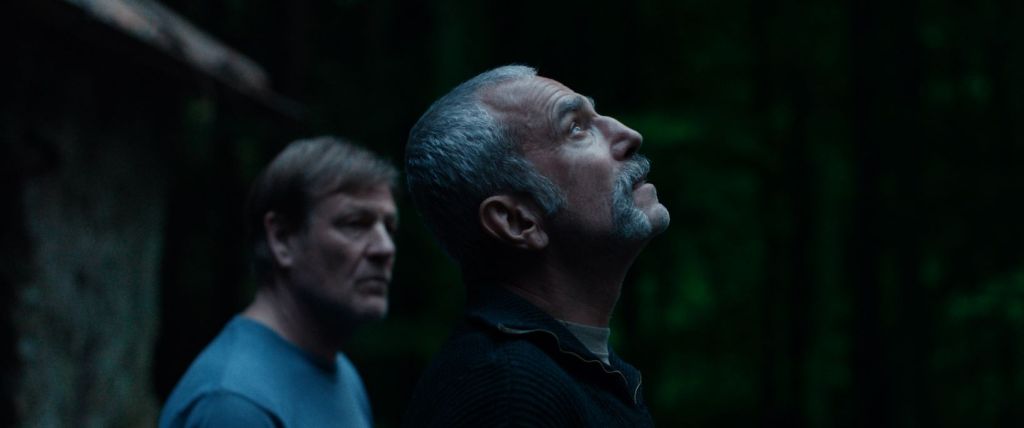
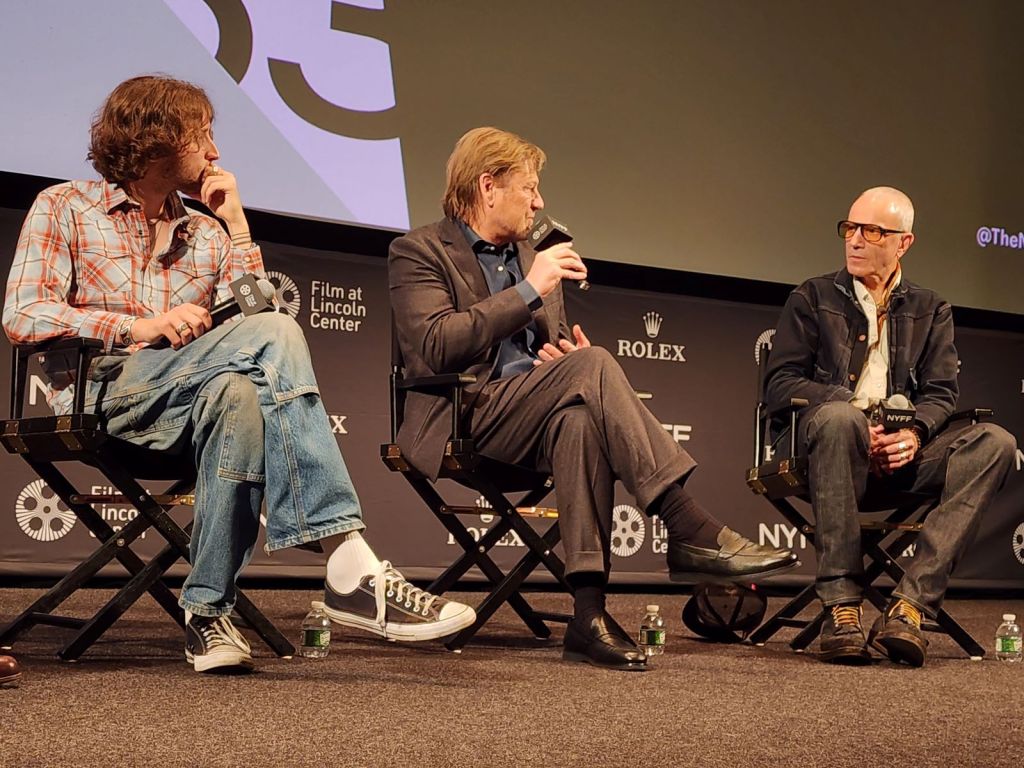
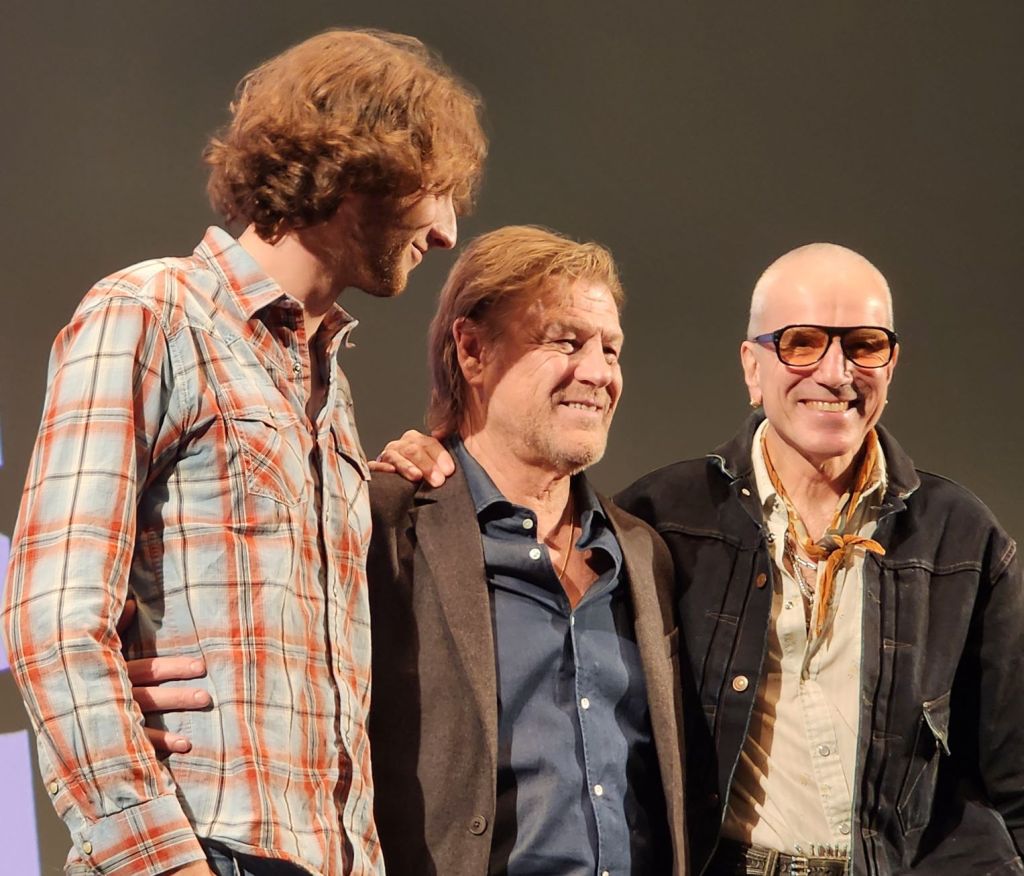
Supporting his son Ronan Day-Lewis’ direction in a collaborative writing effort, Daniel Day-Lewis comes out of his 8-year retirement to present a bravura performance in Anemone. The film, his son’s directing debut, screened as a World Premier in the Spotlight section of the 63rd NYFF.
Ronan Day-Lewis’ feature resonates with power. First, the eye-popping natural landscapes captured by Ben Fordesman’s cinematography stun with their heightened visual imagery. Secondly, the striking, archetypal symbols illuminate redemptive themes. Day-Lewis uses them to suggest sacrifice, faith and love conquer the nihilistic evils visited upon Ray (Daniel Day-Lewis) and ultimately his entire family.
Finally, the emotionally powerful, acute performances, especially by Daniel Day-Lewis’ Ray and Sean Bean’s Jem, help to create riveting and memorable cinema.
The title of the film derives from the anemone flower’s symbolic, varied meanings. For example, one iteration relates to Greek mythology in the story of Aphrodite, whose mourning tears, shed after her lover Adonis’ death and loss, fell on the ground and blossomed into anemones. Also referenced as “windflowers,” anemone petals open in spring and are scattered on the wind. Possibly representing purity, innocence, honesty and new beginnings, the film’s white anemones grow abundantly in the woodland setting where reclusive Ray makes his home in a Northern England forest.
In a rustic, simplistic hermit-like retreat Ray lives in self-isolation, alienated from his family. Then one day, his brother Jem, prompted by his wife Nessa (Samantha Morton), mysteriously arrives. The director focuses on the action of his arrival withholding identities. Gradually through the dialogue and the rough interactions, heavy with paced, long silences, we discover answers to the mysteries of the estranged family. Furthermore, we learn the characters’ tragic underpinnings caused by searing events from the past. Finally we understand their motivations and close bonds despite the estrangement. By the conclusion family restoration and reconciliation begins.
Unspooling the backstory slowly, the director requires the audience’s patience. Selectively, he releases Ray’s emotional outbursts. These reveal his decades long internal conflict with himself, for not standing up to the perpetrators of his victimization. Neither Jem nor Nessa (Samantha Morton), Ray’s former girlfriend who Jem married after Ray abandoned her and their son, know his secrets. However, the slow revelations of abuse spill out of Ray, as Jem lives with him and endures his ill treatment and rage.
Each brief teasing out of pain-laced information that Jay spews impacts Jem. Because Jem receives strength and understanding from his faith, he puts up with Ray. Indeed, the various segments of Jay’s story seem structured as turning points. Each moves us deeper into Jay’s soul and Jem’s acceptance. Cleverly, by listening to his brother and encouraging him to speak, Jem breaks down Ray’s resistance.
Ray and Jem’s emotional releases trigger and manipulate each other. Once set off, the revelations full of anguish and subtext fall in slow motion like dominoes. Then, climactic sequences augment to an explosive series of events. One, a treacherous wind and hail storm, represents the subterranean rage and turmoil which all of the characters must expurgate before they can heal and come together.
Jay particularly suffered and needs healing. Throughout his life the patriarchal institutions he trusted betrayed and abused him. From his home life (his father), to the church (a cleric), and the military (his immediate superiors), emotional blows attack his soul and psyche. Also, the military makes an example of him. Not only was the abuse unjustified and misunderstood, the perpetrators covered it up and forced his silence. The cruel, forced complicity makes his life a misery in a perpetuating cycle of guilt and shame.
As a result, because Jay’s self-loathing pushes him deeper within his pain, he can’t discuss what happened with his family or anyone else. Of course, he refuses to get help in therapy. Instead, he escapes into nature for solace and peace. The society’s corruptions and his family’s still embracing the institutions that abused him stoke his anger and enmity.
Neglecting his brother Jem, Nessa and his son Brian, who is grown and needs him, Jay perpetrates a psychological violence on them. None of them understand Jay’s abandonment. Sadly, Ray’s absence and rejection shape Brian’s life. Embittered and violent, he endangers himself and others.
How Day-Lewis achieves Ray’s epiphany through Jem’s love occurs in an indirect line of storytelling, through Ray’s monologues and the edgy dialogue between Jem and Ray. By alternating scenes of Nessa and Brian in the city with the brothers in the forest, we realize that time is of the essence. Jem must convince Ray to return to their home to make amends with his son Brian as soon as possible because of a looming threat.
Ultimately, the slow movement in the beginning dialogue could have been speeded up with a trimming of the silences. However, Day-Lewis purposes the quiet between the brothers for a reason whether critics or audience members “get it” or not. The silences reveal an other-worldly, telepathic bond between the brothers. Likewise, on another level Ray’s son Brian connects with his father spiritually, though they are miles away. The director underscores this through Nessa who understands both father and son need each other. Nessa encourages Jem to bring Ray home to Brian. Day-Lewis also uses symbolic visual imagery to suggest the spiritual bond between father and son.
In Anemone, the themes run deep, as the filmmakers explore how love covers a multitude of hurts and wrongdoings. Anemone releases in wider expansion on October 10th in select theaters. For its 63rd New York Film Festival announcement go to https://www.filmlinc.org/nyff/films/anemone/

Posted on October 5, 2025, in Lincoln Center Film, New York Film Festival and tagged anemone, Daniel Day-Lewis, movie-reviews, reviews, Ronan Day-Lewis, Samantha Morton, Samuel Bottomley, Sean Bean. Bookmark the permalink. 1 Comment.
 CAROLE DI TOSTI
👍👍
LikeLike