Category Archives: Athena Film Festival 2022
‘Pure Grit’ an Athena Film Festival Review

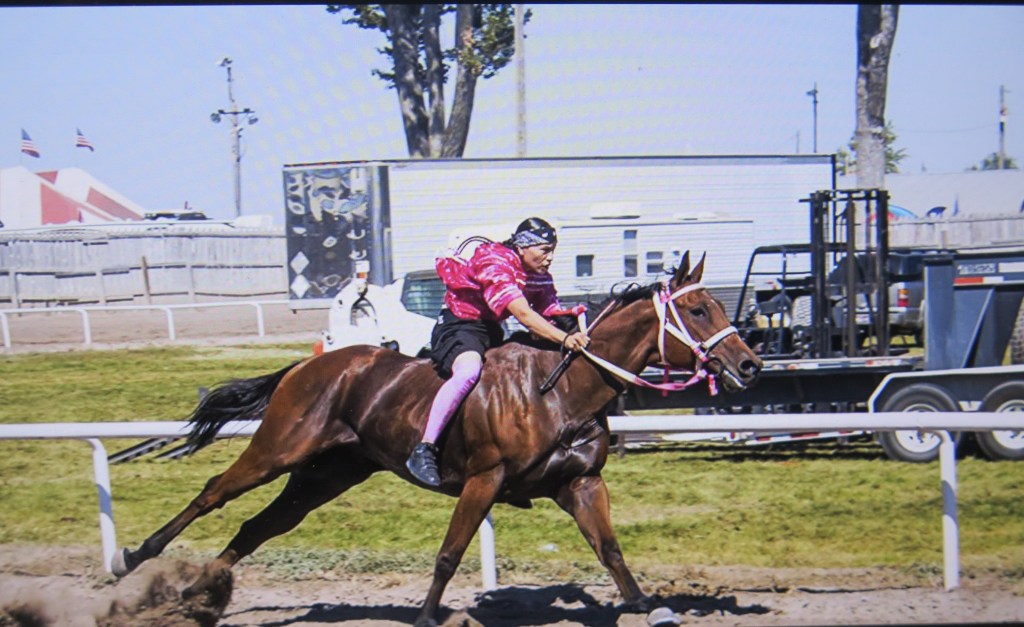
Pure Grit, written and directed by Kim Bartley focuses on the relationship between Sharmaine Weed and Savannah Martinez who “love each other,” but cannot “live with each other.” It is also about Sharmaine’s definition of herself as a winning bareback horse racer. Bareback horse racing is one of the most dangerous sports on the planet.
Bartley’s interest in these two indigenous women and their relationship reveals the concern and love they have for each other. Indeed, Savannah joins Sharmaine around the time that Sharmaine takes a year off her winning streak bareback riding to care for her sister who was severely injured following a catastrophic accident during a horse race. The love of the entire family to become champion bareback riders is in their bones. It is an inherent love bred in their DNA. Part of the love includes the knowledge of the risk that they take riding bareback. Sharmaine’s sister took the risk and badly injured herself.
So in a matter-of-fact way Sharmaine describes the accident and her sister’s paralysis on one side of her body. With Savannah, Sharmaine takes care of her sister’s children and with the help and support of other family, they make a life for each other. The sister must go through a lengthy rehabilitation process. Her paralysis impacts her ability to ride. But Sharmaine has the goal for her sister to become healed enough so she can get up on a horse again without fear.
Because Sharmaine takes a year off from racing to take care of her sister, she has become rusty and needs to practice racing again. She is in a position of greater danger than ever because she hasn’t ridden bareback on a horse and has been redirected helping her sister and smoothing over her relationship with Savannah. When she realizes the racing championships are coming in months, Sharmaine pushes herself to get ready and refocuses. But first she must earn money to purchase the right horse to help her return to her greatness as a winner.
Bartley uses her camera from the perspective of a friend and engages Sharmaine’s family members comfortably. She informally interviews her mother and her younger brother Kashe and her older brother Brandon. With abundant voice overs and portraits of the family’s activities, we learn about their lives. Additionally, each family member shares their impressions of their lives, the reservation and their commitment to bareback horse racing.
Brandon has taught Sharmaine a lot of what she knows and gives her pointers about getting back into her riding. Kashe has returned, having been caught up with friends in drugs and alcohol. Because family members have established a comfortable and trusting relationship with Bartley, the film approaches an ethnography. We become a part of the setting and identify with the family and enjoy learning about them.
Though Savannah loves Wyoming Wind River Reservation where it is beautiful and peaceful, all is not heavenly there and the stresses of daily living encumber them. Thus, both women decide to go to Denver, Colorado where Savannah lives. On the one hand, the fighting atmosphere on the Reservation becomes toxic, but they will still be together in Denver. However, there, they calculate the change of scene will improve their spirits. Sharmaine will more easily find a job since there are no jobs on the reservation. With the money she earns, she will buy a horse to use in the upcoming races.
Denver brings freedom and opportunity. However, there are many distractions and these become a strain on their fledgling relationship. When racing season starts up, Sharmaine and Savannah hit the road and embrace the risks. With a new horse from her city earnings, Sharmaine sees the potential for a fresh start. She is determined to be a champion and she practices hard and wins a few preliminary races. However, she emotionally feels she is not prepared because in order to make up for a year off her racing, she must train and there never seems to be enough time.
Furthermore, Savannah is insecure about Sharmaine’s love for her. There is an age difference and though Sharmaine feels she is expressive enough, Savannah is needy. She requires constant reassurance about Sharmaine’s feelings. The strain between them grows, perhaps driven by Sharmaine’s overriding concern that the training with the new horse she purchases isn’t yielding the results she wants.
Kim Bartley presents these individuals in all their humanity and their desires. As a result they become family and we are devastated when Sharmaine, who tries her best to win the race for the first time, after a year, doesn’t make it. Additionally, the once close Sharmaine and Savannah split. They do agree that they love each other but fight too much to live with each other happily.
Bartley reveals that life goes on for them. And the title indicates that life isn’t always about winning, it isn’t always about getting along with someone you love. And sometimes, family leaves and there is nothing that can be done. These themes of struggle and the grit it takes to continue in spite of pain and loss are the life lessons that Bartley highlights in this beautifully shot, well edited film that has no beginning or ending. We are assured, like this family, the struggle in life goes on. And we are glad to be a part of it because to be a part of it is to be alive to take risks.
To see this fascinating film, look for it on VOD channels or check IMBD for updates.
‘Strong Female Lead’ an Athena Film Festival Review

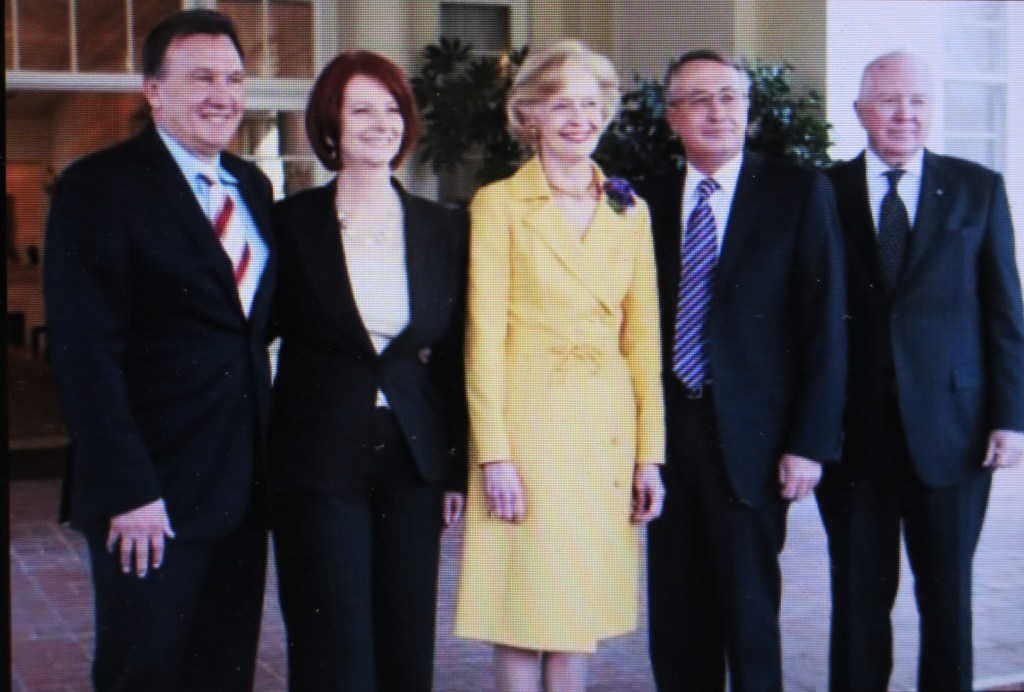
One in three Australian women experience discrimination in the workplace. Julia Gillard, Australia’s first and last female Prime Minister ran the gauntlet of misogyny, discrimination, chauvinism and sexism from her own party members, members of the opposition and the media. What she endured, no woman should have to suffer in the workplace. Sadly, not much has changed since she served for three years as the 27th Prime Minister of Australia. Filmmaker Tosca Looby’s Strong Female Lead sets the record straight chronicling Gillard’s war years bravely standing up to men assiduously devoted to destroying her career and her resolve.
The documentary that screened at Athena Film Festival makes a leap in the right direction of supporting and denouncing the attacks and vilification of Gillard, a representative of women in political leadership. The film reveals that their brilliance and personal power frightened men unable to deal with their own personal issues with women. Clips of these craven, which Looby culls from mounds of archived film, TV and radio clips disgrace and humiliate themselves. They slander and excoriate Gillard instead of supporting her governance and properly upholding the rule of law with the integrity and grace due the offices they hold for the sake of Australians.

In her superb, difficult to watch film Looby cobbles together a record of film and TV clips, statements, film clips of protests, radio commentary and quotes in her exhaustive documentary. What she unfortunately reveals is the egregious, childish behavior of the males in their smear campaign to oust Julia Gillard almost from the moment she takes office in 2010. Indeed, she reveals how they worked prodigiously day and night to divide her party so she would be ousted in 2013. That Gillard’s brave leadership as PM got many programs accomplished despite the attacks is to her credit. One wonders how much more she would have accomplished if she had more support from the media.
Unbelievably, the opposition under the leadership of Tony Abbot at the time preferred to abuse her daily, mentoring hatred for the daughters and wives of Australian ministers and citizens. Abbott, a conservative (think anti LGBTQ, same-sex marriage, anti women’s rights) had no problem slamming Gillard’s personal life. Bloodletting was his purpose, not governance. His shameful acts and comments in parliament are recorded historically in Looby’s documentary, for all time, behaviors and comments seen cumulatively in Looby’s film provide a visceral and raw record of behavior antithetical to human decency required of a member of parliament and possibly a future Prime Minister.

Thus, Lobby’s film Strong Female Lead enumerates the level and extent of hatred and insult Gillard withstood in parliament and the media. Brave is not the word to describe her. Anointed, Godly, spirited is more the behavior she demonstrated. If anyone deserved to be PM, it was she. Sadly, the citizens have cretins and blowhards to govern them, a complete joke which rivals the United States insurrectionist blowhards in the Republican Party, one whose own brother and family denounced him, stating he belonged in a mental institution and should be removed from office.
However, the parliament and Abbott were not implying Gillard was a witch alone. They were helped by right wing conservative media who whipped up crowds and protests that Tony Abbott self-righteously appeared before as the savior of Australia, while milking the empaths with statements about helping Indigenous populations in various parts of the country. When there was a spotlight shining on Abbott, he puffed up like a red rooster.
In her commentary before the film Looby apologizes for including the misogyny and hate-filled clips. However, she mentions that out of the resources at her disposal, all archived on television and radio, she selected the ones that were the least offensive. That is amazing. So the signs flashed on TV that Abbott stood next to that read, “Ditch the Witch” and “Bob Brown’s Bitch” were tame. Ironically, this leaves us wondering, what didn’t she include? Additionally, Looby’s extensive coverage of vile Alan Jones of 2GB radio, now, a former host whose contract has not been renewed by Sky News and who has been repeatedly sued for defamation, is particularly loathsome.
For direct hate-filled sexism and misogyny, Jones rivals the most monstrous. During Gillard’s tenure as PM, her father died. Jones takes a salt mine of vitriol rubs it in Gillard’s grieving wounds claiming her father “died of shame” because of her behavior. Mind you, what horrific things did she do? Disagree with his right-wing, conservative politics? Later, Looby includes his apology which of course rings so insincerely the next time he launches out and spews more venom at her. Indeed, he was Tony Abbott’s good little puppy. That was a deal made in the abyss.
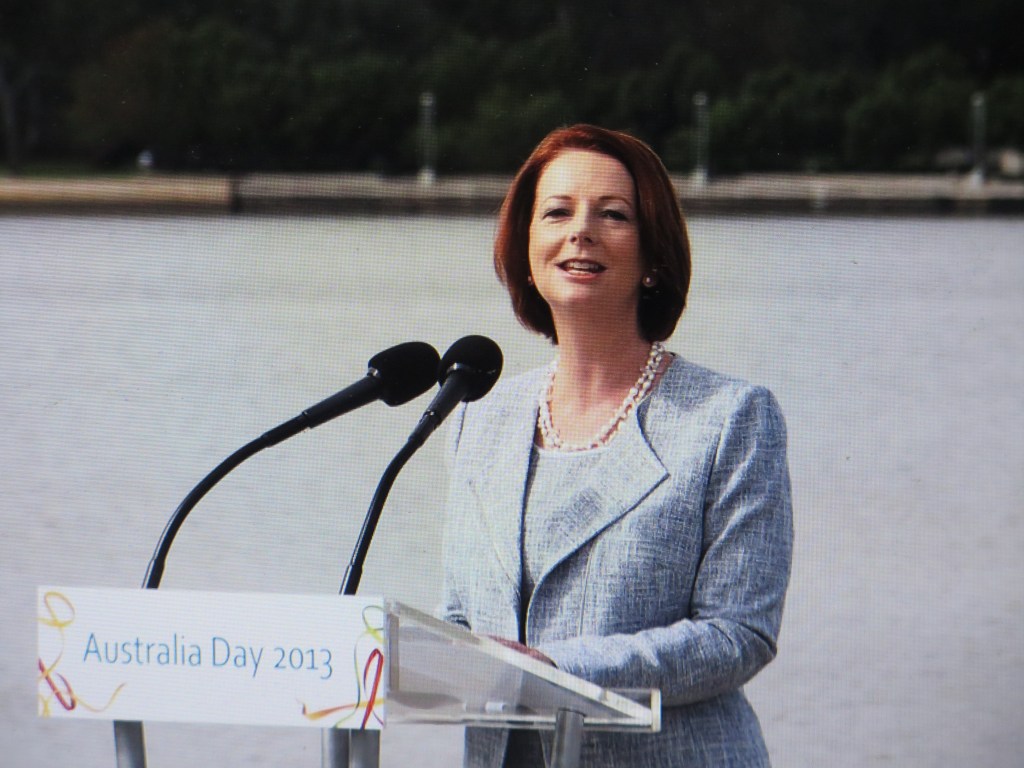
However, one of the most uplifting clips Looby makes sure to include is Gillard’s queenly speech, filled with integrity and grace that answers all of what Abbott attempts to smear her party member (sexism and misogyny). The speech went viral and Gillard will forever be remembered for the power and brilliance with which she spoke.
Looby makes an incredible case for Gillard’s abuse at the hands of the opposition, Abbott, the right-wing media and other’s sexism. She seamlessly edits the pre-existing materials, visual and audio, sourced predominantly from television and radio. Interestingly, the indictment falls not only on these guilty of their bravado of sexism. She makes a clear, defining statement about the inappropriate misogynistic media.
Since Gillard retired from politics and her party lost, Abbott became Prime Minister for two years and then was also ousted from the opposition party. Critics and experts agree that he is one of the worst Prime Ministers in Australia’s history. Meanwhile, Gillard has gone on to remain active. In April 2021, Gillard was appointed chair of the board of Governors at Wellcome Trust, a charitable trust which supports research and innovation in medicine, public health, mental health and climate change. Additionally, Gillard was recently honored by the award of the Grand Cordon of the Order of the Rising Sun from the Government of Japan. This was formally presented to her by the Ambassador of Japan to Australia. Gillard is the 8th Australian prime minister to receive the award.

Looby uplifts Gillard’s courage to be who she chooses to be. If it rocks the status quo in conservative circles, so be it. She once stated that she could never run for a political position in the U.S. with her lifestyle. She is an atheist, childless and has lived with her partner Tim Mathieson since 2006. They are not married. During her tenure as PM, Looby includes clips by the media during which she receives incredible pressure about her lifestyle and her relationship with Tim and his career. Gillard’s responses were humorous and clever. Of course Jones and Abbott piled on the heat and abused her with her unhousewifely behaviors, choice of partner, not having children and having a career in politics. In her speech credited and included above, she answers Abbott’s sexism.
This is a film to see if you need the courage of convictions in presenting your choices. Gillard’s strength in being proud and standing up for herself by calling out misogyny is an imperative all should follow. Look for Strong Female Lead on VOD and updates on IMBD.
‘Ida Lupino: Gentlemen & Miss Lupino,’ an Athena Film Festival Review

Actress, filmmaker, director Ida Lupino was a force for her time (1940s-1960s). When no other woman in Hollywood was able to get around the discrimination against females in leadership positions Ida Lupino was there! Ida Lupino: Gentlemen & Miss Lupino, a documentary which screened at Athena Film Festival reveals the extraordinary work of this actress/writer/director/producer. In their documentary Julia and Clare Kuperberg cobble together interviews, film clips, quotes from Lupino’s autobiography, commentary by Lupino experts, current directors and more to tell Lupino’s story. Their film is a fabulous reminder of how women can forge ahead despite the overwhelming odds against them.

In the creation of the studio system, actors became the chattel of studio bosses. Their dictatorial control siphoned off creative energy and channeled it in one direction, a narrow commercialism based on the proclivities of the bosses. Thus, walls of paternalism and misogyny were thrown up by these weak-willed, desperate and selfish power hungry, who after the 1920s took over Hollywood. Jealous of their power, intent on exploiting and using women, to not compete with them, they prevented and excluded women from being producers, directors, managers in leadership positions in the studio system. The tool of sanctioning and oppression kept women in line so that they wouldn’t consider moving “above” their submission.

Studio bosses perpetuated some of the most damning feminine myths. These psychically abused women actresses highlighting them as sex objects or villainous vamps. Such myths also damned male/female reactions to each other and mentored psychologically warped relationships for decades. Sadly, as housewives and mothers, women characters remained in the background. Only in comedy and musicals did women shine.
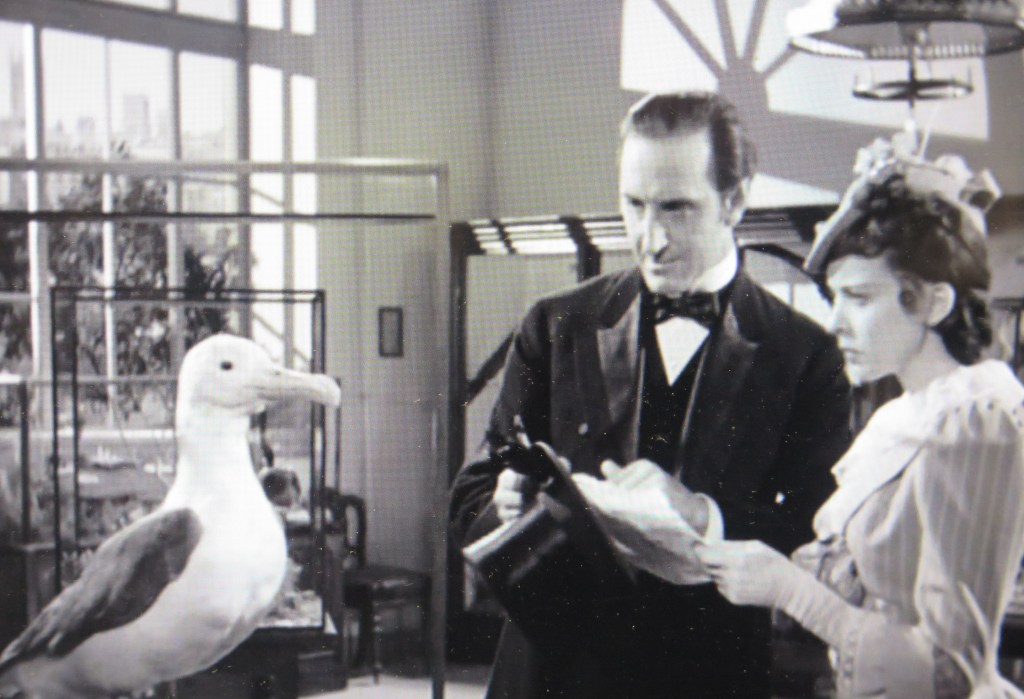
As an actress Ida Lupino entered this system and “caging the joint,” she brilliantly decided she had enough of women’s stereotypical roles. She wanted to step out of her “designated” lowly position and direct the types of films that authentically related to women. Thus, looking at Ida Lupino’s films one notes a glorious reality that rounds out the lives of women with authenticity. A maverick, she proved that women’s films could be profitable and popular.

In highlighting that Lupino started as an actress and branched out from there as perhaps the first to establish the genre of Film Noir, the Kuperbergs interview Julie Grossman who penned Ida Lupino Director: Her Art and Resilience in Times of Transition and film historian Tony Maietta. With prodigious examples in their interviews, the Kuperbergs reinforce Lupino’s own comments and reveal her revolutionary approaches to creating films.
Importantly, the Kuperbergs use Lupino’s own biography and film interviews she gave to fashion their entertaining and insightful documentary Ida Lupino: Gentlemen & Miss Lupino. With quotes, film clips and commentary by Ida Lupino and quotes from her biography, we learn how this creative genius withstood the discrimination to direct important films related to women’s issues. Cleverly, she navigated the all male technical crews by referring to herself as “Mother,” a benign characterization which engendered a nurturing spirit among the men.

Related to this persona which Lupino wore with pride, the Kuperberg’s also indicate how Lupino learned from working as an actress in the studio system surrounded by men in positions of power behind the camera. With humor Lupino suggests that men hate to be bossed and ordered around. She implies that in getting male cooperation, there’s nothing worse for fragmenting unity than a “controlling” woman. Hence, her mother image worked every time.

Vitally, when the 1300 men in the entertainment industry were predominately concerned with objectifying women and selling them as whores, prostitutes and sex objects, Lupino created films that dealt with women’s issues like abortion, rape, pregnancy and bigamy. And she did this with empathy and depth moving beyond stereotypes and cardboard cut-outs of female and male villains and heroes. As a director, she emphasized the humanity of both the men and women in the revelation of real-life issues. It is no wonder that her films were popular successes.
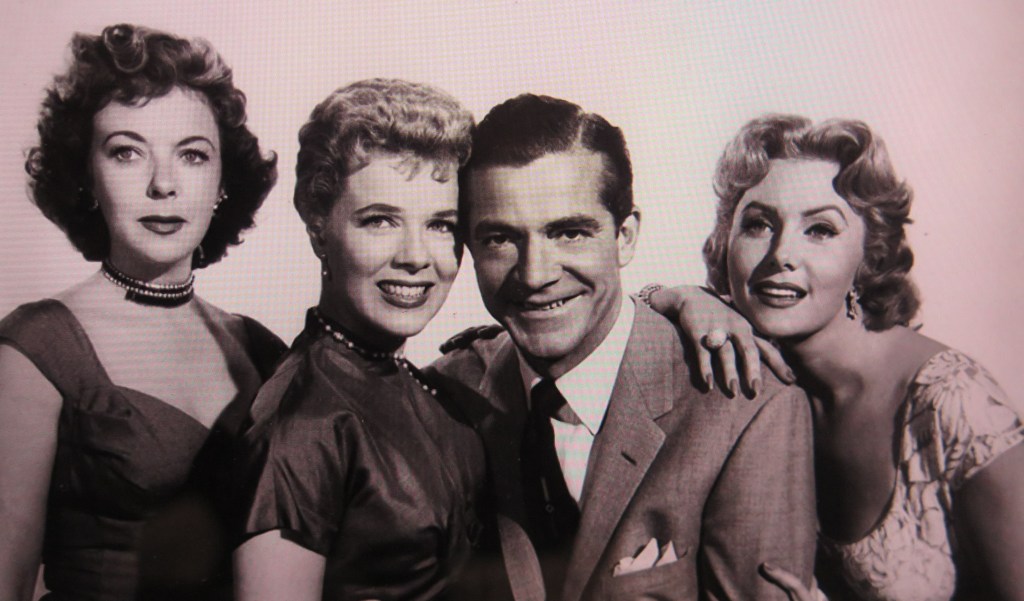
The only woman with a serious career as a director in the 1950s and 1960s, she headed up her own production company with her husband actor Collier Young. Together they created The Filmmakers Inc. As a Democrat and a Catholic, Lupino’s cinema took on sociological and criminal subjects that male directors either feared dealing with or ignored because men engendered the subject matter (i.e. rape).
Lupino’s film about rape (Outrage-1950) is decades ahead of its time in the way she reveals how the victim suffers PTSD afterward in nightmares and reactions to simple sounds. Also, the cinematography is incredible with tall shadows representing the terror and fear as the rapist stalks his victim. Indeed, this and other Lupino films are superb examples of Film Noir before Lupino’s counterparts dealt adequately with the genre.
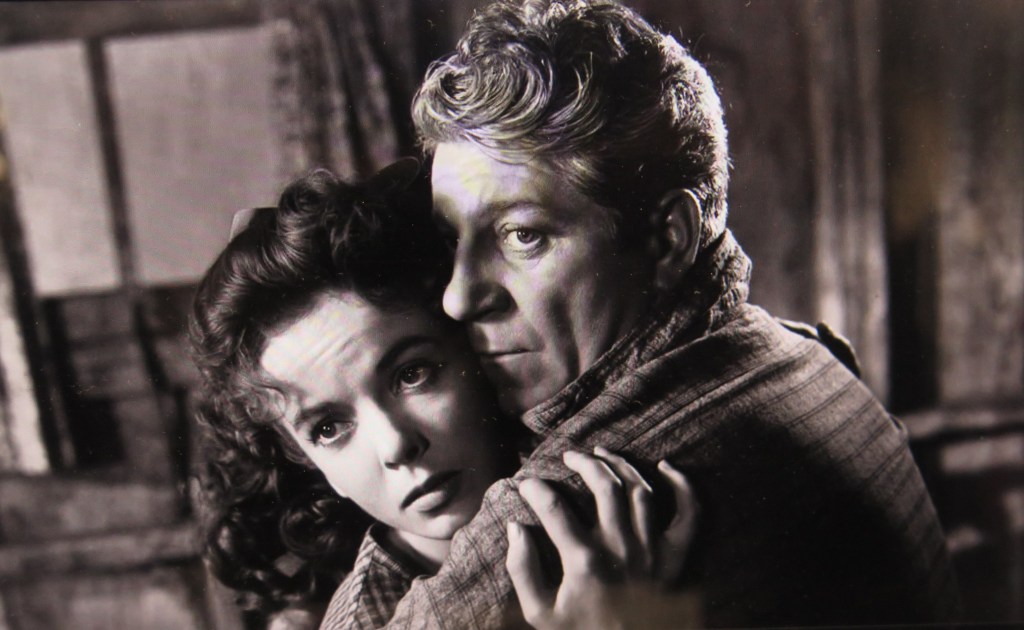
In another clip the Kuperbergs interview Martin Scorsese who discusses how Lupino’s cinematography influenced him. Identifying Not Wanted, a film about an unwanted pregnancy, Scorsese comments about the film’s documentary feel and power as a unique and pioneering work. The film shot on location deals with trauma, and the instability of a young woman having a baby with no husband. In dealing with the idea of teenage pregnancy which was against the happy family myths Hollywood perpetuated, again Lupino was a maverick presciently ahead of her time.
Finally, Lupino confronted another taboo related to illness and disease, the one ravaging children at the time: polio. She chronicles how polio sufferers were rejected and treated like lepers. Approaching this subject like no one else did before, Lupino creates empathy and humanity for those who suffered polio and other illness.
Interestingly, Lupino was the brains behind Filmmakers Inc. When Young wanted to go into distribution in addition to production, Lupino disagreed. She attempted to convince him that they knew little about the workings of distribution. Not listening to Lupino, Young tried and failed. They had to shutter Filmmakers Inc. However, Lupino persisted with her directing career after their divorce. Television was burgeoning so she moved to the small screen and directed over 100 works. She contributed her directing efforts to various episodes on “The Twilight Zone,” “Alfred Hitchcock Presents” and many other series. Lupino remains as the most prolific global female director of all time.

No wonder why men have attempted to stomp her from memory. But mother Lupino knows best. The Kuperbergs have resurrected her extraordinary contributions because perhaps the culture is ripe to recognize the genius independent producer-writer-director and learn from her.
Lupino has been out of the Hollywood loop historically. Nevertheless, her films remain timeless treasures where the mass produced typical commercial Hollywood fare have fallen into the garbage heap. Appreciating her brilliance and noting that she was one of the most complete and politically responsible filmmakers of all time, the Kuperberg’s Ida Lupino: Gentlemen & Miss Lupino, presents a long overdue focus on her career, themes and achievements. This is a must-see for filmmakers, writers, cinematographers and cinefiles. Check IMBD or your favorite VOD channels for screenings.
‘Master,’ a Thriller With Twists, Athena Film Festival
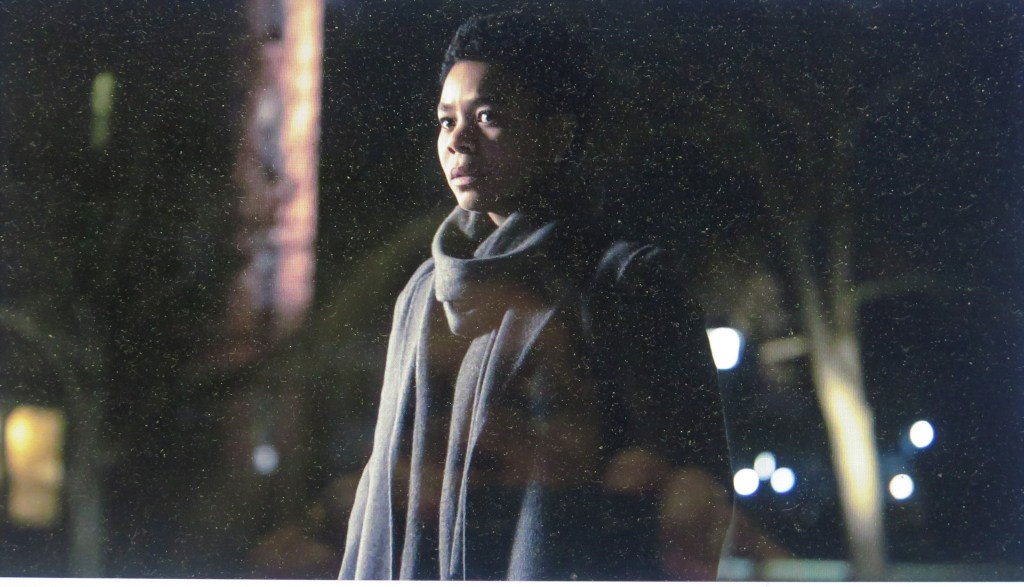
In Master written and directed by Mariama Diallo, the horrors of the past combine with present-day horror to gyrate into a memorable thriller with twists. The film screened at Athena Film Festival and SXSW.
Starring Regina Hall as Professor Gail Bishop, Zoe Renee as Freshman Jasmine Moore and Amber Gray as Professor Liv Beckman, Diallo presents three women of color. Each must find her own way to success at an elite New England university. Only one of the three succeeds. The reason why is disclosed by the conclusion.
Three Women of Color at an Elite University
Diallo opens with Jasmine who arrives at the campus welcomed by a student who intimates that she got “the room.” Later Jasmine discovers the legend about a woman hanged for being a witch. Part of the legend’s spin is that the university site is a Salem era gallows hill.
In macabre fashion, the “witch” picture hangs with other white Puritan ancestors/donors of the university. For whatever reason, the university perhaps views the woman as a martyr and eschews her dark and violent end. But the legend abides on the campus and underclassmen are tantalized by it as upperclassmen share the story abundantly so every student knows it.
Jasmine remains submerged in the legend and the hanging. Increasingly, she feels uncomfortable. Spooked by discussion that the witch forced a girl to jump to her death, Jasmine begins having nightmares. Her roommate and friends remain coolly distant and provide no help to make her feel accepted or comfortable.
The Dean Discovers a History of Racism on the Campus
Meanwhile, Gail Bishop enjoys the privilege of her position as “Master,” the dean of students. Though warmly welcomed by colleagues and students, she too must confront a terror which is in her beautiful but darkly lit residence. When Gail attempts to clean out some of the storage areas, she discovers the history of servitude and slavery in pictures left in shoe boxes.
Though her exalted position as a black woman makes her proud of her achievement to be appointed dean, in the artifacts she finds the unpleasantness of racism and servile abuse that existed in the house decades before. This is the site the official board of the university gave her to adopt as her home, but no one thought to clean out the storage areas. Is there an underlying message they are relaying? The pictures and weird, creaking noises stoke her fears. She visits her colleague Liv Beckman for comfort.
Meanwhile, something curious is happening with Jasmine in her classes. Though she achieved As in Tacoma, Washington and graduated as the Valedictorian, on the issue of critical race theory, she disagrees with Professor Liv Beckman. Beckman suggests that The Scarlett Letter has great racial bias and claims that the novel may be used to understand the racism in the setting and characters. Jasmine opposes that in open discussion. After she writes a paper expressing her views, she receives an F. Asking other students their grades, Jasmine determines that Beckman targeted her, so she files a complaint letter suggesting Beckman lacks competence.

The Women of Color are on Campus to Represent “Inclusion”
Ironically, Beckman represents as a black woman who college officials hired to show they support “inclusion.” Jasmine and Gail are all there for the same reason, to reveal how open and accepting the university is toward women of color. Thus, Jasmine’s accusation against Beckman appears contradictory and weird as does Beckman singling out a “sister.” Instead of unity between two black women, division overshadows them. What is the spirit that causes this?
The complexity deepens when the professors challenge Beckman’s receiving tenure because she hasn’t published. Caught between supporting her “sister” and being objective, Gail brings up the letter of complaint Jasmine filed against Beckman. It appears that Liv will have to leave. The unity that should exist among all three women has been shattered. To appear objective and just, Gail feels forced to tell her colleagues who will vote on Liv’s tenure about Jasmine’s letter of complaint.
Master’s Terror Shifts From Legends to Realities
Diallo then ratchets up the revelations of racial bias on the campus among the student body. Terrifying events occur that seem strange on a New England campus that appears to support diversity. However, the university had a vile history of a racism even in the 1960s which Jasmine uncovers doing research in the library. The perpetrators were never found in the lynching of a black woman student. Was this the work of the witch or a ghoul? Or did the murderer or murderers have white faces?
Using lighting, camera angels, pacing and interesting cinematography, Diallo creates mystery and suspense tying in the legends of the witch with a cult that meets in the woods and the lynching of the black woman student. After Jasmine discovers the hate crime, something becomes unleashed. Her discovery becomes the turning point. Racism on the campus becomes overt. Jasmine and Gail are targeted. Beckman, Jasmine and Gail attempt to help each other. However, sadly, the help never makes a difference.
The lines blur between imagination and truth
In the last half of the film Diallo stuns with unexpected twists. At one point, I thought the film to be sophomoric because Diallo cleverly misdirects her audience. Manipulating our understanding, she blurs the lines between the characters’ imaginations, nightmares and reality without clear delineation. And then she slowly reveals what we anticipate is the truth, but it isn’t. She keeps us guessing. Indeed, the opaqueness remains vital to the mystery, horror and shocking events that occur by the conclusion.
When brutality arrives, it devastates. The victim and the viewers who identify experience the fullness of the traumatic events.
Thematically, Diallo’s work clearly focuses on empathy. Allowing others to experience the shock of trauma puts the audience in the shoes of those abused, of those who experience racism’s terror on a visceral level.
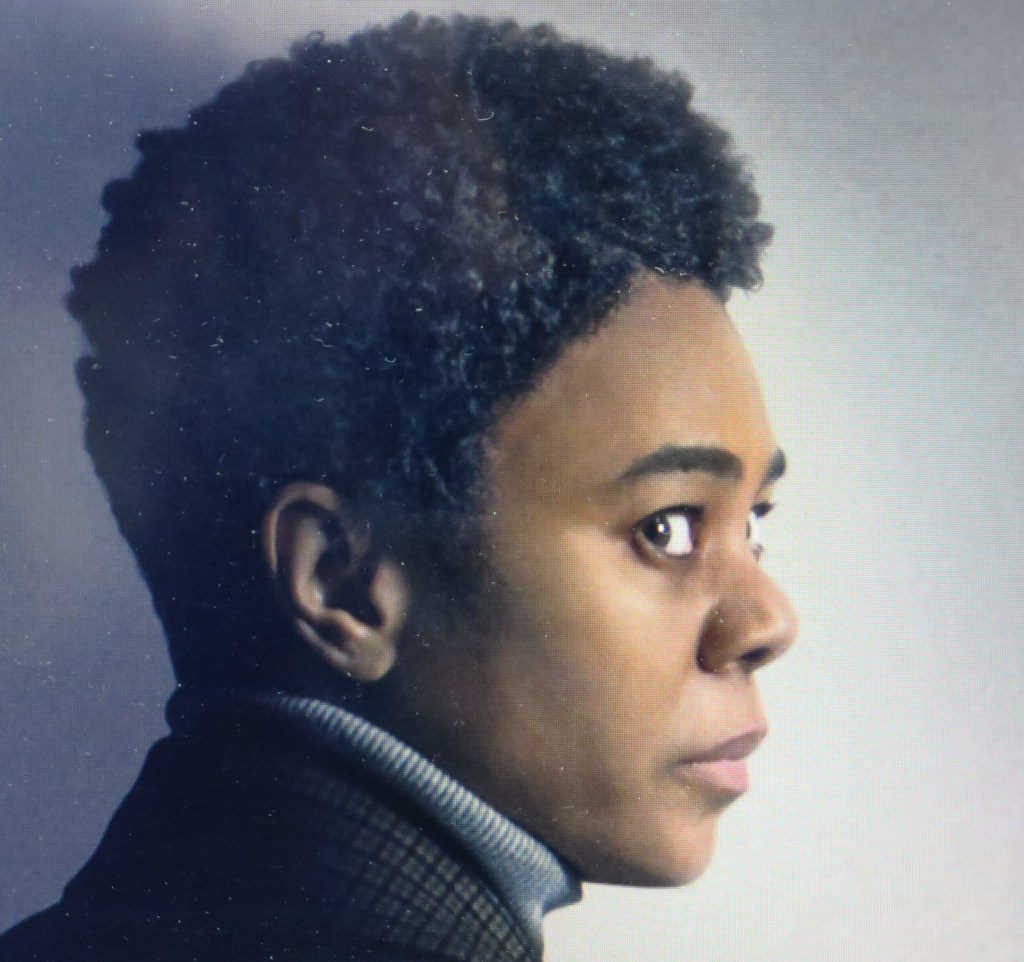
When Terror Comes There is no Going Back
Once the characters sustain that terror, there is no going back. Certainly, political discrimination, white privilege and historical racism are undercurrents which Gail finally realizes permeate the university. And institutional racism floats everywhere and terrorizes like a ghost ubiquitously. It’s on the campus. It’s in the nation. Diallo proves that Gail has nowhere to run or hide from danger as a black woman, certainly not at this university. Like a flash of lightening the full import of title comes to us as ironic and diabolical. Finally, what Liv achieves when she receives tenure is a well planned outcome that is a travesty of justice built on lies.
Diallo’s twists create a greater horror than ghosts and legends in Master. But the elite university still remains. And that may be the greatest horror of all.
Master is screening on Amazon. Don’t miss it.
 CAROLE DI TOSTI


.jpg)