Blog Archives
‘Brooklyn Laundry’ a Soap-diluted Rom-com That Avoids the Soul-dirt
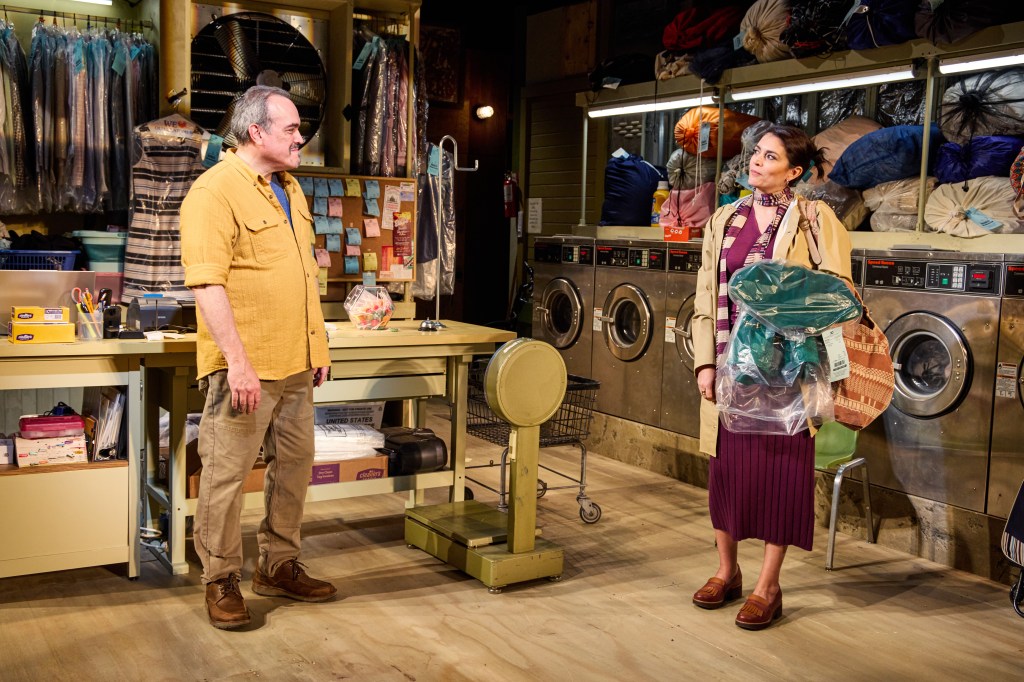
John Patrick Shanley’s Brooklyn Laundry, currently at MTC Stage 1 never quite elucidates trenchant themes though it might have with further character development. The 80 minute play, also directed by Shanley, currently runs at New York City Center Stage 1 until April 14th.
Starring Cecily Strong (“Saturday Night Live”), and David Zayas (“Dexter’), as the principal couple who meet in a drop-off laundry in Bushwick, Brooklyn, in Brooklyn Laundry Shanley presents two individuals who become involved with each other as a result of desperation, depression and loneliness. Also, they are between partners and have not been involved in a successful relationship ever.
The Meet-Up
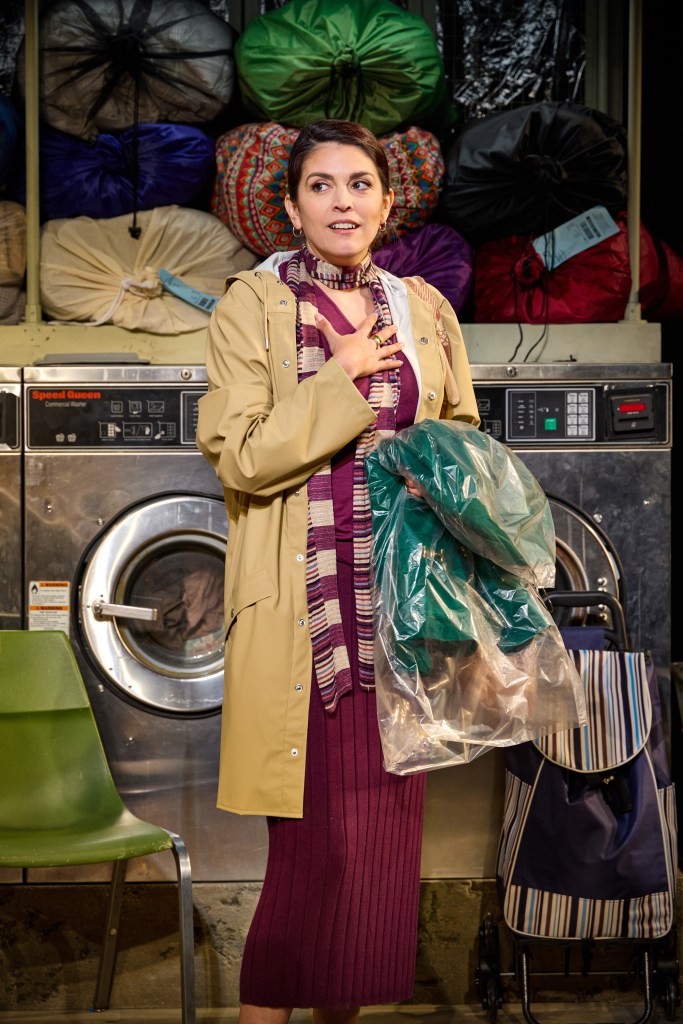
Laundry owner Owen (the lively Zayas), engages in light conversation with Strong’s Fran as the play opens. She is an on again off again customer, whose boyfriend left. Fran admits later in the scene that she is self-conscious about the fact that she can barely scrounge enough laundry to drop off for one load. When she was with her boyfriend, the bag weighed thirty-eight pounds; they did their laundry together. Owen, who Fran reminds that he owes her credit for losing a bag of her laundry 6 months prior, acknowledges that her lost laundry is a mystery. He has been giving her credit, though she complains that it doesn’t cover the price of replacing the missing items.
As they chit chat, Owen notes her “gloomy” nature to jostle her out of it. He tells her she reminds him of his fiance, who was “smart, one inch from terrific, but gloomy.” Fran disputes his label about her and suggests reality has brought issues into her life, and it isn’t without reason that her situation doesn’t make her the sunshine kid.

Owen discusses the necessity for positivity and an uplifted attitude, sharing his recent life story. He became the owner of three laundries, after a car accident settlement and lawsuit against his 9 to 5 boss who unfairly fired him. Assured that he has answers for her life in the face of her wishing she could have a car accident and be so lucky for monetary settlements, he takes a leap of faith. With apparent confidence he asks her to dinner. Fran suggests she will after she returns from a family visit in Pennsylvania.
Shanley has established the ground rules for these two individuals from different backgrounds with little in common, who make a connection simply by being present together and willing it. From this initial spark, Shanley takes us on a journey of how unlikely singles Fran and Owen fall in love because of need.
Reality’s Gloom and Fran’s Escape
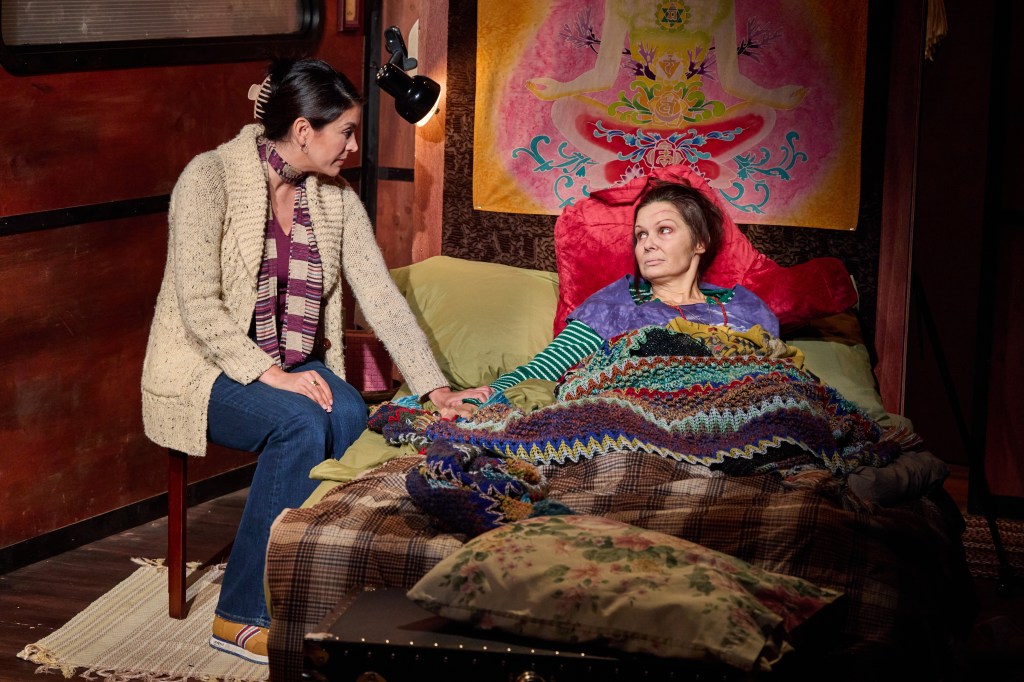
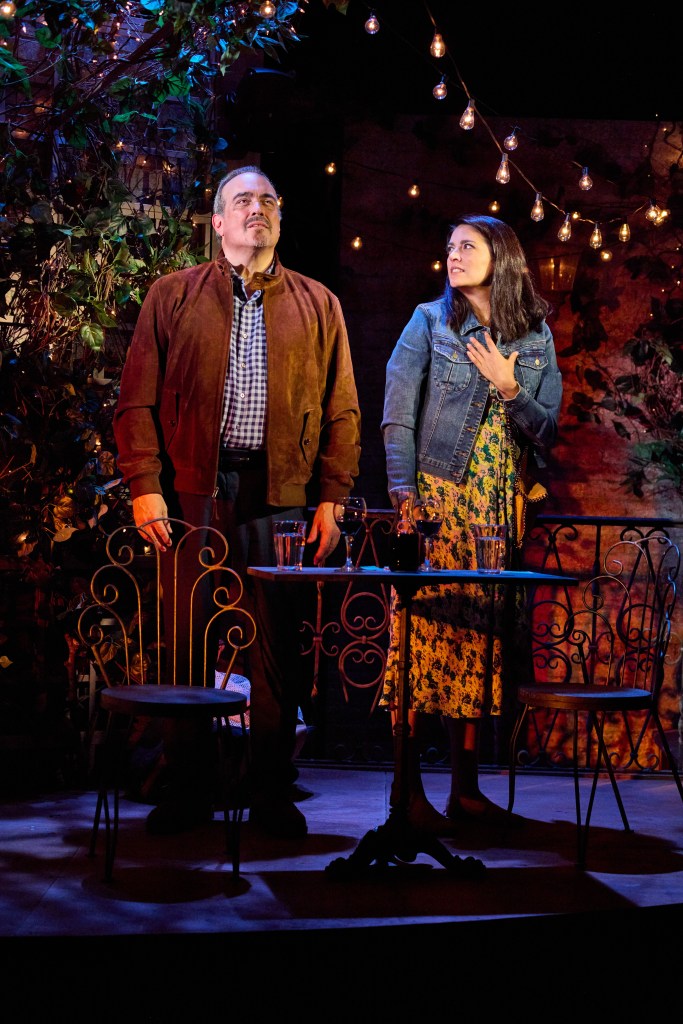
In the next segment, we understand why Fran is depressed when she visits her sister Trish (Florencia Lozano), who is ill with cancer, loopy on meds and lying in bed mostly unconscious. After her visit with Trish, Fran goes on her date with Owen high on magic mushrooms. She offers some to Owen and after a while he catches up to her. Together they experience the beauty of the lights and atmosphere of romanticism and their conversation intensifies.
On a sub rosa level, Fran introduces the mushrooms into the situation because she wants to escape thoughts about her dying sister. She chooses to live in a lovely, seductive place with Owen. She doesn’t share her Trish reality with him for fear it will drive him away. So she suppresses her emotions to suit his needs to be positive and upbeat. She puts aside her gloominess, despite the fact that complications with Trish abound and she has less than a month to live.
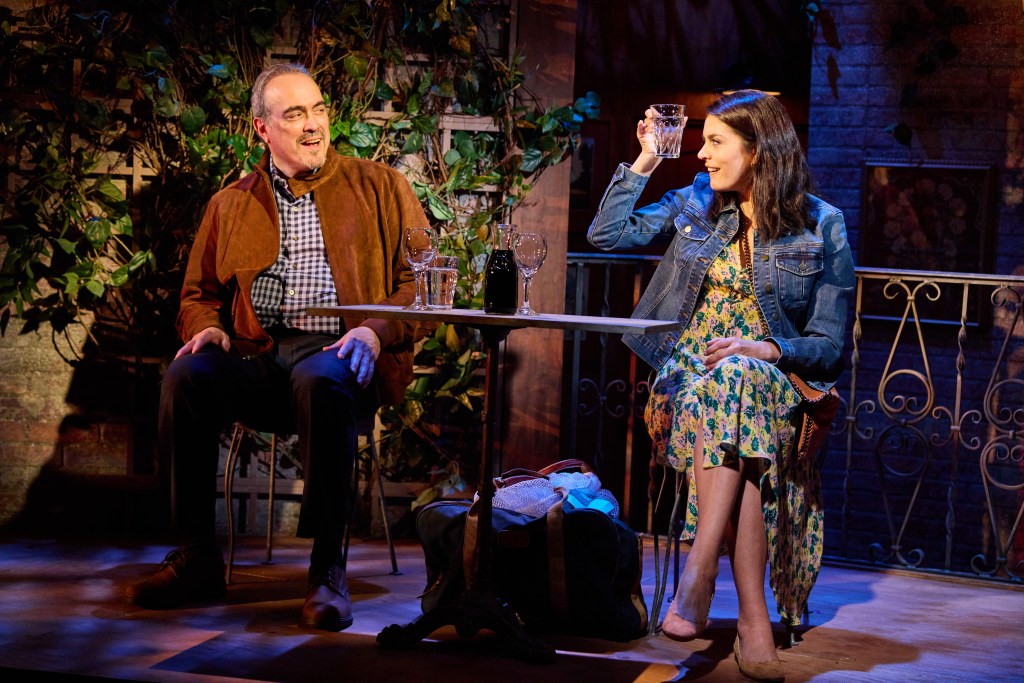
The mushrooms encourage their intimacy and Fran helps Owen conquer his sexual problems that happened as a result of his car accident, problems which turned off his former girlfriend who dumped him as a result of his poor performance. Interestingly, Owen is honest about a very sensitive subject with Fran and of course she helps him. On the other hand, Fran is dishonest with Owen because he set the parameters that she feels she must adhere to to be with him: no gloom. Thus, Fran and Owen become closer after their first date of intimacy, and after three weeks, theirs is a budding love.
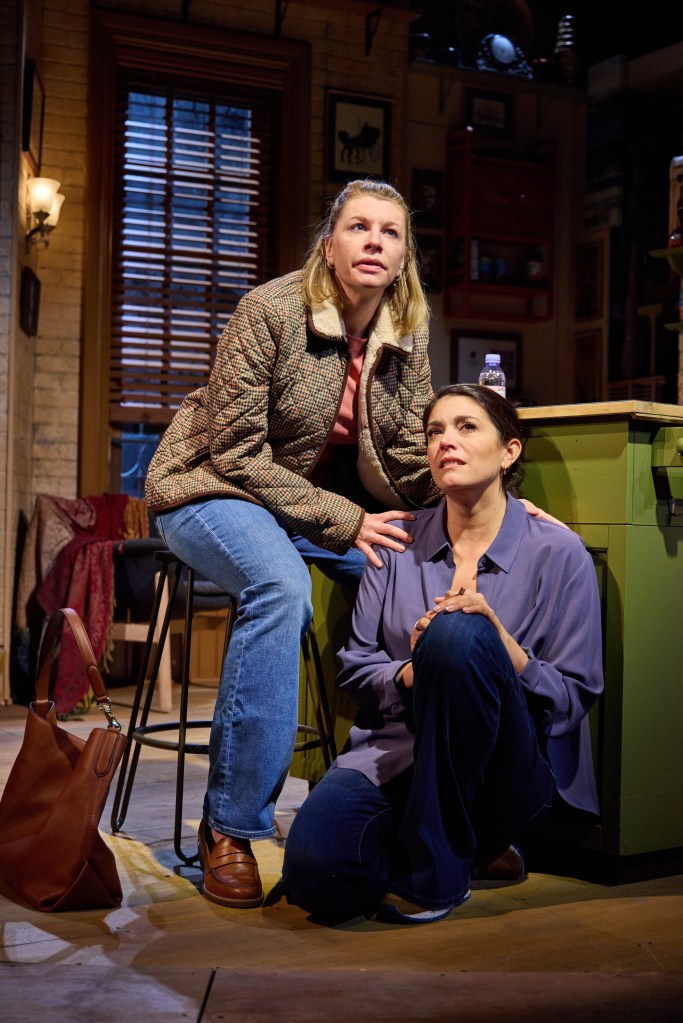
However, another jolt of reality intrudes and slams Fran in her “honesty” with Owen. Fran’s other sister Susie (Andrea Syglowski is always spot-on), stops by to collect Fran so together they will make arrangements for Trish’s imminent death. Fran refuses to go with Susie initially. She fears if she leaves Owen to spend time with family, she will lose the momentum of their relationship and he will dump her for someone else. With lies of omission, she lives in her own dream that she can spin along her affair with Owen without introducing the ugly realities about Trish dying.
The argument that ensues between Strong’s Fran and Sydlowski’s Susie about whether to visit Trish before she dies is beautifully paced and authentically threaded by both actors. During their accusations against each other, we learn how high the stakes are for Fran, who has never been married and has been the hand maiden to her two divorced sisters and their relationships with their loser husbands. We realize why she elected to escape to a love relationship with someone off beat which she clings to so she doesn’t have to face the doom and sadness of her life. Because Owen doesn’t appreciate negativity, his wants prevent her from spilling her emotions to him. Ironically, she is cutting off a valuable part of herself because she fears he only wants “happy, happy.”
Spoiler Alert
Then Susie levels with Fran about why she didn’t accompany her to see Trish the last visit. Susie is dying of pancreatic cancer.
With charming facility Owen cleaned off the “gloomies” from Fran’s plate to no avail. Susie’s horrible news slams Fran with a triple portion of gloom. Not only must she confront Trish’s impending death and the consequences of its impact on Trish’s young child, Taylor, she must confront the consequences of Susie’s dire prognosis. Fran’s doom and gloom lifted for three weeks by Owen will be a permanent fixture in her life. Additionally, guardianship of her sisters’ three children and their financial custodianship falls to her as their closest living relative. Will Owen want to take on a woman with three kids especially since he confessed he only wants his own child and isn’t looking for huge bills to pay for the upkeep of children who aren’t his?
The strength of Brooklyn Laundry is in how Shanley weaves the events, to back Fran into a corner delivering reality’s blows to her life, while showing her desperation to escape her circumstances by not sharing the truth with Owen. Eventually, her own obfuscations come back to haunt her. When Susie tells her about her cancer, Fran wakes up and stops moving in her imagined dream. She assures Susie she will act responsibly. Shanley’s characterization of Fran reveals her nobility, self-sacrifice and integrity in honoring her sisters by raising their children. She has made up her mind and whatever Owen does is up to him, take it or leave it. Fran puts family first.
The Last 10 Minutes
The last ten minutes of Brooklyn Laundry are the most dynamic because we note the inner struggles of the characters as they deal with hidden truths. Fran confronts Owen who stopped answering her calls. Though he portrays himself as the victim and ignores her comments that he ghosted her, something he promised he would never do, eventually, he is forced to put his pride aside. They both realize what they will lose without each other, and they are able to accept with humility that they care.
Shanley perhaps misses important dramatic moments by having the characters report their reactions after the fact to each other, instead of establishing a few scenes that are immediate, confrontational and a dynamic build up with irony. Instead, he writes one scene of alive confrontation and saves it for the very end. It is then that Fran’s serenity with reality shines and Owen reveals himself to be a typical male, more full of himself than he needs to be. However, after Fran walks out of his life to live in Pennsylvania, he realizes his mistake. The play’s conclusion falls into place with a few humorous surprises to satisfy audiences.
Kudos to the involved three-set scenic design of Santo Loquasto, Suzy Benzinger’s costume design, Brian MacDevitt’s lighting design. MacDevitt presents the magical fairy land lighting of the restaurant scene perfectly. Additional kudos goes to original music and sound design by John Gromada.
Brooklyn Laundry is facile and enjoyable thanks to the excellent acting ensemble. Shanley’s rhythms about loss, need and taking risks without ego are imminently human and recognizable.
Brooklyn Laundry with no intermission is in a limited engagement until April 14th. New York City Center MTC Stage 1, 131 West 55th St between 6th and 7th. manhattantheatreclub.com.
‘Dig’ by Theresa Rebeck, Caring for Plants and People, Review
In her comedy/drama Dig Theresa Rebeck (Bernhardt/Hamlet) examines the transformative moments that happen imperceptibly to individuals, when no one is paying attention and they are least expected. With serendipity and the synergy of human need, responsiveness and emotional immediacy, the energy for change becomes the forward momentum of this superb, exceptionally acted and directed production. Rebeck, wearing two hats as director and writer, effects a powerful character dynamic in the play, which first premiered at the Dorset Theatre Festival in Vermont, and is now enjoying its New York City Off- Broadway premiere at Primary Stages, 59E59 Theaters.
With striking characters that Rebeck displays in their quirky, raw humanity, gradually stripped away to their bloody core in an identifiable, magical coalescence, the themes of hope and resurgence are unveiled. That this happens in a small town which is imploding for want of commercial viability, and to an insular shop owner in need of a personal revolution, is all the more engaging.
Importantly, in Dig, Rebeck prods us to recall verities of redemption and reconciliation, which abide in all of our lives. Second chances are possible, regardless of how dire or malevolent the circumstances appear in the lives of the damaged, lost and hurting.

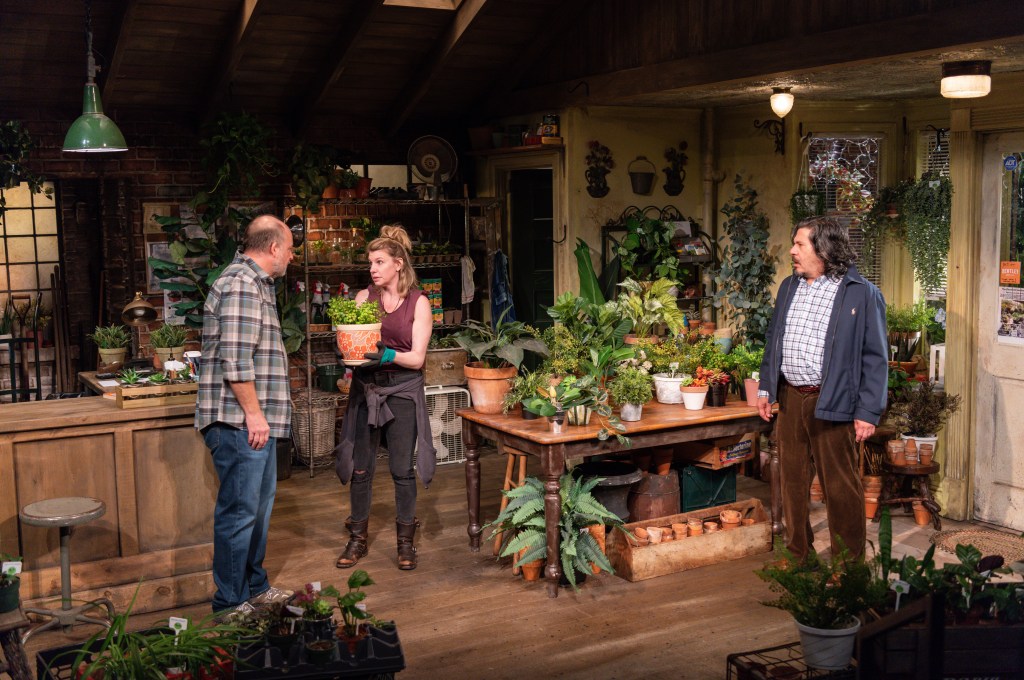
The setting for hope and transformation is fitting. It is the plant shop, “Dig,” where set designers Christoper Swader and Justin Swader have done a magnificent job in displaying wall to wall greenery, and later, as the characters spark to life and regeneration, floral beauty. Roger is the reticent, thoughtful owner who has created “Dig.” He controls his singular botanical world, is knowledgeable about plants, and is an amateur botanist who has a “knack” with encouraging dying plants back to life. Healthy and unhealthy plants are a perfect metaphor for the human condition, and Rebeck with tongue-in-cheek amply uses this metaphor selectively and profoundly.
The playwright initiates this metaphor and other concepts in the opening scene between Roger (Jeffrey Bean in a brilliant, nuanced performance), and his longtime friend, Lou (Triney Sandoval effectively portrays his feisty and catalytic counterpart). Lou has abused a plant Roger gave him with the unwitting behavior of a plant neophyte. He’s underwatered and overwatered the “elephant ears” to it’s last “breath.” As Roger chides him like a school teacher, Rebeck’s humor gains traction. Immediately we understand the relationship between Lou and Roger and the otherworldly importance plants have in Roger’s life. After scolding Lou, he assures him that he will salvage the dying plant. Lou is relieved.

The action redirects when Lou’s daughter Megan (the terrific Andrea Syglowski), speaks up in defense of Roger about the money he gave Everett (Greg Keller in a humorous, off-beat turn) to buy them coffees. Megan, who has quietly disappeared into the background, sitting near the door, is barely noticeable because of her withdrawn posture. Additionally, she is overshadowed by the lively, antic banter between Lou and Roger. Clearly, there are undercurrents in Lou’s neglect of the plant and Roger’s gentle upbraiding. Concurrently, Lou’s suspicion of Everett, Roger’s truck driver, who Lou says smokes pot, is a criticism which chafes Roger.
Lou’s neglectful plant care and his guilty response have more meaning we discover later, when the parallels between caring for plants and caring for human beings comes to the fore. Likewise, Roger’s permissiveness with Everett comes back to “hit him in the face” like a bad karma rash.

In this initial exchange Rebeck has laid the foundation for the interactions among Roger, Lou, Megan, Everett, and Molly (the fine Mary Bacon), who drops in a bit later looking for tulip bulbs. Like strategically placed dominoes that topple and swerve around corners, do complicated gyrations and elaborate tricks, the characters’ knock and shuffle against each other with various encounters, emotional explosions, jealousies and eventual quietude, which Rebeck brings to a poignant and satisfying conclusion at the end of the two hours and one intermission.
How she effects this character sleight of hand, under-girded by the superb actors, leaves the audience feeling they’ve experienced a series of events with surprisingly disparate individuals who, are somehow similar. Each attempts to affirm their identity and place in a life that may or may not have meaning for them, save Roger who is perhaps ahead of the others in finding his place, though the town is dying like a poorly cared for plant. Into this mirror of humanity, we note the pain and struggle of finding a way to understand others, when not all of their truth has been revealed.

Megan, fresh out of prison and rehab is living with Lou, her adoptive father, who has taken care of her for her entire life. She lives with him because she has no money and nowhere else to go. She is responsible for an accident during which she killed her son through negligence. Confused, filled with guilt, Megan tried to end her own life and failed.
This backstory is revealed gradually by discovery through the comments the other characters make about Megan when she isn’t in their presence. Rebeck’s skill in disclosing who Megan and her father are, their close relationship, and the town’s response to Megan’s responsibility in the accidental death of her son, is effected with power and realism. It is a sad tale that has hushed up the community and left Megan with few friends except for the comfort of her father, her trying, martinet-like AA group, and Roger, Lou’s best friend.
Apprised of Megan’s story, Roger is tentative and gentle with her. But he is bewildered when Megan screams at a customer for being nosy about recognizing her (most probably in the news reports on TV). In a follow up of her anger, Megan curses Everett and forces her father to leave before they’ve enjoyed their coffees. Her fury is shocking, however Roger takes it in his stride and defends her against gossip which Everett repeats. It is in Roger’s and Everett’s discussion we learn the way which Megan accidentally caused her son’s terrible death.

In this pivotal scene the stakes are unveiled and Megan’s volatile, unbalanced personality which Lou has confided to Roger places her on a knife’s edge. However, Megan returns the next day to apologize to Roger and is manipulative in wanting to ingratiate herself with him for a job. Interestingly, the job would make her feel useful; she does not want to be paid. And though Roger says he needs no one and rejects her, she pushes her way in, immediately demonstrating her usefulness by potting a plant, Perhaps, she can make a difference in the shop, can stabilize her life and reinvigorate Roger’s life as well.
In her actions, we are watching Megan throw herself a lifeline. Drawn to something in Roger’s nature, perhaps his empathy and his incredible weirdness in caring for his plants and in setting up his environment which is soothing and peaceful, she attempts to try something different.

That Roger allows her into his life to “disturb his peace,” and assist him for no pay, is something that Lou objects to out of fear for his friend. He knows her unreliability and feels guilt for Megan’s causing the accident. Furthermore, with her alcoholism, unless controlled, she can “fly off the handle” and explode into a frenzy.
In a protective mode, Roger recognizes that she is willing to change and work toward improving herself with her apology. It is unmistakable that she took responsibility for acting improperly. Her humility to change is again affirmed for Roger when Molly comes into the store and Megan apologizes to Molly and accepts Molly’s invitation to a prayer meeting at church.
In Act II “all’s well that ends well,” until it isn’t. By that point the shop is blooming with lovely flowers and Roger has fired Everett for his pot smoking antics in the truck and his disrespectful, judgmental attitude about Megan. In an argument which Roger won, Roger suggests his critical attitude toward Megan is unfair because the details surrounding her son’s death were uncertain. Roger has feelings for Megan. And though she senses it and tries to advance their relationship beyond friendship, we learn that Roger has spurned her attentions.

It is in this act when her former husband Adam ((David Mason’s portrayal is potent and searing), tracks her down to to confront her about their son’s death. Once again, Roger defends her. However she stops him and forces him to leave so she can hash out the issues with Adam. This revelatory scene is another turning point where we understand their relationship in an explosion that Roger cannot mitigate or influence. It is up to Megan to deal with the shreds of her life that remain, with the only intervention that might heal her-Roger and the plant store-which she has influenced and helped to make thrive in the fading town. But there are obstacles. Everett resents her taking his place. And in an underhanded, slick seduction, his actions influence her to leave so he can get back into Roger’s good graces.
Rebeck and her cast and creatives have put together a smashing work whose honesty and power is breathtaking. DIG is a refreshing, bold, funny and poignant production which defies easy definition.
In magnifying Rebeck’s vision, the superb design team worked overtime. They include Christopher Swader and Justin Swader (scenic design), Fabian Fidel Aguilar (costumes), Mary Ellen Stebbins’ atmospheric, mood-suggesting lighting design and Fitz Patton’s original music and and sound design. These creatives give the production the medium which allows the actors to seamlessly move and inhabit their characters with humor and probity.
DIG is memorable and metaphoric and profound. In a limited engagement until October 22nd, it is not to be missed. For tickets and times go to their website https://primarystages.org/shows/current-season/dig/
 CAROLE DI TOSTI