Blog Archives
‘Network’ on Broadway, Starring Bryan Cranston

Bryan Cranston and cast in ‘Network,’ adapted by Lee Hall based on the Paddy Chayefsky film, directed by Ivo Van Hove (Jan Versweyveld)
Paddy Chayefsky’s gobsmacking 1976 film satire Network (directed by Sidney Lumet), provides a searing example of the noxious morphing of Broadcast News toward lurid entertainment. Also, its timeless themes about the ubiquity of corruption even in the banal news delivery business cauterize with laser-like precision. In transferring this amazing work to Broadway, only a devilishly adroit director could improve upon an already ingenious rendering of the nullification of the free press by corporate greed. It takes genius to tackle the already fantastic. Unsurprisingly, Ivo Van Hove has applied his brilliance to bring Network to Broadway after its London run last year.
The innovative Van Hove and the inestimably formidable Bryan Cranston as Howard Beale, the uncanny, knight-errant, news anchor of fictional UBS make Network a mind-blaster. Cranston’s performance leaves one speechless. With humanity and ferocity, Cranston believably renders Beale’s epiphany about his own life. As a result he elicits our compassion and captivates us into astonishment. We watch open-mouthed as he steps into Beale’s cavernous soul-depth. And we feel the emotional pull of Cranston’s Everyman and journey with him to the Beale abyss. Cranston achieves an immediacy and truth that coheres with our own empathetic understanding. We’ve been there! Truly, even if we remain complacent with every privilege in the world, we feel “mad as hell and refuse to take it anymore!”
Exhilarated with wonder after seeing the production, I recall the profound themes Van Hove’s exalted direction and Lee Hall’s succinctly adapted script present. Indeed, these resound for us today in the fake news Trumposphere. Increasingly, the news spills out “shock and awe” entertainment. For the sake of profits, facts, information and sourced material shift to the back burner. Judgment and reason become sacrificed to the audience lust for titillation. The difficulties of divining the differences between truth, reality, lies, obfuscations increase. Content appears subject to media company editors who must carefully negotiate around the mission of profit and not upset advertisers. The confounded viewer eventually stops seeking to be informed as a civil obligation. Notably, viewers have been overwhelmed by the cacophony of lies from the media nexus which depends on advertising dollars.
Sadly, as Network illustrates, if truth and a truth deliverer do somehow break through the confusion of white noise and find a following as Howard Beale seemingly does, he and his opinions, “the truth” are commoditized. Finally, when the truth is hijacked for its profitability, the service of one whose opinions authoritatively voice society’s zeitgeist will be undermined. Truth can never be commoditized, regardless of how much its seekers long to hear it. The once noble concepts of a free press and information sharing to keep the public informed and knowledgeable disintegrate in CEOs bank accounts.
Van Hove and Hall have reconfigured the already brilliant Paddy Chayefsky script to another level of currency with a few modifications. Though the time period and characters appear similar, in the case of Max Schumacher (the fine Tony Goldwyn), and Diana Christensen (Tatiana Maslany distills all we dislike about the rapacious female executive), their self-destruction appears to be more trenchant.
The ironies of Network’s plot development are still precious. The fired Howard Beale whose ratings slump cannot be overcome states on the air that he intends to kill himself on next week’s program. His unauthorized announcement creates a furor and a ratings spike. Indeed, competitor news media make Howard Beale front page headlines. From this point on Beale’s inner unraveling moves to center stage. Beale becomes the stuff of media legend. As the journey of his personal enlightenment grows with power and truth, he and it are commoditized. Enabled by his friend Max Schumacher (Tony Goldwyn), and ambitious up-and-comer Diana Christensen (Tatiana Maslany), who usurps Max Schumacher’s job with seductive abandon, Beale ends up becoming the superlative ratings darling of UBS.

Tony Goldwyn, Tatiana Maslany in ‘Network,’ directed by Ivo Van Hove, adaptation by Lee Hall based on the Paddy Chayefsky film (Jan Versweyveld)
Essentially the dynamic twists of Hall’s adaptation follow Chayefsky’s sardonic overload brought to an absurdist conclusion. Beale’s breakdown drives him to the edge of sanity and a fool’s genius. Notably, as Cranston negotiates Beale’s travels from the hackneyed to sublime revelation, he leaves us spellbound. His “mad as hell” rant arises from Cranston’s core of understanding the human condition. As he explodes with humanity and inner beauty, we align ourselves with his emotion. We marvel at what he has made us feel.
Despite Max’s plea for decency to take Howard off the air and stop exploiting his breakdown, Diana Christensen promotes Beale as the angry “prophet” of the airwaves. As spokesperson for millions of individuals, Beale enamors his fans with unscripted “truths.” On “The Howard Beale Show,” converted into something akin to a game show with us as the live audience, Beale’s ravings resound with passion.
Meanwhile, confounded by his own immorality and dissipation, Max leaves his wife Louise. I love what Alyssa Bresnahan does with Louise’s aria. Going against his own best interests, Max has an affair with the obscenely ambitious Christensen. As their relationship begins to crumble, the climax of the cacophony of chaos peaks. Cannily, Beale crosses a line that must never be crossed. He mucks with the corporate restructuring of debt. And Arthur Jensen, the CEO of CCA, the parent company, gets mightily pissed. Nick Wyman’s subtle, grinning malevolence as Jensen is just great.
Largely due to Bryan Cranston’s fantastic performance as Howard Beale, Network echos in our remembrance. As Howard Beale communicates truth to his television audience, Cranston brings our consciousness into the greater understanding of who we are as human beings. In Beale’s realization of who he can be, he reminds us of our value and our spirit and soul worth. When Cranston’s Beale expresses the anger which is more than anger and rage that is more than rage, it is as if he grasps our being, and we tie in with him forming a collective consciousness.
Indeed, Beale takes us to a level of human sanctity that was unimaginable at the top of the production. When at one point Cranston’s Beale joins the audience and sits next to two individuals for a confidential moment (he’s incredible in delivering the irrevocable ineffability of live theater), Van Hove turns the cameras on us. We see ourselves projected on television. It is impossible to ignore the truths of what we experience in the shadow of Beale’s soul light. Irrevocably, we awake and feel intensely because Cranston trusts Beale’s heart and conjoins himself and us with it.

(L to R): Bryan Cranston, Tony Goldwyn and the cast of ‘Network,’ directed by Ivo Van Hove, adaptation by Lee Hall based on the Paddy Chayefsky film (Jan Versweyveld)
For his part Van Hove has rendered the dynamism, artificiality and hyperbolic humming chaos of the TV production newsroom with seamless facility. We watch the recreated TV Studio live! Thus, we see the news projected on the big screen as camera operators live-capture Cranston’s Beale. And we note his various pilot fish (make-up, hair and clothing assistants, etc.), fussing over him. The immediacy of their actions powers up to build suspense about watching the “TV show.” Of course it is a show within a show. And we all become players!
Interestingly, the authenticity and the boardroom scenes reinforce the theme that “profit-motives propel television content” (we think of social media), to addict and brainwash. Media folks need us to appreciate sensationalism over rationality. And their obsession with the bottom line strips and devours the decency of all who work for the CCA company. Most importantly, we note the downward trend away from kindness, generosity and concern for others in Christensen, Frank Hackett (Joshua Boone), Harry Hunter (Julian Elijah Martinez) and others. In fact all who create such entertainment news reflect a craven amorality.
Additionally, Van Hove’s striking re-imagining of a TV studio and news room as a live play by play brings the action into our laps. We serve a dual function. With sardonic humor, Van Hove makes us a live and interactive, participatory audience as we applaud to “Applause” signs. Yet simultaneously, we watch the action on smaller screens featuring various channels which morph to the large screen for Beale’s news program. We participate, yet we distance ourselves as the voyeurs of TV’s “non-participatory experience.”
Interestingly, this meld of the two roles we play as audience members during “The Howard Beale Show” creates dissonance. For ultimately, we “get” that as the media audience (especially social media), we choose/control the content which is as good as our viewing tastes.
This production and all who create its fever, furor and fabulousness from actors to scene and technical designers impart a momentum that runs like an electric wave which ignites all it touches. The encounter provokes. It is as if by watching the downfall of Howard Beale, UBS, CCA and everything that was once moral and decent in the news business, we watch our own participation/contribution to it.
Chayefsky’s and Hall’s Network is the harbinger of the current social media devolution. “The news” has been atomized to fit every opinion or position based on skewed information and ear tickling “facts.” And it is these statements “of fact” that force us to a site like Snopes for fact-checking. Ironically, the site speaks more credibly of its being relied upon by non-readers and non-researchers than for its accuracy.

Bryan Cranston and the cast of ‘Network,’ directed by Ivo Van Hove, adaptation by Lee Hall based on the Paddy Chayefsky film (Jan Versweyveld)
The greatness of this production is in its expression as an immersive consciousness-raising satire/comedy/drama. For it compels us to interact with cognition and emotion in a weird connect/disconnect. On one level, Network, especially in its addendum video clips (no spoiler alert-you’ll just have to see it), becomes an intriguing call to action. We can be better if we demand better and do not settle for less. On the other hand, Van Hove shepherds Cranston, the excellent ensemble and the artistic designers to provide an incredible one-of-a-kind entertainment that makes us think long after we’ve left the Belasco Theatre.
Special kudos to Jan Versweyveld (Scenic & Lighting Design), Tal Yarden (Video Design), An D’Huys (Costume Design), Eric Sleichim (Sound & Music).
Don’t miss this one. You will regret not seeing Bryan Cranston and this fiery re-imagining of Network at the Belasco Theatre. The production runs with no intermission at the Belasco Theatre (111 44th Street), through 17 March. You can pick up tickets at their website.
Bryan Cranston in Conversation With David Edelstein, Tribeca TV Festival 2018

Bryan Cranston, Davie Edelstein in Conversation, Tribeca TV Festival, 2018, Tribeca Talks (Carole Di Tosti)
Bryan Cranston, one of the most versatile actors of his generation, spoke with David Edelstein (film critic New York Magazine) in a Q and A during the 2018 Tribeca TV Festival. They discussed salient points about his high-velocity career on TV, film, and stage. Always interesting and vibrant Cranston, spoke about acting considerations and the process. Notably, he attributes his success to hard work and luck. Obviously, Cranston’s passion melded with humility drives him with the knowledge that he must continually be in learning mode. This attitude pays off. For at this point he excels at whatever task he endeavors. Cranston’s quietly forged, dogged determination shines a beacon even for established actors, producers and directors.
When Cranston made a showing in films like Little Miss Sunshine (2006), he already had found a home on the small screen. Notably, his TV credits amass from appearances beginning in “One Life to Live.” As he took acting classes, he accomplished parts on various TV series. And shows like Raising Miranda (1988) and Matlock (1987, 1991) gave him longer stints. Work begets work and for longer work periods. Various films and TV series crossed his path like the TV Mini Series Macross Plus (1994) and The Louie Show (1996).

Bryan Cranston, Tribeca Talks, Tribeca TV Festival 2018 (Carole Di Tosti)
After two decades, he began to strike gold. As Dr. Tim Whatley on Seinfeld, he made an indelible mark. And as the amiable dad, Hal on Malcolm in the Middle (2006), cultural phrases sprang from his character portrayal. Thus, his hard work cemented the bricks of experience to build a fortress of a career. This fortress enabled him to weather world wide acclaim. And it allowed him to possess the grace within to receive the numerous accolades for subsequent one-of-a-kind portrayals.
Who can imagine the character of Walter White in Breaking Bad without Cranston? White, so incredibly fleshed out by Cranston, will live in our cultural memory for decades. Morphing from a “Goodbye Mr. Chips” teacher to drug empire maker “Scarface,” Cranston pulled every range of emotions from his acting toolkit. Through the show’s seasons, he won numerous awards. Cranston’s power grid solidified. The starpower gained from his four time Emmy success, enabled him to become one of the producers during the series’ fourth and fifth seasons. And he won the Primetime Emmy Award for Outstanding Drama Series twice.
Ever since, Cranston has been on a roll swallowing up experiences to learn all aspects of “the business” he obviously loves. Reviewing the decades long arc of his career reveals that marvelous events come to those who “put in the time” and “make the most” of opportunity’s breakwaters. In 2014, Cranston won the Tony Award for his portrayal of Lyndon B. Johnson in Broadway’s All the Way. Subsequently, having created his production company Moonshot Entertainment, he reprised the role for the HBO adaptation of the same name.

Bryan Cranston, Edelstein, Tribeca Talks, Tribeca TV Festival 2018 (Carole Di Tosti)
During the conversation Cranston discussed how his teenage years and personality gave him the juice to create characters in a TV series he co-created and co-produces i.e. Sneaky Pete. The exceptional casting stars Giovanni Ribisi and currently moves through its second season. Cranston mentioned that as a teen he manifested a “sneakiness.” But his life took another turn away from “true crime,” and becoming an LAPD officer which he had been working toward in college. His direction switched when he took Acting Class as an elective. Nevertheless, he used the behaviors (lying, cover-ups), and that M.O. to create characters and story. As the positive reviews flow in Season 2, Sneaky Pete remains fresh, bold and smart. And as Cranston enjoys mixing up expectations, they’ve added conflicts and developments that do not allow the protagonist to breathe any relief from his own self-inflicted lying machinations.
Cranston clarified that success builds upon success. As a result his company developed various television series along with Sneaky Pete, in The Dangerous Book for Boys, and Philip K. Dick’s Electric Dreams for Amazon. Included is the Emmy-nominated animated series SuperMansion for Sony/Crackle. The foundation of incredible effort built throughout his career remains stalwart. For indeed the vicissitudes happened upon him in Cranston’s early years, a factor he referred to during the conversation. However, all events in one’s life provide acting and storytelling grist. Though painful, they can be culled and transformed into art.

Bryan Cranston, Tribeca TV Festival 2018, Tribeca Talks (Carole Di Tosti)
This year Cranston was nominated for a 2018 Emmy for his guest-starring role as Larry’s therapist on Curb Your Enthusiasm. And after coming off a sold-out, award-winning run in London, Cranston stars on Broadway as Howard Beale in Paddy Chayefsky’s ever timely Network by Lee Hall, adapted from the film script. I had tried to see the production in London at the National Theatre in December when I visited the UK. The production was sold out and for good cause. Cranston’s performance was spot-on. He won the 2018 Critics’ Circle Theatre Award for Best Actor. He was nominated for the WhatsOnStage Award for Best Actor in a Play. Also, he won the 2018 Laurence Olivier Award for Best Actor.
Like many actors, Cranston does not read reviews of his work. He stated that the reviews if negative or positive could impact how he works the character through his own acting instrument. He took many acting classes over the years and left when he received continual praise. Interestingly, Cranston felt he needed to learn more. And if he plateaued in a class, the time had ripened to move on and pick up another tool for his acting kit. Being his own coach and critic, reviews provided nothing useful. Indeed, onstage, the interaction with the audience changes a performance nightly. He mentioned new ideas and a reliance on imagination which infuse the evocation of a character. Being in the moment is paramount.
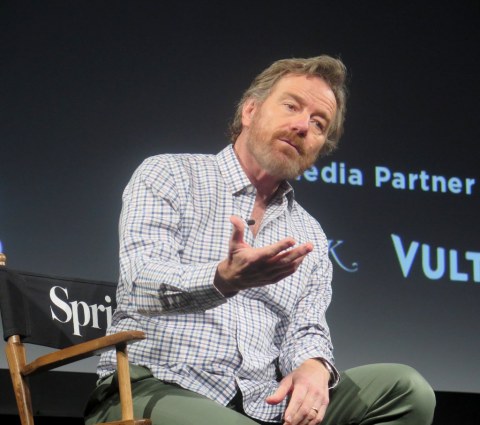
Bryan Cranston, Tribeca Talks, Tribeca TV Festival 2018 (Carole Di Tosti)
Some interesting points that Cranston made concerned acting. He remarked that actors must give in to their impulses. Indeed, he said, “The more I do that and get off kilter from the norm, the better.” He added that if one “does make a mistake, one apologizes and if one’s life is clean, the mistakes will be minor.”
Edelson bounced back with the adage about the difference between greater and lesser actors. He suggested that “the greater actors are not afraid to appear foolish.” Cranston concurred. And he added that actors must take risks. He cited the quote, “You’re only as good as you dare to be bad.”

Bryan Cranston, David Edelstein in Tribeca Talks, Tribeca TV Festival 2018
Taking chances Cranston credits to be a vital part of great acting. Inherent with good performers is the prerequisite that actors have to be willing to take chances. Not only does this refer to physical chances, but emotional ones. According to Cranston, actors put themselves in emotional jeopardy often. He explained, “When you go through a process like that, your body does not know the different between acting and real life. If I’m putting myself in a position where I’m weeping or heaving with upset, anger or fear, my body does not know I’m acting.”
And Cranston continued about the sacrifices of actors when expressing dense emotion. “Your body can be shaking. It takes a while to come down from that. It can be exhausting but also exhilarating.”
Edelson referenced that Cranston doesn’t show an image persona and one that remains private. Indeed, the public has seen actors who are schizoid. Sometimes they manifest the artificial “show biz” personality and the separate family or off screen persona. As a compliment, Edelson remarked that Cranston appears measured, relaxed, himself with no difference between public and private individual. He joked that Cranston didn’t appear to have schisms. Cranston used this praise to quip, “Oh, I got a lot of schisms.”
However, the conversation came back around to the work. Cranston reinforced that he is not one to stand around at parties schmoozing, drink in hand “yelling” above the music and din of people talking. He said he didn’t think the atmosphere seemed conducive to making a connection with anyone. He proclaimed, “I’m not good at that.” He also commented that while he has a tremendous amount of energy, he prefers saving it for those things that he wants to do.
In effect he must husband the enthusiasm and grist he does have for projects. Clearly, he has other irons in the fire that he will use to continue to work on that fortress of a career.
See Bryan Cranston on Broadway in Network before the tickets are sold out. Most likely the production and Cranston will be up for additional awards in the US, including a Tony.

Los Angeles Online Film Critics Society Nominations


(L to R): Darryl Poniscan, Laurence Fishburne, Bryan Cranston at NYFF Q and A, ‘Last Flag Flying’ (Carole Di Tosti)
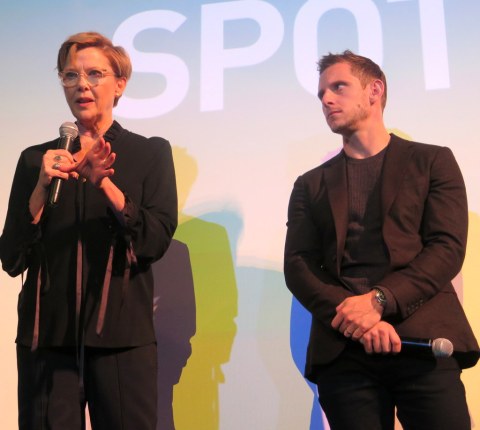
Annette Bening, Jamie Bell, Q & A ‘Film Stars Don’t Die in Liverpool,’ HIFF 2017 (Carole Di Tosti)

(L to R): Michael Stuhlbarg, Timothée Chalamet, Armie Hammer, Director Luca Guadagnino in ‘Call Me By Your Name’ Q & A at NYFF 2017, hosted by Nigel M. Smith (courtesy NYFF Talks)
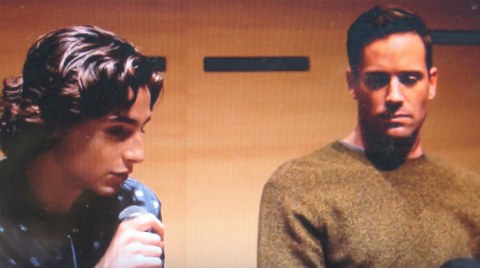
Timothée Chalamet, Armie Hammer, NYFF 2017 ‘Call Me By Your Name’ Q & A hosted by Nigel M. Smith (courtesy NYFF Talks)
Guillermo del Toro’s The Shape of Water leads with 11 nominations while Greta Gerwig’s Lady Bird lands in second place with nine and Christopher Nolan’s Dunkirk in third with eight.
(Los Angeles, CA – December 4th, 2017) – The Los Angeles Online Film Critics Society (LAOFCS) is pleased to announce that their Awards Ceremony will be held on January 3rd, 2018, at which time the winners will be announced.
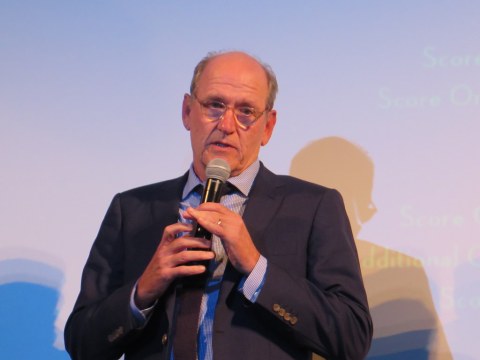
Richard Jenkins ‘The Shape of Water,’ HIFF 2017 Q & A (Carole Di Tosti)
Fox Searchlight’s The Shape of Water tops the nominations list with eleven nominations including Best Picture and Best Original Screenplay while Lady Bird earns nine nominations and Dunkirk earns eight. Jordan Peele’s massive hit, Get Out scores nominations for Best Male Director and Best First Feature.

Ruben Ostend, director ‘The Square,’ NYFF 2017 Q & A (Carole Di Tosti)
Studio films such as Wonder Woman, War for the Planet of the Apes, and Blade Runner 2049 are also among the nominations scoring five nominations each.
A few smaller released films have found their place on the nominations list including Neon’s Colossal, Trademark Films & Break Thru Films’ Loving Vincent, and the Sundance Institute’s Columbus.

Diane Kruger, ‘In the Fade,’ HIFF 2017 Q & A (Carole Di Tosti)
Saoirse Ronan and Timothée Chalamet are each nominated for Best Actress and Actor as well as Best Performance by an Actor or Actress Under the Age of 23.
The Los Angeles Online Film Critics Society is pleased to announce that it is the first ever critics group to feature two Best Director categories; one for female and one for male. “There has been so much conversation about the power of female filmmakers and we wanted to embrace it,” said Mantz. “There is a Best Actor and Best Actress category as well as Best Supporting Actor and Actress, so why not have a Best Male Director and Best Female Director category?” asked Menzel. Good idea considering more attention must be given to the exceptional work of female directors who are often closed out in favor of their male counterparts.
In total, the Los Angeles Online Film Critics Society members have nominated over forty different films ranging from smaller art-house releases to major blockbusters.
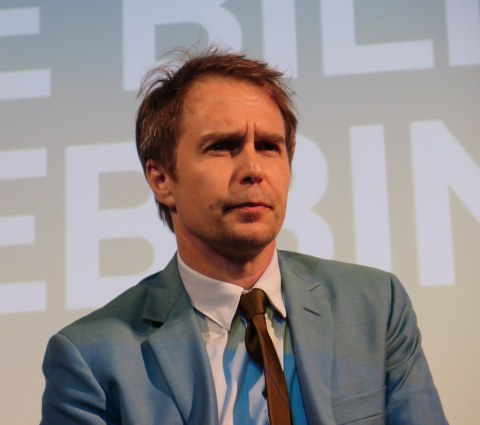
Sam Rockwell, HIFF 2017 ‘Three Billboards Outside Ebbing, Missouri’ (Carole Di Tosti)
Nominations for the first Annual Los Angeles Online Film Critics Society Awards:
BEST PICTURE
The Big Sick
Colossal
Call Me By Your Name
Get Out
I, Tonya
Lady Bird
Molly’s Game
The Post
The Shape of Water
Three Billboards Outside Ebbing, Missouri

Bryan Cranston, ‘Last Flag Flying,’ NYFF 2017 Q & A (Carole Di Tosti)
BEST FEMALE DIRECTOR
Dee Rees, Mudbound
Greta Gerwig, Lady Bird
Kathryn Bigelow, Detroit
Patty Jenkins, Wonder Woman
Sofia Coppola, The Beguiled
BEST MALE DIRECTOR
Christopher Nolan, Dunkirk
Guillermo del Toro, The Shape of Water
Jordan Peele, Get Out
Luca Guadagnino, Call Me By Your Name
Steven Spielberg, The Post

Jamie Bell, ‘Film Stars Don’t Die in Liverpool,’ HIFF 2017 Q and A (Carole Di Tosti)
BEST ANIMATED / VISUAL EFFECT PERFORMANCE
Andy Serkis, War for the Planet of the Apes
Doug Jones, The Shape of Water
Dan Stevens, Beauty and the Beast
BEST EDITING
Baby Driver
Dunkirk
I, Tonya
The Post
The Shape of Water
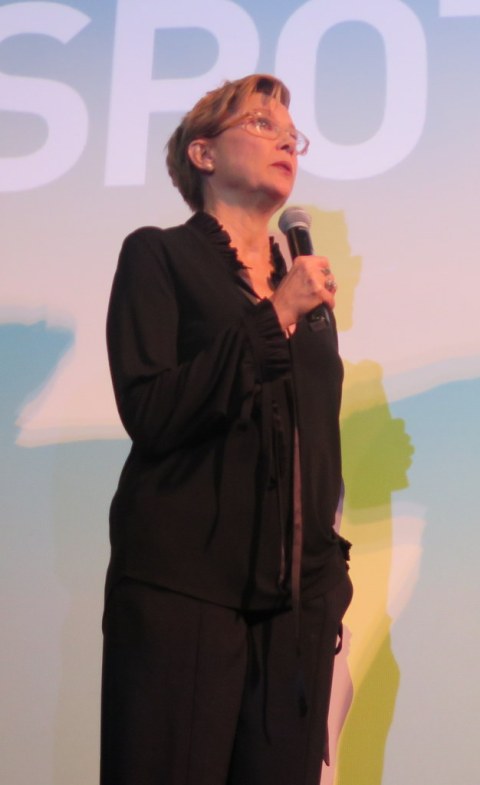
Annette Bening, HIFF 2017 Q & A ‘Film Stars Don’t Die in Liverpool,’ (Carole Di Tosti)
BEST SCORE
Blade Runner 2049
Dunkirk
Phantom Thread
The Shape of Water
War for the Planet of the Apes
BEST STUNT WORK
Atomic Blonde
Baby Driver
Dunkirk
John Wick: Chapter 2
Wonder Woman
BEST PERFORMANCE BY AN ACTOR OR ACTRESS UNDER 23 YEARS OLD
Brooklynn Prince, The Florida Project
Dafne Keen, Logan
Jacob Tremblay, Wonder
Saoirse Ronan, Lady Bird
Timothée Chalamet, Call Me By Your Name
BEST SCI-FI/ HORROR
Blade Runner 2049
Get Out
It
It Comes at Night
The Shape of Water
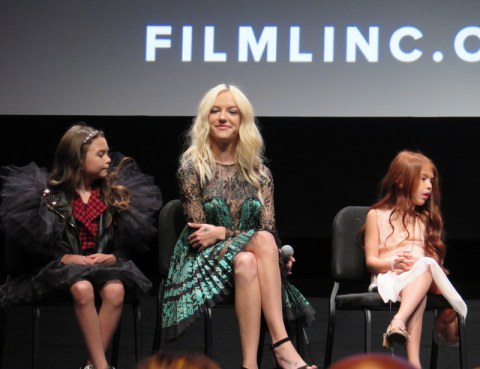
(L to R): Brooklyn Prince, Bria Vinaite, Valeria Cotto, NYFF 2017 Q & A ‘The Florida Project’ (Carole Di Tosti)
BEST ACTION/WAR
Baby Driver
Dunkirk
Logan
War for the Planet of the Apes
Wonder Woman
BEST COMEDY/MUSICAL
The Big Sick
The Disaster Artist
Girls Trip
I, Tonya
Lady Bird
BEST FIRST FEATURE
Aaron Sorkin, Molly’s Game
Greta Gerwig, Lady Bird
Kogonada, Columbus
Jeremy Gasper, Patti Cake$
Jordan Peele, Get Out

Armie Hammer, HIFF 2017 Red Carpet, ‘Call Me By Your Name,’ (Carole Di Tosti)
BEST INDEPENDENT FILM
The Big Sick
Colossal
A Ghost Story
I, Tonya
Lady Bird
BEST BLOCKBUSTER
Beauty and the Beast
Dunkirk
Logan
War for the Planet of the Apes
Wonder Woman
BEST CINEMATOGRAPHY
Bruno Delbonnel, Darkest Hour
Dan Laustsen, The Shape of Water
Hoyte van Hoytema, Dunkirk
Rachel Morrison, Mudbound
Roger Deakins, Blade Runner 2049
BEST VISUAL EFFECTS
Blade Runner 2049
Dunkirk
The Shape of Water
War for the Planet of the Apes
Wonder Woman
BEST DOCUMENTARY
An Inconvenient Sequel
Jane
Jim & Andy: The Great Beyond
Step
Whose Streets?

(L to R): Bryan Cranston, Steve Carell, Laurence Fishburne in ‘Last Flag Flying,’ (courtesy of the film)
BEST FOREIGN LANGUAGE FILM
BPM, France
First They Killed My Father, Cambodia
In the Fade, Germany
The Square, Sweden
Thelma, Norway
BEST ANIMATED FILM
The Breadwinner
Coco
Captain Underpants: The First Epic Movie
The LEGO Batman Movie
Loving Vincent
BEST ORIGINAL SCREENPLAY
Emily V. Gordon & Kumail Nanjiani, The Big Sick
Greta Gerwig, Lady Bird
Guillermo del Toro & Vanessa Taylor, The Shape of Water
Jordan Peele, Get Out
Martin McDonagh, Three Billboards Outside Ebbing, Missouri

(L to R): Sam Rockwell, David Nugent, HIFF 2017 Q & A ‘Three Billboards Outside Ebbing, Missouri (Carole Di Tosti)
BEST ADAPTED SCREENPLAY
Aaron Sorkin, Molly’s Game
Luca Guadagnino, James Ivory, & Walter Fasano, Call Me by Your Name
Michael H. Weber & Scott Neustadter, The Disaster Artist
Scott Frank, James Mangold, & Michael Green, Logan
Virgil Williams & Dee Rees, Mudbound
BEST SUPPORTING ACTRESS
Allison Janney, I, Tonya
Holly Hunter, The Big Sick
Laurie Metcalf, Lady Bird
Octavia Spencer, The Shape of Water
Tiffany Haddish, Girls Trip
BEST SUPPORTING ACTOR
Idris Elba, Molly’s Game
Michael Stuhlbarg, Call Me By Your Name
Patrick Stewart, Logan
Sam Rockwell, Three Billboards Outside Ebbing, Missouri
Williem Dafoe, The Florida Project
BEST ACTRESS
Frances McDormand, Three Billboards Outside Ebbing, Missouri
Margot Robbie, I, Tonya
Jessica Chastain, Molly’s Game
Sally Hawkins, The Shape of Water
Saoirse Ronan, Lady Bird
BEST ACTOR
Daniel Kaluuya, Get Out
Gary Oldman, Darkest Hour
James Franco, The Disaster Artist
Timothée Chalamet, Call Me By Your Name
Tom Hanks, The Post
 CAROLE DI TOSTI