Blog Archives
Rosary and Rory Talk: ‘The Haunted Guide to New Orleans’ at the ICC, Paris Daze 3 & 4
The Irish Cultural Centre in Paris is formerly to a large collegiate community of Irish priests, seminarians and lay scholars whose origins stretch back to 1578. In its historical foundations, the website indicates that “for most of the 19th and 20th centuries the college resumed its role as seminary to Irish and Polish students.” It was converted into a hospital to accommodate three hundred French soldiers, surviving the Franco-Prussian War, and the two World Wars. Additionally, the ICC served the United States army in 1945 as a shelter for displaced persons claiming American citizenship. The Polish seminary in Paris established itself in the Collège des Irlandais in 1945. It stayed until 1997.
It has been the home of residents from Ireland and elsewhere. Some residents take classes at the Sorbonne. Others who apply may receive a residency to study, do research and write. Rory and Rosary have had a number of residencies at the Irish Cultural Centre located conveniently in the 5th arrondissement of Paris near the Sorbonne.
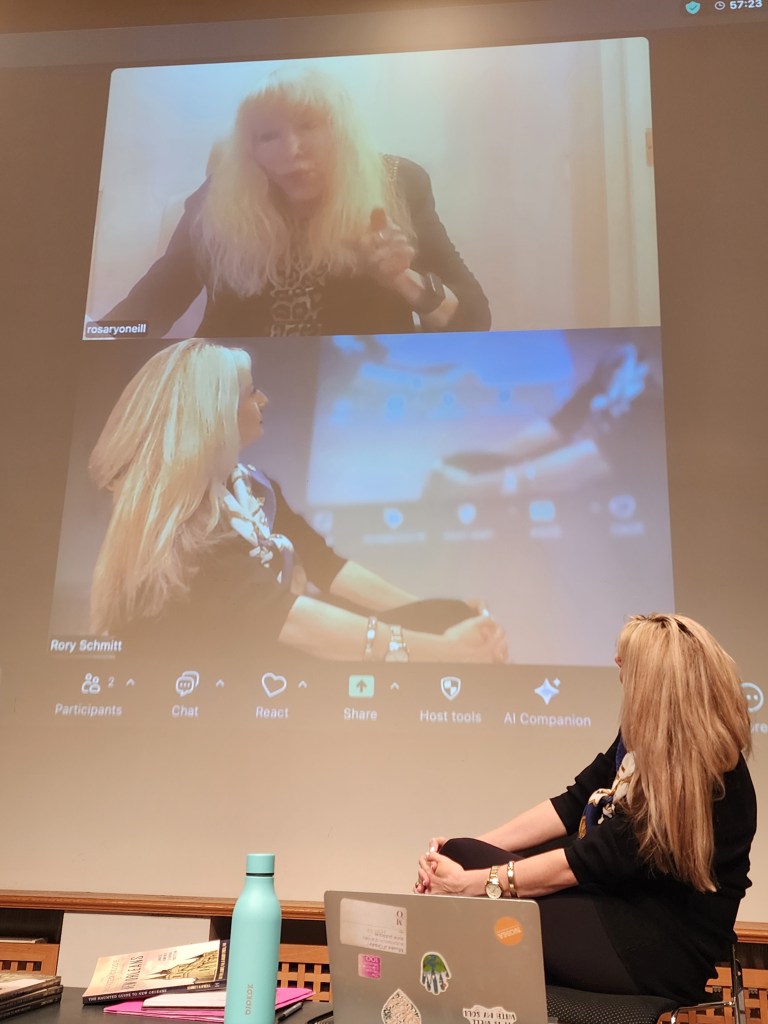
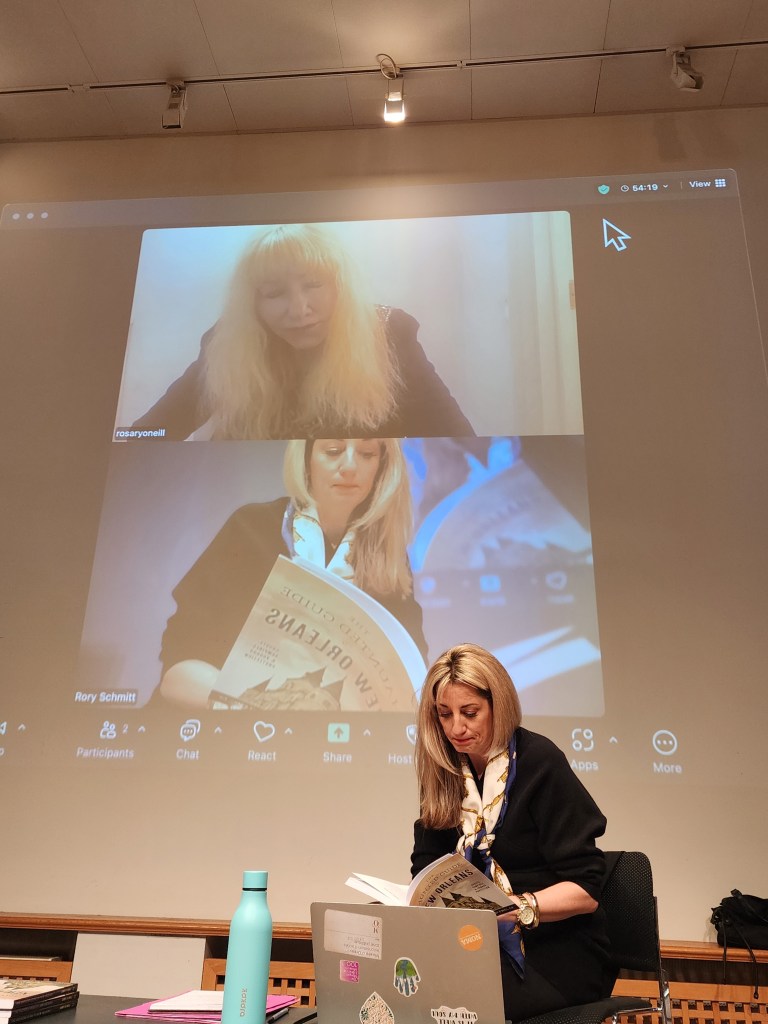
Continuing with my shadowing of Rory, Tuesday and Wednesday were busy days. Connecting via Zoom back in New Orleans, Rosary woke up in the early morning hours of darkness to convene with guests and Rory who hosted the talk about their work live from Paris. Mother and daughter are a joyful tag team. They discussed salient points about how they accomplish their research together. Oftentimes, they alternate chapters. For example after they discuss what topics they want to explore, they decide who can best illuminate the topic based on prior knowledge and interest.
Humorously, Rosary commented that she is frightened of the paranormal and would prefer not to experience any ghostly sightings. For her part Rory is thrilled about the paranormal and very much an aficionado of ghosts and all things paranormal and supernatural. She hopes to work on another book about ghosts. She thoroughly believes in being unafraid to experience the alternate realms of consciousness after individuals pass into the places beyond the veil.
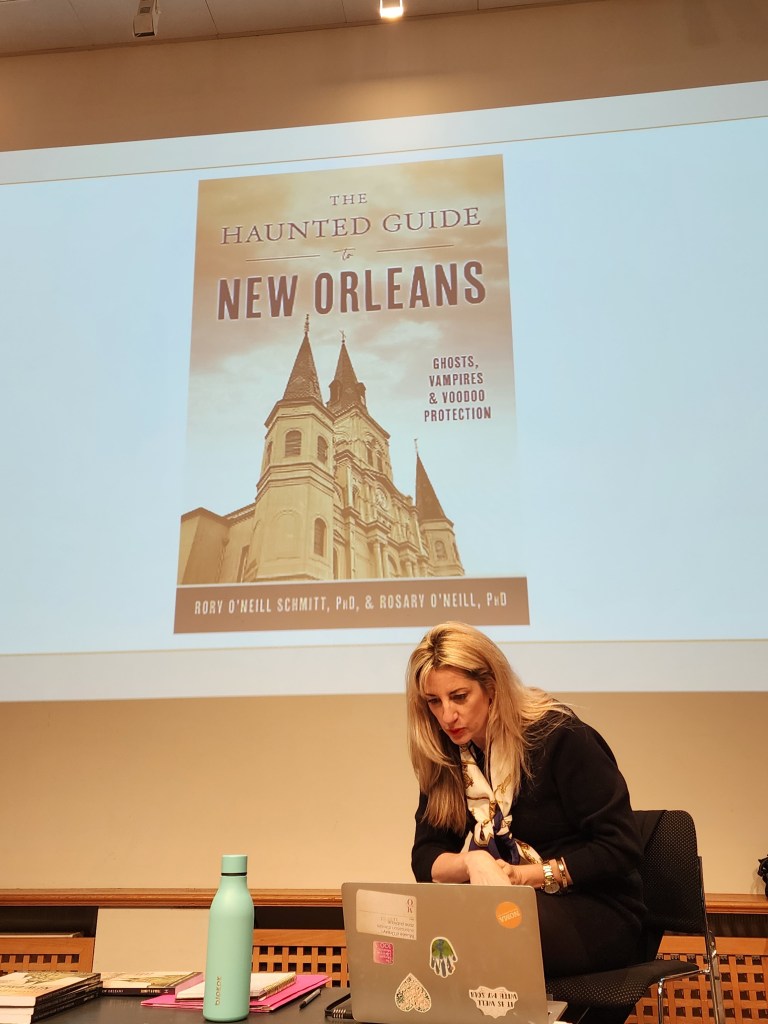
Not only did their talk reference ghostly presences in around New Orleans, some hilarious, some truly scary, they also discussed past and future projects. These, alluded to in the previous article, are coming into full bloom. One, a TV series about Edgar Degas is being worked on as mentioned. Another, the fascinating relationship between John Singer Sargent and Madame X continues to fuel Rosary and Rory’s interest as they look for the clues which lead to new insights never explored by biographers and authors before. That project is in its review stages having already been written. However, Rory has been working hard in Paris to make sure there is nothing to add to their comprehensive work.
Nevertheless, she went to two exhibits to gain more information that may lead to additional clues to spark the research questions that drive the project forward and enhance the conclusions. I’ll start with the exhibit we saw on Thursday, then backtrack to the exhibit we saw on Wednesday.
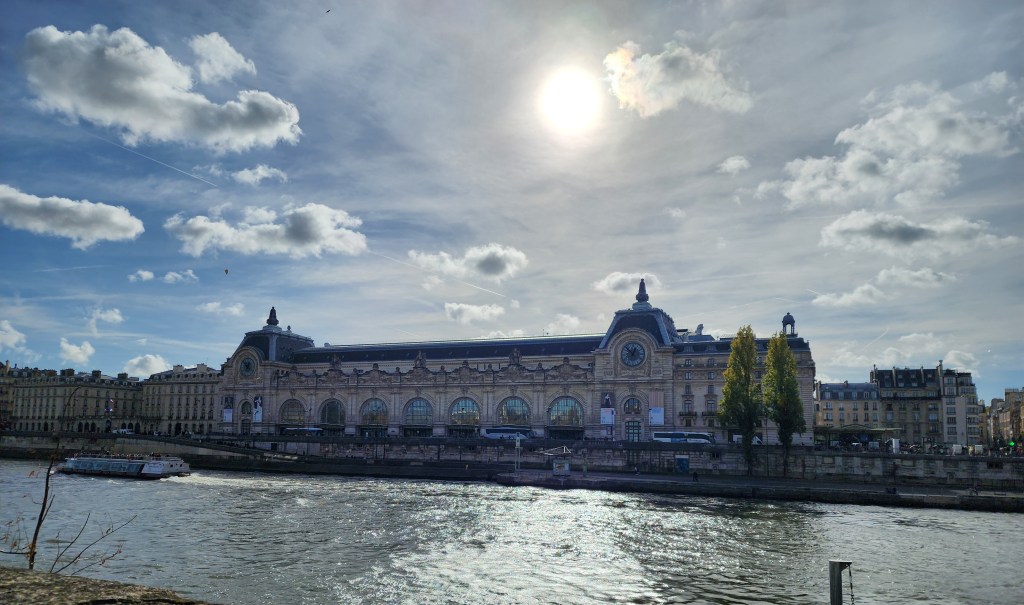
On Thursday we went to the Musée d’Orsay to see the exhibit of John Singer Sargent’s years in Paris. Of course, a main feature is his masterpiece “Madame X” which, as mentioned in the previous article, he presented to the Salon with great controversy.
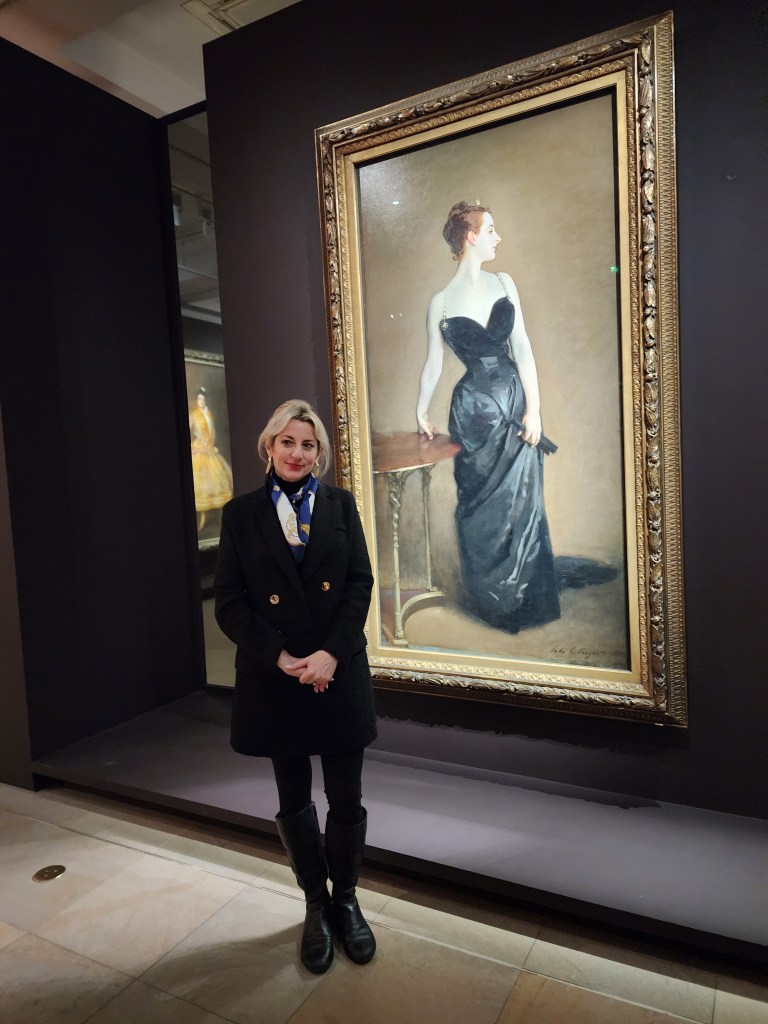
Rory and Rosary researched Sargent and Madame X’s relationship extensively and nothing more might be added to what they’ve written. But I do admire Rory’s tenacity to go the extra distance to make sure she and her mom have left no stone unturned when presenting the backstory of these two individuals who made history together.
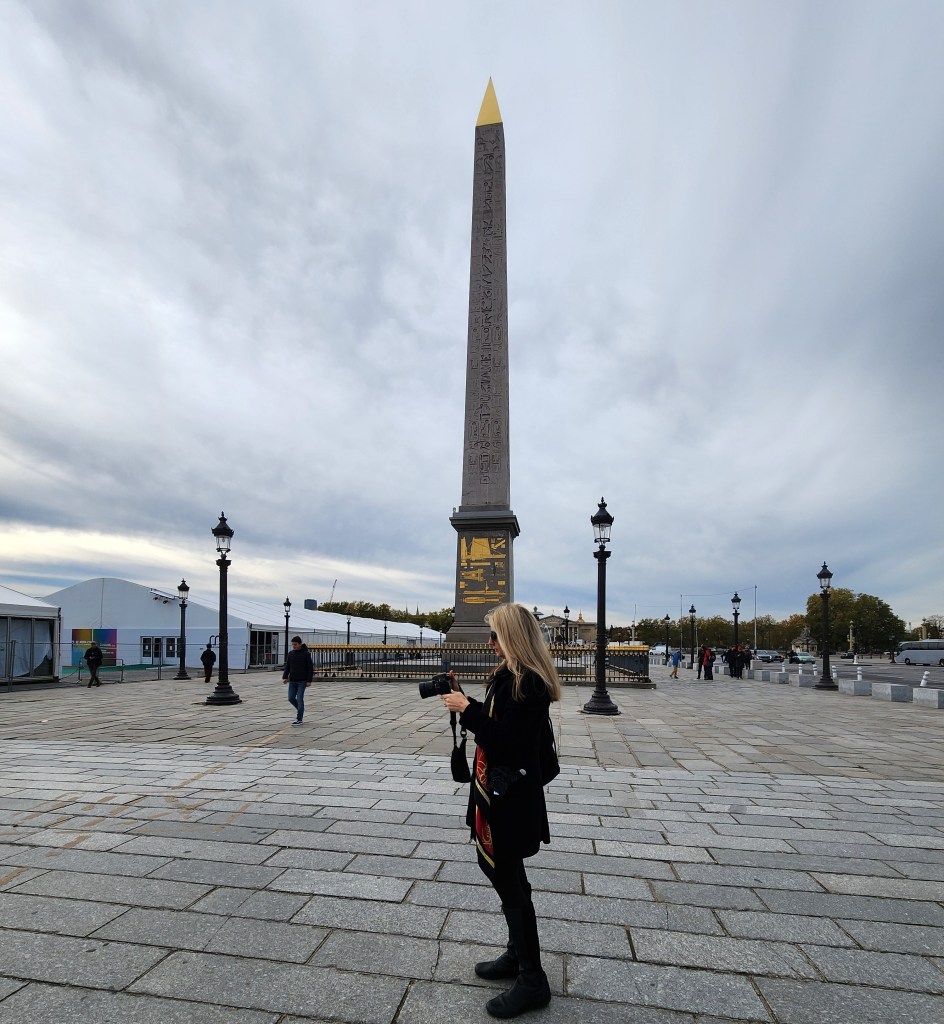
On Wednesday, Rory and I went to La place de la Concorde to investigate The Hôtel de Pontalba which has a fascinating history that relates to one of the subjects she is researching, the Baroness Pontalba. Indeed , Rory wanted to see the site where the New Orleans-born Baroness Micaela Almonester de Pontalba lived from 1855 until her death in 1874.
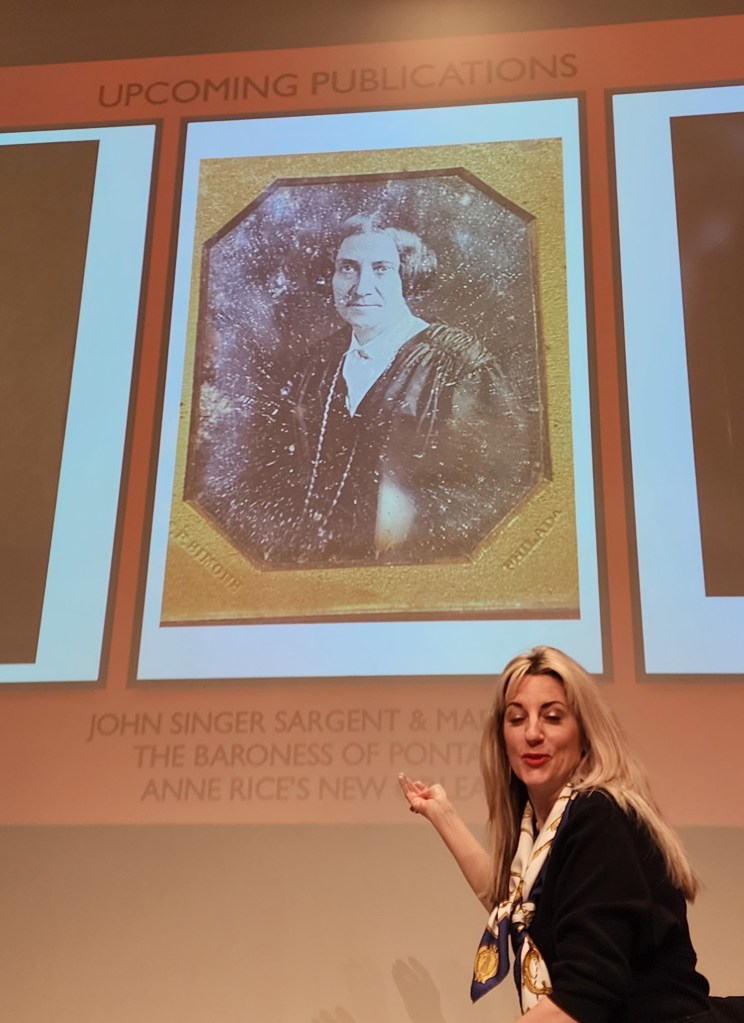
However, the property and environs have had a convoluted history, redevelopment and refurbishment as one would imagine since her heirs sold the property two years after her death. Supposedly, only the original gatehouse and portals were left intact, but following much of the H-shaped ground floor plan. It has been the official residence of the United States ambassador to France since 1971.
When we stopped by, the security was very heavy and we weren’t even allowed to take a picture. However, are the gatehouse and portals still present on the property? And how might this inform the story about the Baroness that Rory and Rosary would like to share? More research is needed.
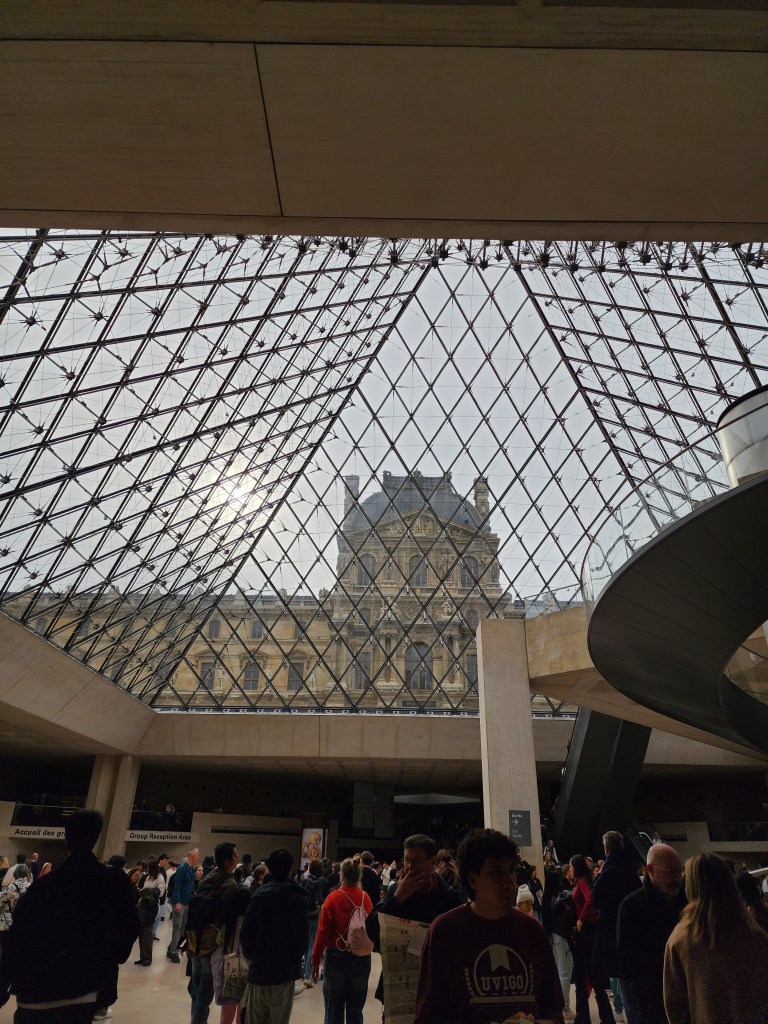
Then we went to the Louvre exhibit to enjoy the paintings of Jacques-Louis David, a French painter whose work spans the years of 1748 through 1825. The exhibit marks the bicentennial of his death in exile in Brussels in 1825. The Musée du Louvre proclaimed on its website that the exhibit “offered a new perspective on a figure and body of work of extraordinary richness and diversity.”
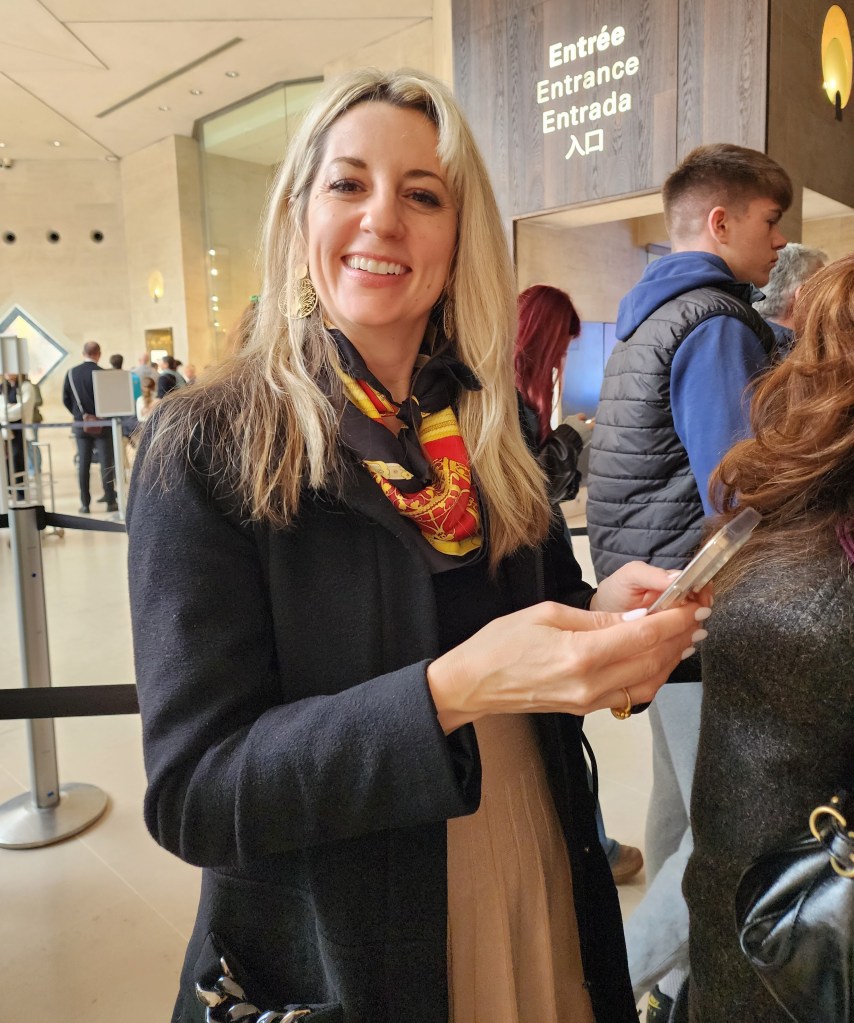
While I waited with Rory on the line to get into the Louvre to see the Jacques-Louis David exhibit, she explained why she wanted to see his work. Once again, she was checking for clues and looking for inspiration. Apparently, Jacques-Louis David was the teacher of his student Claude-Marie Dubufe. Dubufe painted the portraits of Micaela Pontalba (The Baroness) and Marie de Ternant (Amelie Gautreau/ Madame X’s grandmother). Micaela Pontalba and Madame X’s grandmother were contemporaries.
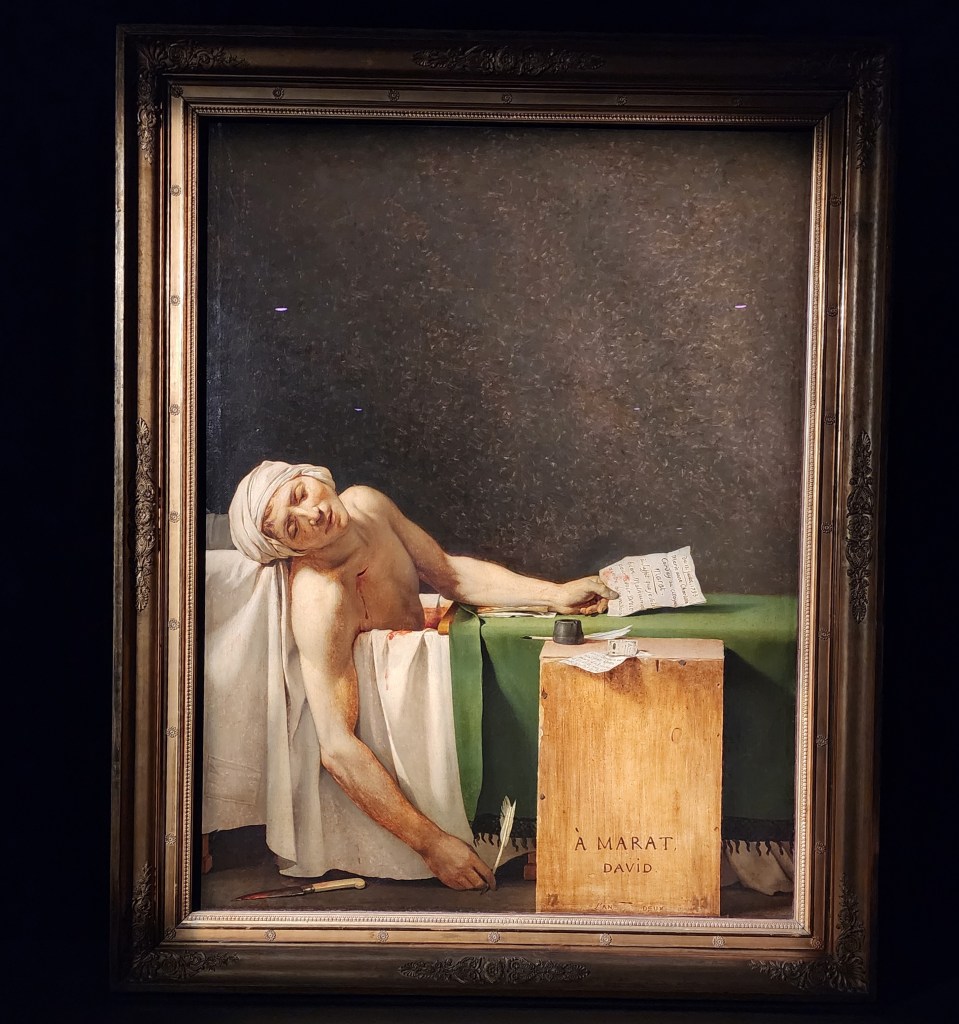
Certainly seeing Jacques-Louis David’s magnificent works was worth the wait. The exhibit at the Louvre looks to be one of the more popular ones. Thankfully, Rory’s scholarship and research mission allowed us an early entrance to the John Singer Sargent exhibit. Both exhibits were among the highlights of our time in Paris.
 CAROLE DI TOSTI