Blog Archives
‘Archduke,’ Patrick Page and Kristine Nielsen are Not to be Missed
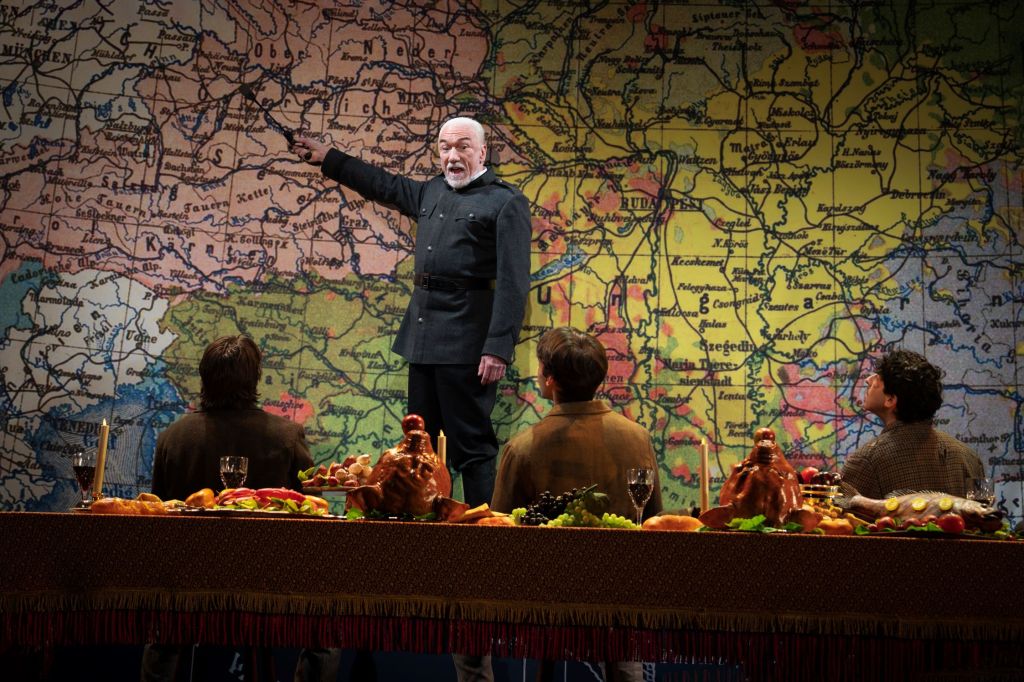
What is taught in history books about WWI usually references Gavrilo Princip as the spark that ignited the “war to end all wars.” Princip and his nationalist, anarchic Bosnian Serb fellows, devoted to the cause of freeing Serbia from the Austro-Hungarian empire, did finally assassinate the Archduke Franz Ferdinand and Duchess of Austria-Hungary. This occurred after they made mistakes which nearly botched their mission.
What might have happened if they didn’t murder the royals? The conclusion of Rajiv Joseph’s Archduke offers a “What if?” It’s a profound question, not to be underestimated.
In Archduke, Rajiv Joseph (Bengal Tiger at the Baghdad Zoo), has fun with this historical moment of the Archduke’s assassination. In fact he turns it on its head. With irony he fictionalizes what some scholars think about a conspiracy. They have suggested that Serbian military officer Dragutin “Apis” Dimitrijevic (portrayed exceptionally by Patrick Page), sanctioned and helped organize the conspiracy behind the assassination. The sardonic comedy Archduke, about how youths become the pawns of elites to exact violence and chaos, currently runs at Roundabout’s Laura Pels Theater until December 21st.
Joseph’s farce propels its characters forward with dark, insinuating flourishes. The playwright re-imagines the backstory leading up to the cataclysmic assassination that changed the map of Europe after the bloodiest war in history up to that time. He mixes facts (names, people, dates, places), with fiction (dialogue, incidents, idiosyncratic characterizations, i.e. Sladjana’s time in the chapel with the young men offering them “cherries”). Indeed, he employs revisionist history to align his meta-theme with our current time. Then, as now, sinister, powerful forces radicalize desperate young men to murder for the sake of political agendas.
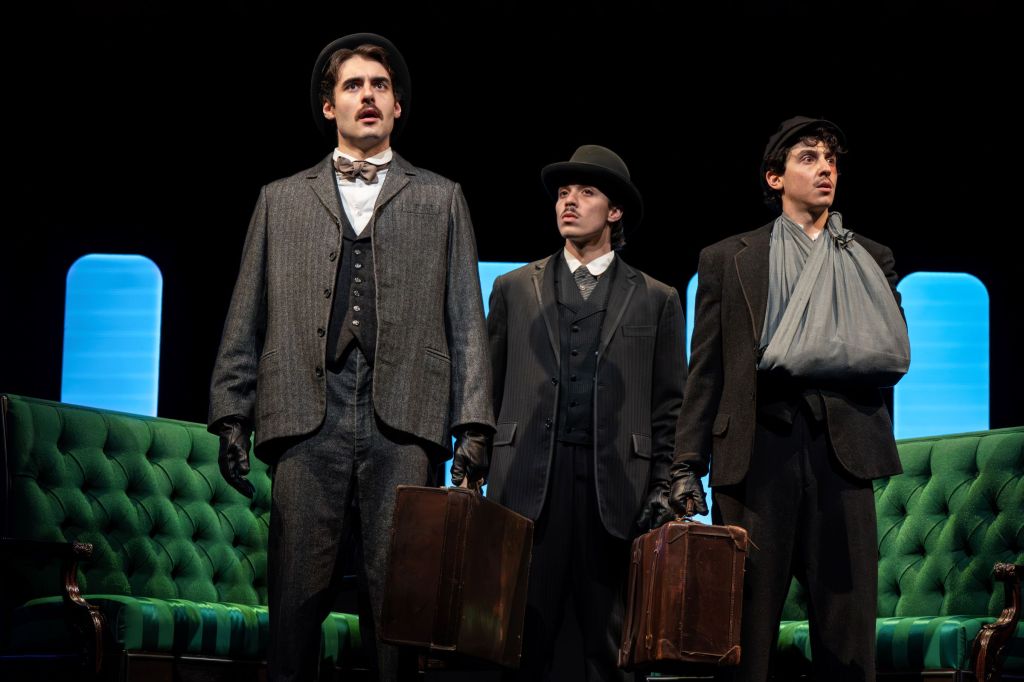
In order to convey his ideas Joseph compresses the time of the radicalization for dramatic purposes. Also, he laces the characterizations and events with dark humor, action and sometimes bloodcurdling descriptions of violence.
For example in “Apis'” mesmerizing description of a regicide he committed (June, 1903), for which he was proclaimed a Serbian hero, he acutely describes the act (he disemboweled them). He emphasizes the killing with specificity asking questions of those he mentors to drive the point home, so to speak. Then, Captain Dragutin “Apis” Dimitrijevic dramatically explains that he was shot three times and the bullets were never removed. Page delivers the speech with power, nuance and grit. Just terrific.
Interestingly, the fact that Dimitrijevic took three bullets that were never removed fits with historical references. Page’s anointed “Apis” relates his act of heroism to Gavrilo (the winsome, affecting Jake Berne), Nedeljko (the fiesty Jason Sanchez), and Trifko (the fine Adrien Rolet), to instruct them in bravery. The playwright teases the audience by placing factual clues throughout the play, as if he dares you to look them up.
History buffs will be entertained. Those who are indifferent will enjoy the fight sequences and Kristine Nielsen’s slapstick humor and perfect timing. They will listen raptly to Patrick Page’s fervent story and watch his slick manipulations. Director Darko Tresnjak (A Gentleman’s Guide to Love and Murder), shepherds the scenes carefully. The production and all its artistic elements benefit from his coherent vision, his superb pacing and smart staging. Set design is by Alexander Dodge, with Linda Cho’s costume design, Matthew Richards’ lighting design and Jane Shaw’s sound design.
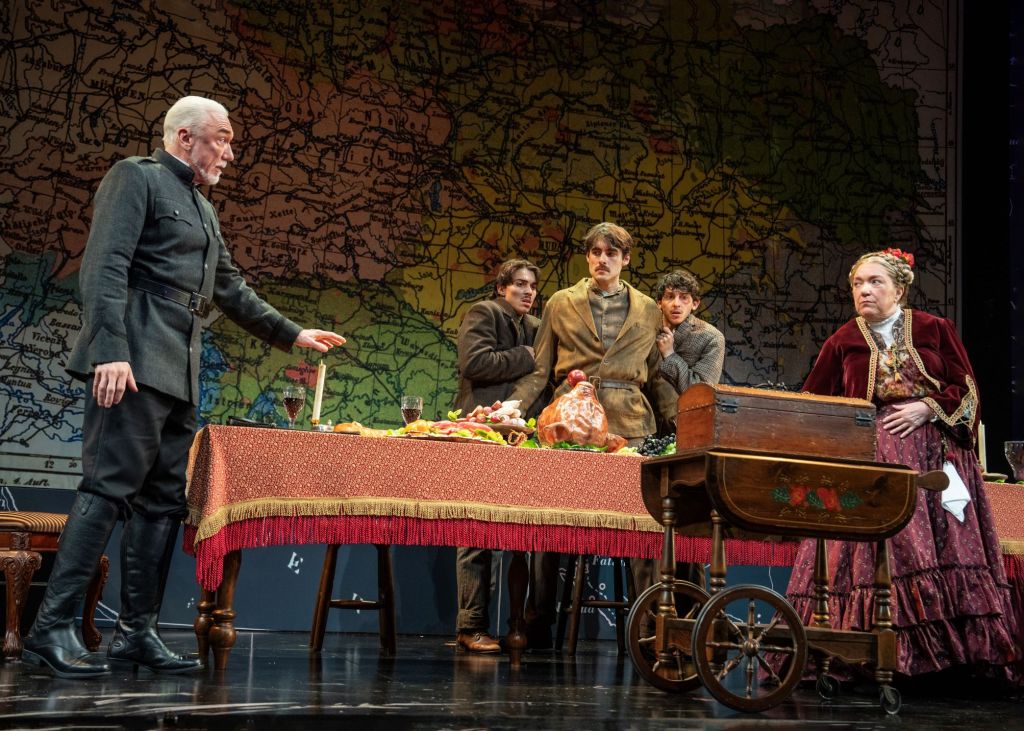
In Joseph’s re-imagining before “Apis” delivers this speech of glory and violence, the Captain has his cook stuff the starving, tubercular, young teens with a sumptuous feast. As they eat, he provides the history lessons using a pointer and an expansive map of the Austro-Hungarian empire. Like brainwashed lap dogs they agree with him when he tells them to. They are inspired by his personal story of glory and riches, and the luxurious surroundings. Notably, they become attuned to his bravery and sacrifice to Serbia, after their bellies are full, having devoured as much as possible.
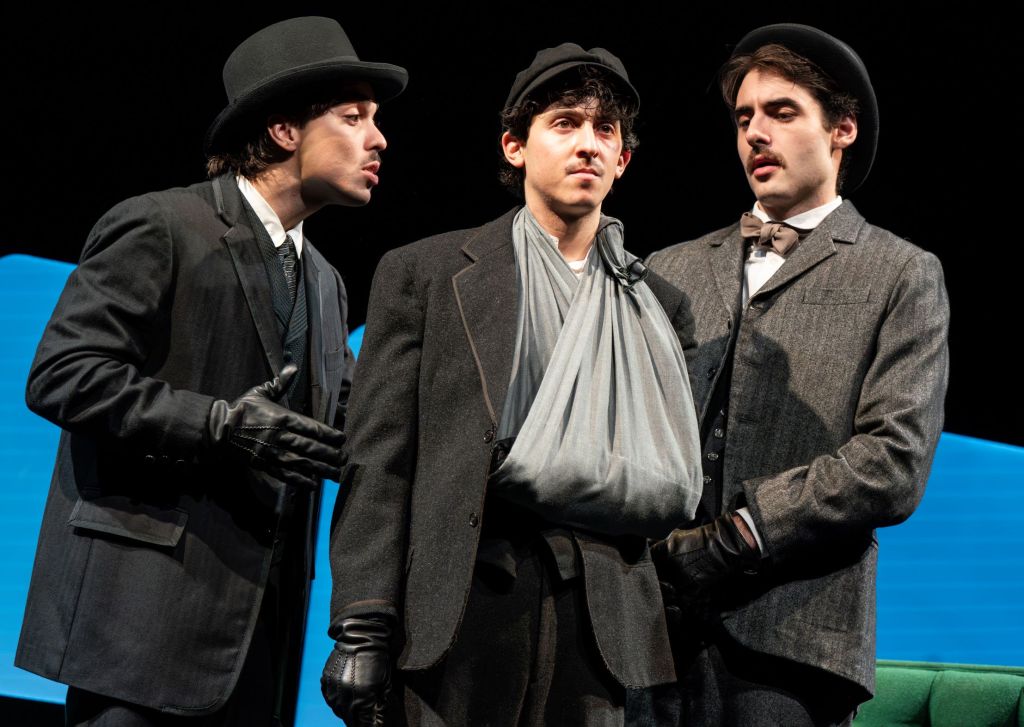
Why them and how did they get there? Joseph infers the machinations behind the “Apis'” persuasion in Scene 1, which takes place in a warehouse and serves as the linchpin of how young men become the dupes of those like the charming, well-connected Dimitrijevic. From the teens’ conversation we divine that a secret cabal cultivates and entraps desperate, dying young men. Indeed, in real life there was a secret society (The Black Hand), that Captain Dimitrijevic belonged to and that Gavrilo was affiliated with. The playwright ironically hints at these ties when the Captain gives Gavrilo and the others black gloves.
In the warehouse scene the soulful and dynamic interaction between Berne’s Gavrilo and Sanchez’s Nedeljko creates empathy. The fine actors stir our sympathy and interest. We note that the culture and society have forgotten these hapless innocents that are treated like insignificant refuse. As a result they become ready prey to be exploited. The nineteen-year-old orphans have similar backgrounds. Clearly, their poverty, purposelessness, lack of education and hunger bring them to a conspiratorial doctor they learn about because he is free and perhaps can help.
However, he gives them the bad news that they are dying and nothing can be done. As part of the plan, the doctor refers both Gavrilo and Nedeljko to “a guy” in a warehouse for a job or something useful and “meaningful.”
True to the doctor’s word, the abusive Trifko arrives expecting to see more “lungers.” After he shows them a bomb that doesn’t explode when dropped (a possible reference to the misdirected bombing during the initial attempt against the Archduke), Trifko browbeats and lures them to the Captain (“Apis”), with his reference to a “lady cook.”
Why not go? They are starving, and they “have nothing to lose.” The cook, Sladjana, turns out to be the always riotous Kristine Nielsen, who provides a good deal of the humor during the Captain’s history lessons, and the radicalization of the teens, the feast, sweets, and “special boxes” filled with surprises that she brings in and takes out. Nielsen’s antics ground Archduke in farce, and the scenes with her are imminently entertaining as she revels in the ridiculous to audience laughter.
With their needs met and their psychological and emotional manhood stoked to make their names famous, the young men throw off their religious condemnation of suicide and agree to martyr themselves and kill the Archduke to free Serbia. Enjoying the prospects of a train ride and a bed and more food, after a bit of practice, shooting the Archduke and Duchess, with “Apis” and Sladjana pretending to be royalty, they head off to Sarajevo. Since Joseph’s play is revisionist, you will just have to see how and why he spins the ending as he does with the characters imaging their own, “What if?”
The vibrantly sinister, nefarious Dragutin “Apis” Dimitrijevic, who seduces and spins polemic like a magician with convincing prestidigitation, seems relevant in light of the present day’s media propaganda. Whether mainstream, which censors information, fearful of true investigative reporting, or social media, which must be navigated carefully to avoid propaganda bots, both spin their dangerous perspectives. The more needy the individuals emotionally, physically, psychologically, the more amenable they are to propaganda. And the more desperate (consider Luigi Mangione or Shane Tamura or the suspect in the recent shooting of the National Guard in Washington, D.D.), the less they have to lose being a martyr.
Joseph’s point is well taken. In Archduke the teens were abandoned and left to survive as so much flotsam and jetsam in a dying Austro-Hungarian empire. Is his play an underhanded warning? If we don’t take care of our youth, left to their own devices, they will remind us they matter too, and take care of us. Political violence, as Joseph and history reveal, is structured by those most likely to gain. Cui bono? All the more benefit of impunity and immunity if others are persuaded to pull the trigger, cause a riotous coup, release the button, poison, etc., and take the fall for it.
Archduke runs 2 hours with one intermission at Laura Pels Theater through December 21st. roundabouttheatre.org.
Rosary and Rory Talk: ‘The Haunted Guide to New Orleans’ at the ICC, Paris Daze 3 & 4
The Irish Cultural Centre in Paris is formerly to a large collegiate community of Irish priests, seminarians and lay scholars whose origins stretch back to 1578. In its historical foundations, the website indicates that “for most of the 19th and 20th centuries the college resumed its role as seminary to Irish and Polish students.” It was converted into a hospital to accommodate three hundred French soldiers, surviving the Franco-Prussian War, and the two World Wars. Additionally, the ICC served the United States army in 1945 as a shelter for displaced persons claiming American citizenship. The Polish seminary in Paris established itself in the Collège des Irlandais in 1945. It stayed until 1997.
It has been the home of residents from Ireland and elsewhere. Some residents take classes at the Sorbonne. Others who apply may receive a residency to study, do research and write. Rory and Rosary have had a number of residencies at the Irish Cultural Centre located conveniently in the 5th arrondissement of Paris near the Sorbonne.
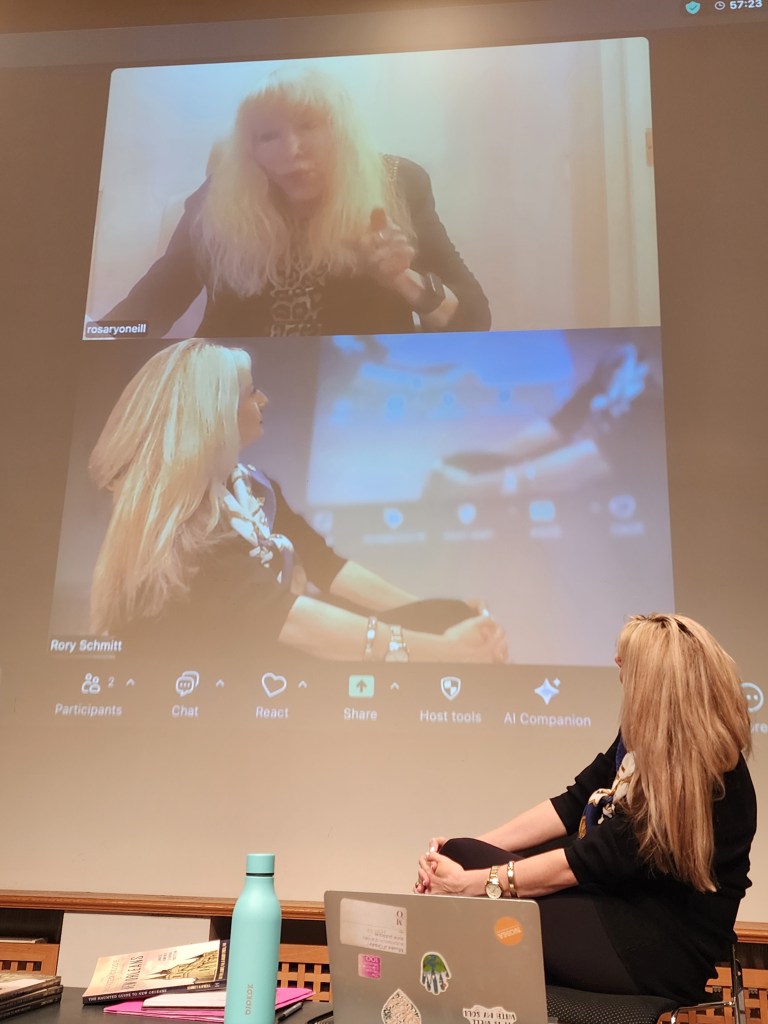
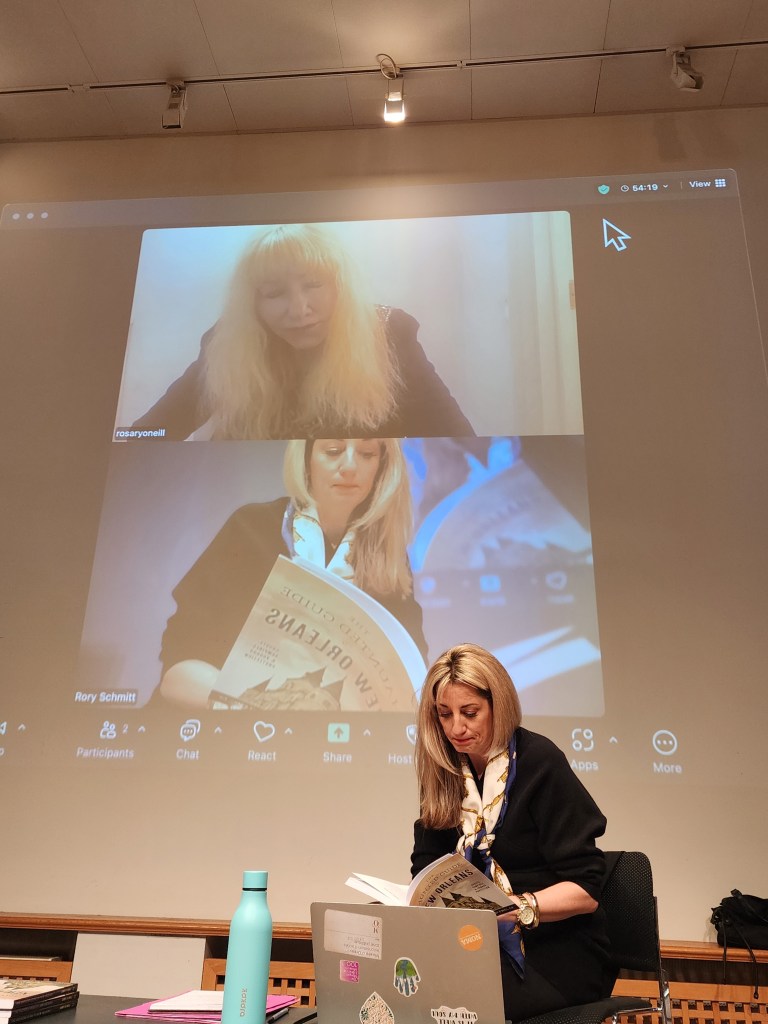
Continuing with my shadowing of Rory, Tuesday and Wednesday were busy days. Connecting via Zoom back in New Orleans, Rosary woke up in the early morning hours of darkness to convene with guests and Rory who hosted the talk about their work live from Paris. Mother and daughter are a joyful tag team. They discussed salient points about how they accomplish their research together. Oftentimes, they alternate chapters. For example after they discuss what topics they want to explore, they decide who can best illuminate the topic based on prior knowledge and interest.
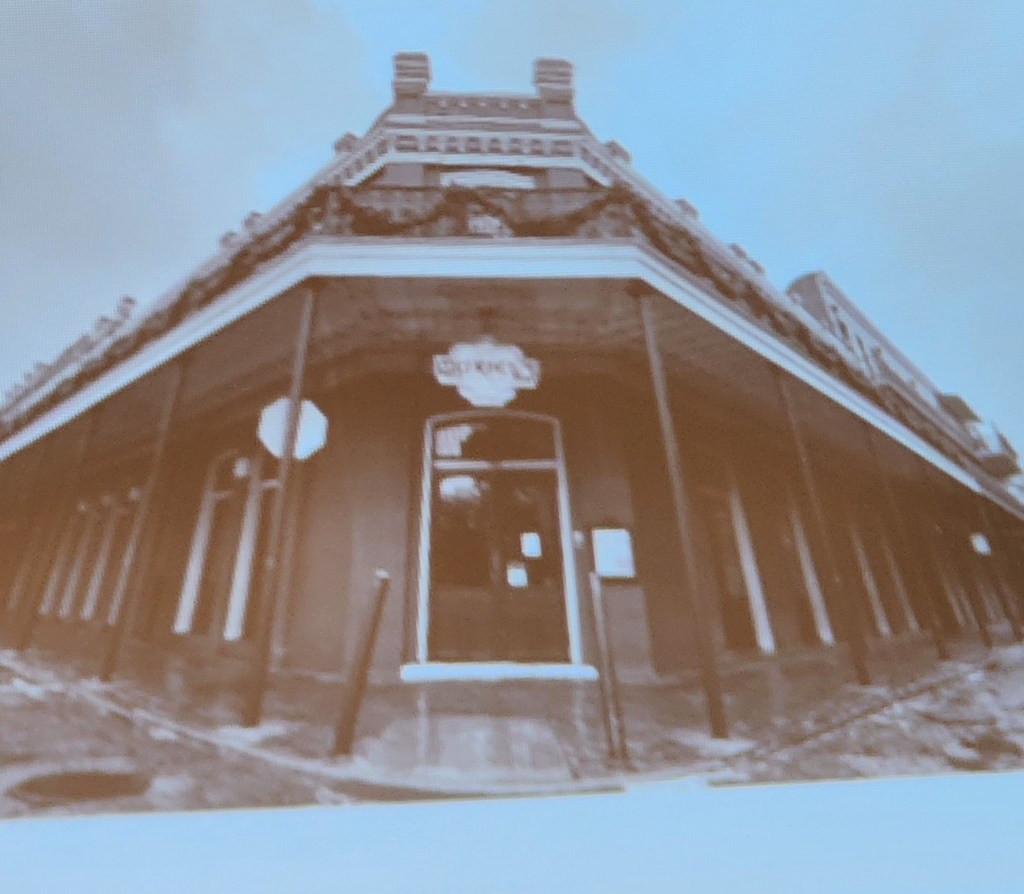
Humorously, Rosary commented that she is frightened of the paranormal and would prefer not to experience any ghostly sightings. For her part Rory is thrilled about the paranormal and very much an aficionado of ghosts and all things paranormal and supernatural. She hopes to work on another book about ghosts. She thoroughly believes in being unafraid to experience the alternate realms of consciousness after individuals pass into the places beyond the veil.
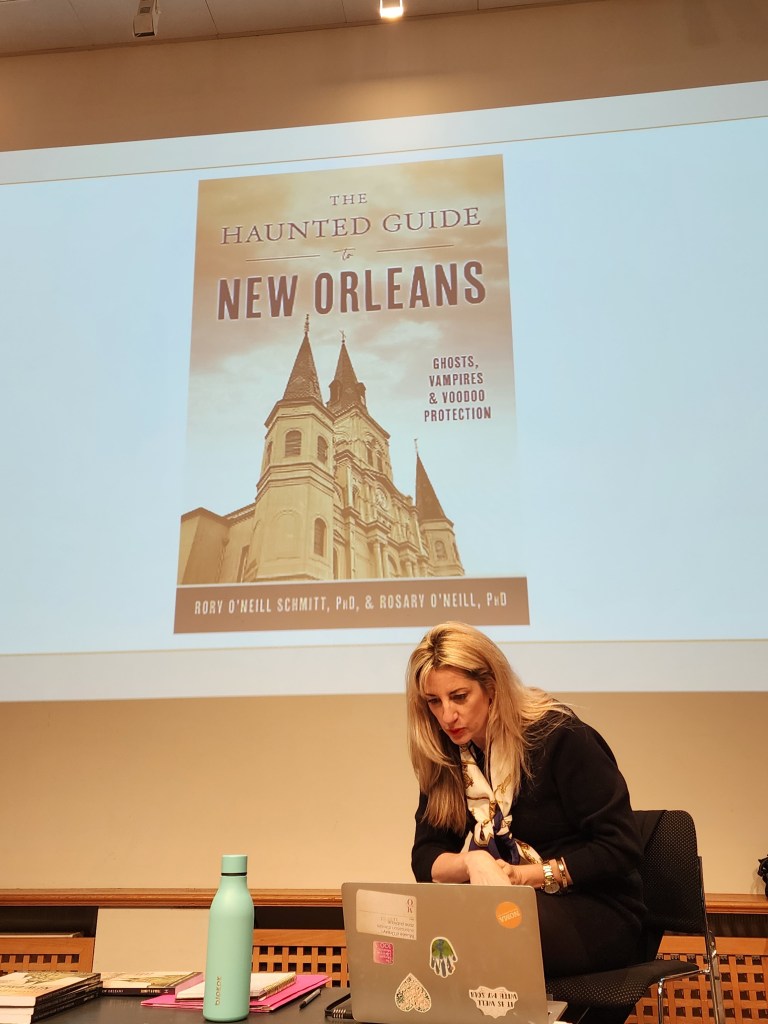
Not only did their talk reference ghostly presences in around New Orleans, some hilarious, some truly scary, they also discussed past and future projects. These, alluded to in the previous article, are coming into full bloom. One, a TV series about Edgar Degas is being worked on as mentioned. Another, the fascinating relationship between John Singer Sargent and Madame X continues to fuel Rosary and Rory’s interest as they look for the clues which lead to new insights never explored by biographers and authors before. That project is in its review stages having already been written. However, Rory has been working hard in Paris to make sure there is nothing to add to their comprehensive work.
Nevertheless, she went to two exhibits to gain more information that may lead to additional clues to spark the research questions that drive the project forward and enhance the conclusions. I’ll start with the exhibit we saw on Thursday, then backtrack to the exhibit we saw on Wednesday.
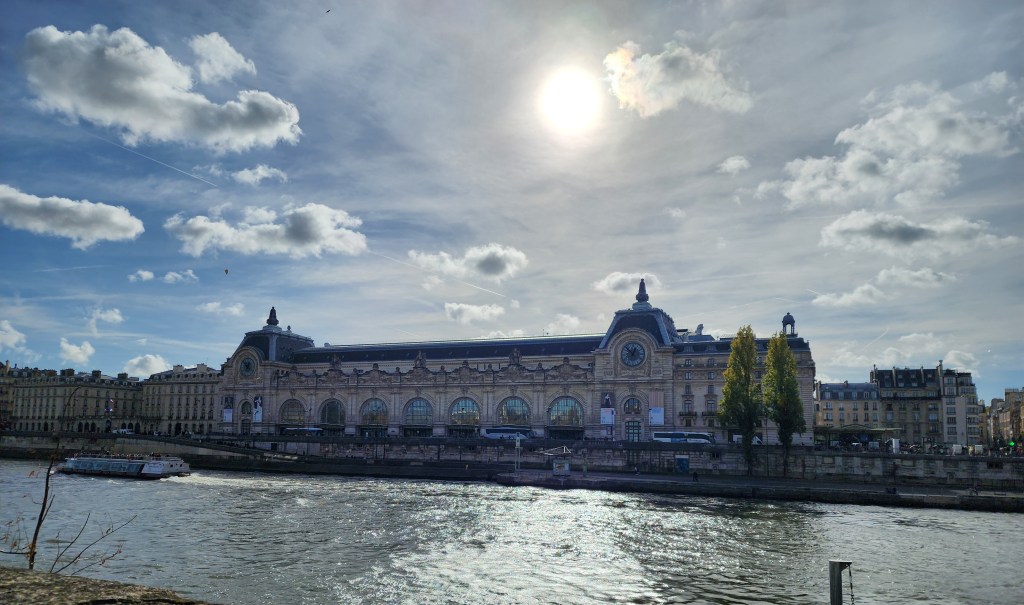
On Thursday we went to the Musée d’Orsay to see the exhibit of John Singer Sargent’s years in Paris. Of course, a main feature is his masterpiece “Madame X” which, as mentioned in the previous article, he presented to the Salon with great controversy.
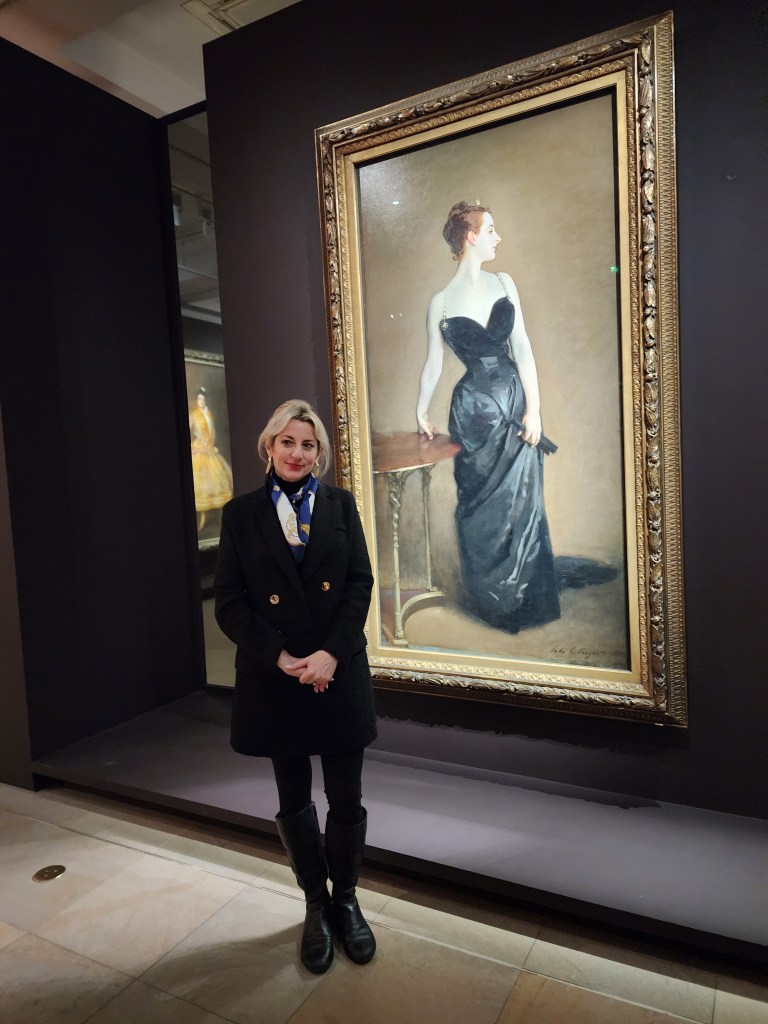
Rory and Rosary researched Sargent and Madame X’s relationship extensively and nothing more might be added to what they’ve written. But I do admire Rory’s tenacity to go the extra distance to make sure she and her mom have left no stone unturned when presenting the backstory of these two individuals who made history together.
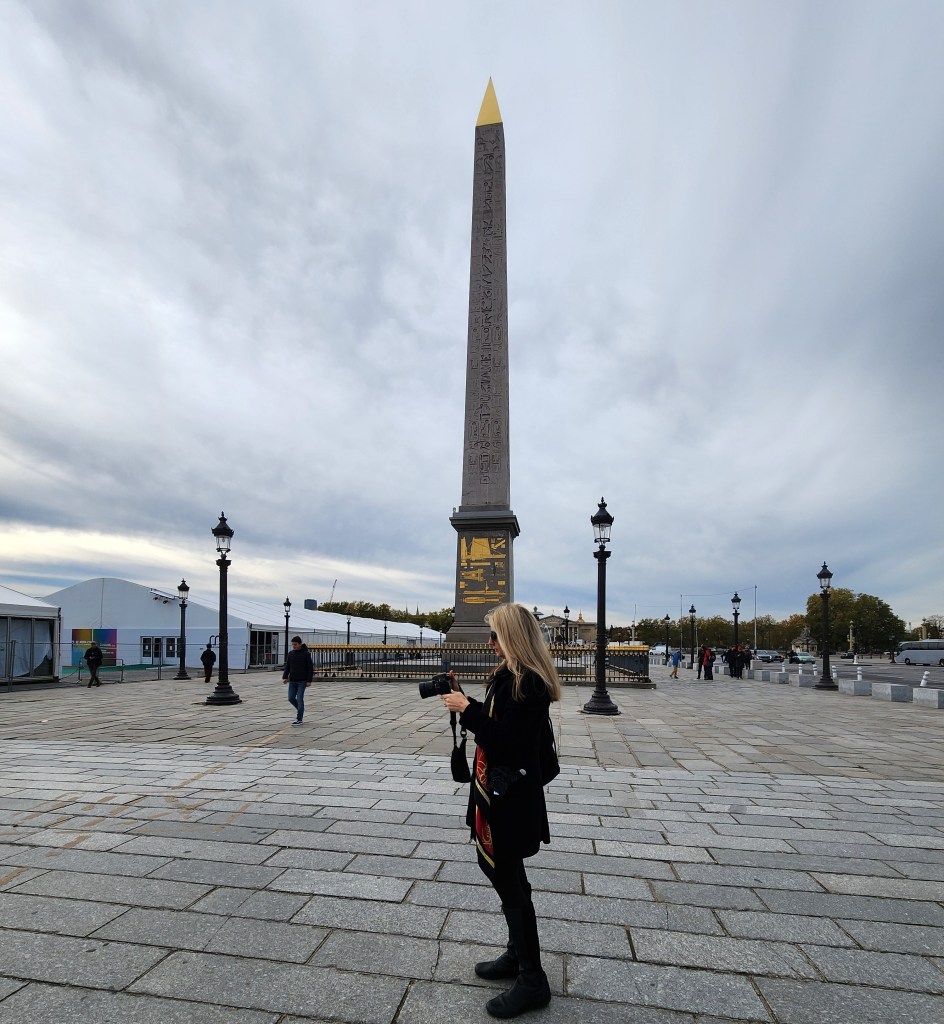
On Wednesday, Rory and I went to La place de la Concorde to investigate The Hôtel de Pontalba which has a fascinating history that relates to one of the subjects she is researching, the Baroness Pontalba. Indeed , Rory wanted to see the site where the New Orleans-born Baroness Micaela Almonester de Pontalba lived from 1855 until her death in 1874.
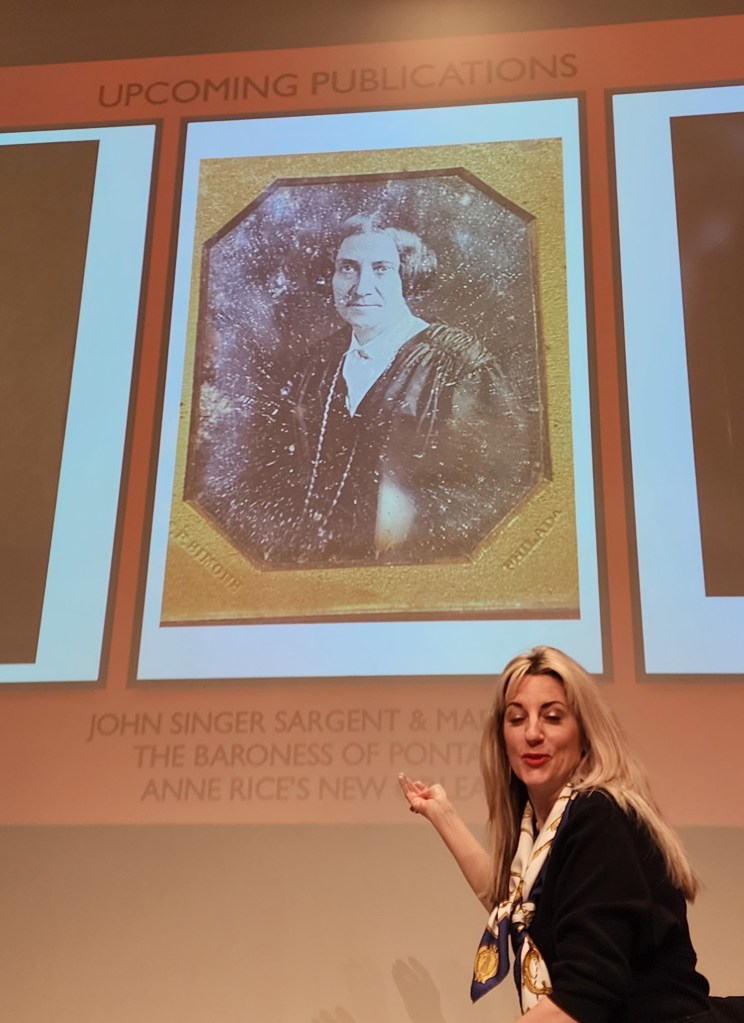
However, the property and environs have had a convoluted history, redevelopment and refurbishment as one would imagine since her heirs sold the property two years after her death. Supposedly, only the original gatehouse and portals were left intact, but following much of the H-shaped ground floor plan. It has been the official residence of the United States ambassador to France since 1971.
When we stopped by, the security was very heavy and we weren’t even allowed to take a picture. However, are the gatehouse and portals still present on the property? And how might this inform the story about the Baroness that Rory and Rosary would like to share? More research is needed.
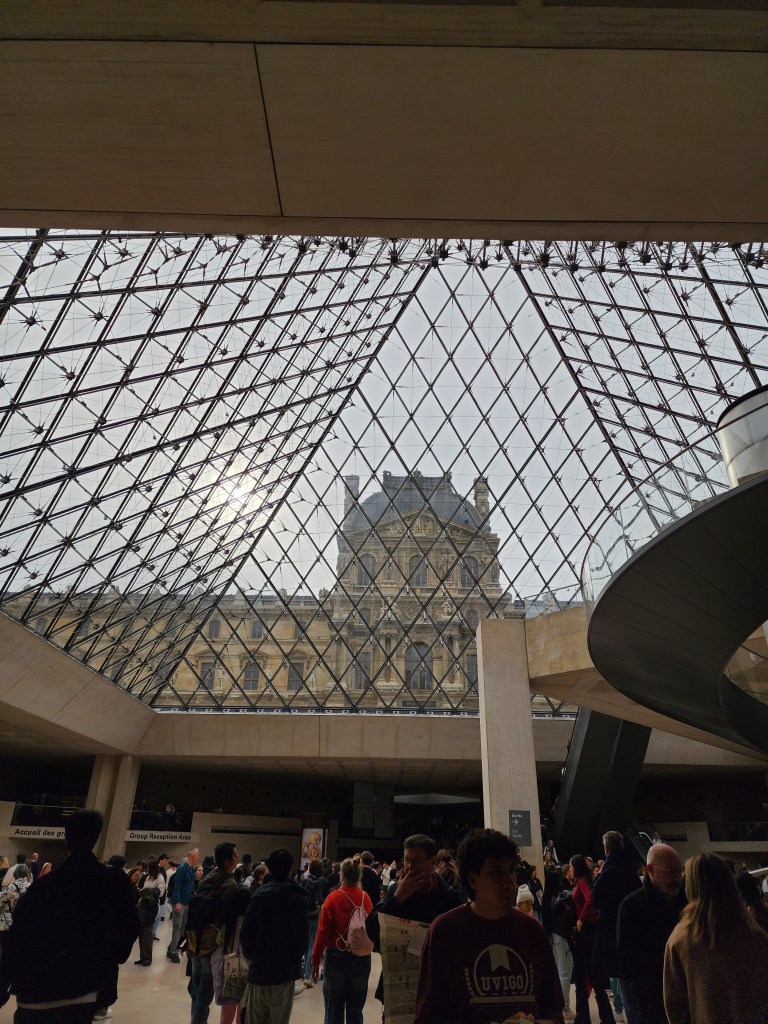
Then we went to the Louvre exhibit to enjoy the paintings of Jacques-Louis David, a French painter whose work spans the years of 1748 through 1825. The exhibit marks the bicentennial of his death in exile in Brussels in 1825. The Musée du Louvre proclaimed on its website that the exhibit “offered a new perspective on a figure and body of work of extraordinary richness and diversity.”
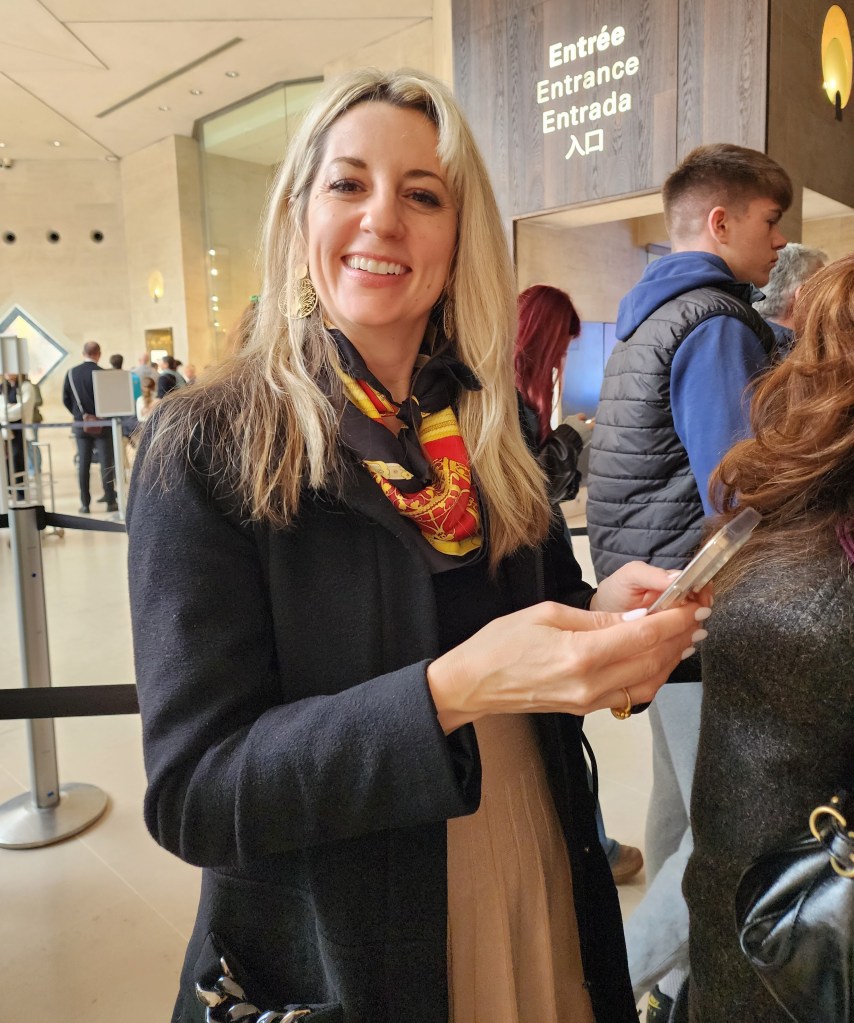
While I waited with Rory on the line to get into the Louvre to see the Jacques-Louis David exhibit, she explained why she wanted to see his work. Once again, she was checking for clues and looking for inspiration. Apparently, Jacques-Louis David was the teacher of his student Claude-Marie Dubufe. Dubufe painted the portraits of Micaela Pontalba (The Baroness) and Marie de Ternant (Amelie Gautreau/ Madame X’s grandmother). Micaela Pontalba and Madame X’s grandmother were contemporaries.
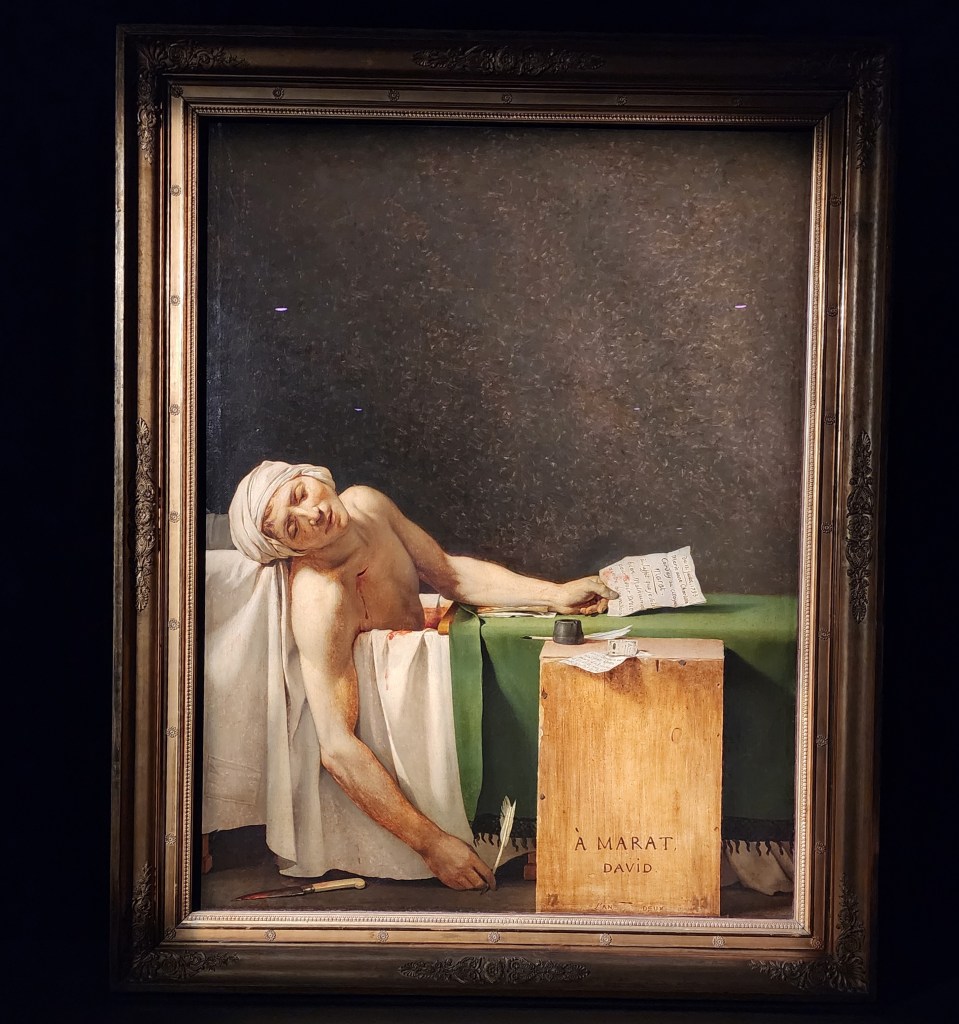
Certainly seeing Jacques-Louis David’s magnificent works was worth the wait. The exhibit at the Louvre looks to be one of the more popular ones. Thankfully, Rory’s scholarship and research mission allowed us an early entrance to the John Singer Sargent exhibit. Both exhibits were among the highlights of our time in Paris.
‘The Weir’ Review: Drinks and Spirits in a remote Irish Pub
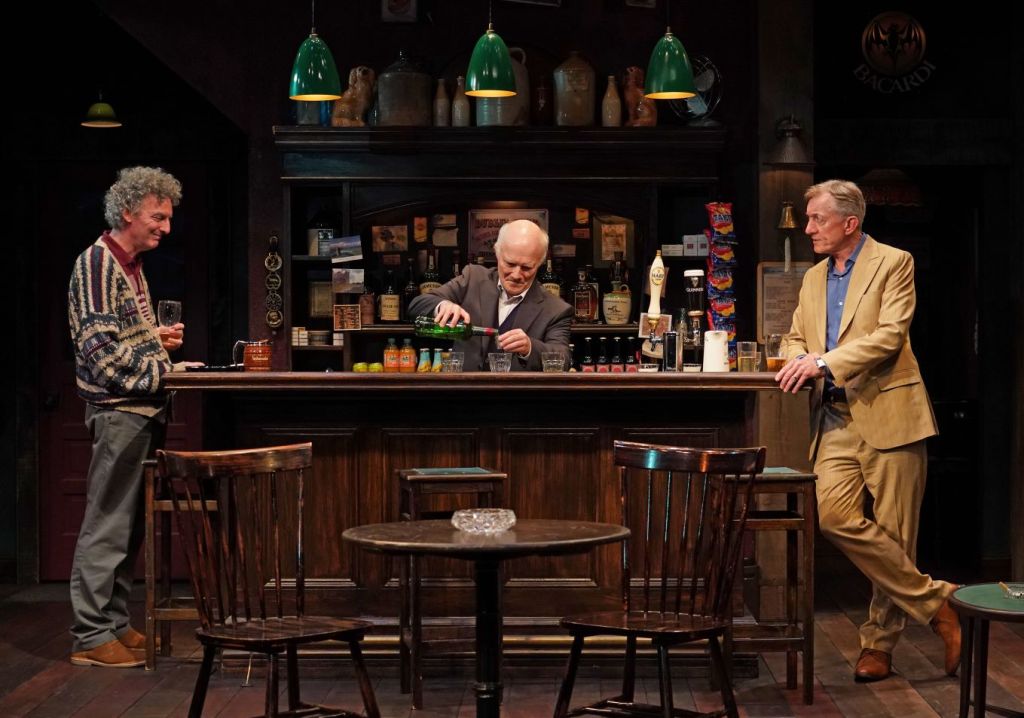
Conor McPherson’s The Weir currently in its fourth revival at Irish Repertory Theatre has evolved its significance for our time. It captures the bygone Irish pub culture and isolated countryside, disappeared by hand-held devices, a global economy and social media. Set in an area of Ireland northwest Leitrim or Sligo, five characters exchange ghostly stories as they drink and chase down their desire for community and camaraderie. Directed with precision and fine pacing by Ciarán O’Reilly, The Weir completes the Irish Rep’s summer season closing August 31st.
Charlie Corcoran’s scenic design of the pub with wooden bar, snacks, bottles, a Guinness tap and heating grate is comfortable for anyone to have a few pints and enjoy themselves at a table or nearby bench. With Michael Gottlieb’s warm, inviting lighting that enhances the actors’ storytelling, all the design elements including the music (Drew Levy-sound design), heighten O’Reilly’s vision of an outpost protective of its denizens and a center of good will. It’s perfect for the audience to immerse itself in the intimacy of conversation held in non-threatening surroundings.
On a dark, windy evening the humorous Jack drops in for drinks as a part of his routine after work at the garage that he owns. A local and familiar patron he helps himself to a bottle since he can’t draw a pint of Guinness because the bar’s tap is not working. Brendan (Johnny Hopkins) owner of the pub, house and farm behind it informs him of this sad fact. But no matter. There are plenty of bottles to be had as Jim (John Keating) joins Jack and Brendan for “a small one.” The entertainment for the evening is the entrance of businessman Finbar (Sean Gormley), who will introduce his client Valerie to the “local color,” since she recently purchased Maura Nealon’s old house.
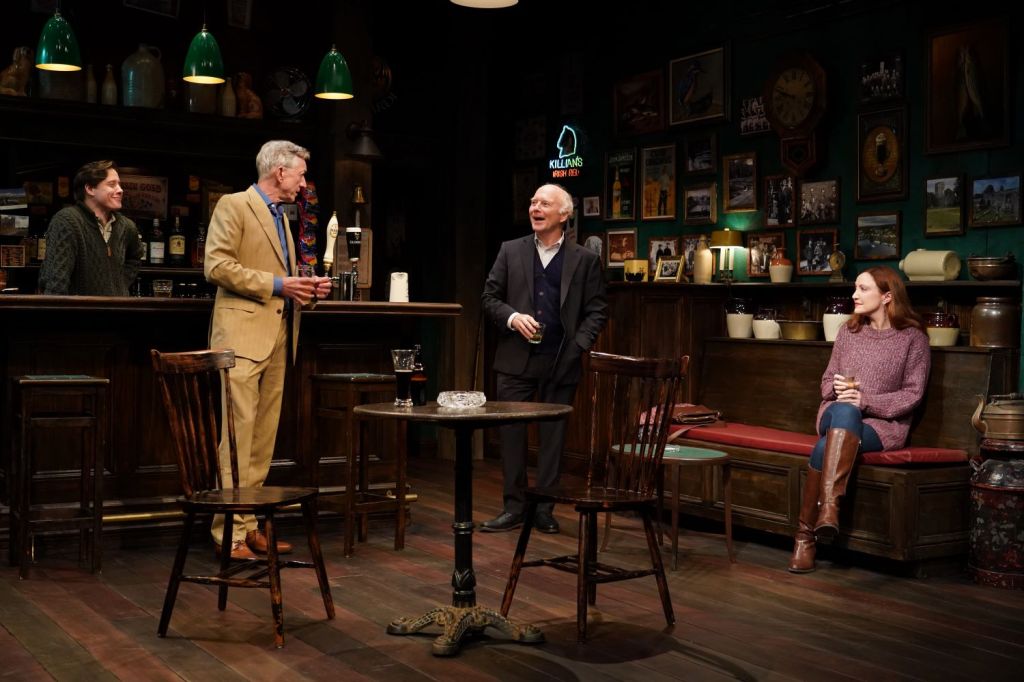
Initially, Jack, Jim and Brendan gossip about the married Finbar’s intentions as he shows up the three bachelors by escorting the young woman to the pub. Jim, caretaker of his mom, and Jack are past their prime in their late 50-60s. Brendan, taken up with his ownership of the pub and farm, is like his friends, lonely and unmarried. None of them are even dating. Thus, the prospect of a young woman coming up from Dublin to their area is worthy of consideration and discussion.
McPherson presents the groundwork, then turns our expectations around and redirects them, after Finbar and Valerie arrive and settle in for drinks. When the conversation turns to folklore, fairy forts and spirits of the area, Valerie’s interest encourages the men to share stories that have spooky underpinnings. Jack begins his monologue about unseen presences knocking on windows and doors, and scaring the residents until the priest blesses the very house that Valerie purchased.
Caught up in his own storytelling which brings a hush over the listeners (and audience), Jack doesn’t realize the import of his story about the Nealon house that Valerie owns. Thankfully, the priest sent the spirits packing. Except there was one last burst of activity when the weir (dam) was being built. Strangely, there were reports of many dead birds on the ground. Then the knocking returned but eventually stopped. Perhaps the fairies showed their displeasure that the weir interfered with their usual bathing place.
Not to be outdone, Finbar shares his ghost story which has the same effect of stirring the emotions of the listeners. Then, it is Jim who tells a shocking, interpretative spiritual sighting. Ironically, Jim’s monologue has a sinister tinge, as he relays what happened when a man appeared and expressed a wish, but couldn’t really have been present because he was dead.
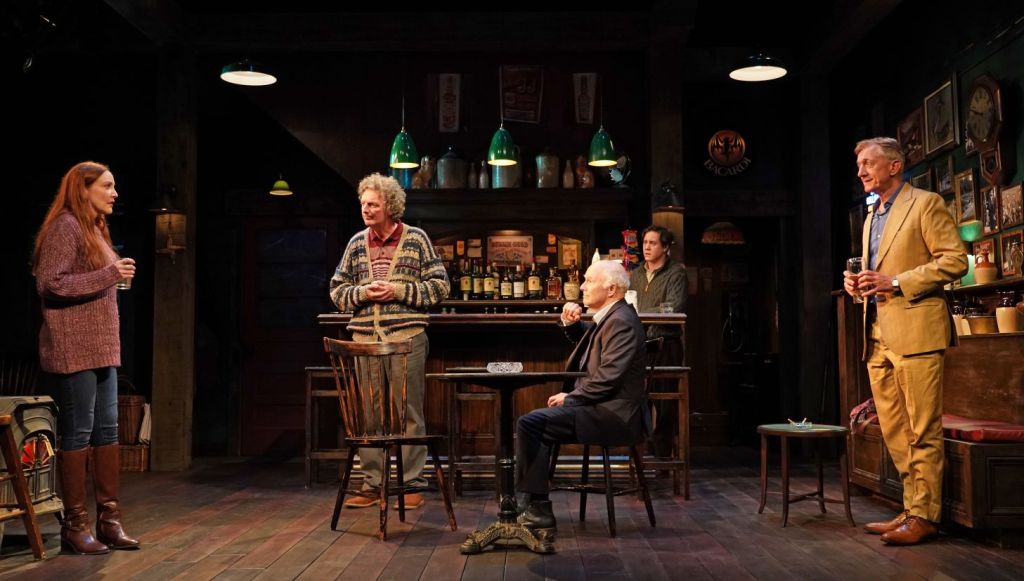
As drinks are purchased after each storyteller’s turn, the belief in the haunting spirits rises, then wanes as doubts take over. After Jim tells his story about the untoward ghost, Valerie goes to the bathroom in Brendan’s house. During her absence Finbar chides all of them. He regrets their stories, especially Jim’s which could have upset Valerie. With Jack’s humorous calling out of Finbar as a hypocrite, they all apologize to each other and drink some more. By this point, the joy of their conversation and good-natured bantering immerses the audience in their community and bond with each other. I could have listened to them talk the rest of the night, thanks to the relaxing, spot-on authenticity of the actors.
Then, once more McPherson shifts the atmosphere and the supernatural becomes more entrenched when Valerie relates her story of an otherworldly presence. Unlike the men’s tales, what she shares is heartfelt, personal, and profound. The others express their sorrow at what happened to her. Importantly, each of the men’s attitudes toward Valerie changes to one of human feeling and concern. Confiding in them to release her grief, they respond with empathy and understanding. Thus, with this human connection, the objectification of the strange young woman accompanied by Finbar at the top of the play vanishes. A new level of feeling has been experienced for the benefit of all present.
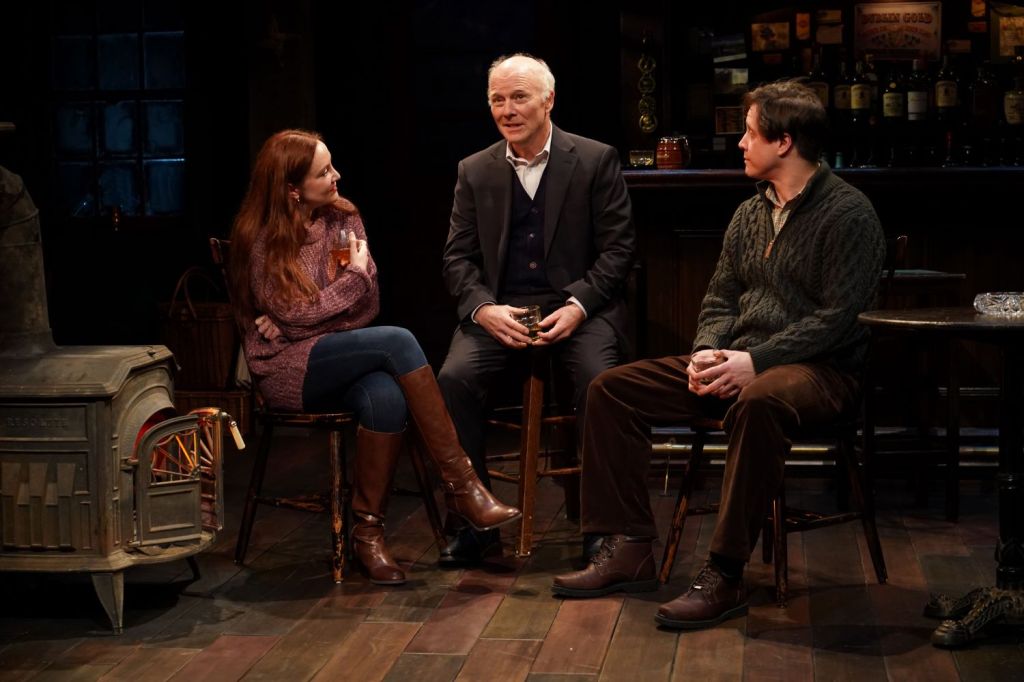
After Finbar leaves with Jim, McPherson presents a surprising coup de grâce. Quietly, Jack shares his poignant, personal story of heartbreak, his own haunting by the living. In an intimate emotional release and expression of regret and vulnerability, Jack tells how he loved a woman he would have married, but he let her slip away for no particularly good reason. Mentoring the younger Brendan not to remain alone like he did, Jack says, “There’s not one morning I don’t wake up with her name in the room.”
McPherson’s theme is a giant one. Back in the day when the world was slower, folks sat and talked to each other in community and conviviality. With such an occasion for closeness, they dispelled feelings of isolation and hurt. As they connected, they helped redeem each other, confessing their problems, or swapping mysteries with no certain answers.
As the world modernized, the ebb and flow of the culture changed and became stopped up, controlled by outside forces. Blocked by fewer opportunities to connect, people retreated into themselves. The opportunities to share dried up, redirected by distractions, much as a dam might redirect the ebb and flow of a river and destroy a place where magical fairies once bathed.
McPherson’s terrific, symbolic play in the hands of O’Reilly, the ensemble and creative team is a nod to the “old ways.” It reminds us of the value of gathering around campfires, fireplaces or heating stoves to tell stories. As companions warm themselves, they unfreeze their souls, learn of each other, and break through the deep silences of human suffering to heal.
The Weir runs 1 hour 40 minutes with no intermission at Irish Repertory Theatre (132 West 22nd St). https://irishrep.org/tickets/
 CAROLE DI TOSTI