Blog Archives
‘Our Town’ Starring Jim Parsons, Katie Holmes, Richard Thomas in a Superb, Highly Current Revival

Part of the magic of Thornton Wilder’s Our Town is its great simplicity. In Jim Parsons’ (Stage Manager), facile, relaxed, direct addresses to the audience lie the profound themes and templates of our lives. The revival of Our Town directed by Kenny Leon with a glittering cast of renowned film, TV and stage actors, reinforces the currency and vitality of Wilder’s focus on human lives, and the seconds, minutes, hours and days human beings strike fire then are extinguished forever, eventually forgotten as the universe spins away from itself. A play about the cosmic journey of stars and their particle parts in human form in a small representational town on earth, Our Town is iconic. Leon’s iteration of this must see production runs at the Ethel Barrymore Theater until January 19th.
The three act play is in its fifth Broadway revival since the play premiered in the 1930s. This most quintessential of American plays appeared on Broadway when the United States was in the tail end of the Depression during a period of isolationism, and concepts about Eugenics from American researchers had been adopted by the Third Reich to effect their legal platform for genocide. At a curious turning point in American history before a conflict to come, Wilder’s work about life and death in small town Grovers Corners in the fiercely independent state of New Hampshire represented a symbolic microcosm of life everywhere. Perhaps, the play’s themes, especially in the third act were a harbinger, and a warning. In its theme, “we must appreciate life with every breath,” was prescient because WWII was coming to remove millions in a devastation that was incalculable, noted by many as the “deadliest conflict in human history.”

Despite its stark ending and in your face “memento mori,” Wilder’s play found and finds an appreciative audience because of its universality and unabashed assertions about our mortality, walking unconsciousness, and refusal to remain “awake” to the preciousness of our lives.
Indeed, the play has continued to be widely read and performed globally in commercial theater, as well as educational institutions. Leon’s production is no less riveting than other revivals and is even more elucidating and vital in its stylistic dramatic urgency. This is especially so at this point in time, at the eve of a crucial period in our body politic, when we are deciding between two pathways. Do we want to continue to uphold the inexorable verities expressed in Wilder’s themes about living with as much equanimity as possible in a democratic nation that respects the peaceful transfer of power as Grovers Corners symbolizes in Leon’s production? Or do we jettison the rule of law, and the peaceful transfer of power in the US Constitution for a dictatorship in which not all lives are equal or valuable but one life must be bowed down to unequivocally?
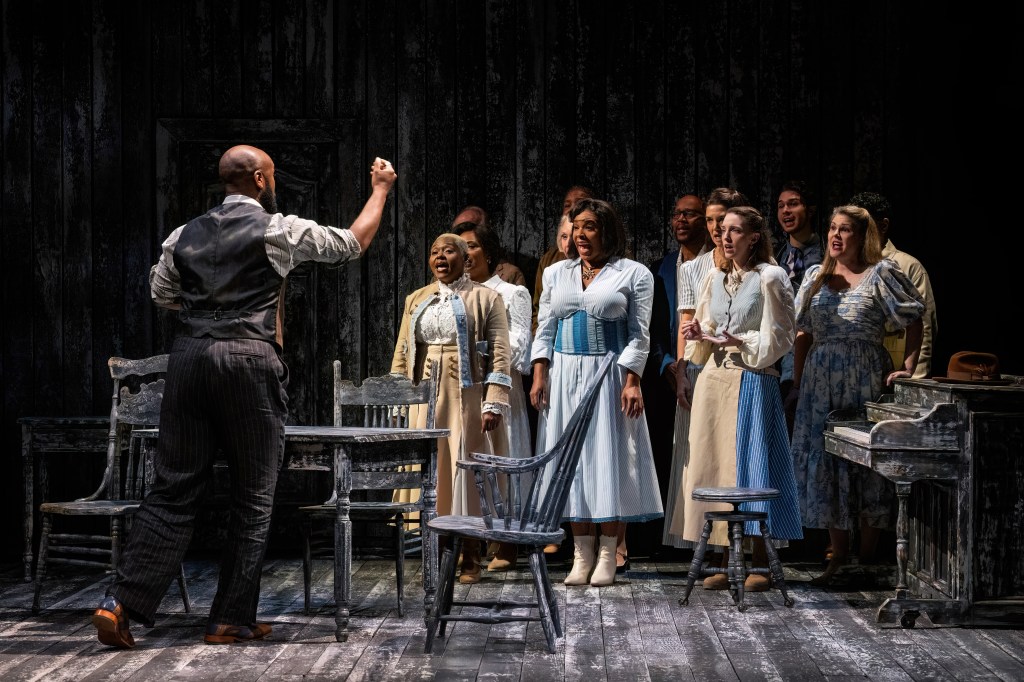
Leon’s direction stands in with the former, primarily in the production’s inclusiveness of a diverse group of actors representing Grover’s Corner’s accepting, and non judgmental townsfolk as they go about their business. The business of being human, Wilder divides into three segments (Daily Life, Love and Marriage, Death). Through the omnipotent Stage Manager, which Jim Parsons portrays with a low-key, pleasant avuncular and philosophical style, we quiver at his ironic, pointed rendering of life on this planet.
At the top of the play, the brisk, time-conscious stage manager, after detailing the ancient geological foundation of Grovers Corners, introduces us to the two families which Wilder highlights throughout the play to note their arc of development. Doc Gibbs (Billy Eugene Jones), the local physician, and Mr. Webb (Richard Thomas), the editor of the Sentinel are neighbors. At the turn of the century their wives, like most married women of the time, stay at home, do the housework and prepare meals, none of which is relieved by modern mechanical devices. We learn Mrs. Gibbs (MIchelle Wilson), and Mrs. Webb (Katie Holmes), “vote indirect,” which is to say women are considered incapable of making a rational voting decision.

However, the Stage Manager’s two words hold more weight than he seemingly intends to give them. Instead, he glides by the import of sociopolitical trends because it is unrelated to the cosmic picture alluded to by Rebecca Gibbs (Safiya Kaijya Harris), at the end of Act I. Indeed, the universal themes Wilder drives at do not focus on specific political details. Wisely, Leon takes his cues from the script having Parson’s Manager speak about the titles of the acts as dispassionately and unnuanced as possible. Importantly, Leon “gets” that the functioning of the town, symbolically rendered and opaquely stylized is how Wilder achieves the ultimate impact of the powerful conclusion about appreciating life each day we live it, as insignificant and boring as it may seem at times.
After we meet the children at a breakfast prepared by Mrs. Gibbs and Mrs. Webb via pantomime, the Stage Manager provides the locations of key places like the Post Office, the newspaper office, etc., and reminds us of the town routines, i.e. the train’s arrival and departure, milk and paper deliveries, etc. In the another part of the act, we meet the children who get hooked up in Act II, George Gibbs (Ephraim Sykes), and Emily Webb (Zoey Deutch).
Also, clarified is the town “problem,” Simon Stimpson (Donald Webber, Jr.), who we meet as the play opens when Simon Stimpson conducts the choir in a lovely song. Stimpson becomes the subject of gossip because choir members know he drinks and is drunk a good deal of the time. Mrs. Soames (Julie Halston) gossips about Stimpson and is hushed up by Mrs Gibbs, who tells a little white lie that Stimpson is getting better, then later tells her husband he is getting worse. Webber, Jr. is masterful in the small part. Clues are given about Stimpson’s future, as the character is referred by townspeople in Act I, with some questioning and not knowing “how that’ll end.” Eventually, the Stage Manager shows us how it “ends,” in Act III with Stimpson commenting about life and Mrs. Gibbs responding to him. Whose view should we accept? It, like this production, is open to interpretation.

Three years pass between Act I and Act II, and Parson’s Manager officiates at the marriage between Emily Webb and George Webb, after showing the event which reveals that these two individuals are special and their relationship which is “interesting” is grounded in being truthful to one another. The marriage scene which has been a bit tweaked and slimmed down from the original play, does include the Stage Manager philosophically discussing marriage and particularly George and Emily’s marriage when he says, in part, that he has married over two hundred couples and continues, “Do I believe in it? I don’t know. Once in a thousand times it’s interesting.” Again, we realize the profound comment and question what “interesting,” means.
In the last act which the production speeds to with no intermission as it clocks in at a spare one hour and forty-five minutes, Wilder’s vaguely spiritual metaphors are touching and poignant, despite the production’s bare bones lack of sentimentality. Warning, here is the spoiler, so don’t read the rest of the review if you are unfamiliar with Our Town.
Wilder’s third act resonates with symbols of death, as “the Dead” sit together on chairs as Parson’s unemotional Stage Manager describes the hillside cemetery. Importantly, the lack of Parsons’ emotion stirs the audience deeply. And in Leon’s production, the stylization in the previous acts makes the power of Emily’s return to see and live through her 12th birthday even more potent. Newly dead in childbirth, the Stage Manager gives Emily the privilege, which he says all the dead have, to return to a day in her life to relive it. The morning of her birthday, Emily watches herself, symbolically live without the realization that she will be dead in less than two decades later.

After commenting at how young her parents look and recognizing their love and affection, her pain at her obliviousness to life’s beauty overcomes her and she wants to leave to go back to the cemetery, a lovely spot where her brother Wally, Mrs. Gibbs, Simon Stimpson and Mrs. Soames wait for “something to come out clear.”
Emily’s dialogue is breathtaking and Deutch gets through it with less emotion and passion than is probably required for the audience to feel the reality of her words. “So all that was going on, and we never noticed.” And perhaps more emotion is needed as Emily asks the Stage Manager, “Do any human beings ever realize life while they live it? – every, every minute?” The audience in shock silently answers for itself as the Stage Manager responds.
This is the cruel and truthful heart of the play, especially experiencing it through the character of Emily and the Stage Manager’s comforting but remote words which somehow fall ironically when Parsons says, “No. The saints and poets,maybe – they do some.” However, only in death does Emily realize the suffering pain of not appreciating and being grateful for every fabulous, wondrous moment of life.
Certainly, Wilder needs to hit his audience over the head, and they walk out silently receiving the message, then days later forget it. However, for the moments when Leon, Parsons, the cast and the superb and lovely lighting and staging hold us, we “get it.” And we are grateful for teachable moments received through the actors’ fine efforts, the creative team’s craft and Leon’s minimalist stylization. And we appreciate the rich fullness of each gesture, word and grace delivered to make us get in touch with ourselves in our own Grovers Corners’ life.
Kudos to all involved in this magical production. Thornton Wilder’s Our Town runs one hour forty-five minutes without an intermission at the Ethel Barrymore Theatre (243 West 47th Street). https://www.ourtownbroadway.com/?gad_source=1&gclsrc=ds
‘Mother Play,’ Stellar Performances by Celia Keenan-Bolger, Jessica Lange, Jim Parsons

One of the keys to understanding Mother Play, A Play in Five Evictions by Paula Vogel is in the narration. Currently running in its premiere at 2NDSTAGE, directed by Tina Landau, Vogel’s play has some elements of her own life, but is not naturalistic. It is stylized, quirky, humorous, imaginative and figurative, like most of her plays. In a nod to Tennessee Williams’ The Glass Menagerie, in the notes, she suggests it is a memory play.
Presumably, the play focuses on a representative mother, Phyllis, portrayed with impeccable sensitivity, raw emotion and nuanced undercurrents of bitterness, humor and irony by the exceptional Jessica Lange. However, the play is actually about a mother-daughter relationship that moves toward reconciliation. As such, the narrator/daughter (the always superb Celia Kennan-Bolger), directs us to her understanding of the last forty years of her life in her relationship with her mother, via the unreliable narrator’s viewpoint.

Should we believe everything the narrator says happened? Or does Martha’s perception of her mother cling to highlights of the events most hurtful and damaging to her? We must ultimately decide or remain uncertain until the play’s conclusion. It’s a delicious conundrum that emphasizes Vogel’s themes of the necessity of developing a deeper understanding of relationships, emotional pain, working through hurt and so much more.
Martha’s genius gains our confidence, empathy and identification with her confessional re-enactment flashbacks as she remembers events. She takes us through the highs and lows of five evictions her family experiences together, after their father dumped them for greener pastures. A key figure in the family dynamic is her two-years older brother Carl, Martha’s brilliant, sweet and kind protector, portrayed with clarity, humor and depth by Jim Parsons.

At the top of the play, which is in the present, Martha is in her early 50s. She tells us that by the time she was 11, their family had moved seven times because their father had a “habit of not paying rent.” Thus, they learned to pack and unpack in a day. She comments with irony that there is a season for packing and a season for unpacking, referencing the Biblical verse (Ecclesiastes 3:1-8), and the Byrd’s song, “Turn, Turn, Turn.”
To destabilize and uproot children from their friends and school mates so many times is a calculation Vogel’s Martha never makes. But it speaks volumes about how the brother and sister rely on each other emotionally, because they are social isolates by necessity because the continued movement which their father, whom we only hear about, didn’t even take into consideration.
As Martha opens a box of the only things her deceased brother had left in their apartment, she takes out a bunny rabbit and a letter Carl had written to her. With the letter, Parson’s Carl materializes and Martha joins him as they step into a series of flashbacks which chronicle events that lead to the five times they were evicted by landlords or they evicted themselves from each other’s lives, only to return, eventually.

Cleverly grounding this family’s living arrangements to present her salient themes about “forever pain,” the impossibility of “mothering,” sacrifice, regret and love, Vogel uses two devices. The first is their furniture which they take with them and rearrange each time they pick up and take off for various reasons. Secondly, there are the roaches, which are magical and symbolic, not only of the poverty and want their father stuck them with, but of the emotional terror and fear of living precariously on the edge of society, sanity and Phyllis’ desire for normalcy.
The roaches, at key moments manifest, swarm, go creepy crawly and loom monstrously in their lives. Since Phyllis signs leases to cheaper basement apartments, promising they will take out the garbage, they are forced to live with these vermin, an indignity of representative squalor from which they never seem to be freed, despite upwardly mobile Phyllis’ attempts to rise to apartments on higher floors.
The first flashback occurs when Martha is twelve, Carl is fourteen, and Phyllis is thirty-seven, in their first apartment away from their father after the divorce. Carl and Martha arrange the furniture and when they are finished, they swivel around Phyllis, reclining in an easy chair in Landau’s deft, humorous introduction of the women the play is allegedly about. Far from “taking it easy,” Lange’s Phyllis demonstrates she is “on edge” and seeks to quell her nerves at this first move without her husband. She immediately importunes her children for the following: her cigarette lighter (a gift from “the only one she loved”), a glass for the gin which she carries in a bottle in her large handbag, and ice, ready made in a tray in a box. After pouring herself a drink and puffing on her cigarette, she begins to relax and says, “Maybe mother will be able to get through this.”

Ironically, the “this” has profound, layered meaning not only for the moment, but for what is ahead for Phyllis, including single parenting, a possible nervous breakdown, poverty, responsibility as a mother, her job and more.
Phyllis pulls out their dinner in a McDonald’s bag from her bottomless black purse, which is empty of money because their father wiped out all the accounts. She speaks of their future-Martha cooking, cleaning and getting dinner, and Carl continuing his excellence of a near perfect score on the PSATs in verbal skills. Phyllis predicts Carl will be the first one in the family to get into college via a scholarship. Martha will take typing and get a job like her mother, so that if a man leaves her like her father discarded her mother, she will be able to support herself.
Though Carl quips flamboyantly about affording rent at the Algonquin, Martha sours at having to share a bedroom with her mother who snores. The favored one, Carl gets his own room. With their new beginning as latch key kids, who have to make their own lunches and deal with their own problems, toward the end of the segment, Carl humorously asks Martha if their childhood has ended.

Being a breadwinner and sole parent is a circumstance Phyllis bitterly resents. Culturally, moms still stayed at home, cooked, cleaned, did the laundry, took care of all the needs of the children, attended to them before and after school, and bowed to their husbands, who had the freedom to do what they pleased, expecting dinner at whatever hour they returned to a wife thrilled to see them. It is this “achievement” that Phyllis wishes for Martha, whom she hopes will marry someone unlike Mr. Herman, in other words a bland man who is unappealing to women and just wants a loyal wife like Martha will be because Phyllis has raised her to be the good woman.
Though Phyllis proudly proclaims this new apartment is a step in the right direction, Phyllis cannot “move on” to annihilate memories of her husband’s past physical and financial abuse, his scurrilous behavior, his machismo insisting all is his way. Filled with regret, Phyllis lapses into negative ruminations about their father who doesn’t provide child support or come to visit. Her cryptic remarks, sarcasm and “treatment” of Martha and Carl, who she openly praises and admires, while being “hard” on Martha, so she won’t marry a fraud, is sometimes humorous, but mostly unjust. In the telling Martha has our sympathy against this cruel, anti-nurturing mother.

Ultimately, we learn that each time they move for a reason that triggers them, each time they pack and unpack and arrange the furniture to settle in, they are still stuck in the same place emotionally because Phyllis can’t forget, forgive or release her anger. And though she adjusts as best she can, she relies emotionally on Carl and Martha, who she eventually evicts when she discovers they live a lifestyle that disgusts her and shatters her dreams for them.
Sprinkled throughout the five evictions and events leading up to them is Vogel’s humor and irony which saves the play from falling into droll repetitiveness because emotionally Phyllis’ needle is stuck in the same groove. Her emotionalism worsens as key revelations spill out about who she is as a woman, who once was adored by the same man who left her for “whores.” Throughout the sometimes humorous, sometimes tragic and upsetting events, Carl and Martha continue to serve and wait on Phyllis until they reach their tipping point. Overcoming these painful events with their mother because they have each other, Carl continues to guide and counsel Martha as a loving brother. This becomes all the more poignant when he leaves the family for various reasons, the last one being the most devastating for Martha and Phyllis.

Landau’s direction and vision for this family whose dysfunction is driven by internal soul damage shared and spread around is acutely realized. The following creatives enhance her vision: David Zinn’s scenic design of movable furniture, Shawn Duan’s projection design of interminable roach swarms, Jen Schriever’s ethereal, atmospheric lighting design (when Carl appears and disappears in Martha’s imagination), and Jill BC Du Boff’s sound design (I heard every word).
Landau’s staging and shepherding of the actors yields tremendous performances. Lange’s is a tour de force, encouraged by Parsons and Keenan-Bloger, whose development through the years pinging the ages from Martha’s 12 years-old and Carl’s 14-years old through to Martha’s fifties is stunning. Parson moderates his maturity and calmness as a contrast to the dire events that occur in the play’s last scenes. The disco scene is amazingly hopeful until Phyllis breaks emotionally and spews fearful, hurtful words.

Always, Keenan-Bolger’s Martha remains ironic, rational, questioning, matter-of-fact. Lange’s fragility and vulnerability underlying her outbursts prompt the stoic response from Parsons and Keenan-Bolger, whose Carl and Martha often take the role of the adults in the room. After a while, Martha has so blinded us to her portrait of Phyllis, we believe her hook, line and sinker that Phyllis is a b*&ch.
Phyllis’ deterioration into heartbreaking loneliness as her children remain estranged from her is attempted by Vogel in a scene that may have been shortened or should have been realized differently, or should have included different tasks by Lange’s Phyllis. Phyllis attempts to moderate her drinking alone in the evening at a time when women get drunk as evening alcoholics. She prepares her drink when she arrives at her set time (looking at her watch), as if using alcohol like a prescription medicine. The playing of cards, getting dinner, trying to make it tastier, spitting it out and trashing it, then having her timed drink, then eventually looking into a crystal ball might have been shortened.

But this is Martha’s imagined view of what her mother does alone. It doesn’t work as fluidly as the other scenes do. Perhaps this is because none of Martha’s interior dialogue is externalized.We only see her outer actions in silence. Martha doesn’t imagine Phyllis’ interior dialogue because that might require an empathy for her mother which she doesn’t have. It is an interesting disjointed scene, perhaps for a very good reason that exposes Martha’s shortcomings about her mother, particularly in understanding and empathizing with her.
However, Keenan-Bolger and Lange bring the play home with the poignant, affirming ending. For the first time, as Martha speaks to an ethereal Carl sitting in a chair reading in a dimly lit section of the stage, she gives herself a break from internalizing her anger. She allows herself to see what was perhaps there all along in her mother’s opinion of her. She does this after she casts all the anger from the past aside. What penetrates is Martha’s new realization of a Phyllis she never understood before. It is a long awaited for moment of feeling that opens a flood of love between them. Vogel leaves the final scene open for audience interpretation as it should be. Either way, the misshapen puzzle pieces fit into redemption and forgiveness.
Mother Play, a Play in Five Evictions is a must-see. It runs with no intermission for one hour and forty-five minutes. The Hayes Theater is on 210 West 44th Street between Broadway and 8th Avenue. https://2st.com/shows/mother-play
‘A Man of No Importance’ at CSC, a Superb Revival
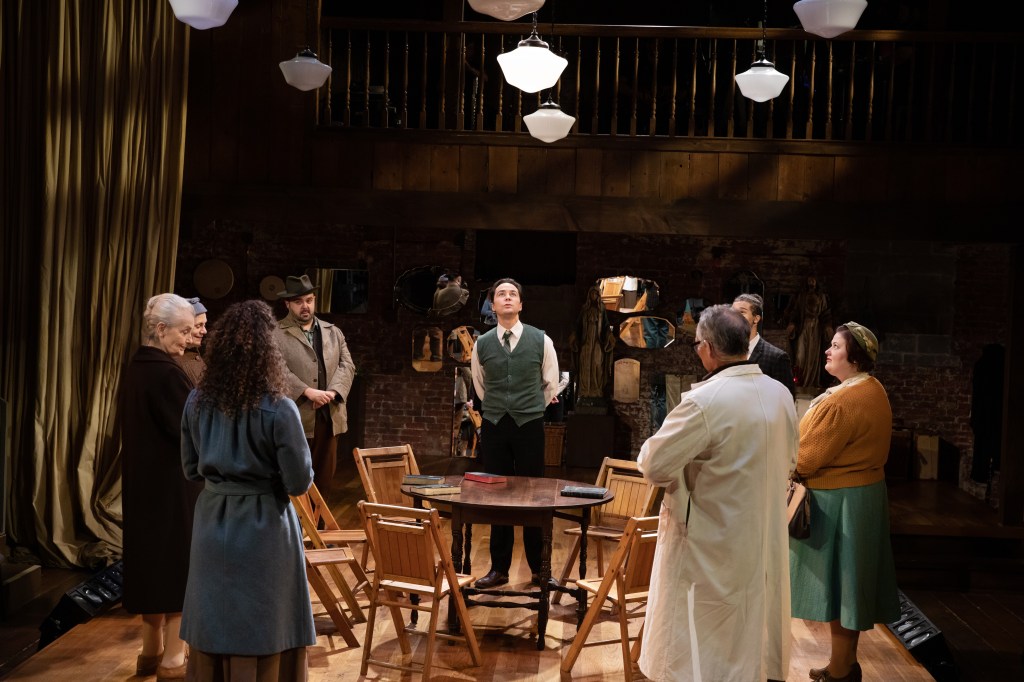
In its second Off Broadway go-round (Lincoln Center in 2002) Terrence McNally’s book and Stephen Flaherty’s music with Lynn Ahrens’ lyrics of A Man of No Importance directed and designed by John Doyle, is currently at CSC until 18 of December. The production is Doyle’s unaffecting and warm goodbye as Artistic Director of CSC. The uplifting, poignant musical appropriately reminds us of the vitality of theater, whether it be in an office space or a majestic 1500 seat house on 42nd street. Unlike the titular film A Man of No Importance is based on (1994, starring Albert Finney, written by Barry Devlin, produced by Little Bird) live theater is interactive. The audience spurs on the actors in a kinetic, telepathic bond that is incredibly enjoyable once opening night jitters are put to rest.
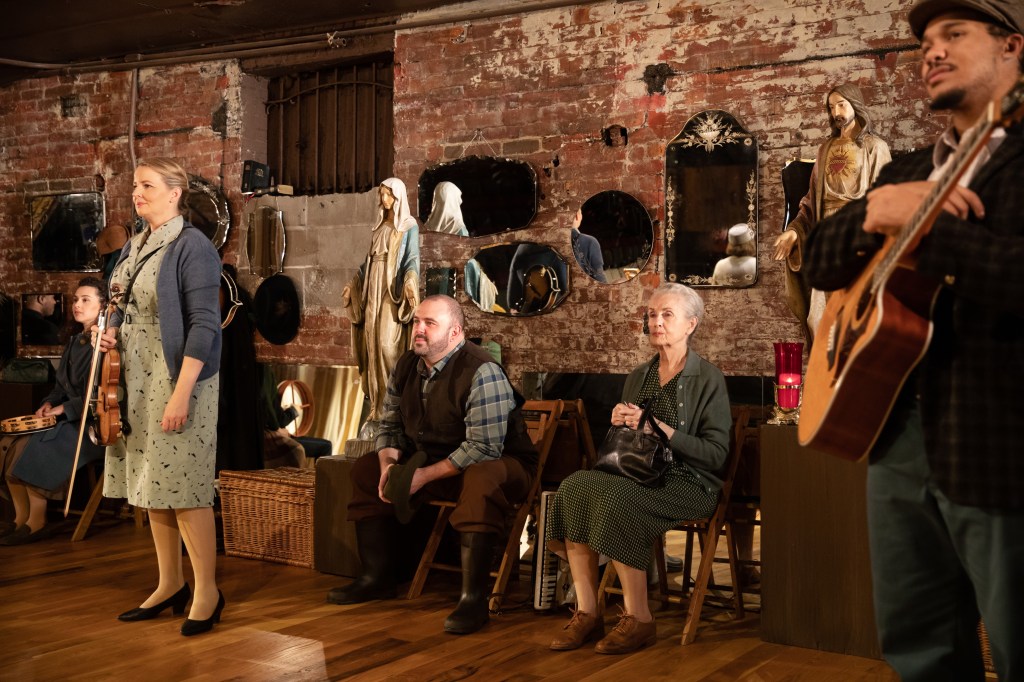
This most probably is what keeps protagonist Alfie, a DIY theater director of Dublin’s St. Imelda’s Church players inspired and engaged, though their performances are reportedly terrible. And it is why he is wickedly devastated when Father Kenny (Nathaniel Stampley) closes down their production of Salome, because it is inappropriate and untoward for a community church theater show, though the story is right out of scripture. Actually, by the end of the production we learn that the butcher, Mr. Carney (Thom Sesma), who is one of their amateur troupe, complained to Father Kenny that Salome was tantamount to pornography because he had a small role and that pissed him off.
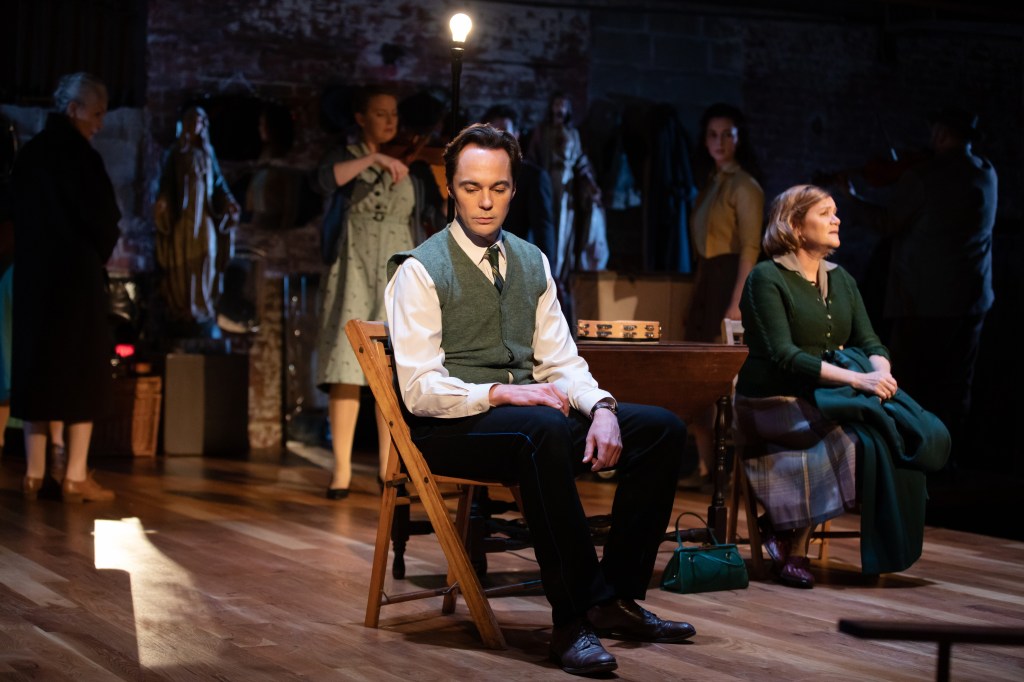
Alfie (portrayed by the likable and heartfelt Jim Parsons) apart from his love and spirit guidance by Oscar Wilde, who encourages him to read poems while at his job as a conductor on a Dublin bus, is a closeted, sensitive gay man. He lives with his domineering sister Lily (the always superb Mare Winningham) in their small apartment, where he keeps a raft of books and tests out his gourmet international recipes on her unadorned, “Irish stew palette.”
The year is 1964 before the cultural revolution, “free love,” mini skirts, The Beatles phenomenon and a relaxation of Catholicism’s strictures that didn’t really happen until decades later. Then, the Republic of Ireland was repressed and oppressed by doctrine that made it look more like the radical, right-wing conservative anti-LGBTQ, anti-abortion, red state swamp areas of the American South in 2022. Because of such cultural dispossession, Alfie lives in a fantasy world of art, theater and poetry. He remains inspired by his spiritual advisor, fellow Irishman Oscar Wilde, as he tries to improve the lives of those around him, whether at his job as a conductor, at home with his sister, or at the church, directing his St. Imelda Players.
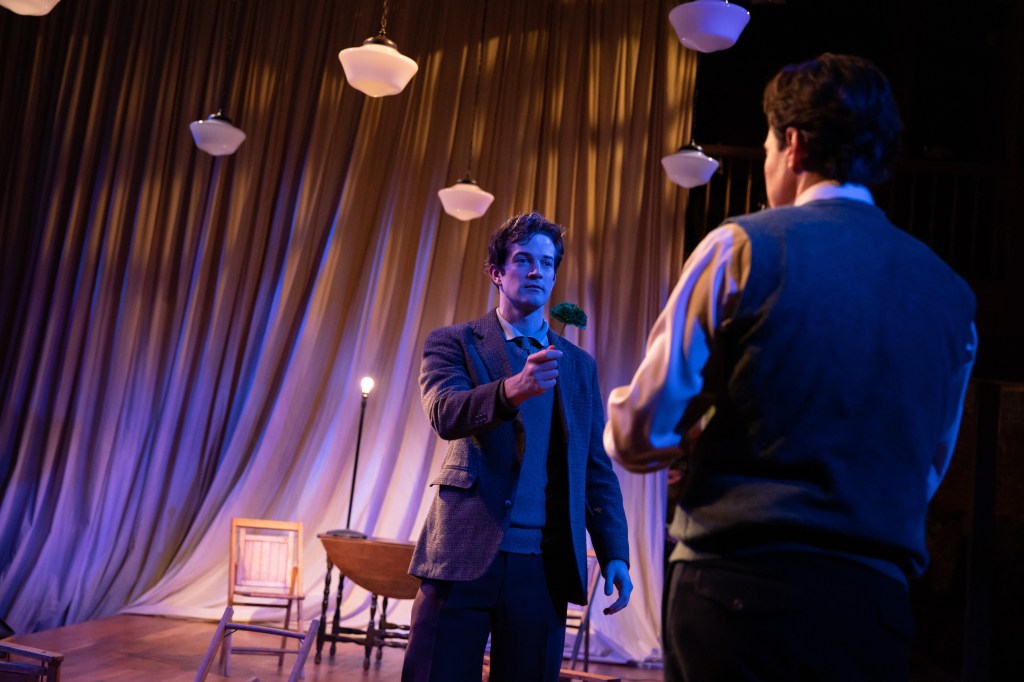
When Father Kenny closes down their amateur troupe, Alfie is quite bereft, until the St. Imelda Players decide to perform a play of the events that have brought them to where they are at the finish line in the present (1964) with no winning trophy. But instead of directing them, Alfie will be the star of their play.
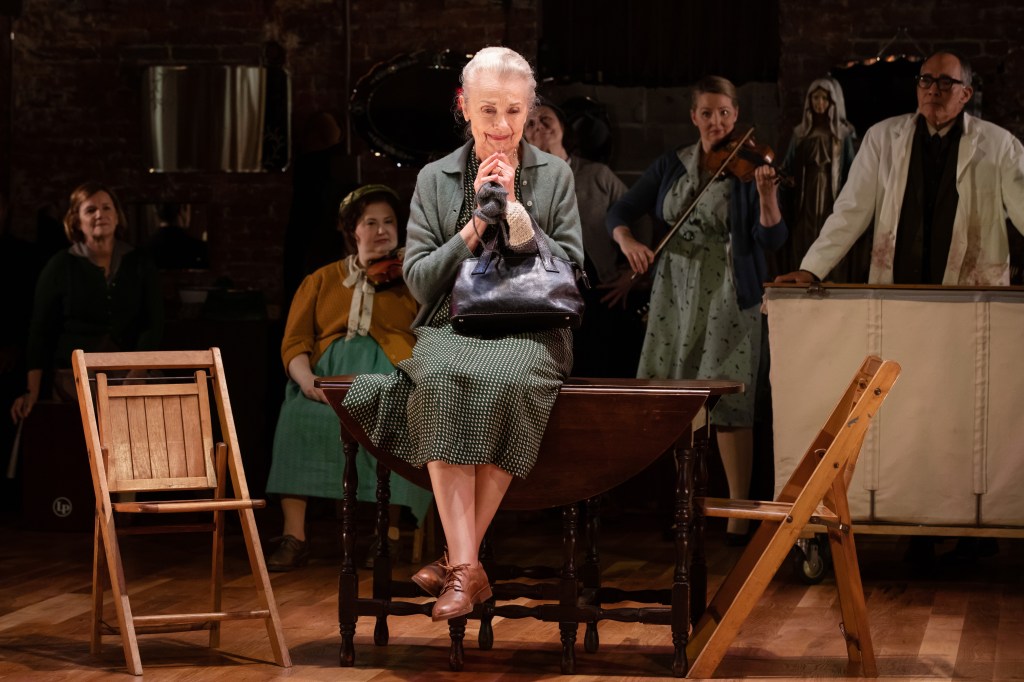
Cleverly, McNally, Flaherty and Ahrens adjusted and adapted the film as a flashback sandwiched by the present. The church players become the Greek chorus who engineer the events of the play, streamlining them into the action that happened at St. Imelda’s before Father Kenny shuttered their company. They sing songs that embody the emotional feeling and turning points of those events. These songs include the conflict between and among the characters, personal confessions and revelations, and the positive message that they gain from what they’ve learned together. They introduce Alfie as their star, then perform the tuneful, ironic opening number, “A Man of No Importance,” in celebration of their beloved friend and director who is their hero, integral to all of their lives. We learn by the conclusion of their musical, that to them, he is a man of great significance.

Doyle has staged the musical with an approach to DIY theater, reflective of what the St. Imelda Players might effect. The props are cleverly selected, i.e. a drum is used as the bus steering wheel. The actors use minimal furniture to create the environs where the events occur. Chairs suggest the bus that conductor Alfie is on with the driver, the affable and lively Robbie Fay (A.J. Shively, whose “The Streets of Dublin” rocks it). The players become the bus passengers with a new passenger Adele, the lovely voiced Shereen Ahmed catching the attention of Alfie as he quotes from a poem by his spirit mentor Oscar Wilde. By the end of their ride, The St. Imelda Players complete singing the titular “A Man of No Importance.”
As the players give us a tour of Alfie’s life in Dublin, we drop in on him with sister Lily, who is happy to discover that Alfie has found interest in a woman. She sings”Burden of Life” as an answer to her prayers so that perhaps now Alfie can settle down, and she can be free of taking care of him. Mare Winningham is humorous and vibrant as she takes on the role of Lily. A Catholic woman, she and the others in the troupe miss all the cues that her brother just might not be into women. When this finally comes out later, she reassures him in the song “Tell Me Why” that even though he is gay, she loves him anyway and he should have told her.
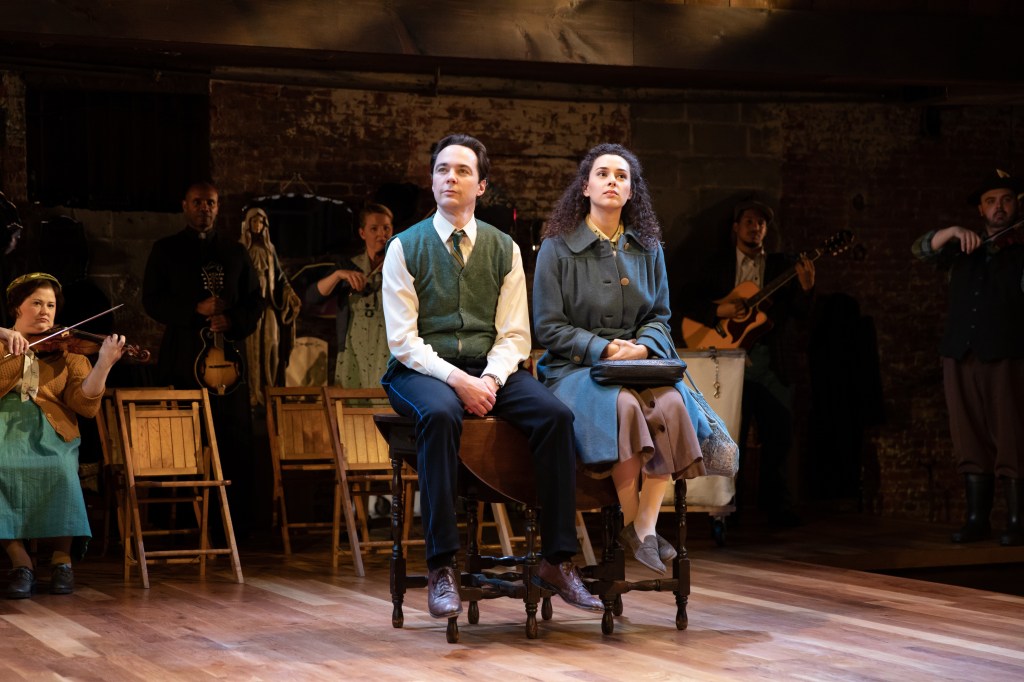
Alfie’s interest in Adele is not because her beauty entices him romantically. He thinks she is perfect for the role of Salome. Though she avers and refuses the part initially, Alfie is persuasive and she finally relents. It is his hope to have the handsome Robbie play the part of John the Baptist, perfectly cast to act with Adele. Robbie puts him off and instead invites him to come to the pub (the wonderful “The Streets of Dublin”). Alfie accompanies Robbie and makes a fool of himself singing “Love’s Never Lost” in front of Robbie’s friends. Embarrassed, Alfie leaves, further disturbed at Breton Beret’s (Da’Von T. Moody) interest in him. Additionally, he’s confounded by the “love that dare not speak its name,” a love that he feels for his “Bosie,” as he imagines Robbie to be. (Bosie refers to Lord Alfred Douglas, Wilde’s lover.)
Alfie can only admit this inner conflict as he looks at himself in a mirror encouraged by Oscar Wilde (Thom Sesma). He sings the lyrical “Man in the Mirror” as a way to work through his emotions to achieve self-acceptance. Parsons approaches Alfie’s inner conflict with yearning and honesty, confessing in a dream-state to the persecuted and vilified Oscar Wilde, a man who understands the torment he goes through.

Spurred by her discussion with Mr. Carney about Alfie’s weirdness (“Books”), Carney’s insistence that Salome is pornography, and his pressure to marry, which Lily puts off using Alfie as an excuse, Lily makes an attempt as a matchmaker. She invites Adele home for a meal that Alfie has cooked. Afterward, Alfie walks Adele home and as a friend, he gets her to admit she has “someone.” Her tears suggest that there is a reason her boyfriend is not with her. To reassure her Alfie calms her with another beautiful ballad, “Love Who You Love.” As she leaves, Alfie bumps into Breton Beret who propositions him. Alfie wisely restrains himself. His intuition is correct but his unresolved conflict between his shame at being gay and his longing to find someone to be with is a devastation in a Catholic country where being a homosexual is a mortal sin requiring repentance and conversion. Interestingly, he imagines Oscar Wilde encourages him by suggesting that the only way to remove temptation is by giving in to it.
In Doyle’s production the musical is streamlined to eliminate an intermission and keep it as one continuous series of events that move with swiftness, as players would effect their version of what happened, without including every detail. There are fewer players and most of them are incredible musicians that round out the small band tucked away in a second floor balcony against the back wall of the CSC playing area, where the audience abuts on three sides. Thanks to Bruce Coughlin (orchestrations), Caleb Hoyer (music director) Strange Cranium (electronic music design) the music arrangements, Doyle’s staging and the players’ vocal work is gorgeous, and seamlessly, perfectly wrought in configuring the St. Imelda’s Players’ production. Indeed, they are much better than they’ve jokingly been described.

After the turning point (“Love Who You Love” carries the theme) the players reveal that Adele can’t continue with her lines as Salome because the words convict her soul. She can’t act a role where she’s supposed to be innocent and virginal, because in real life, she’s a fallen woman, who had intercourse out of wedlock and now is pregnant. Full of guilt and remorse her punishment is self-torment and humiliation. She must emotionally suffer the rest of her life because abortion is out of the question and the father won’t marry her to make the baby legitimate. The church and the oppressive paternalistic folkways of the culture vilify her with unworthiness and condemnation.
Catholicism hangs over the heads of the characters like a dirge of annihilation and judgment. Adele will have to go home to receive help from her parents to raise the child. Meanwhile, Mr. Carney also uses religious folkways to shut down the play. To add insult to injury, Robbie feels condemned by Alfie when Alfie unwittingly interrupts Robbie and Mrs. Patrick (Jessica Tyler Wright) making love in the bus garage. Feeling the weight of the sin of adultery, Robbie insults Alfie and judges Alfie’s life is without love, an accusation that torments Alfie because he loves Robbie.
Alfie can never reveal this love to him because it would drive Robbie away. Though Alfie has attempted to confess to Father Kenny (“Confession”) he can’t bring himself to reveal his great sin and thus is damned with guilt. As a result of the conflict of loving someone who would never love him, and being accused by that same person as being unloving, Alfie throws caution to the winds. He engages with Breton Beret who has been waiting for the opportunity to make himself look like a real man by beating up a “poof.”

Clearly, the film (1994) was made at a time when the Catholic church was dealing with its own sexual sins which finally came to the fore in the world wide expose of pederasty in the church around 2002. However, the film/musical sets the events back in the 1960s before any of the cultural revolutions took place. Nevertheless, to understand the full force of Catholicism condemnation of homosexuality, check the numbers of gay men who were abused as Alfie is abused by the likes of Breton Beret, or look at the numbers of Catholic gay men committing suicide because they couldn’t reconcile their feelings with their religion. Also, read up on the Republic of Ireland’s approach toward girls who got pregnant out of wedlock in the book Philomena (also a fabulous film with Judi Dench). Or read the stories of the Magdalene Laundries, captured in the film The Magdalene Sisters. The brutality of the paternalistic Catholic folkways winked at male adultery like Robbie’s and swept it under the rug as “boys will be boys.” As for gays or women with babies born out of wedlock, the humiliation, shame and condemnation was a cruelty that destroyed lives.

In the book of the musical McNally is not heavy handed with Catholicism in its iteration at St. Imelda’s community church. The musical has a light touch and religion appears to take a back seat, if we are not aware of the entrenched history of the church and its devastation on its believers. Rather, it is understated with Robbie’s anger at being discovered by Alfie, and Adele’s tears when the father of her child abandons her after he takes what he wants. Alfie gets the worst of it because he is discovered as a homosexual by the police who come to save him from being beaten to death by Beret. But the rub is he can’t press charges for assault because public opinion against “poofs” is more reprehensible than a physical assault. In fact it is intimated that Beret gets backroom laughs and cheers for beating up a homosexual who fell for his enticement.
McNally, Flaherty and Ahren configure the church’s worst folkways to be the sub rosa driving force for all of the humiliation, self-condemnation and torment that makes the conclusion so incredibly vital to A Man of No Importance. Thanks to Doyle, the performers and the creative team’s talents, the conclusion is uplifting and poignant for us today with a message of love and acceptance that is never old. It is the true spirit of Christmas in this “Happy Holidays” season, and in the United States needs to be proclaimed from the rooftops. In its quiet and unassuming way, A Man of No Importance is a trophy winner.
Kudos to Ann Hould-Ward (costume design), Adam Honore (lighting design) and Sun Hee Kil (sound design) and the entire cast and creative team who bring Doyle’s vision to life. The excellent must-see A Man of No Importance is at CSC until 18 December. For tickets and times go to their website: https://www.classicstage.org/current-season/a-man-of-no-importance
 CAROLE DI TOSTI