Blog Archives
‘Ragtime’ is Magnificent and of Incredible Moment
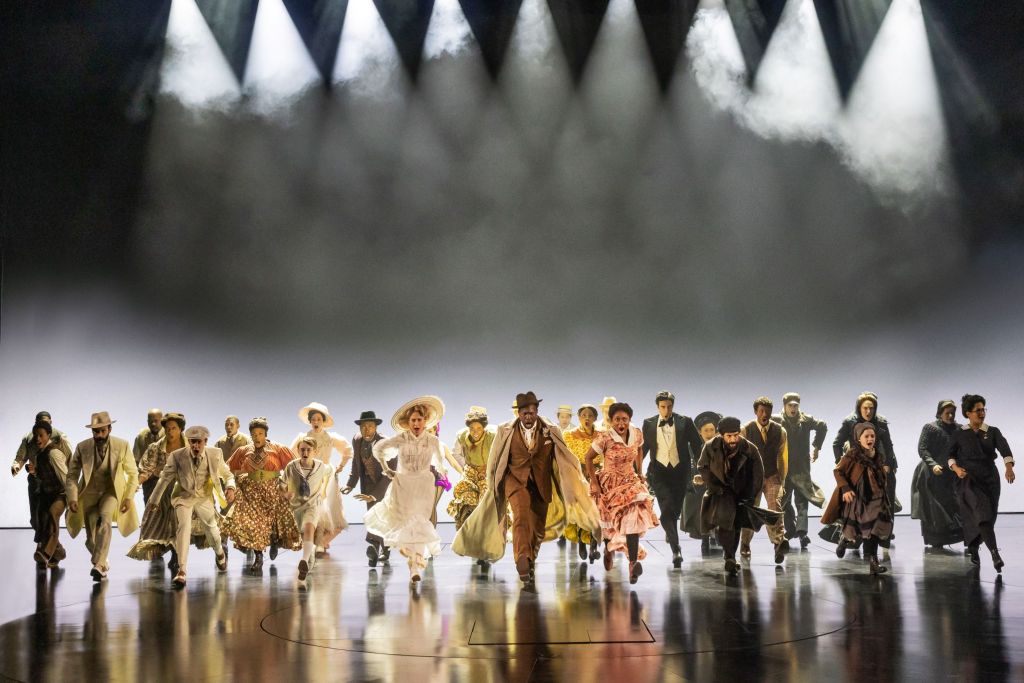
Between the time Lear DeBessonet’s Ragtime graced New York City Center with its Gala Production in 2024, until now with the opening of DeBessonet’s revival at Lincoln Center, our country has gone through a sea change. The very core of its values which uphold equal justice, civil rights and due process are under siege. Because our democratic processes are being shaken by the current political administration, there isn’t a better time to revisit this musical about American dreamers. Ragtime currently runs at the Vivian Beaumont Theater until January 4.
DeBessonet has kept most of the same cast as in the City Center Production. The performers represent three families from different socioeconomic classes. In each instance, they face the dawning of the 20th century with hope to maintain or secure “life, liberty and the pursuit of happiness,” in a country whose declaration asserted independence from its king. In affirming “We hold these truths to be self-evident; that all ‘men’ are created equal,” America’s promises to itself are fulfilled by its citizens. Ragtime reveals who these citizens may be as they strive toward such promised freedoms.
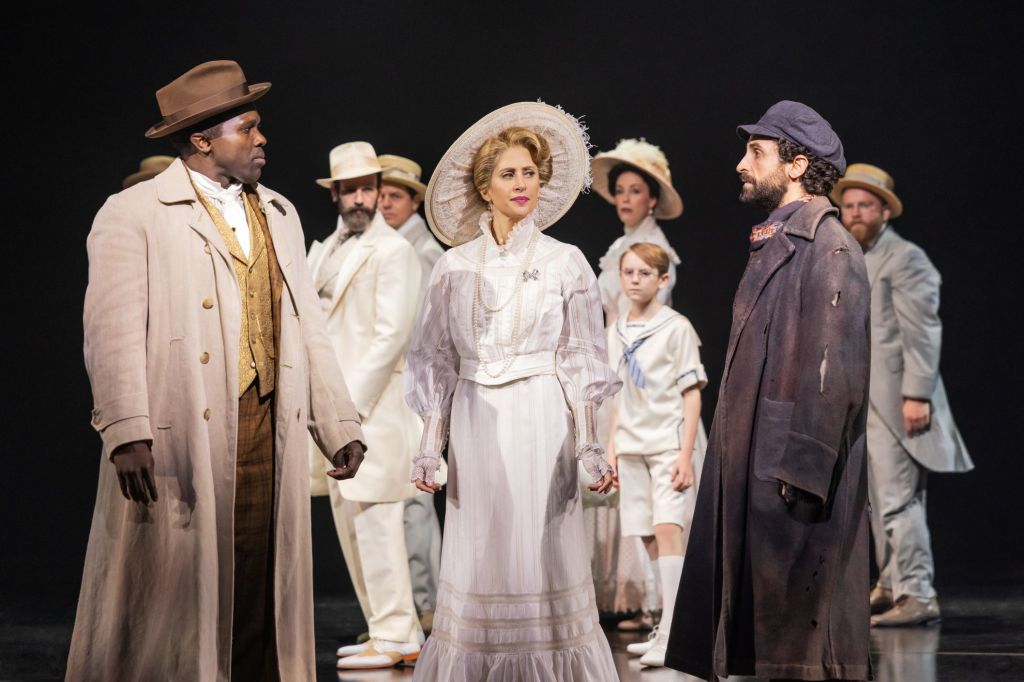
Above all Ragtime is about America, the saga of a glorious and terrible America, striving to manifest its ideals and live up to them, despite overarching forces that would slow down and halt the process.
Based on E. L. Doctorow’s classic 1975 historical novel, and adapted for the stage by Terrence McNally (book), Stephen Flaherty (music), and Lynn Ahrens, (lyrics), Ragtime‘s immutable verities are heartfelt and real. As such, it’s a consummate American musical. DeBessonet’s production celebrates this, and superbly presents the beauty, tragedy and hope of what America means to us. In its concluding songs (Coalhouse’s “Make Them Hear You,” and the company’s “Ragtime/Wheels of a Dream”), the performers express a poignant yearning. Sadly, their choral pleading is a stunning and painful reminder of how far we have yet to go to thoroughly uphold our constitution.
The opening number “Ragtime,” introduces the setting, characters and suggested themes. Here, DeBessonet’s vision is in full bloom, from the lovely period costumes by Linda Cho, David Korins’ minimally stylized scenic design, DeBessonet’s staging, and Ellenore Scott’s choreography. As the company sings with thrilling power and grace, they gradually move forward to take center stage. They are one unit of glorious interwoven diversity and destiny. The audience’s applause in reaction to the soaring music and stunning visual and aural presentation, heightened by a bare stage, emotionally charged the performers. Thematically, the cast had an important mandate to share, a cathartic revelation of the sanctity of American values, now on the brink of destruction.
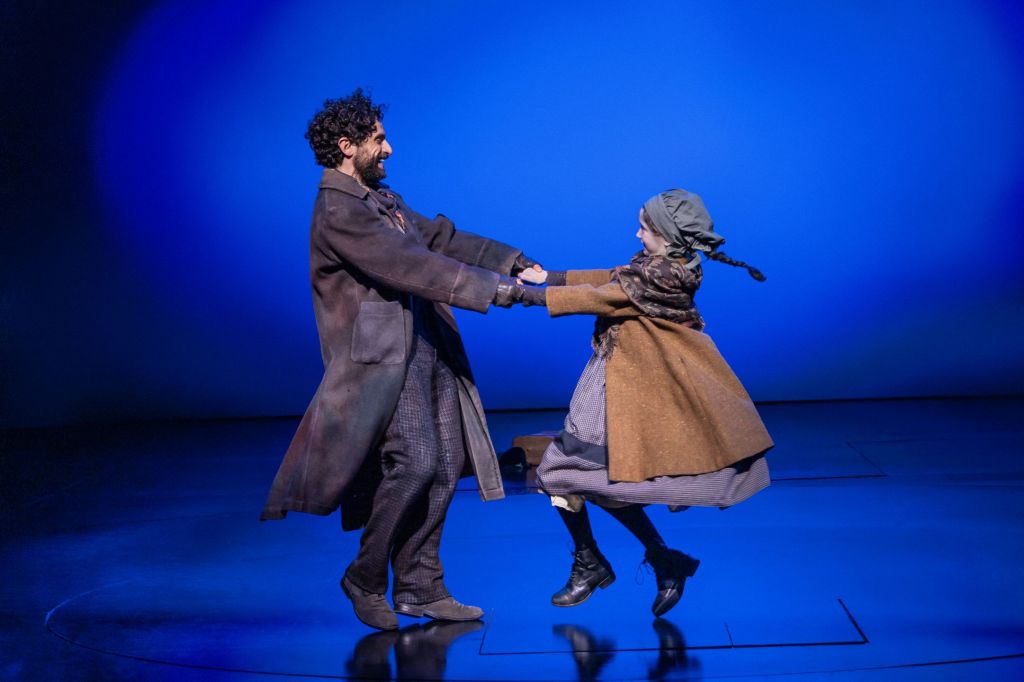
Watching the unfolding of events we cheer for characters like the talented Harlem pianist and composer of ragtime music, Coalhouse Walker, Jr. (the phenomenal Joshua Henry). And we identify with the ingenious, Jewish immigrant Tateh (the endearing Brandon Uranowitz). Tateh must succeed for the sake of his little daughter (Tabitha Lawing), despite their impoverished Latvian background. Likewise, we champion Mother (the superb Caissie Levy), who reveals her decency, kindness and skill, running the house, family and business. She must fill in the gap while her husband (Colin Donnell), goes on a lengthy expedition to the North Pole as a man of the privileged, upper class patriarchy.
The musical also reflects the other side of America’s blood-soaked history, best represented by characters along a continuum. Their misogyny, discrimination and greed often overwhelm, victimize and institutionalize innocents in the name of a just progress. These include tycoons like J.P. Morgan, Henry Ford, and the garden variety racists that brutalize Coalhouse Jr. and his partner Sarah (the fine Nichelle Lewis), in the name of order and security. Finally, to inspire all, the musical includes wily entrepreneurs like Harry Houdini (Rodd Cyrus), social justice advocates like Emma Goldman (the wonderful Shaina Taub), and accepted reformers like Booker T. Washington (John Clay III). All these individuals make up the living fabric of America.
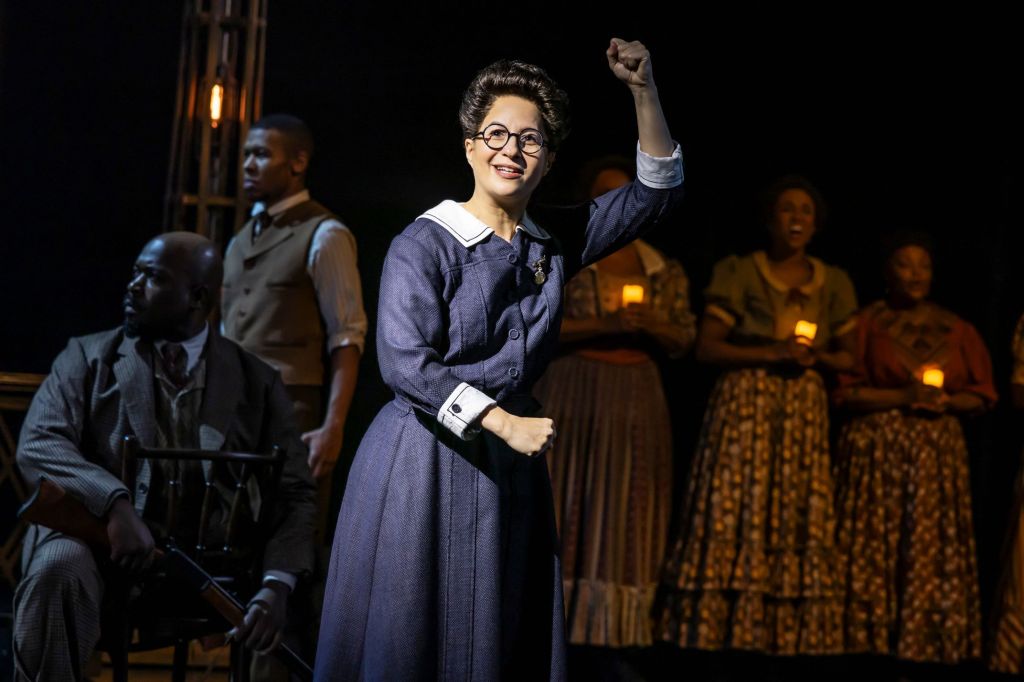
At its most revelatory, Ragtime exposes elements of our present as the continuation of entrenched issues never resolved from our past. Despite our great strides in nuclear fission and quantum computing, retrograde darkness still lurks in the nation’s beating heart, in its violence, in its human rights inequities. Clear-eyed, incisive, DeBessonet’s spare choices about spectacle and design, and her focus on great acting and singing by the leads and ensemble, ground this masterwork.
Ragtime begins with an interesting unexplained entrance: a winsome and beautiful Black male child in period dress frolics across a bare stage. At the conclusion the circle comes to a close and he appears again. We discover who he is and what he symbolizes in a stark, crystallizing moment of elucidation. After the opening number (“Ragtime”), Mother’s adventure as head of her household begins when Father leaves (“Goodbye My Love”). Her helpers include her outspoken, prescient, son Edgar (Nick Barrington), her younger brother (Ben Levi Ross), and her opinionated, crotchety father (Tom Nelis).
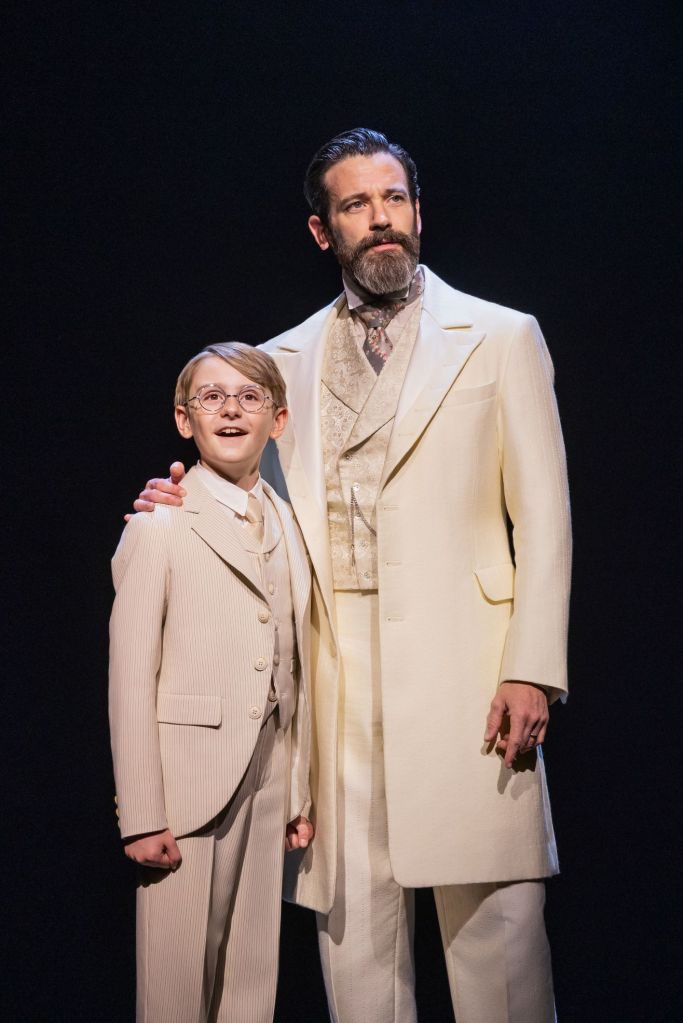
However, the peace and serenity of their lives become interrupted when Mother discovers an abandoned baby in her garden. After much deliberation, Mother takes in the infant and traumatized mother, Sarah. Clearly, this startling act of redemption never would have occurred if Father was present. As an assertion of Mother’s right to make her own decisions, her grace becomes a turning point in the lives of the baby’s father, Coalhouse, and his love, Sarah. Apparently, Coalhhouse left Sarah to travel for his career, not knowing she was pregnant. He was pursing his dream of being a singer/composer of the new ragtime music.
By he time Coalhouse searches for Sarah to eventually find and woo her back to him, we note the tribulations of Tateh, who tries to survive using his artistic skills (like Harry Houdini). And we note the moguls of a corrupted capitalism, i.e. Ford, Morgan (“Success”), who Emma Goldman accuses of exploitation. They keep the workers and society oppressed and poor.
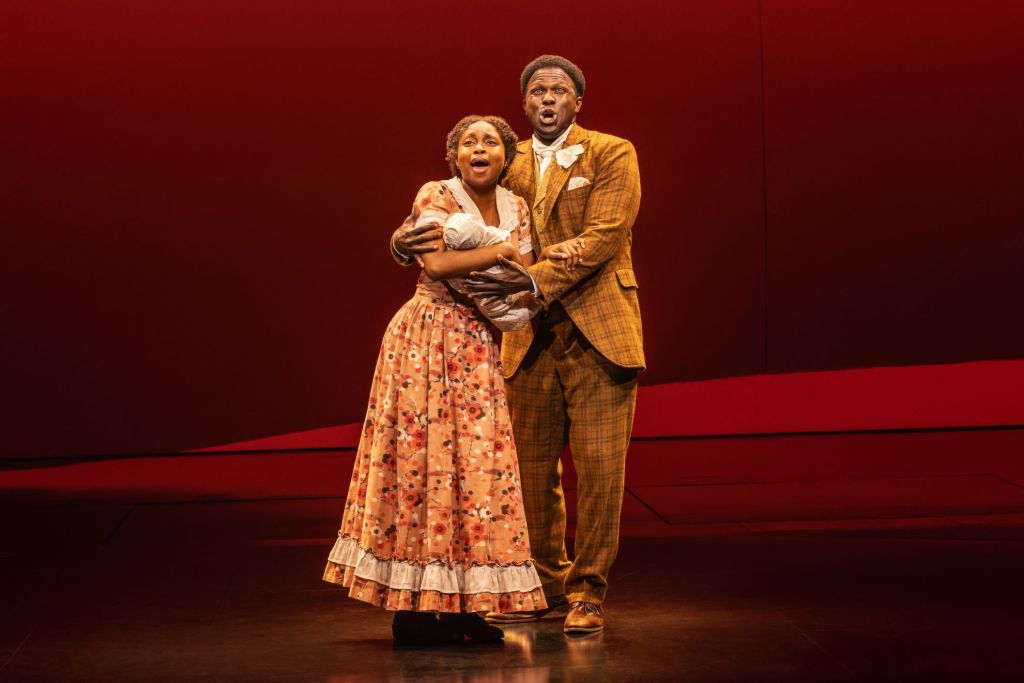
Using his charm and daily persistence (“he Courtship,” “New Music,”), Coalhouse wins Sarah back. In a dramatic, dynamic moment, Henry’s Coalhouse sings with emotion, “Sarah, come down to me.” When Lewis’ Sarah descends, their fulfillment together is paradise. The stunning scene like the ones that follow, i.e. “New Music,” and especially Henry and Lewis’ “Wheels of a Dream,” where Coalhouse and Sarah sing to their son about America, are hopeful and heartbreaking. Again, the audience stopped the show with applause and cheers as they periodically did throughout the production.
On the wave of Coalhouse and Sarah’s togetherness and love reunited, we forget the underbelly of a dark America that looms around the corner. It does appears during Father’s reunion with Mother after his lengthy voyage.
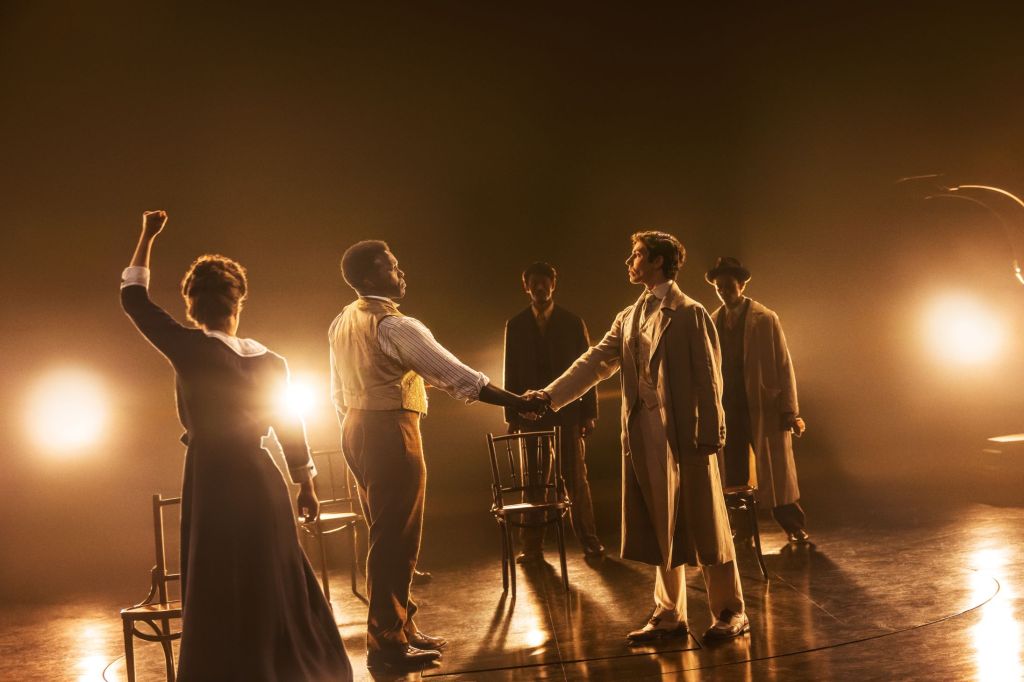
Unhappily, Father returns to a household in chaos with Sarah, Coalhouse and the baby under his roof. He can’t imagine what “got into” his wife and makes demeaning remarks about the baby. His conservative, un-Christian-like attitude upsets Mother. She defends her position and replies with demure, feminine instruction. Interestingly, her comment indicates she will not heel to him like the good lap dog she was before he left. As with the other leads, Levy’s performance is unforgettable in its specificity, nuance and authenticity.
Clearly, the characters have made inroads with each other bringing socioeconomic classes together during events when activists like Emma Goldman and Booker T. Washington make their mark and reaffirm equality. As a representative of the wave of immigrants coming to America from other teeming shores, Uranowitz’s Tateh steals our hearts and pings our consciences, thanks to his human, loving portrayal. Despite his bitterness in having to brace against the poverty he came to escape, he tries to overcome his circumstances and with ingenuity and pluck continually perseveres. Uranowitz’s Tateh particularly makes us consider the current government’s cruel, unconstitutional response toward migrants and immigrants today.
Act II answers the conflicts presented in Act I, leaving us with a troubling expose of our country’s heart of darkness. Yet, the musical uplifts bright halos of hope with the return of the adorable Black male child. We discover who he is and understand his mythic symbolism. Also, we learn the fate of the characters, some justly deserved. And the audience leaves remembering the cries of “Bravo” that resounded in their ears for this mind-blowing production.
Ragtime
With music direction by James Moore Ragtime runs 2 hours 45 minutes with one intermission through Jan. 4 at the Vivian Beaumont Theater lct.org.
‘Into the Woods’ Review: Glorious Revival Highlights Sondheim’s Masterwork as Uproariously Funny, Sonorously Poignant
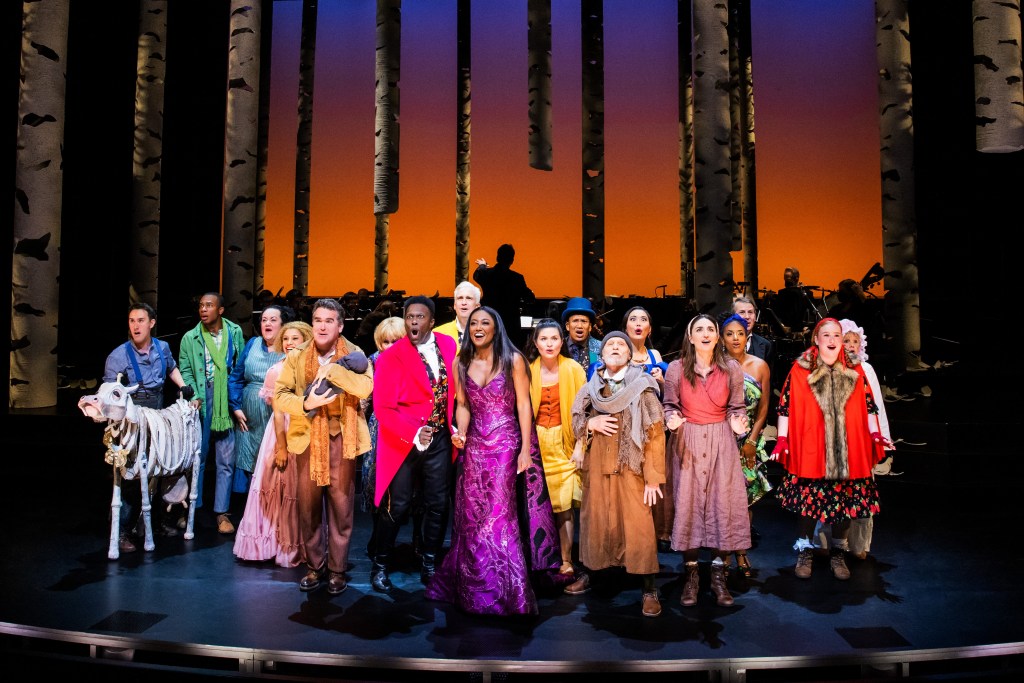
With music and lyrics by Stephen Sondheim, book by James Lapine and orchestrations by Jonathan Tunick, Into the Woods is in its brilliant fourth revival on Broadway at the St. James Theatre. This iteration magnifies the greatness of Sondheim’s iconic work with affecting power. Thanks to the cast and creative team, the production is a towering achievement.
Intricately making the complex crystal clear, the creatives have woven fantasy and magic into stylized perfection. The company conveys Sondheim’s sharply, ironic lyrics and Lapine’s clever, comedic book with campy authenticity that befits the tone of the production. All the while the cast twits their characters and performances with sheer abandon and fun.

If fairy tales embody archetypes that float in and out of our unconscious, this Into the Woods reveals how and why. Ancient folklore transfixes us because ultimately, it is immutable and intensely personal. Lapine and Sondheim have given us Into the Woods as a gift of wonder and wisdom and the amazing director (Lear deBessonet), has channeled their vision with grace and beauty that touches our souls.
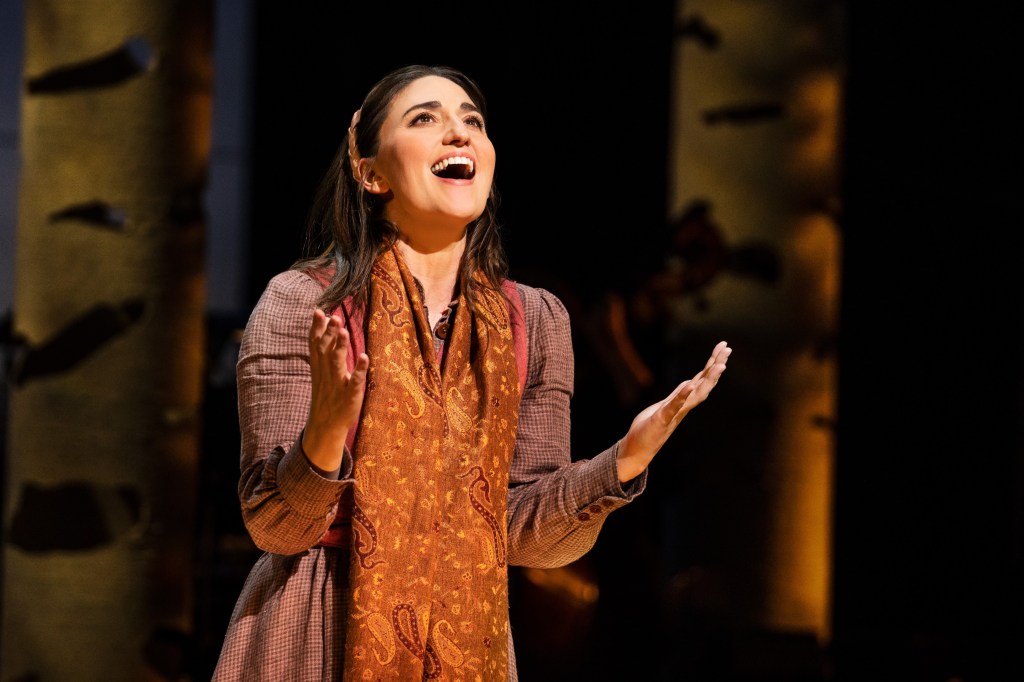
Transferring from New York City Center Encores!, deBessonet’s metaphoric, symbolic, slimmed down production continues to thrill enthusiastic audiences as it takes them on the familiar roller coaster ride of highs and lows with humor, pathos, and sterling performances by an exquisite cast. The multitalented actors with comic flair portray the indelible Little Red Riding Hood, Cinderella, the Witch, two Prince Charmings and more. They romp with delight in Act I and with the searing edginess of moment and bitterness, they shed their “happy” in Act II. The two acts encompass the whole of our life’s experience; it is satisfying yet bittersweet as illumination becomes the true prize of living.
This production is bar none fabulous and appropriate thematic fare for young and old who have encountered their share of giants, witches and adventures into dark, foreboding places. The characters’ journey quest is the linchpin to the fulfillment of their dreams, not only returning wisdom and enlightenment, but moving them from innocence to experience. And the music, Sondheim’s soaring melodies are sensational. Presented by the golden-voiced cast and accompanied by The Encores! Orchestra under Rob Berman’s fine direction, the score has staying power that remains with one long after the audience’s raucous standing ovations end at the last curtain call.

Indeed, de Bessonet’s vision of minimalist staging, pared-down scenic design (David Rockwell), spare lighting design (Tyler Micoleau), and Andrea Hood’s unpretentious costume design work beautifully. Without costly extravagances and unencumbered by visual distractions, we are totally focused on the music, lyrics, and acutely spun characterizations portrayed by the actors’ dynamic performances.
For example the settings of the three families (Cinderella’s, the Baker and his wife, Jack and his mother), are suggested with old-fashioned cut-outs of their homes, suspended above their playing area as their family interactions and conflicts unravel. Rockwell’s suspended birch tree trunks suggest the sinister forest of shadowy fears all must confront. Combined with Micoleau’s atmospheric lighting and large evocative moon that rises and falls to “light the way,” the elements summon the surreal and illusive.

Additionally, Andrea Hood’s apt color-coded costumes define each character with particularity and interest. For example she employs primary hues (bright yellow and red jackets), for the comedic, over-the-top Prince Charmings. For the earthy folk heroes with whom we identify, she fashions rosey browns for the Baker and his wife. Their grounded dream to have a baby is one couples might most identify with.
Splendid, spot-on performances by Sara Bareilles as the Baker’s Wife and Brian d’Arcy James as the Baker showcase the common folk and the experiences of marriage. As a beautifully blended husband and wife team who must confront and satisfy Patina Miller’s scary-funny witch to fulfill their baby dream, the actors are in lockstep. Their duet “It Takes Two,” knocks it out of the park. Bareilles’ interpretation of a wife who controls her husband by surreptitiously winding her way around his machismo is brilliant. The audience catches her every nuance, every shrug of the shoulders. For his part D’arcy James’ pretend bravery masking fear is so aptly humorous. And in Act II d’Arcy James “No More,” sung with David Patrick Kelly’s Mysterious Man is heartrending. Our emotions are swept up as we agree there must be an end to the seasons of pain between fathers and sons, parents and children.
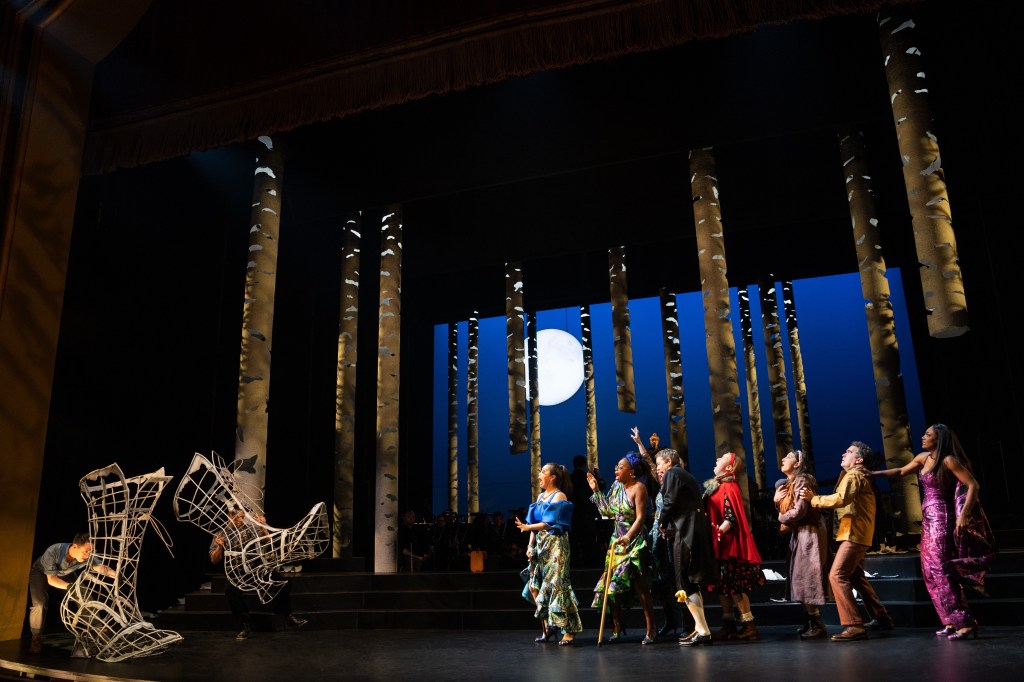
The two Prince Charmings, Gavin Creel and Joshua Henry, have choreographed their movements to represent the ineluctable adornments of seduction with verve and just enough hyperbole to make them deliciously palatable and hysterical (“Agony”). The wonderful Phillipa Soo’s dreaming Cinderella who sings her feelings with Bareilles’ Baker’s Wife resonates with beauty and humor (“A Very Nice Prince”). Soo’s awkward, klutzy Cinderella who falls every time she joins the Baker’s wife “lands.” Soo always gets a laugh as the audience appreciates the dreamy, ditzy humanity of this princess-to-be who humiliates herself. Indeed, we also appreciate that Cinderella is much more astute in Act II when the realities of her marriage to the Prince confront her full force.

Julia Lester’s Little Red Riding Hood plays to the audience, breaking the fourth wall with success as one of the most beloved of fairy-tale characters. As Little Red, Lester scarfs down all the treats before she makes it to grandma’s house. Thus, Gavin Creel’s Wolf is all the more satisfied after he scarfs her down. Their scene together is uproarious (“Hello, Little Girl”). Creel’s seducer Wolf is appropriately smarmy which Lester tweaks as the less-than-innocent Little Red, who enjoys tempting him.

Creel does double duty as seducer of the Baker’s Wife. Bareilles’ formerly faithful wife in Act I submits to the wolf Prince Charming in Act II (“Any Moment”), seeking something more. Creel pulls out all stops recalling to our remembrance the wolf metaphor in Act I. Princes and wolves are two sides of the same coin, Sondheim and Lapine intelligently note. And Bareilles’ “Moments in the Woods” is poignant and foreboding. Do Lapine and Sondheim punish the Baker’s wife’s behavior as an adulteress? Interestingly, the Prince’s wanderings receive no such comeuppance. Double standards are ever-present and especially when unlike fairy tales, Act II extends into the consequences beyond the artificial, “happily ever after.”

Jack (the superb Cole Thompson), his mother (Aymee Garcia), and the cow Milky White (the sensational puppeteer Kennedy Kanagawa), form the third household. Thompson’s heartfelt “I Guess This Is Goodbye,” and rousing “Giants in the Sky,” are beautifully rendered. The vibrant “Giants in the Sky” Jack sings to inspire himself with courage to save his family, kill the giant and attain the wealth his mother needs. As Jack, Thompson’s stirring faith and hope resound with triumph.

The Witch is the central figure that eventually brings the company together. Patina Miller lives up to the task with her extraordinary performance before and after her transformation when the curse that holds her from her true nature is broken. We understand her love for Rapunzel (Alysia Velez), in the soulful “Stay With Me,” and the tragedy of her daughter’s loss in Act II in “Witch’s Lament.” Perhaps my favorite is Sondheim’s incredible “Last Midnight,” that she sings with power and all the dynamism she can muster. Miller’s performance of the song is memorable as the claws of the giant’s wife (voiced by Annie Golden), enfold her in destruction. Indeed, also with the last song “Children Will Listen” that Miller sings with the Company, she is just stunning.
In Act II the consequences of apparently naive actions performed without thought converge on the main characters who seek to avoid blame in the wonderful “Your Fault.” However, after the death of the Witch and the Baker decrying “No More,” a bittersweet hope returns in the remaining song, “No One Is Alone,” sung by Cinderella, Little Red, the Baker and Jack, who struggle to encourage each other after their losses. Was the journey worth what it taught the seekers? “Children Will Listen,” sung by the Witch and the entire company brings back to life the spirit of those taken by the Giant’s Wife as they relate the lessons learned. We are uplifted and restored by the illumination.
Kudos and praise go to additional creatives not mentioned before. These include Lorin Latarro (choreography), Scott Lehrer and Alex Neumann (sound designers), James Ortiz (puppet designer), Cookie Jordan (hair, wigs & makeup designer), Seymour Redd Press/Kimberlee Wertz (music coordinators).
I have said enough. Go see this marvelous theatrical event which you will not be able to see again with this cast after September 4th. For tickets and times go to their website: https://intothewoodsbway.com/
 CAROLE DI TOSTI