Blog Archives
‘The Whole of Time,’ Explosive Change in an Intimate Space
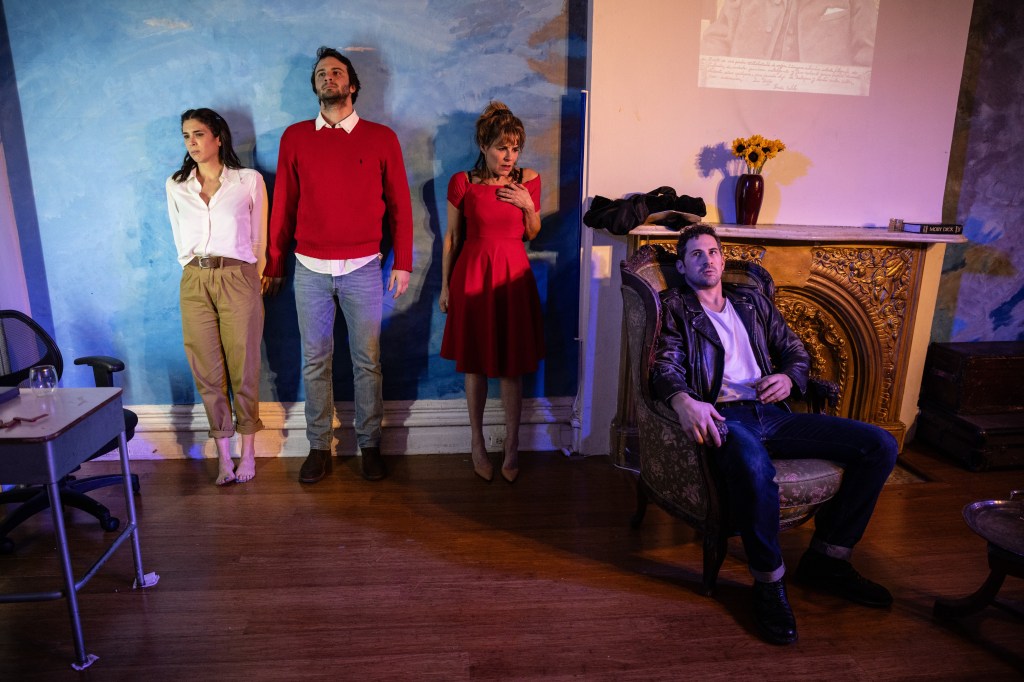
Inspired by Tennessee Williams The Glass Menagerie, the intriguing Off Off Broadway production, The Whole of Time by Argentine playwright Romina Paula challenges one to consider the idea of being whole in oneself. Directed and staged by Tony Torn with scenic backdrops by Donald Gallagher, the 22-seat theatrical space of Torn Page seems the perfect place to present a dramatic work that examines the meaning of insularity, affinity, individuality, and isolation within and without intense relationships.
Torn Page, managed by Tony Torn, is in the home of his late parents, the acclaimed actors Rip Torn and Geraldine Page. The three-story townhouse in Chelsea, its central floor, at the top of a wooden staircase that leads into a bar area and further opens into a roomy space to accommodate actors and audience in close proximity, provides the atmosphere and charm associated with artists, theater and film people. The moment I walked up the stairs and into the theatrical space and seating area, I was excited not only by the building’s history, but also by the production that would unfold intensely for an audience less than 10 feet away.
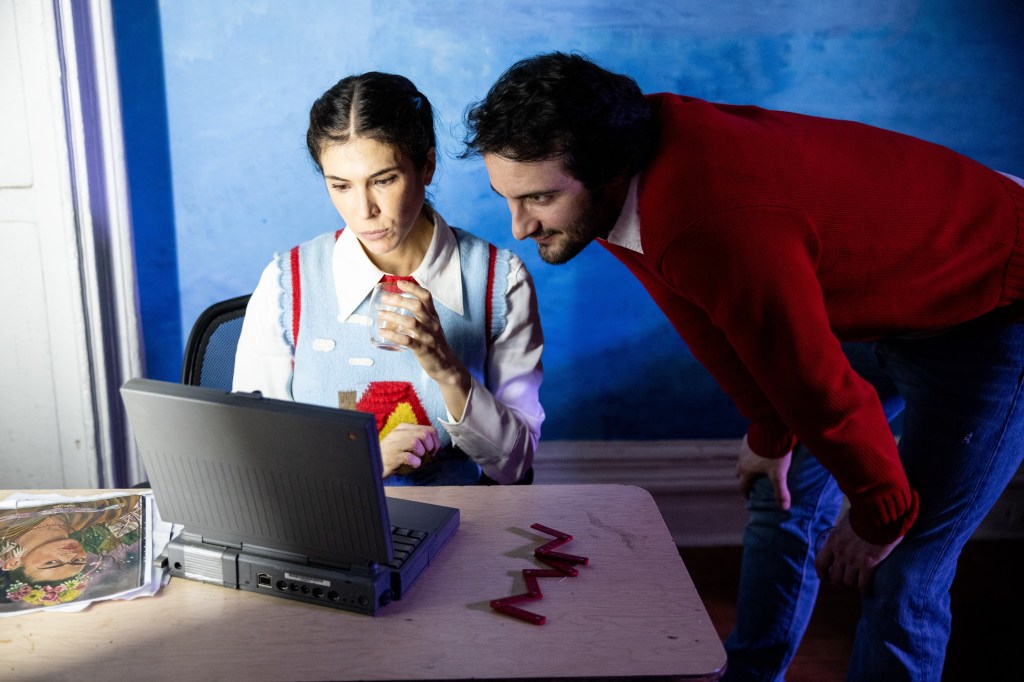
As Paula’s play opens, sister Antonia (Josefina Scaro) and older brother Lorenzo (Lucas Salvagno) enact “Si no te hubieras ido,” (“There’s nothing more difficult than living without you”) by Marco Antonio Solís, the award-winning Mexican singer-songwriter. As Lorenzo passionately sings, Antonia stages him on a chair. A projection of the photo of the singer appears on the wall. A game that they play, Antonia later suggests the singer-songwriter is in jail for murder, a fantasy she constructs to make the interplay between herself and her brother uniquely interesting, as he questions the truth of her assertions.
What is thematic is that the song passionately, romantically uplifts the pain of being separated from one’s lover. Ironically, Antonia alleges that in the case of Solís, the separation is lifelong, for his lover is dead. He killed her himself. Thus, Paula introduces the idea of separation from those one loves with an intriguing sadomasochistic twist: one causes the separation from the beloved, perhaps for the very notion of indulging in a romantic passionate pain of forever longing.
As Lorenzo dresses for a night out with a friend, Antonia asserts fantastic complications about the song which has underlying humor. She says, “Probably in Mexico people forgive or tolerate somebody killing his wife and then selling and making millions of dollars where he sings to the dead woman he misses so much.” Then Antonia continues integrating Frida Kahlo with another fantasy which involves love, death and the pain of loss. Clearly, Antonia’s energy keeps Lorenzo engaged and the nexus of the relationship and emotion between them is far closer than one might anticipate from a brother and sister who otherwise might express sibling rivalry.
However, the object of the rivalry, their mother, Ursula (Ana B. Gabriel), never approaches any level of competition for her children’s affection. Indeed, Antonia bristles at her mother’s insistence she find another path of life rather than to choose to stay at home and not cultivate external social relationships. When Ursula belabors the point, Antonia insists she is happy within herself, and uses her imagination to have experiences, after her mother stumbles at rationalizing Antonia should travel to gain experience.
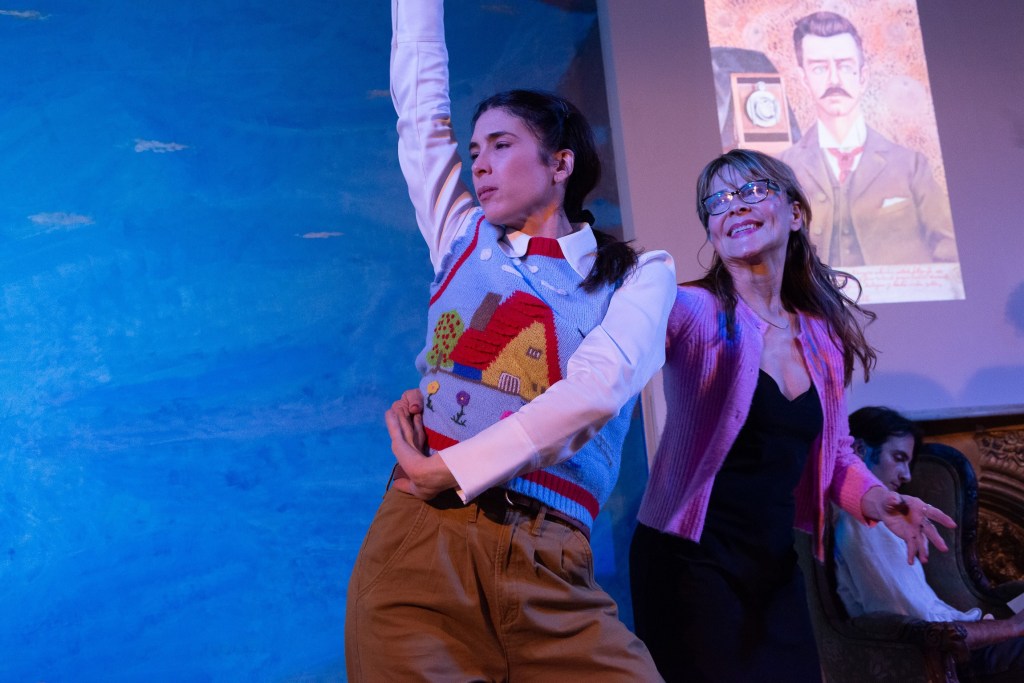
In her characterization of Antonia, Paula has created an ingenious, autonomous, self-aware and satisfied young woman who is confident and self-possessed. Of the characters in the family, somewhat aligned with Tennessee Williams’ Glass Menagerie only in function, Antonia is the least like her counterpart, sister Laura, who is emotionally broken by her physical handicap. Laura’s physical challenges and her mother’s overbearing, imperious presence have suppressed Laura’s voice and her soul. She has been stifled into shyness and withdrawal.
Conversely, in The Whole of Time, Antonia is her own person, whole and assured, happy to stay at home which she does not view as “isolation” or “withdrawal. Antonia tells Maximiliano (Ben Becher), that unlike him, who must have time from work from which he cuts loose, she doesn’t need to. Antonia says, “I don’t need that contrast to cope with time. I cope with all of my time, the whole of my time, nonstop.”

Thus, where Laura avoids the world, where Jim (the Maximiliano counterpart), and Tom (the Lorenzo counterpart), need a release from work and Lorenzo needs freedom from family, Antonia is contented with every second of her life. Clearly, the opening of the play indicates how she creatively uses her imagination to entertain herself and Lorenzo in fantasies of her own making. As long as he goes along with her in an unusual love dynamic which borders on romantic innocence, all is well for her.
In the scene with Maximiliano, change comes. Antonia interacts with him almost romantically dislocating the dynamic she has established with her brother, who interrupts them and ends any expression of love. Ursula further douses any fires between Maximiliano and Antonia by coming in drunk in a strange reversal.

In the usual construct, siblings vie for their parent’s attentions. In this instance, the interfering, fearful Ursula intends to dislodge Antonia’s love for Lorenzo and vice-versa. Thus, she insists at the top of the play that he tell his sister that he intends to leave. When he doesn’t, knowing the impact it will have on Antonia’s fantastic world and their relationship, later in the play Ursula picks the strategic moment when Maximiliano is present. It is then she reveals Lorenzo is separating from her and Ursula.
Though Lorenzo avers about his intentions, Antonia’s loving, intriguing relationship with her brother is severed. If they are to continue, it will be different. They will no longer be “fantasticks.” Ironically, Antonia’s ability to cope in herself with “the whole of time” has been shattered.

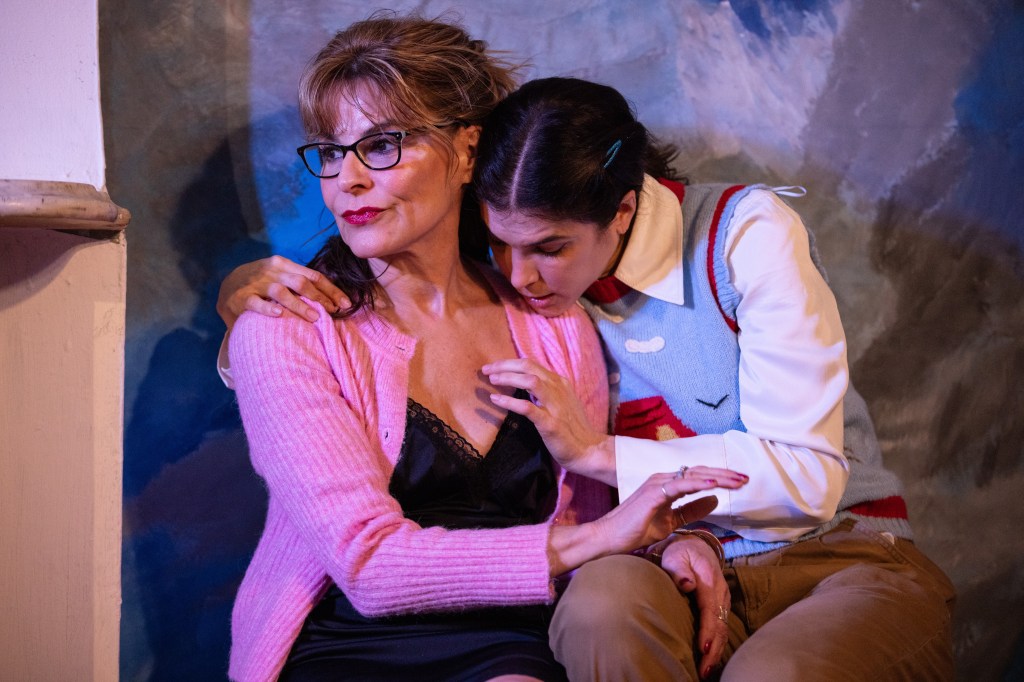
Thus, when Ursula is finished, she has exploded Antonia’s world and Lorenzo’s integral part in it. Despite his protestations that he won’t leave, the separation and loss once acknowledged continues. It is only a matter of “time” until Lorenzo leaves for good. Antonia and Ursula dissolve in tears trying to comfort one another as the opening song “There’s nothing more difficult than living without you” brings the play’s themes about insularity and affinity to a full circle of closure, while Maximiliano witnesses the aftermath.
The ensemble work is excellent and the performances are standouts thanks to Torn’s careful staging and specific shepherding of the actors with skill. The play is a fascinating and disparate take on Williams with countervailing themes that are profound. I especially thought the divergence of the proper Jim to the punk rockin’ Maximiliano was an ironic, humorous update. Jay Ryan’s lighting design adds a wilder perspective, then mutes when reality transfers from the fantastic.
There is no poignant narrator. There are no “tricks in his pocket.” Instead, we see a family, unique, undefinable, needing each other, and conversely, with the exception of Antonia, longing for escape. Any hope of independence from each other is as impossible as is the ability of the characters to leave their own interiors. Though they may separate physically, always, there will be the ties, the fantasies, the bonds, shattered, but still palpable with bits of feeling and emotion.
The Whole of Time at Torn Page. 435 W 22nd St., through February 11th. Delight yourself by seeing this production. You can get tickets online at https://www.eventbrite.com/e/the-whole-of-time-tickets-768576010537
T
 CAROLE DI TOSTI