Blog Archives
‘Orpheus Descending,’ One of Tennessee Williams Most Incisive Works-a Searing Triumph
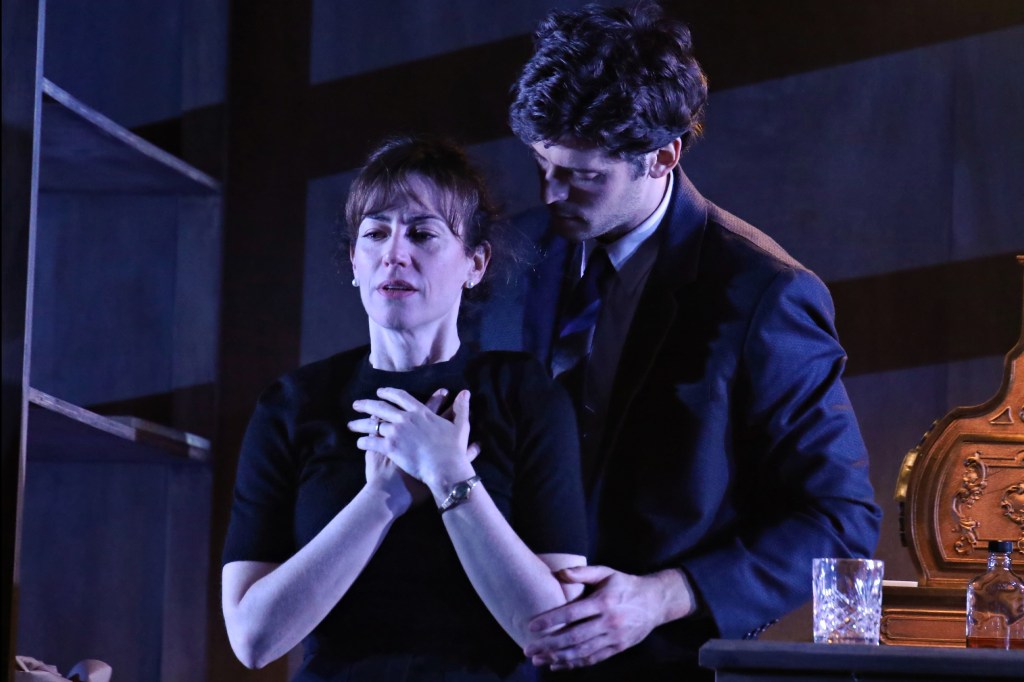
The hell of the South abides in Erica Schmidt’s revival of Orpheus Descending, currently running at Theatre for a New Audience in Brooklyn until August 6th. Tennessee Williams’ poetically brazen work about the underbelly of America that reeks of discrimination, violence, bigotry and cruelty seems particularly regressive in the townspeople of the rural, small, southern, backwater of Two River County, the setting Williams draws for his play.
This production is raw in its ferocity, terrifying in its prescience. It reminds us of the extent to which racists and bigots go feeling self-righteous about their loathsome behaviors when the culture empowers them. The director shepherds the actors to give authentic portrayals that remind us that death lurks in the sadistic wicked who seek to devour those whom they may, especially when their targets have peace and happiness, and step over the line (what the bigots hypocritically think is the line).
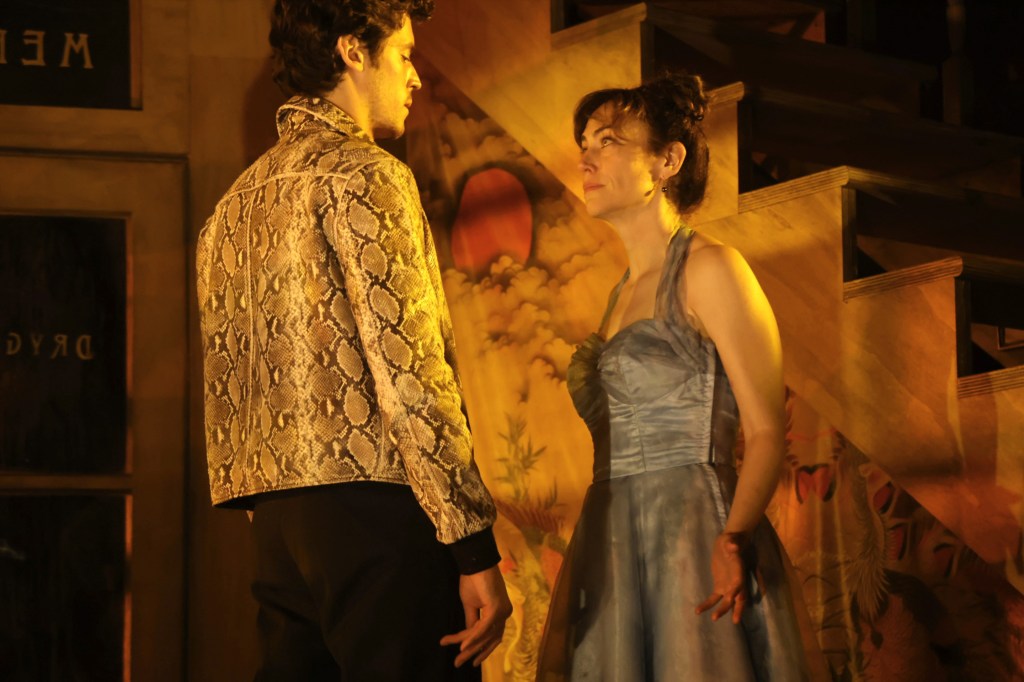
At the top of the play, we immediately note that stupidity and hypocrisy exude from the pours of most of the homely white characters. Sheriff Talbot and the wealthy Cutrere family are the chief representatives and purveyors of white supremacist, conservative law and order, which is as natural and welcome as white on rice.
Williams’ brilliant but lesser known work is based on the Orpheus and Eurydice myth. However, Williams updates the allusion and spins it into metaphoric gold transposing the heroic characters into artists, visionaries and fugitives, who rise wildly above the droll deadness of their environs or are delivered from them, as is Lady (Maggie Siff) who is brought to life during her relationship with Val (Pico Alexander). During the course of Val’s and Lady’s dynamic relationship with each other, they seek to cleanse and overcome their past heartbreaks and regrets and move upward toward redemption, reclamation and new beginnings with each other’s help.

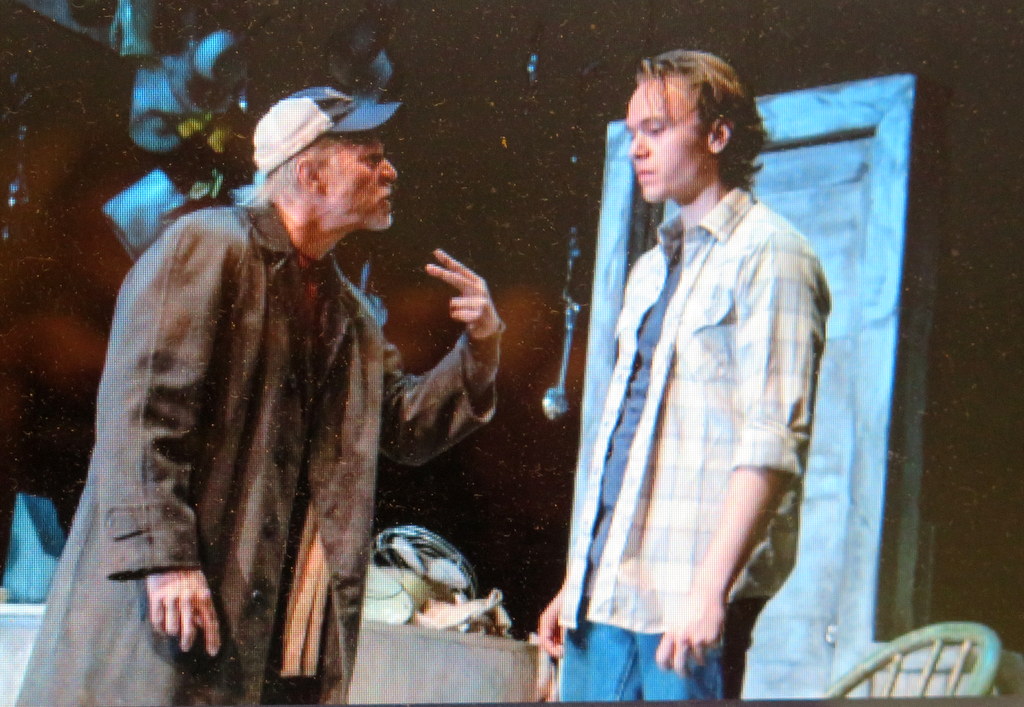
The banal atmosphere conveyed by Amy Rubin’s spare, angular, cage-like design of the Torrence dry goods store is an appropriate setting where most of the conflict and interplay among the characters takes place. Its ugly, hackneyed blandness, lack of vibrancy and straight-edged corners symbolize Lady Torrence’s desolate life with the hypocritical, vapid townspeople and her infirm, brutal, racist, hoary-looking husband Jabe Torrance (the irascible, excellent Michael Cullen).
The other two sections of the set, the confectionery (stage left) and the storage area behind the curtain (stage right), Rubin suggests with minimalism. The confectionery and the storage area symbolize the other aspects of Lady’s character that are not governed by Jabe and the destructive, deadening, Southern folkways. The confectionery eventually outfitted with lanterns symbolizes her hope for renewal and reclamation. The intimate, barely lit, storage area where Val sleeps symbolizes the fulfillment of her desire for love.
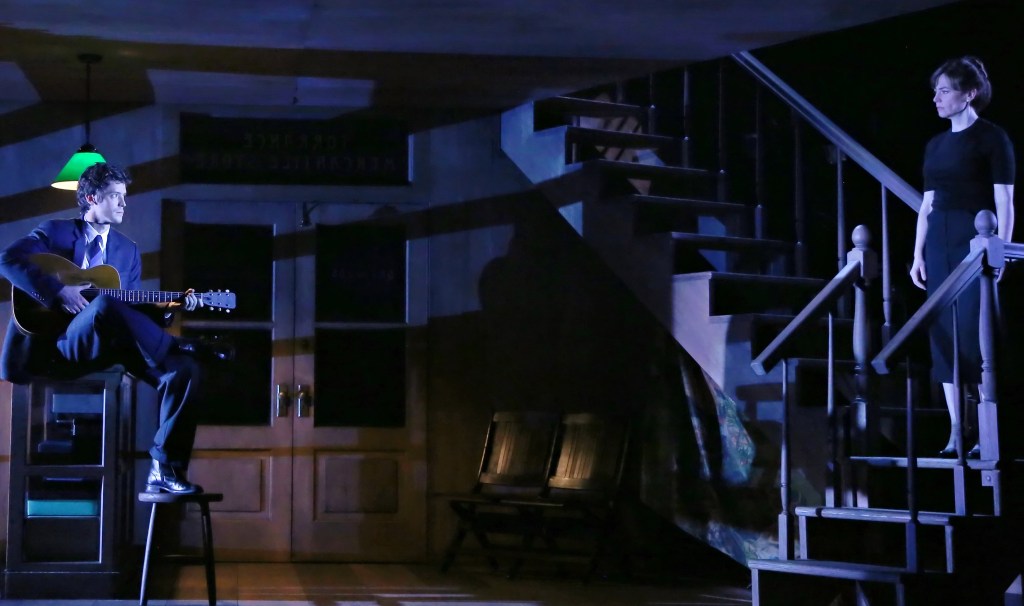
Center stage is the store and above it the Torrence bedroom, both subscribed by walls which pen Lady in. Along with Jabe, the store’s visitors suck her life-blood dry with the exception of Val and Vee (Anna Reeder), a Cassandra-like character. Above the store, Jabe lies in bed dying. Empty of kind words, Jabe communicates his bile and bitterness by pounding his cane on the floor from his sick bed. It is an ominous foreboding alarm that one imagines the master sends to his slave when he commands something from them immediately.
Into Two River county’s washed-out “neon,” “low-life” mediocrity comes the contrasting light and beauty of the guitar artist/entertainer, the stunning and untouchable Val Xavier. Pico Alexander makes the role his own, portraying Val with grace and alluring, angelic innocence befitting “Boy,” the nickname the assertive, feisty Lady gives him. Siff is sterling and likable as she grows vivacious as their bond develops. Siff’s scene where she reveals she is committed to loving Val, despite not wanting to admit needing him is just smashing.
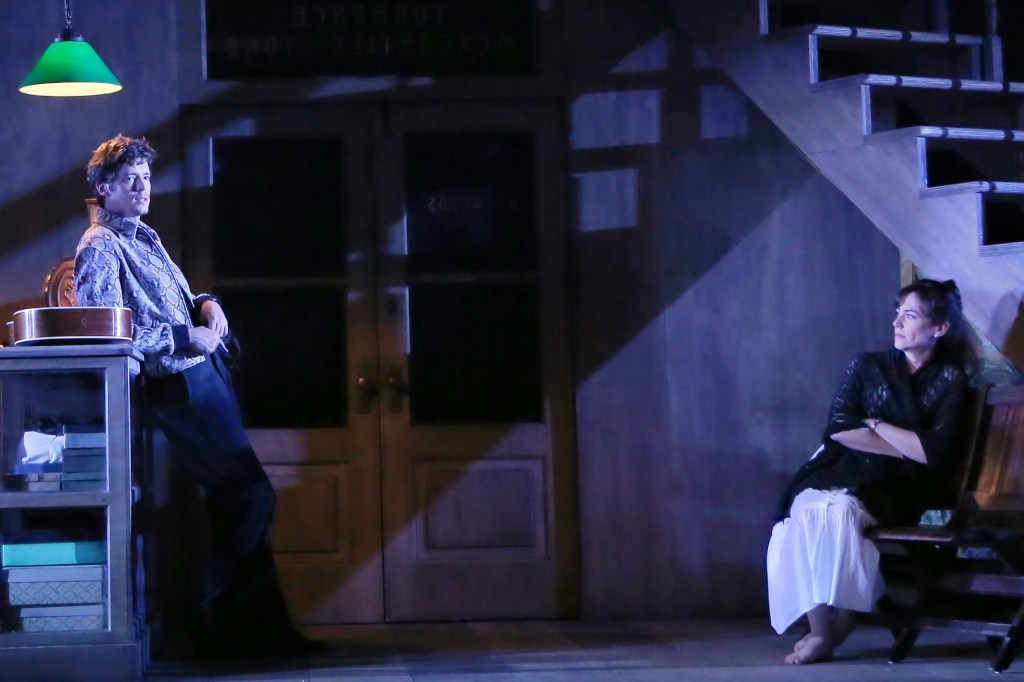
Val illuminates the spaces he enters and shatters the peace of Dolly Hamma (Molly Kate Babos) and Beulah Binnings (Laura Heisler) when he drops by the Torrence store on Vee Talbott’s suggestion that Lady Torrence might give him a job. As he waits patiently for Jabe and Lady to arrive from the hospital after Jabe’s unsuccessful operation, Jabe’s cousins Dolly and Beulah “eye him” while they prepare a celebration for Jabe’s return.
Vee (the fine Ana Reeder), a spiritual visionary born with second sight, accompanies Val and introduces him to the other women hanging around, one of whom is Carol Cutrere (the superb Julia McDermott), a rebellious hellion whose outsized antics and screaming of the Chocktaw cry with Uncle Pleasant, the conjure man (Dathan B. Williams), make the other women apoplectic. Clearly, Carol is an outsider like Val and Lady, only saved by her last name.
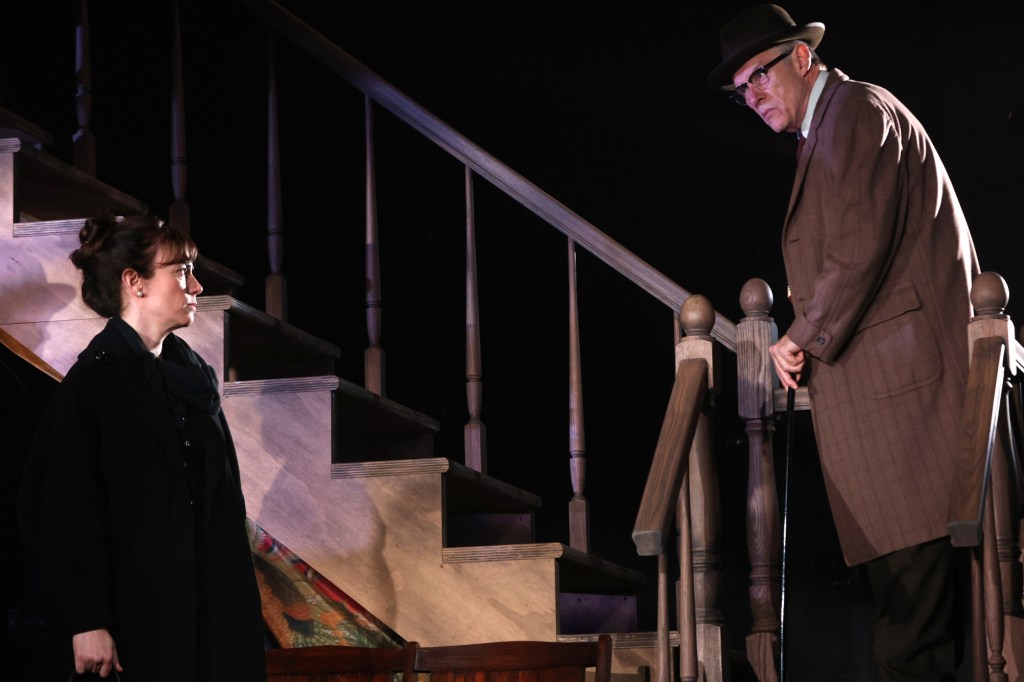
As Vee relates the visions that form the basis of the painting she brings for Jabe to encourage his healing, we note she doesn’t fit in either. If she weren’t married to Sheriff Talbott (Brian Keane) her eccentric ways would banish her from the “polite society” gathered in the store, rounded off by gossip mongers, Sister Temple (Prudence Wright Holmes) and Eva Temple (Kate Skinner), who sneak up the wooden steps to check out Jabe’s bedroom before he and Lady return.
Schmidt stages these opening scenes of William’s claustrophobic setting and characters to maximum effect, clustering the women at the counter and bringing Carol and Uncle Pleasant downstage for their chant and evocation. Downstage is where Carol cavorts, delivers a few soliloquies, and wails her outrage and sorrow as an encomium at the play’s conclusion.
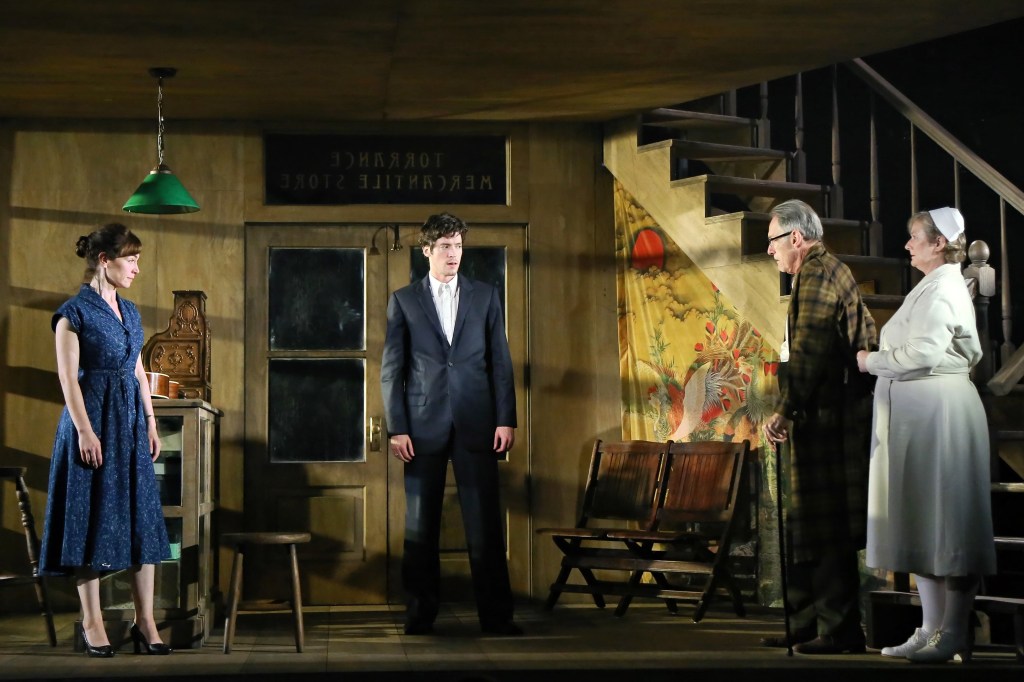
By the time Jabe and Lady arrive and Jabe retires upstairs, we have an understanding of the desolate elements and competing life forces that will drive the conflict forward. Additionally, Williams has the gossips share Lady’s terrible backstory that involves the KKK torching her father’s wine garden, and his gruesome death burning alive in the conflagration because not one firetruck or patron came to his aide.
All this was because he violated the towns’ mores and unwritten law serving wine to “ni$$ers. Implied by Jabe later in the play, the “Wop” had too much life in him and had to be cut down to size and made destitute. Interestingly, Lady’s determined father decided he’d rather burn alive trying to salvage his life’s work than accept poverty and brutality in a death-filled culture. For Lady, the acorn doesn’t fall far from the oak. She decides to take a stand against Jabe and his sadistic brutality than run away with Val.
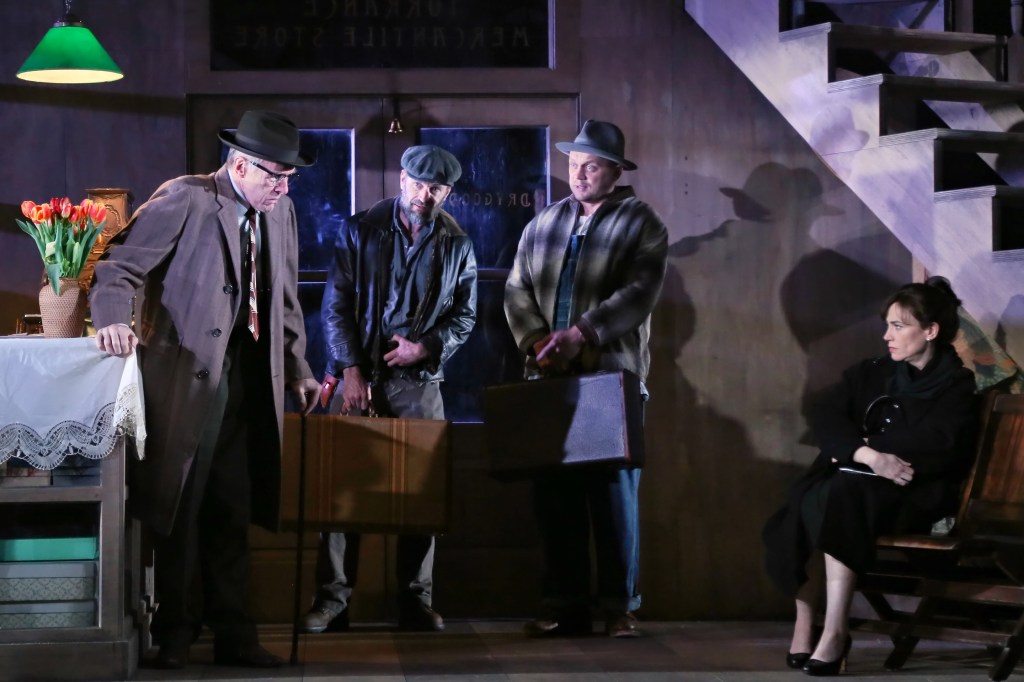
Alexander’s Val and Siff’s Lady establish their relationship gradually with Siff aggressively taunting Val’s appeal to women, one of whom is McDermott’s live-wire Carol. As their comfort level with each other grows, the two bond over Val’s description of a bird that is so free it never corrupts itself by touching the ground and only does so when it dies. Lady expresses her desire for such freedom, and after their discussion is abruptly interrupted by Jabe’s pounding, we note a greater lightheartedness within Lady. Val’s presence is the freedom and wildness that she craves.
Indeed, we note her mood is uplifted every time Lady has a quiet conversation with Val. The actors have the privilege of organically inhabiting these memorable characters with ease to deliver some of the most figuratively elegant and coherently rich dialogue found in all of Williams’ works. One of their most powerful scenes concerns Val’s description of the corrupt world and his own corruption. He counters it by sharing how his “life’s companion,” his guitar and his music, cleanses his impurity and makes him whole again.
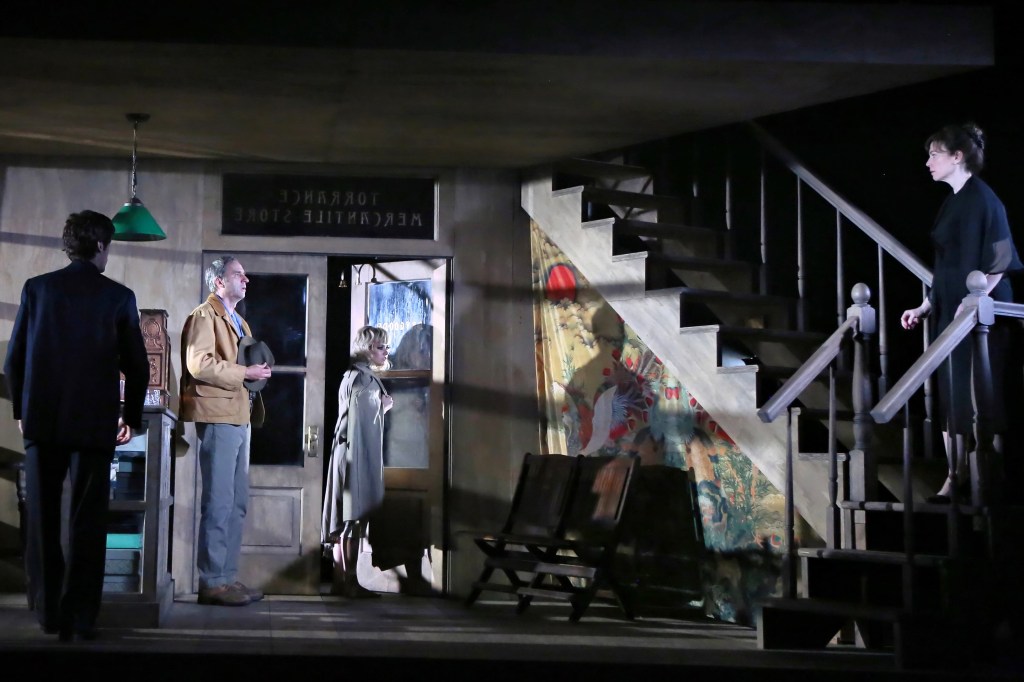
As Val settles in and she begins to rely on him, we realize that her inspiration and actions to reopen the confectionery (Schmidt use of the lanterns descending in the stylized space, stage left) run parallel to Val’s regenerative influence over her. He has ignited her hope and desire to be resurrected from the ashes of the burning, the town’s hatred and racism, and Jabe’s enslavement and ownership of her mental and emotional well being.
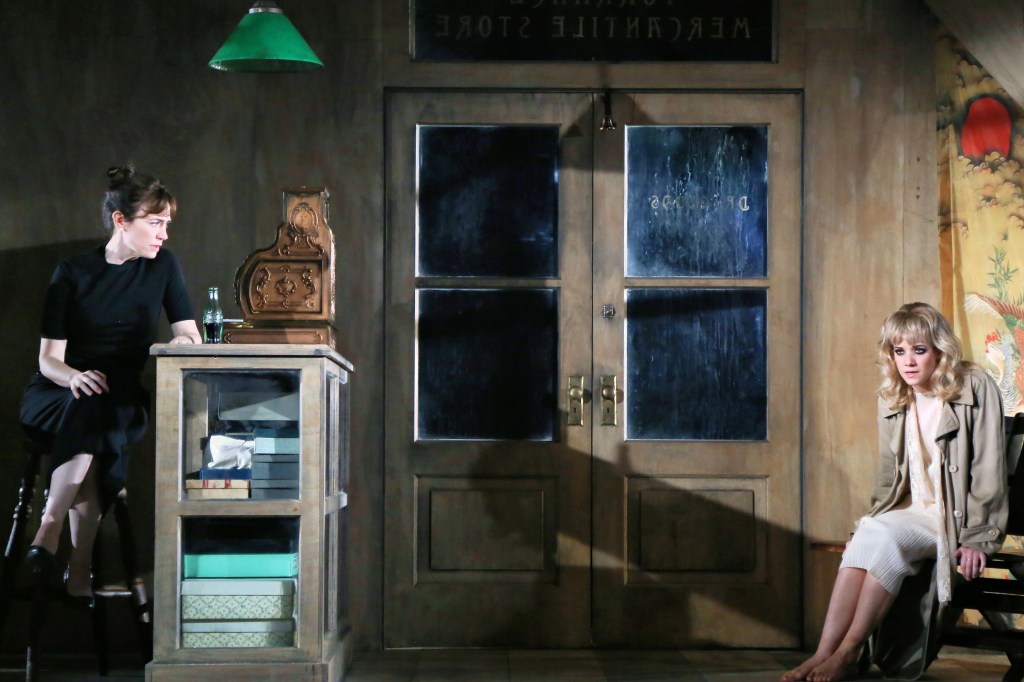
In his characterization of Jabe, Williams reveals the psychosis of the Southern Red Neck confederates turned white supremacists that lost the Civil War but persist in acting as if they won it, especially with regard to their racism and hatred of Blacks and “the other,” (immigrants). In Schmidt’s version, we see that Jabe’s attitudes and the attitudes of the other men presciently foreshadow the current MAGA Republicans’ penchant to be brutal and criminally sadistic because their “power” gives them the right, regardless of the truth of the circumstance or the legality. Certainly, Jabe has the power and white supremacist friends (Sheriff Talbot) to back up his actions with impunity.
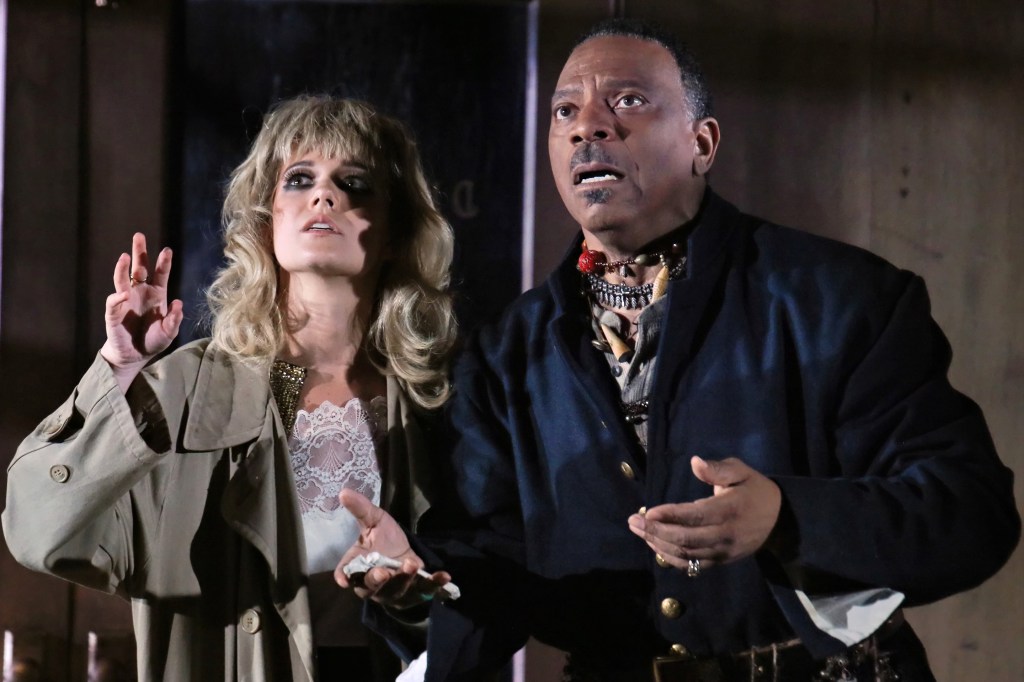
Thus, as Lady has told Val, she “lives” with Jabe, a figure of death who makes sure to stomp down her happiness or agency every chance he gets. In fact each time Val and Lady seek each other’s company for verbal comfort, Jabe almost intuits that she is uplifted away from his presence and claws and pounds (with his cane) his way back into her mind and emotions with his demands. She always goes running to him, for in her soul, she feels she has no other options.
The turning point arrives when Jabe comes downstairs to exert himself over the cancer that is killing him and perpetrate some new malignity against her, which appears to be the only pleasure he has. His emotions are pinged to remembrance when he views the loveliness of the confectionery and the new life that has inspired it (Val). It is then he strikes at Lady provoking her past reason, a white supremacist sadist to the last.
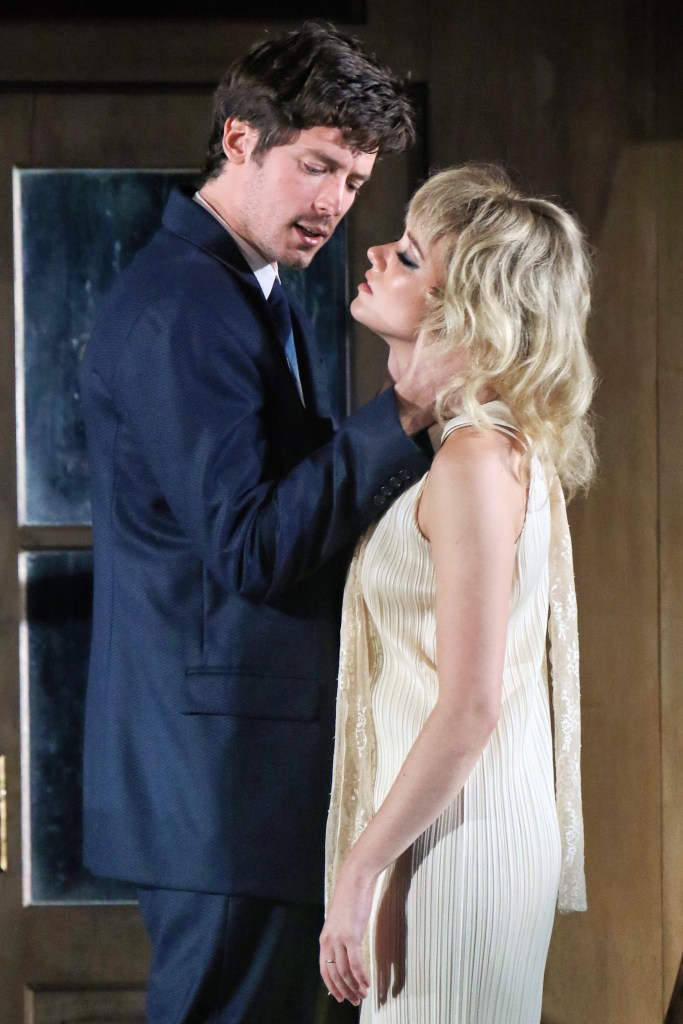
There are no spoilers. What transpires is Williams’ reaffirmation of the modern day tragedy that resulted daily in the Jim Crow South when white supremacists asserted they won the Civil War with every Black person they lynched using law enforcement to cover for them. In the play Williams also infers how this happens in the inhuman, abusive prison system which prompts men to escape and uses the escape as the justification for their killing.
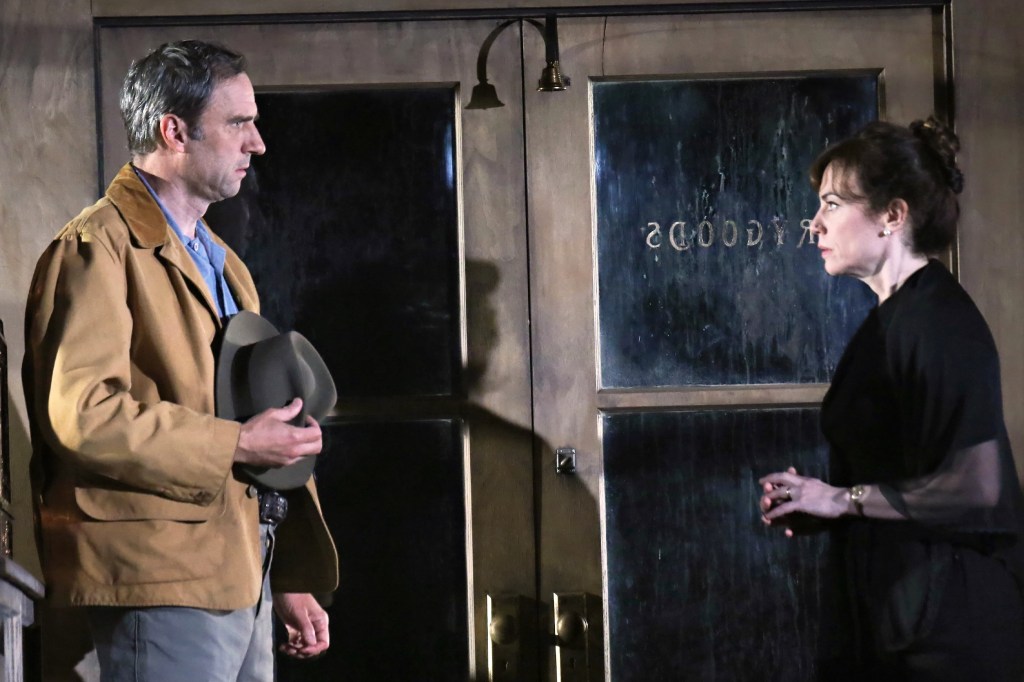
Schmidt and her team have created a production that is bold in revealing Williams’ trenchant themes about death, life, hatred, bigotry, racism and the utter wicked sadism and evil that would keep such a culture going even if the culprits, like Jabe, suffer and are eaten alive by their own hatred. In revealing Williams’ prescient themes that apply for us today, we note that a racist culture cannot be confronted when the power is held by the racists and bigots. Indeed, one must escape the purveyors of death and leave their sphere of influence, if there is no federal oversight or punishment for law breaking. If there isn’t accountability, the individuals, will do as they please, and like despots bend their underlings to their will as death dealers.
Kudos to the creative team which includes Jennifer Moeller’s costume design, David Weiner’s lighting design, Cookie Jordan’s hair and wig design and Justin Ellington’s original music and sound design.
The production concludes August 6th. Don’t miss it for its profound characterizations beautifully acted, acute ideas Schmidt suggests with her fine direction and the technical production values that bring Williams’ stark truths to bear on us today. For tickets and times go to their website https://www.tfana.org/visit/ticket-venue-policies
‘Curse of the Starving Class’ by Sam Shepard at the Signature Theatre

Gilles Geary, Maggie Siff in Sam Shepard’s ‘Curse of the Starving Class,’ directed by Terry Kinney, The Pershing Square Signature Center (Joan Marcus)
Sam Shepard’s Curse of the Starving Class which appeared at the Public Theatre and won an Obie for Best New American Play during the 1976-1977 season, has been revived a number of times and is currently part of the Signature Theatre’s legacy program. Shepard often chronicled his family history weaving themes in and out of his “Family Tragedies.” These include dramas that are dynamic, intimate, intense dark plays: the titular play reviewed here, Buried Child (1979) True West (1980) Fool for Love (1983) and A Lie of the Mind (1985).
These dramas with often searing poetic elements and unusual twists, feature violent, dysfunctional familial relationships which are borderline insane but human. The emphasis on the destructive nerve endings of the human condition makes them sardonic and devastatingly humorous. The characters are representative of us, every-women, every-man despite their demographics. In the inner soul of the individuals, there is the same fear, want, loneliness and partition from their families that make them real, heartfelt and tragic. Their human “ilk,” is horrific yet understandable. Shepard’s characterization logic and Director Terry Kinney’s guidance of the actors to achieve these manifestation in this production are just superb.
In this first of the family series, Curse of the Starving Class, we note how a family rooted in farming and the land in rural California attempts to wrangle with their own emotional and psychological demons that have provided a wayward leading inheritance that they must either overcome or succumb to. Though each has the ambition to improve themselves, like Chekhovian characters who are out of place and time, they harbor their dreams while creating elaborate networks of self-destruction that divert their will and thwart their ability to manifest their goals into realities.

Maggie Siff in ‘Curse of the Starving Class,’ directed by Terry Kinney, written by Sam Shepard (Joan Marcus)
By the time Shepard’s characters amass the will and strength to better themselves, they select the wrong path. All ends in failure. Indeed, their own blood family members sabotage any possibility of their improvement. Worsening the situation the saboteurs explode with resentment-filled, passive aggressive rages that harm and incite the downward-spiraling over and over again.
The drama opens with a catastrophic explosion. The outer structure of the house splits apart. It is a symbolic rendering of an ancient and ancestral lesion that is ever-present in the bloodline of the family and can never be healed because there is no attempt to seek an intervention. This explosion reflects the curse of the family that they choose not to expurgate or exorcise because they don’t know how, nor do they have the tools to stop its cyclical repetition. The breaking apart of the house portends the threatening doom for each of the family members.
The lesion/curse is within each of them and spreads the horrific, hurtful, damage outward and among them. This trip wire provokes the other family members’ sadism and from day to night, torment and abuse infects like a poison (Weston, the father discusses this in a central aria) and destroys everything in its path.
In the family. which has managed to share the same space because they are not there together for one whole hour, there are a mother and father and two teenage children. The younger one is the intelligent Emma. The electric Lizzy Declement gives a performance that develops Emma from hope and contentment to resentment, rage, rebellion and spiritual devolvement. The older sibling is the dutiful Wesley who intends to maintain the farm and keep it a going concern despite the worsening conditions Weston’s addictions create. Wesley and Emma have hopes and dreams, though they do not necessarily include the family.
Emma’s efforts creating a school project indicate that she has ambition and the determination to “be somebody” in her life, if she can ever get away from the nullifying family and farm. After her mother and brother destroy her school project, she runs away on a horse that her mom says is crazy. She returns covered in mud and humiliated desperation. The horse (as emblematic crazy as her family) threw her off and dragged her “through the mud.”

(L to R): Gilles Geary, Andrew Rothenberg, Lizzy Declement in ‘Curse of the Starving Class by Sam Shepard, directed by Terry Kenney at the Signature Theatre (Joan Marcus)
This symbolic action forebodes how the family will treat her for attempting to rise above. After this, she makes negative, impulsive choices which will only exacerbate further damage. She and the other family members are practiced at this circularity, directing their decisions and actions from rage, depression and panic, rather than hope and peace.
Wesley (the dynamic and authentic Gilles Geary) who at the outset of the play and through the second act is trying to repair the door his father bashed in during a drunken, “out-of-control” binging rage-on, cares about the farm, the animals and the security of the family. His assiduous attempt to rebuild the door represents his desire to keep out animal or human interlopers and marauders who would steal from them or usurp the inheritance of the land which father Weston’s alcoholism threatens to encourage.
Weston (the superb David Warshofsky) an alcoholic, cannot lift the farm into thriving, organized prosperity. His relationship with his wife is abusive. Weston emphasizes he is a killer in his descriptions to his son about his role as a bombing pilot during the war. Most probably he is suffering from PTSD, though at the time Shepard wrote the play, this condition of returning combat VETS was never acknowledged. However, his entire destructive, hell-raising, yelling fits indicate he is most likely suffering from it. The culture didn’t help him after the war, and it, along with his negative learned behaviors contribute to the root of his self-hatred, despair and inability to get out from under his depressive, alcoholic malaise and lethargy.
Like the other members of her family the mother Ella (Maggie Siff portrays the mother with nuanced reality) negotiates the tense, hyper-aggressive atmosphere that each of them creates. She augments it by living in the fantasy of selling the property and running away. As her business person who would handle her affairs, she chooses a shyster who intends to defraud her.

(L to R): David Warshofsky, Maggie Siff, Gilles Geary, Esau Pritchett in ‘Curse of the Starving Class,’ directed by Terry Kinney, written by Sam Shepard (Joan Marcus)
The key factors that would make her motherly, accountability, a tidy home with food in the refrigerator, nurturing concern about each of the family members are absent. The refrigerator is empty and as she and the others discuss whether they are a part of the “starving class,” we understand that the empty refrigerator is symbolic. The culture at large deprives them of honor and respect and is the antithesis of soul nurturing. Thus, with their own inner weaknesses, it is nearly impossible for them to care for and nurture each other. Like her daughter who intends to escape, Ella plans to sell the house and take the kids to Europe, as fantastical as this dream is.
As Ella attempts to make arrangements behind Weston’s back, Weston, too, in a drunken fit thinks he makes a deal to sell the property and get a lot of money for it, but he is being defrauded. Wesley understands that the predators that want to buy their property will wreck the land, develop it and ruin its beauty while giving them a pittance, if that. The developers represent the meretricious empty mores influenced by the take over of corporate consumerism. And this consumeristic “curse” has displaced the country’s citizens from searching for the more profound values of life and has alienated them from their purpose and place in the universe, replacing it with being the slaves/pawns of wanton corporate America.
Thus, the land that once might have nurtured Weston and the family for a few generations, has been subject to Weston’s inner plague from the war which he attempts to ameliorate with alcohol, but can’t. And he receives no help from the greedy economic predators who see a mark and intend to take advantage of him.
The culture has failed him on many counts that he hasn’t the “where-with-all” to protect himself from the buzzards-the lawyers and real estate developers and thugs (Andrew Rothenberg, Esau Pritchett) who have entangled Weston with loans that they will extort and bully back from him. Any money that Weston gets from the sale of the property once his debts are paid off and the developers or other predators are done with him, will result in a negative balance.
(L to R): David Warshofsky, Gilles Geary in ‘Curse of the Starving Class,’ by Sam Shepard, directed by Terry Kinney (Joan Marcus)
Thematically, this production soars for its reality, authenticity and raw power. The Scenic Design by Julian Crouch is truly amazing in its functional and thematic purpose. The refrigerator is filthy; one wonders that the food kept in it is sanitary when it is eventually stocked. This adds to our horrified amazement when the starving Wesley ravages all the food in it after he kills the lamb with the intention of eating it. Indeed, his starvation as a member of the “starving class” represents the emotional hunger all of the family experience that manifests as ravenous physical hunger.
Though he and the others complain about not having food in the refrigerator, this “starvation” is not literal, it is soul starvation, spiritual starvation, cultural starvation. The society at large is responsible for this as Weston states and as Ella infers in her desire to go to Europe to escape; indeed, Europe is a place that is culturally rich and can provide unique stimulation.
Sadly, their daily lives have little spiritual or psychic sustenance and when Wesley and Emma attempt to satisfy their inner longings with hope, the other family members come around and either take it away (as Weston/Ella do in attempting to sell the farm) or piss on it (literally, in the case of Emma’s project which Wesley ruins with his urine).
Shephard shows that his characters are so deprived and so used to being deprived and “starving” they starve themselves and each other of love, familial companionship, warmth, compliments, joy, humor, the list is long and comprehensive. As a representative family in this country after WWII, they manifest the status quo. And this is so regardless of economic class, though Shepard uses them, a lower middle class family, to illustrate his themes which actually transcend class when they are viewed from a more profound level.

Maggie Siff in ‘Curse of the Starving Class,’ directed by Terry Kinney, written by Sam Shepard (Joan Marcus)
The acting of the principals is spot-on, moment-to-moment. All of them hit the bulls-eye as they evoke our empathy, pathos, fear, disapproval, shock and horror. The climax is particularly upsetting, but it is also understandable. All are responsible and have contributed to each other’s demise. As they pursue their own desperate goals and desires to escape from their inner masochistic, nihilistic impulses, they collapse in on themselves. Because they are not nurtured to do so, they never reach out to help or to receive help from those who might take them out of their misery.
Terry Kinney guides this production meticulously and has found the right artistic designers to collaborate with to portray Shepard’s tragic almost nihilistic vision from which there is no escape. The costume design by Sarah J. Holden, the lighting design by Natasha Katz, the sound design and original music by Rob Milburn and Michael Bodeed (just wow) and William Berloni’s lamb round out this production and do justice to Shepard’s legacy as a playwright uncovering the underbelly of this nation’s ills in this family microcosm.
Curse of the Starving Class runs with one intermission at the Pershing Square Signature Center on 42nd Street between 9th and 10th. It has been extended until 2nd June. For tickets and times CLICK HERE.
 CAROLE DI TOSTI