Blog Archives
‘Aristocrats,’ Irish Repertory Theatre, Review
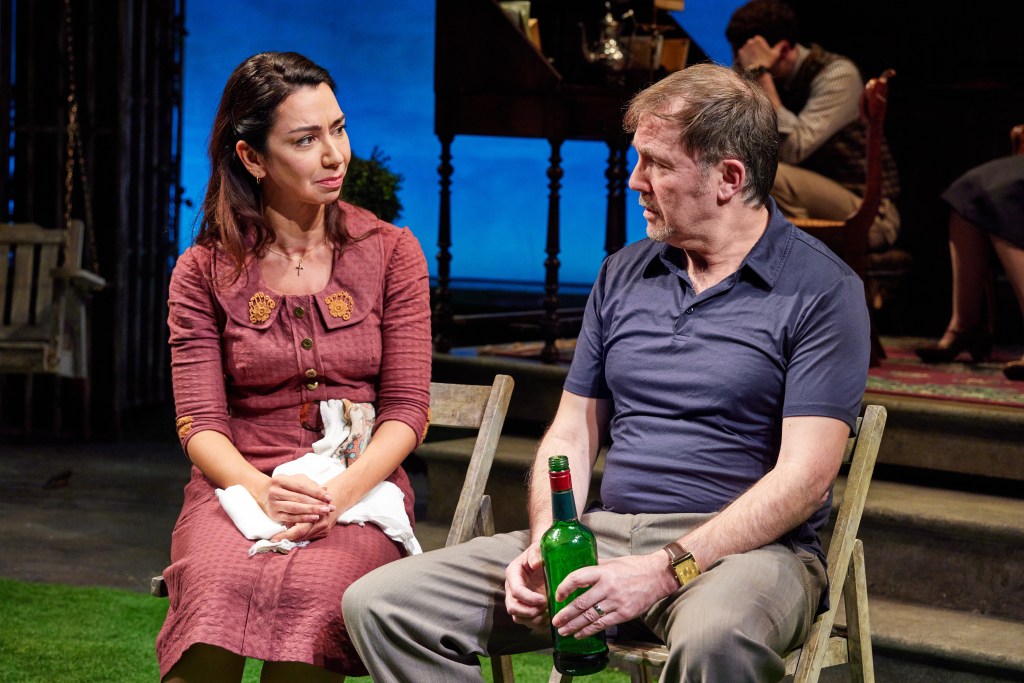
Dysfunction and decay are principle themes in Brian Friel’s Chekovian Aristocrats, a two-act drama about a once upper middle class family in precipitous decline in the fictional village of Ballybeg, County Donegal, Ireland. Currently at the Irish Repertory Theatre as the second offering in the Friel Project, the intricate and fine production is directed by Charlotte Moore and stars a top-notch cast who deliver Friel’s themes with a punch.
Two members of the O’Donnell family, headed up by the autocratic and dictatorial father, former District Justice O’Donnell (Colin Lane),, who remains offstage until a strategic moment brings him on, have arrived at the once majestic Ballybeg Hall. They are there to celebrate the wedding of Claire (Meg Hennessy), the youngest of the four children, who still lives with her sister Judith (Danielle Ryan), the caretaker of the estate. Well into the play, Ryan’s Judith reveals the drudgery of her responsibilities caring for her sickly father and her depressive sister Meg, as well as managing the estate and the chores of the Big House.
At the top of the play, we meet the grown children who live abroad and arrive from London and Germany. These include Alice (Sarah Street), her husband Eamon (Tim Ruddy), and the O’Donnell brother Casimir (Tom Holcomb). As Friel acquaints us with his characters, we discover Eamon, who once lived in the village, claims he knows more about Balleybeg Hall from his grandmother, who was a maid servant to the O’Donnells. Also present is Willie Diver (Shane McNaughton), who is attentive to Judith as he helps her around the estate and farms and/or rents out the lands to the locals. Initially, we watch as Willie organizes a monitor through which Justice O’Donnell can speak and ask for Judith to attend to him.

By degrees, through the character device of the researcher, Tom Huffnung (Roger Dominic Casey), and especially the ironic comments of Eamon, Friel discloses who these “aristocrats” of Ireland are. First, they were the upper class with land, who once dominated because the English protestant faction empowered them to do their bidding. The irony is that over the years, they have devolved and have imploded themselves. The sub rosa implication is that the seduction of the English, to give these Catholic Irish power, has led to their own emotional and material self-destruction.
The father, the last of the dying breed of “gentlemen,” like his forebears, took on the cruel, patriarchal attitude of the English. Raising his family in fear and oppression, and indirectly causing his wife’s suicide, he has deteriorated after strokes. We learn this by degrees, as Friel catches us unaware, except for the title of the play, by revealing the characters to be on equal class footing at the play’s outset. We learn the irony of the great “fallen.” The past distinction between the “superior” O’Donnell’s of the Hall, and the rest of the village peasantry, who referred to them as “quality,” (Eamon’s grandmother’s definition), has faded and is only kept alive in the imagination of a few.
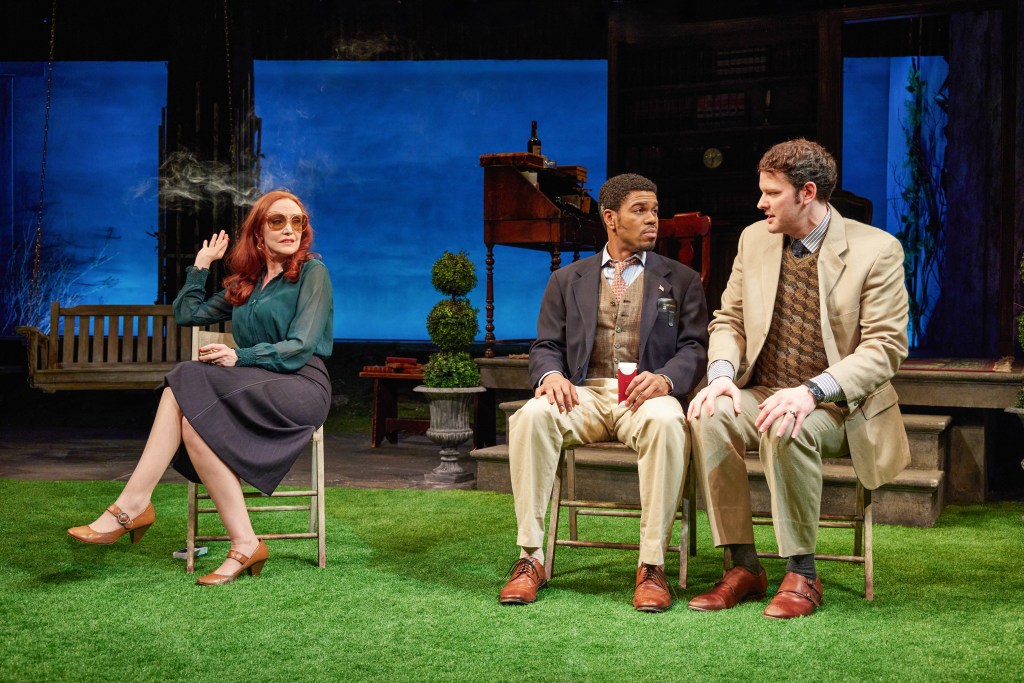
Throughout, Claire’s music can be heard in the background as Alice and Casimir converse with Huffnung, whose research topic is about the impact of the Catholic Emancipation laws on the “ascendant Roman Catholic ruling class and on the native peasant tradition.” In other words Huffnung has come to Ballybeg Hall to research the aristocratic O’Donnells and discover the political, economic and social impact they have had on the villagers.
Interestingly, Eamon sums it up to Huffnung when he ironically answers the question as an insider who knows the Hall and what it is like being married to Alice, one of the former “ruling class.” Alice and her sister Judith were repeatedly sent away from home for their schooling. Alice marries Eamon who, caught up in the Civil Rights action against the English Protestants, loses his job in Ireland and eventually works for the English government in London. Alone most of the day, Alice has become an unhappy, isolated alcoholic. Eamon, whose irony wavers between obvious bitterness and humor tells Huffnung that the O’Donnells have had little or no impact on the local or “native peasants,” of which he numbers himself as one of the classless villagers.

Indeed, noting the shabbiness of the Hall and the problems of the family members, we see the pretension of superiority has long gone. All of them face emotional challenges and need rehabilitation from their oppressive upbringing under their father, Justice O’Donnell who seems to have be a tyrant and unloving bully. We note this from his rants over the monitor and Casimir’s response to his father’s imperious voice.
Judith contributed to causing her father’s first stroke having a baby out of wedlock with a reporter, after joining the Civil Rights fight of the Catholics against the British Protestants. Forbidden to raise her child at home, which would bring shame to the family, she was forced to give him up for adoption; he is in an orphanage. Over the monitor in a senile rant we hear the bed ridden O’Donnell, refer to her as a traitor. Thus, we imagine the daily abuse she faces having to care for her father’s most basic needs, while he excoriates her.
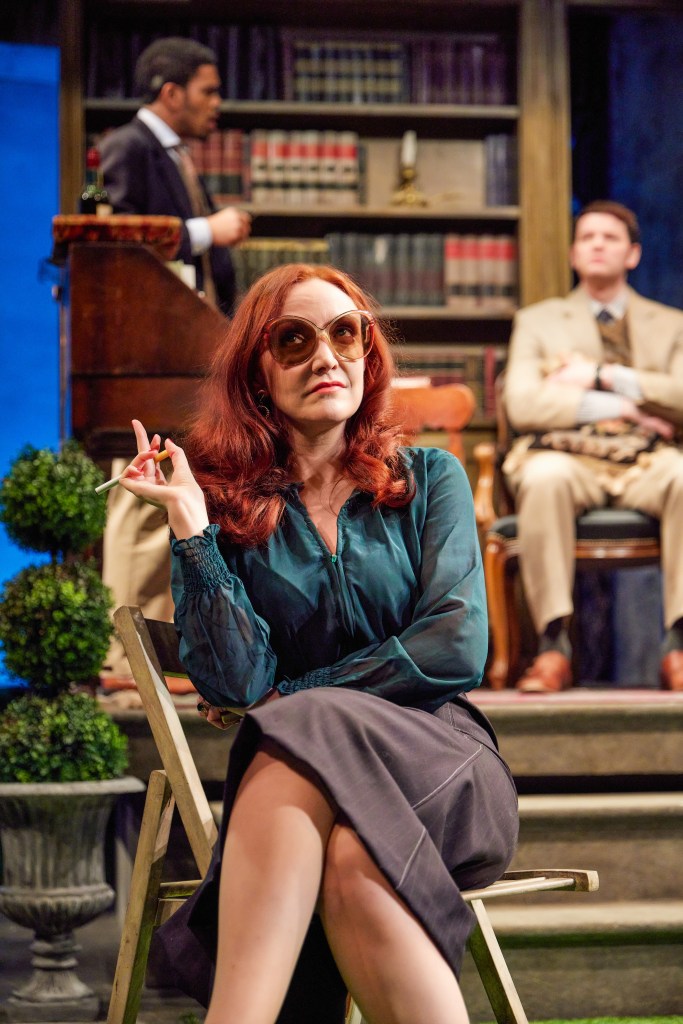
Meg is a depressive on medication who helps around the house, plays classical piano, and plans for her marriage to a man twice her age in the village, a further step down in class status. Desperate to leave, she selects escape with this much older man who has four children. She enjoys teaching piano to them.
Casimir is an individual broken by his father’s tyranny and cruelty. Holcomb’s portrayal of the quirky, strange Casimir is excellent, throughout, but particularly shines when he reveals to Eamon, how Justice O’Donnell’s attitude shattered him. The Justice’s cruel judgments about his only son, are revealed by Casimir toward the conclusion of the play. Ironically, Casimir politely attempts to uplift the family history to Casey’s clear-eyed Huffnung who, tipped off by Eamon, fact checks the details and realizes that Casimir exaggerates with a flourish. Additionally, most of what Casimir shares about his own life is suspect as well, and used to appear “normal,” though he may be gay.
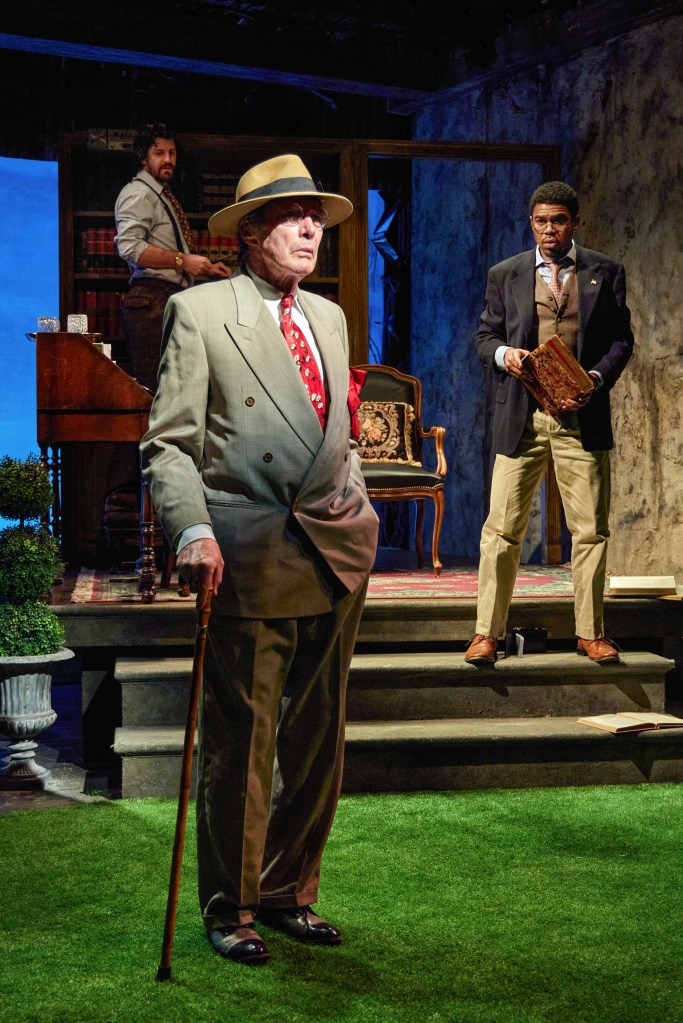
Thus, as Friel unravels the truth about the family, largely through Eamon, we come to realize the term “aristocratic” is a misnomer when applied to them. The noblesse oblige, if it once existed, has declined to mere show. As Casimir attempts to enthrall Huffnung with the celebrated guests who visited the Hall (i.e. Chesterton, Yeats, Hopkins), his claims by the conclusion are empty. In turn Huffnung’s research seems ironic in chronicling the decline of an aristocracy that has self-destructed because it remained isolated and assumed a privileged air, rather than become integrated with the warmth and care of the local Irish Catholics.
The brilliance of Friel’s work and the beautiful direction by Charlotte Moore and work of the ensemble shines in how the gradual expose of this family is accomplished. As the ironies clarify the situation, Friel’s themes indicate how the oppressor class inculcated those who would stoop to their bidding to maintain a destructive power structure which eventually led to their own demise. Of course, Eamon, who is bitter about this, also finds the “aristocracy” enchanting. He wants them to maintain the Great House and not let it go to the “lower class” thugs who will destroy it further, though it is in disrepair and too costly to keep up.

The class subversion is subtle and hidden. What appears to be “emancipation” perhaps isn’t, but is further ruination. How Moore and the creatives reveal this key point is vitally effected.
Thanks to Charlie Corcoran’s scenic design, we note the three levels of the Big House’s interior and exterior where most of the action takes place. David Toser’s costume design is period appropriate. Ryan Rumery & M. Florian Staab’s sound design is adequate. The original music is superb along with Michael Gottlieb’s lighting design. Accordingly, Justice O’Donnell’s entrance is impactful.
This second offering of the Friel Project is a must see. Aristocrats is two acts with one fifteen minute intermission. For tickets go to the Box Office of the Irish Repertory Theatre on 22nd Street between 6th and 7th. Or go online https://irishrep.org/show/2023-2024-season/aristocrats-2/
‘The Shadow of a Gunman,’ The Sean O’Casey Season at the Irish Repertory Theatre
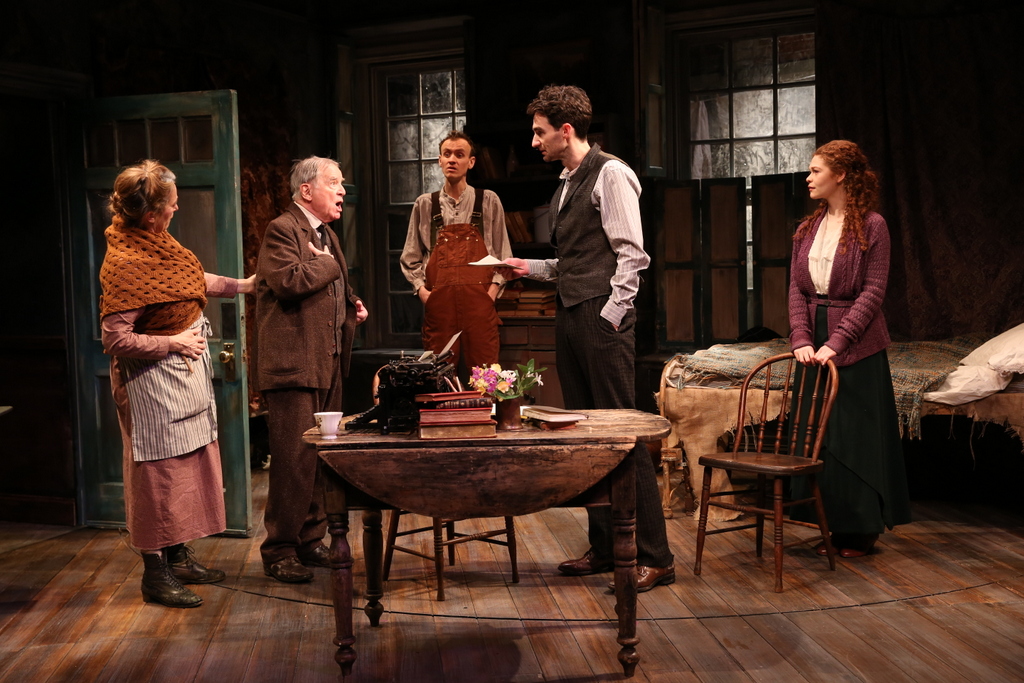
(L to R): Una Clancy, Robert Langdon Lloyd, Ed Malone, James Russell, Meg Hennessy in the Irish Rep production of Sean O’Casey’s ‘The Shadow of a Gunman’ directed by Ciarán O’Reilly (Carole Rosegg)
Sean O’Casey’s compelling The Shadow of a Gunman (1923), the first play of his Dublin Trilogy, has been selected by the Irish Repertory Theatre as the “send off” to introduce their Sean O’Casey Season which has been running from January 30 and will continue through May 25,2019. The first play of the O’Casey Cycle is presented in repertory along with O’Casey’s Juno and the Paycock and The Plough and the Stars on the Irish Rep’s main stage (132 West 22nd Street).
The plays of the trilogy take place during three pivotal and violent confrontations between Ireland and the United Kingdom: The Irish War of Independence (January 21, 1919-July 11, 1921); The Irish Civil War (June 1922-May 1923) and The Easter Rising (April 24-29, 1916). These wars led to the Republic of Ireland achieving independence from the United Kingdom. However the tribal wounds and ferocious heartbreak and resentments incurred centuries ago that exploded into these wars and ended in an uncertain peace, still abide to this day.
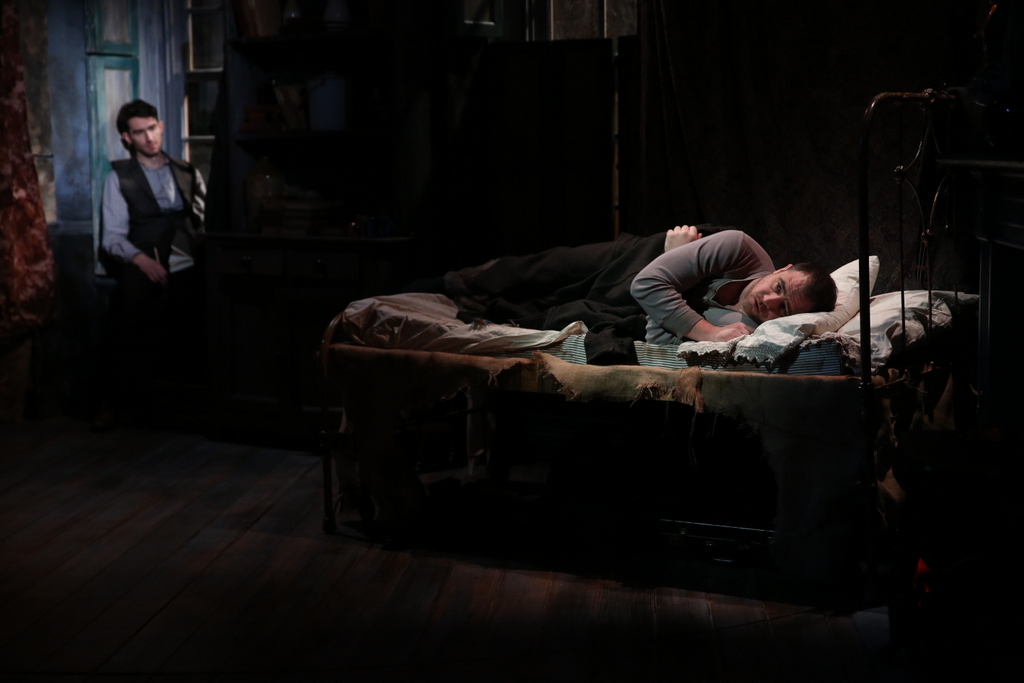
(L to R): James Russell, Michael Mellamphy in Irish Repertory Theatre’s production of Sean O’Casey’s ‘The Shadow of a Gunman,’directed by Ciarán O’Reilly (Carol Rosegg)
The Irish Rep has chosen to celebrate its 30th anniversary by featuring O’Casey’s trilogy which chronicles the impact of dire events on the impoverished tenement dwellers of Dublin who were often the casualties of war. Revisiting the plays remains important for our time because as O’Casey highlights the effects of division and internecine hatreds, he raises questions about the nature of freedom, sacrifice, art, nationalism, Republicanism and more. Always in the background is the price average individuals are “willing” to pay to achieve self-governance and negotiate the political power plays of forces, organizations and governments not readily understandable nor controllable.
The Shadow of a Gunman ably and concisely directed by Ciarán O’Reilly to achieve O’Casey’s maximum intended effect has as its setting Dublin during the Irish War of Independence (see dates above). The largely guerilla warfare campaigns encompassed brutal clashes between the IRA (referred to as the Old IRA today) appointed as the enforcers of Irish Independence, and many former British WWI veterans known as the “Black and Tans.” These British military units were “volunteered” by England to safeguard Ireland as part of the United Kingdom. However, their undisciplined and harsh tactics exacerbated the conflicts so that repeated incidents of bloodshed and devastation were wrecked upon Dublin society by the IRA and the British military.

Meg Hennessy and James Russell in the Irish Rep’s production of Sean O’Casey’s ‘The Shadow of a Gunman,’ directed by Ciarán O’Reilly
How the innocent tenement dwellers of Dublin suffer for the price of a freedom and economic independence that largely remains beyond them is brilliantly chronicled by O’Casey. And indeed, through the excellent work of the ensemble and shepherding of the fine performances by Ciarán O’Reilly, we experience the ironic tragicomedy of happenstance and the true terror of being caught between two ranging enemies who do not care who is swept up in the brutality or destroyed.
The comedy resides largely in the human interactions of the residents of a rooming house and how they present themselves as they negotiate their own political positions and participation or lack of interest in effecting a free Ireland. One central irony is that they underestimate the danger of the warfare that surrounds them until it is too late. In their naivete they assume that struggling writer and poet Donal Davoren (James Russell in a sensitive, angst-ridden and nuanced portrayal) is a member of the IRA and the titular “gunman” of the play.
Davoren, who has newly arrived to the boarding house and is the roommate of Seumus Shields (the humorous, hapless and unwitting Michael Mellamphy whose cowardice is recognizable and empathetic) is treated with dignity and great respect by the other residents. Minnie Powell (Meg Hennessy renders a feisty, sweet and charming portrait of innocence and bravery) especially finds Donal irresistible for she is enamored of the romantic notions of heroism and courage that gunman fighting for a free Ireland display. Of course, the irony O’Casey delivers in blow after blow by the end of the play dispels everyone’s romantic notions of freedom fighters. And we are reminded that dying for freedom and liberty are propaganda, especially when there is a shortage of brave and courageous souls who are willing to take risks facing off against a loaded gun.

Terry Donnelly in the Irish Rep production of Sean O’Casey’s ‘The Shadow of a Gunman,’ directed by Ciarán O’Reilly (Carol Rosegg)
O’Casey presents the issues and themes immediately. He introduces the Everyman’s perspective which many of the renters embrace, particularly Mellamphy’s Shields. And the playwright fronts that view against the poet/philosopher’s pacifist view of Donal Davoren whom the renters believe to be with the IRA. The irony, if followed to its absurd conclusion in O’Casey’s plot, rings with horrific truth, considering the results and follow-through of their beliefs about him.
Meanwhile, discounting their attitudes about, yet slyly thinking to capture Minnie’s heart by saying little, to Shields Donal beats his breast and cries of the miseries and pains of being a poet. He rails against the commoners for whom he creates his art to little effect. Through him O’Casey reveals an ironic addendum. For all the angst and pain artists go through to create the beauties of art and literature, the works may or may not assert a place of importance in the hearts of citizens in a time of war. (Is O’Casey perhaps being sardonic about the importance of his own work through this character’s mewlings?)
Director O’Reilly gives attention to each of these characters. In his rendition of Casey’s work, we understand that they represent symbolic types in the human panoply of characters that manifest the cowardice and hypocrisy of those who inhabit every society in the throes of violent revolutionary change.
All of them reveal in one way or another the flaws that contribute to the tragedy that occurs by the play’s end. For example the kowtowing, gossiping Tommy Owens (Ed Malone in a humorous turn) exemplifies the toady and hypocrite who brings on the trouble. The alcoholic and abusive husband Mr. Grigson screams out his position as an “Orangeman” sympathetic to the opposite side. John Keating manages to be sincere in his drunkenness and hysterical to boot. However, we note another side of him when Mr. Grigson and Shields swap stories of their bravery in the face of the British, who in actuality frighten them out of their wits. Only Donal remains silent and renders himself invisible in the face of terror. Though the lying bravado is typically understandable, it is also cringe-worthy. For men should be stronger, should they not? O’Casey smashes this notion by the play’s end with a resounding exclamation point which this production succeeds in spearing through our hearts and minds.
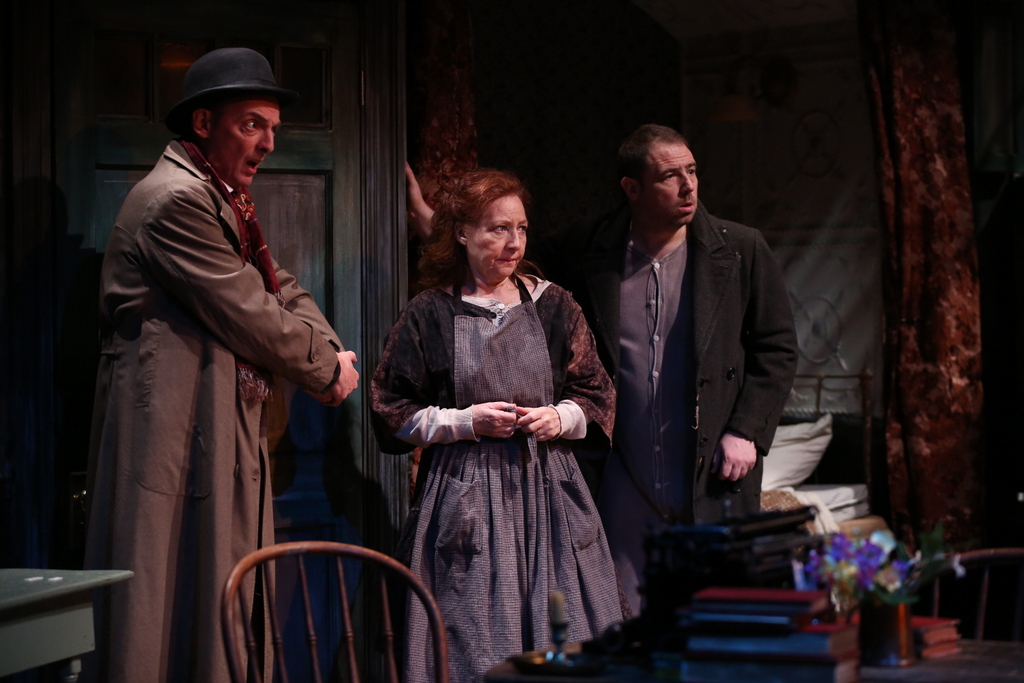
(L to R): John Keating, Terry Donnelly, Michael Mellamphy in the Irish Reps production of Sean O’Casey’s ‘The Shadow of a Gunman,’ directed by Ciarán O’Reilly Carol Rosegg)
Terry Donnelly as the long-suffering Mrs. Grigson delivers a superbly heartfelt, broken and poignant portrayal that takes us into a tragedy that we will remember long after the lights come up. Most importantly, the second act thrums with rapid pacing, suspense and “edge-of-your-seat” fear. We empathize with the Dubliners throughout the experience O’Reilly and the company put us through as they moment-to-moment envelop us with the emotion and horror of unfolding events in real time.
This immediacy is a vital element of O’Casey’s work and the ensemble and the production team render it superbly. For it is the terrifying experience that delivers our epiphany of what the historic Dubliners went through and what occupying troops in Syria and Yemen put innocents through today. The civilians are gun fodder for wars they have not willingly signed on for. Surely, they do not anticipate their lives threatened and lifestyles destroyed by both sides of the warring factions on streets and in homes where children once played and all was safe and secure. Surely, they do not choose between the Scylla and Charybdis of becoming an escaping refugee or staying to be numbered among the dead or disappeared. It was so in Ireland, then, it is so in wars that dot our planet and fuel defense manufacturers’ profits today.
As O’Casey reveals most acutely in the action conveyed by the actors, designers and director of this production, this is THE TERROR. And as the characters experience the horror, uncertainty and helplessness in the face of the oppression and tyranny from both sides, we experience it as well. The tragedy becomes that all who are present as witnesses become the accountable participants and they must live with the regrets imprinted on their souls until they are washed away, if ever.
Kudos to all in the acting ensemble who contribute to making this a soul-sonorous production. Kudos to the design team: Charlie Corcoran (scenic), Linda Fisher & David Toser (costume) Michael Gottlieb (lighting) Ryan Rumery & M. Florian Staab (sound) Ryan Rumery (original music).
This is a must-see, especially if you are unfamiliar with Shadow of a Gunman which runs with one intermission. The production is a wonderful introduction to Sean O’Casey and if you have been a forever fan, you will be very pleased. Additionally, the Irish Rep in celebration of the playwright is conducting free readings, symposiums, lectures, film screenings and music exhibitions. For more information on the Sean O’Casey Cycle and for tickets to the Dublin Trilogy, check the website.
 CAROLE DI TOSTI