Blog Archives
‘Two Strangers (Carry a Cake Across New York),’ Smashing Performances, Delightful, Lyrical, Poignant

A simple rom-com it is not. When New York (a town that’s all about money) figures as a character in the dynamic of a budding relationship, complexity arises. It seems especially so with the musical comedy Two Strangers (Carry a Cake Across New York) by Jim Barne & Kit Buchan, currently at the Longacre Theater until Jul,y, unless it receives an extension. Judging from the audience who knew the songs, and reveled in the fun and celebration when I saw it, it may extend its run.
Originally, titled The Season in two regional English theaters (2019), a new title and opening in London at the Kiln Theatre (2023-2024) and the West End at the Criterion Theater (2024) helped the musical make its mark. At the Criterion Theater it received an extension due to popular demand. Gaining momentum it kept the new title and began its North American premiere at the American Repertory Theater. There, it received another extension. Again, Sam Tutty reprised his role of Dougal Todd at A.R.T. (2025) when Christiani Pitts joined him as Robin.
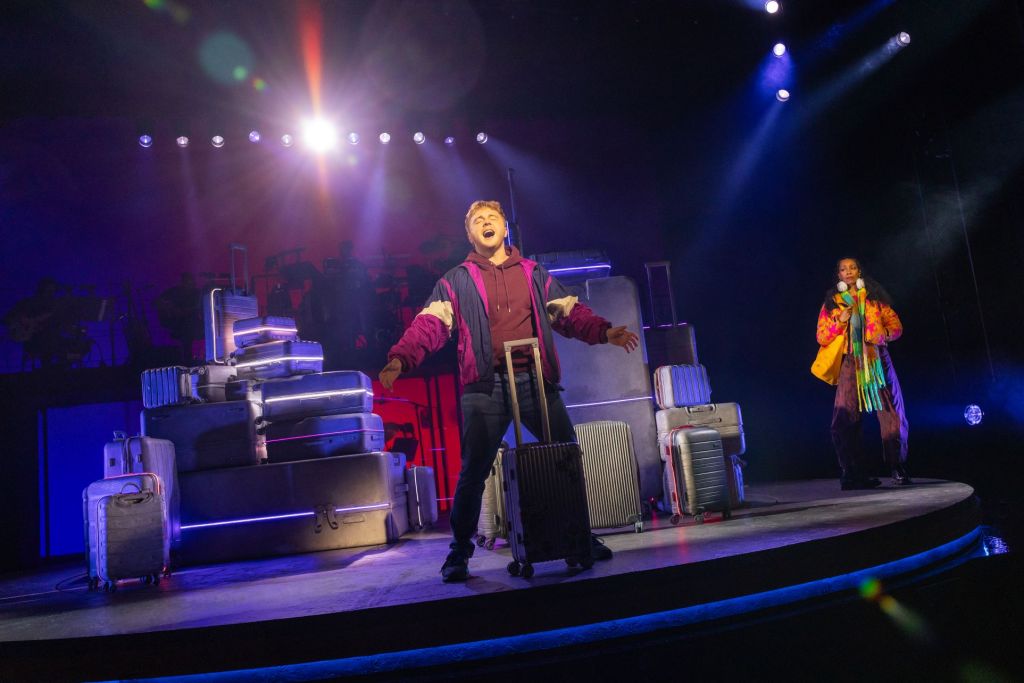
Ironically, the longer, detailed title kills for its uniqueness which characterizes this musical comedy that resonates also because the writers make New York a character viewed through the eyes of two broke, twenty-somethings. The world-weary New Yorker, Robin (Christiani Pitts, Ann Darrow in King Kong) contrasts with the kooky, exuberant Brit, Dougal (Sam Tutty shepherded the role since the Kiln Theatre).
Delectably opposites, the characters are thrown together by Dougal’s invite to his dad’s wedding in Manhattan where he will meet Mark Todd for the first time in a town he’s only seen on film. No wonder why he’s excited.
Deliciously, the actors inhabit the characters’ dialogue as if they wrote it themselves. Tutty’s quick, off-handed, throw-away one liners, perfectly timed, always land. Pitts’ Robin, the perfect foil, picks up steam after she drops her bored, ironic pose and jumps into the pools of Dougal’s freeing enthusiasm.
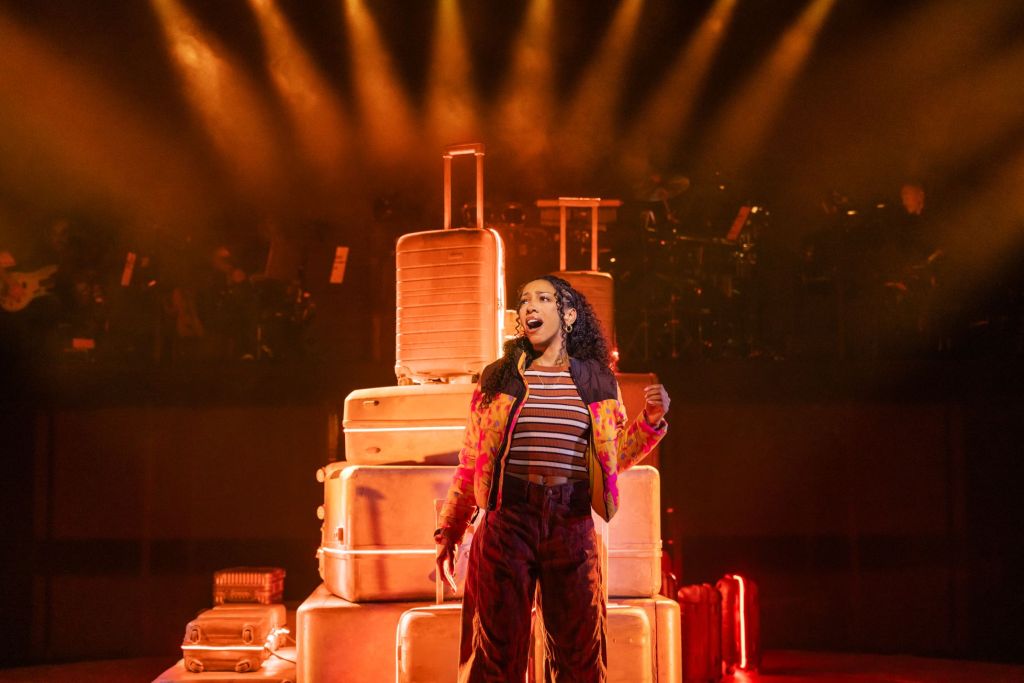
Indeed, on a deeper level, much recommends this musical comedy directed by Tim Jackson, effortlessly performed with charisma and chemistry by its leads. The minimalist production (i.e. Soutra Gilmour’s set of variously sized, silver-grey suitcases that hold surprises) aligns old-fashioned and hyper modern tropes. The equally unostentacious lighting design (Jack Knowles) appropriately adds atmosphere when most needed.
When Robin bumps into Dougal and tramples his passport, Robin knows about Dougal,. But neitherhe nor the audience know about her. So the idea of strangers meeting and caring about each other after twenty-four hours or so twerks off the rails of typical “boy-meets-girl” ho-hum.
Importantly, little about the characterizations and storyline are predictable. In the twists and bends we note the refreshing unusual. For example, she is one of the few NYC waitresses who isn’t trying to be an actress or performer. In fact she circles the edges of struggling, lonely, confused, an invisible nobody to the well-heeled crowd (“Be Happy”). He awkwardly circles the edges of dorkdom, living with mom as best mates and drinking buddies. However, their far from admirable backgrounds heighten audience empathy in this on-point two-hander, incisively and acutely directed by Jackson.
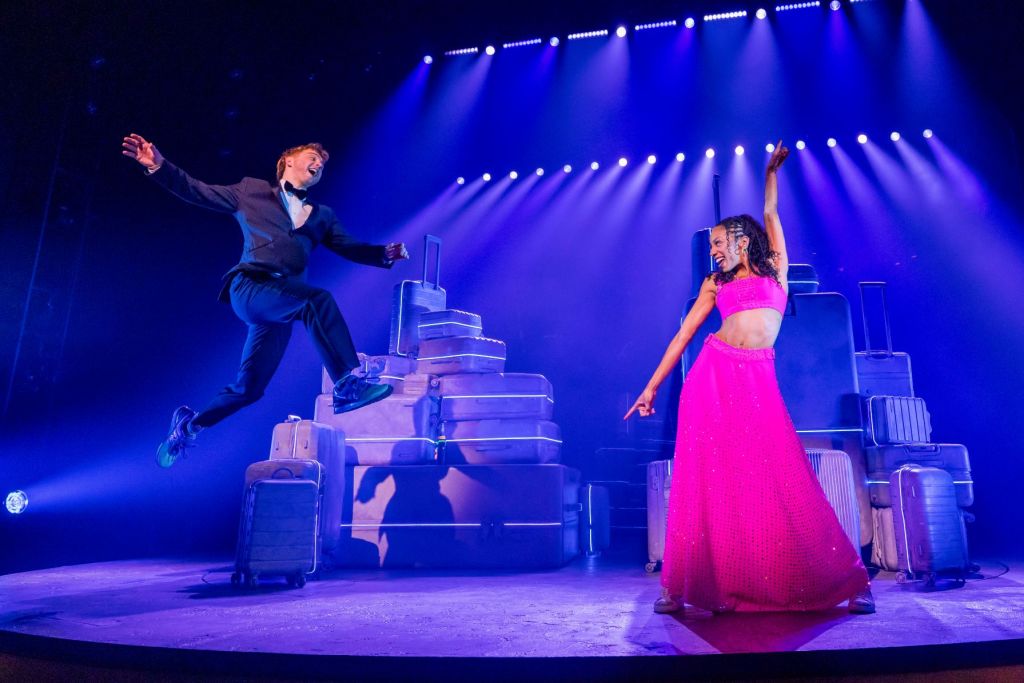
Arranged by sister Melissa (the bride-to-be), to ease Dougal into the NYC scene, Robin accompanies Dougal to his hotel from JFK. Initially, we don’t understand Robin’s cool attitude. Is it because she’s a sophisticate annoyed that he acts like a wide-eyed, bushy-tailed ten-year old at Christmas about being in Manhattan (“New York”)? Or is her attitude a cover for deeper knowledge about the marriage of her 30-year-old sister to Dougal’s 57-year-old millionaire dad Mark, who abandoned Dougal before he was born?
Nevertheless, the combination of her dour attitude and his outsized ebullience and film buff references make their choppy interplay continually humorous. It becomes LOL in Act II when Robin removes her mask “the morning after” their wild night during their song, “The Hangover Duet.” Barne’s and Buchan’s clever script and at times profound lyrics and beautiful music enhance the perplexing situation of these two strange “family members” growing toward love, despite the weird circumstances.
Along the journey of discovery which begins with Dougal’s conflict (“Dad”), his disappointment that his father didn’t meet him at JFK, the truth eventually unravels. Perhaps spurred by passive aggression, Robin fails at her mission to deliver a whole wedding cake to her sister, as well as other tasks Melissa demands of her. With his cheerio attitude and stock of film plots at the ready to reference during the major catastrophe that will drive Melissa to a terrorist act when she finds out, they flee despite their poverty into the dreamland New York can be. Happily, they end up spending a fabulous evening together dancing, eating and blindly drinking their way into the classy Plaza Hotel for a stay-over.

How is this possible? Mark gave Melissa his card which she improbably gave to Robin to pay for the $2000 wedding cake. With the card (during the fast-paced, frenetic, “American Express”), they charge for the hotel room and various sundries, like a tux rental and exquisite dress and shoes, food, drink and breakfast. Their joyful abandon is courtesy of Mark. Come on! He’s Dougal’s dad and Dougal’s making up for lost time. And we discover in a note Mark sends to their Plaza hotel room, he gladly bestows his largess on “little Robin,” because of their former “friendship.” He even invites her to the wedding, which we later understand is a slap in her face.
By the conclusion we “get” Robin’s initial cynical attitude toward Dougal, whose boyish, angelic hope eventually rubs off on Robin. How can it not as they journey up and down devastating emotional mountains (“New York/What’ll It Be,” “About to Go In,” “This Year”) and work through their explosive blow-out (“He Doesn’t Exist,” “What Did You Say?”). They reconcile in uncertainty as Dougal suggests, “If you ever need anything, I’ll be 4000 miles away,” and sing one refrain of “New York,” then return to their lives.
Two Strangers (Carry a Cake Across New York) runs 2 hours 15 minutes with one intermission at the Longacre Theater. twostrangersmusical.com.
‘Pirates!’ Is a Riot With David Hyde Pierce, ARGH!
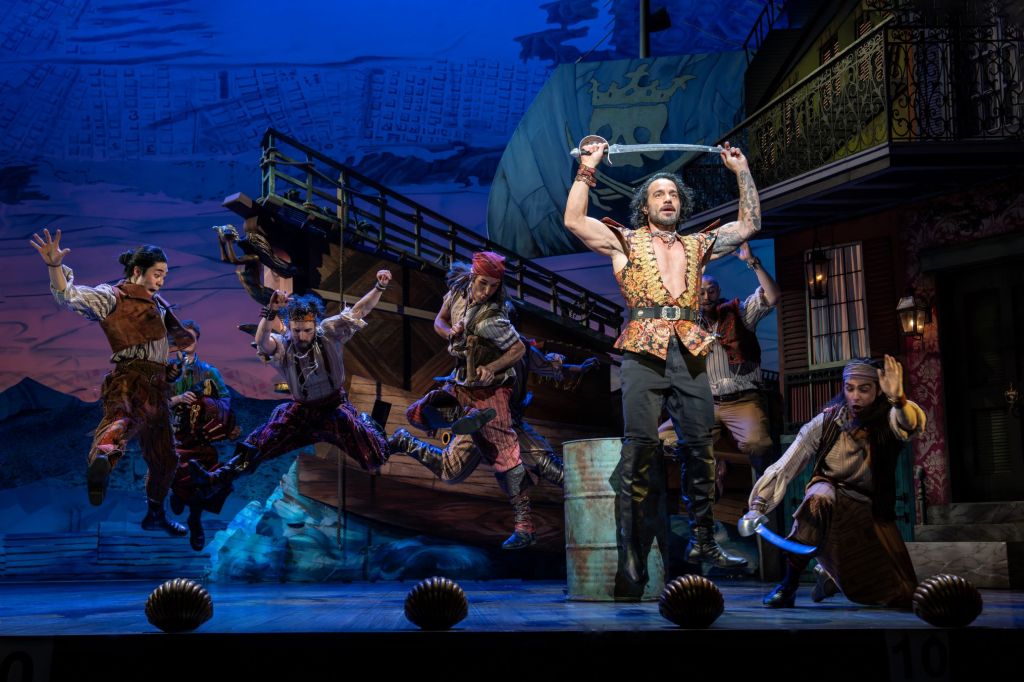
Pirates! The Penzance Musical Set in The Big Easy
The revival of Pirates of Penzance, the comedic operetta with music by Arthur Sullivan and libretto by W. S. Gilbert, has been transformed into Pirates! The Penzance Musical. Indeed, it has been hauled overseas from Penzance, England to New Orleans, Louisiana for a riotous update by Rupert Holmes with new orchestrations by Joseph Joubert and Daryl Waters. It is currently revving up exuberance and laughter at Roundabout’s Todd Haimes Theater.
Holmes attempts to spin the setting changes by having a “real” Gilbert (David Hyde Pierce, who also plays Major General Stanley), and Sullivan (Preston Truman Boyd, who also plays the sergeant of Police), take the audience into their confidence in the show’s prelude. They discuss why they brought the musical to premiere and tour US cities. Importantly, they relate their enchantment with post-Reconstruction New Orleans which inspired them to “pirate” the colorful flavor of the music in the French Quarter and adapt it to various songs in the musical. Indeed, all of the scenes take place in and around the atmospheric New Orleans (even a graveyard) that represents the varied ethnic and cultural ethos of the city.
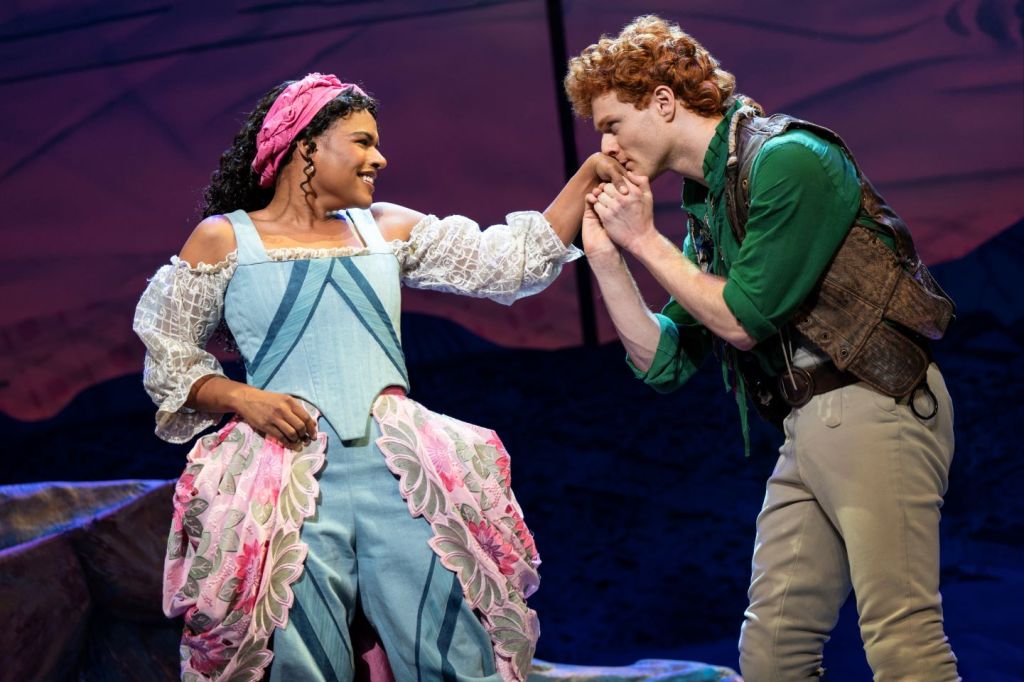
This is where fantasy takes over and “reality” is dumped by the wayside. New Orleans (1880s) notoriously expanded white supremacy (the White League was the racist organization that benefited from the eventual Jim Crow legislation, Plessy v Ferguson) despite its multicultural population, after Reconstruction ended in 1877.
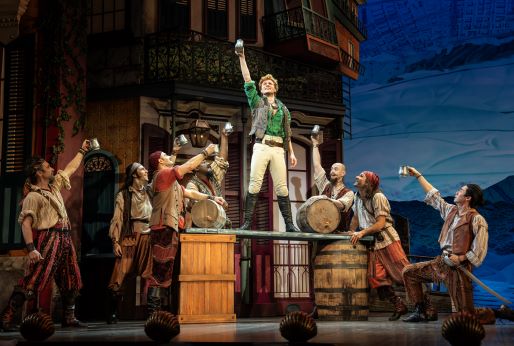
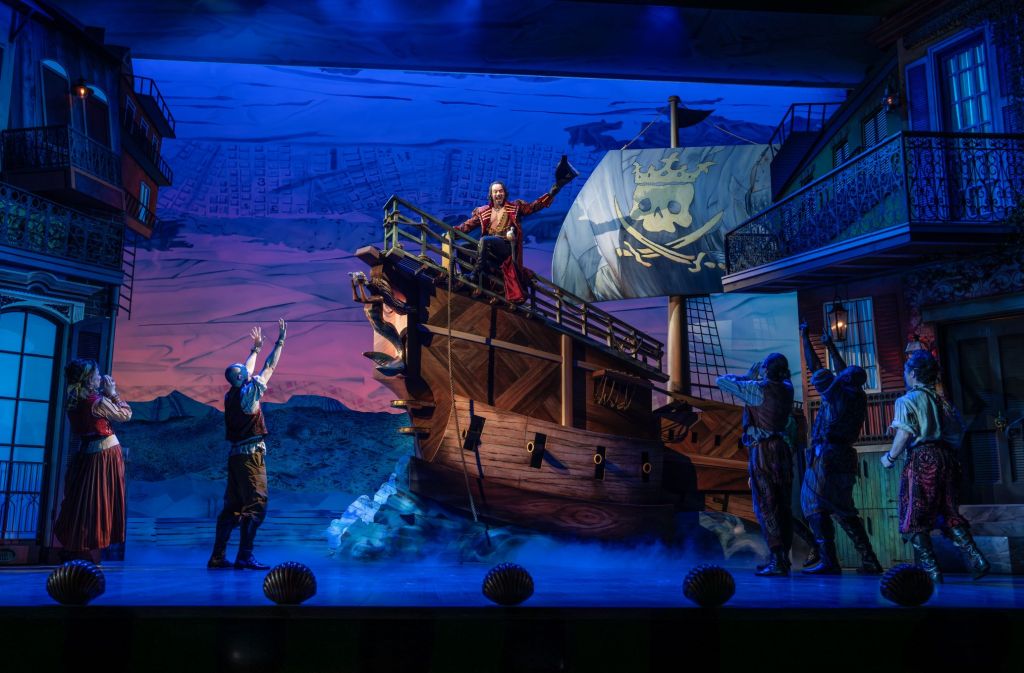
Nevertheless, as facts are stretched to fantasy, the casting of Major General Stanley’s daughters along a racial divide in contrast to the pirates must suspend one’s imagination into the realm of farce and pure entertainment. Actually, Holmes’ version would do well in a current MAGA South adverse to being aligned with “woke” or “critical race theory,” as it throws history out the window. However, the production makes New Orleans “historical” in its wonderful costuming (Linda Cho) and David Rockwell’s scenic design of the pirate ship that Karimloo makes his rope-swinging, spectacular entrance from.
As farce Holmes’ reworking is top notch for humor. His desire to update the musical and appeal to current audiences is understandable because Gilbert and Sullivan’s work (first brought to the US in 1878) is extraordinary, British ironic and extremely clever. It is especially appreciated if one is able to launch into the nooks and crannies of its brilliant and humorous lyrics. Though I was able to look at the script, for those who must rely on the ensemble to enunciate the lyrics, especially in the choral numbers, one loses much in the translation. However, the driving music and director Scott Ellis’ staging and frenetically paced action mitigates that loss.
In keeping with reimagining a New Orleans’ vibe that is more Southern down home than British witty, the production sports a different tenor than a superb but traditional revival produced at The Public Theater in 1981, starring Kevin Kline, Linda Ronstadt and Estelle Parsons. That Pirates of Penzance was gloriously captured on film in 1983. For a contrast, it would be delightful to revisit the film then see the Roundabout’s lighthearted production.
Maintaining the general plot of Gilbert and Sullivan’s 1878 operetta, “Pirates!” unfolds the story of the hapless and innocent Frederic (the excellent Nicholas Barasch). In the antiquated fashion of indentured servitude, Frederic is duty-bound by his deceased father to be the apprentice to the Pirate King (the gymnastically vigorous, organically funny and gorgeously voiced and appearanced Ramin Karimloo). Ironically, the Pirate King is derelict in his piracy (we discover why at the conclusion), as he incompetently leads his band of “spurious” pirates NOT to plunder, kill or steal.
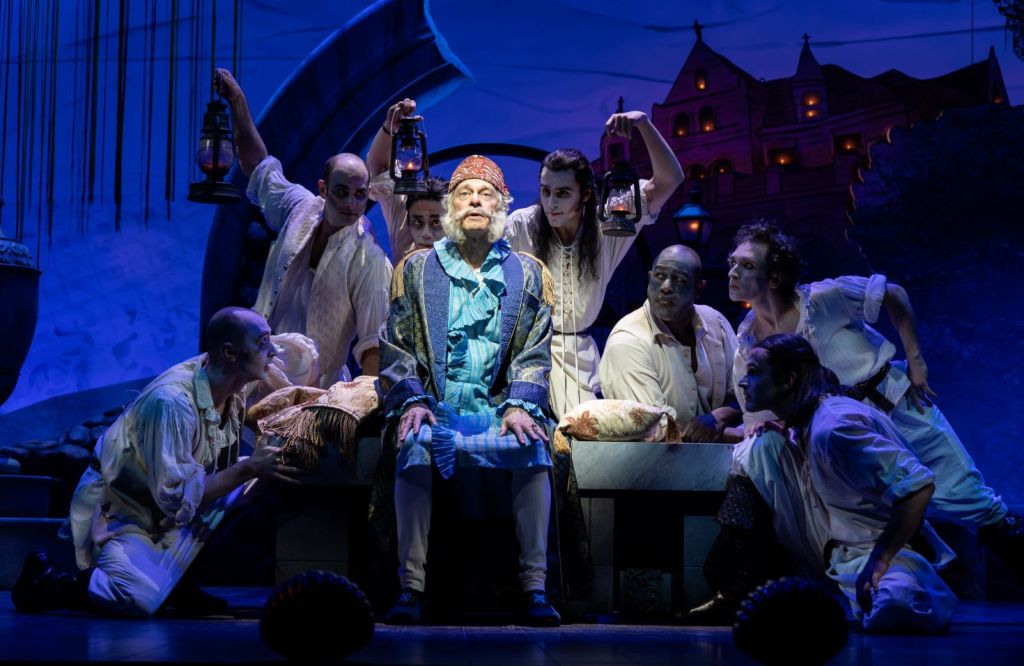
Thus, residing with the pirates and following the dereliction of duty promoted by the Pirate King, Frederic eventually completes his service on his twenty-first birthday. It is then the Pirate King frees him so he can go ashore, join law abiding society and kill every pirate he was colleagues with during his long servitude. Of course, his freedom doesn’t go as planned because of a mathematical miscalculation, and the conflict turns in another direction teetering on debacle until it is righted.
Additionally, in between meting out justice, Frederic plans to find a bride, though marrying a younger woman will break Ruth’s heart because he promised to be with her for the rest of his life. But information enlightens him and makes Frederic change his promise to Ruth, especially after he meets the lovely Mabel (Samanta Williams) and they pledge their love for each other. However, as with a common Shakespearean theme, for Frederic and Mabel, “The course of true love never runs smoothly.” And it is in the kinks and gyrating turns that the comedy reaches its heights.
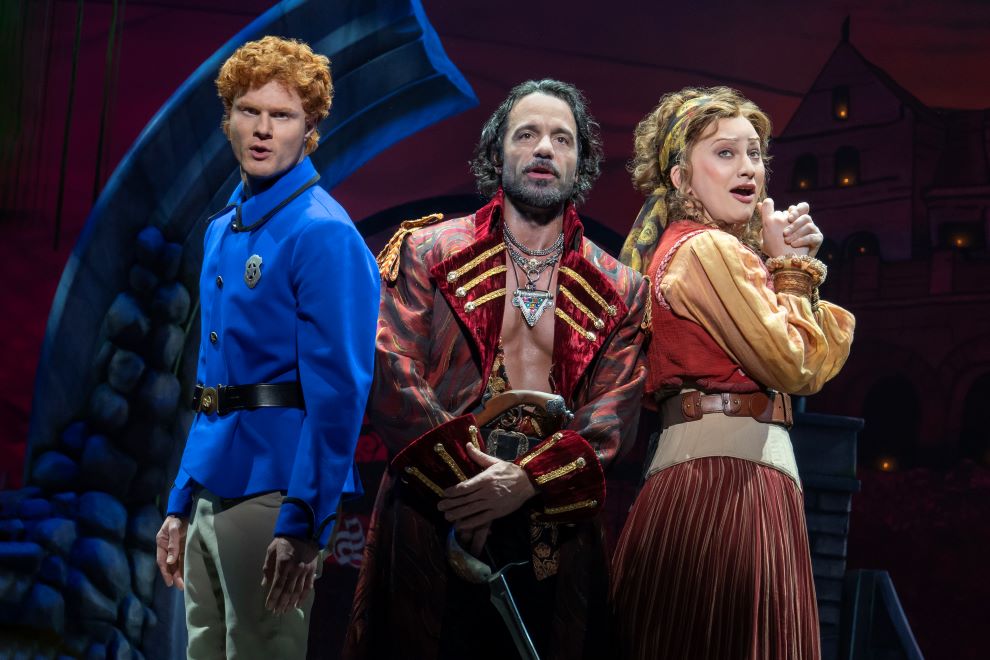
The comedy also is delivered with David Hyde Pierce’s exceptional performance of Major-General Stanley, which he acts with complete aplomb and authenticity. Pierce enunciates every word clearly and thus unrolls the stuffy, effete, sincere Major-General with dedicated determination. Considering Pierce is doing double time as Gilbert performing the Major-General, his ironic demeanor is the vehicle which is a natural for the British Gilbert’s stiff upper lip delivery. And it is hysterical. His is a really well-thought out performance as is Monsoon’s and Karimloo’s, which is memorable for his leaps over barrels, leaps onto tables and veritable sailing in the air during various numbers. Humorous as well, he is outrageously good as he pings the Pirate King’s vulnerability falling for the plight of the orphaned who into his sphere of influence.
To his credit, Holmes has put his imprint on Gilbert and Sullivan with this reinvention and has even tucked in numbers from other Gilbert and Sullivan operettas (HMS Pinafore, The Mikado and Iolanthe) to fill in and round out the characterizations and establish bridges seguing action from one sequence to the next. For characterization, in Act II, we learn more about the emotions of lovelorn and Frederic-spurned pirate wench Ruth (featuring the versatile talents of Jinkx Monsoon-two-time winner of “RuPaul’s Drag Race”). Bemoaning her fate away from her unrequited love interest Frederic, she sings “Alone and Yet Alive” with lyrics adapted from the song in The Mikado.
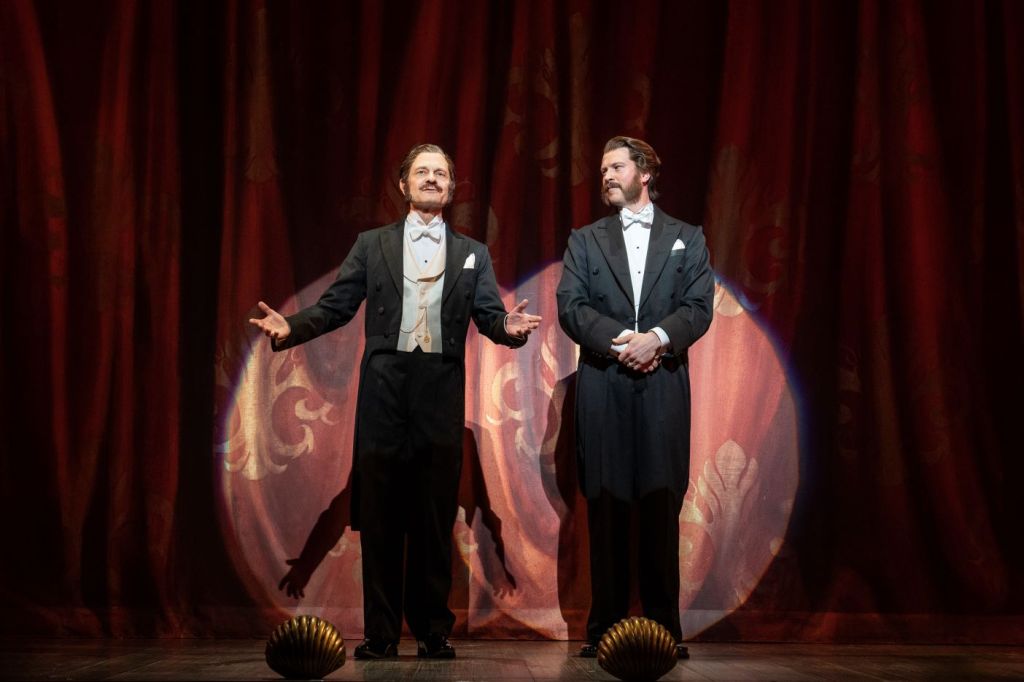
It is Holmes’ bold move to create empathy for Ruth, add coherence and deepen the emotion in the fun frolic. Jinkx Monsoon does a fine job in keeping balance with humor and pathos so we understand Ruth’s heart-felt loss, yet appreciate how she encourages herself to make the best without a particular “someone.”
Waters’ orchestrations and Joubert’s music direction strike various phrasings which are current New Orleans (not the setting of the post-Reconstruction town). These include blues, jazz, Creole notes and rhythms, Dixieland and much more. There is even an ersatz funeral New Orleans style music which is thrown in for good measure. And Mardi Gras season comes upon the pirates as they “let the good times roll.”
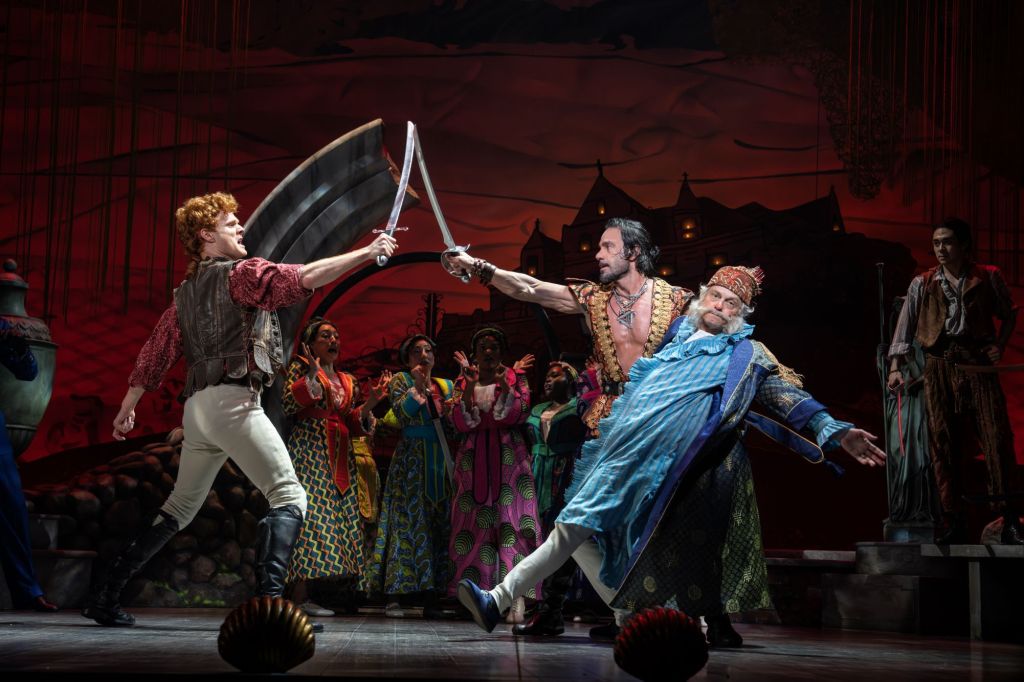
Finally, I enjoyed the washboard number at the end of Act I (“We Sail the Ocean Blue” from HMS Pinafore) for its cleverness and rhythmically united efforts by the entire cast. And the conclusion is a fantasy finale which uplifts the Trump, Musk, MAGA hated DEI lyrics “integrated” into “He Is an Englishman” from HMS Pinafore, which is a sardonic joke in itself, which I completely adored. This is in your face Broadway. If the Bill of Rights doesn’t apply, then nowhere on the globe and in the former British Empire or American is humanity safe. I completely appreciate Holmes’ sardonic and charming approach with a wit that Gilbert and Sullivan would have approved of.
I just loved this reimagining as a farce with fantastic elements, all with a point. See it.
Pirates! The Penzance Musical runs 2 hours, 15 minutes with one intermission until July 27 at the Todd Haimes Theater. roundabouttheatre.org.
‘Real Women Have Curves’ is a Sensational Adaptation With an Underlying Moral Imperative
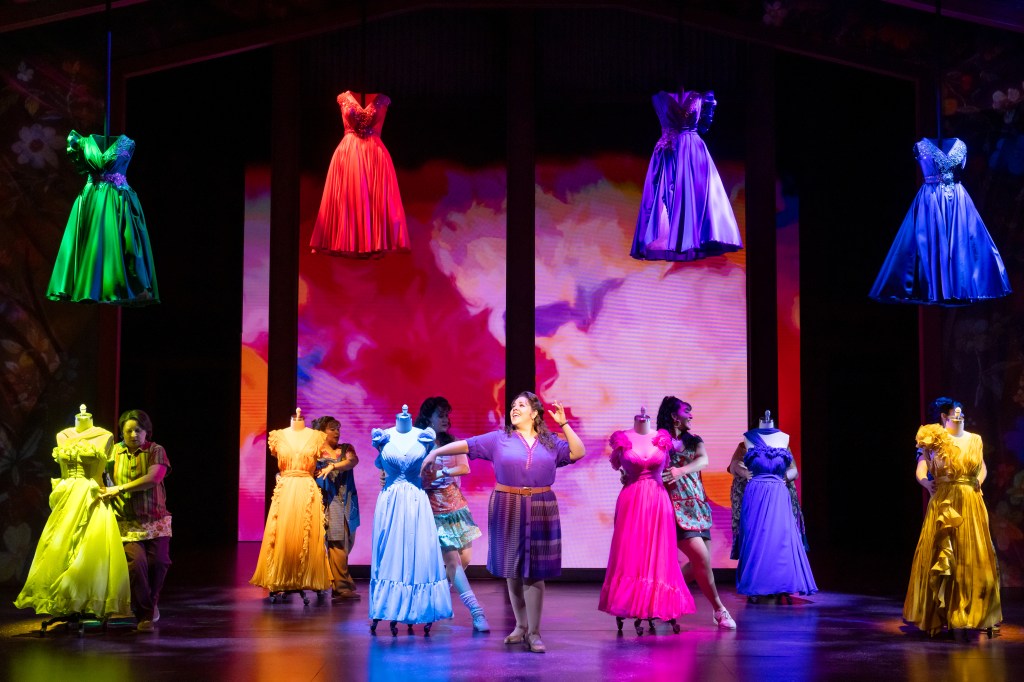
Read Women Have Curves
Based on Josefina López’s titular play, and the 2002 HBO film adaptation starring America Ferrera, Real Women Have Curves, at the James Earl Jones Theater, is an exuberant, humorous, beautifully colorful fun-fest with underlying messages about past Republican immigration policies, discrimination, fat-shaming, Latinx cultural iconography, female empowerment, self-love, and making the American Dream one’s own. Delighting the audiences, the production also is vitally historic in reminding us of the great sacrifice those who seek a better life make when they leave their native country for an unwelcoming nation.
Though the musical is set in Los Angeles, 1987, it has tremendous currency during the debacle of the Trump administrations’ kidnapping, trafficking and incarceration of migrants in concentration camps out of the country, illegally without due process. This unlawful, brutal practice misnamed deportation (which mandates due process), is being noted as a crime against humanity by many groups, including the United Nations and The Hague. The musical’s themes and plot contrast between the past and the present, where the current derelict, corrupt administration would degrade the United States by violating the 5th amendment to the constitution.

The Tony-nominated score by Grammy® Award–winning singer-songwriter Joy Huerta (known as half of the pop duo Jesse & Joy), was written with Benjamin Velez. Both wrote the music and lyrics and are also responsible for orchestrations and arrangements. With the book by Lisa Loomer (Distracted) and Nell Benjamin (Mean Girls), music supervision by Nadia DiGiallonardo (Waitress), and choreography and direction by Tony® winner Sergio Trujillo (Ain’t Too Proud), these creatives have knocked it out of the ballpark. to make the show a winner.
Coupled with the superb performances and ensemble work by the cast, the ebullience is catching and it’s impossible not to hum along, or sway in one’s seat with many of the upbeat, message-filled numbers (“Make It Work,” “De Nada,” “Oy Muchacha,” “Adios Andres,” and “Real Women Have Curves.”). We feel immediate empathy with the likable, endearing and ironically humorous Mexican women of various ages, who dream of establishing themselves in prosperity despite the incredibly long work hours at two or three jobs, the social obstacles of being “the other” culturally, and the daily threat of being deported back to their own country, a dangerous prospect.

At the outset, we note the key conflict is between mother and daughter, 18-year-old Ana García (Tatianna Córdoba), and her mom, Carmen (Justina Machado). Ana was born in the United States and has constitutional birth-right citizenship. Her older sister Estela (Florencia Cuenca), was born in Mexico. To improve their situation, father Raul (Mauricio Mendoza), found work in Los Angles and eventually moved the three of them to Boyle Heights, and stayed with persistence and tolerance of discrimination. As they prospered, Carmen and Raul subsidized Estela’s dress business, all the while raising the younger Ana to adopt American ways, but never forget her heritage.
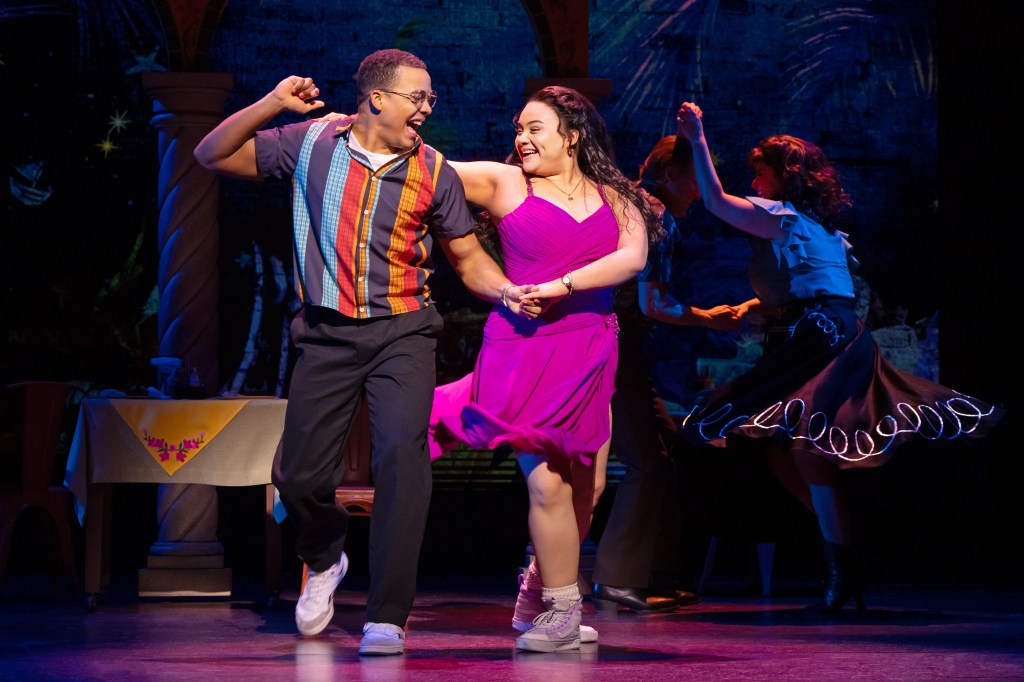
As the only American citizen, Ana excels in school, graduates with honors and as an aspiring journalist with a summer internship, applies to Columbia University where she receives an acceptance and full scholarship. At her internship with a local paper where she practices her journalism skills pro bono to gain valuable experience, she meets Henry (the superb Mason Reeves), and forms an adorable attachment. Aye, if Carmen knew about Columbia and Henry, she would hit the roof.
Of course Carmen, unsettled by their illegal status fears deportation and intends to keep the family together, just in case. Carmen’s plans are why Ana can never tell her mother about her great news that she has climbed the first rung of her dreams in her full-ride scholarship to Columbia in New York City. Now, it’s only a matter of going, regardless of Carmen’s stubbornness to keep Ana at home. When she finally does tell her, Carmen is beyond herself.
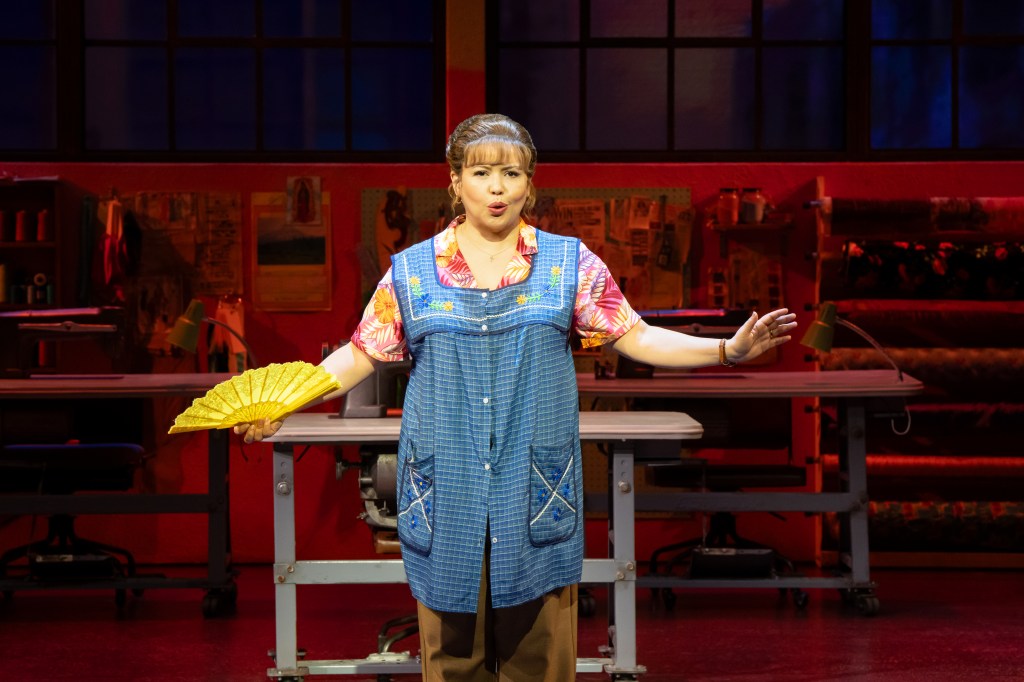
The chief reason why Carmen can’t let her go concerns their status. If they are picked up by INS, Ana’s birthright citizenship will possibly save them. The question becomes will Ana choose her dreams or put them on hold and stay with her family in support. However, if she waits, she may never get another opportunity like a free-ride to expensive Columbia again. Ana does tell sister Estela who encourages her; they agree behind Carmen’s back she should wait to tell Carmen.
In a second conflict which involves their prosperity in their business and their immigration status, Estela’s dress shop receives a fabulous order for 200 dresses. The order is from the well-connected, elite-looking, stylish Mrs. Wright (Claudia Mulet when I saw the production). Mrs. Wright gives the order under the condition that unless they are finished in three weeks, she won’t pay Estela and will take the dresses the dressmakers did finish. Thrilled to work with Mrs. Wright for her buyer contacts-a chance to increase their opportunities-Estela agrees to Mrs. Wright’s handshake contract, despite the fact that it is an onerous and shady arrangement. The dressmakers are thrilled and agree to work hard (“Make It Work”). Carmen suggests that Ana can help them get the job done and learn to sew.
However, as we find out into Act 2, Estela has taken a tremendous risk. A second question arises as the suspense increases. Will they be able to get the dresses in on time? As a further obstacle, while they are progressing, there is a loud explosion. Next door an illegal factory with undocumented workers is raided. In panic and fear, the dressmakers turn the lights off and remain in the darkness until there is quiet. It’s a moment of great tension for everyone.
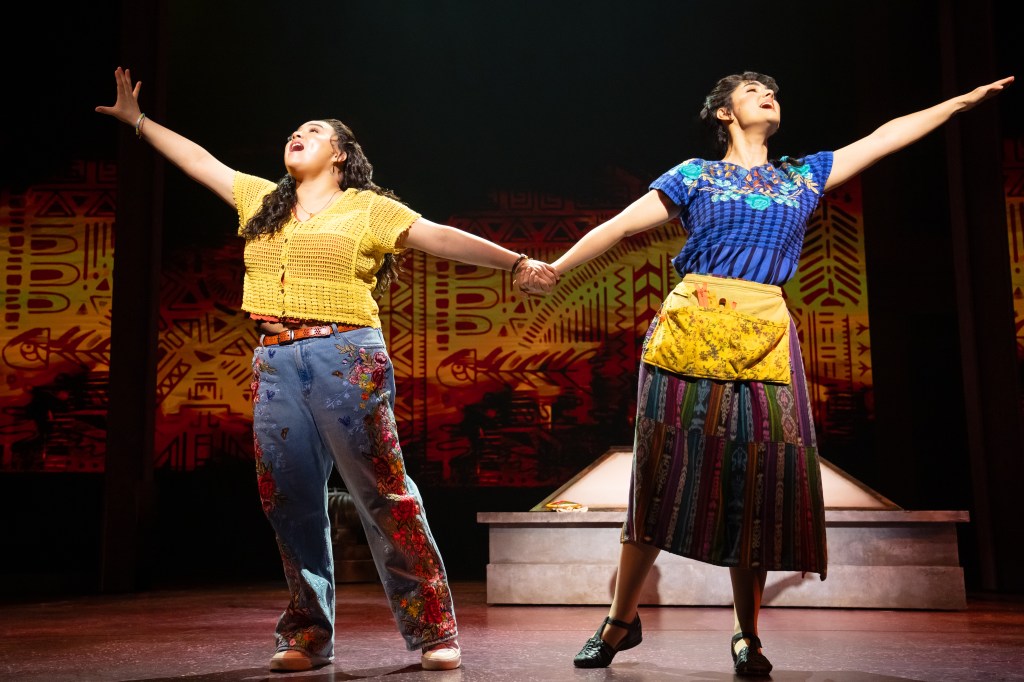
After the lights are on and the danger passes, the 19-year-old Itzel (Aline Mayagoitia), from Guatemala has an asthma attack. Ana takes her to the roof to “breathe,” with a change of scene and humor to recoup. There they sing “If I Were a Bird.” It’s an important turning point in the musical as we empathize with the women, understanding the horror migrants live with to follow their dreams.
Every day Estela goes to the shop is a day they might be raided. The risks they take to survive and try to carve out a place for their families is fraught with struggle and sacrifice, but they persist. Seeing this from the perspective of the undocumented, though it was during the time of Republican President Ronald Reagan is historic. Reagan offered Amnesty as a path to citizenship, the antithesis of what current MAGA politicos and the Trurmp administration offer.
Instead, the current administration kidnaps and trafficks. It isn’t deportation, for deportation mandates due process first. The administration kidnaps and trafficks for the sole purpose of getting white supremacist votes. They sadistically enjoy the cruelty and brutality. Thus, the kidnapping, etc. without due process “shows” machismo as the MAGAS embrace hatred and discrimination against those of color. The Trump administration even supports death threats against judges who give migrants constitutional due process. Was this person inaugurated as he said he accepted his “oath?”
The INS raid in the musical is truly horrific. A hush fell over the audience as they “got it.” I couldn’t help but think how much more duress the migrants and the dreamer generations have experienced from the 1990s to today. Not only is there no path, citizenship is near impossible unless “extra” means are used to open the doors, as they were with Elon Musk and his brother and Melania Trump. All came here illegally.
As if to underscore the cruelty that has been exponentially increased during the present administration, making it unrecognizable as Republican, the announcement at the end of Act I is terrifying. The sweet, funny Itzel has been picked up by INS. In Act II when Ana tries to help her after she finally locates Itzel in a bleak detention center (Arnulfo Maldonado’s set design), where she is receiving due process. INS is willing to turn Itzel over to Ana if she will be her sponsor. It’s an impossibility. Though Ana’s an American citizen, she can do nothing without jeopardizing her family and the other women. It’s a Catch-22 situation, so she says good bye, is insulted by the guard and leaves Itzel to the unsympathetic and demeaning prison keepers.
After this difficult scene, Carmen announces she is “eating for two,” and is “pregnant.” But the women tell her it is menopause. The scene uplifts with unifying details women can empathize with as they mourn getting older. The ensemble riffs and joke, sharing their names for their “monthly;” Carmen’s is “Andres.” “Adios Andres,” an upbeat song with riotous lyrics helps bring them together to move on because there is nothing else they can do for Itzel without jeopardizing themselves. As they work on finishing the order, it gives rise to a terrific bonding song, “Real Women Have Curves.”
During the titular song, the women disrobe in order to encourage one another to love themselves and dispel the body shaming plasticity of the white culture’s mores to be television-ready thin (BMI 18), young, stylish, non-ethnic. Hispanic cultures find it hard to assimilate into the fat is hateful value, though Carmine beats up and body shames Ana for needing to lose weight, which obviously is a form of emotional abuse. And as we learn with the humorous “Real Women Have Curves,” and “Adios Andres,” extra pounds never stopped the women from enjoying their sexuality. When Ana puts aside her mother’s criticism of her weight, she establishes a budding relationship with fellow journalism intern Henry in a riotous scene (“Doin’ It Anyway”).
However, the beauty of the song “Real Women Have Curves” is the ensemble’s assertion that they are the normal ones and not the white culture’s anorexic leaning, surgery-enhanced women like Mrs. Wright. One after the other, the dressmakers stand singing in their underwear. This symbolizes gaining their power to throw off fat shaming. The audience went wild and perhaps some in the balcony joined them by tearing off their blouses/t-shirts. All this to express that a majority of the social culture is tired of the sickness/anorexia inducing emphasis of a fascist appearance ideal, now stoked with diabetes drugs, a different kind of “shooting up” from other drugs that previously addicted and decreased appetite and speeded up metabolism (cocaine).
The ensemble knocks it into the next galaxy with this number, beautifully staged and choreographed by director Sergio Trujillo. Afterward, the women become even more energized and Ana gains the confidence to approach Henry and be intimate with him in a later scene.
Meanwhile, the stakes are raised. Estela receives a call from Mrs. Wright who is pulling the contract because they lost a worker to INS. When Wright arrives, she attempts to take the dresses and pay Estela nothing. How does Mrs. Wright know they lost a worker? Mrs. Wright implies she knows much about their community. In other words, she has spies, has exploited undocumented worker factories and turns the situation cruelly to her advantage.
The character of Mrs. Wright, is a subtle counterpoint to the other characters. We learn she was also a migrant, but assimilated and internalized some of the worst of American “values”-the love of money and the necessity of adopting arrogance and branding herself a success. As Wright explains, she turned her back on her roots, changed her appearance to fit in with white women’s fascist and oppressive “can’t be too rich or too thin” mantra. They eat little and are on a constant diet. We learn at the conclusion that Mrs. Wright married up. We don’t know if he is older and uglier with money, but we do know she is ferociously determined and not averse to exploiting the illegal status of Estela and her undocumented dressmakers.
As a character foil, Mrs. Wright provides Ana’s most excellent ridicule. Ana stands up to her, using her power as a journalist. She traps her into keeping the date and time for delivery when Wright attempted to cut it short and steal from the women because they had no leverage. Ana shows she has leverage and uses her brilliance to force Mrs. Wright to uphold her end of the contract in a very funny, satisfying scene.
Perhaps most importantly as an understated conflict there is the tension of what it means to be from a different culture and have to assimilate in order to “get along.” How much must one adapt to the culture to fulfill one’s dreams? How much must one retain of one’s identity to gain one’s power but not be “too ethnic” to be a success?
Real Women Have Curves is just sensational in revealing these complex issues with humor, grace and power. It shines a beacon on all of Americans as migrants, some of whom have stupidly “forgotten” their heritage. Indeed, today, some like Mrs. Wright become lost in the process of “shedding” their unwanted ethnic identity, even to the point of “color-correcting” their appearance. In their self-loathing, they uplift artificiality, fashioning themselves into an AI generated, surgery-enhanced image. In such a culture with such warped values and “amnesia,” is it any wonder that the current political administration with an abundance of former plastic-looking TV personalities, with little qualifications or merit, support migrants and some green card holders being brutalized, kidnapped, trafficked and stripped of their basic human rights?
Look for the layers in Real Women Have Curves. From technicals to performances there is perfection and coherence: set design (Maldonado), Natasha Katz’s lighting design, the sensational costume design (Wilberth Gonzalez & Paloma Young), John Shivers’ sound design, Hana S. Kim’s video design, and Krystal Balleza & Will Vicari’s hair, wig & makeup design. Their collaboration with Trujillo’s vision of Lisa Loomer and Nell Benjamin’s book and Joy Huerta and Benjamin Velez’ music and lyrics make this a must-see many times over.
Real Women Have Curves runs 2 hours 20 minutes with one intermission at the James Earl Jones Theater. realwomenhavecurvesbroadway.com.
‘Irishtown,’ a Rip-Roaring Farce Starring Kate Burton

Irishtown
In the hilarious, briskly paced Irishtown, written by Ciara Elizabeth Smyth, and directed for maximum laughs by Nicola Murphy Dubey, the audience is treated to the antics of the successful Dublin-based theatre company, Irishtown Plasyers, as they prepare for their upcoming Broadway opening. According to director Nicola Murphy Dubey, the play “deals with the commodification of culture, consent and the growing pains that come with change.”
Irishhtown is also a send up of theatre-making and how “political correctness” constrains it, as it satirizes the sexual relationships that occur without restraint, in spite of it. This LOL production twits itself and raises some vital questions about theater processes. Presented as a world premiere at Irish Repertory Theatre, Irishtown runs until May 25, 2025. Because it is that good, and a must-see, it should receive an extension.
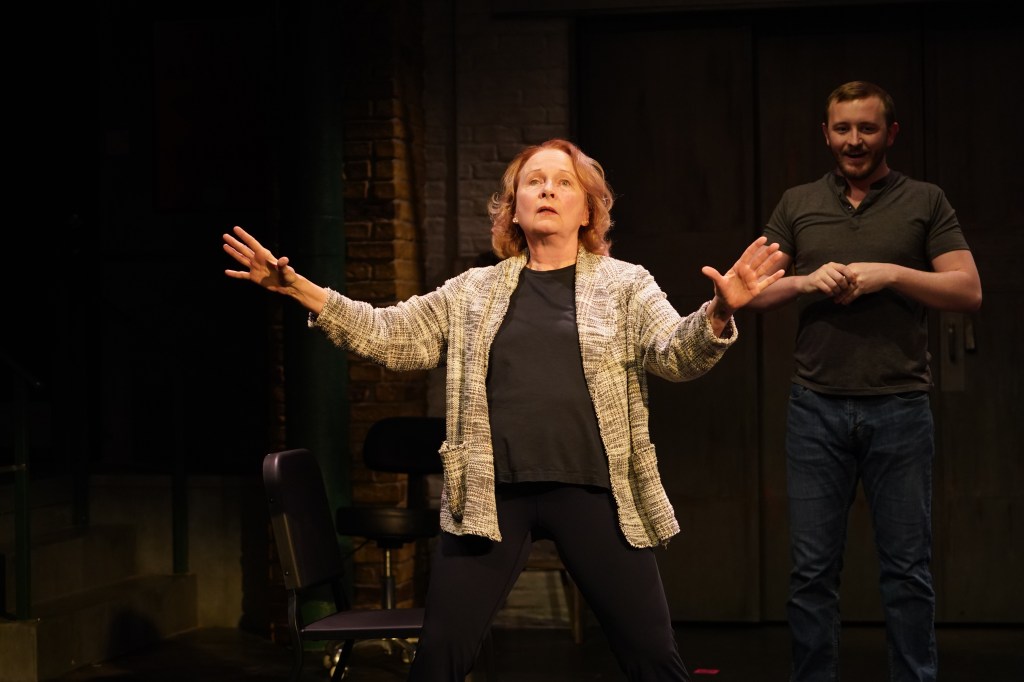
The luminous Kate Burton heads up the cast
Tony and Emmy-nominated Kate Burton heads up the cast as Constance. Burton is luminous and funny as the understated diva, who has years of experience and knows the inside gossip about the play’s director, Poppy (the excellent Angela Reed). Apparently, Poppy was banned from the Royal Shakespeare Company for untoward sexual behavior with actors. Burton, who is smashing throughout, has some of the funniest lines which she delivers in a spot-on, authentic, full throttle performance. She is particularly riotous when Constance takes umbrage with Poppy, who in one instance, addresses the cast as “lads,” trying to corral her actors to “be quiet” and return to the business of writing a play.
What? Since when do actors write their own play days before their New York City debut? Since they have no choice but to soldier on and just do it.

The Irishtown Players become upended by roiling undercurrents among the cast, the playwright, and director. Sexual liaisons have formed. Political correctness didn’t stop the nervous, stressed-out playwright Aisling (the versatile Brenda Meaney), from sexually partnering up with beautiful lead actress Síofra (the excellent Saoirse-Monica Jackson). We learn about this intrigue when Síofra guiltily defends her relationship with the playwright, bragging to Constance about her acting chops. As the actor with the most experience about how these “things” work in the industry, Constance ironically assures Síofra that she obviously is a good actress and was selected for that reason alone and not for her willingness to have an affair with Aisling.
Eventually, the truth clarifies and the situation worsens
Eventually, the whole truth clarifies. The rehearsals become prickly as the actors discuss whether Aisling’s play needs rewrites, something which Quin (the fine Kevin Oliver Lynch), encourages, especially after Aisling says the play’s setting is Hertfordshire. As the tensions increase between Quinn and Aisling over the incongruities of how an Irish play can take place in England, Constance stumbles upon another sexual intrigue when no one is supposed to be in the rehearsal room. Constance witnesses Síofra’s “acting chops,” as she lustily makes out with Poppy. This unwanted complication of Síofra cheating on Aisling eventually explodes into an imbroglio. To save face from Síofra’s betrayal and remove herself from the cast’s issues with the play’s questionable “Irishness,” Aisling quits.
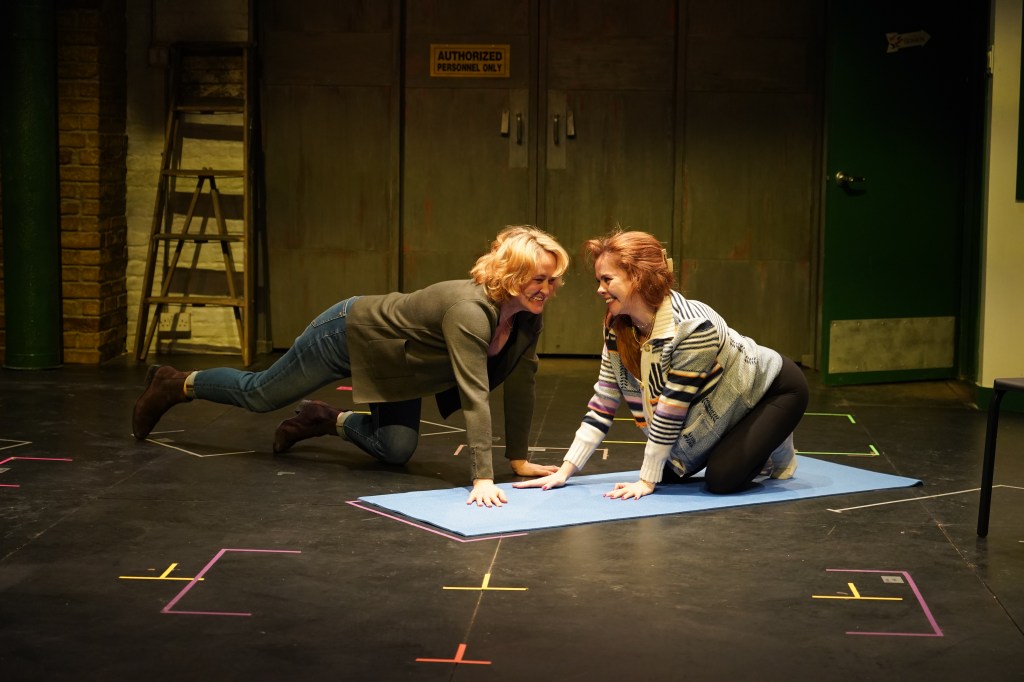
Enraged, the playwright tells Síofra to find other living arrangements. Then, she tells the cast and director she is pulling the play from the performance schedule. This is an acute problem because the producers expect the play to go on in two weeks. The company’s hotel accommodation has been arranged, and they are scheduled to leave on their flight to New York City in one week. They’re screwed. Aisling is not receptive to apologies.
What is in a typical Irish play: dead babies? incest? ghosts?
Ingeniously, the actors try to solve the problem of performing no play by writing their own. Meanwhile, Poppy answers phone calls from American producer McCabe (voice over by Roger Clark). Poppy cheerily strings along McCabe, affirming that Aisling’s play rehearsals are going well. Play? With “stream of consciousness” discussions and a white board to write down their ideas, they attempt to create a play to substitute for Aisling’s, a pure, Irish play, based on all the elements found in Irish plays from time immemorial to the present. As a playwright twitting herself about her own play, Smyth’s concept is riotous.
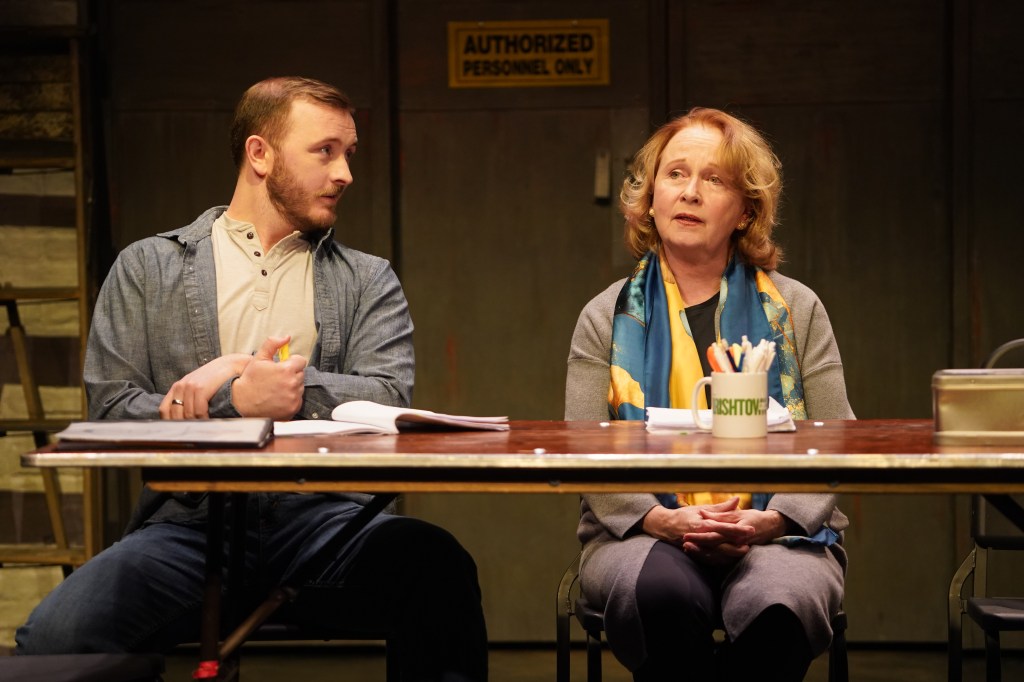
The actors discover writing an Irish play is easier said than done. They are not playwrights. Regardless of how exceptional a playwright may be, it’s impossible to write a winning play in two days. And there’s another conundrum. Typical Irish plays have no happy endings. Unfortunately, the producers like Aisling’s play because it has a happy ending. What to do?
Perfect Irish storylines
In some of the most hilarious dialogue and direction of the play, we enjoy how Constance, Síofra and Quin devise their “perfect Irish storylines,” beginning with initial stock characters and dialogue, adding costumes and props taken from the back room. Their three attempts allude to other plays they’ve done. One hysterical attempt uses the flour scene from Dancing at Lughnasa. Each attempt turns into funny scenes that are near parodies of moments in the plays referenced. However, they fail because in one particular aspect, their plots touch upon the subject of Aisling’s play. This could result in an accusation of plagiarism. But without a play, they will have to renege on the contract they signed, leaving them liable to refund the advance of $250,000.

As their problems augment, the wild-eyed Aisling returns to attempt violence and revenge. During the chaotic upheaval, a mystery becomes exposed that explains the antipathy and rivalry between Quin and Aisling. The revelation is ironic, and surprising with an exceptional twist.
Irishtown is not to be missed
Irishtown is a breath of fresh air with laughs galore. It reveals the other side of theater, and shows how producing original, new work is “darn difficult,” especially when commercial risks must be borne with a grin and a grimace. As director Nicola Murphy Dubey suggests, “Creative processes can be fragile spaces.” With humor the playwright champions this concept throughout her funny, dark, ironic comedy that also is profound.
Kudos to the cracker-jack ensemble work of the actors. Praise goes to the creatives Colm McNally (scenic & lighting design), Orla Long (costume design), Caroline Eng (sound design).
Irishtown runs 90 minutes with no intermission at Irish Repertory Theatre, 132 West 22nd St. It closes May 25, 2025. https://irishrep.org/tickets/
‘Boop! The Musical’ is a Dazzling Spectacle. I’m a Fan!
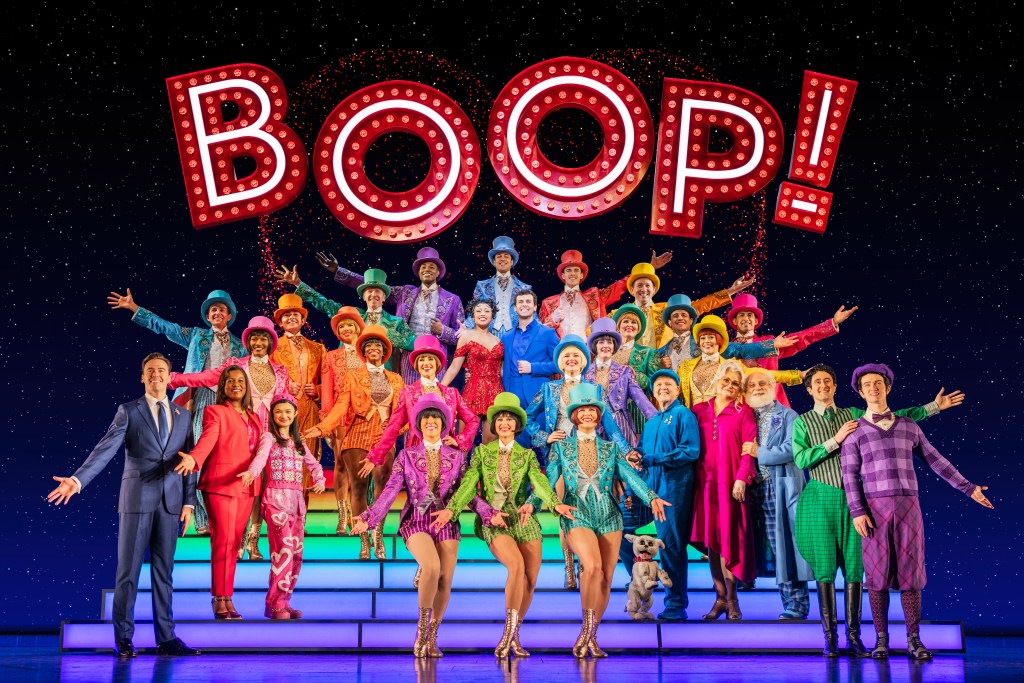
Boop! The Musical
If you need an uplift and who doesn’t listening to the news these days, Boop! The Musical is your vehicle of delight. Currently running at the Broadhurst Theatre, Boop! is pure joyous spectacle, a Broadway extravaganza with clever twists, and a wink to the best of the past, and a thematic nod to the present.
The cast sings and dances to a variety of song genres (from jazz, to pop, to blues), and Jerry Mitchell shows his razzle dazzle choreography and staging with abandon. There is just too much to praise. The glittering kick line is bar none. The nine principals are spot on with their humorous portrayals and exquisite vocals. Boop! is a welcome send up of the fanciful, historical cartooning of yesteryear, in a mesmerizing update that shines talented brilliance at every artistic level of this blazing production
What’s not to love if you enjoy an adorable story and salient themes reinforcing “girl power,” with the additional intention to pay homage to old Hollywood, and the Jazz-age, and depression era cartoons of Fleischer Studios? Importantly, the production is a throwback to old-fashioned Broadway musicals, where most songs are memorable with a beginning, middle and end. In its song variety and hot, superlatively executed dance numbers Boop! delivers.
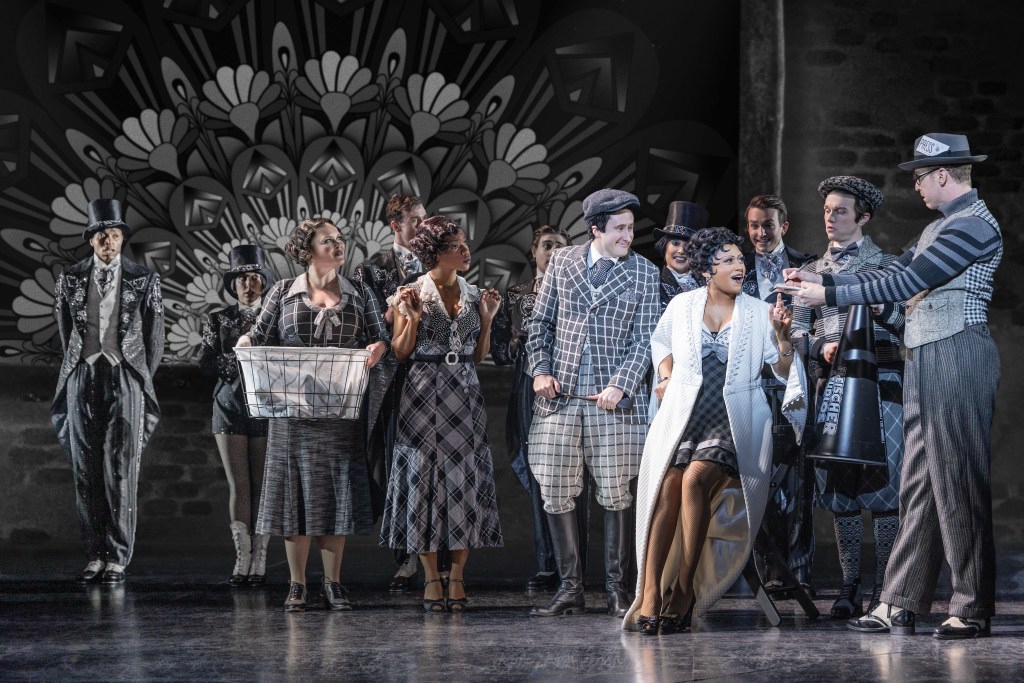
Directed and choreographed by Tony Award®–winner Jerry Mitchell (Kinky Boots), Boop! features music by 16-time Grammy®-winning composer David Foster and lyrics by Tony-nominated Susan Birkenhead.
The cartoony, “tongue-in-cheek” book by Bob Martin (The Prom), brings to life the iconic, historic cartoon character and current meme Betty Boop (the sensational Jasmine Amy Rogers in her Broadway debut). Betty has been a symbol of charm and empowerment for almost a century, and Rogers channels her believably to the minutest gesture, giggle and batting of her eye lashes. Importantly, Betty has an identifiable problem to solve in her personal life. As the reluctant super-star, she eventually must choose between two worlds, fiction and reality. Mustn’t we all? The show is incredibly, ironically, thematically current.
Martin presents the thrust of Boop! as fun, family fare. Going deeper as one should, the irony in Boop! as a farce, emphasizes that this is a cartoon within a cartoon, with the simplicity of a fairy-tale.
Thus, the plot develops as follows. Betty works so very hard for Fleischer Studios, portraying women’s greatness in every job imaginable (“A Little Versatility”), which actually is maverick considering her original 1930s context. And there are vicissitudes and annoyances: the publicity grind and the slimy men who harass her for her “favors and charms.” Exhausted by overwork and untoward publicity, Betty has a moment of self-reflection, something more of us need to practice. She realizes she needs a vacation from her life as a cute, celebrity cartoon with no “real” identity to discover for herself. Above all, she wishes her life was less celebrated (“Ordinary Day), so a respite from cartoonland in a venue where she won’t be recognized and judged would be just fine.
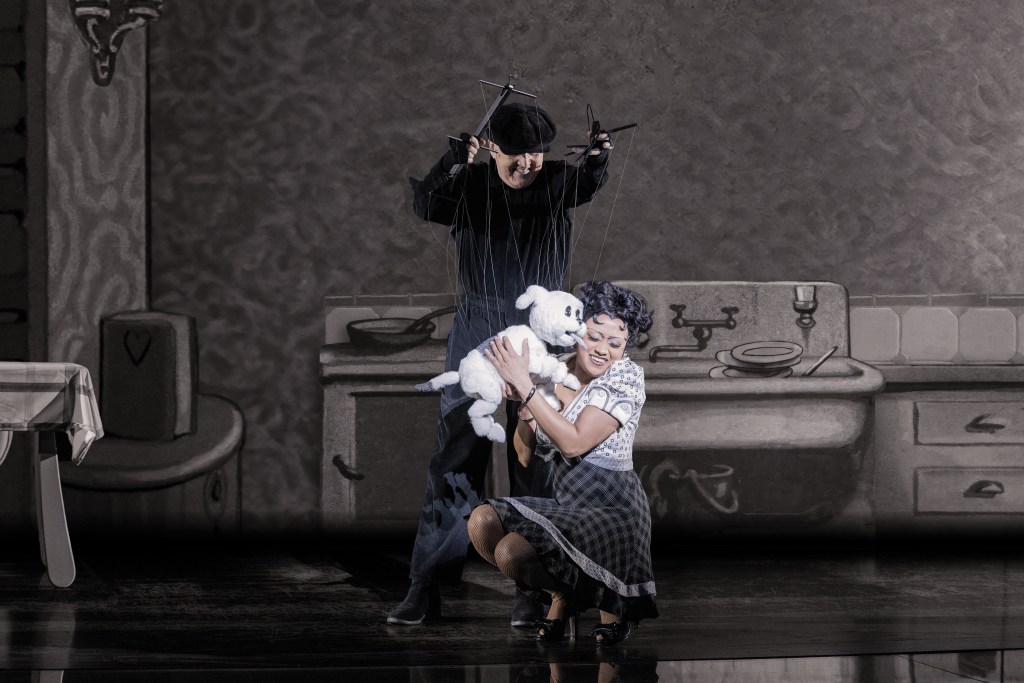
Grampy, (the lovable, powerfully voice Stephen DeRosa), her guardian and roommate, reminds her the current “world” she lives in can’t qualify because she’s a globally recognized star. However, he does suggest a tenable place to go since he went there years before, fell in love, then left. Grampy tells her reality is the place for a grand vacation. It’s much more adventurous, unscripted and serendipitous than cartoonland. (I love the irony.) Of course, this is a family show with no untoward or frightening elements like ICE (Triple Canopy) agents kidnapping folks. So when the winning, charismatic Betty lands in the present at the Javitz Center’s funscape Comic Con, having been jettisoned there by Grampy’s DIY time machine, all works out swimmingly.
In this magical atmosphere and vibrant New York City fantasia, Betty fits right in with a host of rainbow-hued fans dressed as their favorite characters from comic books. Though she is recognizable, she tries to hide her cartoon identity. Nevertheless, she is gobsmacked by reality’s wild beauty (“Color”). At Comic Con, she meets her destiny which becomes tied up with two individuals. First, is her future love interest, dreamy, blue-eyed, politically correct to a fault Dwayne (the boyish Ainsley Melham who sports an amazing voice). Along with Dwayne, she befriends the cute, clever Trisha, a forever Boop fan, who she can’t fool when she tells Tricia her name is Betsy. As Tricia, Angelica Hale is the perfect sidekick teen with an exceptional voice.

Meanwhile, Grampy discovers Betty is gone when her bosses drop by looking for her. He divines she left for reality. The key conflict, of course, is to get her to return (“Get Her Back”). But to do that Grampy must take Betty’s cutie, white dog Pudgy, a marionette operated by the wonderful puppeteer Phillip Huber. The imperative is to jump in his time machine, set it for reality and find her. With energetic multi-tasking Grampy will locate her without GPS, while reuniting with his former love Valentina (the stalwart Faith Prince), for comfort and companionship during his quest. The quaint Grampy hero, love story, sub-plot with astrophysicist Valentina gives an extra pop of reality to the fantastic.
As Betty goes home with Tricia to stay, she meets Tricia’s family, her brother, the blue-eyed Dwayne, and her Aunt Carol (the terrific Anastacia McCleskey). She discovers that Dwayne’s love of jazz (“I Speak Jazz”), dovetails with her strengths singing and dancing. Finally feeling comfortable, Betty confides her real identity to Tricia, who breaks through the cartoon character’s confusion about herself with the upbeat “Portrait of Betty.”
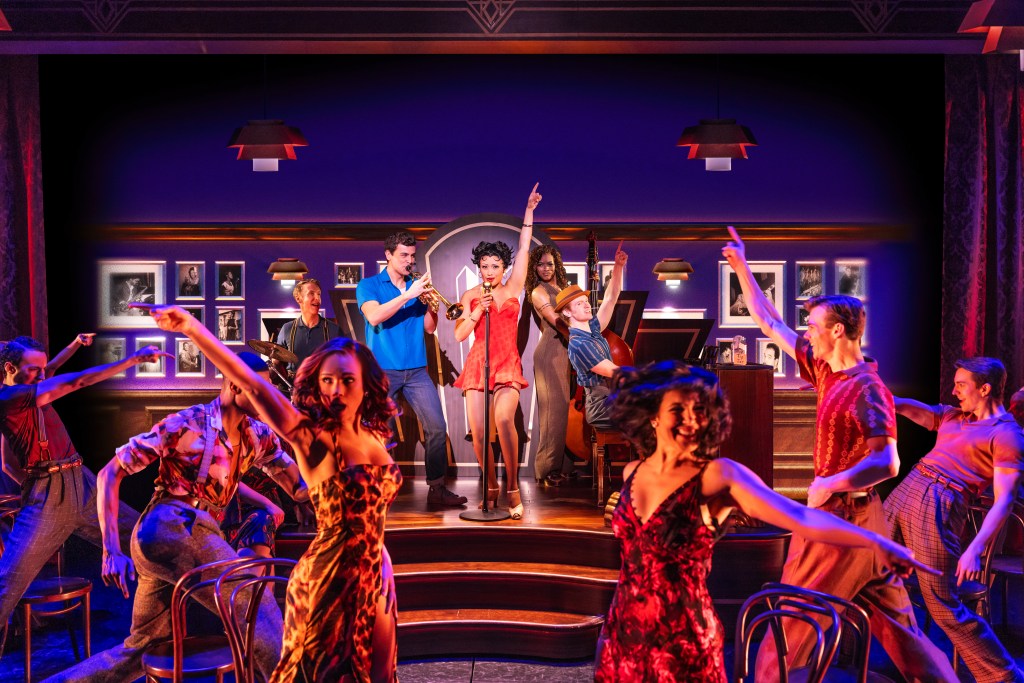
Betty’s adventures in reality continue when Tricia and Dwayne take her on a tour of the city and to Times Square, where the dancers join them for the continuous party that goes on there in a great number, “My New York.” Whether in cartoonland or New York City’s reality, Betty is light, laughter and healing. In an interesting counterpoint, Dwayne sings about her in realityland in contrast with Betty’s studio bosses who sing about missing her (“Sunlight”). Thus, the conflict about which world she will select to live in intensifies, for both realms will certainly draw her with those who give her love and appreciation.
If Boop! is too ridiculously fantastic and purposeless for some, they are missing the point of depression-era entertainment and entertainment today. Even in the most despairing of places and times, the imagination takes flight and the fictional fantastic gets one though the horrors that life can bring.
Though the underbelly of darkness is rarely seen in the production, it does shows up. And the enemy is a modern one. The dark villain comes in the form of a grinning, perfectly coiffed, narcissistic politician, Raymond Demarest, who is running for the office of New York City mayor. Erich Bergen is terrific in a hysterical, nuanced, full-of-himself portrayal. The corrupt, money-hungry, and exploitive Demarest is offset by his hard-working, clever, organized campaign manager, Tricia’s Aunt Carol. Carol efficiently, competently runs his campaign and life. And eventually, her efforts pay off where Demarest’s dereliction and corruption receive its due reward.

As Act One sets forth the problem. Act Two answers it for Betty, her friends and family. Boop! even justly disposes of the villain in the process of ironing out all difficulties. Would the same occur in “real” real life USA with a certain criminal felon, as happens to Demarest. The riotous Bergen makes the most of the villain’s just comeuppance, intuiting the audience’s real wishes as they watch him tripping away, all smiles in his orange jump suit. Just great!
The shimmery white and grey-toned two-dimensional Boop world is cleverly created by David Rockwell to represent Boop’s artificial universe in a snazzy scenic design that contrasts perfectly with the real world of living color. Rockwell’s suggested black, and white, multi-patterned lines and squiggly designs reflect the Boop cartoon. Other cartoon characters peek out from the curtain following the same design. Betty’s materialization in the beautifully eye-popping, gloriously colorful, real world of New York City with the accompanying song and dance numbers seal the deal.
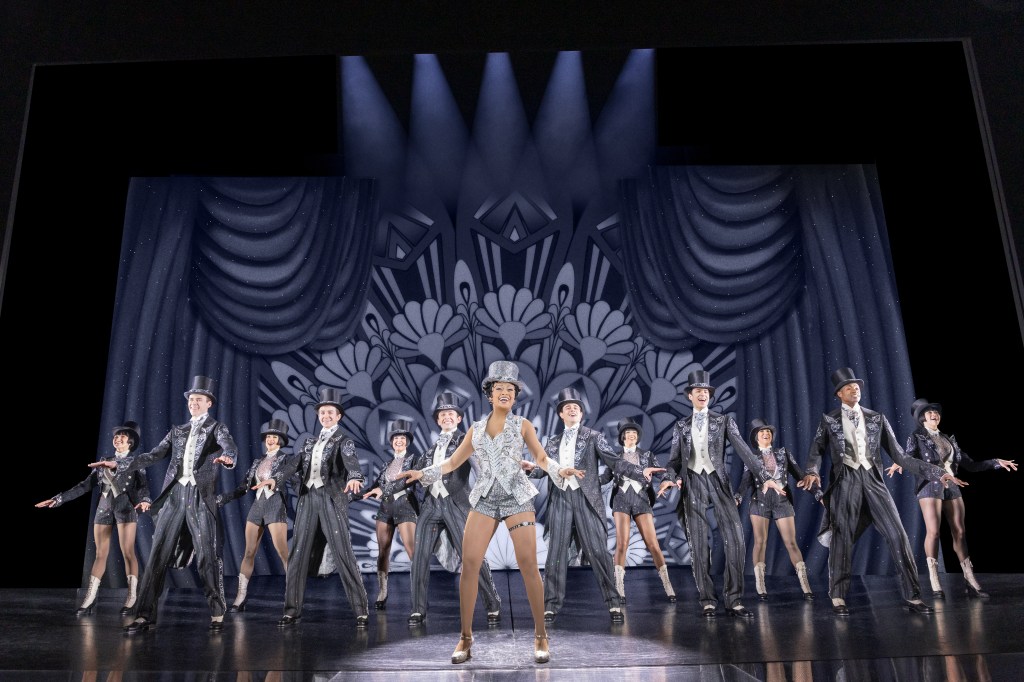
Whether in cartoonland or reality, the costumes by Gregg Barnes are ingenious and gorgeously appropriate. The costume design in a set of two-sided costumes which reveal the contrast of the alternating grey vs. color worlds, shows maximum creative brilliance. The same must be said for the other designers whose collaborative efforts contribute to the show’s gobsmacking effect. These include Philip S. Rosenberg (lighting design), Gareth Owen (sound design), Finn Ross (projection design), Sabana Majeed (hair & wig design), Michael Clifton (make-up design), Skylar Fox (illusions design).
Mitchell and the creatives have outdone themselves. “Professional” is a partially accurate descriptor. Amazing, phenomenal, superlative, genius seems more INCLUSIVE and PRECISE. In every aspect the designs cohere with the director’s vision. Above all Daryl Waters’ music supervision (with additional arrangements), is integral to making this extraordinary production what it is. And the cast? Beyond!
See Boop! two or three times to escape for the purpose of rejuvenation. Then go right back out there and work, march, resist, protest the current villainy, taking the wisdom manifest in this production, having learned persistence from a silly, ridiculous, cartoon character with a century of staying power.
Boop! the Musical runs 2 hours 30 minutes with one intermission at the Broadhurst Theatre (235 West 44th Street). https://boopthemusical.com/?gad_source=1
‘Tammy Faye,’ Starring Olivier-winner Katie Brayben in a Thematically Charged Musical

Tammy Faye
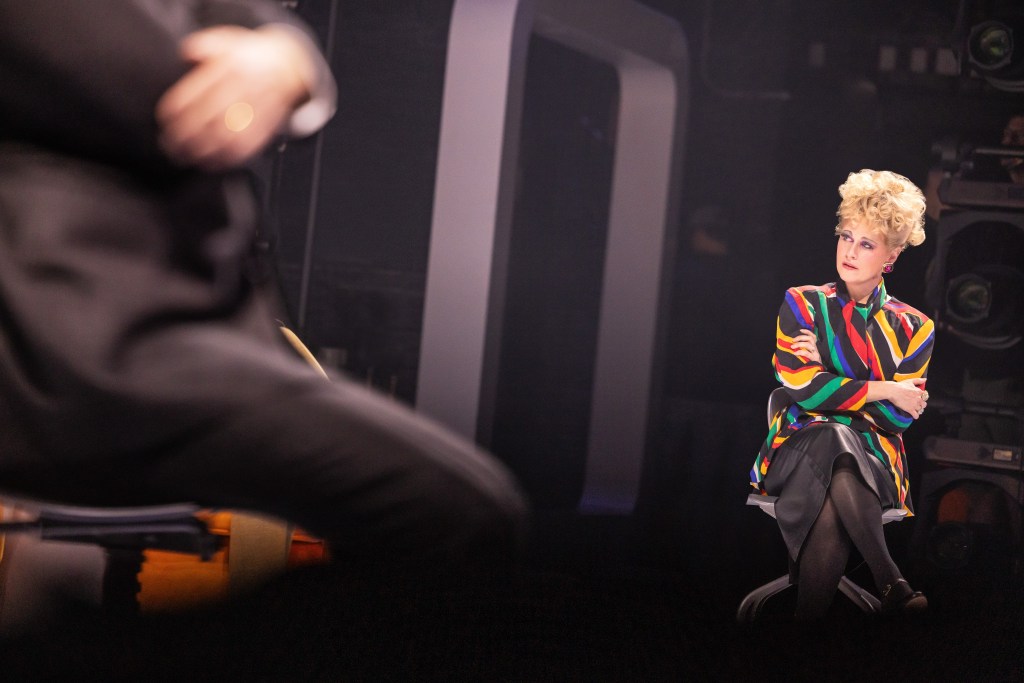
Tammy Faye, with music by Elton John, lyrics by Jake Shears and book by James Graham stars theater heavyweights Katie Brayben, Christian Borle and Michael Cerveris. All of them are letter perfect in the roles of Tammy Faye Bakker, Jim Bakker and Jerry Falwell. Considering that the show is about the rise and fall of the hugely successful PTL Christian network headed up by televangelists Tammy Faye Bakker and Jim Bakker, the production’s chronicle of a complex period in America’s sociopolitical and religious history is ambitious. Currently at the newly renovated Palace Theatre, Tammy Faye runs until December 8th.
For some, the production is hard to swallow. This is unfortunate because its themes are vitally connected to our country. Also, it is a satiric, entertaining new musical whose theatricality coheres in director Rupert Goold’s vision shepherding a fine ensemble and creative technical team. Because I have a familiarity with the Christian evangelical church and, in fact, went to the same church that Jessica Hahn went to during the PTL scandal, and knew and spoke to her, I have a different perspective. Arguably, I may be biased in favor of the musical. That must be considered when reading this review.
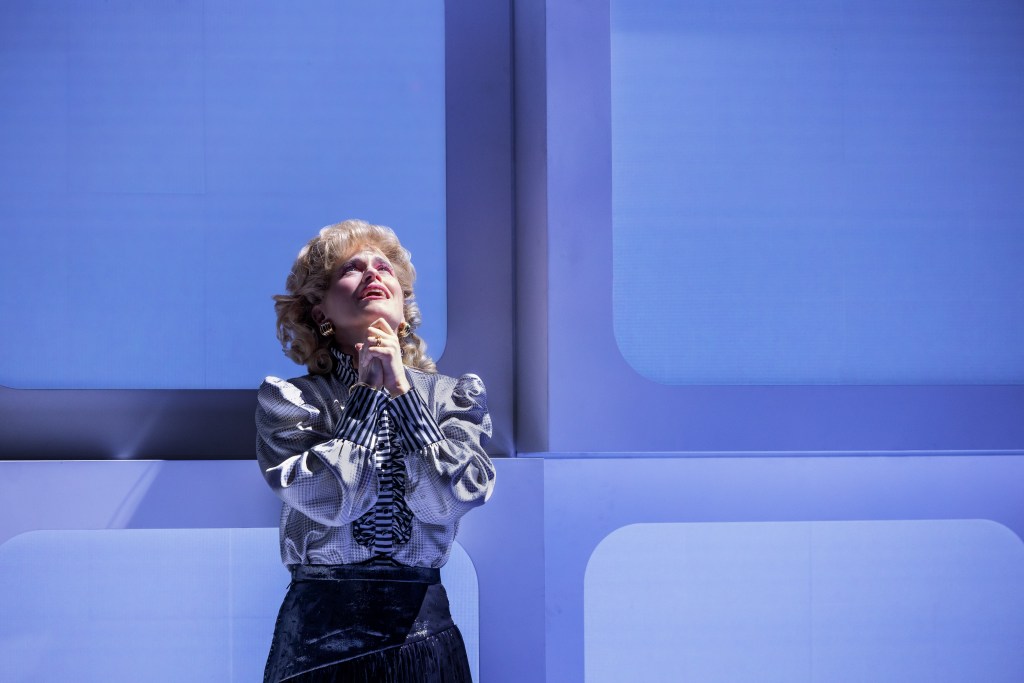
With choreography by Lynne Page and Tom Deering’s music supervision, arrangements and additional music, Tammy Faye presents a fascinating picture of individuals who currently are not held in high esteem. Only one comes out on top as James Graham’s book characterizes her and as the phenomenal voice and acting chops of Katie Brayben performs her. Singing from a core of emotion and heart, illustrating Tammy Faye’s trials of faith, Brayben belts out numbers that overshadow the real Tammy Faye’s voice. These high-points in Tammy Faye’s emotional journey include “Empty Hands,” “In My Prime Time,” and “If You Came to See Me Cry.”

Katie Brayben gives a bravura performance
During these dynamic and compelling songs, Brayben’s Tammy Faye reveals the depth and impact of her betrayal by husband Jim Bakker, as she attempts to find a way forward for and by herself. Not to be underestimated, Tammy Faye is a maverick among the Christian women of the church, a portrayal that we see time and again as she speaks out, despite Christian pastors trying to shut her up. Sharing her opinion at a conference with Billy Graham (Mark Evans), in a beginning flashback of “how it all began,” we note her courage at a time when women took a back seat to any form of leadership. Billy Graham encourages her as the new generation of spiritual warriors in front of a patriarchal, oppressive, conservative group of pastors.
From then on we see her emerge despite being dismissed by the pastors who become the hypocritical villains of Tammy Faye and who sadly lead the way for the massive hypocrisy present in the white supremacist leaning evangelical church today. The Falwell types and white supremacist pastors turn a blind eye to the bullying hatreds and criminality of the MAGA movement they undergird in supporting Donald Trump. Trump’s controversial presidency is in his violating the tenets of Christianity and patriotism. Indeed, he is an alleged pedophile consorting with friend Jeffrey Epstein. He is Putin’s asset who has undermined our election processes twice, and most probably cheated and defrauded the American voter to elicit a “win,” in 2024 (see the Mark Thompson Show on YouTube). He adheres to Putin’s guidance regarding NATO, and on a personal note to emphasize his “godliness,” he’s a lying adulterer and admitted sexual predator (the Hollywood access tape), many times over, in cover ups much worse than Jim Bakker ever committed.
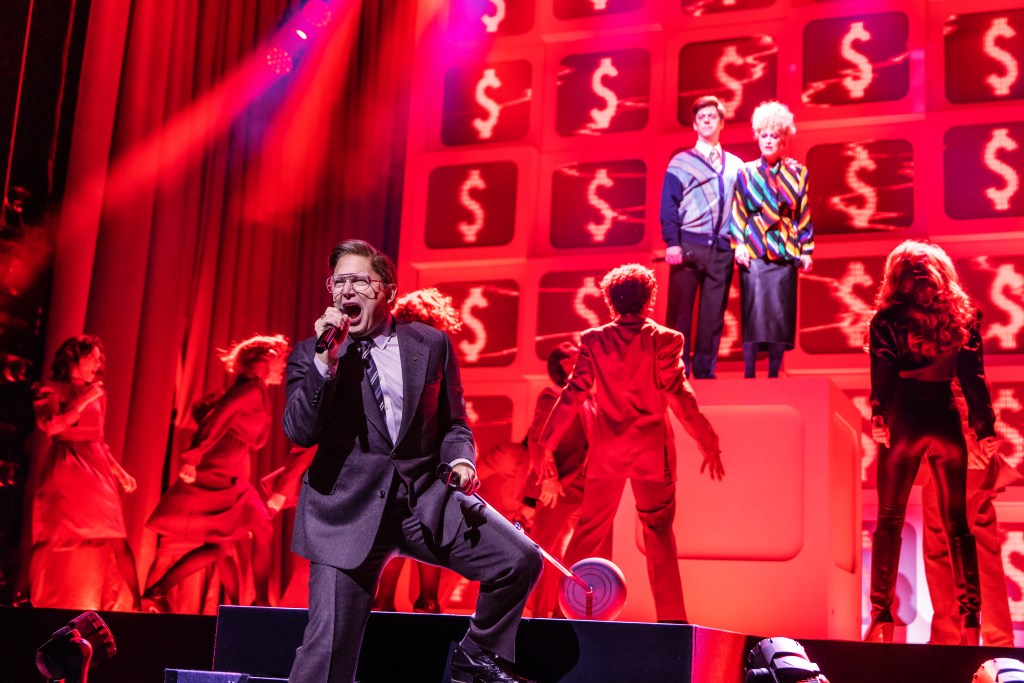
Tammy Faye reveals how we got to the current politics of evangelism
Importantly, for those who would understand how the US “got here” with the rise of evangelism and a brand of political Christianity that belies the true tenets of Jesus Christ’s sermon on the mount, and “Love thy neighbor as thyself,” Tammy Faye gives a crash course in hypocritical Christianity that is right out of St. Paul’s letters to the hypocritical church in Corinthians I and II. It’s interesting to note that over two thousand years later, nothing changes much. Judgment, criticism and condemnation are alive in the human heart and in venues that are supposed to be uplifting the opposite and preaching Christ’s message of love.
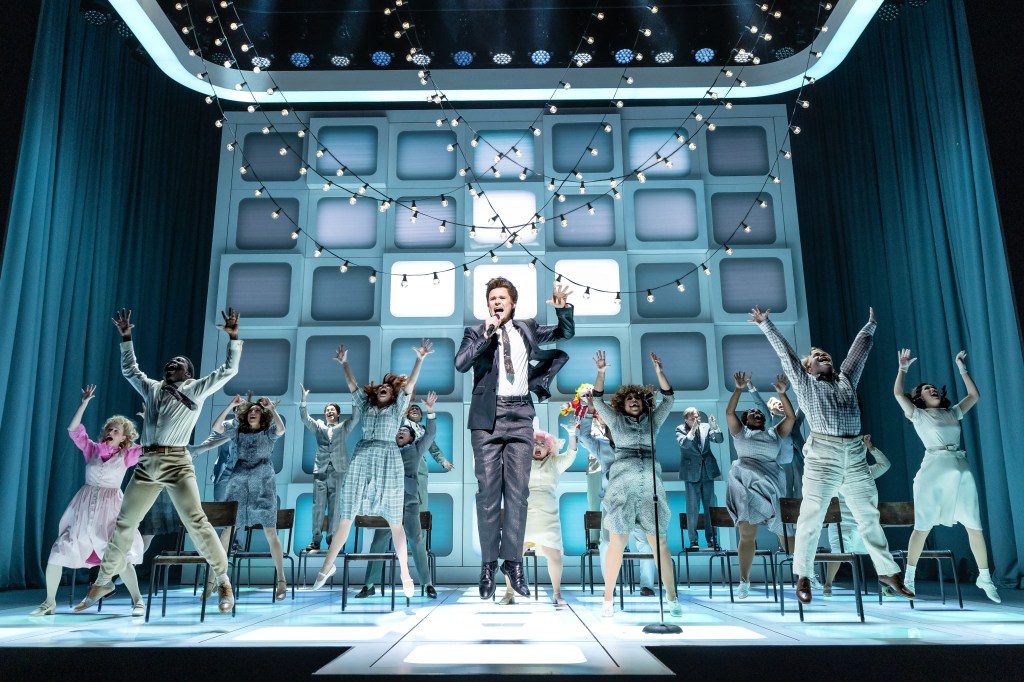
Goold stages the production with scenic designer Bunny Christie’s “Hollywood Square” back screen and other projections (video design by Finn Ross), to emphasize the importance of TV to the rise of global evangelism in the 1970s to the present. When the PTL live program is not being taped with dancers and singers, other scenes reflect the importance of satellite TV in the square/screen motif in which appear the various players. Always present as a backdrop are the TV screens reflected in the grid of boxes strikingly lit by Neil Austin that represent what obsesses the actions of the preachers, the Bakkers and their employees (“Satellite of God”). The electric church was televised globally via satellite and its reach was and is expansive, though the screens became smaller on phones after streaming WiFi.
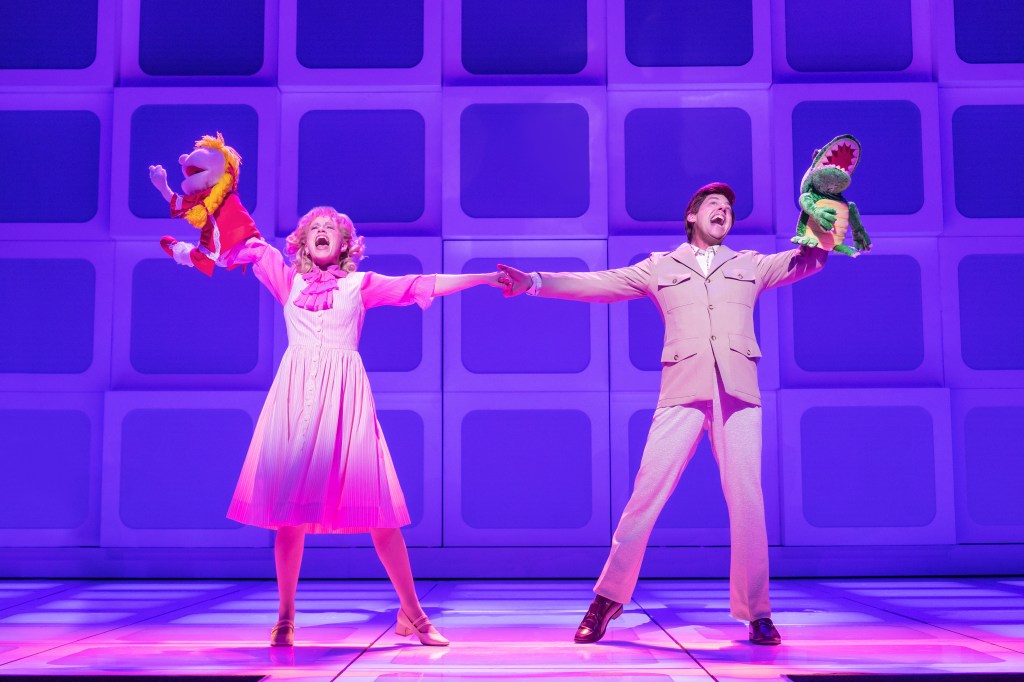
In its symbolism and its wayward themes of church leaders and politicians making damaging and unconstitutional bedfellows, Tammy Faye does its job perfectly, thanks to its creatives. And for that it has received its due misplaced disgust at a time in our nation when Americans have no more patience for hypocrites, scammers and thieves, especially those who profess “Christianity” and lie, cheat, steal, condemn, oppress, restrict, torment and insult as their brand of fun and sanctimony. Hello, Speaker Mike Johnson, Jim Jordan and JD Vance. Nevertheless, Tammy Faye is a vital musical of the time and should be seen for Elton John’s striking music, its irony in how the hypocrites dance around their own lies, and its themes which are more current than ever.
Graham’s book elucidates a version of PTL worthy of note
Book writer James Graham elucidates a version of what happened with PTL that is worthy of note. Laying the blame on the inability of the Christian Church to be united under the first two commandments that Christ preached (love God, love your neighbor as yourself), Graham reveals how Tammy Faye tried to bring disparate groups together with love, but failed. Additionally, to that point, if Tammy Faye had been part of the back room financial arrangements, the fraudulent situation with Heritage Village might not have gotten completely out of hand (“God’s House/Heritage USA”). Indeed, Heritage Village was Jim Bakker’s idea, and clearly, its idea development was mishandled and mismanaged.
Finally, we note that Jim Bakker, whose feckless leadership causes their collapse when he relinquishes PTL and the TV network to Jerry Falwell. With smiling duplicity and treachery, Falwell promises to help the Bakkers get on their feet again and pay their expenses. Tammy Faye warns Jim not to listen to Falwell whom she has always distrusted and deemed a self-serving, condemnatory, hypocritical preacher of hate. Tammy Faye’s unheeded warning proves correct. With his lies, misinformation and mischaracterizations, Falwell upends any goodness the Bakkers accomplish, defames them publicly, and kicks them out of the Christian fellowship for the “good” of the conservative church and himself.
The difference between preachers and preachers
The book underscores the difference between Tammy Faye and Jim, and the other preachers from conservative churches. Falwell (a dynamic Cerveris), Jimmy Swaggart (Ian Lassiter), Pat Robertson (Andy Taylor) and Marvin Gorman (Max Gordon Moore), demean Tammy Faye and Jim Bakker’s way of bringing people to the Gospel. They tolerate them, believing they will fail and are surprised and shocked at their success. Falwell’s massive ego can’t bear to see another preacher in his sphere of influence doing better than he. Not only does Falwell compete for viewership, he goes on their program and insults them attempting to send a message to church goers that they are not of God.
The turning point comes at the prodding of Ted Turner (Andy Taylor), who is concerned about PTL’s finances plummeting because of overspending. Part of the reason Turner suggests the program needs an uplift is because the love and charisma in Tammy and Jim’s relationship has cooled and viewers sense something is wrong. Even friends Paul Crouch (Nick Bailey) and Jan Crouch (Allison Guinn) warn them. At this point in time Tammy has learned of Jim’s infidelity with Jessica Hahn (Alana Pollard), and though he repeatedly asks for forgiveness, Tammy finds it difficult. Increasingly, she relies on prescription pain medicine to anesthetize herself which staff preacher, John Fletcher (Raymond J. Lee), sometimes gives her.
When Tammy strikes out on her own without Jim to carry a show, she draws greater audience viewership which Ted Turner praises. In a heartfelt satellite interview, she speaks with gay pastor Steve Pieters (Charl Brown), about having AIDS. Her public action is courageous. She hugs Steve and accepts him with love into Christ’s fellowship, an anathema to conservative Christianity which condemns gays and believes AIDS is God’s punishment for their sinful homosexuality.
A meeting sealing the fate of PTL
Falwell and the other ministers have a confidential meeting and Falwell even phones President Ronald Reagan (Ian Lassiter), who never acknowledged or worked to stem the AIDS crisis, despite having a gay son and working with gays when he was an actor. Of course, Reagan’s hypocrisy and need for the evangelical church to endorse him is why he speaks to Falwell. In another inflection point, we see the division between church and state morph into an unholy matrimony of religious politicos washing each other’s hands despite the historically traditional separation between church and state.
Thus, Reagan’s public uplifting of the evangelical community via Falwell and others provokes a sea change in the sociopolitical and cultural direction of the nation. The growing intrusion of religion into politics becomes the foundation of constitutional human rights’ reversals seen today, which are particularly uplifted in MAGA states.
Reagan and conservative evangelism, for the voting block-merging church and state
With Reagan in their corner, conservative religious leadership agrees that PTL is moving in an unGodly direction. Falwell and the other preachers see the Bakkers are headed for disaster and they give them a push when the opportunity arises. For example, they get prominent PTL member John Fletcher to turn on Bakker. He sets up Bakker with Hahn, then leaks information when Falwell threatens to expose him of his “infidelities” with gay men if he doesn’t play ball. Falwell also tips off the Charlotte Observer whose reporter Charles Shepard (Mark Evans), investigates the financial arrangements of PTL and finds them to be indebted and insolvent. The situation boils over in “Don’t Let There Be Light.” Tammy, Jim and Jerry recognize their shameful actions and pray that they will not be exposed.
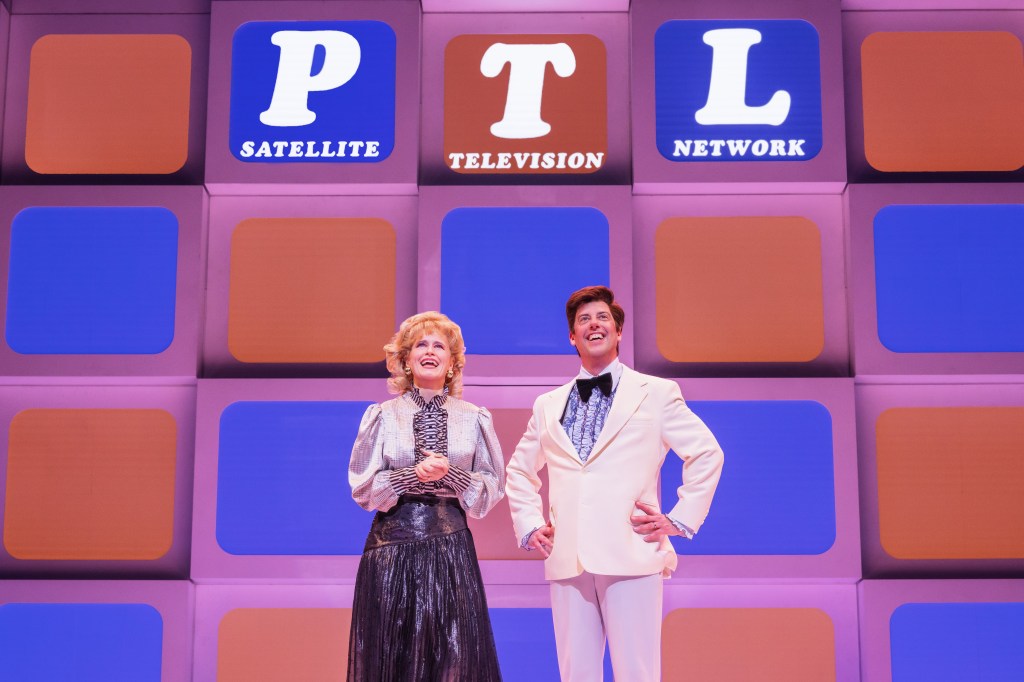
Of course, they are all exposed and vilified by the press and other church leaders. One humorous scene involves Pope John Paul II (Andy Taylor), Mormon leader (Thomas S. Monson), and Archbishop of Canterbury (Ian Lassiter), staged in window squares raised to a higher level above the stage ironically. From their lofty positions, they comment on the troubles of the “electric church” and the Bakkers. Meanwhile, elements of the same unloving hypocrisy are present in their congregations. The pederasty, pedophilia and horrific abuse of the Catholic church is yet to be revealed by the Boston Globe and is still being revealed in the Irish Madeline Laundries and Mother and Baby Homes. Certainly, the church memberships fall off in the Mormon Church and the Church of England. Congregants loathe the leaderships’ hypocrisy.
Acting hate not love
Falwell, Robertson, et. al., end up backbiting each other with hate and jealously. A desperate Bakker, beyond Tammy’s counsel, gives the PTL reigns to Falwell after Tammy learns Jim paid hush money to Jessica Hahn. The scandal widens the more the Bakkers give interviews to defend their positions. In Falwell’s hands, PTL goes bankrupt and is closed down. Tammy divorces Jim and other pastors’ infidelities are exposed as Bakker ends up in jail (“Look How Far We’ve Fallen”). The biased judge ridiculously throws the book at Bakker when murderers are even given lighter sentences.
Eventually, the conservative hypocritical Falwell and Pat Robertson follow in Reagan’s footsteps and run for the presidency. Indeed, their great piety is a sham as they attempt to vault their notoriety to the White House and reap untold rewards, but fail. Unlike Donald Trump who has defrauded his way there again with the treasonous help of various conservative think tanks, True the Vote’s voter challenges in Georgia, voter suppression in swing states, Elon Musk and Putin, Falwell and Robertson’s reputations preceded them and they were rejected as candidates.
Nevertheless, the evangelical Christian movement had an established foothold in politics. The country then wasn’t ready for a conservative, religious president. Now, the MAGAS, building on white supremacists and overturning Reagan’s legacy, have evolved to the point that with Putin’s foreign interference paying influencers to promote misinformation, Trump has become their acceptable, religious MAGA god/autocrat. Despite what Trump/MAGAS/Putin and a complicit press would have voters and the world believe that Trump received “great” voting support, over half the voting public of both parties doesn’t agree with MAGA/Trump’s religious, conservative, oppressive and autocratically unconstitutional mandates. Most probably, if there had been a recount, the results would have revealed otherwise. Better to let sleeping MAGAS, Trump, Putin and others lie.
Favorable reviews in London, bad timing in Manhattan
The show, which originated two years ago at the Almeida Theater in London, received favorable reviews. Opening here at the time it did proved unfortunate because of its subject, a conservative evangelical church, now associated with Donald Trump: a twice impeached, three times indicted, one time convicted criminal, who attempted to overthrow the 2020 election with some of their help via militias and the support of Clarence Thomas’ wife Ginni Thomas.
From Reagan and Falwell and PTL televangelism to the racist, xenophobic, misogynist, MAGA Christianity of today, the conservative brand of evangelicalism has blossomed into “acceptable” white supremacy, oppression, hellfire condemnation and tyranny toward other religions and people of color. Is there any wonder that Tammy Faye, opening around the 2024 election, is a brutal and noisome reminder of what lies, misinformation and money do for those in power, who stir up hate, work unconstitutionally and divide even their own believers from patriotism and the love of God?
Important takeaways
Positive takeaways are the show’s performances which are sterling, especially the leads. The technical team under Goold’s guidance manifests his vision for the production. The book glosses over a complicated series of events (one of which never shows the other side of Jessica Hahn’s professed “virginal innocence,” nor the role her Long Island pastor played in strong-arming the PTL board to pay her hush money).
However, the production does manage to portray one individual, regardless of her psychic flaws, who preached love instead of messages of hate and condemnation (“See you in Heaven”). Tammy Faye did this at a time when standing up for individuals with AIDS was anathema to the general public, let alone Christians. Hers was a courageous, heartfelt stance as an independent Christian church woman. who, alone, went out on a limb to mirror God’s love and show how Christians were supposed to support and help one another.
I heartily recommend this production, especially for those who are interested to understand how evangelism became involved with our politics, despite the supposed separation of church and state. Tammy Faye runs at the Palace Theatre with one intermission until December 8th. https://tammyfayebway.com/?gad_source=1 It’s a shame it is closing so soon.
‘Sunset Blvd.’ A Thrilling, Edgy, Mega Spectacle, Starring Nicole Scherzinger

If you have seen A Doll’s House with Jessica Chastain, Cyrano de Bergerac with James McAvoy or Betrayal with Tom Hiddleston, you know that director Jamie Lloyd’s dramatic approach reimagining the classics is to present an unencumbered stage and few or no props. The reason is paramount. He focuses his vision on the actors’ characters, and their steely, maverick interpretation of the playwright’s dialogue. The actors and dialogue are the theatricality of the drama. Why include extraneous distractions? Using this elusively spare almost spiritual approach which is archetypal and happens in what appears to be pure, electrified consciousness, Lloyd is a throwback to ancient Greek theater, which used few if any sets. As such Lloyd’s reimagining of the magnificently performed, uncluttered, cinematically live spectacle, Sunset Blvd., currently at the St. James Theatre in its second Broadway revival, is a marvel to behold.
The original production, with music by Andrew Lloyd Webber and book and lyrics by Don Black and Christoper Hampton, opened in 1993. Lloyd’s reimagining configures the musical on a predominately black “box” stage that appears cavernous. Soutra Gilmour’s black costumes (with white accessories, belts, Joe’s T-shirt), are carried through to the black backdrop whose projection, at times, is white light against which the actors/dancers gyrate and dance as shadow figures. The white mists and clouds of fog ethereally appear white in contrast to the background. There is one stark exception of blinding color (no spoiler, sorry), toward the last scene of the musical.

As a result, David Cullen and Andrew Lloyd Webber’s orchestrations under Alan Williams’ music supervision/direction sonorously played by the 19 piece orchestra are a standout. The gorgeous, memorable music is a character in itself, one of the points of Lloyd’s stunning production. From the overture to the heightened conclusion, the music carries tragedy lushly, operatically in a fascinating accompaniment/contrast to Lloyd’s spare, highly stylized rendering. On stage there are just the actors, their figures, voices and looming faces, which shine or spook shadows, sinister in the dim light. The immense faces of the main four characters in black and white, like the silent film stars, gleam or horrify. The surreal, hallucinatory effect even abides when the actors/dancers stand in the spotlights, or the towers of LED lights, or huddle in a dance circle as the cinematographer films close-ups thanks to Nathan Amzi & Joe Ransom.
The symbolism of the staging and selection of colors is open to many interpretations, including a ghostly haunting of the of the Hollywood era, which still impacts us today, persisting with some of the most duplicitous values, memes, behaviors and abuses. These are connected to the billion dollar weight loss industry, the medical (surgery and big pharma) industry, the fashion and cosmetics industry, and more. The noxious values referenced include ageism, appearance fascism (unreal concepts of beauty and fashion for women that promote pain, chemical dependence and prejudice), voracious, self-annihilating ambitions, sexual youth exploitation, sexual predation and much more. Lloyd’s stark and austere iteration of Sunset Blvd. promotes such themes that the dazzling full bore set design, etc., drains of meaning via distraction and misdirection.
The narrative is the same. Down and out studio writer Joe Gillis (the exceptional, winsome, authentic Tom Francis), to avoid goons sent to repossess his car, escapes onto the grounds of a dilapidated mansion on the famed Sunset Boulevard in Hollywood. In the driveway, manservant Max (an incredible David Thaxton), mistakes him for someone else and invites him inside. There, Joe meets Norma Desmond (the divine hellion Nicole Scherzinger), a faded icon of the silent screen era in the throes of mania. Norma is “lovingly,” stoked by Max into the delusion that thousands of fans want her to return to her glory days in a new film.
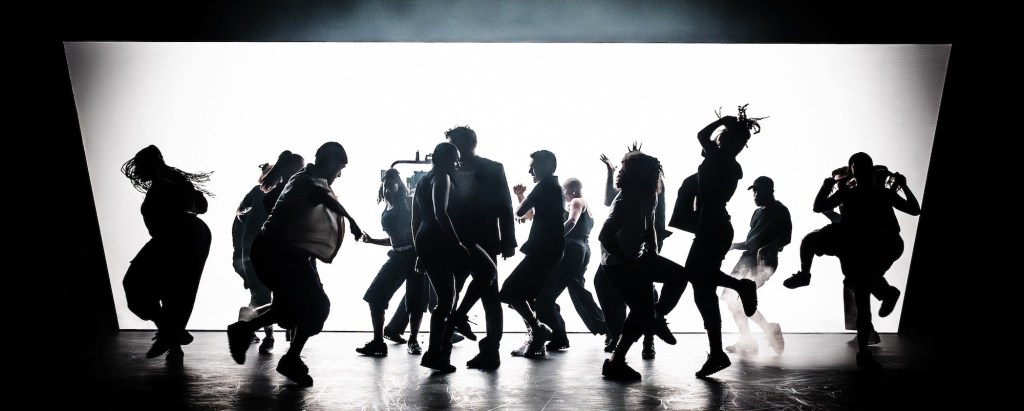
When Norma hears Joe is a screenwriter, like a spider with a fly, she traps him to finish her “come-back” film (she wrote the screenplay). Thus, for champagne, caviar and the thrill of it, he stays, lured by the promise of money, the glamour of old Hollywood and the avoidance of debt collectors. As Norma grows dependent on Joe as her gigolo, he ends up falling for the lovely, unadulterated Betty (the fine, sweet, Grace Hodgett Young). Behind Norma’s back, Joe and Betty collaborate on a script and fall in love. The lies and romance end with the tragic truth.
The seemingly empty stage, tower of lights, spotlights for Norma and live streaming camera closeups projected on the back wall screen, Lloyd is the antithesis of the average director, whose vision focuses on lustrous set design and elaborate costumes and props. In Lloyd’s consciousness-raising universe such gaudy commercialism gaslights away from revealing anything novel or intriguing in the meat of this play’s themes or characterizations, which ultimately excoriate the culture with social commentary.
Soutra Gilmour’s set design and related costumes unmistakenly lay bare the narcissism and twisted values the entertainment industry promotes so that we see the destructive results in the interplay between Max, the indulged Norma and the hapless victim Joe, who tries a scam of his own which fails. Ultimately, all is psychosis, illusions and broken dreams turned into black hallucinations. For a parallel, current example, think of an indulged politician who wears bad make-up that under hot lights makes his face melt like Silly Putty. Again, hallucinations, psychosis, narcissism, egotism that is dangerous and ravenous and never satisfied. Such is the stuff insufferable divas are made of.

In the portrayal of the former Hollywood icon who has faded from the public spotlight and become a recluse, in scene three, when Lloyd presents Gillis meeting Desmond, she is the schizoid goddess and Gorgon radiating her own sunlight via Jack Knowles’ powerful, gleaming spotlights and shimmering lighting design, the only “being” worth looking at against the black background. Throughout, Norma possesses the cavernous space of the stage in surround-view black with white mists jetting out from stage left or right, forming symbolic clouds and fog representing her imagined “divinity” and her confused, fogged-over, abject psychotic hallucinations.
Whenever she “brings forth” from her consciousness “on high,” and empowers her fantasies in song, Lloyd has Knowles bathe her lovingly in a vibrant spotlight. When she emerges from the depths of her bleak mansion of sorrows to sing, “Surrender,” “With One Look,” and later, “As if We Never Said Goodbye,” she brings down the house with a standing ovation. Indeed, Norma Desmond is an immortal. She worships her imagined self at her alter of tribute. Her mammoth consciousness and ethos which Max (Thaxton’s incredible, equally magnificent, hollow-eyed, ghoulish, former husband and current director/keeper of her flaming divinity), perpetuates is key in the tragedy that is her life.
Importantly, Lloyd’s maverick, spare, stripped down approach gives the actors free reign to dig out the core of their characters and materialize their truth. In this musical, the black “empty” stage allows Scherzinger’s Norma to be the primal, raging diva who “will not surrender” to oblivion and death. She is a a god. Like the Gorgon Medusa, she will kill you as soon as look at you. And don’t anyone tell her the truth that she is a “has been.”
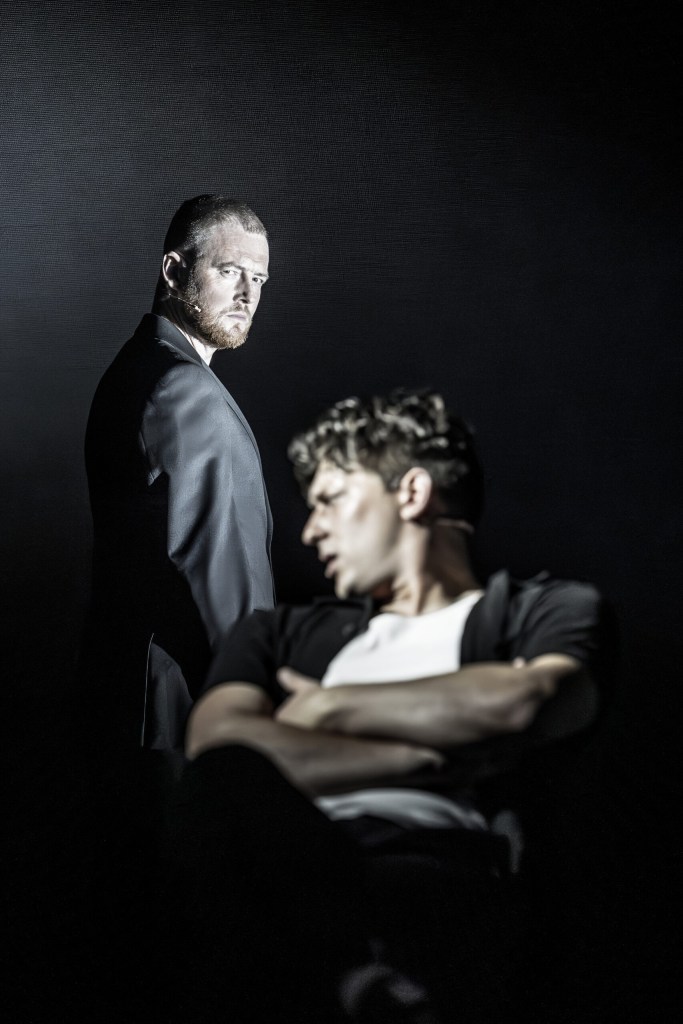
Of course, Joe does this out of a kindness that she refuses to accept. Without the black and white design, and cinematic streaming, a nod to the silent screen, which allows us to focus on faces, performances, magnified gestures and looks, the meanings become unremarkable. The theme-those who speak the truth must die/be killed because the deluded psychotic can’t hear truth-gains preeminence and Lloyd’s archetypal production gives witness to its timelessness. In her most unnuanced form, Norma is a dictator who must be obeyed and worshiped. Such narcissistic sociopaths must be pampered with lies.
Thus, in the last scene, Scherzinger’s Norma stands in bloody regalia as the spiritual devourer who has just annihilated reality and punished Joe. She is permissively allowed to do so by Max, who like a director, encourages her to star in her own tragedy, as he destroys her and himself. As Joe narrates in the flashback from beyond the grave, he expiates his soul’s mistakes with his cleansing confession, as he emphasizes a timeless object lesson.
From a theatrical perspective, the dramatic tension and forward momentum lies with Lloyd’s astute, profound shepherding of the actors in an illusory space. This becomes a fluid field which can shift flexibly each night, revealed when Joe, et. al run in circles and criss-cross the stage wildly. Expressionistic haunting, the foggy mists, the surrounding black stage walls, black costumes, the barefoot diva-hungrily filling up the spotlight-the shadowy figures, all suggest floating cultural nightmares. These the brainwashing “entertainment” industry for decades forces upon its fans to consume their waking moments with fear, the fear of aging, fear of failure, fear of destitution, fear of not being loved, fear of being alone. Many of these fears are conveyed in the songs, and dance numbers in Fabian Aloise’s choreography.

And yet, when the protagonist takes control of the black space of the stage around her, we understand how this happens. She is mesmerizing, hypnotic. Seduced by what we perceive is gorgeousness, we don’t see the terror, panic and mania beneath the shining surface. Instead, we are drawn as if she indomitably, courageously stands at the edge of the universe and asserts her being. In all of her growing insanity, we admire her persistence in driving toward her desire to be remembered and worshiped. Though it may not be in the medium she wishes, her provocations and Max’s love and loyalty help her achieve this dream, albeit, an infamous one, by the conclusion, as gory and macabre as Lloyd ironically makes it. Indeed, by the end her hallucination devours her.
Sunset Blvd is a sardonic send up of old Hollywood’s pernicious cruelty and savagery in how it ground up its employees (“Let’s Have Lunch,” Aloise’s brilliant factory town, conveyor belt choreography, referencing the cynical deadening of Joe’s dreams), and how it made its movie star icons into caricatures that bound their souls in cages of time and youth. Also, it is a drop down into tropes of cinema today in its penchant for horror, psychosis and the macabre, represented by Lloyd’s phenomenal creative team which elucidates this in the color scheme, mists, and starkly hyper-drive, electric atmosphere and movement.

Finally, in one of the most engaging, and exuberantly ironic segments filmed live, right before Act II, when Joe sings Sunset Blvd. with wry, humorous majesty, Tom Francis merges the character with himself as a Broadway/entertainment industry actor. During a live-recorded journey unveiling backstage “reality,” Francis/Joe moves downstairs, inside the bowels of the theater and in the actors’ spaces, so we see the actors’ view, from the stairwell to dressing rooms. Then Francis moves out onto 44th Street, joined by the chorus to eventually move back inside the theater and on stage where they finish singing “Sunset Blvd,” in a thematic parallel of Broadway and Hollywood. Broadway with its wicked inclination to sacrifice art for dollars, truth for commercialism with insane ticket prices, is the same if not worse than Hollywood, until now with AI fueling Amazon, Apple, Google, etc.
However, Broadway came first and spawned the movie industry, which poached actors from “the great white way.” Lloyd clearly makes the connection that the self-destructive dangers of the entertainment industry are the same, whether stage, screen, TV or Tik Tok. The competing themes are fascinating and the lightening strike into the “reality of backstage theater,” refreshes with funny split-second vignettes. For example, Francis peeks into Thaxton’s dressing room. Humorously merging with his character Max, Thaxton ogles a photo of the Pussycat Dolls taped to his mirror. Scherzinger was a former member of the global, best-selling music group (The Pussycat Dolls).

As Lloyd’s most expressionistic pared down, superbly technical extravaganza to date, every thrilling moment holds dynamic feeling, sharply illustrated for maximum impact. As an apotheosis of rage when her gigolo lover speaks the truth that dare not be spoken, Scherzinger’s Desmond becomes primal, a banshee, a Gorgon, a Medea who “refuses to surrender” to the idea that Hollywood, a treasured lover, like Jason, abandoned her for new goddesses.
With cosmic rage Scherzinger releases every, living, fiery nerve of vengeance to destroy the who and what that she can never believe. Meanwhile, Max, her evil twin, with clever prestidigitation, in one final act of loyalty to protect her febrile, mad, entangled imagination, has her get ready for the cameras and close-up, despite Joe’s tell-tale gore on her “black slip,” face and hands, which the media can feed off of like flies. No matter, she sucks up all the spotlight hungrily, clueless she will share a solitary room in a padded sell with no one in a prison for the mentally insane. Perhaps.
This revival should not be missed. Sunset Blvd. with one intermission, two hours 35 minutes is at the St. James Theatre until March 22, 2025 https://sunsetblvdbroadway.com/?gad_source=1
 CAROLE DI TOSTI