Blog Archives
‘The Burning Cauldron of Fiery Fire,’ Anne Washburn’s Challenging, Original Play
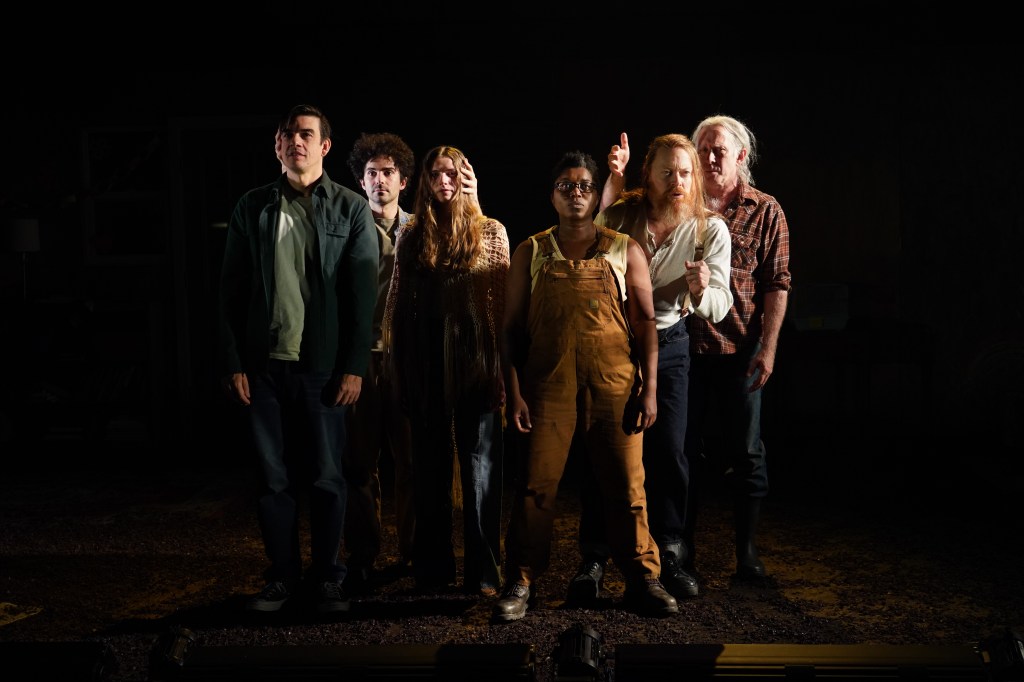
Known for its maverick, innovative productions, the Vineyard Theatre seems the perfect venue for Anne Washburn’s world premiere, The Burning Cauldron of Firey Fire. Poetic, mysterious and engaging, Washburn places characters together who represent individuals in a Northern California commune. When we meet these individuals, they have carved out their own living space in their own definition of “off the grid.” Comprised of adults and children, their intention is to escape the indecent cultural brutality of a corrupt American society, where solid values have been drained of meaning.
Coming in at 2 hours, 5 minutes with one 15 minute intermission, the actors are spot-on and the puppetry engages. However, the play sometimes confuses with director Steve Cosson’s opaque dramatization of Washburn’s use of metaphor, poetry and song. More clearly presented in the script’s stage directions, the production doesn’t always theatricalize Washburn’s intent. Certainly, the themes would resonate, if the director had made more nuanced, specific choices.
The plot about characters who confront death in their commune in Northern California unfolds with the stylized, minimal set design by Andrew Boyce, heavily dependent on props to convey a barn, a kitchen and more. The intriguing lighting design by Amith Chandrashaker suggests the beauty of the surrounding hills and mountains of the north country where the commune makes its home.
The ensemble of eight adult actors takes on the roles of 10 adults and 8 children. Because the structure is free-flowing with no specific clarification of setting (time), it takes a while to distinguish between the adults and children, who interchange roles as some children play the parts of adults. The scenes which focus on the children (for example at the pigpen) more easily indicate the age difference.
The conflict begins after the members of the commune burn a fellow member’s body on a funeral pyre to honor him. Through their discussion, we divine that Peter, who joined their commune nine months before, has committed suicide, but hasn’t left a note. Rather than to contact the police and involve the “state,” they justify to themselves that Peter wouldn’t have wanted outside involvement. Certainly, they don’t want the police investigating their commune, relationships and living arrangements which Washburn reveals as part of the mysterious circumstances of this unbounded, “bondage-free,” spiritual community.
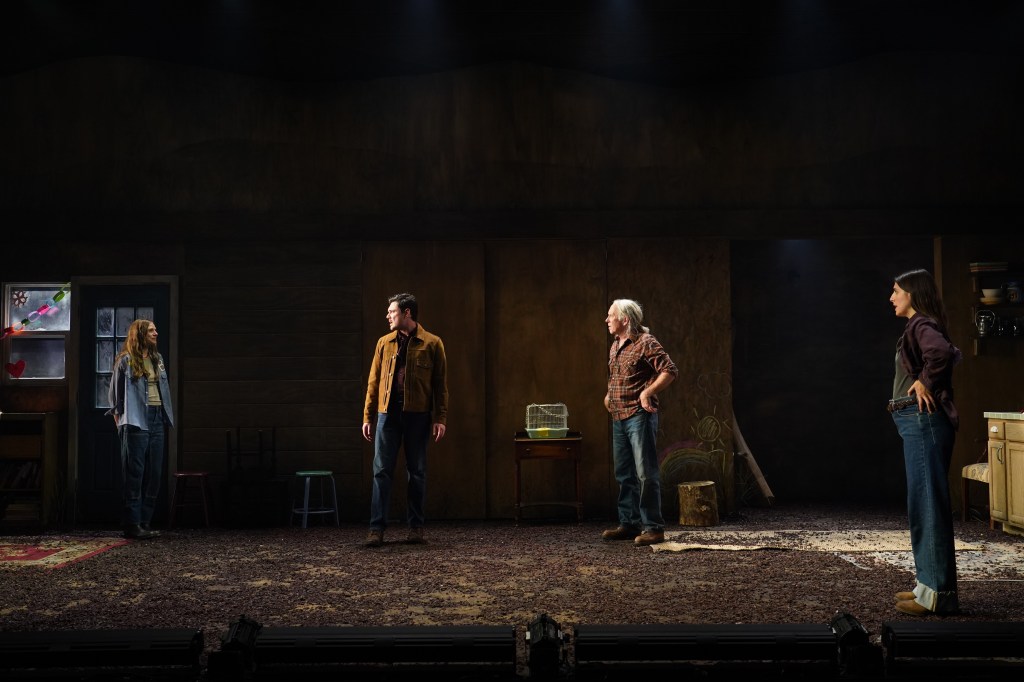
Nevertheless, Peter’s death has created questions which they must confront as tensions about his death mount. Should they reburn his body which requires the heat of a crematorium to reduce it to ashes? After the memorial fire, they decide to bury him in an unmarked grave, which must be at a depth so that animals cannot dig up his carcass. Additionally, if they keep any of Peter’s belongings, which ones and why? If someone contacts them, for example Peter’s mother, what story do they tell her in a unity of agreement? Finally, how do they deal with the children who are upset at Peter’s disappearance?
We question why they feel compelled to lie about Peter’s disappearance, rather than tell the truth to the authorities or Peter’s mom, even if they can receive her calls on an old rotary phone. Thomas, infuriated after he speaks to Peter’s mom who does call, tells her Peter left with no forwarding address. After he hangs up, Thomas (Bruce McKenzie) self-righteously goes on a rant that he will tear down the phone lines.
When Mari (Marianne Rendon) suggests they need the phone for emergency services, he counters. “Can anyone give me a compelling argument for a situation in which this object is likely to protect us from death because let me remind you that if that is its responsibility we have a recent example of it failing at just that.”
Indeed, the tension between commune members Thomas, Mari, Simon (Jeff Biehl), Gracie (Cricket Brown) and Diana (Donnetta Lavinia Grays) becomes acute with the threat of outside interference destabilizing their peaceful, bucolic arrangements. Washburn, through various discussions, brings a slow burn of anxiety that displaces the unity of the members as they work to hide the truth. What begins at the top of the play as they burn the body in a memorial ceremony that allows Thomas and the group to take philosophical flights of fancy, augments their stress as they avoid looking at hard circumstances.
Fantasy and reality clash also In the well-wrought scene where the actors portray the children moving the piglet they believe is Peter when it reacts to Peter’s belongings, specifically, a poem it chews on. Convinced Peter has been reincarnated and is with them, they take the piglet staunching their upset at Peter’s death by reclaiming and renaming the piglet as the rescued Peter. Rather than to have explained what happened, the commune members allow the children to believe another convenient lie.
This particularly well-wrought, centrally staged scene of the children in the pigsty works to explicate the behavior of the commune members. They don’t confront Peter’s death and don’t allow the children to either. The actors captivate as they become the children who relate to the invisible mom Lula and her piglets with excitement, concern and hope. It is one of the highpoints of the production because in its dramatization, we understand the faults of the commune. Also, we understand by extension a key theme of the play. Rather than confronting the worst parts of their own inhumanity, people close themselves off, escape and make up their own fictional worlds.
Washburn reveals the contradictions of this commune who parse out their ideals and justify their actions “living away from society.” Yet they cannot commit to this approach completely because of the extremism required to disconnect from civilization. As it is, they have a car, they do mail runs and sometimes shop at grocery stores. At best their living arrangement is as they agree to define it and as Washburn implies, half-formed and by degrees runs along a continuum of pretension and posturing.
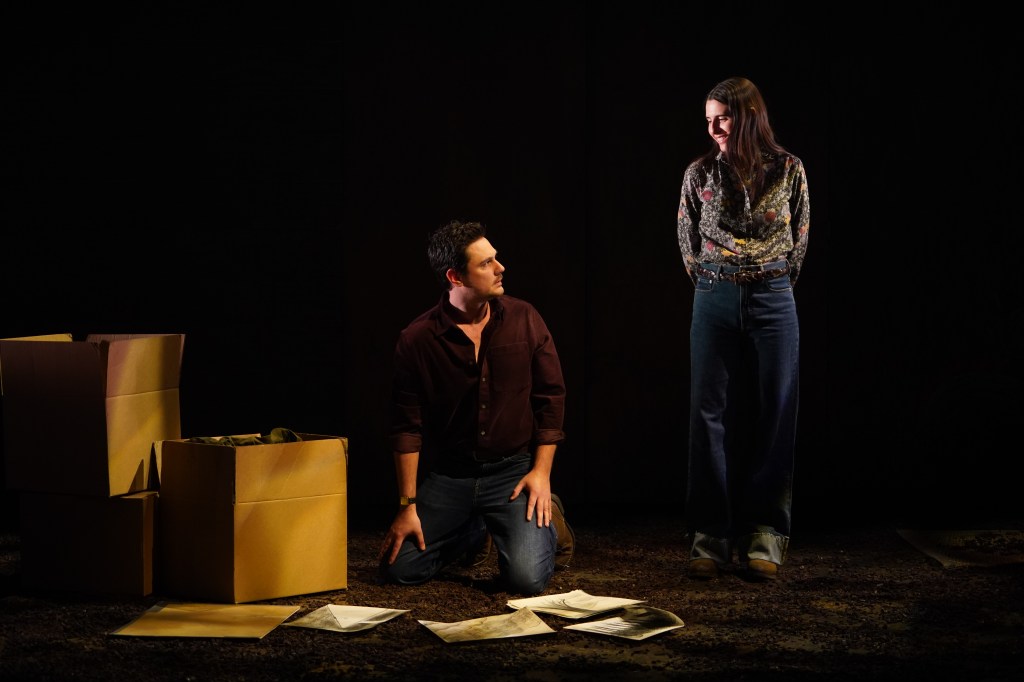
The issues about Peter’s death come to a climax when Will (Tom Pecinka), Peter’s brother, shows up to investigate what happened to Peter. Washburn ratchets up the suspense, fantastical elements and ironies. Through Will we discover that Peter was an estranged, trust-fund baby who will inherit a lot of money from his grandmother who is now dying. Ironically, we note that Mari who claims she had an affair with Peter and dumped him (the reason why he “left”), is willing to have sex with Will. They close out a scene with a passionate kiss. Certainly, Will has been derailed from suspecting this group of anything sinister.
Also, Will is thrown off their lies when he watches a fairy-tale-like playlet, supposedly created by Peter and the children that is designed to lull the watcher with fanciful entertainment.
In the fairy tale a cruel king (the comical and spot-on Donnetta Lavinia Grays), prevents his princess daughter (Cricket Brown) from marrying her true love (Bartley Booz), also named Peter. The bad king thwarts Peter from winning challenges to gain the princess’ love. Included in the scenarios are puppets by Monkey Boys Productions, special effects (Steve Cuiffo consulting), the burning cauldron of fiery flames with playful fire fishes proving the flames can’t be all that bad, and a beautiful, malevolent, dangerous-looking dragon who threatens.
Once again creatives (Boyce, Chandrashaker and Emily Rebholz’s costumes) and the actors make the scene work. The clever, make-shift, DIY cauldron, puppets and dragon allow us to suspend our judgment and willingly believe because of the comical aspect and inherent messages underneath the fairy-tale plot. Especially in the last scene when Peter (the poignant Tom Pecinka), cries out in pain then makes his final decision, we feel the impact of the terrible, the beautiful, the mighty. Thomas used these words to characterize Peter’s death and their memorial funeral pyre to him at the play’s outset. At the conclusion the play comes full circle.
Washburn leaves the audience feeling the uncertainties of what they witnessed with a group of individuals eager to make their own meaning, regardless of whether it reflects reality or the truth. The questions abound, and confusion never quite settles into clarity. We must divine the meaning of what we’ve witnessed.
The Burning Cauldron of Fiery Fire runs 2 hours 5 minutes with one 15-minute intermission at Vineyard Theatre until December 7 in its first extension. https://vineyardtheatre.org/showsevents/
‘Father Mother Sister Brother’ With Adam Driver, Cate Blanchett, Tom Waits @NYFF

Father Mother Sister Brother
Jim Jarmusch’s Golden Lion award winner at the Venice Film Festival is a quiet, seemingly unadventurous film that nevertheless packs a punch. Instead of car chases and bombs exploding, Jarmusch employs subtext, nuance and quietude to convey family alienation.. His dangerous IUDs include slight gestures, a raised eyebrow here, a smile there and stilted, abrupt silences throughout.
Jarmusch quipped in the Q and A during the 63rd NYFF screening about such captured details of human behavior. To focus on nuances and what they reveal becomes much more difficult to film and edit rather than “12 zombies coming out of the ground.” Certainly the laconic characters portrayed by superb award winning actors (Charlotte Rampling, Adam Driver, Cate Blanchette, Tom Waits, Vicky Krieps, the beautiful Indya Moore and Luka Sabbat), hold one’s attention as masters of understatement. Indeed, Jarmusch forces us to carefully observe them because of what they don’t say, as they ride the pauses between what they do express.

Jarmusch’s triptych of meet-ups among family members rings with authenticity. Principally because Jarmusch wrote the parts for the actors he selected, the dialogue and situations unfold seamlessly. Of course the stilted silences fill in the gaps between parents and children when both are fronting about what is true and real. To what extent do we cut off 80% of what we would like to say to “keep the peace,” “mask our true emotions” or “get over?”
The film divides familial separation into three scenarios in three locales. In the last sequence, the separation has no hope of reconciliation. In the first scenario a slick, quirky father (Tom Waits) hosts his children (Adam Driver, Mayim Bialik). In their ride to his house in a wooded area by a lake, the brother and sister discuss how their father has difficulty making ends meet and may have dementia. Ironically, when they share that he hits them up for money, they haltingly discuss that they give it to him. Sister Mayim Bialik humorously comments that the frequency and amount may have contributed to her brother’s divorce. Then she ruefully realizes her insulting remark and apologizes. Their conversation reveals, they too, display an awkwardness with each other.
Of course this ramps up when they sit down with their father who offers them only water to drink, instead of something more. However, his wife, their mother passed, so assumptions abound. For example, they assume his shabby, messy living room signifies he struggles with her loss. And perhaps his lack of funds and sloppiness reveal a purposelessness in his own life without her. However, when Jarmusch has the children leave, we note the reality behind the assumptions. Waits’ Dad transforms into someone else. Not only have the grown children underestimated their father, they’ve completely misread his personality, character and intentions.
The scene is heavy with humor. Indeed, it reminds us that the Italian proverb “You have to eat 100 pounds of salt with someone to understand them,” isn’t an exaggeration. And this thematic thrust Jarmusch has fun with in the next scenario as well.
The second interlude takes place in Ireland, where a wealthy novelist mother (Charlotte Rampling) hosts a formal tea for her grown daughters who live in Dublin (Vicky Krieps and Cate Blanchett). The lush setting and table filled with all the proper treats for an afternoon tea impress. However, the sophistication of the setting adds to the cold atmosphere among the daughters and mother who play act at niceties. The daughters appear at opposite ends of their lives. Kreps with pink hair contrasts with Blanchett outfitted with glasses, short cropped hair and regressed to dour blandness. Rampling’s remote, regal mom presides over all austerely.
Before the daughters arrive, the mother reveals her attitude about the tea. Krieps alludes to a relationship with another woman. However, none of the interesting frequencies in their real lives come to the table. Instead, they drink tea politely accomplishing a duty to their blood. Truly, folks may be related by DNA, but their likenesses, interests, values and personalities may have little alignment with their blood kinship. We do choose our friends and are stuck with family relations.
Interestingly, the third segment returns to the theme of children not understanding their parents, who grow up in a different time warp. In Paris, two lovely-looking fraternal twins (Indya Moore and Luka Sabbat) make a return visit to their late parents’ spacious apartment. Their parents, who died in a plane crash, have separated from them for the rest of their mortal lives. As they walk through the empty apartment then go to their parent’s storage unit, they confront the impact of their parent’s deaths. Additionally, they marvel at their parents’ things. These had little significance to them but had meaning to their parents who kept them and paid for the storage.
Of the three scenarios, in the last one Jarmusch reveals the love between the siblings. Additionally, he reveals a potential closeness to their parents. As they go through a few old photos, they show their admiration and they mourn. However, what remains but memories and the stuff in the storage unit whose meaning is lost to them? The heartfelt poignance of the last scenario contrasts with the other family scenarios and lightly holds a greater message that Jarmusch doesn’t shove down our throats.
Jarmusch’ Father Mother Sister Brother reveals profound concepts about family, human complication and mystery of every human being, who may not even be knowable to themselves.
Father Mother Sister Brother releases in US theaters at a perfect time for family gatherings, December 24, 2025 via MUBI, where it will stream at a later date. For the write up and information at the 63rd NYFF, go to this link. https://www.filmlinc.org/nyff/films/father-mother-sister-brother/
‘Saturday Church’: The Vibrant, Hot Musical Extends Until October 24th
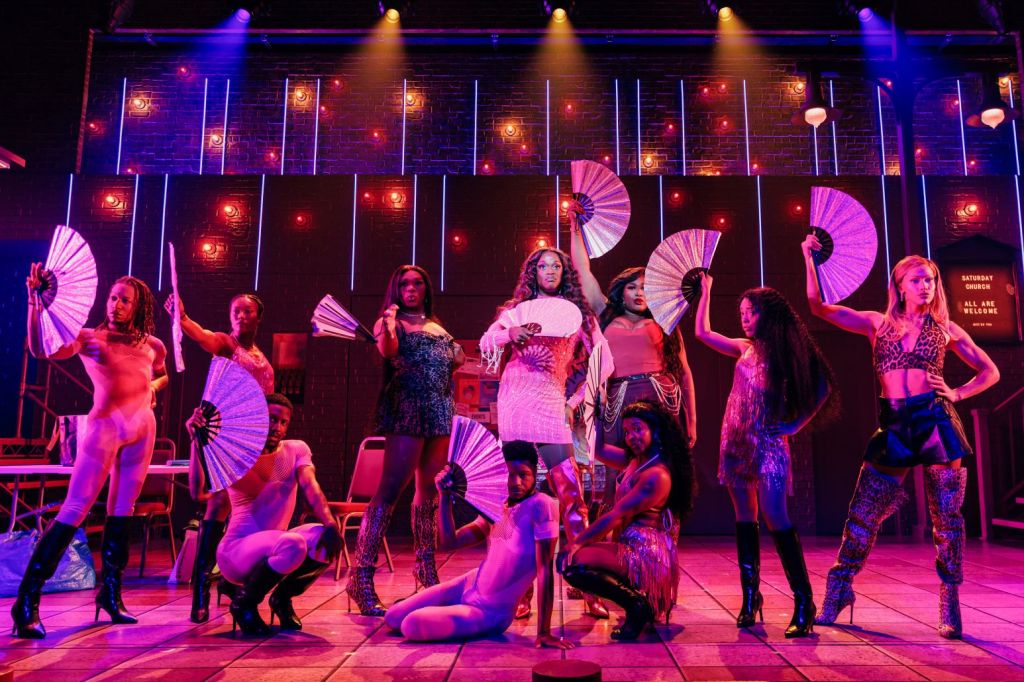
With music and songs by Grammy-nominated pop star Sia and additional music by Grammy-winning DJ and producer, Honey Dijon, Saturday Church soars in its ambitions to be Broadway bound. The excitement and joy are bountiful. The music and songs, a combination of house, pop, gospel spun into electrifying arrangements by Jason Michael Webb and Luke Solomon, also responsible for music supervision, orchestrations and arrangements, become the glory of this musical. Finally, the emotional poignance and heartfelt questions about acceptance, identity and self-love run to every human being, regardless of their orientation and select gender identity (65-68 descriptors that one might choose from).
Currently running at New York Theatre Workshop Saturday Church extends once more until October 24th. If you like rocking with Sia’s music, like Darrell Grand and Moultrie’s choreography and Qween Jean’s vibrant, glittering costumes, you’ll have a blast. The spectacle is ballroom fabulous. As J. Harrison Ghee’s Black Jesus master of ceremonies says at the conclusion, “It’s a Queen thing.”
However, some of the narrative revisits old ground and is tired. Additionally, the music doesn’t spring organically from the characters’ emotions. Sometimes it feels imposed upon their stories. Perhaps a few songs might have been trimmed. The musical, as enjoyable as it is, runs long.
Because of the acute direction by Whitney White (Jaja’s African Hair Braiding), the actors’ performances are captivating and on target. Easily, one becomes caught up in the pageantry, choreography and humor which help to mitigate the predictable story-line and irregularly integrated songs in the narrative.
Conceived for the stage and based on the Spring Pictures movie written and directed by Damon Cardasis, with book and additional lyrics by Damon Cardasis and James Ijames, Saturday Church focuses on Ulysses’ journey toward self-love. Ulysses (the golden Bryson Battle), lost his father recently. This forces his mother to work overtime. Unfortunately, her work schedule as a nurse doesn’t allow Amara (Kristolyn Lloyd) to see her son regularly.
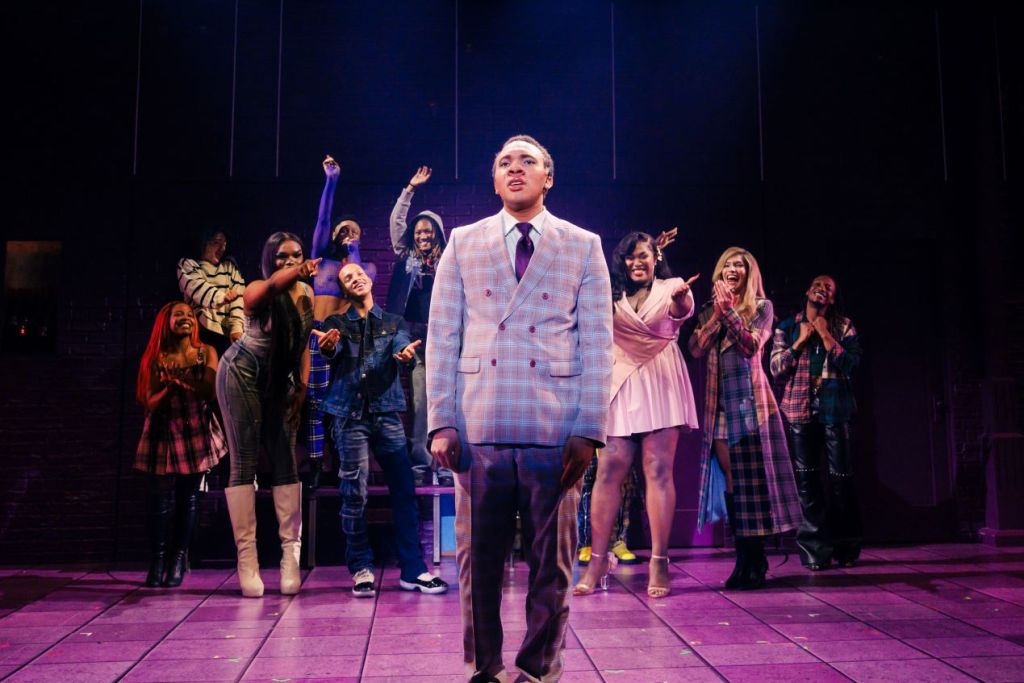
Though the prickly Aunt Rose (the exceptional Joaquina Kalukango), stands in the gap as a parental figure, the grieving teenager can’t confide in her. Even though he lives in New York City, one of the most nonjudgmental cities on the planet, with its myriad types of people from different races, creeds and gender identities, Ulysses’ feels isolated and unconnected.
His problem arises from Aunt Rose and Pastor Lewis (J. Harrison Ghee). Ghee also does double duty as the master of ceremonies, the fantastic Black Jesus. Though Ulysses loves expressing himself in song with his exceptional vocal instrument, Aunt Rose and Pastor Lewis prevent him from joining the choir until he “calms down.” In effect, they negate his person hood.
Negotiating their criticisms, Ulysses tries to develop his faith at St. Matthew’s Church. However, Pastor Lewis and Aunt Rose steal his peace. As pillars of the church both dislike his flamboyance. They find his effeminacy and what it suggests offensive. At this juncture with no guidance, Ulysses doesn’t understand, nor can he admit that he is gay. Besides, why would he? For the pastor, his aunt and mother, the tenets of their religion prohibit L.G.B.T.Q Christianity, leaving him out in the cold.
During a subway ride home, Ulysses meets Raymond (the excellent Jackson Kanawha Perry). Raymond invites Ulysses to Saturday Church and discusses how the sanctuary runs an L.G.B.T.Q. program. With trepidation Ulysses says, “I’m not like that.” Raymond’s humorous reply brings audience laughter, “Oh, you still figuring things out.” Encouraging Ulysses, Raymond suggests that whatever his persuasion is, Saturday Church is a place where different gender identities find acceptance.
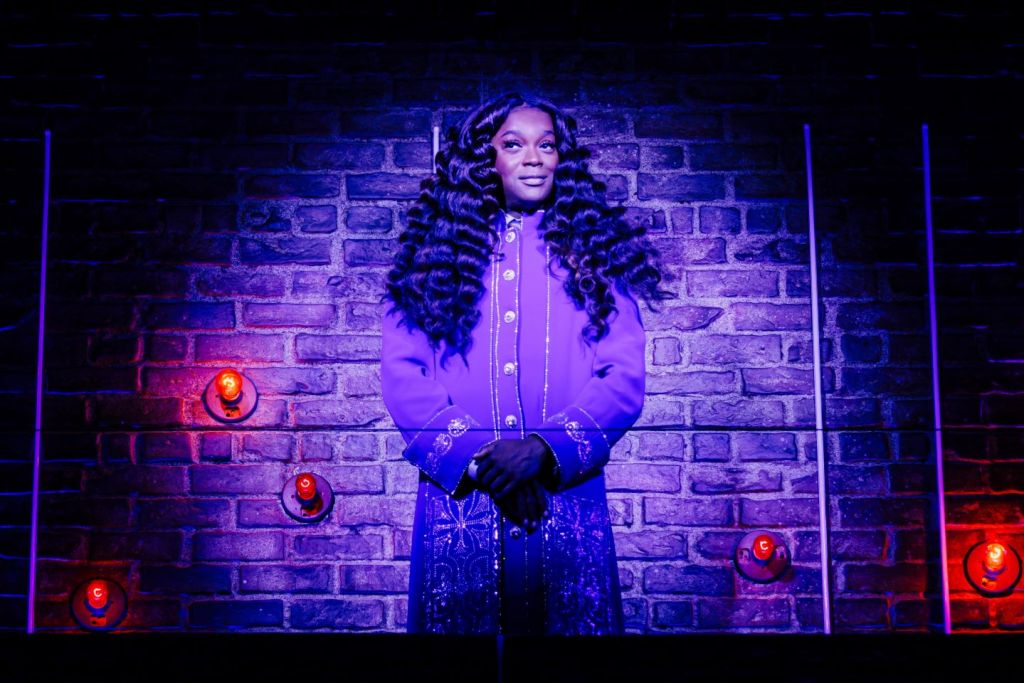
Inspired by the real-life St. Luke in the Fields Church in Manhattan’s West Village, Saturday Church provides a safe environment where Christianity flourishes for all. When Ulysses visits to scout out Raymond, with whom he feels an attachment, the motherly program leader Ebony (B Noel Thomas), and her riotous and talented assistants Dijon (Caleb Quezon) and Heaven (Anania), adopt Ulysses into their family. In a side plot Ebony’s loss of a partner, overwork with running activities for the church with little help, and life stresses bring her to a crisis point which dissolves conveniently by the conclusion.
The book writers attempt to draw parallels between Ulysses’ family and Ebony which remain undeveloped. As a wonderful character unto herself, the subplot might not be necessary.
As Ulysses enjoys his new found persona and develops his relationship with Raymond, his conflicts increase with his mother and aunt. From Raymond he learns the trauma of turning tricks to survive after family rejection. Also, Ulysses personally experiences physical and sexual assault. Finally, he understands that for some, suicide provides a viable choice to end the misery and torment of a queer lifestyle without the safety net of Saturday Church.
But all’s well that ends well. J. Harrison Ghee’s uplifting and humorous Black Jesus redirects Ulysses and effects a miraculous bringing together of the alienated to a more inclusive family of Christ. And as in a cotillion or debutante ball, Ulysses makes his debut. He appears in Qween Jean’s extraordinary white gown for a shining ballroom scene, partnering with Raymond dressed in a white tux. As the two churches come together, and each of the principal’s struts their stuff in beautiful array, Ghee’s Jesus shows love’s answer.
In these treacherous times the message and themes of Saturday Church affirm more than ever the necessity of unity over division, and flexibility in understanding the other person’s viewpoint. With its humor, great good will, musical freedom and prodigious creative talent, Saturday Church presents the message of Christ’s love and truth against a pulsating backdrop of frolic with a point.
Saturday Church runs with one fifteen minute intermission at New York Theatre Workshop until October 24th. https://www.nytw.org/show/saturday-church/?gad_source=1&gad_campaignid=22911892225
 CAROLE DI TOSTI