Blog Archives
‘Infinite Life’ by Annie Baker, a Review
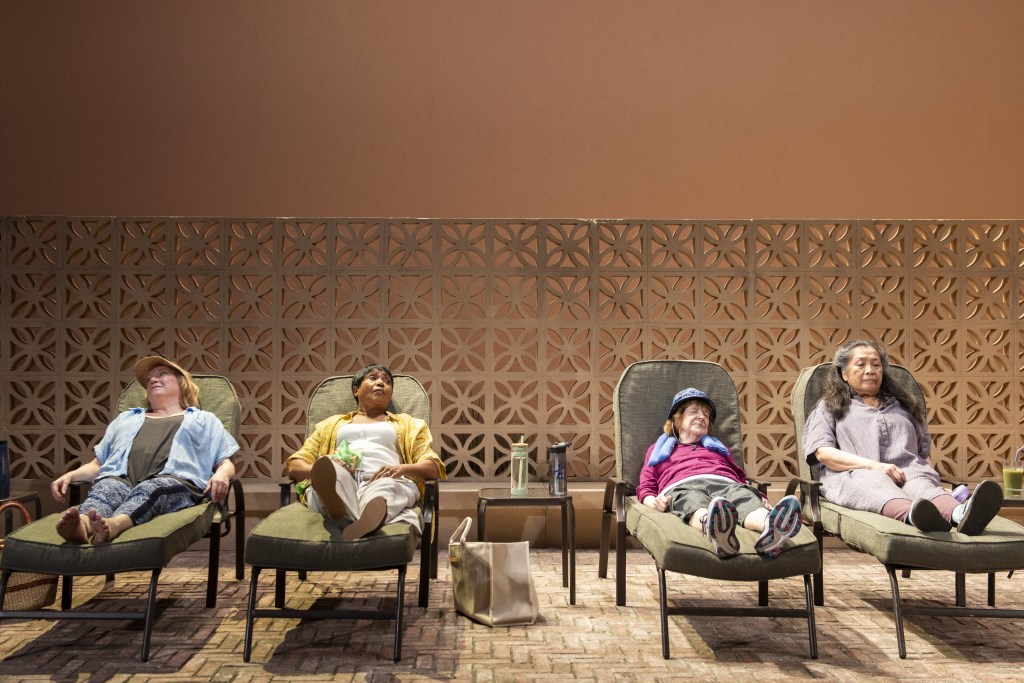
The premise of award-winning Annie Baker’s play Infinite Life, premiering off-Broadway at Atlantic Theater Company’s Linda Gross Theater, is that pain is the crux of life. Directed by James Macdonald, the production focuses on individuals who deal with pain along a continuum from heart-wrenching emotional angst to stoical virtuousness. Regardless of how they confront their suffering, it is never, ever easy. Indeed, most of the time, the pain endured by the characters we meet in Baker’s play foments a nightmare world of shattering identities, where the characters can’t recognize themselves through the agony.
Baker exemplifies this concept superbly with her characterization of Sofi (Christina Kirk) at various segments throughout her ironic, profound work. Through Sofi’s emotional outbursts and wild, antic, verbal expressions of sexuality, we understand the humiliation and self-loathing that often accompanies the resistance to pain’s annihilation of self, which Sofi and other patients acknowledge.
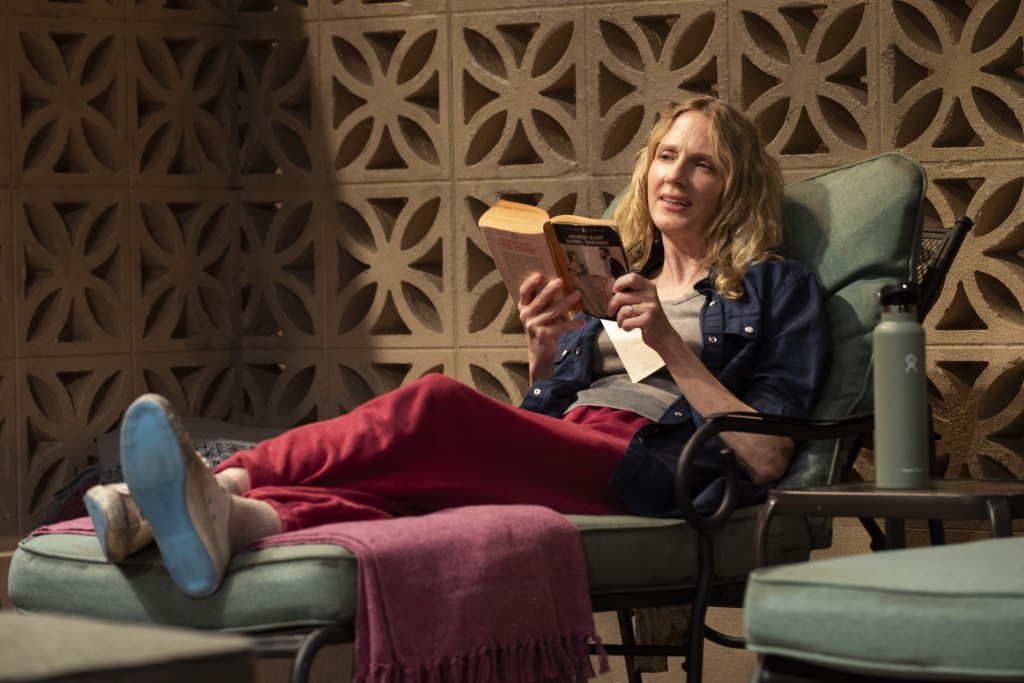
At the top of the play, Sofi converses with Eileen (Marylouise Burke), who walks very very slowly as she joins Sofi in the resting area where they become acquainted. It is then, we begin to understand where they are and why, when Eileen asks about Sofi’s fasting. Armed with a book she is reading, George Elliot’s Daniel Deronda, (an ironic, related, situational reference), Sofi answers Eileen’s simple questions haltingly, which indicates she may not want her “peace” or privacy disturbed by the talkative, fellow patient.
With just a smidgen of dialogue, Baker introduces elements which arise throughout the play and form the nexus around which Baker invites salient questions about consciousness and the synergy of mind, body, psyche and emotions. Key questions encompass the philosophical conundrum of what the characters must do with and for themselves in this “infinite life” of self, from which there is no escape, and fleeting happiness exists in an unwitting past where there was no physical torment caused by disease.
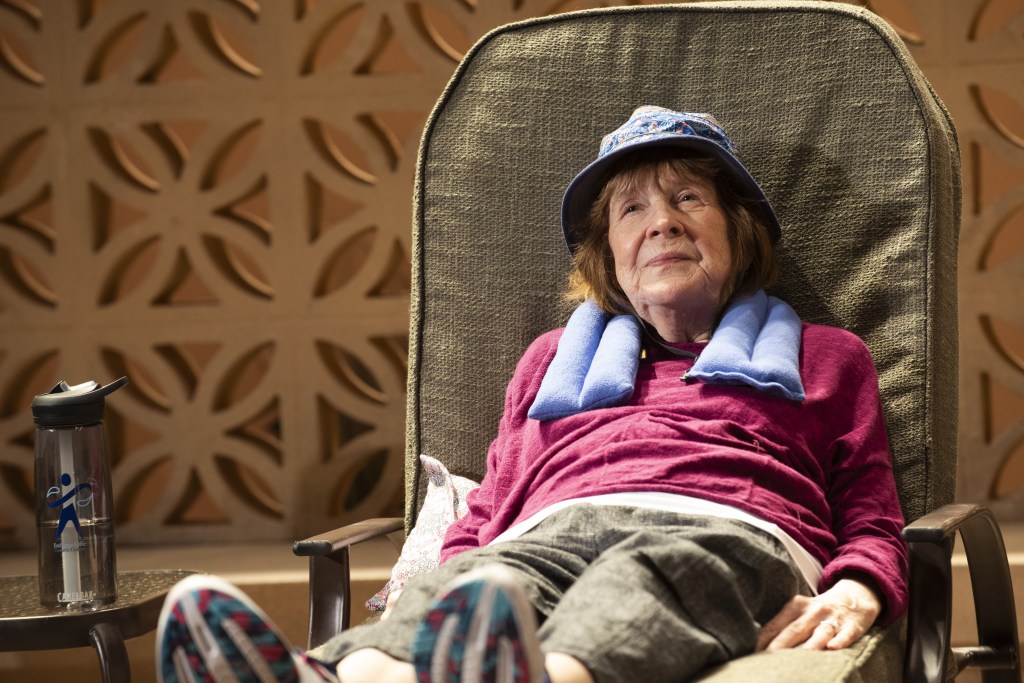
In a slow, dense, heavy unspooling, Baker introduces us to six characters, five women and one man. The women are dressed in casual workout clothes, loungewear and flowing tops (Ásta Bennie Hostetter’s costumes). These indicate the state of treatment they are in, whether “working it,” seeking comfort or relaxing.
The setting is an unadorned, outdoor space with scruffy, lounge chairs they recline on, bordered by a cheap, latticed, concrete block wall (scenic design by dots). We come to learn this area is the patio or balcony of an alternative healing clinic, that was once a motel. The entire production takes place in this outdoor area that overlooks a parking lot with a bakery wafting aromas of fresh bread from across the street that the characters comment on.
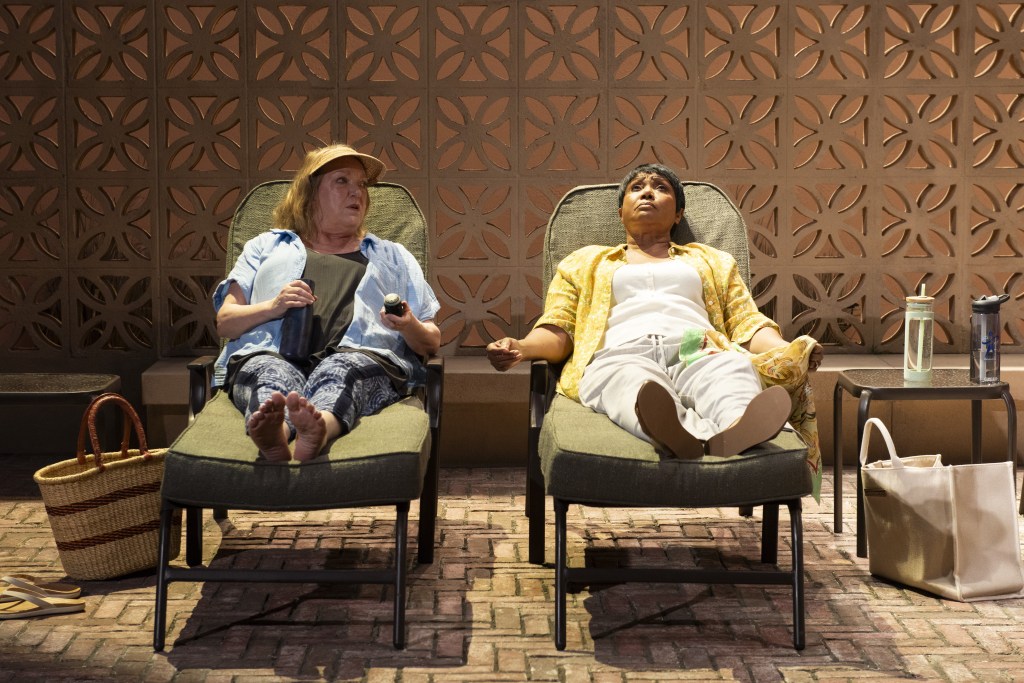
Here, as they “take the air, sun and dark night sky,” the women and man who have various maladies share the unifying, dire reality that they are in terrific pain with illnesses that have no solid cure and will probably reoccur. A variety of upbeat attitudes, modified hopelessness, positivity and stoicism resound through their conversations to distract themselves and each other. The conversations reveal the tip of the iceberg, below which the pain they endure alone, unseen, fills their days and nights.
Admirably, perhaps, these patients look to mitigate and heal seemingly without chemicals (no Oxycontin) or conventional medical methods. Nelson (Pete Simpson), who arrives late to the sunbathing scene, shirtless and attractive, has colon cancer which returned after surgery and mainstream treatment. He opts to try the alternative therapies at the clinic for twenty-four days, he confides to Sofi. He’s determined to follow in the footsteps of a friend who received relief at the clinic.
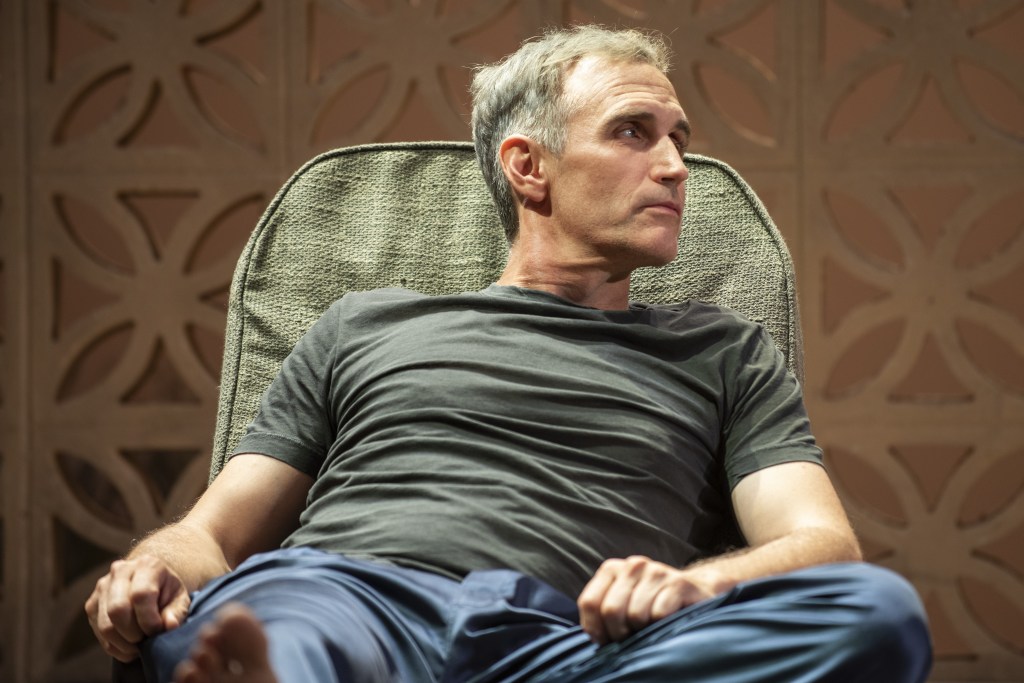
Sofi graphically shares the type of pain she has that involves her sex organs and has no cure which intrigues Nelson as a weird “come on.” Perhaps it is, but it is also her intriguing and extended cry for help in their scenes toward the play’s end. Likewise, Nelson shares graphic, intimate experiences with his colon blockage that involve tasting his own fecal matter. They share their nightmare world and appear to comfort one another, for a moment in time.
Their scenes together become a high point that intimates the possibility of intimacy but dead ends as far as we see and know. Both characters skirt the edges of hopelessness. Sofi doesn’t think she can make it through what the pain requires of her to sustain, which includes the dissolution of her marriage because of a mistake she made. Nelson implies that if his condition remains static, he will plunge back into radiation treatment and conventional medicine. Both appear hapless, buffeted by the circumstances of their body, beyond which they may or may not ever regain an illusion of control.
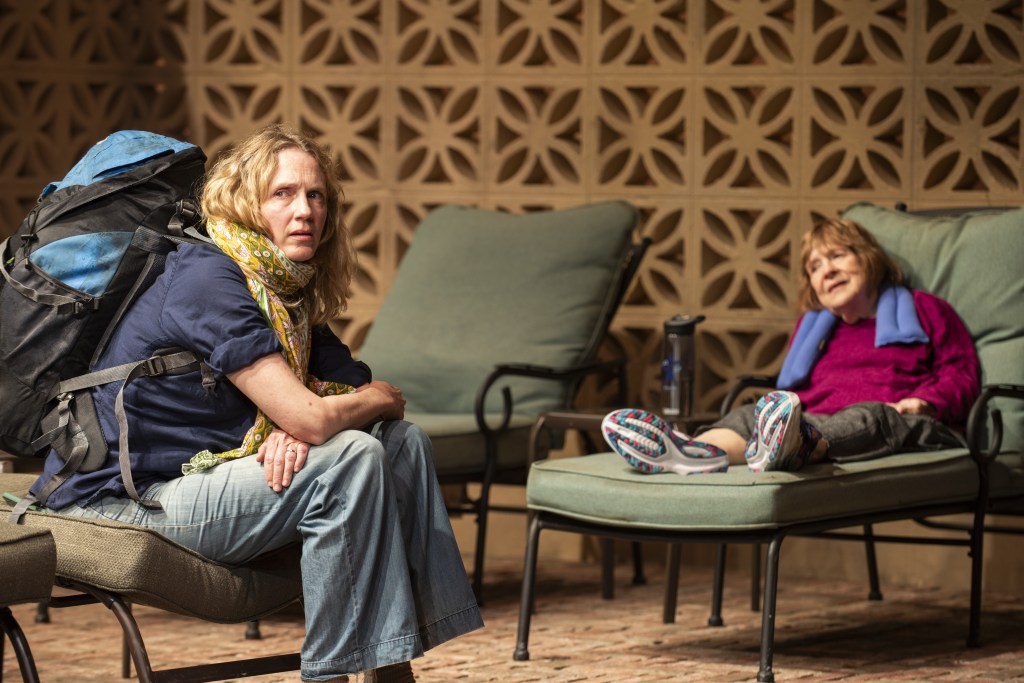
Through their journey toward relief, the patients have signed on to be put through their paces. The regimen and therapy that Sofi, Eileen, Elaine (Brenda Pressley), Ginnie (Kristine Nielsen), Yvette (Mia Katigbak) and Nelson have agreed to, require they fast, sleep, rest outdoors, drink concoctions fashioned for their various conditions, do passive activities like read, meditate, pray and, if they wish, rest and commune with each other in the common area, if their will and energy occasion it.
Over the first few days, each woman shares her condition and counsels Sofi, the newest arrival in their midst. For example they discuss that the second and third days are the worst, that after she pukes bile she’ll feel better, and she’ll get past her hunger and grow used to the fasting, etc. Narrating the time passages almost at random, Sofi announces hours or minute differentials before the next conversational scene occurs, as the women continue seamlessly sharing from where they left off hours before. Director James Macdonald’s staging is symbolically passive and static.
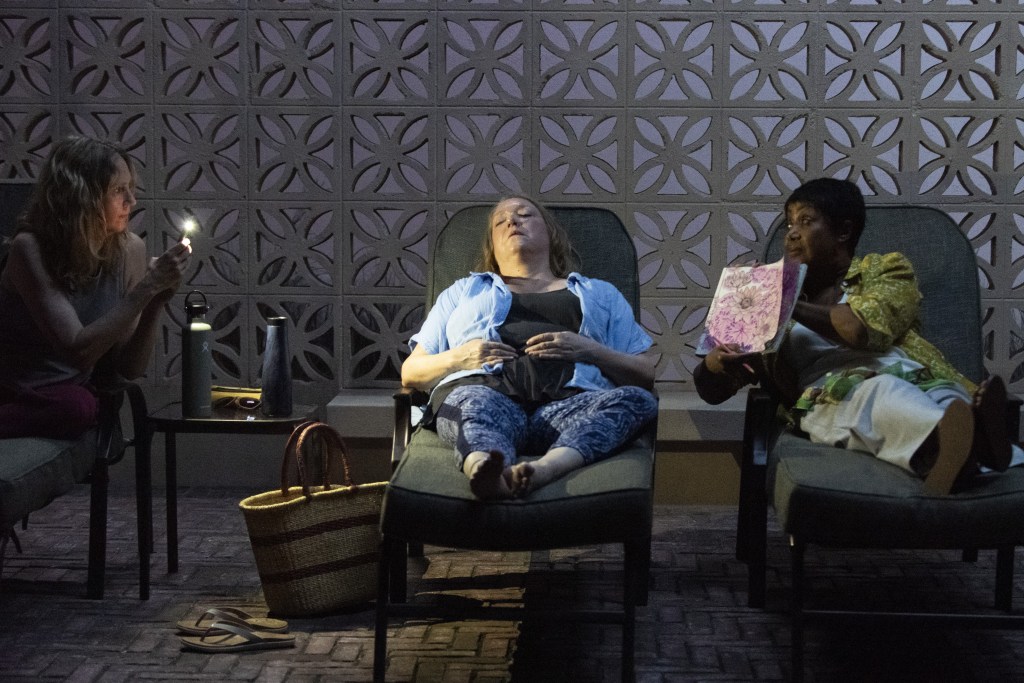
The effect is a linear, unceasing continuation as though time is not passing at all, and we are in an ever present present, a side effect of horrific pain. However, Sofi and lighting designer Isabella Byrd’s lighting, which switches from sunlight to darkness, disabuse us that time is standing still for these sufferers. Time marches on and drags them and their pain with it, as Sofi reminds us, though nothing appears to be happening on a material level. On a cellular, spiritual level it may be quite a different story; perhaps there is healing and mitigation though it isn’t readily visible to the naked eye.
As we become more familiar with Baker’s pain managers, we learn they are at various stages of their treatment, and marvel that some, like Yvette, are alive, despite their multiple conditions. Hers are numerous with exotic names along with the medication she lists was given to her during and after her bladder removal, cancers, catheterizations, and chemical poisoning side effects from all the doctors’ interventions.

Interestingly, Yvette is the most stoic and accepting that she will face whatever agony comes her way. The exhaustive list of her illnesses is an affirmation of the human will to “make it through” to the next day, where she will continue to suffer. There is valor in that, as Yvette’s will persists. Sofi is her counterpoint and is desperate and potentially, if things don’t change, suicidal.
The women’s conversation is banal and reminiscent of Samuel Beckett’s plays, which find characters waiting opaquely and uncertainly, though here, Baker defines that the treasure they wait for is healing, an absence of the excruciating terror in their physical bodies. Yet, though we watch and listen to what appears to be stasis, sometimes, the characters in spite of themselves, are humorous and ridiculous.
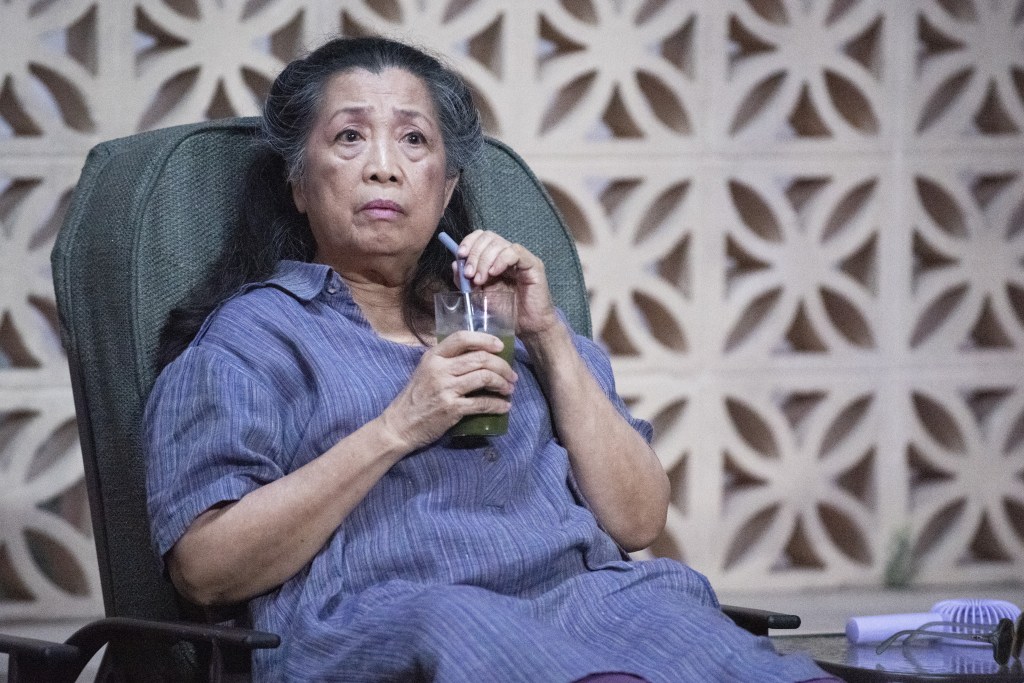
This is especially so when sexual topics arise and go nowhere useful, and some raw sexual language that Sofi uses unwittingly discomforts Eileen, who is a Christian. For example Mia’s Yvette discusses her second cousin who narrates pornography online for the blind, which prompts a discussion of how it is possible for the blind to react to described sexual acts.
In another segment Ginnie initiates a conversation about a pirate who rapes a young girl who commits suicide. The story is part of a philosophical teaching taken from one of Zen Master Thich Nhat Hanh’s books. The provocative question Ginnie asks all to think about concerns the Zen Master’s statement that people are the pirate and the rape victim. The thought that are are capable of equal parts of sadism and masochism spirals into absurd and clever responses in a beautifully paced repartee between Nielsen’s Ginnie and Mia’s Yvette.
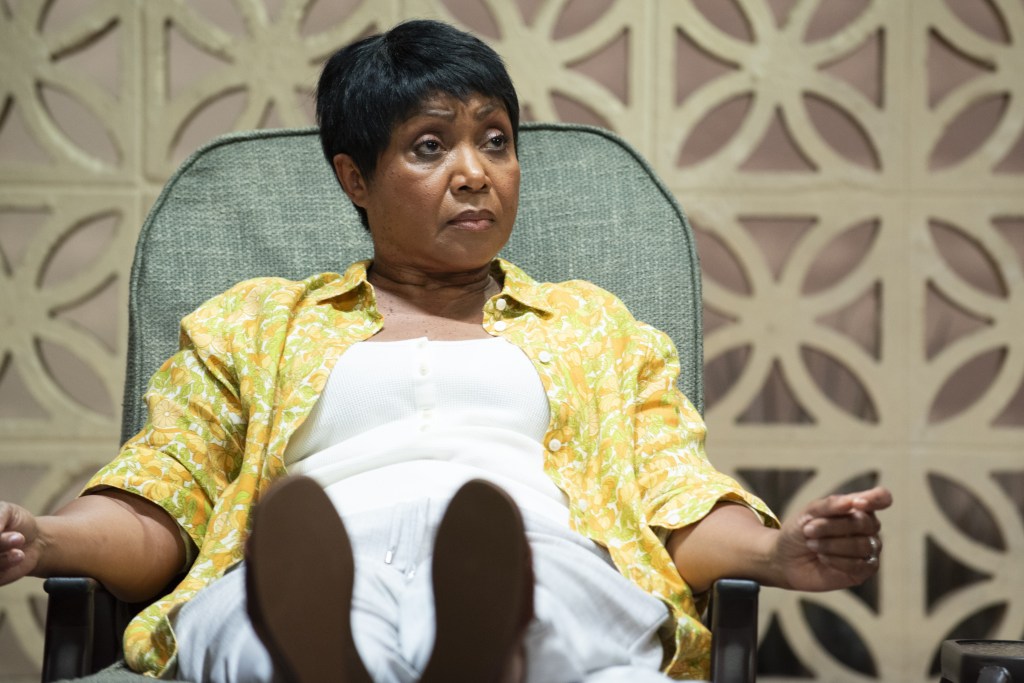
Following Baker’s “less is more,” undramatic plot where little appears to happen, director James Macdonald’s vision synchronizes with a minimalist, spare, unremarkable set design (dots design studio) befitting a place of transition, a way station after which patients will move back to their homes to continue healing, seeking treatment or dying. The overall shabbiness of the place, coinciding with the external, static situation of pain endurance, indicates the de-emphasis on the material surroundings. Instead, the focus is on the spiritual, deeper consciousness where the inner healing takes place sight unseen and manifests physically when the characters leave, for they’ve achieved some sort of relief. Perhaps some, but not all. Some are still there and in hell.
The minimalist structure is the receptacle for the weighty philosophical, tinged with metaphysical ideas that the characters express between the arduous moments of waiting. Baker has them burst out with pithy statements universal to us all, reminding us that beneath the ordinary, difficult, daily hours each of us sustains, there is the painful construct that we are dying while we’re living. The glorious part is the absence of pain. Eileen says in a difficult moment of agony, “a minute of this is an infinity.” The unfortunate part is if illness and pain comes, there is the bracing life lesson that sickness reminds the sufferer. It is what Beckett’s character said in Endgame, and a statement he repeated. “You’re on earth. There’s no cure for that.”

Baker is fascinating upon reflection, reading the script. With the live production the dialogue was sounded spottily because of the theater’s acoustics, the unequally distributed sound design and low conversational tones of the actors, during various segments. Audience left remained in stark silence while audience right rippled with responses of laughter, throughout during the production I saw in preview. Pulitzer Prize winner Baker is known for her pauses and silences in the dynamic among the characters, which in this play added gravity and profound undercurrents. However, in the performance, the silences were noticeably from audience left as audience right chuckled in delight.
The lack of audience reaction because of sound design difficulties was obvious. Interior pain is more easily expressed on film with close-ups. In an attempt to express their pain’s trembling terror, some actors chose to moderate their projection downward into quietude. Throughout, Mia Katigbak and Kristine Nielsen could be heard. Marylouise Burke managed to get around the conversational tones with a haspy, raspy voice which carried.
Similarly, the other superb actors were present during their important moments that conveyed the play’s themes. However, the audio was not sustained, as it should have been. Ironically, I noted even the young man seated next to me leaned forward on the edge of his seat, and not because the suspense was overwhelming. He was straining to hear. Apparently, this is not a problem for director James Macdonald, though it was for audience members whose experience was less than stellar, unfortunately, for a play which, after its reading, I found to be exceptional, profound and thought-provoking.
Infinite Life runs at Atlantic Theater Company. It is a co-production with the National Theatre. For tickets visit the Box Office at the Linda Gross Theater on 20th Street between 8th and 9th Avenues. Or go to their website https://web.ovationtix.com/trs/cal/34237?sitePreference=normal
 CAROLE DI TOSTI