Blog Archives
‘Is This Thing On’ Bradley Cooper’s Third film @63rd NYFF
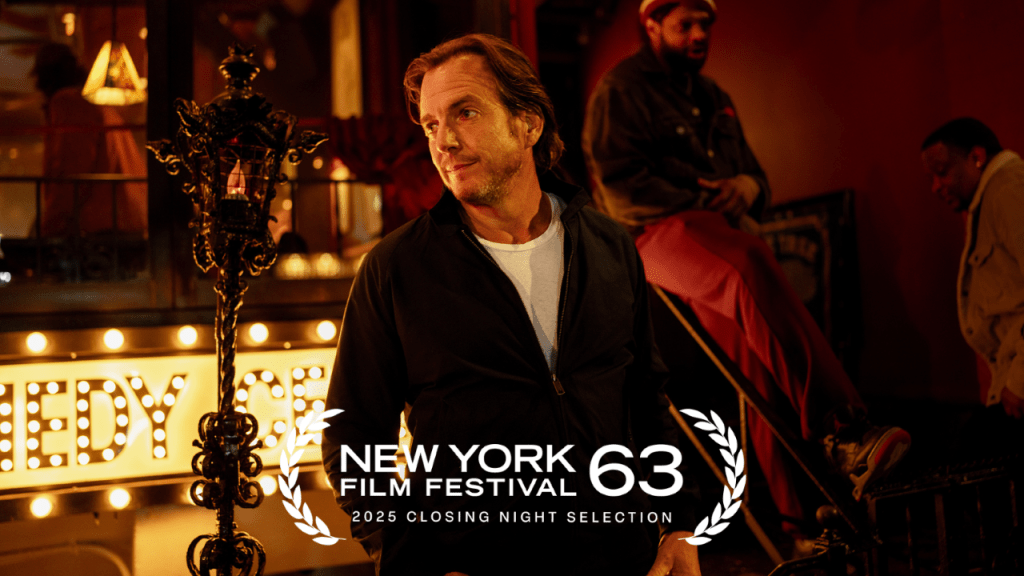
Comedy and tragedy masks couple side by side for a reason. Bradley Cooper’s third (A Star is Born, Maestro) directorial outing, Is This Thing On?, adds meaning to the notion that misery loves comedy. Will Arnett and Laura Dern play a couple whose separation leads to catharsis and regeneration when Alex turns to comedy to lighten his soul’s unhappiness. Is This Thing On? a World Premiere in the Main Slate section of the 63rd New York Film Festival, screened as the festival closing night film.
Cooper incisively shepherds the intimate and naturalistic performances of Will Arnett (Alex) and Laura Dern (Tessa). The actors portray a long-time married couple. In the opening film scene both agree without fireworks and fanfare (while Tessa brushes her teeth) to call “it” (their marriage thing) off.
Throwing the typical divorce sequences out the window, Cooper skips to the aftermath of the separation and Alex and Tessa’s amicability. First, they split custody of their two 10-year-old sons, played with sharp comedic timing by Blake Kane and Calvin Knegten. Secondly, after the opening shot of agreeing about “it,” we note by the next time they get together with their couple friends (Andra Day & Cooper, Sean Hayes & Scott Icenogle) Alex moved into an apartment in New York City. Meanwhile, Tessa remains in their house with their playful Labradoodles and sorrowful sons who comment that their parents argued a lot.
One evening instead of going home to his empty, lonely apartment after seeing Tessa and friends, Alex saves a few bucks cover charge by adding his name to the open mic list of a basement comedy club (The Comedy Cellar). As a possible joke on himself, Alex sheepishly takes the mic. However, when he spontaneously, unabashedly, surprisingly vomits out personal information about his marriage, a lot of it morose, some of it funny, the last thing the self-loathing Alex imagines, then happens. He gets a few laughs and lots of encouragement from the crowd of wannabe comedians.
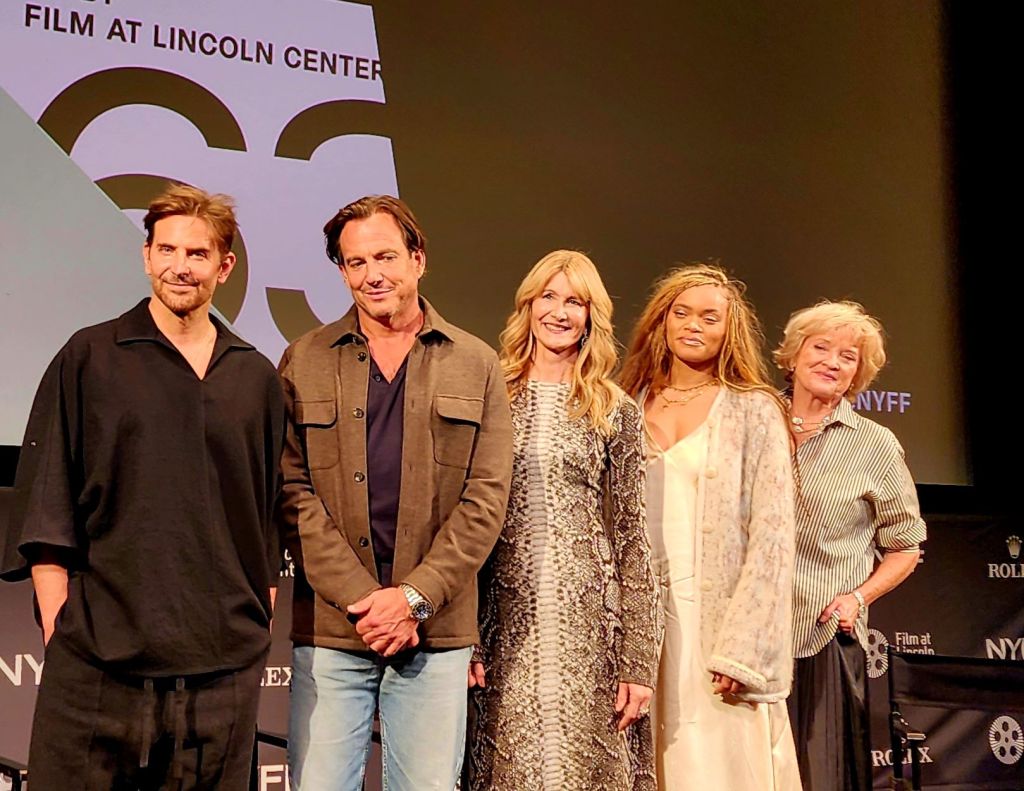
In a fantastic twist, Cooper cast many of these real-life comics as audience members. Their authentic jumble of responses picked up by sound designers works to create the naturalistic environment where Alex slowly recharges his deadened mojo.
A guy can get used to this shot of adrenaline to stave off his soul’s sickness. Maybe if he returns a few times, he can reveal to himself what the hell happened emotionally and psychically that caused him to end up alone, without his wife and kids on the doomed path to divorce. If expiation indeed softens a crusty-edged, hardened, sad sack, perhaps more spilling of his guts will be the medicine he needs to ameliorate the hell within.
Thus, the initial few laughs and non judgmental camaraderie of fellow comic wannabes trigger Alex to return for another open mic night. And once more, Alex’s self-abasing confessions to himself and the crowd magically lift his spirits. Alex’s serendipitous impulse not to take his inner angst to heart blossoms. As he evolves his comedic timing and content, he resolves he can become a better person through confessional stand-up comedy. There’s nothing like getting in touch with one’s inner hell via artful performance, where self-reflection brings about self-correction.

Alternating scenes, Alex’s new revelatory jokes at the comedy club, with Tessa and friends meet-ups, we note the gradual change in Alex’ emotions and moods. Even his friend Balls (Cooper in a funny, facially hirsute turn), tells him that maybe he will divorce his wife (the beautiful Andra Day) following Alex’s route, because he seems happier unmarried.
This revolutionary way to deal with divorce among a community of comics really happened to British stand up comedian John Bishop. The true events inspired the script by Cooper, Arnett and Mark Chappell with some of the uneven dialogue prompted by extemporaneous ad libs by the cast.
Interestingly, Alex’s wayward jokes that don’t land had to be worked on by Will Arnett and Cooper. In a Q and A after the screening Cooper grinned when he said that Arnett’s humor out-shined Alex’s and had to be tamped down. Thus, the jokes never flow seamlessly like a professional’s patter since Alex must find his way through trial and error. Likewise, Alex and Tessa’s relationship which took a hairpin turn with their break up, takes another when Tessa goes on a friend/date (with Peyton Manning) in a cute set-up for the possibility of her first sexual encounter after the split.
Where do they show up? At the comedy club where Alex hits a new high/low discussing his first sexual encounter after his break-up. What did he learn from the sex? He tells the audience in a heartfelt moment he missed his wife. Pleasantly surprised and turned on to hear that Alex missed her, Tessa confronts Alex about his “letting it all hang out” riff at the club. Though Tessa’s appearance at the club with her date smacks of contrivance, the coincidence is delicious for the next plot twist. This hearkens back to the film’s title. Finding their attraction to each other rekindled, do they or don’t they get back together? When and where the answer arrives adds hilarity to their tenuous situation.
Importantly, their dead-ended relationship moved off its axis opening up new possibilities. Finally, they communicate their feelings beyond arguing. And just as Alex has found a new trajectory and hope with his comedy club appearances, Tessa returns to her love of volleyball as a former Olympic player, sharing her skills and expertise as a professional coach.

Meanwhile, Alex’s parents (Christine Ebersole and Ciarán Hinds) weigh in with their opinions, though they refuse to choose sides to keep the peace. In targeting the complexity of human relationships, Cooper shows the difficulties in letting go of an old, tired relationship stuck in destructive grooves. Also, he mines the ground of rebuilding a relationship and setting it in another positive direction. With that reconstruction also comes the rebuilding of identity and self-worth if they couple uses the opportunity of a break to begin a renewal.
Dern and Arnett are terrific surrounded by a great supporting cast. These include the actors mentioned above and additionally Amy Sedaris and New York stand up standbys for example Reggie Conquest, Jordan Jensen, Chlore Radcliffe. These comedians help to make the film a love letter to New York and its downtown scene.
For the description of Is This Thing On? at the 63rd NYFF go to their website. https://www.filmlinc.org/nyff/films/is-this-thing-on/ The film will be released December 19th.
‘Good Night, Oscar’ Sean Hayes in a Marvelous Must-See

It is not that Sean Hayes looks like Oscar Levant (he is taller), or speaks like Levant (not really), or accurately displays Levant’s neurotic ticks and eye blinks (he ticks away), or imitates his posture (he slumps, cutting off 2 inches of his own height). What Hayes does nail is Levant’s pacing, deadpan delivery, comedic sentience and his self-effacing, desperate, sorrowful heart. And it is these latter Levantesque authenticities that Hayes so integrates into his being that when he shines them forth, we believe and follow Hayes wherever he takes us during the brilliant, imminently clever Good Night, Oscar, currently running at the Belasco Theatre with no intermission.

With a well-honed, drop-dead gorgeous book by Doug Wright (I Am My Own Wife), and superb production values (Rachel Hauck-scenic design), (Emilio Sosa-costume design), (Carolina Ortiz Herrera & Ben Stanton-lighting design), (Andre Pluess-sound design), and J. Jared Janas for hair & wig design, director Lisa Peterson’s vision brings us back to 1958 in NBC Studios’ inner sanctum, where the backstage drama is more incredible than what happens on live camera. Of course, by the time Hayes’ Levant appears live on The Tonight Show, we, Parr (Ben Rappaport), June Levant (Emily Bergl), Alvin Finney (Marchánt Davis) and head of NBC Bob Sarnoff (Peter Grosz), have lived two lifetimes fearing the worst. After all, this is live television with no splicing tape or editing. Whatever happens is. And that makes the tension and thrill of this production that duplicates the fear of “live,” (just like on Broadway, but with no extended rehearsals), just smashing.

Doug Wright acutely, craftily ups the ante of danger in the 80% probability that Levant will make a mess of things. Perhaps, he won’t make it to the studios, just like the time he left an audience of three thousand waiting in fancy dress to hear him play the piano, concert style, which was popular in those days. Then, he let them wait and never showed up.
Levant is noted for his version of the stellar George Gershwin’s “Rhapsody in Blue.” Parr and the TV audience expect Levant to play it, but of late, he is hesitant and may refuse and walk off the set. So Levant might be on time but blow-up his appearance, as he has done before, saying the extraordinary and surprising, if asked to comment on religion, politics or sex. Furthermore, he is plagued by the spirit of Gershwin and has reveries of the past where, at times, he makes no sense. So much can go wrong, like Murphy’s Law states: “If something can go wrong, it will.” With Levant this has become a truism with scheduled bookings and appearances.
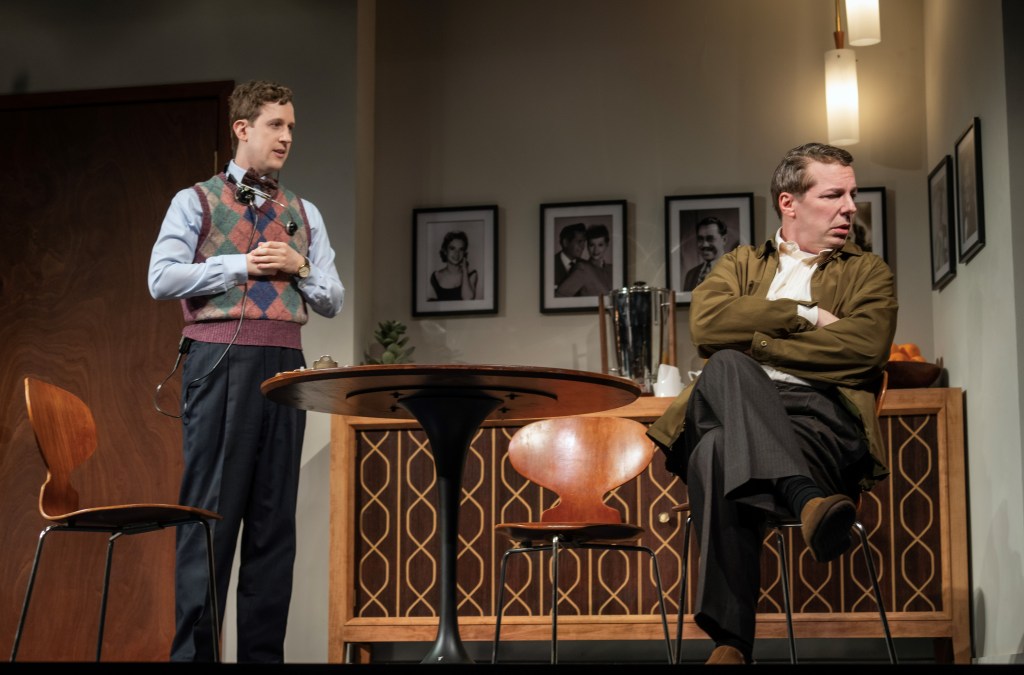
As Grosz’s apoplectic Sarnoff and Rappaport’s reasoned Parr go head to head about the high-risks they are taking because they cannot fail during “sweeps week,” we discover that recently, Levant is completely unreliable and “out there.” Sarnoff refers to him as a “freak.” On the other hand Parr has specifically chosen Levant because he needs his new Burbank show to be a success. Levant always delivers because Parr knows his close friend and can set him up for the best one-liners and witticisms in the business.
With Levant, Jack hopes to compete his way into prime time with a low budget and the talk show format he has perfected. It is a difficult task because he is on every evening, is rather high-brow, and the network underestimates him. However, Rappaport’s Parr believes Levant is a “true original,” who “treats chit chat with all the daring, all the danger of a high-wire act.” Parr knows that he will score with Levant because his unexpected brilliance lands his one liners all the time. Jack will start the engine, and Levant will speed off with the cues for a perfect show, nose diving into space and leveling off every time. He only needs to show up and get in make-up. Wright has created the set up for anticipation so that when Levant arrives, if he does, we are ready for his prime time antics, which happen behind the cameras.

That Parr doesn’t convince Sarnoff to calm down remains a problem. Sarnoff tells Parr he has booked “chica chica boom boom” Spanish musician and band leader Xavier Cugat as Levant’s replacement. He will save the day if Levant stiffs The Tonight Show, like he stiffed The Eddie Fisher Show the week before. In other words, as Levant keeps the studio waiting, the greater the likelihood that Levant’s career is down the toilet, along with the bad will that Parr has contributed making his goal to be in prime time a pipe-dream.
The issues appear to be settled when June Levant, Oscar’s wife, sweeps through the doors in her period piece, flowery outfit looking chic and composed. Parr is relieved until June tells him that she committed Oscar, and he’s in an asylum because she finally had enough. Parr becomes as apoplectic as Sarnoff and the rest of the play spins out of control, is brought back into control, then goes up into the high-wire act Parr wished for, after Levant shows up and fills everyone with expectation and sometime dread that he will blunder irreparably and destroy all they’ve planned.
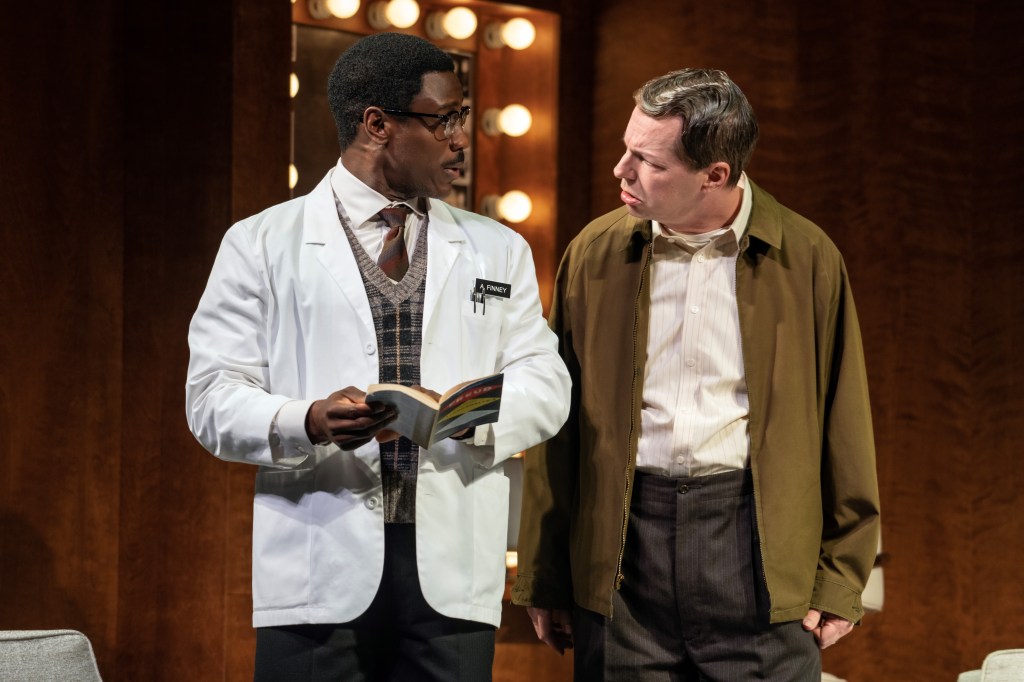
To add to the tension, right before Levant goes on the air, he downs a bottle of Demerol and seems comatose. The saving grace is that Levant is a drug addict and his body is accustomed to so many drugs of his choosing, he has to take a bottle of it to stop his hand from shaking. (I reminded you of that, if you question how taking that many pills and functioning is possible. Think functioning alcoholic.)
Who is this drug addict? Who is Jack Parr? In what century are we? One of the salient take-a ways of Good Night, Oscar is its reverential nod to the Golden Age of Television, when culture, wit, superior comedy shows and superb programs (I Love Lucy, Playhouse 90, Your Show of Shows, What’s My Line, etc.), and actual bona fide news graced the air waves. Jack Parr was one of the first hosts of The Tonight Show franchise, which has lasted to this day and has been duplicated many times over in other shows on other channels.

Then, Parr made individuals famous during his five-year stint. One of his frequent guests was comedic concert pianist and Hollywood celebrity Oscar Levant. Thanks to Doug Wright’s incredible, stylized portrayal of Levant, and Sean Hayes’ remarkable ability to don the ethos of the exceptional pianist and tortured artist, we understand his emotional underpinnings. And we empathize with the psychological whirlwinds captivating Hayes’ Levant. Figuratively haunted by George Gershwin’s shadow, Levant glorifies in and also regrets riding Gershwin’s coattails to celebrity. Wright fancifully manifests this haunting by materializing Gershwin, who cajoles, persuades and torments Hayes’ Levant with remembrances of his greatness and serene notes of “Rhapsody in Blue.” Davis’ Alvin tells Parr assistant Max (Alex Wyse) that these babblings are auditory and visual hallucinations.Max should just “go with it.”

After June Levant and Parr tell Hayes’ Levant he must play, that the concert grand is waiting, Levant goes head to head with Gershwin’s ghost. Portrayed by John Zdrojeski, we note Gershwin’s arrogance and dapper, mordant, ghostly looks. However materially insubstantial he is, to Levant, the only one who sees him, he is beautiful and elegant. We understand that compared to Gershwin, Levant is a midget in looks and talent (in his own flawed estimation). Levant has undermined himself becoming Gershwin’s fawning adherent. Thus, eventually Levant obeys his hallucinations, as the Gershwin ghost compels him. Will Hayes’ Levant be able to play anything with arthritic hands and twenty-five concentrated doses of Demerol in pill form churning around in his stomach?

There is no spoiler alert. How Levant, his body hungering for drugs, manages to manipulate Parr assistant Max and his own nurse assistant Alvin to get what he wants is frightening, funny and ironic. Wright employs Max and Alvin as devices to reveal Levant’s backstory and acquaint the audience with his former grandiloquence, while we take in his deteriorating condition. Levant, Judy Garland and other celebrities shared the same fate with the pills and drugs that the studio doctors offered. Ironically, the tragedy of Oscar Levant and his glory and folly, which Hayes portrays with perfection, has great currency for our time.

Though Levant’s story is a throwback to that crueler, exploitive time of the studios, where the industry ground up artists in its maw and left them at the side of the road to deal with their own damage, we see the effects of big pharma today, expanding their client base beyond celebrities to the US public. Additionally, we note that corporations have become even more insidious than the Hollywood studio system as exploiters of writers and other artists. Good Night, Oscar is vital in showing how the then parallels the now.
Wright, Peterson and importantly, Hayes, elucidate how artists were encouraged to destroy themselves gradually for the sake of their “careers.” That Parr and June Levant are similar in their persuasions, pushing Oscar to “entertain,” is answered by the fact that Oscar adores being in front of an audience, even if it’s only for the four hours he has been “sprung” from the asylum. However, his self-harm becomes irrevocable as celebrity self-destruction through addictions to drugs and alcohol, unless redeemed is irrevocable in our time as well.
Wright’s play is an encomium to Levant’s genius, his humanity and his artistry, beautifully shepherded by Peterson and the creatives who convey her vision. And Sean Hayes’ performance is one for the ages.
There are gaps in this review for the sake of surprising the reader. Most assuredly, Good Night, Oscar is a must-see. You should go a few times to appreciate the wit, humor and spot-on performances, all of which are superb. Sean Hayes is especially poignant and authentic. For tickets and times go to their website https://goodnightoscar.com/
 CAROLE DI TOSTI