Blog Archives
‘Real Women Have Curves’ is a Sensational Adaptation With an Underlying Moral Imperative
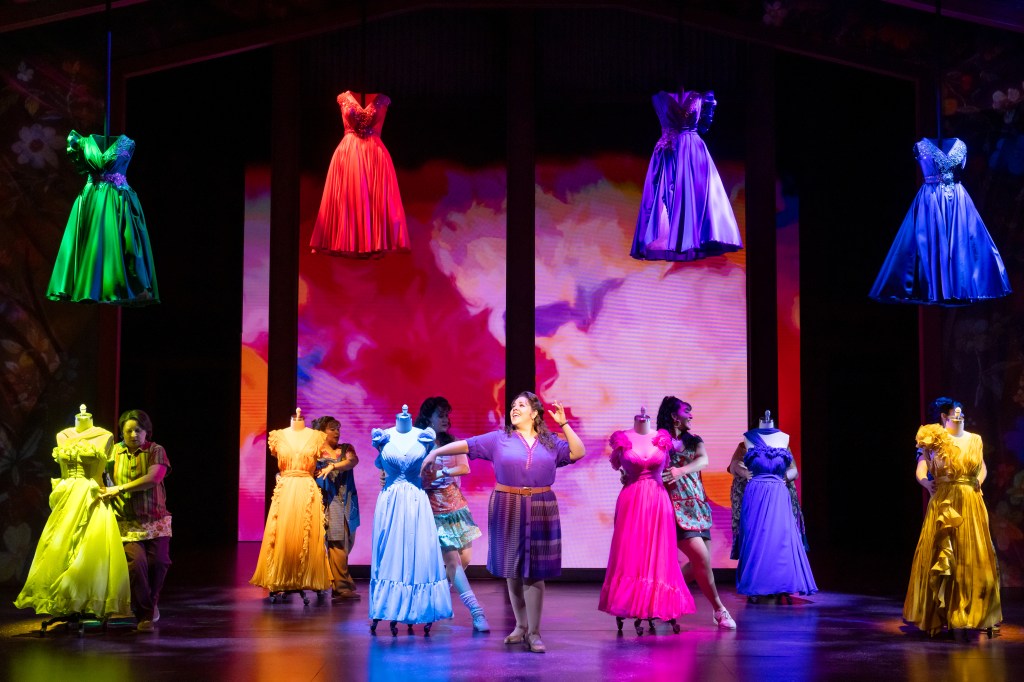
Read Women Have Curves
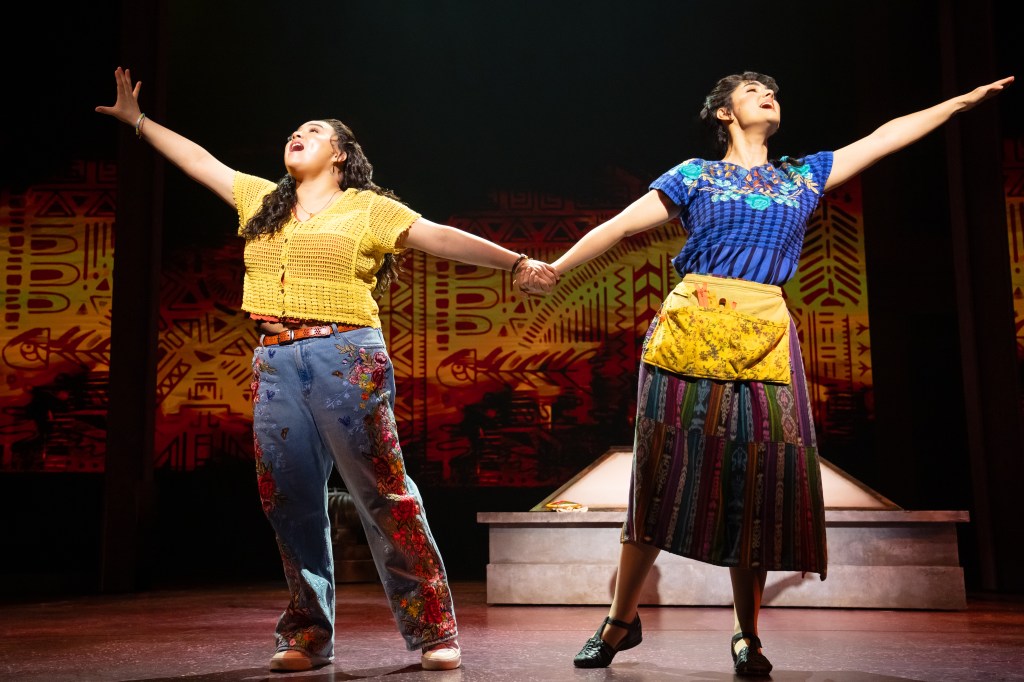
Based on Josefina López’s titular play, and the 2002 HBO film adaptation starring America Ferrera, Real Women Have Curves, at the James Earl Jones Theater, is an exuberant, humorous, beautifully colorful fun-fest with underlying messages about past Republican immigration policies, discrimination, fat-shaming, Latinx cultural iconography, female empowerment, self-love, and making the American Dream one’s own. Delighting the audiences, the production also is vitally historic in reminding us of the great sacrifice those who seek a better life make when they leave their native country for an unwelcoming nation.
Though the musical is set in Los Angeles, 1987, it has tremendous currency during the debacle of the Trump administrations’ kidnapping, trafficking and incarceration of migrants in concentration camps out of the country, illegally without due process. This unlawful, brutal practice misnamed deportation (which mandates due process), is being noted as a crime against humanity by many groups, including the United Nations and The Hague. The musical’s themes and plot contrast between the past and the present, where the current derelict, corrupt administration would degrade the United States by violating the 5th amendment to the constitution.

The Tony-nominated score by Grammy® Award–winning singer-songwriter Joy Huerta (known as half of the pop duo Jesse & Joy), was written with Benjamin Velez. Both wrote the music and lyrics and are also responsible for orchestrations and arrangements. With the book by Lisa Loomer (Distracted) and Nell Benjamin (Mean Girls), music supervision by Nadia DiGiallonardo (Waitress), and choreography and direction by Tony® winner Sergio Trujillo (Ain’t Too Proud), these creatives have knocked it out of the ballpark. to make the show a winner.
Coupled with the superb performances and ensemble work by the cast, the ebullience is catching and it’s impossible not to hum along, or sway in one’s seat with many of the upbeat, message-filled numbers (“Make It Work,” “De Nada,” “Oy Muchacha,” “Adios Andres,” and “Real Women Have Curves.”). We feel immediate empathy with the likable, endearing and ironically humorous Mexican women of various ages, who dream of establishing themselves in prosperity despite the incredibly long work hours at two or three jobs, the social obstacles of being “the other” culturally, and the daily threat of being deported back to their own country, a dangerous prospect.
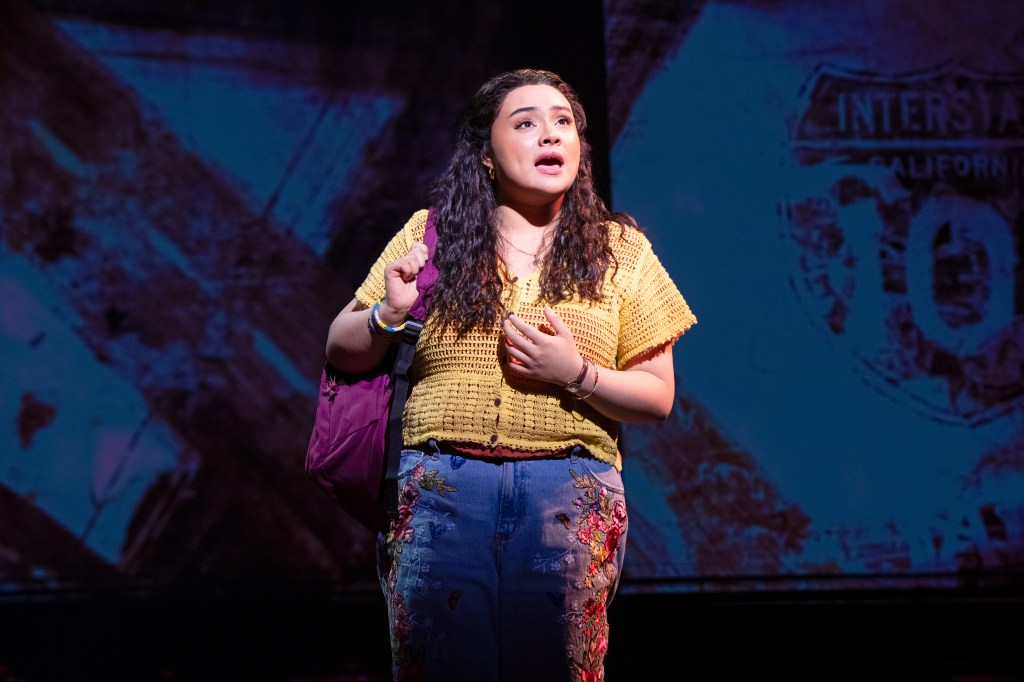
At the outset, we note the key conflict is between mother and daughter, 18-year-old Ana García (Tatianna Córdoba), and her mom, Carmen (Justina Machado). Ana was born in the United States and has constitutional birth-right citizenship. Her older sister Estela (Florencia Cuenca), was born in Mexico. To improve their situation, father Raul (Mauricio Mendoza), found work in Los Angles and eventually moved the three of them to Boyle Heights, and stayed with persistence and tolerance of discrimination. As they prospered, Carmen and Raul subsidized Estela’s dress business, all the while raising the younger Ana to adopt American ways, but never forget her heritage.
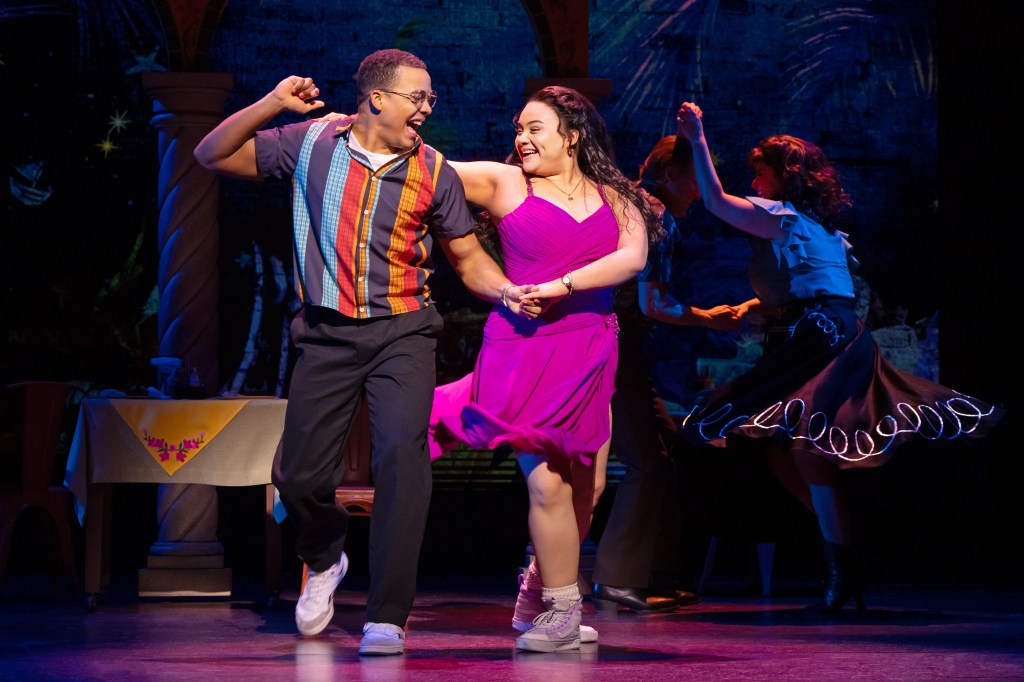
As the only American citizen, Ana excels in school, graduates with honors and as an aspiring journalist with a summer internship, applies to Columbia University where she receives an acceptance and full scholarship. At her internship with a local paper where she practices her journalism skills pro bono to gain valuable experience, she meets Henry (the superb Mason Reeves), and forms an adorable attachment. Aye, if Carmen knew about Columbia and Henry, she would hit the roof.
Of course Carmen, unsettled by their illegal status fears deportation and intends to keep the family together, just in case. Carmen’s plans are why Ana can never tell her mother about her great news that she has climbed the first rung of her dreams in her full-ride scholarship to Columbia in New York City. Now, it’s only a matter of going, regardless of Carmen’s stubbornness to keep Ana at home. When she finally does tell her, Carmen is beyond herself.
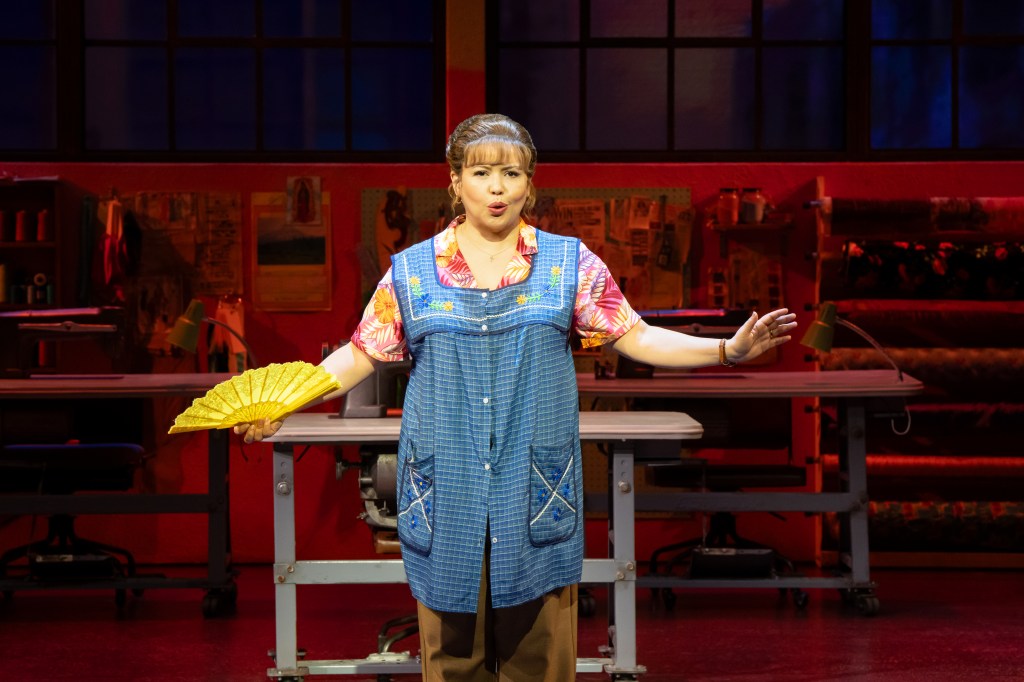
The chief reason why Carmen can’t let her go concerns their status. If they are picked up by INS, Ana’s birthright citizenship will possibly save them. The question becomes will Ana choose her dreams or put them on hold and stay with her family in support. However, if she waits, she may never get another opportunity like a free-ride to expensive Columbia again. Ana does tell sister Estela who encourages her; they agree behind Carmen’s back she should wait to tell Carmen.
In a second conflict which involves their prosperity in their business and their immigration status, Estela’s dress shop receives a fabulous order for 200 dresses. The order is from the well-connected, elite-looking, stylish Mrs. Wright (Claudia Mulet when I saw the production). Mrs. Wright gives the order under the condition that unless they are finished in three weeks, she won’t pay Estela and will take the dresses the dressmakers did finish. Thrilled to work with Mrs. Wright for her buyer contacts-a chance to increase their opportunities-Estela agrees to Mrs. Wright’s handshake contract, despite the fact that it is an onerous and shady arrangement. The dressmakers are thrilled and agree to work hard (“Make It Work”). Carmen suggests that Ana can help them get the job done and learn to sew.
However, as we find out into Act 2, Estela has taken a tremendous risk. A second question arises as the suspense increases. Will they be able to get the dresses in on time? As a further obstacle, while they are progressing, there is a loud explosion. Next door an illegal factory with undocumented workers is raided. In panic and fear, the dressmakers turn the lights off and remain in the darkness until there is quiet. It’s a moment of great tension for everyone.
After the lights are on and the danger passes, the 19-year-old Itzel (Aline Mayagoitia), from Guatemala has an asthma attack. Ana takes her to the roof to “breathe,” with a change of scene and humor to recoup. There they sing “If I Were a Bird.” It’s an important turning point in the musical as we empathize with the women, understanding the horror migrants live with to follow their dreams.
Every day Estela goes to the shop is a day they might be raided. The risks they take to survive and try to carve out a place for their families is fraught with struggle and sacrifice, but they persist. Seeing this from the perspective of the undocumented, though it was during the time of Republican President Ronald Reagan is historic. Reagan offered Amnesty as a path to citizenship, the antithesis of what current MAGA politicos and the Trurmp administration offer.
Instead, the current administration kidnaps and trafficks. It isn’t deportation, for deportation mandates due process first. The administration kidnaps and trafficks for the sole purpose of getting white supremacist votes. They sadistically enjoy the cruelty and brutality. Thus, the kidnapping, etc. without due process “shows” machismo as the MAGAS embrace hatred and discrimination against those of color. The Trump administration even supports death threats against judges who give migrants constitutional due process. Was this person inaugurated as he said he accepted his “oath?”
The INS raid in the musical is truly horrific. A hush fell over the audience as they “got it.” I couldn’t help but think how much more duress the migrants and the dreamer generations have experienced from the 1990s to today. Not only is there no path, citizenship is near impossible unless “extra” means are used to open the doors, as they were with Elon Musk and his brother and Melania Trump. All came here illegally.
As if to underscore the cruelty that has been exponentially increased during the present administration, making it unrecognizable as Republican, the announcement at the end of Act I is terrifying. The sweet, funny Itzel has been picked up by INS. In Act II when Ana tries to help her after she finally locates Itzel in a bleak detention center (Arnulfo Maldonado’s set design), where she is receiving due process. INS is willing to turn Itzel over to Ana if she will be her sponsor. It’s an impossibility. Though Ana’s an American citizen, she can do nothing without jeopardizing her family and the other women. It’s a Catch-22 situation, so she says good bye, is insulted by the guard and leaves Itzel to the unsympathetic and demeaning prison keepers.
After this difficult scene, Carmen announces she is “eating for two,” and is “pregnant.” But the women tell her it is menopause. The scene uplifts with unifying details women can empathize with as they mourn getting older. The ensemble riffs and joke, sharing their names for their “monthly;” Carmen’s is “Andres.” “Adios Andres,” an upbeat song with riotous lyrics helps bring them together to move on because there is nothing else they can do for Itzel without jeopardizing themselves. As they work on finishing the order, it gives rise to a terrific bonding song, “Real Women Have Curves.”
During the titular song, the women disrobe in order to encourage one another to love themselves and dispel the body shaming plasticity of the white culture’s mores to be television-ready thin (BMI 18), young, stylish, non-ethnic. Hispanic cultures find it hard to assimilate into the fat is hateful value, though Carmine beats up and body shames Ana for needing to lose weight, which obviously is a form of emotional abuse. And as we learn with the humorous “Real Women Have Curves,” and “Adios Andres,” extra pounds never stopped the women from enjoying their sexuality. When Ana puts aside her mother’s criticism of her weight, she establishes a budding relationship with fellow journalism intern Henry in a riotous scene (“Doin’ It Anyway”).
However, the beauty of the song “Real Women Have Curves” is the ensemble’s assertion that they are the normal ones and not the white culture’s anorexic leaning, surgery-enhanced women like Mrs. Wright. One after the other, the dressmakers stand singing in their underwear. This symbolizes gaining their power to throw off fat shaming. The audience went wild and perhaps some in the balcony joined them by tearing off their blouses/t-shirts. All this to express that a majority of the social culture is tired of the sickness/anorexia inducing emphasis of a fascist appearance ideal, now stoked with diabetes drugs, a different kind of “shooting up” from other drugs that previously addicted and decreased appetite and speeded up metabolism (cocaine).
The ensemble knocks it into the next galaxy with this number, beautifully staged and choreographed by director Sergio Trujillo. Afterward, the women become even more energized and Ana gains the confidence to approach Henry and be intimate with him in a later scene.
Meanwhile, the stakes are raised. Estela receives a call from Mrs. Wright who is pulling the contract because they lost a worker to INS. When Wright arrives, she attempts to take the dresses and pay Estela nothing. How does Mrs. Wright know they lost a worker? Mrs. Wright implies she knows much about their community. In other words, she has spies, has exploited undocumented worker factories and turns the situation cruelly to her advantage.
The character of Mrs. Wright, is a subtle counterpoint to the other characters. We learn she was also a migrant, but assimilated and internalized some of the worst of American “values”-the love of money and the necessity of adopting arrogance and branding herself a success. As Wright explains, she turned her back on her roots, changed her appearance to fit in with white women’s fascist and oppressive “can’t be too rich or too thin” mantra. They eat little and are on a constant diet. We learn at the conclusion that Mrs. Wright married up. We don’t know if he is older and uglier with money, but we do know she is ferociously determined and not averse to exploiting the illegal status of Estela and her undocumented dressmakers.
As a character foil, Mrs. Wright provides Ana’s most excellent ridicule. Ana stands up to her, using her power as a journalist. She traps her into keeping the date and time for delivery when Wright attempted to cut it short and steal from the women because they had no leverage. Ana shows she has leverage and uses her brilliance to force Mrs. Wright to uphold her end of the contract in a very funny, satisfying scene.
Perhaps most importantly as an understated conflict there is the tension of what it means to be from a different culture and have to assimilate in order to “get along.” How much must one adapt to the culture to fulfill one’s dreams? How much must one retain of one’s identity to gain one’s power but not be “too ethnic” to be a success?
Real Women Have Curves is just sensational in revealing these complex issues with humor, grace and power. It shines a beacon on all of Americans as migrants, some of whom have stupidly “forgotten” their heritage. Indeed, today, some like Mrs. Wright become lost in the process of “shedding” their unwanted ethnic identity, even to the point of “color-correcting” their appearance. In their self-loathing, they uplift artificiality, fashioning themselves into an AI generated, surgery-enhanced image. In such a culture with such warped values and “amnesia,” is it any wonder that the current political administration with an abundance of former plastic-looking TV personalities, with little qualifications or merit, support migrants and some green card holders being brutalized, kidnapped, trafficked and stripped of their basic human rights?
Look for the layers in Real Women Have Curves. From technicals to performances there is perfection and coherence: set design (Maldonado), Natasha Katz’s lighting design, the sensational costume design (Wilberth Gonzalez & Paloma Young), John Shivers’ sound design, Hana S. Kim’s video design, and Krystal Balleza & Will Vicari’s hair, wig & makeup design. Their collaboration with Trujillo’s vision of Lisa Loomer and Nell Benjamin’s book and Joy Huerta and Benjamin Velez’ music and lyrics make this a must-see many times over.
Real Women Have Curves runs 2 hours 20 minutes with one intermission at the James Earl Jones Theater. realwomenhavecurvesbroadway.com.
‘Ain’t Too Proud, The Life and Times of the Temptations’ is Just WOW!
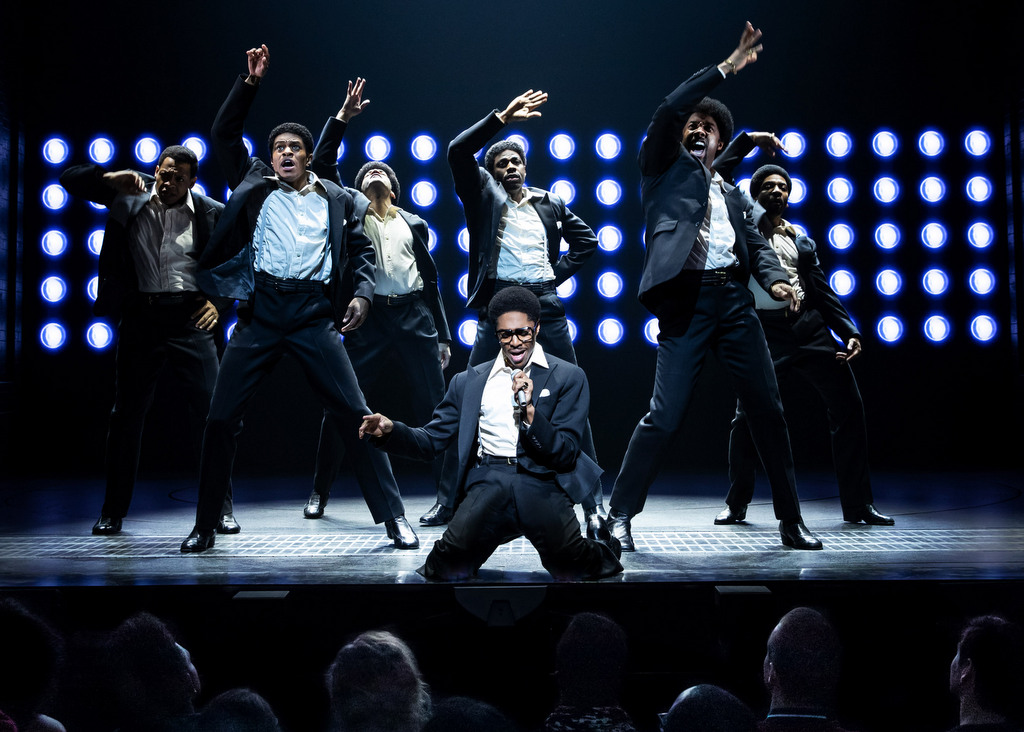
Ephraim Sykes (kneeling) and the cast of ‘Ain’t Too Proud’ (Matthew Murphy)
At the Imperial Theatre for 2 and 1/2 hours, there are musical numbers and dance moves that will so send you into the realms of the fabulous, I doubt you will want to come down to earth. The magic, history, poignance and joy displayed by the production company creatives of Ain’t Too Proud, are bar none. The show is one of the best on Broadway.
Special accolades go to Des McAnuff for his seminal direction and staging and Sergio Trujillo for choreography. But the rising glory must land on the actors and ensemble responsible for the breathtaking portrayals of the “Classic 5 Temptations,” Derrick Baskin (as Otis Williams) James Harkness (as Paul Williams) Jawan M. Jackson (as Melvin Franklin) Jeremy Pope (as Eddie Kendricks) and Ephraim Sykes (as David Ruffin), not the least of which include those portraying the additional Temps. These are just fantastic, the “stuff that dreams are made of.”
By the conclusion of Ain’t Too Proud, I felt like I had spent time with loving family who passed, but for a moment were returned to me by an act of grace so I might delight in the music of a pivotal time in the tumultuous 1960s. Brought back to life by the astute genius and prodigious talents of the performers, one more uniquely magnificent than the other, each manifested the perfection of golden-voices and harmonies synced to fluid gestures.
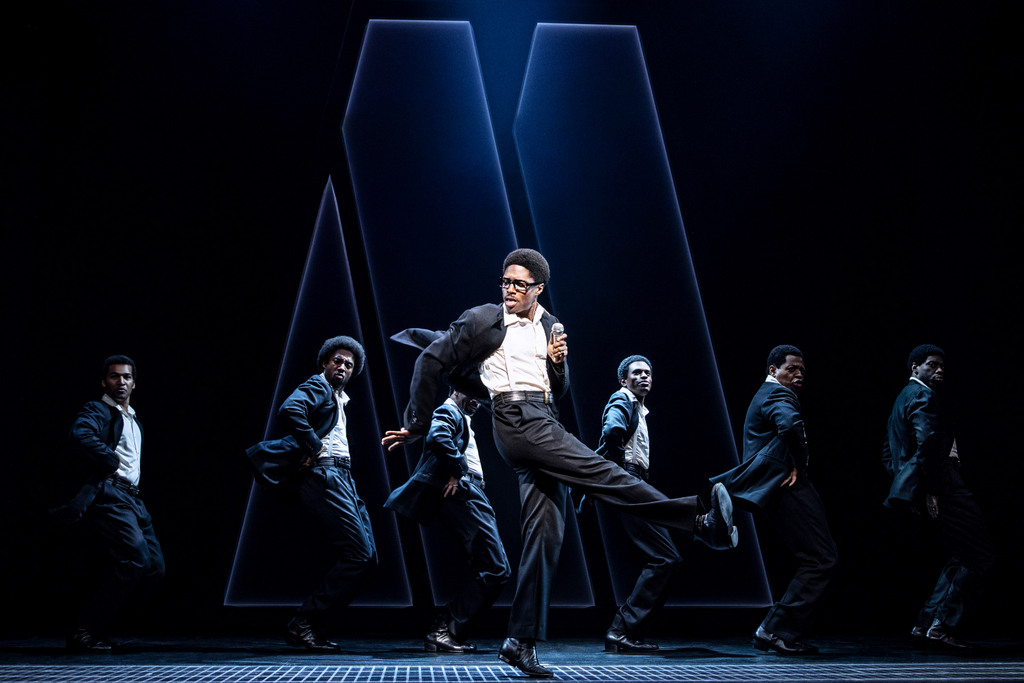
Christian Thompson, Saint Aubyn, Ephraim Sykes, Jeremy Pope, Derrick Baskin, and Jawan M. Jackson in ‘Ain’t Too Proud, directed by Des McAnuff (Matthew Murphy)
The story of The Temptations in Ain’t Too Proud (book by Dominique Morisseau based on the The Temptations by Otis Williams with Patricia Romanowski) is crucial to understanding our country’s vitality in progress through grinding work and sacrifice. And it is a reminder of how the human spirit can strive in the face of prejudice and discrimination to overcome and burgeon into greatness. The production highlights the personal sacrifice it took to be world renown, as Otis (Derrick Baskin) reveals very poignantly at the conclusion what happened in his life and in the lives of each of the “Classic 5.” And it is a story of possibilities, forgiveness and reconciliation.
Most importantly, Ain’t Too Proud is the chronicle of two individuals who united in a vision to transform The Elgins into The Temptations and ultimately crossover artists who would be play in London and other cities off US shores. Founder/organizer/creative genius in his own right, Otis Williams was the “engine who could.” He is still going strong as the last of the “Classic 5.” He is still creating and has established the 24th iteration of The Temptations whose name he owns. The other individual is Berry Gordy. He is the maverick, genius promoter, visionary of the Motown label who had more hits and strategies up his sleeve than Houdini (one of them was songwriter Smokey Robinson of The Miracles) coupled with an acute sense of the historical and cultural timing to create his own brand of
When Williams and Gordy met in the men’s room of a place where Gordy was scouting talent, Williams introduced himself and lightening struck. R & B, and the future of soul was indelibly made and both men’s destiny as well as the destiny of black people in our nation was shaped forever by these two future Rock and Roll Hall of Famers: Gordy in 1988, Williams in 1989 as a Temptation.
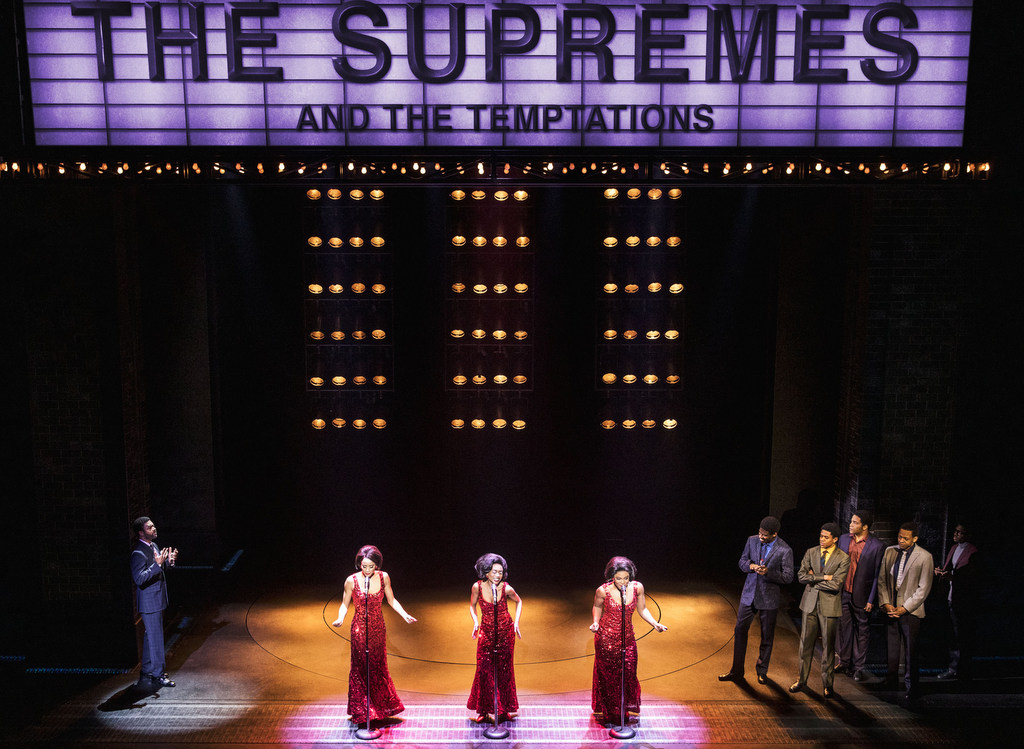
The cast of Broadway’s ‘Ain’t Too Proud (Matthew Murphy)
Motivated by money and the example of Civil Rights leaders like Martin Luther King Jr., Gordy understood that one way to best racism was through music. He helped to make those who sported the Motown label (The Supremes, The Miracles, The Temptations, The Commodores, Marvin Gaye, and so many more) ambassadors of good will. This was during a time when there was little good will to be had because of racial divisions and bigotry especially from those who embraced generational hatreds fomented by the Southern planter class. Jim Crow had even filtered to the North with redlining neighborhoods separating communities into wholly white or wholly black.
The planter class who lost their lucrative “peculiar institution” along with their place of gentrified greatness after the Civil War, whipped up the discriminatory sentiments of economically impoverished or working class whites. These wealthy brainwashed whites to believe they shared a common heritage in being “white.” The irony was, none of the wealthy ever sat down to eat with the economically challenged whites or associated with them in the same society or culture. They were kept far away in the “low rent districts” on the other side of the railroad tracks near the town dumps or sewage treatment plants.
When Gordy has the Temptations tour parts of the South and their bus is shot at and nearly stopped (if it had been they wouldn’t have made it to the next day) we see the extent of the Jim Crow hatreds. These echoes from the past unfortunately have currency for us today. The show reminds us that we have progressed, but must remain steadfast with what has been accomplished, which certainly The Temptations and Berry Gordy’s incredible vision helped to achieve.
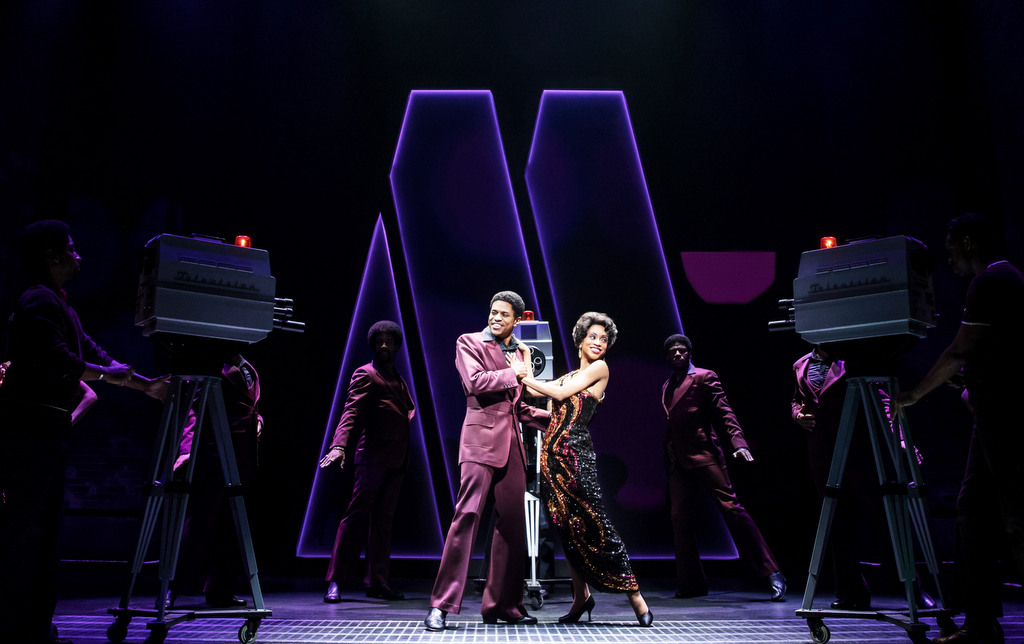
Jeremy Pope and Candice Marie Woods (center) and the cast of ‘Ain’t Too Proud,’ directed by Des McAnuff (Matthew Murphy)
Ain’t Too Proud’s book by Dominique Morrisseau is based on the book The Temptations by Otis Williams with Patricia Romanowski. The show features the music and lyrics from “the legendary Motown Catalog.” These elements plus the grist and hard work to bring them together in one ineffable, miraculous meld make this a sensational production. As I walked out after the standing ovations, I saw folks still sitting in the audience either chatting excitedly or just staring off in delighted appreciation in awe at what they had just experienced.
What makes this such a sterling production is that the incredible performances of the “Classic 5” (Baskin, Harkness, Jackson, Pope, Sykes) are brought to life singing favorites in the chronological order of their growth and evolution. Otis Williams (Baskin) narrates this development, and we follow him as he leads us through the arc of their glory to become the #1 stars of the Motown label. The songs are recognizable. Some favorites include “Baby Love,” “Ball of Confusion” “For Once in My Life,” “Get Ready,” “If You Don’t Know Me by Now,” “My Girl.” As Otis (Baskin is just gobsmacking as he weaves the threads through to the present day) relays each event in their various lives, we see the parallels with the appropriate songs.

Ephraim Sykes, Jeremy Pope, Derrick Baskin (forground) Jawan M. Jackson, and James Harkness in ‘Ain’t Too Proud,’ directed by Des McAnuff, book by Dominique Morisseau, based on the book ‘The Temptations’ by Otis Williams with Patricia Romanowski (Matthew Murphy)
So special is this song selection that pegs the songs to the emotional resonance of the group’s life situations! When we hear the backstory or see the dynamic of their personal relationships, the songs vibrate with energy and transcendence. This is powerfully effected with “Cloud Nine,” “I Wish It Would Rain,” “What Becomes of the Brokenhearted,” and “War.”
Another thrilling element of the production is its retrospective of the 1960s, and how through the reflection of music, our culture and history changed forever. Music and transformation was mirrored during the 1960s movements, The Civil Rights and Peace Movements, as well as the Cultural and Sexual/Gender Revolution. The songs parallel, symbolize and manifest that time. Their lyrics and beauty, however, are for all time.
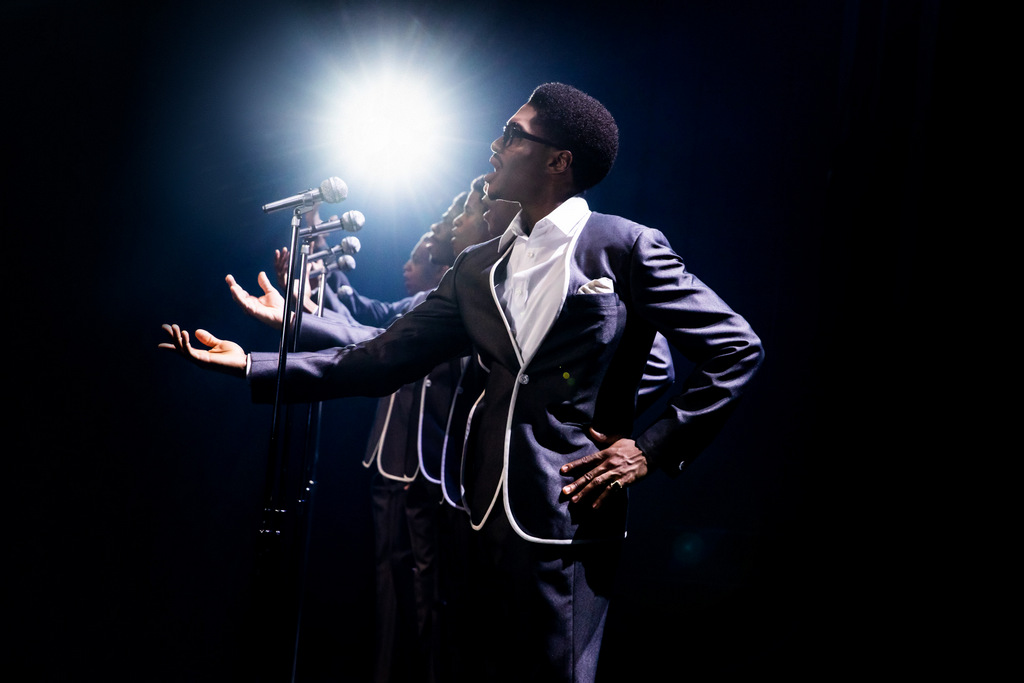
(L-R) Derrick Baskin, Jawan M. Jackson, Jeremy Pope, James Harkness, and Ephraim Sykes (front) in ‘Ain’t Too Proud,’ directed by Des Manuff (Matthew Murphy)
The director Des McAnuff folds in The Temptations’ viewpoints about Detroit’s unrest, Martin Luther King’s assassination and the rise of drugs which were flooding college campuses and spreading like a flood in all parts of the music scene. The film clips and projections of the Detroit riots, the marches, the King Jr. assassination are integral to the story of the Temptations.
Primarily, the show is a loving encomium for the “Classic 5” Temptations who were the founders of the original chart-busting group. It is also a reveal about how the genius of Motown and the transcendent talents of these five prodigiously hard-working performers shaped cultural attitudes against racism and prejudice at a time when the South was still lynching blacks, and when assassinations of Malcolm X, the Kennedys and Martin Luther King Jr. rocked the nation, fomenting profound sadness and hopelessness.
Through all of it, is the ineffable sound of this group and its add-ins as some left and others came back. After a decade out on their own, Kendricks (Pope) and Ruffin (Sykes) returned to perform. All the while The Temptations soared to Top 100 charts and even bested The Supremes’ position at Motown. Their music was the golden thread that transformed national attitudes toward race and reinforced that as citizens we can be decent. The Temptations drew opposing sides away from polar extremes. They encouraged that the shared love of R & B can take us beyond division and hatred.
Special kudos go to Orchestrations by Harold Wheeler and Music Direction and Arrangements by Kenny Seymour. Recognition also goes to Robert Brill (Scenic Design) Paul Tazewell (Costume Design) Howell Binkley (Lighting Design) Steve Canyon Kennedy (Sound Design) Peter Nigrini (Projection Design) and other creatives whose collaborations make the production a smash hit out of the park.
Ain’t Too Proud is at The Imperial Theatre (249 West 45th Street). This must-see show runs with one intermission. For tickets go to their website by CLICKING HERE.
 CAROLE DI TOSTI