Blog Archives
Susan Stroman Interviewed by Sharon Washington, a LPTW Event

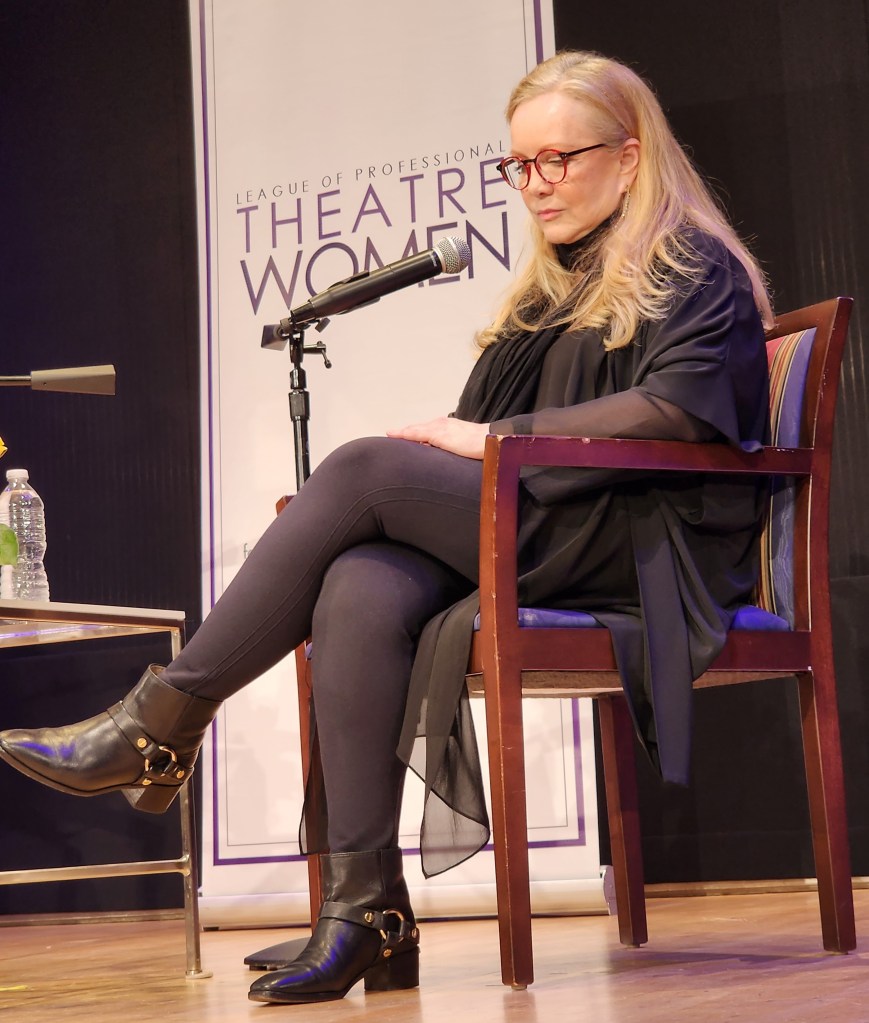
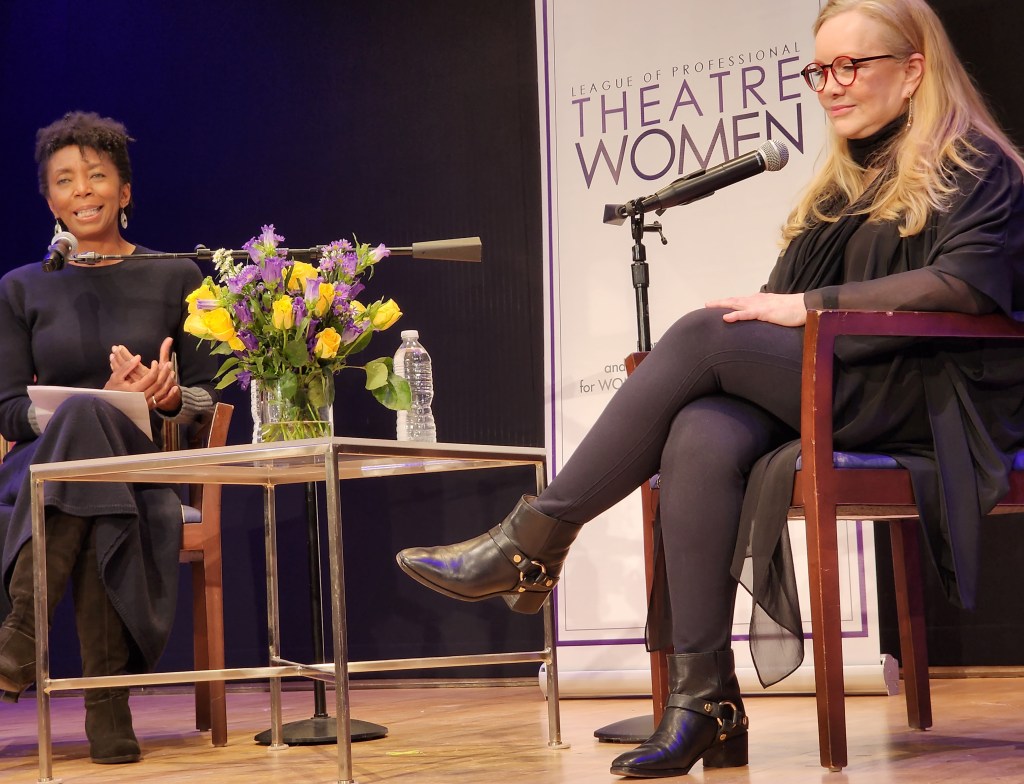
On Friday, November 17, the League of Professional Theatre Women held an interview of an icon in the theater, Susan Stroman. The event was part of The Oral History Project which is held at the New York Public Library for the Performing Arts at Lincoln Center. The venue was the Dorothy and Lewis B. Cullman Center/Bruno Walter Auditorium.
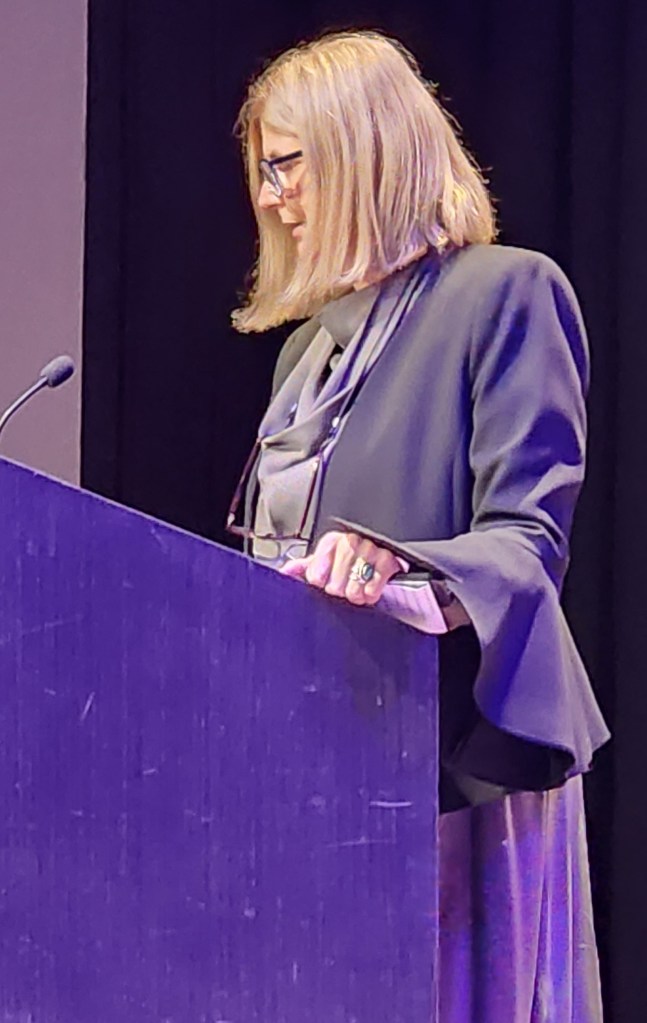
Currently produced for the League by producer and director Ludovica Villar-Hauser, The Oral History Project was founded and produced for 26 years by the late Betty L. Corwin. The interview of Susan Stroman by friend and colleague Sharon Washington was video taped and will be archived in the collections of the New York Public Library for the Performing Arts at Lincoln Center.
How Sharon Washington and Susan Stroman met
After comments by President Ludovica Villar-Hauser, and introductions, Sharon Washington (check out her credits and work on https://iamsharonwashington.com/), began by sharing the story of how she came to first meet Susan Stroman in 2009. At the time, Washington’s agent suggested she audition for a part in a musical, though Washington was a dramatic actress. When Washington posed that she hadn’t been in any musicals, her agent reassured her that in this one, she wouldn’t have to sing, dance or speak. Ironically, Washington questioned why she would even consider such a part. However, her agent countered that it would be directed by Susan Stroman.
Thus, Washington and Stroman collaborated on the 12 times Tony nominated Scottsboro Boys. The musical went on to win the Evening Standard Award for Best Musical in the UK. Though the production didn’t win any Tonys, Washington emphasized that then and now, Stroman’s process is exhilarating.
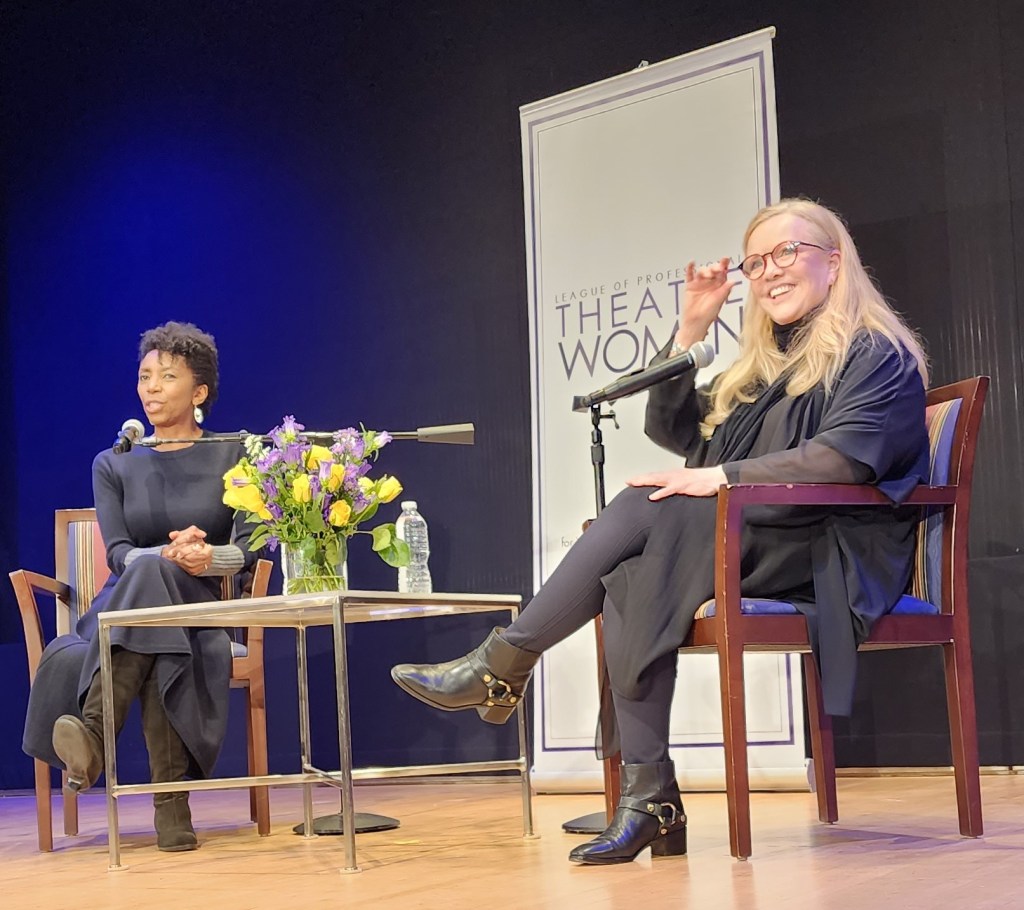
Specifically, Stroman creates a safe room that is caring. Washington and the other cast members felt so comfortable that they could work freely. Washington pointed out during the interview that Stroman imbues a quality of trust to be a creative collaborator. In her safe space one can try things out and make suggestions. This artistry of bringing out the best in the cast and creative team has brought Stroman accolades and forever friends. Sharon Washington is one of them.
Susan Stroman is a theater Icon
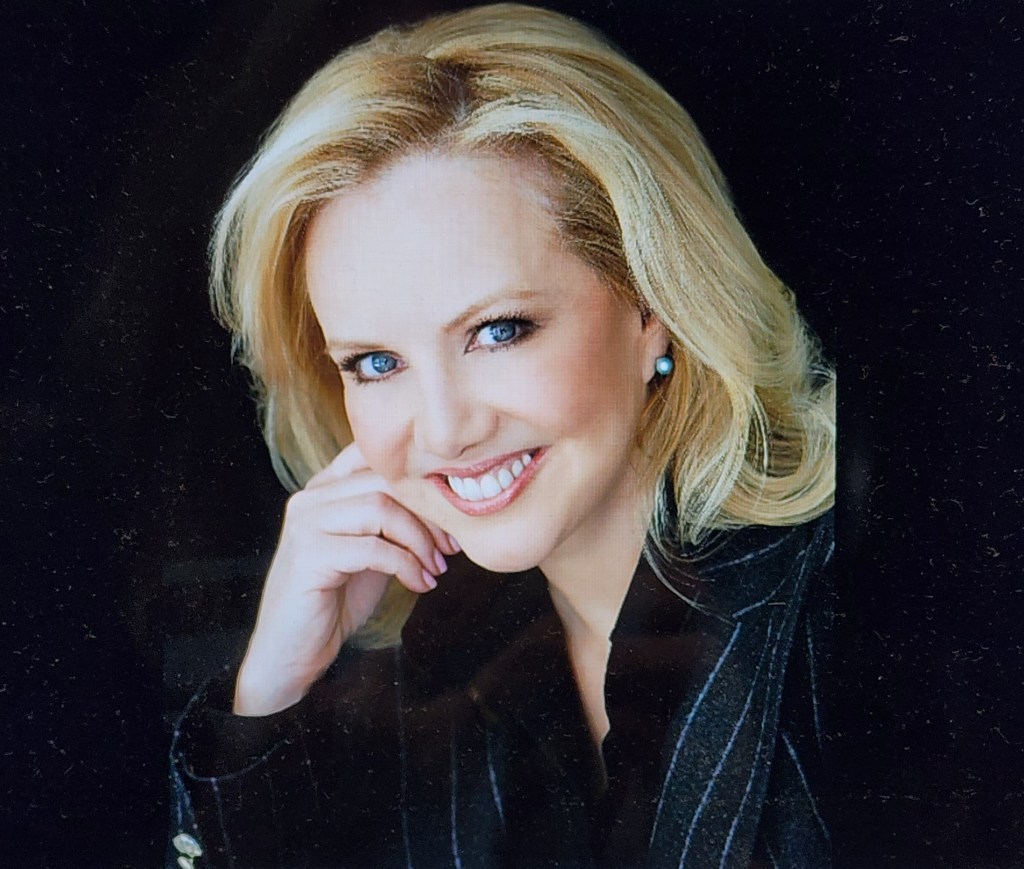
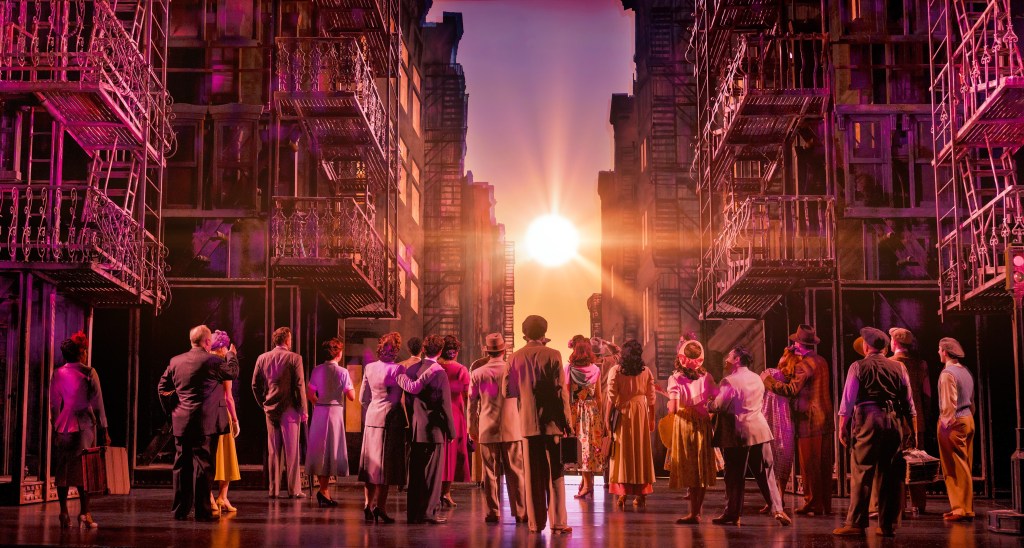
Susan Stroman (Director/Choreographer), is a five-time Tony Award-winning director and choreographer. She has won Olivier, Drama Desk, Outer Critics Circle, Lucille Lortel Awards. Also, for her choreography, she has won a record number (six) of Astaire Awards. Recently, she directed and choreographed the new musical New York, New York, which was nominated for nine Tony Awards and which won Best Scenic Design for a Musical (Beowulf Boritt). The music was by John Kander, lyrics by Fred Ebb and Lin Manuel Miranda, and a book by David Thompson and friend Sharon Washington.
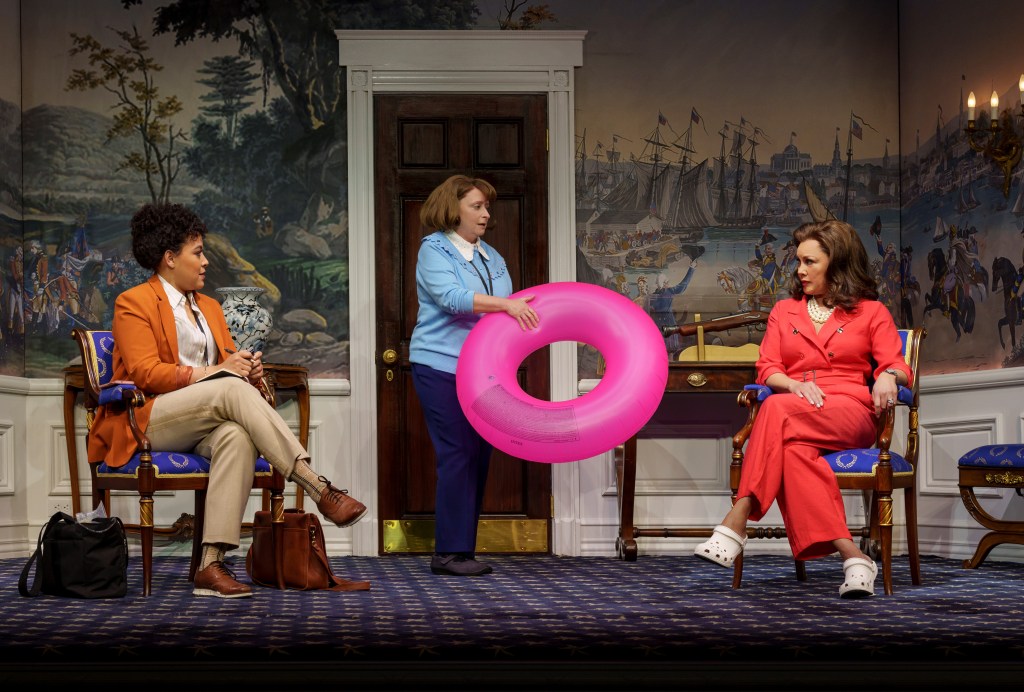
In other recent work, she directed the hysterical, LOL new play POTUS: Or, Behind Every Great Dumbass Are Seven Women Trying to Keep Him Alive. And this season in London’s West End, she directed and choreographed the revival of Crazy for You at the Gillian Lynne Theatre.
Past exceptional productions include her direction and choreography for The Producers (12 Tony Awards including Best Direction and Best Choreography). She co-created, directed and choreographed the Tony Award-winning musical Contact for Lincoln Center Theater. She received a 2003 Emmy Award for Live from Lincoln Center. Broadway credits include Oklahoma!, Show Boat, Prince of Broadway, Bullets Over Broadway, Big Fish, Young Frankenstein, The Music Man and others. Her Off-Broadway Credits include The Beast in the Jungle, Dot, and Flora the Red Menace to name a few.
Stroman has experience with ballet and opera
She garnered additional theater credits and to these add ballet and opera which include The Merry Widow (Metropolitan Opera); Double Feature, and For the Love of Duke (New York City Ballet). She received four Golden Globe nominations for her direction and choreography for The Producers: The Movie Musical. Additionally, she is the recipient of the George Abbott Award for Lifetime Achievement in the American Theater, and an inductee of the Theater Hall of Fame in New York City. For her complete list of accomplishments, credits and awards, go to www.SusanStroman.com
After Washington and Stroman discussed her beginnings growing up in Delaware in a house of music, where she danced and was in dancing school, she would always create dances when her father played the piano. She grew up appreciating her father’s storytelling and musical talent. She majored in English at the University of Delaware and was attracted to story telling and its different forms which, of course, included music and dance. She mentioned that her family would watch movie musicals together on their sofa, and as she watched, she intuited the synchronicity between the dance and the music and the feeling it created. Storytelling through the dance came easily to her because of her parents and their appreciation of musicals, music, movement and how dancing conveyed the story.
Choreography helps to move the plot forward
For Stroman, today, especially with the virtual media environment, choreography is imperative for moving the plot and story forward in immediacy. The audience wants the story to move forward constantly, which can be accomplished with choreography transitioning the turning points so the events have a forward momentum. In recognizing the importance of the staging and the dance, every corner of the stage must be considered. There is no empty part of the stage that doesn’t have the element of storytelling through dance, music and dialogue.
It is a testament to Stroman’s ability to continually provide fascinating visuals, color and movement so entrancing to audiences, who love her work, if sometimes critics don’t fully understand or appreciate the genius she displays. Indeed, with the stage beginning as a writer begins with a blank page, Stroman thinks profoundly about every dancer, every performer, every musical note, every word of dialogue and of course all the elements in the story (Aristotle’s poetics).
For my mind, her works should be studied in musical theater classes in universities for their immediacy, their vibrance, their emotional grist and their coherence as they synchronize elements of scenic design, costume design, and hair and wig design, lighting, sound, to effect the beauty, sorrow, majesty of the story being told.
The film The Sound of Music was an influence
Stroman emphasized that she and her brother saw The Sound of Music together and it impacted her understanding. She stated, “I was blown away by that movie. I guess I was twelve.” She couldn’t believe the story that was being told and how important the story was, realizing it could be something which is really profound. Stroman followed with the idea that she visualizes music with a story following along. Additionally, she imagines how the dancers would be dancing. Immediately, her “brain begins to spin about what story is being told through the music, the instrumentation and the orchestrations.”
When Stroman puts a show together, she “works very much with the show’s composer and arranger,” of how to open up the music. She manipulates the time signature of the music to help represent the emotion she wants the actors to play and to move forward the momentum of the story. She does a lot of research on every musical. This might include the history of the decade, the geographical area, the setting. She immerses herself in research and thinks extensively about the characters. This helps to inform how she choreographs the music.
Working with performers is about collaborating in a safe space.
Working with actors is about collaborating in a safe space. First, comes the research. Then comes the time and effort put into using what has been learned. Washington attested to Stroman’s being there early before everyone else, and staying late after everyone was gone. Stroman works extensively with her musical partners. Additionally, she is aware of the actor’s process. Each have their own process. Some pick up elements very quickly and others don’t. It is a balancing act to get all on the same page and not make them feel inferior.
In making sure all feel comfortable in the learning process, Stroman stays positive and roots for her actors, wanting them to do their best. Getting the performers to the point of excellence, she has to do her research and be prepared before she ever creates the safe space in the rehearsal room. When they arrive there together, she’s worked through almost the entire show. However, part of creation and allowing the cast to feel comfortable, she doesn’t share all of what she knows. She wants them “to feel free” and be creative and “feel a part of it.” She’s also inspired by the performers who come up with their own creative suggestions. She allows for actors and dancers’ agency, encouraging them to try something different.
Stroman collaborated with Washington during the production, Dot
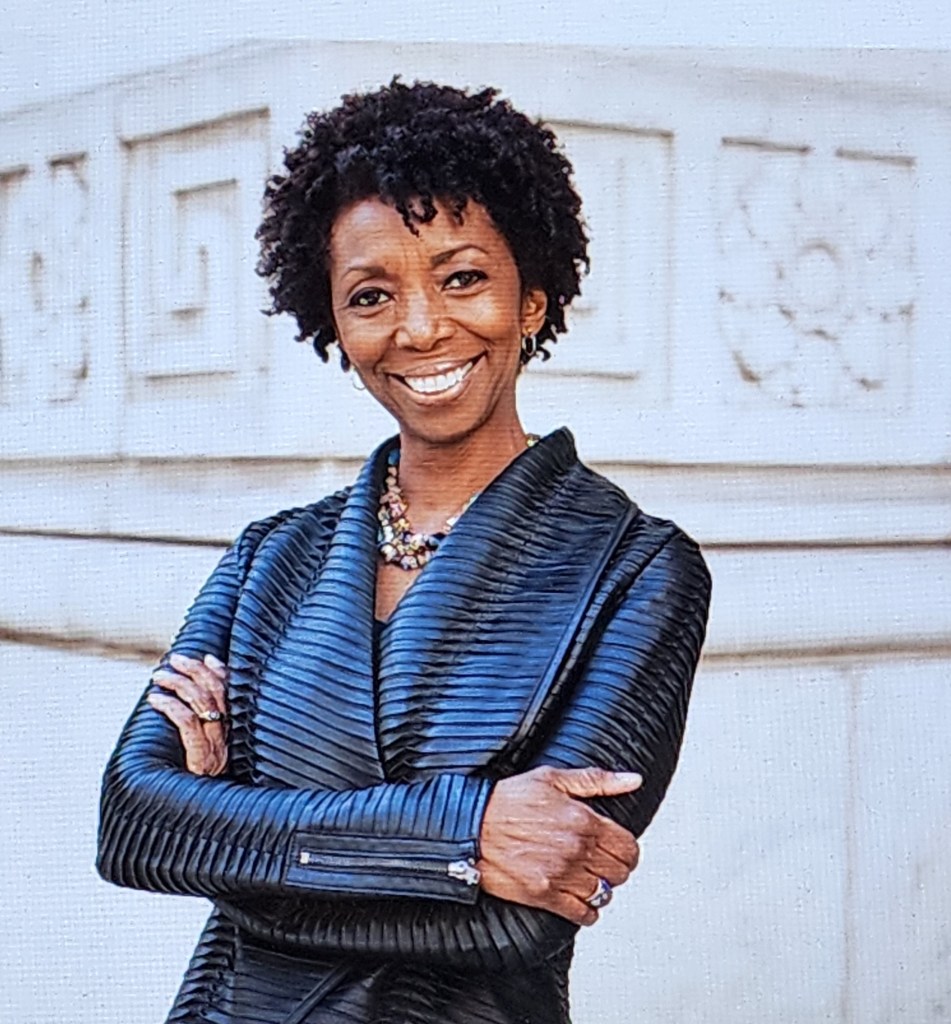
Stroman shared a moment in Dot where Sharon Washington’s character had extensive monologues and she gave her the stage action of cooking eggs. Stroman had Washington pace the dialogue with cooking eggs so that she finished every time on a particular word. Though Washington was skeptical at first, she become so attuned, that the timing was perfect. With Stroman’s encouragement, she finished when the eggs were done and landed precisely on the designated “word” in the monologue. Both Stroman and Washington discussed the wonder of creating something that didn’t exist before. Considering all the people that collaborated in the creation, the artistry of that collaboration to present something amazing is miraculous.
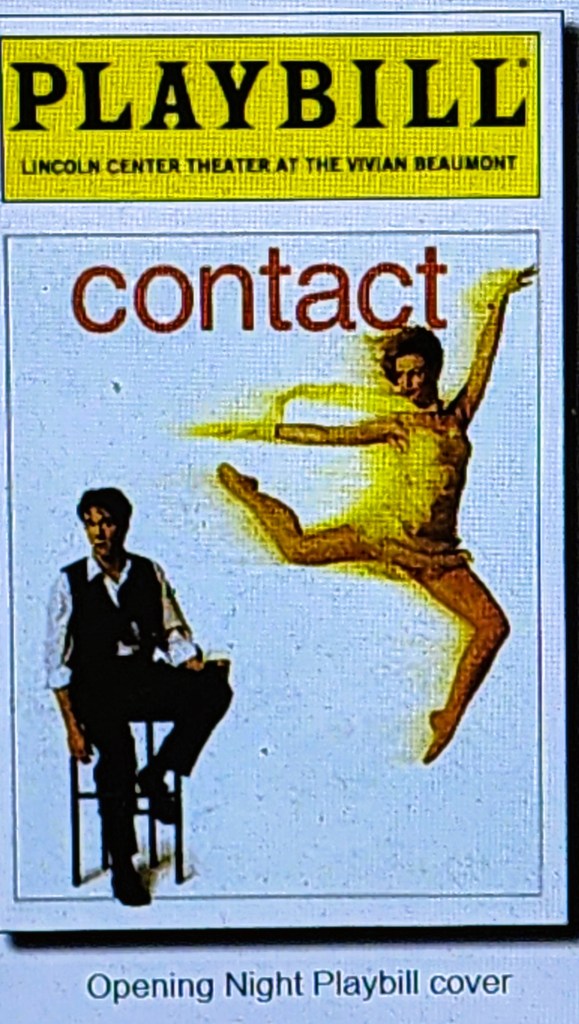
Stroman discussed how the ideas for various scripts or stories come from various places. The seminal idea for the show Contact came surprisingly with the image of the girl in the yellow dress. Stroman discussed that she was in a bar at one in the morning, and in a bar where all the New Yorkers wore black. And “in walked this girl with a yellow dress which I thought was quite bold for one in the morning.” Stroman described the girl’s action, “She would step forward when she wanted to dance with somebody, and then she would retreat back when she was done with them.” According to Stroman, she was an amazing dancer and she was only there to dance. Stroman watched her dance with various men. Then she disappeared into the night.
The girl with the yellow dress becomes Contact
Around two weeks later at Lincoln Center, Stroman was approached about having ideas. She said, “You know, I think I have an idea.” And from then on, the story of the girl in the yellow dress took flight, bringing in all the elements of music, dance, and storyline. That’s how Contact came into existence, from a visual and organic, raw experience that stirred Susan Stroman’s imagination. Amazing! Contact ran for three years. Humorously, Stroman discussed how pictures of the “girl in the yellow dress” were on busses and billboards and she was thinking the girl would come forward and say something. She never did.
Stroman shared another story about the time she met with Mel Brooks. She was working on A Christmas Carol when she received a call to meet with Mel Brooks. Familiar with his work, she wondered what he wanted to talk to her about. There was a knock at the door. And when she opened it, he started singing, “That face, that face…” and he danced down Stroman’s long hallway, then jumped up on her sofa and said, “Hello! I’m Mel Brooks.” Stroman shared that she didn’t know what would happen. She thought, “But whatever it is, it’s going to be a great adventure.” Indeed, the experience was, “the adventure of a lifetime.”
Regarding working with Mel Brooks, Stroman suggested that she learned from him, collaborating and observing. Of course, it was a new art form for him, so he was flexible and learned from Stroman’s theatrical experiences and process of working. It appears they developed a mutual admiration society.
Facing obstacles as a woman
Washington asked about the obstacles Stroman faced as a women. When Stroman got in the business, she stated, “It really was male dominated.” And she mentioned that it has only been in the last fifteen years that there have been women directors. However, she was not certain about “why that is or was.” When she started, she wanted people to believe, “In the art of what I was doing.” She didn’t dress up. She wore a baseball cap. At that time there was a pressure to “dress down,” and be “strong, but not too strong.” Stroman felt like she “could do it,” when she came to New York. However, she didn’t know if she would “be allowed to do it.”
In sharing a story to encourage young people or anyone in the business, she suggested “always ask questions.” The worst that can happen is that “they” say “no.” One day she and another actor were throwing out ideas and came up with the idea to approach Cabaret’s Kander and Ebb and ask if they could take one of their shows and direct and choreograph it for Off-Broadway. They were shocked when Kander and Ebb agreed and they took Flora the Red Menace, reworked it and brought it to The Vineyard Theatre.
Critics
Stroman discussed critics. She mentioned that “bad reviews are very hurtful.” She also suggested that women’s work is more harshly criticized than men’s and that the same applied in politics. She referenced her great disappointment that New York, New York didn’t have staying power and closed. They were waiting for the tourists, but they never came. Regarding the collaboration, she enjoyed working with the creative team tremendously. Of course, that made the show not lasting more poignant. The show received positive and negative reviews. Regarding any positive reviews received over the years, Stroman quipped, “The good reviews are never good enough.” And when there’s a great review, “You think, well, why didn’t they talk about that?” You just “have to feel good about what you are creating,” she insisted.
In discussing mentorship Sharon Washington suggested Stroman is very gracious and lets everyone participate. With every show she does, she usually has “A young observer who comes on the show and they get to be there for the whole process.” She said, “It’s important to be in the room where it happens.” Young people learn best when they see the process unfolding and join in it, participating whenever it is feasible. They learn, then, that it’s a collaboration. As the team works together, the director coheres with all the designers. It is the director, who has a clear vision of what the production should be. Then, the director shepherds the creatives and negotiates through and around the various egos.
For more on Susan Stroman https://www.susanstroman.com/ or Sharon Washington https://iamsharonwashington.com/ go to their websites. For a video of the interview, visit the New York Library for the Performing Arts archive in person.
The League of Professional Theatre Women is a membership organization for professional theatre women representing a diversity of identities, backgrounds, and disciplines. Through its programs and initiatives, it creates community, cultivates leadership, and seeks to increase opportunities and recognition for women in professional theatre. Its mission is to champion, promote, and celebrate the voices, presence and visibility of women theatre professionals and to advocate for parity and recognition for women in theatre across all disciplines.
‘New York, New York’ is a Wow, Manhattanhenge is Here.

Inspired by the titular MGM motion picture written by Earl M. Rauch, the musical New York, New York at the St. James Theatre is an ambitious, updated adaptation from uneven source material. Its spectacular production values guided by the prodigious five-time Tony winner, Susan Stroman, who does double duty with direction and choreography, is set over the course of one year with the four seasons structuring the arc of development in the lives of the characters who want to “be a part of it in old New York,” from the Summer of 1946 through the Summer of 1947. Written by David Thompson, co-written by Sharon Washington with additional lyrics by Lin-Manuel Miranda and music and lyrics by John Kander and Fred Ebb, New York, New York’s music differs from that featured in the titular 1977 Martin Scorsese film.
The noted exceptions are a few songs like “Happy Endings” and two schazam hits sung by Liza Minnelli in the film. Minnelli was initially associated with “New York, New York,” until Liza told Uncle Frank it was his to sing. Afterward, it became a part of every concert, TV show or gig Sinatra starred in. “But The World Goes ‘Round” is singularly Minnelli’s, though others have picked it up and run with it applying their own versions.
With such song classics, the production doesn’t capitalize on their tonal motifs threading intermittently from Act I to Act II more than just once. Instead, saving the best for last, they explode toward the conclusion. At the end Jimmy Doyle’s band (the real orchestra) rises up from the pit, playing “New York, New York” with bravado and glory. By far, the two songs are the richest, most seismic and memorable of the score. Despite who is singing them, they are a pleasure because of their symbolic associations.

The first is New York City’s anthem played as an encouragement around every dooms day disaster the city experienced in recent memory from the Terrorist Attack of 9/11 to the COVID-19 botch job by the twice-impeached former president, when nightly the city came out to applaud healthcare workers and some played Sinatra recordings of the signature song from their balconies. The other lush beauty about the irrevocability of life’s changing turns, highs and lows, is a classic best remembered for Minnelli’s fabulously impassioned rendition.
These songs, in their own right, are like the North Star. “But the World Goes ‘Round” appears to guide the writers to effect a richer, stirring musical about making it in a tough, unforgiving town which necessitates growing a thick skin because regardless, the world will spin, whether one plays the broken-hearted victim as Jimmy Doyle does initially in Act I, or become the heroes of their own myths as do all the characters who serendipitously meet in a Booking agent’s office, then join Doyle to play in a “tired club” in Act II in a reviving number “San Juan Supper Club.” However, reaching success takes a while.

Specifically, the book meanders as it strikes out into different story-lines of immigrants and ethnics, who come to Manhattan to establish their unique voices and become the stars of tomorrow. Problematically, the music, which should lead in a brassy, bold pop style of the latter forties reimagined, follows without the same consequence and heft of the two signature songs we long to hear that show up in full force by the end. The story lines take wayward side directions, straying away from “the heart of it,” making Act I (17 songs) much longer than necessary to spin the characters’ struggles in New York. The central focus becomes redirected. Eventually, it comes back and the lens crystallizes on salient themes, before flitting away to feature another plot-line.

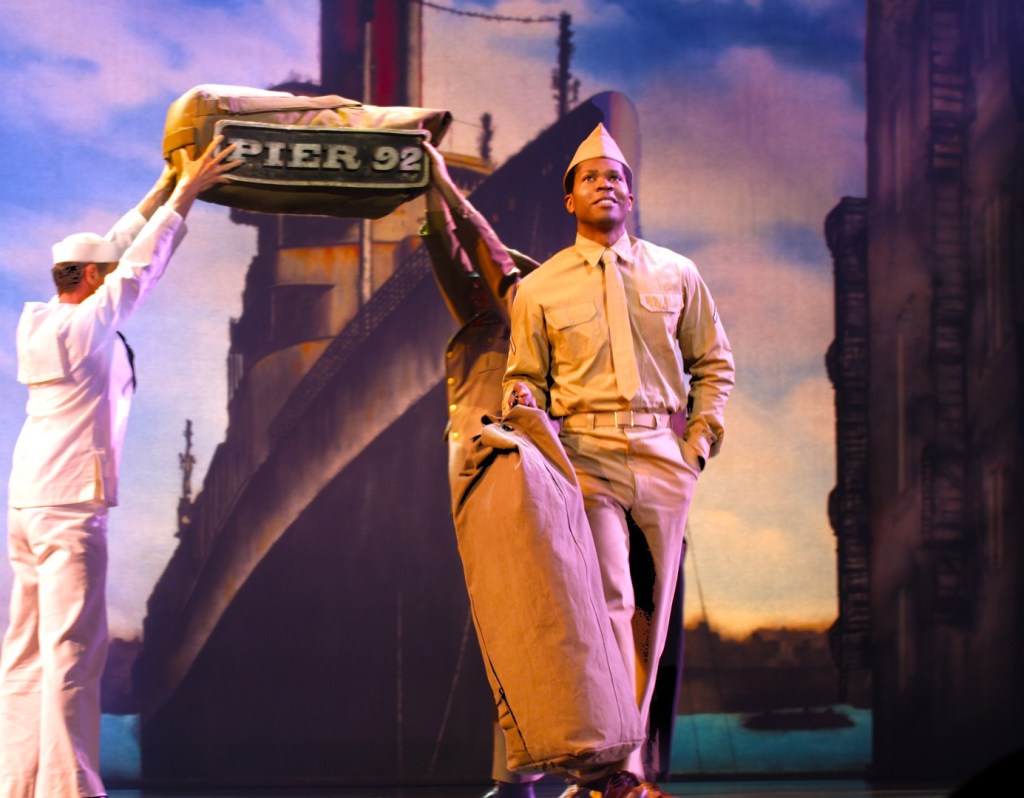
The centrality, which is supposed to be how Jimmy Doyle’s Major Chord Club and musical group comes together, is delayed by scenes of the violinist from Poland and Mrs. Veltri waiting for her solider son to come home. What is represented is the loss and death from the war, a loss which explains why Doyle drinks, is angry and argumentative with those who could help him. He grieves his talented brother dying, while he, the inferior with “flat feet,” serving unheroically behind a desk, feels guilt as the ghostly shadow of his glorious sibling occludes him.
The impact of grieving New Yorkers out from under a cataclysm of the holocaust, which took violinist Alex Mann’s family and the heroic sons of America’s war dead is important, but diluted in the mix of all that is going on. Doyle, Mann (Oliver Prose) and Mrs. Veltri (Emily Skinner) are meant to carry that theme of loss and grieving as one more aspect of the “city that never sleeps,” but the power fades too fast for the audience to fully appreciate it, as the action springs to another scene and character. This is the nature of the city which acknowledges then moves on with forward momentum.
Not all the story-lines need specific scenes for explication. Some either should have been edited to a stark jabbing point with the songs either pumped up and primed, or eliminated. They seem extraneous, done for the sake of inclusiveness, rather than out of a visceral, organic need driving the characters in their forward momentum. Editing might have slimmed down the excess that sometimes dissolves the production’s vitality. Though the writers moved away from the film’s story, to be inclusive and representative in an update, they do feature the relationship between multi-talented musician Doyle (Colton Ryan really picks it up in Act II) and powerhouse singer Francine Evans (Anna Uzele has the creditable voice).

However, the idea of a New York City, where inclusiveness and freedom, born out of anonymity and size, that also has a down side, is not manifested with unique particularity beyond the concepts of struggle and making it. Only Jimmy Doyle’s character is nuanced and shaded with interest to reveal a convincing transformation that is believable, effected beautifully by Colton Ryan.

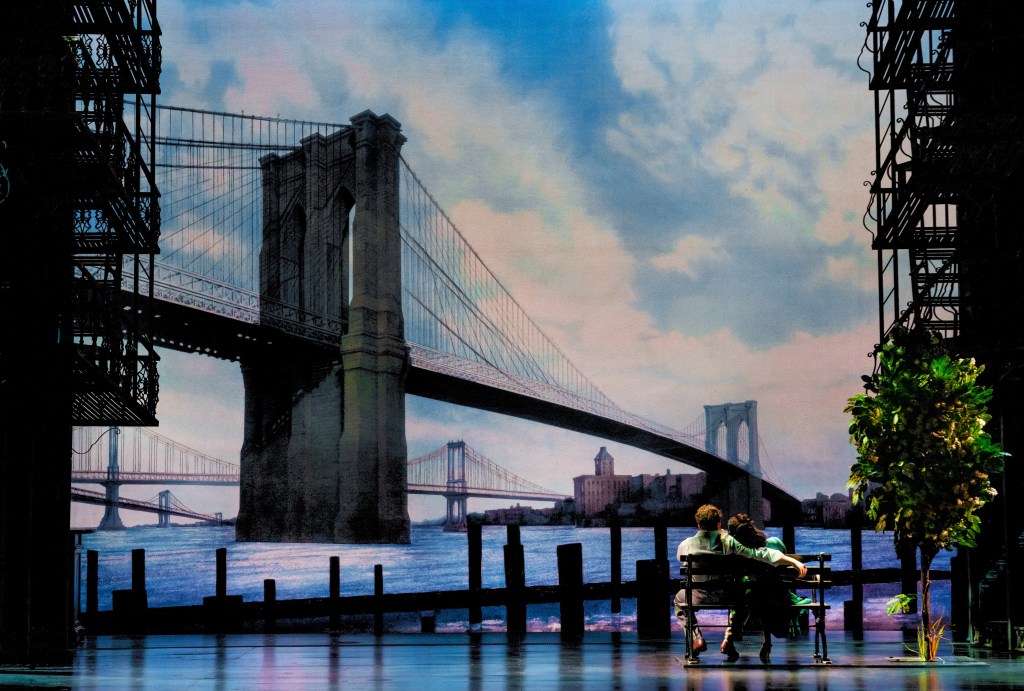
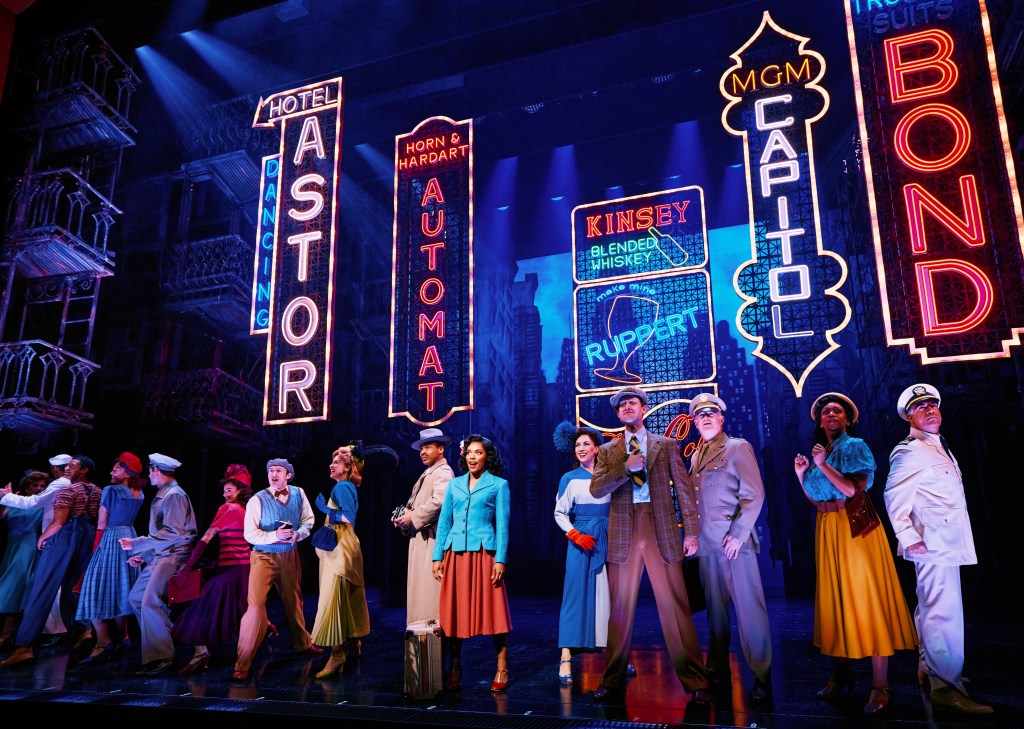
Despite these problems with the book, Stroman leaps over them creating terrific moments in representing the lifestyle of New York City street scenes. She materializes a pageantry of perfection in staging the dance numbers with delightful framing assists from Borwitt’s scenic design and Billington’s lighting design. These gloriously drive the production, along with the fabulous projection design by Christopher Ash and Beowulf Boritt, which majestically integrates historical photographic blow-ups with the sets (scaffolding erected to look like apartment buildings). New York City in their vision is a treasure to behold back in the day, as they remind us of how we got from then to now. Of course, the heartbreaking projections of the old Pennsylvania Station torn down in contrast with Grand Central Station which we are eternally grateful for Jacqueline Kennedy Onassis’s crusade to save it, are vital historical references in an ever changing Manhattan.
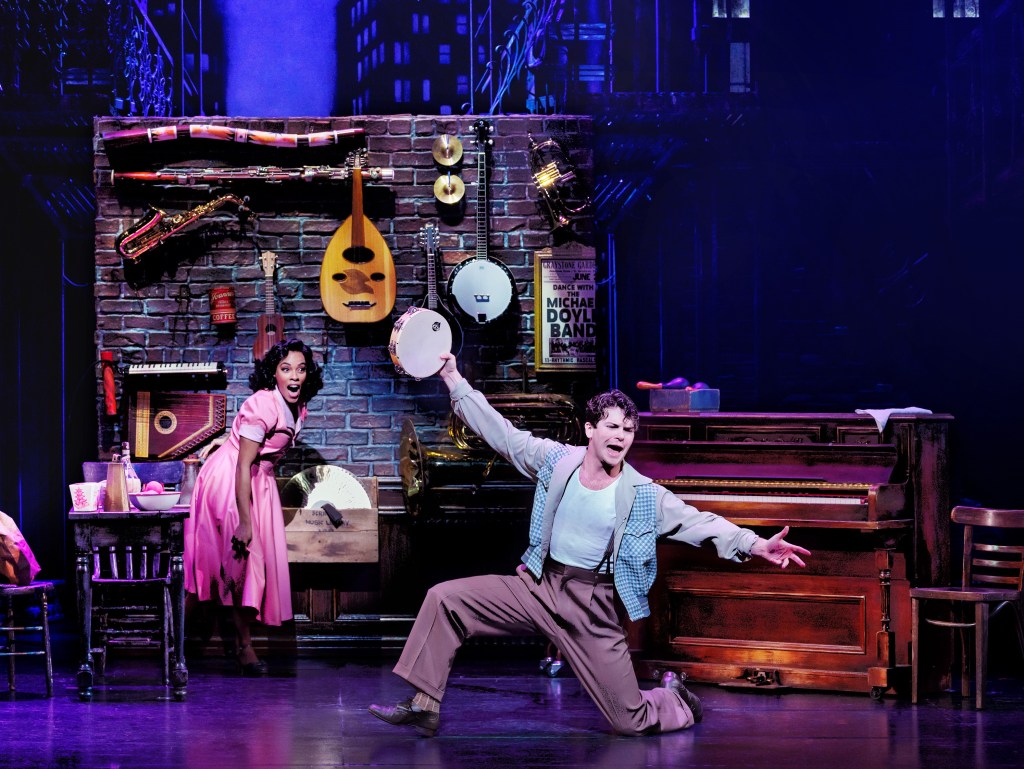
Stroman choreographs the ensemble with excitement, energy and vibrance. She shepherds the musical’s technical team to strike it hot. They create the atmosphere and stylized beauty of post war New York neighborhoods, synchronizing the scenic design, lighting design and projection design. Along with Donna Zakowska’s stunningly hued costumes pegged to the period, Michael Clifton’s period makeup design, Sabana Majeed’s hair and wig design and Kai Harada’s sound design (I heard every word) these talents manifest Stroman’s concepts of a bustling, charged city hyped up to establish the nation’s new-found prominence after winning WW II in Europe and the Pacific. The city of dreams is once more collecting its dreamers who will sink or swim according to luck and perseverance.

There are many moments in New York, New York I loved. The song “Wine and Peaches,” performed with the ensemble’s tap dance on a foundational iron beam, beautifully set “high in the sky” with the city projected from down below during the ironworkers lunchtime is gobsmacking. It’s a remembrance of the iconic black and white photo of the Empire State Building being erected and ironworkers sitting on the structural beams over 80 + stories up. The song is emblematic of New York City construction workers who are brave, balanced and accustomed to such heights, that they might dance “for the hell of it.” It is also a testament of the tremendous development in the city whose air rights allow buildings to rise taller and taller. Symbolically, visually and musically performed with grace and fun, the number is one of the most memorable and brilliant.

Another moment that is thematically important is the song “Major Chord,” as Jimmy Doyle and friend Tommy Caggiano (Clyde Alves, a fine song and dance man) discuss that “music, money and love” combined in a harmonious chord become what drives a purposeful life for them. In the lead up praise of the city, Tommy’s humorous truism rings clear for New Yorkers when he says, “It’s the greatest social experiment. Everybody lives here and everybody’s natural enemy lives here. And we manage not to kill each other. For the most part.”

To top his comments as New Yorkers are wont to do, Jimmy says, for him, New York City is a “major chord,” and Uzele’s Francine joins in to ask how to find her major chord (music, money, love). Tommy and Jimmy help her find an apartment near Jimmy to start her journey to become a star. Eventually, as fate throws Francine and Jimmy together (more through events he causes) they marry, have ups and downs and reconcile at the “Major Chord,” Jimmy’s successful club which concludes the musical with a resounding and stupendously staged “New York, New York,” sung by Uzele’s Francine.

In Act I, “New York in the Rain” is beautifully sung and staged with colorfully hued umbrellas skipping across the stage, under their own power, and others held by the ensemble who twirl them in uniformity with graceful energy. As Jimmy, Ryan’s “Can You Hear Me?” and “Marry Me,” are appropriately winsome and romantic as Act I concludes with Francine and Jimmy’s relationship sealed in love and marriage.

Act II picks up the forward momentum. Jimmy pushes for his “major chord” in his relationship with Francine, “Along Comes Love” and in the dynamic “San Juan Supper Club” (Ryan, Angel Sigala, John Clay III) which is a rousing, dance number where the musicians we’ve met in Act I come together to form Jimmy’s band which will headline his club Major Chord. In the superb “Quiet Thing,” Ryan’s Doyle shares the preciousness of arriving at his dream, not with great fanfare, but with the inner knowledge of its success, which is the confidence that the dream is the reality. The lyrics and music are Kander and Ebb at their finest, and Ryan delivers a superb, heartfelt slam dunk that any artist can identify with.
As Francine understands that the villain with a smile, Gordon Kendrick (Ben Davis), wants to unrealistically take her, a black woman, out on the road so he can sexually seduce her, Francine affirms what her husband Doyle has told her all along. Kendrick is a hypocritical wolf in a “promoter’s clothing.” She concludes her last song on the radio after Kendrick tells her “she’s finished.” “But the World Goes ‘Round” is Uzele’s home run and Francine’s realization that she must move away from him and join Jimmy at the Major Chord Club.

An incredible and breathtaking encomium to New York City is in one of the final musical numbers “Light” presented by Jesse (John Clay III) and the ensemble. Kudos go to the technical team and Stroman to effect Manhattanhenge through the projections, sets and lighting. It is absolutely magnificent and of course, symbolic that light, love and musical goodness can be in a city that is its own memorial to industry, dreams and aspirations.

Manhattanhenge occurs when the sunset perfectly lines up with the east-west streets on the main street grid in Manhattan. It’s Stonehenge in NYC! Happening twice over a two-day period, on one day you can see the sun in full and on the other day you get a partial view of the sun. Then to encapsulate the “light” in the city that is its own monument, Francine concludes accompanied by Jimmy Doyle’s band with “New York, New York.” And indeed, the show ends in a major chord at Doyle’s Major Chord Club in a beautiful flourish with Uzele singing her heart out as the audience stands with applause dunning the critics who panned the production.

New York, New York is exuberant, complex and bears seeing twice. There is so much happening you’re going to miss something and think the fault is in the production, as I did initially. Stroman is her representative genius. If one goes without expectation, your enjoyment will be immense. Look for the fine performances. Colton Ryan is sensitive and heartfelt especially in Act II and his gradual transformation is exceptional in “Quiet Thing,” and afterward. There’s nothing like knowing one is a success and at home in that confidence. The principals, especially Uzele, Janet Dacal, Ben Davis, Angel Sigala and the others mentioned above have golden voices. All are their own major chords, thanks to the music supervision and arrangements by Sam Davis.
For tickets and times go to the production’s website https://newyorknewyorkbroadway.com/
‘Richard III’ Shakespeare in the Park, a Stunning Achievement

For sixty years the Public Theater has kept its mission to offer free Shakespeare in the Park to educate and entertain in the finest of historical traditions that explore Shakespearean theater. This year as in previous years there are two productions Richard III and As You Like It offered in the lovely environs of the Delacorte.
Richard III explodes on the stage with energy and vibrance sported by an amazing and diversely talented cast overseen with stark determination, elegance and astute attention to detail by Tony nominated director Robert O’Hara (Slave Play) in his debut at the Delacorte. The production runs until July 17th, and is a must see event. So plan accordingly. You don’t want to miss what will surely be an award winner whose cracker jack design team blasts one’s socks off with beauty, majesty and thematic coherence.

From the moment Richard III kills Henry VI in a striking, surprising, violent moment on the circular platform center stage, to the end when Richard III in warring armor is killed, Danai Gurira doesn’t miss one beat in her authentic, dynamic and spot-on performance. Pinging every nerve of the malevolent genius of Richard, she never hesitates or pulls back. Throughout she wryly, intelligently gives sideways glances and makes ironic comments to the audience, who she wins over as we enjoy watching her unfold her wicked plans. This, Gurira does with humanity and a comfortable, cavalier attitude sans anger which comes later when her fears grow to maintain her crowning success and the kingdom. Indeed, she compels us to giver her license to endear us to her, as she gradually owns her enemies and seduces us with her frank, honestly expressed intentions.

Of course, these are given to us with jocular aplomb and sly smiles. Meanwhile, she lies, cheats, steals power acting the innocent and bereaved victim as a posture, then winks at us, letting us in on the joke of her machinations of which she is most proud. For with Richard, it’s all about the journey to the crown, not the receiving of the power. Like others we have seen in recent years, once power is attained, she is loathe to keep it and struggles ineffectively and incompetently to maintain what all at court and the officials know she has obtained illegally and through horrible treachery. The parallels to Donald Trump, Gurira and O’Hara have made clear, even gestures of success as she points to the audience as Trump often does and gyrates with a fist pump. At this point in time, the hypocrisy becomes comical, yet Gurira manages to keep the humanity, working an incredible balance and tone via O’Hara’s direction and the ensembles’ magnificent work.
I found this above all to be amazing about Gurira’s performance. We watch enthralled as norm after norm is broken. But we are mesmerized because she doesn’t hesitate nor flinch by caving to hypocrisy and morality. It is only until the last scenes when a cavalcade of haunting spirits of kinsmen and once loyal subjects occupy her nightmares that overwhelming guilt reveals she has a conscience and thus, her blood is required to sacrifice herself as she has sacrificed others.

In Richard’s first speech, Gurira complains of the court that glories in peace, something she throws off because that is not her way of being. This first admission of flaws opens us up to hear more as she aligns herself with the deformity of war which better hides her deformity. It is no small consolation to her that peace and court parties and rejoicing show her up to be a social outcast to beauty, civility, and courtly manners. Thus, we deformed are encouraged to empathize with her as outcasts of royalty, not able to prove lovers, but as she embraces herself will prove herself to be a most incredible, hypnotic villain.
And strangely we marvel as she gleefully seduces her enemy Queen Anne (Ali Stroker) who attempts to kill her, though half-heartedly to instead becomes Richard’s wife seduced and bedded with vanity, though Richard has killed her father and husband. Richard amiably spreads self-hatred wherever he goes. Those he seduces to compromise their integrity, end up hating themselves for their weakness in allowing themselves to be duped, like Queen Anne, his brothers, Lord Hastings, Queen Elizabeth and others.

How is it possible that Gurira’s Richard is so disarming? Perhaps because there is no feeble intention. All is to Richard’s purpose; thus, he will not party, he will plot vengeance and death to suit his ambitious hunger for power. As Richard, Gurira with “innocent” convictions declaims will be done and we are mesmerized to note whether she does it. And indeed goodly servants of the kingdom (Lord Buckingham-Sanjit De Silva, Lord Stanley-Michael Potts, Lord Hastings-Ariel Shafir, Catesby Ratcliffe-Daniel J. Watts) assist Richard in his plotting, taking on his evil without compunction, acting like good dogs.
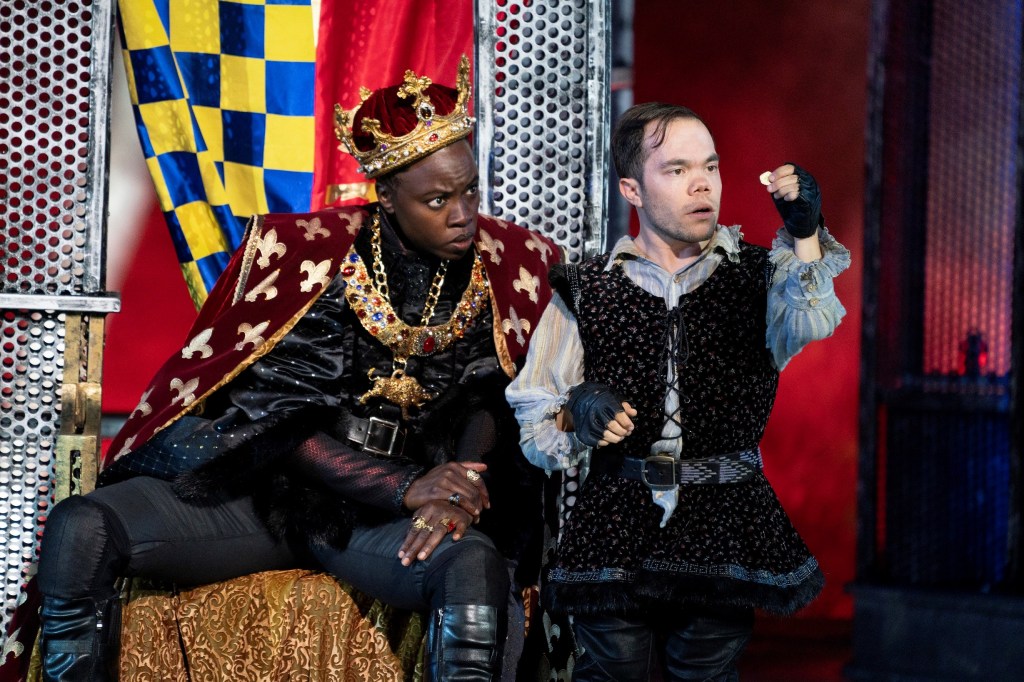
Of course we are reminded of the adage: evil flourishes when good men do nothing. Here, the once good men plot evil, infected by evil and the spoils promised. They fall under Richard’s spell and promises, but some of them end up dead. Richard’s loves are unreliable; the moment their loyalty seems wobbly, they are dispatched to hell or heaven which is a trap door that springs open in the stage floor billowing mists and clouds which one may interpret widely.
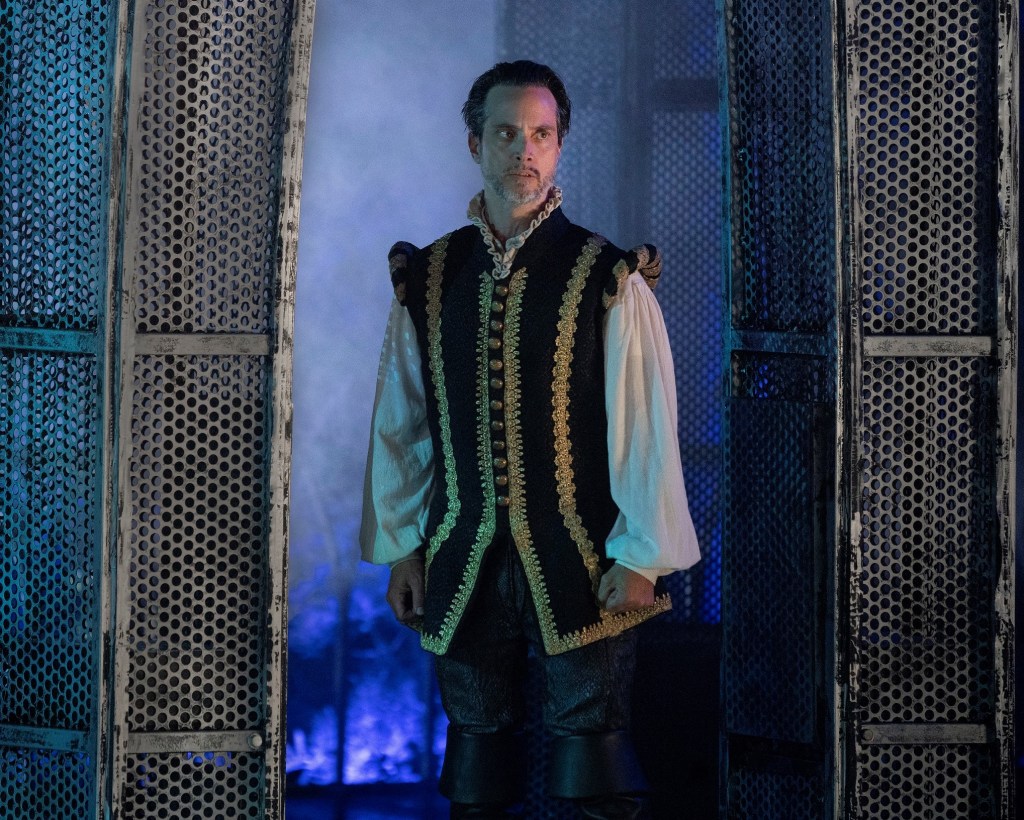
Like horrific dictator Adolf Hitler who declaimed in Mein Kampf what he purposed with the help of henchmen he rewarded, and like other despots whose clear-eyed intentions of massacre and genocide are propelled by justifications unstopped by guilt, people stood back and watched. It is incredible that leaders/enemies observing wickedness didn’t believe what these criminals and serial killers publicly said they would do. They didn’t take them seriously until it was too late. Indeed, oftentimes, the press and important political figures or royalty were on the side of the wicked, misinterpreting their actions precisely because the wicked were upfront and to the purpose (like Putin). They believed that the despot’s honesty assured they could be controlled. But as good people watched and hypocritically lied to themselves in allowing these, like Richard III to flourish, they destroyed themselves and thousands of others.

O’Hara’s attention to them is incredibly clear. His shepherding of the ensemble to relay it with great understanding is beyond breathtaking.
Thus, ironically O’Hara and Shakespeare cast the audience as citizens who are taken in and brainwashed by Richard’s mien and stance of confidence and unaffected presentment that she will succeed. We go along on the journey and follow her plotting and gaining results while sounding no alarm. Watching Gurira’s performance, one understands the imprints of bloody despots like Cuba’s “liberator” Fidel Castro and the “bloodless,” bullying machinations of failed politicos like Donald Trump. With brilliant cunning, charm and winning manipulations, such malevolents stun and disarm their prey, exploit and drain their energy, ply them with sweet poisonous promises, then toss them away as chaff to be destroyed after they’ve been bled dry of their use. And if they find that that their loyalty is waning, as Richard does with the admirable, obedient Hastings (the superb Ariel Shafir) then they reverse course and viciously attack without mercy.

Thus, by degrees we watch Richard revel in sickly brother’s (King Edward IV-Gregg Mozgala) downward fall into death as he further divides him from George who is thrown in the tower where eventually he and the Princes and others, including his wife Anne go before they are killed expediently by Richard’s lackeys. But not before Queen Margaret (Sharon Washington) excoriates all those who have killed and let blood run as she curses them with magnificence and majestic bearing. She does this in a rant that the audience applauded as Sharon Washington walked off, head held high as if to note, yes, what I declare will come to pass. Thus, Queen Margaret adjures that Queen Elizabeth will lose her sons to violence and like she, Margaret, will have lost husband, sons, crown, kingdom and be forced to live out her years in misery and mourning.

Queen Margaret saves the best for last. Richard shall die heavy in sin, unredeemed, unable to sleep, haunted by bloody deeds, seeing those killed in nightmares. Washington returns to continue her cursing diatribe in the second part of Richard III, and the audience thrilled to her speech which she pronounced with conviction. Of course her curses that all fear come to pass, despite Richard’s insults and references to her as a witch and a hag. Richard’s epithets don’t penetrate Margaret’s soul because she has endured so much misery in the loss of her husband, crown son, family. What are the slanders of a villain who all know to be a villain that is powerless to do anything against her?
Gurira’s incredible performance as the titular Richard III is one of the best I have seen. After her Richard gains the throne the paranoia and anger sets in and she wipes out more kinsmen and loyal Lords who she suspects of treason. It is a fascinating transformation from slinking deceiver to furious despot.

Of course the irony that Richard cannot be happy even after he has the crown because he is afraid he will lose it, becomes the obsession that takes him over and changes his character toward self-destruction. The journey of enjoyment has ended and now the hell, anger, fear and punishment of self and others blossoms evilly. As Richmond (Gregg Mozgala) threatens with growing armies, Richard has nightmares that frighten him more than when he commanded evil deeds awake. In Richard’s last speech, “There is no creature loves me, And if I die no soul will pity me” in which he attempts to rouse himself out of great despair at seeing the ghosts of those he killed who are coming for him in revenge, Guriara is magnificent. I found myself empathizing with this miserable creature who believed she could get away with nefarious deeds and not have her conscience convict her. Would these current despots of the world have such a conscience to convict them as Richard’s? Happy thought.

Robert O’Hara vision and astute guidance makes this an exciting and imminently watchable and glorious production with accompanying vibrant and stirring music and light. There is great humor in many of the scenes clarified by the pacing and delivery set up by the ensemble and director. The set design, royal gothic pointed arches fixed on the revolving turntable which reveals change of scene, time and place, wonderfully manifests the substance, mood and tone of the scene as well as reinforces the action. With the blood letting of war in the last moments of fighting, superbly stylized with just enough actors to represent the warring factions, the arches have veins of blood lines, ironic yet symbolic of the gore shed on the battlefield. In other scenes the arches turn blue, gold, various colors, the turntable spins as the actors are placed between. The sets and music that align with the action are spectacular because all cohere seamlessly.

The creatives who have explored O’Hara’s vision so masterfully are Myung Hee Cho (scenic design) Dede Ayite (costume design) Alex Jainchill (lighting design) Elisheba Ittoop (sound design and original music) Nikiya Mathis (hair and wig design) Teniece Divya Johnson/Jeremy Sample (fight directors) Neil Sprouse (director of artistic sign language–beautiful, poetic, effecting and relational hand movements) Byron Easley (movement director) Teniece Divya Johnson (intimacy director) Alexander Wylie (prop manager).
Check the Public Theater’s Free Shakespeare in the Park website for details to this unforgettable production of Richard III. CLICK HERE
 CAROLE DI TOSTI