Monthly Archives: January 2022
Banned, ‘Maus’ by Art Spiegleman, a Travesty That Ridicules Itself
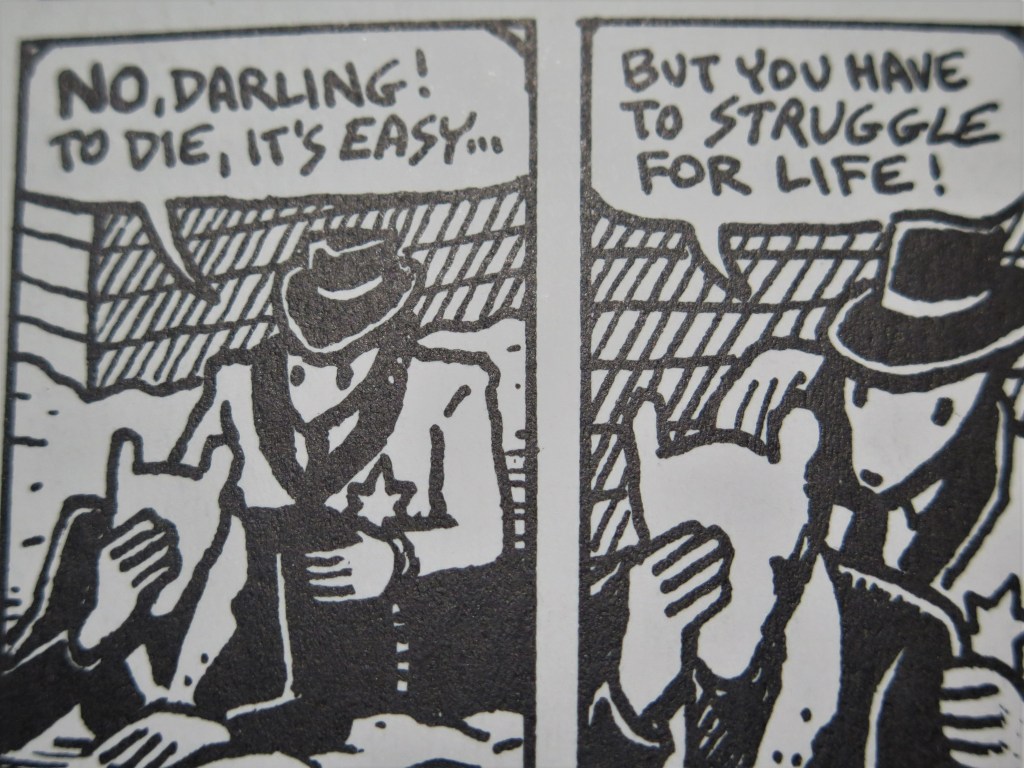
I taught a Holocaust unit years ago when I was teaching High School English. Maus I and Maus II were among the books I gave my classes who were at various skill levels, from Advanced Placement to Inclusion. We discussed the background elements of WWII and Nazi Germany. And in some classes we compared those events to what was happening during the rendition of “terrorists” who ended up at Guantanamo Bay during the Bush Jr. Cheney administration. We discussed censorship, rights and freedoms under the constitution and how Nazi Germany was guilty of human rights violations and crimes against humanity. We also discussed how the United States was guilty of human rights violations at various points in its history under both political parties.
The themes represented in Maus I and Maus II are universal and timeless. The story is historical and authentic in its evocative drawings and spiritual infusion of truth, as hard as that might be to recognize and acknowledge. It is because it is horrific to understand and difficult to acknowledge that Spiegelman’s graphic rendering of his father’s and mother’s experiences is in the cannon of great works of artistic and literary merit.
That those who have seen “fit” to ban it from their curriculum is puzzling. For it is these very individuals who would declare themselves patriots and free thinkers which Maus, in all of its graphic text and subtext uplifts and supports in the context of WWII Nazi Germany and Nazi oppression of religious freedom and human rights.
The only “human right” enjoyed in German occupied Europe was to support Hitler’s vision of Nazi Germany’s Third Reich. If you didn’t and publicly declared that you didn’t, you lost your human right to live and have your being in Germany or your occupied nation (France, The Netherlands, Poland, Czechoslovakia, Austria, Belgium, Russian occupied territories, etc.). Publicly supporting or saving the enemies of Hitler (resisters, Jews, communists, Poles, Russians, handicapped, Romani, gays, etc.,) would land you in Auschwitz or another camp where you went to the gas chambers. Or to save money and food, you might be shot where you stood as many thousands were.
Austrian citizen Franz Jägerstätter, a devout spiritual Christian believed in the first two commandments (Love God with all your heart, soul, mind, strength; Love your neighbor as yourself). He was a conscientious objector and believed that killing another human being was not worthy of Christianity. He believed that one should lay down one’s life as Christ did, not take a life to keep Hitler usurping power over others.

Thus, the Nazis and his frightened townspeople who came to hate Jägerstätter declared him an enemy of the Third Reich. He was sentenced to death and executed for his refusal to fight for Hitler’s ultimate cause. That cause was to subject all nations who did not follow Hitler’s religious beliefs, a combination of paganism and occultism that adhered to the idea of a Master Race.
Indeed, Hitlerism and Nazism was and is a repudiation of the Old and New Testaments and the foundation of three global religions. To think otherwise is a distortion of the occult basis of the Nazi’s beliefs. Nazis were never Christians; that was a blind. If they were, they never would have taken the monstrous stance to act against God’s chosen people and human rights. They never would have committed crimes against humanity.
On a thematic level Spiegelman’s Maus contains the authentic testimonies of how the eradication of human rights as a systematic organizing principle destroys the destroyers and elevates those they attempt to destroy. In the name of power we see annihilation and suffering; the criminal losers cannot win with ideas whose basis is lies, for there are always witnesses who will survive to tell the truth.
The wisdom expressed as Spiegelman conveys with skill and emotional power “how his father bleeds history” is as old as humanity and worthy of reviewing at any age, the younger the better. Such wisdom saves lives and encourages hope. Banning wisdom and hope is an impossibility. Light always leaks into dark rooms. The tighter the doors are locked, the more folks struggle to open them. Banning these great works is a travesty that ridicules itself.
Nevertheless, I agree with Art Spiegelman that this is a “red alert” and more will follow. In this tide of times, that this country founded with the intention and hope of amending freedoms generationally to include every race, creed, color, gender should ban such a work in the 21`st century is not only a travesty, it is a tragedy.
Sundance Award Winner: ‘Hive,’ 94th Oscars® Shortlisted for Best International Feature

Hive, a triple award-winner at Sundance Film Festival is a beautifully constructed, exceptionally acted and poignantly rendered feature film by writer/director Blerta Basholli. In the film, Basholli simplistically and profoundly examines the aftereffects of the 1998-1999 Kosovo war that impacted civilians and dislocated the cultural mores and society of Kosovo.
It is through this backdrop that Basholli focuses on representative families that suffered the loss of relatives and economic hardship which was felt greatest in the towns where killing, rape, burning and looting took place. One of the largest massacres happened in the village of Krusha e Madhe, the setting of the film inspired by a true story. There, families are still waiting over twenty years later for word of their loved ones in the hope of recovering their clothing or bodies so they might receive a proper burial. Then, the uncertainty of what happened to their husbands and relatives would finally reach closure.

Writer/director Blerta Basholli reveals the strength and resilience of the women whose husbands have gone missing as they attempt to confront their grief, raise their children, take care of their in-laws and put food on the table with their own ingenuity, hard work and home crafted items. Focusing on Fahrije Hoti, Basholli reveals how the enterprising Hoti gradually fights the patriarchal culture of lazy men to gather a collective (a hive) and establish a way for the women to support themselves and their children, launching a business to make and sell ajvar (roasted red pepper spread).
Initially, we see that Hoti attempts to maintain her husband’s bee hives, collecting the honey and having her father-in-law who is in a wheelchair sell it. During the film we learn the bee hives and honey are a remembrance of her husband, though the honey doesn’t provide them with enough money after it’s sold. And she hasn’t found the way to deal with the bees like her husband did, so that she doesn’t get stung. Hoti ends up having to nurse her wounds as the bees sting her when she gets the honey.
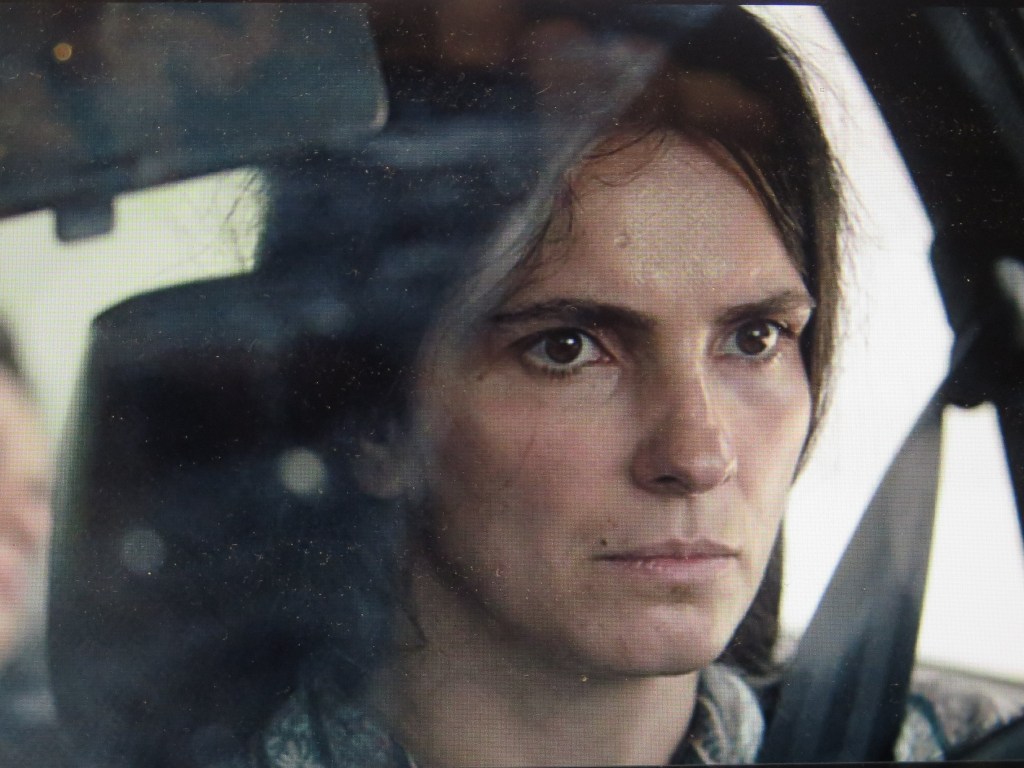
As Fahrije Hoti, Albanian actor Yllka Gashi teases out an exceptional portrayal of the woman whose struggles inspired the director to create her story from emotional truth. When a car is donated so that Hoti can drive and help the other widows, she gets a license. And because she and the women are destitute, she gets the idea to start a business selling avjar. But the men of the village reject her driving autonomy and her flitting around the village to pursue business. It is a threat to their masculinity and power structure extent for centuries.
When she parks near the cafe to do business, a rock is thrown smashing the car window. Her transgression is clear. Their violent attack forewarns her to stop or worse will follow. However, Hoti doesn’t respond, except to drive home and tape up the back window. She stoically continues about her business without confronting the men at the cafe who despise her.
As Hoti is encouraged by another, older widow, despite the disdain of even her own children and her father-in-law who disagree with her plans, gradually, she and a few women agree to form the business. They chip in money for the supplies. Eventually, they meet at her house to make the avjar. However, she faces tremendous backlash and her own daughter is nasty to her when Hoti attempts to sell a band saw, a memento of her husband to get the money to buy more peppers.
Other obstacles come from the men in the village whose chauvinistic egos are threatened by these autonomous women. They try to destroy their product and stop their sales. Clearly, the men see them as whores who have overstepped the boundaries of the female identity set in the traditions of the town. And the man who sells her the red peppers attempts to collect payment in sex, assuming that she is a whore, for what woman would do what she is doing?
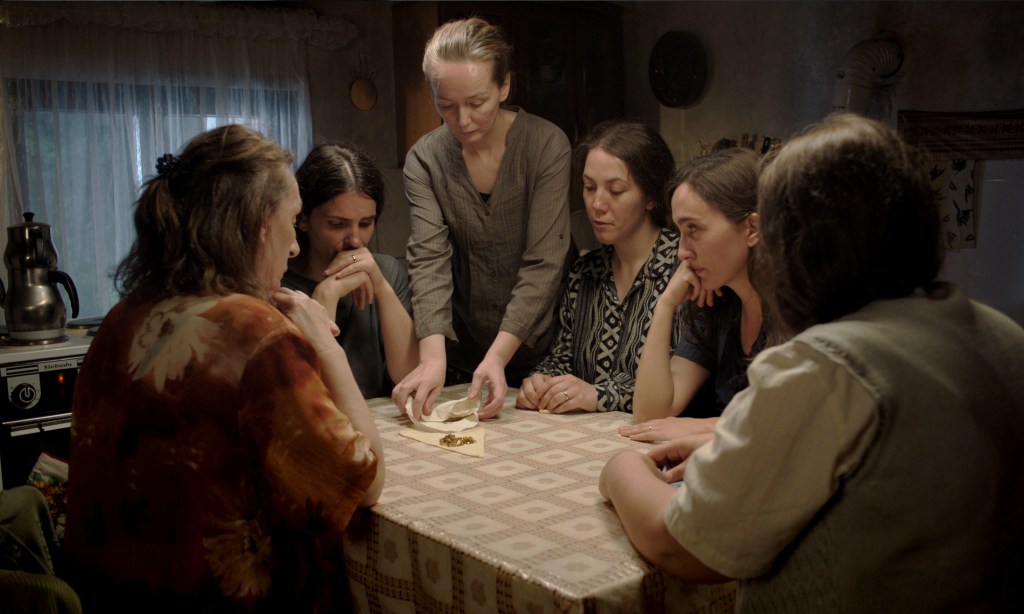
One of the important conflicts in the film, explores Hoti forging ahead despite ancient mores and folkways that would keep her and her family starving. She, like the other women widowers, is destitute. However, where the other widowers are afraid, Hoti has nothing left to lose. Hoti’s ability to drive strengthens her; one taboo has been overthrown. Why not be the head of a business? Another taboo is overthrown. Initially, the other cowed women reject her plan to sell their product out of fear of censure and a reputation of disgrace.
But with every move she makes, Hoti becomes more determined and she exemplifies to the others that the archaic folkways make no sense in a modern world. The irony is that the complaining, bullying men condemn them for working but do not lift a finger to support them. They approve of their groveling in starvation, another type of ignominy, without their husbands. Either way, the women are disgraced for they are women without men. Hoti and the women defy the men’s backward definitions of who women are. They redefine themselves.
Cleverly, the director subtly shows the harmful misogyny as a destructive nihilistic force which benefits no one, least of all the entire town. Basholli presents this as she tells the story through silences and actions, without haranguing or presenting a political argument. The effect is striking; we feel the full force of the crumbling of the patriarchy as the men fear having to redefine themselves, which these powerful women are forcing them to do.
Basholli’s themes are striking. It is clear that the lazy men begrudge the women’s attempt to survive without their husbands. In other words they are to remain stuck in time with no identity, power, autonomy, sovereignty apart from their husbands. They are expected to curl up and die as an honorable way to remember their men; be with them in death or wait in limbo in a dead zone. The thought that the widowers make a life for themselves to overthrow the former traditions is the death of the old way and the beginning of a new way that Hoti is creating. She chooses hope and life after the massacre of the village. Hers is a bold, vibrant, maverick move. Astounding and revolutionary, she re-emerges a new individual.
Life and hope respond in renewal as the women receive sustenance from each other and appreciate their new unity, inner peace and financial power from their “hive.” Thus, they continue to contract with other supermarket owners who sell what they are making and expand, as the director shows after the last cinematic shots of Gashi. At the conclusion, Yllka Gashi as Hoti is dressed in a beekeeper’s outfit. A bee walks on her hand as she remains at peace, unafraid, knowing the bee will not sting her, like her husband never was stung. Basholli renders Hoti’s metaphoric, symbolic peace in communion with the bee as acceptance of the opportunity and new world that she recognizes is open to her.
This superb debut feature film by Basholli is Kosovo’s official selection for Best International Feature Film, Kosovo’s eighth official entry, and was recently included on the International Feature Film shortlist for the 94th Academy Awards®. Hive is one to see for its dynamic award-winning performance by Yllka Gashi, award winning directing/writing and its current, vital themes about defining one’s life, and persistence in carving out one’s place, especially in a society that is closed, weak and crumbling.
DIGITAL / VOD RELEASE – FEBRUARY 1, 2022
Available on all major digital/VOD platforms including:
Amazon, Apple TV, Google Play, Kino Now, Vudu, and
The Criterion Channel (starting February 8th)
Lincoln Center Film, Joachim Trier: ‘The Oslo Trilogy’

Norwegian Film Director Joachim Trier is being celebrated at Lincoln Center Film for his most recent film, The Worst Person in the World, which screened at the NYFF 2021. This is the third film in his collection, The Oslo Trilogy, which includes Reprise (2006) and Oslo, August 31st (2011) all of which feature the superb Anders Danielsen Lie who interestingly is a practicing physician and an actor. The Trilogy screenings on select dates will be followed by Q and As by Joachim Trier, Anders Danielsen Lie, and Renate Reinsve (The Worst Person in the World) and Joachim Trier and Anders Danielsen Lie for Reprise and Oslo August 31st. Click for tickets here. https://www.filmlinc.org/daily/the-oslo-trilogy-with-joachim-trier-and-renate-reinsve-in-person-begins-jan-28/
The title of the collection of films centers around the city where Joachim Trier was born and grew up. The setting of each of the films reflects upon sections of Oslo, Norway that Trier revisits and encapsulates while he integrates his various story arcs in each film, whose themes interlock and concern ambition, dreams, identity, loss, satisfaction memory, isolation.

Reprise captures the society of twenty-something friends from Oslo as they plan their lives and attempt to actualize their dreams. Trier separates out two budding writers, Erik (Espen Klouman Høiner) and Phillip (Anders Danielsen Lie) and places them under a microscope, allowing them partial successes, and ups and downs as they move along divergent paths with one ending up nearly taking is life, though his novel has achieved a modicum of success. As Erik attempts to help Phillip get back on his feet and regain a love relationship which was broken off, he confronts his doubts about his writing attempts. We watch the unfolding of their uncertainties, depressions and the excitement and hope of a satisfying writing career.
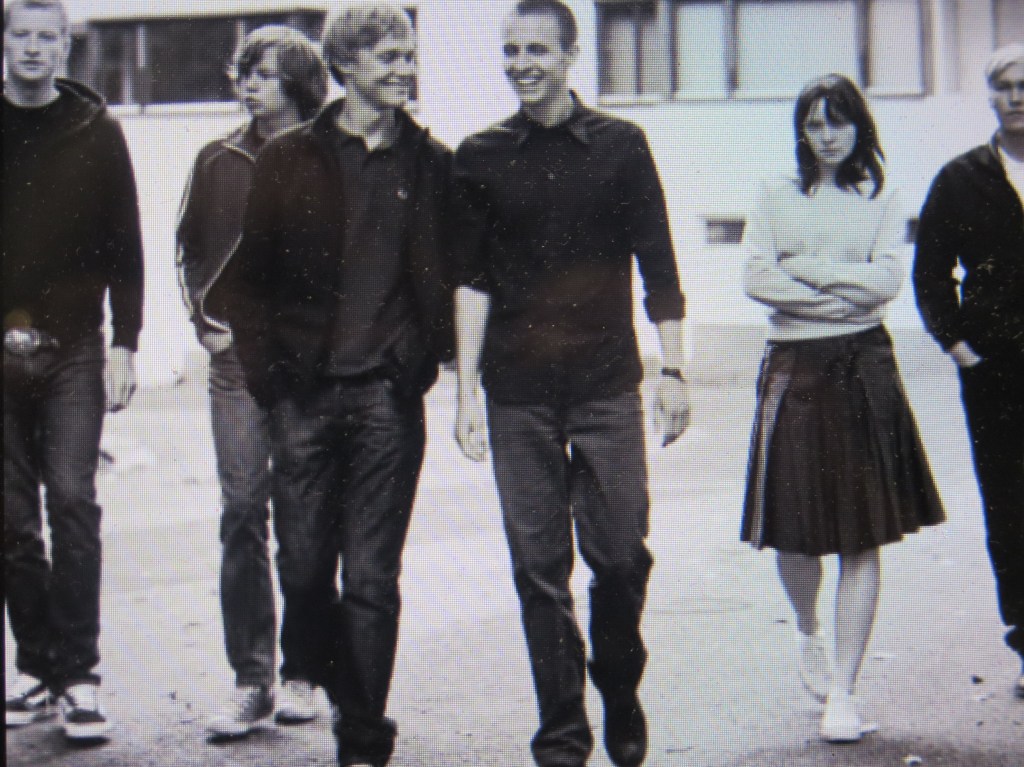
In Reprise, memory and fantasy merge in the comedy-drama that is playful and whimsically hopeful. As the writer’s imagination takes over Erik, we understand that he may achieve a possibility of success. Of course, the irony is that Phillip has achieved writing success, but it isn’t enough for him; returning to a former love is what matters. Thus, achieving their out-of-reach dreams remains different for both friends. And it is only through Erik’s imagination that they manifest the goals that make them happy.

The tone of Reprise turns darker and the comedy becomes muted in the award winning Oslo, August 31st which is loosely based on Pierre Eugène Drieu La Rochelle’s novel Will O’ the Wisp. This second film of the Oslo Trilogy is also written by Eskil Vogt and Joachim Trier and examines the interior soul psychology of the life of a recovering drug addict. When the film opens, Trier cleverly introduces us to Anders (Anders Danielsen Lie) without a hint of his enslavement to his former addiction when he walks to a river and attempts suicide unsuccessfully. From then on we understand the stakes and question how and why he has arrived on the brink of death only to eschew it. Trier keeps us in a state of tension as to whether Anders has given up or plans to try again.
From this initial uncertainty of details about where he has come from (the woman he slept with) and how he arrives at the beautiful house where they seem to know him when he walks in the door, we learn that Anders is in a rehab center. During his group therapy session, we learn he had a severe drug addiction and emotionally, he tells the group that he has been stable. This information collides with the previous scene; it is obvious he is lying and in group therapy, he has not dealt with the interior pain of his emotions or psyche.

Nevertheless, on August 30 Anders is journeying on a new road in his life as the therapist discusses the job interview which has been set up for him, though he is not enthusiastic about it. Then, as he takes off for the interview he makes a number of stops along the way, during which time he will see his sister and visit his home which his parents are selling to pay for his rehab.
It is on this journey, we discover he is in touch with his inner self. The darkness within is confirmed when he visits and confesses to close friend Thomas (Hans Olav Brenner) that he finds little purpose to his life and that he doesn’t think he ever loved his former girlfriend Malin, whose bed he leaves then tries to kill himself. In his discussion with Thomas, he even confesses that he doubts his love of Iselin with whom he had a long relationship and a rocky breaking off. The irony is that he is clean. The rehabilitation worked to settle him away from addiction, but it didn’t help him fill the cavernous soul abyss which overwhelms him in the thought that he has no reason to live. It becomes obvious that he used drugs to deaden the pain and ferry him away to a land of oblivion.

Ironically, when he confides to Thomas that he is suicidal, Thomas confesses that he is not happy in his life; that he has stopped finding passion with his wife and that he is going through the motions of living and raising kids. As they confess their trials to each other, they achieve a greater closeness, but that doesn’t assure Thomas that Anders won’t take his life. Thomas makes Anders promise he won’t commit suicide, and Anders obliges his friend. Nevertheless, because we have seen Anders’ suicide attempt at the top of the film, we are not convinced that he won’t try to end the meaninglessness of his life and pain of living.
Trier presents Anders’ soul/psyche condition in a series of worsening failures, spiraling him and us further into the black hole toward death. The journey on his leave from rehab takes him to his unsuccessful job interview, his failed meeting with his sister Nina, a party where he waits for Thomas who doesn’t show, to a drink after months of no alcohol, to a bar with old friends and more drinks, to a return to his old haunt at his dealer where he scores a large batch of drugs. On August 31st, when he reaches his parents’ home that is in disarray for Anders’ sake, being packed up for sale to save Anders’ life, the inevitable occurs.
Trier’s cinematography won a well-deserved award and the acting by Anders Danielsen Lie is heartfelt, profound and emotionally driven with a low key beauty and sensitivity, beautifully shepherded by Trier’s direction which is wonderful as is the editing. There is just enough cinematic silence and imagery to draw us in and keep us engaged with Anders’ journey, as we are being led emotionally, invested in Anders’ survival. This is one to see and is the explanation of another reflection of Oslo, Norway at a time when Oxycotin and heroin had been ravaging global culture.
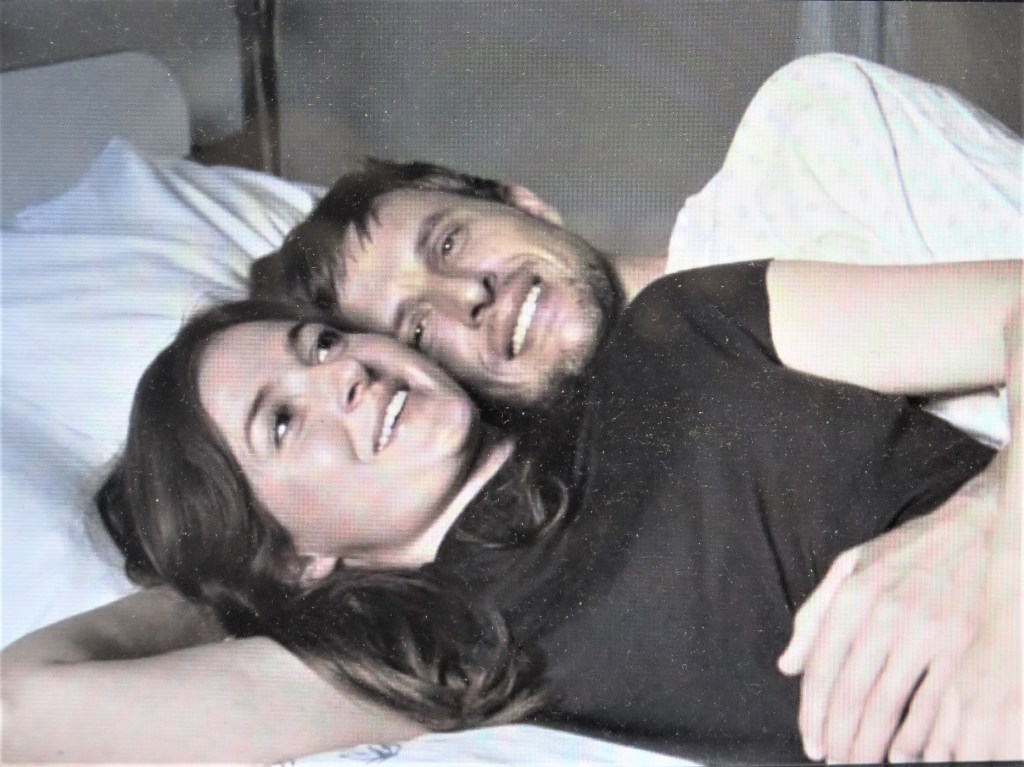
The Worst Person in the World is a dark romantic comedy-drama that chronicles four years in the life of Julie (Renate Reinsve). Like with Trier’s other two films, the protagonist is a young, in this focus, a woman looking for her own autonomy and identity as she negotiates the deep and roiling subterranean channels of her love life. Facing uncertainty with her career path and struggling to gain stability and balance, she eventually attempts to view herself realistically and authentically, despite her desire to avoid looking in the mirror.
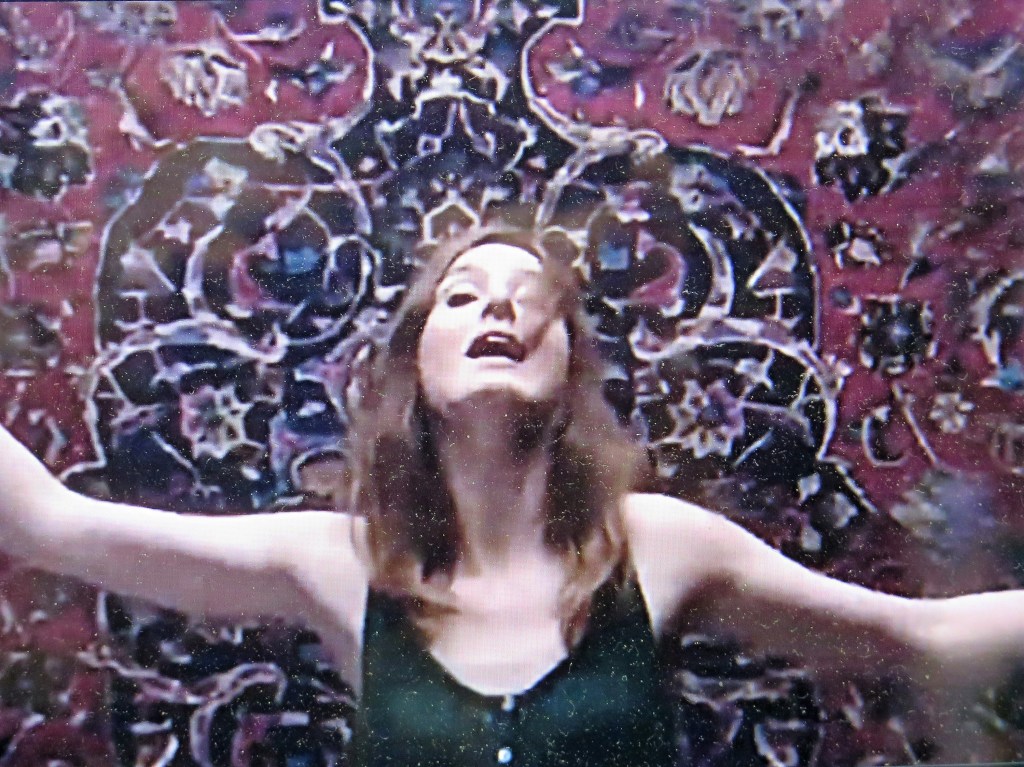
Once again Joachim Trier hits is out of the park and like in Oslo, August 31st, The Worst Person in the World is a multi-award winner. Renate Reinsve is devastatingly brilliant and translates an authentic performance into a beloved, flawed human and believable woman.
Don’t miss this marvelous triumvirate of great films by Joachim Trier and the Q and As with the director and lead actors by first reserving seats and purchasing tickets at https://www.filmlinc.org/press/flc-announces-joachim-trier-the-oslo-trilogy-january-28-february-3/
Press Release for Film at Lincoln Center: ‘Camera Man: Dana Stevens on Buster Keaton’

“Steamboat Bill, Jr. may be Keaton’s most mature film, a fitting if too-early farewell to his period of peak creative independence … its relationship to the rest of its creator’s work has been compared to that of Shakespeare’s last play, The Tempest.”
– Dana Stevens on Steamboat Bill, Jr.
Steamboat Bill, Jr.
Camera Man: Dana Stevens on Buster Keaton, screening on January 27 at 7:00pm at the Francesca Beale Theater in the Elinor Bunin Munroe Film Center is one you don’t want to miss if you love Buster Keaton and the film Steamboat Bill, Jr.
To mark the upcoming release of her new book Camera Man: Buster Keaton, the Dawn of Cinema, and the Invention of the Twentieth Century, author and Slate film critic Dana Stevens joins Film at Lincoln Center for an extended conversation with writer Imogen Sara Smith. A screening of the 4K restoration of Keaton’s silent comedy masterpiece Steamboat Bill, Jr. follows, preceded by a 2K restoration of the classic two-reeler One Week. Both films are from the Cohen Film Collection and feature 5.1 orchestral scores by composer Carl Davis.
Known as “The Great Stone Face” due to his deadpan facial expressions and mannerisms during the Silent Film era, Buster Keaton left an enduring impression on film history. On Keaton’s breakneck productivity and prolific output of films throughout this period, film critic Roger Ebert said: “from 1920 to 1929, he worked without interruption on a series of films that make him, arguably, the greatest actor-director in the history of the movies.” Keaton’s experience with pratfalls and showmanship from vaudeville performances as a child evolved into his eye-popping, unforgetable achievements in Steamboat Bill, Jr. as well as The Cameraman, The General, and Sherlock Jr., all of which have been selected for preservation in the National Film Registry by the Library of Congress.
Dana Stevens is the film critic at Slate magazine and a co-host of the Slate Culture Gabfest podcast. She has written for The New York Times, The Washington Post, The Atlantic, and Bookforum. She lives in New York City with her family. Camera Man is her first book.
Imogen Sara Smith is the author of Buster Keaton: The Persistence of Comedy and In Lonely Places: Film Noir Beyond the City. A regular contributor to the Criterion Collection and the Criterion Channel, she has also written for Film Comment, Sight & Sound, Cineaste, Reverse Shot, and many other publications.
Camera Man: Dana Stevens on Buster Keaton is organized by Madeline Whittle.
Tickets, on sale beginning on Friday, December 18 are still on sale. Pricing is $15 (General Public), $12 (Students, Seniors, Persons with Disabilities), and $10 (Members). Save on FLC memberships this month only! Learn more here.
Films and Descriptions
The event will take place at the Francesca Beale Theater (144 W 65th St)
Steamboat Bill, Jr.
Charles Reisner, 1928, USA, 70m
In the 10th and final feature to emerge from Buster Keaton’s independent production unit, the legendary comic master turns in an iconically endearing performance as the eponymous Bill Jr., a college student who returns home to help his scheming riverboat captain father (Ernest Torrence) compete with the far more successful luxury-riverboat owner J.J. King (Tom McGuire)—who also happens to be the father of Bill Jr.’s sweetheart. To make matters worse, a cyclone blows through the area, setting the stage for some of Keaton’s finest stunts on camera and one of the most (deservedly) storied sequences in all of silent cinema, in which a house’s actual two-ton facade falls on the oblivious young man. 4K Restoration by Cohen Media Group in collaboration with the Cineteca Bologna.
Thursday, January 27, 7:00pm (Q&A with author Dana Stevens and writer Imogen Sara Smith)
Preceded by:
One Week
Buster Keaton & Edward F. Cline, 1920, USA, 25m
A man and his new bride set about assembling a home for themselves with a build-your-own-house construction kit, only to encounter unforeseen pitfalls resulting from a disgruntled former lover’s sabotage. 2K Restoration by Cohen Media Group in collaboration with the Cineteca Bologna.
FILM AT LINCOLN CENTER
Film at Lincoln Center is dedicated to supporting the art and elevating the craft of cinema and enriching film culture. For any questions go to: http://www.filmlinc.org
‘Meet Kae Fujisawa, Triple Threat: Director, Actor, Playwright’
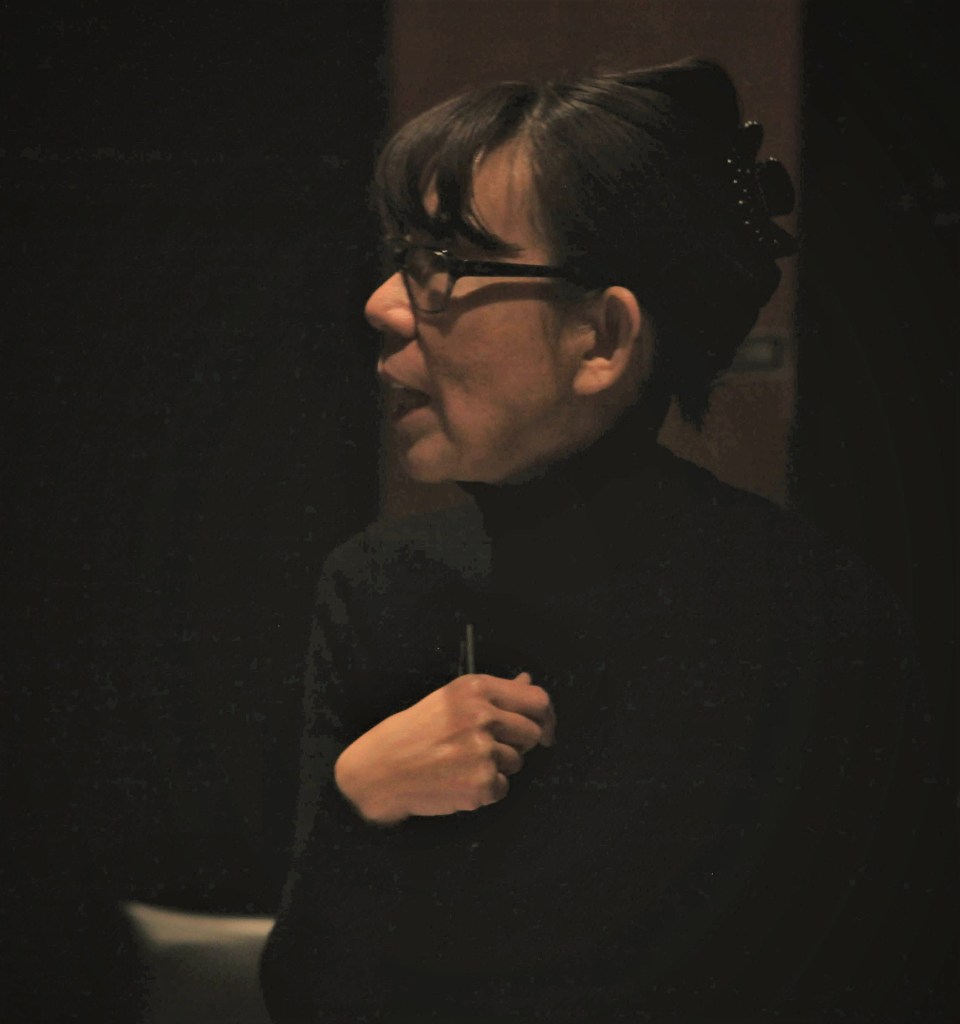
It is not often that one meets an individual who is ambitious, talented and pursues the arts after mastering a Ph.D. in another language as Kae Fujisawa has done. Indeed, academia didn’t satisfy Kae. She went on to pursue a dramatic arts career in New York City, which many hesitate to do once they discover the difficulties. Kae Fujisawa, who was born in Hokkaido, Japan, is Japanese. She speaks English with an ever-so -slight charming accent which nearly has disappeared since I met her in 2017 at HB Studio. And I can say unequivocally that she is a “Triple Threat.”
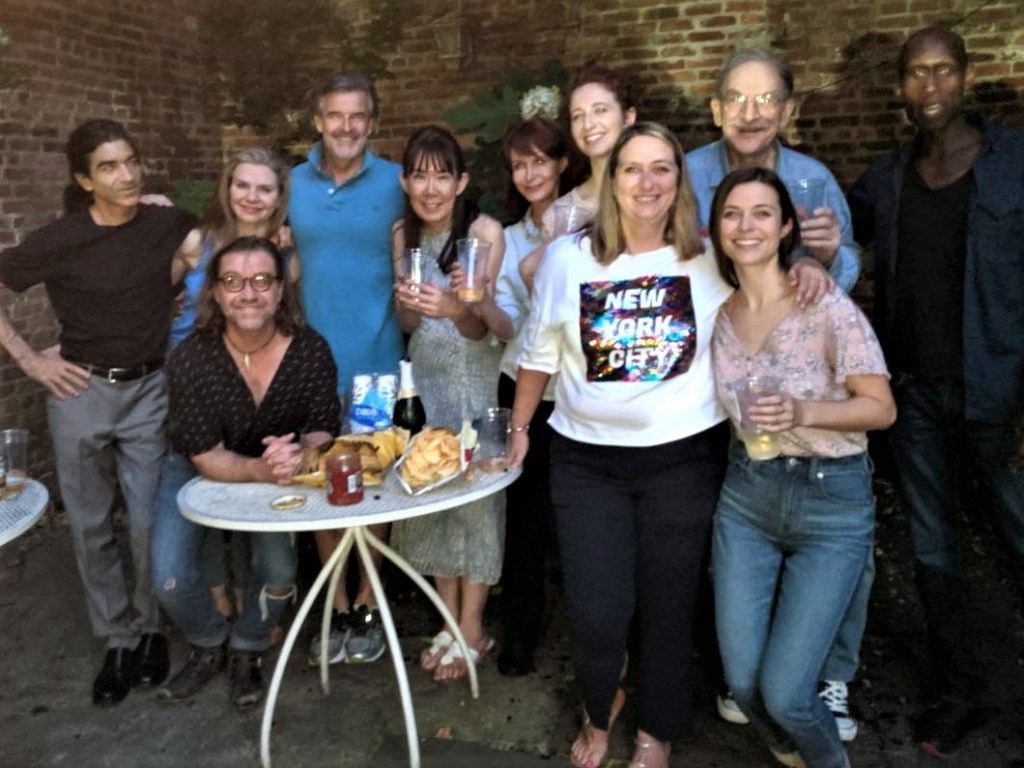
I have seen Kae’s excellent directing work at HB Studio in 2018 and 2019. At HB she took classes and workshops with some of the finest teachers in New York City. The first production I saw her direct was a scene from a full-length play The Rules of Unspoken Words. The scene was included in a collection of scenes from longer plays presented by the HB Studio Playwriting and Directing Division. At the HB Studio’s Playrights Theater, I enjoyed her excellent direction of the full-length comedy 7 Shitty Hombres by Ellen DeLisle. The humorous play, the actors and Kae’s direction received plaudits from the packed house as well as from her peers and teachers.

Kae’s talents directing live theater were made known to me with one of her earliest directing gambits she initiated, which she also produced via her unregistered company Theatre Borderless at the Jefferson Market Library Auditorium in 2018. The short one-act play by Anton Chekov, Swan Song, featured two actors who she shepherded so beautifully through the difficult piece, that I was impressed. I am a Drama Desk reviewer and have been an entertainment journalist for over a decade. Kae’s work struck me because Chekov can be difficult; the language is archaic. But this wasn’t a problem for her or for the actors. As a result of her direction, one of the actors gained the confidence to try out for more classical theater and after her guidance landed Shakespearean roles.
Other live theater she directed I was able to see before COVID-19 shut down New York City for almost two years. These included a Greenhouse Ensemble play that won its entry into the Greenhouse Play Festival. The playwright John Patrick Bray’s Fix was chosen for Kae to direct. With ingenuity, she was able to convey the snowy setting which amazed me. And the actors once again delivered fine performances because of her diligence and efforts.
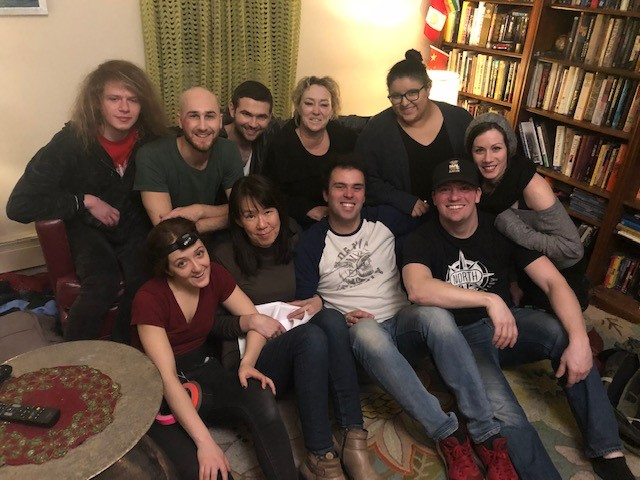
Kae believes in doing a lot of rehearsals if the actors’ schedules permit this. Importantly, they always are willing to accommodate the rigorous rehearsal schedule because of her easy manner, subtle discipline and high standards. Though she works very hard, she has the personality to gently guide her actors toward excellent results with great good humor and grace. I have seen this with other live productions, Therapy by Susan Jane McDonald and Lullaby by Nicole Gut. Both plays were presented at the New Short Play Festival in the John Cullum Theater. In a span of over one year Kae accomplished a tremendous amount of work and then the pandemic hit.


That did not stop Kae. She has been even more industrious in creating opportunities for herself streaming live films and performing and directing Zoom Theatre and film. I saw her virtual streaming live productions of Falling Awake by Matthew Davis which she self-produced, Prime Real Estate by Joseph Cox for Greenhouse Ensemble and Sketches of Happiness which she wrote, cast, directed and presented for Crossways Theatre. Each of these productions revealed the same level of diligence and perceptive teasing out of the skills of the actors with delightful and profound results.
Because she had directed Lullaby the film, based on the play version, she easily negotiated presenting other productions on Zoom which is a smaller screen, but a screen nevertheless.
Oftentimes, it is more difficult, because you are not always assured that the actors in their own residences have the same WiFi receptivity. So when there is live streaming, one must give attention to additional technical aspects like sound and connectivity, as well as editing, and shot composition.

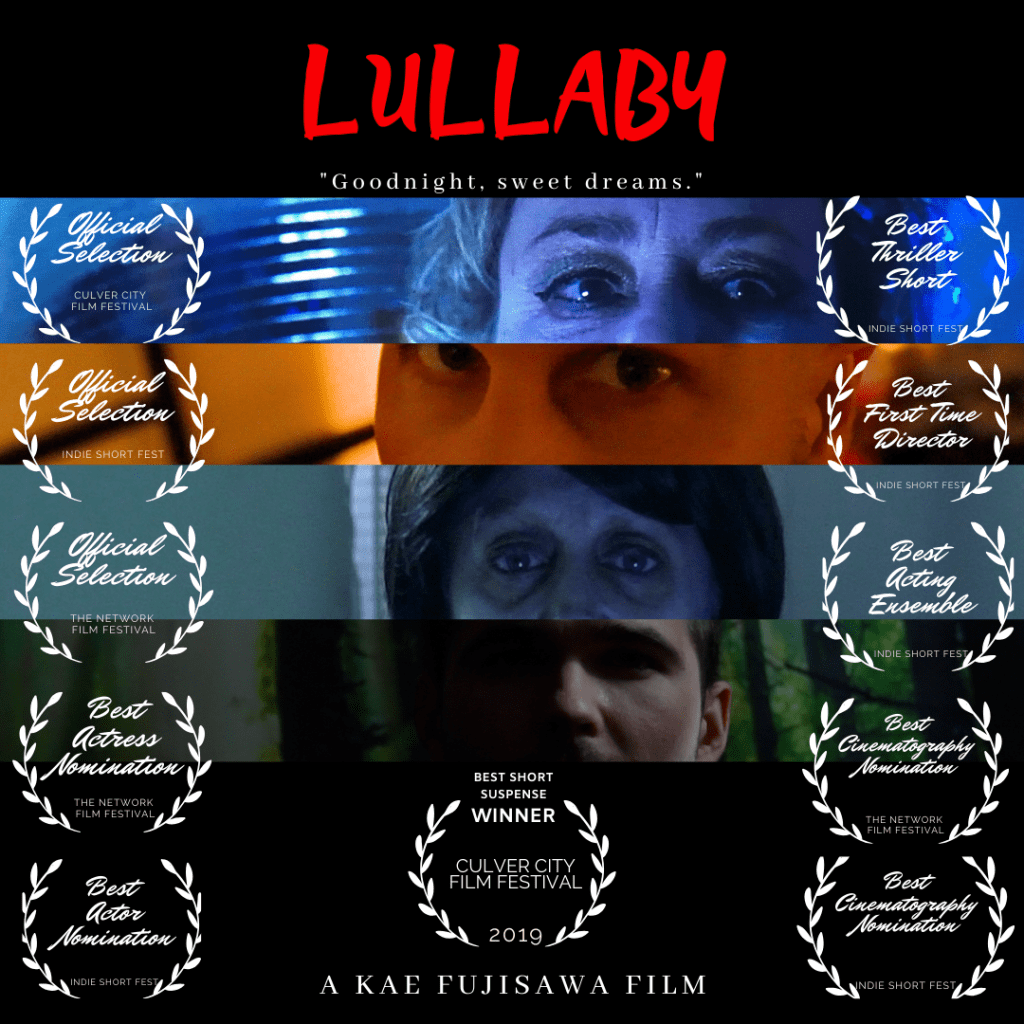
Kae’s enthusiasm to work in any medium allowed her to get into directing film. In film she brought the same diligence and prodigious effort that she brings to whatever artistic endeavor she accomplishes. I have never seen her efforts not pay off. The film Lullaby was nominated for a number of awards and won an award for Best Short Suspense Film at Culver City Film Festival. She also won a Best Director award for her Zoom film production of Manifesto for Manhattan Rep’s Short Film Festival.
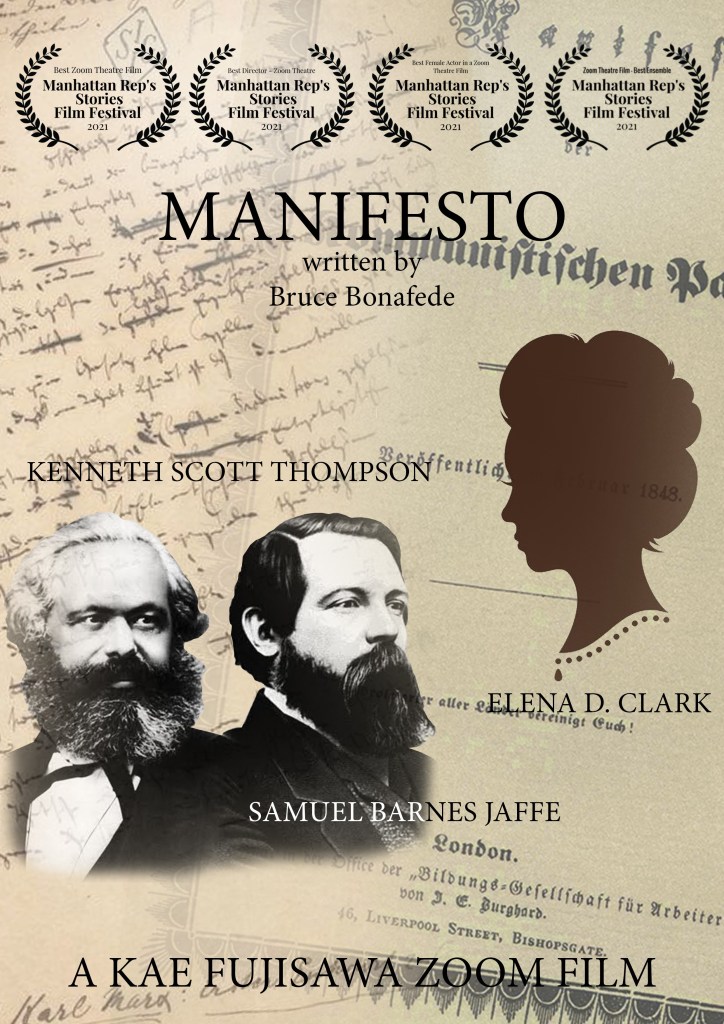
In fact the production won Best Zoom Theatre Film, Best Actress, and Best Ensemble Awards in addition to the Best Director Award. Kae also edited the film, doing a yeoman’s job.

When Kae is not busy directing or writing, she is acting. Most recently she appeared in The Program (Falconworks Theatre), a play, and the movie Mid Autumn (director Rraine Hanson, post production). I have not been able to see her performances except for Sketches of Happiness which she wrote and directed. She was wonderful. Her performance showed nuance, sensitivity and balance.

What continually amazes me about Kae is her energy and her love of all things performance, theater, music, opera, film. The only time she was not herself occurred after she took her Moderna vaccine. In fact it was her acute description of how she felt after the vaccines that largely directed me to take the Pfizer shots for COVID. Otherwise, that is the only time I have seen Kae redirected away from her ebullience and love of the dramatic arts and film.
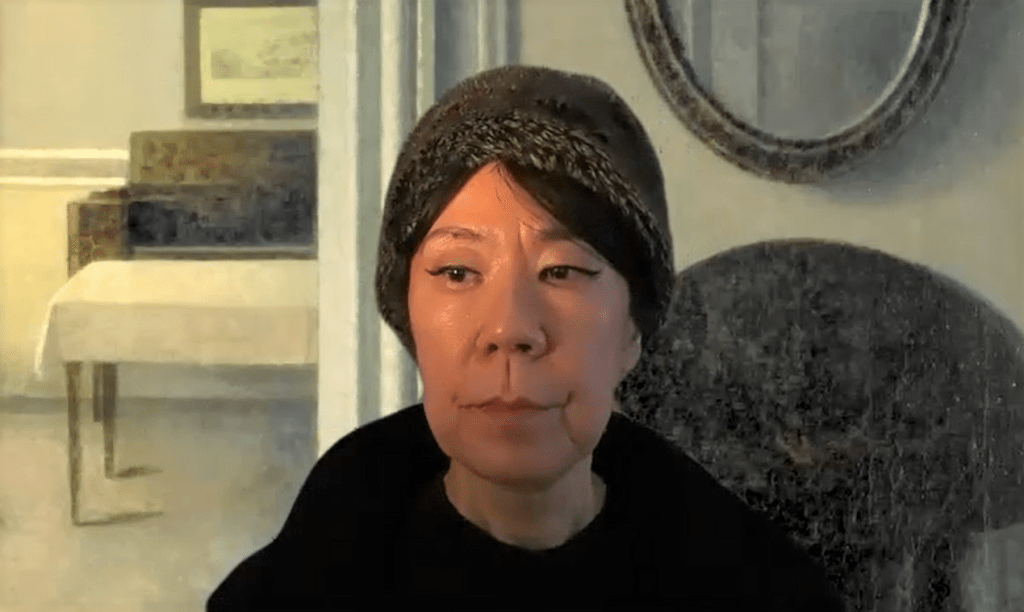
Currently, Kae is working on a few projects. One of them is to direct scenes from The Berglarian, a full length comedic play which I have written inspired by true events. If things eventually settle down with the pandemic, Kae, I and the exceptional actors will continue to workshop it, do readings and perhaps pitch it to producers.
I am expecting great things from Kae Fujisawa during COVID and after. She is continually originating work and creating opportunities with others in the entertainment arts. A tremendous asset to the theater arts and film community in New York City and beyond, she will continue to be a “triple threat!”
New York Jewish Film Festival 2022: ‘We Were the Others’

When the 1970 Stonewall Riots were happening in New York City and Gay Pride was taking off in other cities globally, in Israel, the situation was very different. In a remarkable documentary currently screening at the New York Jewish Film Festival 2022, in We Were the Others, filmmaker Hadas Ayalon interviews six gay men in order to slice open the discriminatory cultural mores and attitudes in 1960s and 1970s Israel. Importantly, with her pointed interviews that delve into the souls and emotions of the men, we understand the very human experience of negative acculturation. And in understanding how these men grappled with their sexual identities and finally accepted who they are, we note incredible human emotions, with which all of us may identify.
Ayalon organizes her documentary around themes, and filters through her subjects by having them discuss how they understood what their sexual identity was at an early age. Interestingly, all admit there was no language, nor was there any frame of reference in Israel for being attracted to the same sex. Indeed, these men were born in the days of the establishment of the State of Israel. Culturally and religiously, the classical values of marriage and children were an imperative to a newly forming state, though the rest of the world was changing. Nevertheless, the religious foundation for marriage and children excluded gay men and women. Indeed, gays were “the others.” They were like alien creatures that needed to be “cured,” and “corrected,” after they were jailed.
As her subjects discuss that they grew up and realized that they were attracted to the same sex, the external culture was nightmarish; they were alone. They couldn’t dare reveal the lifestyle they wanted. One individual states that walking down the street, he always keep his eyes looking at the ground, afraid to “give himself away” if he looked up at another man and showed interest.

In each instance the subjects discuss that they were forced to go underground when they found out that there were others like them sexually. To have brief, silent encounters there were looks, signals and gestures as codes. There was a language being conveyed, but without words or speech. Most refer to a walkway along the beach in Tel Aviv that they frequented, but eventually the police patrolled, arrested and ousted the “criminals.” Then they went to a park where they were able to communicate and form a community eventually that led to organization, advocacy and freedom.
However, like in the U.S. in the 1940s-1950s, in Israel in the 1960s and 70s cultural mores insisted that homosexuals were perverted. In familial circles, gays were ridiculed and rejected. As many gays did, one subject, who was made fun of by his family for being effeminate, sought “normalcy.” He wanted desperately to be like other males, who were with women. He went to therapy, got married and had children. However, he was miserable; none of this stopped his desire for men. Eventually, he divorced and when the culture righted itself and being gay was no longer illegal or a great joke to laugh at, he enjoyed his life and was accepted by his family.
The documentarian makes it a point to include a few subjects who founded the Aquda, Israel’s pioneering LGBT organization established in 1975. Yotam Reuveni, journalist/author/poet, when confronted with his own fear and hypocrisy about gays revealing their preference for same sex relationships, discusses how he had a heart to heart with himself. Throwing caution to the winds, which seems like a nothing burger now, he came out in Yediot Ahronot. In a weekly series of articles, he described the how and why of his being gay and he advocated for human rights. Considering the taboo associated with homosexuality, it was a brave, necessary act that changed lives and allowed others to come out and not feel like they were monstrous in their clandestine sexual affairs and encounters.

In another instance of the repression involved, two of the subjects discussed how they were forced to go to another country to live without their rights being violated. One was a distinguished army officer and an aviation engineer. When it was discovered he was gay, he was summarily discharged. He emigrated to Canada. Another subject discusses his decision to leave the oppression of Israel, seeking not to live in the shadows of fear and isolation.
In order to enhance the viewers’ understanding, Ayalon uses tasteful reinactments and inter-edits archival footage from that period of time in Israel, which is superb. She also uses Amos Guttman’s gay films from the 1970s and 1980s. What is most heartbreaking is each of the men’s stories about their inner emotional sorrow and aloneness which brought some to the brink of suicide. The culture was a tormentor and after a while, living with torment daily and enduring the negation of who they were was a form of death. Thus, it was difficult to overcome the culture’s emotional brainwashing and former behaviors. Each of the men discuss how they struggled with love and intimacy after years of having to express their sexual desires in places that offered brief clandestine encounters.
It was only until 1979 when homosexual men and women formed advocacy organizations and went public, that the pressure began to be relieved. With mass demonstrations for their rights, the oppression lessened. As people identified, more joined, happy to be done with the nihilism, denial and hypocrisy of hell that the culture made them endure for so long.
Ayalon’s film is an important retrospective indicating how far we have come regarding the LGBTQ community. However, there are still nation states and even parts of the United States that are abjectly retrograde. Thus every film, every documentary, is a step in the right direction to uplift the human rights of all citizens.
We Were the Others is screening virtually. For tickets go to their website: https://virtual.filmlinc.org/tv/alone-together-followed-by-we-were-the-others/1
New York Jewish FF: ‘The Lost Film of Nuremberg’ and ‘From Where They Stood’
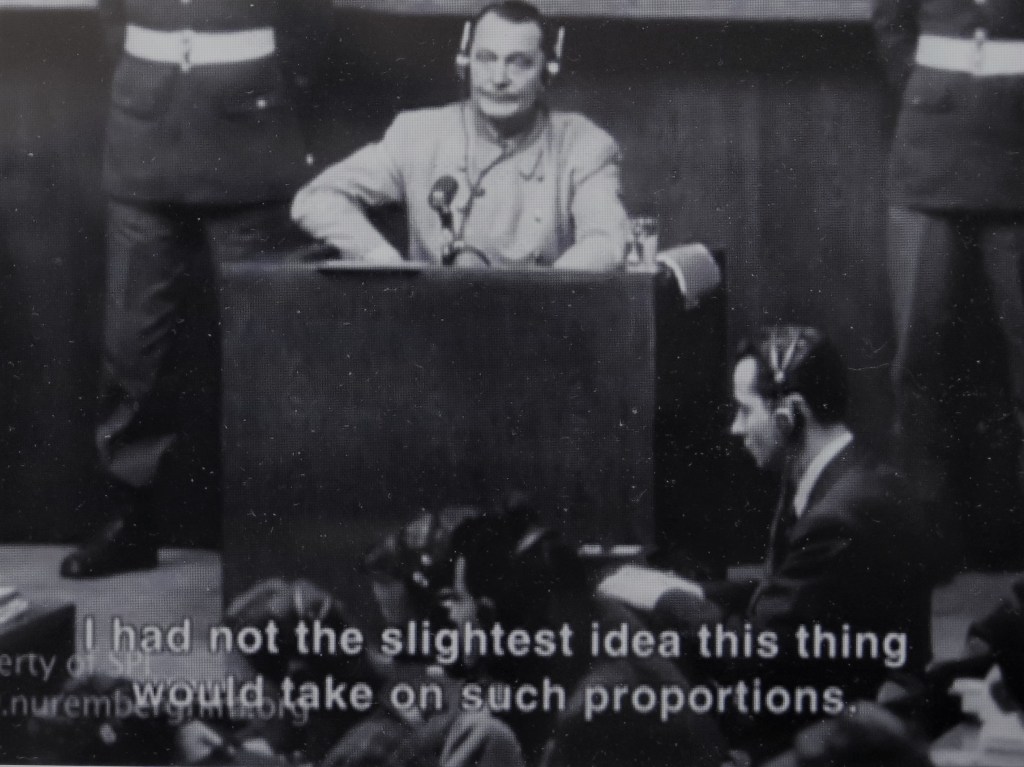
Two documentaries, screening at the New York Jewish FF are must-see viewing. Both have as their subject the recording of photographic evidence of the Shoah, the Holocaust (the mass murder of Jewish people under the German Nazi regime during the period 1941–45). Considering the rise of white supremacist hate groups encouraged by the former U.S. president, these films provide an important record. Since World War II though the Holocaust has been much written about and over the decades has been the subject of movies, films, articles and plays, the Nazi atrocities in concentration camps throughout Germany, Poland, Czechoslovakia, France, Italy and other countries, increasingly have been called into question by global Holocaust deniers.
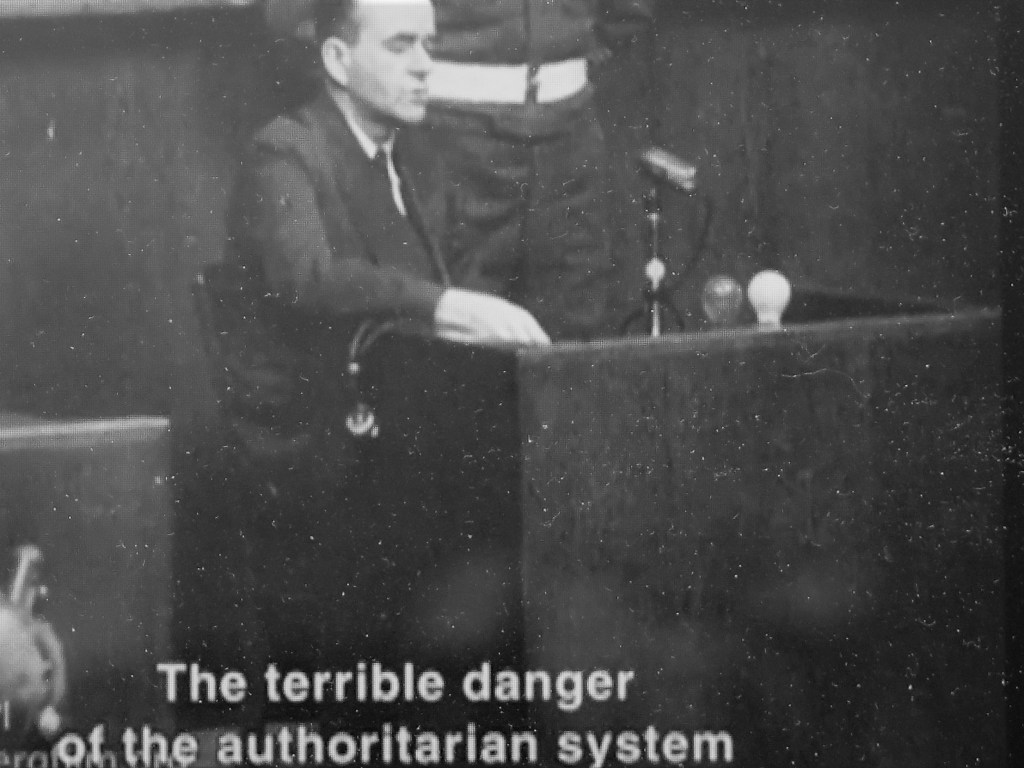
The Lost Film of Nuremberg chronicles how veterans of the OSS War Crimes Unit, brothers Bud and Stuart Schulberg (Hollywood filmmakers under the command of OSS film chief John Ford) endured obstacles and setbacks on their mission to track down and collect film evidence of Nazi war crimes to be used at the International Military Tribunal at Nuremberg. Their work was vital if done assiduously, for it would be used to judge the war crimes of high ranking Nazi officials like Joachim von Ribbentrop, Hermann Wilhelm Göring, Albert Speer, Rudolf Hess, Alfred Rosenberg and others, and punish them if found guilty.

The Schulberg’s collection of Nazi films was used with testimony, documentation and the filmed proceedings of the Nuremberg trials to create Nuremberg: Its Lesson For Today. Thus, The Lost Film of Nuremberg shows the discoveries and angst the Schulbergs went through to create the superb pro-democracy film Nuremberg: Its Lesson For Today. It was released in 1948 throughout Germany, but it was never seen in the United States until a decade ago. Indeed, for over sixty years it had been “lost.”
Director/writer Christoph Klotz adapts daughter Sandra Schulberg’s monoaph, Filmmakers for the Prosecution to make The Lost Film of Nuremberg a stirring and exciting revelation about a chaotic period of time after WW II. Klotz includes tidbits from Schulberg’s perspective in letters to his wife. This material is provided by daughter Sandra. What makes the film more intriguing is the inclusion of Sandra’s perspective of her father and this commission which she only discovered after her mom died and she was cleaning out their home.
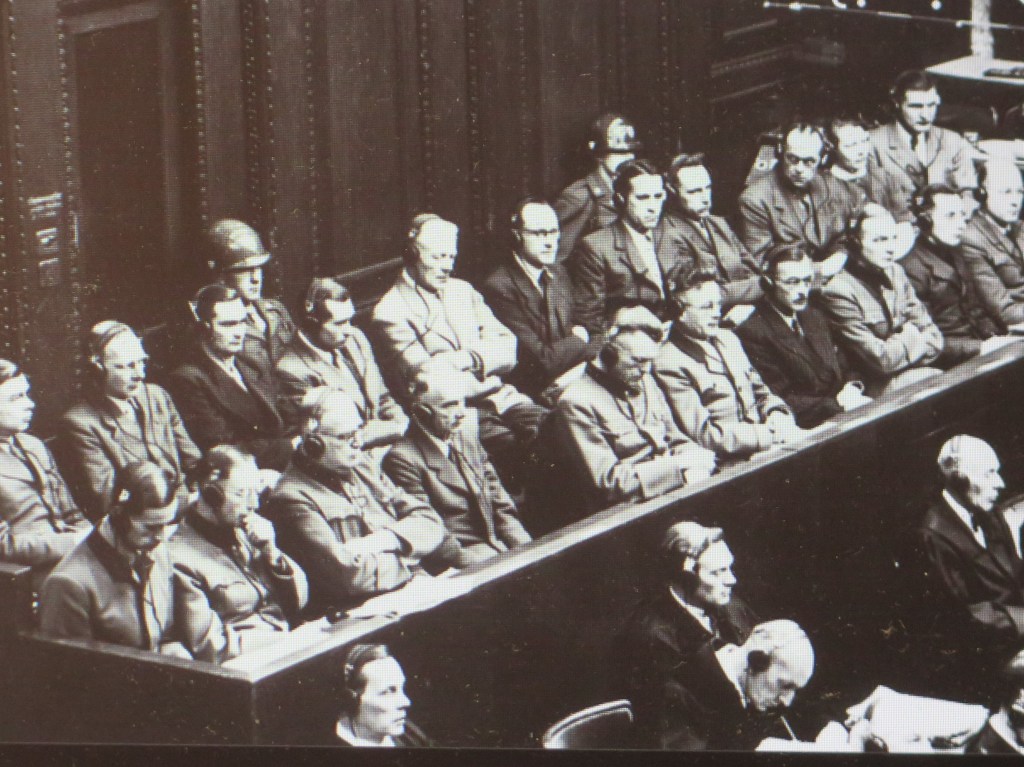
Klotz uses flashback liberally with narration by Sarah-Jane Sauvegrain to tie in the past and the present. Thus, we see clips of the youthful brothers examining Nazi film they’ve received. We hear/see Stuart’s letters to his wife detailing the journey to Germany and his impressions the to find films that the Nazis themselves produced. Stuart (the youngest member of the OSS Team) and brother Bud learned early on that the film they were making must be a compilation of actual films recording the words and deeds of the defendants. Thus, the incriminating films would be used to convict them.
Sandra learns salient details why her Dad’s “lost Nuremberg film,” edited and finalized in 1948 was created. It was to be shown in Germany and Europe for educational purposes. The intent was for the de-Nazification of the attitudes and mores of citizens after the war. It was also to show the difference between Allied Justice leveled against those committing crimes against humanity and Nazi Justice which was no justice if you were not a member of the Third Reich. Sandra’s eyes were opened to another side of her father’s vital work, for surely though it didn’t receive public release, other filmmakers knew of it and the archival Nazi films used to make it. These provided the linchpin around which subsequent films about the Holocaust would be made.

Klotz adds rare, never-before-seen footage, and reveals why the film was never released in the United States. Also, he includes Sandra’s reflections about what her father must have felt upon seeing the horrors of the camps as a young man. Klotz includes commentary of the older, retired Bud Schulberg giving a lecture about the subject of the film and why the Nazis made incriminating films of disturbing and horrific images. However, other films and Nazi evidence, buildings and documents were destroyed. The Nazis intended to escape justice, which many did, leaving Germany for the US, South America and other safe havens.
In The Lost Film of Nuremberg, Klotz relates the story of how German film director Lennie Riefenstahl was arrested and became a witness for the prosecution. Her propaganda film Triumph of the Will was created for Hitler’s use. The film identified various Nazi officials at Hitler rallies and it also evidenced Hitler’s plans. Another helpful individual was Hitler’s personal photographer Heinrich Hoffman, who had 12,000 negatives they used, after he was picked up, arrested and questioned.
As a result of the film evidence, the 19 out of 22 high ranking members of the Third Reich at Nuremberg were found guilty. Only three were acquitted. The other19 were either executed (Göring committed suicide) or received life or lesser sentences for committing crimes against humanity.
The Lost Film of Nuremberg is screening at 1 pm and 7 pm on 13 January at Lincoln Center, the Walter Reade Theater. Q & As with the director and producer Sandra Schulberg are also on that date. For tickets go to https://www.filmlinc.org/films/the-lost-film-of-nuremberg/

From Where They Stood is French documentarian Christophe Cognet’s unadorned and acute investigation of rare secret photos taken by prisoners in various concentration camps at great risk to their lives. They did this in the hope of documenting the atrocities they witnessed from spring 1943 to the fall of 1944. Examining the negatives carefully with a magnifying glass, Cognet visits the camps where the prisoners took the film and then either buried it to dig it up later or sent it out in a package. Some negatives came with a description that was revealed after the liberation of the prisoners who then wrote down the information. Other photos are of portraits of prisoners with no explanation or names sitting against the barracks. Others are of crematoria.
Many of the photos elucidate and confirm life and atrocities in various camps: Dachau, Buchenwald, Mittelbau-Dora, Ravensbrück, Auschwitz-Birkenau. With a translator, Cognet visits the camps and adjusts the photo negatives so that the viewer can see how the photo depicts what the location looked like. Verified are crematories, burn pits where bodies were disintegrated as much as possible. Interestingly, the bone fragments are present to this day, leaving a record of the great crimes of murder. The bone fragments to the surface after a heavy rainfall.
Unlike The Lost Film of Nuremberg, there is no music or narration or attempt to thread the places together. We hear just the silence of footsteps crunching against the walkways and the sound of birds chirping in the background. The simplicity is haunting and one realizes one is viewing a graveyard where many innocents suffered because they were considered enemies of the Third Reich.

Cognet also includes negatives which document Sonderkommandos (usually Jewish prisoners who pulled out the naked bodies from the gas chambers and piled them on carts taking them to the crematories) stand in front of a massive pile of bodies to dispose of and burn. Additionally, women who had been used for experiments (referred to as rabbits) also pose for the camera showing the areas of their body where they’ve been experimented on. Reference is made to one experiment: a gash is made and gas gangrene is encouraged by injecting a bacillus into the site. The wound is left untreated to see the progress of the gangrene.
Because Cognet uses straight cinema verite style, the effect of the prisoners’ photographs of the past paralleled with the locations of those places in the camps in the present is stark and shocking. The posting of the enlarged negatives at the location allows the viewer to see what the prisoner saw, to stand in his or her shoes. Indeed, it leaves one numb to consider the risk these individuals, took to sneak out the film to document what was going on so the world would know. For this film Cognet’s minimalism to just see what is in the photograph is remarkable.
From Where They Stood is screening virtually from 14-19 January. For tickets go to https://www.filmlinc.org/films/from-where-they-stood/
The Lost Film of Nuremberg is screening at 1 pm and 7 pm on 13 January at Lincoln Center, the Walter Reade Theater. Q & As with the director and producer Sandra Schulberg are also on that date. For tickets go to https://www.filmlinc.org/films/the-lost-film-of-nuremberg/
New York Jewish FF 2022: ‘Sin La Habana’ review

Sin La Habana, the award winning narrative feature, exceptionally written and directed by Kaveh Nabatian, who also wrote the original music, is a beautifully layered film that completely engages from the opening shot to the uncertain ending. Sin La Habana is enjoying its New York premiere as the Centerpiece film at the New York Jewish Film Festival 2022. The NYJFF 2022 is being presented live and virtually from January 12-25, 2022. For tickets and scheduling see the last paragraph of this review.
The haunting, profound, poetic cinematography by Juan Pablo Ramirez, and the acutely thoughtful editing by Sophie Leblond intrigues us to the story arc of a Cuban ballet dancer and his lawyer girlfriend who loathe La Habana, Cuba. The city of Havana (in Spanish Habana) holds little promise for them, amidst the broken down buildings, squalid impoverished settings and lack of progress evidenced from Fidel Castro’s dictatorship and the decades long U.S. embargo. Leo and Sara envision a better life for themselves elsewhere, but their first world destination country in a time of global immigration restrictions leaves their only route of escape to be marriage to foreigners.

Leonardo (the excellent ballet dancer/actor Yonah Acosta Gonzalez) is the best dancer in the company where he performs, but he can’t catc,h a break for the star role as Romeo because of his “lack of humility,” says the director of the company whom he accuses of racism, and who fires him after he curses the director out. His girlfriend Sara, who is a daughter of Orisha (both Leo and Sara are practitioners of the West African religion of Babalawo which in Cuba resembles Santeria or Vodun) is as ambitious as Leo. Their high expectations and confidence in themselves lead them away from La Habana to achieve material success and new identities, though it will mean leaving their cultural heritage back in La Habana. Their decision is filled with risks, isolation and heartbreak; but with each other, they believe new possibilities are at their fingertips with their talents and skills.
We note that throughout Sin La Habana, Leo always prays and keeps in touch with his faith, practicing it as best he can through his memory when he lives in Canada, “without the influences of La Habana,” the music of the ceremonies, the rituals and the divination which at the beginning of the film he relies upon for guidance. Through flashbacks of Leo’s religious practice in La Habana, Nabatian reveals the importance of Leo’s faith every time he endures a setback on the journey to his dreams. To maintain the connection to hope, he has endowed an object of his goals, a beautiful, crystal clear, large marble as a symbol of affirmation that his dreams will come true.

Inspired and persuaded by Sara, Leo works their plan to leave La Habana by sparking the interest of Nasim (the Iranian Canadian Aki Yaghoubi) during his Salsa dance classes for tourists at a Parador (house in La Habana set up for the tourist trade). Leo looks for wisdom from his previous divination sessions with the Babalawo priests and strikes out for a relationship with Nasim, whom he keeps in touch with after she returns to Montreal, Canada.
Though Leo is not particularly interested in Sara’s plan to continue the seduction and marriage to Nasim, he communicates to Nasim even writing down the words Sara tells him that will touch Nasim’s heart. Sara’s words do encourage Nasim. She pays for Leo’s way to Montreal and his expenses until he can find a job with a ballet company. They live together in a house of Nasim’s friend which she has agreed to stay in and watch over while her friend is away. Eventually, Leo discovers Nasim’s backstory; she, too, is an artist; however, he remains unaware of her secret plan for her life.

As Leo and Nasim become closer, he tries to maintain his connection with Sara and his religion but it is difficult and Nasim is opposed to him practicing it, though she says it’s because he can’t mess anything up in the house of her friend. While Sara waits for him to earn enough money to send for her, she fears he will disappear in Montreal into a new life with his new girlfriend Nasim. Leo’s fortune changes and he experiences a setback after he bombs out of dance auditions, first with a ballet company, then with a maverick, new wave dance company. At a club with Nasim, he meets a fellow Cuban who hooks him up with a job and a plan to bring over Sara by marrying her off.
At this point complications arise and the risk that both Sara and Leo take intensifies. Leo meets up with Nasim’s parents and runs into racist attitudes from Nasim’s father who is disappointed that his daughter didn’t stay with her X husband who she divorced because he abused her. Nasim seeks another life away from the strict upbringing of her parents and the types of potential husbands that she would meet at the synagogue. Not only is Leo exciting, he is the epitome of the opposite of her former husband; her rebellion pleases her and she intends to make that rebellion permanent, unbeknownst to Leo, her parents and her siblings.
Meanwhile, Sara, marries Julio (Leo’s friend) and goes to Montreal. Leo and Sara see each other. Upset by Leo’s long time away from the house, Nasim turns detective and discovers Leo’s mail exchanges to Sara. Through Nasim’s expert detective work she discovers Sara is in Montreal. Meanwhile, Leo has lost his symbolic dream token, his pure marble which signifies that perhaps he has subverted his culture, his dream and the individual he wishes to be via his faith. All three stand on a precipice with no way forward except to plunge into uncertainty stoked by each other who they eventually must confront.

Nabatian’s screenplay realized through Ramirez’s cinematic ingenuity and Le Blond’s editing of close-ups, blurred montages of color, black and white shots of Leo dancing solo, contrasted with closeups of each of the characters provide an ethereal connection with this cultural world we are not familiar with. The director’s vision is fascinating, beautiful and surreal, as he reflects the minds of the individuals, especially Leo’s struggles at defining himself in place and time. The director also gradually reveals the plots of each of the individuals separate and apart from each other. Highlighting their perspectives and relationship to each other, the result is always surprising along the arc of each of the character’s developments.

The music throughout is lyrical, the rituals of Babalawo are rhythmic and the dance scenes are engaging. All of these musical and ritualistic scenes contrasted with the classical ballet add to the haunting portraits of Sara, Leo and Nasim who pursue their own journeys. We empathize with the paths Leo and Sara have chosen as they try to settle far from La Habana, carried by their hopes and memories. Likewise, the scene where Nasim is at her sister’ son’s Briss is revelatory; we empathize with Nasim’s plight as she must deal with her father’s viewpoint of her divorce and present partner, Leo. The characters’ journeys are wonderfully manifested by the performances, the cinematic compositions of each frame, the editing, music, overall design, all with a nod to Nabatian’s direction.
Nabatian’s artistry coupled with the talented crafting by Ramirez and Leblond and the actors’ heart-felt performances create a memorable film deserving of it awards. It is being shown in person at the Walter Reade Theater (165 West 65th St.) at Lincoln Center, Monday, January 17, 4:00pm. This is definitely a must see. For tickets and scheduling to the New York Jewish Film Festival go to their website at: https://www.filmlinc.org/festivals/new-york-jewish-film-festival/
 CAROLE DI TOSTI