Blog Archives
Sebastian Stan in ‘Fjord’ at New York Film Festival 2026
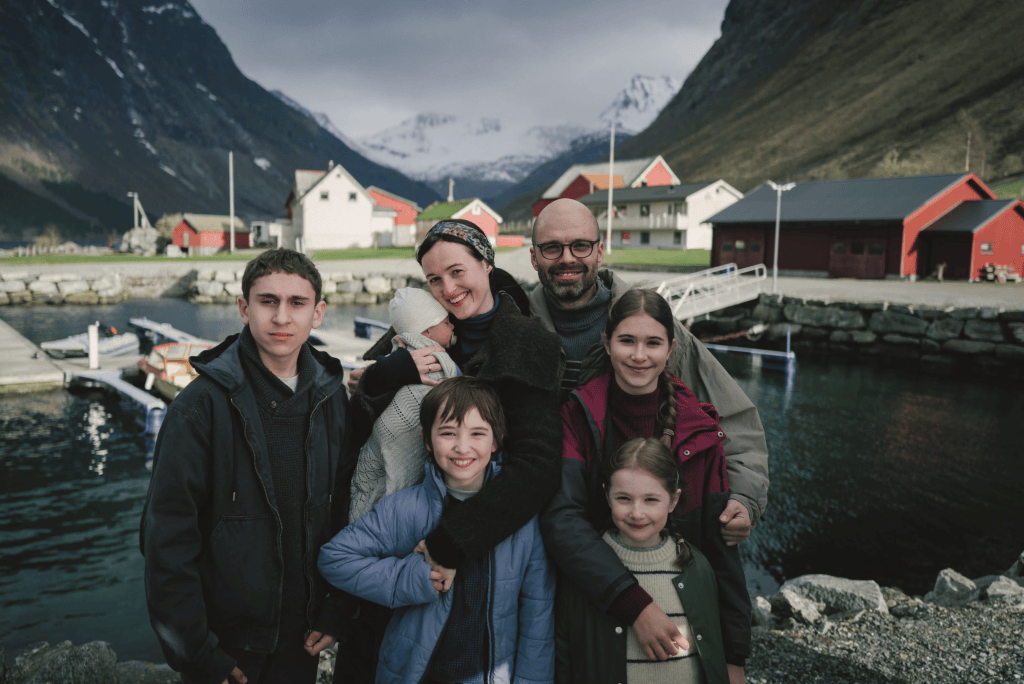
Cristian Mungiu’s 2026 Palme d’Or winner Fjord opens in the Spotlight section of the 64th New York Film Festival in its New York Premiere. Mungiu in his typical cinematic fashion (4 Months, 3 Weeks and 2 Days), reveals a disturbing dynamic for immigrant families. As they attempt to improve their lifestyles in another nation, they find themselves in conflict because of political and cultural disparities. Thus, either they accept the discrimination against them and assimilate or flee back to their home country.
For example in Fjord, a conservative, religious, immigrant family moves from Romania to liberal, socialist Norway. Ironically, in this open society, they run up against a rigid set of sociopolitical mores and expectations. These differ from their own values. Unexpectedly, the family faces a clash of cultural lifestyles that land them in court. There, the parents fight criminal child abuse allegations.
With this anomalous situation the director raises questions about conformity, identity, freedom of speech, freedom of religion, parenting, the individual vs. the state, and the supremacy of divergent cultural values. The confluence of controversial issues borne by the Romanian family congeals in a battle against a local justice system’s institutional policies. Finally, the director leaves the audience with no certain resolution in a disturbing conclusion.
The complex drama unfolds subtly as Mungiu shepherds the acting ensemble led by an unrecognizable Sebastian Stan and Renate Reinsve as the parents. After accusations fly, both walk precariously on the eggshells of the town’s political correctness. Importantly, the cast’s restrained portrayals convey an underworld of unexpressed emotions. Additionally, the director uses cinematic contrasts. He films the angular, clean-lines of the mountainous seaside town in a fjord where avalanches are matter-of-fact occurrences. Then, he pits these foreboding scenes against unremarkable, washed out interiors of human gatherings. Interestingly, the contrasts convey a chilling, portentous, metaphoric atmosphere that something dangerous can and will happen.
Mihai and Lisbet Gheorghiu (Stan and Reinsve) and their four school-aged children and one breast-feeding baby live in the remote village of Lisbet’s birth. Principally, they’ve moved because Mihai, a qualified software engineer, can get an IT job. Secondly, a strong church community flourishes near the village. That will reaffirm and strengthen the Gheorghiu’s devout faith as members of a conservative, strict, Christian sect.
Welcomed by the progressive, liberal (non-Christian) headmaster and his family (next-door neighbors), the Romanians ease their way into the town community. Additionally, the headmaster’s wild, disobedient daughter Noora (Henrikke Lund Olsen) happily connects with the two older Gheorghiu children. Trying to teach them her ways, she challenges them to take risks. For example, she encourages them to disobey their parents. Thus, the Gheorghiu children jump out the window, a one story drop, to explore with her, though they should be in bed sleeping.
The contrast between the headmaster’s wayward, disobedient daughter and the Gheorghiu children’s calm peacefulness clarifies early in the film. Also, we note the Gheorghiu children gently guide Noora toward goodness. Clearly, they have a positive, loving impact on her. Importantly, their kindness and love lead to her devastation at the film’s conclusion.
Initially, the town accepts the outsiders from Bucharest, Romania. However, noticing the children have marks and bruises, rather than question how they happened, the school staff makes assumptions. They follow up with more questions about the parents’ child-rearing behaviors. The Gheorghiu’s religious upbringing includes a demerit system, mandatory Bible-reading and prayer time. We also see restrictions as punishment (prevented from going to a birthday party), when they’ve been reckless (almost spilling boiling water on the baby).
When the staff discover the parents slap them on their behinds, they’ve hit the mother load. This violates the Scandinavian taboo against corporal punishment: hitting or touching a child with violence (a slap on the butt).
Because of the language disparities or the children’s fear, the staff decides to investigate further. They consider that the children, for whom Norwegian and English are second and third languages, may be hiding something. Considering the children’s answers, child protective services place the children in foster care. Furthermore, a hearing and criminal trial will follow. The foster care placement includes the breast-feeding baby, who undergoes a brain scan for evidence of (the fiercely disputed) shaken baby syndrome. At this juncture the audience questions the openness and liberalism of the state representatives. This feels like repression and bigotry.
The director takes up the topic of child abuse, a hot button issue given the headlines (child trafficking, pedophilia, child abuse), and turns it on its head. Additionally, he redirects our dislike of strict, religious upbringing by comparing the Gheorghiu’s children with the selfish, undisciplined Noora. Unlike many hypocritical conservative Christians (Southern politicians who cover up criminal disclosures in the Epstein files), this family appears to live their beliefs. Indeed, we note the disciplined family has set up well defined boundaries that benefit their children. These boundaries comfort Noora, whose parents let her do as she pleases to ill effect.
Clearly, the director manipulates the audience’s feelings. He creates empathy for the Romanian family against the Norwegian, cultural, sociopolitical mores. The three women who represent school staff and child protective services and the male prosecutor appear prejudiced against the family’s ethnicity, conservatism and religion. Asking questions with snide asides, the prosecutor demeans the family’s political incorrectness. We understand the Norwegian state views liberal, progressive parenting behaviors as healthful and correct. In contrast, it views how Mihai and Lisbet raise their children as wrong.
Indeed, the decision by the childless, unmarried females to put the children in foster care for little provocation creates more harm, emotional stress and pain. When they proclaim they do this for the good of the children, we recoil. Their justifications chill us to the bone.
Fjord’s edginess reminds us not to assume easily or categorize, but to consider all perspectives, if possible. The director’s emotional conclusion clarifies the collateral damage caused by the situation. Causalities can even be caused when an open, liberal state tries to make others conform to what it deems as correct.
Tickets to Fjord may be found at the NYFF 2026 site (some tickets for the venue at Alamo Drafthouse on Staten Island) or streaming on various platforms. It opens in theaters October 9, 2026.
Lincoln Center Film, Joachim Trier: ‘The Oslo Trilogy’

Norwegian Film Director Joachim Trier is being celebrated at Lincoln Center Film for his most recent film, The Worst Person in the World, which screened at the NYFF 2021. This is the third film in his collection, The Oslo Trilogy, which includes Reprise (2006) and Oslo, August 31st (2011) all of which feature the superb Anders Danielsen Lie who interestingly is a practicing physician and an actor. The Trilogy screenings on select dates will be followed by Q and As by Joachim Trier, Anders Danielsen Lie, and Renate Reinsve (The Worst Person in the World) and Joachim Trier and Anders Danielsen Lie for Reprise and Oslo August 31st. Click for tickets here. https://www.filmlinc.org/daily/the-oslo-trilogy-with-joachim-trier-and-renate-reinsve-in-person-begins-jan-28/
The title of the collection of films centers around the city where Joachim Trier was born and grew up. The setting of each of the films reflects upon sections of Oslo, Norway that Trier revisits and encapsulates while he integrates his various story arcs in each film, whose themes interlock and concern ambition, dreams, identity, loss, satisfaction memory, isolation.

Reprise captures the society of twenty-something friends from Oslo as they plan their lives and attempt to actualize their dreams. Trier separates out two budding writers, Erik (Espen Klouman Høiner) and Phillip (Anders Danielsen Lie) and places them under a microscope, allowing them partial successes, and ups and downs as they move along divergent paths with one ending up nearly taking is life, though his novel has achieved a modicum of success. As Erik attempts to help Phillip get back on his feet and regain a love relationship which was broken off, he confronts his doubts about his writing attempts. We watch the unfolding of their uncertainties, depressions and the excitement and hope of a satisfying writing career.
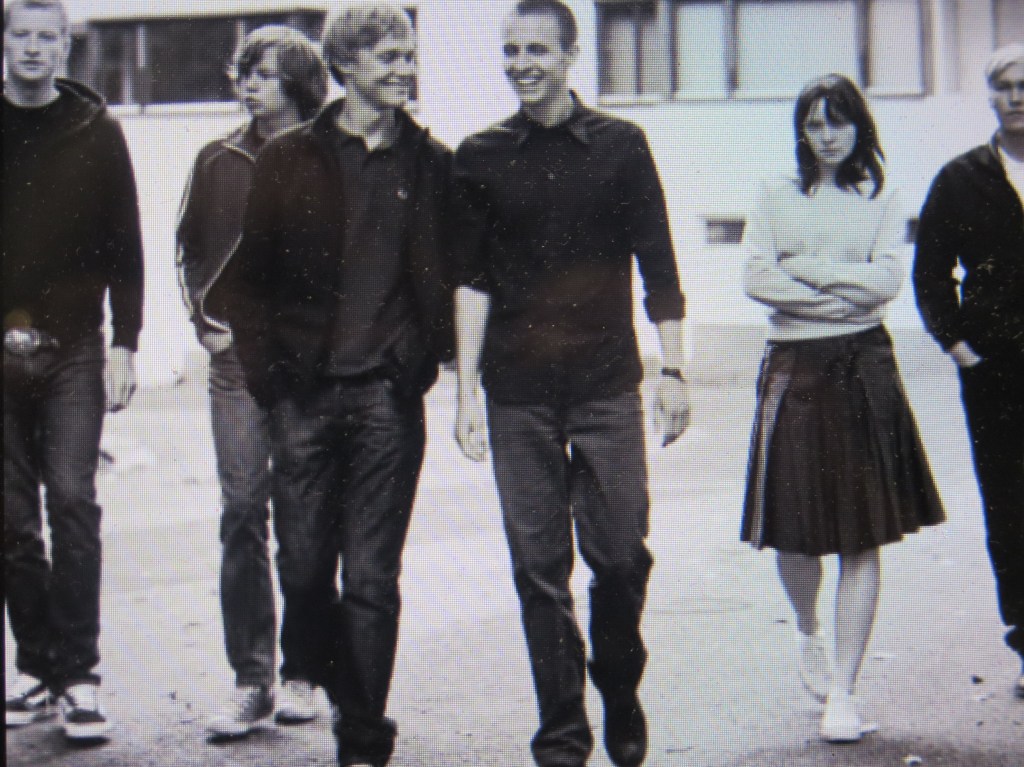
In Reprise, memory and fantasy merge in the comedy-drama that is playful and whimsically hopeful. As the writer’s imagination takes over Erik, we understand that he may achieve a possibility of success. Of course, the irony is that Phillip has achieved writing success, but it isn’t enough for him; returning to a former love is what matters. Thus, achieving their out-of-reach dreams remains different for both friends. And it is only through Erik’s imagination that they manifest the goals that make them happy.

The tone of Reprise turns darker and the comedy becomes muted in the award winning Oslo, August 31st which is loosely based on Pierre Eugène Drieu La Rochelle’s novel Will O’ the Wisp. This second film of the Oslo Trilogy is also written by Eskil Vogt and Joachim Trier and examines the interior soul psychology of the life of a recovering drug addict. When the film opens, Trier cleverly introduces us to Anders (Anders Danielsen Lie) without a hint of his enslavement to his former addiction when he walks to a river and attempts suicide unsuccessfully. From then on we understand the stakes and question how and why he has arrived on the brink of death only to eschew it. Trier keeps us in a state of tension as to whether Anders has given up or plans to try again.
From this initial uncertainty of details about where he has come from (the woman he slept with) and how he arrives at the beautiful house where they seem to know him when he walks in the door, we learn that Anders is in a rehab center. During his group therapy session, we learn he had a severe drug addiction and emotionally, he tells the group that he has been stable. This information collides with the previous scene; it is obvious he is lying and in group therapy, he has not dealt with the interior pain of his emotions or psyche.

Nevertheless, on August 30 Anders is journeying on a new road in his life as the therapist discusses the job interview which has been set up for him, though he is not enthusiastic about it. Then, as he takes off for the interview he makes a number of stops along the way, during which time he will see his sister and visit his home which his parents are selling to pay for his rehab.
It is on this journey, we discover he is in touch with his inner self. The darkness within is confirmed when he visits and confesses to close friend Thomas (Hans Olav Brenner) that he finds little purpose to his life and that he doesn’t think he ever loved his former girlfriend Malin, whose bed he leaves then tries to kill himself. In his discussion with Thomas, he even confesses that he doubts his love of Iselin with whom he had a long relationship and a rocky breaking off. The irony is that he is clean. The rehabilitation worked to settle him away from addiction, but it didn’t help him fill the cavernous soul abyss which overwhelms him in the thought that he has no reason to live. It becomes obvious that he used drugs to deaden the pain and ferry him away to a land of oblivion.

Ironically, when he confides to Thomas that he is suicidal, Thomas confesses that he is not happy in his life; that he has stopped finding passion with his wife and that he is going through the motions of living and raising kids. As they confess their trials to each other, they achieve a greater closeness, but that doesn’t assure Thomas that Anders won’t take his life. Thomas makes Anders promise he won’t commit suicide, and Anders obliges his friend. Nevertheless, because we have seen Anders’ suicide attempt at the top of the film, we are not convinced that he won’t try to end the meaninglessness of his life and pain of living.
Trier presents Anders’ soul/psyche condition in a series of worsening failures, spiraling him and us further into the black hole toward death. The journey on his leave from rehab takes him to his unsuccessful job interview, his failed meeting with his sister Nina, a party where he waits for Thomas who doesn’t show, to a drink after months of no alcohol, to a bar with old friends and more drinks, to a return to his old haunt at his dealer where he scores a large batch of drugs. On August 31st, when he reaches his parents’ home that is in disarray for Anders’ sake, being packed up for sale to save Anders’ life, the inevitable occurs.
Trier’s cinematography won a well-deserved award and the acting by Anders Danielsen Lie is heartfelt, profound and emotionally driven with a low key beauty and sensitivity, beautifully shepherded by Trier’s direction which is wonderful as is the editing. There is just enough cinematic silence and imagery to draw us in and keep us engaged with Anders’ journey, as we are being led emotionally, invested in Anders’ survival. This is one to see and is the explanation of another reflection of Oslo, Norway at a time when Oxycotin and heroin had been ravaging global culture.
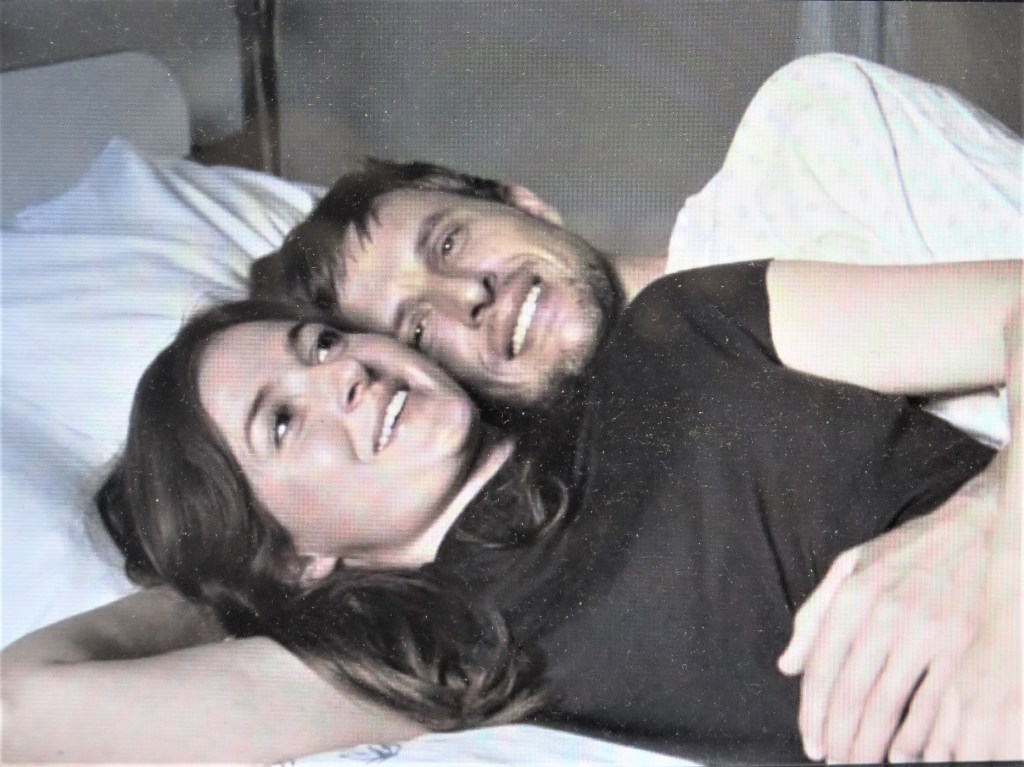
The Worst Person in the World is a dark romantic comedy-drama that chronicles four years in the life of Julie (Renate Reinsve). Like with Trier’s other two films, the protagonist is a young, in this focus, a woman looking for her own autonomy and identity as she negotiates the deep and roiling subterranean channels of her love life. Facing uncertainty with her career path and struggling to gain stability and balance, she eventually attempts to view herself realistically and authentically, despite her desire to avoid looking in the mirror.
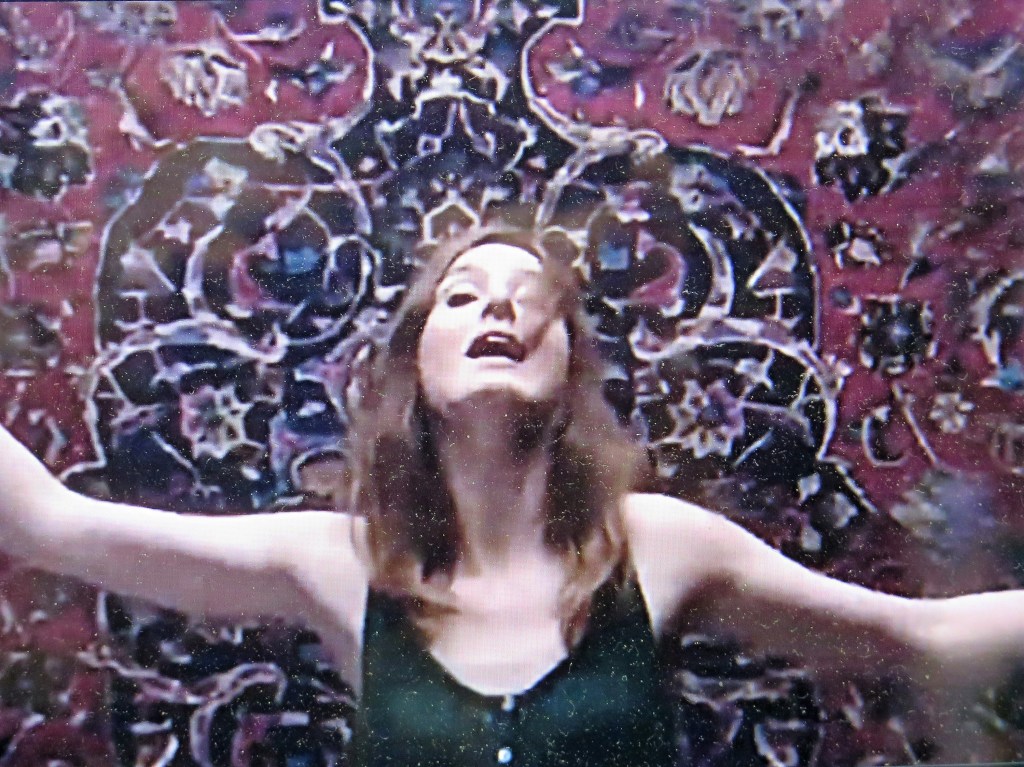
Once again Joachim Trier hits is out of the park and like in Oslo, August 31st, The Worst Person in the World is a multi-award winner. Renate Reinsve is devastatingly brilliant and translates an authentic performance into a beloved, flawed human and believable woman.
Don’t miss this marvelous triumvirate of great films by Joachim Trier and the Q and As with the director and lead actors by first reserving seats and purchasing tickets at https://www.filmlinc.org/press/flc-announces-joachim-trier-the-oslo-trilogy-january-28-february-3/

