Category Archives: Film Festival Screenings
‘Mifune Festival’ at Film Forum February 11-March 30

Part I
Mifune, a four-week festival of 33 films is celebrating the legendary Japanese actor Toshirō Mifune at Film Forum from February 11 through March 30. Co-presented by the Japan Foundation, the series features 16 of Mifune’s collaborations with iconic director Akira Kurosawa in what has been identified as one of the most seminal actor-director partnerships in film history. The duo produced some of the greatest masterpieces of world cinema. And Kurosawa’s films continually serve as an imprimatur for global directors mesmerized by Kurosawa’s cinematic storytelling. Indeed, Kurosawa once admitted that without Mifune, he would have no great films.
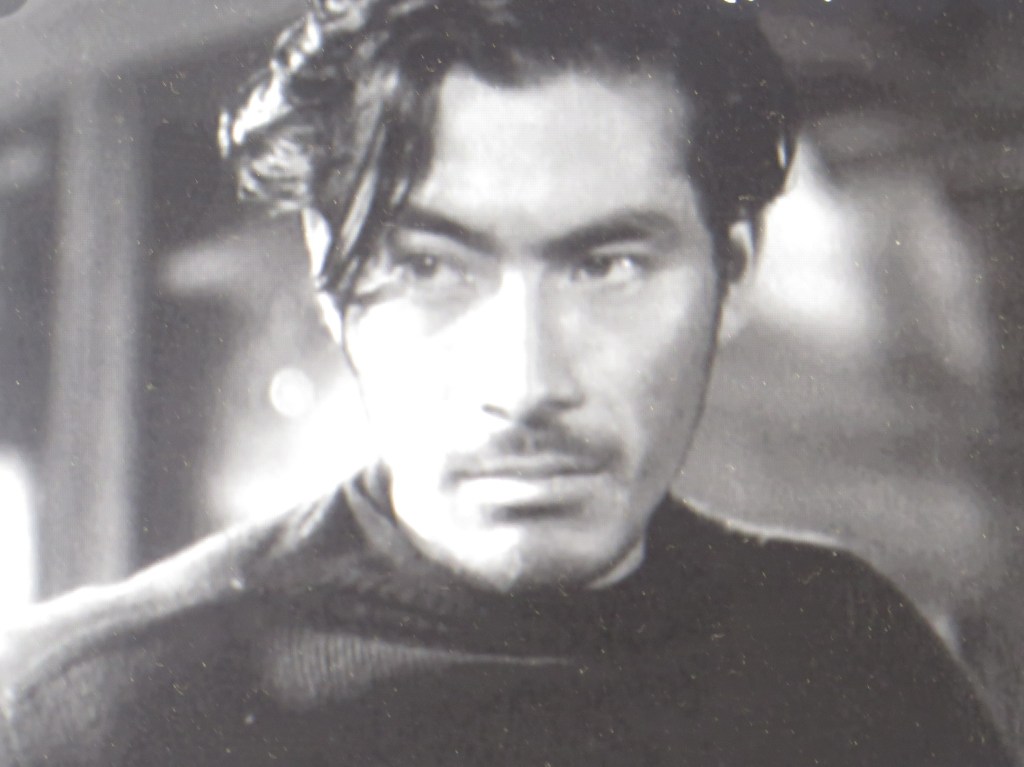
Postponed due to the COVID-19 pandemic, the festival, originally titled MIFUNE 100, planned to commemorate Mifune’s centennial year in 2020; the actor was born on April 1, 1920. After two years, the decision was made to open the retrospective on the legendary actor. Film Forum Mifune Festival includes rarities and rediscoveries in 35mm imported from the libraries of The Japan Foundation and The National Film Archive of Japan. It has been programmed by Bruce Goldstein, Film Forum’s Director of Repertory Programming, and Japanese film scholar Michael Jeck.
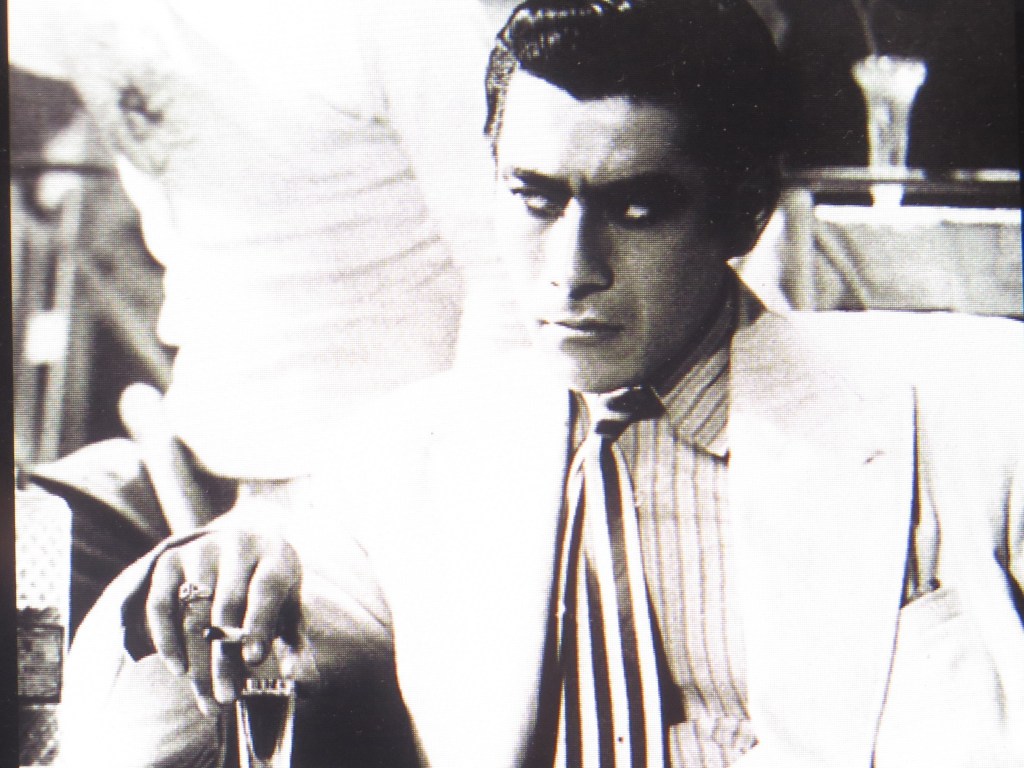
This first in the series of articles gives an overview of select Kurasawa films that featured a young Mifune with another seminal actor Takashi Shimura, who often plays the foil to Mifune’s gruff, crude, deep-voiced characterizations. Highlights include a brief synopsis of each film and some points about the cinematography, scenic design and acting. The discussion moves in the film chronology from 1947-1949, beginning with Snow Trail (1947) Drunken Angel (1948) and Stray Dog (1949). In Part II you will find coverage for subsequent Mifune films including Rashomon (1950) which catapulted Mifune and Kurasawa to worldwide acclaim and awards and opened doors to further celebrity, dramatic risk and intriguing opportunities that historically shaped the cinematic art for decades. Film Forum Website for the MIFUNE FESTIVAL https://filmforum.org/series/toshiro-mifune
SNOW TRAIL (1947) At Film Forum: Tuesday, February 15 at 12:40, 6:00
Kurasawa casts Takashi Shimura (Nojiro) and Toshirō Mifune (Eijima) as escaped bank robbers, who with a third older accomplice retreat to the snow covered mountains to hide, though their impossible journey is besieged by one trial after another. Kurasawa configures the robbers with unique personalities and then pulls a switch when they confront the hellish conditions of traversing in six foot snow drifts along sheer mountain cliffs, and their older accomplice falls to his death taking his portion of stolen money with him. This is a wake up call for both Nojiro and Eijima and an important turning point where we empathize with these individuals as they realize the hopelessness of their situation from which they most probably will not get out alive.
All seems lost as the actors struggle against the mountain’s death grip. Kurasawa’s perfectly balanced scenic design and cinematic shots of the dominance of the mountain terrain, the deep snows, isolation and the freezing temperatures threaten their every step. As neophytes against nature’s cold, blasting fury, we see in their faces their yearning for life and sadness that it is over for them. Shimura especially gains our sympathy, but then a miracle occurs. They stumble upon a lifeline, a ski trail which eventually leads them to a resort where its hosts, a grandfather and his young granddaughter, entertain ski expert Honda (Akitake Kôno). It is there in this warm, congenial company where the fibers of the robbers’ characters are revealed and we note Kurasawa’s philosophical perspective teased in through the dialogue and emotional fear and pain of Mifune’s Eijima and Nojiro’s growing grace.
As Nojiro pulls away from Eijima, appreciating the sweetness of the little granddaughter, who reminds him of the daughter he lost, Eijima becomes more crude, violent and angry with him, attempting to dislocate his accomplice from their kindness. After all, Nojiro, masterminded the robbery, but from his icky sentimentality at the granddaughter, Eijima fears Nojiro lost his resolve to escape. It is in these scenes where we see the menace, bluster and extraordinary vitality of Mifune’s acting dynamism. How their characterizations diverge toward inner redemption and damnation as they attempt to scale the mountains after blackmailing Honda to guide them generates suspense, tension and danger. These elements heighten as Honda saves their lives repeatedly but must close down when he breaks his arm and is shot in the leg.
Mifune and Shimura are the perfect duo. Their technique and Kurasawa’s close-ups and medium shots provide the light and the dark, the hope and the desolation that propel the characters’ emotional turmoil up the mountain of fate in this survival story of good and evil that is layered, intricate and metaphysical. Against the mountain, their doom, with Kôno’s Honda bestowing the rope lifeline, symbolic of the code of community and friendship (the mountaineers code) it is up to each of them to work cooperatively to save each other from destruction. This is the lesson of redemption and hope that only one of the robbers learns and with that knowledge, gains the strength to be accountable for his actions.
Drunken Angel (1948)
At Film Forum: Saturday, February 19 at 12:40
Sunday, February 27 at 6:00
Monday, February 28 at 12:40
Tuesday, March 1 at 8:20
Wednesday, March 2 at 5:50
Thursday, March 10 at 2:45
Drunken Angel is Kurosawa’s examination of the soul’s demise to self-destruction. For this journey Kurosawa casts Takashi Shimura as the alcoholic Dr. Sanada and Mifune as Matsunaga a member of a Yakuza gang who controls the area but is evicted from his power when the boss exploits him then puts another in power until Matsunaga self-destructs. Dr. Sanada’s office is by a pond of chemicals and slime which Kurosawa sneaks in as symbolic of the entire community as the cesspool of humanity. The pond water which makes others sick, is likened to the values that make humanity sick: greed, exploitation and selfishness.
Interestingly, Sanada whose character weakness makes him a drunkard, has a kind heart and attempts to make a difference with these individuals who are worse off than he. As his patient, Matsunaga who has tuberculosis doesn’t follow his instructions, though if he did, he would be able to survive, maybe thrive. Sanada has a young female patient who he is helping to heal. However, Matsunaga lacks the will to help himself, regardless of how much Dr. Sanada badgers him not to drink and take care of himself. Clearly, Dr. Sanada puts up with Matsunaga’s manner, invests himself in the gangster attempting to help though the people who surround Matsunaga don’t care if he lives or dies and contribute to making him sicker.
Once again, Mifune’s performance as the soul destroyed gangster who Dr. Sanada sees as worthy to be helped is masterfully, carefully revealed, especially in his revelation that Matsunaga doesn’t have the energy or will to follow Sanada’s instructions, and allows himself a slow suicide. Theirs is an amazing duel of emotions: impatience, helplessness and withering bravado, frustration and love. The symbolism revealed in the scenic design of the various environments and the shot compositions of the dance hall, Dr. Sanada’s tight office, the close-ups of the emotional weariness of Mifune’s Matsunaga and the frustration and anger of Shumira’s doctor is superb. Despite the soul filth of the criminals who oppress, theirs is a relationship that appears noble. Sanada’ concern for Matsunaga leads us to feel empathy that he is dying, caught in his own sorrowful web of sickness and destruction that he let into his spirit when he gravitated toward the criminals in the hope of being “someone” others might respect. It is Matsunaga’s tragedy and the tragedy of all the self-annihilating criminal class, the theme of this superb film.
Stray Dog (1949)
Monday, February 14 at 8:10
Friday, February 18 at 2:40
Sunday, February 20 at 12:40
Thursday, February 24 at 5:50
Wednesday, March 9 at 8:10
Stray Dog is Japan’s first film noir crime procedural influenced by Jules Dassin’s script of The Naked City with Kurosawa’s signature philosophical commentary on the nature of the human soul in its travails through post-war Tokyo and beyond. Kurosawa sets the action in some of the most rubble-strewn sections of Tokyo in a clothes drenching heat wave before air conditioning cooled and refreshed. In every scene the pressure and struggle is evident in the scenic design and cinematography of the gritty, torn up city where vets, finding little work, join the Yakuza (gangster network).
Every character, every actor especially leads Takashi Shimura as Detective Satō, and Toshirō Mifune in an uncharacteristic but athletic portrayal as Detective Murakami, Kurosawa features with close-ups, dripping perspiration tear-drops down noses, chins and foreheads. White suits, dresses and hats show huge swaths of white cloth darkened with dingy, messy, wet stains. The heat Kurosawa uses as a character. And as a symbol, it represents the pressure and tension that Murakami (Mifune) puts himself under, obsessed with guilt that he isn’t up to the task of being a competent detective.
The driving incident occurs when neophyte Murakami, white suited and new to the job, has his Colt-45 pick pocketed while jostling against other sweltering passengers on a crowded streetcar. Realizing who stole it, Murakami charges after the thief on foot but eventually loses him. Thus, set in motion is the race against time to locate the stolen weapon. Murakami, who is shy and quiet with other detectives in the department, is ready to resign when he realizes that the gun was used to commit murder. His upright, honest and sincere attitude (fascinating to see Mifune’s humble versatility in comparison to previous criminal roles) is appreciated by the department head who assigns him to work with seasoned detective Satō (Shimura).
Together as a disparate but cooperative and congenial team they piece together the clues to those who can be traced through to the girlfriend (in an ironic, dramatic scene with her mother) of Yusa who commits two murders with the Colt-45. Look for the famous nearly 10-minute sequence shot by hidden camera in the city’s toughest black market as Mifune’s Murakami goes undercover to buy a gun on the black market and reveals the palpable anxiety and frustration at coming up against dead end after dead end. The taut thriller emotionally magnifies for Mifune’s Murakami, when Satō is almost fatally injured. Mifune is so authentic as he goes to pieces believing his gun killed his mentor and friend. Also, catch the superb dialogue at the conclusion when Satō encourages Murakami not to feel badly for Yusa. Shimura’s comment is eloquent, philosophical and pointed and Mifune’s response is memorable.
The schedule of films beginning the series on Friday, February 11th is as follows or go to the Film Forum website: https://filmforum.org/series/toshiro-mifune
RASHOMON (1950)
Friday, February 11 at 2:55, 7:10
Wednesday, February 15 at 5:35
Friday, March 4 at 3:50
Saturday, March 5 at 12:40
Wednesday, March 9 at 6:00
Thursday, March 10 at 12:40, 5:10
I LIVE IN FEAR (1955)
Friday, February 11 at 12:40, 4:55, 9:10
Friday, February 18 at 12:30
Saturday, February 19 at 2:50
Sundance Award Winner: ‘Hive,’ 94th Oscars® Shortlisted for Best International Feature

Hive, a triple award-winner at Sundance Film Festival is a beautifully constructed, exceptionally acted and poignantly rendered feature film by writer/director Blerta Basholli. In the film, Basholli simplistically and profoundly examines the aftereffects of the 1998-1999 Kosovo war that impacted civilians and dislocated the cultural mores and society of Kosovo.
It is through this backdrop that Basholli focuses on representative families that suffered the loss of relatives and economic hardship which was felt greatest in the towns where killing, rape, burning and looting took place. One of the largest massacres happened in the village of Krusha e Madhe, the setting of the film inspired by a true story. There, families are still waiting over twenty years later for word of their loved ones in the hope of recovering their clothing or bodies so they might receive a proper burial. Then, the uncertainty of what happened to their husbands and relatives would finally reach closure.

Writer/director Blerta Basholli reveals the strength and resilience of the women whose husbands have gone missing as they attempt to confront their grief, raise their children, take care of their in-laws and put food on the table with their own ingenuity, hard work and home crafted items. Focusing on Fahrije Hoti, Basholli reveals how the enterprising Hoti gradually fights the patriarchal culture of lazy men to gather a collective (a hive) and establish a way for the women to support themselves and their children, launching a business to make and sell ajvar (roasted red pepper spread).
Initially, we see that Hoti attempts to maintain her husband’s bee hives, collecting the honey and having her father-in-law who is in a wheelchair sell it. During the film we learn the bee hives and honey are a remembrance of her husband, though the honey doesn’t provide them with enough money after it’s sold. And she hasn’t found the way to deal with the bees like her husband did, so that she doesn’t get stung. Hoti ends up having to nurse her wounds as the bees sting her when she gets the honey.
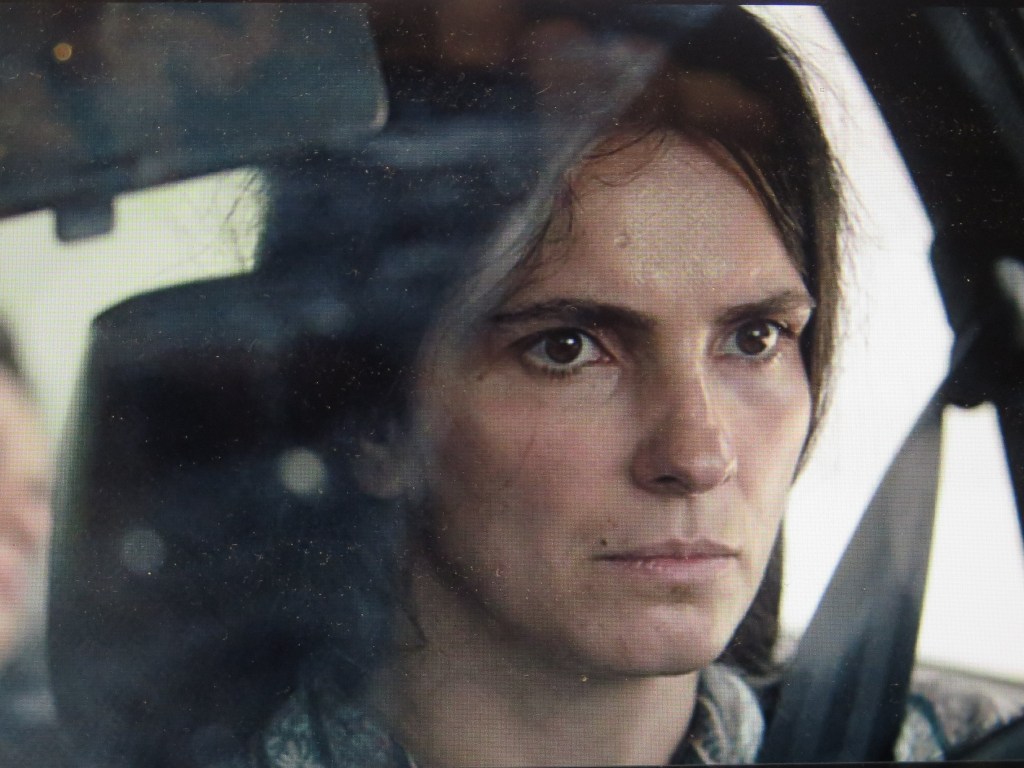
As Fahrije Hoti, Albanian actor Yllka Gashi teases out an exceptional portrayal of the woman whose struggles inspired the director to create her story from emotional truth. When a car is donated so that Hoti can drive and help the other widows, she gets a license. And because she and the women are destitute, she gets the idea to start a business selling avjar. But the men of the village reject her driving autonomy and her flitting around the village to pursue business. It is a threat to their masculinity and power structure extent for centuries.
When she parks near the cafe to do business, a rock is thrown smashing the car window. Her transgression is clear. Their violent attack forewarns her to stop or worse will follow. However, Hoti doesn’t respond, except to drive home and tape up the back window. She stoically continues about her business without confronting the men at the cafe who despise her.
As Hoti is encouraged by another, older widow, despite the disdain of even her own children and her father-in-law who disagree with her plans, gradually, she and a few women agree to form the business. They chip in money for the supplies. Eventually, they meet at her house to make the avjar. However, she faces tremendous backlash and her own daughter is nasty to her when Hoti attempts to sell a band saw, a memento of her husband to get the money to buy more peppers.
Other obstacles come from the men in the village whose chauvinistic egos are threatened by these autonomous women. They try to destroy their product and stop their sales. Clearly, the men see them as whores who have overstepped the boundaries of the female identity set in the traditions of the town. And the man who sells her the red peppers attempts to collect payment in sex, assuming that she is a whore, for what woman would do what she is doing?
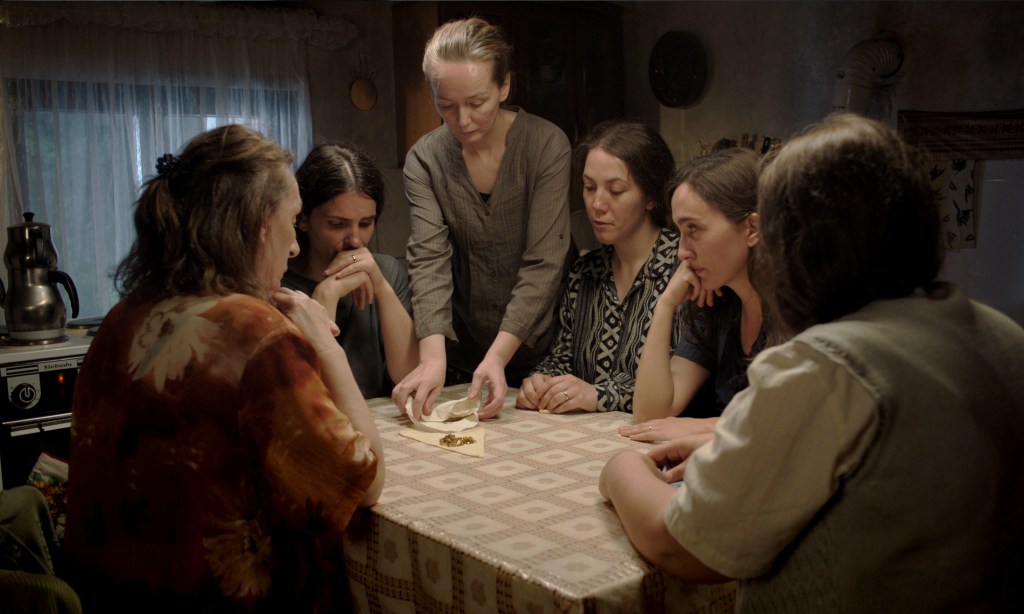
One of the important conflicts in the film, explores Hoti forging ahead despite ancient mores and folkways that would keep her and her family starving. She, like the other women widowers, is destitute. However, where the other widowers are afraid, Hoti has nothing left to lose. Hoti’s ability to drive strengthens her; one taboo has been overthrown. Why not be the head of a business? Another taboo is overthrown. Initially, the other cowed women reject her plan to sell their product out of fear of censure and a reputation of disgrace.
But with every move she makes, Hoti becomes more determined and she exemplifies to the others that the archaic folkways make no sense in a modern world. The irony is that the complaining, bullying men condemn them for working but do not lift a finger to support them. They approve of their groveling in starvation, another type of ignominy, without their husbands. Either way, the women are disgraced for they are women without men. Hoti and the women defy the men’s backward definitions of who women are. They redefine themselves.
Cleverly, the director subtly shows the harmful misogyny as a destructive nihilistic force which benefits no one, least of all the entire town. Basholli presents this as she tells the story through silences and actions, without haranguing or presenting a political argument. The effect is striking; we feel the full force of the crumbling of the patriarchy as the men fear having to redefine themselves, which these powerful women are forcing them to do.
Basholli’s themes are striking. It is clear that the lazy men begrudge the women’s attempt to survive without their husbands. In other words they are to remain stuck in time with no identity, power, autonomy, sovereignty apart from their husbands. They are expected to curl up and die as an honorable way to remember their men; be with them in death or wait in limbo in a dead zone. The thought that the widowers make a life for themselves to overthrow the former traditions is the death of the old way and the beginning of a new way that Hoti is creating. She chooses hope and life after the massacre of the village. Hers is a bold, vibrant, maverick move. Astounding and revolutionary, she re-emerges a new individual.
Life and hope respond in renewal as the women receive sustenance from each other and appreciate their new unity, inner peace and financial power from their “hive.” Thus, they continue to contract with other supermarket owners who sell what they are making and expand, as the director shows after the last cinematic shots of Gashi. At the conclusion, Yllka Gashi as Hoti is dressed in a beekeeper’s outfit. A bee walks on her hand as she remains at peace, unafraid, knowing the bee will not sting her, like her husband never was stung. Basholli renders Hoti’s metaphoric, symbolic peace in communion with the bee as acceptance of the opportunity and new world that she recognizes is open to her.
This superb debut feature film by Basholli is Kosovo’s official selection for Best International Feature Film, Kosovo’s eighth official entry, and was recently included on the International Feature Film shortlist for the 94th Academy Awards®. Hive is one to see for its dynamic award-winning performance by Yllka Gashi, award winning directing/writing and its current, vital themes about defining one’s life, and persistence in carving out one’s place, especially in a society that is closed, weak and crumbling.
DIGITAL / VOD RELEASE – FEBRUARY 1, 2022
Available on all major digital/VOD platforms including:
Amazon, Apple TV, Google Play, Kino Now, Vudu, and
The Criterion Channel (starting February 8th)
New York Jewish Film Festival 2022: ‘We Were the Others’

When the 1970 Stonewall Riots were happening in New York City and Gay Pride was taking off in other cities globally, in Israel, the situation was very different. In a remarkable documentary currently screening at the New York Jewish Film Festival 2022, in We Were the Others, filmmaker Hadas Ayalon interviews six gay men in order to slice open the discriminatory cultural mores and attitudes in 1960s and 1970s Israel. Importantly, with her pointed interviews that delve into the souls and emotions of the men, we understand the very human experience of negative acculturation. And in understanding how these men grappled with their sexual identities and finally accepted who they are, we note incredible human emotions, with which all of us may identify.
Ayalon organizes her documentary around themes, and filters through her subjects by having them discuss how they understood what their sexual identity was at an early age. Interestingly, all admit there was no language, nor was there any frame of reference in Israel for being attracted to the same sex. Indeed, these men were born in the days of the establishment of the State of Israel. Culturally and religiously, the classical values of marriage and children were an imperative to a newly forming state, though the rest of the world was changing. Nevertheless, the religious foundation for marriage and children excluded gay men and women. Indeed, gays were “the others.” They were like alien creatures that needed to be “cured,” and “corrected,” after they were jailed.
As her subjects discuss that they grew up and realized that they were attracted to the same sex, the external culture was nightmarish; they were alone. They couldn’t dare reveal the lifestyle they wanted. One individual states that walking down the street, he always keep his eyes looking at the ground, afraid to “give himself away” if he looked up at another man and showed interest.

In each instance the subjects discuss that they were forced to go underground when they found out that there were others like them sexually. To have brief, silent encounters there were looks, signals and gestures as codes. There was a language being conveyed, but without words or speech. Most refer to a walkway along the beach in Tel Aviv that they frequented, but eventually the police patrolled, arrested and ousted the “criminals.” Then they went to a park where they were able to communicate and form a community eventually that led to organization, advocacy and freedom.
However, like in the U.S. in the 1940s-1950s, in Israel in the 1960s and 70s cultural mores insisted that homosexuals were perverted. In familial circles, gays were ridiculed and rejected. As many gays did, one subject, who was made fun of by his family for being effeminate, sought “normalcy.” He wanted desperately to be like other males, who were with women. He went to therapy, got married and had children. However, he was miserable; none of this stopped his desire for men. Eventually, he divorced and when the culture righted itself and being gay was no longer illegal or a great joke to laugh at, he enjoyed his life and was accepted by his family.
The documentarian makes it a point to include a few subjects who founded the Aquda, Israel’s pioneering LGBT organization established in 1975. Yotam Reuveni, journalist/author/poet, when confronted with his own fear and hypocrisy about gays revealing their preference for same sex relationships, discusses how he had a heart to heart with himself. Throwing caution to the winds, which seems like a nothing burger now, he came out in Yediot Ahronot. In a weekly series of articles, he described the how and why of his being gay and he advocated for human rights. Considering the taboo associated with homosexuality, it was a brave, necessary act that changed lives and allowed others to come out and not feel like they were monstrous in their clandestine sexual affairs and encounters.

In another instance of the repression involved, two of the subjects discussed how they were forced to go to another country to live without their rights being violated. One was a distinguished army officer and an aviation engineer. When it was discovered he was gay, he was summarily discharged. He emigrated to Canada. Another subject discusses his decision to leave the oppression of Israel, seeking not to live in the shadows of fear and isolation.
In order to enhance the viewers’ understanding, Ayalon uses tasteful reinactments and inter-edits archival footage from that period of time in Israel, which is superb. She also uses Amos Guttman’s gay films from the 1970s and 1980s. What is most heartbreaking is each of the men’s stories about their inner emotional sorrow and aloneness which brought some to the brink of suicide. The culture was a tormentor and after a while, living with torment daily and enduring the negation of who they were was a form of death. Thus, it was difficult to overcome the culture’s emotional brainwashing and former behaviors. Each of the men discuss how they struggled with love and intimacy after years of having to express their sexual desires in places that offered brief clandestine encounters.
It was only until 1979 when homosexual men and women formed advocacy organizations and went public, that the pressure began to be relieved. With mass demonstrations for their rights, the oppression lessened. As people identified, more joined, happy to be done with the nihilism, denial and hypocrisy of hell that the culture made them endure for so long.
Ayalon’s film is an important retrospective indicating how far we have come regarding the LGBTQ community. However, there are still nation states and even parts of the United States that are abjectly retrograde. Thus every film, every documentary, is a step in the right direction to uplift the human rights of all citizens.
We Were the Others is screening virtually. For tickets go to their website: https://virtual.filmlinc.org/tv/alone-together-followed-by-we-were-the-others/1
New York Jewish FF: ‘The Lost Film of Nuremberg’ and ‘From Where They Stood’
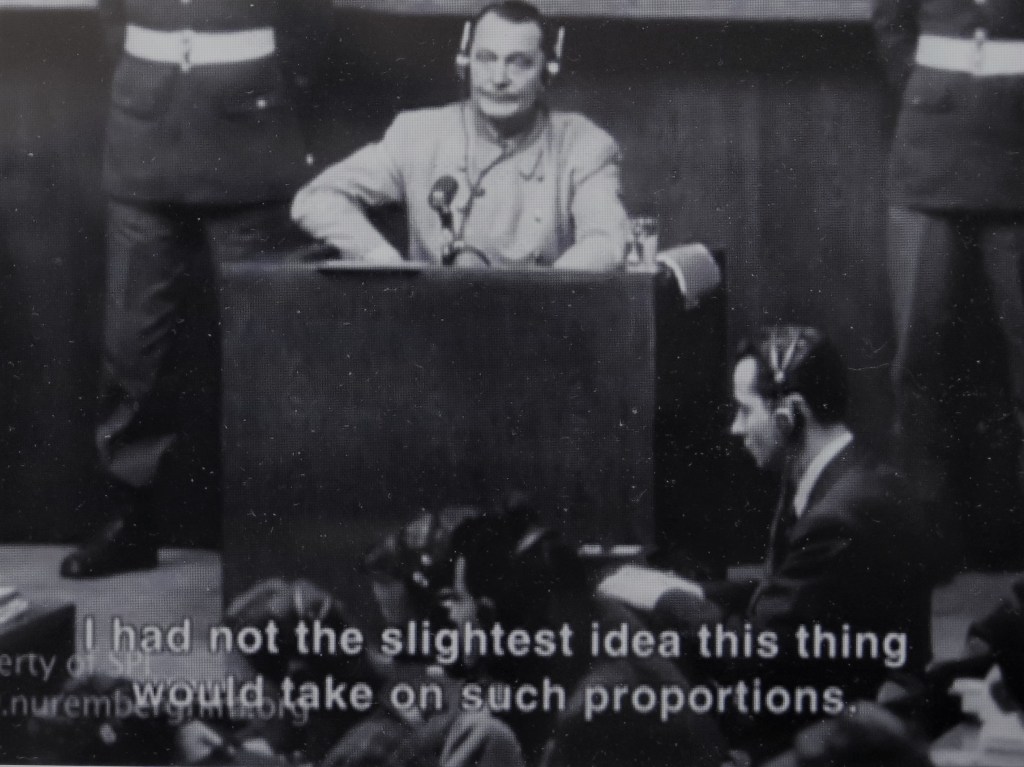
Two documentaries, screening at the New York Jewish FF are must-see viewing. Both have as their subject the recording of photographic evidence of the Shoah, the Holocaust (the mass murder of Jewish people under the German Nazi regime during the period 1941–45). Considering the rise of white supremacist hate groups encouraged by the former U.S. president, these films provide an important record. Since World War II though the Holocaust has been much written about and over the decades has been the subject of movies, films, articles and plays, the Nazi atrocities in concentration camps throughout Germany, Poland, Czechoslovakia, France, Italy and other countries, increasingly have been called into question by global Holocaust deniers.
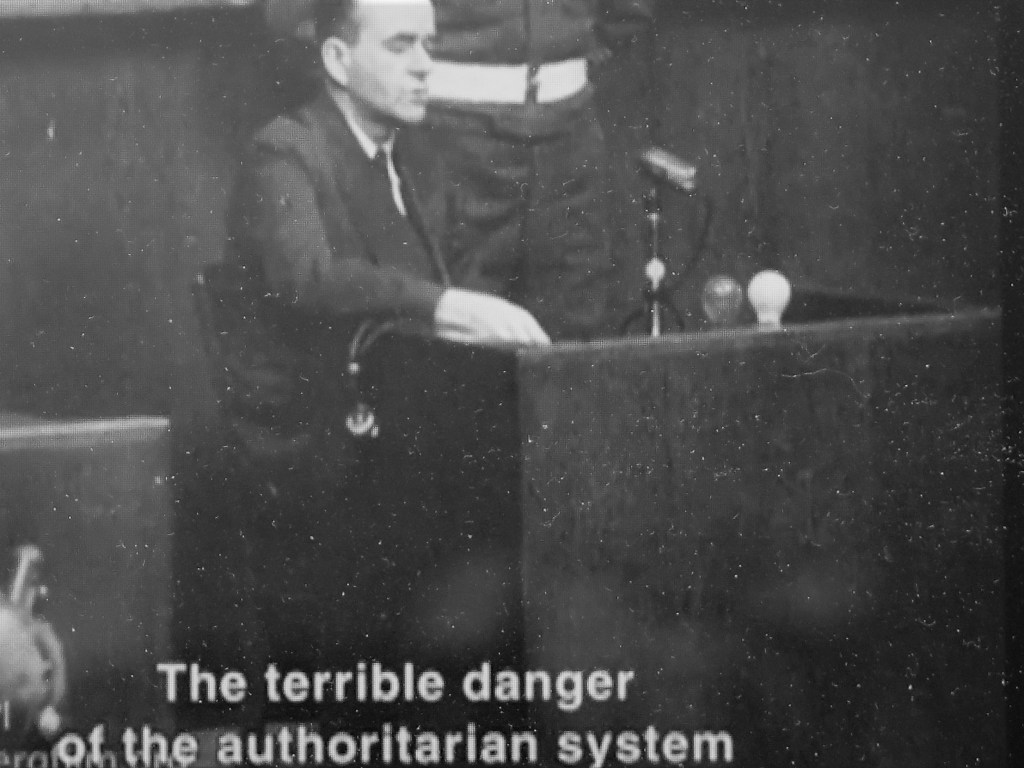
The Lost Film of Nuremberg chronicles how veterans of the OSS War Crimes Unit, brothers Bud and Stuart Schulberg (Hollywood filmmakers under the command of OSS film chief John Ford) endured obstacles and setbacks on their mission to track down and collect film evidence of Nazi war crimes to be used at the International Military Tribunal at Nuremberg. Their work was vital if done assiduously, for it would be used to judge the war crimes of high ranking Nazi officials like Joachim von Ribbentrop, Hermann Wilhelm Göring, Albert Speer, Rudolf Hess, Alfred Rosenberg and others, and punish them if found guilty.

The Schulberg’s collection of Nazi films was used with testimony, documentation and the filmed proceedings of the Nuremberg trials to create Nuremberg: Its Lesson For Today. Thus, The Lost Film of Nuremberg shows the discoveries and angst the Schulbergs went through to create the superb pro-democracy film Nuremberg: Its Lesson For Today. It was released in 1948 throughout Germany, but it was never seen in the United States until a decade ago. Indeed, for over sixty years it had been “lost.”
Director/writer Christoph Klotz adapts daughter Sandra Schulberg’s monoaph, Filmmakers for the Prosecution to make The Lost Film of Nuremberg a stirring and exciting revelation about a chaotic period of time after WW II. Klotz includes tidbits from Schulberg’s perspective in letters to his wife. This material is provided by daughter Sandra. What makes the film more intriguing is the inclusion of Sandra’s perspective of her father and this commission which she only discovered after her mom died and she was cleaning out their home.
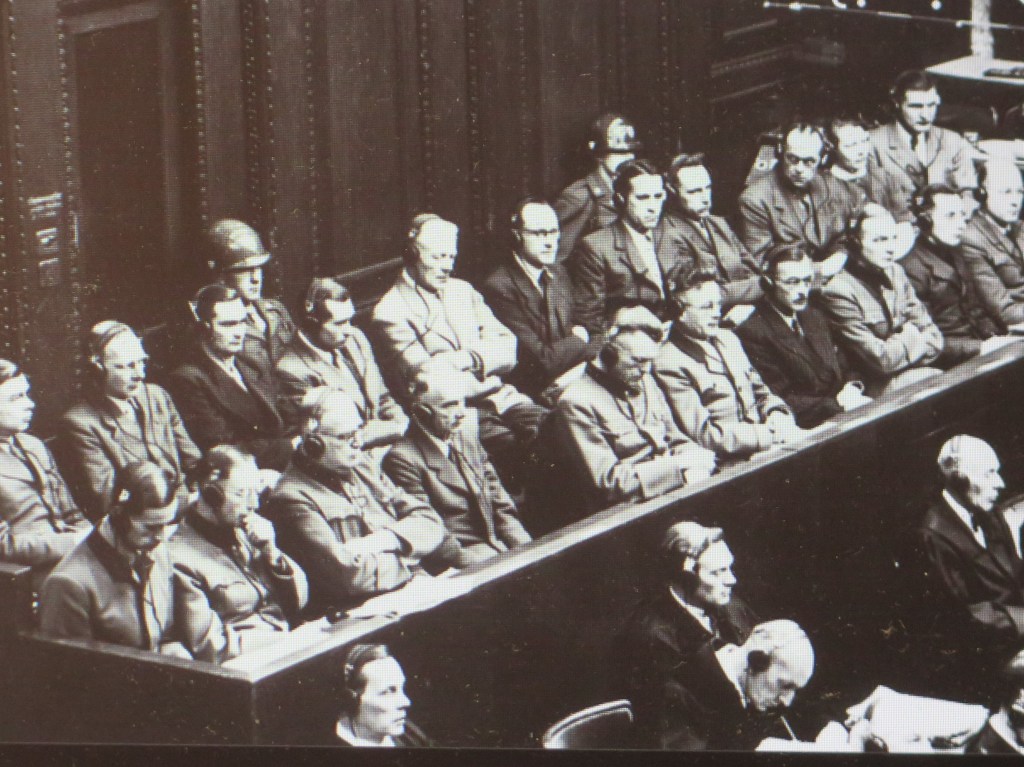
Klotz uses flashback liberally with narration by Sarah-Jane Sauvegrain to tie in the past and the present. Thus, we see clips of the youthful brothers examining Nazi film they’ve received. We hear/see Stuart’s letters to his wife detailing the journey to Germany and his impressions the to find films that the Nazis themselves produced. Stuart (the youngest member of the OSS Team) and brother Bud learned early on that the film they were making must be a compilation of actual films recording the words and deeds of the defendants. Thus, the incriminating films would be used to convict them.
Sandra learns salient details why her Dad’s “lost Nuremberg film,” edited and finalized in 1948 was created. It was to be shown in Germany and Europe for educational purposes. The intent was for the de-Nazification of the attitudes and mores of citizens after the war. It was also to show the difference between Allied Justice leveled against those committing crimes against humanity and Nazi Justice which was no justice if you were not a member of the Third Reich. Sandra’s eyes were opened to another side of her father’s vital work, for surely though it didn’t receive public release, other filmmakers knew of it and the archival Nazi films used to make it. These provided the linchpin around which subsequent films about the Holocaust would be made.

Klotz adds rare, never-before-seen footage, and reveals why the film was never released in the United States. Also, he includes Sandra’s reflections about what her father must have felt upon seeing the horrors of the camps as a young man. Klotz includes commentary of the older, retired Bud Schulberg giving a lecture about the subject of the film and why the Nazis made incriminating films of disturbing and horrific images. However, other films and Nazi evidence, buildings and documents were destroyed. The Nazis intended to escape justice, which many did, leaving Germany for the US, South America and other safe havens.
In The Lost Film of Nuremberg, Klotz relates the story of how German film director Lennie Riefenstahl was arrested and became a witness for the prosecution. Her propaganda film Triumph of the Will was created for Hitler’s use. The film identified various Nazi officials at Hitler rallies and it also evidenced Hitler’s plans. Another helpful individual was Hitler’s personal photographer Heinrich Hoffman, who had 12,000 negatives they used, after he was picked up, arrested and questioned.
As a result of the film evidence, the 19 out of 22 high ranking members of the Third Reich at Nuremberg were found guilty. Only three were acquitted. The other19 were either executed (Göring committed suicide) or received life or lesser sentences for committing crimes against humanity.
The Lost Film of Nuremberg is screening at 1 pm and 7 pm on 13 January at Lincoln Center, the Walter Reade Theater. Q & As with the director and producer Sandra Schulberg are also on that date. For tickets go to https://www.filmlinc.org/films/the-lost-film-of-nuremberg/

From Where They Stood is French documentarian Christophe Cognet’s unadorned and acute investigation of rare secret photos taken by prisoners in various concentration camps at great risk to their lives. They did this in the hope of documenting the atrocities they witnessed from spring 1943 to the fall of 1944. Examining the negatives carefully with a magnifying glass, Cognet visits the camps where the prisoners took the film and then either buried it to dig it up later or sent it out in a package. Some negatives came with a description that was revealed after the liberation of the prisoners who then wrote down the information. Other photos are of portraits of prisoners with no explanation or names sitting against the barracks. Others are of crematoria.
Many of the photos elucidate and confirm life and atrocities in various camps: Dachau, Buchenwald, Mittelbau-Dora, Ravensbrück, Auschwitz-Birkenau. With a translator, Cognet visits the camps and adjusts the photo negatives so that the viewer can see how the photo depicts what the location looked like. Verified are crematories, burn pits where bodies were disintegrated as much as possible. Interestingly, the bone fragments are present to this day, leaving a record of the great crimes of murder. The bone fragments to the surface after a heavy rainfall.
Unlike The Lost Film of Nuremberg, there is no music or narration or attempt to thread the places together. We hear just the silence of footsteps crunching against the walkways and the sound of birds chirping in the background. The simplicity is haunting and one realizes one is viewing a graveyard where many innocents suffered because they were considered enemies of the Third Reich.

Cognet also includes negatives which document Sonderkommandos (usually Jewish prisoners who pulled out the naked bodies from the gas chambers and piled them on carts taking them to the crematories) stand in front of a massive pile of bodies to dispose of and burn. Additionally, women who had been used for experiments (referred to as rabbits) also pose for the camera showing the areas of their body where they’ve been experimented on. Reference is made to one experiment: a gash is made and gas gangrene is encouraged by injecting a bacillus into the site. The wound is left untreated to see the progress of the gangrene.
Because Cognet uses straight cinema verite style, the effect of the prisoners’ photographs of the past paralleled with the locations of those places in the camps in the present is stark and shocking. The posting of the enlarged negatives at the location allows the viewer to see what the prisoner saw, to stand in his or her shoes. Indeed, it leaves one numb to consider the risk these individuals, took to sneak out the film to document what was going on so the world would know. For this film Cognet’s minimalism to just see what is in the photograph is remarkable.
From Where They Stood is screening virtually from 14-19 January. For tickets go to https://www.filmlinc.org/films/from-where-they-stood/
The Lost Film of Nuremberg is screening at 1 pm and 7 pm on 13 January at Lincoln Center, the Walter Reade Theater. Q & As with the director and producer Sandra Schulberg are also on that date. For tickets go to https://www.filmlinc.org/films/the-lost-film-of-nuremberg/
New York Jewish FF 2022: ‘Sin La Habana’ review

Sin La Habana, the award winning narrative feature, exceptionally written and directed by Kaveh Nabatian, who also wrote the original music, is a beautifully layered film that completely engages from the opening shot to the uncertain ending. Sin La Habana is enjoying its New York premiere as the Centerpiece film at the New York Jewish Film Festival 2022. The NYJFF 2022 is being presented live and virtually from January 12-25, 2022. For tickets and scheduling see the last paragraph of this review.
The haunting, profound, poetic cinematography by Juan Pablo Ramirez, and the acutely thoughtful editing by Sophie Leblond intrigues us to the story arc of a Cuban ballet dancer and his lawyer girlfriend who loathe La Habana, Cuba. The city of Havana (in Spanish Habana) holds little promise for them, amidst the broken down buildings, squalid impoverished settings and lack of progress evidenced from Fidel Castro’s dictatorship and the decades long U.S. embargo. Leo and Sara envision a better life for themselves elsewhere, but their first world destination country in a time of global immigration restrictions leaves their only route of escape to be marriage to foreigners.

Leonardo (the excellent ballet dancer/actor Yonah Acosta Gonzalez) is the best dancer in the company where he performs, but he can’t catc,h a break for the star role as Romeo because of his “lack of humility,” says the director of the company whom he accuses of racism, and who fires him after he curses the director out. His girlfriend Sara, who is a daughter of Orisha (both Leo and Sara are practitioners of the West African religion of Babalawo which in Cuba resembles Santeria or Vodun) is as ambitious as Leo. Their high expectations and confidence in themselves lead them away from La Habana to achieve material success and new identities, though it will mean leaving their cultural heritage back in La Habana. Their decision is filled with risks, isolation and heartbreak; but with each other, they believe new possibilities are at their fingertips with their talents and skills.
We note that throughout Sin La Habana, Leo always prays and keeps in touch with his faith, practicing it as best he can through his memory when he lives in Canada, “without the influences of La Habana,” the music of the ceremonies, the rituals and the divination which at the beginning of the film he relies upon for guidance. Through flashbacks of Leo’s religious practice in La Habana, Nabatian reveals the importance of Leo’s faith every time he endures a setback on the journey to his dreams. To maintain the connection to hope, he has endowed an object of his goals, a beautiful, crystal clear, large marble as a symbol of affirmation that his dreams will come true.

Inspired and persuaded by Sara, Leo works their plan to leave La Habana by sparking the interest of Nasim (the Iranian Canadian Aki Yaghoubi) during his Salsa dance classes for tourists at a Parador (house in La Habana set up for the tourist trade). Leo looks for wisdom from his previous divination sessions with the Babalawo priests and strikes out for a relationship with Nasim, whom he keeps in touch with after she returns to Montreal, Canada.
Though Leo is not particularly interested in Sara’s plan to continue the seduction and marriage to Nasim, he communicates to Nasim even writing down the words Sara tells him that will touch Nasim’s heart. Sara’s words do encourage Nasim. She pays for Leo’s way to Montreal and his expenses until he can find a job with a ballet company. They live together in a house of Nasim’s friend which she has agreed to stay in and watch over while her friend is away. Eventually, Leo discovers Nasim’s backstory; she, too, is an artist; however, he remains unaware of her secret plan for her life.

As Leo and Nasim become closer, he tries to maintain his connection with Sara and his religion but it is difficult and Nasim is opposed to him practicing it, though she says it’s because he can’t mess anything up in the house of her friend. While Sara waits for him to earn enough money to send for her, she fears he will disappear in Montreal into a new life with his new girlfriend Nasim. Leo’s fortune changes and he experiences a setback after he bombs out of dance auditions, first with a ballet company, then with a maverick, new wave dance company. At a club with Nasim, he meets a fellow Cuban who hooks him up with a job and a plan to bring over Sara by marrying her off.
At this point complications arise and the risk that both Sara and Leo take intensifies. Leo meets up with Nasim’s parents and runs into racist attitudes from Nasim’s father who is disappointed that his daughter didn’t stay with her X husband who she divorced because he abused her. Nasim seeks another life away from the strict upbringing of her parents and the types of potential husbands that she would meet at the synagogue. Not only is Leo exciting, he is the epitome of the opposite of her former husband; her rebellion pleases her and she intends to make that rebellion permanent, unbeknownst to Leo, her parents and her siblings.
Meanwhile, Sara, marries Julio (Leo’s friend) and goes to Montreal. Leo and Sara see each other. Upset by Leo’s long time away from the house, Nasim turns detective and discovers Leo’s mail exchanges to Sara. Through Nasim’s expert detective work she discovers Sara is in Montreal. Meanwhile, Leo has lost his symbolic dream token, his pure marble which signifies that perhaps he has subverted his culture, his dream and the individual he wishes to be via his faith. All three stand on a precipice with no way forward except to plunge into uncertainty stoked by each other who they eventually must confront.

Nabatian’s screenplay realized through Ramirez’s cinematic ingenuity and Le Blond’s editing of close-ups, blurred montages of color, black and white shots of Leo dancing solo, contrasted with closeups of each of the characters provide an ethereal connection with this cultural world we are not familiar with. The director’s vision is fascinating, beautiful and surreal, as he reflects the minds of the individuals, especially Leo’s struggles at defining himself in place and time. The director also gradually reveals the plots of each of the individuals separate and apart from each other. Highlighting their perspectives and relationship to each other, the result is always surprising along the arc of each of the character’s developments.

The music throughout is lyrical, the rituals of Babalawo are rhythmic and the dance scenes are engaging. All of these musical and ritualistic scenes contrasted with the classical ballet add to the haunting portraits of Sara, Leo and Nasim who pursue their own journeys. We empathize with the paths Leo and Sara have chosen as they try to settle far from La Habana, carried by their hopes and memories. Likewise, the scene where Nasim is at her sister’ son’s Briss is revelatory; we empathize with Nasim’s plight as she must deal with her father’s viewpoint of her divorce and present partner, Leo. The characters’ journeys are wonderfully manifested by the performances, the cinematic compositions of each frame, the editing, music, overall design, all with a nod to Nabatian’s direction.
Nabatian’s artistry coupled with the talented crafting by Ramirez and Leblond and the actors’ heart-felt performances create a memorable film deserving of it awards. It is being shown in person at the Walter Reade Theater (165 West 65th St.) at Lincoln Center, Monday, January 17, 4:00pm. This is definitely a must see. For tickets and scheduling to the New York Jewish Film Festival go to their website at: https://www.filmlinc.org/festivals/new-york-jewish-film-festival/
‘The French Dispatch’ a 59th New York Film Festival Review
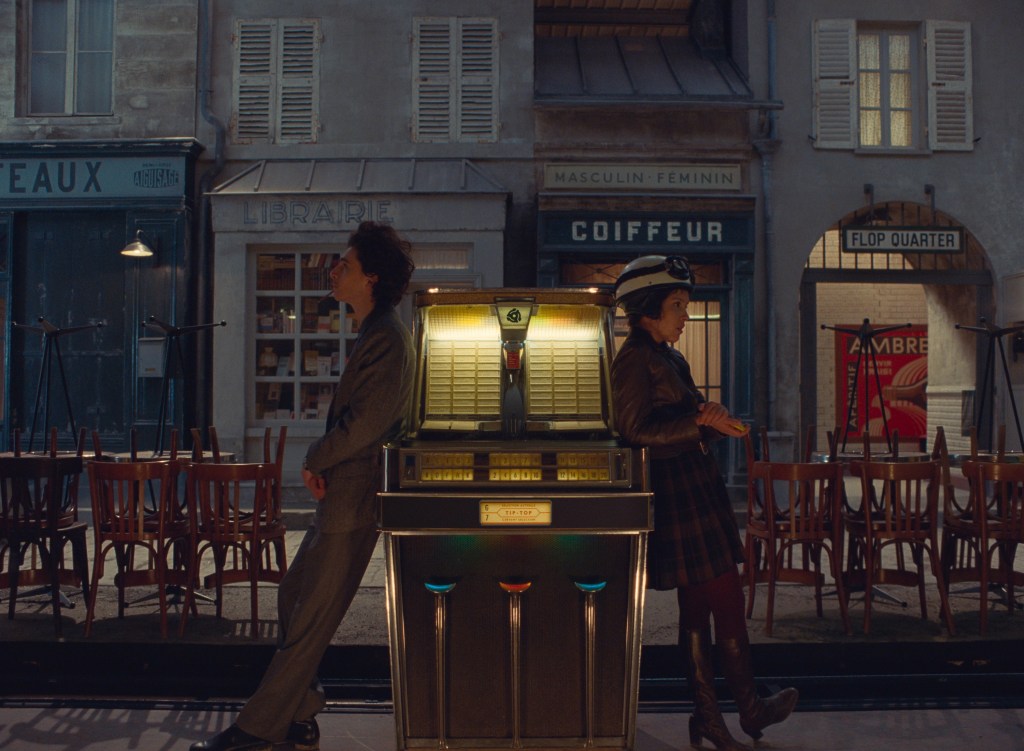
Fans of the inimitable Wes Anderson’s droll wit and pixie capriciousness will enjoy The French Dispatch, though it diverges from his other films. Truly, this amazing work spins off Craven’s usual stylistic nuances into the realm of the cinematic magazine. Anderson directed and wrote the screenplay with story help from Jason Schwartzman and Roman Coppola.
Importantly, The French Dispatch pays homage to the magazine he riffs, The New Yorker and the renowned writers from the past (James Baldwin) receive more than a nod. Chock full of references, Craven employs his choice mediums (animated car chase, cartoons, cut out color sets, dead on camera framing) and adds the magazine format. This extraordinary film which engrosses, ridicules, satirizes, mourns, praises, and twits writers past and present screens at the 2021 NYFF until 10 October.
Wryly narrated by Anjelica Huston, the film opens by defining “The French Dispatch” as an eponymous expatriate journal published on behalf of the Liberty, Kansas Evening Sun. Ironically, Anderson has named the journal’s place of publication as the fictional 20th century French city, Ennui-sur-Blasé. (Ennui=the city, Blasé=the river) Roughly, Ennui-sur-Blasé translates as boredom of the worldly-wise apathetic, a superb irony.
Thus, “The French Dispatch” attempts to make middle-America’s readers acculturated cosmopolitans. By way of explaining the periodical’s cleverness, Anderson’s film brings to life a collection of stories from the final print issue. Indeed, this lively anthology serves as an encomium to the death of its editor-in-chief, the big “gun” Arthur Howitzer, Jr (Bill Murray). Thematically, while highlighting the time in France (1950s-1970s) Craven weaves dark ironies that reference the current times.
Using waggish and epigrammatic descriptions, the narrator presents the quirky, peculiar press corps, writers of the wildly over the top stories activated by Anderson. After the director introduces us to the meticulous Howitzer Jr. and others (look for the writer diagramming sentences on a blackboard) we meet cyclist Herbsaint Sazerac (Owen Wilson). Craven uses opportunities for humor through double entendre, with names that have nuanced meanings. For example, “Sazerac” is a beloved bourbon or rye cocktail of New Orleanians.
As Sazerac cycles us via a travelogue through Ennui-sur-Blasé, with shots from the past (black and white) and future (color) we note its dinginess (terraced rat dwellings) poverty, underworld pimps and prostitutes and other charms. In other words, the city reeks of humanity which remains forever unchanging. Of course, “The French Dispatch” reports on stories that identify the weirdest and most comically contradictory of the denizens of humanity.
First, Huston introduces a story, assisted with a lecture at a symposium given by J.K.L. Berensen (Tilda Swinton) cultural reporter of the “The French Dispatch” arts section. Berensen relates an amazing tale. One of the foremost contributors to modern art remains hitherto for unknown: psychotic criminal artist Moses Rosenthaler (Benicio del Toro). On the brink of suicide, Moses finds his answer to life and love via his sadistic prison guard lover Léa Seydoux
With the unpredictable guard as his muse, Moses immortalizes her in abstracts he paints on the concrete walls of the prison. Like Banksy, Moses prevents his greedy, exploitive art dealer (Adrien Brody) from easily trafficking his art by painting his frescoes on a building making them unremovable. During an investors’ showing in the prison, the prisoners riot to muscle in on Moses’ elite visitors and hold them hostage. Moses’s violent nature, which put him in prison serves him well. With brute force Moses destroys the rioters stopping their attack of the dealer and wealthy purchaser Upshur Clampette (Lois Smith). With his investors saved, Moses receives parole. He has provided his unique contribution to the Clampette Museum, representing abstract fine art at its incredibly ironic, violent best.
Next in the collection, the story of student revolutionaries of 1968 compels its reporter Lucinda Krementz (Frances McDormand) to have an “objective” affair with star revolutionary Zeffirelli (Timothée Chalamet). Helping to straighten out his befuddled theories and justifications to revise his “manifesto,” Krementz as the “older woman,” influences Zeffrielli. Eventually, he succumbs to his nemesis, the beautiful counterrevolutionary Juliette (Lyna Khoudri) and they stay together until tragedy strikes. Nevertheless, the created manifesto lives on as does Krementz’ reportage, though the revolution, the revolutionaries and their Utopian ideals fade from memory into a fever dream of unreality.
Finally, Huston sets up the story of the dinner with a police commissioner (Mathieu Amalric) and his personal chef Lieutenant Nescafier (Steven Park). Gourmand writer Roebuck Wright (Jeffrey Wright) intends to report on the delectable cuisine of the famous Nescafier. However, complications arise when the commissioner, a veritable Jacques Clouseau, has the tables turned on him and criminals kidnap his son. Finally, locating the son, Chef Nescafier prepares a snack which poisons all but the son, the chef and the chauffeur (Ed Norton). The ensuing car chase (a humorous Craven animation) ends with a crash and the son rejoins his father.
At this juncture Howitzer Jr. chides Wright for not describing Nescafier’s cuisine. Wright avers. And thus occurs an incredible moment that alludes to the writing of James Baldwin. Succinctly, Wright describes that he cut out the chef’s words because as an expatriate, the chef, another expatriate made him sad. When Wright repeats Nescafier’s words that he cut, Howitzer Jr. notes with passion that the comment must not be excluded. He insists the Chef’s extraordinary, philosophical observation about the poison in the dish is the only valuable part of the Wright’s work.
Profoundly, in the flash of a moment, we understand why Howitzer Jr. left for this strange outpost in Ennui-sur-Blasé. Fulfilling his goals, he configured a magazine with a global readership that published the profound, the unique, the revelatory. And it included those bits and pieces of life whose revelations edified and informed with a keen, accurate eye. Amazingly, in a brief span of a few moments, Anderson says it all about writing, writers and their editors, finding the elusive and bringing it to our consciousness. Of course, this question Anderson asks silently with The French Dispatch. What happens when censorship, and an absence of prescience, wisdom and freedom runs the presses, as they do currently in the U.S.?
The French Dispatch bears seeing a few times to catch its luxuriant richness. Not only does Anderson employ fanciful images in contradictions journalistically, the resonance of language and word choice is satiric, sardonic and powerful. So is the mosh of well-thought out cinematography and scenic design. For tickets and times at the 2021 New York Film Festival website. https://www.filmlinc.org/nyff2021/films/the-french-dispatch/
‘The Body Fights Back,’ Documentary Review

How do you feel about your physical body? Are you slim, gorgeous, buff, married to a hot man or woman? Or do you fear getting on the scale or if you’re a guy, looking in the mirror because you haven’t been able to work out for two weeks and you know that the flab is growing in leaps and bounds around your middle? Do you have an inner voice that screams don’t eat another piece of pizza or have that cronut? Or do you annihilate that voice and go unconscious eating everything in the fridge after being “careful” and eating only salad and a small piece of fish for your entire food calories daily for one week, though you go to bed hungry?

The Body Fights Back written and directed by Marian Vosumets shadows five individuals from diverse backgrounds that represent all of us at one point or another in our lives as we confront issues of weight, appearance guilt, body shaming, appearance perfection and the subterranean condemnation that the media lays on men and women through the marketing industry, the fashion industry and most predominately the weight loss industry. And this includes you, too, icon of “superior weight loss,” Weight Watchers.
If that is a mouthful about what Vosumets tackles in her documentary, it is because she highlights all of the problems the culture presents for everyone as they attempt to find happiness in getting to the next day. Meanwhile, they must navigate through the dangerous rocks, the images of perfection that are everywhere and that brainwash and bamboozle everyone to internalize self-condemnation because their appearance just “doesn’t have what it takes to get anywhere.”

Vosumets interviews Mojo, a feisty, adorable, overweight black woman, Rory Brown a buff-looking white male, Hannah Webb, a thin, quiet-speaking, young white woman, Imogen Fox, a thin, out-spoken, confident gay white woman, Tenisha Pascal, a confident, bubbly overweight black woman and Michaela Gingel an outgoing, overweight white woman. Each of these individuals is a courageous star who has confronted and battled body shaming, self-ridicule and unhappiness with their appearance identify which was beaten into them by the diet industry and culture at large. Mind you, diets don’t work. Indeed, as one researcher in the film points out, 85% of the individuals who diet again and again go back to their former weight and many gain even more weight. Of course, the diet culture keeps that statistic under wraps.
Recording her subjects’ prescient and brilliantly honest presence and commentary, the documentarian gets at what the diet culture and all of its octopus tentacles (the fashion industry, marketing industry, media in all its forms, health industry) do to destroy the souls of millions of individuals, predominately in the U.K., U.S. and Australia by making them feel inferior and deserving of condemnation, unless they look perfect. Appearance is everything to the diet culture octopus. Unless one fits the image in the billboards, magazines, media, people are the equivalent of worms to be outcast from community and companionship. Importantly, they are not deserving of love, most importantly self-love. Thus, they HAVE to go on a diet to look better. Their lives, which are boiled down to appearance only, and never includes their treasured souls, depend on dieting to look good. If they don’t diet, they face the outer darkness.

If this sounds like hyperbole, it is. Diet culture and all of its psychotic means to make billions of dollars a year exploiting fear of fat, will stop at nothing to twist the minds and hearts of everyone. Let’s face it, women, if you’re not a BMI 18-20, you’re a pig. The sacrosanct thin people who fit this weight category are most probably in some form of eating disorder or addicted to pills, cocaine, smoking, crack, heroin, etc. Celebrities have revealed their disorders and addictions to stay thin: anorexia, bulimia, binging and purging, cocaine addiction, speed addiction, crack, heroin and more.
Hannah Webb truthfully discusses how doctors missed her eating disorder because they, too, had fallen for the lie that healthy people are always thin people. She weighed within a normal range of BMI, which is not an accurate indicator of health; other factors must be taken into consideration. Thus, Hannah lived a lie which made her miserable until she confronted it. In poignant discussions with her mother captured by Vosumets, she discusses battling her issues with eating, for example, a croissant and constant fears of gaining weight. With her disorder she was on the verge of life and death. Yet, she was able to come out of it with the help of her family and therapy.
Hannah is the opposite side of the same coin as Mojo, Michaela, Tenisha and Imogen, all of whom had or have issues about weight. Imogen also battled a disability and discusses that when she was heavier, the hospital staff were very insulting and annihilating about getting her a gown to fit (get her a man’s gown which is bigger) and other obnoxious calumny in front of her face, almost as if they enjoyed and felt sanctified in their sadism.
But this is par for the course. Overweight in the culture is anathema and grounds for banishment from normal society. It deserves vilification, ridicule, jokes and shaming. How unhealthy these fatties are!!! Of course, this emerges from colonialism, white male paternalism (women must be quiet, thin, beautiful and sexually available 24/7 and perfect until they can be thrown away for another model) and capitalism-make that money even if you have to step over the bodies of those you kill in the process.
TRAILER The Body Fights Back OUT July 13 from The Body Fights Back on Vimeo.
The diet culture, thus, reinforces the most nihilistic of values at the expense of truth and health. Vosumets has researchers and scientists comment that one could be thin and on the verge of death; overweight is not correlated to healthiness. Indeed, based upon appearance, Hannah and Imogen who are at the epitome of thin (according to the diet culture and Octopus standards) are perfect and sanctified. Ironically, they are not; one battled for her life just to eat certain foods without fear and the other is disabled. Thus, the diet culture lies. It is its own profitable myth. (diets don’t work) And this is one of the key points in Vosumets’ wonderful documentary. What is healthy should include physical, mental, emotional, psychic well being. We are, after all, not only a body; we have a soul and spirit. And indeed, the body disintegrates. However, what are we doing about the interior of our lives? No wonder with eating obsessions individuals are miserable, regardless of how thin and buff they appear.
Vosumets cleverly includes Rory Brown to show that he, too, is a slave to conformity. For men the idea that you have to be buff and gorgeous is what life is all about. Yet, he confides that as he goes to the gym, he is depressed. As he looks in the mirror, he is glad he looks “great,” but he can’t carry a mirror around with him every second of the day. He’s worked on his exterior, but his interior is miserable. Like Mojo, Hannah, Michaela, Tenisha and Imogen they have all been enslaved to the octopus (the diet culture and its attendant industries) who siphons off their emotional well being and eventually their physical well being. Sadly, the brainwashing of not being able to measure up to perfection has been internalized. Each discusses how daily, they’ve lived with judgment, self-condemnation, self-loathing and fear.
Vosumets’ editing is thematic and she builds in an arc employing the commentary of her stars to chronicle the beginning of the problem, usually with parents and upbringing. The stories then evolve so that we understand how the subjects began to realize what they were up against in themselves from rebellion, to acceptance, to self-love. Interspersed with these interviews of Mojo, Hannah, Rory, Tenisha and Imogen she interviews researchers, doctors, therapists, journalists who have written on the subject or who counsel individuals with eating disorders. They identify first hand from the testimony of their clients the noxious attitudes of the diet culture octopus. And they explain how once internalized early on, the attitudes and voices become the self-destroying tormentors within the souls of those who wrangle with emotional issues at the heart of body image problems and eating disorders.
One of the most enlightening and uplifting final segments in the film is the sequence with Rebecca Young’s Anti-Diet Riot Club and the Cat Walk. With the Cat Walk, men and women, some disabled, many of all shapes and sizes and colors and races go on a Cat Walk wearing whatever they like to proudly present who they are. They are not their bodies only but their beings who ask that they be recognized holistically. It is truly a celebratory experience to see them receive the applause from an appreciative audience of onlookers. Vosumets also examines the Anti-Diet Riot Club as a force for change. Weight and rejection of bodies has been a political and economic and health issue, it seems, since colonialism rose and is finally setting into a sea of oblivion, eventualy.
Researchers make important points that must be considered. Eating disorder issues arise when there are tremendous gaps between the rich and the poor. For example fast foods are mostly found in lower socioeconomic areas (food deserts) where there aren’t markets like Whole Foods. Thus the unhealthier food is offered to encourage the lower classes to fit the inferior body image that the more wealthy class can look down on in addition to shaming them with regard to health. Mojo poses interesting questions about why around dinner time there are so many McDonald’s commercials and fast food commercials but few commercials about organic foods and no commercials about Whole Foods. Also, the point is made that fast foods are easy and convenient to feed families when single parents are working two jobs. Families who are wealthier can have home cooked meals that take longer to prepare.
Things are changing. For some not fast enough because the younger generations are suffering from the abuses of the older paternalistic, Colonialistic, white supremacist generations whose fascist images of perfection have been used to exploit people and make them feel inferior for profit. However, Vosumets ends on an uplifting note. Change is coming and the backlash will be present as old myths and money die hard. But change must come because too many have lived lives of quiet desperation internalizing the lies of the criminal profiteers who have sold their souls to enslave others for money. The young are aware and they are throwing off the lies and myths so the generations after them can live and breathe with the freedom and joy of self-love.
The Body Fights Back is a must-see film especially if you have ever felt to go on a diet to lose weight or you looked in the mirror and were not overjoyed at the image that stared back at you. It is streaming on all platforms. For more information and to stream CLICK HERE.
‘The Lost Leonardo’ World Premiere at Tribeca Film Festival 2021
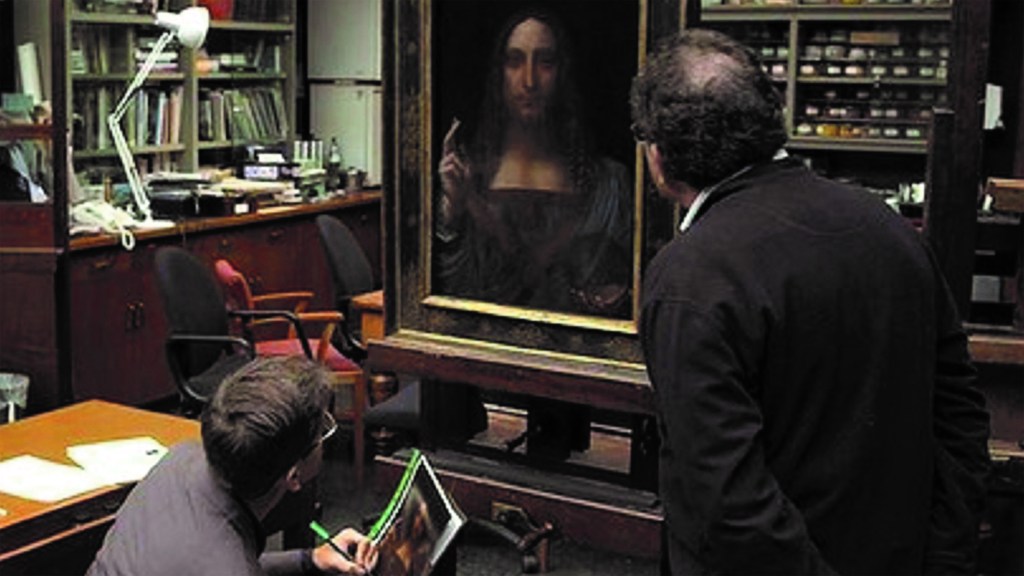
The Lost Leonardo directed by Andreas Koefoed and written by Duska Zagorac, Mark Monroe, Andreas Dalsgaard, Christian Kirk Muff and Andreas Koefoed. The film is a fascinating documentary that delves into the nail biting discovery of the painting Salvator Mundi (a portrait of Jesus) that was ill-used, in ragged condition and an obscurity for decades or centuries depending upon what you believe. It was sold for a mere $1,175 in 2005 by New Orleans auctioneers who didn’t really pay much attention to provenance or the possibility of its potential greatness. However, purchasers who hunt for sleepers (undiscovered renowned works) thought it might have value. They wanted it to be restored with the intention of reselling it. How lovely if it slipped under the radar of the New Orleans merchants who were not schooled in high Renaissance art. Finders keepers and all that!
Thus begins the journey of a painting that remains a mystery to this day and has been examined, pawed over and quibbled about by some of the most prestigious art galleries, museums and their curators in the world. Like a well-heeled detective, Andreas Koefoed cobbles together the video clips of individuals who pondered over, investigated and worked on the Salvator Mundi. He also interviews art critics, museum curators, experts, scholars, art historians, investigative journalists, the Founder of the FBI Art Crime Team and shady art dealer businessmen who profit off of billionaires who purchase such costly works privately or at auction. These wealthy could care less if the provenance is in question as long as the perception remains that it is authentic. They do this in order to bury their money in the painting purchase which hides a record of their wealth from the pernicious eyes of tax collectors.
The adventure Koefoed embarks on is thrilling, and he unspools the clues like a master mystery writer. The chase of whether this work is truly the “lost Leonardo” keeps one enthralled. However, there is no conclusive finality and uncertainty reigns with every word his subjects use to speak about the painting.
Perhaps conceived with hope initial buyers Alexander Parrish, sleeper hunter, and his friend Robert Simon (an old masters paintings expert) fantasized about what the Mundi was and who painted it. They acted on their conceptualizations, and to satisfy the curiosity of their wallets, they brought the Mundi to top art restorer Dianne Modestini who had partnered with a spot-on expert recently deceased, from whom she had learned. With his assistance, over the years, she had gained expertise and knowledge restoring fine paintings.
As Modestini worked on the Salvator Mundi, she nearly fainted examining the mouth of the figure in the painting. The Salvator Mundi‘s similarities around the right side of the upper lip resembled that of the Mona Lisa. The more she worked, the more she concluded that only one individual could paint in this way: Leonardo da Vinci. As time progressed, the Salvator Mundi in verbal shorthand is referred to by ironist art critics as the male Mona Lisa.
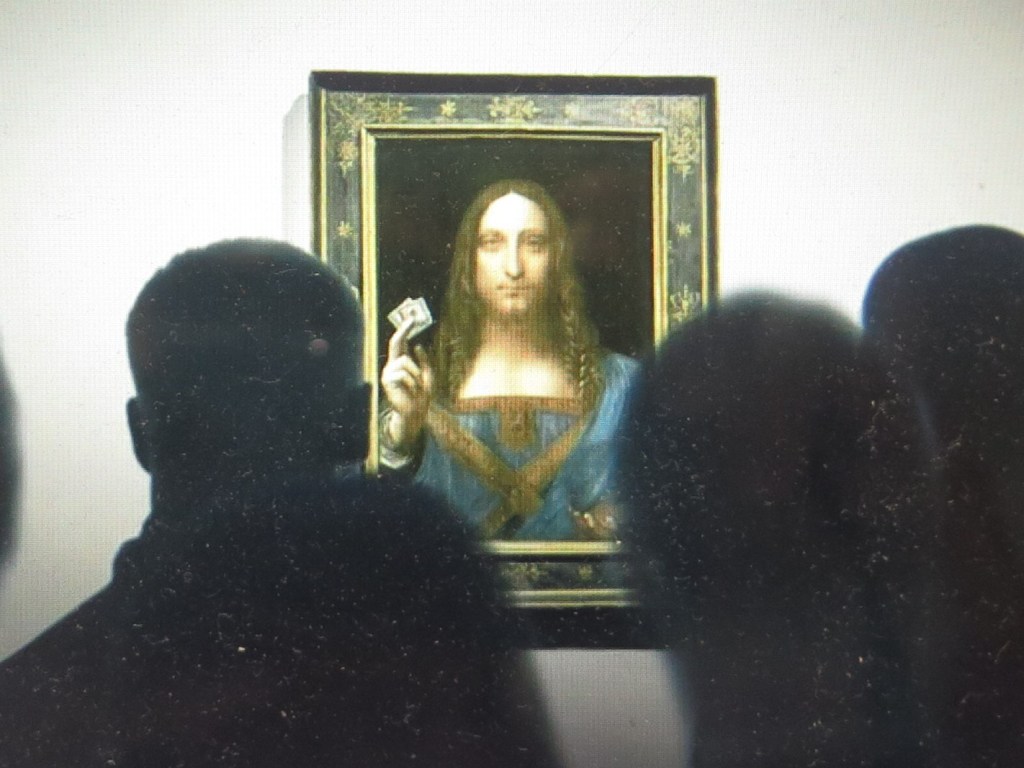
Only eight known paintings are globally attributed to the Renaissance master who was “forward thinking” by about 500 years; among his papers are drawings of space ships and underwater submersibles. He was a scientist, painter, mathematician, inventor and all-around genius. However, that this is a “da Vinci” turning up at auction, like a ghost from the backwaters around New Orleans, remains as implausible and incredulous to some global art experts as unicorns are to empiricists. And these scholars are prepared to deny the work’s authenticity as are those experts who are prepared to defend it to the death as a Leonardo. Belief and faith in the power of money trumps any concern about whether it is a fake that a highly skilled genius painter tossed off and was happy to get some money for.
The problem with any work of fine art, is to establish the provenance and period when it was painted based upon the artist’s technique, any underpainting, the chemicals used to mix the paint as well as the chemical composition of the pigments. Art restorer Dianne Modestini affirms on pain of death that the Salvator Mundi, which sold in 2017 for a record-setting $450 million, is the “lost Leonardo” based upon her understanding of the demonstrated technique and brush strokes.
On the other hand, art critic Jerry Salz who is knowledgeable about the corruption embracing high art sales, auction houses and art galleries who benefit from them is the receptacle of a vast skepticism about the Mundi. Saltz’s demonstrated wisdom is not to be underestimated. Indeed, the art industry has been taken over like other arts industries, for example theater, by the philistines. When money is concerned, auction houses and dealers allow the presence of fakes to take a backseat to money, power and the perception of authenticity, backed by lucid, clairvoyant analyses and explanations.
If you can get away with billionaires offering you hefty sums for works they believe to be authentic, but may not be, who is hurt? If the billionaires are squirreling away their treasures for the purpose of tax evasion in Freeports (tax free airport storage, above the law of all countries) no one will see these fakes anyway and the benefiting institution and billionaire are content. By the time they may have to sell them at a loss, most probably they’ve made twice as much in their corrupt enterprises in the interim. These rich guys are good for art; they are easier than the overhead of collecting subscriber donations and the hard work of charitable fund raising galas to run galleries and museums sometimes at a loss.
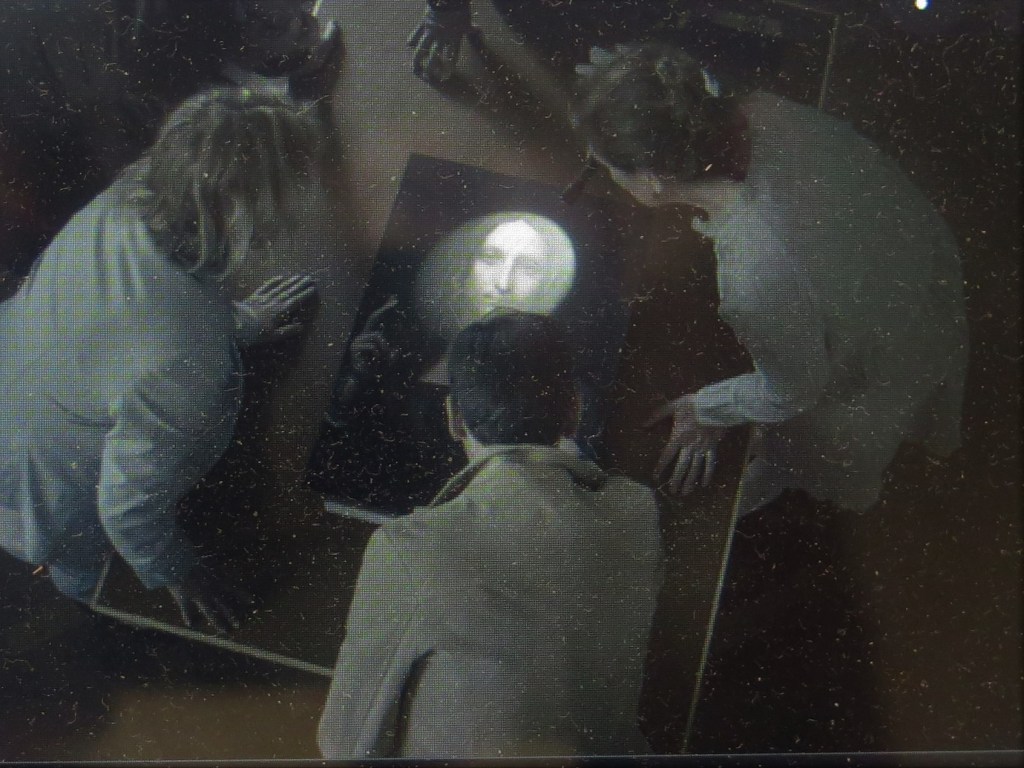
An additional factor to consider as to why the allure of wealthy anonymous buyers is so great for the art industry is that running public museums and private art galleries, one must pay exorbitant insurance costs and for security to prevent the little people from thieving works off the walls and reselling it to rich clients who can only display them privately. Better that the art dealers, auction houses and galleries contract with these billionaires who risk purchasing fakes which will most likely be kept in locked rooms in their mansions, Freeports, villas or one of their 15 million-dollar condos neatly situated in favored cities around the world.
The only ones concerned about fakes are the renowned public museums with a rich history of standing by their experts’ knowledge, respected institutions like the Louvre or The Metropolitan Museum of Art or the British Museum. They do not take kindly to displaying fakes or works that are questionable alongside their incredible proven treasures. And perhaps millionaires who don’t have the money to burn on fakes might be concerned. Other than that, billionaires have entered the art world and they are a sure thing for art dealers and auction houses.
In this amazingly instructive film about the upper classes and the corruption of geopolitical wealth, the filmmaker and writers launch off into three thematic threads emphasizing the concept at work which is the “game.” Sectioning off three segments to keep our understanding regular, he amasses a tremendous amount of research in video interviews, archived photos of works and voice overs. These are structured as the “Art Game,” the “Money Game” and the “World Game.”
It is in this discussion of how art is a game, we begin to understand the shadowy dark money world that fuels fakes and authentic pieces alike. Clearly, the filmmaker reveals that one doesn’t engage in this game naively or without experience and circumspection or you will be taken and regret it. How well can you play the game? How well can you game the auction houses and art dealers? How thoroughly can you game yourself?
If you (like the Russian oligarch who purchased the Salvator Mundi from a French Freeport owner are stuffing away your potential fake in Freeport storage units, then art is a safe, untraceable transaction far from Interpol or Vladimir Putin. As an investment it is unrecorded in any bank unless it’s the safely corrupt Cyprus Bank which deals with foreign transactions from corrupt leaders, and practices money laundering.
Such art has no significance to oligarchs, least of all the meaning of “the savior of the world” Salvator Mundi, which may be a joke to the oligarch or afterward MBS who purchased it anonymously as revealed by the FBI art crime bureau. If you truly care about seeing the Mona Lisa or a work of Rembrandt, then the corruption of viewing a fake is monstrous. The reason why the public purchases memberships in museums and donates millions is because they believe what they view is the “real deal.” The fiasco with the sales of the Salvator Mundi and its dubious authentication based on faith has exposed the art industry’s realm of “alternative realities” and the grand con possibilities. Is it or isn’t it a fake? Only the “little people” are self-righteously outraged if what they look at are fakes hanging in the walls of prestigious museums.
Auction houses and galleries and museums have bridged the reality gap into the alternate Donald Trump/Vlad Putin universe (my intimations, not the filmmakers though it is an important theme for our time). These dealers, auction houses and their buyers justify the authenticity or value of the works they sell because they can, especially if the industry trafficks in bullshit. The honest critic or expert is unwanted then, no matter their weight in gold. These themes Andreas Koefoed raises in this profound documentary which is a sweet siren’s warning. And it gives the average museum goer the fodder to ruminate and feel rage at how art has become an untrustworthy commodity, not a historical, cultural legacy.

But billionaires don’t mind the cache that goes with owning various works, for example, MBS who was anonymous until the great reveal by the FBI. Why would the murderer of WaPo reporter Jamal Kashoggi be interested in a painting that means “the savoir of the world?” The thought of his repentance at his villainous acts of killing family and the “traitorous” reporter is laughable.
On the other hand the notoriety of buying it because he could, was alluring. Owning the painting was a way to gain acceptance and prestige. This was so much so that he enticed the curators of the Louvre that he would loan the Salvator Mundi to them as representative of the “Lost Leonardo,” the male Mona Lisa with its provenance and authenticity in doubt. They were interested, until they heard his conditions. They must hang his purchase with the clouds of fakedom wafting off it—next to the Mona Lisa. The publicity alone would be tremendous. In 2011, the UK’s National Gallery displayed the male Mona Lisa with all its warts of uncertainty so that crowds could show up and imagine it was real. For the Louvre to hang the “Male Mona Lisa” next to the “Mona Lisa” would be a validation of it, sort of like riding the Mona Lisa‘s coattails into veracity, truth and art reality.
The Louvre refused. They were not willing to display a potential fake next to their acquisition whose provenance they were certain of. And MBS, annoyed that his offer was spurned, didn’t take them up on allowing them to display the Mundi in a separate room, explaining its restoration and questionable provenance. Of course the film does not go into the irony of a MBS with all his murders on his head, owning the portrait of Christ as the “savior of the world.” It doesn’t have to. The irony is stunning as is MBS’s arrogant longing.
With the exception of museums who display art so that the public can enjoy it, this whole industry is a philistine’s game (the money lenders and buyers who trade). They could care less if David Bowie (no offense meant to this fabulous artist whom I adore) smeared some of his dung on a canvas and signed it and sold it to the highest bidder. Such was the case with Pablo Picasso who became so disgusted with the “trade” aspect of art in the hands of philistines, he used to draw on napkins at restaurants and depending upon whether he liked the wait staff or not, signed the napkin and gave it to them. In some instances, he drew it, signed it and then destroyed it as they hungrily watched. For the artist commercialization of their work is loathsome and welcome, but only if they reap the rewards in their lifetimes, which usually does not happen. However, what can be done if the vultures pick their bones clean after they’re dead and gone? No wonder Banksy rigged the shredding of his “Girl With the Baloon” after the gavel hit in an auction that garnered a record price for his work.
The Lost Leonardo presents a vital perspective of the “art industrial complex” as it were. Who decides what is great art, even if it is potentially fake and not all the experts can agree on its authenticity? The fact that it’s MBS who purchased it for (after a circuitous route of sales from $1175, to $87 million, then $127 + million) $450 million does nothing to establish its credibility. And after the National Gallery exhibited it to great celebration as a da Vinci in 2011, they mired themselves in the smut of gaming when the FBI revealed that MBS purchased it for a price which means it’s now unsaleable and unpresentable if he persists in riding on the coattails of other Leonardo paintings which he could afford, but which should not be sold to him. This is especially so after it has been proven that he ordered Kashoggi to be brutally murdered, an M.O. of his despite his vapid denials.
However, like many billionaires who remain anonymous he worked through an agent. Would the auction house have sold this work to him if they knew he was purchasing it? They know how to play the game. And as a result, they have smeared themselves and the art world with BS which is what the Dutch filmmaker subtly infers in The Lost Leonardo.
This is a film to see, if not for a good look at the painting which is mostly a restoration and therefore, is more Dianne Modestini’s effort than da Vinci’s. It finished screening at Tribeca Film Festival. Look for this beautifully edited and scripted documentary streaming on various channels or perhaps at your favorite Indie theater after its release on 13 of August. Don’t miss this Sony Pictures Classic if you love art and are interested in learning more about the specious and scurrilous art traffickers which unfortunately find dueling interests with renowned museums who cannot afford works of art, after the traffickers bid the works to obscene heights.
‘LFG’ in its World Premiere at Tribeca Film Festival 2021
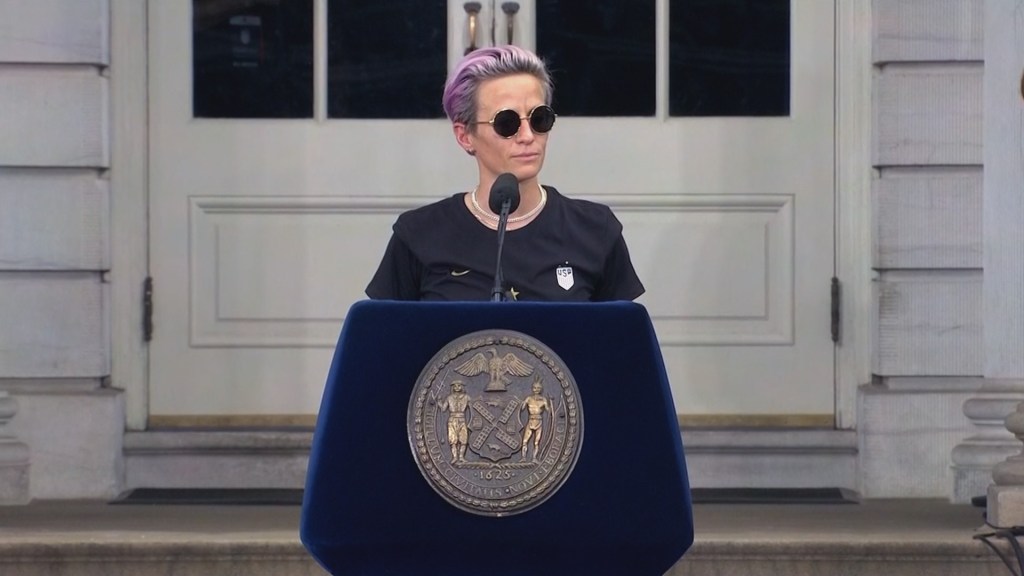
What does it take for women to achieve parity with men economically and socially? For the International Women’s Soccer Team (4X World Cup winners) to reach equity with the men’s team which never won a gold cup since 1930? Thus far, parity remains elusive. As a result, US Women’s Soccer are litigating their employer the US Soccer Federation for equal pay. The thrilling documentary LFG in its World Premiere at Tribeca Film Festival explores their efforts.
Structurally, documentary filmmakers Andrea Nix Fine and Sean Fine intercut the women’s magnificent athletic feats with the drama of litigation. With unprecedented access to these world class women athletes, LFG showcases how the team survives the obstacles the US Soccer Federation puts before them. Acutely, filmmakers reveal the physical, emotional and psychic demands team members face. Also, filmmakers showcase the team’s courage and resiliency in risking their jobs to create long-lasting social change with the biggest fight for women’s rights since Title IX.
With timely determination, three months before the 2019 FIFA Women’s World Cup, the players filed their class-action, gender discrimination lawsuit. Interestingly, the class-action approach often takes years. And the women don’t have years. By the film’s conclusion the team hired a new litigator. As filmmakers chronicle events in real time, the action and suspense sweep up the viewer and elicit their support and empathy for the women..
Passionately, with expressive interviews and video footage, Andrea Nix Fine and Sean Fine, unspool a vital, must-see film. The directors follow the team throughout 2019 into 2020. Indeed, with charm and cogent arguments, key players raise awareness of the financial inequities between the men’s and women’s US Soccer teams. Disparities don’t only include financial remuneration. Players discuss differences in the way their employer poorly accommodates them (travel, hotels, medical resources) despite their successes and fan support. Because the United States Soccer Federation (USSF) paid members of the USWNT less than their male counterparts for the same work, they discriminated. And this pay disparity violates the Equal Pay Act of 1963 (EPA) and Title VII of the Civil Rights Act of 1964.

With facts and figures solidifying their arguments, filmmakers illustrate the symbolism and importance of the USWNT’s lawsuit. This is especially so in a time when misogyny, a conservative political tactic (“feminazis displace men”) holds sway as a right-wing, “cancel culture” message. Initially, the women asked for $67 million, while USSF asked for the suit to be dismissed.
Undergirding the team’s worthiness, the Fines emphasize that USWNT remains the most successful in all of international women’s soccer. They won four Women’s World Cup titles (1991, 1999, 2015, and 2019). Additionally, they won four Olympic gold medals (1996, 2004, 2008, and 2012). For the coup de gras, they took home eight CONCACAF Gold Cups.
Yet, the men’s teams reap the rewards and perks despite their dismal record and fans’ lack of interest.. FIFA awarded a total of $400 million in prize money for the participants of the 2018 Men’s World Cup in Russia, including $38 million to champion France. It awarded $30 million for the 24 nations at the 2019 Women’s World Cup in France, including $4 million for the USWNT after winning the tournament. FIFA President Gianni Infantino has proposed FIFA double the women’s prize money for the next competition in two year’s time. Still, the pay would be grossly under the amounts offered the men’s teams.
As filmmakers indicate, fans overwhelmingly support the women’s team’s lawsuit globally. To publicize both sides of the case, the Fines reveal how the US Soccer Federation’s flimsy arguments nevertheless cloud the issues of parity.
Ironically, USSF does this using gender to argue its side. For example, they claim that women, not as strong as men, lack men’s skills. Thus, women don’t put forth a man’s effort and shouldn’t have equal pay. According to the USSF women’s inferior bodies inherently establish inequality. Thus, women deserve less money.

Additionally, District Court Judge Klausner created a Catch-22, then ruled against the USWST. Because the women accepted the union negotiated pay structure, the judge argued they made more money than the men. Speciously, the argument suggests a damned if you do, damned if you don’t approach. In order to play, the women had to accept the USSF’s unequal pay structure. Unfairly, women could take it or leave it. Then the judge ruled that the women received more money then the men and dismissed the case.
However, the women made more money because they won more and received bonuses. Maliciously, the USSF argued that they paid the USWNT more per game than the USMNT. Meanwhile, to do that the USWST performed at a far superior level throughout the past few years. Ironically, the USSF arguments belied the “inferiority” of women’s bodies. Indeed, the women vastly outperformed their male counterparts to begin to achieve monetary equity. Importantly, the men’s team’s base pay exceeds the women’s base pay which tops around $50,000. Thus, the USSF arguments circumvented the truth of unequal pay and the District Court bought it. Why should women have to vastly outperform men working with repeated excellence for equal pay, while men just get by on gender privilege?
Substantively, the filmmakers’ interviews and clips of the women working out, doing a second job to afford bills and supplying commentary provide the grist for this wonderful film. Unsurprisingly, Megan Rapinoe, stands out as a natural leader. Indeed, she and her team, warriors to the last, step up to their wins with ferocity. Also, filmmakers reveal the frustration and depression that follows the court decision currently on appeal. Rapinoe on the field and off spearhea ds the bravery each woman manifests in this obstacle-filled situation. Additionally, teammates Kelley O’Hara, Becky Sauerbrunn, Samantha Mewis, Christen Press and Jessica McDonald prove why they win on and off the field.
In leading the fight for equal pay, these women represent women globally. And global fans back them. During the process the head of the USSF, Carlos Cordeiro, stepped down and Cindy Parlow Cone VP took his place. No matter, the team moves on, doing TV interviews and garnering even more support for their cause. Taking huge risks, they champion women’s demands for equal rights, equal pay, equal representation. In their celebration of these individual winners and our US International Women’s Soccer Team, filmmakers rally to the cry “LFG.” “Let’s F*cking Go.”
To see this frustrating, amazing and inspiring film, check into HBOMAX ON JUNE 24 where it is streaming.
‘LADY BOSS: The Jackie Collins Story’

If you are a fan of Jackie Collins’ florid and racy descriptions, plots and characters, and especially if you adore the third wave “feminist” character Lucky Santangelo, you must run, not walk to screen the documentary LADY BOSS: The Jackie Collins Story. The documentary which lovingly and cheekily chronicles the best-selling novelist which premiered at Tribeca Film Festival 2021 is set to premiere on CNN — Sunday, JUNE 27 at 9:00 PM ET and PT.
This is a must-see for many reasons, chief of which is director Laura Fairrie’s exhaustive research on Jackie Collins. The filmmaker reveals the woman behind her characters and examines her three marriages and how she was able to negotiate the changing view of women despite hawkish criticism at the end as the #METOO movement was forming its ethos. Of course the irony is that Jackie Collins exemplified with grace, power and vitality how women must “step up to the plate,” and take charge in a world of men.
Indeed, through a series of trials and errors that Collins reversed into boons, director Fairrie reveals the arc of her life story and solidifies that Collins was an overcomer who refused to take life in all its wheels and woes on the chin. It is an amazing history of sorrow, setback, triumph and reformation and at the end, courage and legacy. Fairrie shows great equipoise in her highlighting the competition with her sister Joan Collins who encouraged her to go to Hollywood and have a film career. She reveals Collins signed a $2 million-dollar-book deal, though in no way did she display the writing talent for description and story-telling that Jackie did. Acting on film and television was Joan’s medium. On the other hand Jackie’s talents were as an observer, a listener and wordsmith who converted life into art.

Using videos from personal archives starting when the Collins sisters were young up until her death of cancer in 2015, the sourced material is extensive and Fairrie cobbles it together switching different time periods. She organizes the documentary not chronologically but via themes that threaded through in Jackie Collins’ life. Thus, we follow videos of her troubled, brief, first marriage, to manic depressive drug addict Wallace Austin to her successful marriage to second husband Oscar Lerman and her third husband “larger than life-gigolo type character” in Frank Calcagnini.
This second marriage to the co-owner of the successful London celebrity nightclub Tramp lasted 23 years. It was Oscar whose supportive encouragement initiated Jackie’s writing career. With him she finished her first book, The World is Full of Married Men. Unlike Austin who was jealous, grasping and abusive, Oscar was a loving husband and father who adored Jackie. Because he was a success in his own right, he didn’t fear playing “second fiddle” to her growing celebrity as a best selling novelist.
Indeed, to burgeon her career, he agreed to move the family to Los Angeles when Collins decided to expand her empire and publicize her novels appearing on talk shows and soliciting media to improve US market share. The move brought the sisters together and Collins, who launched her own empire writing and marketing her work with aplomb was a maverick entrepreneur in the 1980s. Interestingly, she paved the way for another novelist empire builder from Scotland, J. K. Rowling.
Wisely, Fairrie includes video interviews from a host of family and friends that include clips of her daughters, Joan Collins, her friends (wives of celebrities) and Hollywood heavyweights at parties that Jackie went to (Michael Caine, etc.). In one segment, three friends share how they were Jackie Collins “best” friend. Another celebrity friend ironically indicates that Jackie was so saavy as to make everyone she spoke to feel important and loved.

She apparently also did this when she did book tours, signings and talks. There is a clip of Jackie taking the time to briefly chat with women fans creating long lines. However, her readers, who always came back for more, felt it was worth the wait to talk to the beautiful and talented novelist.
Jackie Collins’ life was difficult, especially with her third husband who was abusive. And it must have been heart-wrenching when she battled stage four cancer when no one knew or understand what she was going through, i.e. at times she had difficulty walking because she was in pain. However, her persona of “being Jackie Collins” moved her forward so that she triumphed with mind over matter determination. Much of the persona she created to discuss her novels helped her market herself and her works. Thus, she was able to rise to the top and have her novels serialized on television. Currently, her novels are contracted for films.
The smooth, lovely Jackie Collins persona arose especially when she was challenged for writing belittling characters who were not worthy of the fourth wave of feminism. She was measured, controlled and steely eyed in her responses, though the harsh critics attempted to bloody her. Sadly, they were intellectually inferior, missing the positive impact she had to empower women.
Though you may not be a fan of Collins’ racy, sexy, sometimes softly raw “hot and heavy” descriptions, her characters explore women’s sexuality and assertiveness as men’s was explored by Ian Fleming of James Bond fame. Her women are as bold and as assertive as men. She thrillingly portrays them so to demonstrate the intelligence and allure of inner strength and they eschew being men’s toys. The beauty of Collins’ work is that she elevated the esteem of women at a time when they needed to feel powerful sexually. She loosed women from the categories of “whore” and “slut” that women often used competitively against each other. She gave women permission to explore and revel in their own identity.

Collins’ descriptions openly presented sexual women who enjoyed the pleasure they found. For that reason her novels are a success. Though the current wave of feminism which is hyper-aware of men’s predation, having suffered through the menopause of late revelation (i.e. Placido Domingo’s forward behavior of forty years ago) her writing is skilled, arousing and delicious. It is also brilliant, maverick and underestimated by intellectually dense “trending” women’s groups. Collins’ novels raised the consciousness of women so that they examined their gender beyond men defining it for them. In that she is a vital chapter in how women historically see themselves as free, whole beings. Of course Collins’ characters are a danger to men who would oppress women so that they remain objects to be abused and manipulated.
Interspersed between Collins’ home life and relationships, Fairrie indicates how Collins’ writing also reflected who she was. Thus, in select parts in the documentary she has hosts read from Collins various novels. The result is ironic and humorous.
LADY BOSS: The Jackie Collins Story is an important retrospective on a women entrepreneur who broke the mold created by men to keep women unsettled and easily dominated. She did this in her home life and how she approached the obstacles life placed before her. She used the therapy of work to muscle quietly through when Oscar died of prostate cancer which he didn’t discuss or burden the family with. And though her third husband businessman Frank Calcagnini was jealous and abusive, once again her work embodied her strength to face his death from a brain tumor.
LADY BOSS: The Jackie Collins Story premieres on CNN June 27th at 9 PM. Look for it; you’ll be glad you did.
 CAROLE DI TOSTI