‘Caroline or Change’ the Roundabout Theatre Company Revival, Starring Sharon D Clarke
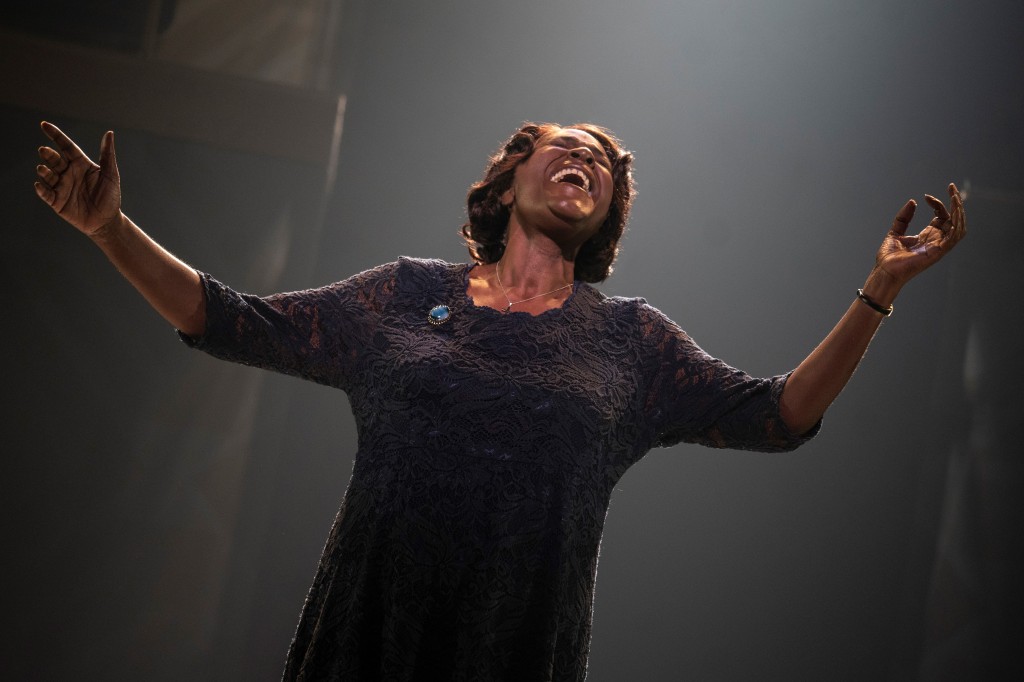
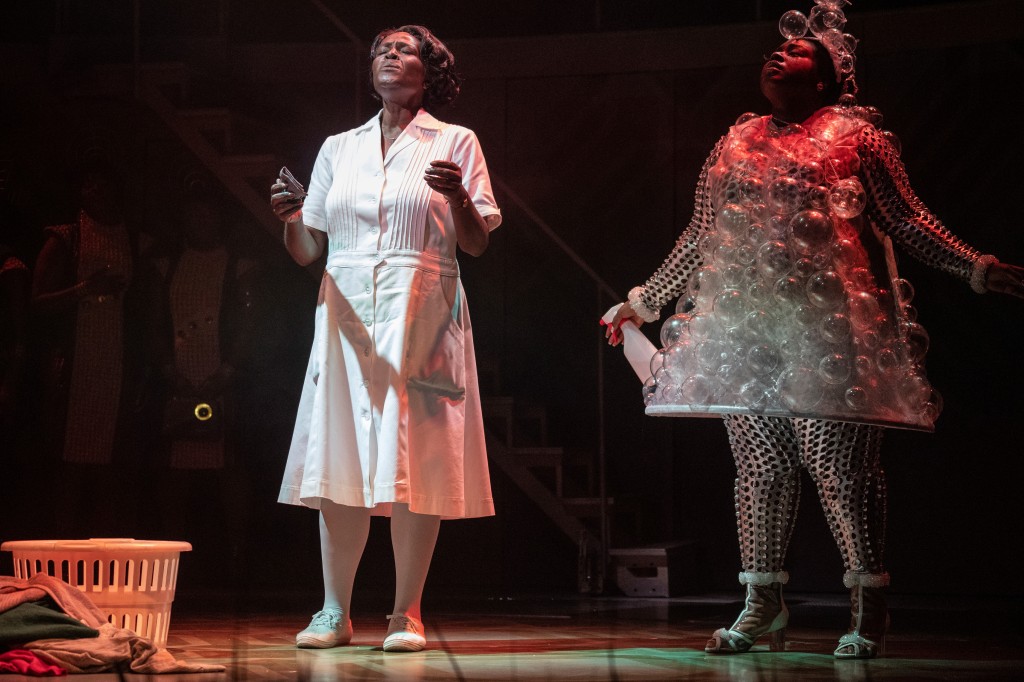
“Sixteen feet below sea level, torn tween the Devil and the muddy brown sea,” Caroline (the terrific Sharon D Clarke) characterizes her existence to herself in the musical revival Caroline, or Change at Studio 54. At the outset Caroline is in the basement doing the laundry for the Gellmans accompanied by the rhythms of The Washing Machine (Arica Jackson) and The Radio singers #1, #2, #3 (Nasia Thomas, NYA, Harper Miles). They are anthropomorphic representations of Caroline, along with The Dryer (Kevin S. McAllister) who makes the atmosphere as “hot as hell.”
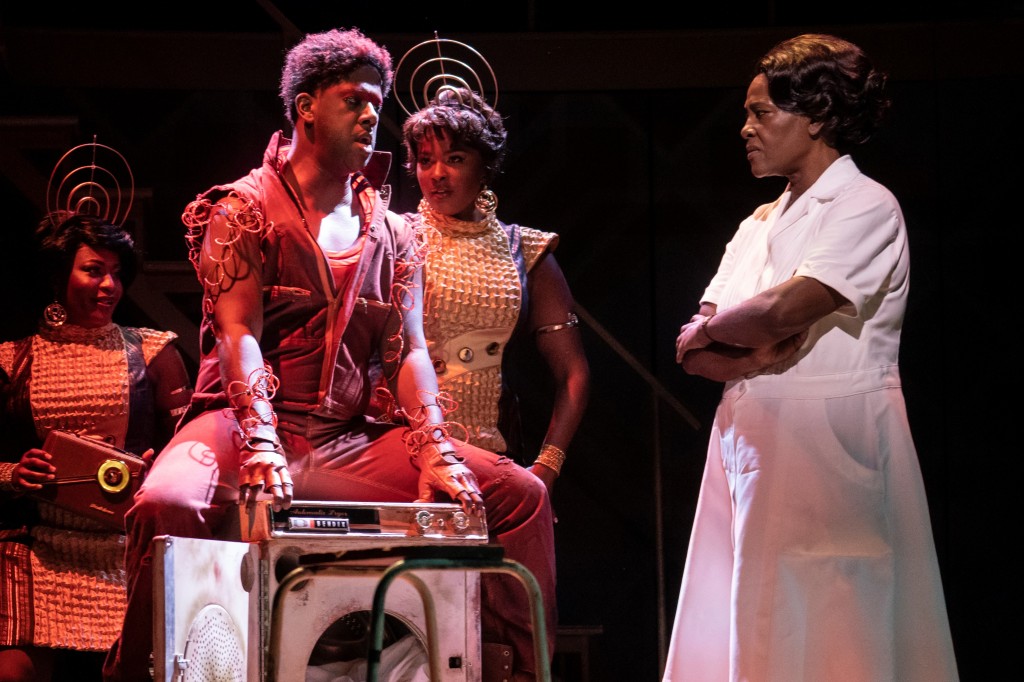
Tony Kushner’s book and lyrics and Jeanine Tesori’s music bring to life a portrait of a black maid’s inner hell. She has no prospects of betterment to uplift herself out of the symbolic, oppressive swamps of white supremacist Lake Charles, Louisiana, 1963. Embittered, miserable, impoverished, on a minimum wage to support herself and three kids, she has lost hope waiting for goodness to come. She resents everyone, most of all “Caroline” who has created the situation she finds herself in, abandoned by her husband, single, a drudge at thirty-nine-years old.
While other blacks in the South become involved with the Civil Rights Movement and march against the brutality of Jim Crow, led by Dr. Martin Luther King, Jr, or seek an education, the exhausted Caroline can barely suffer herself through the next day’s labors cleaning and watching over the Gellman’s son, eight-year-old Noah (Jaden Myles Waldman the evening I saw it) who mourns his recently deceased mother. Her employers, Stuart Gellman (John Cariani) and Rose, his second wife (Caissie Levy) who attempts to be nice to Caroline, only make the situation worse.
Victims themselves of institutional racism, caught up in the discriminatory animus of the South, they can’t afford to raise Caroline’s wages. Nor do they relate to her on a personal level to uplift her, not that she would accept their attempts.
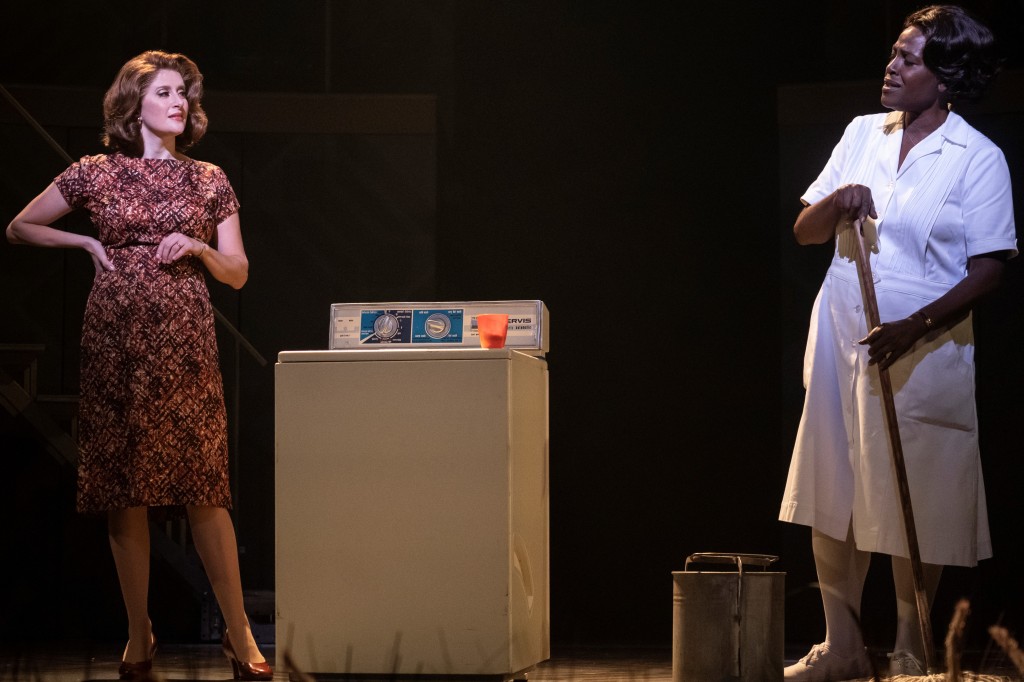
Indeed, throughout the play Caroline’s soul is metaphorically buried alive and/or drowning underwater as she struggles to pay for rent and food for herself and her children, one of whom is in Viet Nam. It is clear no one is coming to dig her out or rescue her, least of all herself. Unless a catalyst stirs her to resurrection, she will continue until the anger breaks out in violence against others; or she turns to self-destruction (acutely represented in a scene with Rose at the show’s turning point).
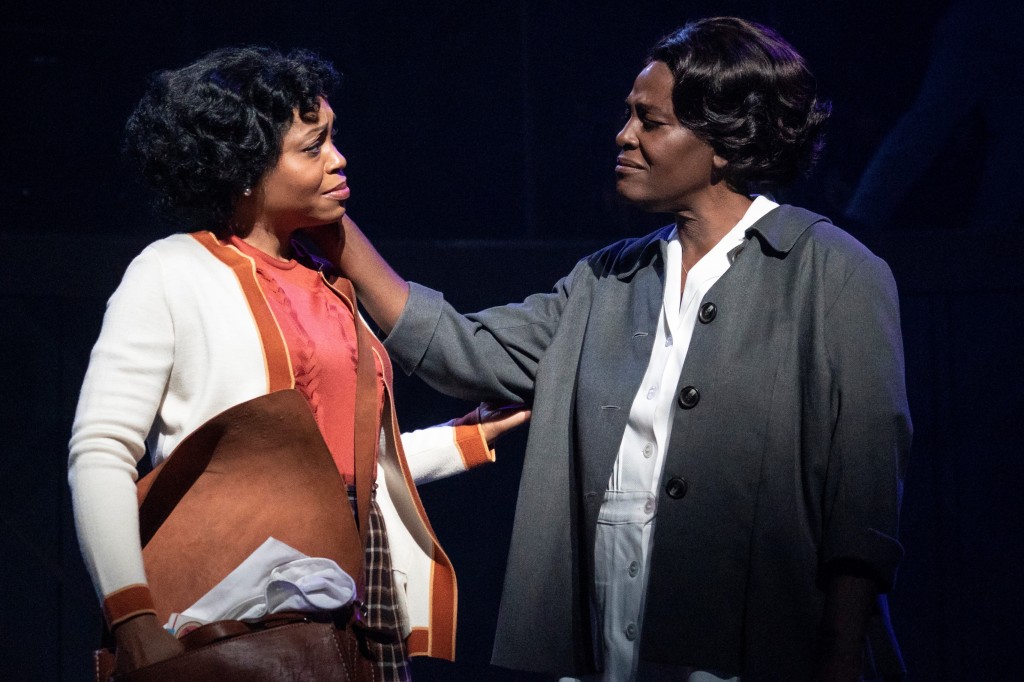
Interestingly, this horror of racism and its witting/unwitting adherents to a system that destroys is only made watchable through Tesori’s music, and Kushner’s poetic lyrics. Caroline’s anger and self-hatred projected out onto everyone, including friend Dotty Moffett (Tamike Lawrence) could have been a one-note agony of oppression and bondage. Key themes would have been undermined and occluded without the symbolism and majesty of the music and the fabulous voices that weave out Caroline’s story, of her inability to hope in an era when hope was the watchword of the Black South.

Tesori’s vibrant mix of 1950s-60s R & B/pop/soul/jazz/klezmer with a Diana Ross and The Supreme’s number at the finale and Kushner’s lyrics throughout measure like a soaring opera. They elevate the character of Caroline into an epic hero with her attendants, The Moon (the lovely voiced N’Kenge) and her children, especially Emmie (Samantha Williams) who has the spunk and courage to envision more for herself. Without our learning about Caroline’s emotional devastation embodied by the sonorous, operatic voices, Caroline or Change would have lost its vitality, currency and great moment, all of which are timeless and relatable to America 2021.
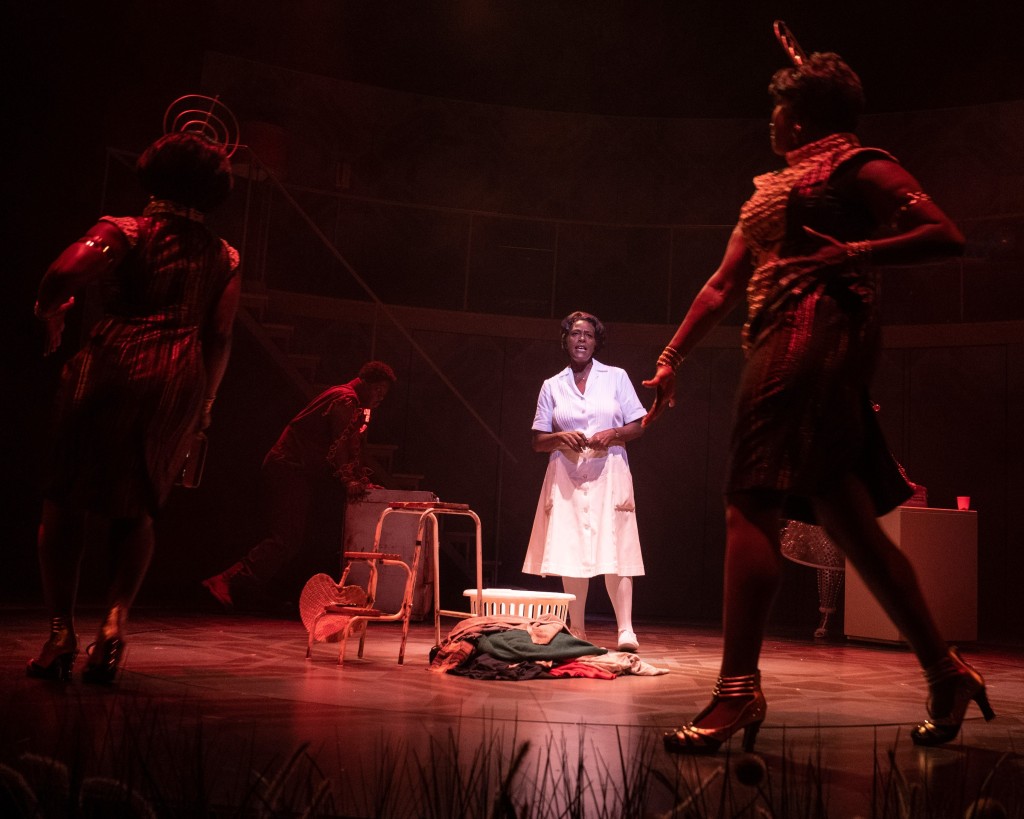
The superb cast is up for the challenge, singing beautifully, powerfully. Initially, it took me a while to understand the lyrics; the performers’ articulation wasn’t as acute as needed. However, like getting used to Shakespearean language, the heightened bond between the cast and the audience conveyed the centrality of Caroline’s conflicts. These become “a matter of ethics,” pride and dignity for her as a black woman who must carve out her identity in a bludgeoning, challenging racist society. What Kushner fashions as an issue of nickels and dimes evolves into the crux of black economic experience in the U.S, then and now.

Caroline’s dilemma is whether or not to take the change left in Noah’s pants pockets that he forgets to remove before Caroline does the laundry. Rose tells her to take it as a lesson for Noah to learn to “mind his money.” Caroline desperately needs the small bit of change, but also needs her soul to be intact. The minuscule handout becomes a symbolic gesture of Noah’s grandiose charity (in his view he believes Caroline and family appreciate his “largesse”). From Caroline’s perspective it symbolizes belittling crumbs of corruption taken from a “child,” making her an indigent, a beggar who cannot “rise above.” When she submits to temptation out of want for her children, she drains her dignity and faith in herself to “make it on her own,”
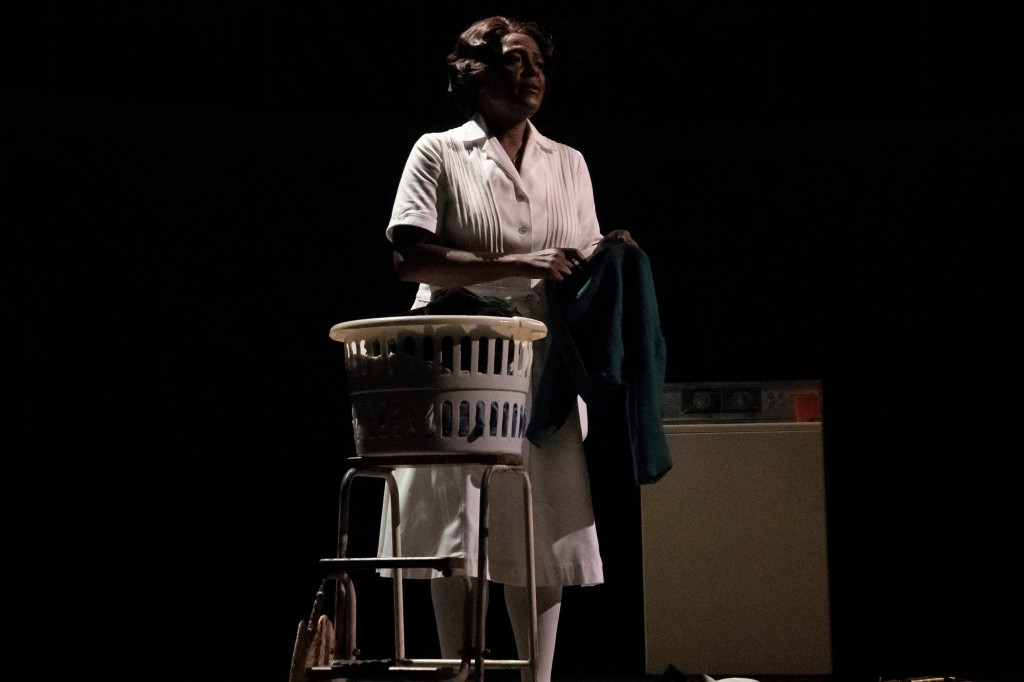
Of course, there would be no problem if the emotionally challenged Gellmans just provided a living wage instead of using money as a perverse lure for Caroline to damn herself. Caroline’s conflict symbolically parallels the perniciousness of economic inequality in America. It recalls demeaning public assistance handouts. Instead, if corporations paid the proportionate taxation rates, and with employers provided a decent, living wage, poverty, misery and an unequal justice system could be eradicated. However, the the US with its notorious history of enslavement (both white, black and colored) needs to demean souls to feed its own psychic sickness and keep the washing machine laboring by the underclasses to cleanse itself from its deranged filth.
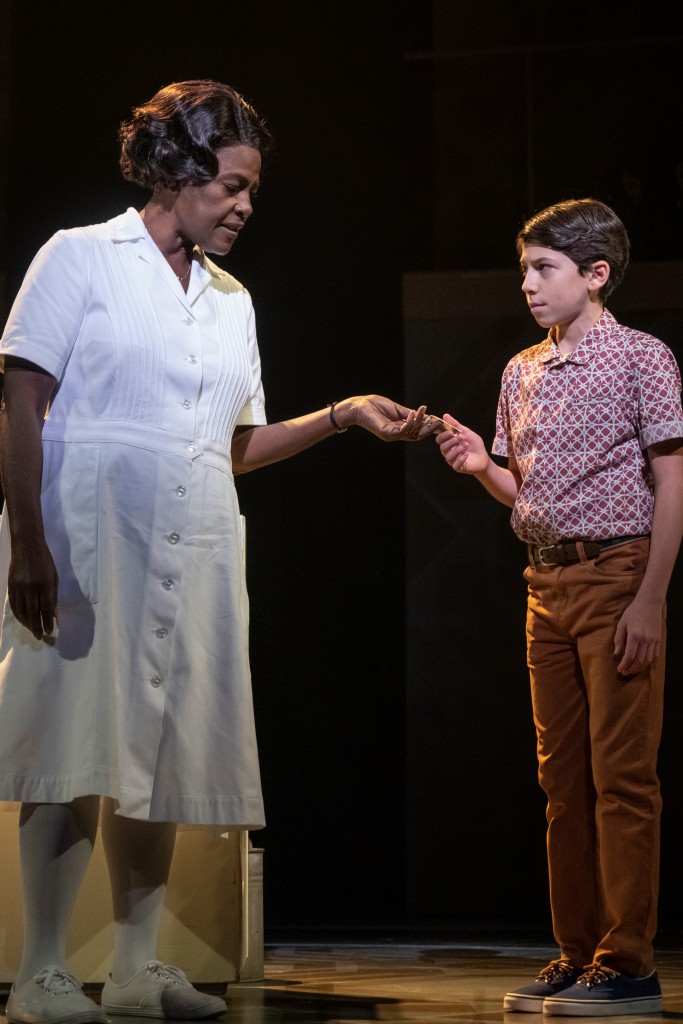
This is just one of the themes Kushner reveals in a production luxurious with ironies and messages. Another controversy to look for is the dynamic between the Gellman’s situation and Caroline’s. The Gellmans are Jews who, too, experience discrimination and abuse as outsiders from the white supremacists that dominate the surrounding culture not only in the South but indeed, everywhere. Yet, there is little real empathy or understanding between Caroline and the Gellmans.
This humorously comes to the fore during the Chanukah celebration. Rose’s father, Mr. Stopnick (Chip Zien masterfully steals the moment) a Jew from New York City rails against Southern racism and hypocrisy. He uplifts the blacks’ position to foment violent revolution, which he suggests should have happened with the US Communist Party in the 1930s. Of course he is shushed up.
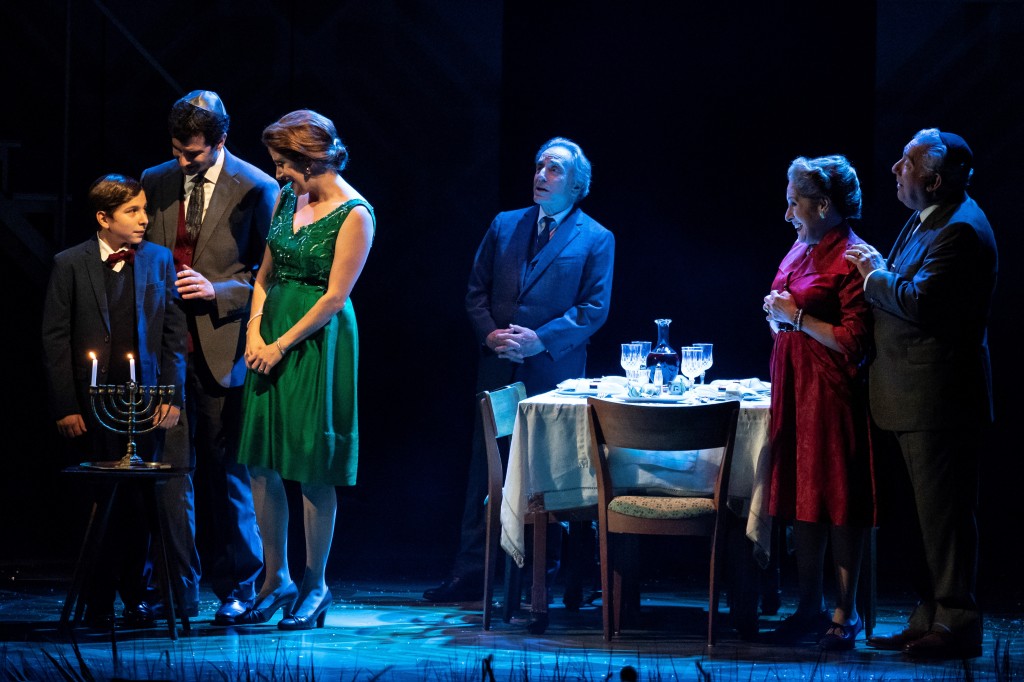
Meanwhile, his attitude about money which he delivers in a Marxist speech to Noah as he gives him Chanukah gelt is ironic. The twenty dollars ends up in Caroline’s “change cup.” Noah and she argue and afterward, Caroline realizes the fullness of the compromised, hateful individual she’s allowed herself to become. Sharon D. Clarke’s aria ‘Lot’s Wife’ is a showstopper. In the song Caroline’s conflict spills out in an epiphany. She concludes with a prayer to God, “Set me free; don’t let my sorrow make evil of me.”

Michael Longhurst’s direction of the ensemble is excellently dotted with interesting choices. The revolving platform is used symbolically. For example, during the Chanukah Party, Caroline, Dotty and daughter Emmie go in circles to please the Gellmans. Kudos enlightened staging by Fly Davis (set and costume design). Yet Caroline, et. al control; their servitude defines their strength. Without them, the Gellmans would be “on their own,” incapable, unable, weak. We are reminded of the South’s “need” of slavery rather than building a strong foundation from their own or paid labor which would have stultified their laziness and greed and encouraged a more prosperous economy and no need for a Civil War to end slavery, that peculiar “Christian” institution.
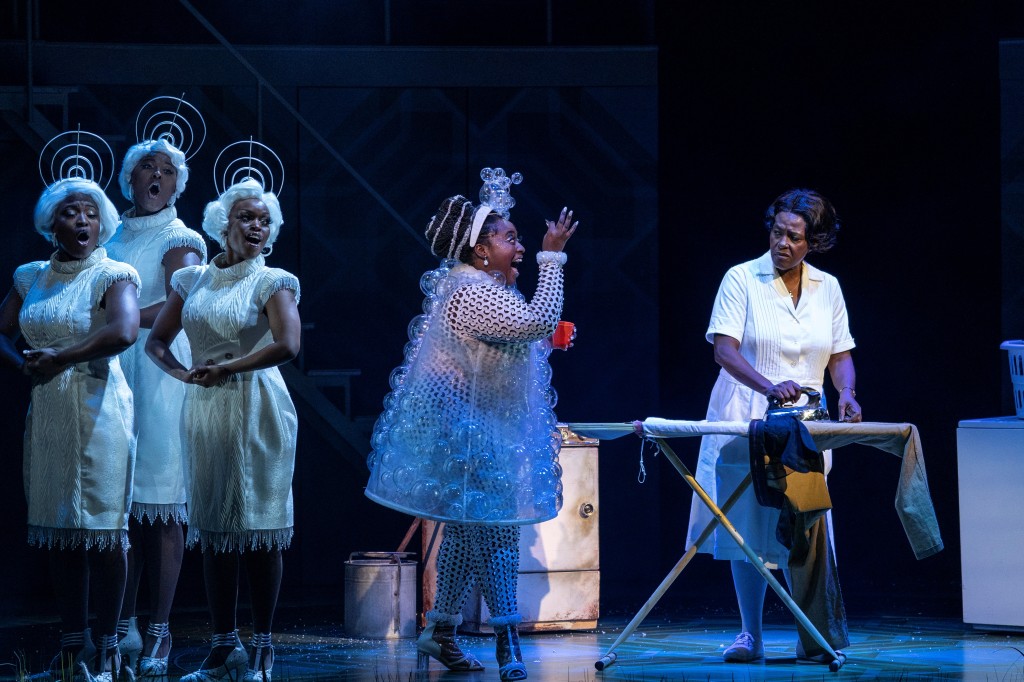
Kudos to the creative team: Jack Knowles (lighting) Paul Arditti (sound) Amanda Miller (hair and wigs) Sarah Cimino (make-up) Joseph Joubert (music direction) Nigel Lilley (music supervision) Ann Lee (choreography) who express Kushner’s themes roundly and provide a glistening backdrop (the swampland surrounding the house is wonderful) for the cast to play upon.
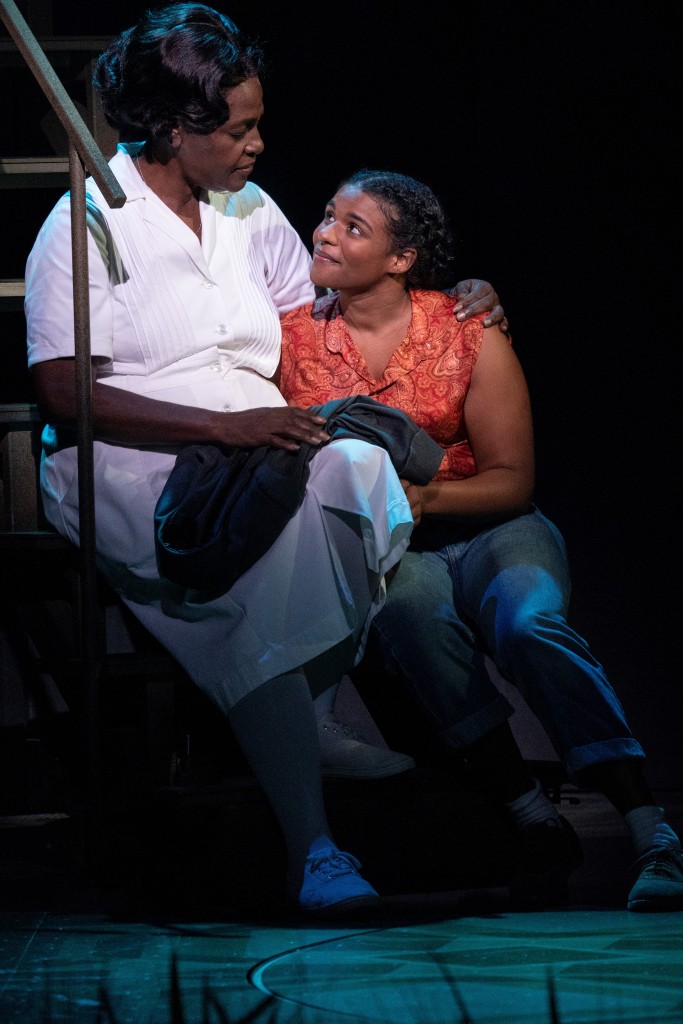
Caroline or Change opened in 2003 at The Public Theatre to mixed reviews, though it garnered awards. Sharon D Clarke starred as Caroline and won an Olivier for it in the London production in 2017. In the Roundabout production she reaffirms her grandeur, infusing her portrayal with substance, hitting her emotional peaks and turns with a resonant, anointed voice. This is one to see for the cast’s performances. If you missed it in 2003, don’t miss it in 2021. It is a reminder of what was and what is and a hope of what might be if we leave off divisive hatreds and rebirth ourselves to a better way. For tickets and times go to their website https://www.roundabouttheatre.org/get-tickets/2021-2022-season/caroline-or-change/
‘Mrs. Warren’s Profession,’ by George Bernard Shaw at Theatre Row, a Must-See

The Gingold Theatrical Group once again reminds us of the greatness of George Bernard Shaw’s Mrs. Warren’s Profession currently at Theatre Row. It is one of his earliest plays that was banned in London, produced in a private club in 1902 and finally received a public airing in 1925. When it was produced in the US in 1905, the entire cast was arrested via the New York version of the Comstock Law. They were released immediately afterward. Naturally, the controversy created the PR to pack the auditorium for the remainder of the run.

What was the fuss and furor? Shaw, an activist-playwright in addition to his many other talents (journalist, poet, politician, critic) wrote conflict plays exposing egregious social ills, hypocrisies and oppressive institutional class structures contrary to what the culture expected at the time. For example, plays could be about conventional prostitutes “with hearts of gold” who sacrificed themselves for the good of others or who died of consumption.

But God help you if you revealed the corrupt, capitalistic institutions that forced women to starve as factory workers and use their bodies to supplement their below living wages to make it to the next day. Shaw portrays the antithesis of the conventional prostitution accepted by church and decent society, by contriving a Madam for the ages, Mrs. Warren (the superb Haren Ziemba). She has bested the patriarchy and exploited it for her own advantage with the help of Sir George Crofts (the always excellent Robert Cuccioli) a clever exploiter who exploits her and his fellow men supplementing his finances and keeping his Baronet station with all propriety (wink, wink).

The problem is that Mrs. Warren has done this in the name of seeking the conventional-respectable for her daughter in order to purify herself. This is a blindness in Shaw’s astute hands. Indeed, Mrs. Warren’s Profession has as its conflict a mother-daughter disagreement over the conventional unconventional. Miss Vivie (the spot-on Nicole King) disagrees with her mother’s insistence that she receive money the rest of her life instead of Vivie making her own way from her own source of income which she has prepared for at Cambridge.
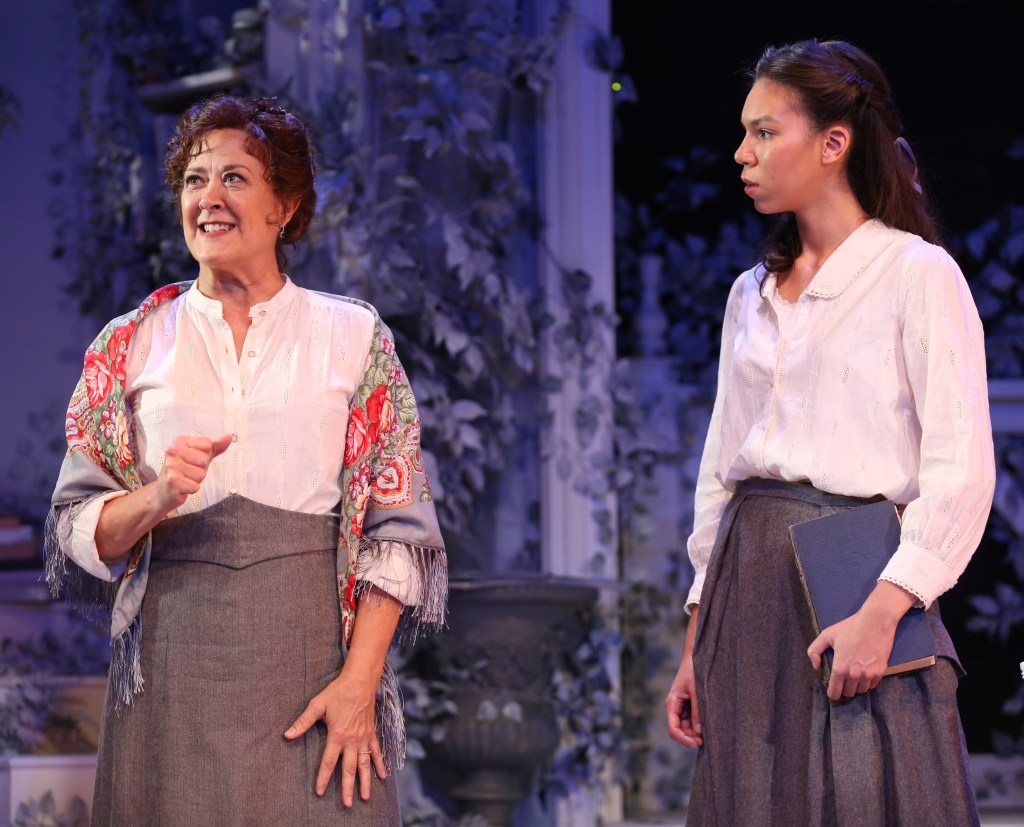
Shaw humorously reveals Vivie’s unconventionality when she rejects her mother’s largesse. Contrary to the usual mother-daughter relationships, she will not take care of her mother in her old age. By degrees we understand the backstory and ironies. Mrs. Kitty Warren also rejected her mother’s influence and domination. She made something of herself, transforming her low social station to one of wealth, culture and status, ably hobnobbing with the best of society.
The two women are admirably similar in getting over the patriarchy’s dominion. However, their professions are different and indeed, Mrs. Warren’s exploitation of lower class women’s horrific situation is a triumph of selfishness if not an expose of the corruption and hypocrisy of the patriarchal, colonial class system that applauds her surreptitiously for doing this. Of course, Shaw’s truthfulness in revealing the appalling conditions women faced at the time was an outrage to Shaw’s critics and commentators (backed by fat capitalists, most probably).

Mrs. Warren has worked her way up to moneyed respectability entrepreneurially by running high class hotels in various parts of Europe with her partner and friend the Baronet Sir George Crofts. Her “rags to riches” story speaks to the ambition and grit of a self-made woman. The most thrilling fact is that she has done this as a Madam which Shaw could only infer in his play in keeping with the hypocritical, judgmental Victorian Age mores which he twits from start to finish in this play. Mrs. Warren has taken life by the top hat and tails and exploited her beauty instead of allowing other men to exploit her and pay her nothing for it. She has worked out a special deal with Crofts taking the lion’s share of the profits. And she loves the work; it has made her self-sufficient and the gowns and lifestyle and being somebody is just grand.
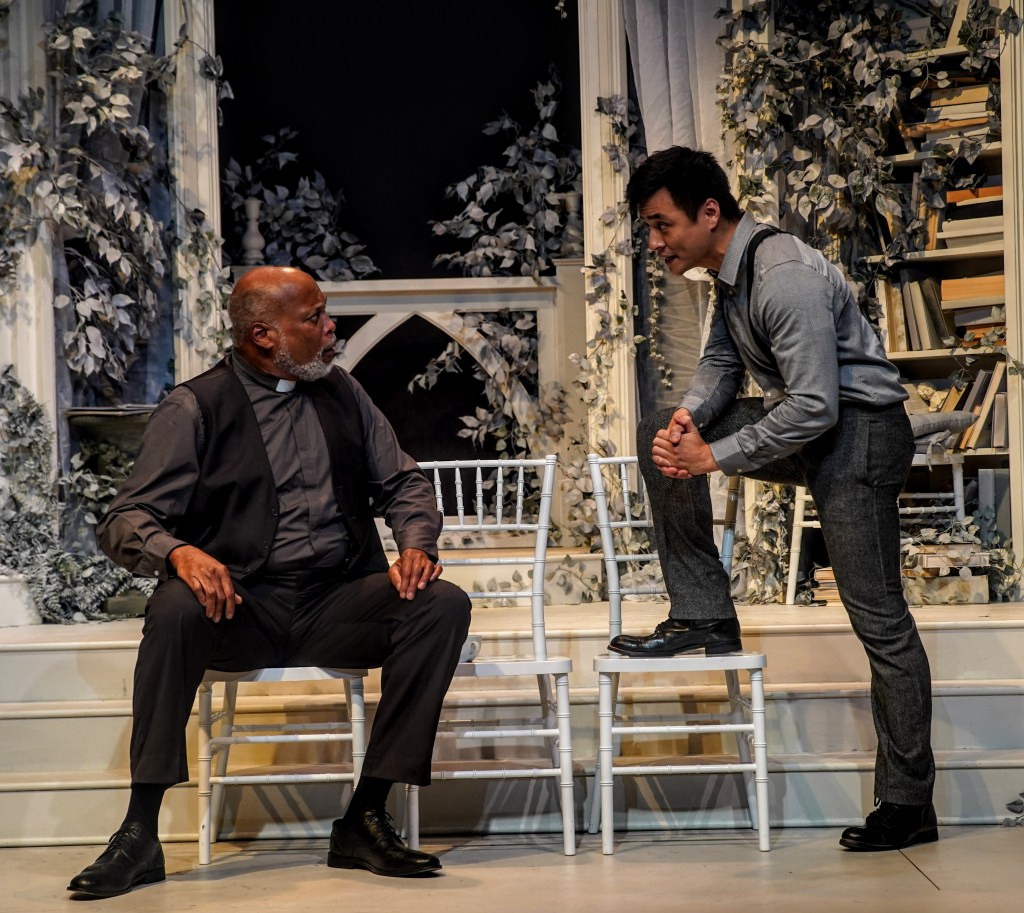
Vivie, supported by her mother’s funds, unlike most woman of the time who could ill afford a college education, has found a useful career in an industry requiring her skills and education. Thus, she has achieved her own autonomy and refuses to be pinned down to the social prison and folkways of “respectability,” marriage, and being the little lady to some great philandering husband.
Like Kitty Warren, Vivie defines herself. This empowerment reveals a strong character undergirded by disallowing the patriarchy to demean and control her. Nor will she allow women entrapped by the patriarchy (her mother) to belittle her own self-achievement.

The initial scenes open on this conflict when Mrs. Warren comes to visit daughter Vivie to pave the way for her to be brought under her wing and into the fold of her grand, elegant lifestyle with Crofts. The women know little of each other and couldn’t be more disparate. When they discover each other with the help of Kitty’s friends and neighbors, Praed (Alvin Keith in a fine performance of the dandy) Frank (David Lee Huynh, Vivie’s energetic suitor) and Reverend Gardner (the fine Raphael Nash Thompson) the chaos mounts until the jig is up.

Shaw’s sardonic humor and irony is in the situation and the conflict between mother and daughter. Modern audiences will find humor that Vivie stands up to her mother who is appalled that her daughter eschews men, luxury, money and the gaudy cultural life. Instead, she prizes work, work, work. Vivie’s austerity and her rejection of everything that smacks of hypocrisy is downright Puritanical and actually uplifting to see on the one hand, but frightful on the other. Shaw’s depiction of her as a “modern,” young woman is ironic.
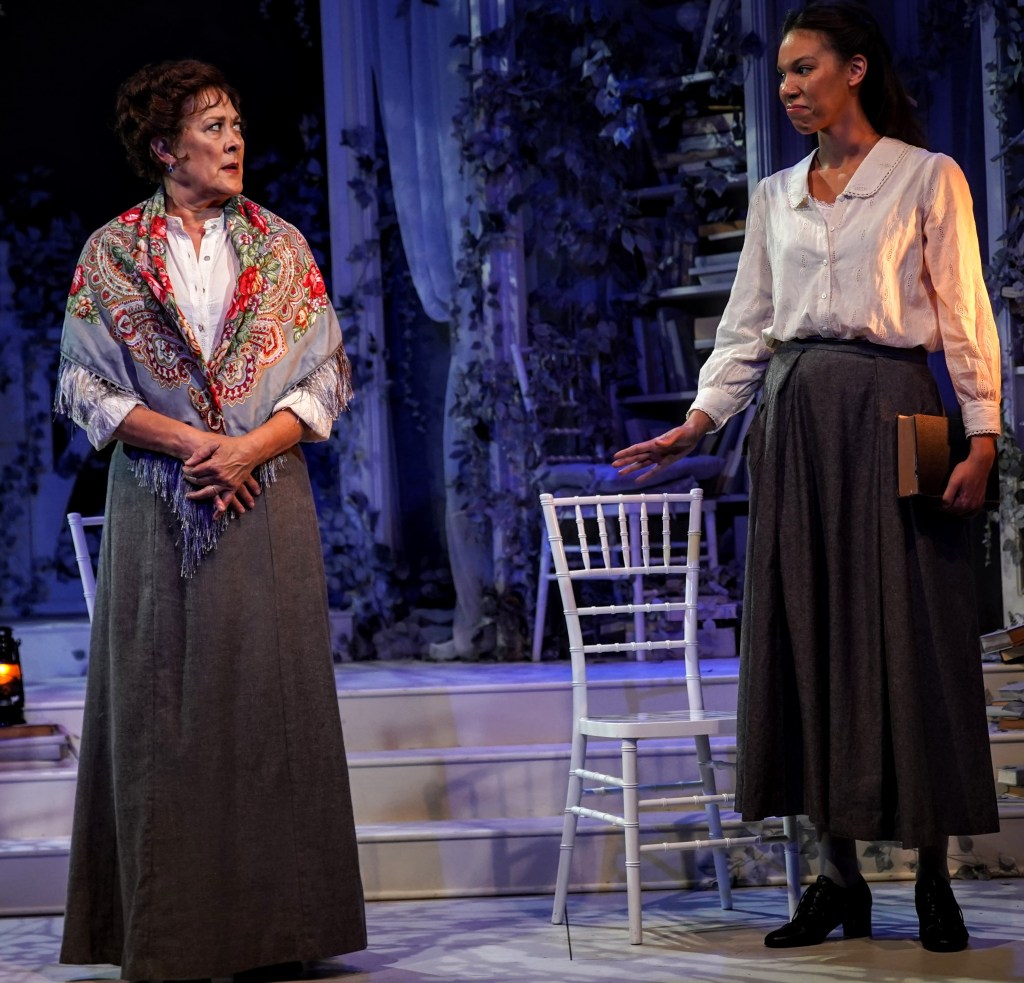
Shaw twits all his characters and has fun with them. Crofts’ cheap caddishness as one of the landed gentry is humorous as are Praed’s and Frank’s notions of womanhood and “how it should be.” Shaw twits the Reverend who joins the clergy after sewing his wild oats. He is so devoted to his congregation, he pays for his sermons to be written.
The production is well handled and a superb revelation of Shaw’s work because of the direction (David Staller), on point ensemble, and creative teams’ enhancement of the play’s timeless themes. I did enjoy the monochromatic set’s conceptualization. See this wonderful production to appreciate this master playwright whose currency so appeals. For tickets and times go to their website: https://gingoldgroup.org/mrs-warrens-profession/
‘Lackawanna Blues,’ Starring Ruben Santiago-Hudson is Just Superb!

Once upon a time when Buffalo, Lackawanna, Detroit, Chicago, Cleveland, Pittsburg and other cities in the North were humming with industry, jobs, hope and prosperity, blacks migrated northward from the Jim Crow oppressions, danger and poverty of the South. Their industry, hard work and efforts contributed to a thriving black middle class which eventually petitioned and protested against the government for Civil Rights reform. In his one-man musical Lackawanna Blues, currently at the Samuel J. Friedman Theatre, Ruben Santiago-Hudson weaves together a beautiful elegy to the people of Lackawanna, New York, who grew him up and impacted the course of his life.
Santiago-Hudson writes, directs, performs-sings, blows a mean harmonica and dances his joy and revelations about Lackawanna, whose current population statistics indicate is growing out of its period of decline during previous decades. Accompanied by the superb Junior Mack on guitar, Santiago-Hudson transforms himself into more than twenty distinctive and unique characters that peopled his formative years, when his beloved Ms. Rachel Crosby raised him. He, and most of the people who knew her, lovingly called her Nanny.
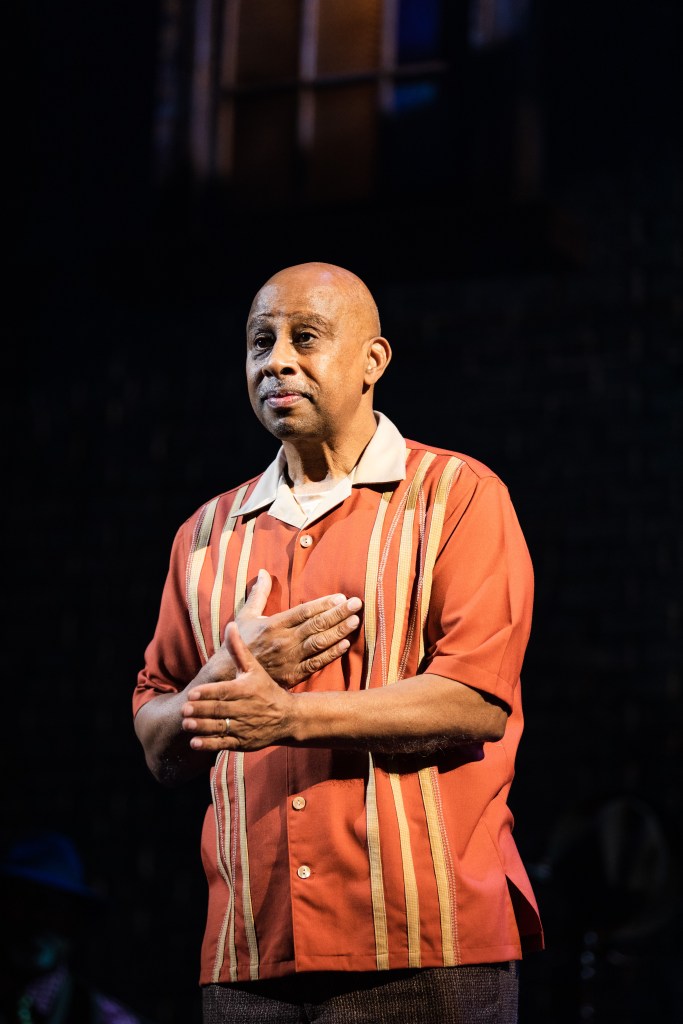
Nanny is at the center of his remembrance, the star of the production, the good and faithful servant on earth, who, laid to rest, brings on God’s greatest praise, “Well done.” Santiago-Hudson’s reflections on Nanny, through her interactions with others, indicate why God praises her so. The acute characterizations melded together and heightened by Mack’s guitar riffs and Santiago-Hudson’s jazz/blues harmonica and songs, reveal a woman we’d all love to be protected by. The picture is glorious. It is of individuals in need, beaten down by human cruelty being helped back up by a compassionate, loving, generous woman, more dignified than the government. Santiago-Hudson brings us into the cloud of witnesses to behold Nanny’s Christianity
Not to be understated is the underlying theme. We discover through humor and pathos, a migrating black culture settling in the middle of a white culture which wasn’t loving. As a result, Nanny “stood in the gap” with grace and a pure heart. Through the men and women that the prodigious Santiago-Hudson effects with his amazing performance skills, we come to know Ol’ Po’ Carl, Lottie, Ricky, Mr. Lemuel Taylor, Numb Finger Pete, Norma, Norma’s Mother, Bill, Dick Johnson, Sweet Tooth Sam and others who Nanny feeds, clothes, boards, chides, scolds and threatens in her way like a rod of Godly justice. Heck! You know they had it coming and invariably, they listen to her like chastened children in a kindergarten class.

What makes Lackawanna Blues so remarkable, apart from the music, is how Santiago-Hudson inhabits the characters with incredible details of speech, phrasing, word choice, stance, voice, behavior and walk, and in the twinkling of an eye switches from individual to individual without taking a noticeable breath. This is his understanding of these individuals’ souls and spirits, fictionalized with the sheen of memory. Interestingly, the result is in the revelation of this humanity, we become humanized with new knowledge of the time, place and culture. The effect is that we empathize and are fascinated to learn of each individual, to learn how Nanny attempts to bring them to wholeness. Though we may never have had a wonderful Nanny in our lives who demonstrated forgiveness and kindness, nor may we never have experienced some of the rough types that she took into her boarding houses and provided a meal, a bed and comforting words of hope to, we understand and experience her through Santiago-Hudson’s gifts of transference.
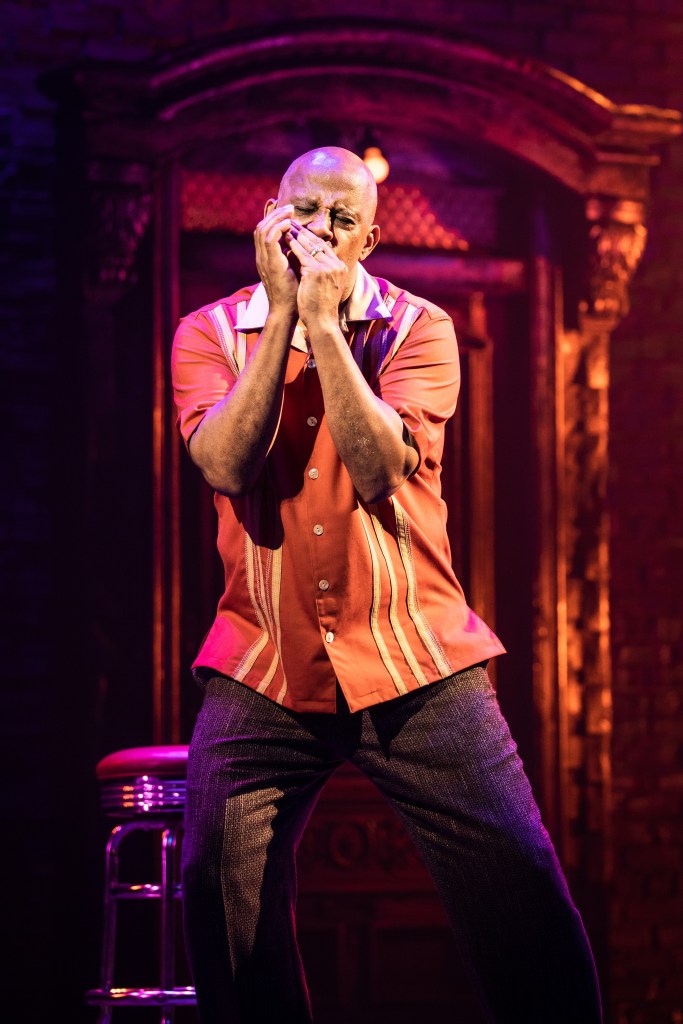
Each of Santiago-Hudson’s portraits of humanity are heart-felt. In some instances, they are so authentic you believe Pauline is standing before you, though Santiago-Hudson is wearing his shirt and pants throughout. Thematically, male or female, whether whole or in pieces as some of the characters are who have lost a limb or fingers, all have dignity and are respected regardless of their foolishness and hijinks. Through Nanny’s love, they are worthy of that respect and dignity. She elevates them from their low-down and fearful view of themselves.
,The writing and acting is breathtaking. Elegiac is the nearest word that comes to mind. However, that, too, is limited because there is great breadth of cultural humor and irony that allows the audience to laugh at themselves as much as they laugh at the situations the characters get into helped by Nanny’s wise responses which give them a way of escape.
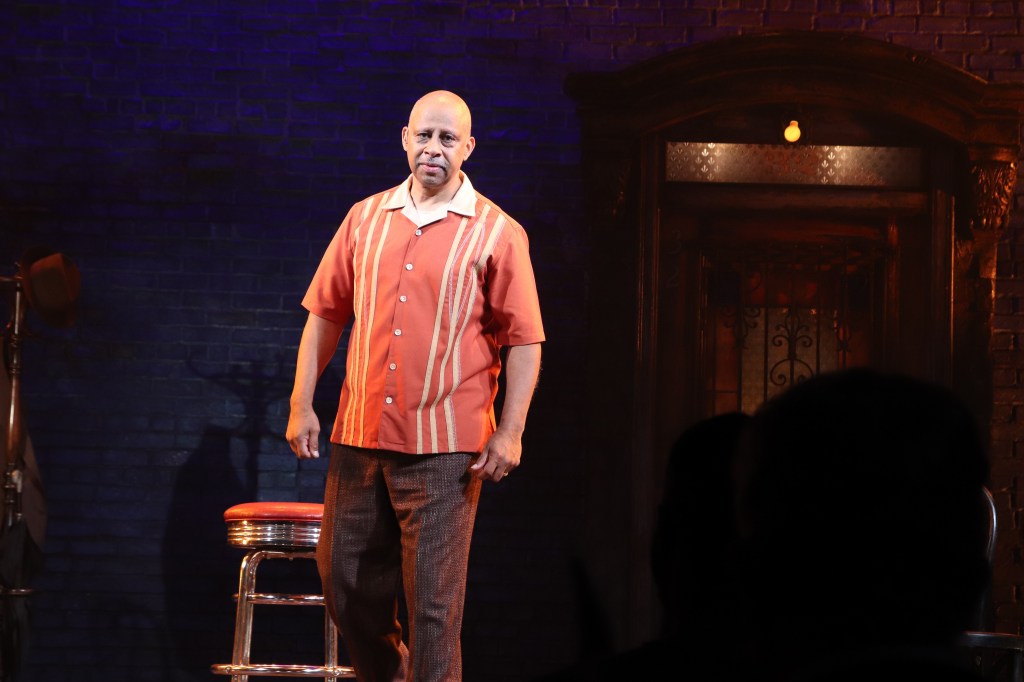
The suggestive blues club lighting (Jen Schriever) and minimalistic stage design (Michael Carnahan) convey the blues/sadness of each story. Karen Perry’s costume design reminds us that Santiago-Hudson doesn’t need costume tricks to become characters. He can effuse them with a smile, tilt of the head, protruding tongue or swagger. I loved the brick wall backdrop, majestic door, lighted window suggesting one of Nanny’s boarding houses, like whisps lifted from memory, that in turn lift us into timeless space and the ethers of imagination. The minimalism encourages a unified realm of audience consciousness thrilled to see and feel and experience live performance. Additional kudos for Darron L West’s sound design.
Santiago-Hudson states in the program that the musical is dedicated to the memory of Bill Sims Jr. who wrote the original music for Lackawanna Blues. In spirit Bill Sims Jr. and Nanny are the force that assists Santiago-Hudson in his dynamite portrayals, in his expressive joy and poignancy, and in his paean to a past that brought him to where he is today, on a Broadway stage.
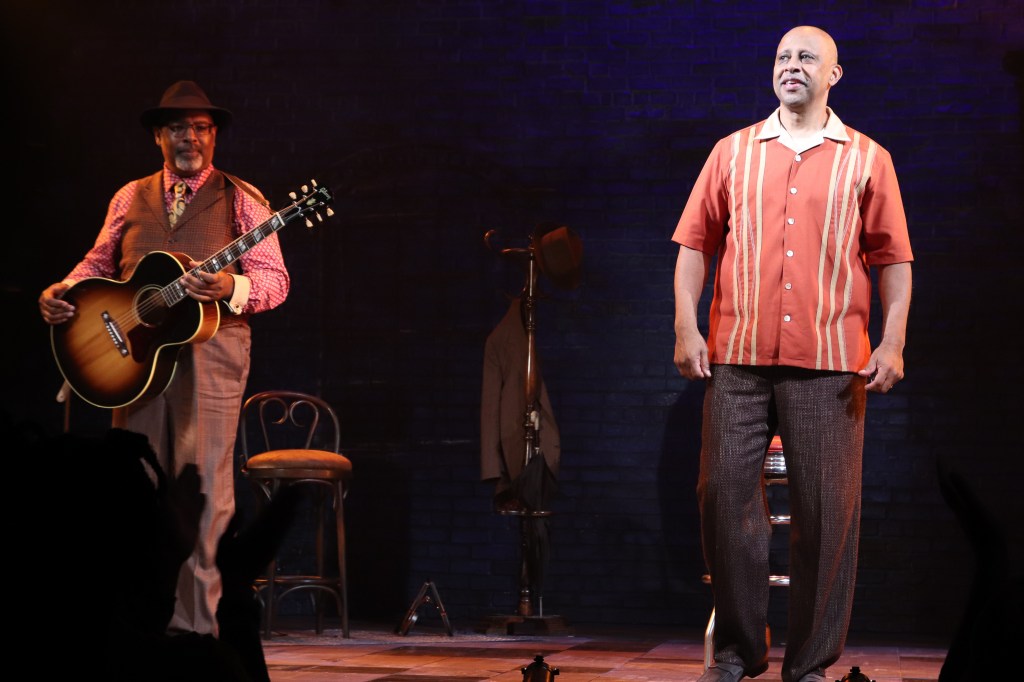
This is one that you don’t want to miss for the humor, writing, Junior Mack’s guitar and the easy way Bill Sims Jr.’s music tonally breezes the themes of goodness overpowering cruelty and hatred, love answering wrath and anger. Lackawanna Blues is uplifting and unifying in this time of division. It reminds us that we all crave love, forgiveness and care, all of us. That goodness lasts a lifetime and beyond. It stops the trajectory of destruction and converts sorrow and hurt to wholeness. And it brings spiritual life and love. Nanny is one for the ages. Hudson-Santiago’s portrayal is beyond triumphant. For tickets and times go to the website https://www.manhattantheatreclub.com/shows/2021-22-season/lackawanna-blues/
‘The Lehman Trilogy’ is a Triumph, Review
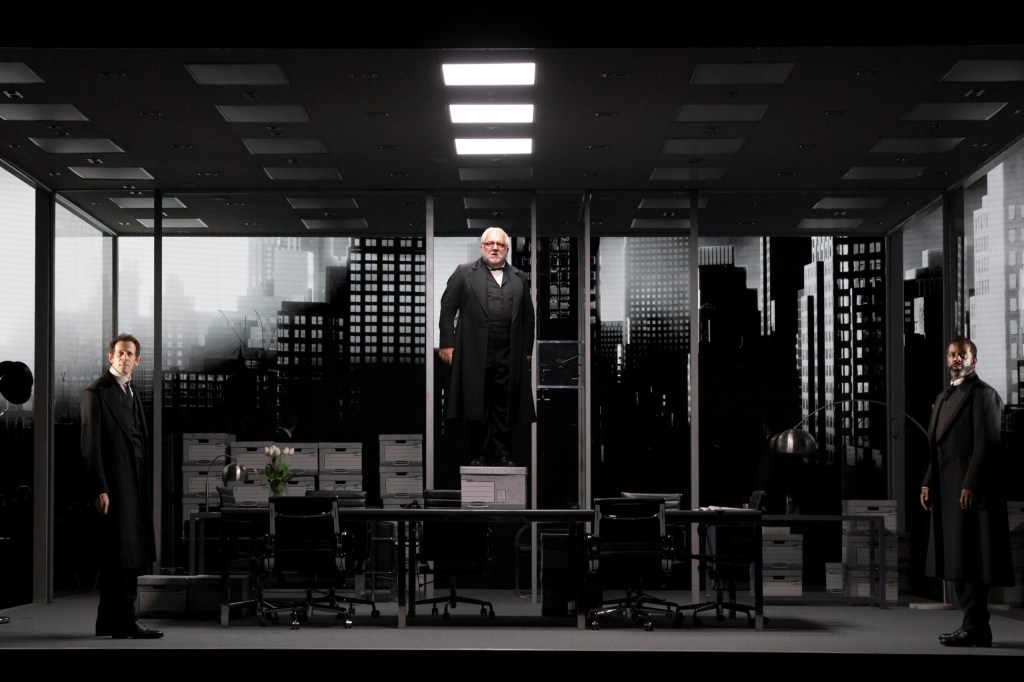
When you see Stefano Massini’s The Lehman Trilogy at the Nederlander Theatre, and you must because it is a majestic triumph which will win many awards and perhaps a Pulitzer, view it with an expansive perspective. Acutely directed by Sam Mendes, with a superb adaptation by Ben Power, the production’s themes highlight the best and worst of human attributes and American values. We see prescience and blindness, preternatural dreams and uncanny business acumen, along with unethical, unfettered capitalism and greed. If we are honest, we identify with this humanly drawn family, that hungers to be something in a new world that offers opportunity where the old world does not.

Humorously, poetically chronicling the Lehmans from their humble German immigrant beginnings, the brilliant Simon Russell Beale, (Henry Lehman), Adam Godley (Meyer Lehman), and Adrian Lester (Emanuel Lehman), channel the brothers, their wives, sons, grandsons, great grandsons, business partners and others with an incredible flare for irony and imagined similitude. Prodigiously, they unfold the Lehman brothers’ odyssey from “rags to riches” with a dynamism as fervent and ebullient as the brothers’ driving ambition which rose them to their Olympian glory in America.

The production is an amazing hybrid of dramatic intensity. It is an epic tone poem and heartbreaking American fairy-tale. It is a tragicomedy, a veritable operatic opus under Mendes’ guidance, Es Devlin’s fantastic, profound scenic design and Luke Halls’ directed, vital video design. Intriguingly, it remains engaging and edge-of-your-seat suspenseful through two intermissions and three hours. By the conclusion, you are exhausted with the joy, sorrow and profoundness of what you have witnessed. Just incredible! Three actors delivered the story of four generational lifetimes with resonance, care and extraordinary vibrancy. They are so anointed.

At certain moments the audience was silent, hushed, enthralled; no seals barked or coughed out of fear of disturbance. Perhaps this occurred because The Lehman Trilogy threads the history of antebellum America and the story of the most culturally complex, diverse and extreme (i.e. poverty and wealth), city on the globe, New York. Indeed, the audience watches transfixed by the magic of what “made in America” means, threading the poisoned soil of slavery to what “made in America” means today in an incredibly complicated and even more slavery poisoned institutionalization of economic corruption etherealized.
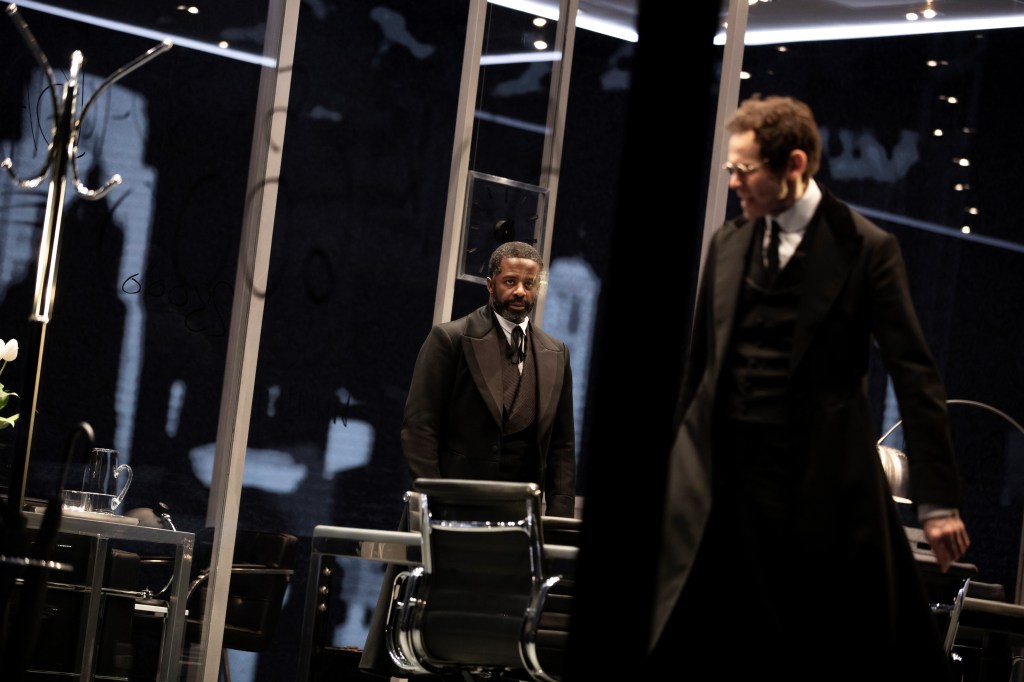
One of the subtle arcs of Massini’s and Powers’ Trilogy follows the growth of this corruption in one family as they expand their business. The brothers’ ambitious fervor morphs in each generation (the actors of the succeeding generation play the sons and grandchildren), until by the end, when Lehman Brothers is sold and divided up and sold again, when there are no more Lehmans involved in running an empire that still carries its name, we understand that outside forces and individuals have caused the interior dissolution via excess, greed and spiritual debauchery.

Especially powerful is the last segment of the Trilogy, “The Immortal.” After the second segment, “Fathers and Sons” concludes with the first and second suicide of the 1929 crash, the third segment continues with more suicides on that cataclysmic day as the debacle of selling goes on. And the segment ends in September 2008 a minute before the fateful phone call that no one is bailing out Lehman Brothers which becomes the sacrificial lamb that fails, while other firms are “too big to fail.” How American!

It is a keen irony that Lehman Brothers survives the 1929 crash. Indeed, they make it through the Civil War, WW I, the stock market crash and the great depression and WW II. Lehman Brothers is successful after the internet bubble burst and it moves steadily into the mortgage market mess in the 21st century until…it collapses. During the last Lehman generation, we watch how Bobby’s takeover and presidency shifts the perspective with regard to personal life and business; all is reform, even his religious observance. No longer do the Lehmans sit Shiva for the passing of a Lehman according to Talmudic Law; only three minutes of silence are allowed to recognize the passing of Bobby’s Dad, Phillip, before the business of Wall Street resumes in their offices.

Thus, by degrees, Lehman Brothers meets the future; the sun never sets on the huge investment bank with global centers everywhere which Bobby and his partners govern. The name becomes “immortalized,” even as Bobby symbolically dances into the future decades after his death. Adam Godley’s nimble movements are phenomenal in this dancing scene with the actors symbolically twisting Lehman Brothers into the success of the Water Street Trading Division and beyond. It’s hysterical and profound, a dance of ironic immortality which can’t last. No one thought Lehman Brothers could go bankrupt, but it is fated to. According to the brilliant themes and symbols (golden calf, golden goddess, tight rope walker), and ironies of Massini and Power, Lehman Brothers reaches its own apotheosis in the last moments of the production. Then the phone call comes and it’s over.
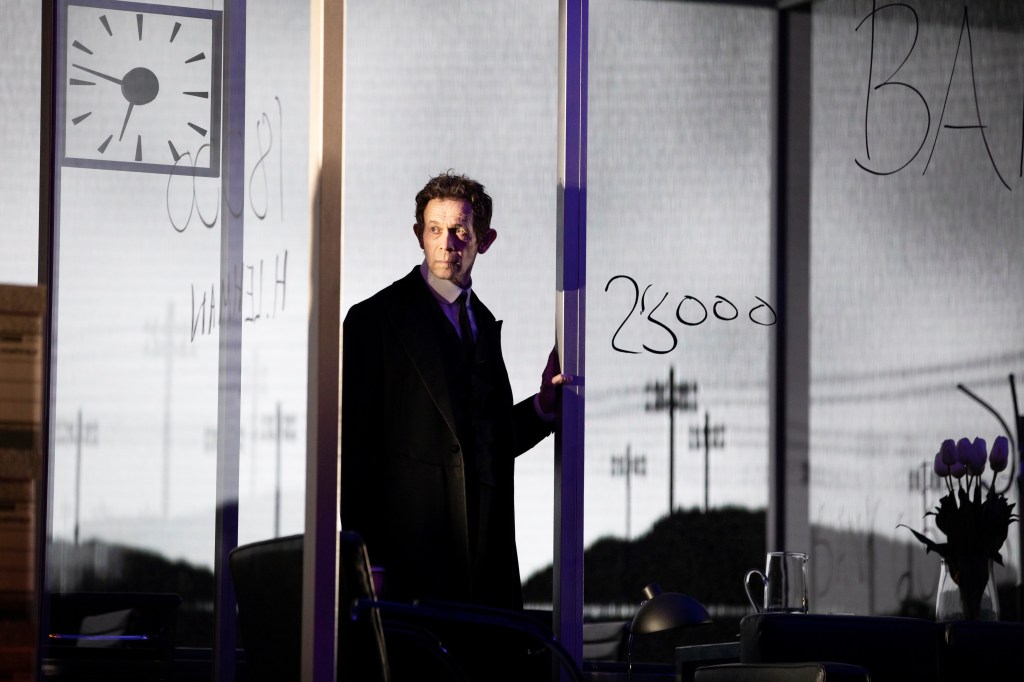
It is clear that after the last Lehman dies, others who take over (Peterson, Glucksman, Fuld), apply their own meretricious agenda on Lehman Brothers, defying good will and sound sense. Indeed, the entity that falls to its destruction is nothing like what Henry, Mayer and Emanuel and their progeny imagined or would have supported. Is this disingenuous? Massini, Powers, Mendes and the actors make an incredibly convincing case. Without the guiding influence of Judaic values and the mission that only the original family understood, Lehman Brothers is “Lehman” in name only. All of the meaning, value and venerable history have been sucked out of it.

Thus, is revealed the import of the conclusion. The once sound mission of Lehmans, under-girded by the values of the Talmud and Judaism is no more on the material plane. It exists in an infernal infamy, a cautionary tale of the ages. So it is fitting that in the last scene in the afterlife, one minute before that fateful phone call on September 15, 2008, Henry, Meyer and Emmanuel say Kaddish, a prayer for Lehman Brother’s demise. The dead bury the dead. Pure genius.

Massini’s/Power’s metaphors, Mendes and the actors understand and realize beautifully. They toss them off as so many luscious grains to feed off intellectually, if you like. Es Devlin’s revolving through history, glass house structure (just begging to have stones thrown at it), which the actors write on graffitizing the importance of Lehmans’ historical name-changing success is amazing. The turning platform and “see through” glass adds a profound conceptional component to the themes of money, power, finance and the energy of entrepreneurship. Luke Halls’ impactful video projections (the terrifying dream sequences, the burning Alabama cotton fields, the digital signals of the derivatives markets, etc.), enhance the actors’ storytelling with power. So do Jon Clark’s lighting design and Nick Powell’s sound design. Not to be overlooked Katrina Lindsay’s (costume design) and other creatives must be proud to have helped to effect this production’s greatness. They are Dominic Bilkey (co-sound design), Candida Caldicot (music director), Poly Bennett (movement).
There is more, but let peace be still and award The Lehman Trilogy sumptuously, all voting members of various organizations. It is just spectacular. For tickets and times go to their website: https://thelehmantrilogy.com/
‘Autumn Royal’ at the Irish Repertory Theatre
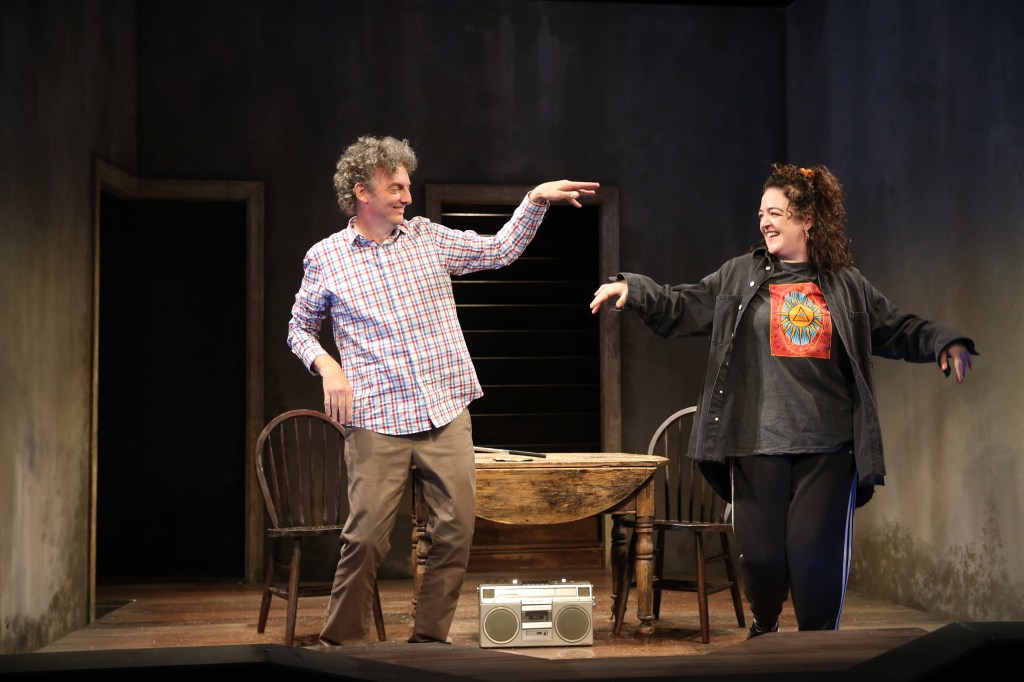
Kevin Barry’s dark comedy Autumn Royal, currently at the Irish Repertory Theatre’s Francis J. Greenburger Mainstage is a blend of dark and light humor centered around a poignant family dynamic: what do we do with cantankerous, ailing Pa when Ma left the family? Directed by Ciarǻn O’Reilly, the production builds with gradual LOL riot to an ironic conclusion that is also a tragic reflection of human nature now and for all time.,
Barry, an award-winning novelist (most recently Night Boat to Tangier) and short story writer (most recent, That Old Country Music), launched out to write his first play, Autumn Royal. When they heard the news, artistic director Charlotte Moore and director Ciarǻn O’Reilly snapped it up for the live 2021 season after triumphantly producing superb digital productions seen globally during the pandemic.

Starring the comic actor and writer Maeve Higgins as May and company member of the Irish Rep John Keating as her sibling Timothy, the actors show their talents as they conduct the audience on a romp which is both surreal and symbolic. The characters’ journey takes them into past events whose revelations inform their present predicament. As the arc of their situation intensifies because of their emotional angst, we are engaged with the surprising and humorous dialogue and flashbacks as family mysteries that haunt the siblings become exposed. The revelations impact how they determine their way forward as they live with and take care of their father 24/7, while he languishes in his sick bed.
We discover by degrees the conflicts amongst family members, May and Timothy and their parents. Through their commentary and banter with each other, the fine actors reveal reveal the puzzle pieces of their characters’ history. Rapt, we cobble together the threads to divine how and why they continue to live in Cork, Ireland with their father in his house as they care for his most intimate, personal needs. Their father and mother we understand by inference, description and reaction via amazingly suggestive flashbacks rendered with precision by Higgins and Keating. The flashbacks are theatrically presented with the sounds of machinery and projections on the dreary walls of a downstairs room, courtesy of Charlie Corcoran’s set design, Michael Gottlieb’s lighting design, Ryan Rumery’s original music and sound design, Dan Scully’s projection design and Hidenori Nakajo’s sound design.
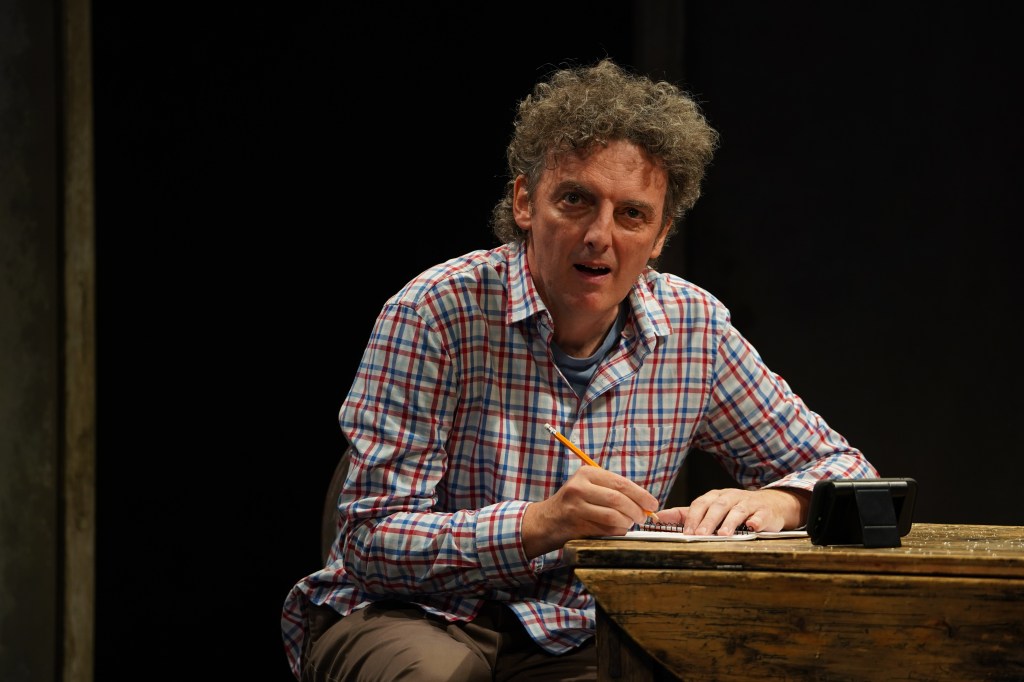
All elements of spectacle are expertly woven by the creative team to the maximum creating a frightening effect. The theme of parental impact on their children’s emotions and psyche is driven home, but in a unique and stark way as May and Timothy struggle to expurgate or suppress the parental damage that changed the course of their lives.
The images and sounds combine to represent the siblings’ imaginations and personal memories. The revelations are of their unique character; other individuals would flashback to events in a different way. These are Barry’s superior characterizations, so beautifully understood and effected with O’Reilly’s direction and Higgins’ and Keatings’ sensitivity. May’s and Timothy’s stories connect past and present. Their humor, a way to deal with the terrors of parental verbal abuse, arises from misery and torment.

From the dramatically imagistic connections we understand clearly how and why they approach their lives, each other, their parents, their dreams and the possibilities of their future portentous decisions. Interestingly, Barry never presents the mother and father onstage. They are like living ghosts, shadows of their former selves, once a lighthearted family of four before the darkness came.
As the ghostly unseen, the father rains dust down on May and Timothy in the room on the first floor as he bangs out tempestuous ructions in his upstairs bed. The mother, a dark figure wandering up the hill above their house never visits, though she lives somewhere in Cork and remains incommunicado by her own design. However, she once visits her husband in his sickbed and compliments Timothy when she comes downstairs again. Timothy reports this to May after she confronts him about their parents. It is then we learn how May despises their mother, as they note their father’s religious fanaticism.
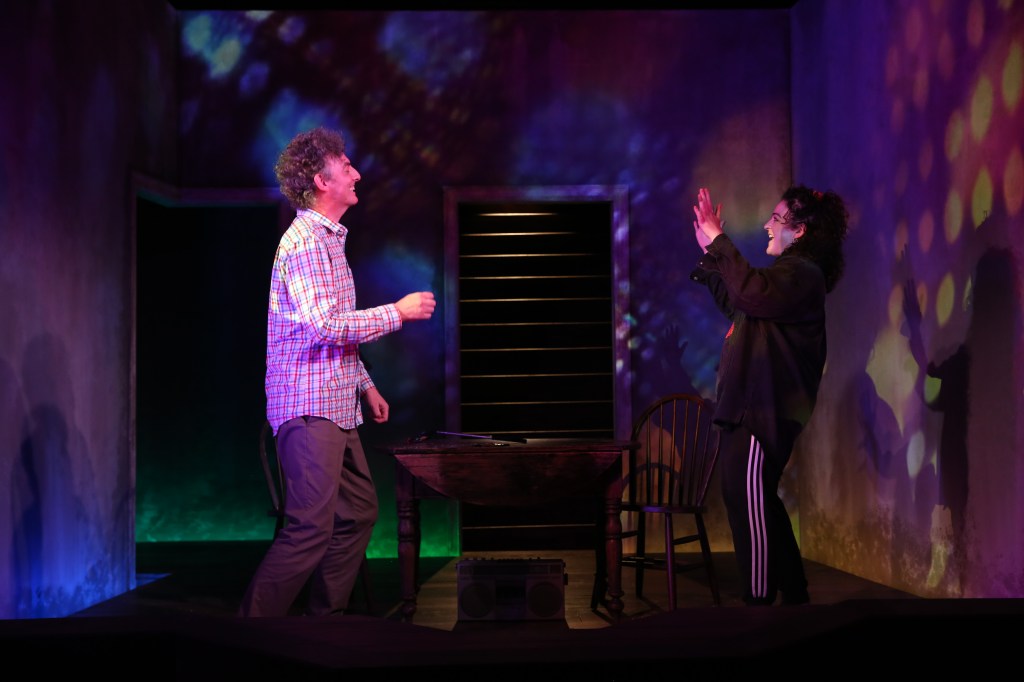
There is no spoiler alert. The events progress as the siblings try to make cogent decisions about their father’s condition and theirs with humorous effect. To what extent do they determine to fail? To what extent do they interact with each other in combined stasis and nihilism to deliver a result they don’t want? Or do they want it? You will just have to see this superb production to experience the humor, the poignancy and the uncertainty inherent in Barry’s work, prodigiously staged and shepherded by O’Reilly’s direction and Higgins’ and Keating’s wonderful performances.

Barry’s work intrigues with its complexities. The actors make the characters authentic in their hellish prison which they impose on themselves and each other. Gradually, they back themselves in a convenient corner. Their past, ironically suggested with symbolic flashbacks indicating a machinery which catches them up and spins them in circles of torment they cannot break, speaks to all of us. How caught up are we in past hurts delivered by individuals who have long since died? How much do we allow past events to determine how we relate to individuals in the present, who have vastly changed when the circumstances are also different? Or have the relationships we’ve developed over time worsened in revenge, self-punishment and unforgiveness? To what extent do we keep the machinery spinning because we don’t know how to stop it or won’t stop it?

The creative team, the director and the actors have brought to life the tragicomedy of a family in Barry’s powerful play. The production values enhance the themes and bring them home. As we laugh, the impact of May’s and Timothy’s reality drives into our hearts. This is a wonderful production to begin Irish Repertory’s return to live theater. Kudos to all involved. For tickets and times visit their website https://irishrep.org/
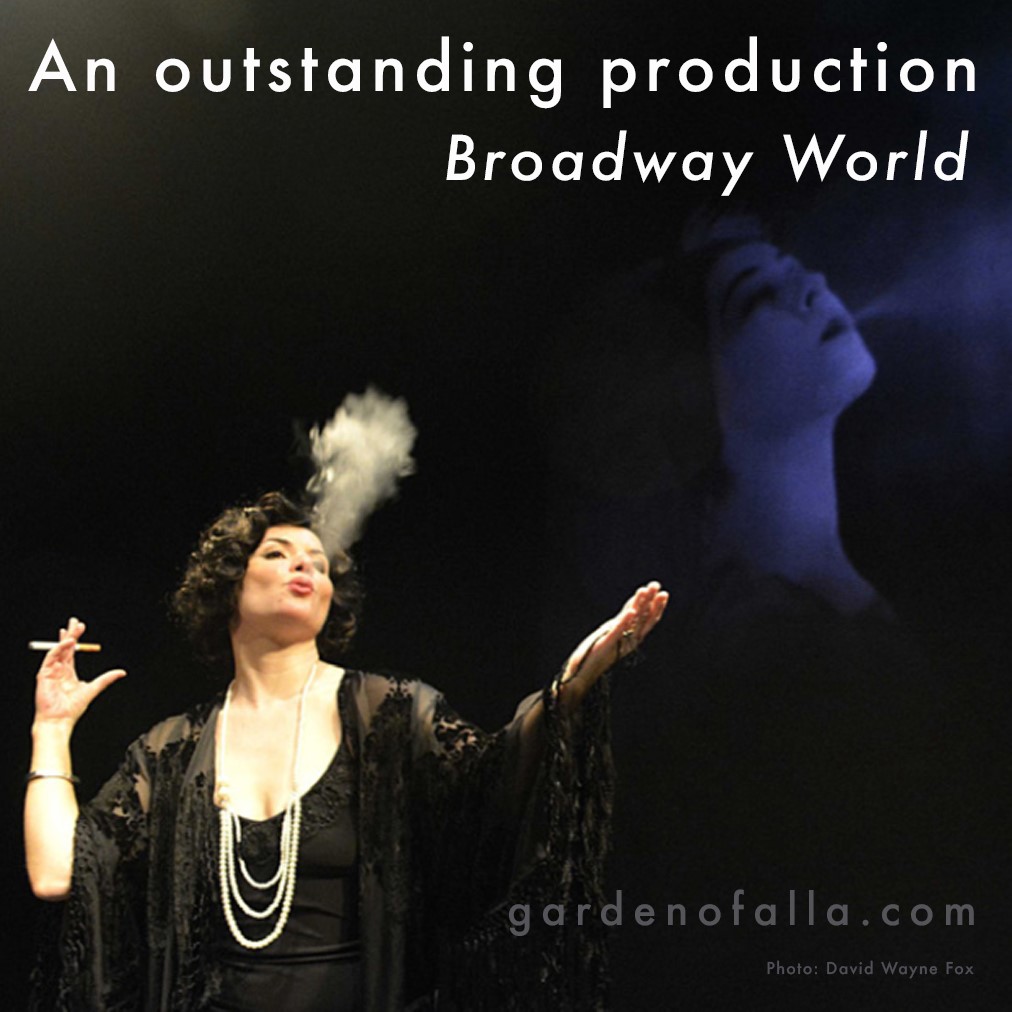
Romy Nordlinger is Alla Nazimova in ‘Garden of Alla’

I had seen Romy Nordlinger in her solo show PLACES! at 59E59th’s East of Edinburgh Festival and thought she was marvelous. Evolving her presentation before and after the pandemic, once again she is stepping out to bring to life the amazing Nazimova who lived and made her mark during the early twentieth century. With additional performances under the direction of Lorca Peress, Romy’s achieved new heights exploring the maverick woman who was a force in her time. Ahead of her 7:30 pm show on Thursday, October 21st at The Cutting Room on 44 E 32nd St. (arrive at 6:00 pm for the live jazz cocktail hour) I had the opportunity to interview Romy about this production which she has also written.

Who is Alla Nazimova, the person you are bringing to life in your show?
Perhaps the greatest star you’ve never heard of, one of the brightest lights on America’s stage and cinema screen was actor, director, writer and producer Alla Nazimova. Few women, or men, rose to such great heights – but now she languishes largely forgotten. A student of Stanislavski, she fled from Tsarist Russia and an abusive father, to the Lower East Side, where she founded a Yiddish theatre – her play The Chosen People put her on the map.
From humble beginnings to a meteoric rise to stardom, she became Broadway’s biggest star, and in 1910-1911 made the Shuberts $4 million dollars in sold out runs (that’s 400 million dollars today). Described by Dorothy Parker as “the greatest Hedda Gabler” she helped to bring acclaim to playwrights such as Eugene O’ Neill, Chekhov, Ibsen, and Strindberg. She even inspired Tennessee Williams to become a playwright. The Shuberts then named the Broadway theatre after her, The Nazimova Theatre on 119 W. 39th St. Growing weary of the increasing pressure to perform in second rate commercial plays, she left the Shuberts and The Nazimova Theatre was renamed the 39th Street Theatre. It was finally torn down in 1926.
Nazimova went on to become the highest paid silent movie star in Tinseltown commanding a five year $13,000 a week salary in 1916. The first female director and producer in Hollywood and pioneer of the first art film, her stunningly avant-garde Salome was too “Wilde” for 1926. Unapologetic about her bisexual decadence, she defied the moral and artistic codes of her time that eventually forced her into obscurity.
Her legendary Garden of Allah mansion in Hollywood was a haven of intellectual and sexual freedom with regulars such as F. Scott Fitzgerald, Hemmingway, Garbo, Dietrich, Valentino, Chaplin, Rachmaninov – basically anybody who was anybody. There, she declared her all women’s “sewing circle” in open defiance, proclaiming her strength when women were relegated to silence. In financial and critical ruin after Salome, the press and the studios destroyed her. Finally, she rented a small bungalow in the grounds of the mansion she had built on Sunset Boulevard.
Her bold, trailblazing artistic legacy is unprecedented, unrepeated and under the radar. Her iconoclastic story of freedom and nonconformity was silenced under the smoldering rubble of forgotten history.
How did you “hear” about Nazimova?
The brilliant theatre historian, author and founder of The Society for The Preservation of Theatrical History, Mari Lyn Henry was putting on a production of ‘Stage Struck’ about famous actresses from history. She asked me to pick an actress to research and write about and she suggested some wonderful actresses, but none really struck my fancy. They all were very blonde and talented, but I felt no relation to them – and then Mari Lyn said, “I’ve got it! Alla Nazimova!” I thought, “Who in the heck is that?”
I started reading about Nazimova. She is also Jewish and Belarusian as I am, and I felt an immediate kinship. I read her biography by Gavin Lambert which quotes from writings from her own journals. I was mesmerized by her humor, her story, and most of all, her zest for life! She was a survivor. This was a woman who lost everything, overcame the most horrible circumstances, became a star more meteoric than even Madonna and ended up a guest inside the mansion she used to own. She was a maverick ahead of her time, investing her money for the love of art/film and experimenting with new forms. Despite her losses, she kept her joie de vivre, having no regrets or bitterness. She remained full of wonder with the beauty of life.
THIS, I thought, THIS is a person who inspires me to risk, to dare to dream out loud and bring to life my dream. Most importantly, she inspired me to be myself in a material culture that is constantly trying to commoditize and sell, a society that values only your worth in money. This was a woman who valued herself and loved life to the fullest.

Tell us about previous performances of the show.
I have performed the show in another incarnation under the title PLACES! at Edinburgh Fringe, HERE Theater, Dixon Place, The Players Club and the studio center at The Kennedy Center. This is the production where, although we’ve always been received very well, we really tell her story to the best of all we have. It’s a multimedia show that is like a live silent movie with absolutely beautiful and evocative video design by Adam Burns, a brilliant musical score by Nick T. Moore and directed by the very talented Lorca Peress.

How has your performance and understanding of Nazimova evolved?
As life is wont to do, the more you experience the joys, the sorrows, all life’s disparities, the more you “understand” the heights and depths of the characters you play. After undergoing many upheavals in my own life, ups and downs in careers, triumphs and flops, deaths and loss, and then of course the pandemic, I feel an even stronger kinship to Nazimova’s survival instinct. I understand and am inspired by her amazing capacity for feeling – pain, joy, love, anything and everything but boredom. I channel her and she makes me feel able to cope. She helps make me a better person. This production is a great labor of love and a lot of work. It takes everything I have to get up on stage and perform a solo show – and to “bring” Nazimova there. It’s all worth it, every moment, for both the audience, and myself. It is a cathartic experience, and now more than ever, it’s a valentine to theatre.

What would you like the audience to understand about Nazimova that your performance enhances?
I’d like the audience to realize that we are standing on the shoulders of giants. That the LGBTQ movement started long ago with brave people like Nazimova who stood up and demanded she be herself, but alone and without a Twitter account, and that we can all dare to dream – and fail – and rise again – and fail again. It’s all the same. It’s the journey that’s important. To anyone whose felt like the underdog, I want them to feel less alone, and to feel that they, too, can use their voice (whether out loud or in writing or however they express themselves) to be an instrument, an extension of themselves. Their life matters. Their differences are beautiful.
Romy Nordlinger will be channeling Alla Nazimova in her exceptional show at The Cutting Room 7:30 pm, Thursday, Oct 21. Arrive at 6:00 pm for the live jazz cocktail hour. The Cutting Room address is 44 E 32nd St., NY, NY.
The interview has been gently edited.
NYTW’S ‘Sanctuary City’ at the Lucille Lortel Theatre

One of the most fascinating elements of the superb Martyna Majok’s Sanctuary City, directed by Rebecca Frecknall, is the symbolic stylization conveyed by the script. Majok’s script is a powerhouse. It is rhythmic, poetic and a rap of eternal, brief moments of brilliance in time. Majok’s layered work elucidates how relationships begin, not with long conversational pieces, but with connecting, truncated slips of thought. She suggests that relationships evolve through the power of memory and imagination, the interactions between “B” (the adorable and heartfelt Jasal Chase-Owens), and the emotionally wired “G” (the wonderful Sharlene Cruz,). These prove to be fatal, fairy wisps in the first part of the production.
Frecknall’s staging on a bare, raised platform, sans props and any theatrical spectacle, requires that the audience focus on Majok’s words which, abstracted, are short, repetitive bursts. For emphasis and effect, Frecknall follows the brief, seven word or less sentences with brilliant strobe light flashes, denoting flashbacks and changes of scene, situation and time. The intriguing lighting and set design are by Tom Scutt and Isabella Byrd with Mikaal Sulaiman’s sound design.

The effect, revealing the stress and anxiety of the characters, recalls the dislocation and alienation that characters experience in plays like Beckett’s Waiting for Godot. Such stylized dialogue brings to mind the mission of Theatre of the Absurdists, who highlighted the incapacity of language to convey emotion and heart. When human beings experience trauma, internal isolation and nihilism to a devastating extent, verbalization seems impossible.
Thus, as teenagers “B” and “G” move and re-position themselves onstage. As the portray these characters Chase-Owens and Cruz, offer fragments of memory recalling the past with intensity. Engaged, we follow intently, discovering that they are illegal aliens. “B’s” mom is fed up and intends to return to a country that her son was too young to know. “G’s” mom is oppressed and abused by the partner she lives with who also wallops “G” for good measure when she gets in the way. “G” and “B,” who are archetypes of dreamers everywhere, have parents who are single women. Hampered by fear of reprisal and intimidated by threats of deportation, the mothers are unable to make comfortable lives for their children. They struggle to do their best, but instead “B” and “G” are brought into a cold, indecent, alien world of devastation without citizenship.

We watch in the dim light and lightning-like flashes how Cruz’s “G” often climbs up the fire escape seeking “sanctuary” and help from Chase-Owens “B.” The abuse, arguments and chaos at her apartment create phenomenal stress; she must leave. “B” welcomes her and eventually she sleeps in his bed and they have sex to make a connection so they feel less alone. Both confide in each other, encourage each other at school and “dream” of better times which eventually do happen for “G.” The superb actors create a relationship dynamic that is believable and vital. Interested and invested in their prodigiously skilled portrayals, we stay with them throughout the play.
The setting is New Jersey in 2006, in a country which ill uses its immigrants because political parties have exploited the issue of citizenship as a way to consolidate power. For “B” who fears getting caught and being deported, the emotional terrors are like a war of attrition that force him and his mother to live an impoverished pressure-cooker existence. They wait daily for the explosion to occur, of their being caught and deported.

We discover through the light flashes and their circular movements on the platform, that “B” and “G” trace the chronology of their relationship in staccato bursts of memory. These lead to an apotheosis at the play’s conclusion. We empathize with “B’s” concern for his mother, who suffers abuse and bullying from her employer. She obeys his every word, and overlooks his skimping her pay. His disrespect is better than returning to the homeland, until she reaches a point of no return and decides it is enough.
Thus, Majok reminds us continually by examining the plight of “G’s” and “B’s” situation, that immigrant women are often sexually abused and beaten because they have no leverage. As in the case of “G’s” mother, orders of protection are useless because the partner can call INS (currently ICE), and have them deported, if they don’t comply sexually. Indeed, once the partner exhausts the mother, the implication is that he will come for “G.” At times “G” shows up at “B’s” bleeding and bruised by his wanton brutality.
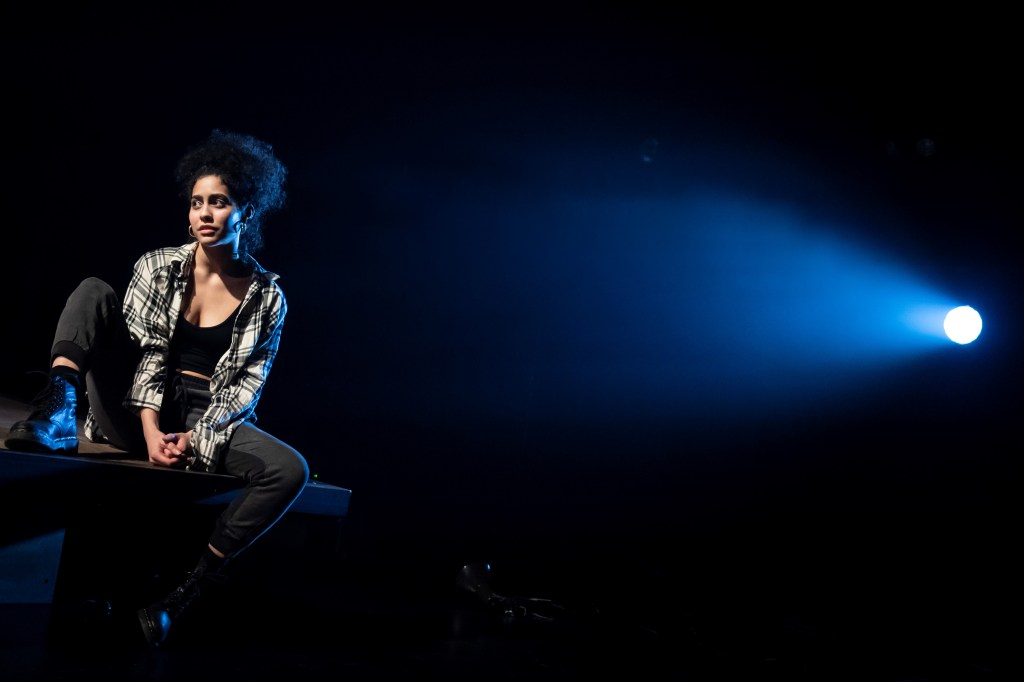
However, hope does come. And in the same stylized format of language, “G” tells “B” that her mother got her papers and miraculously, “G” is a citizen. That moment of G’s” joy causes “B’s” searing pain. While “G” no longer fears discovery and looks forward to their moving away from her mom’s monstrous partner, we note “B’s” sadness and envy. He is stuck. His mother is going back to the “homeland” and his confidante and ersatz lover has “made it” to a more superior position in the immigrant pecking order, while he must wallow in her wake, facing the shadows of fear and oppression alone.
It is at this juncture that a turning point occurs. The guilt “G” feels about her position in comparison to “B’s” situation wears on her. She forms the idea that as he has given her sanctuary, perhaps she can do the same for him. Her method is to select the way to citizenship immigrants have employed for decades. After all, she has feelings for him and is willing to risk her life offering to marry him, though, if discovered, she possibly would lose her own citizenship, be fined and jailed after he is deported.
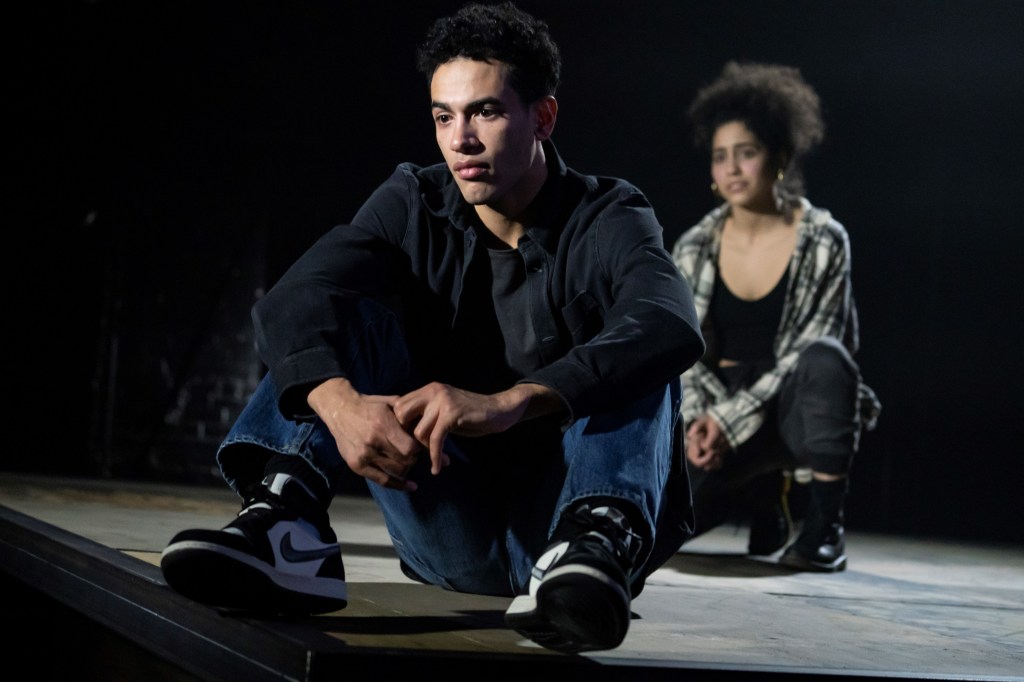
Majok’s script sags when the plans evolve for “G” to help “B.” Perhaps due to the continued flashes of light and whirl-y-gig staging, the sameness becomes tedious. However, there is the wonderful and welcome respite of their dancing and going to the prom with additional colorful lighting. The diversion from the stasis of the repetitive stagnant (the symbolism is apparent…no need to bludgeon the audience), might have come sooner.
And then comes the transformation of a three-year hiatus which Frecknall announces with sound effects and darkness both of which are symbolically ominous. Subsequently, Henry (the excellent Austin Smith) comes onto the threshold of “B’s” life to provide safety and emotional sustenance as “G” once had, until she returns, and the three clash. In this second sequence of events, all is light with no obfuscation. “B” and “G” no longer maneuver around each other. Their dynamic is straightforward. Now, it is “G” who must sink or swim in her emotional guilt while “B” makes a decision about citizenship and sacrificing love.
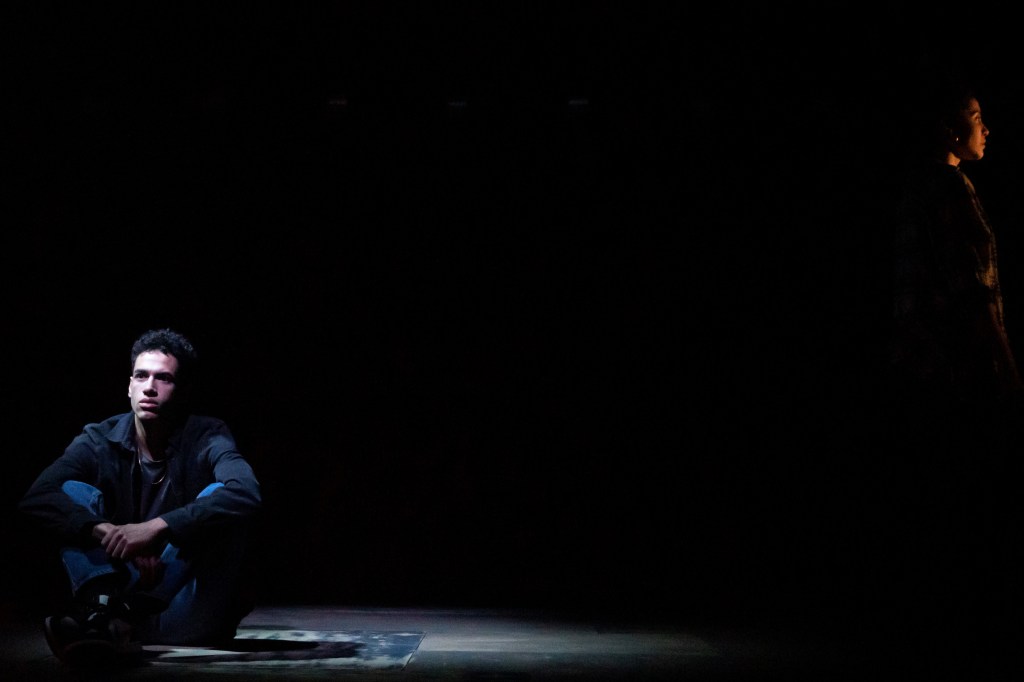
What happened to “G” and “B’s” compact, their relationship, their closeness? Majok presents the stark themes. Immigrants and illegal aliens are compelled by political forces to behave in ways counter to their altruistic good will and sense of decency. Of course, this doesn’t just pertain to those trying for citizenship. It doubly applies to citizens who have become mentally and emotionally inert and are inured to the sensitivities of others because they are weighted down by materialism and consumerism. In other words, they having forgotten “where they came from.” Ironically, the country then, no longer becomes a sanctuary, but a prison that has sucked their life force dry.
These themes are only a few of those that Majok covers in this play of antitheses: of connection and isolation, of compromise and extremism, of fear and hope, of dislocation and community, of alienation and unity.
Through various administrations, we’ve closed our borders following the need of politicians to use immigration and immigrants as playthings to boogeymen citizens and grow their political power base. Sanctuary City shines a unique light on the PTSD that arises for those who want a better life and are willing to risk their substance to dream big and/or help others who are lost in limbo between citizenship and deportation; those who wait for the light of deliverance. Majok’s writing is poetic and austere with the rhythms of immigrants’ and aliens’ voices and silences.
Kudos to the technical team that melded the elements lighting, sound, stage design, etc., to reflect the themes and sync them with the beautiful movement, and symbolism staged and directed by Frecknall. Her acute talents exceptional and show insight, precision and intuition.. If you can get down to Lucille Lortel Theatre to see Sanctuary City before it closes this weekend. you will be happy you did. For tickets and times go to their website. https://www.nytw.org/show/sanctuary-city/
‘Chicken & Biscuits’: Delicious Farcical Fare @ Circle in the Square

In this current time of COVID when our country faces daily crises of social disunity, dangerous political extremism, economic injustice and abdication of sound public health practices by craven Republican governors, Chicken & Biscuits written by Douglas Lyons, directed by Zhailon Levingston appears to lack currency on superficial inspection. Benign family squabbles, sibling rivalry, death and succession, a same-sex relationship, such subject matter at the heart of the play is quaint fare for a comedic entertainment that offends no one.
Except Chicken & Biscuits neither lacks currency nor is a quaint, “sitcom,” family comedy. Its levity and humor smacks of farce and satire with dead-on threads of truthfulness. However, if one is dreaming, much will slip past in the twinkling of an eye in this play about black culture, family and the foundations of faith that undergird the best hope for the black American experience in a racist culture that hovers invisibly and surfaces surreptitiously in Lyons’ one-liners.

The occasion is the funeral for the father of the Mabry family. He was the pastor of a Connecticut Pentecostal-type (there is a bit of dancing in the spirit) black church. Succeeding him in the position is Pastor Reginald (played with humor and oratorical fervor by Norm Lewis). The imposing, ambitious, dominant matriarch Baneatta (the funny Cleo King) whose resume would make any ignorant racist’s head spin, stands by his side in the church family.
Gathering with their parents are daughter and son: the accomplished Simone (Alana Raquel Bowers) and actor Kenny (Devere Rogers). Rounding out the family “going home” celebration are Baneatta’s hyper vivacious sister Beverly (the gloriously out there Ebony Marshall-Oliver) and Beverly’s enlightened, wise-cracking DJ daughter La ‘Trice Franklin (the buoyant Aigner Mizzelle). To spice up the explosive, sometimes irreverent proceedings are Kenny’s Jewish lover, Logan Leibowitz (the LOL Michael Urie) and mystery guest Brianna (sweet NaTasha Yvette Williams).

Before the guests arrive Reginald counsels Baneatta to relax and not become embroiled by family machinations. We note Baneatta’s stresses when she prays to God for patience in a humorous riff about her sister. During this preamble to the funeral service, others step in and out of the vestibule. They share their hysterical misgivings and woes about the family interactions to come.

The staging at the Circle in the Square is finely employed; the flexible set design by Lawrence E. Moten III and clever rearrangement of furniture and props serve as a church basement, sanctuary, nave and more. The modern stained glass windows and wood paneling upstage center, flanked by paintings of a black Jesus and crosses on both sides, serve to create the atmosphere of a thriving church. The underlying symbolism is superb as is the assertion of freedom from the typical forms of bondage Christianity.

Each family member, an ironic stereotype of themselves, identifies the complications that will arise as emotional storm clouds threaten on the horizon of the funeral and aftermath. Kenny attempts to soothe Logan who has been disrespected and largely ignored by Baneatta and Simone who cannot brook Kenny’s being gay, nor his attraction to a Jewish white man. When we see them in action with Logan, we note their austerity of warmth with mincing words and behaviors. As they watch him founder in blackland Christendom with two strikes against him, his whiteness and his gay Jewishness, he crumples instead of standing to and giving it back for fear of offense. These scenes are just hysterical and we see beyond to the strength and character of the individuals and their weaknesses.

As Logan, Urie’s ironic, humorous complaints to Kenny when they are alone, set up the tropes and jokes which follow as we watch how Baneatta and Simone treat him like a rare breed of exotic who must give obeisance. Hysterically, Kenny breezily abandons Logan to their clutches: it’s sink or swim time for Logan. Urie plays this to the hilt authentically, riotously with partners, King and Alana Raquel Bowers as the straight women who “bring it.” Watching this is both funny and upsetting. The women are intentionally clever. Their response is anything but Christian, loving and warm, but who is playing whom? We are reminded of the hypocrisy of evangelical churches to the LGBT community who engage in political Republican actions. Though this is a church in Connecticut and its members are most probably Democrats, the similar odor is clear. We wonder, can the situation evolve for the better? Can they achieve common ground?
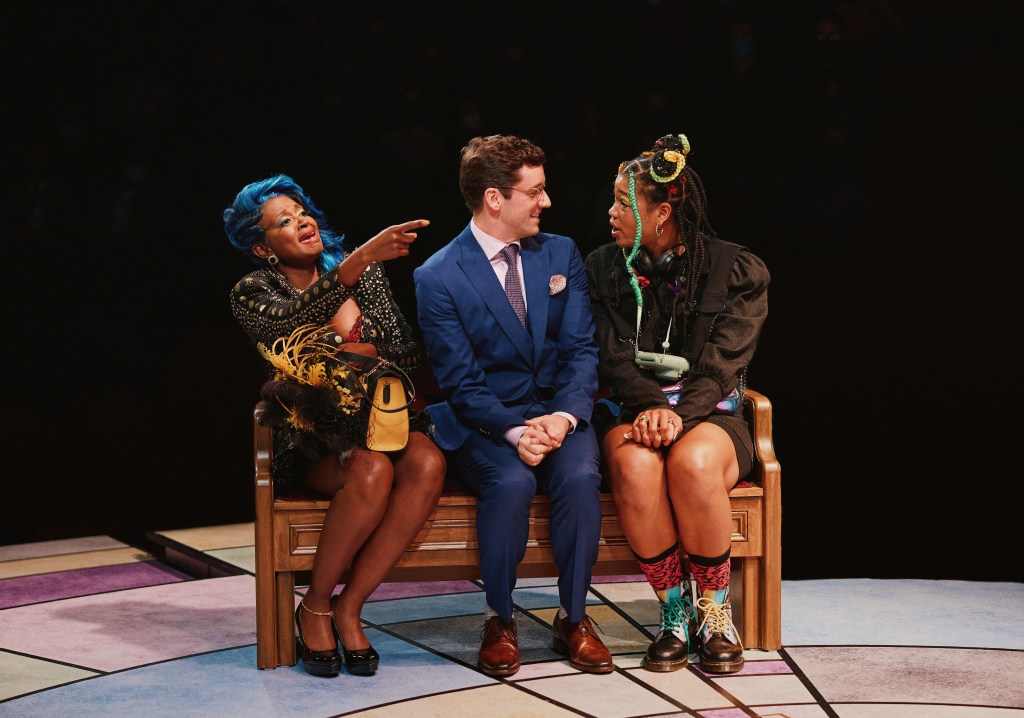
The only one who accepts Logan with Christ’s unconditional love and hugs is Pastor Reginald. And Logan longingly remembers that Reginald’s Dad (who we discover to be a waggish, wild pastor) showed the same love. For Logan it is no small comfort, but apparently this open behavior was typical of the deceased pastor’s liberalism and Christian equanimity.
Obvious is the clash between lifestyles and personalities of the sisters: the educated achievement-oriented Baneatta, and the wild, flashily dressed, divorced and “out-there” Beverly and her DJ, hip, savvy, “ready for her social media celebrity” La ‘Trice. Mother and daughter counsel each other to “shut it,” projecting widely but not seeing their own faults and outrageousness to care to change. They do it because they are funny and they laugh at themselves. Do they have anything better to do being who they are? Marshall-Oliver and Mizzelle make for a great mother-daughter team.
Truly, the women dominate this world as the service, the sermon and eulogies get underway. Their behaviors and actions are at various proportions of farcical and funny as are all these typical, atypically drawn individuals.

Nevertheless, underlying the laughter and stealthy ridicule of each character being themselves, we get the importance of family and faith community. Despite the miry clay conflicts that emerge as part of the whirlwind of events that race through the play to the end revelation, these individuals have each other’s backs. And entry into the family, as Logan discovers, is not easily won. However, when it’s won, it’s forever.
The service is down-home (different from evangelical) with the hope of less hypocrisy via a more spiritual relationship with God. Thus, when the Pastor preaches in the spirit and dances a bit in the spirit, the audience even takes up the “Amens” in concordance. Indeed, the hope of a better way flows from Pastor Reginald’s fountain of faith. And by the conclusion of Chicken & Biscuits, a better way has been found in the dynamic of each of the family relationships, catalyzed by a mystery guest that Baneatta feared and kept secret for most of their lives.
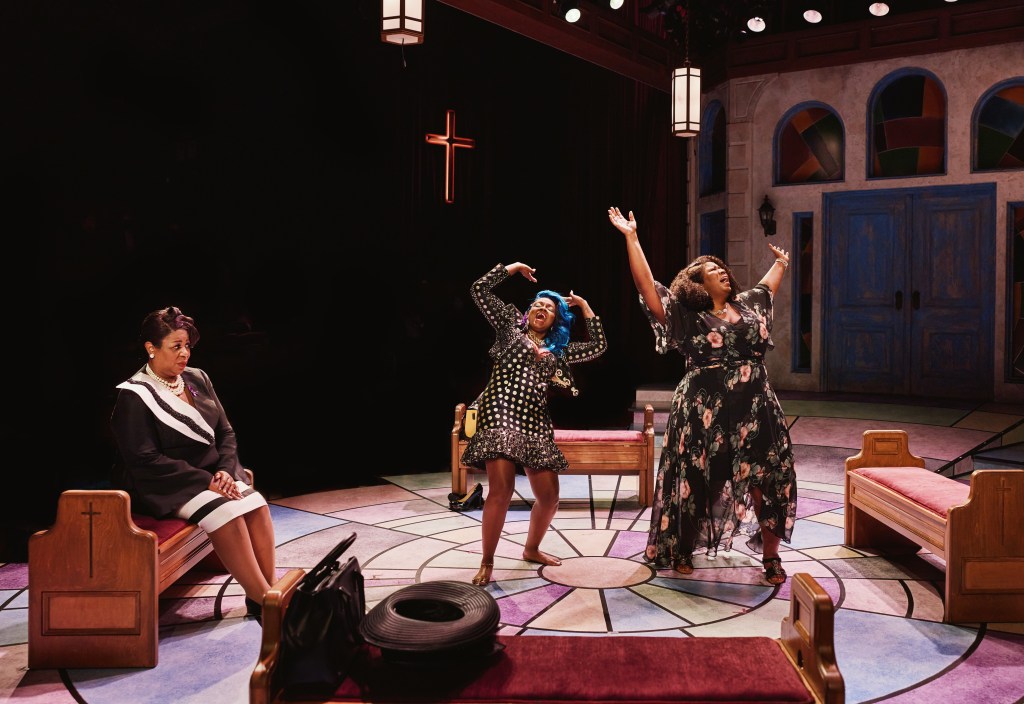
Chicken & Biscuits serves on many levels. For those who enjoy a riotous comedy/farce with characters that tickle one’s funny bone continually, this is the perfect play. For those who enjoy being entertained, yet also enjoy the illumination that comes when thematic truths about life and people are cleverly revealed without preachy presentments, then this play surely delivers. For those who value the unity of family that never devolves to hatred, division, anger and bitter insult and rancor, the play is a portrait of a black family which resonates through the medium of satire and good will.
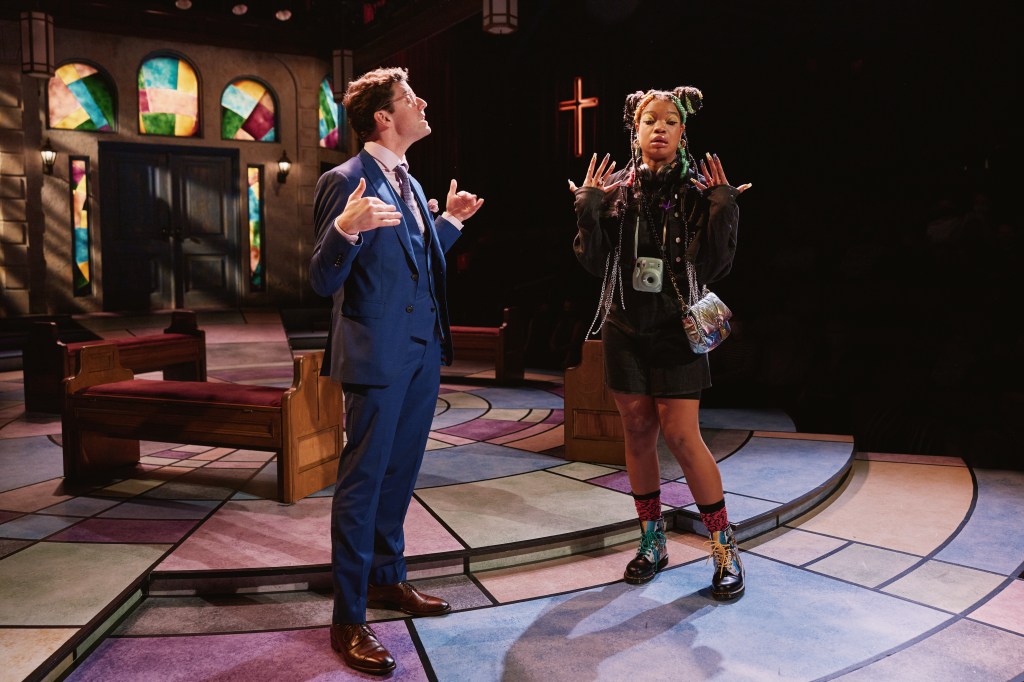
Kudos to Nikiya Mathis for her hair/wig and makeup designs: I loved her cool hair design for La ‘Trice, and Baneatta’s sober, contrasting hair and hat, to Beverly’s unsanctimonious hair and feathery headpiece. Simone’s hair design was just luscious. And additional kudos to Dede Ayite’s great, character revealing costume designs, Adam Honoré’s beautiful lighting design and Twi McCallum’s sound design. Their assistance was superb in making this a wonderful romp with circumspection if you divine it.
You need to see Chicken & Biscuits for the cast’s excellent ensemble work, Levingston’s direction and Lyons’ uproarious writing. In all its satiric humor about family “types,” the production took me away from divisive political rancor and stereotypes that follow. Chicken & Biscuits is a welcome joy. For tickets and times go to their website. https://chickenandbiscuitsbway.com/
‘SIX the Musical’ is Glorious Fun!

It took over 500 years for the six wives of Henry VIII to finally remix history and set the record straight, which they do nightly on Broadway in SIX the Musical at the Brooks Atkinson. What a phenomenal fun time to join these ex-wives in their exclusive club as they dish up the failed monarch, who is driven to upend the Catholic Church, lie, steal and kill in the name of gaining a male heir. We’ve had enough mansplaining about Henry’s actions. It’s time for the ladies!

Gloriously, these ex-wives take back their queenly power, rudely wrenched from them by Henry’s cruel machinations: divorce, decapitation, expulsion. And in sisterly collaboration they raise their voices which becomes a chorus of jubilation and foot stomping exuberance to vacate the patriarchal, historical perspective and lift up their identities, apart from the monarch, who never got the best of them. With their audience fandom singing along, whooping and applauding rhythmically during the songs and especially in the final song “Six,” it is enough to rock Henry VIII in his moldering grave in St. George’s Chapel, Windsor Castle. Can you hear them, Henry?

Toby Marlow and Lucy Moss in an inspirational fit of glory have come up with one of the most joyous and meaningful concepts that wraps history in a modern, insightful, revealing perspective, as told by women who are great in their own right. And in the retelling of their stories, we realize because of who these women were/are, Henry VIII is one of the most written about monarchs in British history and media (TV, plays, movies). The women are the central focus in SIX the Musical as they should be. This marvelous production is mind-blowing, refreshing, profound.
Why do Marlow and Moss, and Moss and Jamie Armitage, who both directed succeed in this show first presented at the Edinburgh Fringe in 2017? They enjoin historical facts with hot rhymes and rhythms and rock/pop concert fever topped off with a dynamic, explosive, vibrant, “It’s showtime” cast and creatives.

The design, look and feel of this Renaissance of light and sound knocks the audience’s enjoyment into the heavens. All design elements cohere with the theme, showcasing these women as stars. The women’s story deserves this futuristic retelling. Hence the sparkles and spangles and beads and sci-fi metallic-looking brilliance, thanks to Gabriella Slade’s out-of-this-world costume design which makes sense. Indeed, with Emma Bailey’s sensational set design and Tim Deiling’s equally eye-popping lighting design, the exuberant grandeur is fanciful, magical and funny. It has all the smattering of the Renaissance royal court in a mash up of pop/rock elegance.
Importantly, we’ve come to hear each of the women relate their story, especially the ones we are least familiar with. Initially, they tell us this is a competition of songs and virtuoso singing. Who is the most miserably treated by the cruel Henry? And we get to vote our favorable, miserable Queen to aggrandize her fame above the others, perhaps to make up for Henry’s malevolence.

They sing in order of their marriages after they introduce the funny and rousing fact that they are “Ex-Wives.” However, the tone is all about being “out there!” And we realize from their sassiness and boldness, being an ex-wife of a monarch is something to take pride in.
Catherine of Aragon, the dynamic Adrianna Hicks dishes on Henry in “No Way” in the Queenspiration style of Beyoncé and Shakira. The feisty Andrea Macasaet as Anne Boleyn insists she lost her head in the hysterical “Don’t Lose Ur Head.” Thus, no one can “top” Boleyn she quips; she feels she’s already won the prize as the most miserable of the ex-wife sufferers. Many jokes follow her separation from her head as the running-joke that never tires. Her Queenspiration style follows Lily Allen and Avril Lavigne, but she is all Andrea Macasaet, a spit-fire, not really standing in anyone else’s shoes.
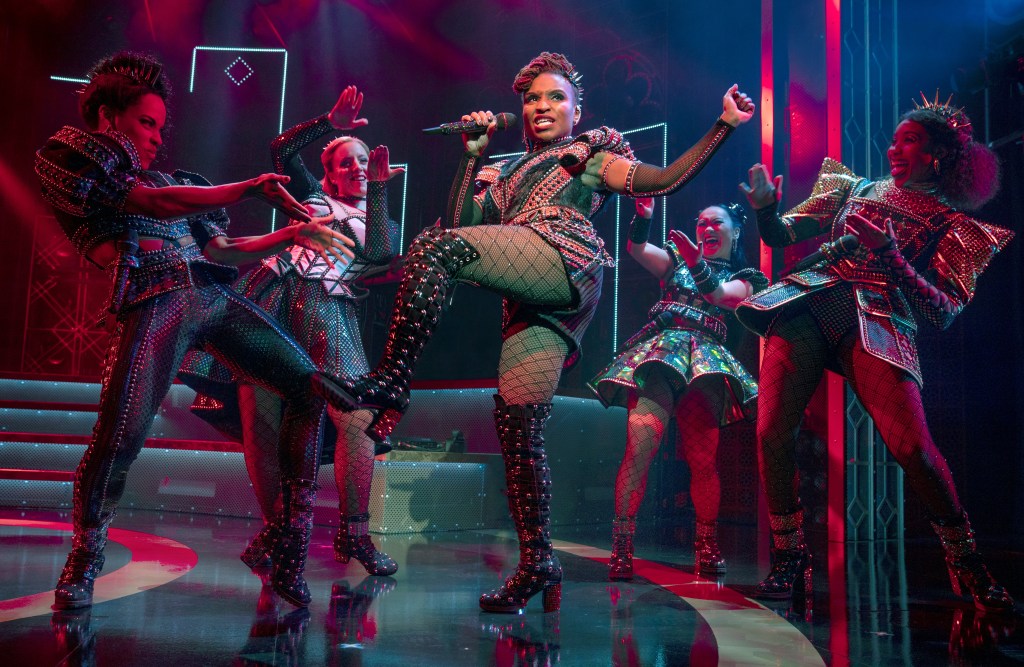
At this juncture, Marlow and Moss create a pause in the rollicking, pop/rock song and hip-hop movement ballyhoo. It is an appropriate change up. After all, history wrapped in music and shining light is never hackneyed or the same. Thus, Jane Seymour (the soulful Abby Mueller), appears not to be disabused by Henry like the others. She’s the one “he truly loved.” Obviously, she can’t parade herself as the most victimized. So she sings a beautiful ballad “Heart of Stone” of Henry’s love and her loyalty to him, but so soon lost in childbirth. Abby Mueller’s song style is Adele and Sia.
One of the most LOL and Social Media twitting of the queens is Brittney Mack’s Anna of Cleves, who must take back her power after all the queens mock her in the song “Haus of Holbein.” Henry famously went to Germany for this wife, fell in love with her portrait in oil and proposed via his officials. When she showed up in person, Henry rejected her outright as unattractive.

In “Get Down” are some of the funniest lyrics as Anna of Cleves reveals her great good fortune sitting on the throne in her castle living in luxury without having to deal with the bruiser Henry. “You said I tricked ya, cause I didn’t look like my profile picture,” hearkens to all the dating sites and social media sites where folks don’t put up their most recent pictures. In the style of Nicki Minaj and Rihanna, the sensational Brittney Mack has a blast stomping Henry.
Perhaps the most memorable song and the most true to life is what the beheaded Katherine Howard (Courtney Mack was terrific when I saw it October 6th), sings, “All You Wanna Do.” Kathrine Howard had many affairs and sings of the men who importune her sexually, then leave her “high and dry.” Of course, Henry, finding out about her former promiscuity, creates an act to punish her for her sexual experience and knowledge. “It’s off with her head, too!” The double standard here goes beyond the pale with Henry sewing his wild oats in every village and town in his kingdom. The song meaning in the style of Ariana Grande and Brittney Spears sung by Mack is powerful and beautiful.

Catherine Parr (the brassy Anna Uzele), brings on the 4th Wave feminist revelation. Why should there be a contest, a male construct of oppression to divide and conquer? Catherine Parr singing “I don’t Need Your Love,’ is the modern woman who can make it on her own. Indeed, the first woman in England to publish books in her own name, Catherine Parr rocks. Also, she outlived Henry and his penchant to divorce and behead. Anna Uzele sings in the style of Alicia Keys and Emeli Sandé.
By the concluding song, “Six,” even men stand up, applaud and clap to the finale. The cast and the wonderful Ladies in Waiting all girl band (Julia Schade, Michelle Osbourne, Kimi Hayes, Elena Bonomo), help to explode male presumptions and make sure the message is clear: patriarchy has no place in a kinder, gentler, decent society and culture where equanimity is a key goal.
This production and its creatives can’t be praised enough. See it twice. For tickets and times go to https://sixonbroadway.com/
‘The French Dispatch’ a 59th New York Film Festival Review
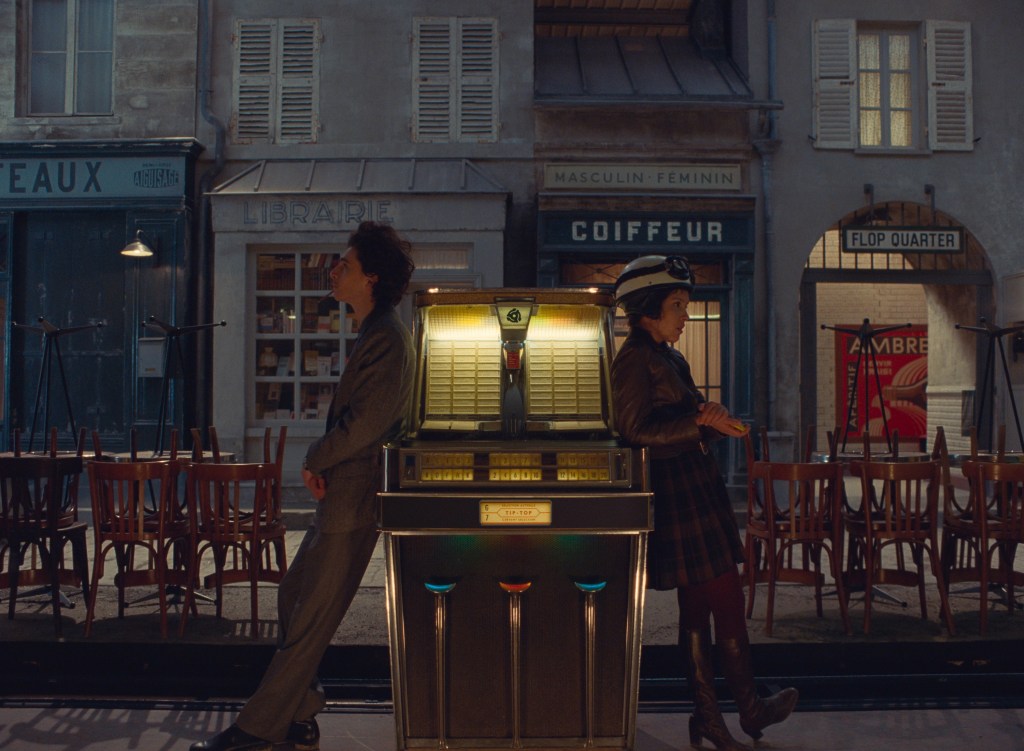
Fans of the inimitable Wes Anderson’s droll wit and pixie capriciousness will enjoy The French Dispatch, though it diverges from his other films. Truly, this amazing work spins off Craven’s usual stylistic nuances into the realm of the cinematic magazine. Anderson directed and wrote the screenplay with story help from Jason Schwartzman and Roman Coppola.
Importantly, The French Dispatch pays homage to the magazine he riffs, The New Yorker and the renowned writers from the past (James Baldwin) receive more than a nod. Chock full of references, Craven employs his choice mediums (animated car chase, cartoons, cut out color sets, dead on camera framing) and adds the magazine format. This extraordinary film which engrosses, ridicules, satirizes, mourns, praises, and twits writers past and present screens at the 2021 NYFF until 10 October.
Wryly narrated by Anjelica Huston, the film opens by defining “The French Dispatch” as an eponymous expatriate journal published on behalf of the Liberty, Kansas Evening Sun. Ironically, Anderson has named the journal’s place of publication as the fictional 20th century French city, Ennui-sur-Blasé. (Ennui=the city, Blasé=the river) Roughly, Ennui-sur-Blasé translates as boredom of the worldly-wise apathetic, a superb irony.
Thus, “The French Dispatch” attempts to make middle-America’s readers acculturated cosmopolitans. By way of explaining the periodical’s cleverness, Anderson’s film brings to life a collection of stories from the final print issue. Indeed, this lively anthology serves as an encomium to the death of its editor-in-chief, the big “gun” Arthur Howitzer, Jr (Bill Murray). Thematically, while highlighting the time in France (1950s-1970s) Craven weaves dark ironies that reference the current times.
Using waggish and epigrammatic descriptions, the narrator presents the quirky, peculiar press corps, writers of the wildly over the top stories activated by Anderson. After the director introduces us to the meticulous Howitzer Jr. and others (look for the writer diagramming sentences on a blackboard) we meet cyclist Herbsaint Sazerac (Owen Wilson). Craven uses opportunities for humor through double entendre, with names that have nuanced meanings. For example, “Sazerac” is a beloved bourbon or rye cocktail of New Orleanians.
As Sazerac cycles us via a travelogue through Ennui-sur-Blasé, with shots from the past (black and white) and future (color) we note its dinginess (terraced rat dwellings) poverty, underworld pimps and prostitutes and other charms. In other words, the city reeks of humanity which remains forever unchanging. Of course, “The French Dispatch” reports on stories that identify the weirdest and most comically contradictory of the denizens of humanity.
First, Huston introduces a story, assisted with a lecture at a symposium given by J.K.L. Berensen (Tilda Swinton) cultural reporter of the “The French Dispatch” arts section. Berensen relates an amazing tale. One of the foremost contributors to modern art remains hitherto for unknown: psychotic criminal artist Moses Rosenthaler (Benicio del Toro). On the brink of suicide, Moses finds his answer to life and love via his sadistic prison guard lover Léa Seydoux
With the unpredictable guard as his muse, Moses immortalizes her in abstracts he paints on the concrete walls of the prison. Like Banksy, Moses prevents his greedy, exploitive art dealer (Adrien Brody) from easily trafficking his art by painting his frescoes on a building making them unremovable. During an investors’ showing in the prison, the prisoners riot to muscle in on Moses’ elite visitors and hold them hostage. Moses’s violent nature, which put him in prison serves him well. With brute force Moses destroys the rioters stopping their attack of the dealer and wealthy purchaser Upshur Clampette (Lois Smith). With his investors saved, Moses receives parole. He has provided his unique contribution to the Clampette Museum, representing abstract fine art at its incredibly ironic, violent best.
Next in the collection, the story of student revolutionaries of 1968 compels its reporter Lucinda Krementz (Frances McDormand) to have an “objective” affair with star revolutionary Zeffirelli (Timothée Chalamet). Helping to straighten out his befuddled theories and justifications to revise his “manifesto,” Krementz as the “older woman,” influences Zeffrielli. Eventually, he succumbs to his nemesis, the beautiful counterrevolutionary Juliette (Lyna Khoudri) and they stay together until tragedy strikes. Nevertheless, the created manifesto lives on as does Krementz’ reportage, though the revolution, the revolutionaries and their Utopian ideals fade from memory into a fever dream of unreality.
Finally, Huston sets up the story of the dinner with a police commissioner (Mathieu Amalric) and his personal chef Lieutenant Nescafier (Steven Park). Gourmand writer Roebuck Wright (Jeffrey Wright) intends to report on the delectable cuisine of the famous Nescafier. However, complications arise when the commissioner, a veritable Jacques Clouseau, has the tables turned on him and criminals kidnap his son. Finally, locating the son, Chef Nescafier prepares a snack which poisons all but the son, the chef and the chauffeur (Ed Norton). The ensuing car chase (a humorous Craven animation) ends with a crash and the son rejoins his father.
At this juncture Howitzer Jr. chides Wright for not describing Nescafier’s cuisine. Wright avers. And thus occurs an incredible moment that alludes to the writing of James Baldwin. Succinctly, Wright describes that he cut out the chef’s words because as an expatriate, the chef, another expatriate made him sad. When Wright repeats Nescafier’s words that he cut, Howitzer Jr. notes with passion that the comment must not be excluded. He insists the Chef’s extraordinary, philosophical observation about the poison in the dish is the only valuable part of the Wright’s work.
Profoundly, in the flash of a moment, we understand why Howitzer Jr. left for this strange outpost in Ennui-sur-Blasé. Fulfilling his goals, he configured a magazine with a global readership that published the profound, the unique, the revelatory. And it included those bits and pieces of life whose revelations edified and informed with a keen, accurate eye. Amazingly, in a brief span of a few moments, Anderson says it all about writing, writers and their editors, finding the elusive and bringing it to our consciousness. Of course, this question Anderson asks silently with The French Dispatch. What happens when censorship, and an absence of prescience, wisdom and freedom runs the presses, as they do currently in the U.S.?
The French Dispatch bears seeing a few times to catch its luxuriant richness. Not only does Anderson employ fanciful images in contradictions journalistically, the resonance of language and word choice is satiric, sardonic and powerful. So is the mosh of well-thought out cinematography and scenic design. For tickets and times at the 2021 New York Film Festival website. https://www.filmlinc.org/nyff2021/films/the-french-dispatch/
 CAROLE DI TOSTI