23rd New York Jewish Film Festival, ‘The Jewish Cardinal.’ NY Premiere

Laurent Lucas as Aaron Jean-Marie Lustiger in The Jewish Cardinal, directed by Ilan Duran Cohen at the 23rd New York Jewish Film Festival
The New York Premiere of The Jewish Cardinal (Le Metis de Dieu) screened three times at the 23rd New York Jewish Film Festival. As word of mouth spread, the second and third screenings were sold out and the wait list line on the last screening day was very long. Praise for the film and the director’s live Q & A sessions escalated the audience turn out. At the third screening, the film received hearty applause which demonstrated that it was one of the festival’s fan favorites.
Directed by Ilan Duran Cohen, who also co-wrote the screenplay with Chantal Derudder, the film is a fascinating account of Archbishop of Paris, Jean-Marie Lustiger (1981-2005). Lustiger was born Aaron Lustiger to Ashkenazi Jewish parents living in France. Lustiger at 13 converted to Catholicism over his father’s protests and attempts to rescind his baptism. He rose in the hierarchy of the Catholic Church to become one of its most outspoken and prominent Cardinals, helping Pope John Paul II tackle vital issues of the day politically and globally. The film focuses on the period from Lustiger’s appointment as the Bishop of Orleans until he receives his appointment as Cardinal, The Archbishop of Paris, a position he held until he retired in 2005.
The filmmaker is careful with the memory of Jean-Marie Lustiger, attempting to round what is know of him, a man whose fascinating and surprising journey in life can only benefit our cultural understanding. A testament of Cohen’s brilliant care is evidenced by the enthusiasm with which the film was received at this festival, a combined effort by the Jewish Museum and The Film Society of Lincoln Center. The hope is that Cohen’s message, which is the same as Lustiger’s, will be shouted far and wide.

The Jewish Cardinal, directed by Ilan Duran Cohen.
In his introduction to the screening, Cohen simply stated that the film is “about reconciliation.” Indeed, in Lustiger (wonderfully rendered by Laurent Lucas), there is the reconciliation of the two faiths, Judaism and Christianity, and there is revealed the hoped for reconciliation between himself and his father, who were in conflict. Charles Lustiger was devastated by Lustiger’s choice to convert. Nevertheless, Charles was very proud of his son’s independence, his integrity and his perseverance in attempting to show love and forgiveness without compromising his birthright as a Jew. Lustiger makes it clear to everyone that he has converted to Catholicism, but he will never renounce his Judaism. He is a Jew and he is a Catholic. It is his choice and the film intimates why it makes sense for him. During the film we learn that Lustiger is practicing and strengthening his Hebrew and attempting to understand Christianity’s growth and development out of Judaism with Christ as the lynchpin joining both faiths. The film is brilliant in revealing Lustiger’s struggle for reconciliation despite opposition and denunciations from Jews and Catholics. Cohen shows us Lustiger’s humanity and reveals the instances when either his temper or his cowardice overcame him and he nearly faltered in his drive toward uplifting Judaism and Christianity with love, understanding and integrity.

Laurent Lucas as Jean-Marie Lustiger in The Jewish Cardinal
Rather than reveal Lustiger’s life chronology, Cohen elects to begin when he was vicar of Sainte-Jeanne-de-Chantal (1969-1979) in the wealthy 16th arrondissement of Paris with his parochial vicar Andre Vingt-Rois who later succeeded him as Archbishop of Paris when Lustiger retired. He is beloved of his parishioners who affectionately refer to him as “the bulldozer” because of his temper and at times his determined views. We learn later that these are a few of the reasons Pope John Paul II entrusted him with the position of Bishop Orleans. In addition his views are similar to the Pope’s and run counter to some of the French clergy with whom Cardinal Paolo Bertoli (he recommended Lustiger to the Pope) is on bad terms.
After 15 months and much consideration Jean-Paul II notifies Lustiger he will be the Bishop of Orleans. It is a magnificent gesture because Orleans is where Aaron Jean-Marie was baptized into the Christian faith. This act appears to be ordained by God, however, there is an overriding problem and the filmmaker reveals it immediately. Will Charles Lustiger (Henri Guybet) be present at his son’s appointment as Bishop of Orleans? The conflict is clearly revealed when Lustiger visits his father. There are old wounds between the two and there is a bitterness that the father holds for his son. There are emotional hurts Lustiger feels in his father’s non acceptance; he also feels the guilt of letting his father down. However, Cohen makes clear the obvious great love between them and the sacrifice that each is making to attempt to get along when estrangement would have been much easier for both, though it would have left father and son with regrets and sorrow. Lustiger’s female cousin Fanny (Audrey Dana) is a mitigating force and at times acts as the go-between behind the scenes to soften both men to be more supportive and understanding of each other.

Laurent Lucas as Jean-Marie Lustiger in The Jewish Cardinal
Screenwriters have made excellent choices in keeping Jean-Marie’s past, his decision to convert, his mother’s move back to Paris during WWII to keep the business running, and his time in unoccupied France until 1945 in the shadows.
There are only a few flashbacks which coincide with emotional hurt or an eruption of feelings not yet dealt with in the present or a clarification of the time period. Instead, the dialogue between the father and son elucidates more of what happened in the past: Giselle Lustiger being deported to Auschwitz where she was killed; the father staying in safety with the children in unoccupied France. These moments are used sparely to reveal Jean-Marie’s relationship with his father. And gaps are left about Jean-Marie’s conversion; a spiritual experience is alluded to which is thought provoking. More important is Jean-Marie’s attempt to reconcile himself with his father before he dies and Jean-Marie’s developing relationship with the Pope which is fascinating.

L to R: Aurélien Recoing and Laurent Lucas in The Jewish Cardinal
Naturally, during his initial conversation with the Pope (a dynamic and believable Aurélien Recoing) he asks whether he was appointed because he was Jewish; he repeats he has made it known that he will not renounce his Judaism though he has chosen to convert to Catholicism. That Jean-Marie is a strong man of courage is made clear and Cohen’s and Derudder’s characterizations of Lustiger and the Pope set up the problems that are to come later in the film. Both must work together to solve the conflicts or there will be disastrous results between global Catholicism and Judaism. However, during this initial visit, we come to understand the brilliant Pope’s vision for France. With Lustiger who eventually will be moved up to the position of Archbishop of Paris, the Pope hopes to restore Catholic France and bring unity amongst believers. It is an uncanny appointment which has later repercussions and which eventually is crucial to facilitating the eventual fall of communism. The fall of communism is the most vital of goals in the Pope’s intentions for Poland and for religious believers globally.
Without Jean-Marie Lustiger’s presence as a reconciler upholding Judaism and Catholicism in the position of Archbishop of Paris, other events may have occurred which would have exacerbated animosity between Jews and Polish Catholics delaying the fall of communism and creating a cultural/religious backlash when cooperation was most needed. How Cohen reveals this is nothing short of revelatory. For those who follow Judaism or Christianity or both, they will most likely agree with Jean-Marie Lustiger that it was God’s will that he was appointed Bishop of Orleans and then Archbishop of Paris. Cohen’s true-to-life storytelling is uplifting. He reminds us of the possibilities for goodness if there is respect, love and forgiveness between and among cultures and those of faith.
This review first appeared on Blogcritics.
23rd New York Jewish Film Festival, ‘The Strange Case of Wilhelm Reich.’ NY Premiere

Klaus Maria Brandauer as Wilhem Reich in The Strange Case of Wilhem Reich, directed by Antonin Svoboda
The New York Premiere of The Strange Case of Wilhelm Reich, starring award winning actor Klaus Maria Brandauer, and directed by Antonin Svoboda, received enthusiastic applause after its screening at the 23rd New York Jewish Film Festival. After the screening, Svoboda answered questions from the moderator and audience who were fascinated by the intriguing film. The movie uncovers aspects about Reich during the last years of his life. These are not widely known and they hint that a grave injustice was done to him by the government in its Red Scare period from 1947-1957.
Reich is considered one of the most radical figures in the history of psychiatry. Whether you speak with conventional medical adherents or alternative medical scientists, doctors and researchers, Reich is a controversial figure. Certainly, the film begins to clarify the man and his work attempting to put aside some of the negative rhetoric about Reich and align the forward thinking and vital aspects of Reich’s accomplishments: he noted the damaging effects of radiation (1950s); he identified the validity of Eastern medicine’s use of Chi and applied its understanding to his orgone theories.

Antonin Svoboda, Director of The Strange Case of Wilhelm Reich, Q & A at the 23rd New York Jewish Film Festival
Audience members may have had a conceptualization of Reich’s life and work based on mainstream media’s coverage of the Austrian psychoanalyst, whose work initially was built upon Sigmund Freud’s as a member of the second generation of psychoanalysts. In 1947, a freelance journalist disgruntled with psychoanalysis wrote the article “The Strange Case of Wilhelm Reich”(the film’s title), which appeared in The New Republic.
Reich’s work and therapies using orgone energy were mischaracterized and discredited, and he was labeled a cultist that should be “dealt with.” The article drew negative press attention, and eventually an FDA investigation into his beneficial claims of orgone energy use, which led to his eventual arrest. Four years after Reich’s death, New York publisher Farrer, Giroux and Strauss republished Reich’s major works. Along with the publishing of his books, interested physicians and researchers organized study groups and an associate, Dr. Elsworth Baker (1903-1985), set up the bi-annual Journal of Orgonomy, which is still published today. In 1968 Baker founded the American College of Orgonomy in Princeton, New Jersey, to train physicians in orgonomic therapy.
Svoboda and Rebecca Blasband have written a screenplay that explicates Reich’s “strange case” by moving through important events in his life, though not in chronological order. The film begins with Reich in the Arizona desert using a “cloudbuster” he has developed to test its impact on climate change. We learn during the course of the film, he has used it successfully elsewhere and wants to gauge whether the success will be able to be duplicated under the more extreme desert conditions. From this initial introduction, we understand Reich is a researcher of great curiosity, openness and inventiveness.

Wilhelm Reich (Klaus Maria Brandauer) on trial in The Strange Case of Wilhelm Reich, directed by Anton Svoboda.
The arc of the film cobbles together episodes from the past, switching to the present to allow us to piece together his story like a puzzle, which eventually becomes whole by the film’s end. The plot movement is revelatory, interesting. The intricacy is appropriate because human beings are supremely complex, especially ones who are controversial, forward thinking and perhaps brilliant. The filmmaker’s tone is one of fairness desiring to “give Reich his due” and this method of story telling is powerful, mysterious and moment to moment, trumping the linear chronology of the usual bio-pic for the unusual. It is somehow appropriate for this “strange” man who perhaps was not so strange after all.
After the initial scene in the desert, the film moves to a flashback of a young Reich speaking before an illustrious group of colleagues presenting his controversial findings; they groan and sigh loudly in response to his discussion. Thus, began the schism between himself and the psychoanalytic community with which he was once unified. With this brief presentation and his medical fellows’ negative responses, the filmmaker references that from the 1930s onward, Reich became an increasingly controversial researcher and psychoanalyst who was assiduous in not resorting to group think, inflexibility or slavish compromise. He was courageous in forging out on his own, finding like-minded individuals to work with.
Brandauer’s moderated, exceptional, understated yet dynamic performance reveals that Reich was not concerned about acceptance into the medical power structures that held sway in mainstream research medicine and mainstream psychiatry. The director/writer selected the events that reveal Reich detested playing politics and was his own man. Concerned with helping humanity and not puffing up his career institutionally, he believed that he had discovered a process that was more efficacious, beneficial and much less harmful than the current conventional medical practices being used. Outside of the hierarchy of conventional psychiatry, Reich assiduously continued with his research, enjoying wherever it led him which eventually was to Maine to found Orgonon (named after the town) where he built a laboratory, cottage and other buildings to study orgone energy. Today Orgonon comprises the Wilhelm Reich Museum, and cottages, one being the cottage Reich lived in with his family.

The Strange Case of Wilhelm Reich, directed by Antonin Svoboda.
Predominately through episodes of flashback woven in with the present, the film focuses on the last years of Reich’s life in Maine, dissecting his arrest for contempt of court, the psychiatric evaluation, mainstream medical psychiatric practice in juxtaposition to Reich’s, the trial and the final outcomes.
The filmmaker devotes some attention to Reich’s orgone studies in Maine, his work with orgone boxes and their curative results on a farmer and his wife; these scenes are mingled with the scenes in the present. Other flashbacks include his reconciliation with his daughter Eva (Julia Jentsch) after years of estrangement, his relationship with his wife and partner, his loving relationship with his son.
We also see his relationship to his assistants, avid researchers and loyalists, except for the two who are spies for the government, one of whom was intimidated into providing information against Reich. These important episodes ground Reich in the reality that he is a man of observation and keen intelligence, a loving family man who is at peace with himself, that he is essentially trusting and is happy to engage others in his work. It is also made clear that because Reich is outside the mainstream of the medical establishment, he may be interpreted to be a danger and threat to it. Additionally, his observations about the effects of radiation testing and writings did not sit well with the Atomic Energy Commission during this time of McCarthyism and the Cold War’s overriding question: who would gain a supremacy of nuclear weapons, the US or the Soviet Union?
In an important segment of the film, the director has chosen to reveal the concurrent psychiatric practice employed by Dr. Cameron and others that Reich could have been involved in if he had elected to stay with the mainstream of “modern” psychiatry. These “therapies” included excessive electro shock treatment, drugs, lobotomies and other interventions, with no proven benefit to the patients and in some instances without their voluntary consent.
In a few scenes with one schizophrenic patient, we are brought to understand the calculating, Mengale-like, self-deification of Dr. Cameron. The power of his role gives Cameron the license to use experimental drugs, excessive electro shock and lobotomy to eradicate his subject’s memory and override his free will in the name of “finding a cure.” These scenes are terrifying. His therapies produce no admitted benefits and indeed they result in the patient’s suicide. However, as the President of the American, Canadian and World Psychiatric Associations, Dr. Cameron is considered a world class physician and researcher.
The scenes with Cameron (wonderful performance by Gary Lewis) and the schizophrenic-Thomas (Max Deacon) are dramatic. They portend the critical issues inherent in giving such power to individuals with no moral or ethical compunctions (in the film Cameron says morality and ethics don’t apply to the hippocratic oath). This is especially true when they, like Cameron, are not held accountable for their actions. Svoboda hones in on current themes: some power structures and people are “too big to fail.” Such happens when there is little regulation or accountability. If the doctors spurred on by drug companies used patients as guinea pigs, there was no one to stop them. Their legitimacy was upheld by group think and the fear of ostracism or worse.

Dr. Cameron (Gary Lewis) in The Strange Case of Wilhelm Reich.
Reich eschewed such practices referring to these psychiatrists as “idiots.” Meanwhile, his patients sat in his orgone boxes called accumulators. Anecdotal patient testimony was positive and patients reported being healed of various conditions (cancer among them) with no physical or mental harm or side effects. Without preaching or being didactic, just by revealing the incidents, the film raises important questions and by the end posits some answers. Why was Reich defamed in a press smear campaign in 1947 that made him appear crazy enough to warrant government investigation? Why was Dr. Cameron larded with honors and awarded prestige and presidencies though his horrific practices caused his patients untold harm even death? Why were government assets employed against Reich?
The film highlights the injustices that Reich suffered at the hands of government agents (CIA, FDA) and Dr. Cameron who controlled the medical power structure. Over the objections of the evaluating psychiatrist that Reich is not really fit to undergo a trial, Cameron overrides the report. We determine that he is motivated not by objective, clinical observation but by his own personal reasons. He makes sure that Reich goes to trial and loses, sealing Reich’s fate. With haughty arrogance, Dr. Cameron derides Reich to his face revealing that in the past he continually denied Reich’s applications to join various psychiatric associations. Reich is nonplussed; he understands who and what Cameron represents and he believes the man has no ultimate power over him. In this exchange, we further understand why Reich has been persecuted. He will not kowtow to such individuals.
In a shift back to the past, more of the mystery of Reich’s case is elucidated. The FDA and other agencies (CIA) used spies and subterfuge to characterize Reich’s orgone therapy as useless. In a particularly powerful scene, agents are questioning a Reich assistant who is a government spy.
The assistant tells agents what she has learned: that the orgone therapy will be ineffective if the patients are in the orgone boxes only for a brief period of time. The implication is that the government representatives have one purpose: close down Reich, regardless of the efficacy of his program, and perhaps because of it. It’s about power and who holds the reigns. It has little to do with beneficial results, healing efficacy or lack of harm to patients. The film makes this point clear: if the FDA was interested in testing any benefit from Reich’s orgone boxes, they would not have resorted to subterfuge or spying. The FDA would have sent out an official team of researchers and scientists. They didn’t; they created a spy network and adjusted their findings to their own needs.

Wilhelm Reich (Klaus Maria Brandauer) with an assistant in The Strange Case of Wilhem Reich.
Indeed, under scientific protocol there was no attempt to understand Eastern Medicine’s use of Chi (Reich’s claim for orgone energy) that had worked for thousands of years. Western medicine at the time didn’t “officially” accept anecdotal testimony or historical record that it couldn’t patent. So Reich’s ability to prove the benefits of orgone therapy using the empirical methods demanded by mainstream research and medicine was greatly limited. We see this at the trial; Reich’s attempts to discuss his research are fruitless. The DA who wants “hard proof.” The film intimates that mainstream medical research didn’t necessarily use perfect empirical research either. But by demanding “hard proof” the medical power structure could use that as a determination to judge and get rid of therapies, especially if researchers, like Reich, lacked resources and backing by prestigious associations.
These incidents and others indicate the government’s determination to deal with Reich by nullifying his work. The filmmaker suggests there are root explanations in the tensions of the Cold War. Whether Reich was a casualty of that war may be argued, but there is no mistaking the precarious justice that the FDA followed. Filmmakers show they went after Reich with a vengeance that is surprising in its malevolence. In a poignant scene beautifully rendered by Brandauer, agents force Reich to burn his life’s work, his orgone boxes and his tons of books. Brandauer is particularly brilliant in this scene holding the emotion in restraint as he sets the orgone boxes ablaze after he douses them with gasoline.
Forcing him to destroy his own work (often likened to digging one’s own grave and jumping in it before being shot) and burning his books has been labeled as the worst book banning in American History. Under the guise of protecting the American public from maniac Reich, it is a shaded throwback to book burnings under Nazi Germany fascism. The film’s final unspoken question remains, in the strange case of Wilhem Reich, from whom or what was the American public being protected?
SPOILER ALERT: At the end of the film, the information scrolls out the following facts
Dr. Cameron participated in the CIA’s MKULTRA mind control Program. The illegal program was carried out without informed consent on many unsuspecting victims in Canada and the U.S. Those who signed up voluntarily didn’t know what they were getting into. Whether they knew or they didn’t, in a number of instances the victims were injured permanently and some died.
Reich died in prison less than a month before he was up for parole. Reich was dressed (without his shoes on) and ready for the morning call for breakfast when he was found on his bunk dead. According to the prison physician, he died of a heart attack during the night. There was no autopsy performed.
This review first appeared on Blogcritics.
23rd New York Jewish Film Festival Opening Night Film, ‘Friends From France’

L to R: Jeremie Lippmann and Soko in Friends From France, Les Interdits, Opening Night at the 23rd NY Jewish Film Festival, Lincoln Center
Opening Night of the 23rd annual New York Jewish Film Festival screened Friends from France (Les Interdits), written and directed by husband and wife team Anne Weil and Philippe Kotlarski. This was the U.S. premiere of the film which stars Soko, French singer and actress who most recently played the voice of Isabella in the film Her with Joaquin Phoenix. Weil and Kotlarski were present for a Q & A after the film. They clarified elements of characterization and choices they made with the film’s direction, discussing why they steered the film away from being solely political. They chose to make it more of a suspenseful, personal drama with political undertones as a backdrop for creating the film’s tense, thrilling atmosphere.

L to R: Soko, Jeremie Lippmann, Vladmir Fridman in Friends From France.
Friends from France is set at the height of the Cold War in 1979 Odessa when Soviet Jews were seeking asylum in Israel and America to escape the repression under the Brezhnev regime. The writers/directors achieve a chilling simulacrum of the oppressive environment the Jewish “refuseniks” and political asylum seekers confronted. With dark shadowy shots, washed out, grainy film, and hues of grey and bleeded out color, the predominantly nighttime action and cinematography reflects the impoverished settings, indicative of the lifestyle of the refuseniks who wanted to immigrate to Israel and were treated as enemies of the state. Filmmakers went to abandoned areas of East Germany to recreate the interior apartments and ramshackle dwellings as sets for the poor and rundown areas of Odessa where refuseniks lived in a world separate from the luxurious hotels, dachas, cafes, and restaurants enjoyed by those hooked into the communist party.

Soko as Carole in Friends From France.
The film focuses on the relationship of nineteen-year-old idealist, Carole (Soko in a powerful performance) and Jérôme (Jérémie Lippmann) who are cousins on a mission that in their naiveté they don’t quite understand. As aides to an Israeli organization in France, they go undercover traveling to Soviet Russia to connect with Jewish refuseniks.
Posing as a couple on tour celebrating their recent engagement, they enter the country sneaking in banned books and other items at great peril to themselves. Carole is the political one who has been to Israel and she especially is working with others in Israel and France in the hope of eventually securing visas for refuseniks who are secretly in touch with an Israeli organization via “tourists” who visit from France. Jérôme is with her because he is attracted to Carol and this adventure; he enjoys being with her more than upholding the cause. The code words they use to connect with the refuseniks who are being closely surveilled are, “We are your friends from France.”

Jeremie Lippmann in Friends From France.
Jérôme and Carole must suppress their words and actions because there are “bugs” everywhere and the KGB is on hand to question and take away anyone who appears to be suspicious. The atmosphere the filmmakers create is truly frightening, especially when the young couple nearly get caught and when those they are helping are taken in and forcefully interrogated. During their time in Odessa, they learn the dark underbelly of the subterranean oppressed culture. They experience the harsh, seedy realities of totalitarianism, the potential exploitation of their youth by the Jewish organization, and the need for escapism through sex and drugs in the stultifying environment. And they befriend the refuseniks, especially Viktor (an excellent Vladimir Fridman) who entrusts Jérôme with a journal of his incredible survival story in the Gulag.
The journal is a subversive document. If it is found by the KGB it will result in imprisonment and torture of the one who possesses it and its author. To complicate matters Jérôme has fallen hopelessly in love with Carole and is devastated when she goes off with one of the “friends” from France. His jealously puts him in an emotional flux. The directors use his emotional state to heighten the suspense and further our anticipation that he is capable of taking unnecessary risks because of it.
Is Carole seeking love elsewhere to escape her love and desire for her cousin, Jérôme? In keeping his promise to Viktor, will Jérôme safely get the journal through customs? Or will he be caught, imperiling himself and jeopardizing the consummation of his love with Carole? The filmmakers are skillful in creating thrilling intrigue. The adventure culminates in an ironic surprise ending. Weill and Kotlarski successfully reinforce the themes which show the extent that love brings the cousins and friends together through sacrifice. It is a journey where only the finest can experience and fully understand the cost of political and personal freedom.
This review first appeared on Blogcritics.
‘The Tribute Artist’ at 59E59 Theaters

L to R: Cynthia Harris and Charles Busch in The Tribute Artist by Charles Bush, Directed by Carl Andress, presented by Primary Stages at 59E59 Theaters. Photo by James Leynse.
Buying and selling Manhattan real estate! It’s all about being in the right place at the right time with the right clients. If the opportunity to sign a deal on a most fabulous place in Greenwich Village just dropped in your lap, you’d probably leap at it. What if it involved a smidgeon of shadiness and a soupcon of fraud?
The Tribute Artist by Charles Busch presents a hilarious scenario of three rather desperate, down on their luck characters, one attractive and potentially nefarious thief, and a $12 million dollar townhouse whose owner has recently died. From soup to nuts, this two act play is a cleverly written comedy that is beautifully acted by the ensemble cast and tightly directed by Carl Andress. Charles Busch, a Drama Desk Award winner for “Career Achievement as Playwright and Performer,” once again delights with his impeccable timing and comic genius in a play that skirts the edges of farce. The Tribute Artist’s trending humor, themes, and ironies are incisive and just shy of brilliant.
The play opens to the sumptuous living room of a Greenwich Village townhouse where we meet grand dame Adriana (the lively and funny Cynthia Harris), the homeowner. We appreciate Adriana’s sulfuric wit which she states, “is not nastiness, but my European sense of irony.” This “upper crust” lady is a former clothing designer and she is entertaining her down-to-earth and frenetic real estate broker, Rita (the excellent Julie Halston), who may or may not broker the townhouse sale. Jimmy (Charles Busch), a recently fired Las Vegas drag queen, who prefers to be called a “celebrity tribute artist,” is staying with Adriana for a while. When we are introduced to Rita and Jimmy, both are modeling Adriana’s designer clothing, and Jimmy is modeling one of her wigs. Rita and Jimmy have been long time friends. They enjoy Adriana’s hospitality as she fills in details from her past which, unbeknownst to them, are portentous to their future. When they all fall asleep from rather too much drink, the scene shifts to morning and the comedy and plot complications jolt into the most interesting of wonderful possibilities.

L to R: Keira Keeley, Charles Busch, Julie Halston, Mary Bacon, Jonathan Walker in The Tribute Artist, directed by Carl Andress for Primary Stages at 59E59 Theaters. Photo by James Leynse.
During the night, Adriana has passed; she did say she was dying, but Jimmy and Rita didn’t believe her. No one will inherit this lovely house and it will end up in the hands of the government since there are no inheritors and no will. The path appears to be clear that Adriana wants the house sold and is exerting her will that this should be exacted by those who are present. They are a perfect combination: a real estate broker and a female impersonator who just happens to have in his repertoire all the greats from Marilyn Monroe to Betty Davis. Impersonating “Adriana” will be easy. Jimmy and Rita talk themselves into the devilish plan (a hilarious segue), plotting that Jimmy will become Adriana for the time it takes Rita to sell the house. In the clear, they will split their “winnings” fifty/fifty. They even have the perfect resolution for how to deal with Adriana’s remains. Through their euphoria, they both agree that they may have forgotten something, only they aren’t sure what.
What they’ve forgotten shows up in the next scenes, creates havoc, and additional conundrums. The plot complications humorously involve the real heirs who will take the townhouse away from Rita and Jimmy. The inheritors are Adriana’s late husband’s loathsome relatives, niece Christina (a perfectly overwrought Mary Bacon) and grandniece Rachel Oliver (a fine Keira Keeley). An additional complication involves one of Adriana’s former lovers, the sexy Rodney (Jonathan Walker in a hysterical performance). Somehow Rita and Jimmy deal with these “interlopers” and Jimmy’s impersonation of Adriana goes swimmingly for a time until Rodney throws the switch that could overturn their peaceful coexistence. Once again the elements of farce are stepped up with the added suspense that Rodney may be up to something worse than the “silly little fraud” that Rita and Jimmy had hoped to commit.

Charles Busch in The Tribute Artist by Charles Busch, directed by Carl Andress for Primary Stages at 59E59 Theaters. Photo by James Leynse.
While spinning these humorous events, the playwright carefully weaves in issues of class, gender, identity, and social injustice. He does this with wit and subtle undercurrents of poignancy in keeping with the comedic pacing. Added to the glee, Jimmy unleashes his repertoire of old-time celebrity actresses with snippets of dialogue from their most famous scenes. Rosalyn Russel, Katherine Hepburn, Betty Davis, and others show up and aptly spout “wisdom” to heighten the madness. In his impersonations Busch is at the apex of his powers. His “Running Wild” is superb. If you don’t know which actress performed the song from which iconic film, then you’ll have to get yourself to 59E59 Theaters where the production is being performed. Rita will clue you in to the impersonations just in case you were born after 1990.
The playwright ties up all the complications and reveals the inner workings of each character reinforcing one of the main themes: one never knows how things will turn out in the end. In Busch’s iteration the phrasing is more poetic. The production will be running until March 16th. It is being presented by Primary Stages at 59E59 Theaters.
This review first appeared on Blogcritics.
Live in NYC: ‘Riding the Midnight Express With Billy Hayes’
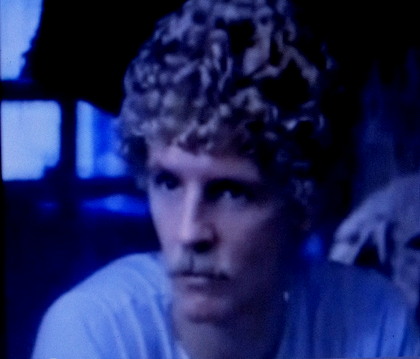
Billy Hayes (1970s) in his 20s. Billy Hayes is currently at the St. Luke’s Theatre in ‘Riding the Midnight Express With Billy Hayes’, written and performed by Billy Hayes, directed by John Gould Rubin.
Riding the Midnight Express With Billy Hayes, written and performed by Billy Hayes and currently at St. Luke’s Theatre, is a profound and illuminating theatrical experience that will leave you uplifted and inspired.
Directed by John Gould Rubin, the production is a reexamination of Hayes’s experiences in Turkey in the 1970s, when he was smuggling hashish, caught, and given a life sentence in a Turkish prison. Some of the gruesome aspects of the story were chronicled in the film Midnight Express.
Many were not. This Off Broadway production sheds a bright light on events the film left out, some harrowing and some magnificent. Though the film was based loosely on Hayes’s book Midnight Express, whole swaths of experience were eliminated and fabrications added. This show is Hayes’ revelation about the full truth of his past and how it influenced his journey into the present.
Since Hayes’s solo performance relates to the film, it is necessary to review why the impact of this one-man show is so vital by comparison. When it was released in 1978, Midnight Express received worldwide acclaim and garnered 16 awards including two for Best Writing (screenplay based on material from another medium) and Best Music (original score). It even received a Golden Globe for Best Picture in the category of Drama. If they didn’t read the book, people believed Oliver Stone’s screenplay. It portrayed Hayes’s rollicking jaunt to Turkey, his arrest, his unjust trial, and his ghoulish nightmare after being sentenced to a life in the abomination of desolation: the Turkish prison. The audience was kept in suspense and horror watching the character’s devolution in prison and his nullifying flirtation with insanity. When Hayes unbelievably escapes, easily walking out into freedom without being seen by anyone, the audience feels tremendous relief that the hell is over and Hayes is free.

Billy Hayes in NYC after he escaped from Turkey.
In Hayes’s live performance we discover that this “walk-out” did not happen, and what did was far more frightening. Indeed, his real escape to freedom took much longer and was a desperate, gripping survival story. As Hayes relates it, we cannot help but be astounded by each miraculous event that, domino-style, brought him closer to freedom. The “walk-out” as presented by the filmmakers was sheer Hollywood gloss and actually a diminution of Hayes’s character, resourcefulness and inner strength.
What particularly makes his one-man show so engrossing and compelling is Hayes‘s natural spontaneity. With his fine acting talents (he is a writer, actor and director), he aptly conveys the full import of and real events relating to his capture, arrest, trial, prison time and incredible escape. What is equally edifying is the discussion of his life afterward and his personal growth as an individual, a social advocate and a culturally dynamic American.

Billy Hayes being interviewed about his current activities as they evolved from his past.
As we watch Hayes deliver his unexpurgated account, we are able to receive it in the entirety of its depth and detail. Unencumbered by any restraints, Hayes finally has free reign. Through his vibrant descriptions and vivid language we understand his thoughts, his unique perspectives; we come to know the mind of Billy Hayes. His performance is one of unbounded clarity. Hayes expresses the soul of an age that is current and ongoing. To say the message is life-giving is an understatement.
As we receive the truth of his presence, the deep issues and themes of freedom, love, enlightenment and growth become more real and heartfelt than what the film ever could convey. Indeed, Hayes understands the essence of his life’s journey. We recognize its vitality and note that it has far-reaching implications for our culture and society today. With great courage Hayes bares his soul and our souls follow, opened to his immeasurable riches of spirit. The film was a mere shadow of what he effects and gives us in this performance over 35 years later.

Billy Hayes and his wife Wendy after the performance, speaking with audience members and signing autographs.
Whether it was intentioned or not, the film was a cautionary tale that delivered lessons about the Muslim world and more specifically, Turkey. First, that Turkey was a brutal country and its prisons cesspits; one should not travel there as a lark to flout the laws. Second, that Turkish justice was no justice.
Considering U.S. politics in the 1970s, the film was a boon for American culture, and Billy Hayes was a hero. The film encouraged a feeling of patriotism (at a time when the culture needed this). Against Turkey and other Muslim countries, it spawned a host of travel warnings for Americans abroad. In its associative portrayal of hashish and marijuana, it was a negative advertisement. Though marijuana and hashish, its concentrated form, were plant-based drugs, un-patentable and used medicinally and recreationally across many cultures for millennia, Nixon’s “war on drugs” (related to Hayes’ prison sentence) sealed their doom. In the Q&A after his performance, Hayes’s commentary about the film’s impact (related to marijuana’s illegality, and many other issues) was fascinating.
Why filmmakers re-characterized Hayes’s experiences in prison, the Turkish court, and especially his escape is up for conjecture. In any case, the reality of what actually occurred as Hayes relates in his solo performance inspires hope, courage and peace. If that message was not politically or culturally efficacious for the time, so be it. But now a new generation of individuals will be exposed to the story. Its truth and its reckoning have finally come. This is a performance not to be missed.
Riding the Midnight Express With Billy Hayes is being presented by Barbara Ligeti with Jeffrey Altshuler and Edmund Gaynes. Co-producers are Jonathan Chang, Jann Cobler, Exodus Broadway and Joseph Trent Siff. The production is running through March 23 at St. Luke’s Theatre on 308 West 46th Street.
This review first appeared on Blogcritics.
4th Annual Athena Film Festival. A Celebration of Women and Leadership

The 2014 Athena Film Festival at Barnard College, February 6-9th.
The fourth year of the Athena Film Festival, held at Barnard College February 6-9th, was an incredible experience for women and men. Foremost, the festival organizers and participants collaborated in their appreciation and recognition of those who have taken an active part in raising the banner of global film movements. Panel presenters, filmmakers, audience members, and sponsors gathered with the hope that as they express their dynamism in whatever talents and walks of life they embrace through film, they will continue to motivate women toward leadership, autonomy, creativity, and inspiration. Ultimately, doing so will only benefit culture and society as a whole.

L to R: Melissa Silverstein (Women and Hollywood) and Kathryn Kolbert (Athena Center for Leadership Studies Barnard College). At the screening of Belle, opening night..
Co-Founders Kathryn Kolbert (Athena Center for Leadership Studies at Barnard College) and Melissa Silverstein (Women and Hollywood) introduced many of the screenings and master classes. The films included a wide range of features, documentaries, shorts, and “works-in-progress” for critical review.. There were master classes for filmmakers, panels and special events: opening film after-party, luncheons and receptions and the Athena Film Festival Award Ceremony..
Festival highlights included the awards bestowed. On hand for the ceremony was Debora Spar, President of Barnard College, Regina K. Scully, CEO and Founder of Artemis Rising Foundation-the Athena Film Festival’s founding sponsor, Festival Co-Chairs, Co-Founders, illustrious recipients and others.

L to R: Melissa Silverstein (Co-Founder), Callie Khouri, Kasi Lemmons, Debra Martin Chase (Festival Co-Chair), 2014 Athena Film Festival.
This year Sherry Lansing was the recipient of the Laura Ziskin Lifetime Achievement Award given to a women in the film industry whose leadership demonstrated vision and courage and set a standard for other women to follow. 2014 Awards went to Callie Khouri, Oscar-Winning writer and film and TV creator and director, Kasi Lemmons, gifted actress, director and writer and Keri Putnam, Executive Director of the Sundance Institute. Each of these women is responsible for their groundbreaking achievements assisting women in gaining voice and power to maintain leadership positions. They continue to make a tremendous impact for women in the media industry with current projects.
These women have helped other women begin to move among their male counterparts. However, the statistics the festival reported are not as encouraging as one would hope. Among the films shown at Sundance in 2013, 29% of filmmakers were women and 71% were men.

Photo taken from the festival introduction short film.
There is a lot that must be accomplished and with the gap in economies of scale and increasing difficulty in achieving funding, women will be challenged more than ever to be innovative, forward thinking, and ahead of the curve, finding partnerships with others who recognize the acute sensibilities and resonances women can contribute to touching a cultural wellspring of film audiences that are increasingly dominated by women.
This 4th Annual Athena Film Festival article first appeared on Blogcritics.
4th Annual Athena Film Festival Documentary Film, ‘Rebel’

Rebel, directed by Maria Agui Carter. Photo from the trailer of the documentary.
The Athena Film Festival 2014, which ran from February 6th to February 9th, offered an amazing array of documentary films. Women are known to direct and helm more documentaries than narrative features. It is clear that their patience, meticulous research skills, and creative brilliance shine in this complex niche, which lends itself to revelation. Documentaries best dive into the underbelly of historical events and enlighten us about men and women whose life stories have hithertofore been obscured, “wiped out,” or discredited because their content was deemed dangerous or a fiction.
Rebel, directed by Maria Agui Carter, exemplifies such a documentary; the story of real-life heroine Loreta Velazquez was discounted and nearly eradicated from our history. Was the primary reason because Velazquez was a remarkable woman who transcended the limitations and mores placed upon her sex during the Civil War and afterward? Carter is to be lauded for painstakingly portraying Velazquez’ life on film despite the obstacles she faced to mount the project. Overcoming these issues took time, but Carter engaged her skills, and with her phenomenal effort crafted a jewel. The intensity of the result was well worth it, as evidenced by the audience’s enthusiastic response and their rapt, probing questions during the Q & A. With Rebel, Carter achieves her goal to beautifully relate the story of this courageous and clever woman who is an inspiration for us today..

Rebel directed by Maria Agui Carter. Photo from the trailer of the documentary Rebel.
Velazquez’s story begins in Cuba where she was educated and raised to be the woman of the house in time when paternalism and patriarchy ruled the lifestyles and actions of the promulgators of culture. Testing the limits of her father’s love and seeing the gross inequities in the treatment of women, Velazquez attempts to equalize her status with males, eschewing the easy “role” of a demure woman. Finding this behavior worrisome, her father sends her to relatives in New Orleans where she eventually continues to throw off her father’s choices of husbands and “women’s duties.” Clandestinely, she marries an American soldier who is sent to the frontier, comes back, and then returns to prepare to fight for the Confederacy.
By this point husband and wife have buried three children and Loreta considers her place to be by his side. He leaves and word comes that he’s been killed. She decides she has nothing to lose and will follow him to fight where he would have fought and kill who he would have killed. She cuts her hair and puts on a confederate uniform. She is alone, but finds comfort having taken his place. And in his place, she learns war, soldiering, and living in hardship with the rough men as well as having her eyes opened to many other things.
The film elucidates more including the risks that Velazquez takes in passing as a Confederate soldier. Carter follows Velazquez with details about her learning curves and discoveries about the rotten elements of war profiteers and currency calculators. From the soldier’s vantage point like never before, Velazquez is able to understand what they are fighting for and the nature of slavery. All of these events, Carter encapsulates with compelling detail and interest. However, this is only the beginning of Velazquez’s adventures. How she ends up fighting for the North and how she ends up as a spy is a fascinating experience. Carter shows that hers is an outer and inner journey. Certainly the nature of the war in the South and all of its ramifications helped to win Velazquez to the other side.

Maria Agui Carter, director of Rebel, the documentary film.
Carter’s film is compelling and engaging. This credible storytelling is at its best in relating Velazquez’s experiences by also highlighting extremely important historical details that shine a probing light on women’s involvement in soldiering during the Civil War. This is an aspect that is not well known. Nevertheless, Velazquez was not alone in picking up the cause and hiding her sex in trousers. The men simply would never have thought it possible; the folkways of feminine identity and behavior simply beggared their imagination to even think it. The women easily were able to dupe the men.
The truth Carter brings to bear in Velazquez’s story enhances our understanding of a time that perhaps is still too uncomfortably close for some to view with perspicacity, wisdom, and integrity. These elements and traits Carter admirably demonstrates in showing us another type of soldier who fought during the bloodletting time to preserve an economic lifestyle perpetuated by the extremist cruelty and degradation. Because her story is so amazing, one hopes that Carter will be able to shepherd the adventures of this courageous, enlightened, and forward thinking woman into a narrative feature film.
This review first appeared on Blogcritics.
4th Annual Athena Film Festival Documentary Film, ‘American Revolutionary’

L to R: Writer and activist Grace Lee Boggs and director Grace Lee. American Revolutionary: The Evolution of Grace Lee Boggs. The documentary screened at the Athena Film Festival at Barnard College.
The documentary on Grace Lee Boggs which screened at the 2014 Athena Film Festival was sold out and there appeared to be individuals floating on the rafters aching to see the film. They were even more enthusiastic to see Grace Lee Boggs in the live Q & A session and meet her afterward. The audience was filled with young and old, and most likely, the oldest one there was Grace Lee Boggs herself. She is an active 98 year old, who is raging against the “dying of the light” of inequality and injustice, despite the visissiitudes of old age which aren’t for” cowards or sissies.”
This Chinese-American writer, activist, feminist and philosopher dedicated to improving herself, the country and the plight of average citizens has worked tirelessly for 70 years in the Civil Rights Movement. The documentary American Revolutionary: The Evolution of Grace Lee Boggs directed by Grace Lee (no relation), created from filmed interviews and discussions with Boggs, friends and celebrity fans, follows an ethnographic style over a ten-year period. During this time the director engaged her intention to understand Boggs’ evolution as a representative icon of change who was swept up in a flow of revolutionary crosscurrents from the 1940s until this day. This river of social progress is moving toward a paradigm shift and a new spiral of events which Boggs discussed after the screening. The events include her latest venture Detroit Summer also highlighted in the film.

Grace Lee Boggs and James Boggs an activist, writer team. American Revolutionary: The Evolution of Grace Lee Boggs directed by Grace Lee screened at the 2014 Athena Film Festival.
The documentarian catalogues Boggs’ earlier life through narration, pictures, archival film and Boggs’ commentary and continues with film footage of Boggs over the last 10 years. We learn that Boggs was one of four women of color in 1935 to graduate from Barnard College in New York City. Because there were few opportunities for women of color in academia, Boggs took a low paying job in the University of Chicago Philosophy Library. At that time she also took her first foray into activism becoming involved with tenancy rights. This cultural engagement suited her and she joined the Worker’s Party, one of a number of parties she advocated for during her lifetime. After a speaking engagement, Boggs met with C.L.R. James and was hooked into his movement. She traveled to New York. With new vitality in her learning curve and the hope to enhance social freedom of opportunity for people of color, she worked with C.L.R. James and encountered important activists and cultural figures, i.e. Richard Wright and Katharine Dunham.
Her continued involvement with civil rights always inspired colloquies and discussions which fueled her writings about how to equalize the living and work opportunities for people of color. The film reveals Boggs’ progress after the shifts and splits from various groups in the 1940s, through her meetings with Martin Luther King Jr. and others during the 1950s and 1960s (Malcolm X) when civil rights actions and developments were fast and furious.With husband James Boggs the couple moved onward evolving their beliefs and continuing to work, write and publish about the needed social revolution in America.

Grace Lee Boggs in her youth from the documentary American Revolutionary: The Evolution of Grace Lee Boggs, directed by Grace Lee which screened at the 2014 Athena Film Festival.
Declassified, Grace Lee Boggs’ FBI file kept by Herbert Hoover is perhaps thicker than Dr. Martin Luther King Jr.s. It is a great point of humor when the filmmaker spotlights that this physically unimposing Chinese American woman with grand intellectual acumen and erudition was considered a potentially violent threat to this country because of the words she spoke and her writings. FBI officials even believed her to be African American because, who indeed who was not black would marry an African American man, live in the black community and actively support the civil rights of people of color?
Boggs’ activism in the Civil Rights Movement began when it was risky and courageous to participate. Only much later did it become “cool” and radical chic to “drop out and get down.” By then, Grace Lee Boggs and James Boggs had moved on to other polemics. She was constantly evolving in her understanding, with the hope of carving a meaningful place in her world of friends, including those acquaintances who dropped by her door to engage in discussions and conversations about social revolution.

Grace Lee Boggs in the Q & A after the screening of American Revolutionary: The Evolution of Grace Lee Boggs directed by Grace Lee. (Athena Film Festival).
American Revolutionary: The Evolution of Grace Lee Boggs completes a monumental feat examining this icon of American social movements during the last seven decades. It reveals our history in a way that no other documentary has dared to accomplish fusing present, recent past and past past with narrative from the perspective of the one who lived it and is brilliantly competent to provide an ongoing retrospective. It is she who discusses what she learned as a result of her actions, not some historian or commentator. In this the documentary breaks new ground, offering the incredible philosophies and viewpoints of the woman who lived through these events with inspiration, circumspection and wisdom. Above all this very human film pinpoints the unique, vital and unlikely story of how this Chinese American woman saw injustice and inequality in the human heart. And as she saw it flowing out into the culture creating a prevalence of misery and torment, she determined it must stop and she must devote her life to stopping it. Her life proves that in order to get people to say yes to change, one has to first say no to putting up with their abuse, no matter the cost.

Grace Lee Boggs after the screening of the documentary by director Grace Lee. For Grace Lee Boggs, this is a very critical time for the nation.
Director Grace Lee’s renderings which cobble together film clips and flow her narrative from present to recent past to archival past is nothing short of wonderful. But then her subject matter is wonderful. What Boggs models for women, Asian Americans, millennials and all citizens engaged in the social reform of our political and corporate institutions is without measure. In Boggs’ world discussion and interchange especially with those whose beliefs run counter to ours is paramount for all of our growth. Dialogue and conversation must be ongoing to inspire cultural renaissance. Her world view is best demonstrated in the following quote:
“When you read Marx (or Jesus) this way, you come to see that real wealth is not material wealth and real poverty is not just the lack of food, shelter, and clothing. Real poverty is the belief that the purpose of life is acquiring wealth and owning things. Real wealth is not the possession of property but the recognition that our deepest need, as human beings, is to keep developing our natural and acquired powers to relate to other human beings.”
― Grace Lee Boggs, The Next American Revolution: Sustainable Activism for the Twenty-First Century
The film demonstrates that Grace Lee Boggs has lived her life coming to the fullness of this understanding. Would that we could all do the same following our own pathway of evolution.
This review first appeared on Blogcritics.
‘My Mother Has Four Noses’ by the Amazing Singer/Songwriter Jonatha Brooke

Jonatha Brooke in My Mother Has Four Noses written and performed by Jonatha Brooke, currently at The Duke on 42nd Street. Photo by Pierre Baudet.
Acclaimed singer/songwriter Jonatha Brooke emotionally climbed the mountains of the moon and plummeted to the depths of the abyss after she brought her mother to an apartment in NYC so she could care for her the last two years of her mom’s life. Her mom, published poet Darren Stone, had Alzheimer’s.
As Stone’s identity withered toward invisibility, a multiplicity of beings, characteristic of Alzheimer’s patients, emerged as she physically and mentally recreated herself with each new day. The disease took eminent domain of her mind and body parcel by parcel.
Jonatha and her mom accepted the challenge. They enacted their “greatest show on earth.” It was an all-encompassing adventure filled with drama and comedy, the mundane villains of aging (painful arthritis) and their comedic sidekicks (constipation from pain killers). Their surreal vision and dramatic courage helped pass the time as they worked through obstacles. And somehow together, they “got it all down.” Theirs was performance art which provided the raw material for a show which Jonatha Brooke would perform a year after her mom died.
By the time Stone left this plane, Brooke was ready. Mother and daughter had experienced the sublime end game in all of its beauty and beastliness. Brooke would learn to extirpate the horror of their most intimate and personal moments and keep the humor, longing, love and ethereality. By linking snippets of remembered conversation, exact quotes, and bits of her mom’s poems in a heady mix of narration and song, Brooke symbolizes the finest rhythms of those last two years. These snatches of life, brought to the stage in the one-woman musical My Mother Has Four Noses, are a precious human revelation.
One cannot witness this production, directed by Jeremy B. Cohen, and remain untouched. Brooke’s work helps us recognize and appreciate the poetic rhythms in our own lives and the lives of those dearest to us. She has dug deep into her own empathy to distill the highlights of their mother-daughter love relationship. The potion she creates is readily drinkable and the unique, bittersweet taste lingers. We are better for her gently shaking our consciousness, reminding us that our bodies are mortal. We, too, will one day have to answer the hard questions about who we are and whether we are happy about what we have made ourselves into. We, too, will enact our finality alone or in a drama with others. In her remarkable endeavor, Brooke’s artistry is heartfelt and powerful and there is much you will take away to contemplate.

Darren Stone had four prosthetic noses, one for each season. My Mother Has Four Noses by Jonatha Brooke at The Duke on 42nd Street.
In Brooke’s seminal song “Are You Getting This Down,” the opening number, she reflects how she and her mom came to deal with fleshly mortality through spiritual and electric currents of love, joy and endurance. Brooke settles on shaping the bulk of the production around a motif that streams through both of their lives: her mother’s religious beliefs as a Christian Scientist. In the earlier years it was the bane of their relationship, a major point of disagreement. Jonatha never believed, while her mother remained a staunch follower of the religion which eschews medical interventions.
That refusal is the boulder which shatters Darren Stone again and again and sends her careening to Brooke for help in the crisis created by failing to seek out doctors. Brooke uses the crisis and Christian Science as an overarching metaphor in the production: the salvation which brings no salvation. For example, her mother resorted to the science of prayer in the community of Christian Scientists as she struggled against cancer. When the cancer ate away most of her face, she decided she wanted to survive and elicited Jonatha’s help. The intensive surgeries resulted in multiple reconstructions and prosthetics. Her mom’s life was saved, but her nose was sacrificed during the battle. Hence the title of the production. Indeed, Darren Stone had four noses, as both she and her daughter joked, one for each season.

Acclaimed singer/songwriter Jonatha Brooke in the musical My Mother Has Four Noes at The Duke on 42nd Street. Photo by Pierre Baudet.
During the course of the musical we learn of Darren Stone’s artistic bent as a writer, poet and clown: she used the clown makeup to hide the unsightly cancer. In the mother’s incredible portrait, we see the vibrant picture of the daughter. By the end of the production Darren Stone and Jonatha Brooke merge into one. It is not a coincidence that Jonatha takes a poem her mother wrote in 1950 and adds stanzas that she fashions into “Mom’s Song,” the last song of the performance. The song’s completion is a symbol of resolution. Theirs is a love that requires no atonement for unresolved regrets, but finishes with a “tear and a smile” flourish. It is how Jonatha Brooke is able to nightly perform herself and her mother with joy and poignance and humor.
How does one deal before, during and after taking care of someone who as they daily die before you is a confluence of contradiction: loving and recalcitrant, lucid and foggy, cooperative and fearfully resistant, funny and tragic, a “character,” who enters a daily new normal, someone who wants to die to avoid the pain, yet hold on and live with every ounce of fading strength? How indeed? If we receive the artistry of what Jonatha Brooke offers with her instrumental and vocal expertise and power of storytelling, we have the answer in a near-divine and indomitable love that flows between the lovers out into the audiences’ hearts.
My Mother Has Four Noses is produced by Patrick Rains. Musical Director, Guitar: Ben Butler. Cello: Anja Wood. Orchestrations by Jonatha Brooke and Ben Butler. The production will run at The Duke on 42nd Street until May 4.
This review first appeared on Blogcritics.
‘Sotto Voce,’ Nilo Cruz’s Transformative Spin on the Tragedy of the MS St. Louis

Franca Sofia Barchiesi in the world premiere of Sotto Voce by Nilo Cruz at Theater for the New City until March 9th. Photo by Jonathan Slaff.
When one speaks “sotto voce,” one speaks in a softer, lower tone for emphasis or perhaps to give the impression of an involuntary utterance of truth which may shock or antagonize. Pulitzer Prize-winning playwright Nilo Cruz (Anna in the Tropics, 2003), is revealing great truths through undercurrents and whisperings of poignant and impossible love in the world premiere of Sotto Voce. The play, which he also directed, is being performed at Theater for the New City until March 9.
As the play opens, we hear a foghorn and see two separate scenes that are going on simultaneously, one from the past and one in the present. The scene from the past involves memory and imagination. The scene in the present is of uncompromising reality. In the present we see Bemadette, a the renowned German-born writer, composing her work center stage at her desk in her apartment in New York City. A voiceover narration of Bemadette’s rich and beautiful prose describing the scene she has written makes the prose alive. We see a sister and her brother, the Strausses, walking happily on their way toward the ship they will soon board on their way out of Germany to Cuba. Along with 937 other Jewish refugees they are seeking asylum from Hitler’s Germany. The year is 1939, The ship is the ill-fated SS St. Louis.

L to R: Franca Sofia Barchiesi and Arielle Jacobs in Sotto Voce by Nilo Cruz. Photo by Jonathan Slaff.
The tragedy of the St. Louis is one of the more egregious examples of politics, human profiteering and discrimination involving democratic countries to come out of the pre-WWII years. After the ship made it to the alleged place of asylum, the refugees never were allowed into Cuba. They sought help from Canada and the U.S. but were denied immigration status and turned away. After voyages to the Florida coast and back to Cuba, they were running out of supplies. The ship was forced to return to Europe. Belgium, France, England and Holland agreed to take in the refugees. Of them, 254 died when the European countries were occupied by the Nazis (England excepted). Of these 254, many were sent to the camps. The St. Louis incident is integral to Sotto Voce. How Cruz uses it to evoke wonderful themes about memory, lost love, regret, reconciliation and rebirth is poetic and illuminating.

Andhy Mendez in Sotto Voce by Nilo Cruz, directed by Nilo Cruz. Photo by Jonathan Slaff.
As Cruz develops the play, he intertwines memory, imagination and current reality to tell the story of Bemadette. Her lover was Strauss, who with his sister, were refugees on the St. Louis. Bemadette cannot deal with past regrets about her lover who died in the camps. Her stability and her enjoyment of the present have been warped by pain. When we meet Bemadette (an astounding and emotionally taut performance by Franca Sofia Barchiesi), we recognize she is a dried husk. Guilt has sucked out the choicest portions of her lifeblood. In her attempt to reconcile the past, she writes, but it is poor recompense and she is haunted by nightmares and ghosts.
Then a life-changing event occurs. It helps her expiate the sadness and desolation that has kept her pinned to the past in repeated agonizing remembrances. The catalyst comes in a beautiful form, a Cuban college student, Saquiel (an intense and provocative Andhy Mendez) who has read her writings and who shares a bond with her. His grandfather’s sister was on the St. Louis and was killed in the Holocaust. In seeking out Bemadette, he is looking for his past and wanting to understand the sources of the beauty of her writings and her own history that she would prefer to nullify but cannot.

L to R: Andhy Mendez and Franca Sofia Barchiesi in Sotto Voce by Nilo Cruz at Theater for the New City. Photo by Jonathan Slaff.
An ethereal and platonic relationship via phone and email develops between Bemadette and Saquiel, fueled by an intermediary, Bemadette’s maid Lucila (an excellent Arielle Jacobs). The student and the writer help one another, even though they do not physically see each other but instead imagine they are together. It is through their loving, healthful relationship and their probing discussions that we discover the mysteries of Bemadette’s horrific regrets and misery about her Jewish lover. It is through Saquiel’s perseverance, love and appreciation of Bemadette’s artistry and history that she is able to reconcile her memories with the present realities. By the play’s conclusion Saquiel and Bemadette are transported to a new understanding of themselves and what they are willing to sacrifice to gain peace and hope.
In Sotto Voce Nilo Cruz has created a sumptuous work of art, integrating poetic forms within the structure of the plot to fuel the dialogue and characterizations. He does this with beauty and grace that convey a wistfulness and longing for health and wholeness which both characters are on their way to achieving by the play’s end. Most importantly, Cruz reminds us of the power of human relationships to heal. It is a power that transcends the limitations of time and space and age differences. If it is allowed to develop and grow, one may receive the energy to create new dreams to replace those lost to time and regret.
Sotto Voce was performed in a limited run at Theater for the New City.
This review first appeared on Blogcritics.
 CAROLE DI TOSTI