Blog Archives
‘Coal Country’ is Amazing

When money and wealth become more important than the lives of others, that is the time to write a play with powerful, sonorous music. Oh, not to uplift the CEOs who collect the millions like Don Blankenship of Massey owned Performance Coal Company. No. The play should uplift and memorialize the ones who die because of that CEO’s greed, selfishness and refusal to accept accountability for what many have called murder. Above all the play must repudiate the wealthCy’s Puritan assertions that money and power make right. They don’t. Not now, not ever.
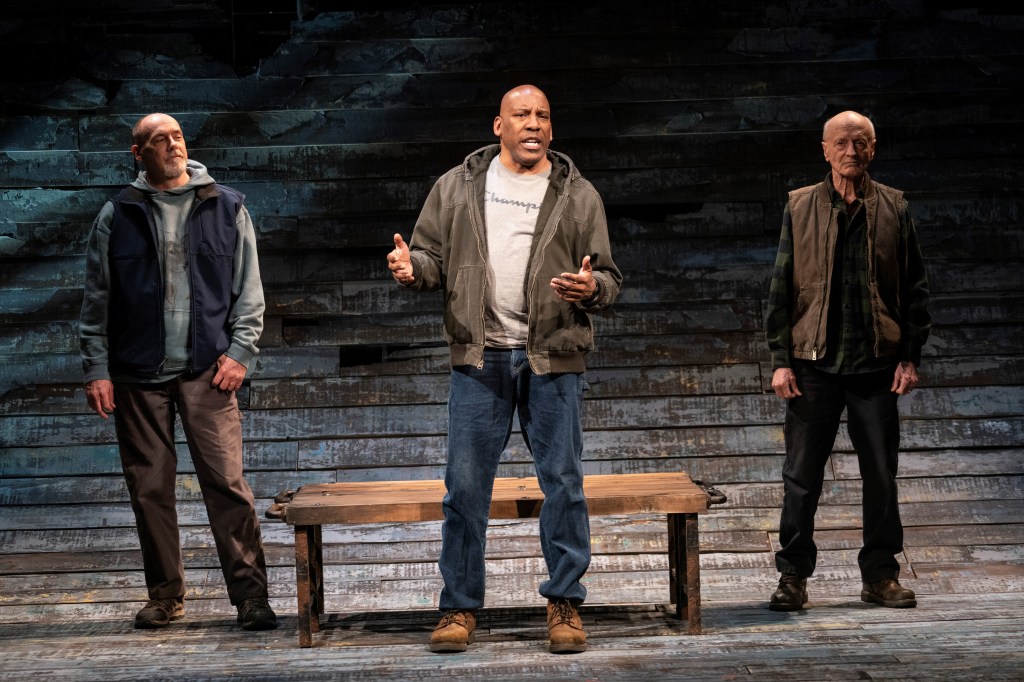
Coal Country is a docu-drama with incredibly relevant themes for us today. The riveting, masterful work written by Jessica Blank and Erik Jensen with original music by Steve Earle in a fabulous encore presentation by Audible and the Public Theater seems more impactful each time it is presented. We can never get enough of this exceptionally performed, shining work which runs at the Cherry Lane Theatre until 17 of April.
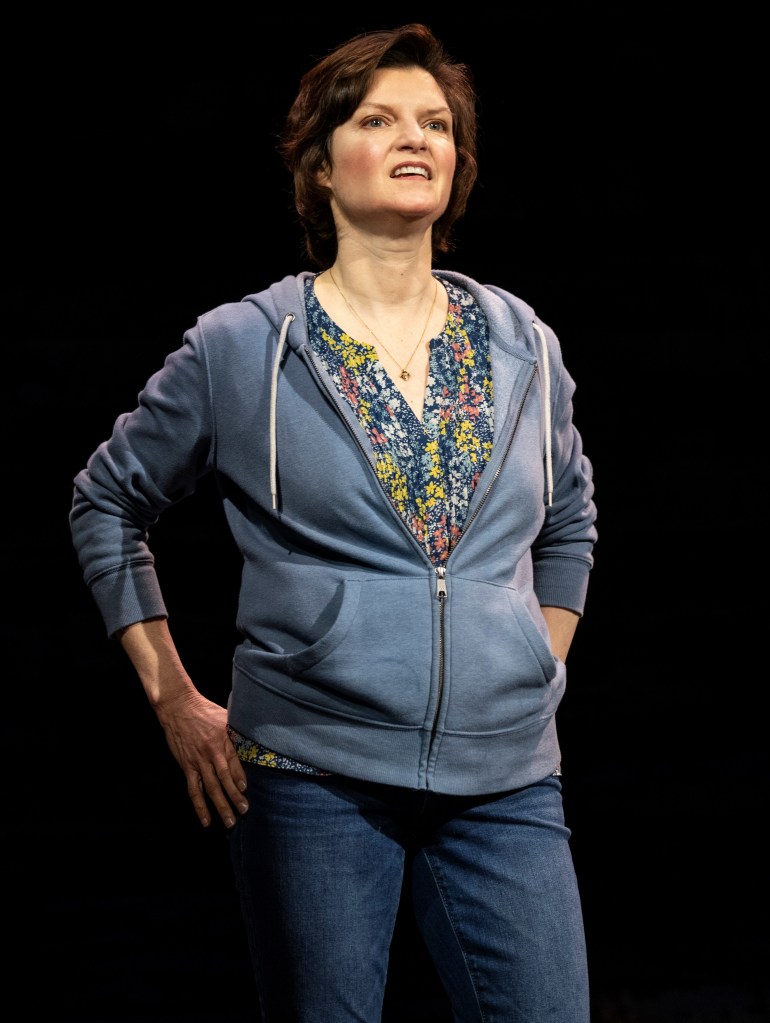
Though the worst of human nature asserts its primacy, poignant, moving stories like those in Coal Country are timeless in revealing that love despite tragedy culturally work us toward enlightenment. The voices of those who have been wrongfully snuffed out can resonate with meaning. This is especially so when fine artists like Blank, Jensen, Earle and superb performers effect those voices to channel the great moral imperative. What is good, what is true, what is valuable is never lost. It lives on.
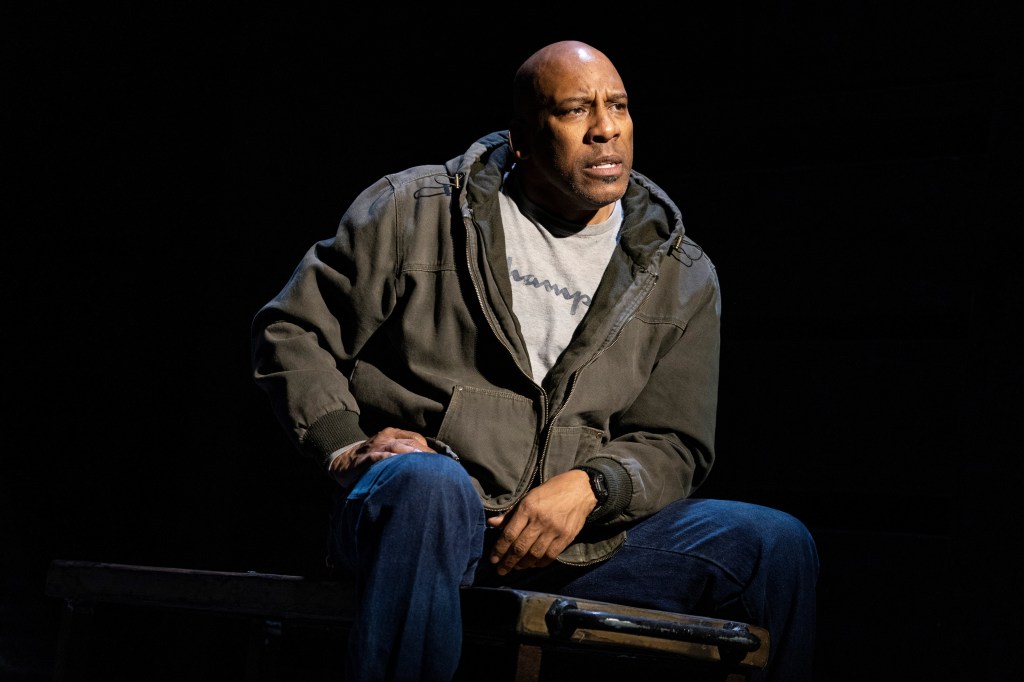
The themes which the playwrights and songwriter ring out in Coal Country focus on the devastating catastrophe known as the Upper Big Branch Mine disaster of 2010, which cost 29 West Virginians their lives. Through family eye-witness accounts cobbled together in a tapestry of poetic beauty, vitality and grace, we learn the facts about the huge machine that operated over- capacity 24/7 on the long wall, sheering off the finest, most valuable coal so Blakenship could get his contract percentage of the mine’s earnings of $650,000 a day.

We learn through the accounts of union miners like Tommy (Michael Laurence), Gary (Thomas Kopache), and “Goose” (Joe Jung), how and why government inspectors never found the broken systems that allowed low oxygen levels to increase the build-up of methane gases and thick coal dust that caused the massive explosion. As the experienced miners relate how the broken sprinklers ineffectively doused the sparks created in machine operations that ignited the coal dust and methane behind the long wall, the final picture of egregious negligence and rapacious lust for money clarifies in the blood of innocents merged with the blood of family bonds.
Tommy, Laurence and Gary discuss how the power of the union to protect and respect the miners’ rights in the past has been subverted by the CEO and company, and government de-regulation. The owners who bought the mine hired a large percentage of non-union men, who didn’t dare “speak up,” to government inspectors and the FBI about extremely unsafe conditions in the mine. They feared reprisals. The question of payoffs arises and dead ends. We learn how those miners who did “say something” were warned and ignored. Miners were rendered voiceless against the inevitability of their deaths, because Blankenship was on a mission. No one was going to stop him.
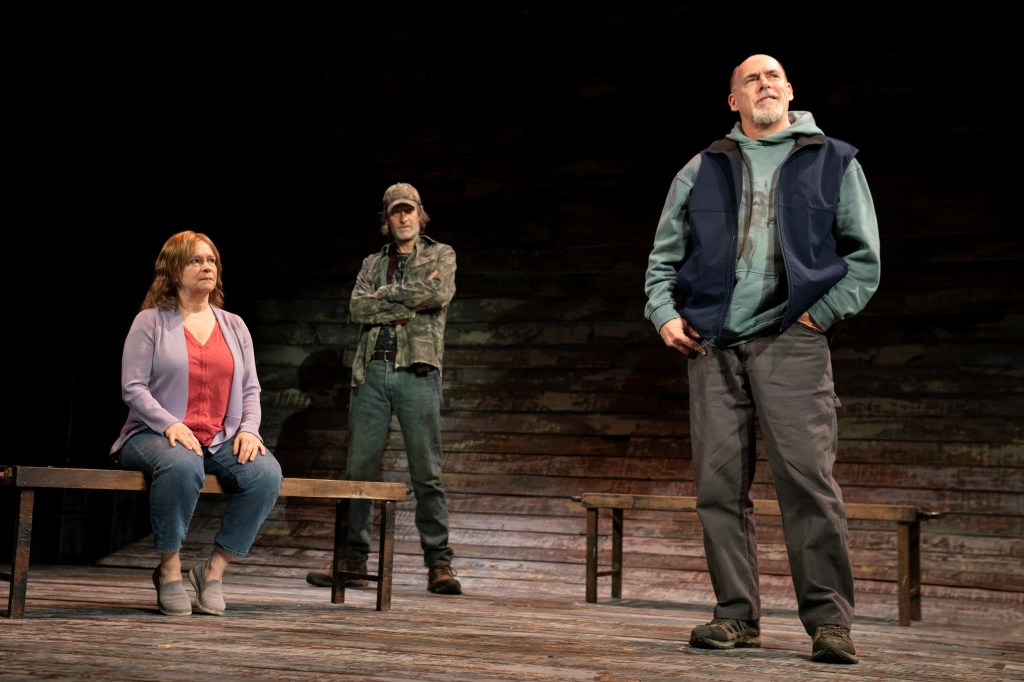
As families identify bodies on blankets on the gravel, some collapse. Roosevelt (Ezra Knight) who identifies his father, who appears to be “asleep,” remains calm until his mother comes. They weep together. As others express outrage, the families of four missing men wait to hear whether or not their loved ones cheated death. Finally, the wait is over. None make it out. Tommy, who loses his son, his nephew and his father, waits to spill the news, overcome with pain.
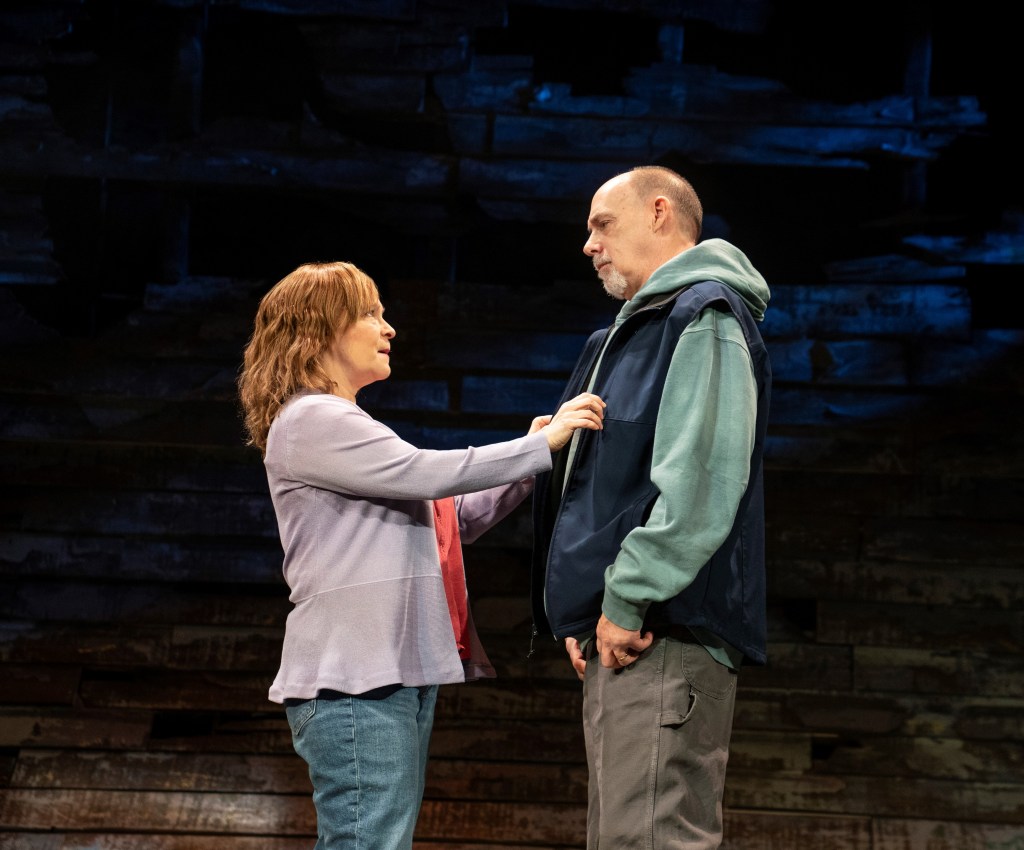
Judy (Deidre Madigan), a doctor who lost her brother in the catastrophe rides a roller coaster of emotional expectation. First, she believes her brother died. Then she believes he found refuge. Then, all is finality. She describes that she feels she is an outsider because of her socioeconomic status. But emotion and love transcend economics; she is one of them. Her brother is dead and though the medical examiner tells her not to, she insists on seeing his remains. It is ironic that even her medical background does not prepare her for what the mine did to him. It is beyond calculation. In pieces, her brother is without human form.

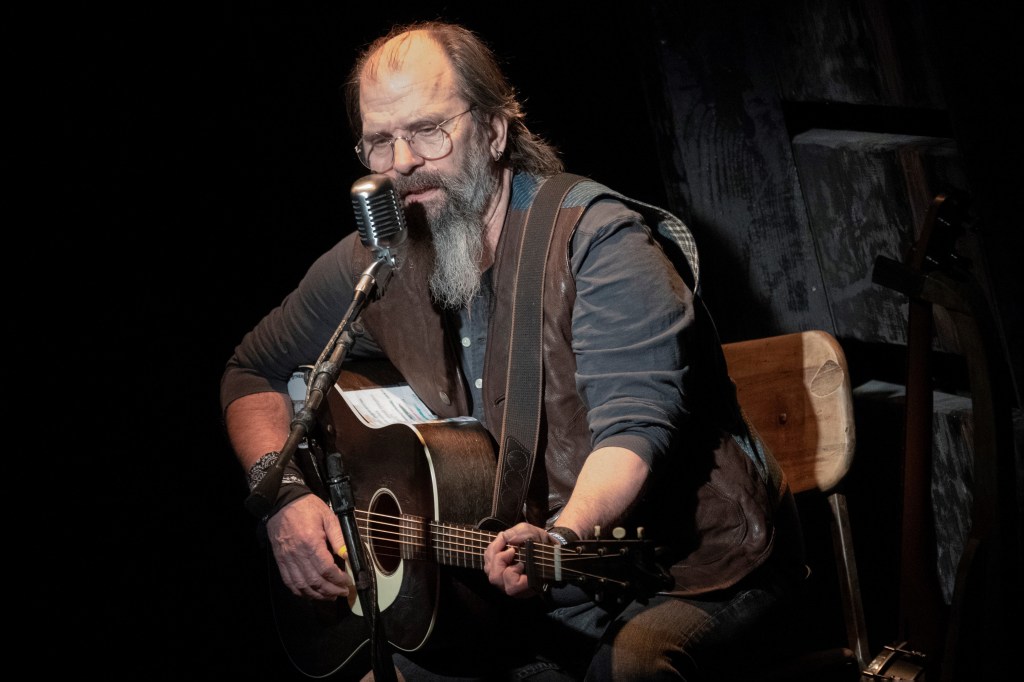
One by one seven family members tell their story of a simple, satisfying life before the catastrophe in a community that mined for generations. Indeed, the mountain supported and nurtured them until it was bought over by Massey Energy and a new CEO came to town. We learn of the loving relationships between Mindi (Amelia Campbell) and Goose, and Patti (Mary Bacon) and Big Greg who dies leaving Little Greg traumatized by the loss of his dad and Patti when he is taken away from her. And interspersed with their stories, Steve Earle’s country ballads lyrical and poignant drive home the resonance of their love and remembrances of their dear ones. They live in his songs and echo in the actors’ mesmerizing performances.
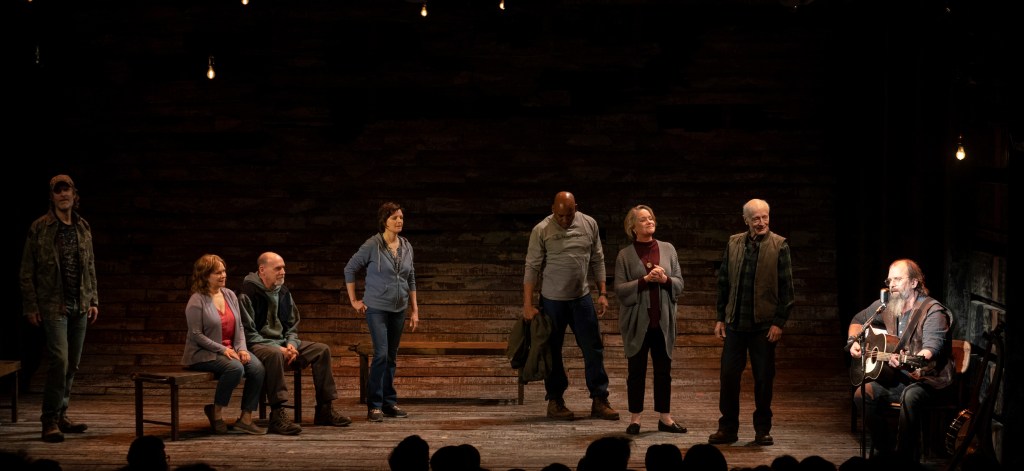
Blank and Jensen (the husband-wife team who created The Exonerated), choose to present this dynamic piece as a flashback after Earle (playing guitar), opens with two songs that set the themes: “John Henry,” and Heaven Ain’t Goin’ Nowhere.” Cleverly, the action begins in the courtroom at the end of Don Blakenship’s trial as Judge Berger (Kym Gomes), states they cannot read their “Victim Impact Statements.” What family could never speak in court, they relate to the court of public opinion (the audience who sees this play).

The flashback comes full circle back to the court, so the audience hears Blankenship only gets one year in jail and a fine of $250,000. Arrogantly, Blankenship uses that money to run Ads and create pamphlets in which he characterizes himself as the victim of government as a “political prisoner.” Nevertheless, in final, moving encomiums, each family member details how they remember their loved ones who live on in their hearts and in this production which has called. out to music the names of all who died in the UBB mine explosion.
With minimalist but trenchant symbolic Scenic Design (Richard Hoover), effective Lighting Design (David Lander), Sound Design (Darron L West) and Costume Design (Jessica Jahn), Coal Country is an amazing revival. It is profound and memorable in scope and power. Don’t miss it this time around. For tickets and times go to their website: https://www.cherrylanetheatre.org/coal-country
‘The Half-Life of Marie Curie,’ Lauren Gunderson’s Work Uplifts With Brilliance and Currency
(L to R): Franesca Faridany, Kate Mulgrew, The Half-Life of Marie urie, Lauren Gunderson, Gayle Taylor Upchurch, Minetta Lane Theatre Audible (Joan Marcus)
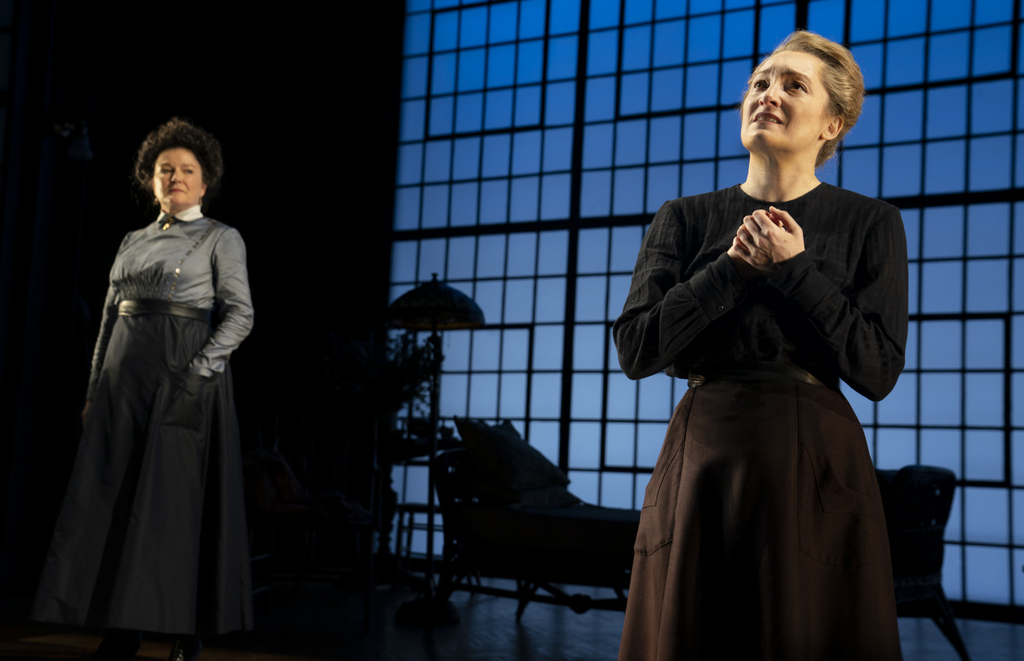
Iconic Madame Curie, the two-time Nobel Prize winner in the fields of chemistry and physics, was told by the committee awarding her prize the second time that she shouldn’t show up in person to receive it. She was having “women’s troubles,” we learn in Lauren Gunderson’s The Half-Life of Marie Curie, directed by Gaye Taylor Upchurch. The play is a profound and humorous evocation of the close friendship between Marie Curie (the magnificent, in-the-moment Francesca Faridany) and Hertha Ayrton (the equally magnificent, always present Kate Mulgrew). Ayrton, the British engineer, mathematician, physicist and inventor, was a suffragette and a celebrated genius in her own right. She paired as the perfect friend to Curie and helped her when Curie was at a nadir in her life.
Gunderson’s play whose setting is in Paris and England, reinforces the importance of women’s preeimence in the cultural flow of ideas in every field of endeavor. Furthermore, it highlights how folkways about women’s relegation to second class citizenship was a socially defeating, nihilistic ethic for the advancement of women and especially for the advancement of men. Gunderson reveals how Curie triumphed over the most antiquated of mores, especially after she loses the security and probity of her husband status in society after his death.
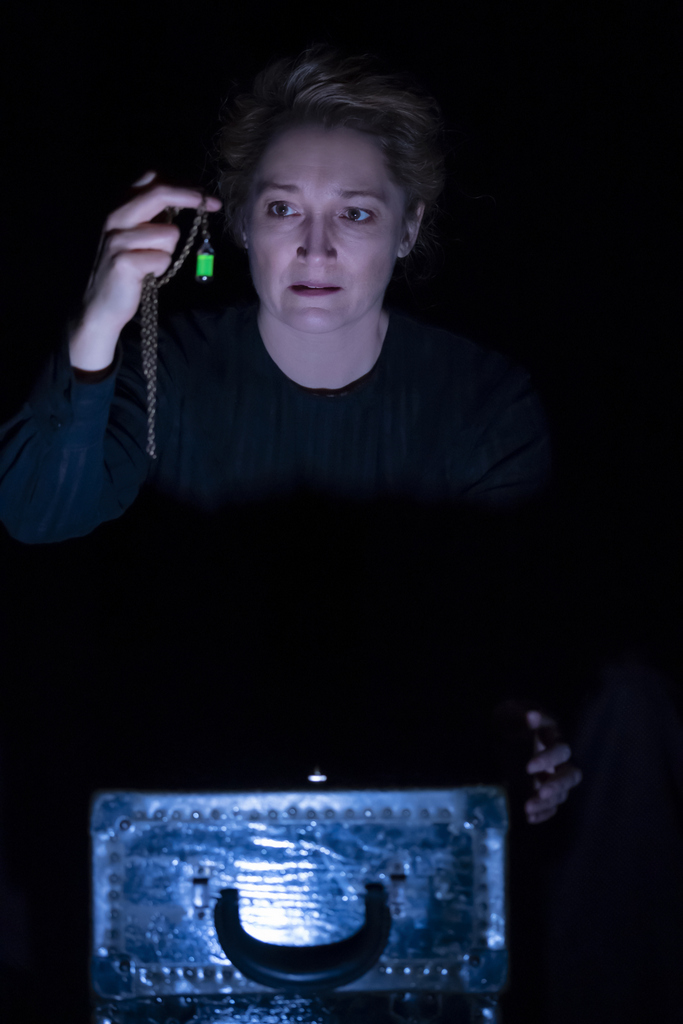
Franesca Faridany, ‘The Half-Life of Marie urie,’ Lauren Gunderson, Gayle Taylor Upchurch, Minetta Lane Theatre Audible (Joan Marcus)
In her collaboration with husband Pierre both made ground-breaking discoveries identifying and naming polonium (after her native Poland) and radium. They coined the word “radioactivity,” to list a few of their accomplishments together. Curie’s work even after Pierre died established for all time that a women’s place was not behind the scenes as the little housewife, but could be in the forefront of the evolving scientific age. Curie, then and now, as is Ayrton, a beacon for all of us.
The Curies with Henri Becquerel received the Nobel Prize for their research on the “radiation phenomenon,” a prize hard won for Curie who was not nominated until a committee member and advocate for women scientists made a complaint to have her name added. Not only was Curie the first woman to win a Nobel Prize, she is the only woman to win the Nobel Prize twice. And she is the only person to win the Nobel Prize in two different fields, a feat no man or women after her has managed to accomplish. One shudders to think about the women who are being kept down by males and the internalization of this oppression by women as right and true. And this is advocated by men who cannot brook a female in leadership positions due to their own internal frailties and insecurities.

Kate Mulgrew, The Half-Life of Marie urie, Lauren Gunderson, Gayle Taylor Upchurch, Minetta Lane Theatre Audible (Joan Marcus)
How life on this planet might have been very different if women were allowed parity in the professions for the betterment of society is anyone’s guess. After seeing Gunderson’s work and witnessing the dynamic she crafts between these two genius friends, one comes away encouraged, regardless of whether one is male or female. For a major theme is understanding the great and vital necessity of establishing collaborative efforts and parity between the sexes. As a detriment to all, the elevation of one to the suppression of the other, is a noxious practice which has been attempted with a political vengeance in our culture in the last three years. Such retrograde actions only result in horrific damage for both sexes, especially the elites who depend upon the “little people’s” consumerism. It must stop and Gunderson’s celebration of these two women as an exemplar in our culture and other influencers insure that it will, hopefully sooner than later.

(L to R): Franesca Faridany, Kate Mulgrew, The Half-Life of Marie urie, Lauren Gunderson, Gayle Taylor Upchurch, Minetta Lane Theatre Audible (Joan Marcus)
Gunderson highlights these themes about gender parity opening her play at a crucial point in the life of Marie Curie after Pierre’s death. Curie might have succumbed to her “women’s troubles,” if not for the encouragement and intervention of Hertha Ayrton. Hertha offers Marie an infusion of love and affirmation of their friendship, as well as a refuge at her seaside home in England, where Marie may recuperate from her physical ailments and emotionally resurrect from the trauma of scandal.
The “troubles,” Gunderson relates during Ayrton’s exhortations to Curie to remain firm and solid to weather the scandal of Curie’s affair with married Paul Langevin, Pierre’s student and fellow scientist. The playwright subtly and with dynamism forms the arguments between the two women, one cowering, humiliated in despair, the other, a proud, indomitable scientist and suffragette strengthening her friend. During their back and forth thrust and parry, we discover important details. The dialogue is sage, clever, poetic, humorous with little exposition, all in the service of defining the wonderful, well-drawn characters most beautifully acted by Faridany and Mulgrew. The writing exemplifies how these women portray their care for each other acutely, as they take us into their relationship. As a witness to this, we are grateful to be watching and listening to their elucidating adages and poetic wisdom.
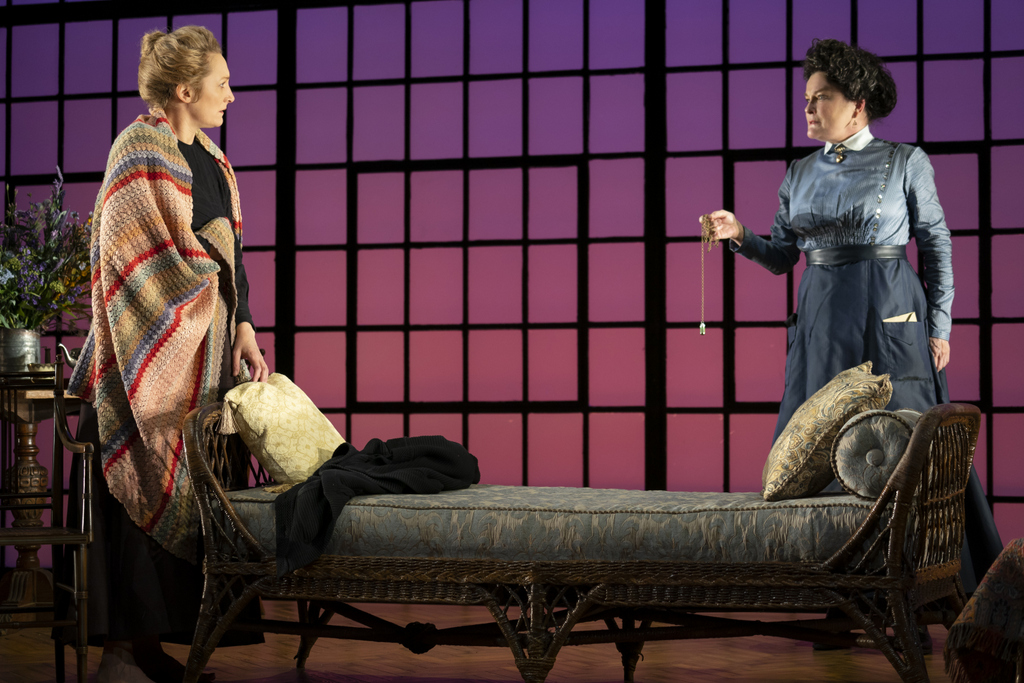
(L to R): Franesca Faridany, Kate Mulgrew, The Half-Life of Marie urie, Lauren Gunderson, Gayle Taylor Upchurch, Minetta Lane Theatre Audible (Joan Marcus)
What has happened to Curie in light of her contributions to science can only be described as monstrous. Mrs. Langevin, suspecting that her husband was in a “love nest” with Curie, works to expose and destroy her. She hires an investigator who breaks into their apartment and finds incriminating love letters which prove their adultery and are subsequently leaked to the papers. The press engages in a smear campaign portraying Curie as a home wrecker and a seductive Jew (she wasn’t Jewish) as they feed into the xenophobia and anti-semitism of the time. In keeping with entrenched folkways, the papers portray Mrs. Langevin as the innocent, ill-treated victim of their betrayal. The real truth is somewhere in between as Paul Langevin actually improves his stature as Curie’s lover. We never discover his relationship with his wife and he comes off as the cavalier and romantic rogue whose “wife salvages hearth and home” belying her malevolence toward Curie.
Curie introduces herself to us paralleling her life to radioactivity. We hear lovely music then sounds of what will be identified as a demonstration. When Ayrton enters her apartment, she finds Curie in great despair. She and her children are held hostage in their apartment by the angry mob protesting in the streets demanding Curie’s censure for her whoredoms.
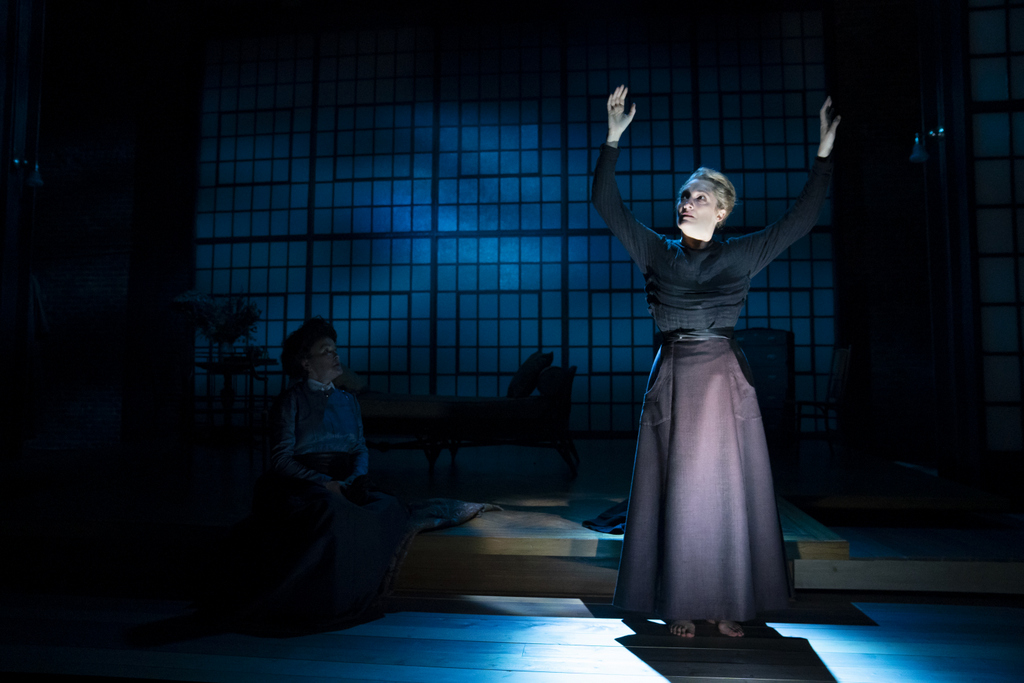
Franesca Faridany, ‘The Half-Life of Marie urie,’ Lauren Gunderson, Gayle Taylor Upchurch, Minetta Lane Theatre Audible (Joan Marcus)
Ayrton makes her grand entrance with humor and vitality and gradually helps to stiffen Curie’s resolve not to allow the scandal and vituperations of the press to completely overwhelm her into depression and career death. During the course of the humorous back and forth, we discover how Curie’s life has been upended, her career and work halted, her daughters harmed by the nefarious publicity in which Mrs. Langevin is happily vindicated and justice applied through malign falsehoods. The fact that Mrs. Langevin, “the woman scorned” goes after her rival publicly when her husband is equally responsible and deserves as much of the public ire as Curie, is a sad fact of the cultural folkways. Either way, women lose. Certainly Mrs. Langevin needs the financial support of her husband. Thus, she attacks Curie the one who endangers her home manipulating cultural mores. Ironically, Langevin rather “has his cake and eats it too.” (We discover later his wife is pregnant.)
The gender conflicts Gunderson alludes to stem from the oppression of the patriarchy which controls every institution, and whose tentacles of power stretch globally. The double standards allowing men every freedom and women every restriction, especially with regard to sexual openness, Gunderson, through the voice of the ironic Ayrton lays bare. Enforced is the underlying truth that women, like children, must be silent, demure, passive, and above all, unemotional. Ayrton reinforces that this oppression must be undone with laws giving women the vote and ability to speak and stand for themselves autonomously for the greater good of society.

(L to R): Franesca Faridany, Kate Mulgrew, The Half-Life of Marie urie, Lauren Gunderson, Gayle Taylor Upchurch, Minetta Lane Theatre Audible (Joan Marcus)
Ayrton quips about how the culture deals differently with men when they have affairs. Men are lauded, encouraged for their virility. Women are character assassinated, labeled sluts, etc., especially when the man is younger. That Curie’s career is put on hold and she is stripped of almost everything including a place where she and her daughters can live in unmolested peace is a testament to the abysmal place of in the culture who are given no consideration. They are invisible, shunted to a no-where-land, chosen after last place, while men are foremost.
The clarity of the injustices of gender inequality are saliently pinpointed in Gunderson’s examination of Curie and Ayrton’s heroism. Their concerted efforts to combat the public’s outrage are admirable. Despite warnings to the contrary, Curie attends the Nobel ceremony, accepts her prize and makes a cogent speech all of which takes great effort. And that was just the beginning of the next chapter in the lives of both women, who worked together to help the soldiers with their discoveries during WW I, accumulating more intrepid achievements that would make anyone’s head spin.
This last chapter in their lives is poetically and poignantly rendered by Faridany and Mulgrew guided by Gaye Taylor Upchurch. The actors bring Gunerson’s words to life with radiance and potency so that these women become our endearing mentors. They reveal what is possible if one persists and stands against males in power who conduct smear campaigns and proclaim women have no place in their world. This is the great and irrevocable lie of fear and obstruction which cannot and will not stand. Like truth, parity, collaboration and the freedom to choose one’s own destiny before God is an inevitability that will increase for women encouraging them to shine their light so that others can see.
This is a sterling production which is so well-crafted and portrayed by the actors it is not to be missed. See it before it closes on 22nd December. The Half-Life of Marie Curie with excellently conceived scenic design by Rachel Hauck, costume design by Sarah Laux, lighting design by Amith handrashaker and sound design by Darron L. West is at Minetta Lane Theatre (Minetta Lane off 6th Avenue). For tickets and times CLICK HERE.
 CAROLE DI TOSTI