Blog Archives
Elevator Repair Service’s ‘Ulysses’ by James Joyce, a Review
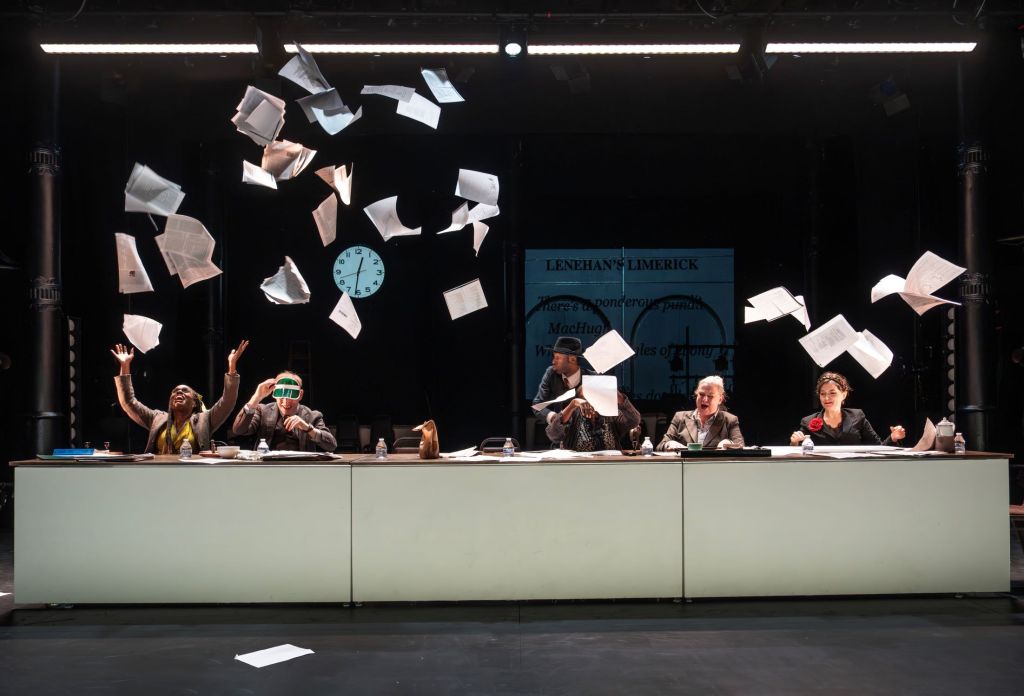
Elevator Repair Service became renowned when they presented Gatz, a verbatim six hour production of F. Scott Fitzgerald’s The Great Gatsby at the Public, as part of the Under the Radar Festival in 2006. Since their remarkable Gatz outing, they have followed up with other memorable presentations. It would appear they have outdone themselves with their prodigious effort in their New York City premiere of James Joyce’s opaque, complicated novel Ulysses. The near three-hour production directed by John Collins with co-direction and dramaturgy by Scott Shepherd, currently runs at The Public Theater until March 1, 2026.
At the top of the play Scott Shepherd introduces the play with smiling affability and grace. He directly addresses the audience, reminding them that “not much happens in Ulysses, apart from everything you can possibly imagine,” and that it happens in the span of a day beginning precisely at 8 a.m,, Thursday June 16, 1904 in Dublin, Ireland. Before Shepherd dons the character Buck Mulligan who appears at the beginning of the novel, he discusses that in the “spirit of confusion and controversy” (labels by critics), Joyce’s day in the life of three characters will be read with cuts in the text. Elevator Repair Service elected to remove Joyce’s text to redeem the time. The cuts are indicated by the cast “fast forwarding” over the narrative.
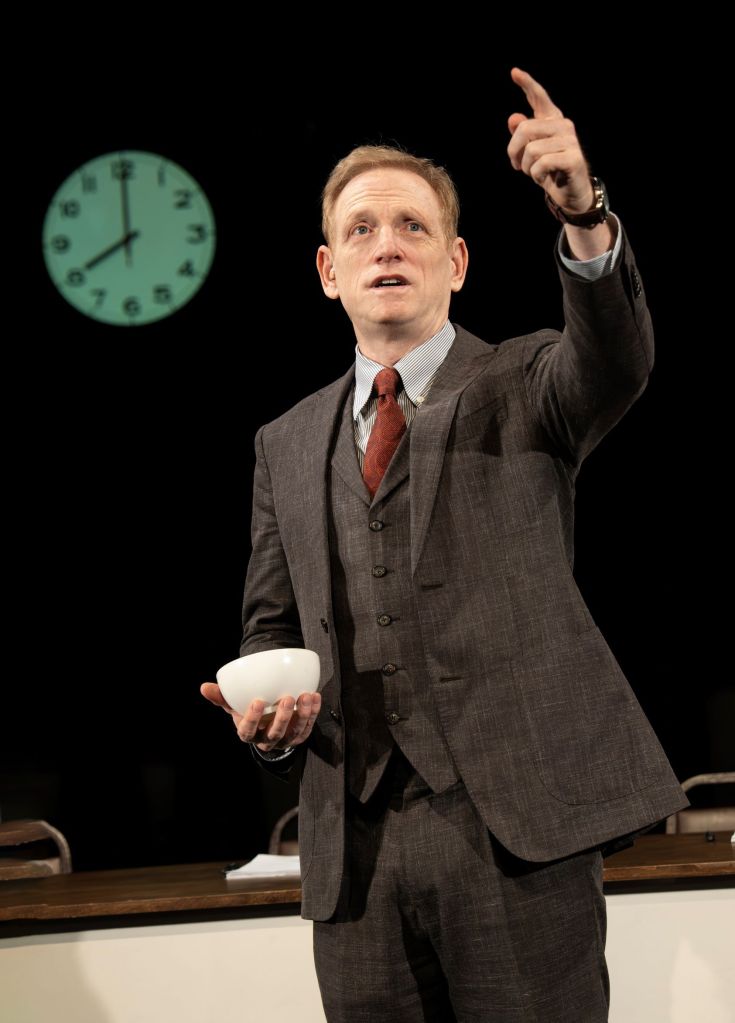
Collins and the creative team cleverly effect this “fast forwarding” with gyrating, shaking movement and action. Ben Williams’ design replicates the sound of a tape spinning forward. To anyone who may be following along with their own copy of the novel, the “fast forward” segments are humorous and telling. However, the cuts pare away some of the details and depths of character Joyce thought vital to include in his parallel of Dublin figures with the most important characters of the Odyssey: home returning hero Odysseus, long-suffering wife, Penelope, and warrior son, Telemachus.
After Shepherd’s introduction, Ulysses moves from a sedentary reading with multiple actors into a fully staged and costumed production as it progresses through the day’s events principally following Stephen Dedalus (Chisopher-Rashee Sevenson), who represents Telemachus, Leopold Bloom (Vin Knight), as Odysseus, and Molly Bloom (Maggie Hoffman) as Penelope.
The events illuminate these characters, and the cast superbly theatricalizes the novel’s humor, whimsy and farce. Some scenes more successfully realize Joyce’s playfulness and wit better than others. For example when Bloom decides to go to another pub after seeing the sloppy, gluttonous patrons of the first bar, the cast revels in portraying the slovenly, grotesque Dubliners. slobbering over their food. Additionally, the scene where Bloom faces his deepest anxieties shows Knight’s Bloom giving birth to “eight male yellow and white children.” Director Collins hysterically stages Bloom’s “labor” with Knight in the birthing position, legs apart, as Shepherd “catches” eight baby dolls he then throws to the attending cast members.
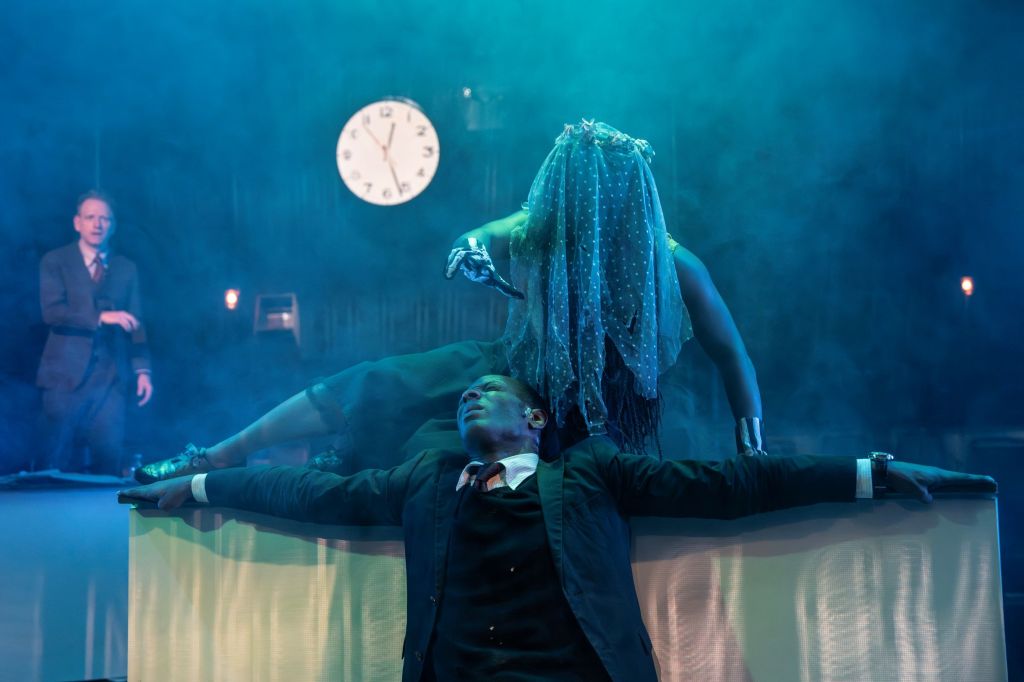
As costumes and props are added to the staging, we understand Leopold Bloom’s persecution as an outsider and a Jew. Also, wee note Stephen Dedalus as the writer/poet outsider who eventually joins Bloom, a father figure, who Bloom takes home for a time until Dedalus leaves to wander the night alone. Chistopher-Rashee Stevenson portrays the young Dedalus, a teacher whose unworthy friends lead him to drink and misdirection. Dedalus grieves his recently deceased mother and toward the end of the play has a nightmare visitation by her frightening, judgmental ghost.
For those familiar with the novel, the cast becomes outsized in rendering the various Dubliners that Knight’s Bloom and Stevenson’s Dedalus encounter. The dramatization is ultimately entertaining. We identify with Bloom as an Everyman, an anti-hero, who tries to get through the day in peace, while dismissing the knowledge that his wife Molly cuckolds him. Though he hasn’t been intimate with her since their baby Rudy died, he is unsettled that she conducts an affair with Blazes Boylan in their marriage bed at home. Somehow, Bloom has discovered that Molly who is a singer will be meeting with Boylan at 4 p.m. that afternoon. On his journey through the day he avoids confronting Boylan as they carry on with their activities around Dublin.
The ironic anti-parallel to the Odyssey, on the one hand, is that Molly Bloom is far from a Penelope who physically remained loyal to Odysseus, where Molly has an affair. On the other hand, late at night as Bloom sleeps with his feet awkwardly next to her face, we understand that Molly still loves Bloom and is emotionally and intellectually loyal. In her stream of consciousness monologue, seductively delivered by Maggie Hoffman, Molly arouses herself with memories of her relationship with Bloom when they were first together. It was then that she transferred a seed-cake from her mouth to his, sensually expressing her love.
Collins’s staging of the scene is humorous and profound. It defines why Molly has been present in Bloom’s consciousness throughout his strange journey traversing the streets of Dublin until he eventually finds his way home to her bed later that evening.
For those unfamiliar with Joyce’s novel, they will find the events and people a muddled hodgepodge that clarifies then becomes opaque, like a light switch turning on and off. Characters swap places with each other as seven actors take on numerous parts in a sometimes confusing array. Only Bloom, Dedalus and Molly stand out, true to Joyce’s vision for Ulysses for they embody Joyce’s themes about life. Thus, Bloom and Dedalus move through the day with flashes of brilliance, revelation, connection, irony and dread. Their reactions interest us. And Molly Bloom in her ending monologue puts a capstone on the vitality and beauty of a women’s perspective, as she experiences the sensuality and power of love for Bloom through reminiscence.
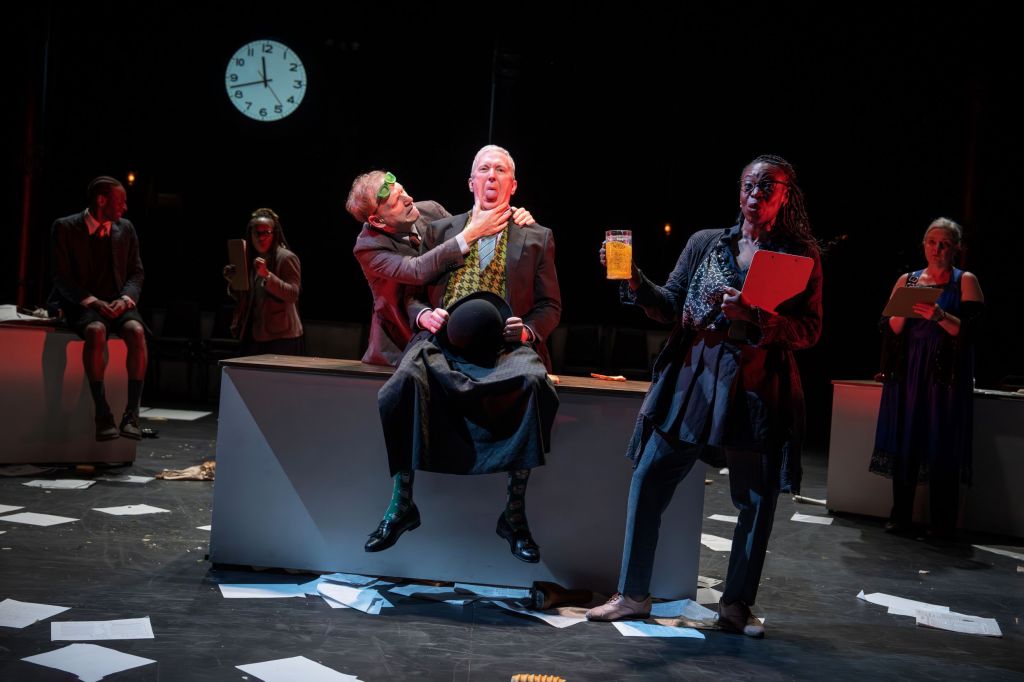
The costume design by Enver Chakartash reflects the time period with a fanciful modernist flourish that gives humor and depth to the personalities of the characters. For example Blazes Boylan (Scott Shepard) who has the affair with Molly wears a straw hat, outrageous wig and light suit that aligns with his jaunty gait. The scenic design by DOTS is minimalist and functional as is Marika Kent’s lighting design and Mathew Deinhart’s projection design. Most outstanding is Ben Williams’ acute, specific sound design which brings the scenes to life and follows the text adding fun and delight.
By the conclusion the audience is spent following the challenge of recognizing Joyce’s Dublin and the three unusual intellectuals and artists who he chooses to explore. Elevator Repair Service has elucidated the novel beyond what one might endeavor to understand reading it on one’s own. Importantly, they’ve made Ulysses an experience to marvel at and question.
Ulysses runs 2 hours 45 minutes with one intermission at the Public Theater through March 1, 2026. https://publictheater.org/productions/season/2526/ulysses
‘Brooklyn Laundry’ a Soap-diluted Rom-com That Avoids the Soul-dirt
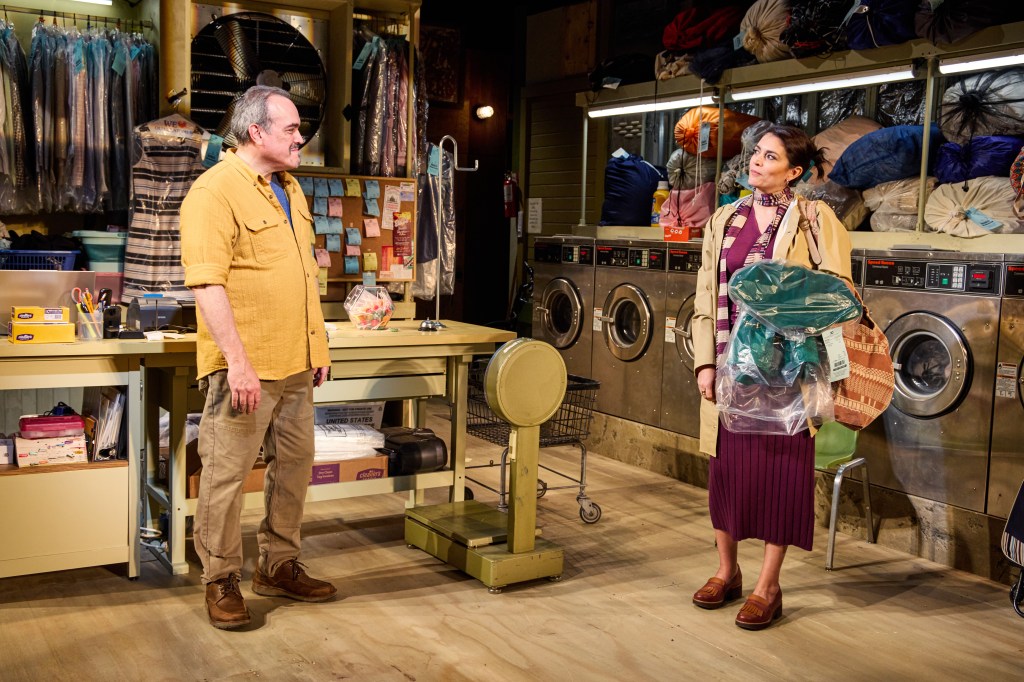
John Patrick Shanley’s Brooklyn Laundry, currently at MTC Stage 1 never quite elucidates trenchant themes though it might have with further character development. The 80 minute play, also directed by Shanley, currently runs at New York City Center Stage 1 until April 14th.
Starring Cecily Strong (“Saturday Night Live”), and David Zayas (“Dexter’), as the principal couple who meet in a drop-off laundry in Bushwick, Brooklyn, in Brooklyn Laundry Shanley presents two individuals who become involved with each other as a result of desperation, depression and loneliness. Also, they are between partners and have not been involved in a successful relationship ever.
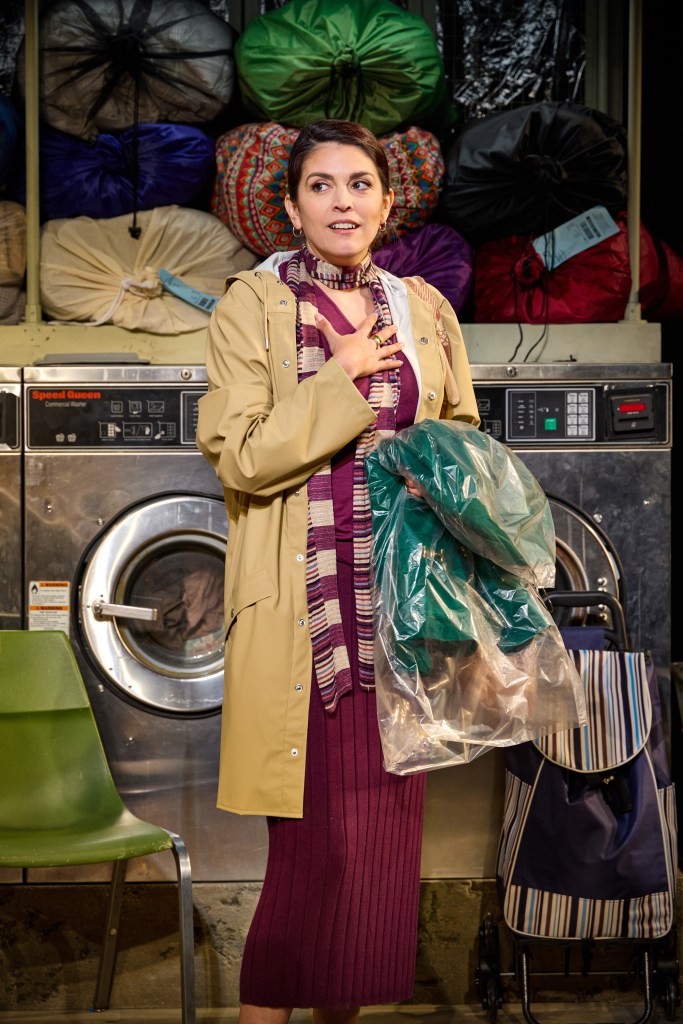
The Meet-Up
Laundry owner Owen (the lively Zayas), engages in light conversation with Strong’s Fran as the play opens. She is an on again off again customer, whose boyfriend left. Fran admits later in the scene that she is self-conscious about the fact that she can barely scrounge enough laundry to drop off for one load. When she was with her boyfriend, the bag weighed thirty-eight pounds; they did their laundry together. Owen, who Fran reminds that he owes her credit for losing a bag of her laundry 6 months prior, acknowledges that her lost laundry is a mystery. He has been giving her credit, though she complains that it doesn’t cover the price of replacing the missing items.
As they chit chat, Owen notes her “gloomy” nature to jostle her out of it. He tells her she reminds him of his fiance, who was “smart, one inch from terrific, but gloomy.” Fran disputes his label about her and suggests reality has brought issues into her life, and it isn’t without reason that her situation doesn’t make her the sunshine kid.
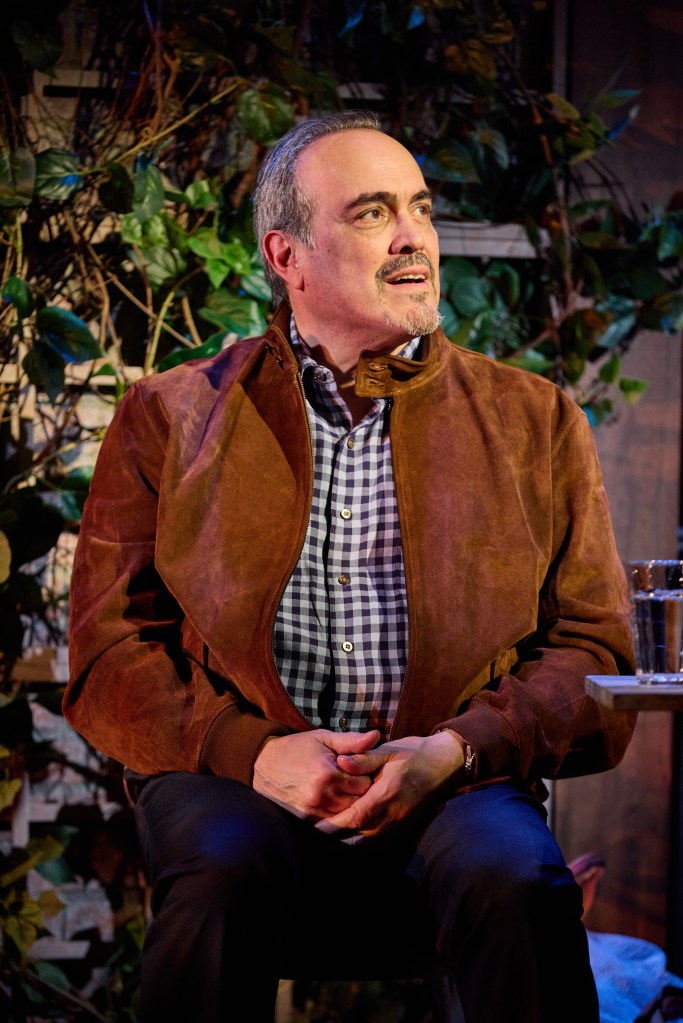
Owen discusses the necessity for positivity and an uplifted attitude, sharing his recent life story. He became the owner of three laundries, after a car accident settlement and lawsuit against his 9 to 5 boss who unfairly fired him. Assured that he has answers for her life in the face of her wishing she could have a car accident and be so lucky for monetary settlements, he takes a leap of faith. With apparent confidence he asks her to dinner. Fran suggests she will after she returns from a family visit in Pennsylvania.
Shanley has established the ground rules for these two individuals from different backgrounds with little in common, who make a connection simply by being present together and willing it. From this initial spark, Shanley takes us on a journey of how unlikely singles Fran and Owen fall in love because of need.
Reality’s Gloom and Fran’s Escape
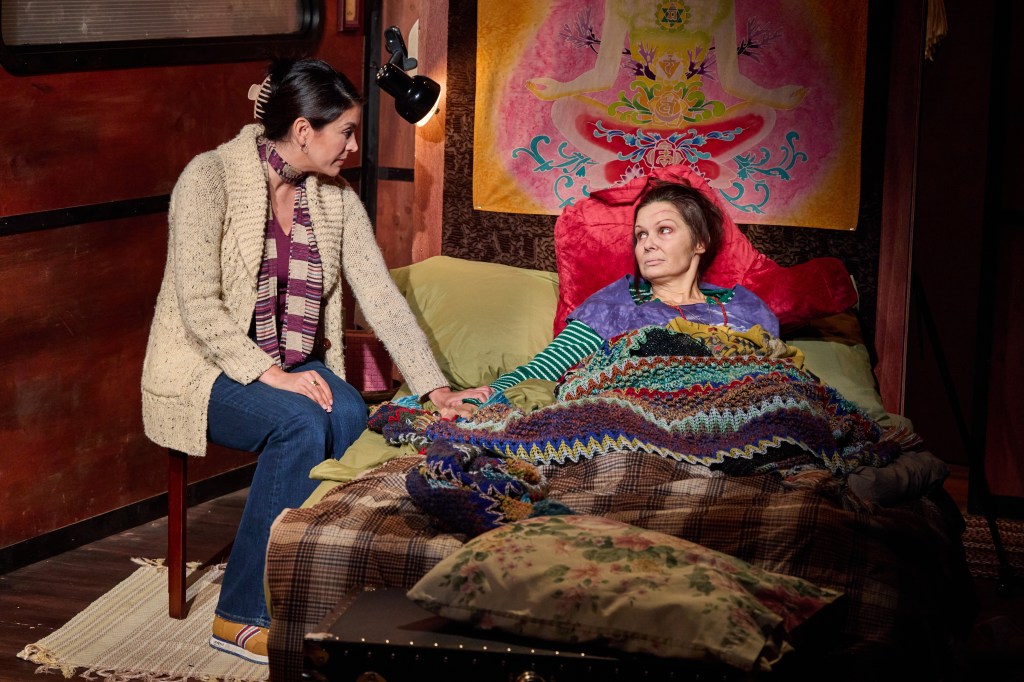
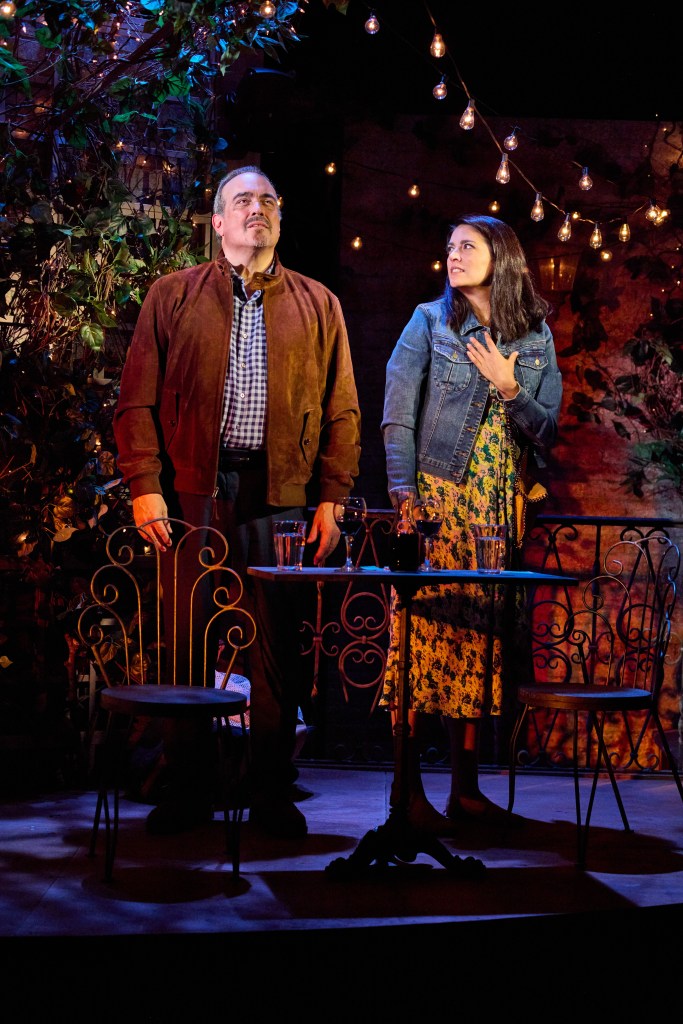
In the next segment, we understand why Fran is depressed when she visits her sister Trish (Florencia Lozano), who is ill with cancer, loopy on meds and lying in bed mostly unconscious. After her visit with Trish, Fran goes on her date with Owen high on magic mushrooms. She offers some to Owen and after a while he catches up to her. Together they experience the beauty of the lights and atmosphere of romanticism and their conversation intensifies.
On a sub rosa level, Fran introduces the mushrooms into the situation because she wants to escape thoughts about her dying sister. She chooses to live in a lovely, seductive place with Owen. She doesn’t share her Trish reality with him for fear it will drive him away. So she suppresses her emotions to suit his needs to be positive and upbeat. She puts aside her gloominess, despite the fact that complications with Trish abound and she has less than a month to live.
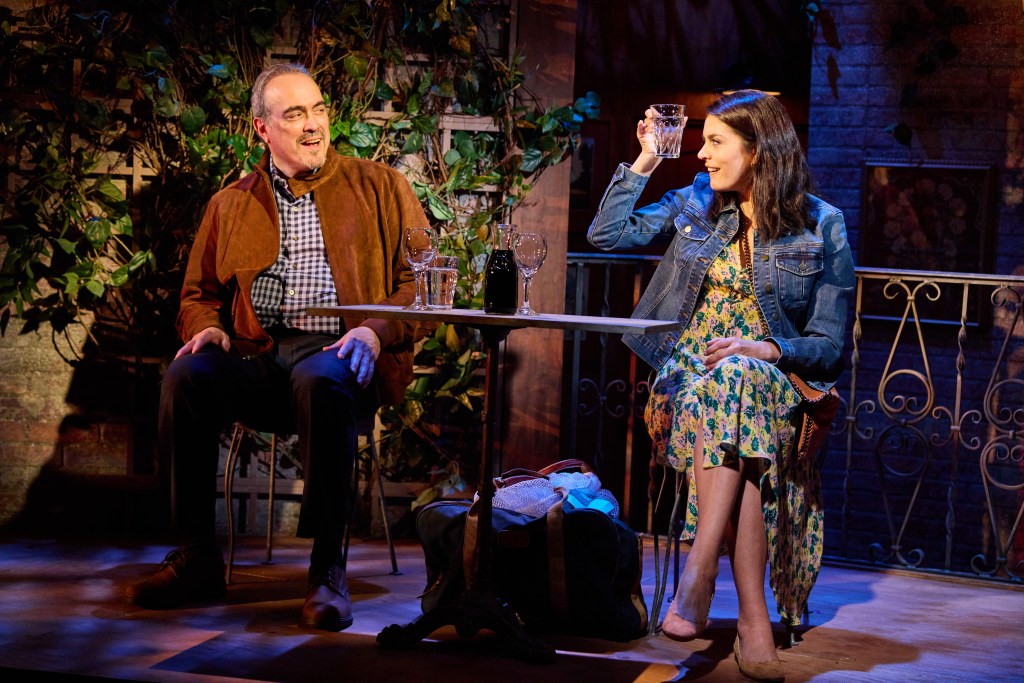
The mushrooms encourage their intimacy and Fran helps Owen conquer his sexual problems that happened as a result of his car accident, problems which turned off his former girlfriend who dumped him as a result of his poor performance. Interestingly, Owen is honest about a very sensitive subject with Fran and of course she helps him. On the other hand, Fran is dishonest with Owen because he set the parameters that she feels she must adhere to to be with him: no gloom. Thus, Fran and Owen become closer after their first date of intimacy, and after three weeks, theirs is a budding love.
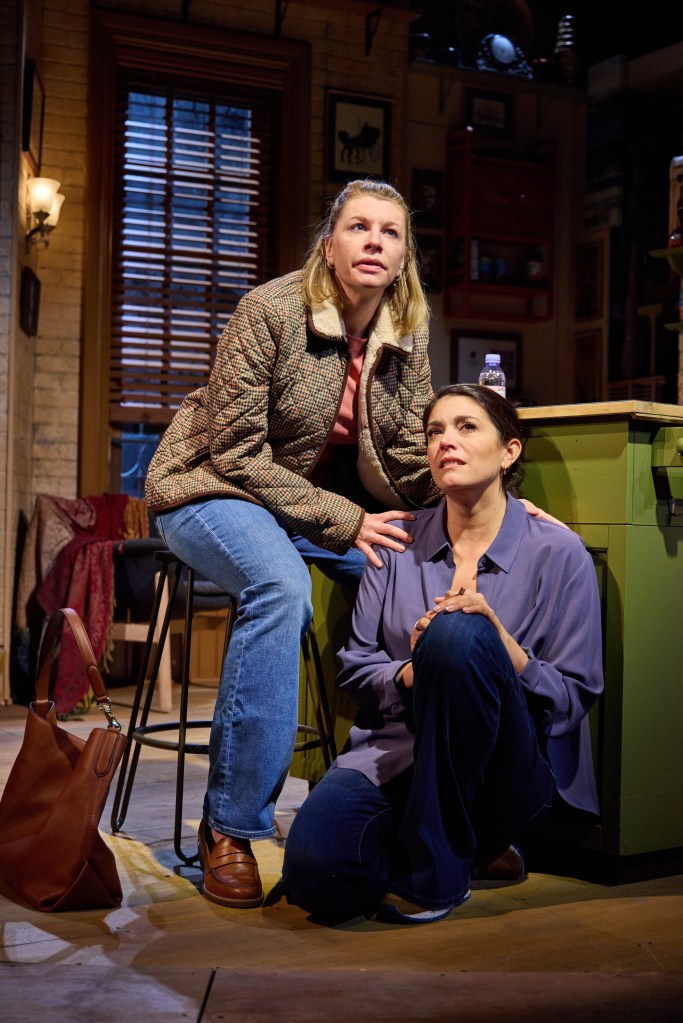
However, another jolt of reality intrudes and slams Fran in her “honesty” with Owen. Fran’s other sister Susie (Andrea Syglowski is always spot-on), stops by to collect Fran so together they will make arrangements for Trish’s imminent death. Fran refuses to go with Susie initially. She fears if she leaves Owen to spend time with family, she will lose the momentum of their relationship and he will dump her for someone else. With lies of omission, she lives in her own dream that she can spin along her affair with Owen without introducing the ugly realities about Trish dying.
The argument that ensues between Strong’s Fran and Sydlowski’s Susie about whether to visit Trish before she dies is beautifully paced and authentically threaded by both actors. During their accusations against each other, we learn how high the stakes are for Fran, who has never been married and has been the hand maiden to her two divorced sisters and their relationships with their loser husbands. We realize why she elected to escape to a love relationship with someone off beat which she clings to so she doesn’t have to face the doom and sadness of her life. Because Owen doesn’t appreciate negativity, his wants prevent her from spilling her emotions to him. Ironically, she is cutting off a valuable part of herself because she fears he only wants “happy, happy.”
Spoiler Alert
Then Susie levels with Fran about why she didn’t accompany her to see Trish the last visit. Susie is dying of pancreatic cancer.
With charming facility Owen cleaned off the “gloomies” from Fran’s plate to no avail. Susie’s horrible news slams Fran with a triple portion of gloom. Not only must she confront Trish’s impending death and the consequences of its impact on Trish’s young child, Taylor, she must confront the consequences of Susie’s dire prognosis. Fran’s doom and gloom lifted for three weeks by Owen will be a permanent fixture in her life. Additionally, guardianship of her sisters’ three children and their financial custodianship falls to her as their closest living relative. Will Owen want to take on a woman with three kids especially since he confessed he only wants his own child and isn’t looking for huge bills to pay for the upkeep of children who aren’t his?
The strength of Brooklyn Laundry is in how Shanley weaves the events, to back Fran into a corner delivering reality’s blows to her life, while showing her desperation to escape her circumstances by not sharing the truth with Owen. Eventually, her own obfuscations come back to haunt her. When Susie tells her about her cancer, Fran wakes up and stops moving in her imagined dream. She assures Susie she will act responsibly. Shanley’s characterization of Fran reveals her nobility, self-sacrifice and integrity in honoring her sisters by raising their children. She has made up her mind and whatever Owen does is up to him, take it or leave it. Fran puts family first.
The Last 10 Minutes
The last ten minutes of Brooklyn Laundry are the most dynamic because we note the inner struggles of the characters as they deal with hidden truths. Fran confronts Owen who stopped answering her calls. Though he portrays himself as the victim and ignores her comments that he ghosted her, something he promised he would never do, eventually, he is forced to put his pride aside. They both realize what they will lose without each other, and they are able to accept with humility that they care.
Shanley perhaps misses important dramatic moments by having the characters report their reactions after the fact to each other, instead of establishing a few scenes that are immediate, confrontational and a dynamic build up with irony. Instead, he writes one scene of alive confrontation and saves it for the very end. It is then that Fran’s serenity with reality shines and Owen reveals himself to be a typical male, more full of himself than he needs to be. However, after Fran walks out of his life to live in Pennsylvania, he realizes his mistake. The play’s conclusion falls into place with a few humorous surprises to satisfy audiences.
Kudos to the involved three-set scenic design of Santo Loquasto, Suzy Benzinger’s costume design, Brian MacDevitt’s lighting design. MacDevitt presents the magical fairy land lighting of the restaurant scene perfectly. Additional kudos goes to original music and sound design by John Gromada.
Brooklyn Laundry is facile and enjoyable thanks to the excellent acting ensemble. Shanley’s rhythms about loss, need and taking risks without ego are imminently human and recognizable.
Brooklyn Laundry with no intermission is in a limited engagement until April 14th. New York City Center MTC Stage 1, 131 West 55th St between 6th and 7th. manhattantheatreclub.com.
 CAROLE DI TOSTI