Blog Archives
‘Orpheus Descending,’ One of Tennessee Williams Most Incisive Works-a Searing Triumph
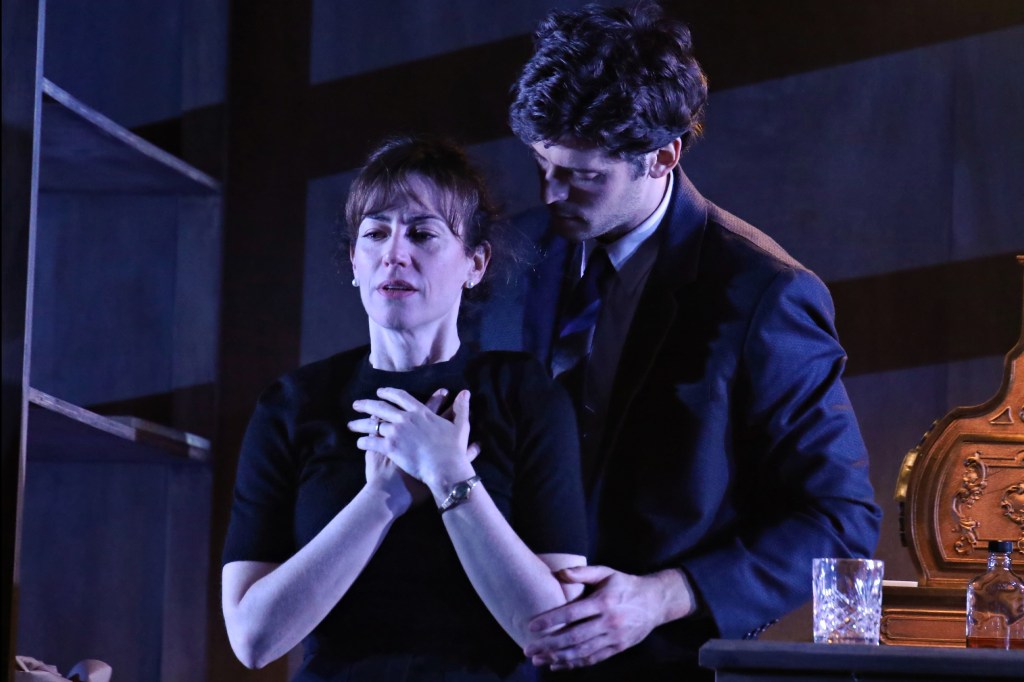
The hell of the South abides in Erica Schmidt’s revival of Orpheus Descending, currently running at Theatre for a New Audience in Brooklyn until August 6th. Tennessee Williams’ poetically brazen work about the underbelly of America that reeks of discrimination, violence, bigotry and cruelty seems particularly regressive in the townspeople of the rural, small, southern, backwater of Two River County, the setting Williams draws for his play.
This production is raw in its ferocity, terrifying in its prescience. It reminds us of the extent to which racists and bigots go feeling self-righteous about their loathsome behaviors when the culture empowers them. The director shepherds the actors to give authentic portrayals that remind us that death lurks in the sadistic wicked who seek to devour those whom they may, especially when their targets have peace and happiness, and step over the line (what the bigots hypocritically think is the line).
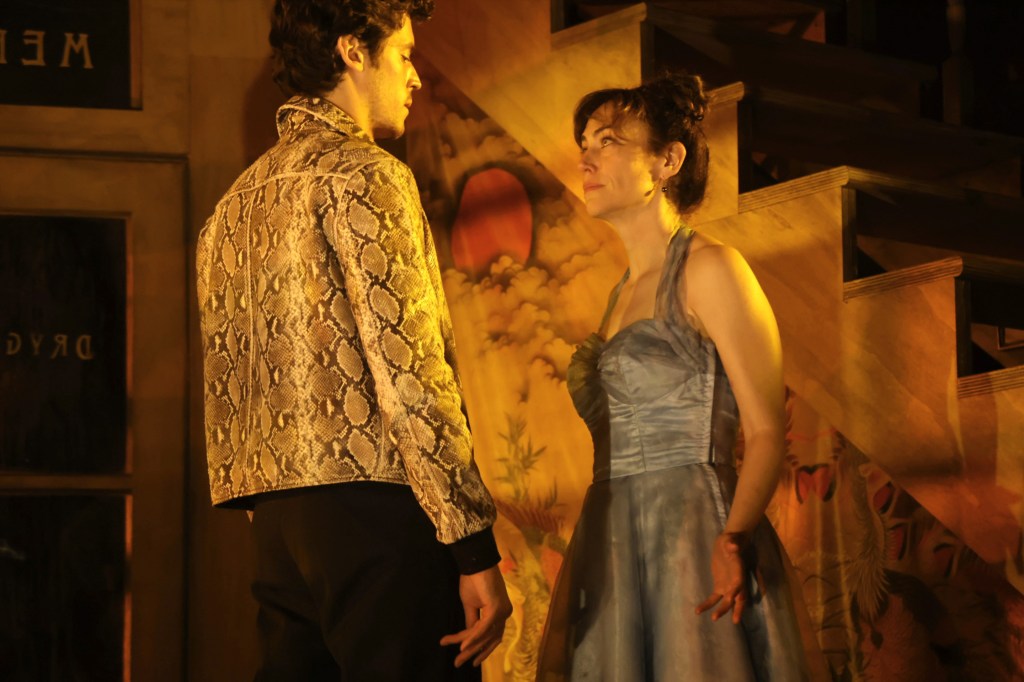
At the top of the play, we immediately note that stupidity and hypocrisy exude from the pours of most of the homely white characters. Sheriff Talbot and the wealthy Cutrere family are the chief representatives and purveyors of white supremacist, conservative law and order, which is as natural and welcome as white on rice.
Williams’ brilliant but lesser known work is based on the Orpheus and Eurydice myth. However, Williams updates the allusion and spins it into metaphoric gold transposing the heroic characters into artists, visionaries and fugitives, who rise wildly above the droll deadness of their environs or are delivered from them, as is Lady (Maggie Siff) who is brought to life during her relationship with Val (Pico Alexander). During the course of Val’s and Lady’s dynamic relationship with each other, they seek to cleanse and overcome their past heartbreaks and regrets and move upward toward redemption, reclamation and new beginnings with each other’s help.

The banal atmosphere conveyed by Amy Rubin’s spare, angular, cage-like design of the Torrence dry goods store is an appropriate setting where most of the conflict and interplay among the characters takes place. Its ugly, hackneyed blandness, lack of vibrancy and straight-edged corners symbolize Lady Torrence’s desolate life with the hypocritical, vapid townspeople and her infirm, brutal, racist, hoary-looking husband Jabe Torrance (the irascible, excellent Michael Cullen).
The other two sections of the set, the confectionery (stage left) and the storage area behind the curtain (stage right), Rubin suggests with minimalism. The confectionery and the storage area symbolize the other aspects of Lady’s character that are not governed by Jabe and the destructive, deadening, Southern folkways. The confectionery eventually outfitted with lanterns symbolizes her hope for renewal and reclamation. The intimate, barely lit, storage area where Val sleeps symbolizes the fulfillment of her desire for love.
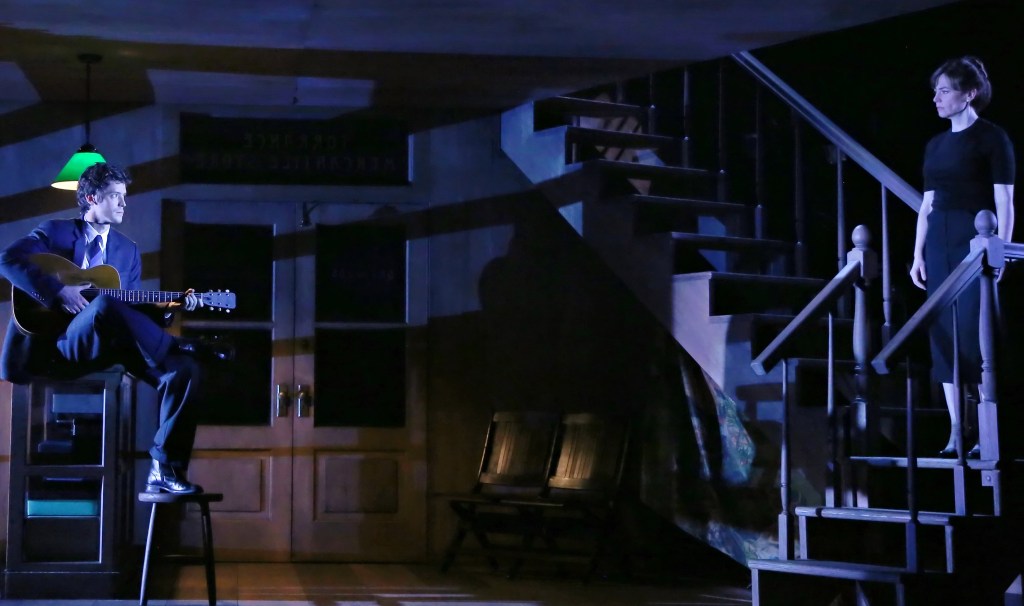
Center stage is the store and above it the Torrence bedroom, both subscribed by walls which pen Lady in. Along with Jabe, the store’s visitors suck her life-blood dry with the exception of Val and Vee (Anna Reeder), a Cassandra-like character. Above the store, Jabe lies in bed dying. Empty of kind words, Jabe communicates his bile and bitterness by pounding his cane on the floor from his sick bed. It is an ominous foreboding alarm that one imagines the master sends to his slave when he commands something from them immediately.
Into Two River county’s washed-out “neon,” “low-life” mediocrity comes the contrasting light and beauty of the guitar artist/entertainer, the stunning and untouchable Val Xavier. Pico Alexander makes the role his own, portraying Val with grace and alluring, angelic innocence befitting “Boy,” the nickname the assertive, feisty Lady gives him. Siff is sterling and likable as she grows vivacious as their bond develops. Siff’s scene where she reveals she is committed to loving Val, despite not wanting to admit needing him is just smashing.
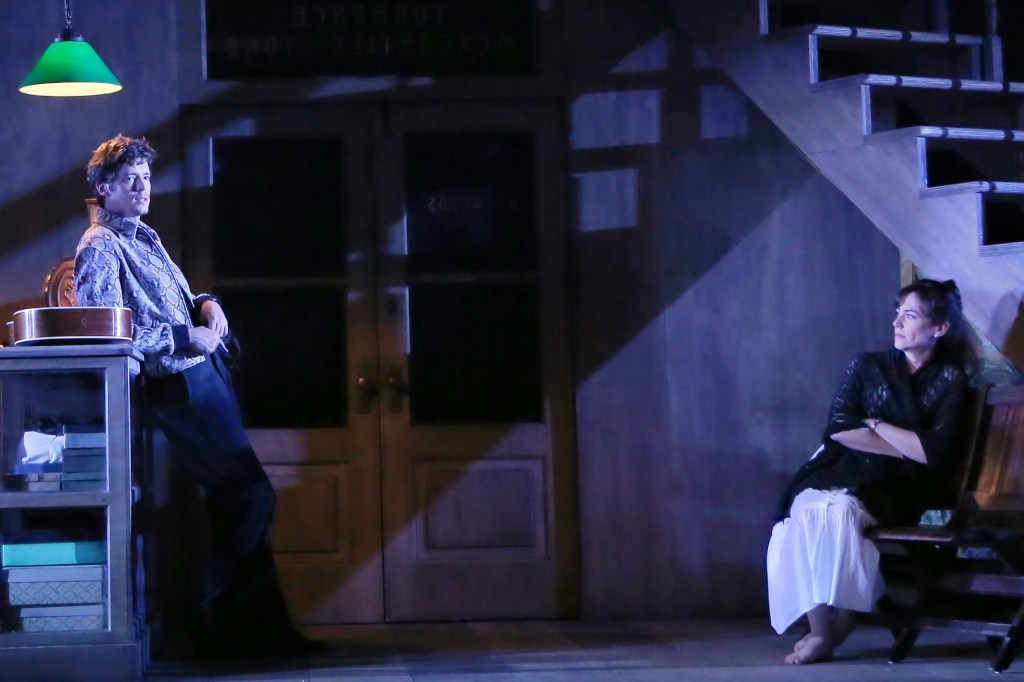
Val illuminates the spaces he enters and shatters the peace of Dolly Hamma (Molly Kate Babos) and Beulah Binnings (Laura Heisler) when he drops by the Torrence store on Vee Talbott’s suggestion that Lady Torrence might give him a job. As he waits patiently for Jabe and Lady to arrive from the hospital after Jabe’s unsuccessful operation, Jabe’s cousins Dolly and Beulah “eye him” while they prepare a celebration for Jabe’s return.
Vee (the fine Ana Reeder), a spiritual visionary born with second sight, accompanies Val and introduces him to the other women hanging around, one of whom is Carol Cutrere (the superb Julia McDermott), a rebellious hellion whose outsized antics and screaming of the Chocktaw cry with Uncle Pleasant, the conjure man (Dathan B. Williams), make the other women apoplectic. Clearly, Carol is an outsider like Val and Lady, only saved by her last name.
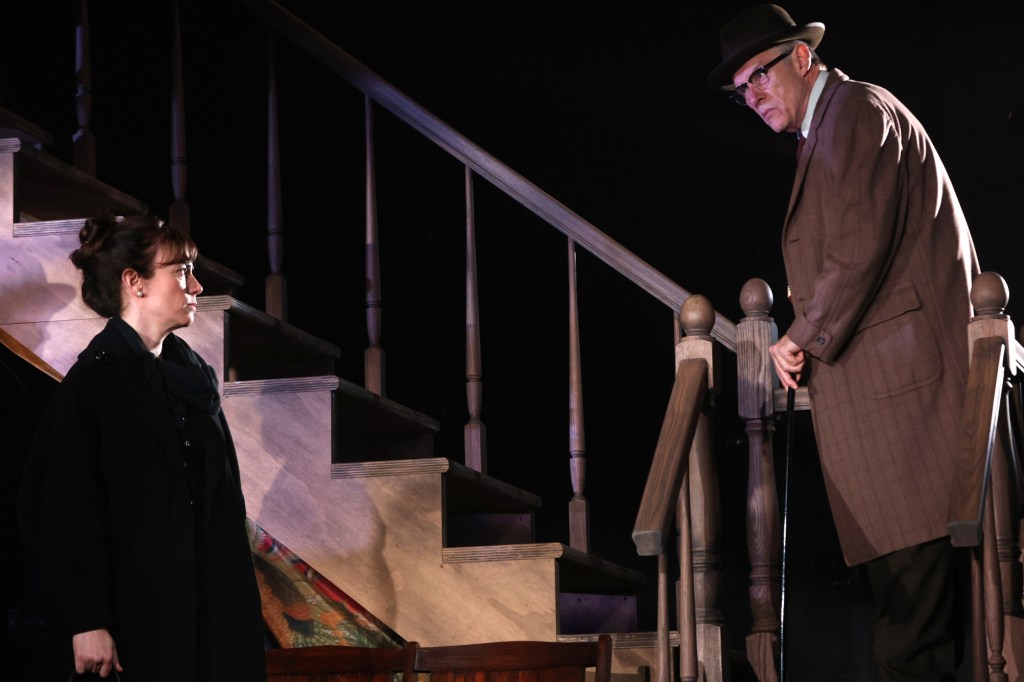
As Vee relates the visions that form the basis of the painting she brings for Jabe to encourage his healing, we note she doesn’t fit in either. If she weren’t married to Sheriff Talbott (Brian Keane) her eccentric ways would banish her from the “polite society” gathered in the store, rounded off by gossip mongers, Sister Temple (Prudence Wright Holmes) and Eva Temple (Kate Skinner), who sneak up the wooden steps to check out Jabe’s bedroom before he and Lady return.
Schmidt stages these opening scenes of William’s claustrophobic setting and characters to maximum effect, clustering the women at the counter and bringing Carol and Uncle Pleasant downstage for their chant and evocation. Downstage is where Carol cavorts, delivers a few soliloquies, and wails her outrage and sorrow as an encomium at the play’s conclusion.
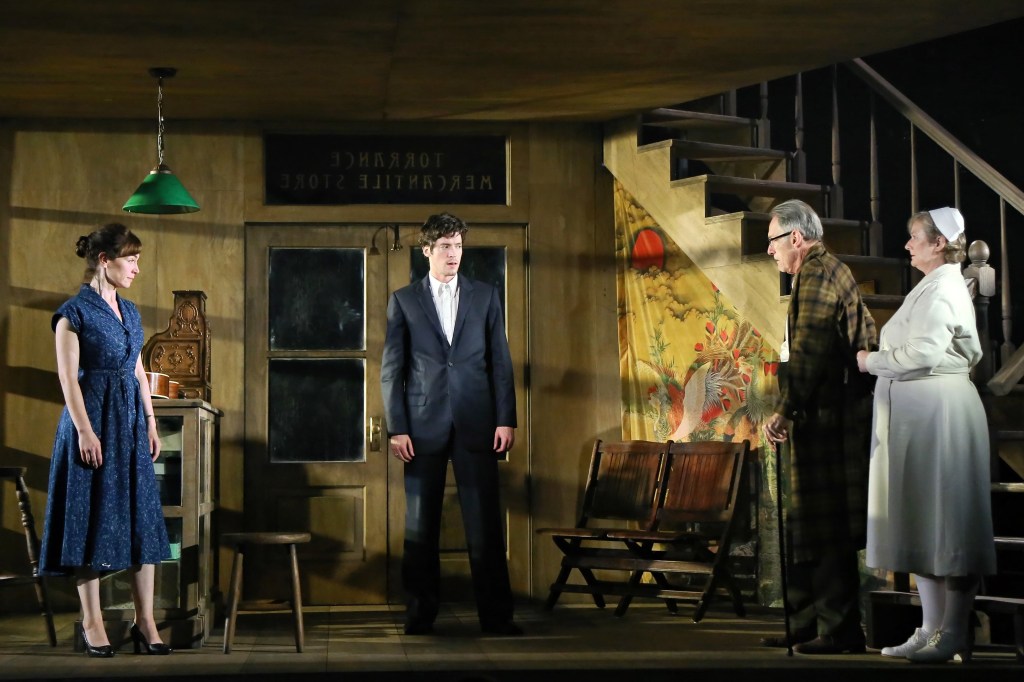
By the time Jabe and Lady arrive and Jabe retires upstairs, we have an understanding of the desolate elements and competing life forces that will drive the conflict forward. Additionally, Williams has the gossips share Lady’s terrible backstory that involves the KKK torching her father’s wine garden, and his gruesome death burning alive in the conflagration because not one firetruck or patron came to his aide.
All this was because he violated the towns’ mores and unwritten law serving wine to “ni$$ers. Implied by Jabe later in the play, the “Wop” had too much life in him and had to be cut down to size and made destitute. Interestingly, Lady’s determined father decided he’d rather burn alive trying to salvage his life’s work than accept poverty and brutality in a death-filled culture. For Lady, the acorn doesn’t fall far from the oak. She decides to take a stand against Jabe and his sadistic brutality than run away with Val.
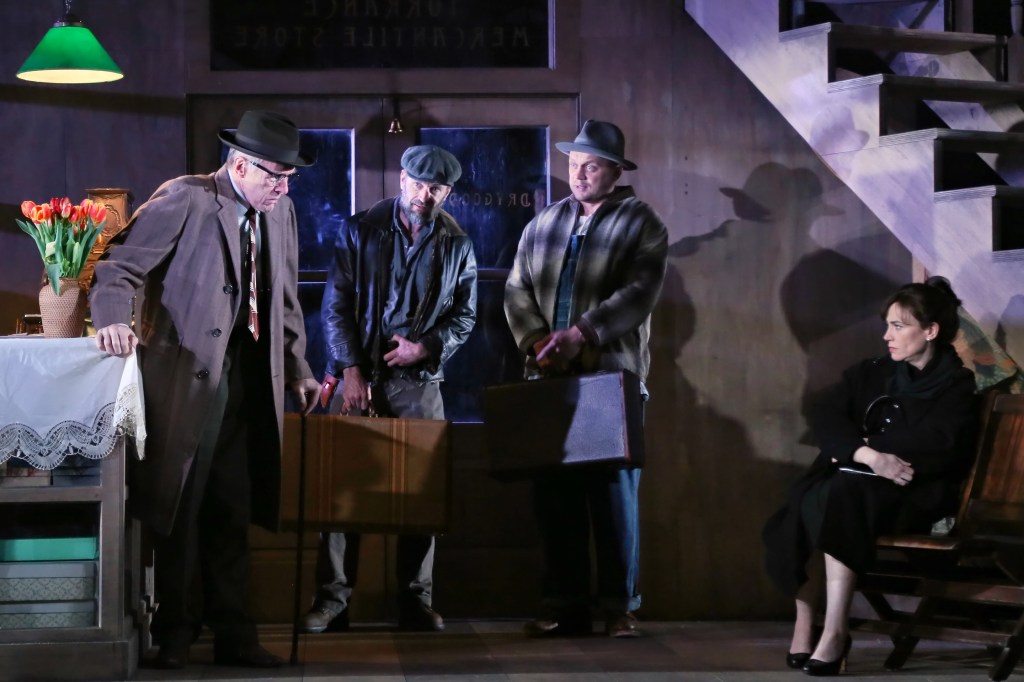
Alexander’s Val and Siff’s Lady establish their relationship gradually with Siff aggressively taunting Val’s appeal to women, one of whom is McDermott’s live-wire Carol. As their comfort level with each other grows, the two bond over Val’s description of a bird that is so free it never corrupts itself by touching the ground and only does so when it dies. Lady expresses her desire for such freedom, and after their discussion is abruptly interrupted by Jabe’s pounding, we note a greater lightheartedness within Lady. Val’s presence is the freedom and wildness that she craves.
Indeed, we note her mood is uplifted every time Lady has a quiet conversation with Val. The actors have the privilege of organically inhabiting these memorable characters with ease to deliver some of the most figuratively elegant and coherently rich dialogue found in all of Williams’ works. One of their most powerful scenes concerns Val’s description of the corrupt world and his own corruption. He counters it by sharing how his “life’s companion,” his guitar and his music, cleanses his impurity and makes him whole again.
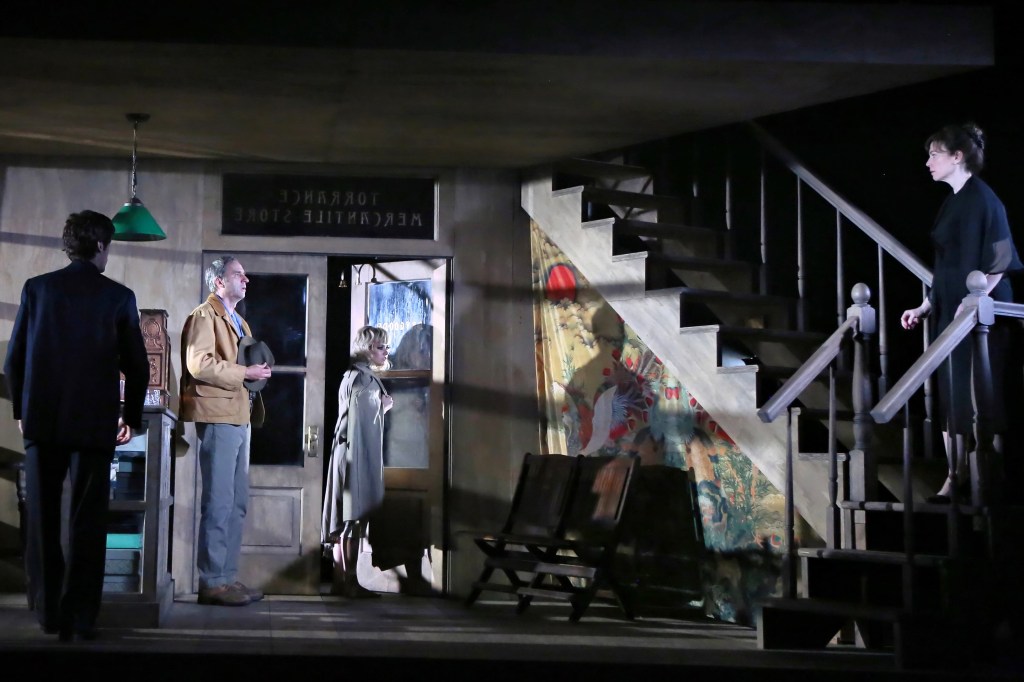
As Val settles in and she begins to rely on him, we realize that her inspiration and actions to reopen the confectionery (Schmidt use of the lanterns descending in the stylized space, stage left) run parallel to Val’s regenerative influence over her. He has ignited her hope and desire to be resurrected from the ashes of the burning, the town’s hatred and racism, and Jabe’s enslavement and ownership of her mental and emotional well being.
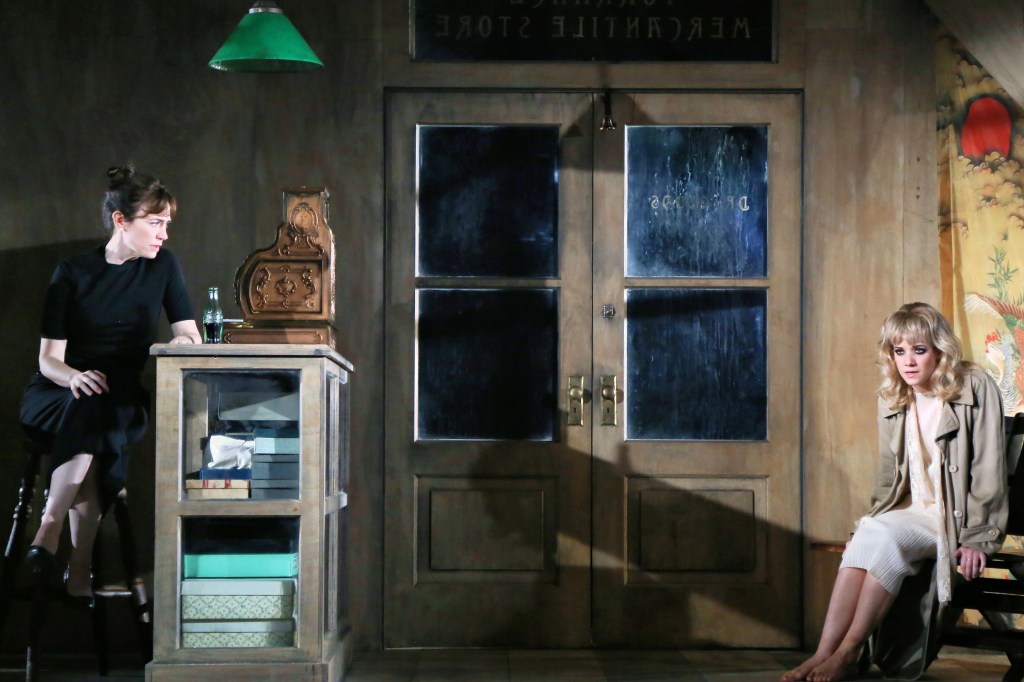
In his characterization of Jabe, Williams reveals the psychosis of the Southern Red Neck confederates turned white supremacists that lost the Civil War but persist in acting as if they won it, especially with regard to their racism and hatred of Blacks and “the other,” (immigrants). In Schmidt’s version, we see that Jabe’s attitudes and the attitudes of the other men presciently foreshadow the current MAGA Republicans’ penchant to be brutal and criminally sadistic because their “power” gives them the right, regardless of the truth of the circumstance or the legality. Certainly, Jabe has the power and white supremacist friends (Sheriff Talbot) to back up his actions with impunity.
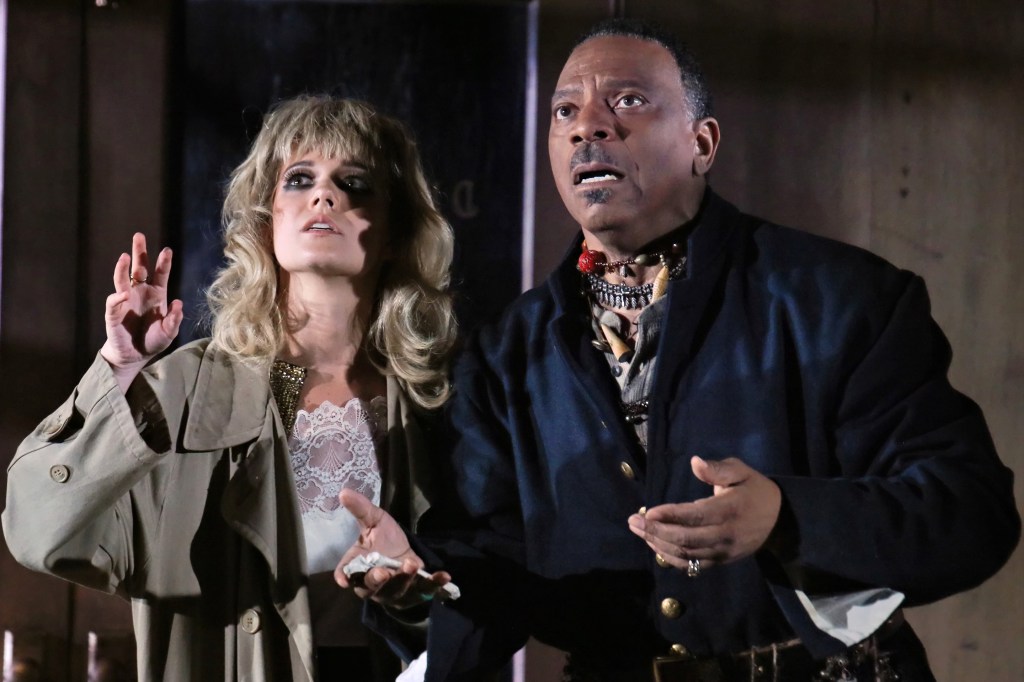
Thus, as Lady has told Val, she “lives” with Jabe, a figure of death who makes sure to stomp down her happiness or agency every chance he gets. In fact each time Val and Lady seek each other’s company for verbal comfort, Jabe almost intuits that she is uplifted away from his presence and claws and pounds (with his cane) his way back into her mind and emotions with his demands. She always goes running to him, for in her soul, she feels she has no other options.
The turning point arrives when Jabe comes downstairs to exert himself over the cancer that is killing him and perpetrate some new malignity against her, which appears to be the only pleasure he has. His emotions are pinged to remembrance when he views the loveliness of the confectionery and the new life that has inspired it (Val). It is then he strikes at Lady provoking her past reason, a white supremacist sadist to the last.
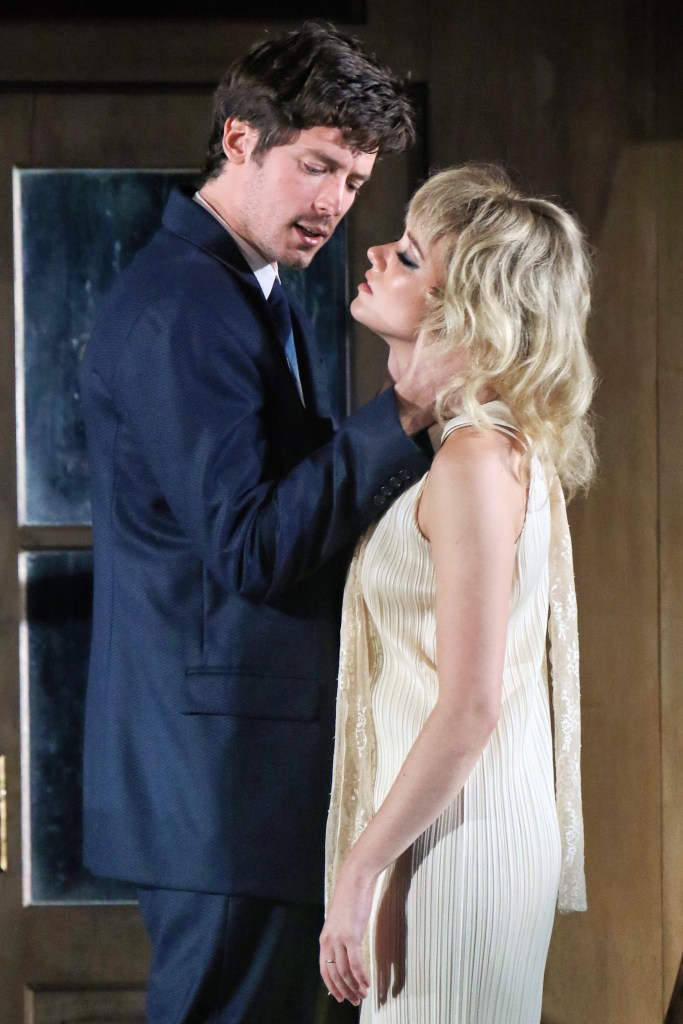
There are no spoilers. What transpires is Williams’ reaffirmation of the modern day tragedy that resulted daily in the Jim Crow South when white supremacists asserted they won the Civil War with every Black person they lynched using law enforcement to cover for them. In the play Williams also infers how this happens in the inhuman, abusive prison system which prompts men to escape and uses the escape as the justification for their killing.
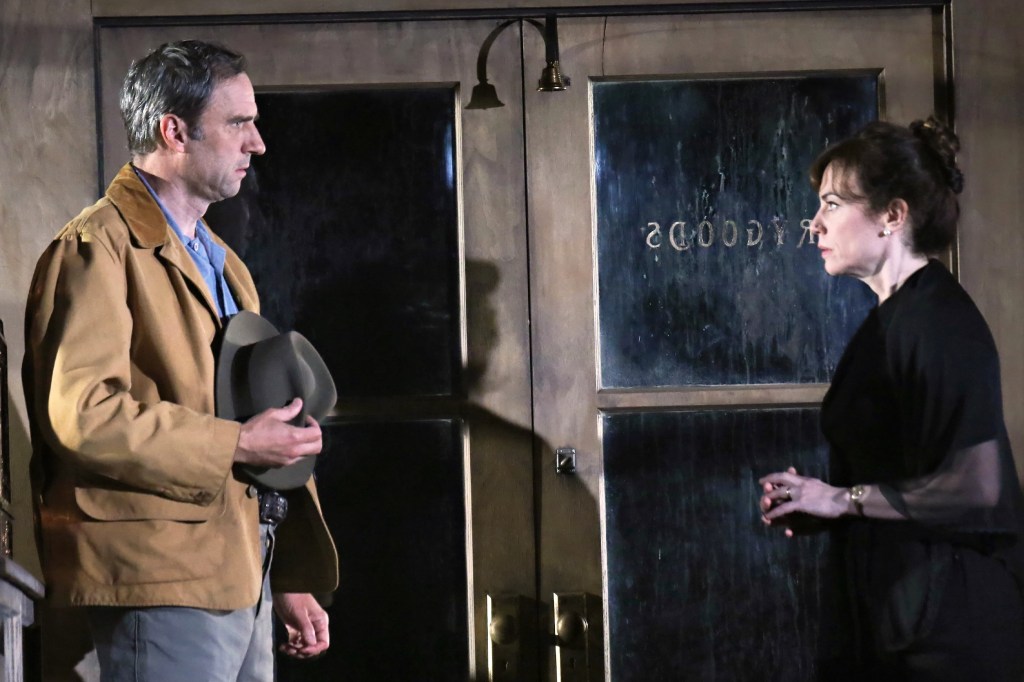
Schmidt and her team have created a production that is bold in revealing Williams’ trenchant themes about death, life, hatred, bigotry, racism and the utter wicked sadism and evil that would keep such a culture going even if the culprits, like Jabe, suffer and are eaten alive by their own hatred. In revealing Williams’ prescient themes that apply for us today, we note that a racist culture cannot be confronted when the power is held by the racists and bigots. Indeed, one must escape the purveyors of death and leave their sphere of influence, if there is no federal oversight or punishment for law breaking. If there isn’t accountability, the individuals, will do as they please, and like despots bend their underlings to their will as death dealers.
Kudos to the creative team which includes Jennifer Moeller’s costume design, David Weiner’s lighting design, Cookie Jordan’s hair and wig design and Justin Ellington’s original music and sound design.
The production concludes August 6th. Don’t miss it for its profound characterizations beautifully acted, acute ideas Schmidt suggests with her fine direction and the technical production values that bring Williams’ stark truths to bear on us today. For tickets and times go to their website https://www.tfana.org/visit/ticket-venue-policies
‘Heroes of the Fourth Turning’ by Will Arbery at Playwrights Horizons

Jeb Kreager, Julia McDermott, Heroes of the Fourth Turning by Will Arbery (Joan Marcus)
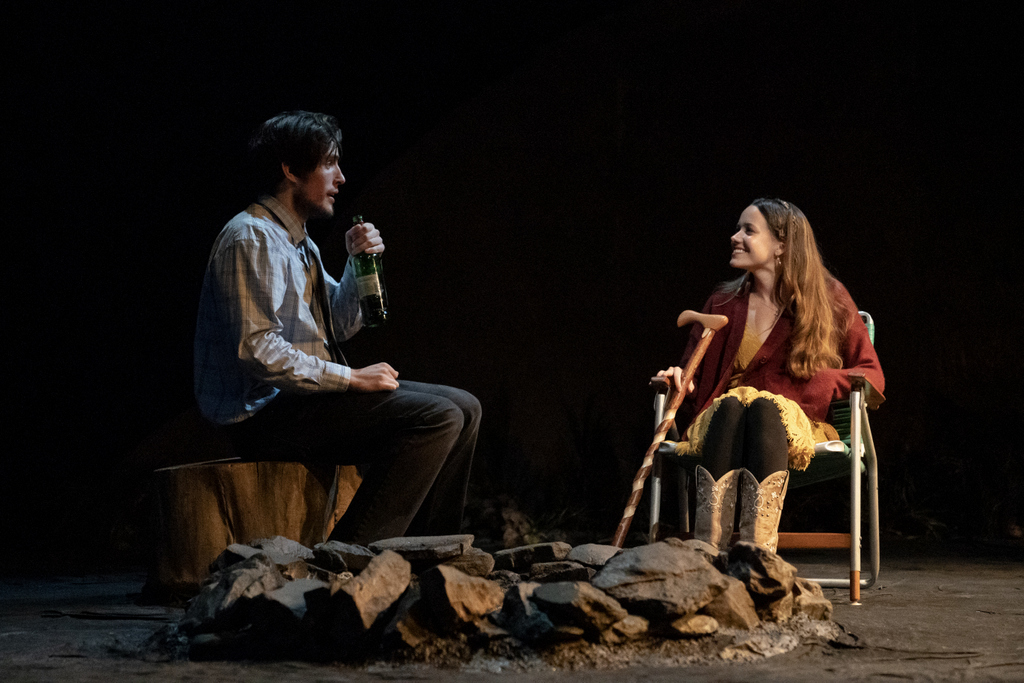
John Zdrojeski, Julia McDermott in Heroes of the Fourth Turning, by Will Arbery (Joan Marcus)
It’s seven years after you’ve graduated from college. What do you do if you are adrift, emotionally miserable and/or in physical pain? What if cocaine, alcohol, social media obsessions, abstinence from sex, indulgence in sex, and your Catholicism isn’t helping you find your way? Do you find something else to believe in to help you escape from the labyrinth of conundrums and foreboding demon thoughts plaguing your life?
Will Arbery’s Heroes of the Fourth Turning in a production at Playwrights Horizons ably directed by Danya Taymor discloses the inner world of the right wing religious. In his entertaining and profound examination of conservative-minded friends and alumni from a small, Catholic college who gather for a party, we get to see an interesting portrait of conservative “types,” who are akin to liberals in dishing the rhetoric. To his credit Arbery gives grist to the argument that beyond the cant are the issues that pertain to every American. Whether liberal or conservative, all have the need to belong, to care and love, and to make a way where there is no apparent way to traverse the noise and cacophony that creates the social, political divide currently in our nation.

John Zdrojeski, Zoë Winters Heroes of the Fourth Turning, by Will Arbery (Joan Marcus)
How each of the friends attempts to survive “out there” in the cruel, “evil” world fascinates. During the evening mini reunion on the occasion of celebrating Emily’s mom’s accepting the presidency of their alma mater, Emily (Julia McDermott), Kevin (John Zdrojeski), Justin (Jeb Kreager), and Teresa (Zoë Winters), explain who they’ve become or not become in the seven years since they’ve graduated. Teresa, a rebel during her college years, has become more right-wing conservative than ever, embracing Steve Bannon, Breitbart and Trump with gusto. The others have “laid low” in retreat in Wyoming and Oklahoma, holding jobs they either despise or “put up with,” until they get something better.

Zoë Winters, Jeb Kreager, Julia McDermott, Heroes of the Fourth Turning, by Will Arbery (Joan Marcus)
Zoë Winters portrays Teresa, the feisty, determined, “assured,” conspiracy-theorist supporter with annoying certainty and hyper-vitality, as she explains the next phase of American history to the others. She does this by summarizing a book which posits the Strauss-Howe Generational Theory. Emily, Teresa and Kevin fit into the millennial segment which lends its title to the play: the fourth turning/hero cycle. As she insists that her friends are the hero archetypes laid out in Generations: The History of America’s Future: 1584-2069, she suggests they must embrace their inner/outer hero and get ready for the coming “civil war.”

John Zdrojeski, Julia McDermott in Heroes of the Fourth Turning by Will Arbery (Joan Marcus)
For different reasons Emily and Kevin find Teresa’s explanation of the “Fourth Turning” conceptualization doubtful for their lives. Kevin’s self-loathing and miserable weaknesses belie heroism. He is too full of self-torture and denigration to get out of himself to help another or take a stand for a conservative polemic to fight the liberal enemy in a civil war. Emily is crippled by the pain of her disease. We discover later in the play that she has questions about the conservatism she once embraced. The civil war polemic only seems possible for Justin (Jeb Kreager), who was in the military. Though Justin is not the “Hero” archetype, but is a “Nomad,” he later in the evening expresses that he thinks the conspiracy mantra “there will be a civil war,” proclaimed for decades by alternative right websites will happen.
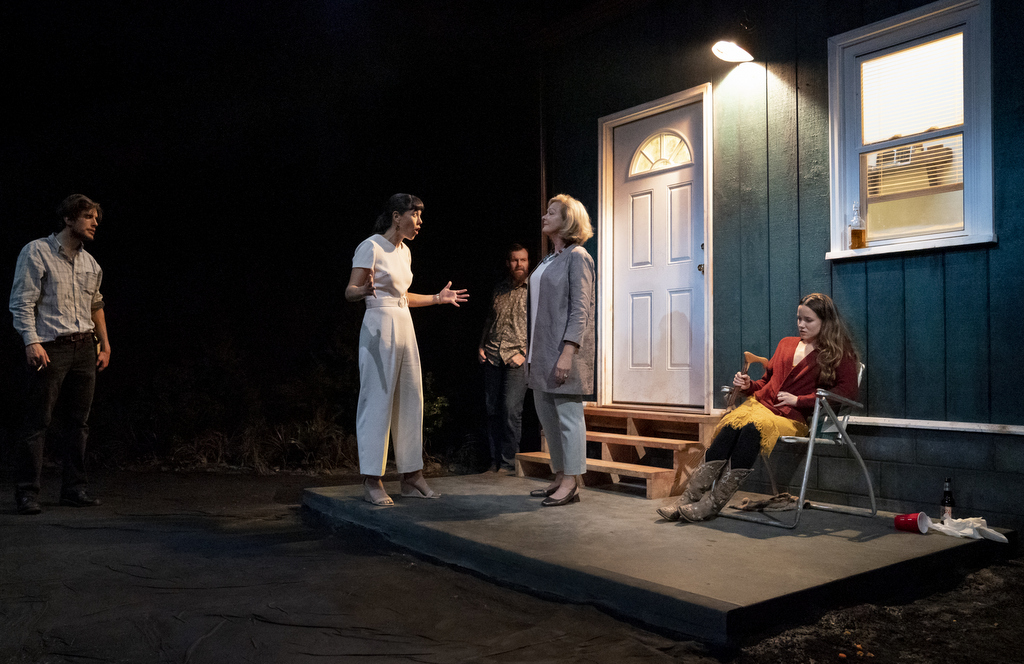
John Zdrojeski, Zoë Winters, Jeb Kreager, Michele Pawk, Julia Mermott in Heroes of the Fourth Turning by Will Arbery (Joan Marcus)
Arbery has targeted their conversations with credibility and accuracy and the actors are authentic in their nuanced portrayals. As Kevin, John Zdrojeski becomes more drunk, humorous and emotionally outrageous as the night progresses. His behavior shocks for a supposed Catholic, until we understand Kevin doubts his religion’s tenets, especially abstinence before marriage. To a great extent he has been crippled emotionally by doubt, double-mindedness and the abject boredom he experiences with his job in Oklahoma. Also, he admits an addiction to Social Media. Zdrojeski projects Kevin’s confusion and self-loathing victimization with pathos and humor. But we can’t quite feel sorry for him because he is responsible for his morass and appears to enjoy reveling in with his friends. Teresa suggests this is his typical behavior.
The friends wait for the arrival of Gina (Michele Pawk), Emily’s mom’s, to congratulate her on becoming president of their old alma mater, Catholic Transfiguration College of Wyoming. As they wait, they drink, get drunk and catch up with each other, reaffirming their friendships from the past. They discuss and reflect upon the decisions that brought them to Catholic Transfiguration College. We note their conservative, religious views about life, family and politics. Their confusion, sense of impending doom and lack of hope for the future are obvious emotional states. This is an irony for Catholics, whose hope should reside with the birth of Christ and the resurrection. Clearly, they are not exercising the spiritual component of their faith, alluded to in Gina’s speech and in Kevin’s quoting of Wordsworth’s poem “The World is Too Much With Us.” They’ve allowed the material and carnal to overtake the spiritual dimension and thus are depressed and filled with doubt.

(L to R): John Zdrojeski, Michele Pawk, Jeb Kreager, in Heroes of the Fourth Turning by Will Arbery (Joan Marcus)
In representing the conservative views of these individuals, the playwright culls talking points from right-wing media and blogs which Teresa references to Gina when Gina finally arrives. The fact that right-wing conservatism construes violent fighters as heroes is a conflated, limited view. Indeed, to see oneself as a hero and embrace that role is not even an act which true heroes (i.e. firemen, doctors in war zones) saving lives perceive for themselves. It is rhetoric. And Teresa, to empower herself and impress her old friends, speaks it as polemic. Her discussion is not really appropriate to inspire comfortable light conversation at a party. Indeed, her talk is done to solidify herself in the firmament of fantastical belief and remove any oblivion of her own doubts about her life. She and Justin who was in the military particularly rail against liberals, the LGBTQ community, Black Lives Matter, etc.

(L to R): Michele Pawk, John Zdrojeski, Zoë Winters, Heroes of the Fourth Turning, by Will Arbery (Joan Marcus)
Interestingly, Gina blows up Teresa’s cant when she finally arrives to receive the friends’ congratulations. However, they are not quite ready for Gina’s rhetorical response which is a convolution of conservative and liberal ideas that loop in on themselves again and again and defy political labeling. But Gina separates out the illogic of each of their positions. She disavows Justin’s need for guns on campus and decries the conspiracy of the upcoming “civil war.” She implies that Bannon and his like-minded are hacks, and she disavows Trump to the shock of Teresa. At the end of the evening, she pronounces that she is disappointed in the education they have received at their school, believing the college has failed them.

Jeb Kreager, Julia McDermott, in Heroes of the Fourth Turning by Will Arbery (Joan Marcus)
The night of celebration becomes a night of upheaval for Emily, Justin, Kevin and even the staunchly “certain” Teresa who will in the next decade most probably change her views a number of times to suit her determination that she has a handle on the great narrative of “reality.” But in truth as we watch these friends founder through the labyrinth of sublimely complex political, social and cultural convergences they discuss and refer to, it becomes obvious that they have been dislocated from their comfortable conservatism that categorically defined the world for them when they began college.

(L to R): Zoë Winters. Michele Pawk in Heroes of the Fourth Turning by Will Arbery (Joan Marcus)
The irony is that when Gina comes and joins their conversation and smacks down each of their beliefs, especially Teresa’s, we settle back watching the imbroglio that Arbery has wrought. Indeed, we wonder at Gina’s convoluted logic and justifications. That she would give Kevin a job in admissions is a dark irony of misjudgment. He appears the least directed to help others in the admissions process. Though they say their goodbyes with love, Justin and Emily remain in darkness. There is no comfort to be found. There is only the continuation of a foreboding reckoning.
The strongest dynamic of the play resides in the conflicts when Arbery has the friends go at each other after their initial easy reaffirmation of friendships. Ironically, the community they attempt to create falls apart driven by what is devouring each of them inside. It is then that personal flaws they’ve discussed manifest and the hell they face within spills out. Justin’s is humorously eerie. Emily’s comes in the form of fury at whom she deals with in her job and the resident demon of pain in her body. Teresa fears she is making a mistake getting married, and Kevin can’t come to the end of himself.
The tempest between and among the individuals and their inner conflicts reflects a currency for our times and is welcome fodder for entertainment. Arbery with the subtle direction of Taymor has succeeded in extending a hand across the divide of national uproar between left and right with his human, flawed characters. The actors in this ensemble are superb and hit powerful emotional notes with spot-on nuances between humor and profound drama.
This is a play you must see for its shining performances, its topics, the rhetoric-exceptionally fashioned by the playwright and its surprises in characterization. The conclusion is chilling as it expands to the mythic. Noted are the design team: Sarafina Bush (costumes), Isabella Byrd (lighting), Justin Ellington (sound), J. David Brimmer (fight director).
Heroes of the Fourth Turning runs with no intermission at Playwrights Horizons (416 West 42nd Street between 8th and 9th). For tickets and times go to their website by CLICKING HERE.
t
 CAROLE DI TOSTI