Blog Archives
‘The Gardens of Anuncia’ Lyrical, Unique, Fanciful, Directed by Graciela Daniele

In order to deal with the past, sometimes memories must be altered to beautify the ugliness of their reality. This is one of the themes in Michael John LaChiusa’s musical, The Gardens of Anuncia, directed and choreographed by Graciella Daniele. The Gardens of Anuncia is currently running at Lincoln Center’s Mitzi E. Newhouse.
The musical’s picaresque, lyrical journey memorializes the women who inspire and encourage the artistic soul of Annuncia (Kalyn West), as she grows into a teenager, who then will flourish in her global career as a director, choreographer and dancer. The journey intimated is that of Graciella Daniele, Tony Award nominee (ten times), and recipient of a Lifetime Achievement Award. Though she never won a Tony, Daniele’s directing and choreography of Chita Rivera: The Dancer’s Life, Annie Get Your Gun, Marie Christine, Once on This Island, The Pirates of Penzance, and Ragtime, are among her most memorable achievements.
Wisely, LaChiusa focuses not on the public career of Daniele, but on those who grounded the choreographer and director to prepare her to be an overcomer, ready to face obstacles and not be daunted by them. Through present narration by the older Anuncia (the charming, endearing Priscilla Lopez), on the eve of her acceptance of the Lifetime Achievement Award, in the garden of her country house, Anuncia meditates in flashback about her childhood with the three great women who influenced her, making her who she is today. As she readies herself to bury her aunt’s ashes, a final goodbye, she works through her memories, some hurtful, all poignant, growing up in Buenos Aires, Argentina during the Peronista government and movement in the 1940s and 1950s.

Auncia’s memories are vignettes that encompass vital turning points and revelations in the lives of the Younger Anuncia, Tia (Andrea Burns), Granmama (Mary Testa), and Mami (Eden Espinosa), all of them flowers burgeoning in the beautiful garden of her mind. Bounded by the older Anuncia’s narrative, we are introduced in the “Opening” to the women and their routines in the life they live daily in Granmama’s house in Buenos Aires. Together, the women raise the youngster and support each other after Mami and Anuncia are abandoned by Anuncia’s father, referred to as “That Man.” Lyrically, poetically, La Chiusa moves from present to past as the older Anuncia lands on memories that eventually reveal how each of the women traverse the paternalism of a male world and thrive.
The superb Priscilla Lopez (i.e. The Skin of Our Teeth, Anna in the Tropics), originated the role of Diana Morales in A Chorus Line, winning an Obie Award and Tony nomination. Lopez and Kalyn West portray Older Anuncia and Younger Anuncia, playing off one another seamlessly with grace. Through her reflections, the older Anuncia merges with her younger self to gain strength to finally put to rest the pain of the past, manifested in her finally burying her Tia’s ashes. As Lopez brings humor, poignancy, wisdom and loveliness to the older Anuncia, West embodies the innocence, increasing understanding, anger and astuteness when she asks questions and discovers the truth behind the answers that Tia, Grannmama and Mami give her.
From Tia, Young Anuncia learns to use her imagination to explore her world in, “Listen to the Music.” Additionally, Tia explains why she isn’t married and implies that she is happier without being tied down, having to answer and be obedient to a husband (“Smile for Me, Lucia”).
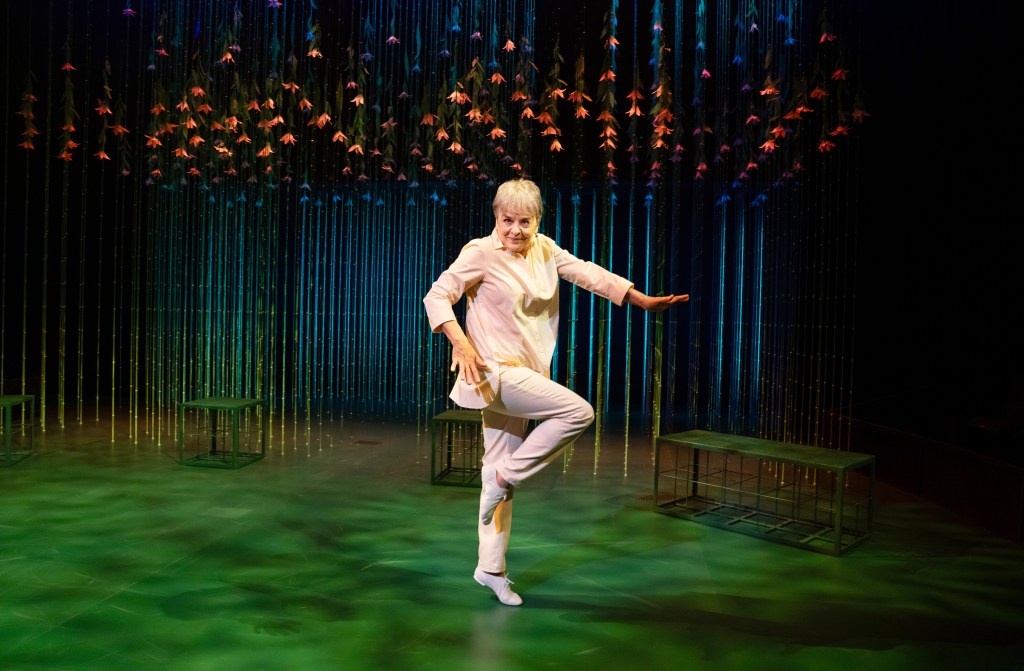
From her mother Mami, she receives the gift of ballet classes to strengthen her flat feet, as well as her interest in the dance. In Espinosa’s interpretation of the sensual “MalaGueña,” Mami dances the tango and sings about the club where she goes to dance with various partners in order to have fun, something that Granmama disapproves of.
Mary Testa’s Granmama adds humor and irony to the relationship the women have with each other. From Granmama, Anuncia learns her love of the dramatic and theatrical, as her Granmama’s reactions are always over the top. Her relationship with her husband, Anuncia’s grandfather, is explosive and extreme. It is forged in scandal and passion, thought it ends up in an eventual tiresome marriage, after which Granmama, eventually kicks him out. In “Waiting/Dreaming,” Anuncia learns they long for each other when he is away in the merchant marine, then can’t wait until he leaves, after a few days of crazy arguments and harangues when he returns.
From each of these incredible women, Anuncia attributes elements of her inner soul. Importantly, she also learns how and why “That Man,” her father, abandoned them and left them destitute, forcing Mami and Anuncia to move in with Tia and Granmama. All of the songs and events take place with the backdrop of danger and “disappearances,” during the Peron regime, a regime which also threatens the family when Mami is arrested.

The events in flashback and flash forward, with Older Anuncia’s narration that bridges them, unspool fluidly in a stylized, minimalist set design by Mark Wendland. The past and present flow into each other in Older Anuncia’s memory, suggested by the ease by which the characters step into the present in the garden of flowers that Older Anuncia talks to, beautifully intimated by Jules Fisher and Peggy Eisenhauer’s lighting design.
The garden is the perfect place of solitude where Old Anuncia revisits conversations and events with these beloved women, who shaped her and sent her with confidence and beauty into the wide world. The colorful, atmospherically lighted beads with attached flowers (Jules Fisher and Peggy Eisenhauer), separate the downstage where the conversations and reminiscences take place, with the past behind the beading where the characters exit.
Lopez, in her direct address to the garden of flowers that includes the audience, animates and enlivens them. Lopez is so specific in her performance, we believe she sees the peonies, the irises, the anemones and forsythias, though nothing is there. However, we note that this is who Anuncia has learned to be, influenced by Tia, to use her imagination.

Thus, in her garden of delights, she is able to converse with the floral pageantry she has planted, as well as the two male deer who come to visit her and nibble on her vegetables. The deer, who are brothers, are hysterically portrayed by Tally Sessions. The first deer gives her the wonderful advice to “Dance While You Can,” as they do a bolero. The second deer, shows up after an interval in time. He shares with the Older Anuncia that he lost his half-brother, who was hit by a car, obeying a “deer crossing” sign. The half-brother is bitter and droll. Lopez’s Anuncia returns the advice she received from the cheerful brother to the nihilistic half-brother, almost cheering him up.
The other male parts are portrayed by Enrique Acevedo who is Granpapa, That Man (Anuncia’s father) and other characters.
Older Anuncia’s garden meditations where she speaks to the plants and the deer are charming, ethereal and magical. They are part of her cultural heritage and legacy from Tia. Like her conversations with Tia, Mami, Grandmama and the others who have passed on, they are a part of her and not “ghosts” or something to be frightened of. The enlivened memories eventually bring the Older Anuncia to closure so that she can finally bury Tia’s ashes. It is time to rest her memories, it is time she lays them in peace in the garden of her mind, manifested in her country house garden.
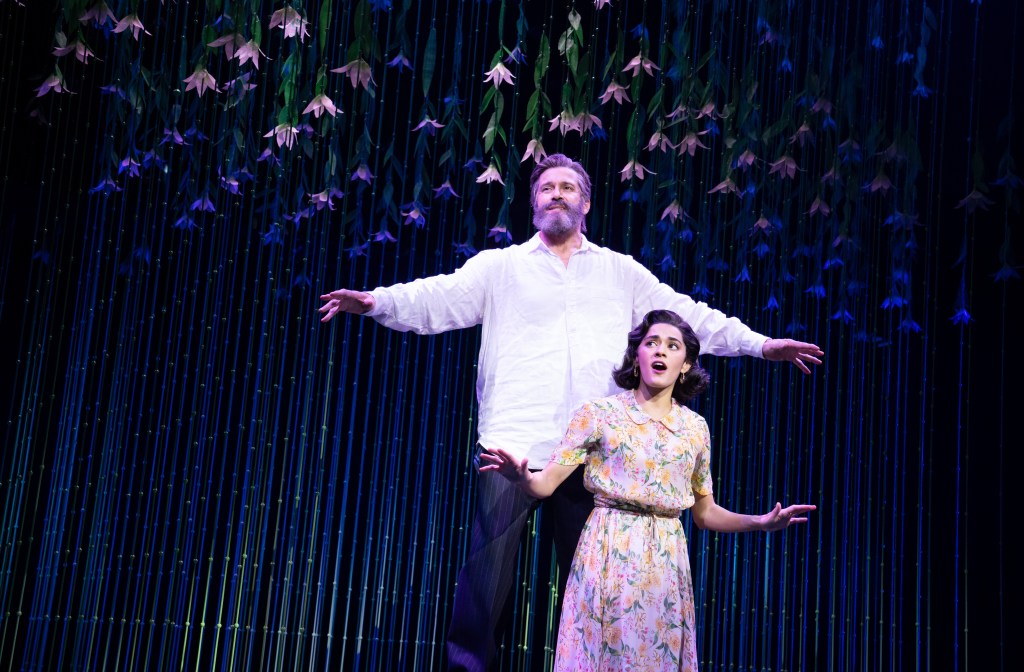
Daniele directs and stages the actors specifically and acutely so that they seem to create their own geometric patterns and rhythms. The choreography remains simple and evocatively cultural, reflecting the time and place to emphasize the Older Anuncia’s memorialization of the women who are so dear to her. Though West does some ballet, it is more representational, as befits the glimpses into the past, as if Anuncia looks into the mirror and can only bear snippets of reminiscences. Indeed, memories are elusive and questionable. Did certain events happen? There is one that the Younger Anuncia affirms happened and wishes she could forget.
From the lyricism, to the suggestiveness and poetic nuances, LaChiusa’s musical is in a category by itself. As elusive as a butterfly’s shimmering, gossamer wings, The Gardens of Anuncia floats into our consciousness with its poignant softness and seduction with stirring themes about the power of imagination, the profound love conveyed by relatives to strengthen progeny, about legacy, and about the wisdom and love it takes to understand the impact of one generation shepherding the next.
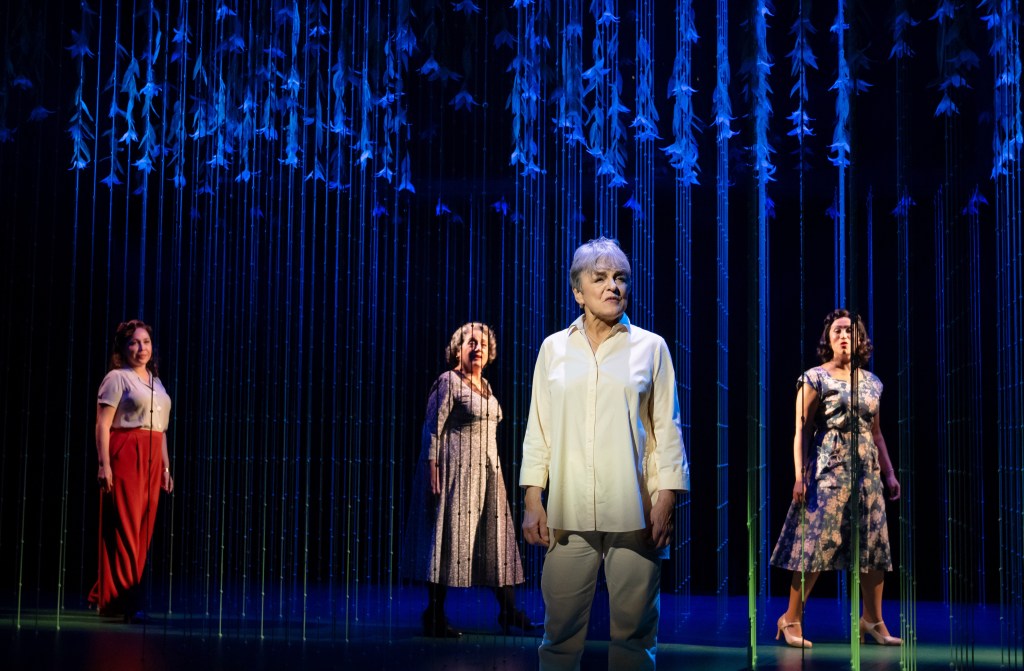
The ensemble are exceptional. They merge, flow, harmonize, dance, spinning into the garden’s loveliness, then retreating back into the corner’s of the Older Anuncia’s mind. Just great!
Kudos go to all the creative team who explored and solidified Daniele’s vision of LaChiusa’s evocative, unique musical. In addition to those mentioned above, these include Toni-Leslie James (costumes), David Lander (lighting design recreation), Drew Levy (sound), Michael Starobin (orchestrations), Deborah Abramson (music director), and Alex Sanchez (co-choreographer).
The Gardens of Anuncia, Lincoln Center Theater at the Mitzi E. Newhouse. Website: https://www.lct.org/shows/gardens-anuncia/
‘Oklahoma!’ Cool Convolution, a Review

The cast of Rodgers & Hammerstein’s ‘Oklahoma!’ directed by Daniel Fish, Circle in the Square (Little Fang)
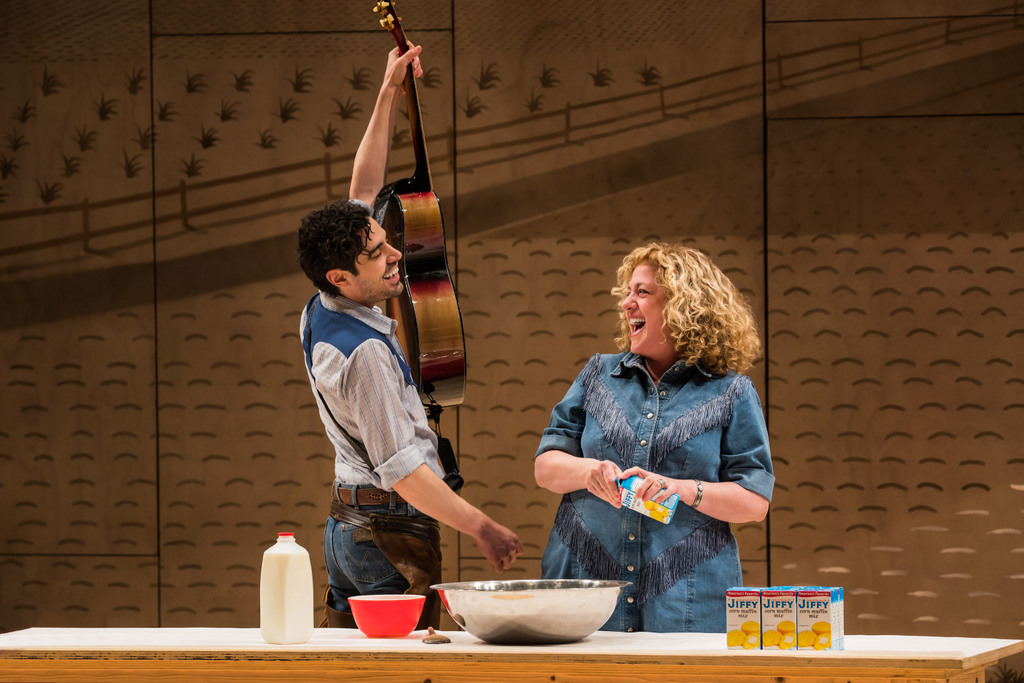
Damon Daunno, Mary Testa in Rodgers & Hammerstein II’s ‘Oklahoma!’ directed by Daniel Fish at Circle in the Square (Little Fang)

Damon Daunno, Rebecca Naomi Jones in Rodgers & Hammerstein II’s ‘Oklahoma!’ directed by Daniel Fish (Little Fang)

Ali Stroker, Will Brill in Rodgers & Hammerstein II’s ‘Oklahoma!’ directed by Daniel Fish, Circle in the Square (Little Fang)

Cast of Rodgers & Hammerstein II’s ‘Oklahoma!’ directed by Daniel Fish (Little Fant)

Rebecca Naomi Jones, Damon Daunno in Rodgers & Hammerstein II’s ‘Oklahoma!’ directed by Daniel Fish, Circle in the Square (Little Fang)

James Davis, Ali Stroker Patrick Vaill (far right looking on) in Rodgers & Hammerstein II’s ‘Oklahoma!’ Daniel Fish, Circle in the Square (Little Fang)

Damon Daunno in Rodgers & Hammerstein II’s ‘Oklahoma!’ (Little Fang)

‘The Government Inspector,’ starring Michael Urie at New World Stages

Michael McGrath (forefront) Luis Moreno (L) Mary Lou Rosato (R) in ‘The Government Inspector (Carol Rosegg)
Corruption, bribery, pay offs siphoning off citizens’ taxes and lifeblood in a small town? What could be more symbolically representative of politics, whether such machinations take place in Russia or the United States today? In good times, officials steal roundly and with less accountability because citizens are economically well placed to go about their lives. In harsh economic times the sub rosa avarice of bureaucrats who serve themselves first and serve the public never, always raises a hue and cry. When the little people are squeezed, they pressure their overlords to uphold the “sanctity of their positions.” Usually, the miscreants don’t and must be brought to heel. And sometimes there is even justice.
For playwright Nikolai Gogol, such a scenario, laden with hypocrisy and condemnation was a golden treasure trove of comedy. He has proven this with Revizor adapted by Jeffrey Hatcher into The Government Inspector, currently enjoying an extended run at New World Stages.

(L to R): Michael Urie, Arnie Burton in ‘The Government Inspector’ (Carol Rosegg)
What a marvelous production this is. It is relevant to our political times which encapsulate the play’s themes. This satire of small town government officials and their general incompetence and corrupt misapplication of their mission and public service is a relief and respite from disheartening nightly news. For that alone, it is a must-see. Apart from that, this production is a must-see because it is just terrific.
For Jeffrey Hatcher who was commissioned to adapt Gogol’s Revizor into a version which would be performed for the 2008 Guthrie season, it was a “kick.” He clarifies that it was an election year. The barnyard of democrats and republicans was in full cacophonic frenzy. Hatcher’s enjoyment is evident in this adroit adaptation. Indeed, he steps up Gogol’s humorous scenario of malevolent politicians who have the tables turned on them, as they conspire to cover-up their cronyism, graft and malfeasance.
Hatcher delivers the best of Gogol and allows the Russian playwright’s genius to shine. With finely tuned direction (Jesse Berger) and exceptional ensemble work, The Government Inspector is madcap, zany and high comedic exhilaration.. Hatcher nimbly tweaks the playwright’s work just enough to enhance the hysteria in the comedy, acute jokes and incredible witticisms. His writing makes this production so completely sumptuous, you will want to feed on it again and catch a second time the artful ironies and slick phrases that ring with truth and reality at every laugh riot of a turn.

(L to R) Arnie Burton, Mary Lou Rosato, Mary Testa in ‘The Government Inspector’ (Carole Rosegg)
How satisfying it is to see the petty, self-dealing bureaucrats hoisted on their own greedy petard when they are duped by one of their own, who is even more mercenary than they. This is a normally improbable justice that we are privy to see, as it is unwittingly launched by error. When the government officials receive their own comeuppance, we are assured that the lofty are most greatly impugned and punished by their own shame, humiliation and self-deception. At this time in our social and political history, we are thrilled to laugh riotously at the characters’ machinations and their unhappy conclusions which remind us that “what goes around comes around.” What a pleasure!
The performances are the jewels that provide the glitter and the piquant vibrancy of the production. Without this ensemble, the jokes would scintillate but not with the power to strike as hard and send us as furiously as they do into the comic heavenlies.

(L to R) Michael McGrath, Mary Testa, Talene Monahon in ‘The Government Inspector’ at New World Stages (Carol Rosegg)
In the first scene, we are introduced to the conflict and meet the dastardly mayor (Michael McGrath is wonderfully on point with every hysterical line, every turn of phrase) and his legion of nefarious officials, the illuminating and funny Tom Alan Robbins, William Youmans, Stephen Derosa, James Rana, Luis Moreno. Hatcher/Gogol pull back the veil as the politicians chatter and conspire and we are allowed to see where they have buried all the financial duplicities and discover who is taking what and how the mandate and mission of the judge, the principal, the hospital and law enforcement have been mismanaged to a preposterous degree. (It’s kind of like appointing an EPA director who will dismantle all of the environmental regulations to fund anti-green corporations.)
As for privacy concerns? All the town gossip, all of the secrecies and personal intimacies and weaknesses are explored and savored for broadcast by The Postmaster (the unforgettable Arnie Burton) who enthusiastically reads every line in each letter, sharing the juiciest and most damning information with his cronies for entertainment. Burton’s portrayal of the Postmaster is moment to moment LMAO; the comedy comes out of the personality of the character which makes his performance absolutely sublime. In this town there is no detail which is not known or kept quiet that Arnie’s Postmaster doesn’t blabber with gusto. He certainly is a tool of the corrupt political machine; he helps it keep abreast of its enemies to forestall any dangers to its power structure.
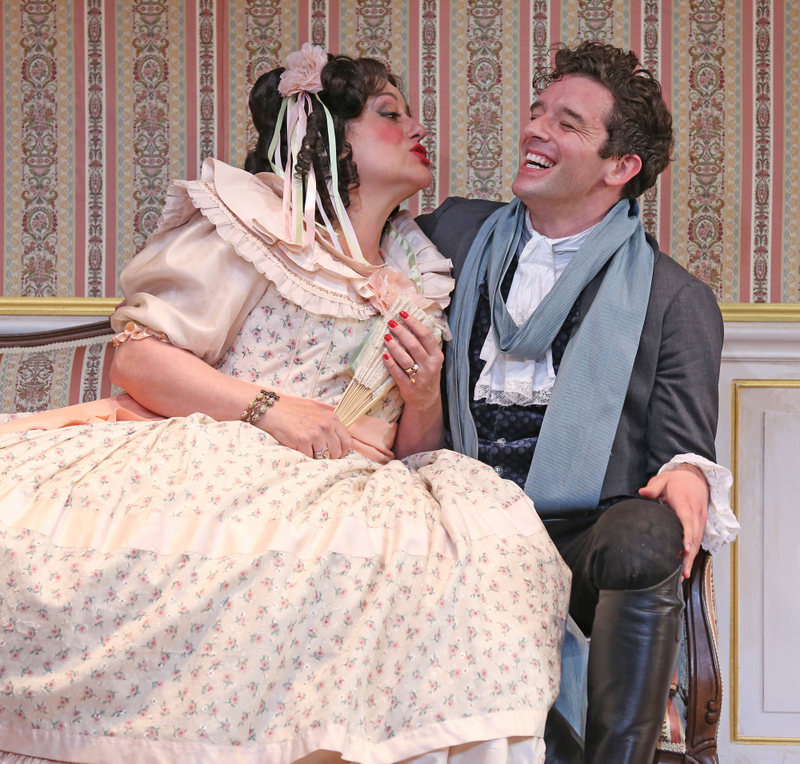
Mary Testa, Michael Urie in ‘The Government Inspector’ at New World Stages (Carol Rosegg)
At the meeting of these wicked corrupt, they discuss their grave problem which is a threat to their livelihood and career positions. An investigator has come to the town in disguise to explore the level of malfeasance. They fear that he will hold them to account. All the officials and even two local landowners (the funny Ben Mehl and Ryan Garbayo) must work together, discover the hidden identity of this “spy” and turn him over to their side with bribes and payoffs. It is an intrigue that holds danger for the officials and promise for the little people who we don’t really see as we are in thick with the conspirators, a completely enjoyable and refreshing sardonic view.
What has been a boisterous and satiric introduction is jettisoned into a hyperbole of hilarity in the next scene where we meet a lowly civil servant, the ineffectual would-be suicide Hlestakov (the unforgettable and prodigiously talented Michael Urie) and his clever servant Osip (the versatile Arnie Burton). Hlestakov can’t quite “do the job” with a pistol to free himself of this unrequitable earthly plane, his gambling debts and the ignominy of a meager, zero-of-a-life, which he has badly used.

(L to R) Ryan Garbayo, Michael Urie, Ben Mehl in ‘The Government Inspector’ at New World Stages (Carol Rosegg)
Because Hlestakov is incompetent at suicide, we have an hour and one-half of side-splitting laughter. Urie fashions comical uproariousness by using all the acting tools of his instrument. He flawlessly surfs the cresting waves of farcical action which he has helped to inflate. He is rather like a fine composer assisted by the incredible accompaniment of the ensemble, who spin their superbly tuned acting instruments into a wild symphony of raucous delight.
In this production Urie has stretched his talents to new heights. He is reminiscent of some of the comic greats; select any one of them in film, television or theater. He distills the substance of his lines then infuses them with the character of Hlestakov filtered through and around himself so that the civil servant who dupes the corrupted officials, and he, Michael Urie, are indivisible. Not only does Urie have seamless timing, he anticipates the power of pauses which he capitalizes on with grace, fluidity and an uncanny communication with the watchful, listening audience. Very simply, he captures Hlestakov’s being and rounds it out with Chaplinesque force and will.

Talene Monahon, Michael Urie in ‘The Government Inspector’ at New World Stages (Carol Rosegg)
As grand accompaniments, Mary Lou Rosato (various roles), Kelly Hutchinson (various roles), Mary Testa (the mayor’s wife) and Talene Monahon (the mayor’s daughter) are divine comedians. Without them the production would fly at a lower pitch. They are integral to the revelation of pretense behind the mayor, who is a wanna-be aspiring to nobility but must wallow in the mud of his position as a small-town functionary. And they (Testa, Monahon) provide the grist upon which Urie’s Hlestakov bakes the fabulous bread we devour to nurture our souls with exuberance and glee.

(L to R): Michael McGrath, Mary Testa, Michael Urie, Talene Monahon in ‘The Government Inspector’ at New World Stages (Carol Rosegg)
Indeed, all of the servant portrayals, each one more clever and shrewd than their masters/mistresses, are exceptionally delineated as characters and specifically portrayed by the actors. If one considers that in less than one hundred years what they are to “inherit” after the Revolution, there are no insignificant characters here, but they are the most prescient in biding their time waiting, in due season to dispatch here and there the fools they serve.
The dynamic arc of the play’s development is expertly unfolded so that by the conclusion, we have feasted and are sated. We recognize how thrilling it is to take our part in this rollicking spectacle which is perfectly congenial in its staging, set design, lighting, costuming and the thematic symbolism of its physical, emotional and intellectual levels. This seemingly effortless and easy production took loving care, sagacity and genius to effect the terror of its satire, the bounty of its humor, the innovation of its celebrated cast. Kudos to Jesse Berger who magnificently brought this together and who had the quick-witted spirit and grace to understand how to let it “all hang out,” using the structure of these artists’ inner freedom to live within the boundaries of Gogol’s classic.
If you don’t see this production you will have missed something truly wonderful and riotous. If you do see it, expect the audience to break into laughter and applause frequently because the infection of joy is abundant and bounces liberally between audience and cast. The two hours with one intermission race by.
The Government Inspector is in its extended run at New World Stages until 20 August. You may purchase tickets on their website (CLICK HERE). Or you may phone 212-239-6200.
 CAROLE DI TOSTI