Blog Archives
‘Anemone’ @NYFF Brings Daniel Day-Lewis’ Sensational Return
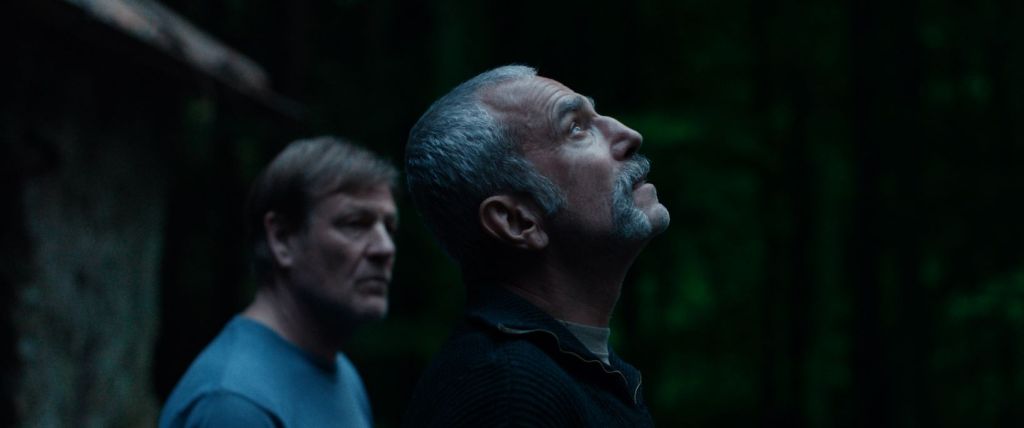
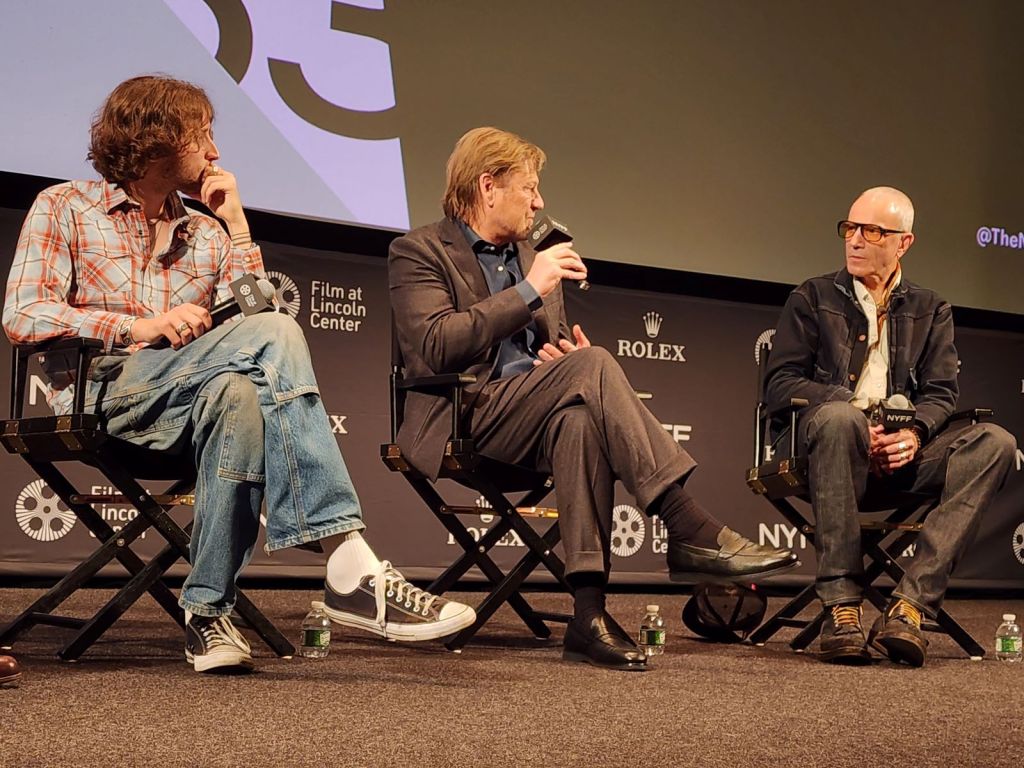
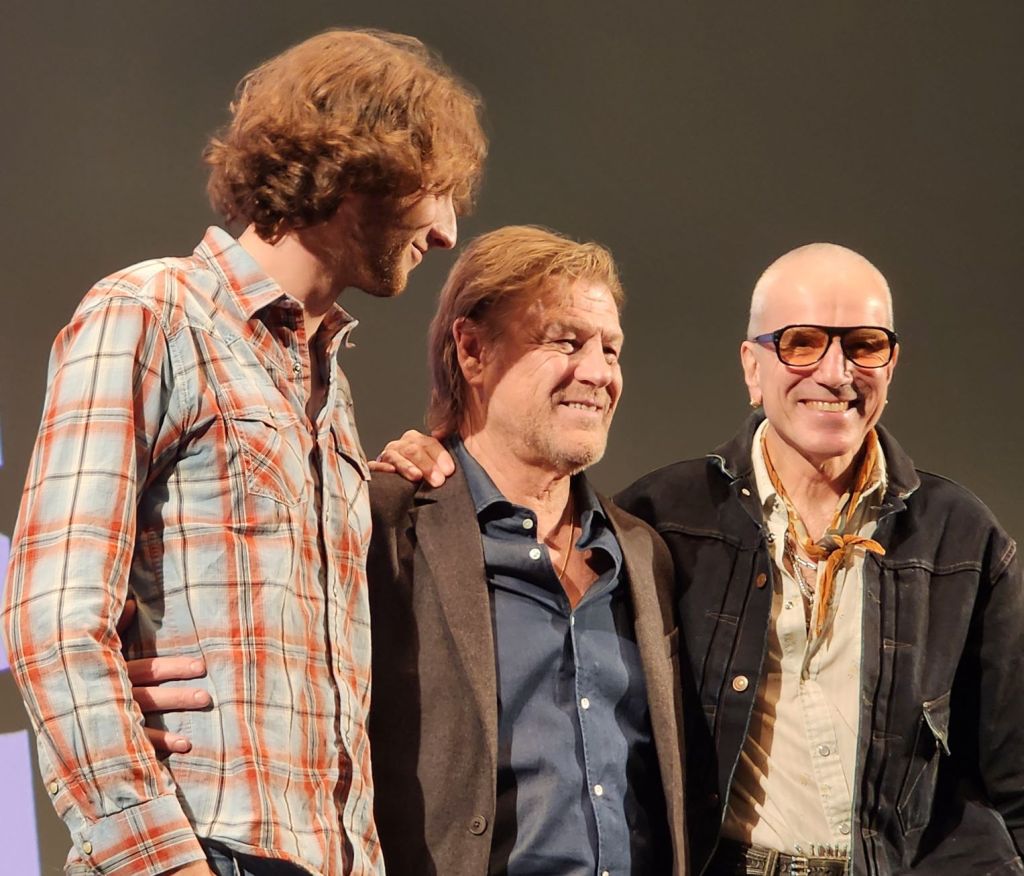
Supporting his son Ronan Day-Lewis’ direction in a collaborative writing effort, Daniel Day-Lewis comes out of his 8-year retirement to present a bravura performance in Anemone. The film, his son’s directing debut, screened as a World Premier in the Spotlight section of the 63rd NYFF.
Ronan Day-Lewis’ feature resonates with power. First, the eye-popping natural landscapes captured by Ben Fordesman’s cinematography stun with their heightened visual imagery. Secondly, the striking, archetypal symbols illuminate redemptive themes. Day-Lewis uses them to suggest sacrifice, faith and love conquer the nihilistic evils visited upon Ray (Daniel Day-Lewis) and ultimately his entire family.
Finally, the emotionally powerful, acute performances, especially by Daniel Day-Lewis’ Ray and Sean Bean’s Jem, help to create riveting and memorable cinema.
The title of the film derives from the anemone flower’s symbolic, varied meanings. For example, one iteration relates to Greek mythology in the story of Aphrodite, whose mourning tears, shed after her lover Adonis’ death and loss, fell on the ground and blossomed into anemones. Also referenced as “windflowers,” anemone petals open in spring and are scattered on the wind. Possibly representing purity, innocence, honesty and new beginnings, the film’s white anemones grow abundantly in the woodland setting where reclusive Ray makes his home in a Northern England forest.
In a rustic, simplistic hermit-like retreat Ray lives in self-isolation, alienated from his family. Then one day, his brother Jem, prompted by his wife Nessa (Samantha Morton), mysteriously arrives. The director focuses on the action of his arrival withholding identities. Gradually through the dialogue and the rough interactions, heavy with paced, long silences, we discover answers to the mysteries of the estranged family. Furthermore, we learn the characters’ tragic underpinnings caused by searing events from the past. Finally we understand their motivations and close bonds despite the estrangement. By the conclusion family restoration and reconciliation begins.
Unspooling the backstory slowly, the director requires the audience’s patience. Selectively, he releases Ray’s emotional outbursts. These reveal his decades long internal conflict with himself, for not standing up to the perpetrators of his victimization. Neither Jem nor Nessa (Samantha Morton), Ray’s former girlfriend who Jem married after Ray abandoned her and their son, know his secrets. However, the slow revelations of abuse spill out of Ray, as Jem lives with him and endures his ill treatment and rage.
Each brief teasing out of pain-laced information that Jay spews impacts Jem. Because Jem receives strength and understanding from his faith, he puts up with Ray. Indeed, the various segments of Jay’s story seem structured as turning points. Each moves us deeper into Jay’s soul and Jem’s acceptance. Cleverly, by listening to his brother and encouraging him to speak, Jem breaks down Ray’s resistance.
Ray and Jem’s emotional releases trigger and manipulate each other. Once set off, the revelations full of anguish and subtext fall in slow motion like dominoes. Then, climactic sequences augment to an explosive series of events. One, a treacherous wind and hail storm, represents the subterranean rage and turmoil which all of the characters must expurgate before they can heal and come together.
Jay particularly suffered and needs healing. Throughout his life the patriarchal institutions he trusted betrayed and abused him. From his home life (his father), to the church (a cleric), and the military (his immediate superiors), emotional blows attack his soul and psyche. Also, the military makes an example of him. Not only was the abuse unjustified and misunderstood, the perpetrators covered it up and forced his silence. The cruel, forced complicity makes his life a misery in a perpetuating cycle of guilt and shame.
As a result, because Jay’s self-loathing pushes him deeper within his pain, he can’t discuss what happened with his family or anyone else. Of course, he refuses to get help in therapy. Instead, he escapes into nature for solace and peace. The society’s corruptions and his family’s still embracing the institutions that abused him stoke his anger and enmity.
Neglecting his brother Jem, Nessa and his son Brian, who is grown and needs him, Jay perpetrates a psychological violence on them. None of them understand Jay’s abandonment. Sadly, Ray’s absence and rejection shape Brian’s life. Embittered and violent, he endangers himself and others.
How Day-Lewis achieves Ray’s epiphany through Jem’s love occurs in an indirect line of storytelling, through Ray’s monologues and the edgy dialogue between Jem and Ray. By alternating scenes of Nessa and Brian in the city with the brothers in the forest, we realize that time is of the essence. Jem must convince Ray to return to their home to make amends with his son Brian as soon as possible because of a looming threat.
Ultimately, the slow movement in the beginning dialogue could have been speeded up with a trimming of the silences. However, Day-Lewis purposes the quiet between the brothers for a reason whether critics or audience members “get it” or not. The silences reveal an other-worldly, telepathic bond between the brothers. Likewise, on another level Ray’s son Brian connects with his father spiritually, though they are miles away. The director underscores this through Nessa who understands both father and son need each other. Nessa encourages Jem to bring Ray home to Brian. Day-Lewis also uses symbolic visual imagery to suggest the spiritual bond between father and son.
In Anemone, the themes run deep, as the filmmakers explore how love covers a multitude of hurts and wrongdoings. Anemone releases in wider expansion on October 10th in select theaters. For its 63rd New York Film Festival announcement go to https://www.filmlinc.org/nyff/films/anemone/
‘Smash,’ Fabulous Send up of a Musical Comedy About Marilyn Monroe
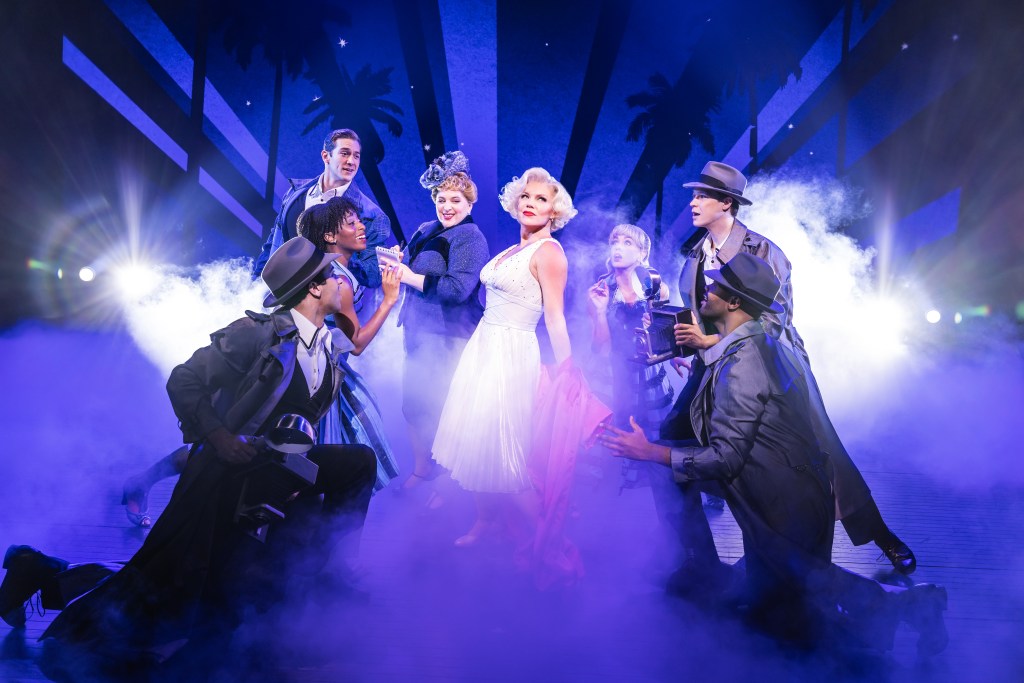
Smash
Chatting with two theater critics beforehand, who referenced the 2012 NBC television series also called “Smash,” I was initially distracted. The TV series set in the present revolved around two aspiring actresses who compete for the role of Marilyn Monroe in a Broadway-bound musical called “Bombshell,” about Marilyn Monroe. Apparently, the TV series which devolved into a musical soap opera, lasted two seasons then was cancelled. Since I never saw the series, I tried to ignore the critics’ comments. I fastened my seat belt and settled in to watch the revamped production in its current run at the Imperial Theatre with tickets on sale through January 4, 2026.
I had no reason to”fasten my seat belt.” Smash is a winner. Superbly directed by Susan Stroman, a master of comedic pacing and the quick flip of one-liners, Smash is a resounding must see, retaining little of the TV show with the same title. I adored it and belly-laughed my way through the end of Act I and throughout Act II.
Into the first act when Ivy Lynn (the grand Robyn Hurder), introduces her Method Acting coach, Susan Proctor (the wonderfully funny Kristine Nielsen channeling Actors Studio Paula Strasberg), I embraced the sharp, ironic and often hysterical, theater-referenced send-ups. The book by Bob Martin & Rick Elice is clever and riotous, pushing the true angst of putting on a big Broadway musical and spending millions to make it a success. Martin and Elice’s jokes and the characterizations of Nielsen’s Susan Proctor and director Nigel, the LOL on point Brooks Ashmanskas (The Prom), who tweaks the gay tropes with aplomb, work. Both actors’ portrayals lift the arc of the musical’s development with irresistible comedic riffs shepherded by Stroman’s precise timing.

The music had me at the opening with the vibrant fantasy number, “Let Me Be Your Star,” sung by Robyn Hurder, whose lustrous voice introduces Marilyn and her fandom which the creators attempt to envision with fully costumed performers singing for their musical, “Bombshell,” the Marilyn Monroe story. Then, the scene shifts to the rehearsal room where we meet the creative team who imagined the previous number and scene. Ashmanskas’ director/choreographer Nigel humorously bumps heads with writer/lyricist/composer-husband and wife team Tracy (Krysta Rodriguez) and Jerry (John Behlmann).
Also present, is his associate director and Nigel’s right arm, the golden voiced Chloe (Bella Coppola). She runs interference and puts out fires, even covering for Ivy Lynn and understudy Karen (Caroline Bowman), during an audience invited presentation. Why Ivy Lynn and Karen can’t go on is hysterical.
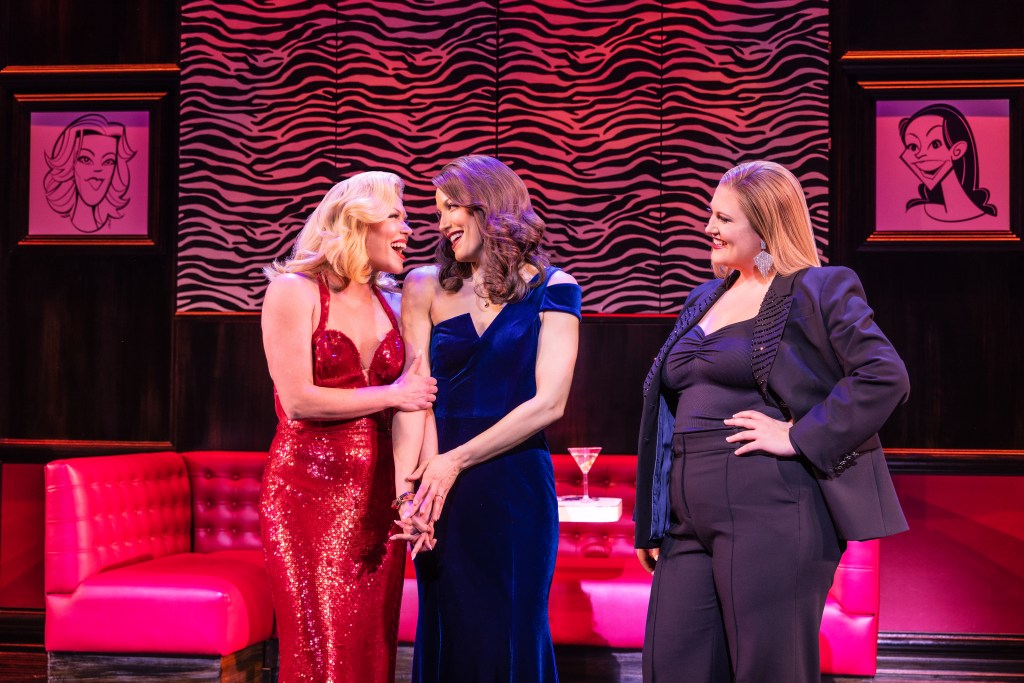
The music by Marc Shaiman, lyrics by Scott Wittman and Marc Shaiman, and the choreography by Joshua Bergasse are upgraded from the TV series with a curated selection of songs to align with the comedic flourishes. The musical numbers and dances cohere perfectly because the performers rehearse for their show “Bombshell.” With music supervision by Stephen Oremus, an 18-piece orchestra charges the score with vibrant dynamism. Featured are some of Shaiman’s brassiest tunes, orchestrated by Doug Besterman. Lyricist Wittman seals the humor and advances the plot. All provide grist for Bergasse’s choreography. Hurder manages this seamlessly as she sings, breathes heartily and dances while the male dancers whip and flip Ivy as Marilyn around. Of course, all smile with effortless abandon despite their exertions.
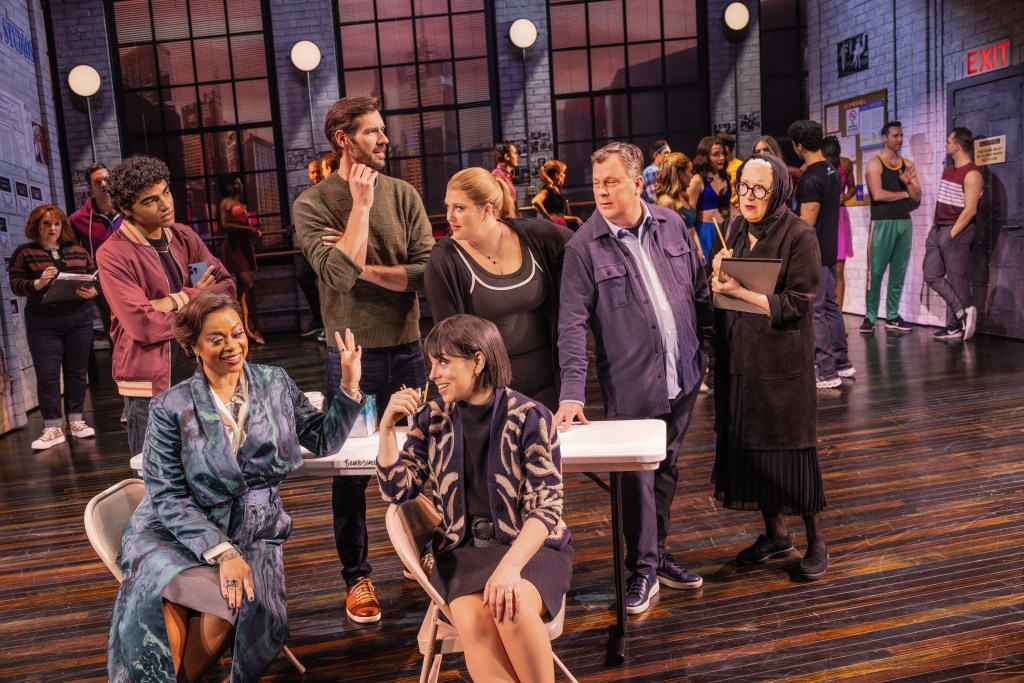
Importantly, Martin and Elice’s book sports farcical, riotous moments. These build to a wonderful crescendo by the conclusion. By then we realize we’ve come full circle and have been delighted by this send up of the wild ride these creatives went through to induce the belly-laughing “flop,” we’re standing, cheering and applauding. It’s the perfect ironic twist.
Indeed, once the audience understands the difference in tone from the TV series, largely due to Nielsen’s Proctor (she’s dressed in black mourning {Marilyn?} from head to foot), and Ashmanskas’ Nigel, Smash becomes a runaway train of hilarity. This comedy about unintentionally making a musical flop (unlike the willful intent in The Producers), smartly walks the balance beam by giving the insider’s scoop why “Bombshell” probably never finds a home on Broadway. One of the reasons involves too many chefs trying to make a Michelin starred dish without really understanding how the ingredients meld.
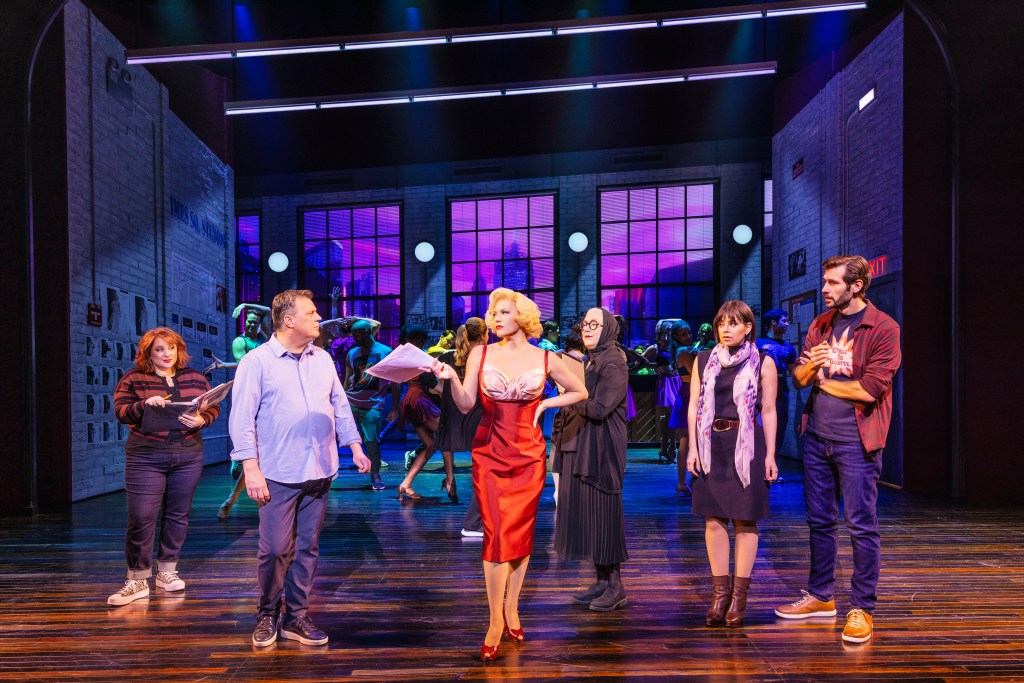
Nielsen’s Proctor dominates Ivy Lynn to the point of transforming the sweet, beloved actress into the “difficult,” “tortured soul” of diva Marilyn. The extremes this conceit reaches is beyond funny and grounded in truth which makes it even more humorous. Without giving too much away, there is a marvelous unity of the book, music and Hurder’s performance encouraged by Nielsen’s Marilyn-obsessed Proctor. We see before our eyes the gradual fulfillment (Proctor’s intention), of “Marilyn,” from superficial, bubbly, sparkly “sex bomb,” to soulful, deep, living woman produced by “the Method.” Of course to accomplish this, the entire production as a comedy is upended. This drives Nigel, Tracy and Jerry into sustained panic mode, exasperation and further LOL behavior especially in their self-soothing coping behaviors.
Furthermore, Producer Anita (Jacqueline B. Arnold), forced to hire Gen Z internet influencer publicist Scott (Nicholas Matos), to get $1 million of the $20 million needed to fund the show, mistakenly allows him to get out of hand, inviting over 100 influencers to Chloe’s serendipitous cover performance. The influencers create tremendous controversy which is what Broadway musical producers usually give their “eye teeth” for. Publicity sells tickets. But this controversy “backfires” and creates such an updraft, even Chloe can’t put the conflagration out. The hullabaloo is uproarious.

The arguments created by the influencers and their followers (in a very funny segment thanks to S. Katy Tucker’s video and projection design), cause huge problems among the actresses and forward momentum of “Bombshell.” Karen, Ivy Lynn’s friend and long time understudy, who has been waiting for a break for six years, watches Chloe become famous overnight for her cover. Diva Ivy Lynn who IS Marilyn is so “over the moon” jealous and threatened, she breaks up her close friendship with Karen and turns on cast and creatives, prompted by Nielsen’s Proctor who keeps up Ivy Lynn’s energy with a weird combination of mysterious white pills and even weirder “Method” tips.
Thus, the musical “Bombshell” becomes exactly what the creatives swore it would never become and someone must be sacrificed. Who stays and who leaves and what happens turns into some of the finest comedy about how not to put on a Broadway flop. Just great!
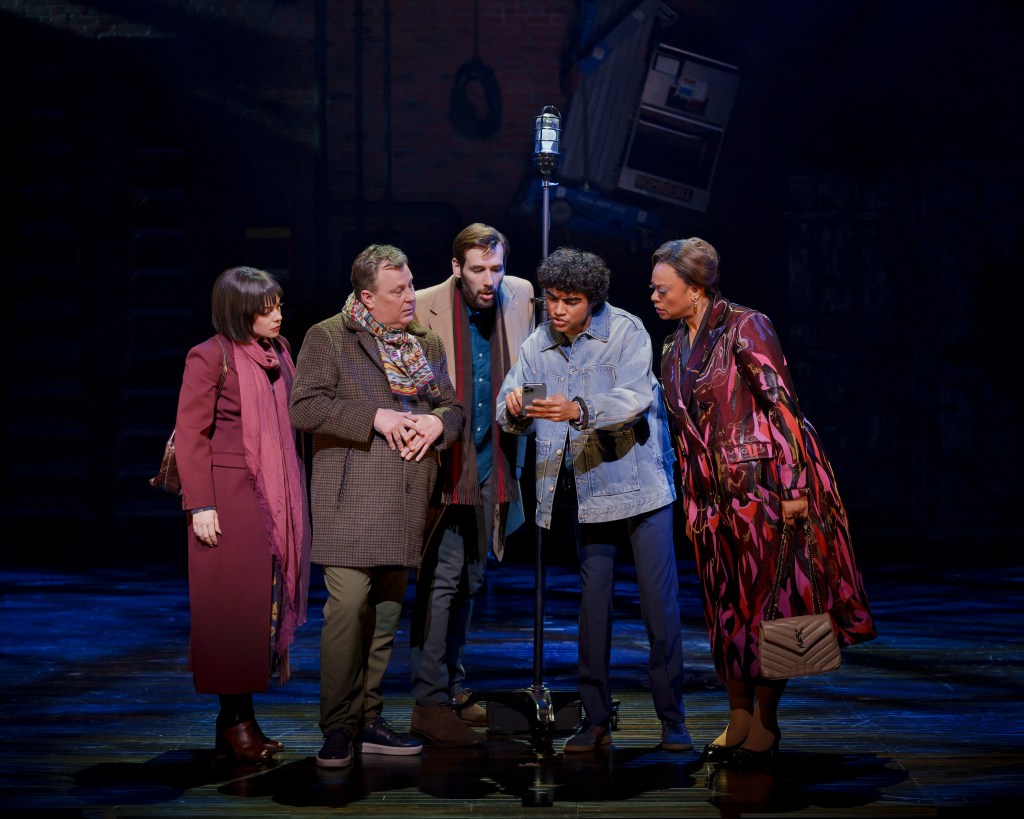
Smash is too much fun not to see. What makes it a hit are the superb singing, acting and dancing by an expert ensemble, phenomenal direction and the coherence of every element from book to music, to the choreography to the technical aspects. Finally, the show’s nonsensical sensible is brilliant.
Praise goes to those not mentioned before with Beowulf Boritt’s flexible, appropriate set design, Ken Billington’s “smashing” lighting design, Brian Ronan’s sound design, Charles G. LaPointe’s hair and wig design, and John Delude II’s makeup design.
Smash runs 2 hours, 30 minutes, including one intermission at the Imperial Theatre (249 West 45th street). https://smashbroadway.com/
 CAROLE DI TOSTI