Blog Archives
‘The Gardens of Anuncia’ Lyrical, Unique, Fanciful, Directed by Graciela Daniele

In order to deal with the past, sometimes memories must be altered to beautify the ugliness of their reality. This is one of the themes in Michael John LaChiusa’s musical, The Gardens of Anuncia, directed and choreographed by Graciella Daniele. The Gardens of Anuncia is currently running at Lincoln Center’s Mitzi E. Newhouse.
The musical’s picaresque, lyrical journey memorializes the women who inspire and encourage the artistic soul of Annuncia (Kalyn West), as she grows into a teenager, who then will flourish in her global career as a director, choreographer and dancer. The journey intimated is that of Graciella Daniele, Tony Award nominee (ten times), and recipient of a Lifetime Achievement Award. Though she never won a Tony, Daniele’s directing and choreography of Chita Rivera: The Dancer’s Life, Annie Get Your Gun, Marie Christine, Once on This Island, The Pirates of Penzance, and Ragtime, are among her most memorable achievements.
Wisely, LaChiusa focuses not on the public career of Daniele, but on those who grounded the choreographer and director to prepare her to be an overcomer, ready to face obstacles and not be daunted by them. Through present narration by the older Anuncia (the charming, endearing Priscilla Lopez), on the eve of her acceptance of the Lifetime Achievement Award, in the garden of her country house, Anuncia meditates in flashback about her childhood with the three great women who influenced her, making her who she is today. As she readies herself to bury her aunt’s ashes, a final goodbye, she works through her memories, some hurtful, all poignant, growing up in Buenos Aires, Argentina during the Peronista government and movement in the 1940s and 1950s.

Auncia’s memories are vignettes that encompass vital turning points and revelations in the lives of the Younger Anuncia, Tia (Andrea Burns), Granmama (Mary Testa), and Mami (Eden Espinosa), all of them flowers burgeoning in the beautiful garden of her mind. Bounded by the older Anuncia’s narrative, we are introduced in the “Opening” to the women and their routines in the life they live daily in Granmama’s house in Buenos Aires. Together, the women raise the youngster and support each other after Mami and Anuncia are abandoned by Anuncia’s father, referred to as “That Man.” Lyrically, poetically, La Chiusa moves from present to past as the older Anuncia lands on memories that eventually reveal how each of the women traverse the paternalism of a male world and thrive.
The superb Priscilla Lopez (i.e. The Skin of Our Teeth, Anna in the Tropics), originated the role of Diana Morales in A Chorus Line, winning an Obie Award and Tony nomination. Lopez and Kalyn West portray Older Anuncia and Younger Anuncia, playing off one another seamlessly with grace. Through her reflections, the older Anuncia merges with her younger self to gain strength to finally put to rest the pain of the past, manifested in her finally burying her Tia’s ashes. As Lopez brings humor, poignancy, wisdom and loveliness to the older Anuncia, West embodies the innocence, increasing understanding, anger and astuteness when she asks questions and discovers the truth behind the answers that Tia, Grannmama and Mami give her.
From Tia, Young Anuncia learns to use her imagination to explore her world in, “Listen to the Music.” Additionally, Tia explains why she isn’t married and implies that she is happier without being tied down, having to answer and be obedient to a husband (“Smile for Me, Lucia”).
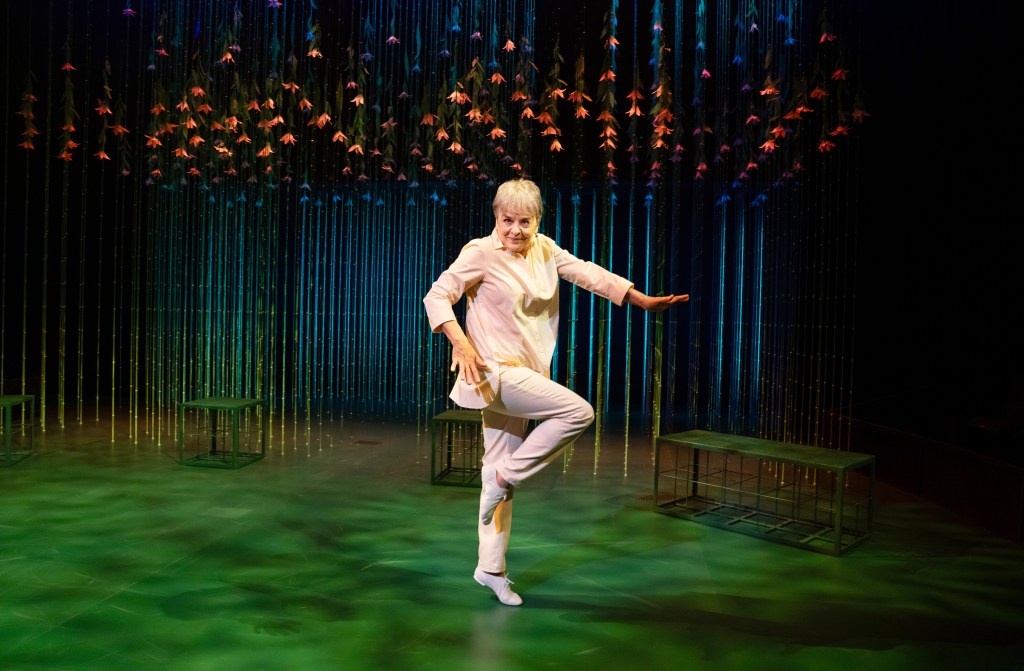
From her mother Mami, she receives the gift of ballet classes to strengthen her flat feet, as well as her interest in the dance. In Espinosa’s interpretation of the sensual “MalaGueña,” Mami dances the tango and sings about the club where she goes to dance with various partners in order to have fun, something that Granmama disapproves of.
Mary Testa’s Granmama adds humor and irony to the relationship the women have with each other. From Granmama, Anuncia learns her love of the dramatic and theatrical, as her Granmama’s reactions are always over the top. Her relationship with her husband, Anuncia’s grandfather, is explosive and extreme. It is forged in scandal and passion, thought it ends up in an eventual tiresome marriage, after which Granmama, eventually kicks him out. In “Waiting/Dreaming,” Anuncia learns they long for each other when he is away in the merchant marine, then can’t wait until he leaves, after a few days of crazy arguments and harangues when he returns.
From each of these incredible women, Anuncia attributes elements of her inner soul. Importantly, she also learns how and why “That Man,” her father, abandoned them and left them destitute, forcing Mami and Anuncia to move in with Tia and Granmama. All of the songs and events take place with the backdrop of danger and “disappearances,” during the Peron regime, a regime which also threatens the family when Mami is arrested.

The events in flashback and flash forward, with Older Anuncia’s narration that bridges them, unspool fluidly in a stylized, minimalist set design by Mark Wendland. The past and present flow into each other in Older Anuncia’s memory, suggested by the ease by which the characters step into the present in the garden of flowers that Older Anuncia talks to, beautifully intimated by Jules Fisher and Peggy Eisenhauer’s lighting design.
The garden is the perfect place of solitude where Old Anuncia revisits conversations and events with these beloved women, who shaped her and sent her with confidence and beauty into the wide world. The colorful, atmospherically lighted beads with attached flowers (Jules Fisher and Peggy Eisenhauer), separate the downstage where the conversations and reminiscences take place, with the past behind the beading where the characters exit.
Lopez, in her direct address to the garden of flowers that includes the audience, animates and enlivens them. Lopez is so specific in her performance, we believe she sees the peonies, the irises, the anemones and forsythias, though nothing is there. However, we note that this is who Anuncia has learned to be, influenced by Tia, to use her imagination.

Thus, in her garden of delights, she is able to converse with the floral pageantry she has planted, as well as the two male deer who come to visit her and nibble on her vegetables. The deer, who are brothers, are hysterically portrayed by Tally Sessions. The first deer gives her the wonderful advice to “Dance While You Can,” as they do a bolero. The second deer, shows up after an interval in time. He shares with the Older Anuncia that he lost his half-brother, who was hit by a car, obeying a “deer crossing” sign. The half-brother is bitter and droll. Lopez’s Anuncia returns the advice she received from the cheerful brother to the nihilistic half-brother, almost cheering him up.
The other male parts are portrayed by Enrique Acevedo who is Granpapa, That Man (Anuncia’s father) and other characters.
Older Anuncia’s garden meditations where she speaks to the plants and the deer are charming, ethereal and magical. They are part of her cultural heritage and legacy from Tia. Like her conversations with Tia, Mami, Grandmama and the others who have passed on, they are a part of her and not “ghosts” or something to be frightened of. The enlivened memories eventually bring the Older Anuncia to closure so that she can finally bury Tia’s ashes. It is time to rest her memories, it is time she lays them in peace in the garden of her mind, manifested in her country house garden.
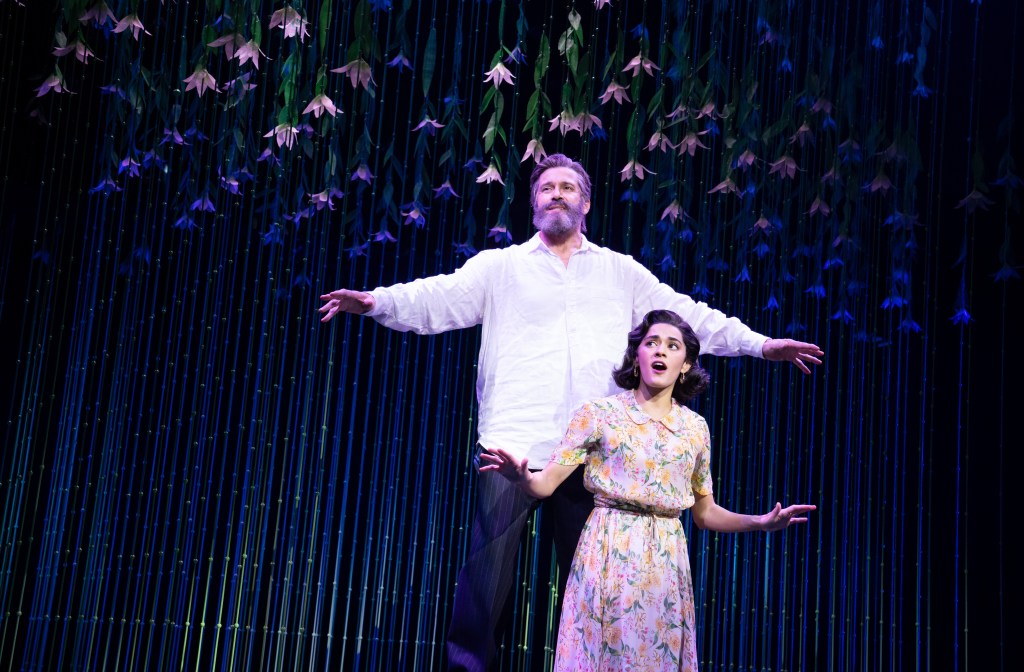
Daniele directs and stages the actors specifically and acutely so that they seem to create their own geometric patterns and rhythms. The choreography remains simple and evocatively cultural, reflecting the time and place to emphasize the Older Anuncia’s memorialization of the women who are so dear to her. Though West does some ballet, it is more representational, as befits the glimpses into the past, as if Anuncia looks into the mirror and can only bear snippets of reminiscences. Indeed, memories are elusive and questionable. Did certain events happen? There is one that the Younger Anuncia affirms happened and wishes she could forget.
From the lyricism, to the suggestiveness and poetic nuances, LaChiusa’s musical is in a category by itself. As elusive as a butterfly’s shimmering, gossamer wings, The Gardens of Anuncia floats into our consciousness with its poignant softness and seduction with stirring themes about the power of imagination, the profound love conveyed by relatives to strengthen progeny, about legacy, and about the wisdom and love it takes to understand the impact of one generation shepherding the next.
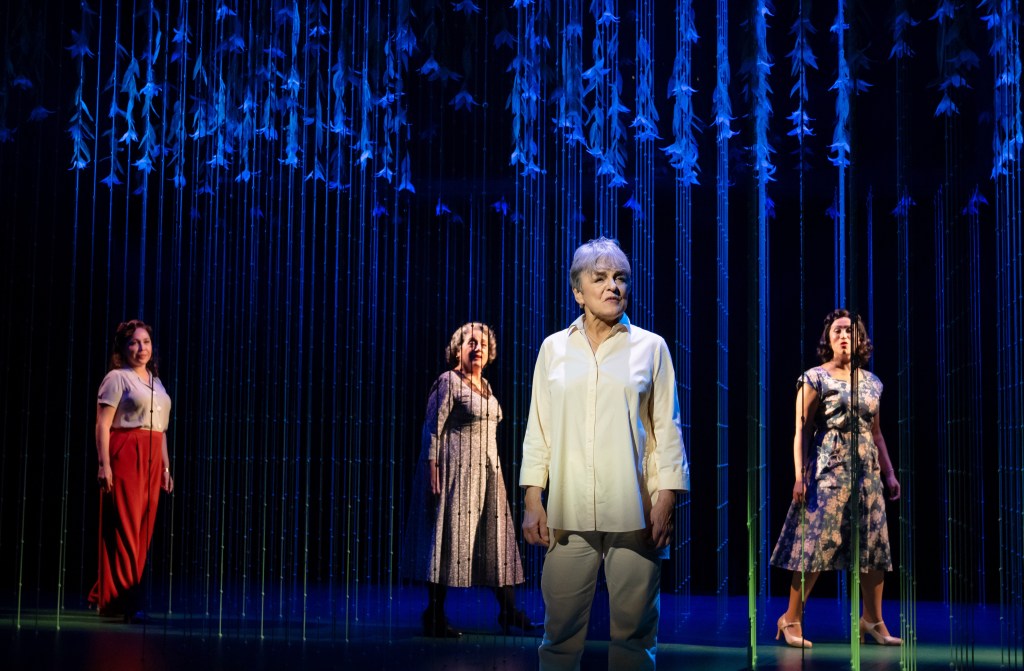
The ensemble are exceptional. They merge, flow, harmonize, dance, spinning into the garden’s loveliness, then retreating back into the corner’s of the Older Anuncia’s mind. Just great!
Kudos go to all the creative team who explored and solidified Daniele’s vision of LaChiusa’s evocative, unique musical. In addition to those mentioned above, these include Toni-Leslie James (costumes), David Lander (lighting design recreation), Drew Levy (sound), Michael Starobin (orchestrations), Deborah Abramson (music director), and Alex Sanchez (co-choreographer).
The Gardens of Anuncia, Lincoln Center Theater at the Mitzi E. Newhouse. Website: https://www.lct.org/shows/gardens-anuncia/
‘Grand Horizons,’ a Ferociously Funny Vision of Senior Redefinition, Starring Jane Alexander and James Cromwell
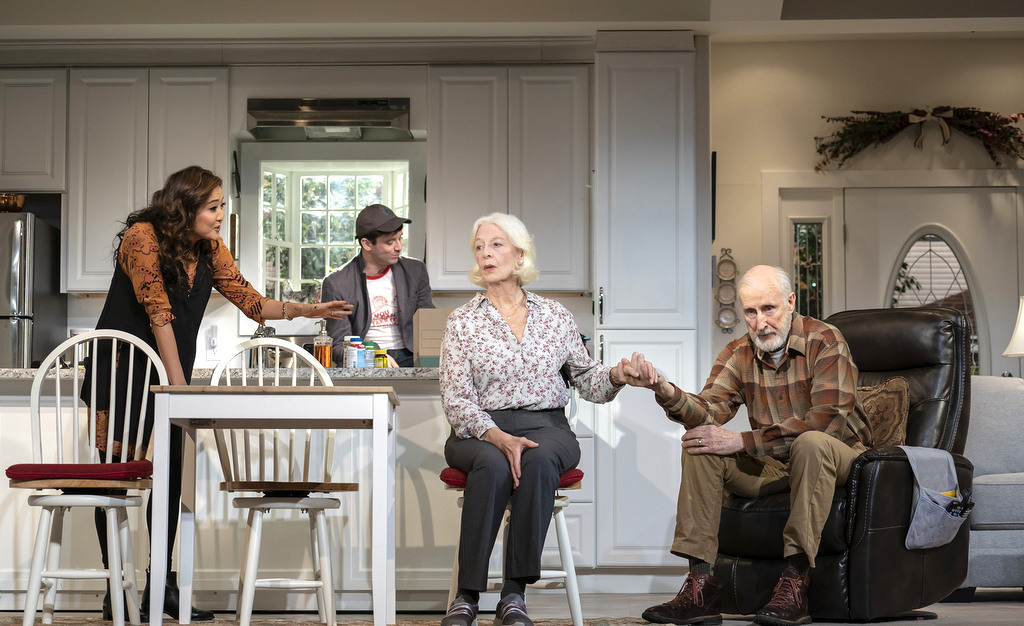
(L to R): Ashley Park, Michael Urie, Jane Alexander, James Cromwell in ‘Grand Horizons,’ by Bess Wohl, directed by Leigh Silverman (Joan Marcus)
At last! There’s a new and improved perspective of “seniorhood” that doesn’t include steps up the ladder of infirmity and dementia: from independent living to the “Rose Court,” from memory care to the palliative slip-away into Hospice. Indeed, as we appreciate and glory over the vibrant humor and comedic power of situation and characters in Bess Wohl’s Grand Horizons, we learn a thing or two about “old folks” and “the younger generation” in this rollicking yet profound play.
First, age is attitude. Second, the older one becomes, the more one must think outside of the box, especially out of the type found in replicated, independent living housing. Third, the closer one gets to the “end,” the more one should “rage against the dying of the light.” Fourth, one can experience in one’s later years a vision of life that is freeing, one that destroys the cages we created our entire lives: for they are a mere facsimile of living. Indeed, contrary to seniors who settle for the cardboard, cookie-cutter artificiality of existence in vegetative, pre-fabricated places like Grand Horizons, Wohl reveals that it is possible to make life-affirming changes even at the age of 80 years-old as does her protagonist, Nancy, the amazing Jane Alexander.
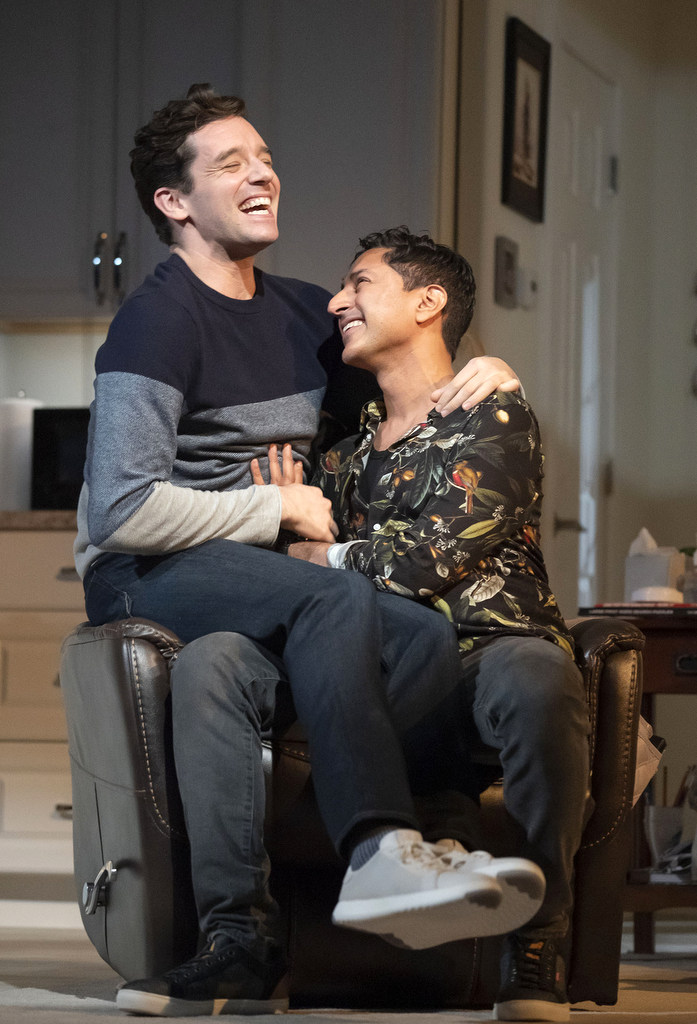
Michael Urie, Maulik Pancholy in ‘Grand Horizons,’ by Bess Wohl, directed by Leigh Silverman (Joan Marcus)
The playwright’s brilliant script is cleverly paced by Leigh Silverman’s precise direction of the superb ensemble. Masters of the comedy of real, of humor springing from grounded, soulful authenticity, the actors led by Jane Alexander and James Crowmwell pop the quips, jokes, one-liners, twists and turns of phrase and mood to keep the audience laughter rolling in waves of joy. Wohl’s well-crafted writing absolutely sings with comedic grace and profound themes, sharply channeled by Silverman. These include the importance of breaking through the stereotypical concepts of aging, family, parenting, marriage, love, intimacy, individuality and autonomy.
The play’s situation is common enough. Nancy and Bill, a “typical,” retired, fifty-year married couple have taken the next steps toward their journey’s end by moving into an independent senior living community. Is it the replication of row after row of modestly, flimsily built homes in a vast similitude (Bryce Cutler’s projection design) that sets off Nancy? Or perhaps what triggers her is the whitewashed, pleasant kitchen/dining nook/living room interior of “peaceful” uniformity (Clint Ramos’ set design) though it is festooned by artificial greenery.
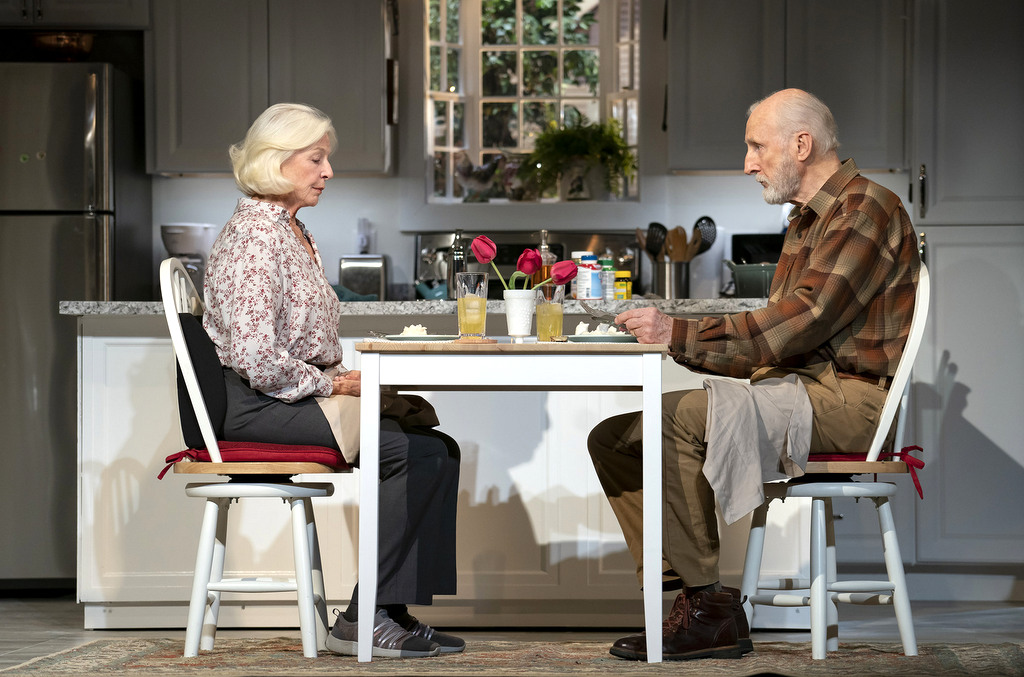
Jane Alexander, James Cromwell in ‘Grand Horizons,’ by Bess Wohl, directed by Leigh Silverman (Joan Marcus)
We learn later in a profound and symbolic irony, that the lovely plants don’t even have the opportunity to die bio-dynamically as a result of Nancy’s over or under watering. They just go on and on and on in lifeless “eternity.” Nancy’s eyes open to their fake permanence later in the play, after she has confronted herself, her children and Bill with the truth. Her ironic comment about their artificiality has to do with the realizations of her own growth.
The vast sterility of this community is only heightened by the play’s opening of Nancy’s and Bill’s dinner that is choreographed to reveal a mutually synchronized preparation that they execute silently with near robotic precision. Well, enough is enough in this perfect haven of deadness. I could hear Nancy’s thoughts as she looked at Bill as they, with synced movements in unison, took out their napkins, then began to drink and eat. What more could anyone their age wish want? They appear to have it all. But is this the exuberance of life we wish for?
At this point Alexander’s Nancy lets the desires of her heart explode from her lips and the train moves onto the express track and doesn’t stop until she achieves what she wants, sort of, by the play’s end. Jane Alexander’s delivery of the opening lines of conflict are spot-on humorous and ominous: “I think I want a divorce.”
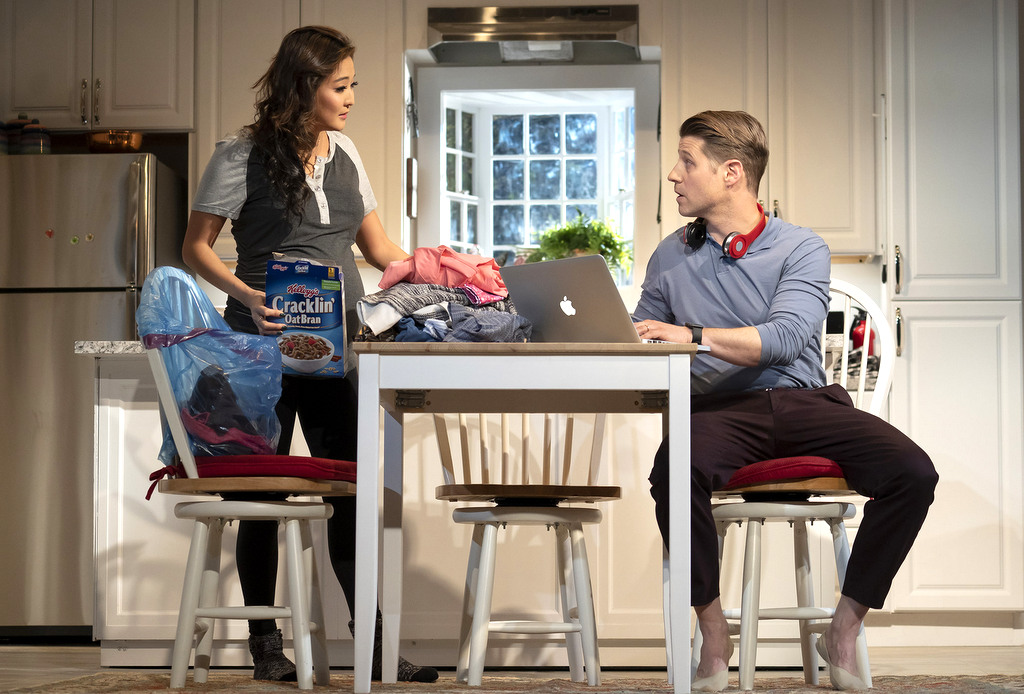
Ashley Park, Ben McKenzie in ‘Grand Horizons,’ by Bess Wohl, directed by Leigh Silverman (Joan Marcus)
The excitement of what Nancy envisions to be on her grand horizon for the future is in imagining its open-ended possibilities, even if it is merely sitting in a restaurant and enjoying a meal by herself. Clearly, she wants no more imprisonment by the chains of coupling. She wants to know her own power, strength and autonomy apart from defining herself as Bill’s wife. As the play progresses, we discover she has already established her autonomy away from her family, though she has kept it secret. Interestingly, perhaps as a long awaited response, Bill is striking out on his own in this senior community by taking stand up comedy classes and enjoying a relationship with Carla (Priscilla Lopez). We learn later that this may be his response to what he has known all along of Nancy’s secrets.
As these details are gradually revealed we enjoy watching the incredulous sons, Brian (the wonderfully funny Michael Urie) and Ben (Ben McKenzie is the harried lawyer control freak who can’t relax). Both are shattered by the announcement of the divorce. Ironically, they don’t want their parents to leave their comfortable “mom” and “dad” roles to be individuals, redefining who they want to be. They want stasis, not for their parents’ happiness but for their own comfort and assurance. Brian’s and Ben’s perceptions of their parents living apart from each other are at odds with their parents’ expectations. For Nancy and Bill divorce will be a positive experience. The sons cannot wrap their heads around this, especially that Nancy is planning to live in an Air Bnb. Their mom in an Air BnB: a horror!
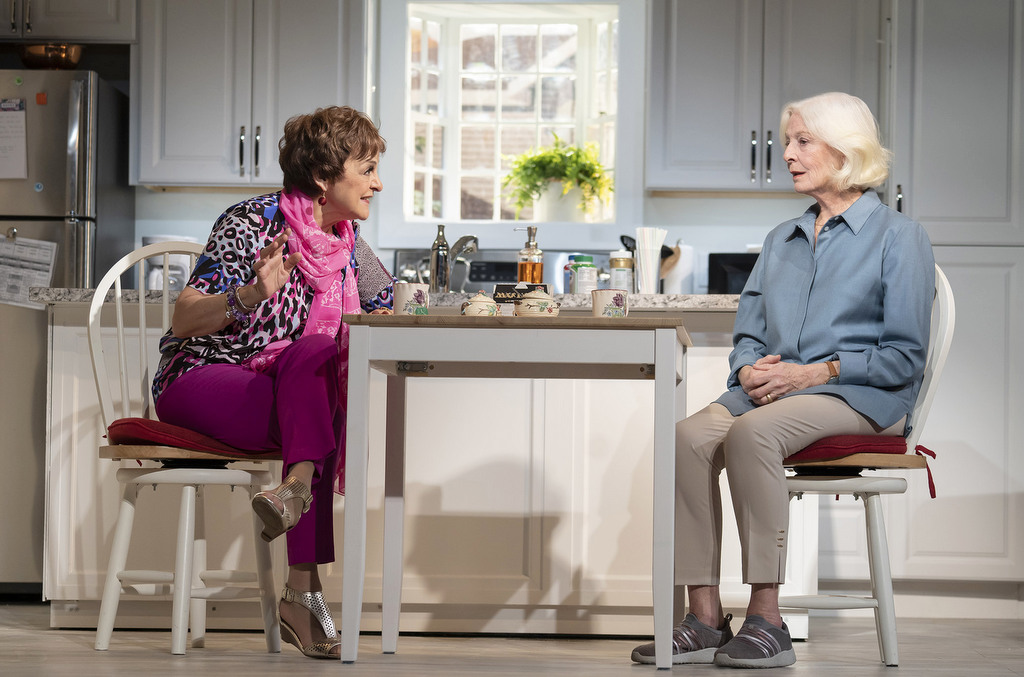
(L to R): Priscella Lopez, Jane Alexander in ‘Grand Horizons,’ by Bess Wohl, directed by Leigh Silverman (Joan Marcus)
Wohl takes advantage of this set-up in a refreshing way. In an ironic reversal, with the help of Jess (Ashley Park) Ben’s wife, Brian and Ben don the parental roles. They attempt to gauge what has recently happened, as they try to square away what mom and dad must do to resurrect the bloom on their long-dead marriage. Their failed attempts are humorous. Adroitly, the actors bounce off each of their characters’ stress-filled emotions with peppery dynamism and wit.
Brian’s neediness is easily identifiable throughout and is integral to his character as a theater teacher who creates 200 characters in The Crucible so “no kid will be left behind to feel left out.” It is Brian who is so dislocated by his parents’ future divorce, he worries about where he will spend Thanksgiving which is six months away. His sensitivity exceeds his parents’ emotionalism. The dichotomy is hysterical, yet heartfelt.
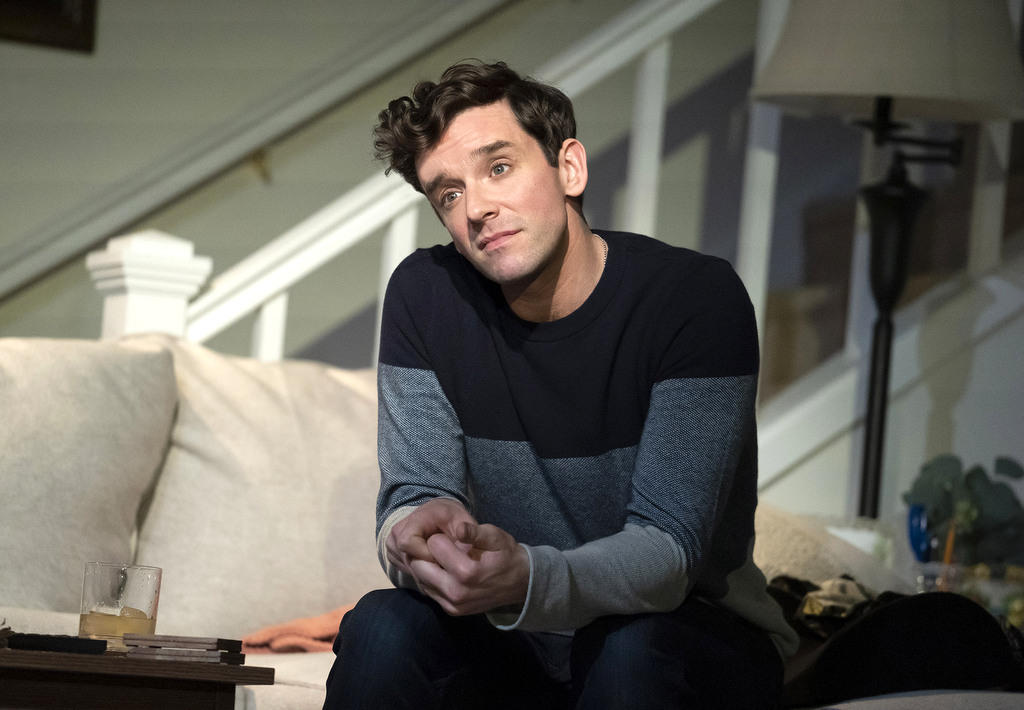
Michael Urie in ‘Grand Horizons,’ by Bess Wohl, directed by Leigh Silverman (Joan Marcus)
Ben’s eczema flares as he attempts to take control of where each of his parents will live. And then there is Jess providing the counseling so Nancy and Bill can return to their once affectionate times with each other. With Ben and Brian looking on with hope at Jess’ powers, the results that follow are riotous. As their visit with Bill and Nancy to persuade them not to divorce lengthens, Jess begins to look at her relationship with Ben differently as he reverts to Bill and Nancy’s son. Where has her husband gone or is this just hormones because she is pregnant?
The resistance of the younger generation to the divorce is a powerful obstacle which the parents find impossible to answer to their children’s’ satisfaction. It provides conflicts among the characters from which Wohl tweaks and teases thematic tropes. What are the phases and stages of our lives? How do we define them apart from cultural stereotypes and familiar roles that appear to offer comfort, but are actually binding and nullifying? What price do we pay to create our families and sacrifice for children with expectations that are unreasonable, or worse, false? From parenting to aging, no one can provide a guideline for what to do that will resonate completely with our individual lives. Every family, every person in that family is different. We fail, but perhaps it is worth it because we learn and if we are open to it, we heal.
Nancy’s desire for a divorce sets the entire family roiling except for Bill, who appears to remain calm. Of course Wohl is always pushing the envelope to get the maximum surprise and intrigue from her characters, who remain interesting and intensely human.
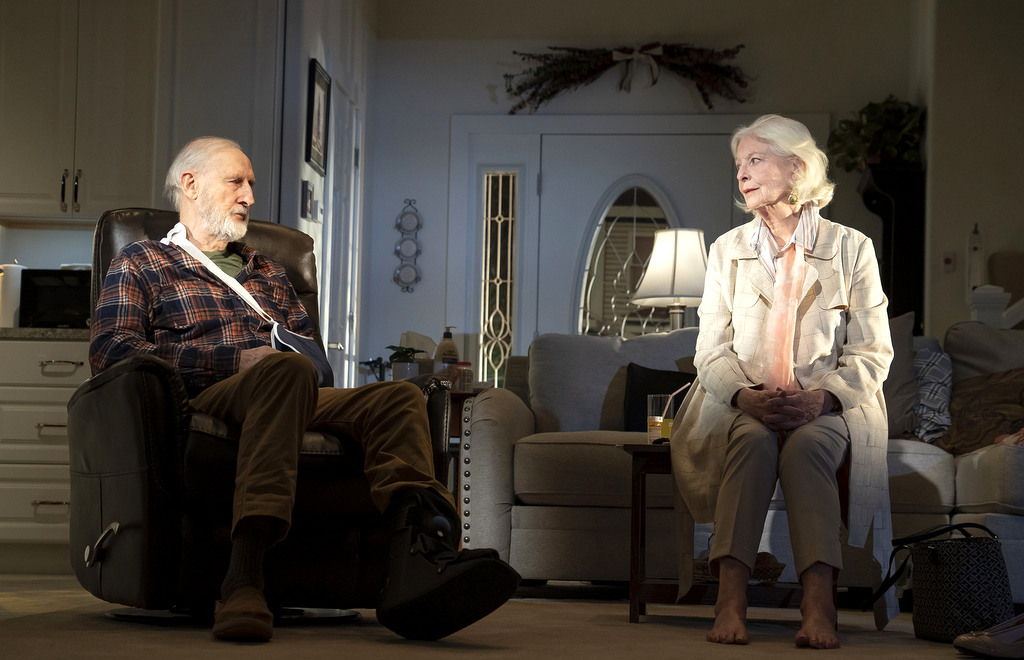
James Cromwell, Jane Alexander in ‘Grand Horizons,’ by Bess Wohl, directed by Leigh Silverman (Joan Marcus)
The audience’s gales of laughter organically spring from Nancy’s revelations that she has pursued her desires and dreams despite the intrusions of raising her two sons and making a home for her husband Bill. Indeed, the mother they believed she was, is not who she presented herself to be. She had another love. And when she expresses the importance of her closeness and intimacy with this lover to Brian (Urie brings down the house with his responses to her sexual descriptions) in the hope of explaining why she is leaving Bill, he cannot cope with understanding that his mother is perhaps a woman first.
This is something many children have difficulty with unless the parents, with good will and flexibility, help them to understand love, sexuality and intimacy. Bill and Nancy never considered going into these discussions with Brian and Ben because they never went there with each other. It is a telling irony that catches up with all of them at this juncture.
Clearly, Nancy runs deep as does Bill, who is a cypher that Wohl reveals by the conclusion, when we learn that both Bill and Nancy have kept intimacies and secrets to themselves. Yet, they do love one another. The humor and pathos come when we note how difficult it is for Ben and Brian to understand their parent’s particularities when they believed the packaged family meme that “togetherness is happiness.” That meme when they admit it, satisfied none of them, least of all their parents.
All of this eventually tumbles out after Brian, Ben and Jess visit, stay and don’t leave until Bill and Nancy politely tell them to go and reassure them that they are going to be all right. By the end of the play, Wohl opens the door to hope. Even if they live apart, maybe Bill and Nancy can begin to see each other outside of the roles that threatened to box them in “til death did them part.”
Grand Horizons is a mixture of uproarious fun and thoughtful poignance. Shepherded by Leigh Silverman’s vision the actors deliver, with sterling performances by Alexander and Cromwell and with high marks for McKenzie, Urie, Park and in secondary roles as Tommy (Maulik Pancholy) and Carla (Priscilla Lopez). Additional kudos to the creative team: Clint Ramos (scenic design) Linda Cho (costume design) Jen Schriever (lighting design) Palmer Hefferan (sound design) Bryce Cutler (production design).
Grand Horizons runs with one intermission at Second Stage Theater, The Helen Hayes Theater on 44th Street between 7th and 8th until March 1. For tickets and times to this LOL production CLICK HERE.
 CAROLE DI TOSTI