Blog Archives
‘Boop! The Musical’ is a Dazzling Spectacle. I’m a Fan!
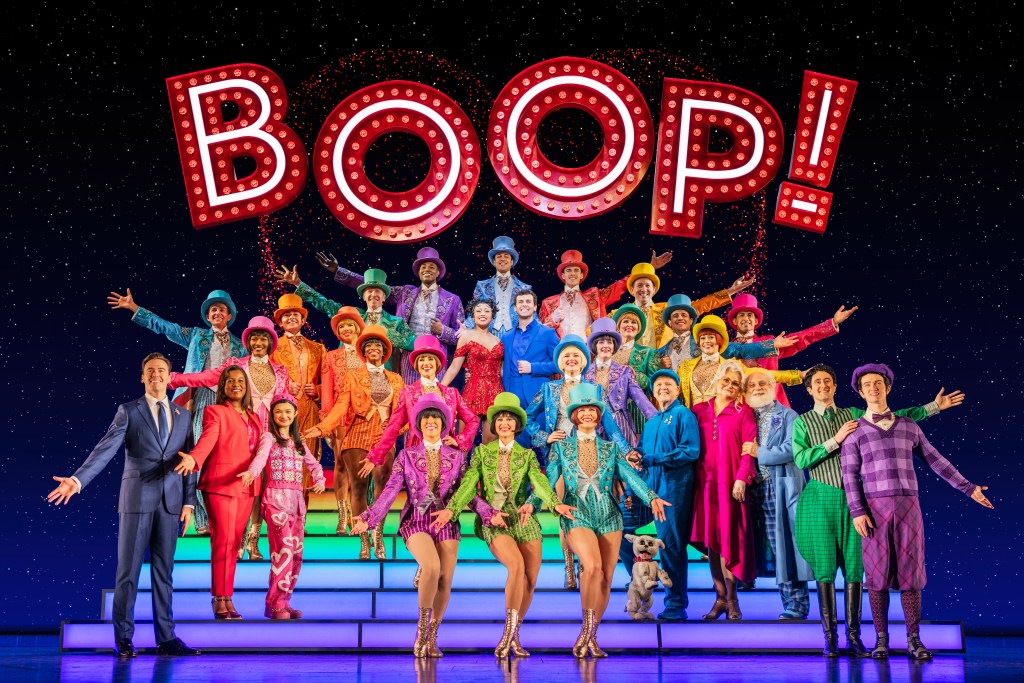
Boop! The Musical
If you need an uplift and who doesn’t listening to the news these days, Boop! The Musical is your vehicle of delight. Currently running at the Broadhurst Theatre, Boop! is pure joyous spectacle, a Broadway extravaganza with clever twists, and a wink to the best of the past, and a thematic nod to the present.
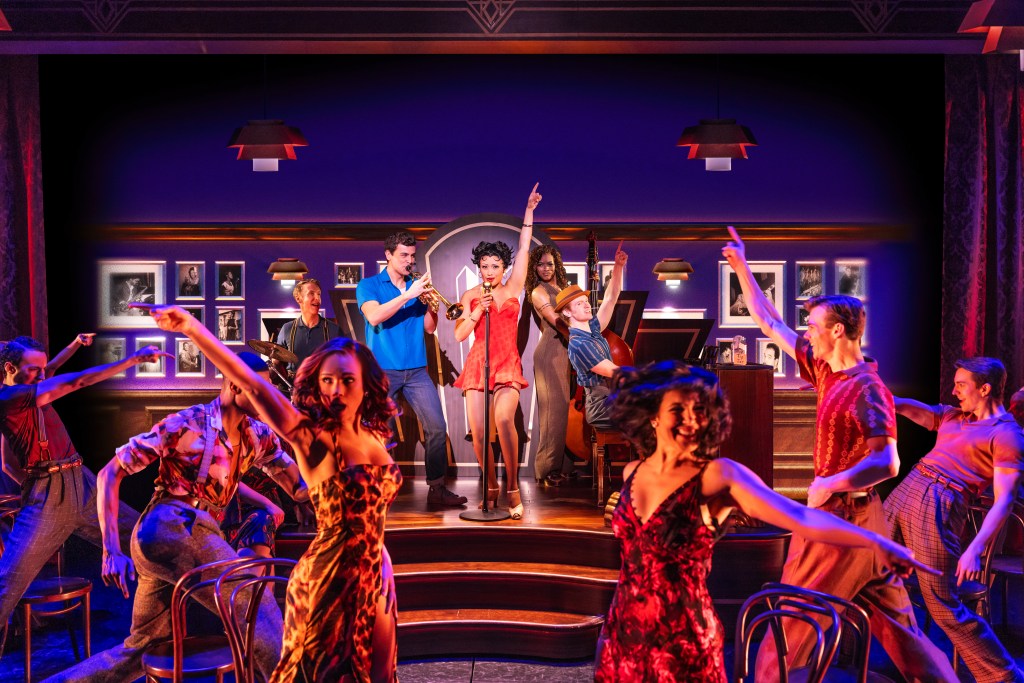
The cast sings and dances to a variety of song genres (from jazz, to pop, to blues), and Jerry Mitchell shows his razzle dazzle choreography and staging with abandon. There is just too much to praise. The glittering kick line is bar none. The nine principals are spot on with their humorous portrayals and exquisite vocals. Boop! is a welcome send up of the fanciful, historical cartooning of yesteryear, in a mesmerizing update that shines talented brilliance at every artistic level of this blazing production
What’s not to love if you enjoy an adorable story and salient themes reinforcing “girl power,” with the additional intention to pay homage to old Hollywood, and the Jazz-age, and depression era cartoons of Fleischer Studios? Importantly, the production is a throwback to old-fashioned Broadway musicals, where most songs are memorable with a beginning, middle and end. In its song variety and hot, superlatively executed dance numbers Boop! delivers.
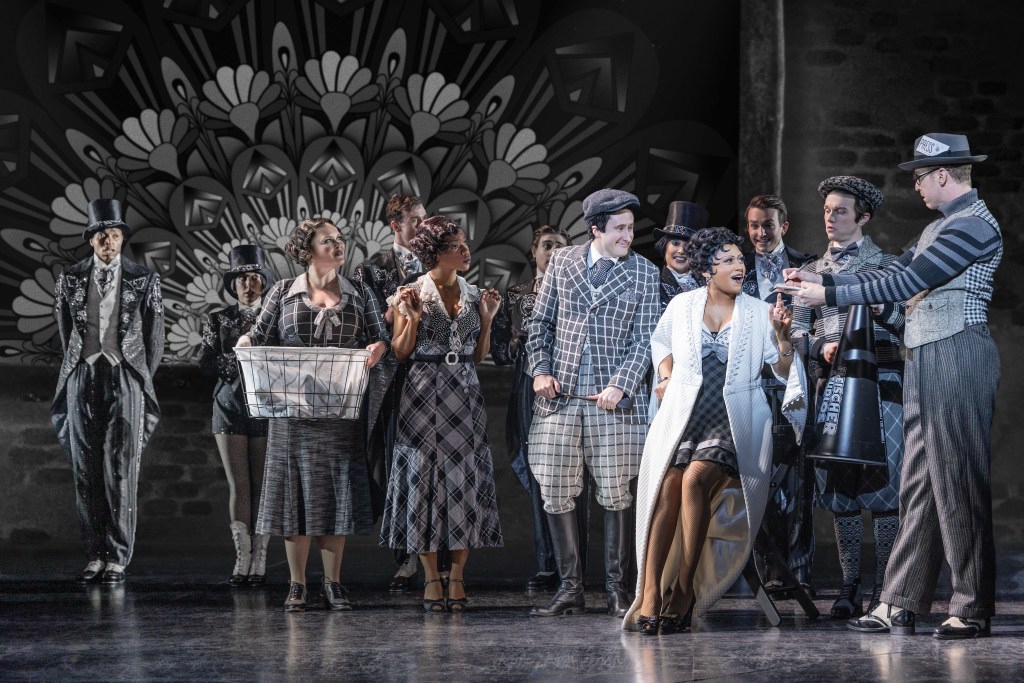
Directed and choreographed by Tony Award®–winner Jerry Mitchell (Kinky Boots), Boop! features music by 16-time Grammy®-winning composer David Foster and lyrics by Tony-nominated Susan Birkenhead.
The cartoony, “tongue-in-cheek” book by Bob Martin (The Prom), brings to life the iconic, historic cartoon character and current meme Betty Boop (the sensational Jasmine Amy Rogers in her Broadway debut). Betty has been a symbol of charm and empowerment for almost a century, and Rogers channels her believably to the minutest gesture, giggle and batting of her eye lashes. Importantly, Betty has an identifiable problem to solve in her personal life. As the reluctant super-star, she eventually must choose between two worlds, fiction and reality. Mustn’t we all? The show is incredibly, ironically, thematically current.
Martin presents the thrust of Boop! as fun, family fare. Going deeper as one should, the irony in Boop! as a farce, emphasizes that this is a cartoon within a cartoon, with the simplicity of a fairy-tale.
Thus, the plot develops as follows. Betty works so very hard for Fleischer Studios, portraying women’s greatness in every job imaginable (“A Little Versatility”), which actually is maverick considering her original 1930s context. And there are vicissitudes and annoyances: the publicity grind and the slimy men who harass her for her “favors and charms.” Exhausted by overwork and untoward publicity, Betty has a moment of self-reflection, something more of us need to practice. She realizes she needs a vacation from her life as a cute, celebrity cartoon with no “real” identity to discover for herself. Above all, she wishes her life was less celebrated (“Ordinary Day), so a respite from cartoonland in a venue where she won’t be recognized and judged would be just fine.
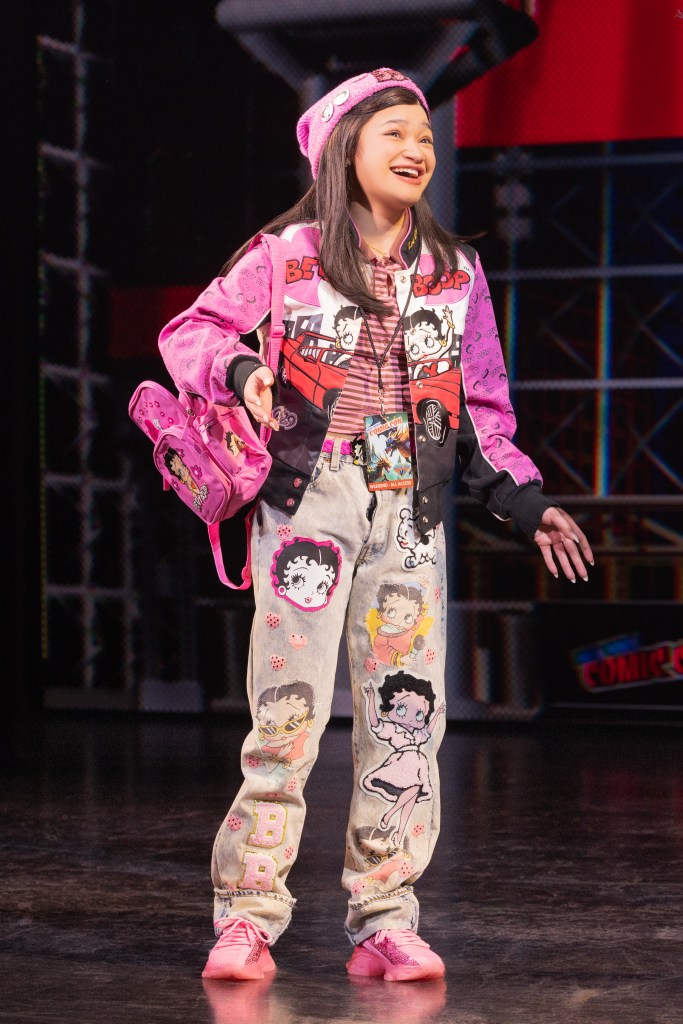
Grampy, (the lovable, powerfully voice Stephen DeRosa), her guardian and roommate, reminds her the current “world” she lives in can’t qualify because she’s a globally recognized star. However, he does suggest a tenable place to go since he went there years before, fell in love, then left. Grampy tells her reality is the place for a grand vacation. It’s much more adventurous, unscripted and serendipitous than cartoonland. (I love the irony.) Of course, this is a family show with no untoward or frightening elements like ICE (Triple Canopy) agents kidnapping folks. So when the winning, charismatic Betty lands in the present at the Javitz Center’s funscape Comic Con, having been jettisoned there by Grampy’s DIY time machine, all works out swimmingly.
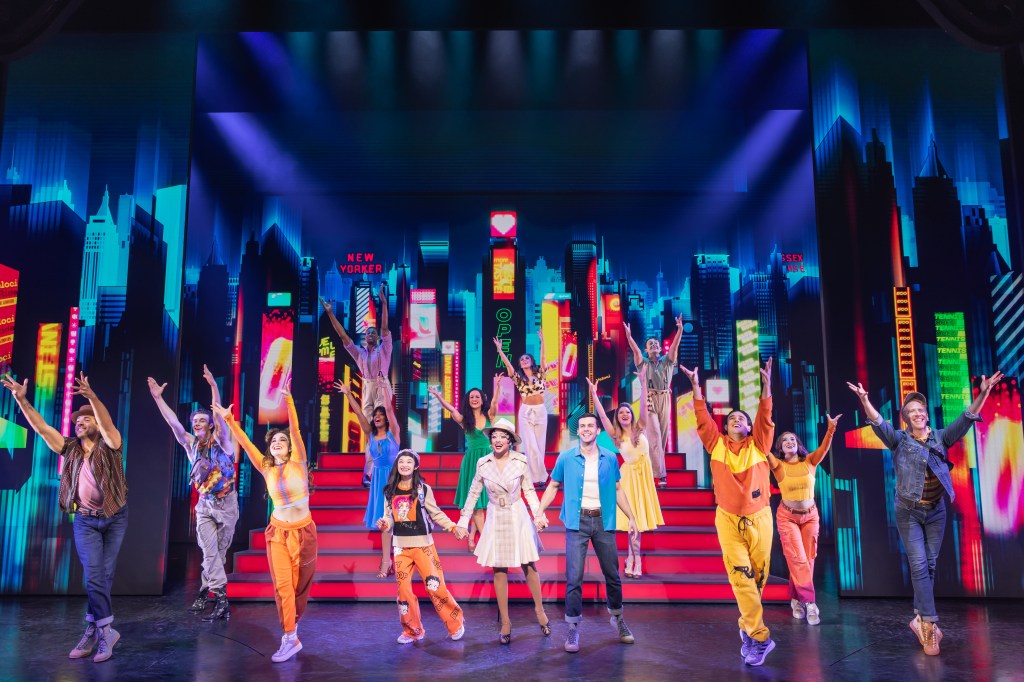
In this magical atmosphere and vibrant New York City fantasia, Betty fits right in with a host of rainbow-hued fans dressed as their favorite characters from comic books. Though she is recognizable, she tries to hide her cartoon identity. Nevertheless, she is gobsmacked by reality’s wild beauty (“Color”). At Comic Con, she meets her destiny which becomes tied up with two individuals. First, is her future love interest, dreamy, blue-eyed, politically correct to a fault Dwayne (the boyish Ainsley Melham who sports an amazing voice). Along with Dwayne, she befriends the cute, clever Trisha, a forever Boop fan, who she can’t fool when she tells Tricia her name is Betsy. As Tricia, Angelica Hale is the perfect sidekick teen with an exceptional voice.
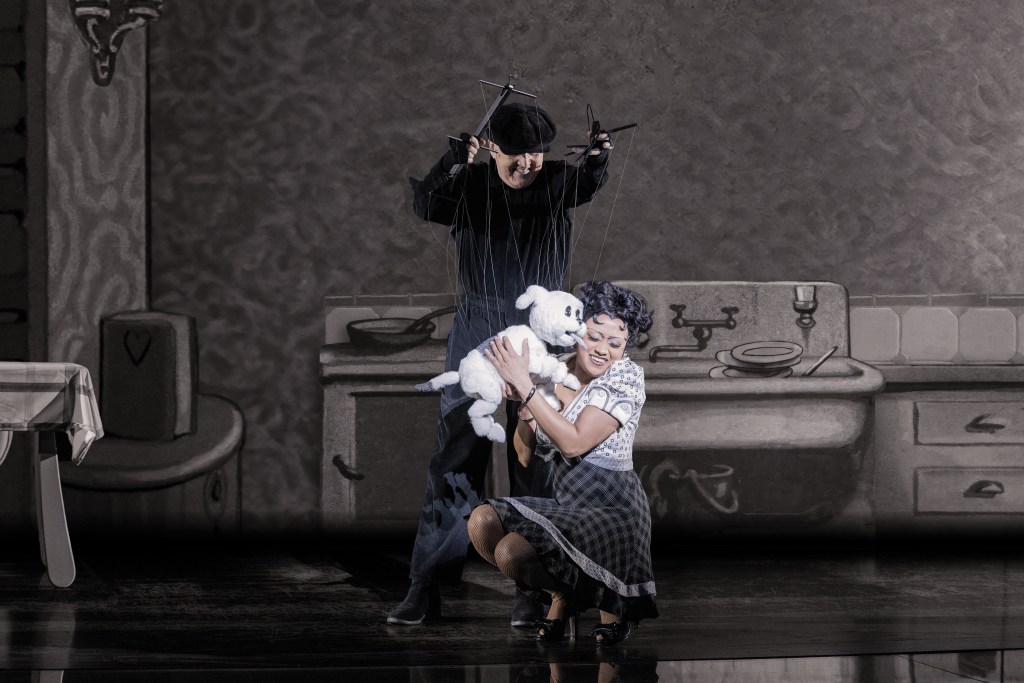
Meanwhile, Grampy discovers Betty is gone when her bosses drop by looking for her. He divines she left for reality. The key conflict, of course, is to get her to return (“Get Her Back”). But to do that Grampy must take Betty’s cutie, white dog Pudgy, a marionette operated by the wonderful puppeteer Phillip Huber. The imperative is to jump in his time machine, set it for reality and find her. With energetic multi-tasking Grampy will locate her without GPS, while reuniting with his former love Valentina (the stalwart Faith Prince), for comfort and companionship during his quest. The quaint Grampy hero, love story, sub-plot with astrophysicist Valentina gives an extra pop of reality to the fantastic.
As Betty goes home with Tricia to stay, she meets Tricia’s family, her brother, the blue-eyed Dwayne, and her Aunt Carol (the terrific Anastacia McCleskey). She discovers that Dwayne’s love of jazz (“I Speak Jazz”), dovetails with her strengths singing and dancing. Finally feeling comfortable, Betty confides her real identity to Tricia, who breaks through the cartoon character’s confusion about herself with the upbeat “Portrait of Betty.”
Betty’s adventures in reality continue when Tricia and Dwayne take her on a tour of the city and to Times Square, where the dancers join them for the continuous party that goes on there in a great number, “My New York.” Whether in cartoonland or New York City’s reality, Betty is light, laughter and healing. In an interesting counterpoint, Dwayne sings about her in realityland in contrast with Betty’s studio bosses who sing about missing her (“Sunlight”). Thus, the conflict about which world she will select to live in intensifies, for both realms will certainly draw her with those who give her love and appreciation.
If Boop! is too ridiculously fantastic and purposeless for some, they are missing the point of depression-era entertainment and entertainment today. Even in the most despairing of places and times, the imagination takes flight and the fictional fantastic gets one though the horrors that life can bring.
Though the underbelly of darkness is rarely seen in the production, it does shows up. And the enemy is a modern one. The dark villain comes in the form of a grinning, perfectly coiffed, narcissistic politician, Raymond Demarest, who is running for the office of New York City mayor. Erich Bergen is terrific in a hysterical, nuanced, full-of-himself portrayal. The corrupt, money-hungry, and exploitive Demarest is offset by his hard-working, clever, organized campaign manager, Tricia’s Aunt Carol. Carol efficiently, competently runs his campaign and life. And eventually, her efforts pay off where Demarest’s dereliction and corruption receive its due reward.
As Act One sets forth the problem. Act Two answers it for Betty, her friends and family. Boop! even justly disposes of the villain in the process of ironing out all difficulties. Would the same occur in “real” real life USA with a certain criminal felon, as happens to Demarest. The riotous Bergen makes the most of the villain’s just comeuppance, intuiting the audience’s real wishes as they watch him tripping away, all smiles in his orange jump suit. Just great!
The shimmery white and grey-toned two-dimensional Boop world is cleverly created by David Rockwell to represent Boop’s artificial universe in a snazzy scenic design that contrasts perfectly with the real world of living color. Rockwell’s suggested black, and white, multi-patterned lines and squiggly designs reflect the Boop cartoon. Other cartoon characters peek out from the curtain following the same design. Betty’s materialization in the beautifully eye-popping, gloriously colorful, real world of New York City with the accompanying song and dance numbers seal the deal.
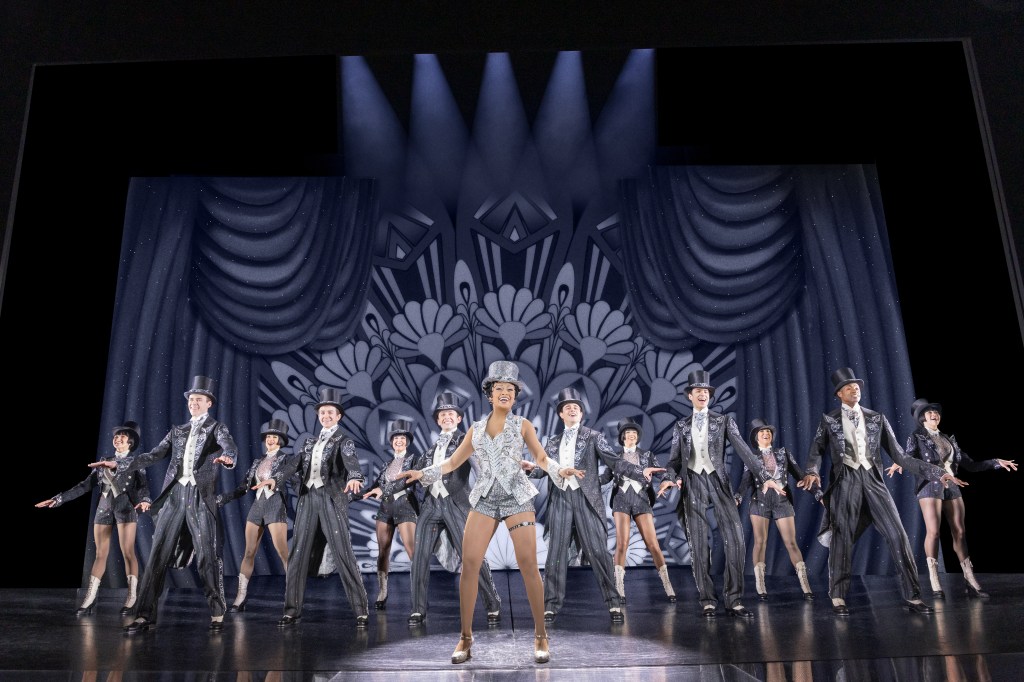
Whether in cartoonland or reality, the costumes by Gregg Barnes are ingenious and gorgeously appropriate. The costume design in a set of two-sided costumes which reveal the contrast of the alternating grey vs. color worlds, shows maximum creative brilliance. The same must be said for the other designers whose collaborative efforts contribute to the show’s gobsmacking effect. These include Philip S. Rosenberg (lighting design), Gareth Owen (sound design), Finn Ross (projection design), Sabana Majeed (hair & wig design), Michael Clifton (make-up design), Skylar Fox (illusions design).
Mitchell and the creatives have outdone themselves. “Professional” is a partially accurate descriptor. Amazing, phenomenal, superlative, genius seems more INCLUSIVE and PRECISE. In every aspect the designs cohere with the director’s vision. Above all Daryl Waters’ music supervision (with additional arrangements), is integral to making this extraordinary production what it is. And the cast? Beyond!
See Boop! two or three times to escape for the purpose of rejuvenation. Then go right back out there and work, march, resist, protest the current villainy, taking the wisdom manifest in this production, having learned persistence from a silly, ridiculous, cartoon character with a century of staying power.
Boop! the Musical runs 2 hours 30 minutes with one intermission at the Broadhurst Theatre (235 West 44th Street). https://boopthemusical.com/?gad_source=1
‘The Secret Life of Bees,’ a Heartfelt Musical Adaptation of Sue Monk Kidd’s Titular Novel
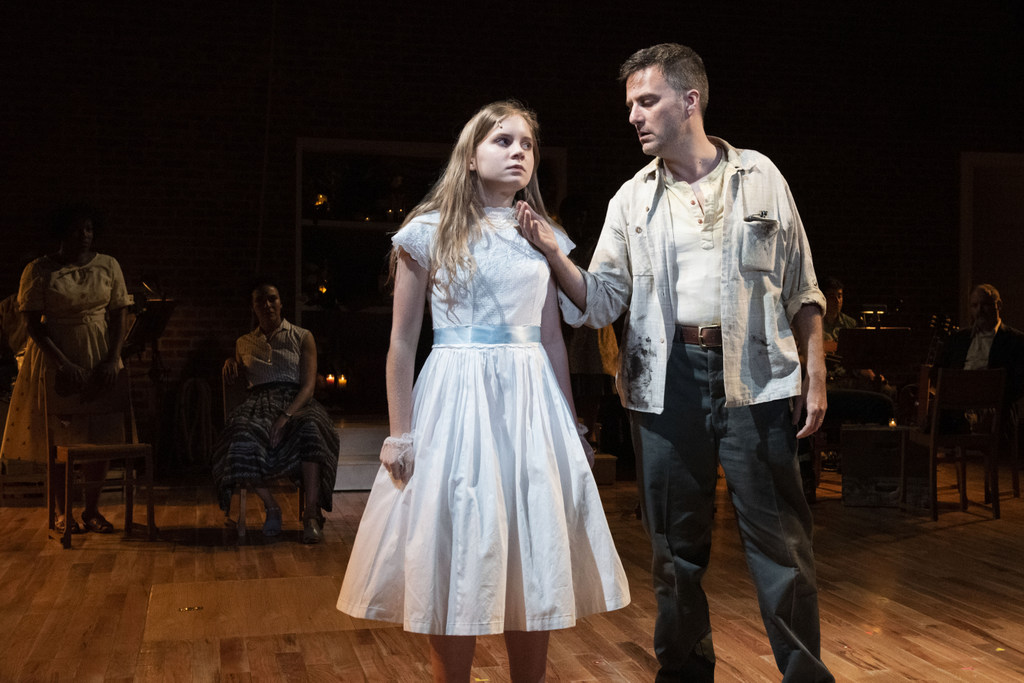
(L to R): )Elizabeth Teeter and Manoel Felciano in ‘The Secret Life of Bees,’ bOok by Lynn Nottage, Music by Duncan Sheik, Lyrics by Susan Birkenhead, based on Sue Monk Kidd’s novel, directed by Sam Gold (Ahron R. Foster)
The World Premiere of The Secret Life of Bees (Book by Lynn Nottage, Music by Duncan Sheik, Lyrics by Susan Birkenhead) spins Sue Monk Kidd’s best-selling novel into “A River of Melting Sun,” a metaphor for love, sweetness and redemption that is established in the opening lyrical musical number. Sung by the ensemble who elicit the audience to join them on a mythic and personal a journey they might wish to take, the song reinforces primary themes. These ripple throughout the story of Rosaleen (a sensational Saycon Sengbloh) and the troubled heart-broken Lily (Elizabeth Teeter’s lyrical voice is perfect for the role) both of whom must reconcile the wounds from their motherless childhood that threaten to destroy them.
The production directed by Sam Gold (Fun Home) is uniquely metaphysical. The director has chosen to keep the staging and set design (Mimi Lien) illustratively spiritual, functionally minimalistic and suggestive. The characters. pull out the props from the back wall use them to reflect and evoke events as they conduct the action organically. The book melds together the music and lyrics with characterizations. Sheik’s music with Birkenhead’s lyrics are sensitively drawn and vibrantly anointed in a mix of styles (gospel, blues, ballads, rock and pop pieces). This musical inspires and thrills.

The company of ‘The Secret Life of Bees,’ Book by Lynn Nottage, Music by Duncan Sheik, Lyrics by Susan Birkenhead, based on Sue Monk Kidd’s novel, directed by Sam Gold (Ahron R. Foster)
Ultimately, the healing power of many of the melodies, infused by the gorgeously, heady voices of the inimitable LaChanze (August Boatwright) Saycon Sengbloh (Rosaleen) Elizabeth Teeter (Lily) Eisa Davis (June) and Anastacia McCleskey (June) become the golden threads that provoke us to understanding that we too can share in “The Secret Life of Bees” and be purveyors of the honey of joy, moving down our own byways of life impacting others positively within our own sphere of influence.
The symbolism in the “A River of Melting Sun” has a myriad of layers as evocative as the messages in this adaptation enhanced with the emotionalism of Sheik’s score and veteran Birkenhead’s stirring lyrics. On one level the melting sun represents the golden honey that expert beekeeper August Boatwright (LaChanze) draws from hundreds of bee hives which is processed into the pure, amber sweetness from which she and her sisters, the broken-hearted May, and the hypercritical, austere June make their living in the county around Tiburon, South Carolina.

(L to R): LaChanze, Elizabeth Teeter in ‘The Secret Life of Bees,’ Book by Lynn Nottage, Music by Duncan Sheik, Lyrics by Susan Birkenhead, based on Sue Monk Kidd’s novel, directed by Sam Gold (Ahron R. Foster)
The melting sun also alludes to the mysterious power of sunlight that impacts the bees before and after they gather the pollen from the flowers whose plants, require the radiant rays’ energy to blossom and lure their pollinators to complete the vital rhythmic cycle of propagation that has persisted for thousands of years.
As the bees follow the rhythms of nature, so do the characters. The bee puppets shimmering in the expert lighting against the dark backdrop are effective, especially accompanied with the lyrical, flowing “bee theme.” In this musical as in the novel, both bees and humans are symbolic counterparts. Both focus on and require support from (their bee queen, the Black Madonna, Mother Mary). The honey, the bees produce for themselves and their queen; the honey represents the strength and love as well as the product central to August’s business. Importantly, the honey is the “sunlight” theme of the underlying love, unity, equanimity and community that sustains life. Without these elements, human beings will wither and die from displacement, isolation, disunity and emotional malnutrition. The same applies for the bee colonies.
Rosaleen and Lily are amazed and learn from the community of healing love from which the praying, spiritual Daughters of Mary find sustenance in, despite an oppressive, bigoted, hateful culture. Without their unity and faith there would be a return to misery, torment and depression, the likes of which May experiences and must continually be lifted away from. The metaphor of melting sun also alludes to the heat/warmth/enlightenment/encouragement/hope/faith extended by August and the Daughters of Mary to the broader community. This symbolic “melting sun” is received by Rosaleen and Lily after the runaways allow faith to transform their souls and heal their brokenness through love and peace.
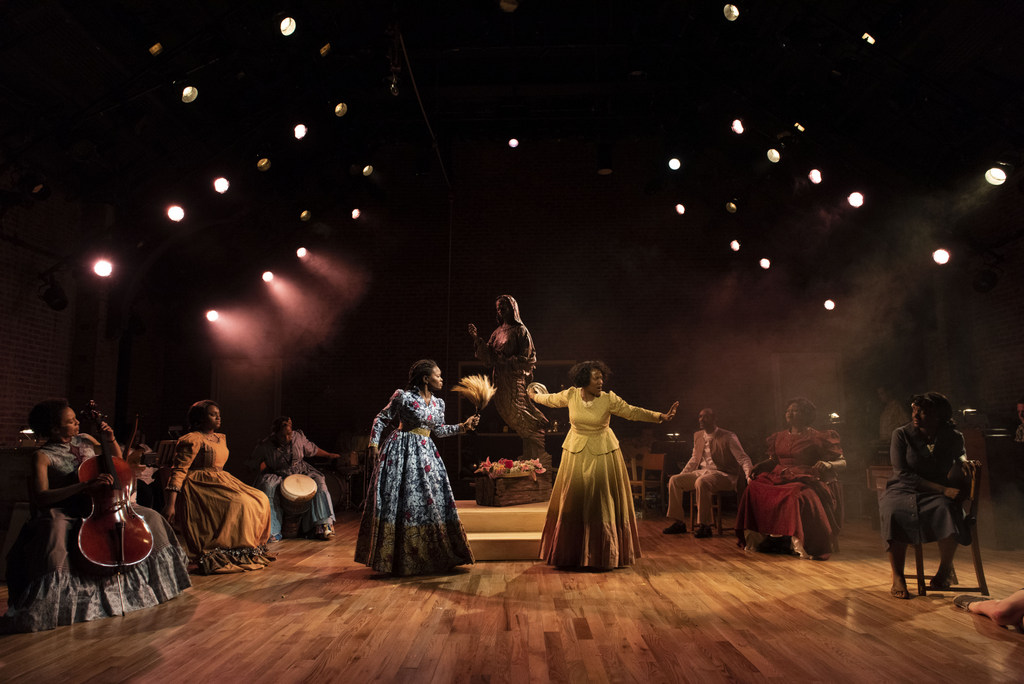
(L to R): LaChanze, Anastacia McCleskey and the company of ‘Secret Life of Bees,’ Book by Lynn Nottage, Music by Duncan Sheik, Lyrics by Susan Birkenhead, based on Sue Monk Kidd’s novel, directed by Sam Gold (Ahron R. Foster)
Nottage’s book serves to frame the arc of development, elucidate the characterizations and manifest the themes. Cleverly, she employs a delicate, slim, suggestive rendering. She quickly establishes the setting as 1964, South Carolina. For those unfamiliar with the history, we learn through radio announcements salient news details; these news events are tied to the action. Those familiar with the Civil Rights Movement, will recall the year was a time of roiling fury for Southern white supremacists who opposed the passage of President Johnson’s Voting Rights Act and retaliated with bombings and killings to spread fear and stop blacks from registering to vote.
This social and cultural backdrop magnifies the conflicts for Lily, the confused white teenager who sings “The Girl Who Killed Her Mother” and Rosaleen who works for Lily’s father T-Ray and who intends to vote (“Sign My Name.”) challenging racist bullies who have maintained their oppressive, genocidal power structure since Plessy v. Ferguson in a Jim Crow South. During the musical, we learn that Rosaleen and Lily have been abandoned by their mothers and suffer from emotional and spiritual traumas that destroy their confidence and wholeness so they cannot progress.
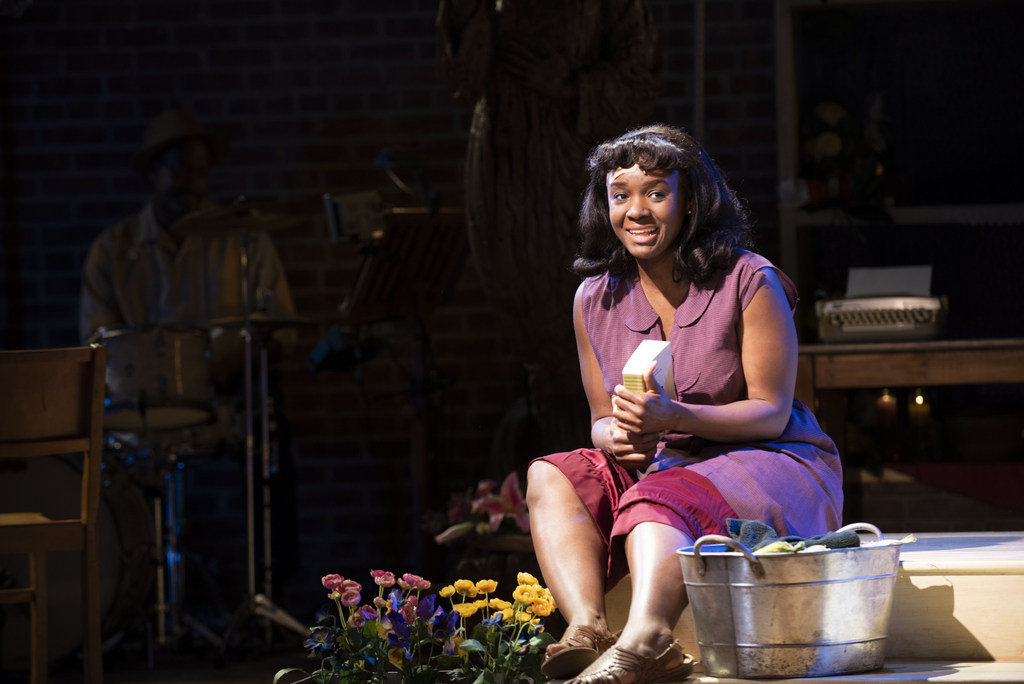
Saycon Sengbloh in ‘The Secret Life of Bees,’ Book by Lynn Nottage, Music by Duncan Sheik, Lyrics by Susan Birkenhead, based on Sue Monk Kidd’s novel, directed by Sam Gold (Ahron R. Foster)
Escalating conflicts force Lily and Rosaleen to take the risk of running away together. Tired of her father’s physical and emotional abuse, and in her quest for the truth about her mother who has died, Lily solicits Rosaleen’s companionship and they leave Sylvan without T-Ray’s permission. Manoel Felciano as T-Ray aptly delivers the brutish, hurtful father convincingly.
They follow the only clue Lily has about her mother’s past, a paper honey label stamped with a Black Madonna with the printed location of Tiburon, South Carolina. Though tired and worn, they believe and hope in their future (“Better Than This”). For feisty Rosaleen who spit on a red-neck’s shoe when he prevented her from registering to vote after she brings down the house with “Sign My Name,” escape may lead to power. For Lily escape means the freedom to seek her mother’s identity away from the gnawing terrors of a childhood event that is too traumatic to remember. Her lack of memory is why T-Ray opaquely tortures her about it without being entirely truthful.

(L to R): LaChanze, Elizabeth Teeter in ‘The Secret Life of Bees,’ Book by Lynn Nottage, Music by Duncan Sheik, Lyrics by Susan Birkenhead, based on Sue Monk Kidd’s novel, directed by Sam Gold (Ahron R. Foster)
Rosaleen’s and Lily’s travels lead them to the mysterious, striking, holy scene, a ritualized church service of dance and song that is a powerful prayer to Mother Mary (a Black Madonna carved in driftwood). The Black Madonna is a contact point of faith, enlightenment and love. The anointed song “Tek A Hol A My Soul” is rhythmic and profound. It thrums with the pulsation of sweeping currents that uplift and energize the Daughters of Mary (ensemble and the sisters) and Neil (a heartfelt, humorous, sensitive portrayal by Nathaniel Stampley). Neil is a like-minded “brother”who prays and sings with them; he is also the principal of the school where June teaches. The song is a soul shaker, just fabulous in providing the dramatic focus from which the action centralizes.
When the singers (August, June, May, Neil, Queenie, Sugar Girl, Violet, Neil) see Rosaleen and Lily are enthralled, August (she represents the Queen Mother, the educated entrepreneur whose encouragement and wisdom undergirds the community of educated black women) invites them to work for room and board. The ensemble sings “The Secret Life of Bees,” the thematic mantra which represents the unity of all things through love, hope and decency, and all that is life affirming and purposeful, if one has the eyes to see and the ears to hear the secrets/mysteries to obtain the honey goodness.
Rosaleen and Lily gratefully accept the invitation and in exchange for lodging, they assist with the housework and beekeeping. As they gradually become a part of the family, they confront their troubles and embrace peace and self-love through August’s nurturing. This becomes problematic for Lily because of June’s skepticism about taking in a white girl who obviously will bring trouble into their sanctuary. Lily must overcome June’s negative attitude with the help/love of August and her own soul searching and prayers to Mother Mary. She grows in empathy toward the broken-hearted May (the golden voiced Anastacia Mcleskey) who also has gone through a terrorizing, event. In the lovely “Frogs and Fireflies” and they encourage one another

(L to R): Anastacia McCleskey, Elizabeth Teeter in ‘The Secret Life of Bees,’ Book by Lynn Nottage, Music by Duncan Sheik, Lyrics by Susan Birkenhead, based on Sue Monk Kidd’s novel, directed by Sam Gold (Ahron R. Foster)
Rosaleen’s and Lily’s arrival at the farm is a major turning point in which the interactions between and among May, June and August entertain and teach us about the women’s industry, resourcefulness and determination to strive in a culture that would otherwise annihilate their souls and identities. LaChance’s August (accent on the second syllable means sage) is spot-on brilliant. She delivers a nuanced performance that drips with wisdom, steadfastness, inner mystical knowledge and power through inner peace. Her portrayal is transcendent. She sets the tone for the metaphysical underpinnings, revelations and healings which might not be gleaned if one is “scientifically,” empirically-minded. Her singing is absolutely grand.
Saycon Sengbloh is a whirlwind, likable, effusive and joyful as Rosaleen, a true overcomer. Her chiding Lily’s selfishness into true friendship in “All about You,” is superbly, forcefully delivered. Her other solo “Who Knew?” as she receives grace and heals her sorrows is another highpoint of the production in its development of her character that makes crystalline sense.
Her white counterpart in “becoming,” Lily, is her equal in redemption after Zachary (the adorable Brett Gray and Lily’s potential love interest) has been found alive. When he and Lily are pulled over and officers brutalize Zachary and arrest him for nothing, he nearly loses his life, but for the help of a white client of August, who wields power in the county. The currency of this scene is painful to watch considering how many times such unjust violence spilled from the past into today and it is ongoing. Many times the outcome is not as it is in the play; the victim is tortured, abused and murdered with impunity. The Daughters of Mary understand what is at stake and do all they can to free the innocent Zachary.
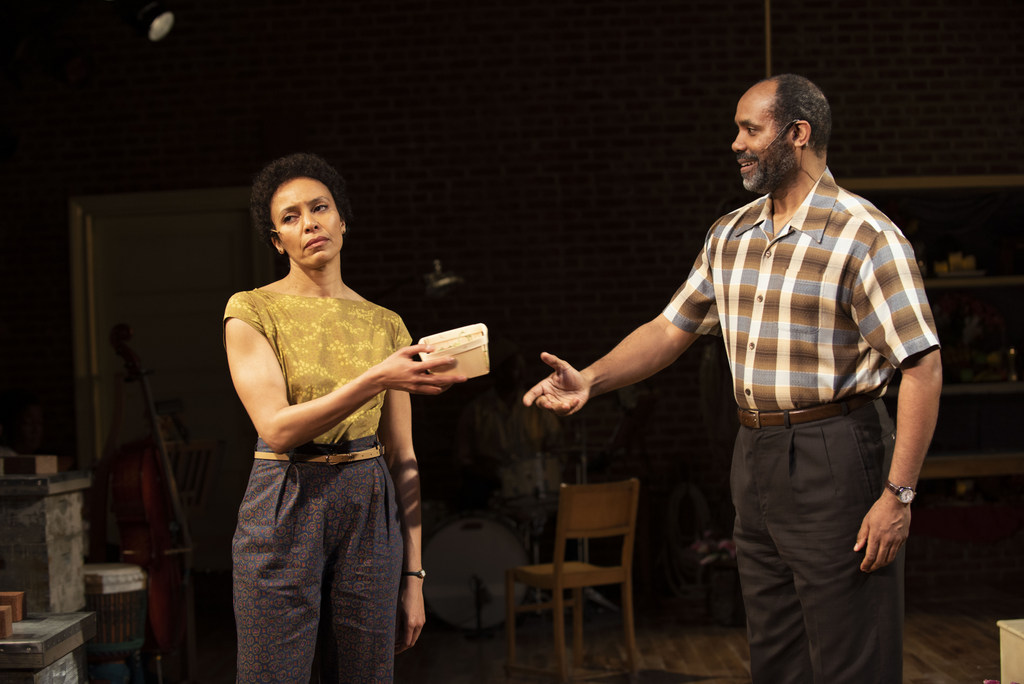
Eisa Davis, Nathaniel Stampley ‘The Secret Life of Bees,’ Book by Lynn Nottage, Music by Duncan Sheik, Lyrics by Susan Birkenhead, based on Sue Monk Kidd’s novel, directed by Sam Gold (Ahron R. Foster)
That Lily importunes Mother Mary and has a conversion experience praying for Zachary is an indication of her growth away from selfishness toward healing and self-love. In this powerful scene, she activates the substance of her own faith as it joins with the Daughters of Mary who also pray for Zachary’s return. However, any hope she may have to be with Zachary will never be realized as long as the atmosphere of hatred and injustice is an entrenched, “legal” social more.
Brett Gray’s Zachary “rocks it” with Lily in two musical numbers which show their bonds: “Fifty-Five Fairlane,” and “What Do You Love?” Their exuberance in the first and their sweetness in the second provide a side story of budding love which avoids the syrupy and remains authentic. The second love story, between Neil (Nathaniel Stampley) and June (Eisa Davis) is LOL hysterical as Neil persists in wooing June and she rejects him a whopping number of times out of fear of being hurt again as she was before. “Marry Me” is just fabulous. The men in the play empathize with Neil and chortled around me at the humor and were tense at June’s answers. This is no spoiler alert; you will have to see the musical to find out if June and Neil join forces. And you will have to see it to discover what happens when T-Ray shows up to confront Lily about her mother’s death to take her back home.
The Secret Life of Bees is an ethereal, spiritual adaptation with little spectacle of the type that “dazzles” and then is easily forgotten. It is an evocative and suggestive view of a time that is near timeless as it reflects the same horrific events that are happening today (voter suppression, police brutality, racial abuse, women’s oppression). But the adaptation carefully elicits the substance of faith and its power evidenced in a mystical group of educated, “sisters” and a “brother” who have found a way to negotiate the hellish genocidal racists and best them beyond “religiosity” and a form of godliness that has no power. Nottage’s selection of events in the style she’s chosen is right on as is Sheik’s music and Birkenhead’s lyrics, aptly shepherded by Sam Gold.
Kudos to the company, and to the creative artists Chris Walker (choreography) Dede Ayite (costumes) Jane Cox (lights) Dan Moses Schreier (sound) AchesonWalsh Studios (puppets) Jason Hart (music director) Antoine Silverman (music contractor) Duncan Sheik & John Clancy (orchestrations) Jason Hart (vocal arrangements) Cookie Jordan (hair, makeup & special effects) UnkleDave’s Fight House (fight director).
This must see musical production runs with one intermission at Atlantic Theater Company’s Linda Gross Theater (West 20th Street) until 21 July. It should be extended or another venue found. For tickets and times CLICK HERE.
 CAROLE DI TOSTI