Monthly Archives: November 2021
‘Morning Sun’ Starring Edie Falco, Blair Brown, Marin Ireland at MTC

Morning Sun by Simon Stephens directed by Lila Neugebauer, presented by Manhattan Theatre Club (New York City Center Stage 1), takes its name from the titular Edward Hopper painting. Hopper’s austere work is of a woman on her bed in bright sunlight staring out the window that faces a factory type building in the distance and rooftops below. The building is out of view from the high-floor perspective of the painted cityscape.
Edward Hopper came from the same hometown, Nyack, as the McBride family women who make reference to him with pride. The painting “Morning Sun” is symbolically appropriate, because Stephens’ protagonist (#1 or Charlotte/Charley) played with terrific focus and authenticity by Eddie Falco, is peering out the window of her life in a flashback life review. She recalls to remembrance her past, assisted by Blair Brown (#2, her mother) and Marin Ireland (#3 her daughter). The woman in the painting steeped in reflection and introspection mirrors Charley McBride.

Brown, Falco and Ireland represent three generations of the lower middle-class McBride women. We see their perspectives and lives as they discuss their relationship with Charley who is the centerpiece of the play. Brown and Ireland also portray the important friends, family and male partners who populated Charley’s life and who are central to the events that took her on her singular journey through the stages of youth, middle age and beyond.
The exposition begins after Charley cries out about safety and security for herself, like a child crying out in the dark. The others assure her she is safe, and calm her down. We understand this beginning to mean that Charley initially is in a place where she fears for her safety. Ironically, it comes to refer to her entire life as a question of unsafe uncertainty. Like every human being who confronts death every moment without accepting or understanding the conundrum of life in death, they move without fully grasping that their instinctive purpose is to stay alive until they leave this earthly plane.

Stephens intimates that there is another consciousness, and the characters inhabit some netherworld in it. But he never clarifies the specifics and certainly not with any religious overlay. Thus, Charley’s cries have great moment. However, we don’t realize why this is so and to what she refers to in her cries until the conclusion, when Stephens reveals it.
With rapid-fire unveiling, the women stream through the beginning, middle and ending of Charley’s life assessment. Their exposition has break through dynamic moments where the women or men that #2 and #3 portray argue or disagree and resist Charley. The drama of a “life well or ill lived” is bled out of Charley’s existence which might be characterized as one of the invisible millions of “average” and “ordinary” women. These lived and died as New Yorkers making do, because they decided not to commit suicide and affirm their identity with an important emotional statement embracing death as a balm for their life’s miseries. Without much reflection or philosophical pondering, they a day-to-day existence.
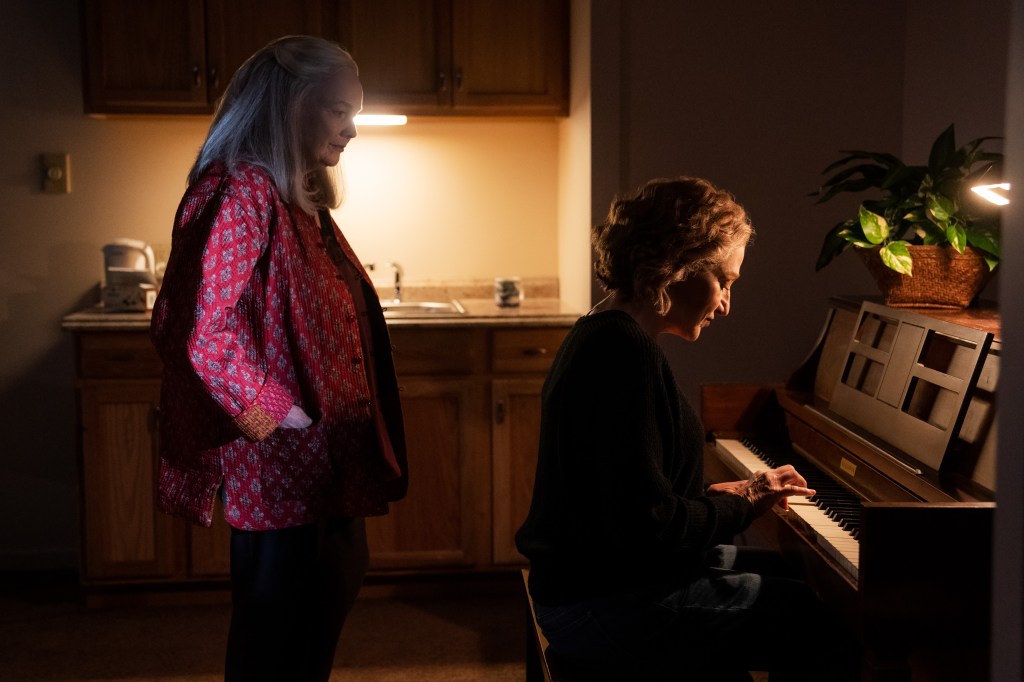
Charley’s chronicle is sandwiched between Claudette’s move to New York City and purchase of an apartment on 11th St. in Greenwich Village where she raises Charley, and years later when Charley comes back to visit and stay with Tessa after she moves to Colorado. The apartment bought on the cheap, in a questionable area grows in value and becomes the envy of all who hear of it, including the audience.
We learn that Claudette arrived in NYC to escape upstate New York and an untenable home-life. By degrees almost as an expanded laundry list, we learn of Claudette’s work, her husband, Charley’s father, Charley’s formative years, her friendship with Casey, her work as a receptionist at St. Vincent’s Hospital, her one-night stand with a pilot and her pregnancy and decision to keep Tessa as a single mother without extensive means. We also learn of Charley’s substantive partners, one abusive, the other kind.

The chronicle is also of New York City’s rise, fall and rise again, revealed as Stephens intertwines Charley’s personal events through the decades which are sometimes impacted by the culture. Ironically, Claudette wants to linger on the 60s, her generation, while Charley affirms the 70s is more important and it’s about “her life” after all. Thus, politics and the upheavals of the 1960s roll off Charley’s back without notice. We consider that Claudette’s viewpoints perhaps were shaped by that time, while Charley, the recipient of the benefits of the 60s social upheavals, remains unconcerned about them.
Throughout, as New York’s financial situation improves, there is discussion about the apartment and what to do with it. We discover that one of Charley’s partners, Brian, who Claudette can’t tolerate because he abused her daughter, persists in trying to get Charley to sell the place, even after they split up. Such discussions become points of humor, as every New Yorker at one time or another finds looking for a place to live, finding a place to live and staying once they’ve found it, one of the main preoccupations of being a New Yorker and living in the city.

Stephens’ vehicle of using #2 and #3 to supplement Charley’s perspective with the men and friends in her life offers an unsettling, unemotional scoping of a list of remembrances that speed us to the why and wherefore of Charley’s existence, however tedious it may be for the audience. The exposition in its great swaths of the non-confrontational is wearisome and uneventful. My neighbor in the audience slept through most of the play and at one point, I found myself almost joining him as I struggled to stay “woke.”
Clearly, Stephens is making a thematic point similar to one heralded by Thorton Wilder’s Emily in Act 3 of Our Town. That life, all of it, especially in its sameness and undramatic monotone is wonderful. Even if one’s life is dreary, monochromatic, dull and uneventful, it is up to us, the players, to bring purpose and meaning to it. This, Charley realizes by the end of the play. She understands the great importance of being a receptionist at St. Vincent’s after the hospital is shut down. She tells Tessa the amazing things about her that she loves.
Such realizations, Stephens suggests, arrive just on time for their full appreciation. Indeed, Charley understands by the end, that she misses what she took for granted as a privilege. Most importantly, those people, places and wants only resonate with her unique ethos and being.

The strength of Stephen’s work which requires a yeowoman’s job of getting all of the details down is in the overall message and the last few minutes of the play which is an apotheosis for Charley and the audience. Throughout, Falco is a tour de force, in a role beautifully rendered, especially at the conclusion. Blair Brown and Marin Ireland are wonderful assistants, though Ireland needed to project and at times in her inward emotion-gathering became a faint wisp, indeed, in character, but not always articulated.
Director Lila Neugebauer properly stages Morning Sun in the ethers, not focusing on the material aspects of the production so that we listen carefully and take in the lives being shared with us. Though Charley’s journey is told in flashback narrative, we do come to trust the reliability of those who speak. This is a testament to the actors and director savoring the playwright’s work.

Kudos to the creative team: dots (scenic design) Kaye Voyce (costume design) Lap Chi Chu (lighting design) Lee Kinney and Daniel Kluger (sound design) Daniel (original music) Tom Watson (hair and wig design). For tickets and times go to https://www.manhattantheatreclub.com/shows/2021-22-season/morning-sun/
‘Caroline or Change’ the Roundabout Theatre Company Revival, Starring Sharon D Clarke
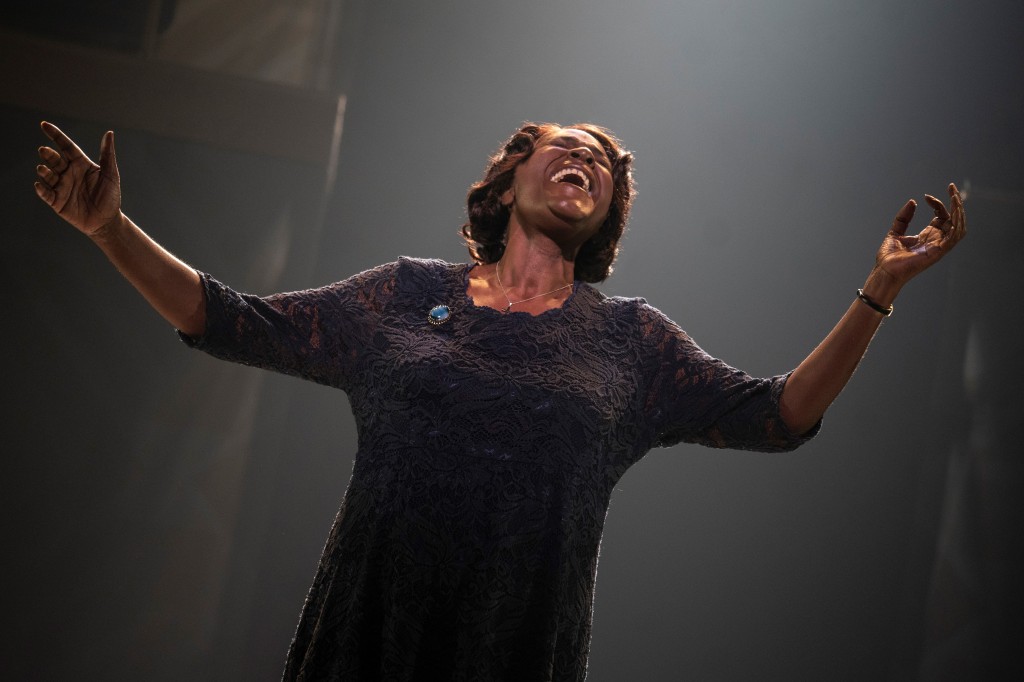
“Sixteen feet below sea level, torn tween the Devil and the muddy brown sea,” Caroline (the terrific Sharon D Clarke) characterizes her existence to herself in the musical revival Caroline, or Change at Studio 54. At the outset Caroline is in the basement doing the laundry for the Gellmans accompanied by the rhythms of The Washing Machine (Arica Jackson) and The Radio singers #1, #2, #3 (Nasia Thomas, NYA, Harper Miles). They are anthropomorphic representations of Caroline, along with The Dryer (Kevin S. McAllister) who makes the atmosphere as “hot as hell.”
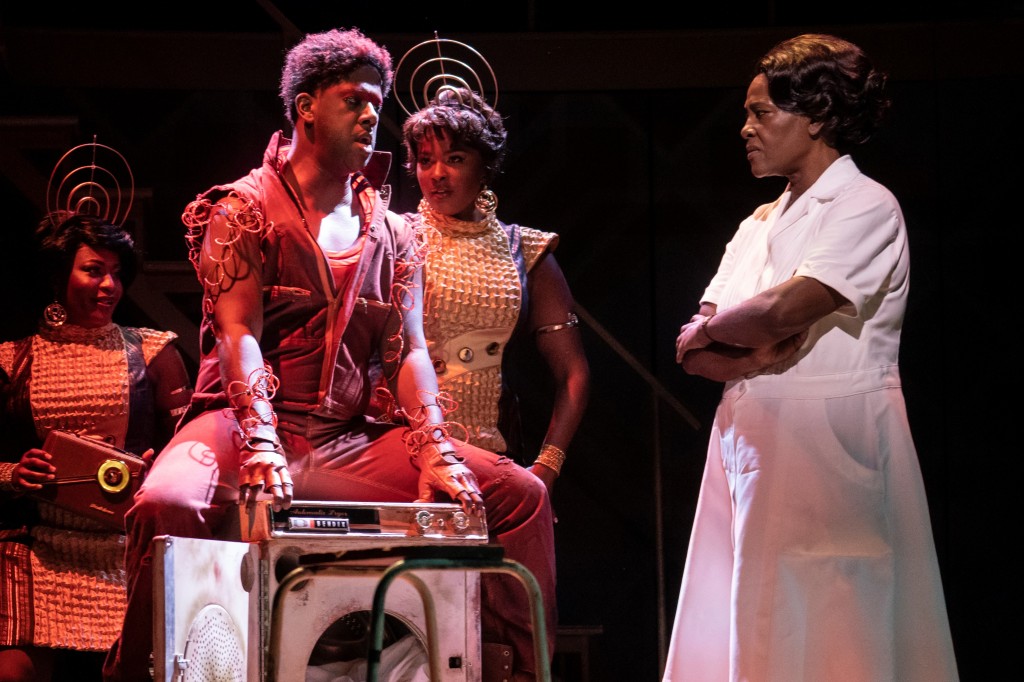
Tony Kushner’s book and lyrics and Jeanine Tesori’s music bring to life a portrait of a black maid’s inner hell. She has no prospects of betterment to uplift herself out of the symbolic, oppressive swamps of white supremacist Lake Charles, Louisiana, 1963. Embittered, miserable, impoverished, on a minimum wage to support herself and three kids, she has lost hope waiting for goodness to come. She resents everyone, most of all “Caroline” who has created the situation she finds herself in, abandoned by her husband, single, a drudge at thirty-nine-years old.
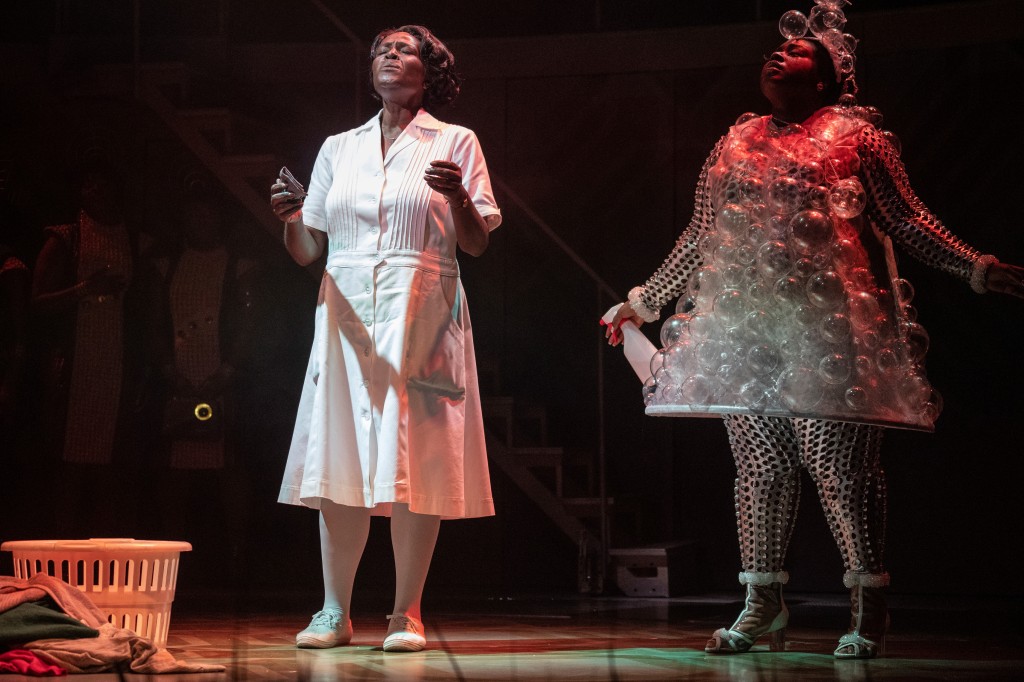
While other blacks in the South become involved with the Civil Rights Movement and march against the brutality of Jim Crow, led by Dr. Martin Luther King, Jr, or seek an education, the exhausted Caroline can barely suffer herself through the next day’s labors cleaning and watching over the Gellman’s son, eight-year-old Noah (Jaden Myles Waldman the evening I saw it) who mourns his recently deceased mother. Her employers, Stuart Gellman (John Cariani) and Rose, his second wife (Caissie Levy) who attempts to be nice to Caroline, only make the situation worse.
Victims themselves of institutional racism, caught up in the discriminatory animus of the South, they can’t afford to raise Caroline’s wages. Nor do they relate to her on a personal level to uplift her, not that she would accept their attempts.
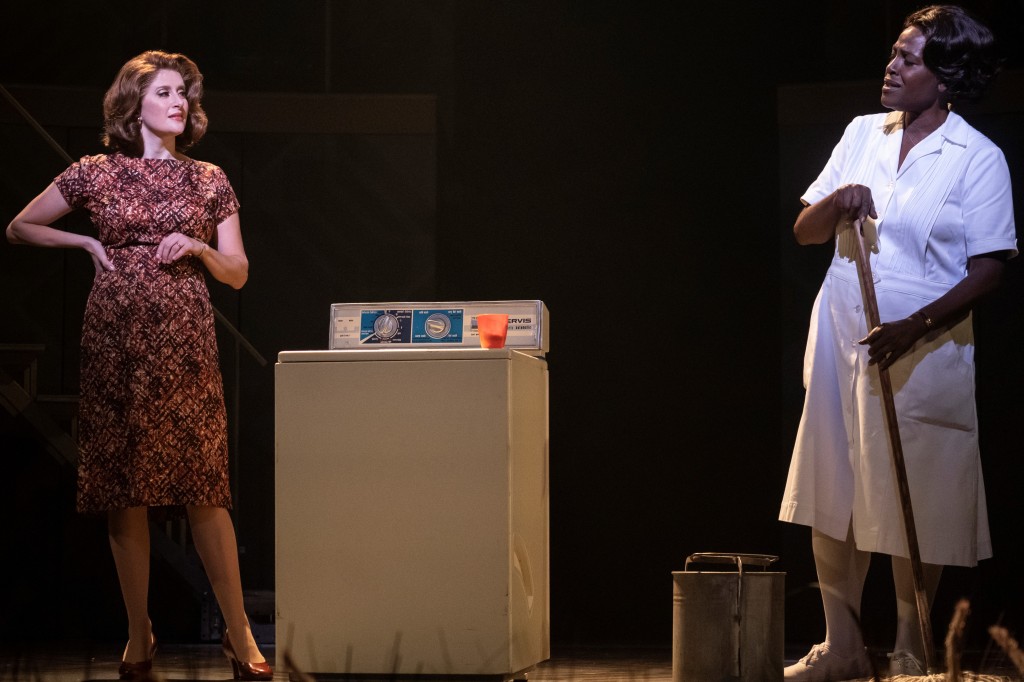
Indeed, throughout the play Caroline’s soul is metaphorically buried alive and/or drowning underwater as she struggles to pay for rent and food for herself and her children, one of whom is in Viet Nam. It is clear no one is coming to dig her out or rescue her, least of all herself. Unless a catalyst stirs her to resurrection, she will continue until the anger breaks out in violence against others; or she turns to self-destruction (acutely represented in a scene with Rose at the show’s turning point).
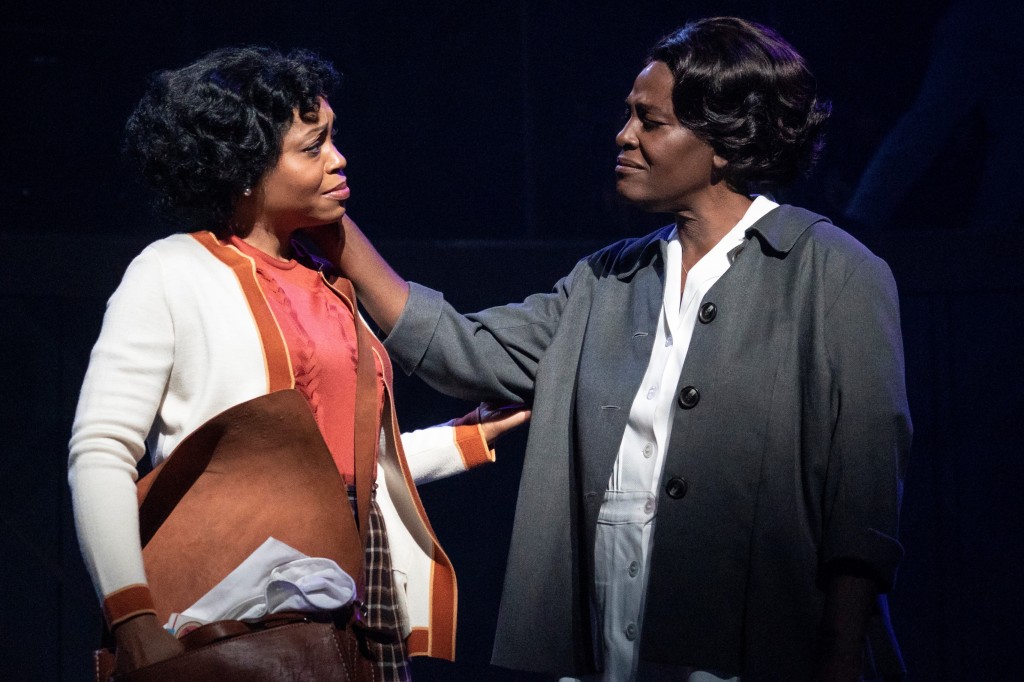
Interestingly, this horror of racism and its witting/unwitting adherents to a system that destroys is only made watchable through Tesori’s music, and Kushner’s poetic lyrics. Caroline’s anger and self-hatred projected out onto everyone, including friend Dotty Moffett (Tamike Lawrence) could have been a one-note agony of oppression and bondage. Key themes would have been undermined and occluded without the symbolism and majesty of the music and the fabulous voices that weave out Caroline’s story, of her inability to hope in an era when hope was the watchword of the Black South.

Tesori’s vibrant mix of 1950s-60s R & B/pop/soul/jazz/klezmer with a Diana Ross and The Supreme’s number at the finale and Kushner’s lyrics throughout measure like a soaring opera. They elevate the character of Caroline into an epic hero with her attendants, The Moon (the lovely voiced N’Kenge) and her children, especially Emmie (Samantha Williams) who has the spunk and courage to envision more for herself. Without our learning about Caroline’s emotional devastation embodied by the sonorous, operatic voices, Caroline or Change would have lost its vitality, currency and great moment, all of which are timeless and relatable to America 2021.

The superb cast is up for the challenge, singing beautifully, powerfully. Initially, it took me a while to understand the lyrics; the performers’ articulation wasn’t as acute as needed. However, like getting used to Shakespearean language, the heightened bond between the cast and the audience conveyed the centrality of Caroline’s conflicts. These become “a matter of ethics,” pride and dignity for her as a black woman who must carve out her identity in a bludgeoning, challenging racist society. What Kushner fashions as an issue of nickels and dimes evolves into the crux of black economic experience in the U.S, then and now.

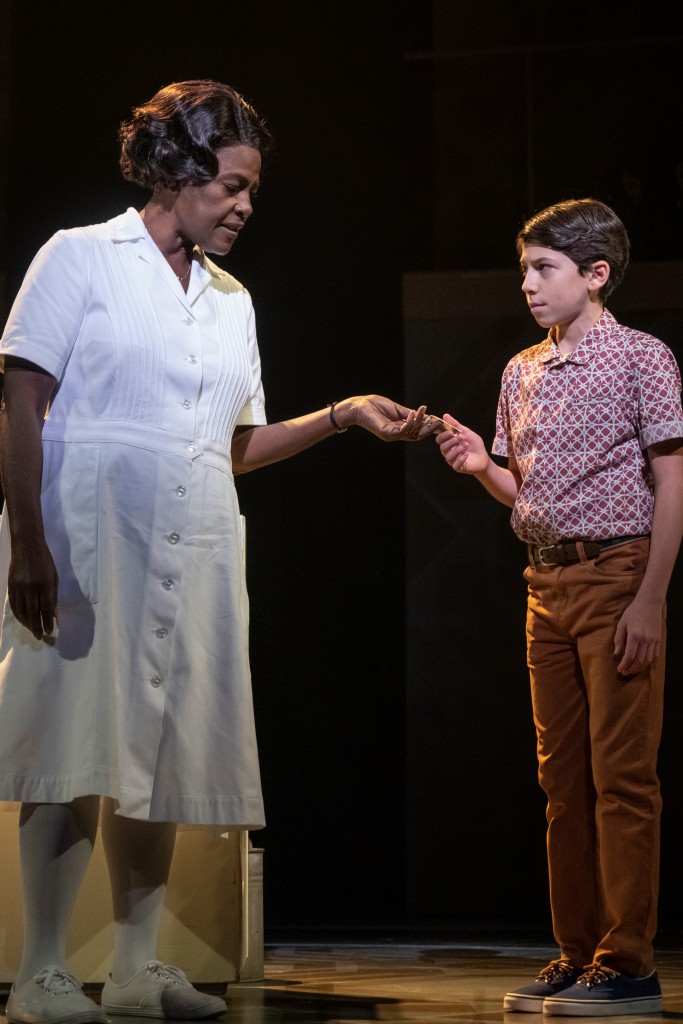
Caroline’s dilemma is whether or not to take the change left in Noah’s pants pockets that he forgets to remove before Caroline does the laundry. Rose tells her to take it as a lesson for Noah to learn to “mind his money.” Caroline desperately needs the small bit of change, but also needs her soul to be intact. The minuscule handout becomes a symbolic gesture of Noah’s grandiose charity (in his view he believes Caroline and family appreciate his “largesse”). From Caroline’s perspective it symbolizes belittling crumbs of corruption taken from a “child,” making her an indigent, a beggar who cannot “rise above.” When she submits to temptation out of want for her children, she drains her dignity and faith in herself to “make it on her own,”
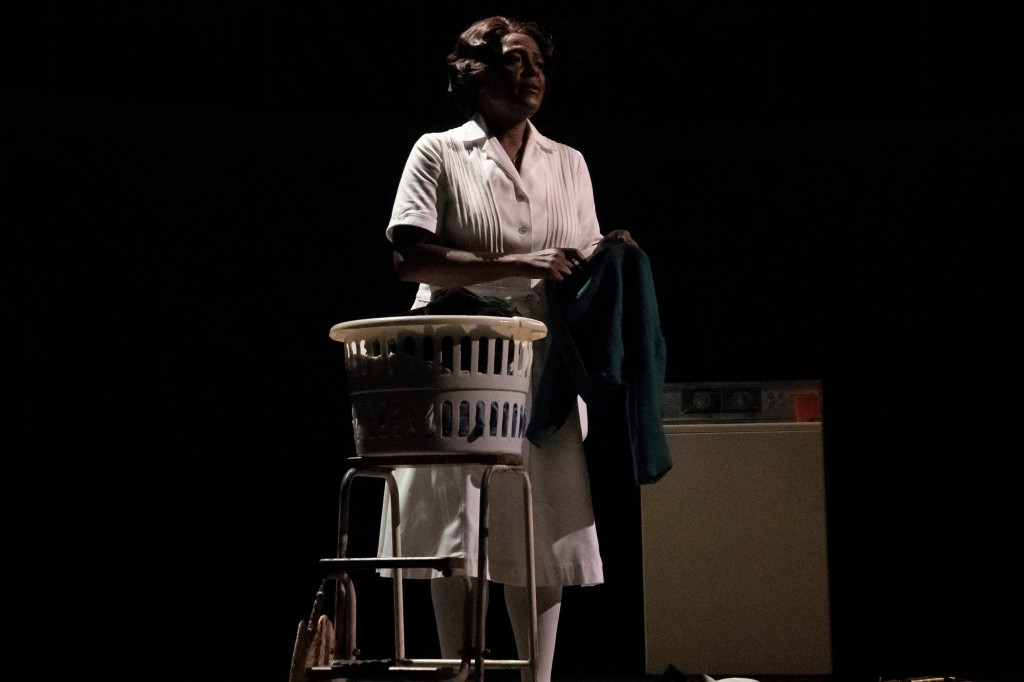
Of course, there would be no problem if the emotionally challenged Gellmans just provided a living wage instead of using money as a perverse lure for Caroline to damn herself. Caroline’s conflict symbolically parallels the perniciousness of economic inequality in America. It recalls demeaning public assistance handouts. Instead, if corporations paid the proportionate taxation rates, and with employers provided a decent, living wage, poverty, misery and an unequal justice system could be eradicated. However, the the US with its notorious history of enslavement (both white, black and colored) needs to demean souls to feed its own psychic sickness and keep the washing machine laboring by the underclasses to cleanse itself from its deranged filth.
This is just one of the themes Kushner reveals in a production luxurious with ironies and messages. Another controversy to look for is the dynamic between the Gellman’s situation and Caroline’s. The Gellmans are Jews who, too, experience discrimination and abuse as outsiders from the white supremacists that dominate the surrounding culture not only in the South but indeed, everywhere. Yet, there is little real empathy or understanding between Caroline and the Gellmans.
This humorously comes to the fore during the Chanukah celebration. Rose’s father, Mr. Stopnick (Chip Zien masterfully steals the moment) a Jew from New York City rails against Southern racism and hypocrisy. He uplifts the blacks’ position to foment violent revolution, which he suggests should have happened with the US Communist Party in the 1930s. Of course he is shushed up.
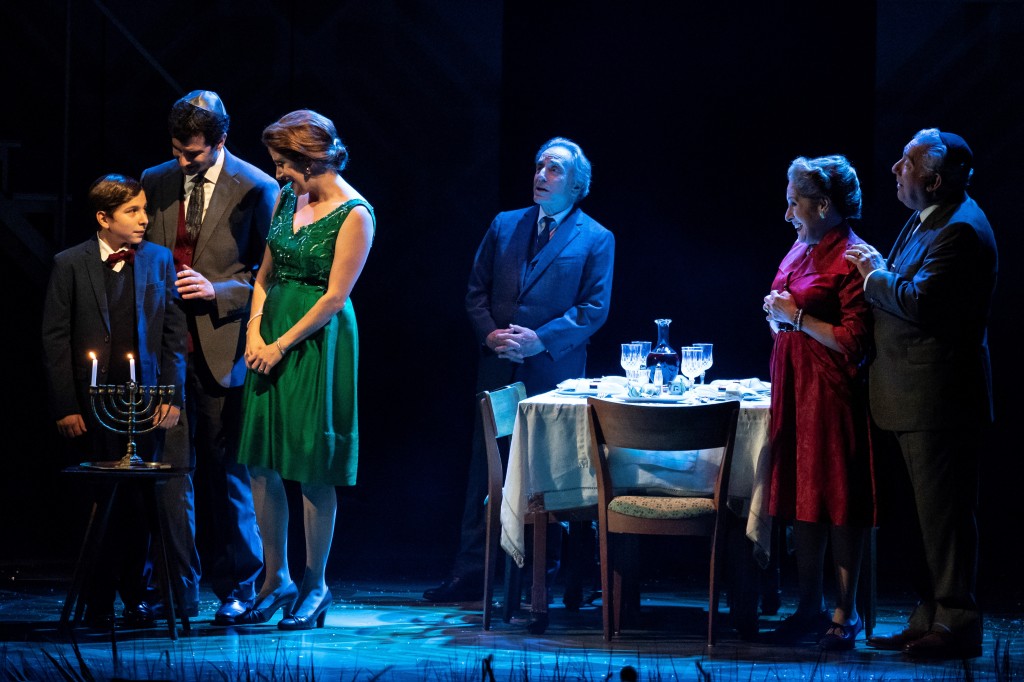
Meanwhile, his attitude about money which he delivers in a Marxist speech to Noah as he gives him Chanukah gelt is ironic. The twenty dollars ends up in Caroline’s “change cup.” Noah and she argue and afterward, Caroline realizes the fullness of the compromised, hateful individual she’s allowed herself to become. Sharon D. Clarke’s aria ‘Lot’s Wife’ is a showstopper. In the song Caroline’s conflict spills out in an epiphany. She concludes with a prayer to God, “Set me free; don’t let my sorrow make evil of me.”

Michael Longhurst’s direction of the ensemble is excellently dotted with interesting choices. The revolving platform is used symbolically. For example, during the Chanukah Party, Caroline, Dotty and daughter Emmie go in circles to please the Gellmans. Kudos enlightened staging by Fly Davis (set and costume design). Yet Caroline, et. al control; their servitude defines their strength. Without them, the Gellmans would be “on their own,” incapable, unable, weak. We are reminded of the South’s “need” of slavery rather than building a strong foundation from their own or paid labor which would have stultified their laziness and greed and encouraged a more prosperous economy and no need for a Civil War to end slavery, that peculiar “Christian” institution.
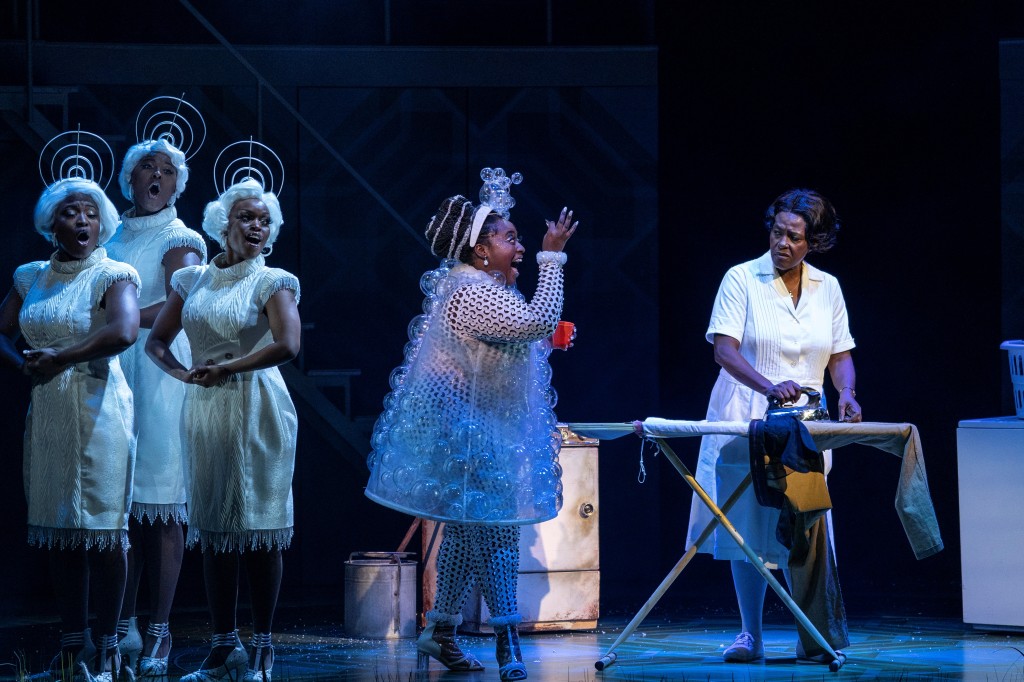
Kudos to the creative team: Jack Knowles (lighting) Paul Arditti (sound) Amanda Miller (hair and wigs) Sarah Cimino (make-up) Joseph Joubert (music direction) Nigel Lilley (music supervision) Ann Lee (choreography) who express Kushner’s themes roundly and provide a glistening backdrop (the swampland surrounding the house is wonderful) for the cast to play upon.
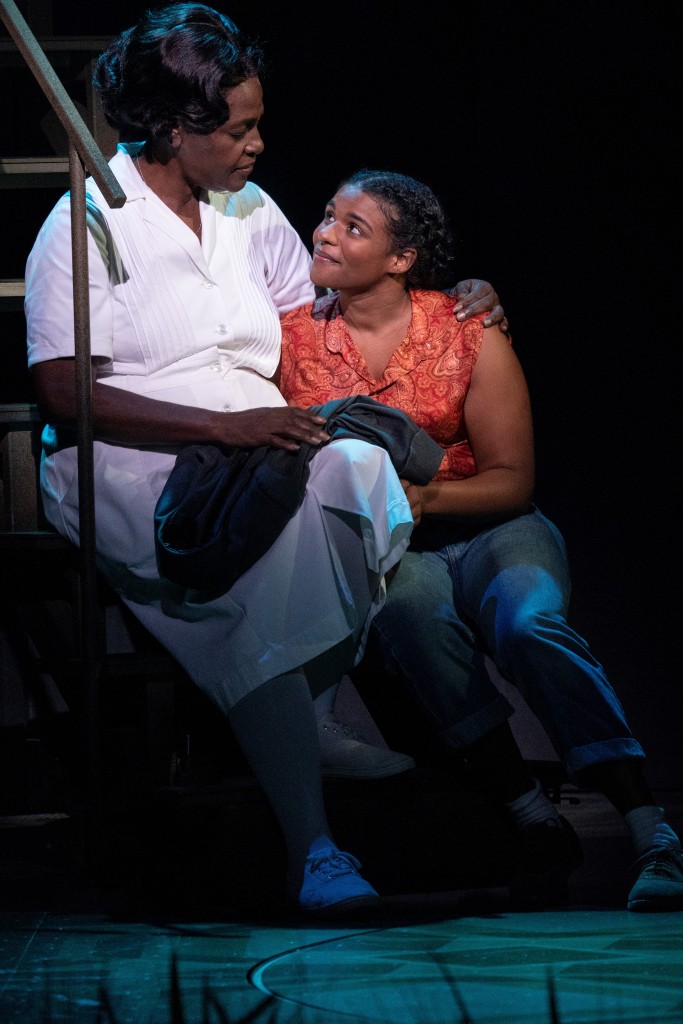
Caroline or Change opened in 2003 at The Public Theatre to mixed reviews, though it garnered awards. Sharon D Clarke starred as Caroline and won an Olivier for it in the London production in 2017. In the Roundabout production she reaffirms her grandeur, infusing her portrayal with substance, hitting her emotional peaks and turns with a resonant, anointed voice. This is one to see for the cast’s performances. If you missed it in 2003, don’t miss it in 2021. It is a reminder of what was and what is and a hope of what might be if we leave off divisive hatreds and rebirth ourselves to a better way. For tickets and times go to their website https://www.roundabouttheatre.org/get-tickets/2021-2022-season/caroline-or-change/
 CAROLE DI TOSTI