‘Hollywood Does Abortion’ at Tribeca Festival
Hollywood Does Abortion
After the civil rights protests of the 1960s and massive movements in the country supporting progressivism, the passage of Roe v Wade seemed an inevitability. However, the “moral majority” who supported the crook in the White House that would have been impeached if he didn’t resign, had a hard time swallowing abortion legalization within fifty states. After its passage they worked, plotted and planned to overturn it. Despite the Supreme Court affirming the constitution’s due process clause of the 14h insuring a woman’s right to privacy, that didn’t matter. Playing it safe, Hollywood to insure its profits, tread carefully, so TV with a conservative stance barely dealt with it honestly.
The world premiere of the feature documentary Hollywood Does Abortion which screened at Tribeca, highlights the entertainment industry’s shifting perspectives. Since the 1970s Hollywood clearly shaped and reflected public viewpoints on the medical procedure and its users. Still reeling from the loss of a 49 year-old law giving women or men the right to make decisions over their bodies, people will find the film historical and hopeful. In examining reproductive justice and American entertainment’s influence, the film chronicles how progress turned retrograde. This occurred on steroids after a Hollywood B actor became the religious right’s champion against gay rights and pro-choice decisions.
The directors interview writers
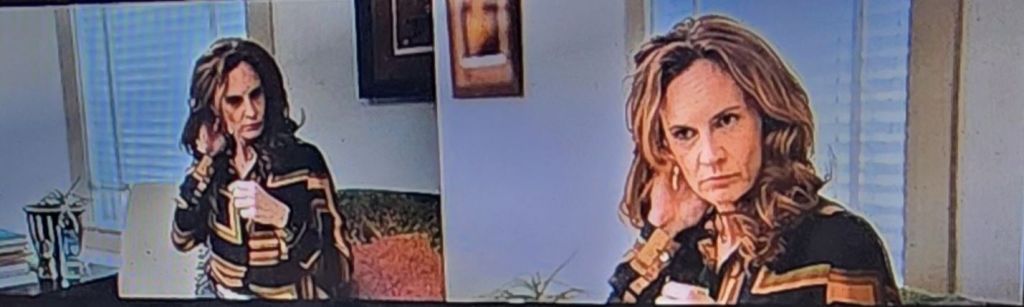
Using interviews of writers who worked in writers’ rooms on TV shows like Law and Order, Grey’s Anatomy, and films like Dirty Dancing, the filmmakers chronicle and scroll through how the entertainment industry dealt with abortion through the decades. Directors Barbara and Mike Attie and Janet Goldwater begin with Adrienne Barbeau. She starred as the daughter of Bea Arthur as Maud in the titular show Maud. The episode they bring up concerns Maud discovering she’s pregnant at 47, a two-part episode entitled “Maud’s Dilemma.” After discussions with family, Maud, a grandmother, decides to get the abortion.
The controversial program rained down protest letters and boycotts of the episode from CBS affiliates during reruns. Nevertheless, the pre-Roe landmark episode pushed by Norman Lear aired two months before the court legalized abortion nationwide. Norman Lear who had the pulse of the times uplifted human rights with all his shows. Most of the country appreciated it. Republican conservatives who lost their power block intended to get it back.
What gets the tough topic of abortion off the page onto the screen?
Certainly, laughter mitigated a tough topic and helped it get past rigid, fearful conservative Republicans either CEOs or on the Boards of mainstream TV networks. And Lear made the network money. Money talks. Also, laughter helped smooth the acceptance of a tough topic, on Maud. So did dancing. In Dirty Dancing (1987) writer Eleanor Bergstein discusses that producers told her to take out the abortion scenes. She told them she couldn’t. The scenes, instrumental to the plot development, put Johnny Castle and Babe together. If they removed Johnny’s dance partner needing an abortion, the story changed completely. The music, dancing and romance between Baby and Johnny Castle centered the story, not the abortion.
In 1987, however the producer’s resistance revealed the changing tide of conservative money. Just five years before with Fast Times at Ridgemont High (1982), Jennifer Jason Lee’s Stacy goes to a clinic, has an abortion and no parental judgment, grief or stress happens. She makes her own decision about her life, future career, body. The writers the Atties and Goldwater interviewed others who pointed out that abortion decisions often happen as a part of routine life as in the film. But that natural element concerning a young woman’s choice on her own didn’t last in films or TV. Conservatives pushed back and used TV and films to promote fear about abortions instead of safety.
Reagan’s Hollywood influence
Reagan’s evangelicals and Jerry Falwell created a furor about the religious aspects of abortion. Forgetting about the Biblical scripture of Exodus 21 and 22 which values the life of the mother before the child, evangelicals went in the reverse direction putting the life of the child first. The Republicans, to strengthen their power block, made pro-life central to their platforms. Ironically, from then on with the exception of Shonda Rhimes’ Grey’s Anatomy, fewer shows and movies dealt with the issue fairly, realistically or honestly. Deciding to get an abortion became not relief (as many women felt). With a captive audience to influence, abortion dramatized heart-wrenching, monumental, angst driven horror with painful consequences. The plots moved far from Jennifer Jason Lee’s teenage Stacy making a decision about her own body because she made up her mind about her life.
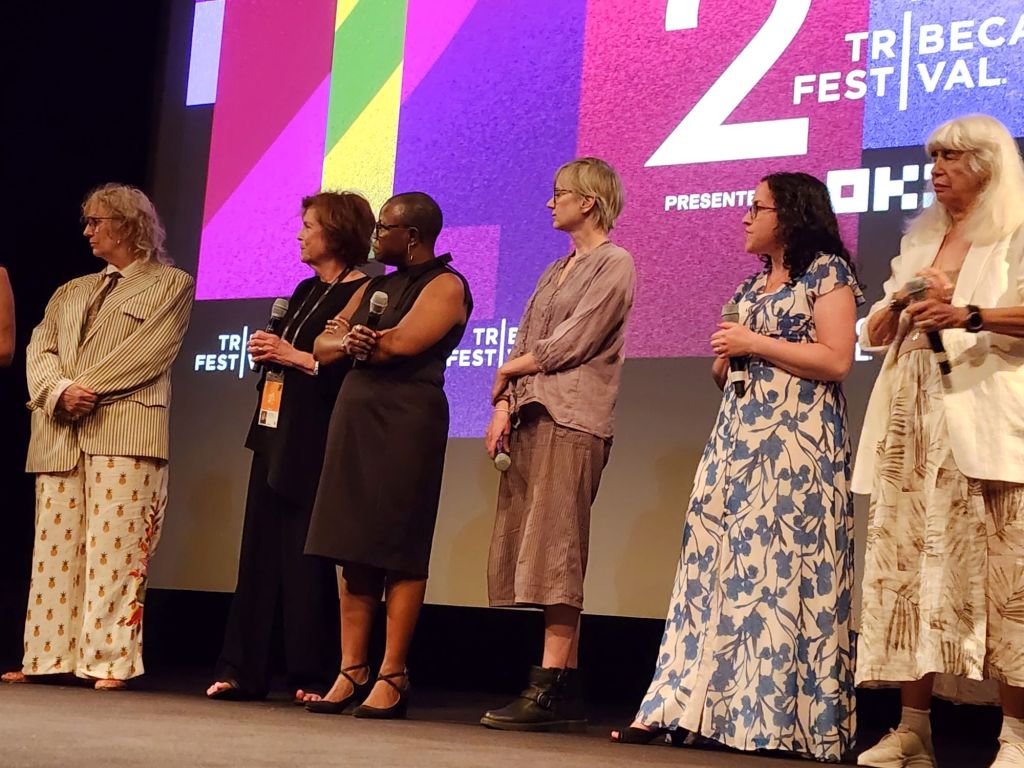
The Atties Goldwater and Boyle not only interview writers, they also call upon Steph Herold MPH to provide information. An award-winning social scientist and reproductive health advocate, Herold provides the facts about abortions. She contrasts them with the charged Republican/conservative propaganda about abortions seen in films like Blonde. As the lead researcher for the Abortion Onscreen program at ANSIRH (Advancing New Standards in Reproductive Health), she analyzes depictions of abortion on film and television. Her commentary about abortions on TV programs and films proved eye-opening. She highlighted how the fictional propaganda attempts to shape the public’s attitudes against abortion. In the selected films and shows Herold discloses the lies and actual pro-life erors that are patently wrong. The Atties supply the statistics at every turn.
An uneducated, undiscerning public
Unfortunately, an uneducated public believes the films and TV shows unless they do their own research. In recent years from Juno to Knocked up, we note women bowing to attitudes against their own rights. We see this in the “Aww” moment when they decide to have the baby, though it means an upending of the life they wanted for themselves. Interestingly, we don’t see the aftermath of regrets and loss of career. One major point filmmakers make supported by Herold turns to who most likely gets abortions. Statistics point to women who already have a child, many of them single, but also couples. Not as films depict them from the upper east/west side, women of color or women financially challenged who can’t afford a child seek abortions.
The Atties and Goldwater also include positive critiques of films that turn the narrative away from political lies and the horrors of abortion. They point to this truth. More women die in complications from childbirth then under a clinical setting where a state has legalized abortion.
In revealing positive films about abortion, they mention Obvious Child by Gillian Robepierre. The film shifts the narrative to its credit. The rom-com normalizes a character’s choice to have an abortion with agency and support. Ironically, the film didn’t receive much play where a film that twisted and distorted the narrative with untruths (Blonde, 2022) received heavy marketing support.
The filmmakers provide fascinating data and underscore it with facts and information. They do this in the hope that as consumers of entertainment we recognize shows with story-lines pegged to political agendas that spread misinformation and lies.
For the synopsis of Hollywood Does Abortion see the Tribeca schedule. https://tribecafilm.com/films/hollywood-does-abortion-2026 Look for it on streaming platforms.
,

Posted on June 10, 2026, in Tribeca Fesival 25th Anniversary and tagged Adrrienne Barbeau, Barbara Attie, Eleanor Bergstein, Gillian Robspierre, Jamie Boyle, Janet Goldwater, Julie Wong, Mike Attie, Rachel Bloom. Bookmark the permalink. Leave a comment.


Leave a comment
Comments 0