Category Archives: Tribeca Fesival 25th Anniversary
‘In the Hand of Dante,’ Starring Oscar Isaac, Gerard Butler, Gal Gadot at Tribeca, a Wild, Suspenseful Thriller
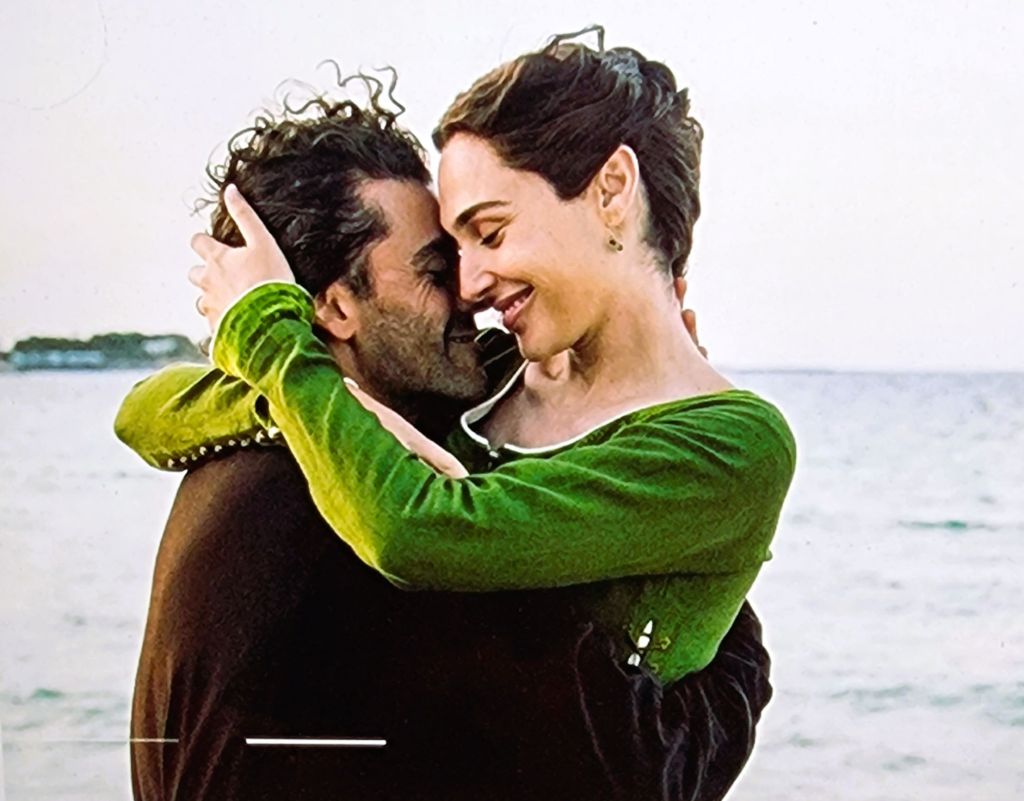
In the Hand of Dante
In the Hand of Dante, Julian Schnabel’s poetic, darkly ironic and seemingly quixotic film gives a nod to Dante Alighieri and author Nick Tosches (1949-2019). The film made its New York City premiere at Tribeca Festival in the Spotlight Narrative category. According to Schnabel in the Q and A after the film screening, Tosches, a fan of the 14th-century genius, knew a lot about Dante and his work. A self-proclaimed expert, Nick Tosches fictionalizes himself as the protagonist of his novel which Schnabel adapted with co-writer Louise Kugelberg. Like Dante Alighieri’s Divine Comedy, or Nick Tosches titular work, Schnabel’s unique and mesmerizing film does not give itself over to facile understanding.
As in his previous cinematic outings (At Eternity’s Gate, Basquiat), Schnabel teases out phenomenal performances from his lead actors. In this instance the magnificent Oscar Isaac in the dual role of Dante and fictionalzed writer Nick Tosches centers an extraordinary cast. They give authentic, performances sometimes in type, other times, frightening and surprising. Gal Gadot, John Malkovich, Gerard Butler, Louis Cancelmi and Sabrina Impacciatore round out the main cast. Martin Scorsese shows up bearded and wigged but unmistakable as Isaiah, who mentors Dante.
Al Pacino’s Uncle Carmine spells out a key theme
Adding the pièce de résistance and with only a few lines, Al Pacino as Uncle Carmine at the film’s beginning counsels the Young Nick (Ibrahim Elouahabi). After an event that Nick confesses to him, Pacino’s Carmine explains how to distinguish spiritual holiness (life affirming) from religious hypocrisy (the way of death).
Pacino’s performance anchors the film’s themes about good and evil, sincerity and untrustworthiness. Uncle Carmine provides a life lesson that adult Nick carries with him to measure whether his own actions are good or evil. Learning this proper discernment from his youth, Nick is able to confront the devils of hell he meets during the film with inner resolve and hope. As he moves through their perfidy, he follows a path up toward the light, affirming self-love, so he can recognize love when it happens. By the conclusion Nick escapes the metaphoric inferno that Gerard Butler’s Louie and the others despise as much as they despise themselves and their unredeemed lives.
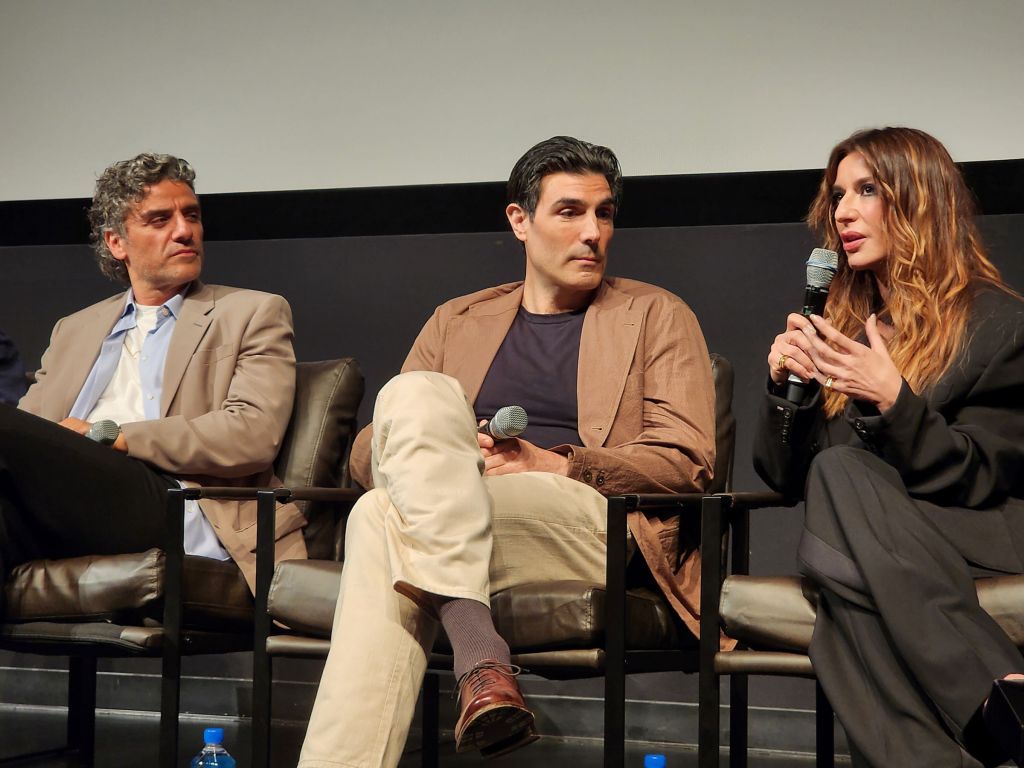
In the Hand of Dante defies easy description
The thought-provoking film defies easy description. Interestingly, to clarify Schnabel uses a symbolic color scheme to differentiate present action in the 21s century from the 14th century (1300s) when Dante lived and wrote. He uses black and white film for the gritty, dark, criminal, underbelly which manifests evil, the infernos of human nature. Such infernos blaze globally from New York City to Venice, to Palermo and other cities in Italy. Specifically, the black and white scenes manifest wickedness that Nick must negotiate to get out alive, using his life-long learning and Dante’s glorious work.
Beautiful vibrant colors of the sky, ocean, rock formations and settings of Italy represent the 14th century Renaissance when Dante lived in Florence. The sets interior and exterior, period-looking costumes, hairstyles, etc., exquisitely capture his time. After the government exiles Dante, he receives counsel, and gets help and inspiration to write his masterwork, The Divine Comedy. The sage Isaiah (Martin Scorsese) directs, inspires and guides Dante. And his friend (Louis Cancelmi also portrays Lefty) provides the money to sustain Dante to write after his exile. These color scenes with Dante thematically represent light, hope, goodness and the exaltation of artistic creation to redeem human nature.
Louise Kugelberg co-wrote the film with director Schnabel
Using Tosches titular novel as a springboard, Schnabel and co-writer Louise Kugelberg interlace concepts about life, art and the melding of the two in Schnabel’s historical thriller-romance. Clearly, Schnabel delights in the profound philosophical and esoteric, represented by the characters Dante and his mentor Isaiah. Yet, he contrasts their heavenly notions with the most bleak, vile and deplorable behaviors of criminally monstrous characters like the brutal Louie (a fantastic Gerard Butler) and treacherously smiling Joe Black (Malkovich).
Nick lives Dante’s poem when he entangles himself with Black, a mobster who buys and sells valuable art works on the black market. As a sardonic example of his nature, Joe Black owns the Rembrandt self-portrait because of its value. But he hates it. Black tasks Dante expert Nick to accompany Louie on his adventure to steal Dante’s original manuscript reputed to be with a Palermo mob boss. The criminal network in Palermo planned to make a fortune if indeed, Dante wrote the handwritten manuscript. Nick will authenticate it. Allured and not completely aware of the infernos (greed, lust, murderous double-crossing intent, etc.) roiling inside these criminals, Nick accepts the job.
The soul journey across time
Elegantly alternating between Nick’s modern-day New York and Dante’s renaissance world in parallel, In the Hand of Dante reveals Nick/Dante’s soul journey across time. From the torments to the heavens, from brutality to gentility, the appreciation and mystical understanding of oneself comes through love’s guidance. Nick’s authenticating the manuscript leads to revelations about the meaning of love, truth and morality. He establishes a relationship with Julietta (Gal Gadot) his assistant.
In parallel, Dante who ignored his wife Gemma (Gadot) takes her into consideration after their exile. As Dante did writing his masterpiece by risking all to then return to Gemma, Nick risks his life to arrange a new life with Julietta. Separated by 700 years, both men take the journey realizing the intimacy of The Divine Comedy as a reflection of their own lives. Dante made this revelation when he created The Divine Comedy, Schnabel suggests, centuries ago. In pursing the poem’s authentication and chaos that follows, Nick emerges from a hellscape with mob monsters to receive a similar revelation.
To check the Tribeca Fesival’s synopsis of The Hand of Dante see the website. https://tribecafilm.com/films/in-the-hand-of-dante-2026. The Hand of Dante streams on Netflix at the end of the month.
‘Chris & Martina: The Final Set’ at Tribeca Festival-Breathtaking.
Chris and Martina: The Final Set brings together tennis superstars Chris Evert and Martina Navratilova in a world premiere film in the spotlight documentary section of Tribeca Festival. Directed by Rebecca Gitlitz, the filmmaker follows each woman from their first initiation into tennis success. Gitlitz uses archived video clips with sports commentary voice overs past and present (Mary Carillo, John McEnroe, Billie Jean King) of those who are in the know about these world class champions of women’s tennis who put tennis on the map for average folks.
Gitlitz explores the contentious, rivalry between Evert and Navratilova in the 1970s and 1980s. What made them watchable was how they contrasted on and off the court. Evert was the All-American girl from Florida. Martina was from communist Czechoslovakia who was her own person, not something communist countries wanted out of their sports legends.
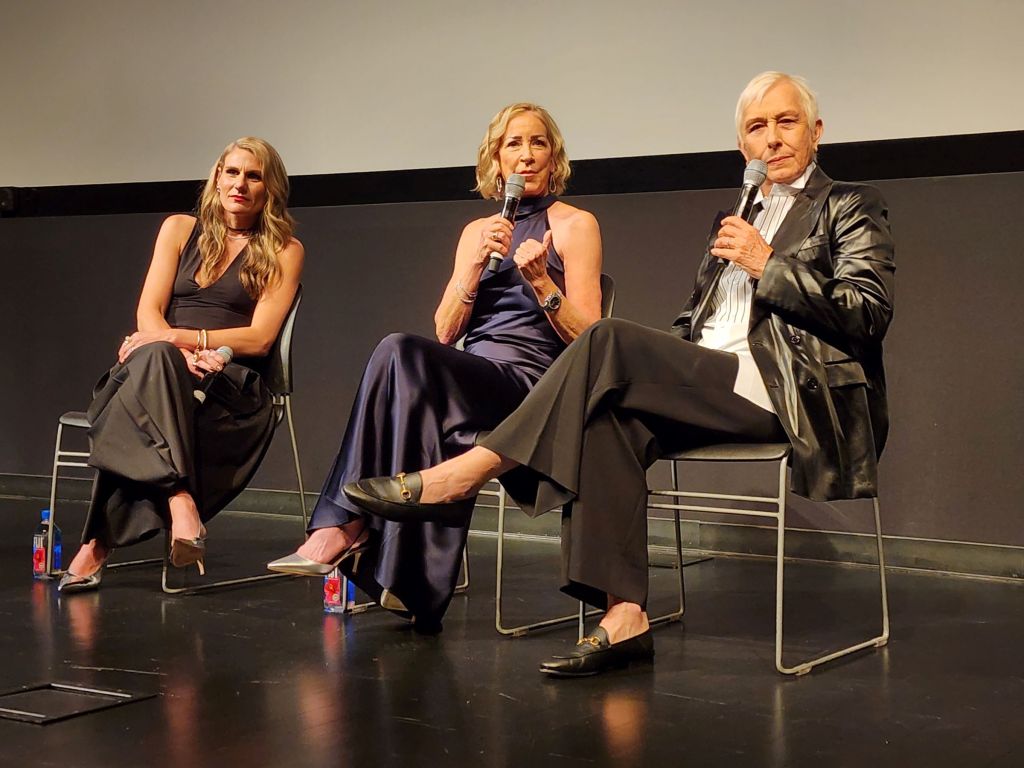
At first it was Evert who had the upper hand in the rivalry, winning nine of their first 10 matches and getting all the fame and acclaim. But that would change. Navratilova became fanatical about her fitness level and training. She eventually caught up to Evert, and they would compete fiercely in the ensuing decades, taking women’s tennis to new heights.
In the most interesting segments, Gitlitz breaks away to vary the clips with video of present day Chris and Martina who discuss the shots made. This is never-before-seen footage. These highlights includes scenes where Evert and Navratilova watch some of their classic matches together, a first for both. The director includes their voice over comments on these salient clips which are fascinating and heartfelt. It is amazing to enjoy both women who are friends watch themselves play against each other as young women. They sit next to each other on a sofa, make quips, analyze their own strategies and show enthusiasm. It can’t be emphasized enough how special this film is for tennis aficionados and fans alike to hear them share what they think about themselves and each other as they played decades ago.
As they narrate their intertwined histories, we benefit from Gitlitz’s approach. We appreciate another level of the history of the game in the 1970s and 1980s. In revisiting their intense rivalry, we acknowledge the underestimated skill that it took as they evolved the game, themselves, and each other. During the talk back after the screening, Chris reminded the audience that the equipment they played with to achieve power was nothing like today’s. It was their own power and conditioning that revved up their strokes because they played with wooden racquets. Also, she reminded the audience that today, the greats have whole armies of experts that help them, from coaches to managers to nutritionists and more. Back then they had their will and those on the tour who were very generous in their support of each other. Back in the day with a different ethos, they all wanted to improve the game for themselves and helped each other.
It wasn’t as commercial as today because tennis wasn’t “a thing.” Interestingly, their competitive wills and ambition to be great helped to make tennis “a thing” along with the phenomenal Billie Jean King who started it. That is why her name is on the national stadium of the US Open in Flushing Meadow because she is and always will be the ambassador of US tennis to the world.
The documentarian points out that as a result of Chris and Martina, women and girls became interested in tennis like never before. Their rivalry, as Billie Jean King comments in the film, their stories and successes launched women’s tennis to another level. Donors added to prize money and advertisers employed them to market their brands. All of this increased the importance and notoriety of the game for average folk and reoriented tennis’ meaning. For tennis had been a sport of the elites since its founding by monks in France.
The film highlights how Chris was older and started winning as a teenager. Though fans thought she was cute, her opponents on the tour sometimes kept their distance. Of course, she walloped them and that was both terrifying and depressing for them and exhilarating for her.
When Martina arrived a few years after, she was a total character, not as conditioned as Chris, but someone on the horizon everyone looked to as a potentially great player. When she started to win matches against Chris, the rivalry ratcheted up a few notches. Determined to continue on her own and not be told who to play for, Martina, who hailed from Czechoslovakia, ended up defecting from the communist country, leaving her family and all behind for tennis. She didn’t want to represent a communist country who monitored her every step. She loved the freedom of the US. But seeking asylum came with the price she might never see her parents or sister again.
Chris never initially knew what sacrifices Martina made to defect. However, Martina discusses the defection in the film. For a long while, she had to be her own best friend as she pursued success in the game. She makes it clear that what she was up against wasn’t easy and she felt alone.
Both players pushed each other towards the ultimate goal of being the number one tennis player in the world. As the rivalry wore on and they became friends, playing Doubles, it was apparent that both were tirelessly committed to the sport.
As information to the public, Chris and Martina allow the director to film their friendship and support during their battles with cancer. With no holds barred, the same courage we note that they had on the court to become champions becomes the same courage they rely on to go through the effects of their illness and medical treatment. We see the help of family and their support for each other through the difficult time. This is the most uplifting part of the film as they celebrate their progress and announce they are cancer free.
Their story of triumph and friendship shouldn’t be missed. It will be streaming on Netflix the end of June. For the write-up on the Tribeca Festival site see the link. https://tribecafilm.com/films/chris-martina-the-final-set-2026
.
‘Hollywood Does Abortion’ at Tribeca Festival
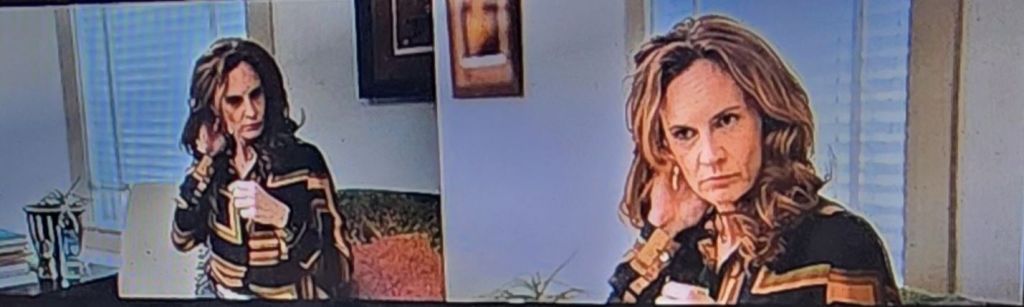
Hollywood Does Abortion
After the civil rights protests of the 1960s and massive movements in the country supporting progressivism, the passage of Roe v Wade seemed an inevitability. However, the “moral majority” who supported the crook in the White House that would have been impeached if he didn’t resign, had a hard time swallowing abortion legalization within fifty states. After its passage they worked, plotted and planned to overturn it. Despite the Supreme Court affirming the constitution’s due process clause of the 14h insuring a woman’s right to privacy, that didn’t matter. Playing it safe, Hollywood to insure its profits, tread carefully, so TV with a conservative stance barely dealt with it honestly.
The world premiere of the feature documentary Hollywood Does Abortion which screened at Tribeca, highlights the entertainment industry’s shifting perspectives. Since the 1970s Hollywood clearly shaped and reflected public viewpoints on the medical procedure and its users. Still reeling from the loss of a 49 year-old law giving women or men the right to make decisions over their bodies, people will find the film historical and hopeful. In examining reproductive justice and American entertainment’s influence, the film chronicles how progress turned retrograde. This occurred on steroids after a Hollywood B actor became the religious right’s champion against gay rights and pro-choice decisions.
The directors interview writers
Using interviews of writers who worked in writers’ rooms on TV shows like Law and Order, Grey’s Anatomy, and films like Dirty Dancing, the filmmakers chronicle and scroll through how the entertainment industry dealt with abortion through the decades. Directors Barbara and Mike Attie and Janet Goldwater begin with Adrienne Barbeau. She starred as the daughter of Bea Arthur as Maud in the titular show Maud. The episode they bring up concerns Maud discovering she’s pregnant at 47, a two-part episode entitled “Maud’s Dilemma.” After discussions with family, Maud, a grandmother, decides to get the abortion.
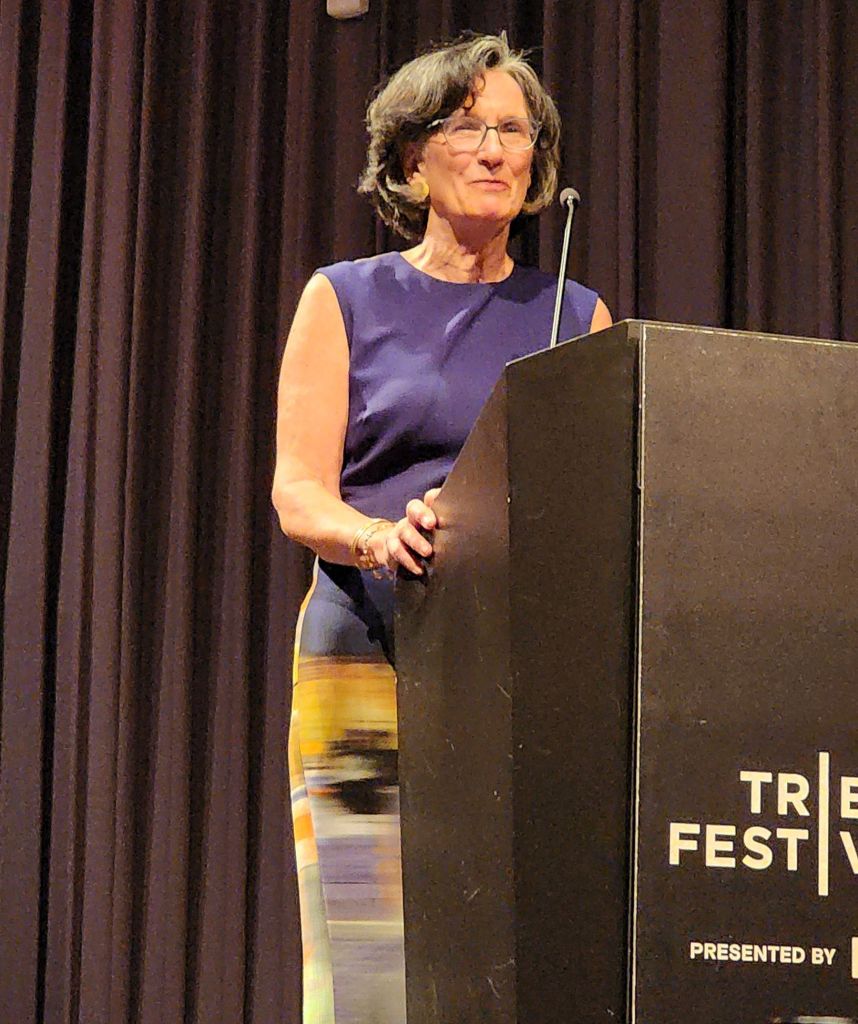
The controversial program rained down protest letters and boycotts of the episode from CBS affiliates during reruns. Nevertheless, the pre-Roe landmark episode pushed by Norman Lear aired two months before the court legalized abortion nationwide. Norman Lear who had the pulse of the times uplifted human rights with all his shows. Most of the country appreciated it. Republican conservatives who lost their power block intended to get it back.
What gets the tough topic of abortion off the page onto the screen?
Certainly, laughter mitigated a tough topic and helped it get past rigid, fearful conservative Republicans either CEOs or on the Boards of mainstream TV networks. And Lear made the network money. Money talks. Also, laughter helped smooth the acceptance of a tough topic, on Maud. So did dancing. In Dirty Dancing (1987) writer Eleanor Bergstein discusses that producers told her to take out the abortion scenes. She told them she couldn’t. The scenes, instrumental to the plot development, put Johnny Castle and Babe together. If they removed Johnny’s dance partner needing an abortion, the story changed completely. The music, dancing and romance between Baby and Johnny Castle centered the story, not the abortion.
In 1987, however the producer’s resistance revealed the changing tide of conservative money. Just five years before with Fast Times at Ridgemont High (1982), Jennifer Jason Lee’s Stacy goes to a clinic, has an abortion and no parental judgment, grief or stress happens. She makes her own decision about her life, future career, body. The writers the Atties and Goldwater interviewed others who pointed out that abortion decisions often happen as a part of routine life as in the film. But that natural element concerning a young woman’s choice on her own didn’t last in films or TV. Conservatives pushed back and used TV and films to promote fear about abortions instead of safety.
Reagan’s Hollywood influence
Reagan’s evangelicals and Jerry Falwell created a furor about the religious aspects of abortion. Forgetting about the Biblical scripture of Exodus 21 and 22 which values the life of the mother before the child, evangelicals went in the reverse direction putting the life of the child first. The Republicans, to strengthen their power block, made pro-life central to their platforms. Ironically, from then on with the exception of Shonda Rhimes’ Grey’s Anatomy, fewer shows and movies dealt with the issue fairly, realistically or honestly. Deciding to get an abortion became not relief (as many women felt). With a captive audience to influence, abortion dramatized heart-wrenching, monumental, angst driven horror with painful consequences. The plots moved far from Jennifer Jason Lee’s teenage Stacy making a decision about her own body because she made up her mind about her life.
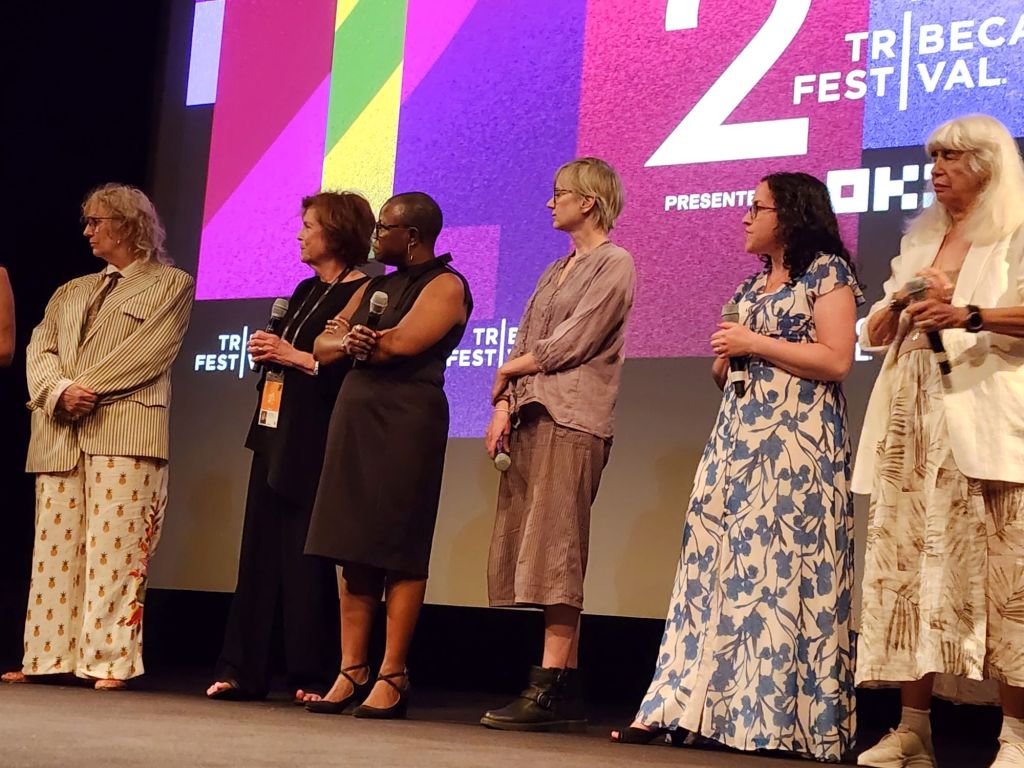
The Atties Goldwater and Boyle not only interview writers, they also call upon Steph Herold MPH to provide information. An award-winning social scientist and reproductive health advocate, Herold provides the facts about abortions. She contrasts them with the charged Republican/conservative propaganda about abortions seen in films like Blonde. As the lead researcher for the Abortion Onscreen program at ANSIRH (Advancing New Standards in Reproductive Health), she analyzes depictions of abortion on film and television. Her commentary about abortions on TV programs and films proved eye-opening. She highlighted how the fictional propaganda attempts to shape the public’s attitudes against abortion. In the selected films and shows Herold discloses the lies and actual pro-life erors that are patently wrong. The Atties supply the statistics at every turn.
An uneducated, undiscerning public
Unfortunately, an uneducated public believes the films and TV shows unless they do their own research. In recent years from Juno to Knocked up, we note women bowing to attitudes against their own rights. We see this in the “Aww” moment when they decide to have the baby, though it means an upending of the life they wanted for themselves. Interestingly, we don’t see the aftermath of regrets and loss of career. One major point filmmakers make supported by Herold turns to who most likely gets abortions. Statistics point to women who already have a child, many of them single, but also couples. Not as films depict them from the upper east/west side, women of color or women financially challenged who can’t afford a child seek abortions.
The Atties and Goldwater also include positive critiques of films that turn the narrative away from political lies and the horrors of abortion. They point to this truth. More women die in complications from childbirth then under a clinical setting where a state has legalized abortion.
In revealing positive films about abortion, they mention Obvious Child by Gillian Robepierre. The film shifts the narrative to its credit. The rom-com normalizes a character’s choice to have an abortion with agency and support. Ironically, the film didn’t receive much play where a film that twisted and distorted the narrative with untruths (Blonde, 2022) received heavy marketing support.
The filmmakers provide fascinating data and underscore it with facts and information. They do this in the hope that as consumers of entertainment we recognize shows with story-lines pegged to political agendas that spread misinformation and lies.
For the synopsis of Hollywood Does Abortion see the Tribeca schedule. https://tribecafilm.com/films/hollywood-does-abortion-2026 Look for it on streaming platforms.
,
‘Miss Representation: Rise Up’ at Tribeca Festival
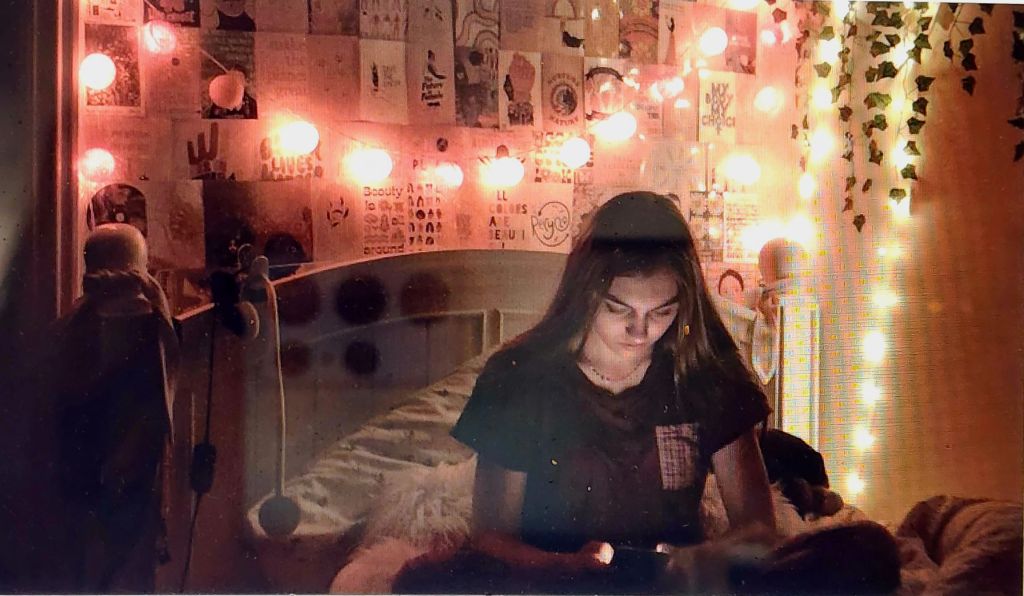
Miss Representation: Rise Up
Jennifer Siebel Newsom’s expanded message for women in Miss Representation: Rise Up is crucial viewing. Her second documentary about women under attack presents the untenable problems women face as the tech industry attempts control via AI, co-opting resistance and empowerment. In the spotlight category the film had its world premiere at Tribeca Festival. It hosted special guests after the screening who appeared in the film.
Newsom’s first film Miss Representation began the conversation
Newsom’s first film, Miss Representation (2011), delved into the normalization of unrealstic body images by all forms of media to manipulate and disempower women emotionally. The images of perfection and beauty perpetuated in the music, fashion, advertising, entertainment industry, etc., negatively impacted teen girls and women who felt they could never measure up. Stoking shame and guilt the related industries encouraged them to buy products to change their appearance and be prettier, thinner, “better.”
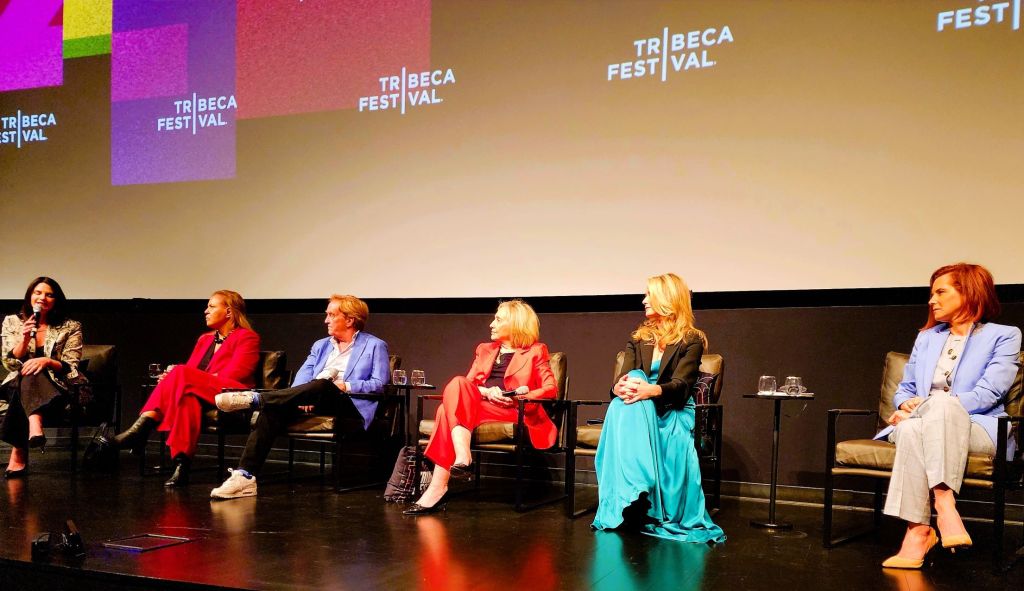
Newsom includes statistics of the percentages of women and teen girls suffering from depression, body dysmorphia, feelings of unworthiness and dis-empowerrment. Oftentimes, depression and body dysmorphia would lead to cutting and other forms of self-harm including suicide. In her acute depictions Newsom revealed an important story about our culture and society that rang alarm bells, but offered no real prescriptions for change. The relentless assault against girls and women has been unstoppable.
Newsom’s Miss Representation: Rise Up shows the situation has worsened
Miss Representation: Rise Up proves that the situation has worsened exponentially through Social Media’s algorithmic engagement. Male and female influencers via Instagram, Tik Tok and other platforms whether through soft power (body perfection) or toxic masculinity hate on women 24/7. Parallel with the demand for women’s perfected beauty we note the rise of the fascist, toxic, male “ugly,” who looks like Joe Rogan and demeans like the conservative MAGA Nick Fuentes.
The Trump administration has exacerbated the misogyny and objectification of women with the intent of removing them as an effective power block.Trump’s response to a female reporter whose question unsettled him, “Quiet piggy,” sums it up. In the fifteen years, strategic political pressure via media (images, toxic talking heads) inevitably moved to reverse women’s rights in the Dobbs decision. Spreading domination and hopelessness, these malign actors politically work to silence women’s voices because of the power they threaten.
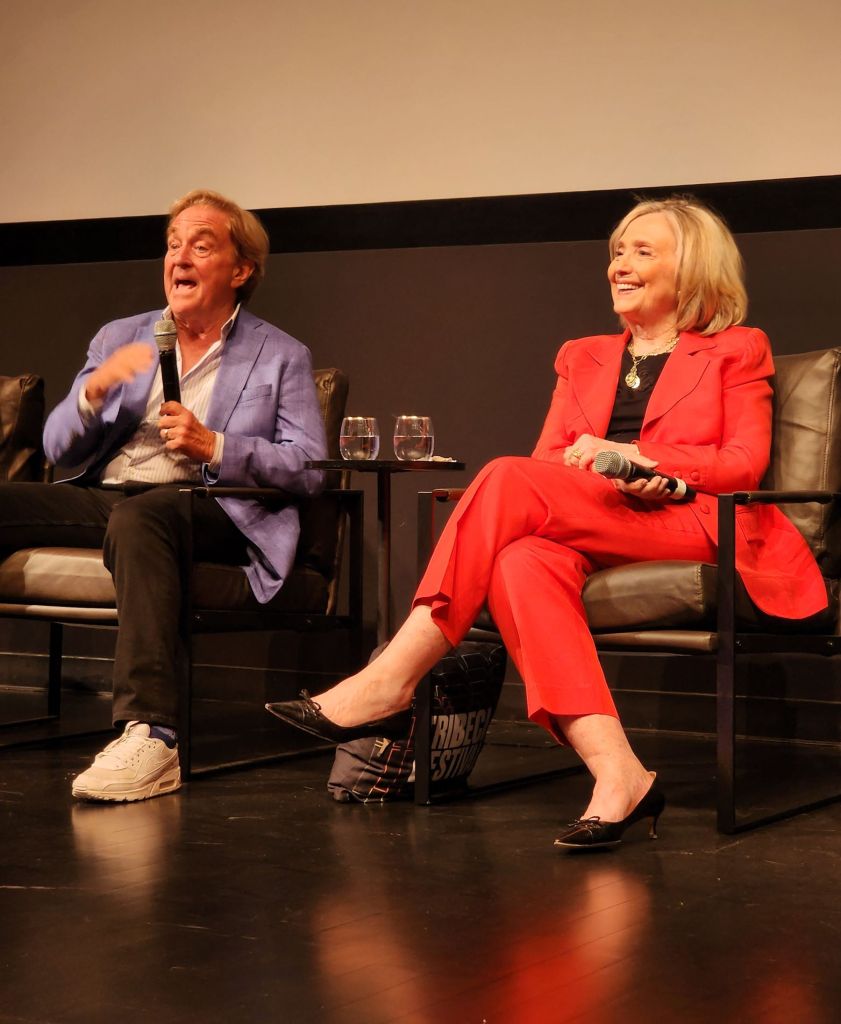
Newsom interviews key spokespersons, i.e. Frances Haugen (Facebook whistleblower), Jim Steyer (CEO Common Sense Media), Secretary Hillary Rodham Clinton, Amy Klobuchar and more. Using their commentary she explores the backlash against women’s progress. Also, Newsom uses powerful firsthand accounts of young women across the country. She highlights their experiences and gives them a platform to voice their concerns. Giving specific examples the documentarian reveals how political influencers on the radical right have created a hostile online ecosystem with ChatGPT, Grok and other AI tools. Following the Trump administration’s MO, they weaponize these to harass, stalk, threaten and ultimately, make women do what they want. In other words they metaphorically disappear them and take their voices and power.
Because everyone has a phone, the toxic messaging can be seen every hour on the hour. Unlike the analog assault of fifteen yeas ago, influencers personalize their digital warfare on others. Often AI Bots are set to monitor and comment on every powerful young woman’s social media account. Insulting comments and memes can erode girls’ and women’s self-esteem, mental health, and public engagement. The more these insidious technologies emotionally engage, the more money is made. Abuse and verbal beatings mean dollars. Young women navigate the currents of abuse with pain. Instead of pushing through, eventually they refuse to take on leadership roles and positions of political power.
Congress must step in to regulate tech companies
Congress has attempted to hold CEOs of companies like Facebook accountable for allowing toxic messaging to get through. With the MAGA administration threatened by women, they try to prevent regulation of tech companies to engage them in their misogyny. In avoiding regulation for big tech and data centers, the companies have made payoff donations to campaigns. However, Newsom shows he resilience of young women who fight back and carve out their own power. Their voices now and in the future sound a reckoning. Increasingly, with awareness the public fights against data centers and wins.
Miss Representation: Rise Up reminds us that all of us must remain engaged in our life’s processes, politics and our votes make a difference. Finally, by empowering women through agency, and maintaining hope, no one’s rights can be diminished.
Look for Miss Represenation: Rise Up on streaming platforms. See the synopsis on the Tribeca Festival website.
https://tribecafilm.com/films/miss-representation-rise-up-2026
‘The Accompanist,’ Starring Susan Sarandon and Aubrey Plaza at Tribeca Festival
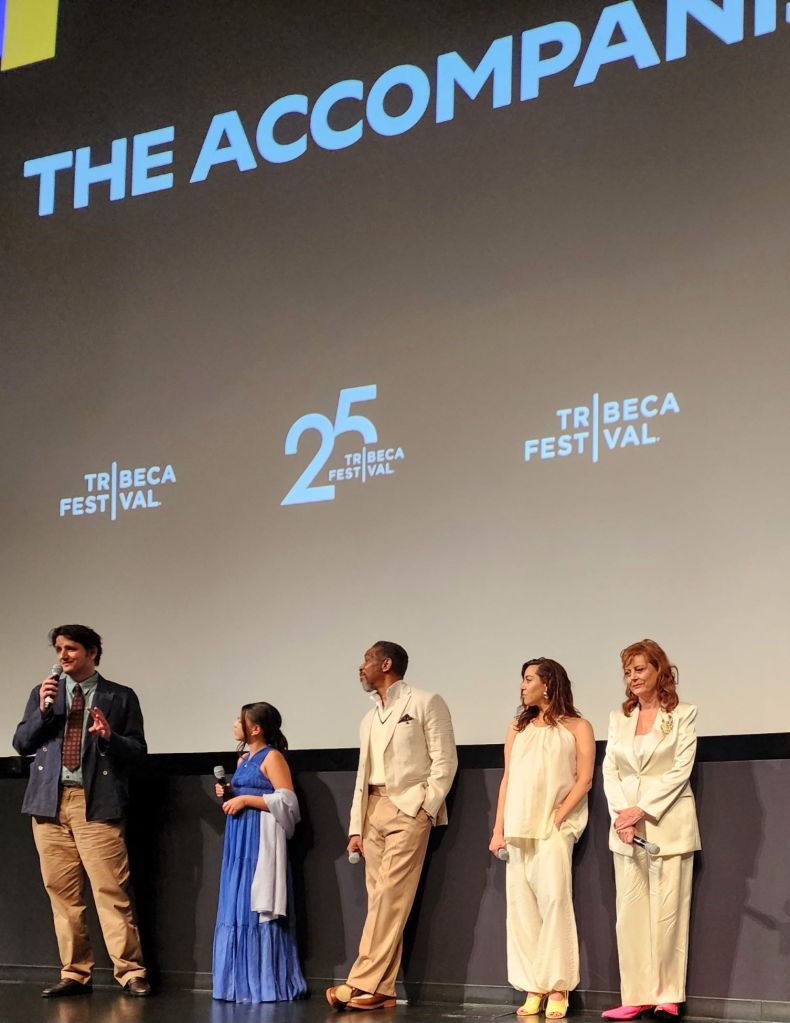
The Accompanist
Zach Woods’ The Accompanist begins with slow consideration. It shows the untenable situation between 9-year old Emily and her aging grandfather. In its world premiere in the “Spotlight Narrative” section at the 25th Tribeca Festival, Woods’ emotional film stars powerhouses Susan Sarandon as Sylvia and Everly Carganilla as Emily. From the moment Sarandon makes her entrance, the portrayal of the zany, loving and perceptive character anchors the film. Carganilla and the other actors seamlessly align with her. Both Sarandon and Carganilla create an authentic, believable relationship in spite of Woods going off in a few fantastical scenes that needed to be tweaked to cohere with the tone and ethos of the family drama that has humorous undertones.
Clearly, Grandpa Martin Molido (Kevyn Morrow gives a superb performance) is increasingly unable to function because of memory loss. However, with no assistance from his deceased wife and daughter, he tries his best to take care of Emily. Understanding the situation Emily assumes a parental role and makes sure her grandfather takes his medication. Essentially, she fills in the gaps in their increasingly stressful living arrangement. However, in a turning point scene that is harrowing and painful, the straw has broken both of their backs. His dementia presents a danger to himself and Emily and this troubles, panics and overwhelms them both.
Emily and Grandpa need saving
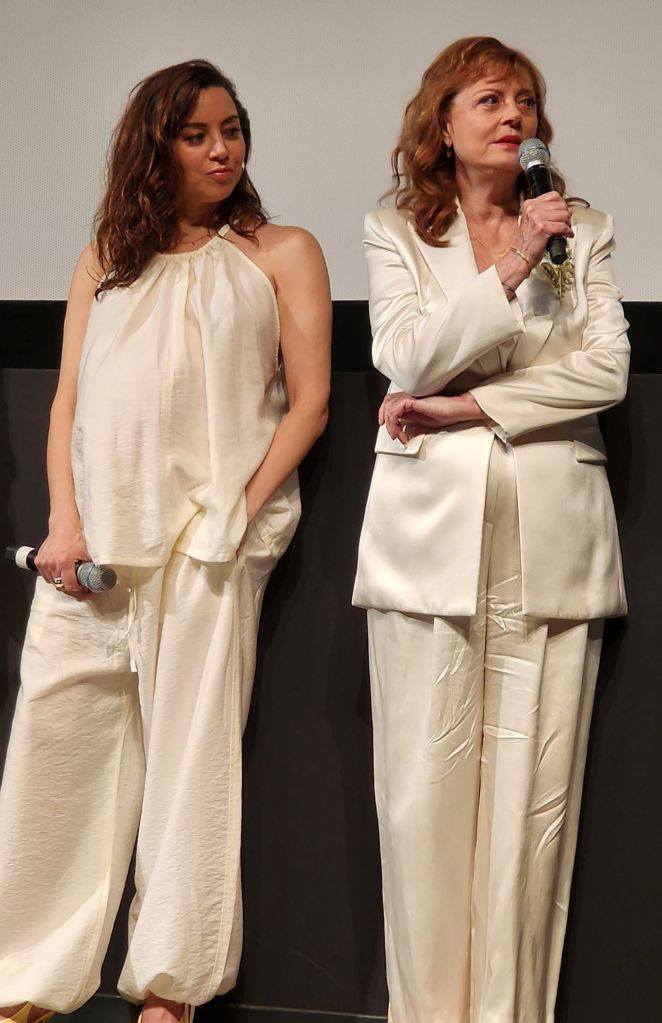
The deus ex machina arrives in the form of Aubrey Plaza, who expertly portrays Sarah, a neurotic child welfare agent who screws up royally. Mishandling the situation and causing chaos, she kidnaps Emily, misreading Grandpa Molido’s actions and escalates an emotional confrontation. During the scene the audience reacted loudly, annoyed at her belligerent tyranny. They gave a smattering of applause when later in the film Plaza’s Sarah profusely apologizes for her dysfunctional behavior and harm in misreading the situation. Wood’s beautifully directed scene is so harrowing among Grandpa, Emily and Sarah, we feel Emily’s and Grandpa’s trauma.
After Sarah drops Emily off at foster care parent Sylvia’s house to keep Emily safe for the night, we expect Emily to run away to try to gain control and return to her grandfather by any means possible. This sets up Sarandon’s challenge to win over Emily. How she does this with empathy, understanding and humor highlights the growing bonds in their relationship. Their dialogue and interactions are particularly heartfelt and bring relief to a tense situation that the audience empathizes with.
Sylvia gets involved with Emily emotionally then resists it
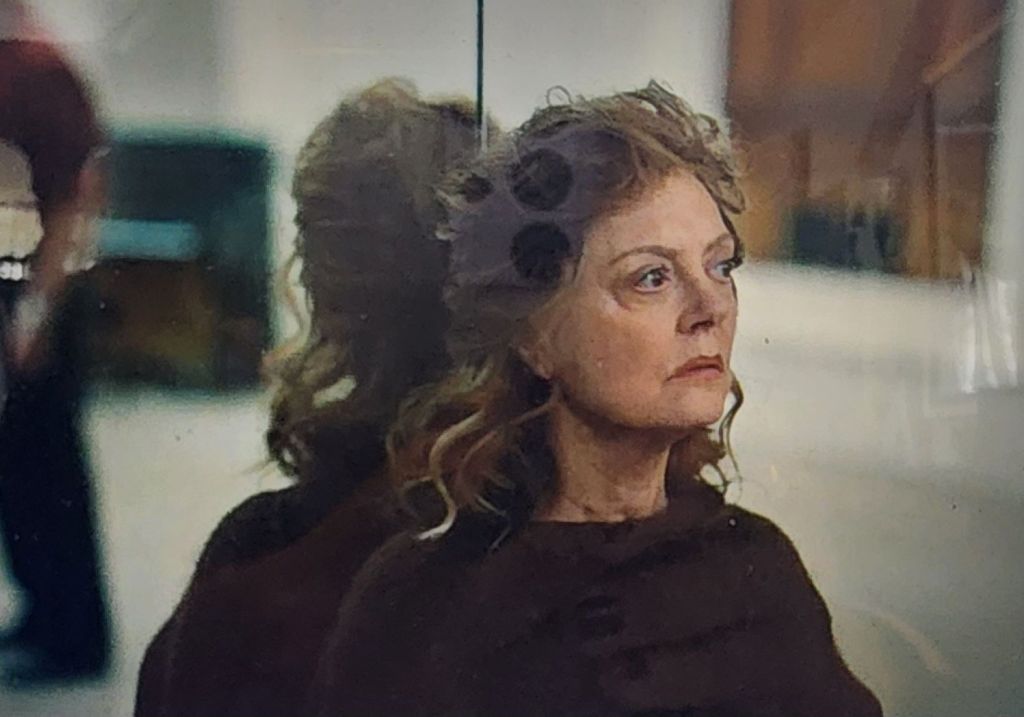
Ironically, in using humor and “witchy” playfulness to engage Emily, Sylvia falls for her own trap. Both “people who really need people” find each other. However for Sylvia the fear of loss (she buried a daughter who died from anorexia) stops her from imagining a permanent relationship with a surrogate granddaughter. Emily is the age of a granddaughter her own daughter might have given birth to if she conquered her anorexia. For any permanence to take place, Sylvia must exorcise her daughter’s ghostly hauntings. Unless she confronts and reconciles her guilt, pain and sorrow, she cannot commit to caring for another, especially one as endearing, intelligent and loving as Emily.
Themes of loss, trauma, reconciliation
In a theme of the film the characters experience trauma, loss and heartbreak which must be reconciled before they can move on. Woods reveals this in interesting ways as they attempt to meld past to present. Emily takes off in a panic to escape the awful circumstances of feeling abandoned. She seeks out comfort with her grandfather in the hospital. But when his dementia intensifies, she runs away to their now abandoned home in a wishful return to the past whose reality has long disappeared.
Sylvia envisions her daughter in pleasant moments of her childhood and in scenes less integrated with their relationship and more with Nadia’s illness. Woods and Gardner’s revelation of adult Nadia’s struggle with anorexia symbolized by Emma Farnell-Watson’s dance scenes magnificently conveys the hell and self-torment she goes through and most probably puts Sylvia through. Sylvia’s severe trauma in Nadia’s loss also manifests in haunting sounds that Emily can intuit. This occurs in a scene where Sylvia watches teen Nadia (Olivia Edward) struggle to improve her ballet performance, chided by teacher Oscar (John Rothman). Both Emily and Sylvia must confront their losses and accept the painful reality to move into the future together and help each other heal.
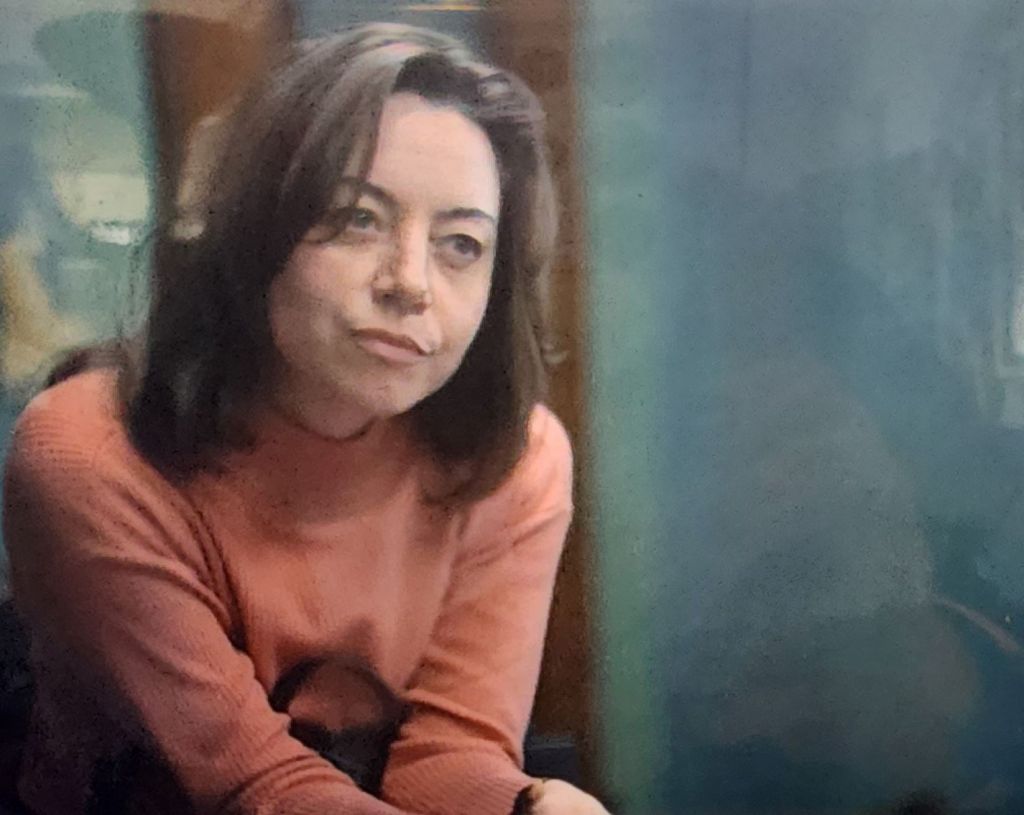
Wood’s direction.
Woods’ direction of the realistic scenes involving panic and fear strike the most resoundingly. When the characters feel and act cornered with no relief on the horizon, we identify with these universal human experiences that Woods, who also co-wrote with Brandon Gardner effectively creates. His venture into the surreal falls flat because of its generality. If he had pegged moments of bonding specific to the characters he so beautifully defined and the actors so finely performed (other than the flying sequence which didn’t work for me though I understand the symbolism) the film might have soared even more than it did.
For his feature debut Woods, known for his acting in The Office, centers this family drama around symbolic truths about relationships, love, letting go and the fearlessness needed to face the unknown around every corner of our lives. The knock out performances sing with hope and unexpected wonder. Little in this film is predictable, especially when Wood’s direction draws the character relationships into lasting bonds, then halts the progress allowing the characters’ inner obstacles to emerge.
Tickets are still available at the Tribeeca Festival website. https://tribecafilm.com/films/accompanist-2026
‘American Zoo’ Catskill Game Farm Secrets Exposed at Tribeca Festival
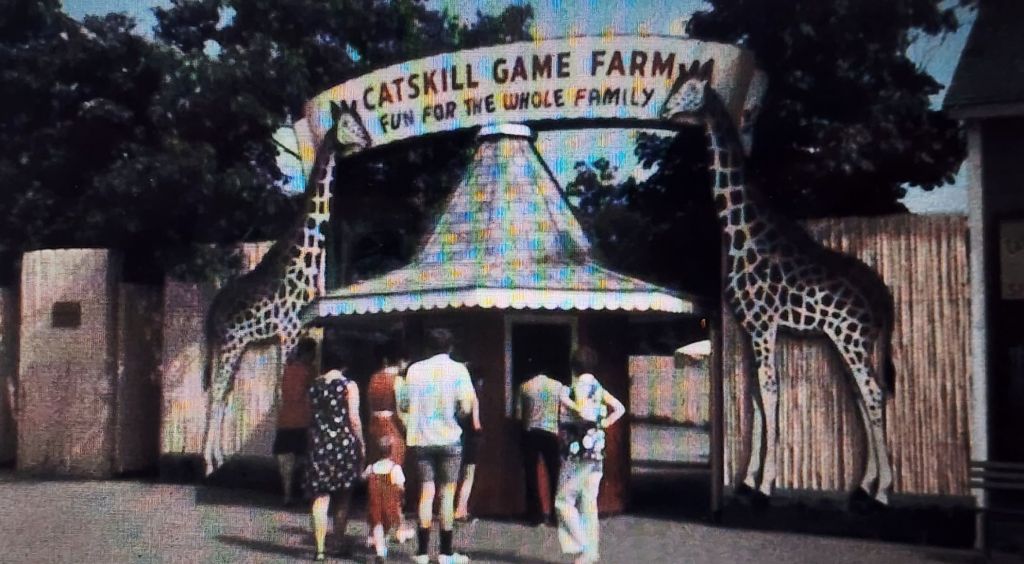
American Zoo
In its world premiere at Tribeca Festival 2026, Tim Travers Hawkins outdoes himself in his riveting expose American Zoo, a story of dark and light about America’s first private zoo. The documentary builds to many essential thematic points. One theme asks to what extent do private companies commit untoward practices and illegal violations to enhance their profitability by avoiding public scrutiny and governmental interference? When the business involves families and children shouldn’t they be trusted to keep a mandate that puts ethics and care first? Or does success and money trump all ethical and moral considerations? Unfortunately, in the last twenty years and especially during the current administration the latter question seems rhetorical.
Investigating the private zoo inspired by the American Dream
Proving this theme, one feature of his complex, fact-based documentary, Travers uses extensive interviews and found valuable material, including reels of home movies, archived documents, books and photos, and photos from family legacies. With these, he opens up a new avenue of exploration into upstate New York’s Catskill Game Farm. The documentary slips under the joy, peace and fun of the amazing place and the owners’ striking idea (at the time) to allow animals to roam free and enjoy their lives.
But underneath the clean, white American brand, lurked an association with Hitler’s criminal crony Hermann Göring. For those unfamiliar with the treacherous, infamous German, Hermann Göring was a high-ranking Nazi official and founder of the Gestapo. Those who wore the cap or uniforms with the skull and crossbones were instrumental in moving forward with the genocidal extermination of Jews and other undesirables in the Eastern European concentration camps during WW II.
Did the owner know one individual in particular had close ties with the Nazis and Göring? By the time folks thought to ask questions, the owner and key players had died. Only the children remained. One daughter (a scientist in a family dynasty of German zoologists named Heck) knew of the darkness. She went on the record about her grandfather while she was dying of cancer in Scotland. Using her interview, and interviews with the zoo owner’s daughter, zookeepers, workers, spouses and researchers, an enlightened view of the Catskill Game Farm emerges.
The film’s structure
Travers Hawkins structures his fascinating film in three sections. But first, he introduces the Game Farm through period radio and TV ads and videos of those who daily visited the farm which was a success because it fostered love of animals and stoked interest in exotic animals that were facing extiinction.
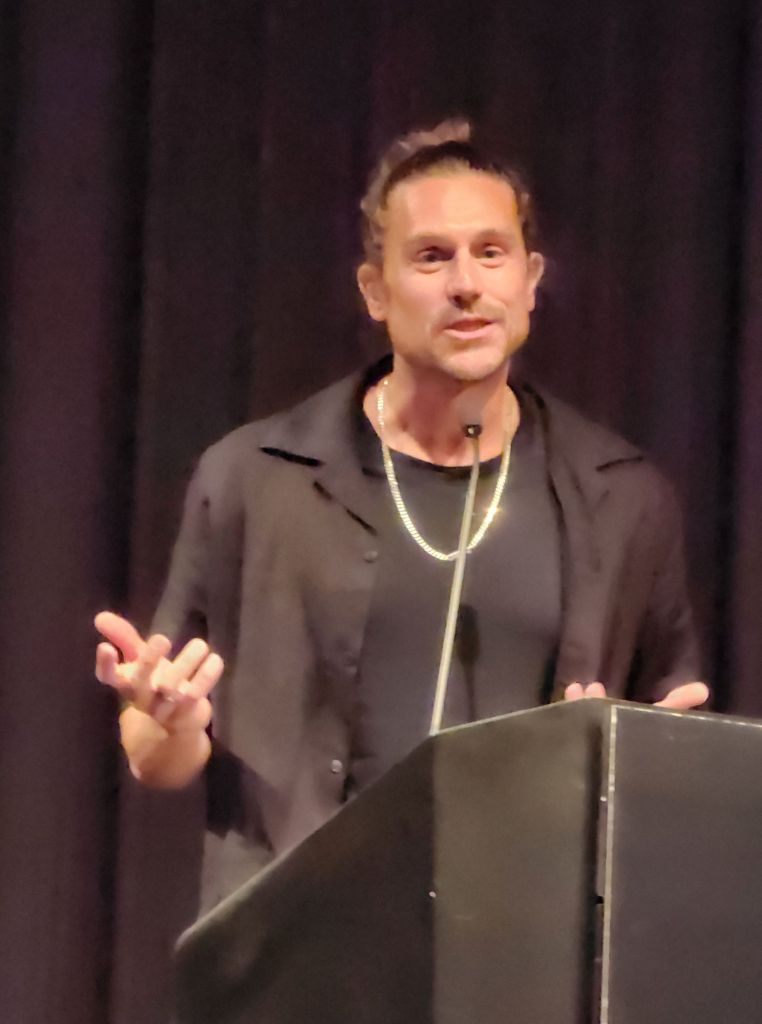
A Wonderland of Animals in the Heart of the Borscht Belt
If you ask any veteran New Yorker who vacationed upstate, they may tell you about the Catskill Game Farm. It was a lovely first-of-its-kind private zoo that expanded its grounds and added exotic animals never seen before to the delight of families and children that numbered into the millions before the Catskill Game Farm fell into disrepair and closed in 2006.
America’s very first (and largest) privately owned zoo was opened by German immigrant Roland Lindemann in 1933.h A host of zookeepers and employees who lived and worked there in community for the love of animals kept the Game Farm going for 73 years. Though the pay was low, they enjoyed their time there and even offered to buy it when Lindemann’s daughter found the business grew harder to turn a profit. But at the peak of its success, families who visited found its peaceful, lovely surroundings heavenly. Little did they know it held a dark side which would have given them pause.
A Turning Point
Lindemann loved animals, but came about procuring them for his zoo sometimes in an untoward way (poaching). During the process he understood how some species were going extinct because of hunting parties slaughtering the beautiful creatures for wasteful fun, not even using their bodies. One way to counteract this was through eugenics, conserving their DNA, and breeding programs to prevent animals going extinct.
So for the good of conservation and preservation in 1959, Lindemann invited Dr. Heinz Heck from Berlin to the Catskill Game Farm. He made him zoo director and gave him free reign to establish a genetics program which attempted to research a way to prevent future animal extinctions. In another pathway, Heck and his father, who would come to visit summers, worked on a program to reverse engineer animals that had an important place in German history and folklore. As it turns out, in the heart of an area that was a summer resort for those who had been through the horrors of the Holocaust, Heck was working on the genetics of animals that symbolized strength, heavily romanticized in the Nazi Party’s mythology. In other words if they brought back these mythic creatures, their “resurrection” would be a symbolic affirmation of the romantic ideals of Nazism which could never be extinguished.
The last third of the film
In the last third of the film, Travers Hawkins’ tie ins with the Heck’s (father and son) genetics and breeding program and the Nazi party are astounding. On the one hand, Heck and his grandfather had two successes. Travers Hawkins follows these details through interviews with Heck’s daughter and archived photos and materials. Also, the home videos are essential in telling the story of the research. The director follows the story to its tragic conclusion. Perhaps if the Catskill Game Farm had become a non profit, received grants from the government, the research would have continued under regulations and for the betterment of science and the planet. It was not to be.
American Zoo currently screens at Tribeca Festival. https://tribecafilm.com/films/american-zoo-2026

