Author Archives: caroleditosti
Puglia and its Wines. Lovely tastings at GD Cucine and Vinitaly USA-New York

#Vinitaly International Academy’s Master Class on Puglian wines: Consorzio Movimento Turismo del Vino Puglia
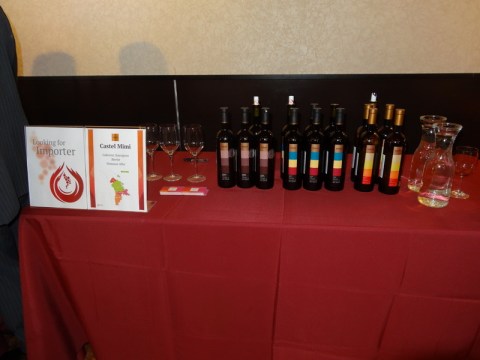
Puglia Italy is a treasure. My cousins visited and added to their travel adventures in this glorious Southern province of Italy that borders the Adriatic Sea and Mediterranean. I was jealous as I have yet to tour the province. However, I have taken a step in the right direction by sampling their delicious wines at a mega tasting event in New York City last week. The event was sponsored by Vinitaly International USA-New York whose spot on International Academy led by Scientific Director, Ian D’Agata, held master classes. One of these was in Puglian Wines; the presentation was by Daniele Cirsone. To further promote their wines and indulge in appetizers and dishes with which they paired well, there was also an event at GD Cucine Showroom held afterward. Both the Master Class held by Consorzio Movimento Turismo del Vino Puglia: “Puglia Land of Opportunity” and the event at GD Cucine Showroom were exceptional.
The wines featured at the Master Class on Puglian wines included the following offerings.
Mottura Vini Del Salento / Le Pitre Negroamaro – Salento IGP (2011)
Vigne & Vini Varvaglione / Papale Oro – Primitivo di Manduria DOP (2011)
Tenute Emera / Anima di Primitivo Primitivo di Manduria DOP (2011)
Azienda Agr. Duca Carlo Guarini / Boemondo -Salento IGP (2010)
Castel Di Salve / Cento su Cento Negroamaro -Salento IGP (2010)
Carvinea / Sierma – Salento IGP (2009)
Rivera S.P.A. / Il Falcone – Castel del Monte DOP Riserva (2007)

The last of the bottle at the GD Cucine wine event. The wine is Tormaresca from the estate Bocca di Lupo at Minervino Murge.
The wines at the tasting at GD Cucine included wines from the wineries listed above and the following offerings below.
Albea Winery Il Serlva Locorotondo doc 2012 SRP / Petrarosa Puglia Rosato igp 2012 / Petranera Puglia igp 2009 SRP
Apollonio Salice Salentino Rosso DOC -SRP / Terragnolo Primitivo Salento igt – SRP
Leone de Castris 50 Vendemmia Salice Salentino Rosso Riserva DOC SRP
Masseria Altemura Fiano Salento igt 2012 / Rosato Salento igt 2012 / Sasseo Salento Igt 2011
Palama Metiusco Salento Rosso igp 2012 / Albarossa Salento Rosso Primitivo igp 2011
Taurino Salice Salentino Riserva Rosso DOC 2009 / Notarpanaro Salento Rosso igp 2006
Tormaresca Trentangeli Castel del Monte DOC 2009 – SRP / Roycello Salento Bianco igt 2011
Puglia’s Land and Wines Part II
I am grateful to have received the information supplied by friends who live in Puglia as well as those who love and represent Puglian wines. The more I learn about Puglia, the more my appetite is whetted for a visit. When I do go, I will be prepared to enjoy the province’s delights and spend more than a few weeks there.
The Unique Wine Region
Over 800 kilometers of coastline define the geographic boundaries of the Puglia Region. It is long and narrow. Puglia is composed of Daunia and the High Murgia, Murge, Lower Murgia and Itria Valley, Messapia and Salento. These five territories are well-defined wine districts, strongly anchored to typical grapes that characterize the productions.
A wide ampelography collection makes the difference between Puglia and other Italian or Southern regions. Characterized by a marked mutability of its territory, Puglia can count on a wide variety of terroir that is expressed in a rich bouquet of aromas and flavors unique and unparalleled. It changes from Daunia mountain peaks to the sandy coast of Salento going through large and sunny hill areas.
There are the native grapes and also grown are the many varieties of national and international grapes now permanently inhabiting the region. The wines made here have a very distinctive and impressive structure. Thanks to the passion and experience of wine makers, Puglia’s wines are mostly red, with a strong character and identity.
Daunia and the High Murgia
Bordered by Molise, Campania and Basilicata Regions, this northernmost area of Puglia has a vast array of colors and flavors, and extends from the Sub-Appennine hills and the Gargano promontory right down into the heart of Frederick II’s territories. Wine-growing here is an ancient tradition, and the legend surrounding the origins of wine-growing here is that the king of Daunia invited the mythical Greek hero Diomedes to settle down; he had wandered around the Mediterranean after discovering that his wife was unfaithful and was seeking a new homeland. Diomedes planted the first vines, so that to this day, the vineyards are known as the “fields of Diomedes” and the typical Tremiti Island seagulls are also called “diomedee”, almost as if their sing-song calls tell the story of the hero’s wanderings.
Some vines which have found their ideal habitat in this corner of Puglia are Montepulciano, Bombino (bianco and nero) and the increasingly well-known and appreciated Nero di Troia – the powerful and unmistakable variety common to both Daunia and the Murgia.
Besides wine, olive oil is another symbol of this area of Puglia: the precious “green gold” is mostly identified with the cities of Andria and Corato, and some of the region’s most important olive oil-producing companies are in the surrounding countryside. Finally there is the delightful city of Trani, with its magnificent Cathedral, its Frederician Castle and its delightful sea-front. A glass of Trani’s delicious sweet wine – Moscato di Trani – is the perfect end to a wonderful tour.
Lower Murgia and Itria Valley
A tour of Bari Province’s authentic flavors takes you via Gravina in Puglia – near the border with neighboring Basilicata Region – down towards the Gulf of Taranto, passing through places well-known for their wines, their bread and pastries, and their excellent meats. Altamura is famous for its Dop bread. Santeramo in Colle produces wine and oil, and meat-lovers will be thrilled with its traditional grill-houses. Gioia del Colle has an imposing castle and is home to the Primitivo DOC wine.
The Itria Valley is renowned for its white wines, and no one should miss Alberobello with its world-famous trulli, and its two districts – Monti and Aia Piccola. The town was designated a national monument in 1910 and is a Unesco World Heritage site. The other jewel of the Itria Valley and the area’s wine-making center is Locorotondo. Historically, generations of small farmers have worked the soil. In modern times thousands of wine-growers combine traditional techniques with the new trends of the international wine scene.
Messapia and Salento
The people of the Salento are proud of their past, and at the same time they are very much orientated towards the future. This is the land of three important vines – Negroamaro, Malvasia Nera and Primitivo – which dominate the so-called Great Salento, from Taranto Province to Lecce Province, passing through Brindisi Province. This is the land of the great fortified farmsteads – the masserie – now top-class hotels and resorts which have made Puglia world-famous. This is also the land of wineries.
The roads to the outlying villages are very scenic, like the green road linking Grottaglie to Manduria, the city of Primitivo wine; on every side of the road there are alberello vineyards and monumental olive groves.
On the road to Lecce, it is definitely worth stopping in Guagnano, Novoli, Carmiano and Arnesano, small towns in the Negroamaro Park. This is where some of the region’s important wine-growers are based, and they offer an excellent combination of hospitality and quality products.
The Tribute Artist by Charles Busch

L to R: Cynthia Harris and Charles Busch in The Tribute Artist by Charles, presented by Primary Stages at 59E59 Theaters. Photo by James Leynse.
Buying and selling Manhattan real estate! It’s all about being in the right place at the right time with the right clients. If the opportunity to sign a deal on a most fabulous place in Greenwich Village just dropped in your lap, you’d probably leap at it. What if it involved a smidgeon of shadiness and a soupcon of fraud?
The Tribute Artist by Charles Busch presents a hilarious scenario of three rather desperate, down on their luck characters, one attractive and potentially nefarious thief, and a $12 million dollar townhouse whose occupant has recently died. From soup to nuts, this two act play is a cleverly written comedy that is beautifully acted by the ensemble cast and tightly directed by Carl Andress. Charles Busch, a Drama Desk Award winner for “Career Achievement as Playwright and Performer,” once again delights with his impeccable timing and comic genius in a play that skirts the edges of farce. The Tribute Artist’s trending humor, themes and ironies are incisive and just shy of brilliant.
The play opens to the sumptuous living room of a Greenwich Village townhouse where we meet grand dame Adriana (the lively and funny Cynthia Harris), the alleged homeowner. We appreciate Adriana’s sulfuric wit which she states, “is not nastiness, but my European sense of irony.” This upper crust lady is a former clothing designer and she is entertaining her down-to-earth and frenetic real estate broker, Rita (the excellent Julie Halston), who may or may not broker the townhouse sale. Jimmy (Charles Busch) a recently fired Las Vegas drag queen, who prefers to be called a “celebrity tribute artist,” is staying with Adriana for a while. When we are introduced to Rita and Jimmy, both are modeling Adriana’s designer clothing and Jimmy is modeling one of her wigs. Rita and Jimmy have been long time friends and they enjoy Adriana’s hospitality as she fills in details from her past which, unbeknownst to them, are portentous to their future. When they all fall asleep from rather too much drink, the scene shifts to morning and the comedy and plot complications jolt into the most interesting of wonderful possibilities.

Charles Busch as Jimmy impersonating Adriana in The Tribute Artist by Charles Busch presented by Primary Stages at 59E59 Theaters. Photo by James Leynse
During the night, Adriana has passed; she did say she was dying, but Jimmy and Rita didn’t believe her. No one will inherit this lovely house and it will end up in the hands of the government since there are no inheritors and no will. The path appears to be clear that Adriana wants the house sold and is exerting her will that this should be exacted by those who are present. They are a perfect combination: a real estate broker and a female impersonator who just happens to have in his repertoire all the greats from Marilyn Monroe to Betty Davis. Impersonating “Adriana” will be easy. Jimmy and Rita talk themselves into the devilish plan (a hilarious segue), plotting that Jimmy will become Adriana for the time it takes Rita to sell the house. In the clear, they will split their “winnings” fifty/fifty. They even have the perfect resolution for how to deal with Adriana’s remains. Through their euphoria, they both agree that they may have forgotten something, only they aren’t sure what.
What they’ve forgotten shows up in the next scenes, creates havoc and additional conundrums. The plot complications humorously involve the real heirs who will take the townhouse away from Rita and Jimmy. The inheritors are Adriana’s late husband’s loathsome relatives, niece Christina (a perfectly overwrought Mary Bacon) and grandniece Rachel Oliver (a fine Keira Keeley). An additional complication involves one of Adriana’s former lovers, the sexy and very masculine Rodney (Jonathan Walker in a hysterical performance). Somehow Rita and Jimmy deal with these “interlopers” and Jimmy’s impersonation of Adriana goes swimmingly for a time until Rodney throws the switch that could overturn their peaceful coexistence. Once again the elements of farce are stepped up with the added suspense that Rodney may be up to something worse than the “silly little fraud” that Rita and Jimmy had hoped to commit.

L to R: Keira Keeley, Charles Busch, Julie Halston, Mary Bacon, Jonathan Walker in The Tribute Artist by Charles Busch, presented by Primary Stages at 59E59 Theaters. Photo by James Leynse.
While spinning these humorous events, the playwright carefully weaves in issues of class, gender, identity and social injustice. He does this with wit and subtle undercurrents of poignancy in keeping with the comedic pacing. Added to the glee, Jimmy unleashes his repertoire of old-time celebrity actresses with snippets of dialogue from their most famous scenes. Rosalyn Russel, Katherine Hepburn, Betty Davis and others show up and aptly spout “wisdom” to heighten the madness. In his impersonations Busch is at the apex of his powers. His “Running Wild” is superb. If you don’t know which actress performed the song from which iconic film, then you’ll have to get yourself to 59E59 Theaters where the production is being performed. Rita will clue you in to the impersonations just in case you were born after 1980.
The playwright ties up all the complications and reveals the inner workings of each character reinforcing one of the main themes: one never knows how things will out in the end. In Busch’s iteration the phrasing is more poetic. The production will be running until March 16th. It is being presented by Primary Stages at 59E59 Theaters.
The review first appeared on Blogcritics. Click Here.
Amarone Wines, The Velvet Underground! #Vinitaly International

#Winitaly Tour NYC Master Class: “Amarone, the velvet underground: treasures to be shared” Amarone flight,
Friends had introduced me to Amarone, but frankly it was a few years ago and I was not really informed about the wonderful Amarone wines. My friends were unfamiliar with it beyond being introduced to it at cursory tastings, one of the way wines are introduced but not really known.
Vinitaly International Tour has innovated a better way for wine aficionados to become familiar with lovely Italian wines. This innovation will not only increase familiarity with Italian wines which are gradually becoming known in America. The best benefit will be to further encourage our visits to wineries in Italy where we’ll be able to experience the wines on “their own turf” and spend more time savoring their flavors and understanding the terroir, production and their best years. With that knowledge, we can come back home and demand an increase in the wines’ availability.
The Vinitaly International Academy established this year provided an invaluable exposure to Amarone for those like myself who were familiar but not particularly knowledgeable about Amarone wines. Presented were the Amarone family of wines. Their quality and standards are exceptional because the association of producers has set the highest standards for their Amarone. Because of the popularity of Amarone, vintners have hopped on the train to cash in on the trend. The problem has been a diminution of the offerings and a lowering of quality. To ensure that this beloved and increasingly popular wine is not diminished or diluted in its power of enjoyment the association has adopted strict standards so the Amarone’s beautiful, riches are maintained. The association intends that Amarone’s history of greatness continue and that the wine NOT be treated like a commodity, but more as an appreciation of the art of fine wine making. Assembly line wines and lowered quality? These producers have an important point that few would argue with. What can I say? After the tasting, I was thrilled to add this wine to my list of favorites.

The Amarone wines we tasted during the Master Class on Amarone at the Vinitaly International Academy, #Vinitaly Tour.
A bit about Amarone. Some is produced in the Valpolicella region which is near Verona. The finest grape growing region is in the hills which can be up to 700 metres high. The better vineyards are in the hilly region; the impoverished wines are in the alluvial plane which is not particularly advantageous to growing the grapes found in the traditional Amarone.
Amarone is composed principally of the Corvina grapes and Corvinone (bigger grape…and unrelated to Corvina). The Corvina grape is an ancient grape used by the Romans. To produce the wines, there is a meld of various percentages of Corvina or Corvinone, Rondinella, Molinara and Oseleta grapes. Oseleta has fallen out of favor with vintners because it has a thick skin and little juice, though it is indigenous to the area. There is a much smaller percentage of Oseleta and Molinara, especially Oseleta simply because there is little juice yield. Usually an Amarone will have about 5% of either the Molinara or Oseleta.
Amarone is rich, smooth and depending upon percentages of grapes. there are spicy notes or black cherry savor on the tongue. Most of the wines we tasted had an interesting, memorable or lasting finish. A fine feature of Amarone is that it ages really well and actually benefits from aging.
The below list covers a few of the wines we sampled and my notes and Ian D’Agata’s informative Master Class, “Amarone, the Velvet Underground” are the first step to understanding this wonderful wine if you are not already familiar with it.
Begali / Amarone Classico 2008 The grapes are air dried. There was a subtle 17% alcohol content that was not readily noticeable. Notably rich tasting with 30% Rondinella and the rest of the main Corvina or Corvinone grapes and a small percentage of another grape (not Oseleta).
Brigaldara / Amarone Case Vecie 2008 This hadd a beautiful velvet mouth feel and lovely tannins. Again the grapes are air dried. The vineyard is in the high hills and they are harvested late and dried into February.
Musella / Amarone della Valpolicella Riserva 2008 This wine held the usual blend with less rondinella. Interestingly the wine was balanced with a fresh taste. What I liked was that the grapes were organically certified.
Speri / Amarone Classico Vigneto Monte Sant’Urbano 2009 This wine from a famous vineyard was delicious. It was composed of 75-80% Corvina and Covinone, 15% Rondinella and the rest from Molinara. It had a spiciness from the Molinara and nice finish. It ages well.
Tommasi Viticoltori / Amarone della Valpolicella Classico DOC 2010 This wine is a typical blend with 5% Oseleta. It is a deep, rich red color typical of Amarone. It is imminently drinkable, not opulent, a big red wine. It has an alcoholic strength that is subtle.
At a later date, I will feature the rest of the Amarone we tasted. Look for the article.
‘Loot’ by Joe Orton, Stowing Mummy in the Closet for the Payoff

L to R: Ryan Garbayo as Dennis and Nick Westrate as Hal in Joe Orton’s Loot, at the Lucille Lortel Theatre (Red Bull Theater). Photo by Sarah Moore.
Joe Orton, the British playwright whose London hit Entertaining Mr. Sloan proved his brilliance, had his life cut short in 1967 at the age of 34. He was killed by his partner, who committed suicide in recompense for killing Orton. It is the theater world’s great loss, for Orton had experienced the steam of greatness as an exceptional playwright/writer, but not the substance. Whenever a production of his zany, dark comedies is revived, see it to appreciate the frenzy of hyperbolic farce that Orton was marvelous at creating. Impeccable timing and jeweled turn of phrase characterize Orton’s work. He is sardonic, like Wilde; over the top, like Monty Python; an iconic British wit.
Loot, in revival at the Lucille Lortel’s Red Bull Theater until February 9, is one of Orton’s gems. This production, directed by Jesse Berger, conveys Orton’s scorn of entrenched social institutions (religious, judicial, legal, medical). Clearly, the playwright had a rollicking time opening them to ridicule. This is appropriate for us currently; the hypocrisies Orton lays bare, are snatched from the 1960s. Yet, they are immutable now as they were then. In the delivery of the madcap and over-the-top plot extremities, we are able to bear the painful truths expressed underneath. If fraud, official corruption, murder and theft are the stuff of life, at least they can be used as meat to gnaw on for our entertainment sustenance in the hands of a savvy, sharp playwright, able director and acute acting ensemble.
The setting, the McLeavy living room is comfortably furnished with chairs and tables circling the walls, a locked chifferobe and what looks to be a folding screen more befitting a hospital room than a living room. The room is a style cacophony of weird items, the most strange being the coffin with decorative grave flowers at center stage. Thus begins the wackiness which develops into full-blown mayhem.

L to R: Nick Westrate, Rebecca Brooksher and Ryan Garbayo in Loot by Joe Orton, directed by Jesse Berger at the Lucille Lortel Theatre until February 9. Photo by Rahav Segev.
We discover from Fay, Mrs. McLeavy’s live-in nurse (Rebecca Brooksher), in a discussion with barely sentient, grieving Mr. McLeavy (a hysterical Jarlath Conroy), that the funeral service is today. The lovely nurse is a sweet, unassuming golddigger who has been married and widowed seven times.She is looking to be widowed again, after she marries Mr. McLeavy who is overwhelmed with grieving his wife and straightening out his affairs, especially his confused mind and emotions. While Fay encourages him that a month or so is an appropriate time to remarry, son Hal McLeavy (Nick Westrate) bursts onto the scene. His entrance with his beloved (he is gay) buddy Dennis (he is a polyamorous bisexual), fosters a scene switch into a plot convolution that stirs up the cauldron of madness.
Hal is like a young George Washington; he can not tell a lie once confronted with the truth. Dennis (Ryan Garbayo), the undertaker will transport Hal’s mum to the cemetery.The other reason Dennis is with Hal is that both have committed a bank robbery and Dennis has become the chief suspect after his questioning earlier in the day. Better his questioning than Hal’s which would be disastrous for them both, for Hal, a parboiled Catholic with issues, can’t lie. If the moral contradiction of not being able to lie but having no problem with stealing seems patently absurd, you’re right. It is and so is the hypocrisy it represents; this is one of Orton’s tucked away jewels. The play abounds with them.
Dennis fears he will be pinched if he can’t stash the hot “loot” away from the piercing eyes of one particular copper, Truscott, (Rocco Sisto, who is hilarious in his continually indignant state). Truscott, who later appears in a poor disguise as an official from the Water Board, has been snarling and eying Dennis like a canny German shepherd. It is only a matter of time before Truscott finds him, discovers the evidence and throws him in prison, especially if he asks Hal any questions about the theft.
The loot which has been stashed but the locked armoire i is the first place anyone would look; and Fay, who can sniff out money like a dog sniffs out a bone, has intimated to Hal that she knows the loot is there and will expose them in a blackmail scheme. When she leaves, simultaneously, both spy the coffin with Mrs. McLeavy’s body inside. Hide the loot in the body? Gruesome, bloody horror! Hal is a “good” Catholic and that would be untoward. Besides, this is a farce, no matter how black hearted. Hide the body in the armoire and the loot in the coffin and lock both.? Perfect! That way Hal will not be lying if he has to deny the thousands are inside the wardrobe. And if someone gets a crowbar and breaks open the chiffarobe? They’ll be a bloody hell of a surprise. Mrs. McLeavy has been stuffed like a sausage and pickled with embalming fluid. She’s a real stiff.

L to R: Rocco Sisto, Nick Westrate and Ryan Garbayo in Loot, by Joe Orton, directed by Jesse Berger at the Lucille Lortel Theatre (Red Bull Theater) until February 9th. Photo by Rahav Segev.
The official from The Water Board (investigator Truscott inept disguise) interrupts their plans to check the water system. Hal and Dennis quickly send him off to the pipes, then speedily trundle the coffin to the armoire and lob in the corpse. In their frenetic haste they flip poor ole mummy like they’re hefting a log onto a wood pile. Their antics are hysterical especially in light of Hal’s professed Catholicism that has forbade him to see his mum naked but allows him to manhandle her remains. The woman hasn’t been able to RIP since she passed.
After this inglorious treatment, the miscreants lock the chiffarobe and dump their cash booty in the coffin sealing it just in time to escape detection. Truscott figures his inept disguise and circular questioning will eventually trip up the thieves so he can pin them like dead insects with the evidence, pulling out all the stops in his “intelligence” to do so. Orton’s characterization of detective Truscott, is an absurdity of confusion, all in the service of quick humor; Truscott is brilliant-inane, hypocritical-legalistic, corrupt but honest about it, opportunistic and self-serving. He is this and more in the interest of feathering his own nest, but money is his object.
The body-cash swap heightens our belly laughs. We see how these ingrates have dumped Mrs. McLeavy in a “most shameful position.” Added to the romp is Truscott’s indignation and frustration at the suspects “innocence” made all the more hysterical by his ridiculous questions which are as twisted as their answers. The scene is surprising and wonderful.

L to R: Nick Westrate and Rocco Sisto in Loot by Joe Orton, directed by Jesse Berger at the Lucille Lortel Theatre. Photo courtesy Broadway.com.
When Fay and Mr. McLeavy enter the fray, they contribute with flippant repartee. The pace steps up, high jinks fueled by understatement, irony. Orton weaves the scenes so the hilarity builds to climax in an even more preposterous and lunatic second act. Plot complications abound and mysteries are uncovered. The innocent are proven guilty and the guilty are shown to be innocent. Such are the pleasant spoils of ambition in a corrupt universe. For irony, Hal’s good, Catholic conscience has remained spotless. He has not seen his mum naked, and he never lied. He’s good to go. We just don’t know where.
The production does not disappoint. It is a pleasure to see the mostly American actors honor this astounding playwright and make him known to another generation of playgoers who can appreciate brilliant farce and black comedy. That said, it must be acknowledged that Orton is uniquely English. Though there is an opaque line between our countries and cultures differentiating America from England, there is a nuanced sensitivity that comes with presenting English cultural and social humor. It is more felt than studied, intuited than practiced. All humor is generic to place, culture, time, range and social consciousness. Very simply, there are some phrases which can fall flat to some ears if not comprehended in the way that the culture normatively means them to be. In this aspect the production’s humor was flattened by our cultural limitations. However, Orton’s words remain true if one has ears to hear them.
Loot is being performed at the Red Bull Theater by special arrangement with the Lucille Lortel Theatre Foundation. George Forbes is the Executive Director; Jesse Berger is the Founding Artistic Director and Evan O’Brient is the Managing Director.
This review first appeared on Blogcritics, at this link: Click Here.
Restaurant Review (NYC): Il Buco Alimentari & Vineria
Ever since I went to a wine tasting of Marco Capri wines last year at Il Buco Alimentari et Vineria, (Facebook page),
I wanted to return and sample more of Chef Justin Smillie’s fare. A friend and I share the same birthday, so we decided to go for dinner and were happy we did. We received the royal treatment.
Following recommendations from New York Times, Foursquare, Immaculate Infatuation, and my own experience the prior year, I was completely thrilled with the dishes I ordered as were my friends. So were our neighbors at the table sitting next to us. Repeat diners they were ecstatic with their “to die for” Porchetta Alla Romana. The previous couples had scarfed down the “Spit-roasted Short Ribs” and left an large empty plate of the remains of the dish which was the main rib bone. Hmm. I was encouraged.
The decor is rustic and the atmosphere is relaxed. We sat in a section that was family style, conducive to speaking to your neighbor which is fun because I am nosy. I like viewing what others have ordered and if the group is friendly I will ask about their enjoyment of their various dishes. This homely, family style approach is what I think is the beauty of this restaurant which guys really love because it is not self-aggrandizing, nor pretentious. Indeed, it is an informal wine bar and restaurant that serves breakfast, lunch and dinner.
In answer to those “foodies” (?) outraged that the New York Times gave it three stars because they thought it was like a sandwich shop (see the reference in Immaculate Infatuation), I would say that perhaps they are less flexible and more into their own pretension and conceptualization of “branding” than gorgeous tasting food. The idea of a market section up front where one can buy some of “the best salumi della casa in NYC, gelato, and other home made products beggars their idea of “three stars.” Well, I’ve gone to Michelin starred restaurants and the food was neither deliciously prepared nor were the elements combined well. So, it’s all in the perception and it brings to mind that with regard to restaurants, sometimes, the emperor is naked (The Emperor’s New Clothes) but no one wants to say it.
Back to our meal. First, came the basket of bread. If you adore crusty, substantial and sumptuous bread, Kamel Saci creates his bread’s magic from his own recipe and bakes it on the premises. Add Il Buco Extra Virgin Olive Oil, which is green, fresh and exceptional and you are home. My birthday buddy adores bread, so she was in heaven. If your taste doesn’t run to olive oil, and you’re a dairy fanatic, they will bring you delicious, fresh butter to spread on the fabulous bread.
We had appetizers and sides and then for some of us the Primi was the main meal and others, the Secondi.
Lattuga was just what I wanted: little gem lettuce, pickled onions, anchovies, tarragon, red radish. The combination of ingredients melded beautifully and seasoned with the unique taste of the tarragon. The lemon dressing was light and accentuated the freshness of the greens.
The Crispy Artichokes with lemon were wonderfully delicious. They were thin and curled by the char and dark browned to a perfect crunchiness. My friend who thought the gem lettuce was “romaine” which she hates, selected these as a veggie. There wasn’t a crumb left on her plate after we each had a little taste.
The Bucatini Cacio e Pepe is pasta setaro with fresh pecorino romano and black pepper. The pasta is all home made on the premises and was of course, perfectly al dente. My birthday buddy Andrea said it was really good, a compliment that one does not hear often dropped from her lips as she frequently orders pasta dishes and they are mostly, (silence), “OK,” or “good.” She is a pasta fan and gave Emily and Margaret a taste, but did not share the plate with Emily who was a bit disappointed as she loves pasta. But the pasta was Andrea’s main course. Do you blame her for not wanting to share it?
Polletto al Forno is poussin, roasted meyer lemon, capers and bread crumbs. Margaret thought this dish very good. Again, these are words I don’t normally hear, especially when they are said with the enthusiastic and emphatic pronouncement that Margaret made. Chef Smillie created the perfect combinations of ingredients and flavor textures and tastes with this dish. The beauty with all these dishes is that they are spot on, having achieved a regularity that is duplicated, without variation or unevenness.
The Slow-roasted or Spit-roasted Short Ribs are like that as well. These are the rave of city reviewers everywhere, whether for lunch in a sandwich or for dinner. OMG! I say amen to that. I do think they are amongst the best short ribs in the city and in a portion large enough to share with four. They were cooked to tender, flavorful moistness, complemented by the castelvetrano olives, celery, walnuts, horseradish and lemon which, squeezed on the meat, was a wonderful, unique addition. This is Chef Smillie’s creation of perfection. I had been waiting for a year and it was worth it. Absolutely marvelous.
To round out our luscious main courses we added Contorni.
The Crispy Polenta was amazing, crunchy with the salty, pungent taste of the parmesian on the outside and moist softness with milder notes of the corn/polenta on the inside. This was a delicious and wonderfully different way to morph polenta which I have found tiresome when it is served the usual way under the short ribs or meat. Same, same, enough already.
Carrots salsa verde. These had an incredible and luscious char which combined with their sweetness and hinted of other seasonings. They too offered a taste that was exceptional and interesting. The carrot plate was empty by the end of the meal and the pieces of polenta that were left, Margaret took home for her husband. They were devoured that evening.
Fingerling Potatoes valdeon we didn’t try. I wish we noted them because if they were anything like their brother contorni, they were probably wonderful and unique also.
Our shared dessert was home made seasonal Fruit Crostata and Vanilla Gelato, and Flourless Chocolate Cake and Gelato. Yum. The espresso and cappuccinos rounded off the dinner.
Il Buco Alimentari et Vineria is a NYC treasure. (See menu which is seasonal and changes.) And the beauty is you can go for breakfast, lunch or dinner. In fact the breakfast sandwich with 2 organic eggs, salame rosa, rupert cheese and focaccia fino is an incredible value. You will probably want to order a few Brioches for take away, since they go beyond originality in the flavor palette with the following varieties: “White Chocolate,” Chocolate Cherry, and Pistachio and Apricot Brioches. And then there are the Bombolone plain or filled with jam or dulce de leche. I don’t think it gets much better than this.
Veneto Wines, NYC! December is the Month to Celebrate Veneto Wines.

MONTELVINI Tullia Prosecco di Treviso Brut DOC, NV. I tasted this light sparkling wine at an Eataly luncheon. December celebrates Veneto wines at Eataly.
December is a great month to celebrate wines from the Veneto region of Italy. December we celebrate the holidays, Christmas and New Year’s Eve and New Year’s Day. It is a time when we enjoy great food with family and friends and are looking for exceptional wines to pair with fish or are looking for sparkling wines to ring in the New Year without the gross hangoveR the next day.
I tasted some exceptional wines during a luncheon at Eataly’s La Scuola Grande. There the chef using Lidia’s, Mario Batali’s and Eataly’s recipes made delicious cuisine that paired seamlessly with the drinkable wines from the Veneto that were featured:
MONTELVINI Tullia Prosecco di Treviso Brut DOC, NV
ASTORIA Millesimato Prosecco DOCG, NV (DOCG PROSECCO)
CANTINA DI SOAVE Re Midas Soave DOC, 2012
CESARI Mara Valpolicella Superiore Ripasso DOC, 2011 (a red wine)
The Veneto is the primary region for wine production in Italy. The variety of wines produced there is surprising. The Veneto produces whites and reds, sparkling wines to meditation wines. There are also niche-labels from small producers that are in demand and luxurious. Veneto wines are in demand globally. The region expots 75% of its DOC wines. The wines featured were so drinkable that I would enjoy them with appetizers, with cheese and with the full range and complement of meats including chicken and other fowl and certainly fish. They go down smoothly and are a great value. For NEW YEAR’S EVE, a Prosecco is such a tremendous value over champagne. My cousin recommended it for years and knowing little about great wines, I was a snob and drank champagne. Have you seen the prices of good champagne lately? Too rich for my blood. An expensive Prosecco is the greater value. A great and delicious wine, a great value. Why not?

U.Vi.Ve. is the Association or Consortium of DOC Veneto wines established in January 1980 to ensure the wine quality was the highest.

CANTINA DI SOAVE Re Midas Soave DOC, 2012 and CESARI Mara Valpolicella Superiore Ripasso DOC, 2011 (the red wine)
Lidia Bastianich’s Fritto Misto (Mixed Fried Seafood & Vegetables)
As Lidia suggests, “The point of a fritto misto is to enjoy the flavors and textures of a variety of fish. You can vary the roster of fish according to what is fresh in the market and increase of decrease the amount according to the number of guests you’re cooking for.” Also, the vegetables are now in season and can be swapped out for other vegetables that are fresh and in season. The Fritto Misto was delicious with the featured Proseccos.
Mario Batali’s Risotto al Radicchio
(Risotto with Radicchio & Red Wine)
You can find this in Simple Italian Food by Mario Batali, 1998.