Category Archives: NYBG EXHIBITS
‘The Orchid Show: Mexican Modernism’ at New York Botanical Garden
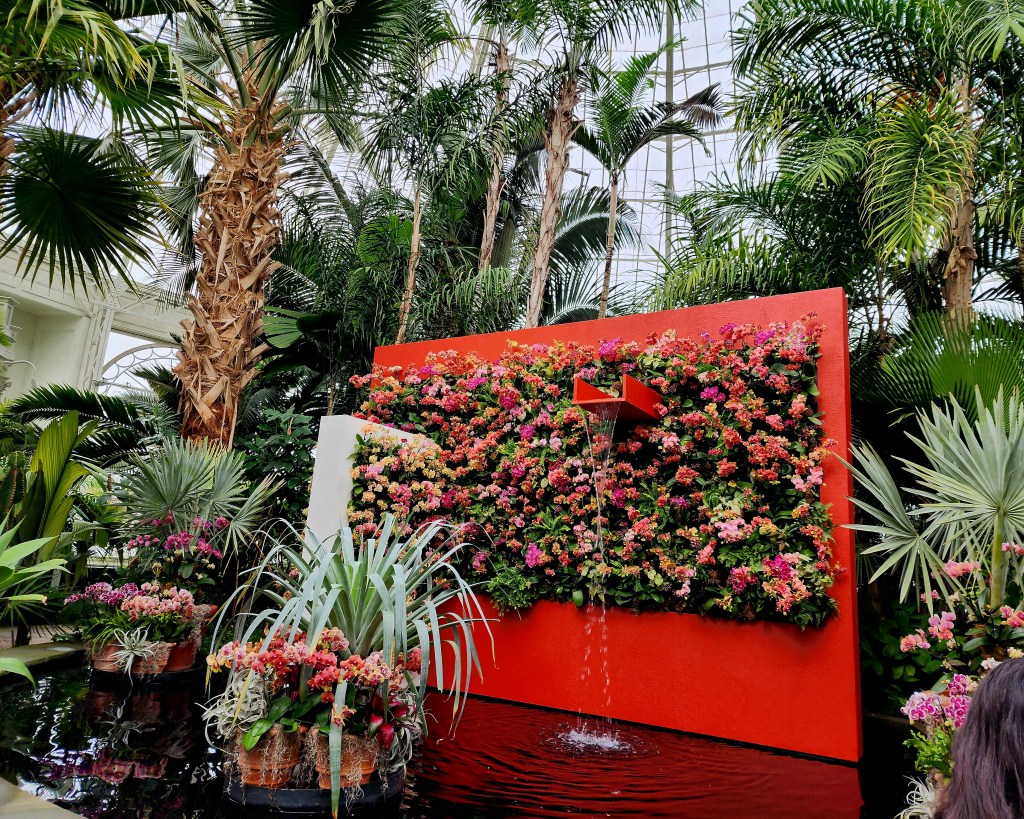
ORCHID SHOW: MEXICAN MODERNISM-FEBRUARY 15TH THROUGH APRIL 27TH

The New York Botanical Garden Orchid Show: Mexican Modernism has exploded onto the New York City scene in eye-popping color.

The NYBG exhibit is so welcome at this time of year. Many New Yorkers and Garden members having been waiting with high anticipation for the annual orchid show to brighten up this period of winter’s doldrums.
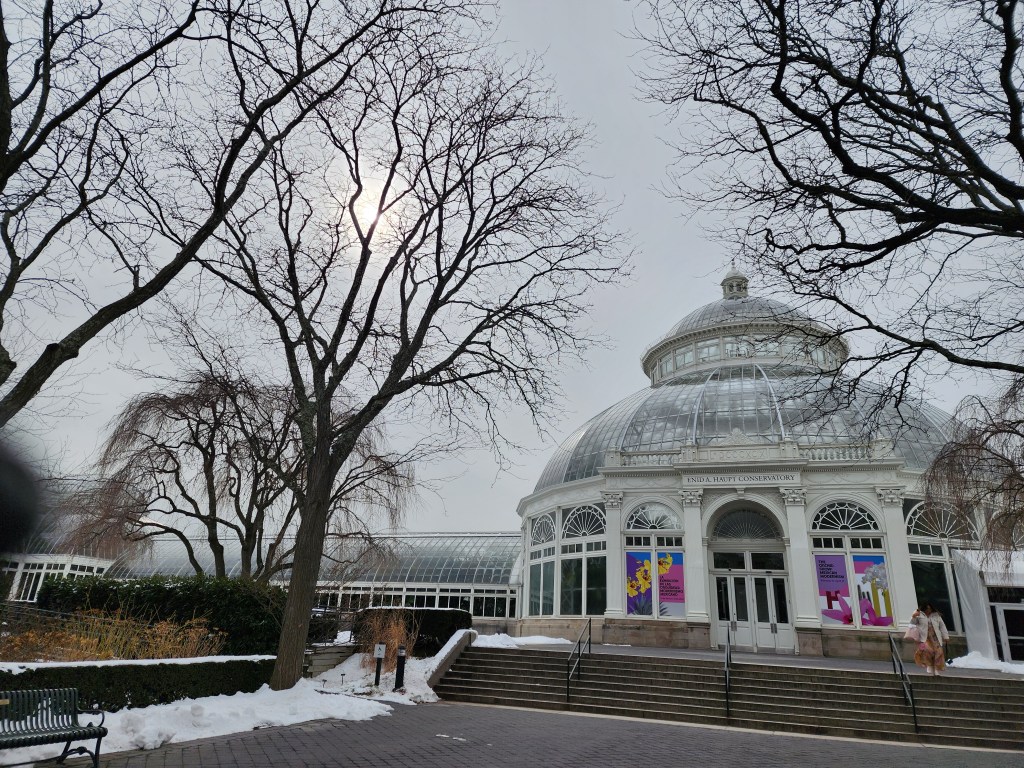
The show is superlative. In displays of orchids, one showier than the next, the exhibition, inspired by the vibrant, multi-hued designs of Mexican architect Luis Barragán (1902-1988), leaves one with a treasured emotional uplift.

It is just great knowing one may now walk through the galleries of the Enid A. Haupt Conservatory’s beauties taking in the breathtaking orchids in fabulous displays while the winter cold and potential snowfalls remain outside.


There’s no place better to be than in the comforting warmth of orchid pageantry, as one saunters through the conservatory’s splendid galleries.
This is NYBG 22nd Orchid Show
Moving through the various galleries beginning with the Palms of the World gallery, visitors will note the myriad orchid species from the family Orchidaceae. According to Marc Hachadourian, Director of Glasshouse Horticulture & Senior Curator of Orchids at NYBG, orchids grow in every continent on the planet except Antarctica.
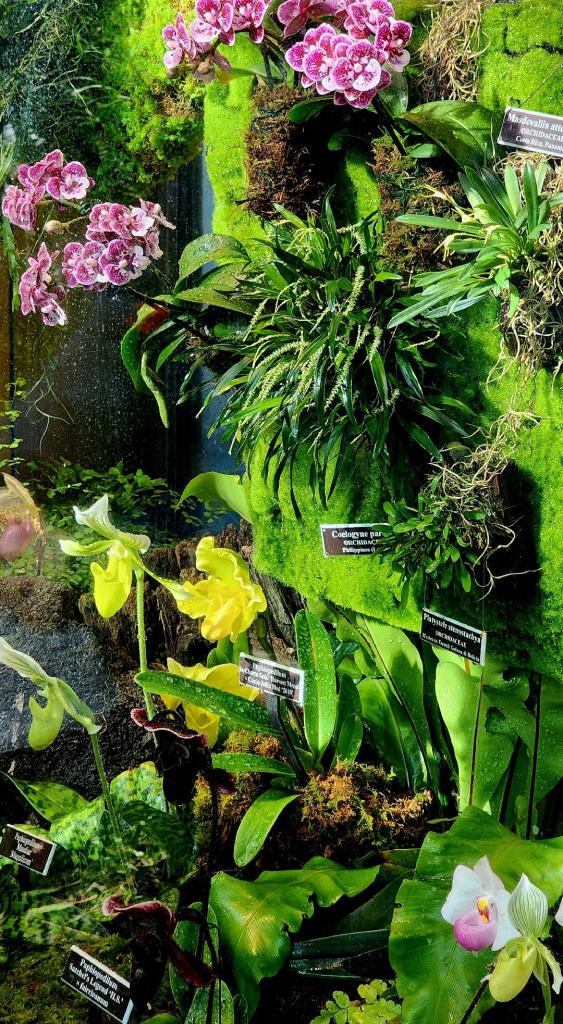
The orchid exhibit features rare orchids in the glass case just before you go into the rain forest gallery. Importantly, in color and variety, NYBG staff arranged thousands of orchids. Many from Mexico are featured on the Luis Barragán inspired yellow lattice fence designs that are perfect for growing the particular displays.
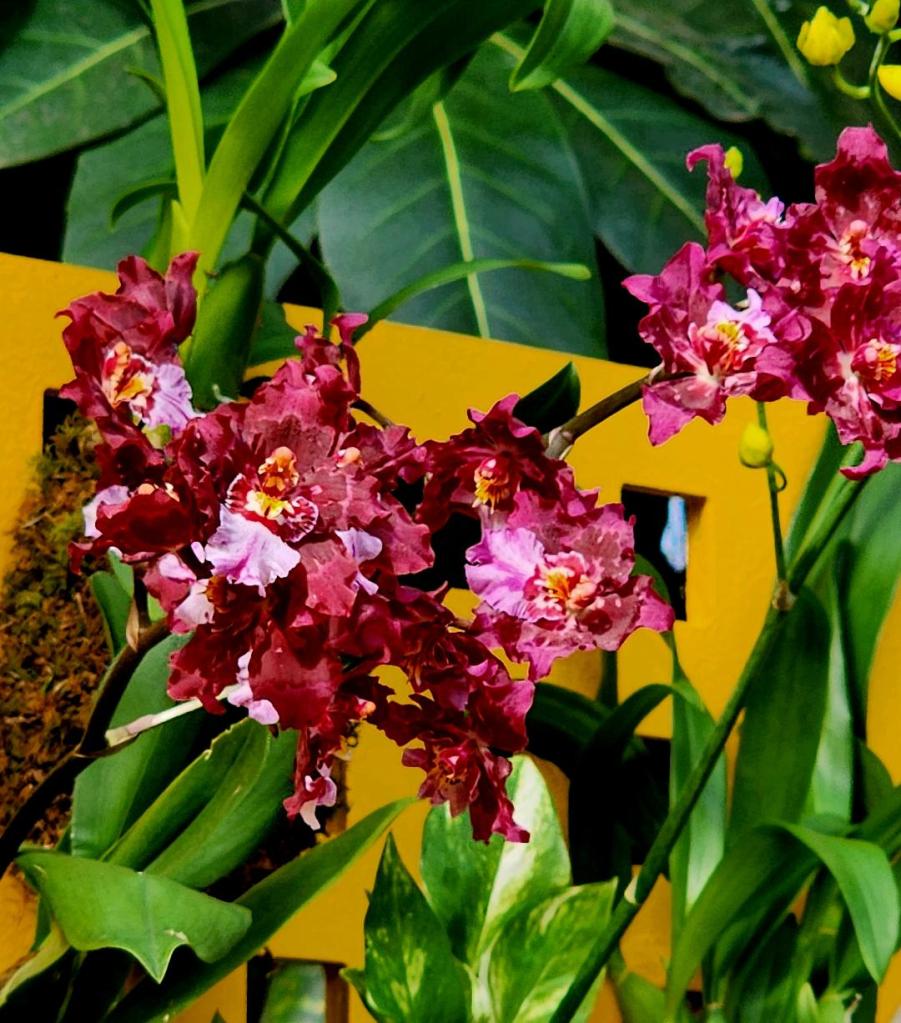
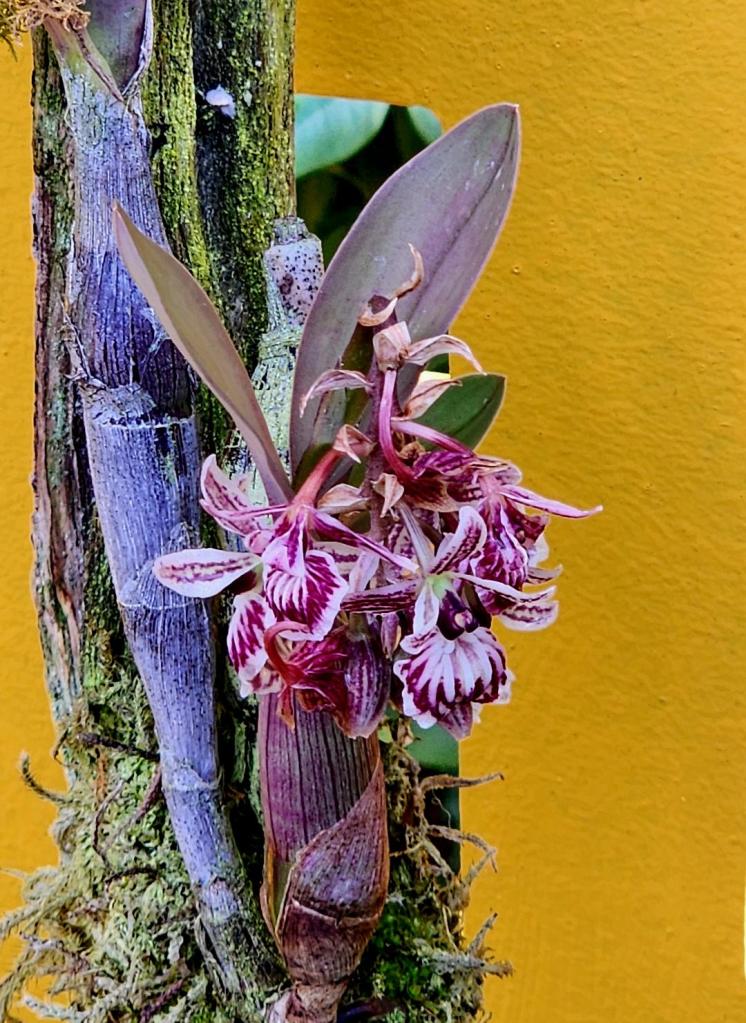
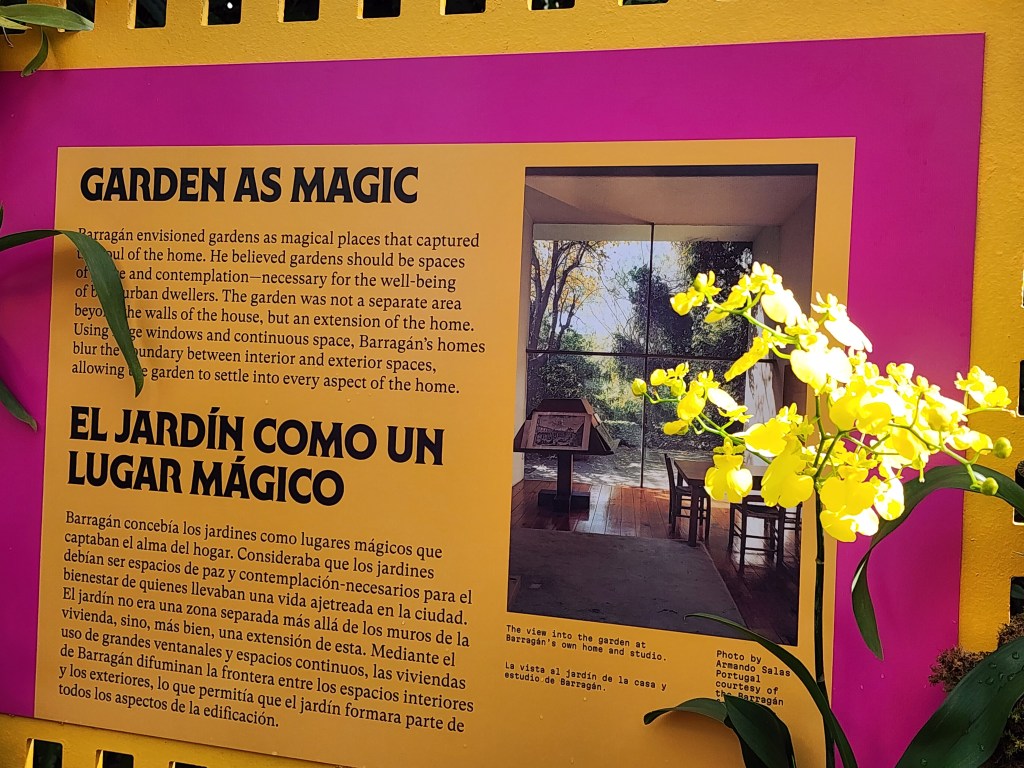
The exhibit is so utterly beautiful because it brings Luis Barragán’s renown, minimalist, architectural style to NYBG. According to those who elected to have Barragán as this year’s featured artist of the orchid show, Barragán was highly influential in defining Mexican modernist architecture. He adapted international trends using what was at hand in Mexico, suffusing Mexican culture and style with international ideas. His achitecture employed organic textures, vibrant cultural hues and native Mexican plants like cactus, agave and other succulents.
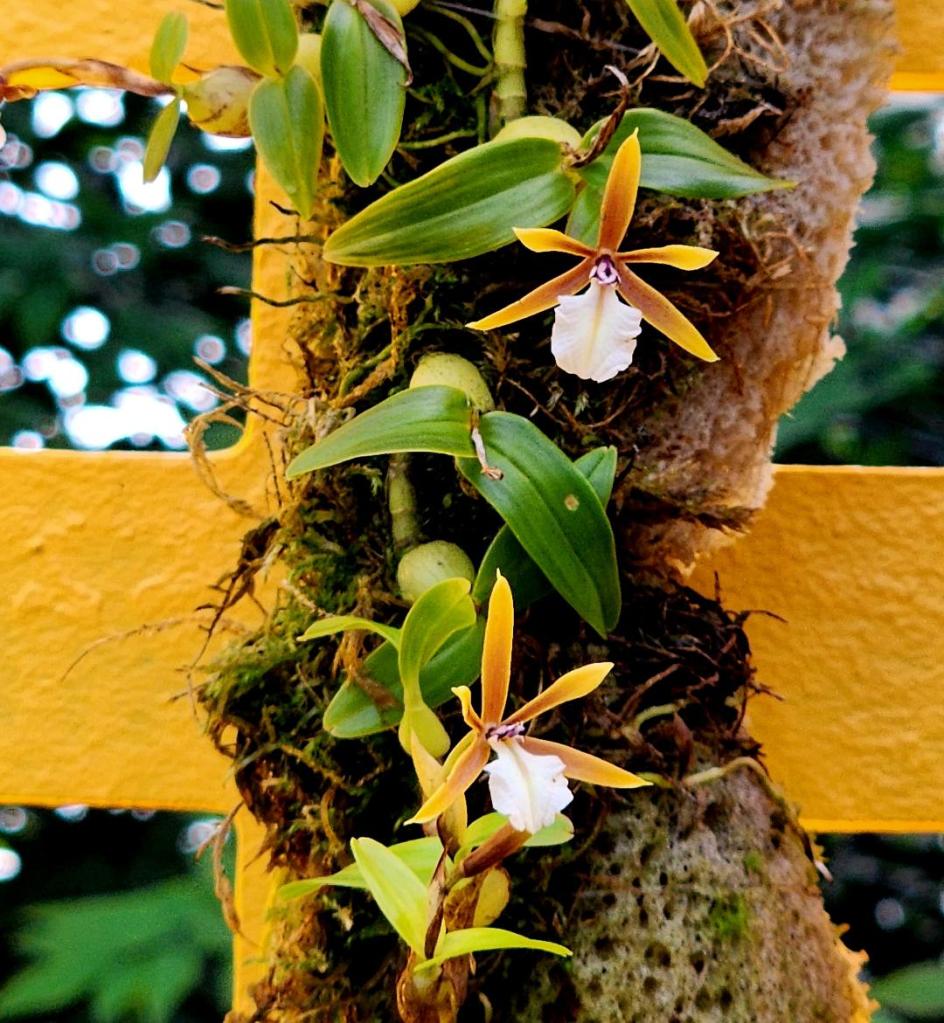
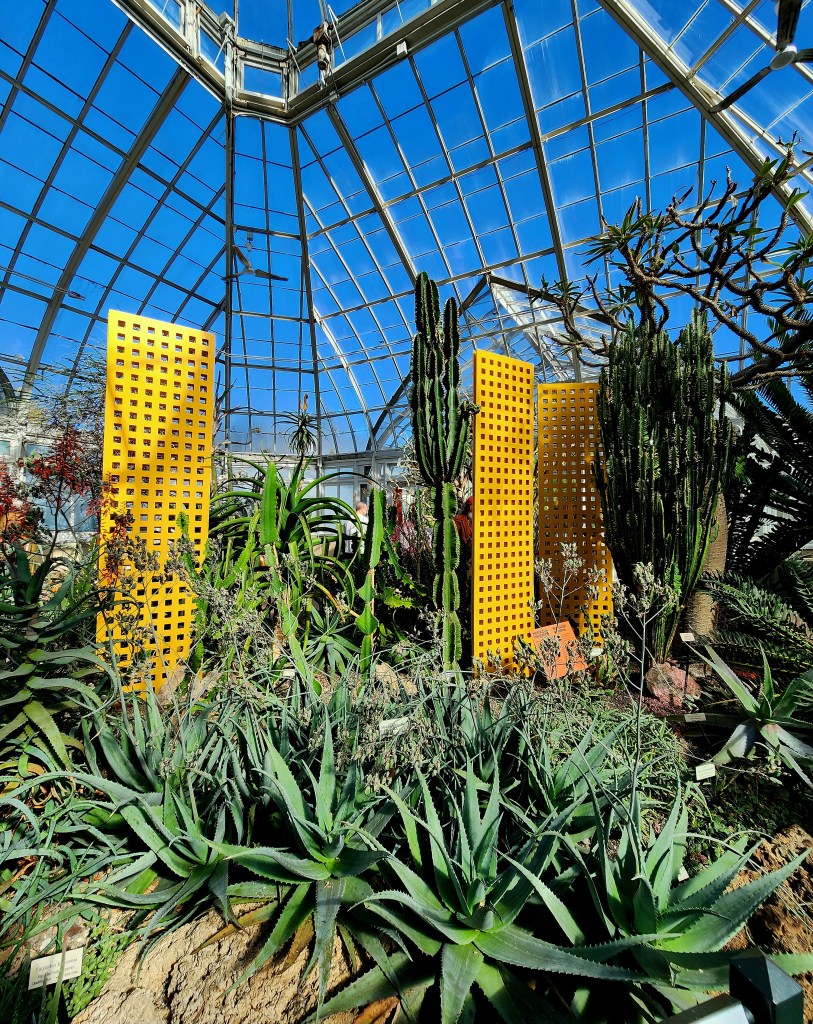
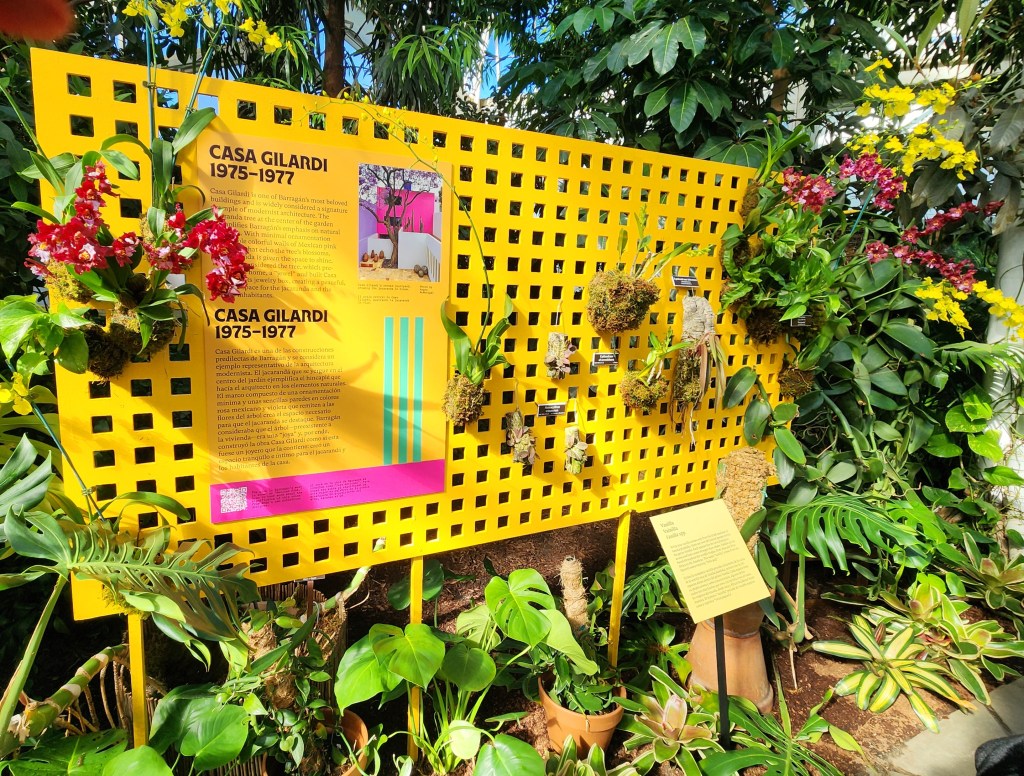
Look for the accompanying signage to understand how Luis Barragán’s designs meld with the unique orchids chosen for the yellow lattice fences (Carole Di Tosti)
In the rotunda, magic and contrast
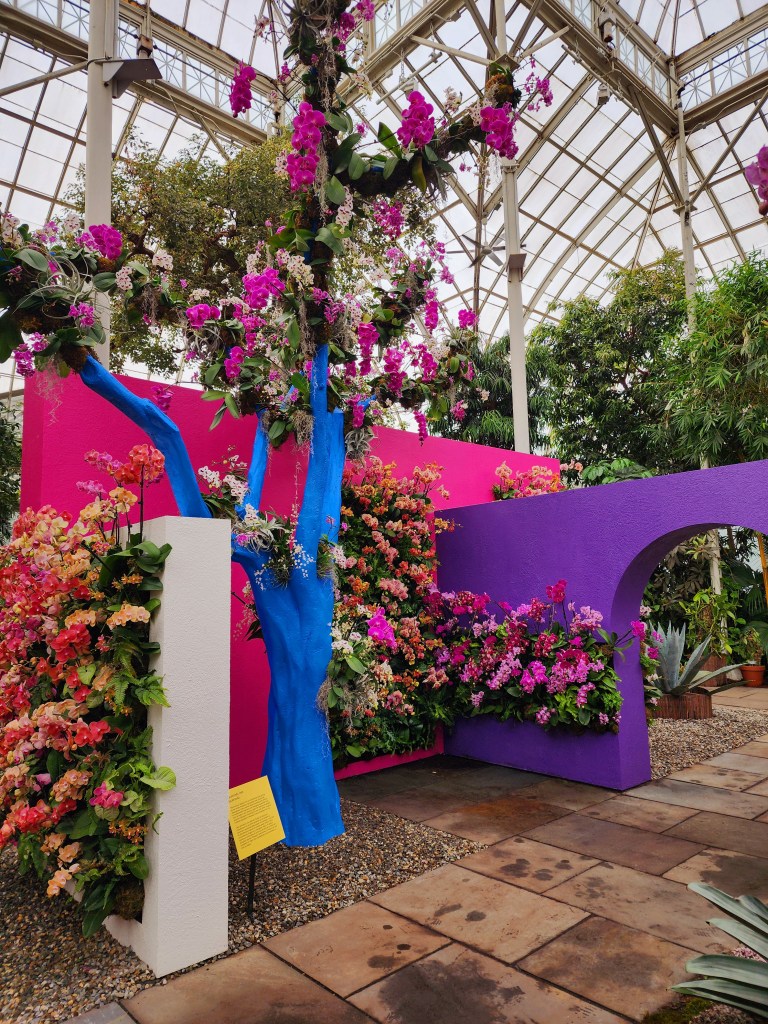
Barragán was able to master balancing contrasting elements: splashes of color pop against neutrals. Geometric shapes cast dramatic shadows across starkly hued vibrant walls. Clean lines emerge and strike against the circular shapes of lava rocks and prickly desert plants.

Check out the succulents which provide a curious and striking contrast to the exotic, luxuriant orchids attached to various walled structures, and lattice fences. The effect of the plantings encourages otherworldly, mesmerizing visuals.
It is vital to remember that Mexico has a wide range of ecosystems that contain 10-12 percent of the world’s botanical species and their accompanying animal species. Mexico is one of the largest biodiversity hotspots on Earth. Additionally, it includes more than 1,300 orchid species, about 40 percent of which are endemic. In other words, they are not found anywhere else on the planet.

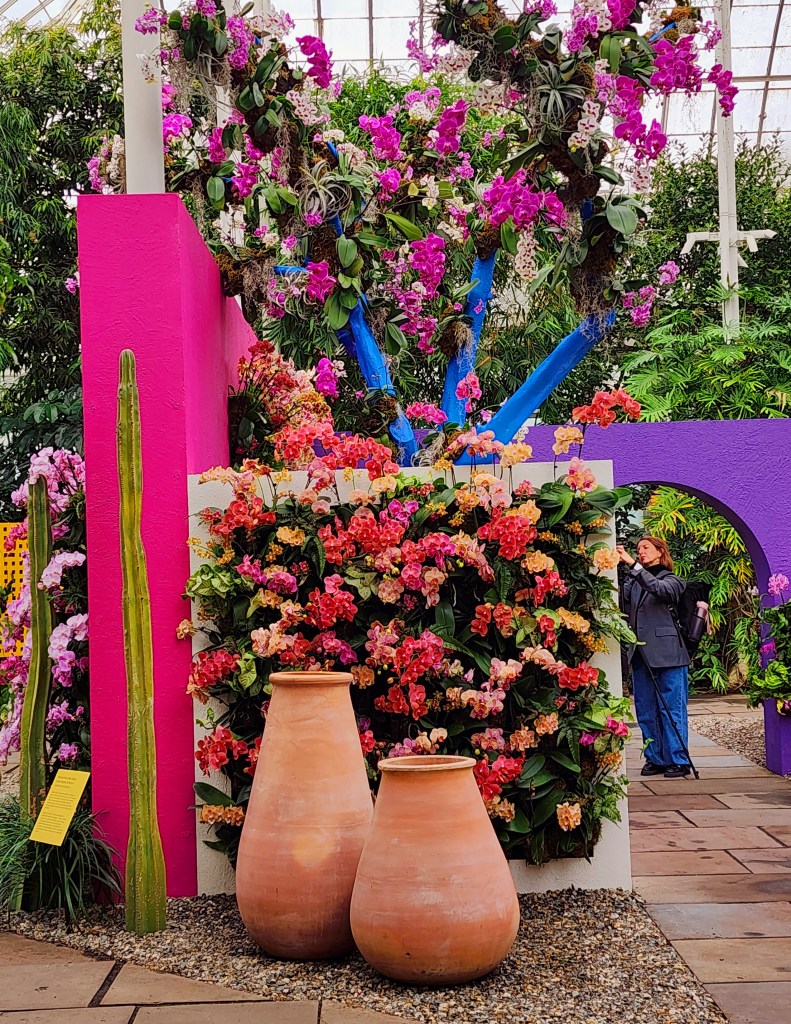

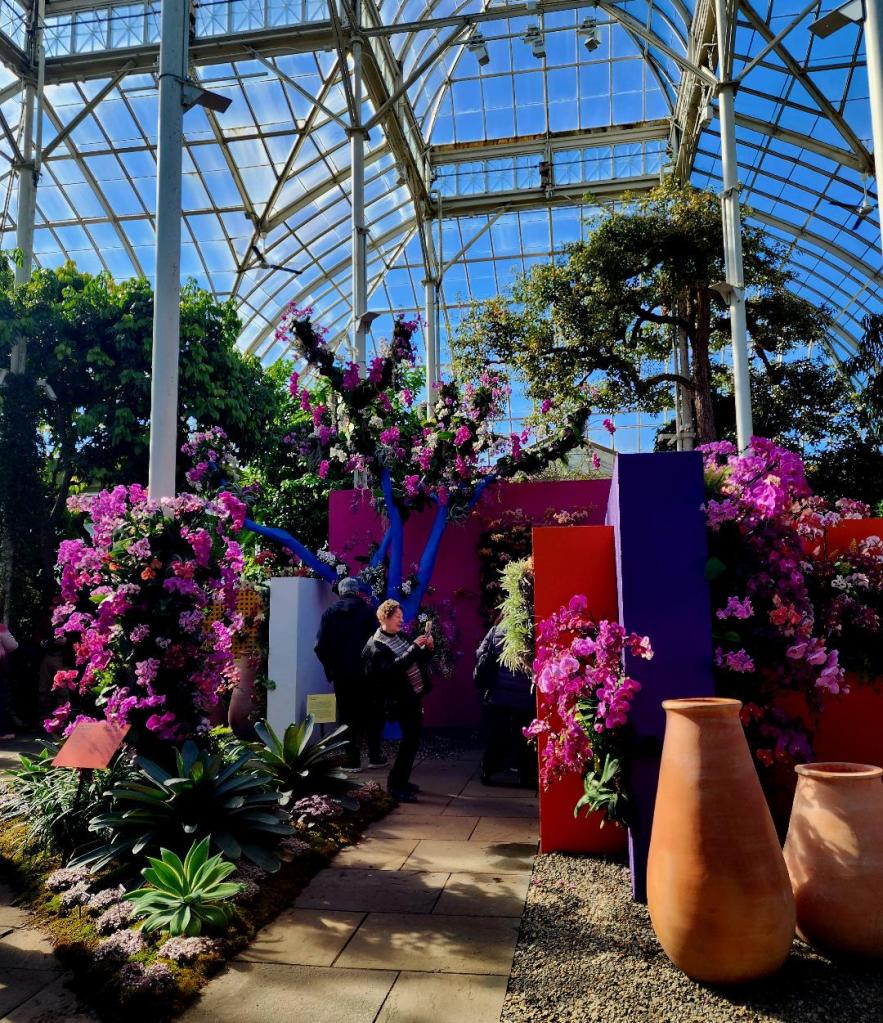
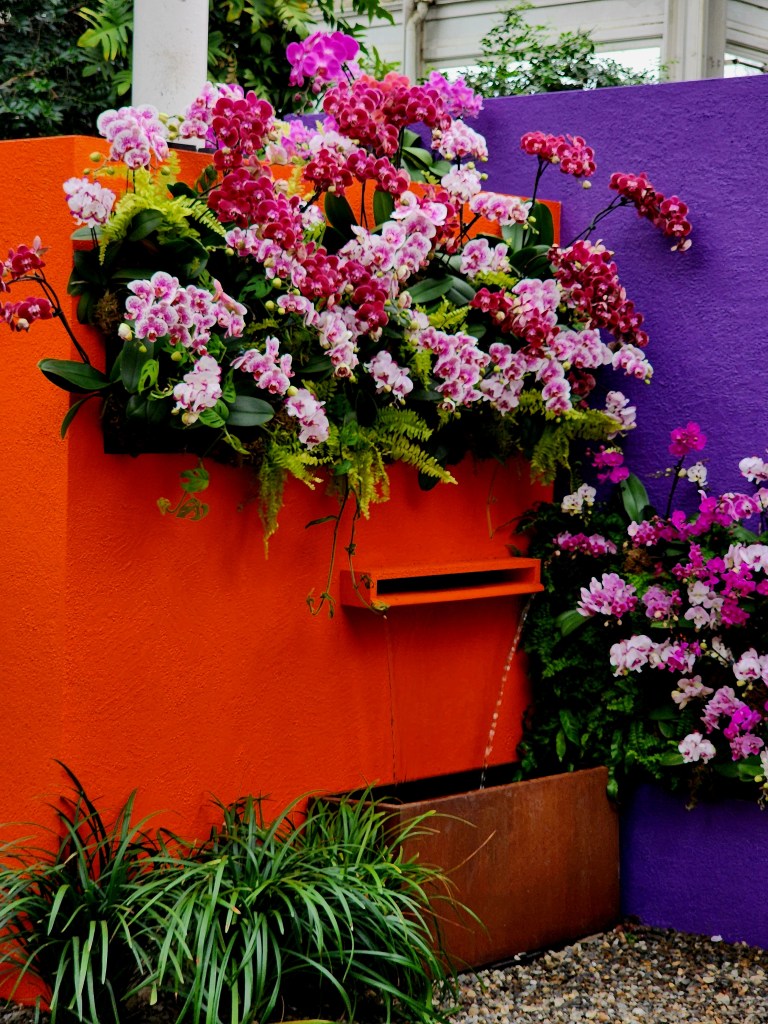
Walking through the galleries, note these native plants from Mexico and the surrounding plantings that feature the stunning orchids that are companion pieces to the walls and the fantasy blue tree in the rotunda. It is a multi-faceted display which is non pareil. Also, check out the water features which are reminiscent of the cooling fountains throughout Mexico City and smaller cities in Barragán’s beloved homeland.
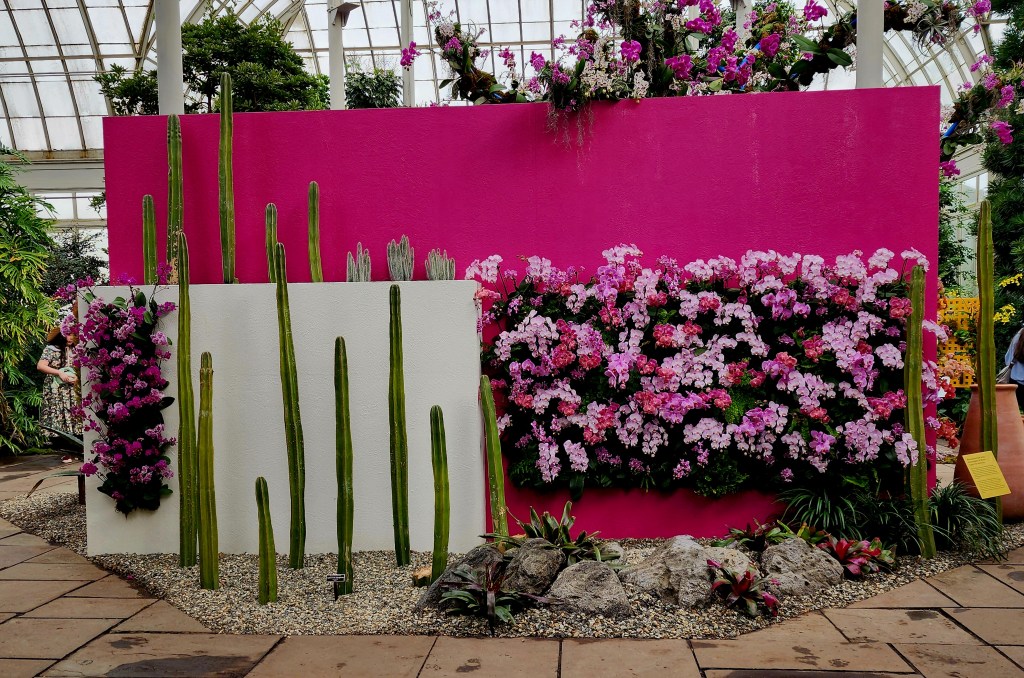

Numerous designs include a predominance of Moth orchids (phalaenopsis) in the large Barragán inspired structures. These are present especially in the Palms of the World Gallery, the rotunda and the walkway gallery, whose distance perspective is absolutely stunning.
The walkway gallery with stunning perspectives


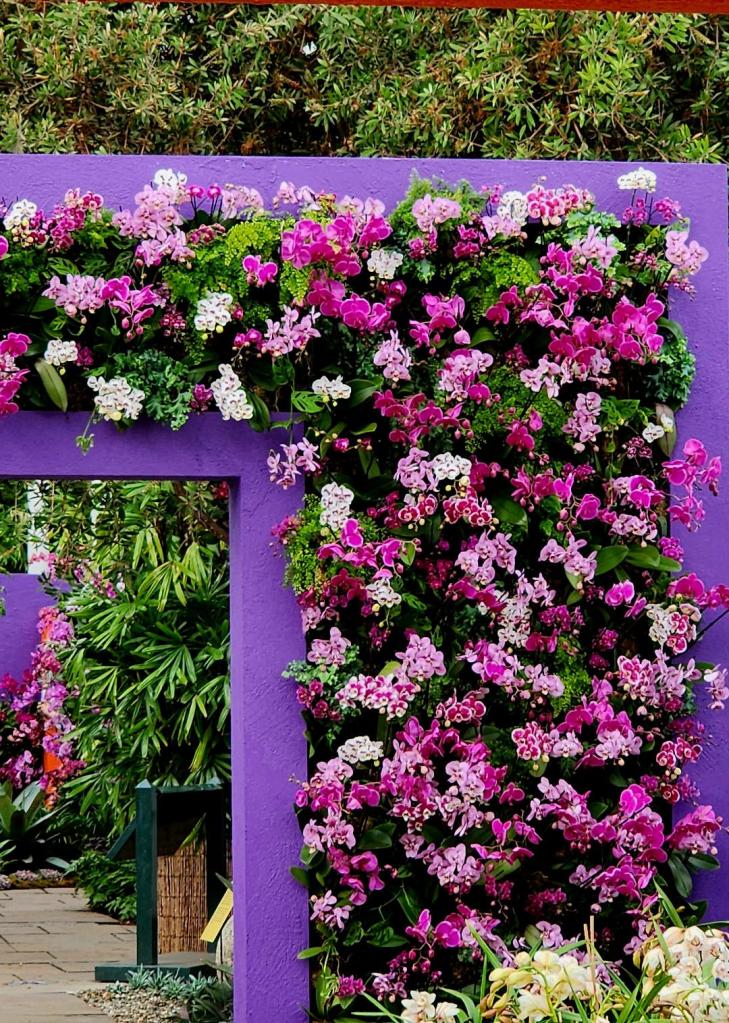


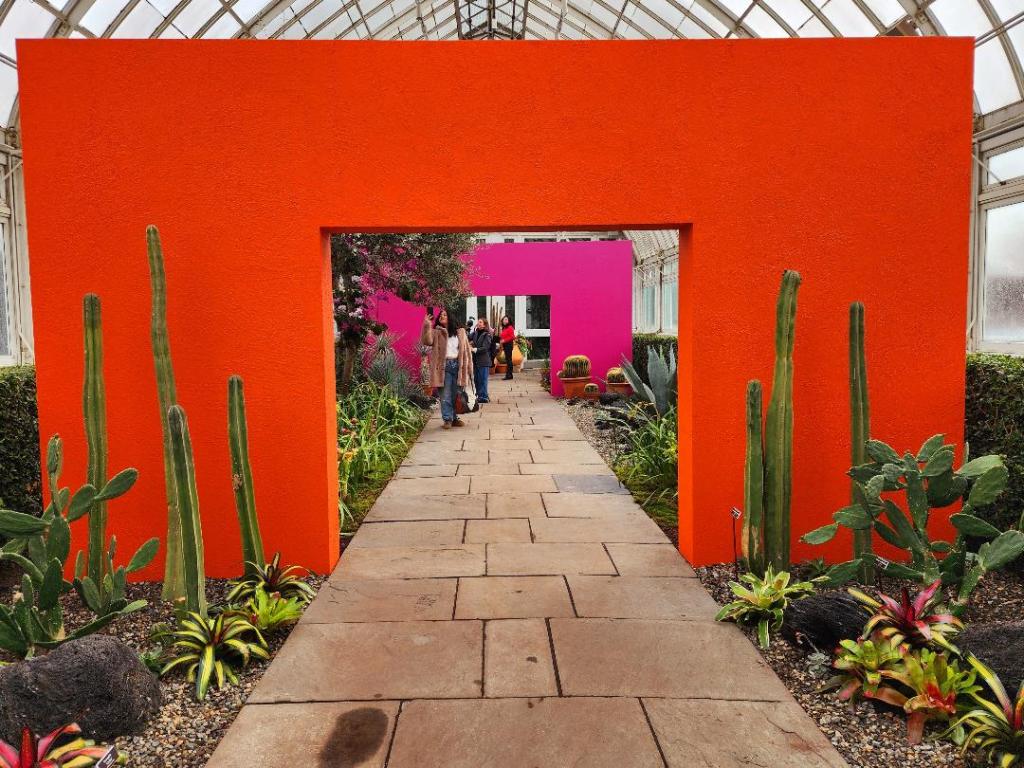

On your visit, make sure to stand with your back to the exit door of the Palms of the World Gallery and look toward the rotunda. As you look through the vistas of the diminishing rectangular walls of orchids, the combined effect will take your breath away.

One reason why you will see phalaenopsis in the large, spectacular displays is because they are hardier and last longer, looking vital and robust. Phalaenopsis maintain their blooms with proper care for more than a few weeks until they get dreary and droopy. NYBG staff continually replace orchids that have moved past their prime. Indeed, when I visited during the press preview, Marc Hachadourin was speaking with staff to insure that orchids and their plantings looked fresh and vibrant. He suggested that staff check places here and there which needed some attention.
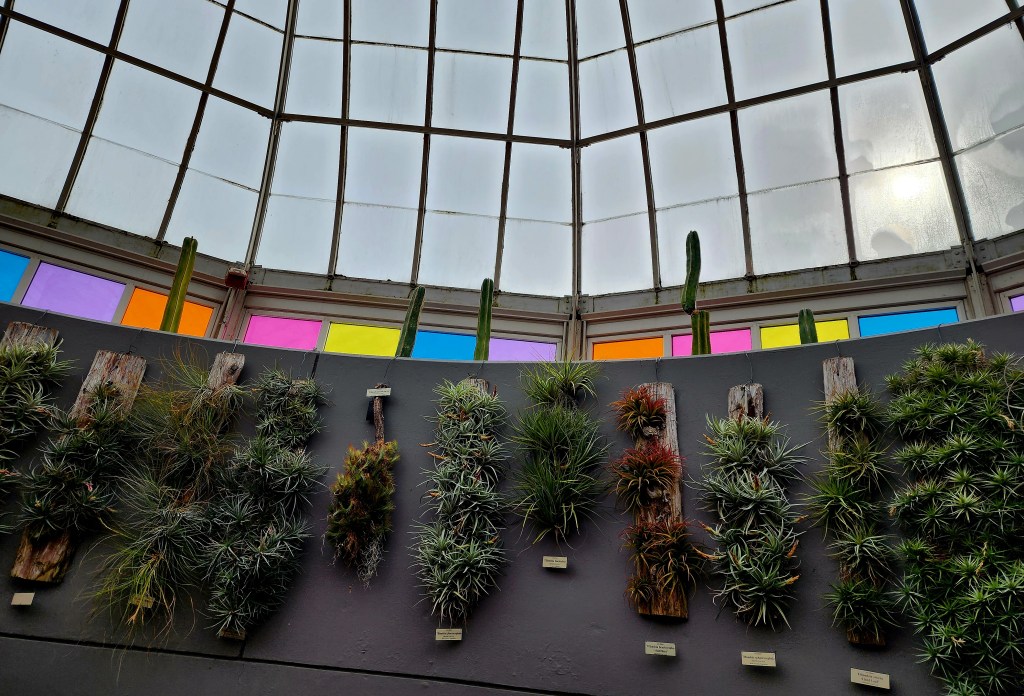
The 22nd orchid show, as previous shows have done, showcases diverse ecosystems where orchids make their home. Even in the desert gallery with the cacti and succulents featured in this show because of their relationship to Mexican environs, you will see that NYBG has an orchid that lives in the dry terrain of the desert. However, that orchid may not be blooming for you to see during this time in the season.


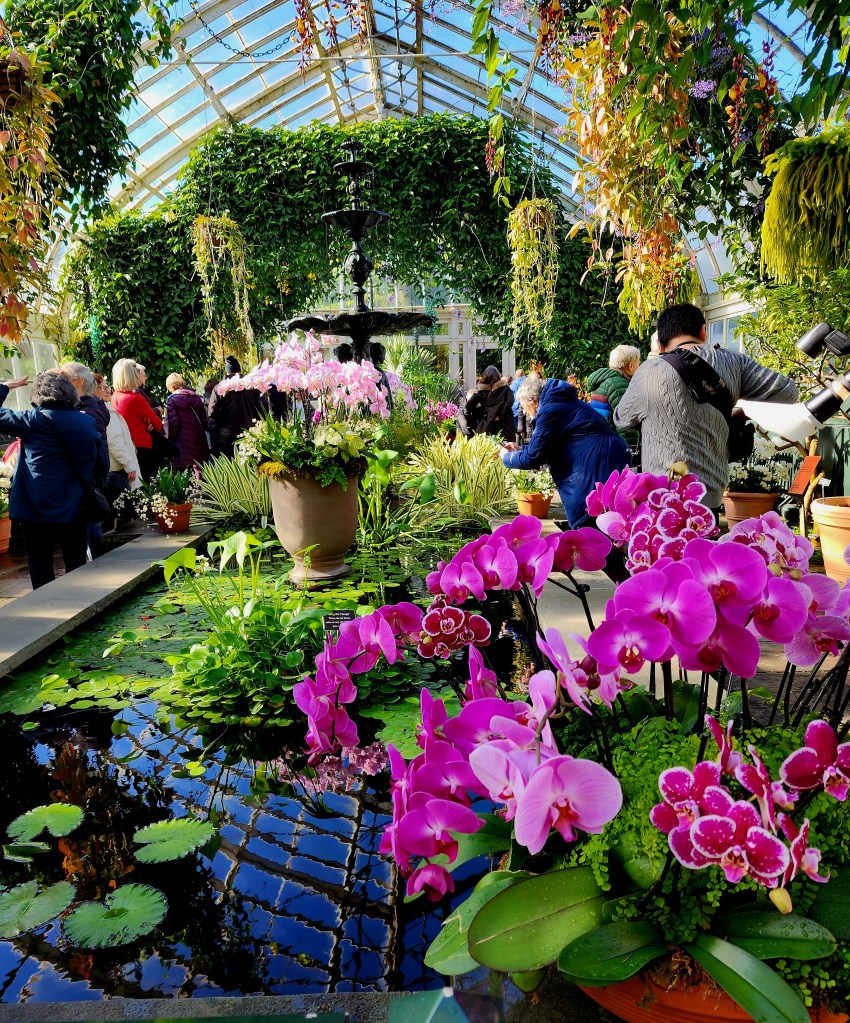
In one of the galleries where there were benches, I noted that visitors on Members Day crowded to sit and take in the glorious sights. They so enjoyed the serene and peaceful setting of the dazzling orchids, hanging vines, fountain splashing water and tropical beauty that created a magical world. They were loathe to leave and move on to the other galleries. As happens with the annual orchid show, members made sure to take their time to appreciate the exotic, ethereal orchid wonders.
ORCHID NIGHTS
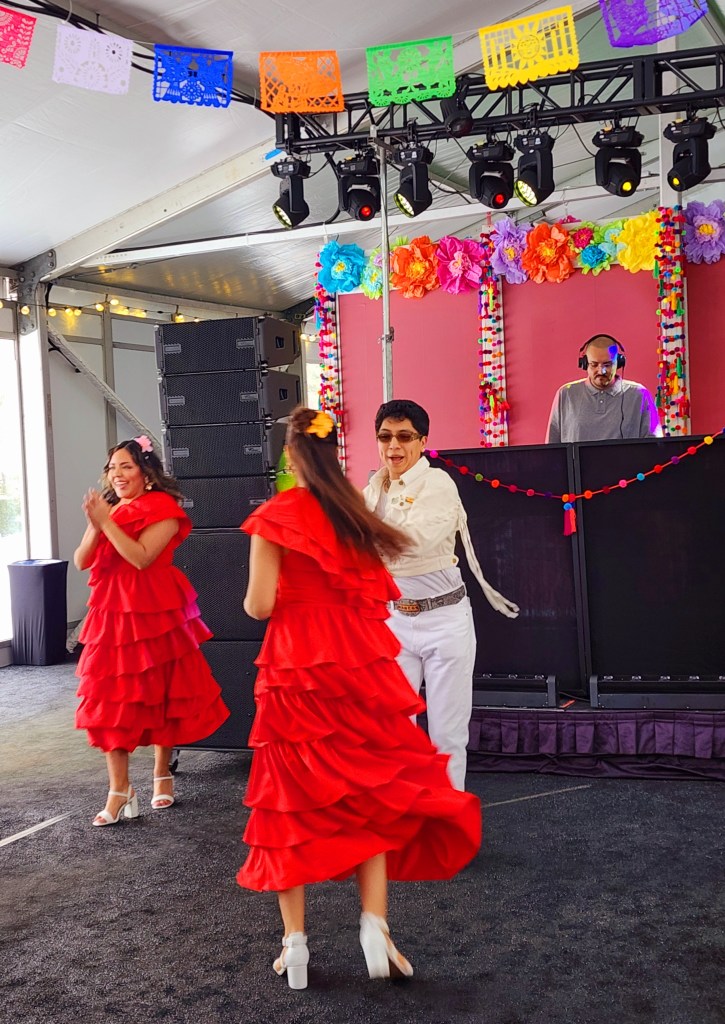
This magic can be experienced all throughout the exhibition various days and night and in different venues in a marvelous celebration of Mexico’s extensive botanical history. For example, on select evenings, Orchid Nights bring the happy beats of cumbia music, with cumbia sonidea dance parties led by a DJ and professional dancers.
Come to experience the party atmosphere of traditional tracks and modern influences that create an immersive dance experience. DJ hellotones, “El Hijo de PueblaYork,”is Bronx-born and at the forefront of a cultural renaissance that uplifts the Mexican diaspora in New York City.
Uplifted is the cumbia genre. Mark Saldana, a.k.a. Coolmarx, born and raised in Queens and based in Brooklyn, embraces variations of cumbia in his community-based dance lessons. These include cumbia colombiana, ecuatoriana, peruana, and mexicana.
Orchid Nights feature music and dancing, cash bars and food (lite bites) for purchase for adults 21 and over. Experience the energy and exuberance carried from the exhibit to the appreciation of all things Mexican. Select evenings are February 22; March 8, 25, 22 and 29; April 5, 12, 18, 19, 25, 26.
Photography Exhibit by Mexican-American Visual Artist Martirene Alcantara.
Check out the LuEsther T. Mertz Library to see how the artist captures the essence of Luis Barragán’s vibrantly colorful and geometrical works.
For additional programming go to https://www.nybg.org/event/the-orchid-show-mexican-modernism/
‘New York Botanical Garden Holiday Train Show’
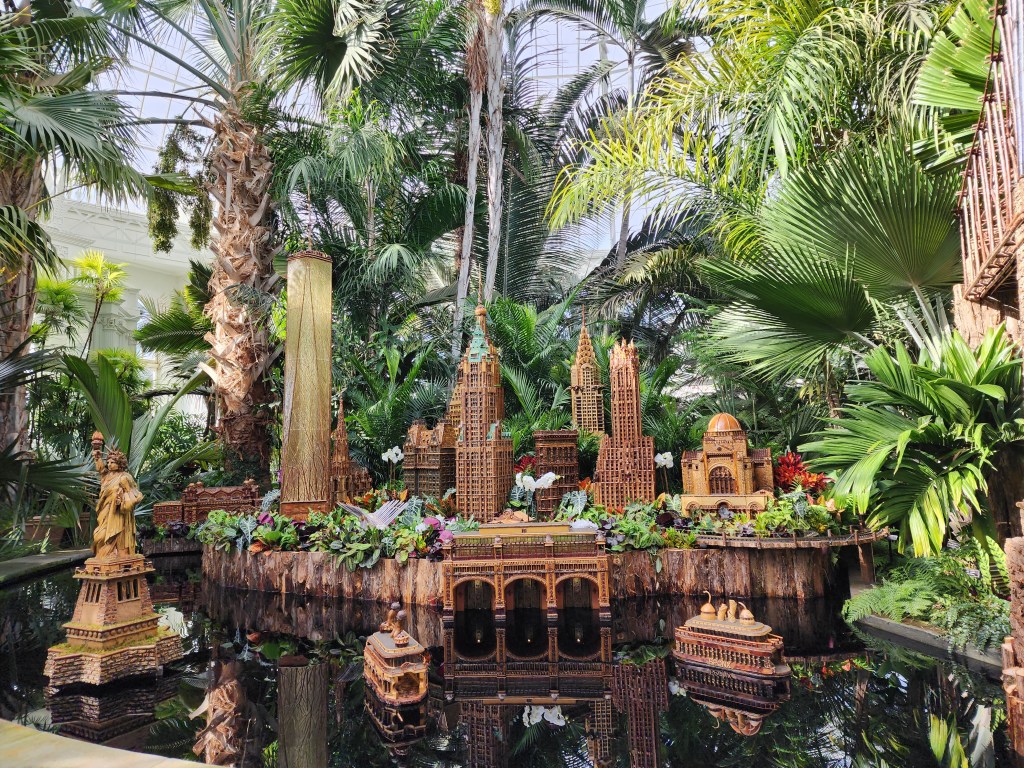


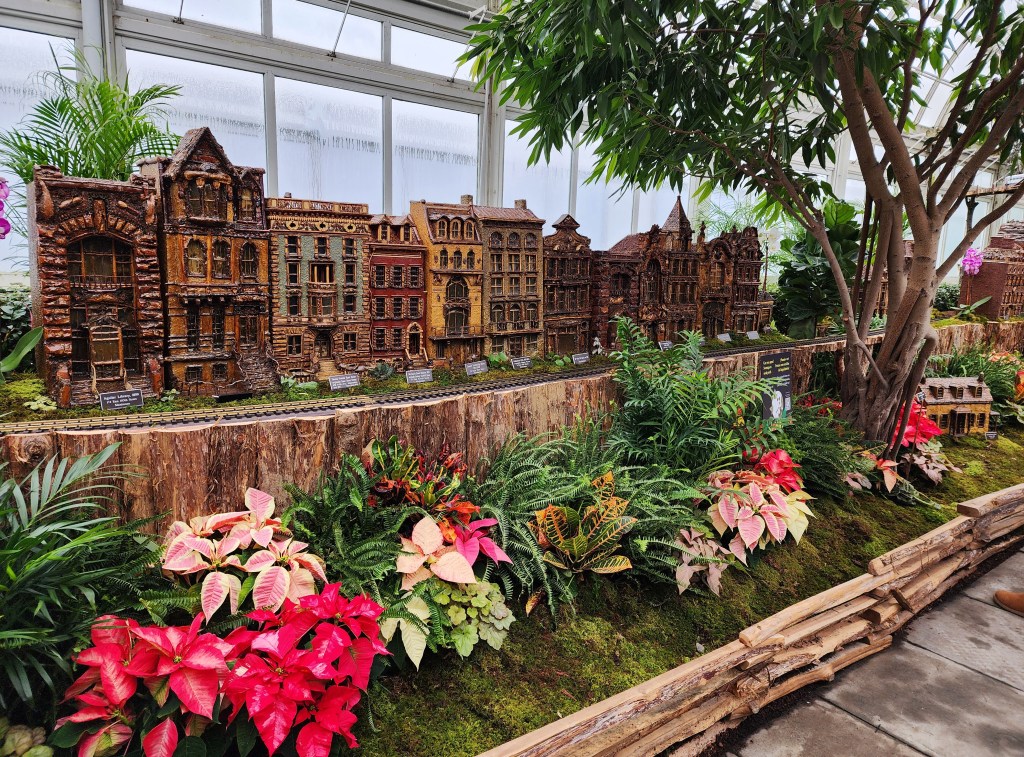
The NYBG Holiday Train Show has begun. And what a magnificent, vibrant show it is.

Now in its 32nd year the show reflects its beginnings.
In 1992, landscape architect and model train enthusiast Paul Busse of Applied Imagination came to the Garden’s Enid A. Haupt Conservatory to express his unique vision for a special exhibition during the winter holidays.

He created The Holiday Garden Railway Exhibit. The following year the “Railway Exhibit” blossomed outdoors in the Garden landscape featuring bridges and a viaduct situated near the LuEsther T. Mertz Library.


This year’s 2023 Holiday Train Show returns to Busse’s outdoor landscape design. However, it is more expansive with a clever theme for it’s outdoor exhibit. The addition is an all-new enchanted woodland train display, replete with forest animals, winter-interest plants and fantastical fungi set on the Haupt Conservatory Lawn.

Don’t underestimate the outdoor display or move too quickly to appreciate that all the elements are plant/botanically based.

The large mushrooms that look like they are out of a Disney cartoon, that kids will appreciate, are recreations, not of ceramics, but they are made of wood, intricately shaped and detailed.
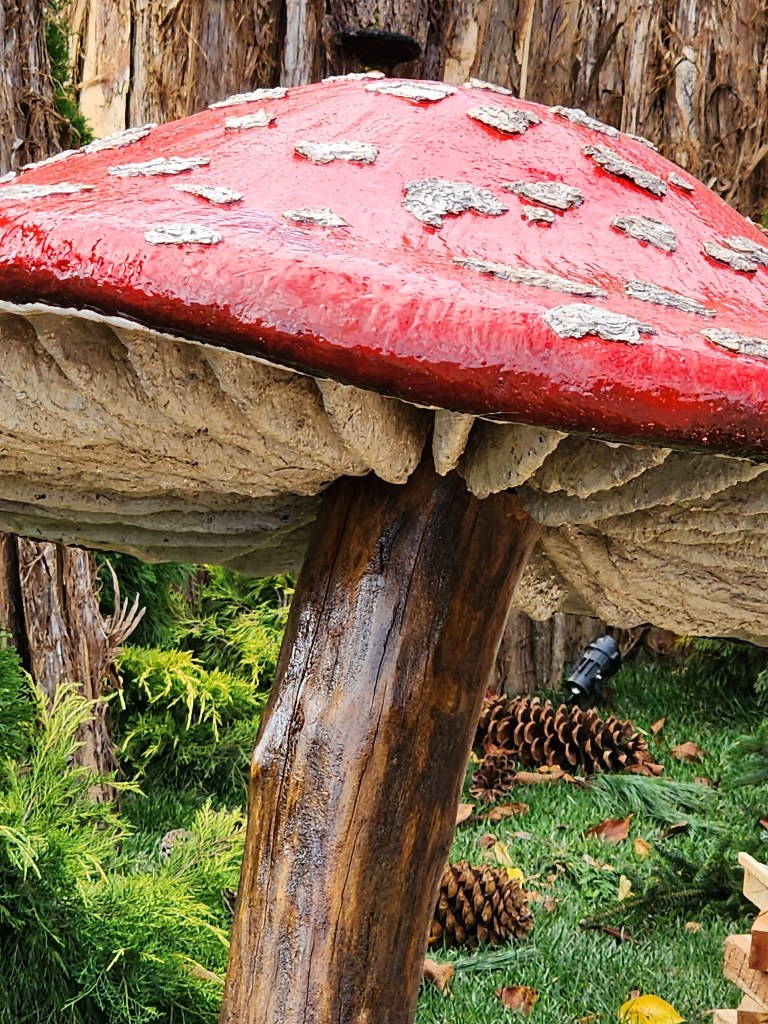
Applied Imagination’s creativity and attention to detail is bar none.

The imagination of the craftspeople at Applied Imagination to recreate their counterparts in nature is astounding. It inspires us in so many directions, conservation, environmental use and protection and appreciation of nature’s wonders. All of these values conjoin with the Garden’s efforts toward the natural world and conservation of plants especially exotic species globally.

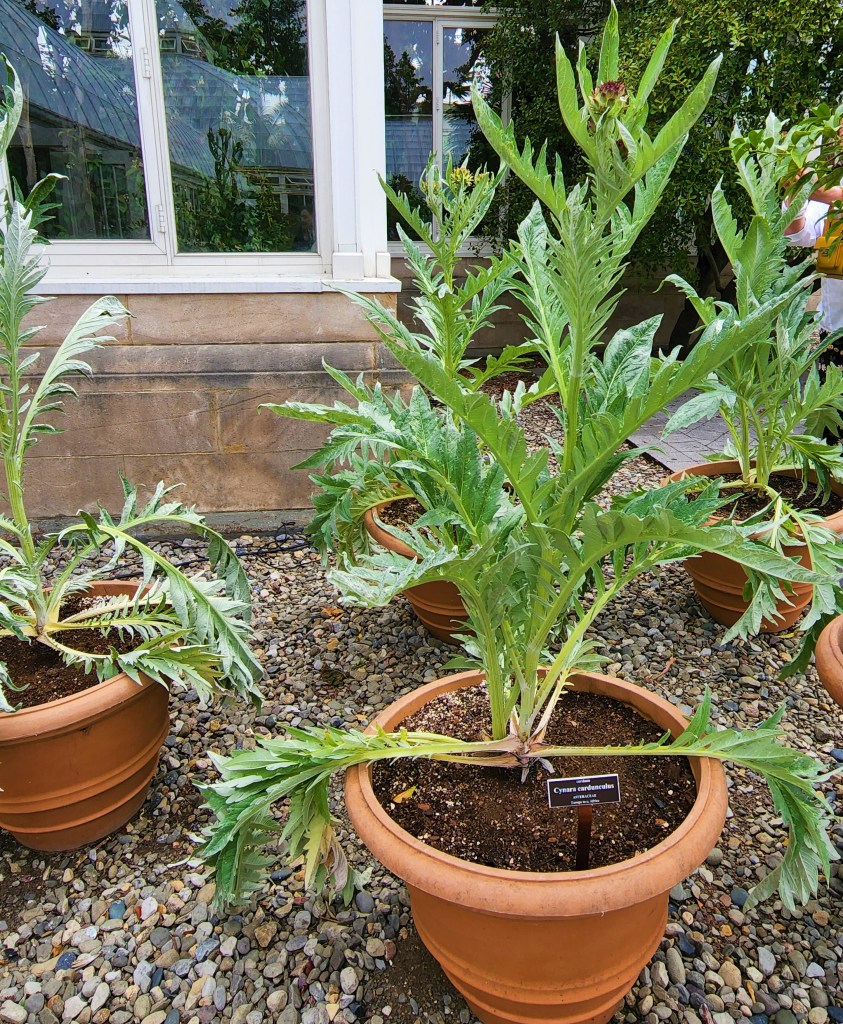
Likewise, the woodland animals are botanical creations. For example, the owl which you might miss if you don’t look overhead (it had to be pointed out to me) is predominately made of artichokes.
The lovely flowers that adorn the top arches are made of gourds. And the shelf mushrooms attached to the bridges and fences are themselves.

Look at the vines, coated in plant based resins to give them the glossy finishing touches that look like they are metal or iron. The butterfly creation that looks like it might be featured in any high-end store for home decorations is totally plant based.
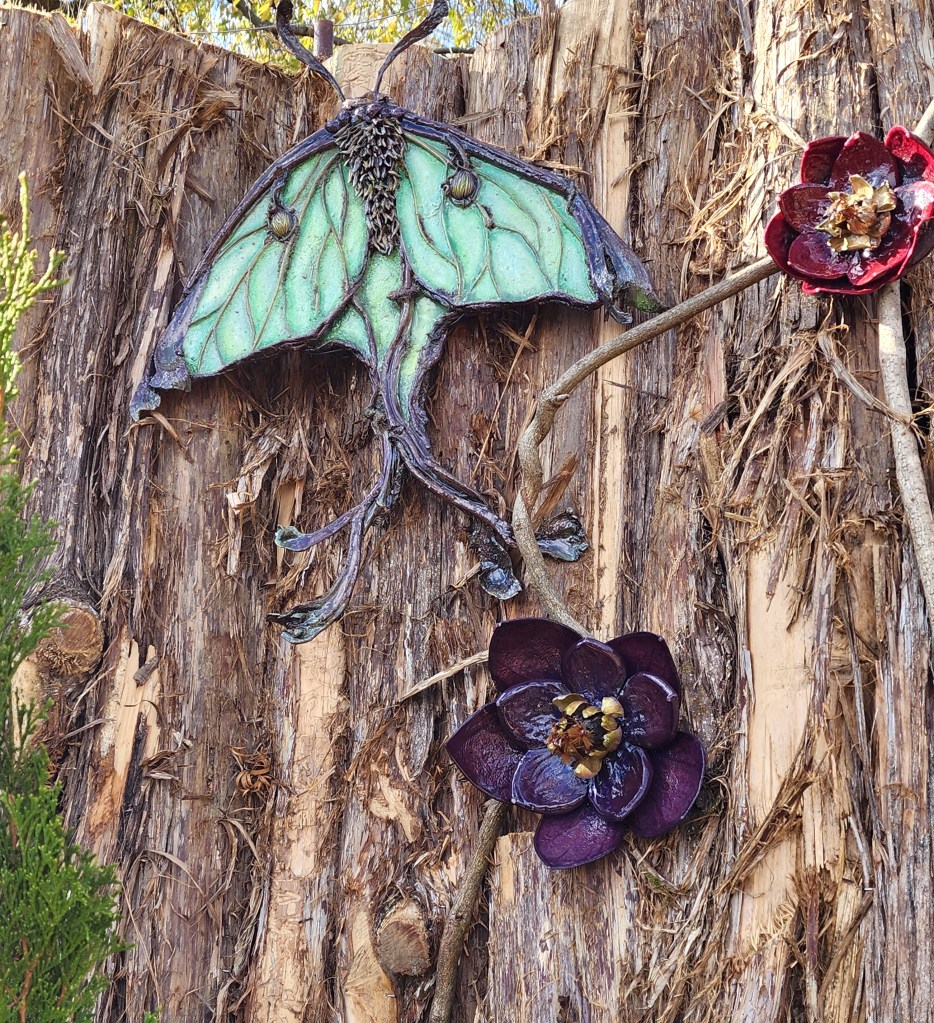
That glossy look on the wings is achieved by the same resin that is used on the windows of the miniature of the Enid A. Haupt Conservatory inside, in the rotunda with other structures of the Garden like the LuEsther T. Mertz Library.

The Conservatory miniature is a gloriously detailed structure that took over 1000 people hours to put together. Of course, the visible structure is made of reeds. Interestingly, the cupola rests on “a ring of large pine cone scales.” For the piece de resistance at the very top, artists used seedpods: one mahogany and one lotus. If you didn’t know what these seed pods looked like in their natural habitat, you wouldn’t be able to distinguish their botanical ancestry from plastic. However, the last thing that Applied Imagination would ever employ in its presentations is plastic. Busse and the entire staff support the environment and the wonders of how nature is reflected in design structures.

The outdoor expansion combines with the the New York City and upstate New York miniatures that sprawl indoors throughout the conservatory’s galleries that have been enjoyed in previous years. However, the Garden staff and staff at Applied Imagination make sure that the displays are differently arranged.
Walking through as I have done each year, I try to remember which sections of the city appear in the Palms of the World Gallery or the Centerpiece Rotunda, and I am often at a loss. The show is botanical theater and as such changes from moment to moment, from year to year. Each year, it seems more spectacular than the next. And neither still photographs nor videos do justice to reveal the wonder of exuberant plant life whether in the daytime or the magical and mysterious nighttime of the conservatory.
Like live theater which is akin to an interactive spiritual experience, the NYBG’s botanical theater feels different through the run of the show. To keep the exhibit shining, plants are swapped out. Others are added and the effect is continually one of shifting, lush tropical splendor. This year’s exhibit is a pantheon of color. Wherever you turn there are dazzling orchids, poinsettias, cyclamen and variegated plants, begonias, ferns and the permanent plantings some of which are flowering trees. It is too beautiful to miss.
PROGRAMMING
On 17 Select Nights, Holiday Train Show Visitors of all ages can enjoy NYBG GLOW, the OUTDOOR LIGHT EXPERIENCE. It is returning for its fourth year. NYBG GLOW will take place from 5 to 10 p.m. on the following dates: friday, December 8; Saturday, December 9; Friday, December 15; Saturday, December 16; Sunday, December 17, Friday, December 22, Saturday, December 23; Tuesday December 26; Wednesday, December 27; Thursday, December 28; Friday, December 29; Saturday, December 30, 2023; Saturday, January 6; and Saturday, January 13, 2024.
FAN-FAVORITE BAR CAR NIGHTS, FOR ADULTS AGE 21 AND OVER, WILL ALSO MAKE A COMEBACK THIS SEASON ON THREE SELECT DATES. These are Thursdays, December 7 and December 14, 2023, and Friday, January 5,202 4. Bar Car Nights feature adults-only nighttime viewing of the Holiday Train Show and NYBG GLOW, with light bites and curated beverages available for purchase as visitors journey through the exhibition with friends and loved ones.
For more information, go to the NYBG website. https://www.nybg.org/event/holiday-train-show/
New York Botanical Garden, ‘The Orchid Show: Natural Heritage’


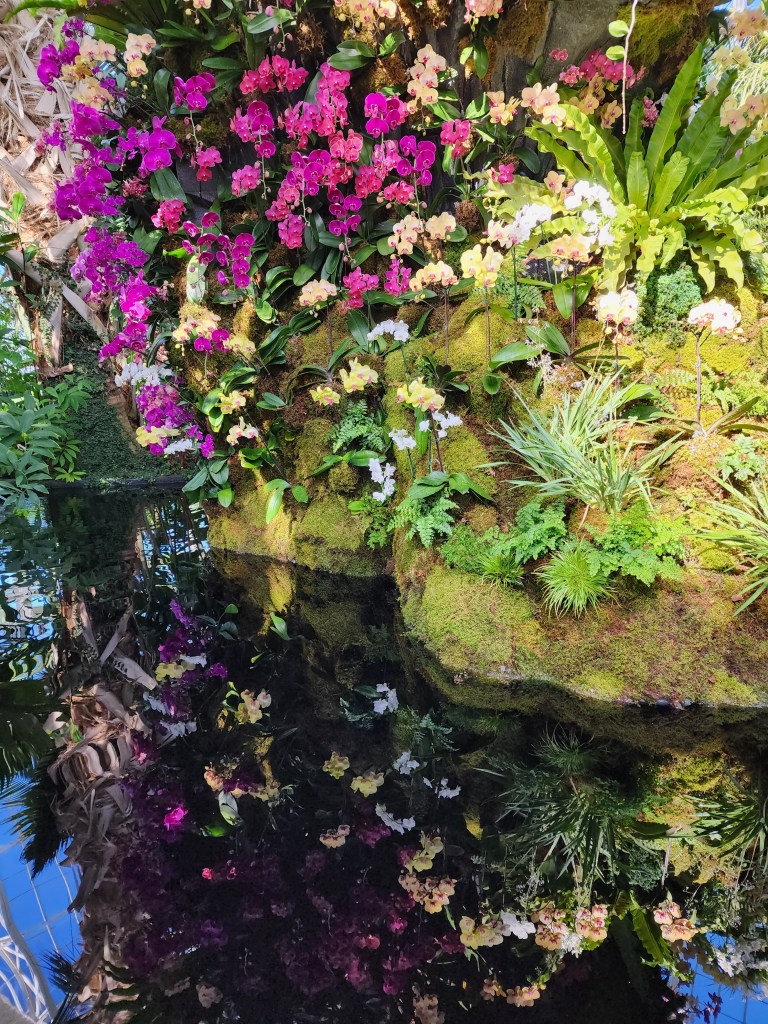
Now in its 20th year and back in full swing after the COVID 19 pandemic, NYBG is bringing an exceptional presentation for this year’s Orchid Show entitled The Orchid Show: Natural Heritage.

For the 20th annual orchid extravaganza, landscape Artist Lily Kwong exhibits her immersive and dynamic designs. Throughout the exhibit Lily Kwong highlights her Chinese heritage by exploring the physical and psychic healing power of orchids. The exhibit is running from February 18 through April 23, 2023 in the NYBG Enid A. Haupt Conservatory.

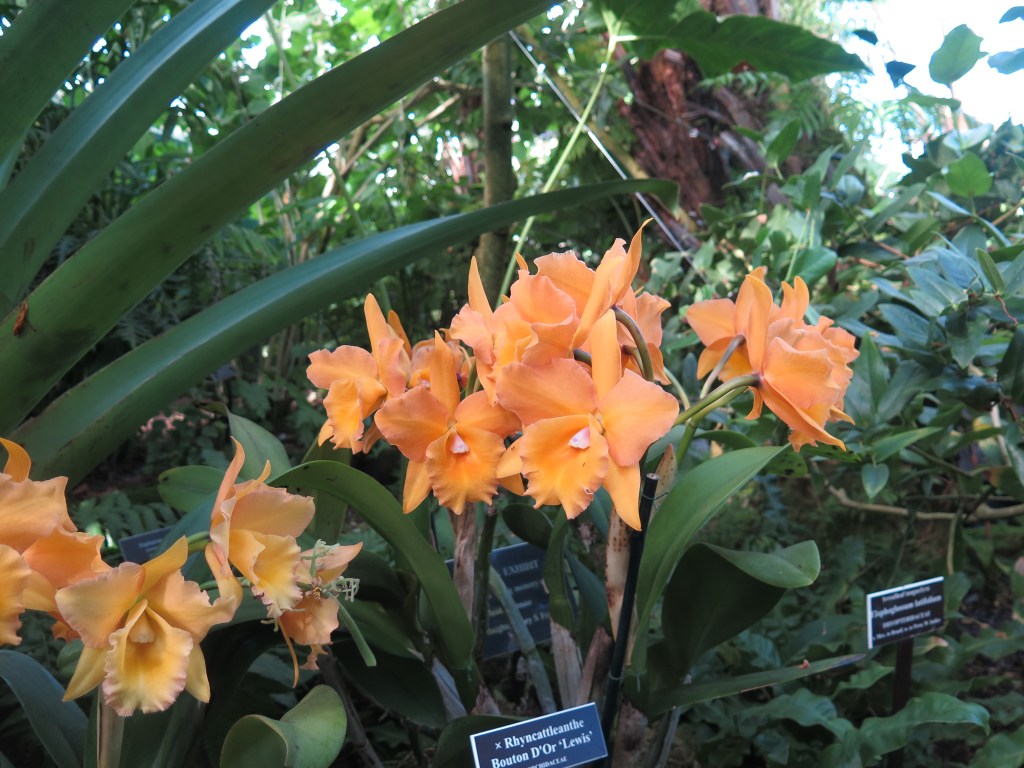

Guest designer Kwong is featuring beguiling installations of thousands of orchids in the hope of recapturing our ancestral veneration of the land which previous generations often worked to produce food, environmental beauty and health. Lily Kwong’s designs touch the imagination and spirit with ethereal, peaceful landscapes inspired by ancient Chinese garden design and artistic principles and philosophical perspectives.

Understanding the diversity, adaptability and global cultural significance of orchids, Ms. Kwong was inspired to fashion spaces throughout the Garden based on classic paintings of Chinese mountainscapes. The Palms of the World and Reflecting Pool Gallery in the main entrance of the Enid A. Haupt Conservatory and the showcase theater gallery in the interior of the conservatory feature such mountainscapes festooned with orchids and other plantings.

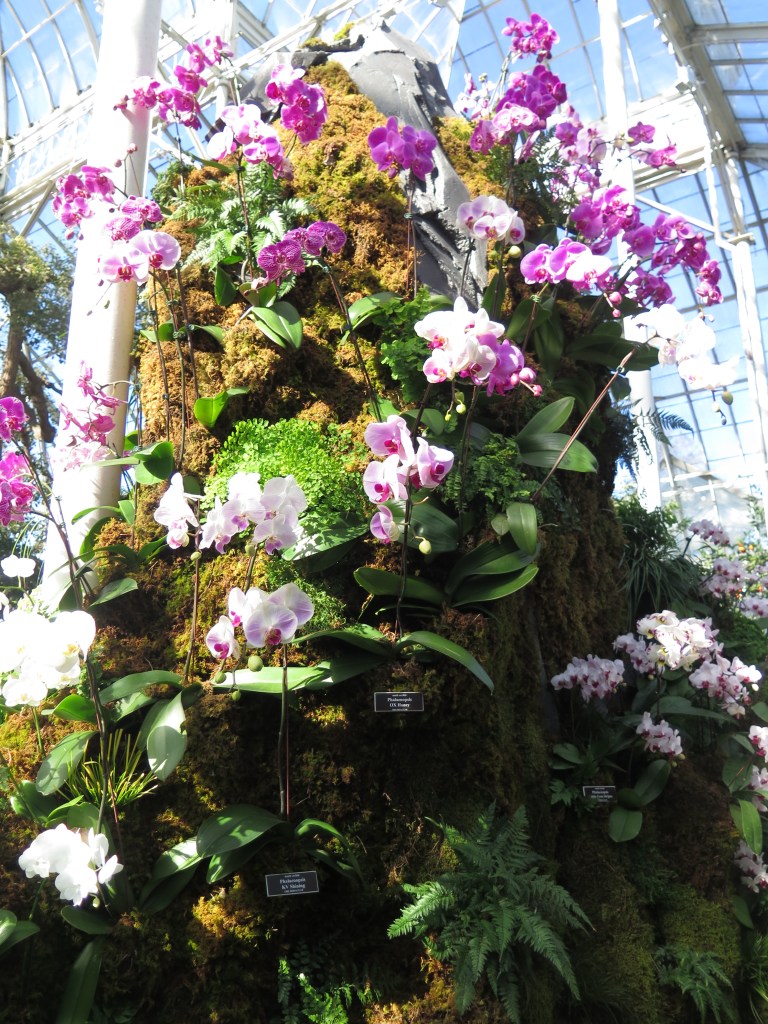
The paintings that influenced Lily Kwong were passed down through her family from Shanghai. The effects created with stones, water features and companion plantings throughout the conservatory display all the variety of orchids imaginable including iconic and popular moth orchids as well as rare specimens.

The mountainscape designs meld ecology, culture, myth and spiritual solace that was present in Kwong’s heritage. The orchids also are representative in Chinese medicinal traditions and are used extensively for herbal teas and remedies. Kwong’s belief and interpretations of nature in the designs reinforce nature’s healing powers and encourage visitors to understand how the natural environment is crucial to our well being and soul’s equilibrium.
Kwong collaborated with NYBG horticulturalists and Exhibitions staff to identify and assemble a gorgeous selection of orchids that are native to Asian countries. The displays are visually dramatic and striking. Also, they are emotionally evocative, inspiring visitors toward inner reflection and serenity in a remembrance that nature’s rhythms and harmonies impact our own survival on this planet.

Kwong is the first woman of color to take on the role of NYBG guest designer of the Orchid Show. She felt an urgency to “celebrate an Asian-centered perspective in the midst of this charged and precarious moment.” Her intention with the entire exhibit is to “offer a bridge of cultural understanding across the valley between us, and act as an invitation to celebrate the diverse lineages that make up our country.”

Kwong’s vision for the exhibit dovetails with the NYBG’s mission. Jennifer Bernstein, Chief Executive Officer and The William C. Steere Sr. President of The New York Botanical Garden stated, “One of our major goals here at this beloved green space in the Bronx is to inspire visitors and learners of all ages to appreciate, respect and care for nature.”
It is no surprise that the annual Orchid Show is one of the most popular of exhibits at the Garden. Jennifer Bernstein highlighted that the orchid exhibition provides an opportunity to feature the most diverse and celebrated of “our unparalleled living plant collections” so that the Garden may “educate the public about NYBG’s plant research and conservation work.”
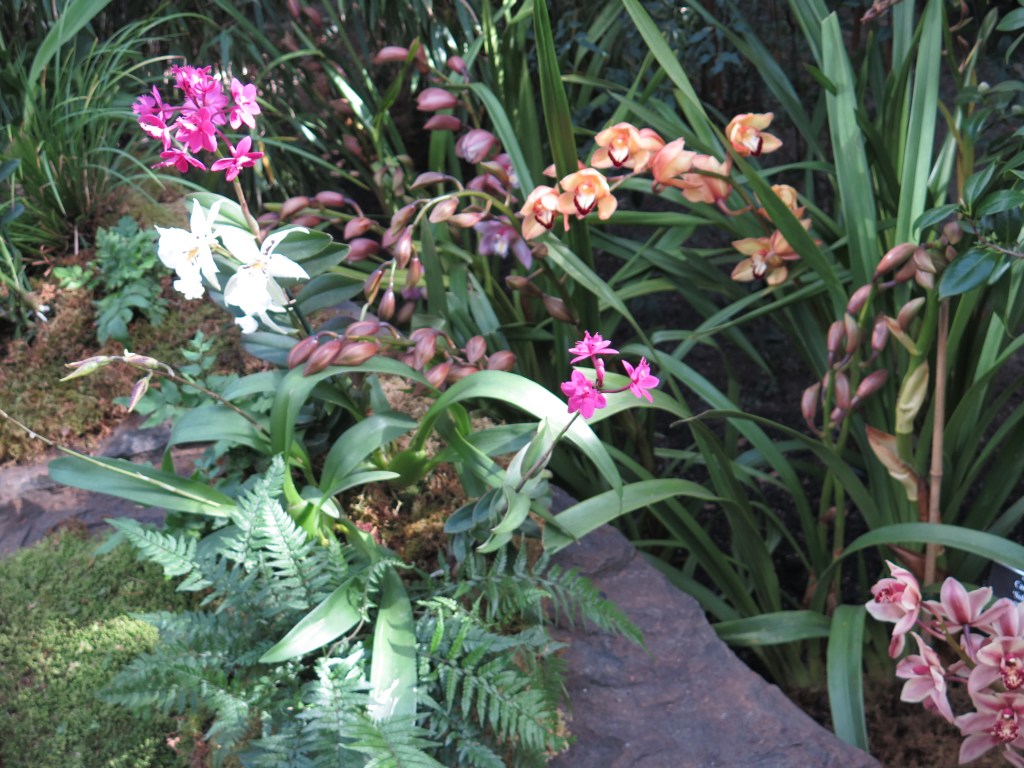
To be able to share the love of orchids and plants with Kwong (she graduated Phi Beta Kappa from Columbia University’s Urban Studies program and participated in the Landscape Design program at NYBG-2017) in a collaboration which enhances the Garden’s mission was a pleasure for all who worked on the exhibit.

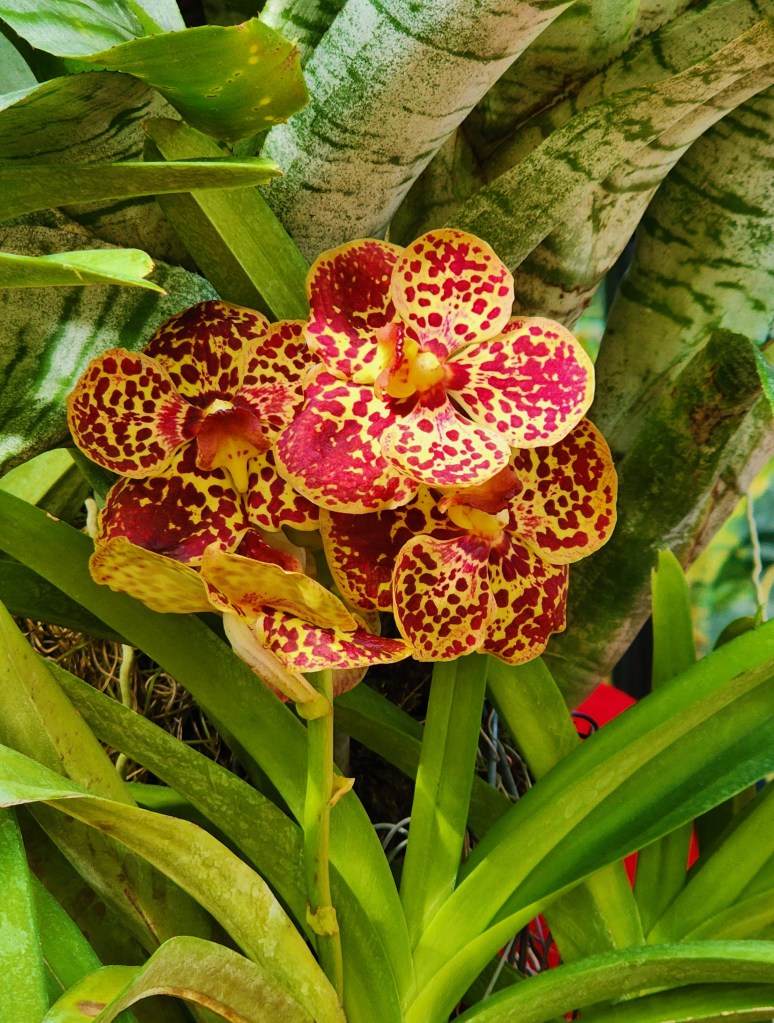

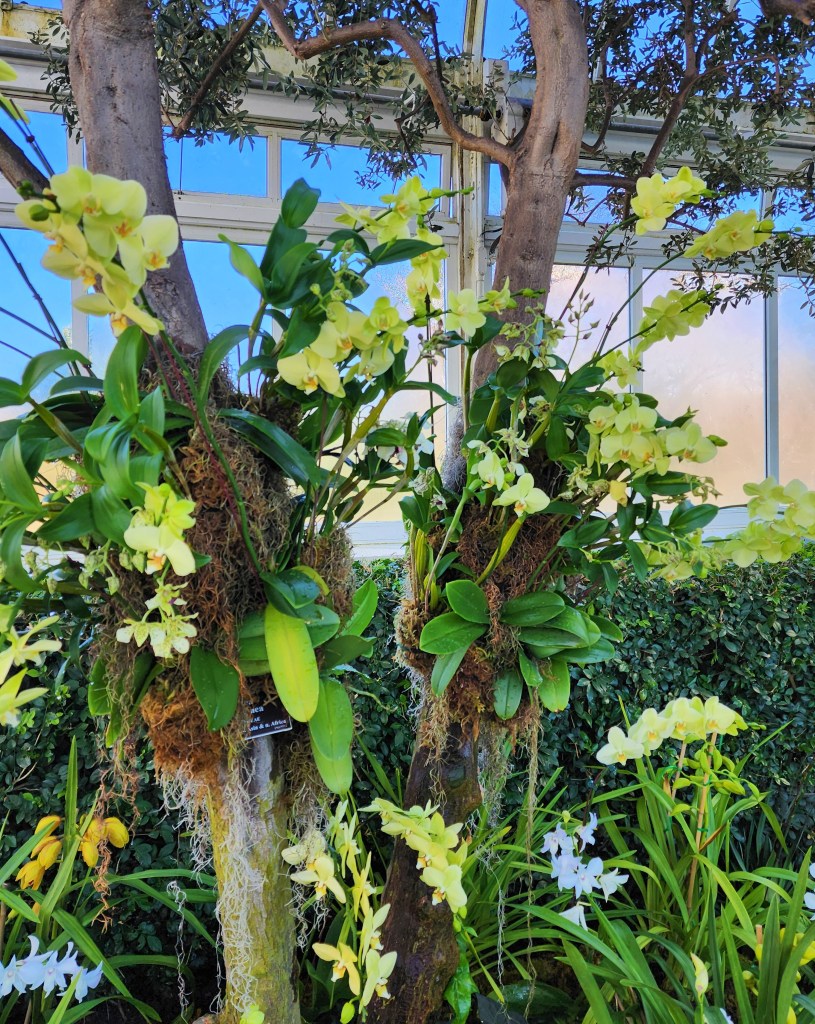
This was especially so for Kwong, a Los Angeles-based artist who employs her varied talents and knowledge of horticulture, urban design, contemporary art, climate awareness, urban agriculture and wellness to reconnect people with nature through transformative landscape projects and site-specific botanical art installations.

Kwong’s career is particularly well placed for her goal to reconnect people with nature through her artfully designed botanical theater. She has been part of numerous public art initiatives since she began in 2017. These include botanical installations at The Highline, New York; Faena Arts, Miami; Grand Central Terminal, New York; Taipei Night Market, Taiwan; Bal Harbor Shops, Florida to name a few.


As a result accolades have come her way: ARCHMARATHON & Dezeen Awards in 2020 for Glossier Seattle and the World Spa Awards for Shou Sugi Ban House in East Hampton, New York. Kwong was named to the Forbes 30 Under 30 (Art & Style) list in 2018. She has been selected to speak at MOCA, The Aspen Ideas Festival, The World Youth Forum, Design Miami and NeueHouse.
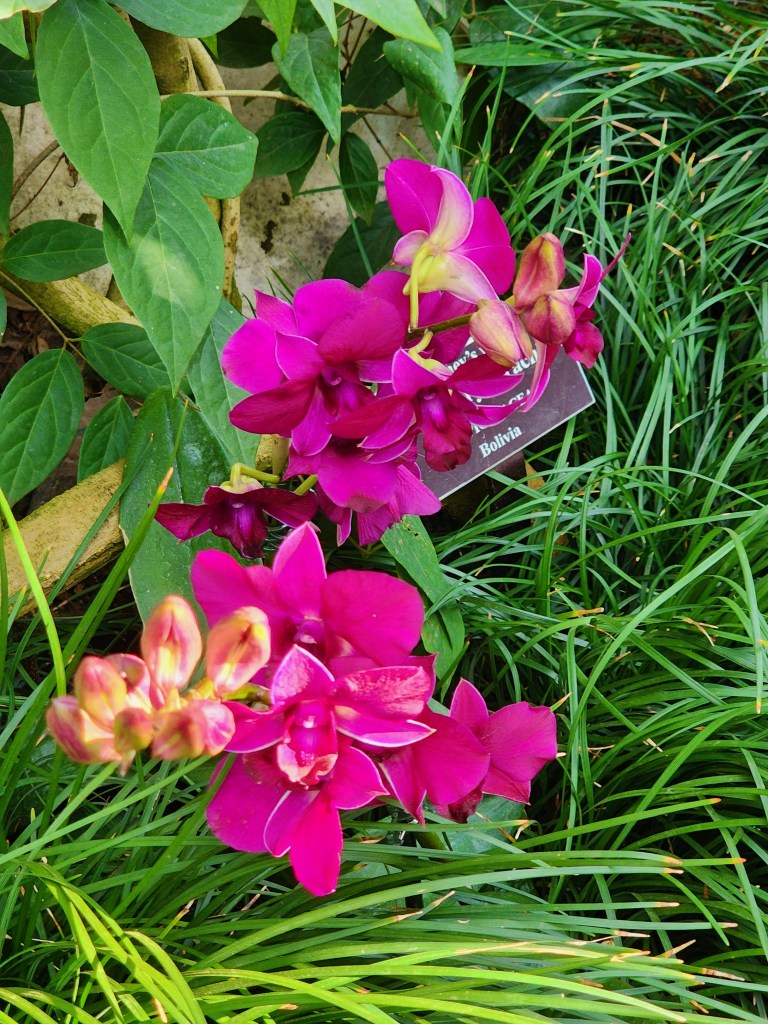
When you are sauntering through the Enid A. Haupt Conservatory enjoying Kwong’s fabulous designs, also meditate on the importance of this incredible gift to New Yorkers that the Garden brings as a special haven and sanctuary to decompress and relax into nature’s wonders through every season. The Garden comprises a 250-acre landscape which includes a 50-acre, old-growth forest through which the Bronx River and waterfall meanders. It is breathtaking year-round.

And don’t forget to visit the Garden library at the far entrance, the most important botanical and horticultural library in the world. The LuEsther T. Mertz Library houses 11 million archival items spanning ten centuries and forming a historical record of plant species and extinction.

Most importantly, know that the Garden is dedicated to conservation as well as research. It and takes in and restores plants which have been pirated as rare and exotic species for sale, sometimes worth thousands of dollars. The William and Lynda Steere Herbarium (the largest in the Western Hemisphere with 7.8 million plant and fungal specimens), is home to scientists. These work on-site in various cutting-edge molecular labs and in areas worldwide where biodiversity is most at risk.

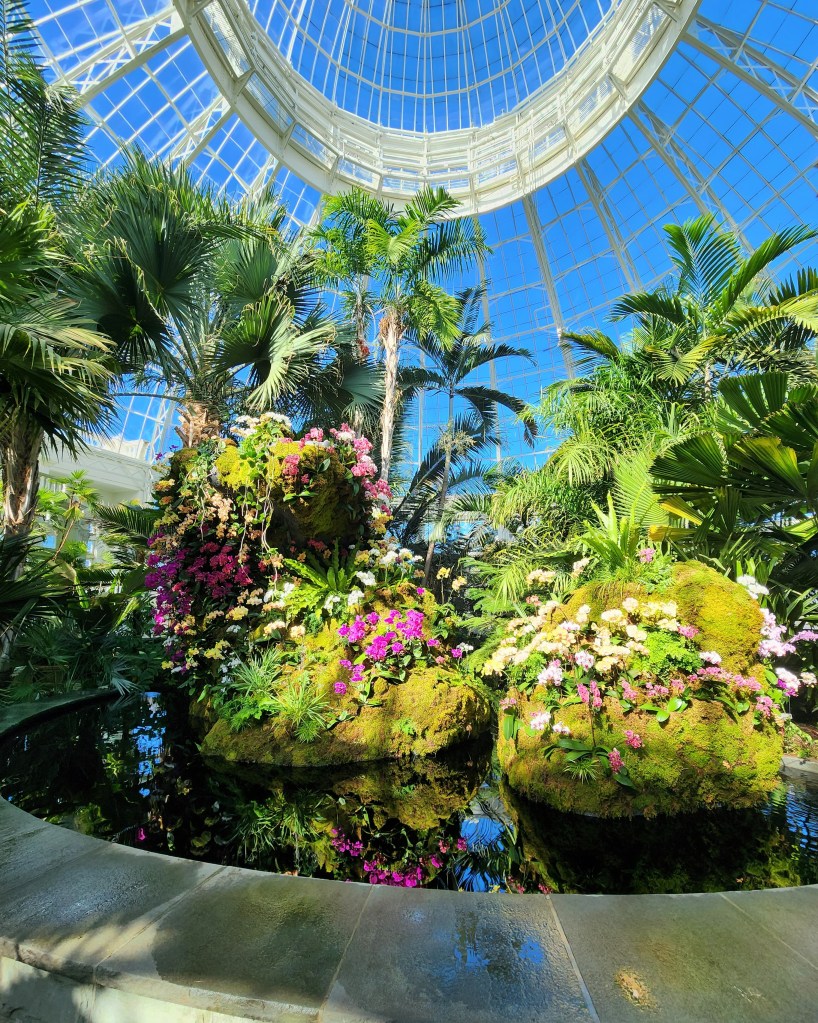

Reminders! On select evenings during The Orchid Show: Natural Heritage, adults 21 and over can enjoy the exhibition’s “Orchid Nights,” with music cash bars and food available for purchase. To learn more about The Orchid Show go to the NYBG website for tickets and other information about NYBG. https://www.nybg.org/
‘Around the Table: Stories of the Foods We Love’ New York Botanical Garden’s Major Exhibition Through September 11, 2022

When we think back to our grandparents’ and parents’ cuisine, what comes to mind? Whatever generation we are, the foods we were served as children on holidays or perhaps daily indicate the family heritage. And once we discuss heritage foods, inevitably there are similarities and differences among cultures, though they might be as wide-ranging as Europe to India.

The New York Botanical Garden’s latest exhibition Around the Table” Stories of the Foods We Love, is all about our culture heritage and the heritage of others by examining the cuisine. And no matter how one views the cuisine, at its most basic foundation we find plants.
For those unfamiliar with farms and growing seasons, seeds and techniques to produce the most healthful, successful gardens of fresh fruits and vegetables, this exhibition is for you. Also, for those who come from a background whose cultural heritage was steeped in orchards and vegetable gardens as mine was, the exhibit is a chance to reconnect with and add to knowledge already in one’s mental and emotional bank account.
The plantings found throughout the 250 acres reveal the art and science of food traditions, many dating back to millennia and the beginning of the growth of civilizations throughout the world. Though the plants have been developed through experience by people culturally and historically, many of the plants from ancient cultures have also been modified scientifically to what they are today. Much of the history of cuisine relates to migration and travel. As people moved throughout the world, they brought their cultural understanding of plants with them to retain and perfect their food traditions.
Importantly, the NYBG exhibit acknowledges the cultural heritages of food cuisine and highlights the aspect of travel and migration that brought plant species to the Americas and species that were in the Americas to European in cross cultural migration.
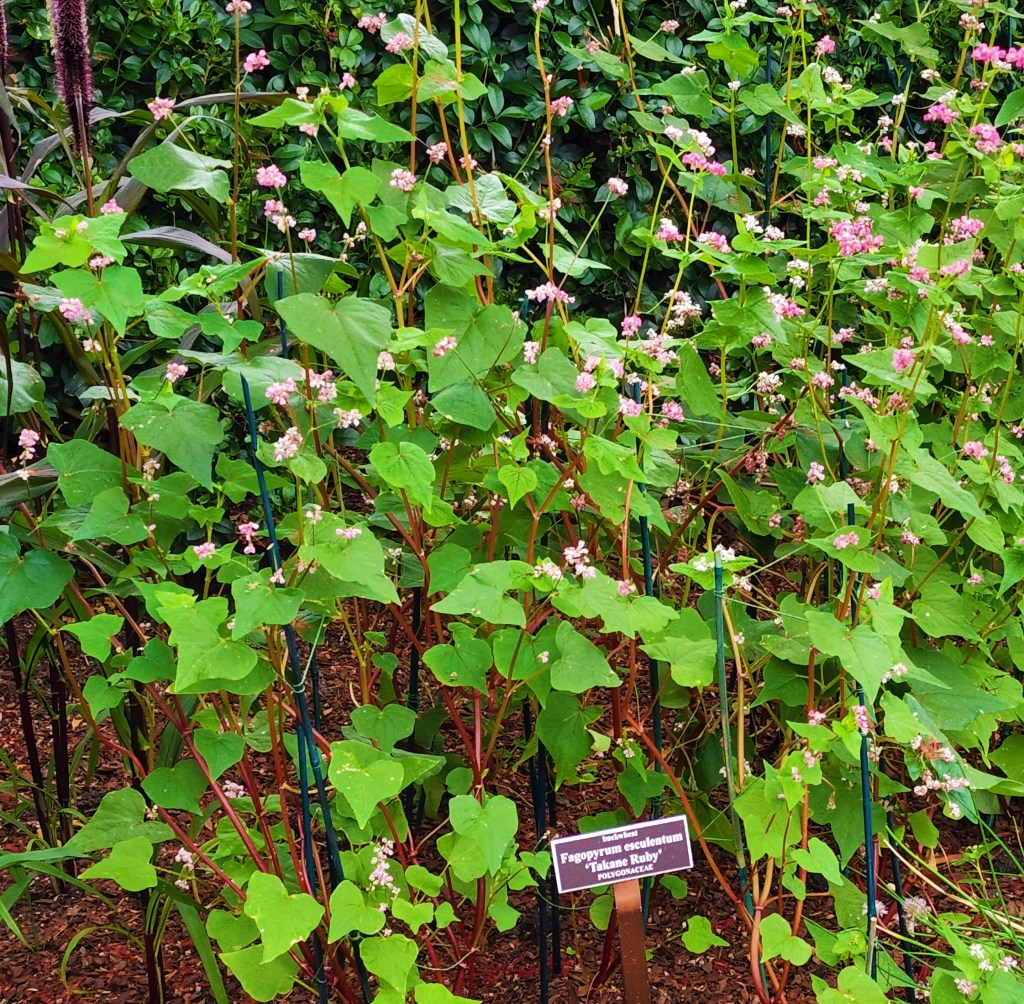
Found in various plantings in the Enid A. Haupt Conservatory which separate into three installations, we note the diverse and wide variety of living edible plants that are used in cuisines from Asia to South America, from Africa to Europe.

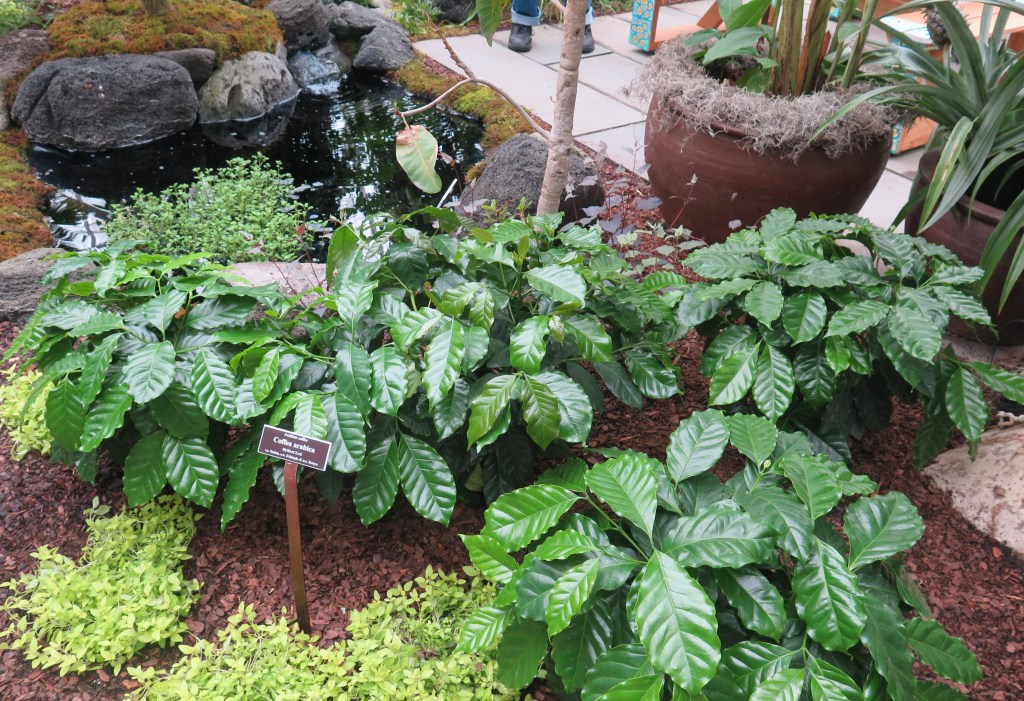
When one looks carefully, one finds the plants that are the basis of staples we cannot do without, like coffee, chocolate, sugar, flour and plants that nourish the animals that provide the meat we eat, for example the plants that produce the grains and corn fed to cattle, pigs, chickens and sheep.
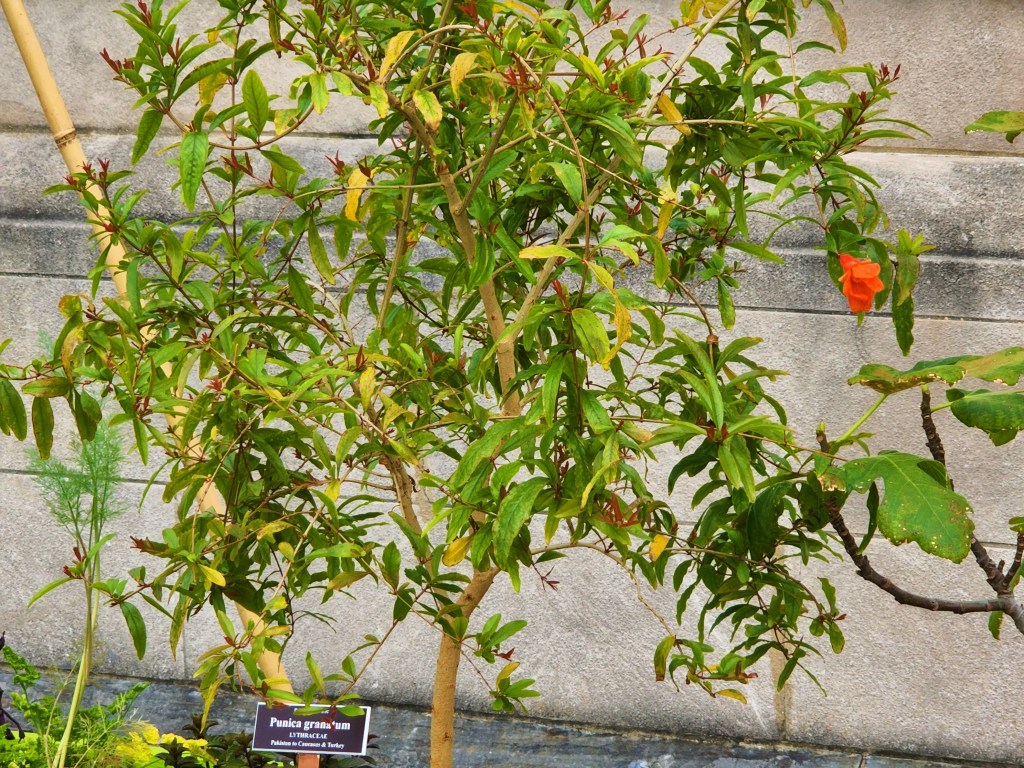

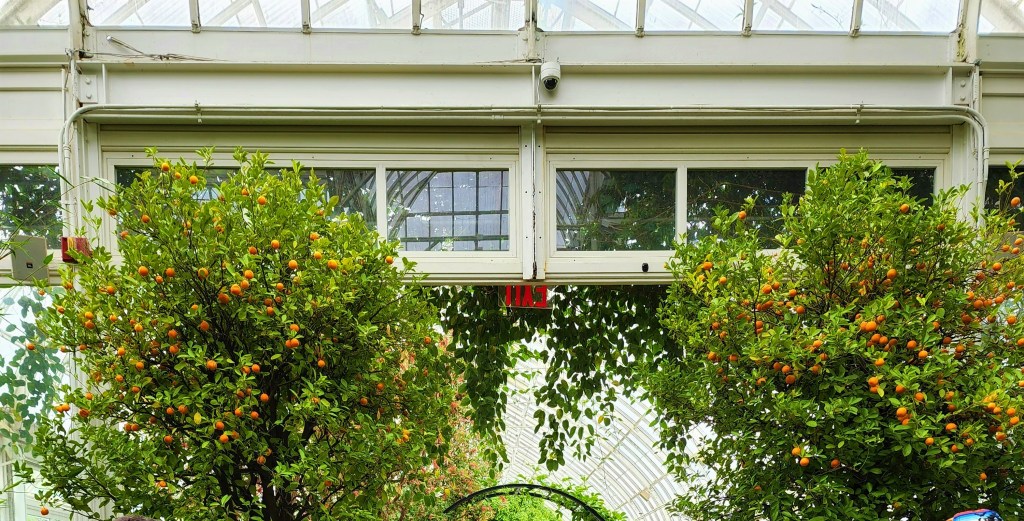
The displays of edible plants include hundreds of varieties including peppers, squash, cabbage, beans, grains, corn, banana, sugarcane, taro, breadfruit, fruit (tomatoes) and more.
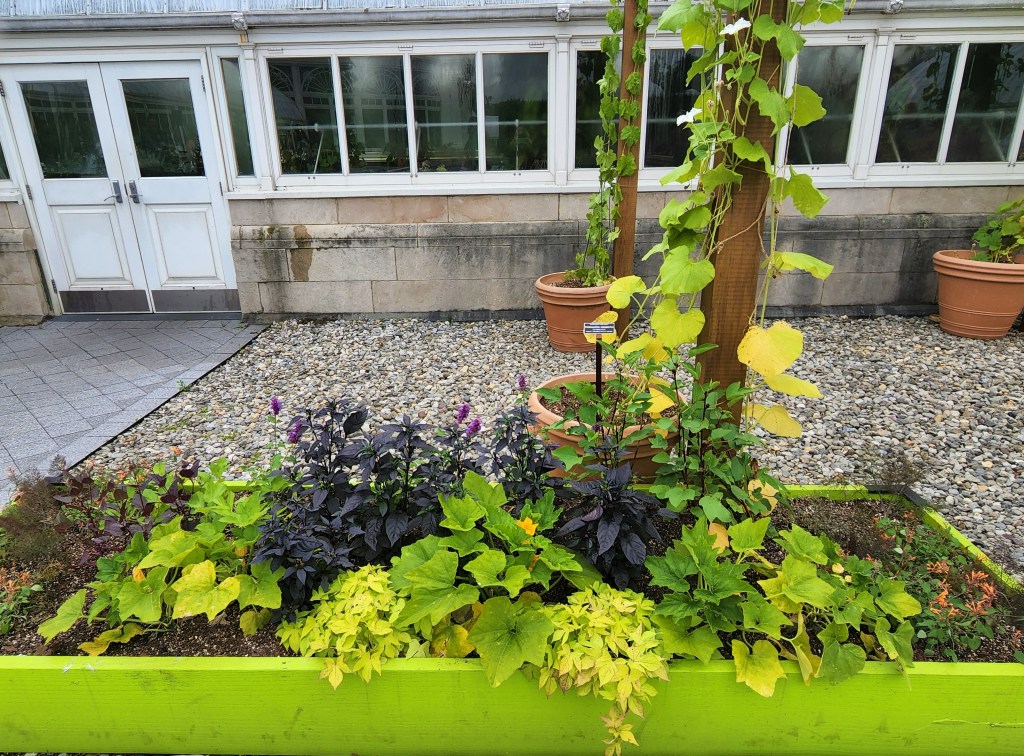


In the Conservatory’s Seasonal Exhibition Galleries is the assortment of edible herbaceous plants and fruit-bearing trees growing in containers, entwined in overhead trellises and creating green walls for compact urban spaces.
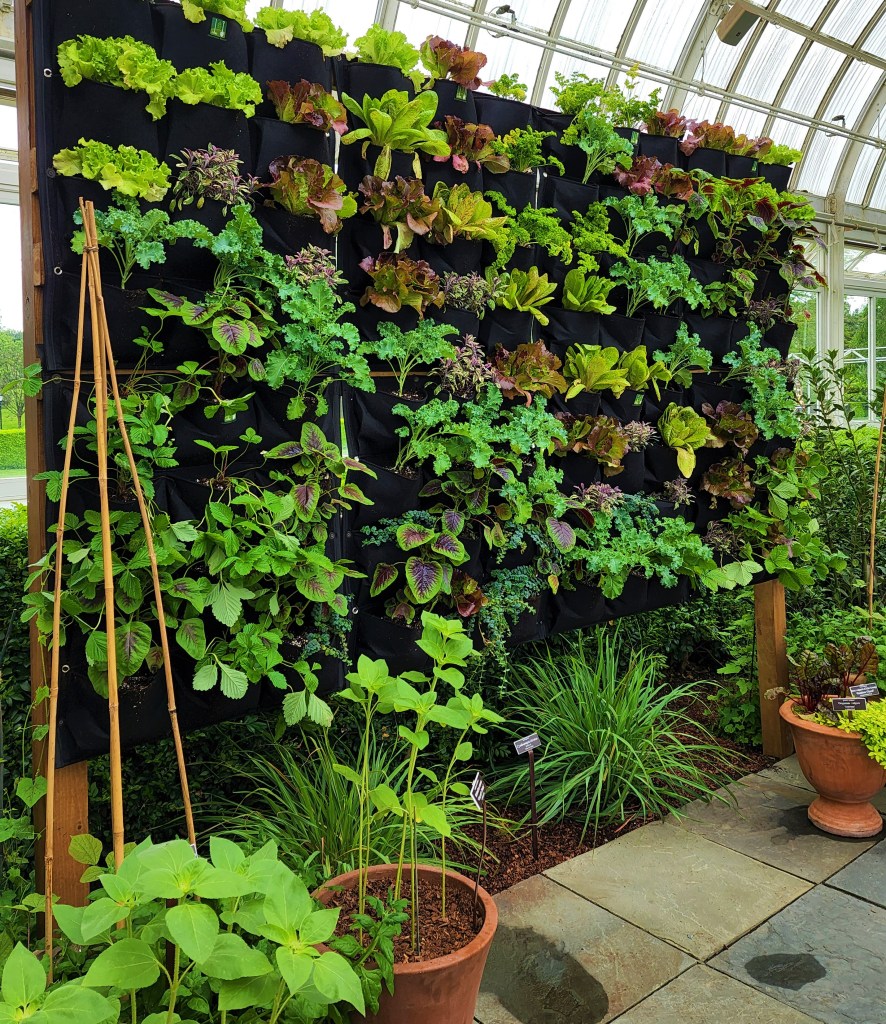
The Conservatory Courtyards present fig, citrus, olive and apple trees and reveal plants suited to tropical regions like rice, taro, mango, banana, manioc and breadfruit.
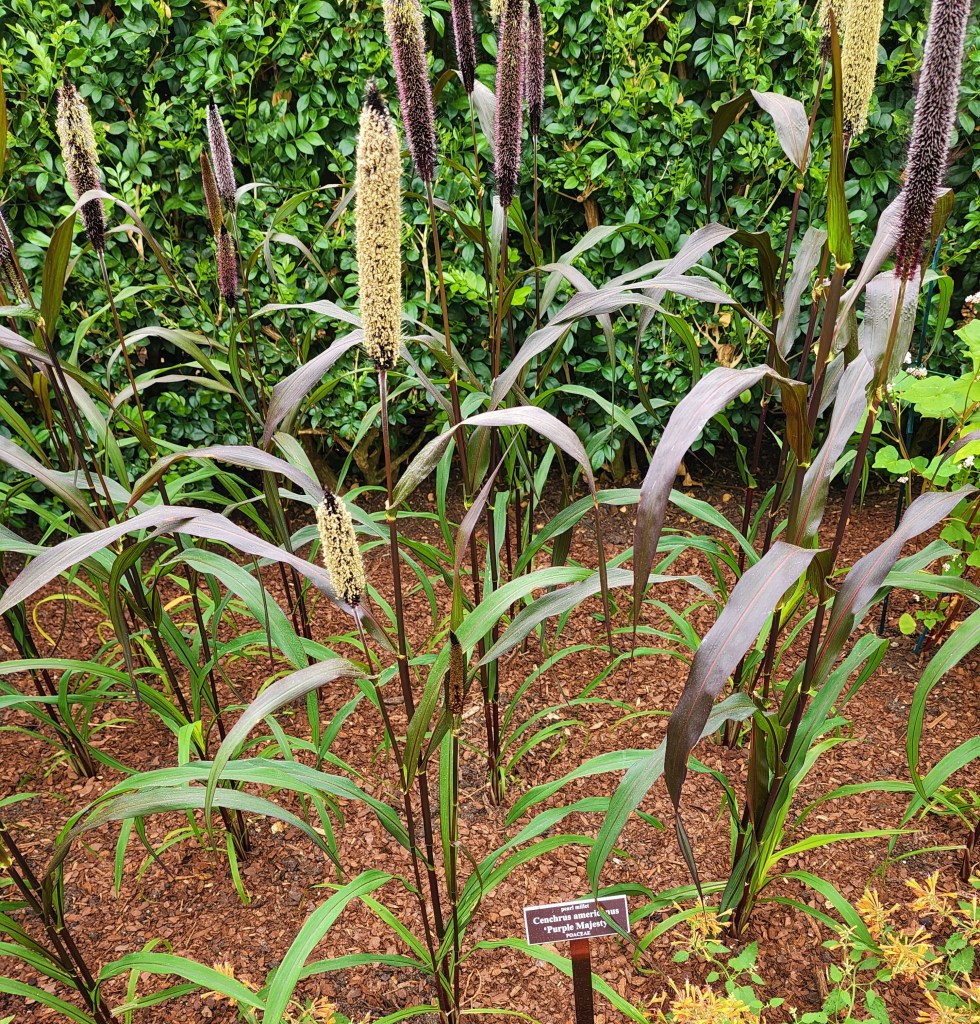

Look for the pearl millet, the nightshade section (tomatoes, peppers, and the herbs associated with them like basil). There is also a spirit garden indicating many of the plants used to create beer, wine, rum, liquors and the cork associated with the preservation of spirits and wines.

One of the more interesting installations is on The Conservatory Lawn. It has been transformed into a field of dwarf sorghum and barley. These traditional grains align with our climate and allow us to view the sowing, nurturing, harvesting and replanting over mini seasons. If you visit in early June and stop back at the end, you will be amazed at the growth of the height of the plants.
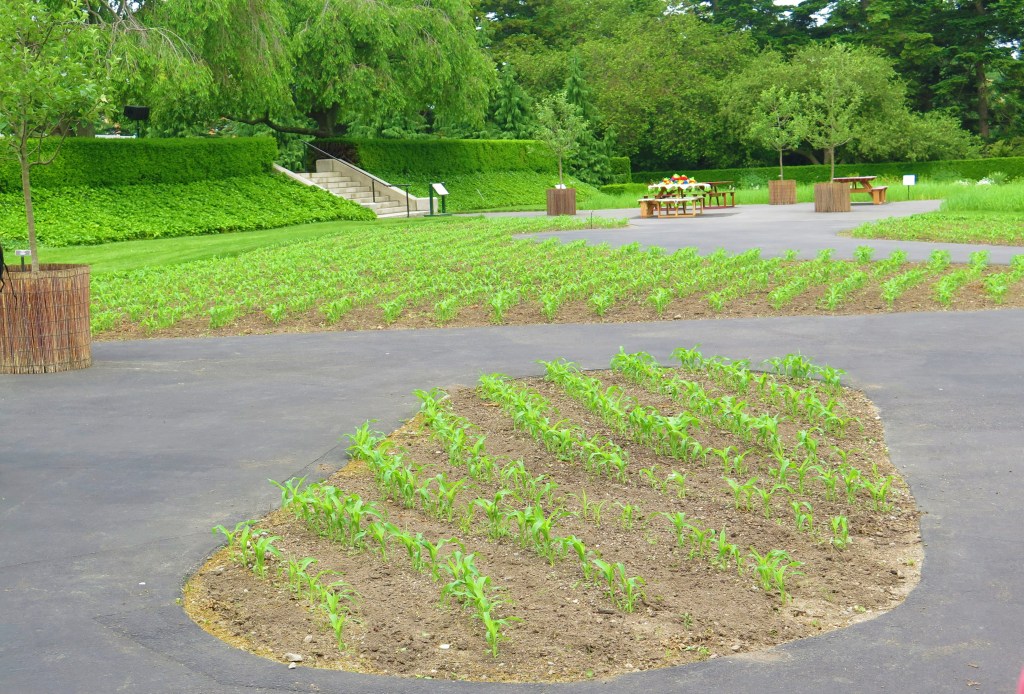
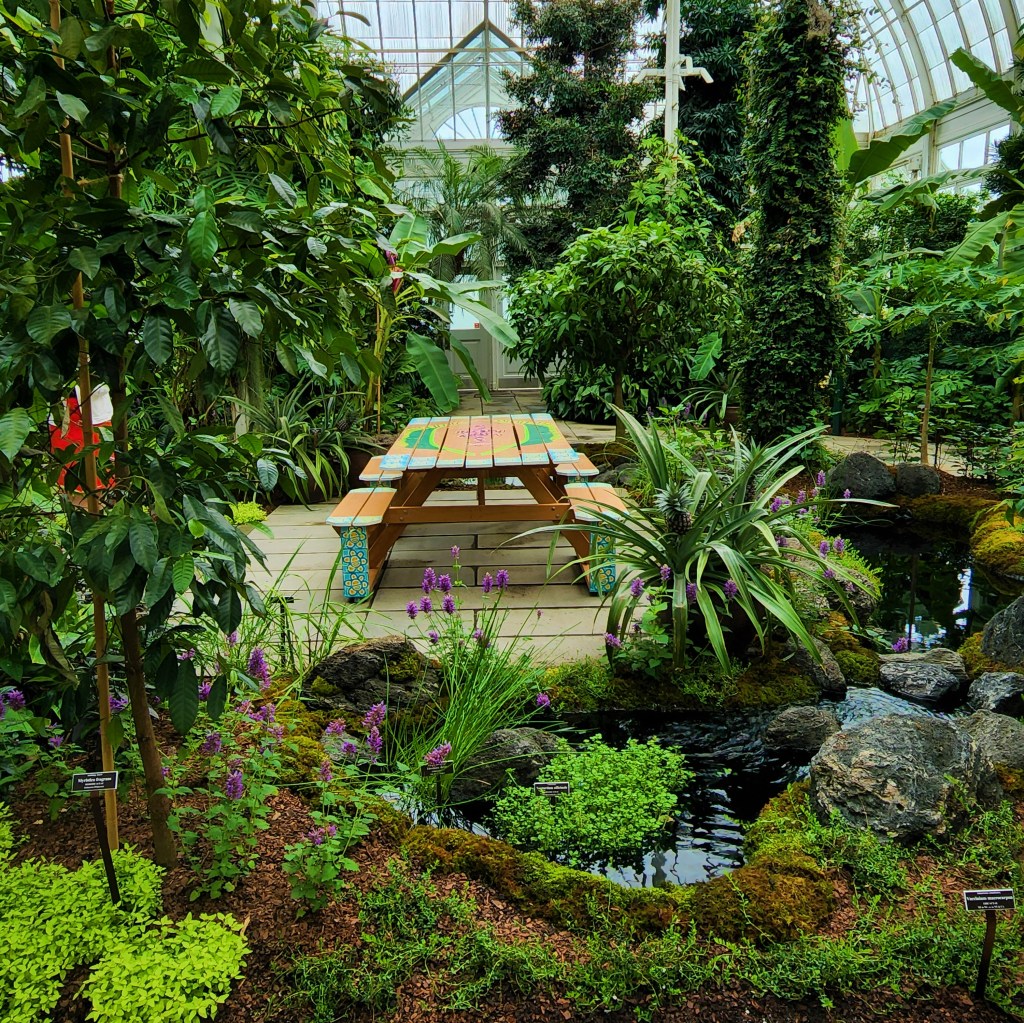
Interspersed among these plantings you will find picnic tables beautifully decorated by local artists that add a colorful effect amidst the field of green.

The Garden selected 30 artists living or working in the Bronx and they designed the tables that highlighted food themes from “Around the Table.”

These artistic works can be found outside and inside the LuEsther T. Mertz Library Building as well as throughout the grounds.


If you examine the table tops you will note edible plants that embody their own cultural heritage and significance and inspire the sharing of personal stories of foods traditionally served at holidays and celebrations.

It is through foods, most especially we are more open to understanding cultures different from our own.

In another section of the extensive exhibition, make sure to visit the African American Garden at the Edible Academy. The installation is entitled African American Garden: Remembrance & Resilience. It is curated by Dr. Jessica B. Harris, America’s leading scholar on the foods of the African Diaspora.

When you move along the walkways to look at the beds planted, you will be fascinated to connect with the plants that highlight African American culture and foods, gardening histories and tidbits about early Americana. The African American Garden features the contribution of essential plants to our collective history.
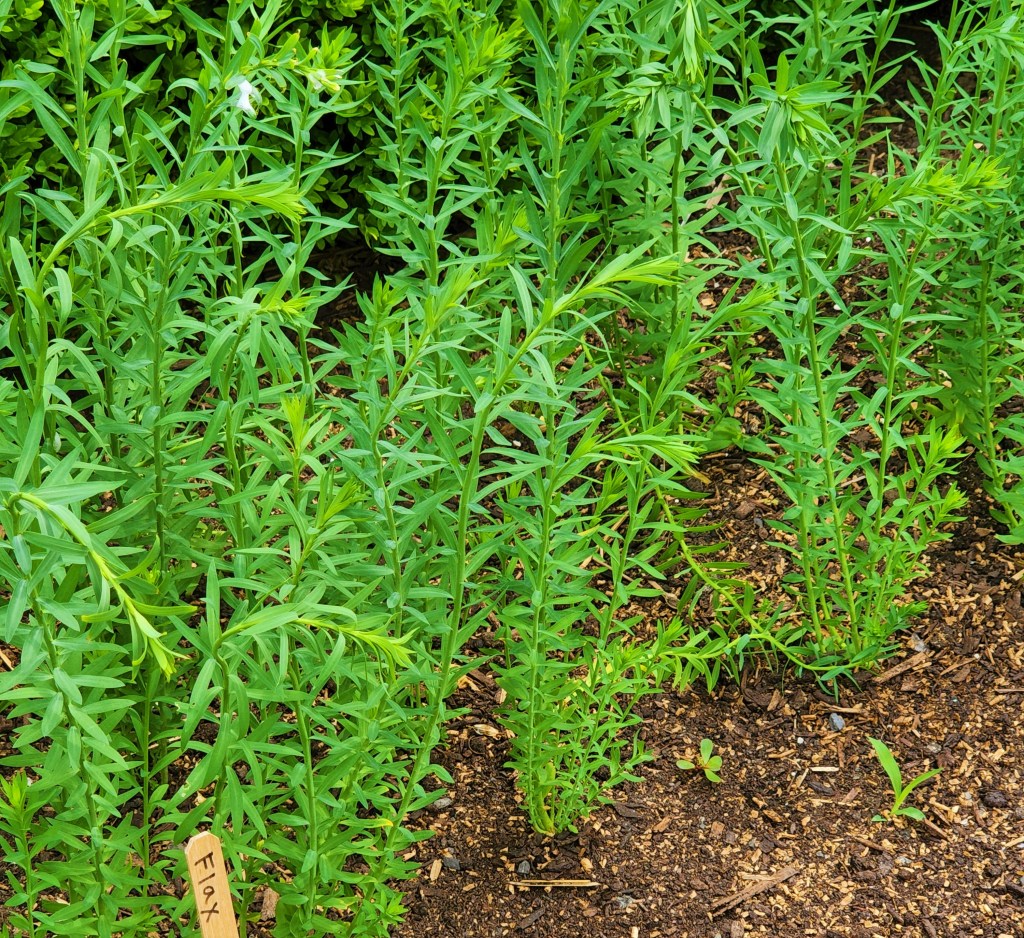
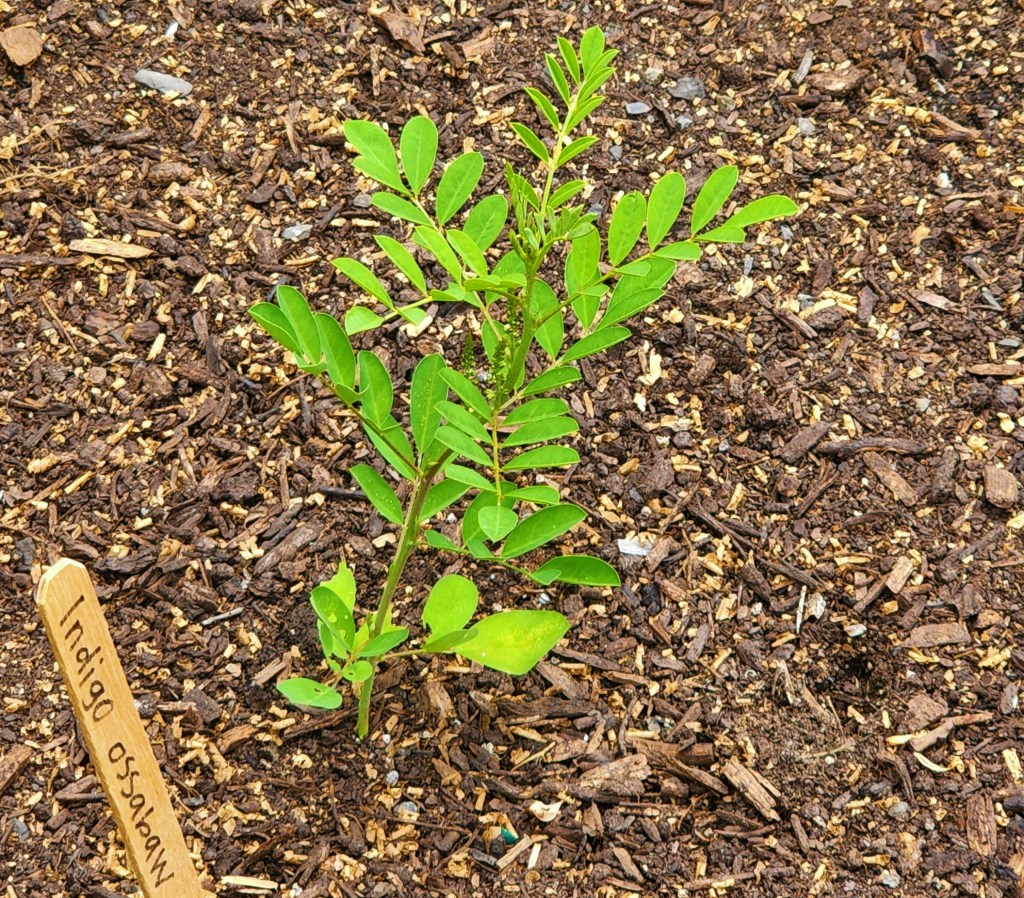

Dr. Harris worked with historians, heritage seed collectors, and NYBG’s Edible Academy staff to lay out a sequence of eight garden beds arranged in a semi-circle. These represent a celebration of African American food, plantings, and ongoing contributions to our country’s plant and food culture.
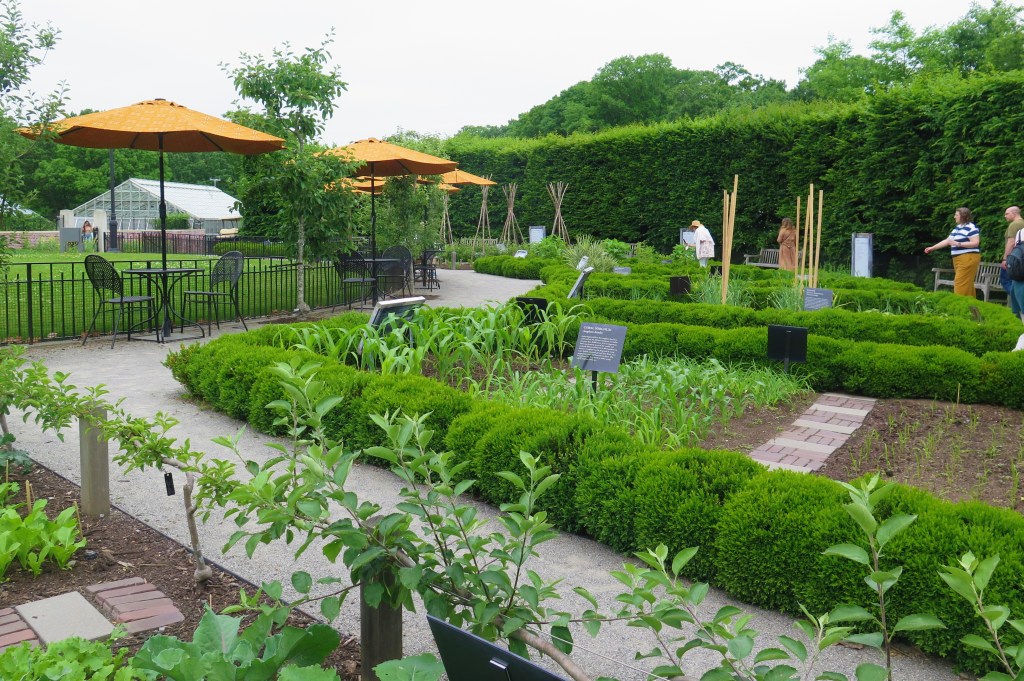

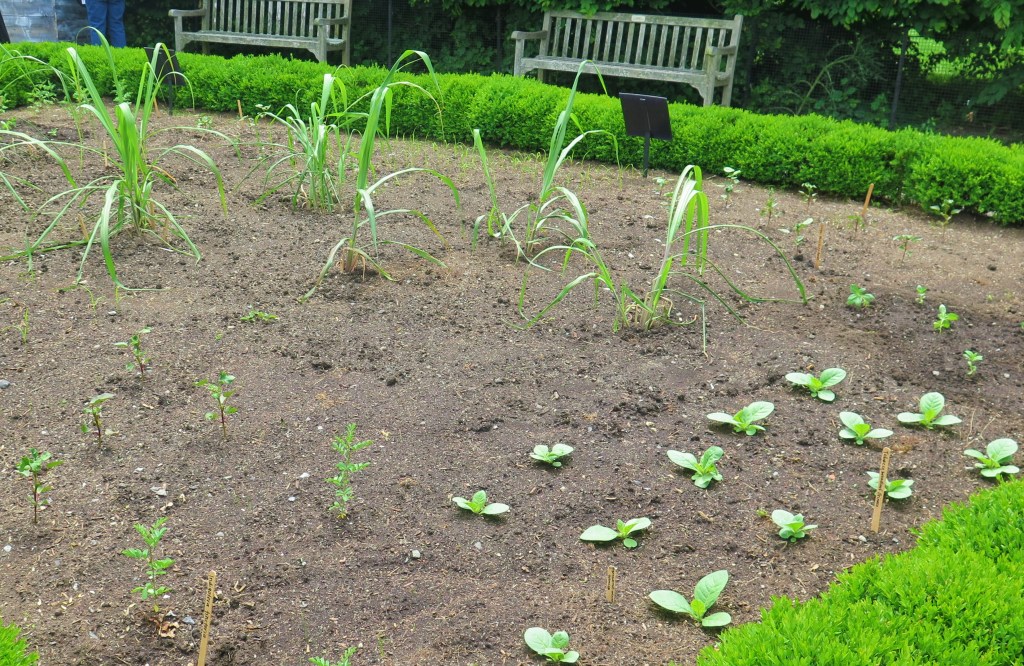

The experience includes an orientation center, shaded seating and a Hibiscus Drink Station. Stop by the drink station to cool yourself off with a taste of Roselle, sweetened or unsweetened.

With it saunter along the Poetry Walk curated by Cave Canem Foundation.
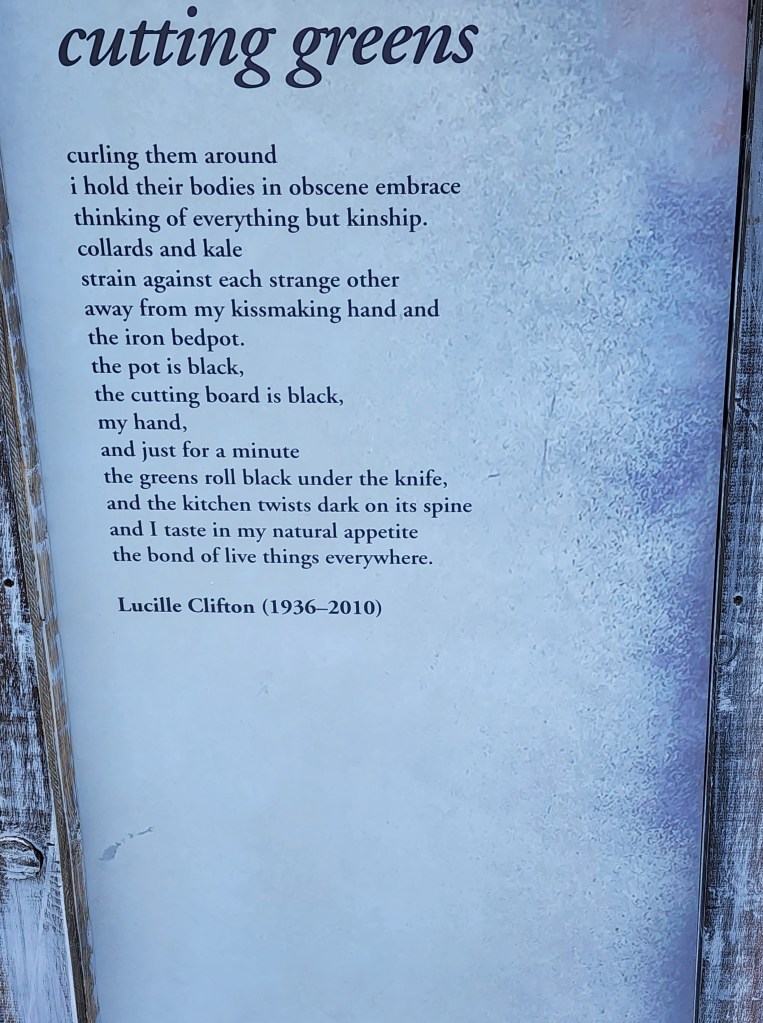
The Cave Canem Foundation is the premier home for Black poetry that is committed to cultivating the artistic and professional growth of African American poets.

Finally, visit the LuEsther T. Mertz Library Building Art Gallery to see the works of contemporary Colombian-American artist Lina Puerta in her exhibit on the first floor. It is entitled Lina Puerta: Accumulated Wisdom.

The artist highlights and gives voice to the invisible farm workers who labor in the fields for low pay and long hours. Throughout the country they are the voiceless abused by corporate owners who have exploited their labor. Without their labor where would populations be? Read Tomatoland by Barry Estabrook, an expose of agribusiness in Florida and how slave labor keeps the tasteless tomatoes coming to market.


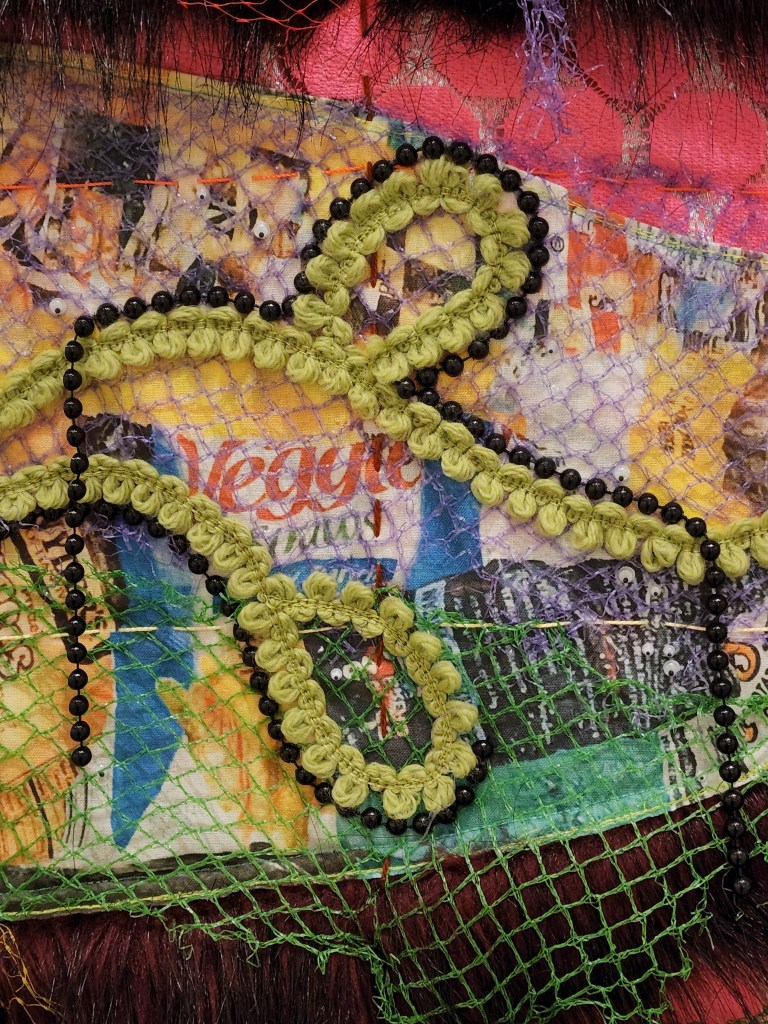
Puerta’s mixed-media sculptures, installations, collages, handmade paper paintings, and wall hangings are strikingly beautiful. They speak of farm workers and reveal the relationship between nature, the human-made and ancestral knowledge related to plants.

The materials she uses range from textiles and handmade paper to found, personal, and recycled objects.
This exhibit has an abundance of activities for adults, family and children alike. There are artist-designed table tours, food demonstrations, themed weekend celebrations to name a few.
Look out for A Seat at the Table on Saturday, June 18, 10 a.m. – 12 p.m. Two thrilling sessions will explore how Black farming informs American history and culture in New York City and across the country. Natalie Baszile, author of We Are Each Other’s Harvest, joins Dr. Jessica B. Harris, food historian and scholar, for the discussion at Ross Hall, “Celebrating the African American Farmer.” In “Stories from the Farm,” moderated by NYBG Trustee Karen Washington (farmer, urban gardener, food advocate, activist) will lead a multigenerational panel discussion devoted to stories of Black farmers from many perspectives urban and rural, North and South.
For complete programming on this incredible exhibition, Around the Table: Stories of the Foods We Love, to to the NYBG website by clicking HERE.
New York Botanical Garden Orchid Show Tickets on Sale February 3, 2022
The 19th NYBG Orchid Show is burgeoning into a hopeful springtime event two years after the 2020 Orchid Show was halted due to COVID-19. The popular exhibition will be on view from February 26 through May 1, 2022, and I am excited to announce that it is reopening with Jeff Leatham’s Kaleidoscope. The extraordinary exhibit by lifestyle icon and floral designer to the stars will be a reimagining of his glorious, bold, vibrant creations with dazzling, new twists as a celebration of renewal and persistence.

Leatham’s creative genius will transform each gallery of the exhibition in the Enid A. Haupt Conservatory into a different color experience. Imagine you are immersed in the heart of a botanical kaleidoscope. And if you venture through the galleries at different times during the day from the morning light to the afternoon sun which casts a uniquely different glow on the orchids and foliage, indeed the colors are ever changing, the hues shadowed and dusky as the sun sets. All of the variables of light and shade and the great selection of stunning orchids and their hues are Jeff Leatham’s palette.
Working with horticulturists from NYBG, including Senior Curator of Orchids Marc Hachadourian, Leatham
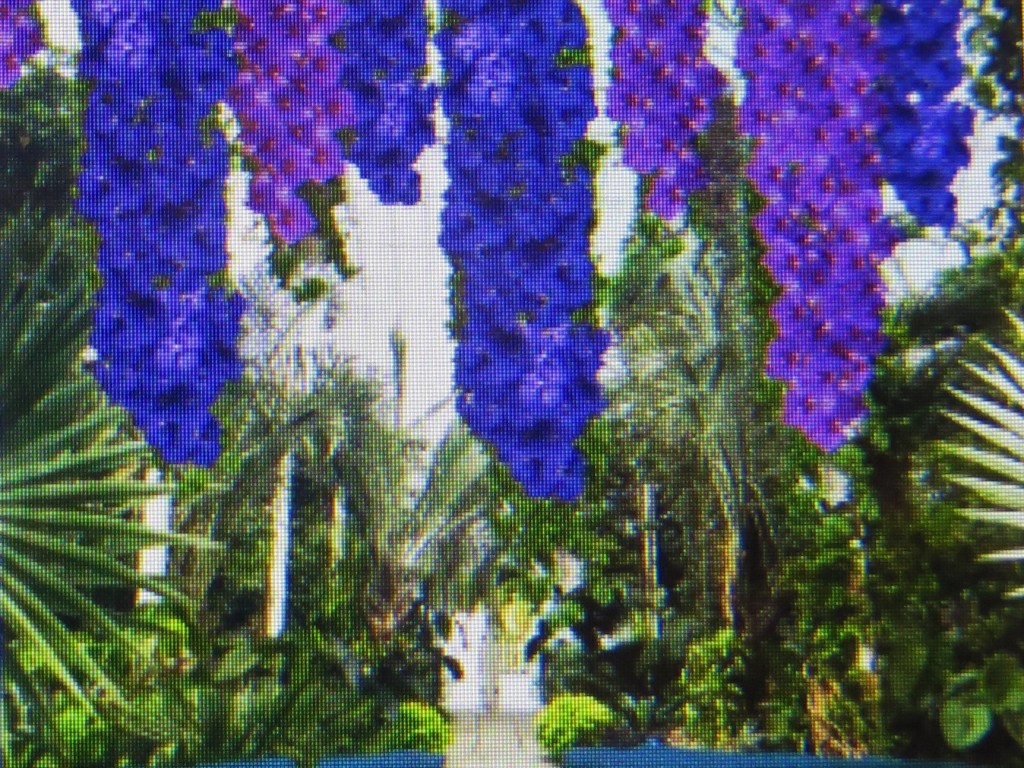
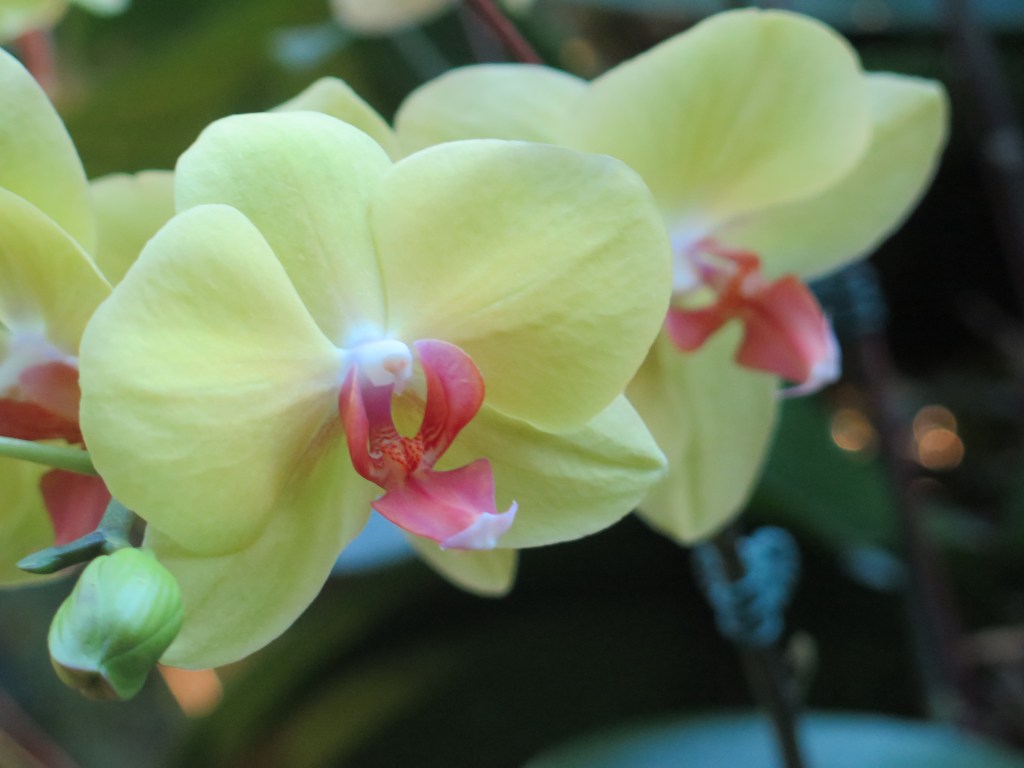
selects orchids from NYBG collections as well as from some of the finest growers in the world. Keeping the kaleidoscope theme in mind, Leatham’ orchid towers of orange, yellow and green, the undulating fields of white and overhead plumes of purple combined with artistic embellishments will dazzle visitors as they saunter on walkways of beauty arranged as horticultural pageantry.

Amazing and unique orchids, one of the largest species of plants in the world, are always represented at the NYBG Orchid Show and this year is no exception. For those more scientifically minded, they may note orchids of seemingly every conceivable shape and provenance, iconic hybrids as well as rare specimens under glass. The configurations and arrangements all are designed by the artistry of the affable and renowned Leatham whose shows are one-of-a-kind amazements. This year’s Orchid Show may have the same name as the 2020 Orchid Show, but Leatham’s exhibit promises to be evocatively different. That is who Jeff Leatham is and movement, grace and forward thinking creations are his brand.

On select Fridays and Saturdays in March and April, adults 21 and over can experience the exhibition
at night with music, cash bars, and food available for purchase. Magical Orchid Evenings will take place on March 26, April 2, 9, 16, 22, and 23, 2022; 7–10 p.m.
Tickets will be available at https://www.nybg.org/visit/admission/
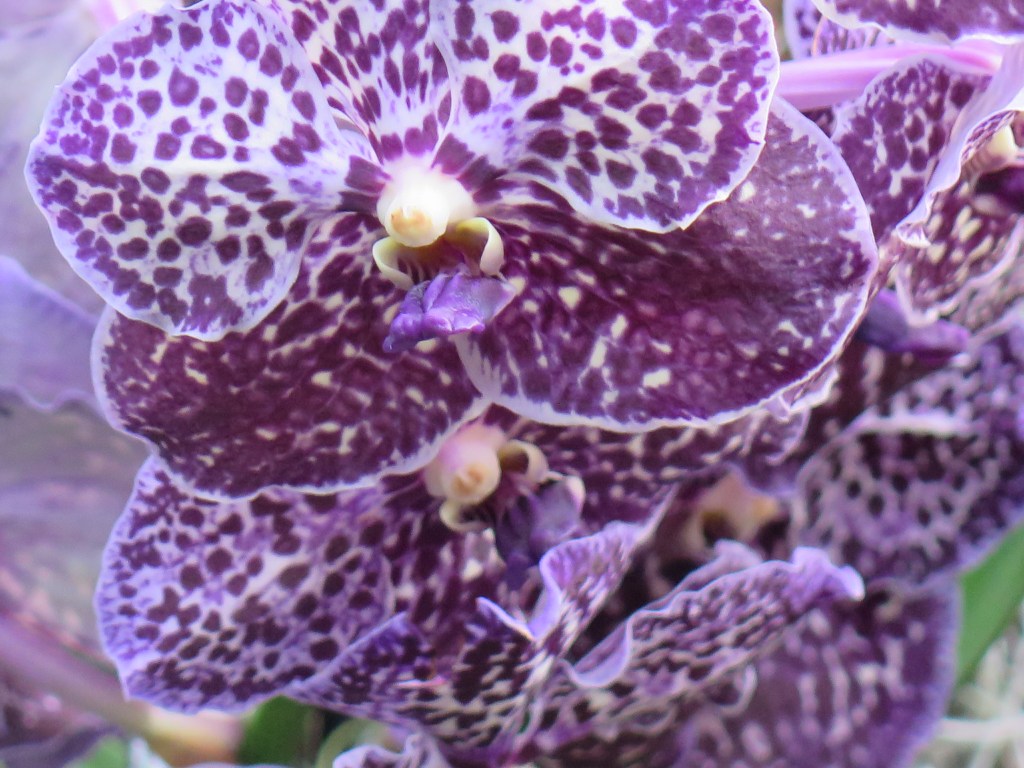
At the New York Botanical Garden Shop, visitors of the Orchid Show have the opportunity to select from thousands of top-quality orchids that are available for purchase. Some of these include exotic, hard-to-find specimens for connoisseurs to elegant yet easy-to-grow varieties for beginners, along with orchid products and books.

Jeff Leatham is the award-winning artistic director of the Four Seasons Hotel George V, Paris. He has studios at the Four Seasons Hotel Philadelphia at Comcast Center. Also, he has a studio at the Four Seasons Hotel Los Angeles at Beverly Hills.
His work combines his love for flowers and his passion for design. Using shape, color, and simplicity, his creations are dramatic, bold, unforgettable statements that are always an integral part of the setting. His clients include Dolly Parton, Tina Turner, Cher, Oprah Winfrey and others. His publications—Flowers by Jeff Leatham, Flowers by Design, and Jeff Leatham: Visionary Floral Art and Design are best-selling design books worldwide
For more information about The Orchid Show: Jeff Leatham’s Kaleidoscope, visit http://www.nybg.org/event/the-orchid-show/
New York Botanical Garden’s GLOW and The Holiday Train Show® Are Not to be Missed


The winter season is in full swing with the NYBG’s 30th Year Milestone Celebration of The Holiday Train Show® (Saturday, November 20, 2021 – Sunday, January 23, 2022 from 10 a.m. – 6 p.m.)
The beautiful exhibit which features over 1 mile of train track and a 360 degree surround space in an added gallery is a favorite of New Yorkers. This year’s show features new additions to its collection which now number over 191 miniature structures of New York City and New York State landmarks.
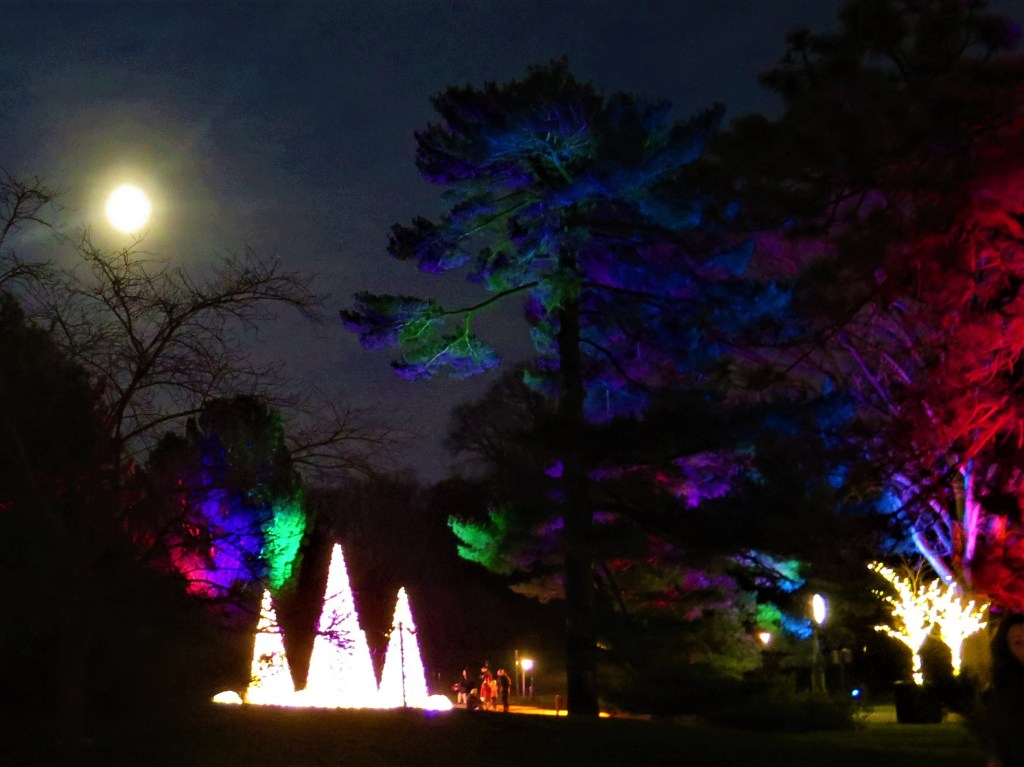
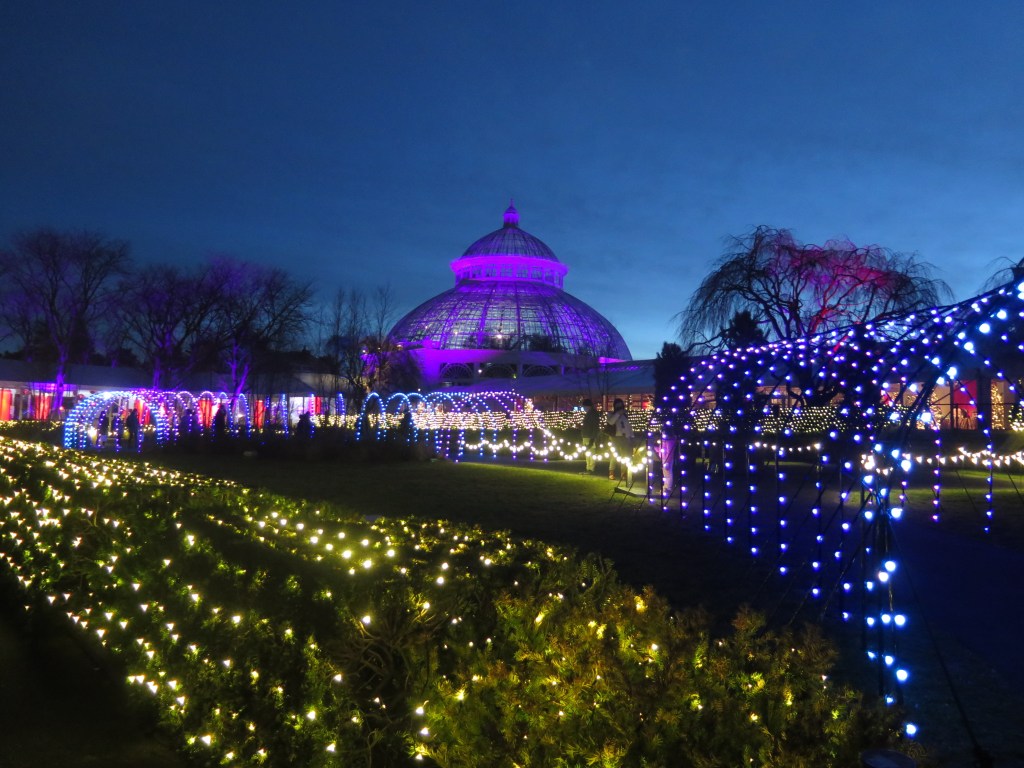
Once again as part of the Train Show on a new combination ticket is the expanded light exhibit GLOW. As the sun sets and the moon rises on select dates, family and friends can wander through the Garden’s festively illuminated landscape and enjoy the 1.5 mile color-and-light extravaganza that begins at 5 pm and ends at 10 p.m.
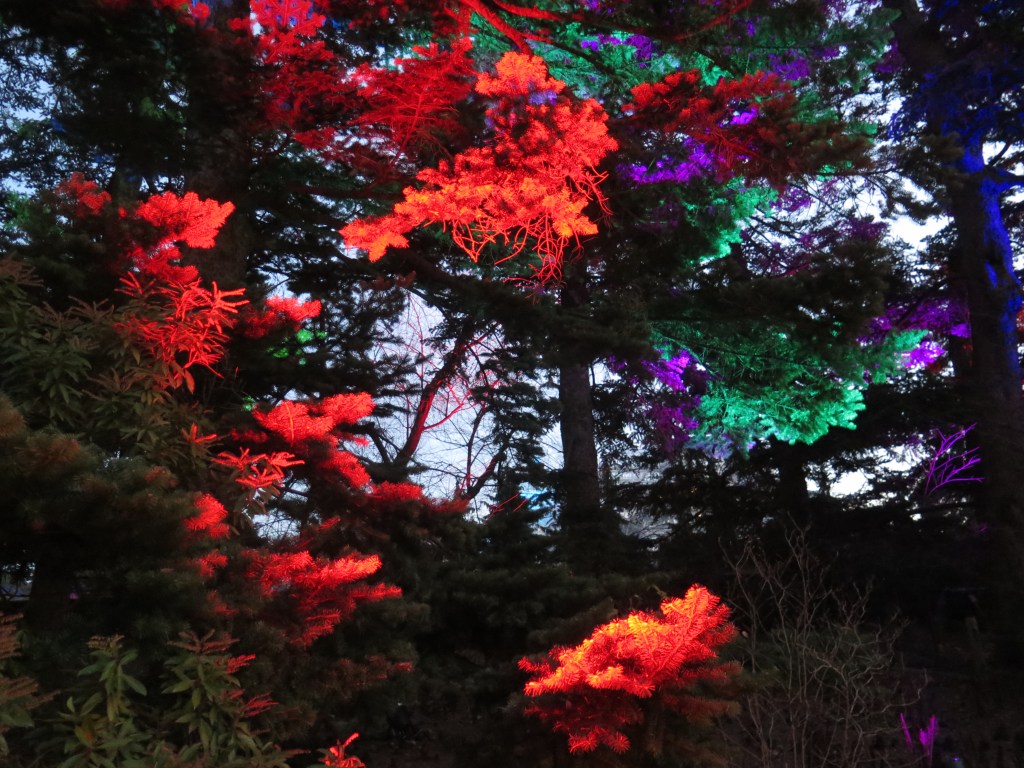
Tickets are available for the following dates: Thursday, December 23, Sunday, December 26 – Thursday, December 30. In January, these dates are available: Saturday, January 1, January 6, 7, 8, 14, 15, 21, 22.
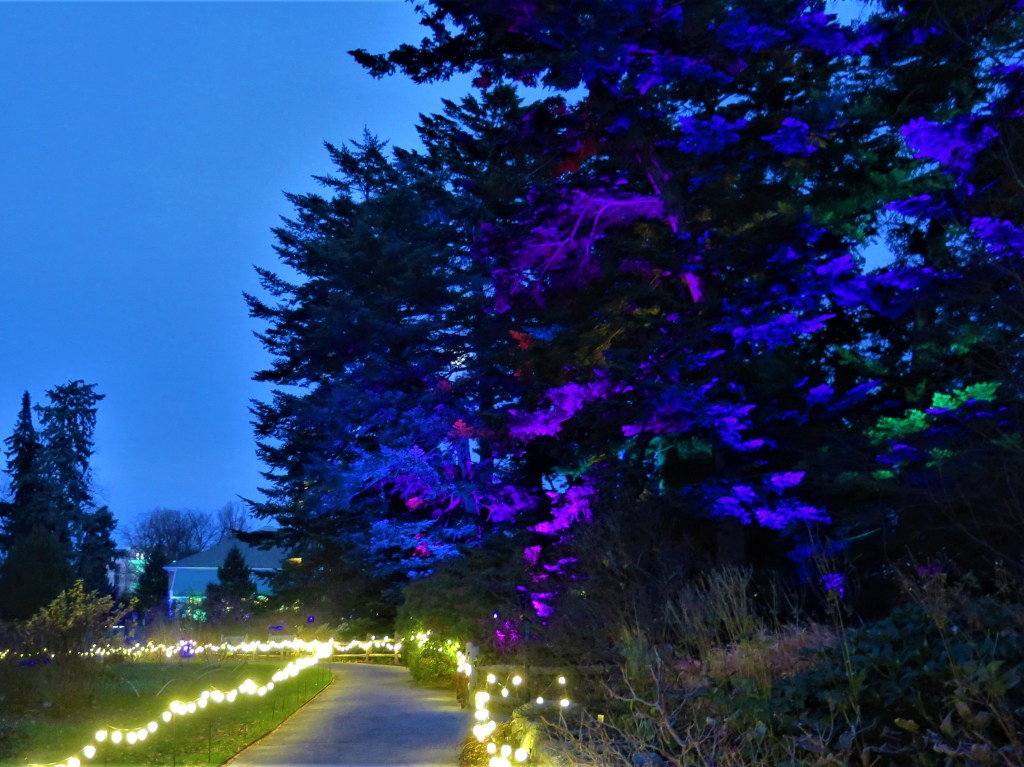


When you buy your combination ticket for NYBG GLOW and the Holiday Train Show® expect to be dazzled on two fronts. Indoors, you will enjoy the shimmering lights that ethereally pierce through the foliage of lovely plantings and New York replicas of Applied Imagination’s architectural structures perfectly arranged so that a variety of old model trains, trolleys, whimsical streetcars can speed by the miniature iconic New York landmarks.

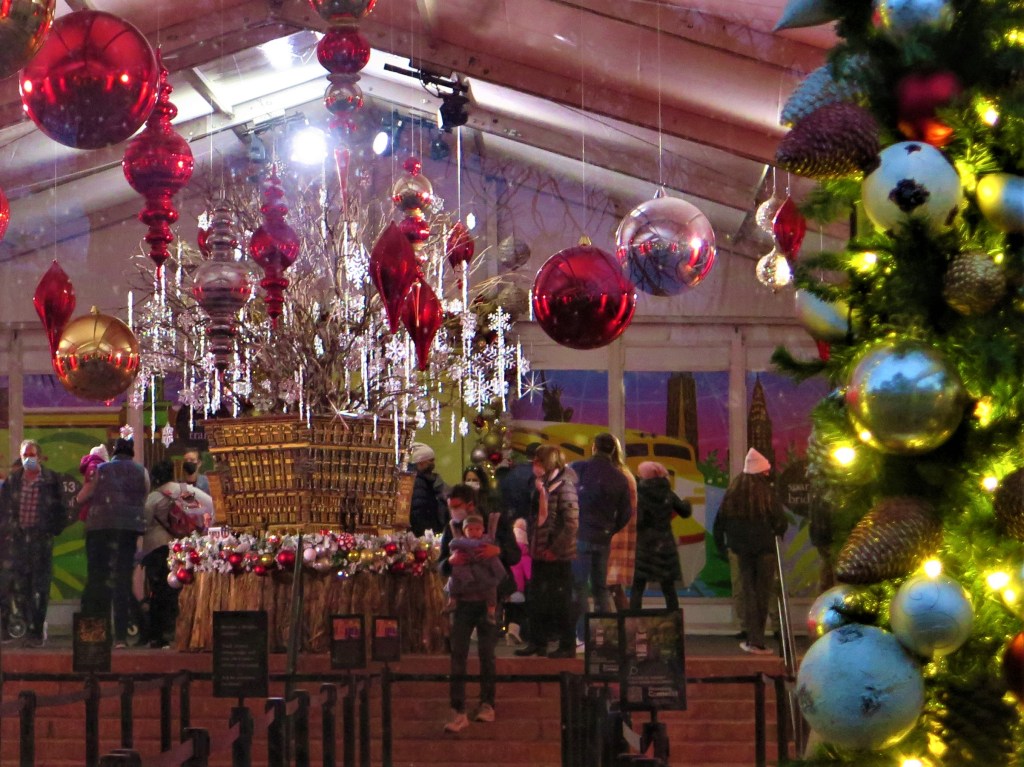
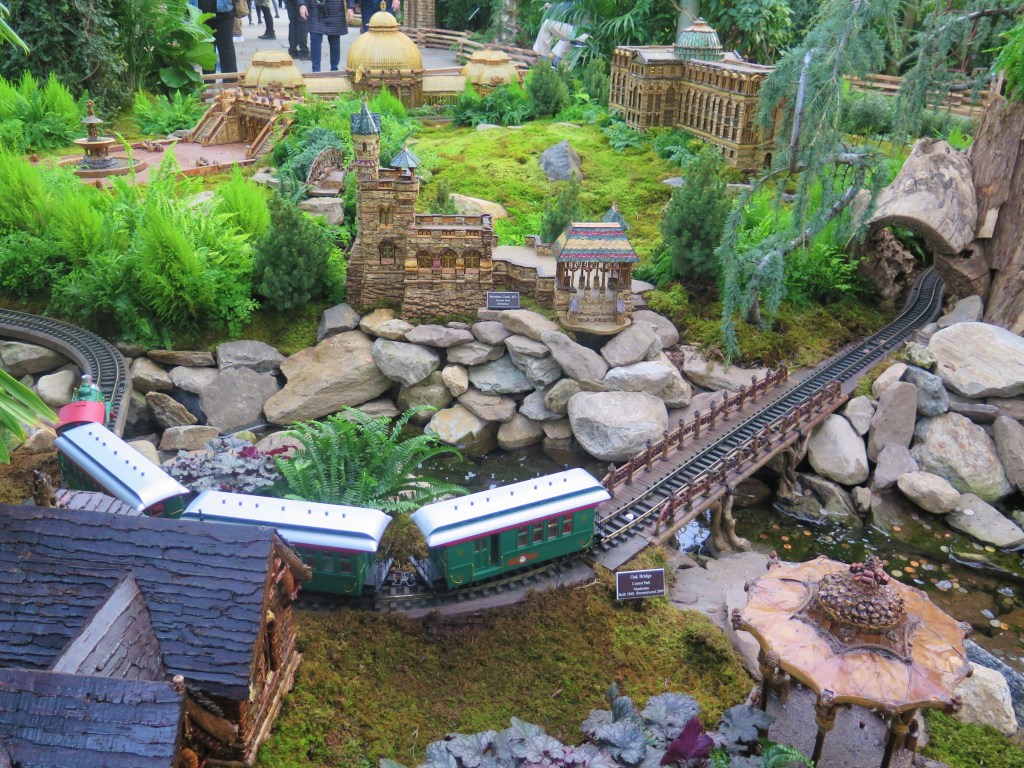

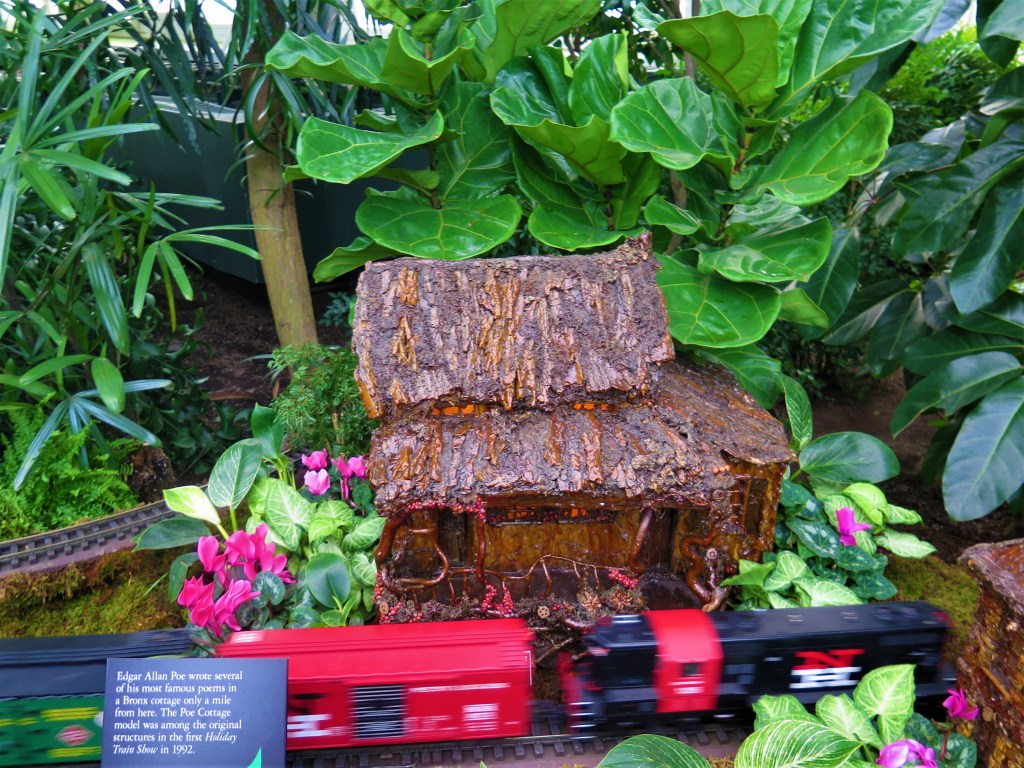
And along the outer garden pathways, you will be entranced by the beauty of the striking colors projected against the landscape of trees, bushes and buildings forming colorful patterns of light against the shadows. I went on a moonlit night and the effect was spectacular.
For The Holiday Train Show® look for the new additions celebrating the 30th year of the exhibit.
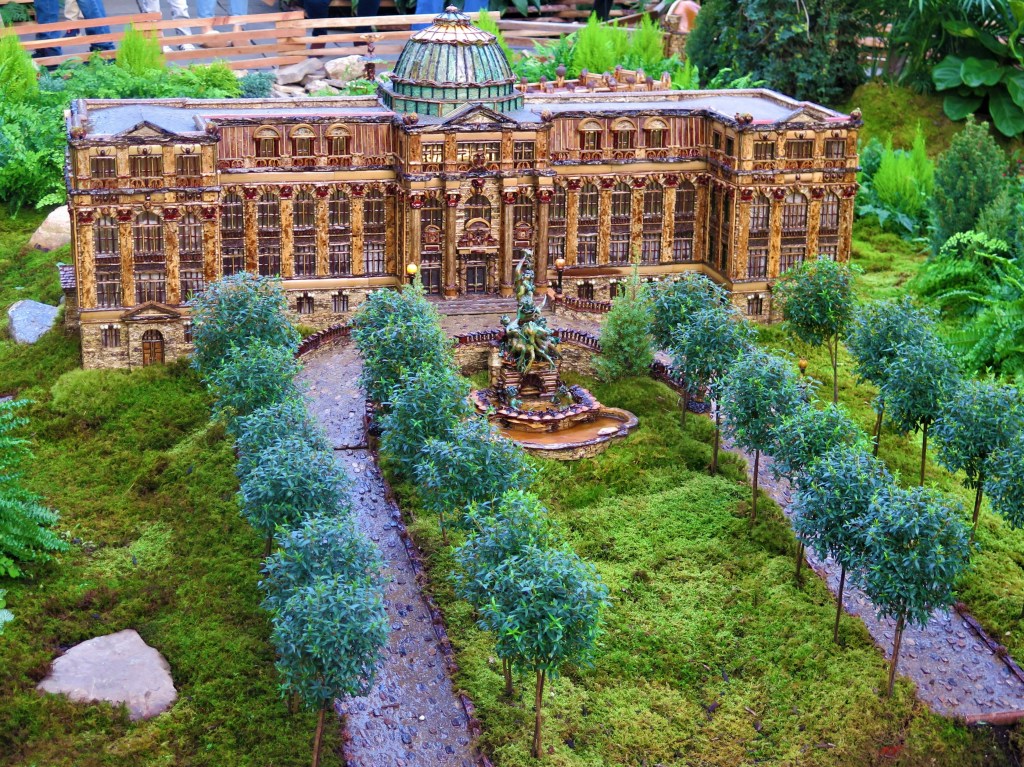
Showcased are the replicas of the LuEsther T. Mertz Library Building, the Lillian Goldman Fountain of Life, and the John J. Hoffee Tulip Tree Allee, collectively designated a New York City Landmark in 2009. The Allee that leads up to the LuEsther T. Mertz Library is comprised of four rows of distinguished native trees that were planted beginning in 1903 and have grown to a great height.
When I spoke to NYBG staff and Laura Busse Dolan, the CEO of Applied Imagination, she mentioned that the Tulip Tree Allee replica in front of the LuEsther T. Mertz Library Building are live topiary myrtle trees very ingeniously sculpted to scale.

The Mertz Library is the most important botanical and horticultural library in the world. It houses more than 11 million archival items spanning 10 centuries. In a style reminiscent of a Roman Baroque palace and capped with a green copper dome, architect Robert Gibson designed the striking building in 1901.
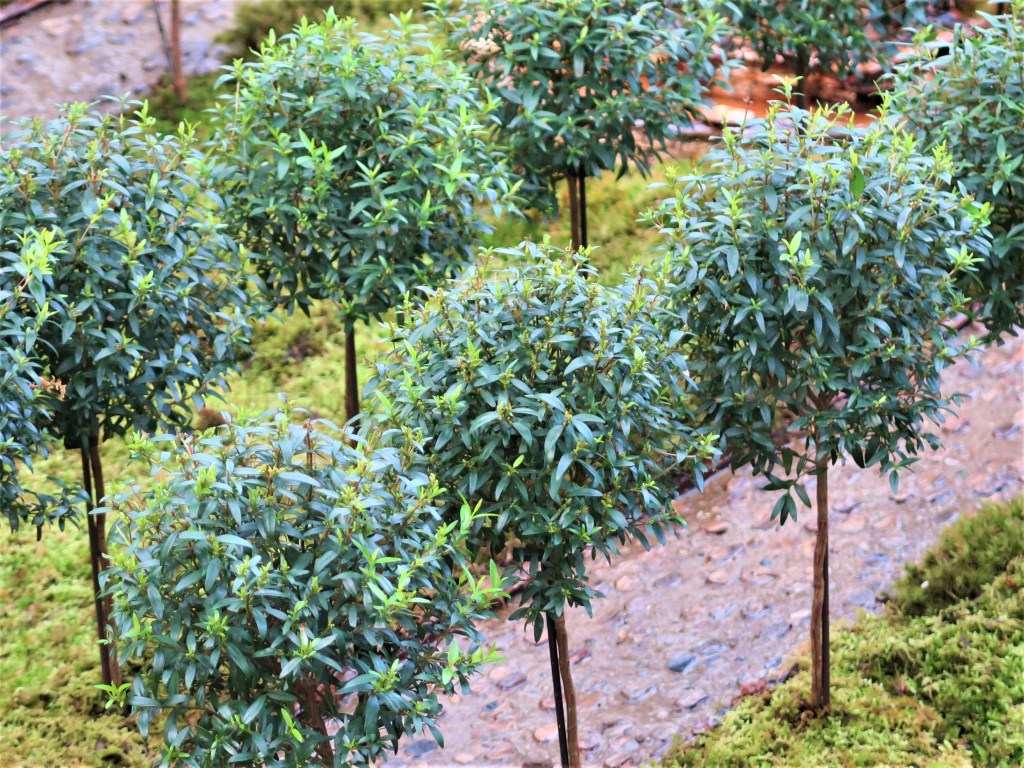

The Applied Imagination miniature is constructed with natural materials; the facade is made of horse chestnut bark, representing the structure’s stone blocks. Accented by mahogany pods, cinnamon pods and black walnuts (donated by a patron of NYBG) the replica is a beauty in its own right, worthy of the 900 to 1000 hours for its fabrication.


A part of the display, The Goldman Fountain of Life is the dramatic composition of mythical figures in front of the Library. American Renaissance sculptor Charles E. Tefft designed the fountain in 1905. It was restored in 2005, 100 years later. Like the real fountain, the replica mirrors the Beaux-Arts sculptures including charging seahorses, a lively nymph and a startled mermaid and merman. These figures are covered in tobacco leaves with grape vine tendrils for their hair. Incredibly, the fountain’s basin is created from large shelf fungus.

Some interesting facts about the structures featured in this year’s exhibit that you may not know are as follows. The Lillian and Amy Goldman Stone Mill, one of my favorite NYBG buildings dates around 1840 and can be rented out for weddings and other catered affairs. It was designated a New York City Landmark in 1966 and a National Historic Landmark in 1976. Applied Imagination’s team used tobacco leaves, cork, alder seeds, grape vine tendrils, and Brazilian and turkey tail fungi to the replica.

The Enid A. Haupt Conservatory features prominently on the other side of the display with the LuEsther Mertz Library Building. The Conservatory which is also a New York City Landmark is considered one of the most superb glasshouses of its time. Lord & Burnham Company completed its construction in 1902. Comprised of 11 interconnected galleries that feature different habitats and plant specimens from around the world, the conservatory also features seasonal galleries, presenting annual floral displays and special exhibitions highlighting world renowned artists. The replica finished in 2014 was constructed of birch bark, cinnamon bark curls, wheat husks and acorn caps. The cupola rests on a ring of large pine cone scales and is topped by a mahogany seedpod and lotus seedpod. If you take the time to look closely, you will recognize these plant parts and gain a new appreciation of the genius Applied Imagination manifests in is miniature structures.

The NYBG The Holiday Train Show® has included the seven bridges around the New York City area. Model trains and trolleys trundle along the tracks along the train trestles. the tallest replica is The Brooklyn Bridge that comes in at 16 feet. Even Hell’s Gate Bridge is included.

Downtown Wall Street area is one of the favored exhibits that New Yorkers enjoy seeing as the recognize the iconic buildings which include the Woolworth Building, the ferry building, the Oculus and One World Trade Center. The Staten Island Ferry and Statue of Liberty replicas are recognizable globally.
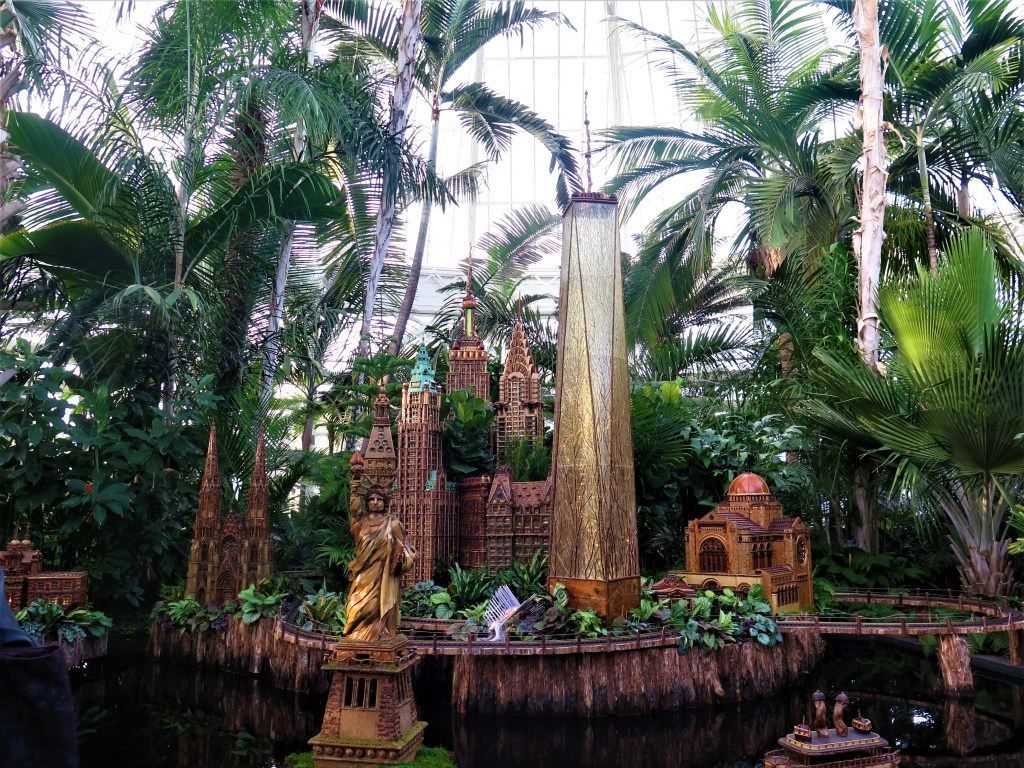
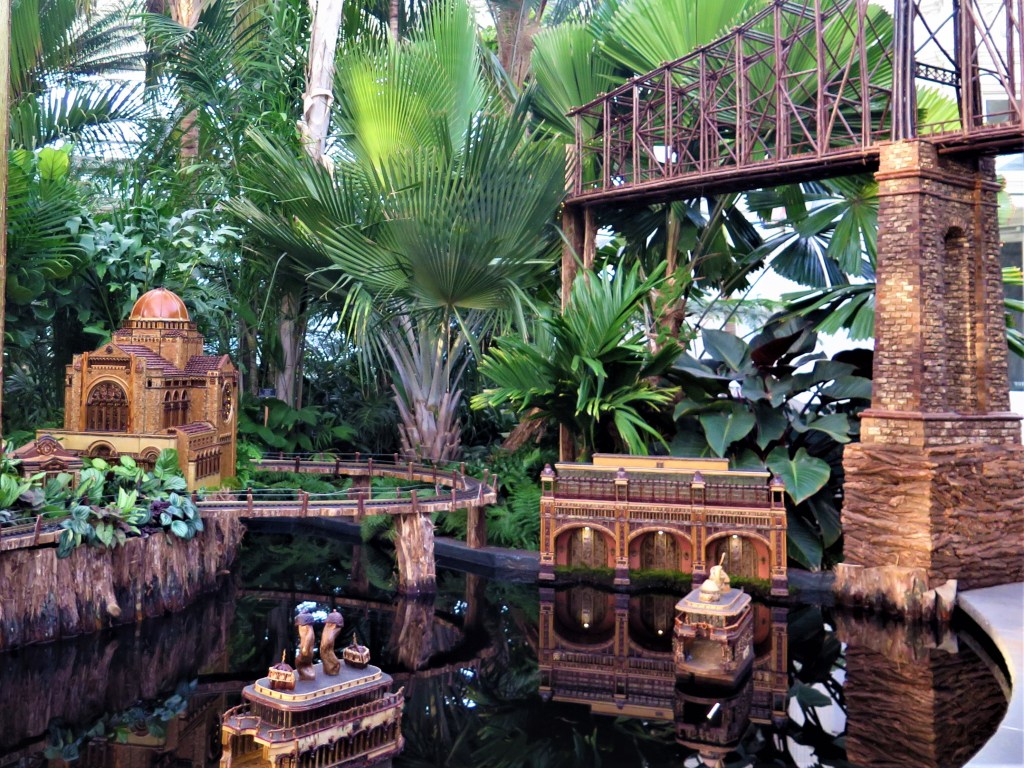
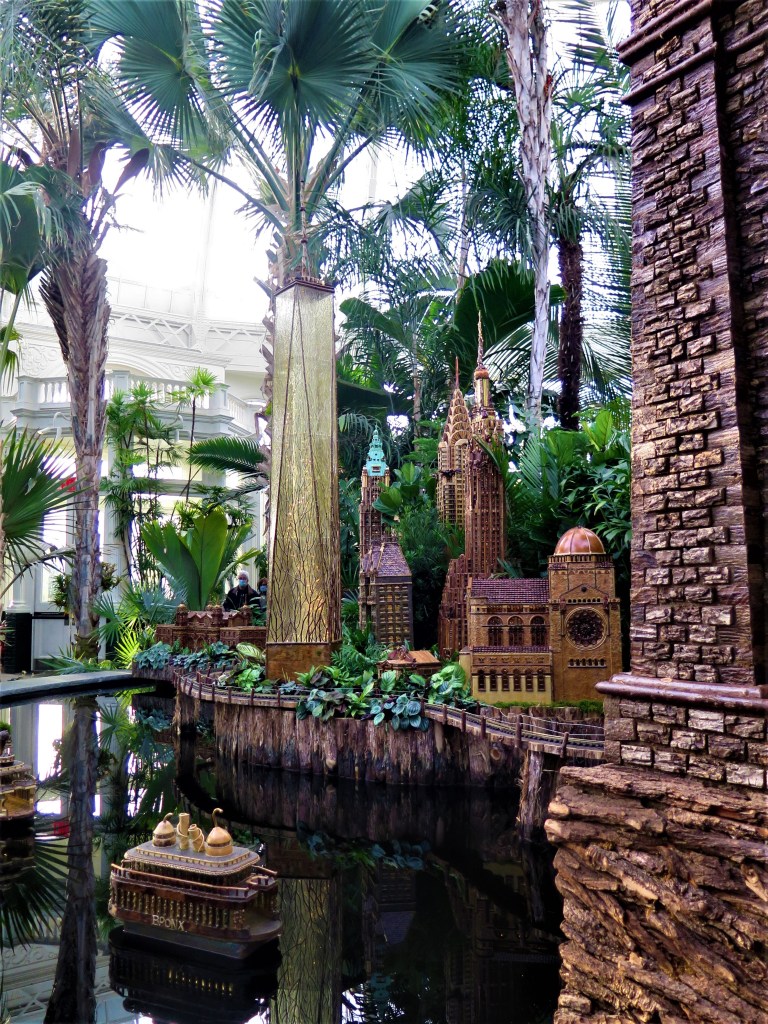


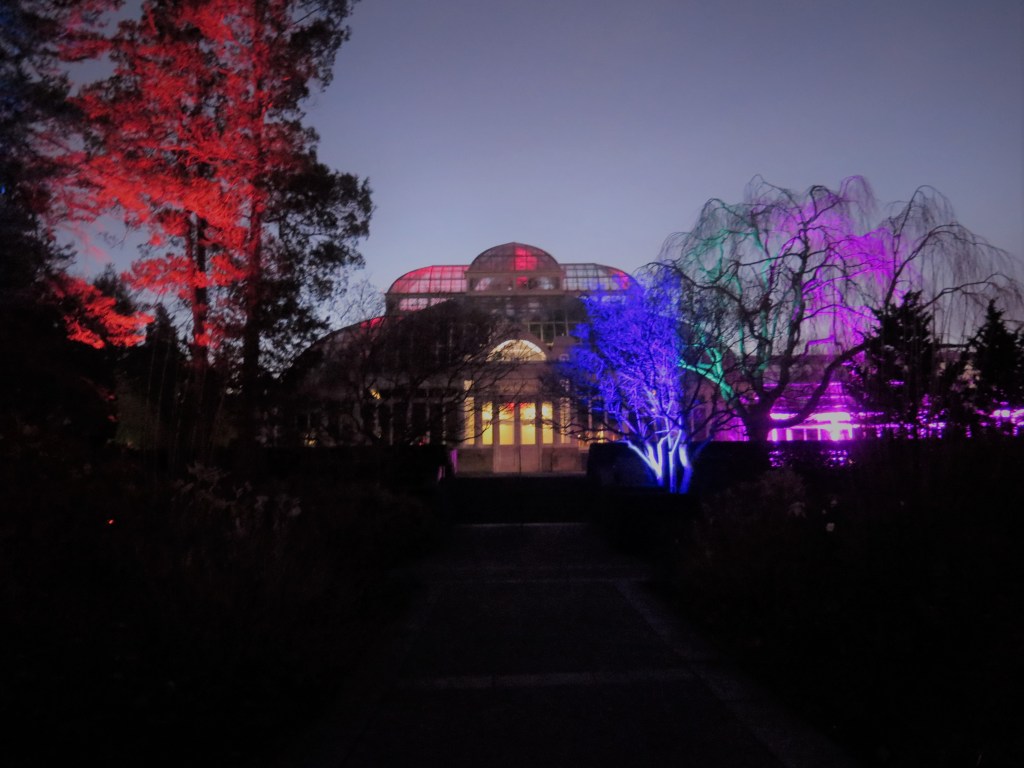
NYBG’s 30th Year Milestone Celebration of The Holiday Train Show® on a combination ticket with GLOW runs from (Thursday December 23, 2021 – Sunday, January 23, 2022 from 10 a.m. – 6 p.m.) For tickets and times (and by now, you should purchase a membership, you know you always wanted to) go to their website by CLICKING HERE.
New York Botanical Garden: Intimate ORCHID Spotlight Replaces Annual Exhibit

As a result of the pandemic, the New York Botanical Garden has changed its approach regarding its annual orchid exhibition. In keeping with safety and security for New Yorkers, Garden members and guests, the annual Orchid Show will return in 2022. As a replacement, the Garden is focusing on a personal and close-up view of orchids without the fanfare, showiness and crowds.

This year unusual orchids and other plants from NYBG’s permanent collections will be displayed in select galleries of the Enid A. Haupt Conservatory on February 20–April 4, 2021.

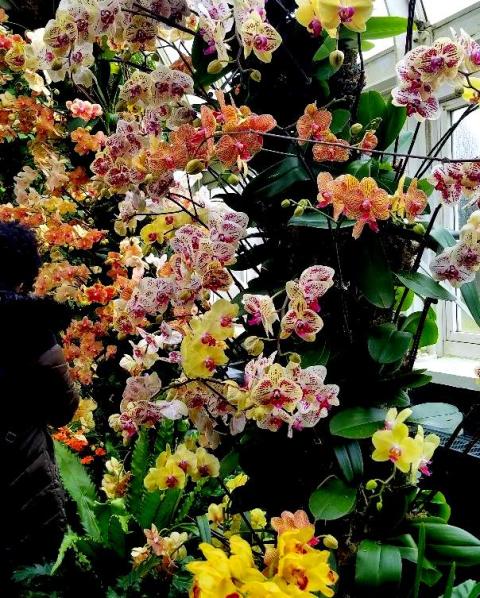
Continuing with reduced indoor capacity, The New York Botanical Garden (NYBG) is forgoing its traditional orchid exhibition presenting a limited Spotlight on Orchids and other permanent plant collections in the Enid A. Haupt Conservatory. A visit to select galleries of the Conservatory will reveal displays of orchids in brilliant white and striking colors set against the foliage of aroids, ferns, and bromeliads. The plantings highlight how the orchids might be found in nature as they blend seamlessly with their surroundings.
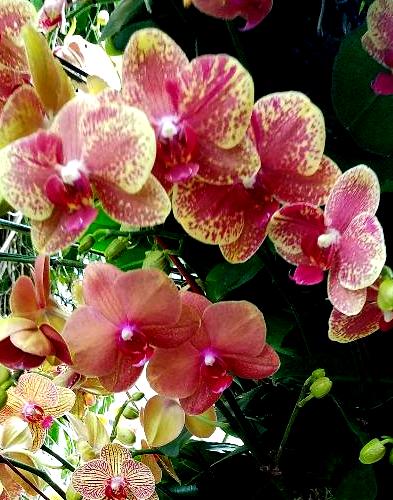
The approach brings attention to orchids in their habitats and emphasizes investigation of orchids as one of the largest of plant families in their their variety with differences in their shape, size and color to attract pollinators. Orchids thrive on every continent except Antarctica and can be found even the desert gallery of the Enid A. Haupt Conservatory.

As visitors walk through the various galleries, they will be able to view and explore unique orchids from NYBG’s renowned collections from around the world. The Garden is known for its rare orchids. Don’t forget to take a long, lingering look at the glass case between the galleries where many of the Garden’s rare and small orchids enjoy their special, controlled environment. Also, check out the artful floral creations. These are fashioned by Botanical Garden horticulturists. The creations combine expressive orchids from the popular Moth orchids (Phalaenopsis) to lady slippers (Paphiopedilum) with rocks, tree trunks, vines, and other found materials.

NYBG looks forward to the return of its annual Orchid Show in 2022.
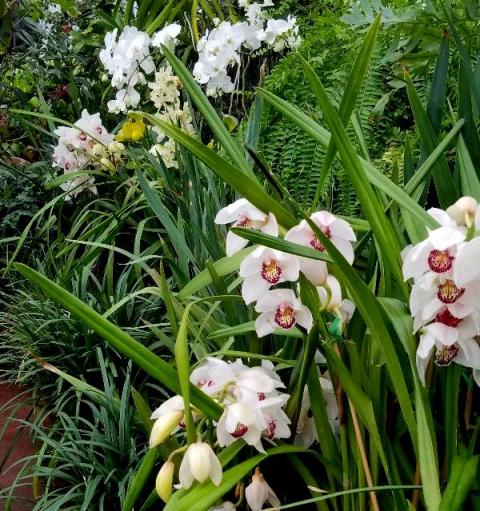
The Spotlight on Orchids runs from Saturday, February 20, through Sunday, April 4, 2021; 10 a.m. to 5 p.m.
Tickets for Spotlight on Orchids is open to all visitors with the purchase of an advance, timed Garden Pass + Conservatory ticket, which includes access to the Enid A. Haupt Conservatory and outdoor gardens and collections. Click on http://nybg.org/visit for more information or tickets.
KUSAMA: Cosmic Nature at New York Botanical Garden
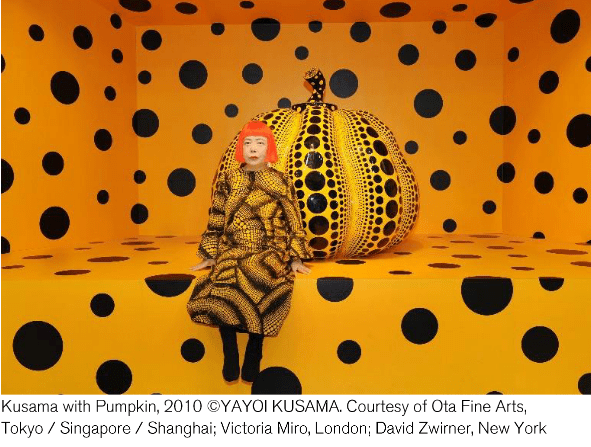
The New York Botanical Garden is presenting its expansive 2021 exhibition, KUSAMA: Cosmic Nature. The internationally celebrated Japanese artist Yayoi Kusama is being featured for the Spring season since the exhibit was postponed in 2020 because of the COVID-19 pandemic. The exhibition includes four experiences that will debut at the Garden which is the exclusive venue for KUSAMA: Cosmic Nature. The exhibition will be installed across NYBG’s landscape, in and around the Enid A. Haupt Conservatory, and in the LuEsther T. Mertz Library Building. Timed, limited-capacity tickets for the landmark presentation go on sale to the public March 16, 2021, at https://www.nybg.org/event/kusama/
KUSAMA: Cosmic Nature
Members-Only Benefits
KUSAMA: Cosmic Nature Members-Only Benefits
- Exclusive Member ticket Pre-Sale, March 11-15
- Complimentary exhibition and Garden admission – visit again and again, for free!
- Exclusive Members-Only Preview Day, April 9
- At the Patron Level, enjoy the best of the exhibition with a dedicated Patron pre-sale beginning March 9, complimentary Infinity Mirrored Room tickets when interior access begins, and special viewing opportunities.

Experience Yayoi Kusama’s profound connection with nature
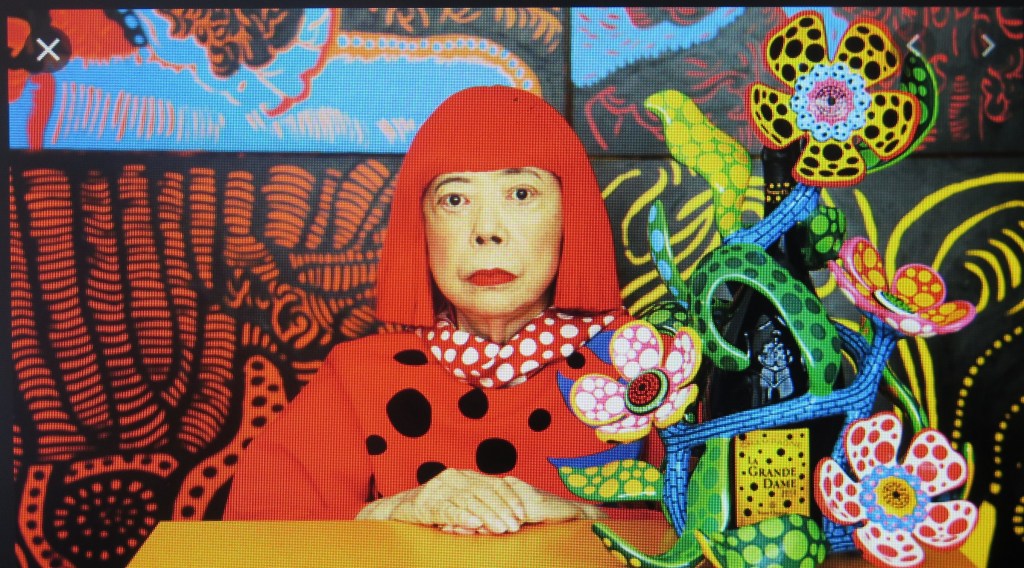
Contemporary Japanese artist Yayoi Kusama is one of the most popular artists in the world, drawing millions to experience her immersive installations.
Exclusively at NYBG, Kusama reveals her lifelong fascination with the natural world, beginning with her childhood spent in the greenhouses and fields of her family’s seed nursery. Her artistic concepts of obliteration, infinity, and eternity are inspired by her intimate engagement with the colors, patterns, and life cycles of plants and flowers.

Explore Kusama’s eternal love for plants
Spectacular installations feature Kusama’s multifaceted art, including monumental floral sculptures that transform NYBG’s 250-acre landmark landscape.
Across the grounds, discover installations that include the artist’s legendary Narcissus Garden (1966/2021) in the Native Plant Garden. Nearby, marvel at Ascension of Polka Dots on the Trees (2002/2021), where soaring trees are adorned in vibrant red with white polka dots. The horticultural spectacle across the landscape changes throughout the seasons, with tulips and irises in spring, dahlias and sweetpeas in summer, and pumpkins and chrysanthemums in fall.
In and around the Enid A. Haupt Conservatory, Kusama’s work comes to life through a seasonal progression of violas, salvias, zinnias, chrysanthemums, and other colorful annuals, while her plant-inspired, polka-dotted sculptures are nestled among meadow grasses, bellflowers, and water lilies, including Hymn of Life—Tulips (2007) in the Conservatory Courtyard Hardy Pool. Her mesmerizing Pumpkins Screaming About Love Beyond Infinity (2017) is on view in the Visitor Center gallery.
In the LuEsther T. Mertz Library Building, explore paintings, biomorphic collages, sculpture, and works on paper inspired by Kusama’s deep knowledge of nature, and in the adjacent Ross Gallery, enjoy Walking Piece (ca. 1966), a multiscreen digital projection of a performance work from the artist’s collection.

See new monumental and immersive works
New monumental sculptures Dancing Pumpkin (2020) and I Want to Fly to the Universe (2020) make their debut in the NYBG landscape. They join the artist’s first-ever obliteration greenhouse, Flower Obsession (2017/2021).
Patron pre-sale begins March 9, 10 a.m. ET
Member and Corporate Member pre-sale begins March 11, 10 a.m. ET
Public tickets on sale: March 16, 10 a.m. ET
FOR TICKETS GO TO THE FOLLOWING LINK
New York Botanical Garden Glow

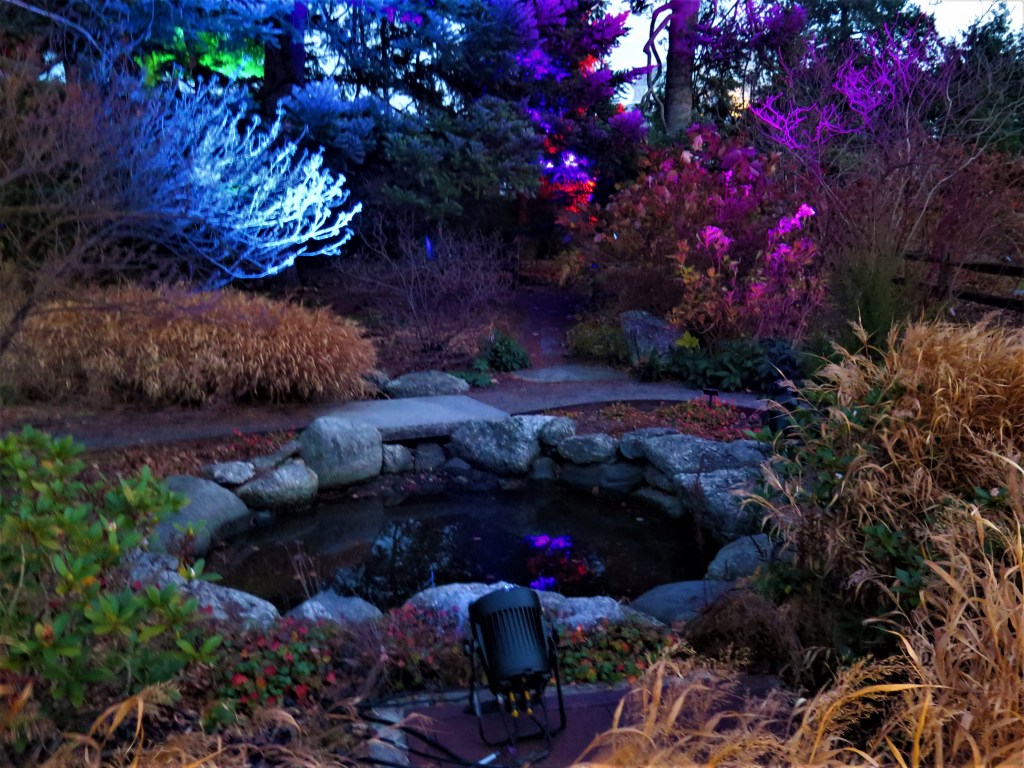
As an outdoor color and light show in the evenings, New York Botanical Garden has been presenting Glow. Sauntering along the paths of the Garden with the Enid A. Haupt Conservatory as the focal point, the shades of color illuminate the pine trees and create an otherworldly aura throughout. The beauty of Glow is that it is outdoors and there is no crowding with lots of room to spread out in safety.


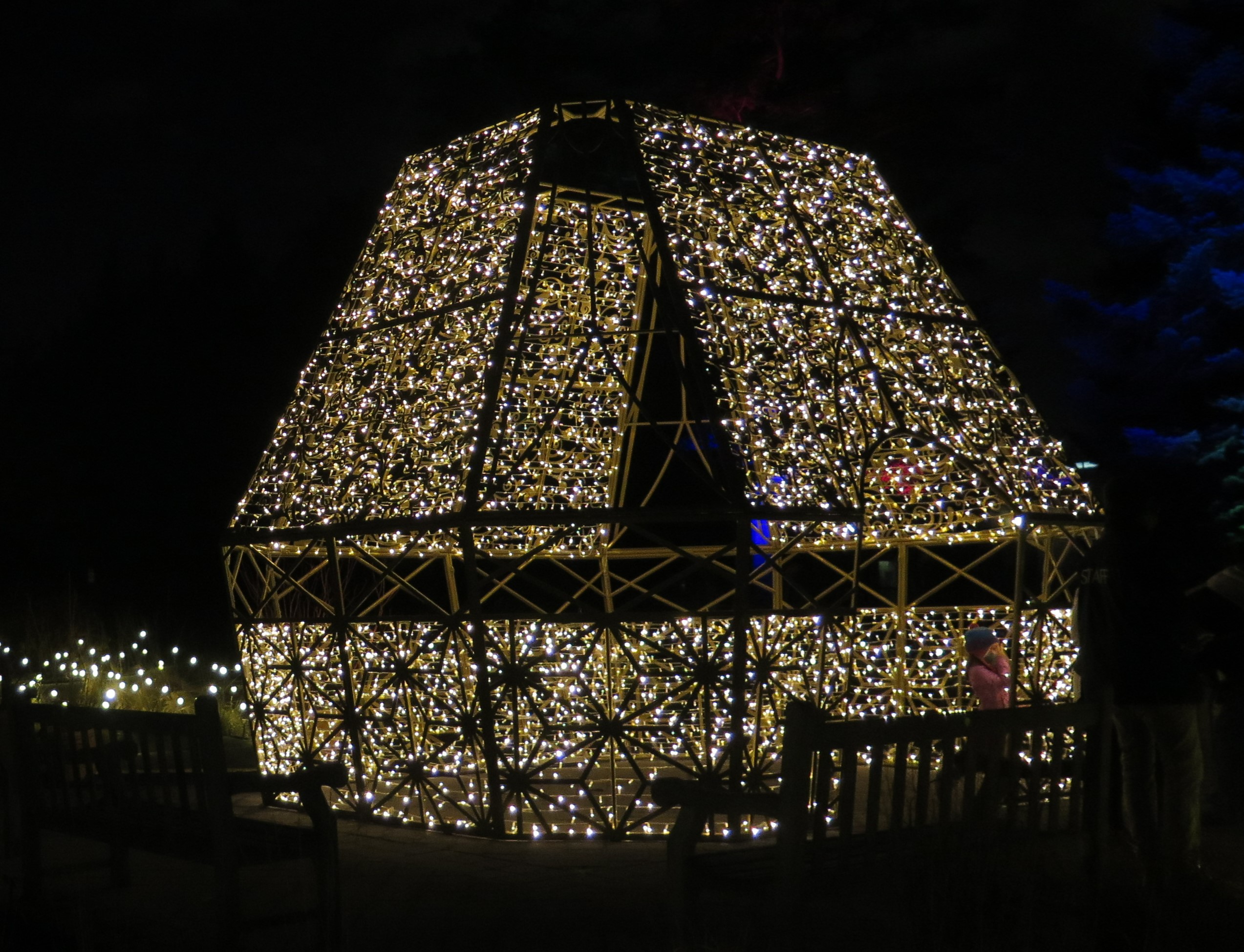
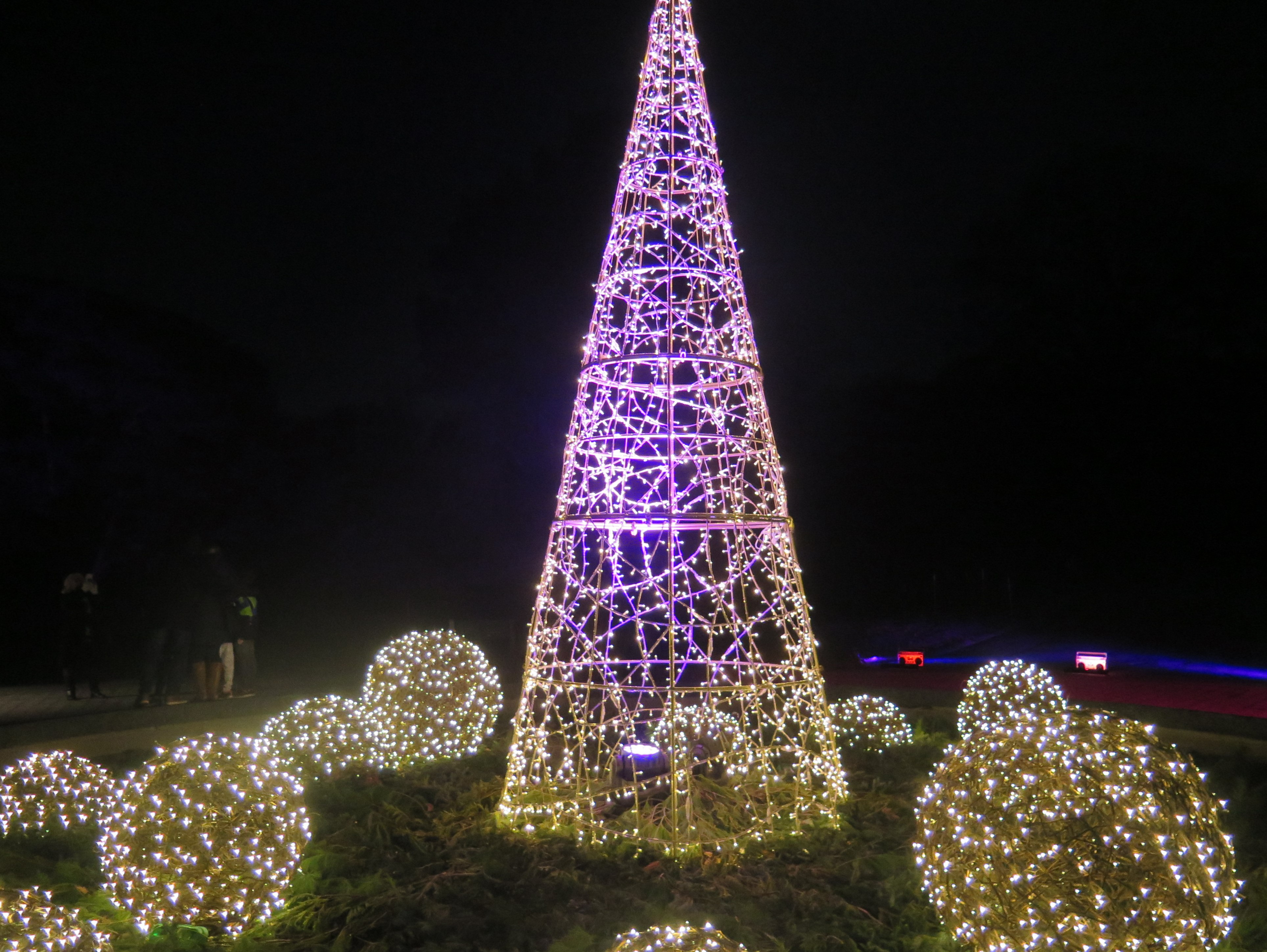
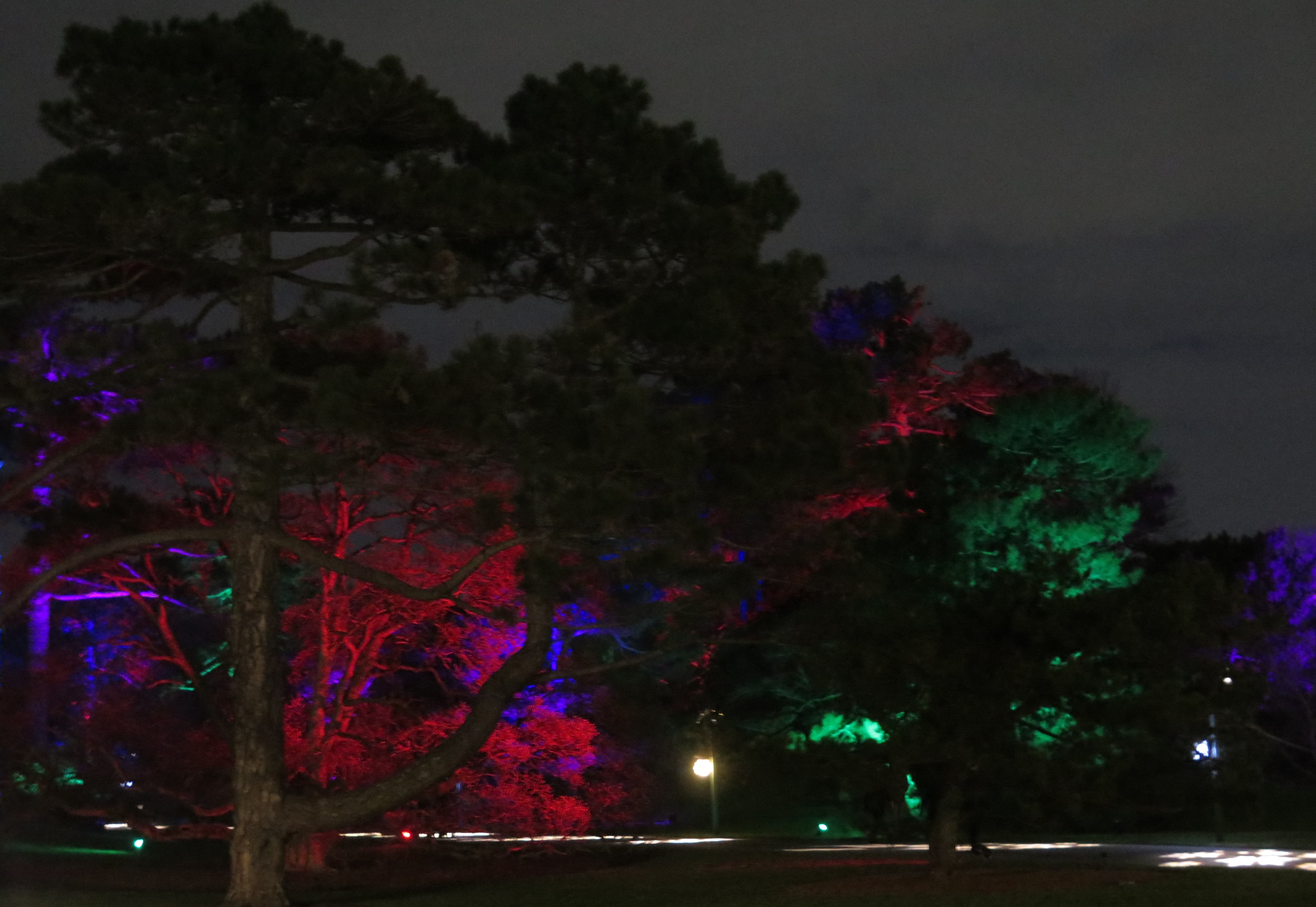

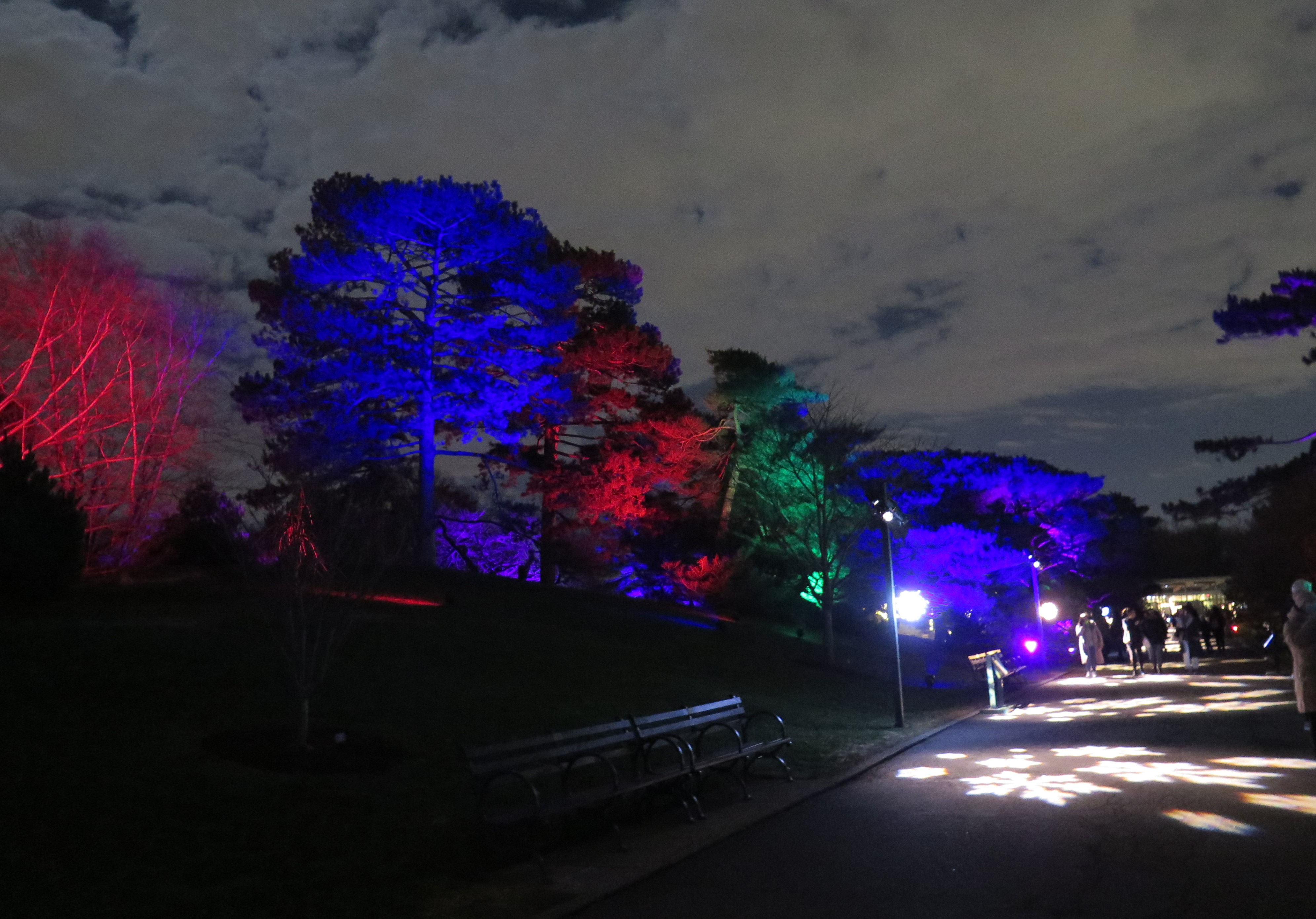

Washes of brilliant colors, thousands of dazzling, energy-efficient LED lights, and picture-perfect installations fill the Visitor Center Reflecting Pool and magically energize surrounding gardens and collections. As part of the experience, visitors can also enjoy artistic ice sculptures; music; roving dancers, including a Hip Hop Nutcracker NYBG remix; and more outdoor fun. To warm up and add satisfaction to your appreciation of GLOW, you can have a hot chocolate or latte at the Pine Tree Cafe with other treats and sandwiches, pizza and Paninis.

In accordance with New York State and City requirements for cultural institutions and safety protocols that include limited ticketing capacity and social distancing, timed-entry tickets for NYBG GLOW must be purchased in advance.The new, limited timed-entry ticketing system staggers visitors’ arrivals, promotes social distancing, and mitigates the risk of crowding in high-traffic areas.

More information about NYBG’s enhanced safety protocols, including a “Know Before You Go” video, is available here.

Dates left to get tickets: Friday, January 8; Saturday, January 9; Friday, January 15; and Saturday, January 16, 2021. Glow takes place during the hours: 5–10 p.m.


Timed-entry tickets for NYBG GLOW must be purchased in advance. General admission is $30 for adults and $18 for children two to 12. Children under two are admitted free. Admission for Garden Members is $20 for adults and $10 for children two to 12. Visit nybg.org for details and to purchase tickets.
NYBG Glow ends on Saturday, 16 January. You still have time to visit this gorgeous winter celebration at the Garden. Don’t miss it.
New York Botanical Garden: Haupt Conservatory Open With Limited Capacity

NYBG seasonal plantings (Carole Di Tosti)

NYB, Levon Levy Visitor’s Center-Entrance (Carole Di Tosti)
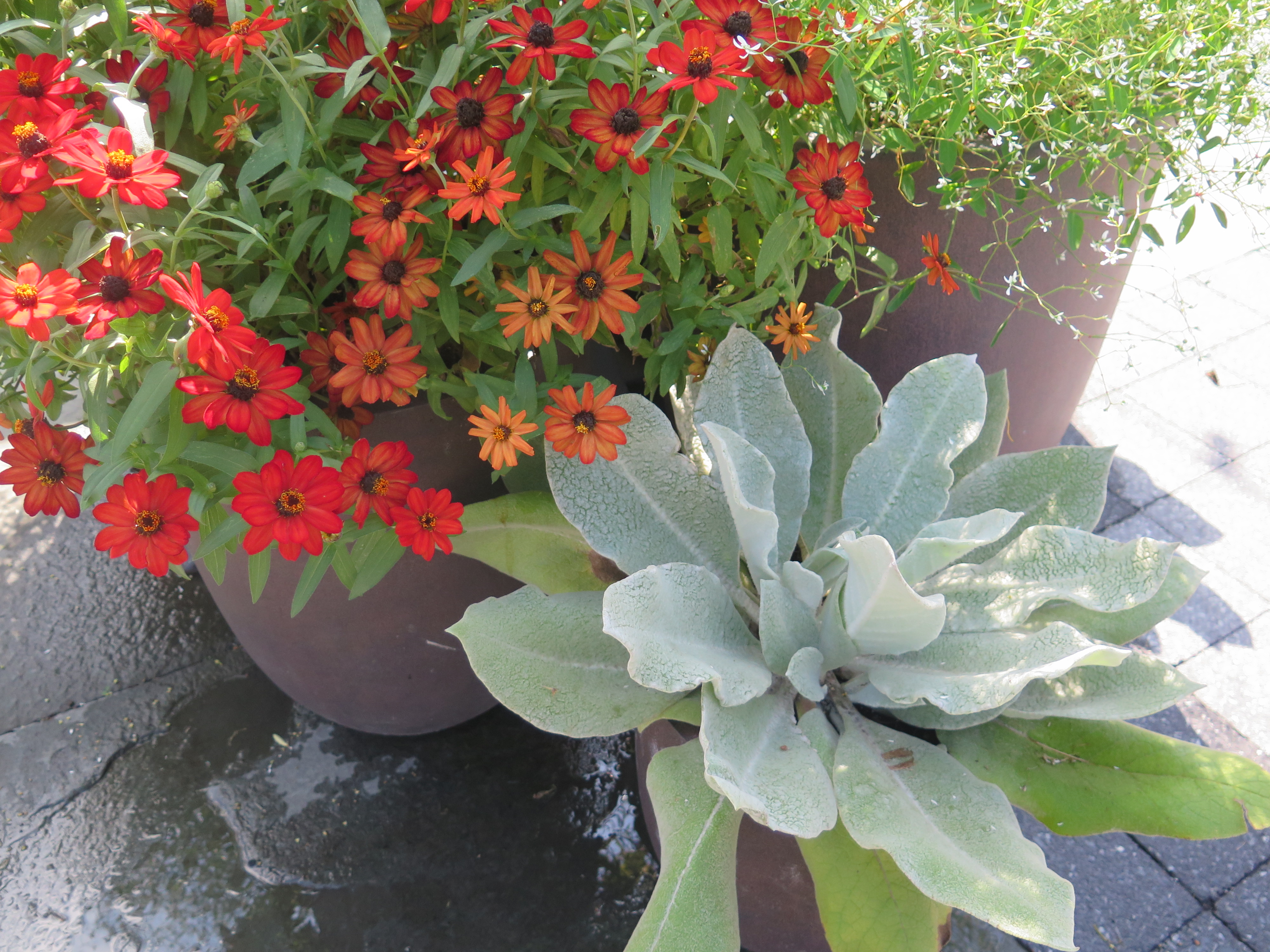
NYB, Levon Levy Visitor’s Center (Carole Di Tosti)
In times of trouble, the New York Botanical Garden has been a place of asylum and peace for many.

New York Botanical Garden (Carole Di Tosti)
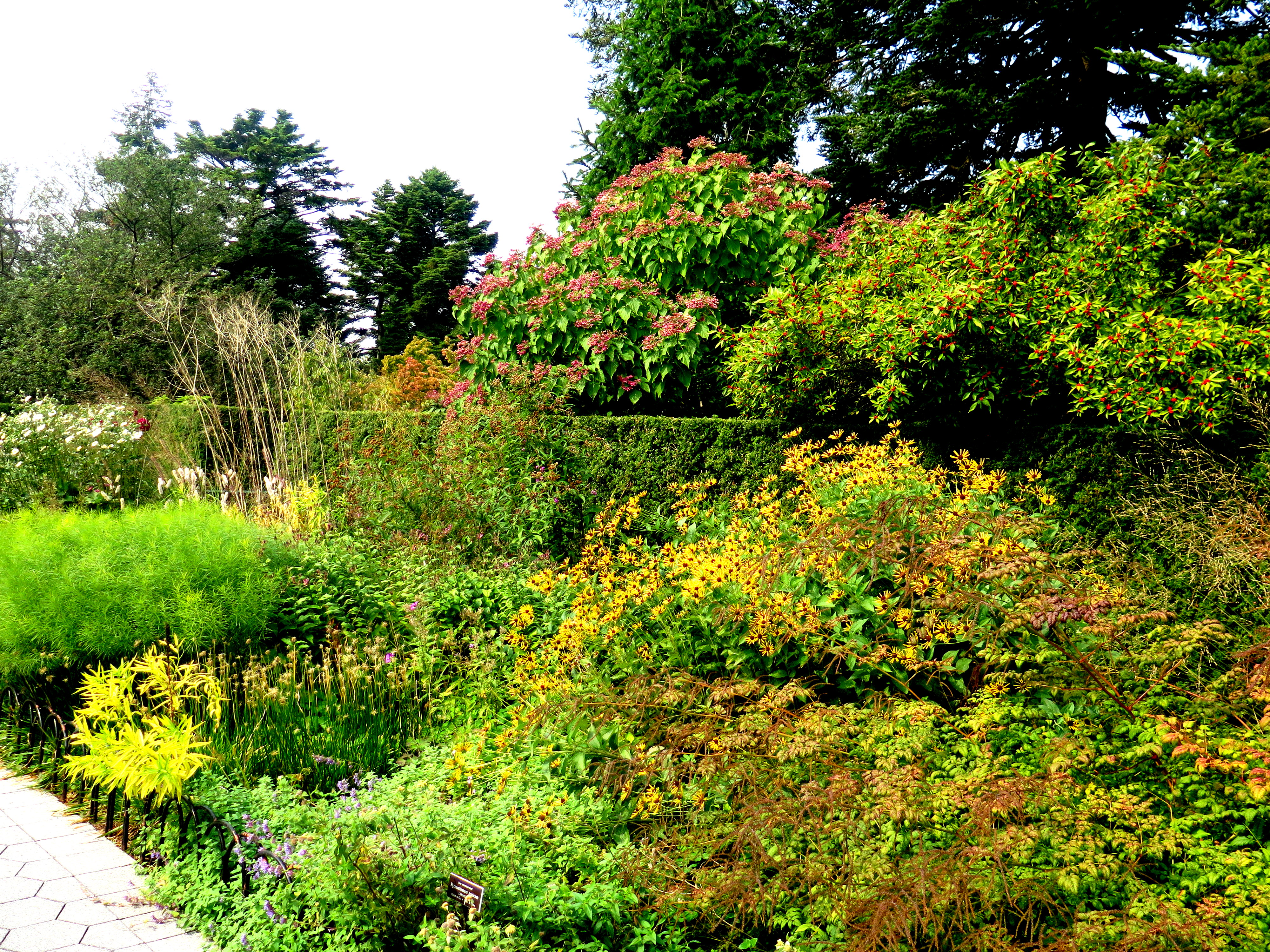
New York Botanical Garden (Carole Di Tosti)
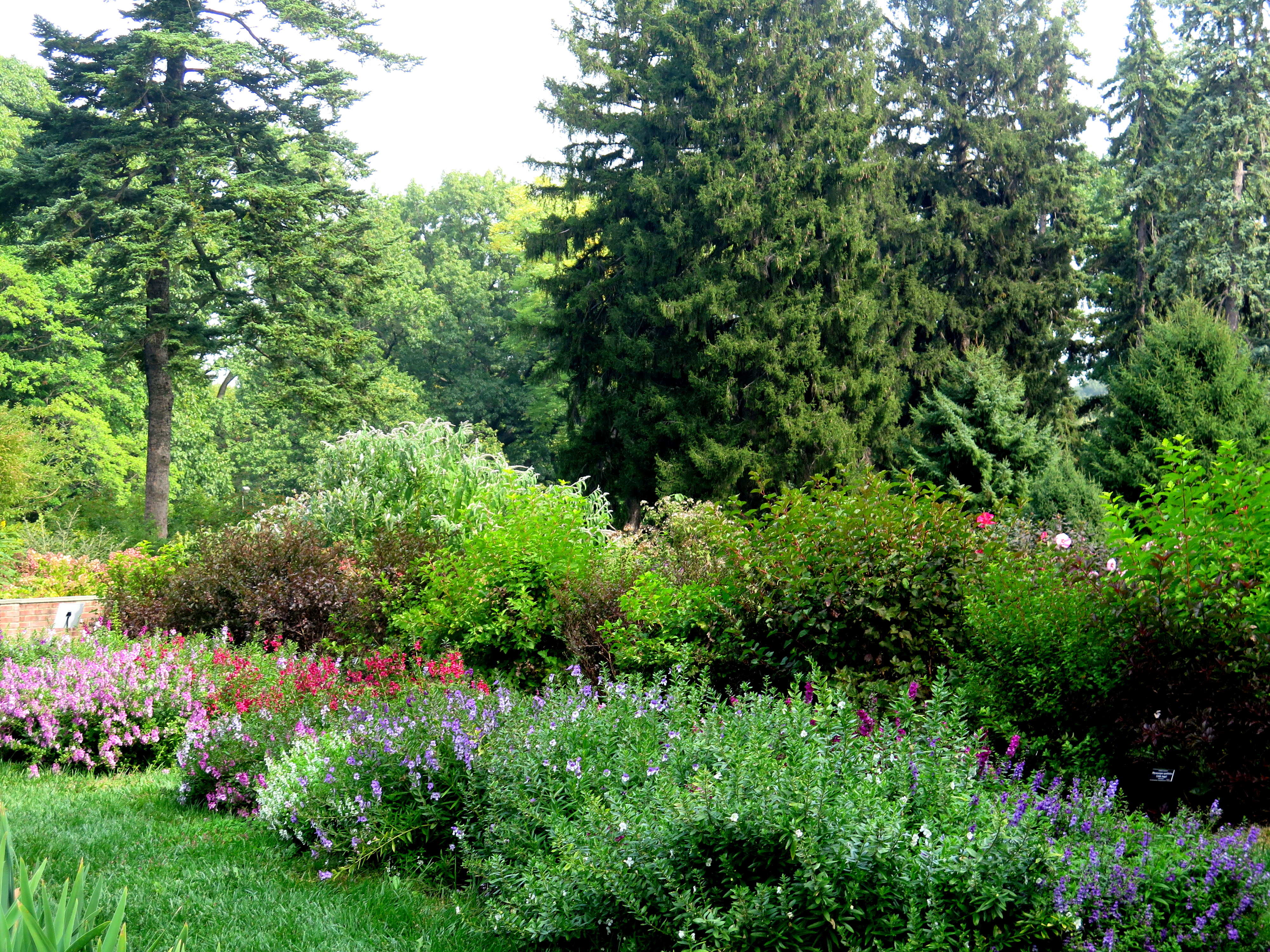
New York Botanical Garden snapdragons (Carole Di Tosti)
The 250 acres of various gardens, the serene walks, the waterfall, old growth forest, LuEsther T. Mertz Library, greenhouses, Stone Mill, ponds and Zen water designs (the Native Plant Garden, one of my favorites) provide places to contemplate, restore, clear one’s mind and rejuvenate from the noise and chaos of our culture.

NYBG, Thain Family Forest walk (Carole Di Tosti)

NYBG, Waterfall in the Bronx River (Carole Di Tosti)

NYBG Bronx River flowing by the Stone Mill (Carole Di Tosti)

New York Botanical Garden, Native Plant Garden and water features (courtesy of the Garden)
In keeping with our steadfast and wise Governor Cuomo’s phased approach to the COVID-19 pandemic, the NYBG has reopened carefully since July. They’ve accomplished this with timed-entrances, hand sanitizer stations everywhere and close monitoring of members and visitors along one-direction paths to provide 6 feet social distancing.
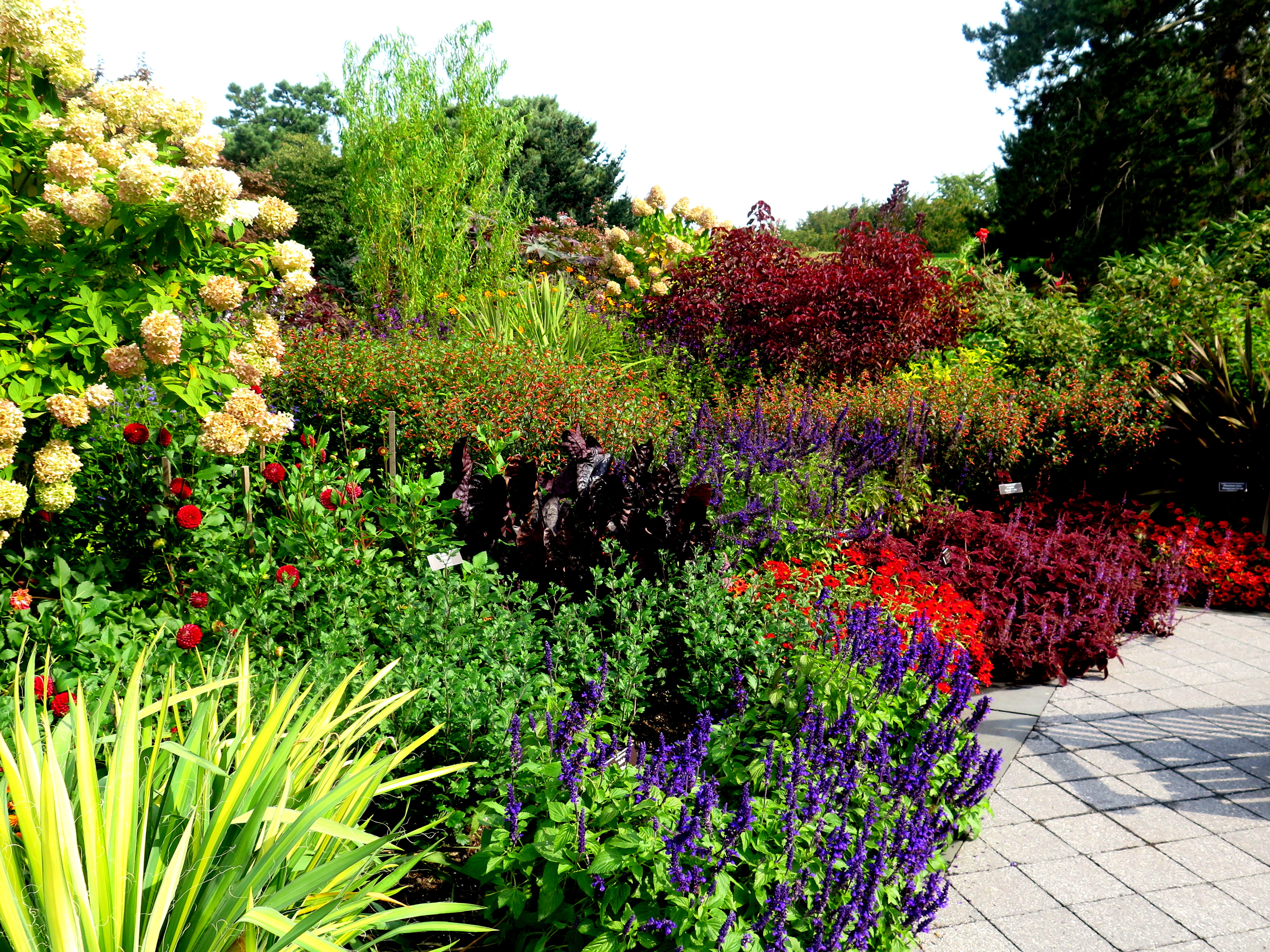
New York Botanical Garden (Carole Di Tosti)
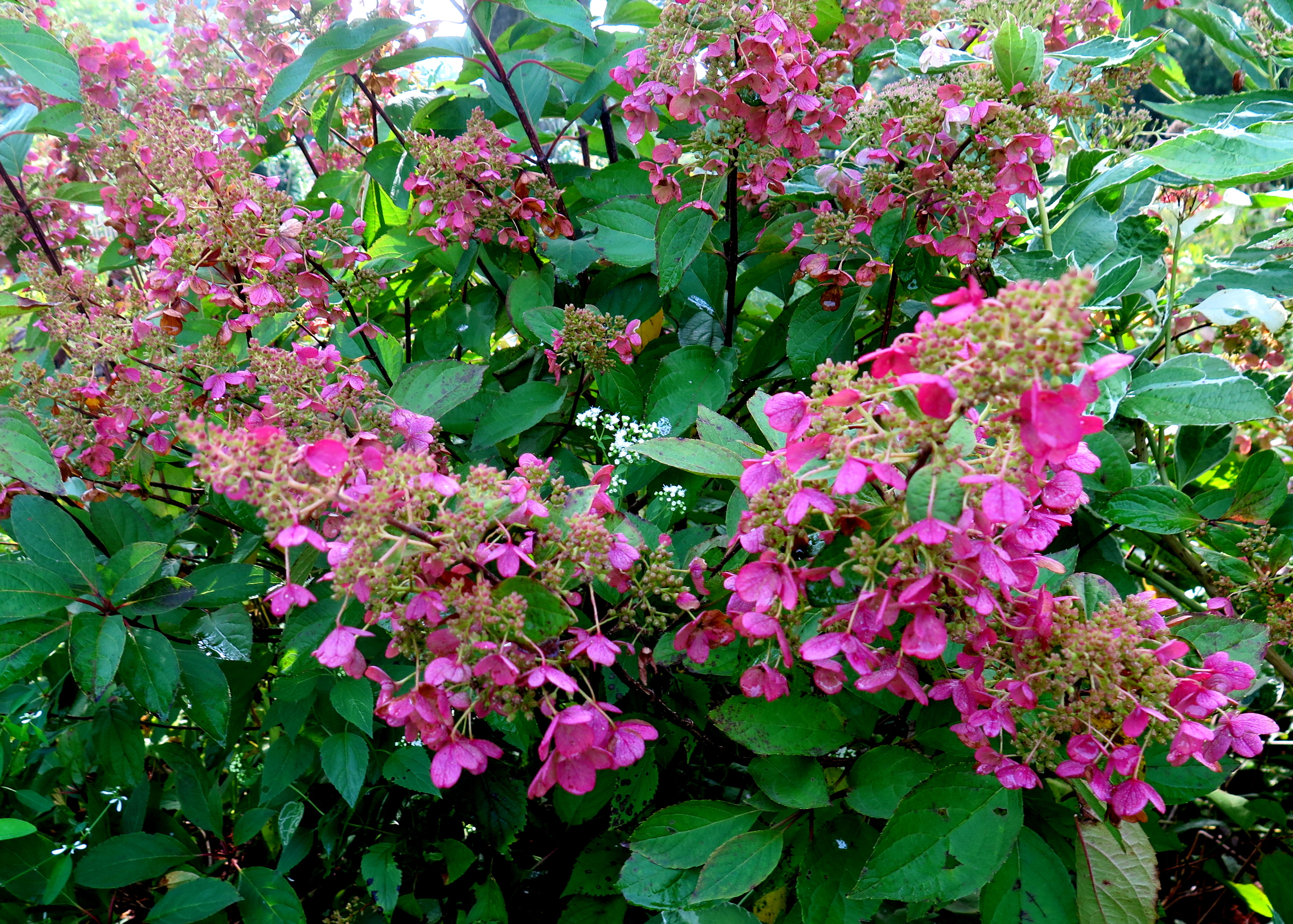
New York Botanical Garden hydrangeas (Carole Di Tosti)
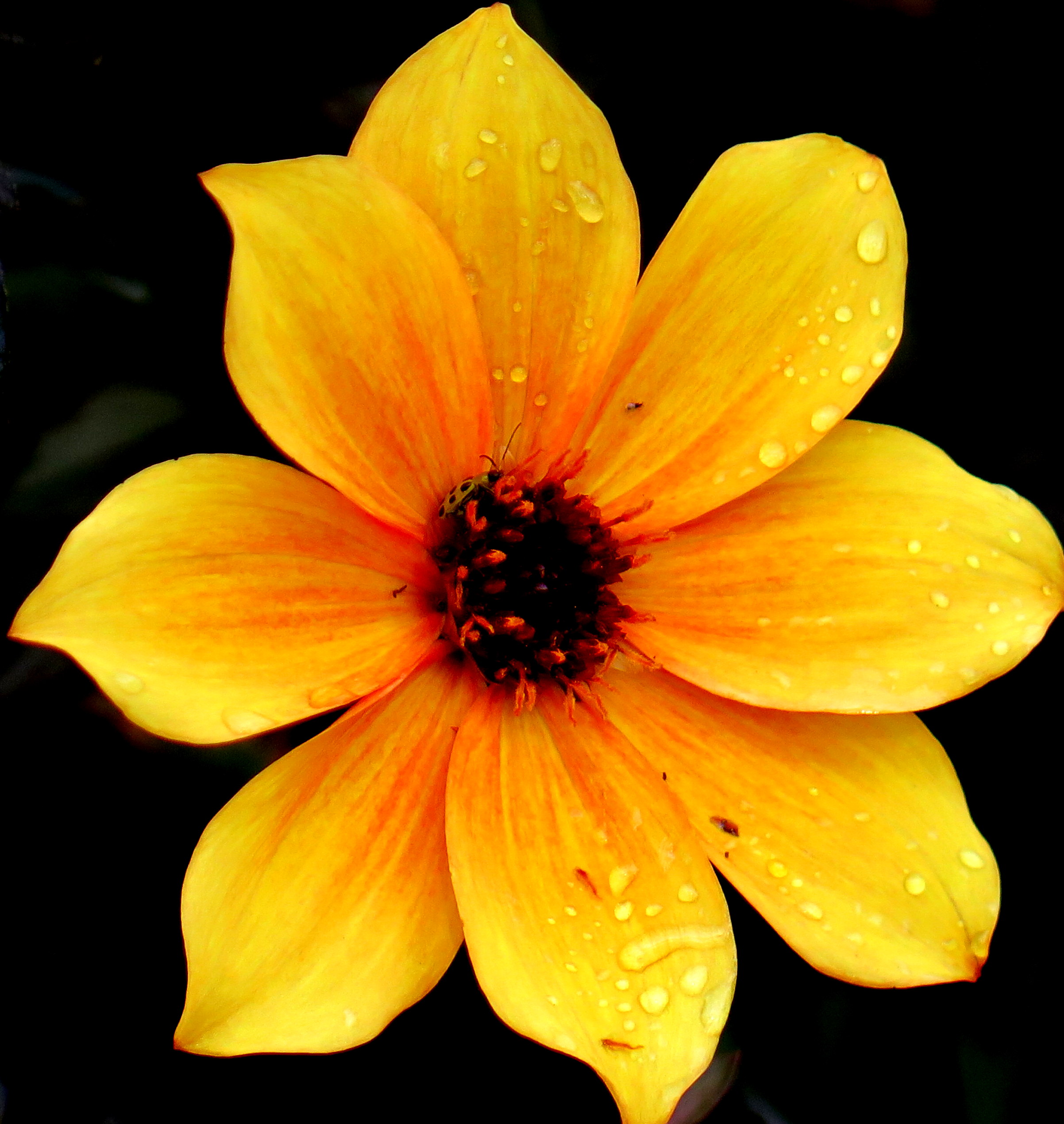
New York Botanical Garden, Dahlia, “Mystic Spirit” (Carole Di Tosti)
The bathrooms are meticulously disinfected as is the cafe which provides drinks and outdoor dining as does the Hudson Garden Grill. There is no indoor dining anywhere and the Hudson Garden Grill provides a few salads, wine, beer, cold drinks and snacks. You can sit at one of the tables under an umbrella and enjoy a light lunch viewing the beautiful pine trees, plantings and the seasonal gardens in the distance without fear of crowds, all tables separated from each other six feet or more.
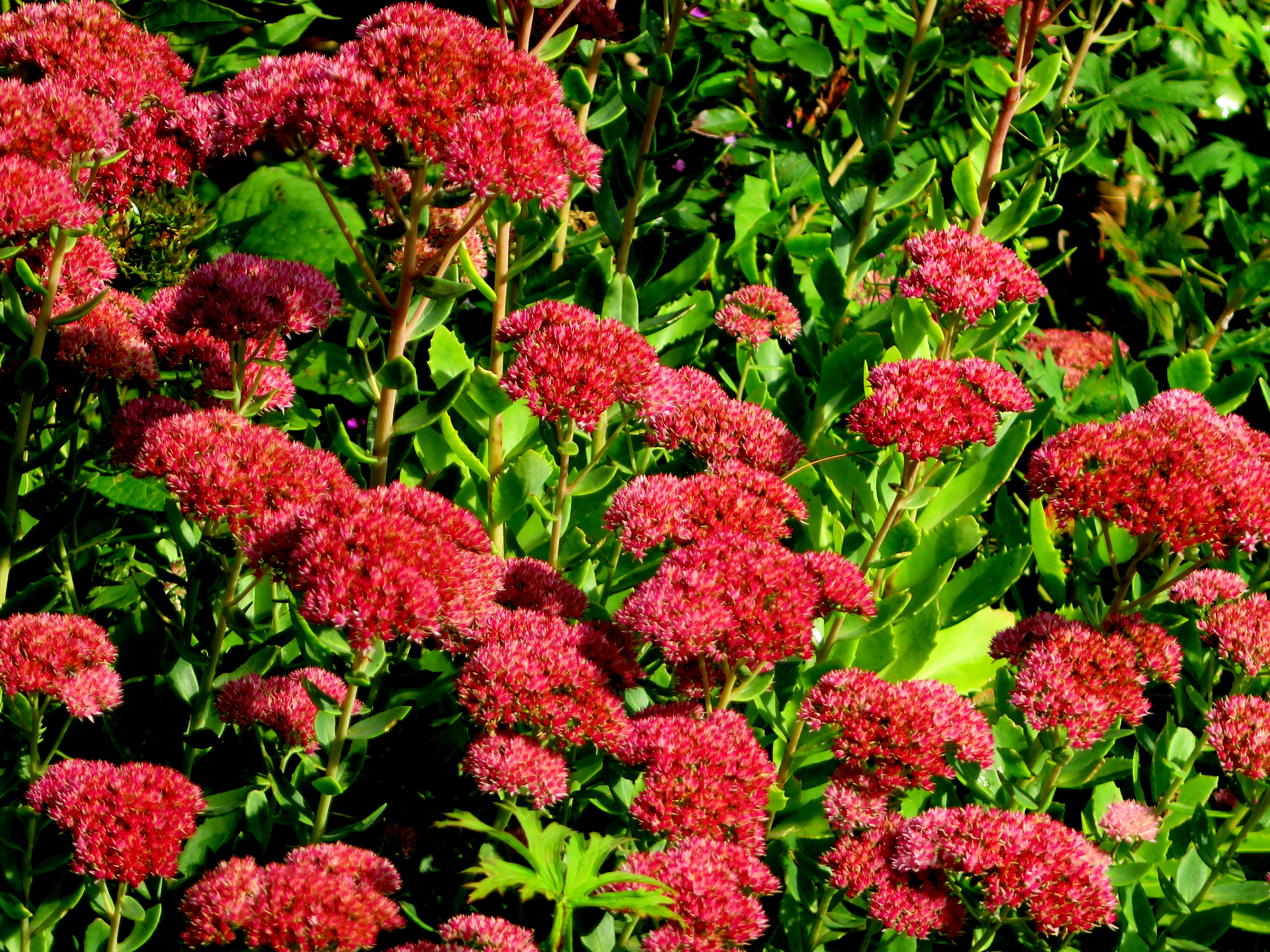
New York Botanical Garden (Carole Di Tosti)
Above all, one must visit the Garden with a mask. If one has symptoms of COVID: temperature, dry cough, body aches, digestive problems, difficulty breathing-94 oxygen level as tested by an oximeter, unusual rashes not typical of characteristic allergies, eczema, etc., in addition to cold-like flu symptoms) stay home, rest and recuperate. COVID requires not infecting others and taking care of oneself. The disease is deadly and social responsibility is an imperative when an infectious disease is easily spread in public. The Garden is a respite, but quarantine, rest, liquids, Elderberry, UMCKA and what the doctor prescribes is the only respite for COVID to avoid getting worse and having to be hospitalized.

NYBG, Enid A. Haupt Conservatory, Palms of the World gallery (Carole Di Tosti)
I visited on Friday, September 25th at the last minute and found 10:30 A..M. available to visit Enid A. Haupt Conservatory and then go for a walk on the grounds. With a membership, one has free entrance to the Conservatory and parking passes are given.
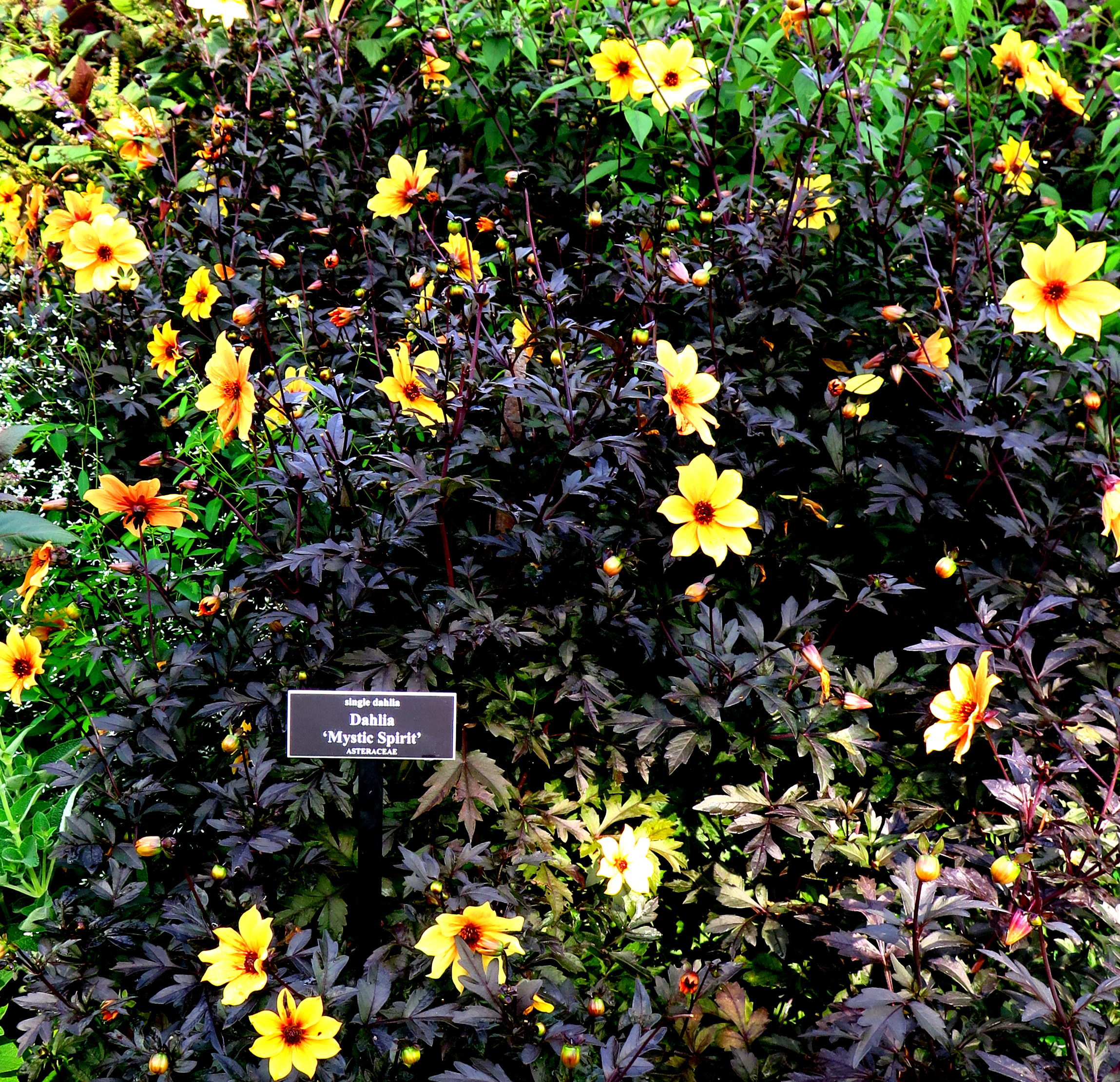
NYBG Seasonal plantings (Carole Di Tosti)

NYBG, Clematis (Carole Di Tosti
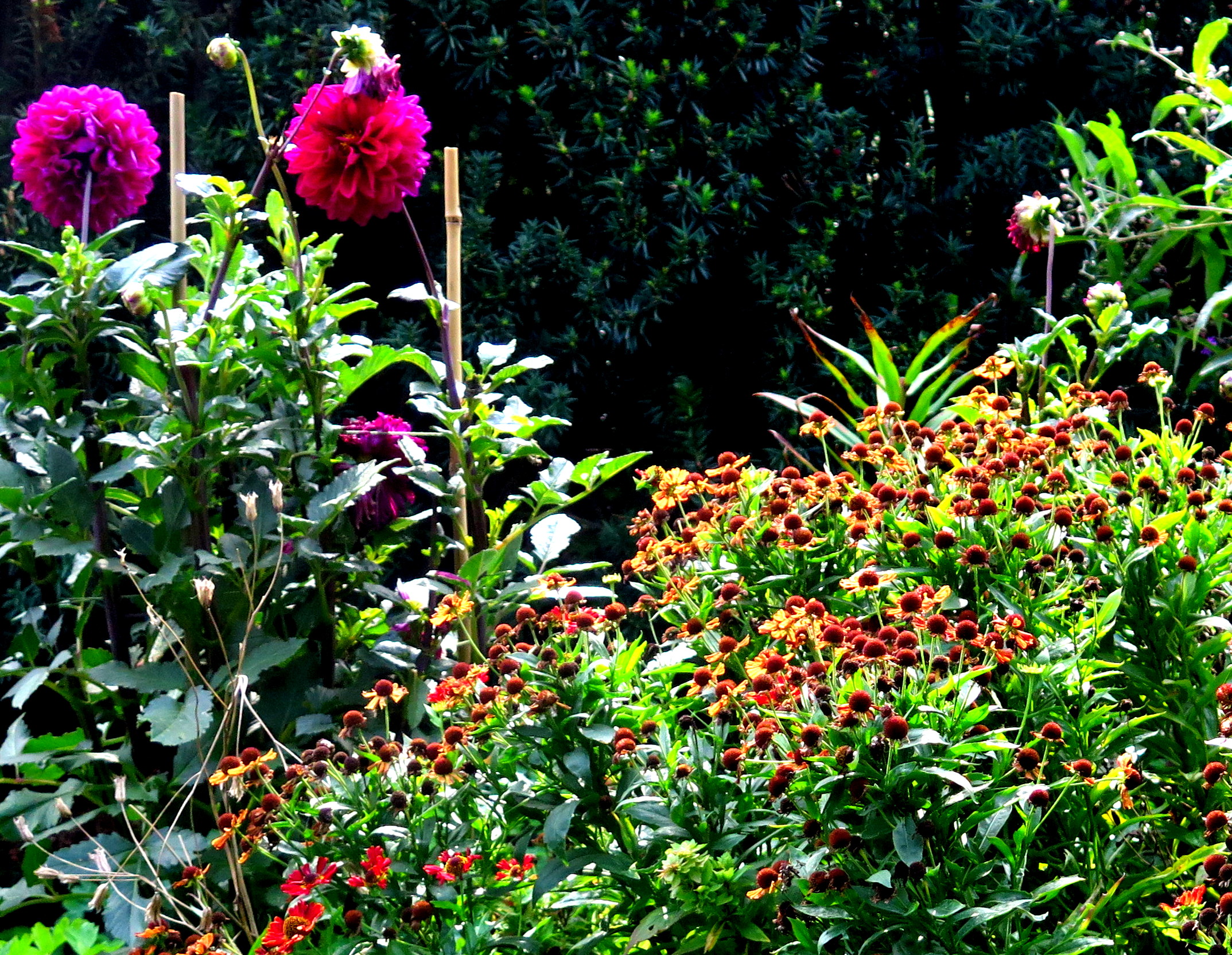
NYBG, Seasonal Plantings (Carole Di Tosti)
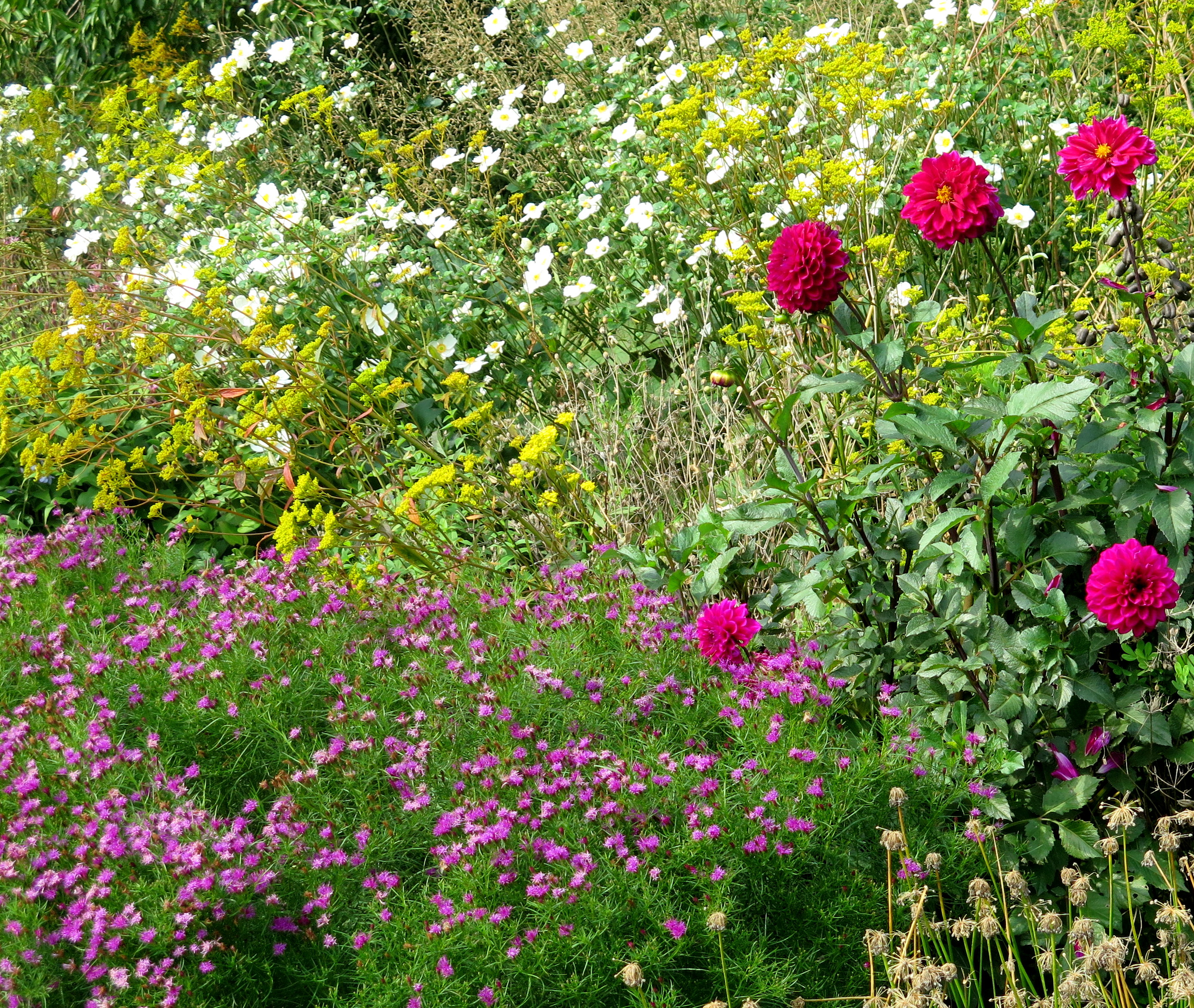
NYBG, Seasonal Plantings (Carole Di Tosti)
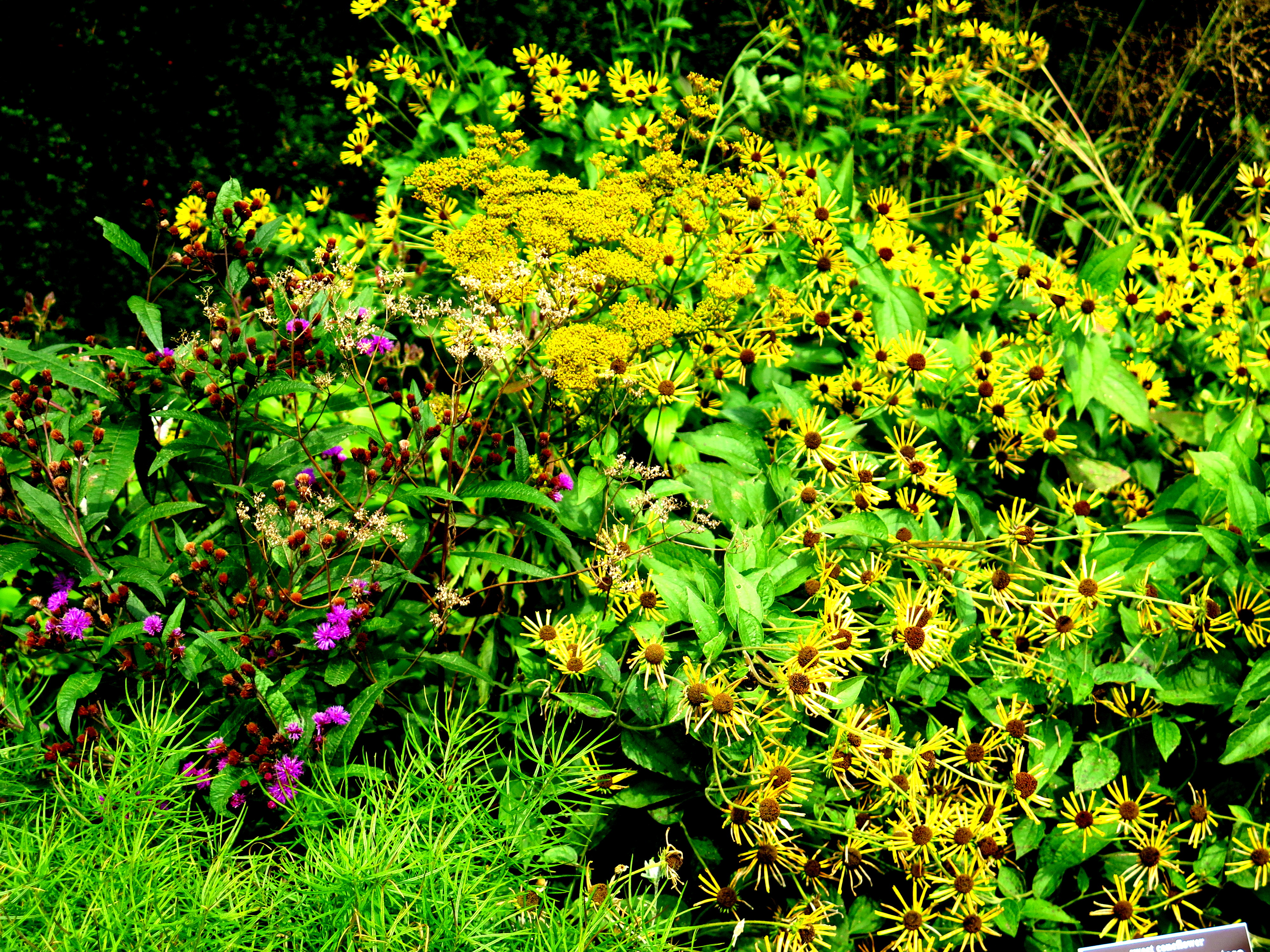
NYBG, Seasonal Plantings (Carole Di Tosti

NYBG, Seasonal Plantings (Carole Di Tosti)

NYBG, Seasonal Plantings, hibiscus (Carole Di Tosti)
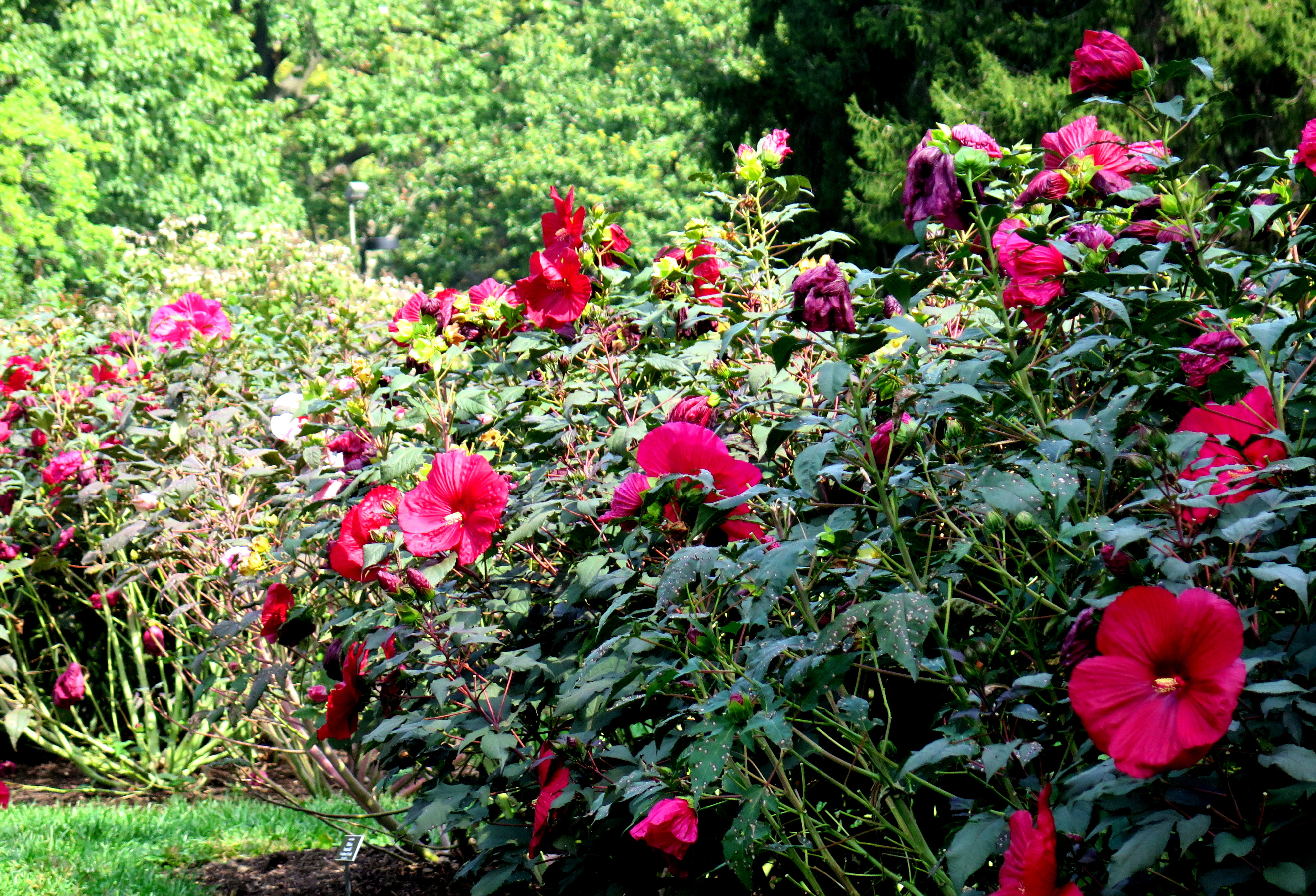
NYBG, Seasonal Plantings, Hibiscus (Carole Di Tosti)

NYBG, Seasonal Plantings, Clematis (Carole Di Tosti)

NYBG, Seasonal Plantings, Hibiscus (Carole Di Tosti)

NYBG, Seasonal Plantings (Carole Di Tosti)

NYBG, snapdragons (Carole Di Tosti)
The above pictures are what is happening around the Garden if you just plan to lift your spirits with a walk and not get involved in any other activities or go into the conservatory. The pictures below are the conservatory environs.

NYBG, fountain, interior Enid A. Haupt Conservatory (Carole Di Tosti)
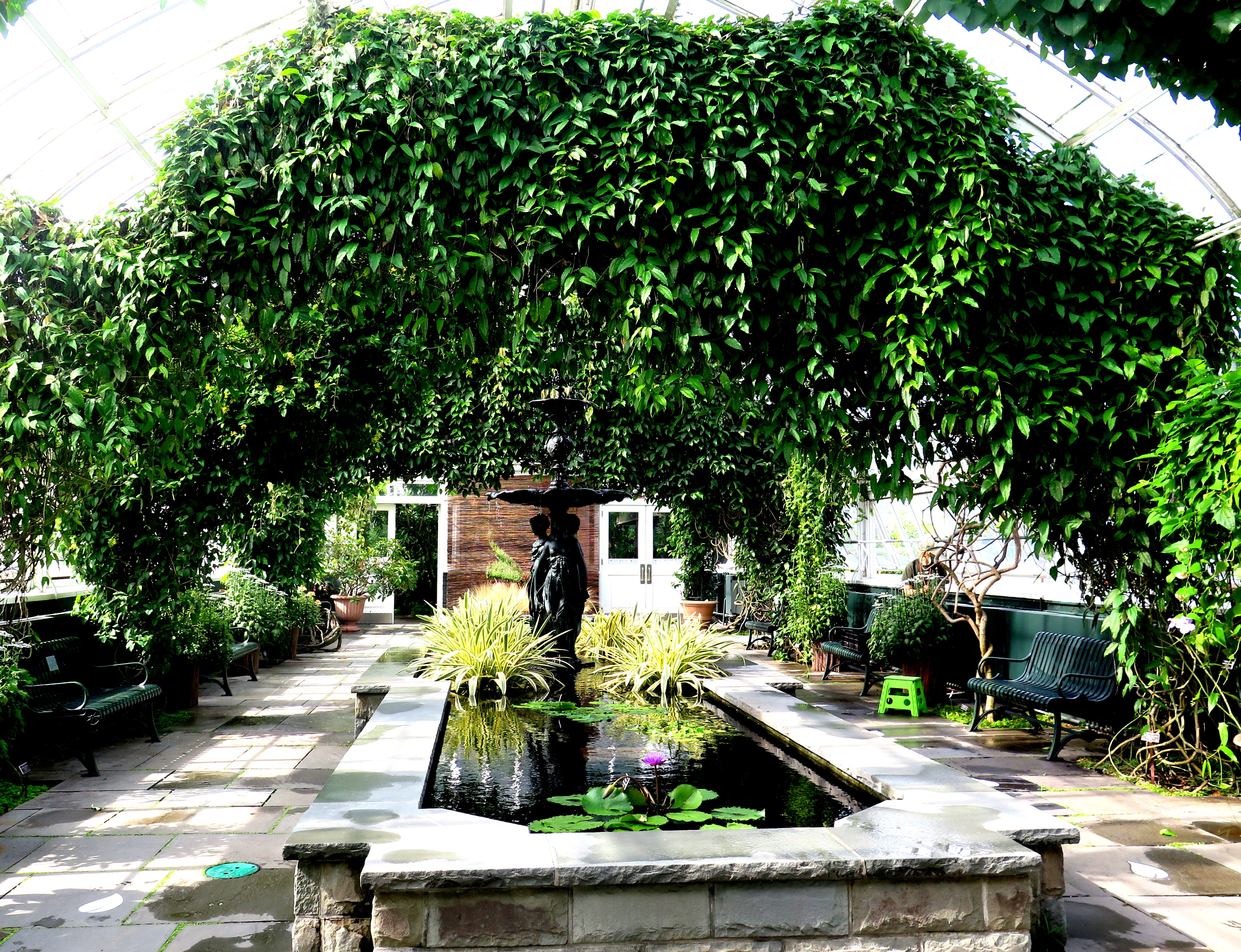
NYBG, interior Enid A. Haupt Conservatory, fountain (Carole Di Tosti)

NYBG, Enid A. Haupt Conservatory, fountain, flowering spider plant (Carole Di Tosti)
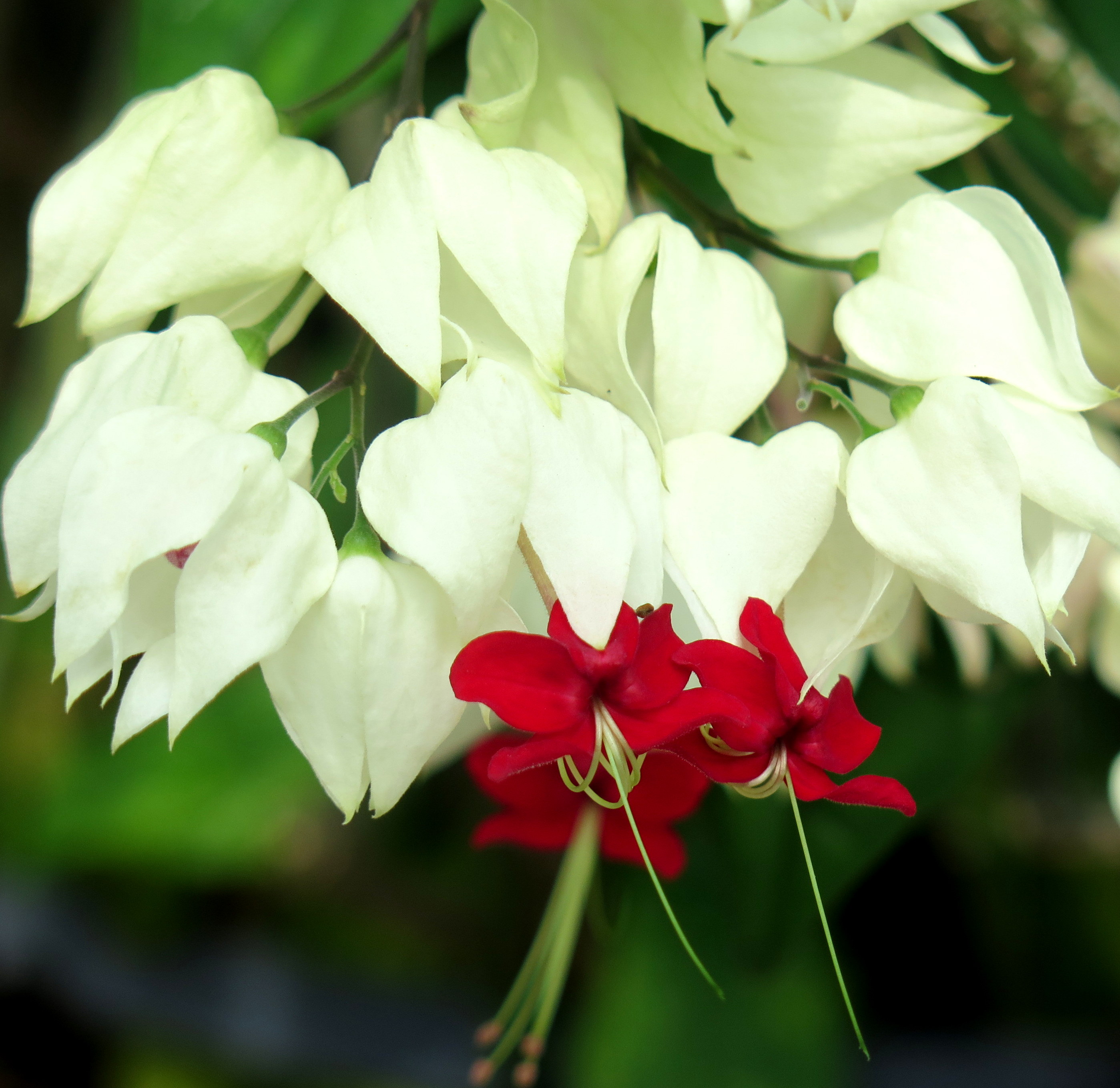
NYBG, Enid A. Haupt Conservatory, fountain gallery, floral detail (Carole Di Tosti)
If you’ve run out of parking passes as I did, parking for members is discounted at $10.00 and that is well worth it. The visual beauty and healthfulness of the plants and gorgeous landscape with lovely, coordinated plantings is better than a sedative for one’s emotional state.

NYBG, Enid A. Haupt Conservatory, walkway (Carole Di Tosti)

NYBG, Enid A. Haupt Conservatory, walkway (Carole Di Tosti)

NYBG, Enid A. Haupt Conservatory, walkway (Carole Di Tosti)

NYBG, Enid A. Haupt Conservatory, walkway (Carole Di Tosti)
The Garden staff are preparing for the Kiku exhibit which takes place in the fall every year and coincides with fall activities like Pumpkin Weekend which they are already preparing. Both take place in October.

NYBG, Enid A. Haupt Conservatory, Kiku Exhibit preparation (Carole Di Tosti)
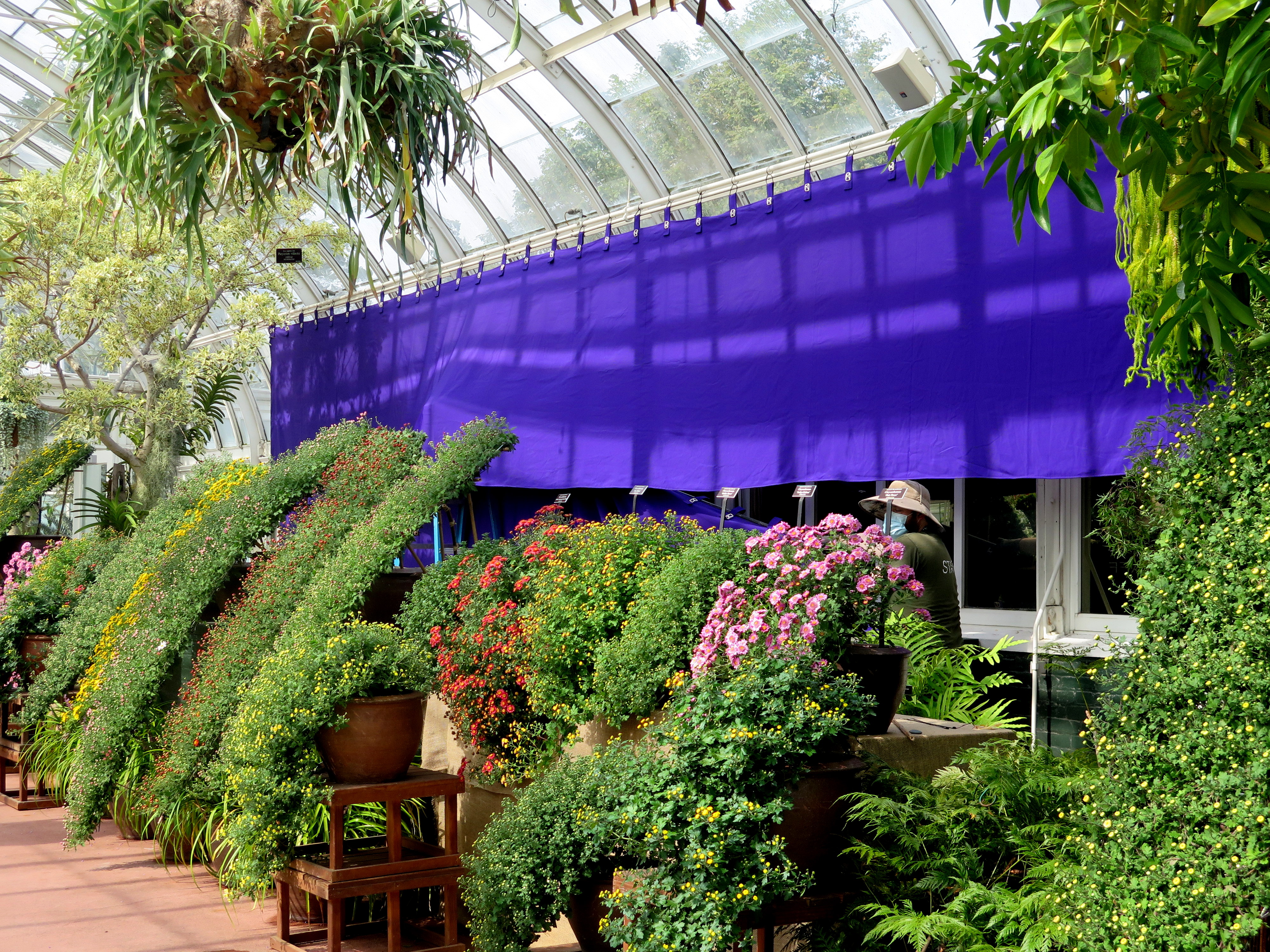
NYBG, Enid A. Haupt Conservatory, Kiku Exhibit preparation (Carole Di Tosti)

NYBG, Enid A. Haupt Conservatory, reflecting pool (Carole Di Tosti)

NYBG, Enid A. Haupt Conservatory, reflecting pool, another perspective (Carole Di Tosti)
The Conservatory is monitored by following the path through all of the galleries in the Conservatory, from the Rainforest plantings, through the Desert plantings and the exhibition galleries.

NYBG, outside the Enid A. Haupt Conservatory, the Lotus and Water Lily Pond (Carole Di Tosti)
One can also step outside to visit the Lotus and Water Lily Pond where one will see water plants, Lotus and a variety of Water Lilies.

NYBG, Enid A. Haupt Conervatory, Lily Pond (Carole Di Tosti)
Swimming amidst the plants are coy of various sizes. One old gentleman looks to be a few decades old and has grown to a renowned size.

NYBG, Enid A. Haupt Conservatory, Courtyard Plantings (Carole Di Tosti)
There is also a frog whom I heard on a few visits to the Lotus and Water Lily Ponds hanging out in the vegetation. Two Lily Ponds are in the Courtyard in the center of the environs of the conservatory.
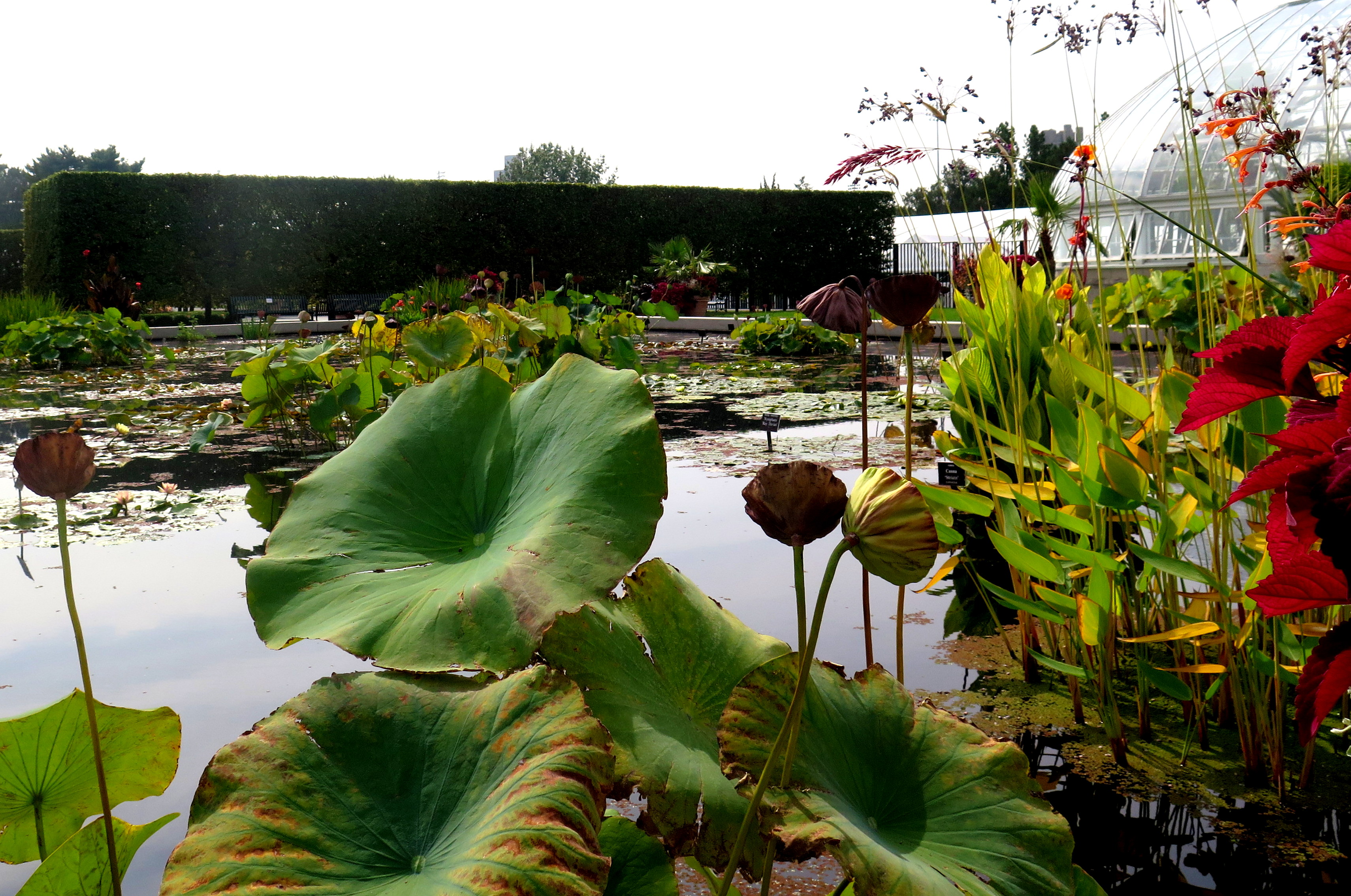
NYBG, Lotus and Water Lilly Pond (Carole Di Tosti)

NYBG, Enid A. Haupt Conservatory, Courtyard Plantings (Carole Di Tosti)
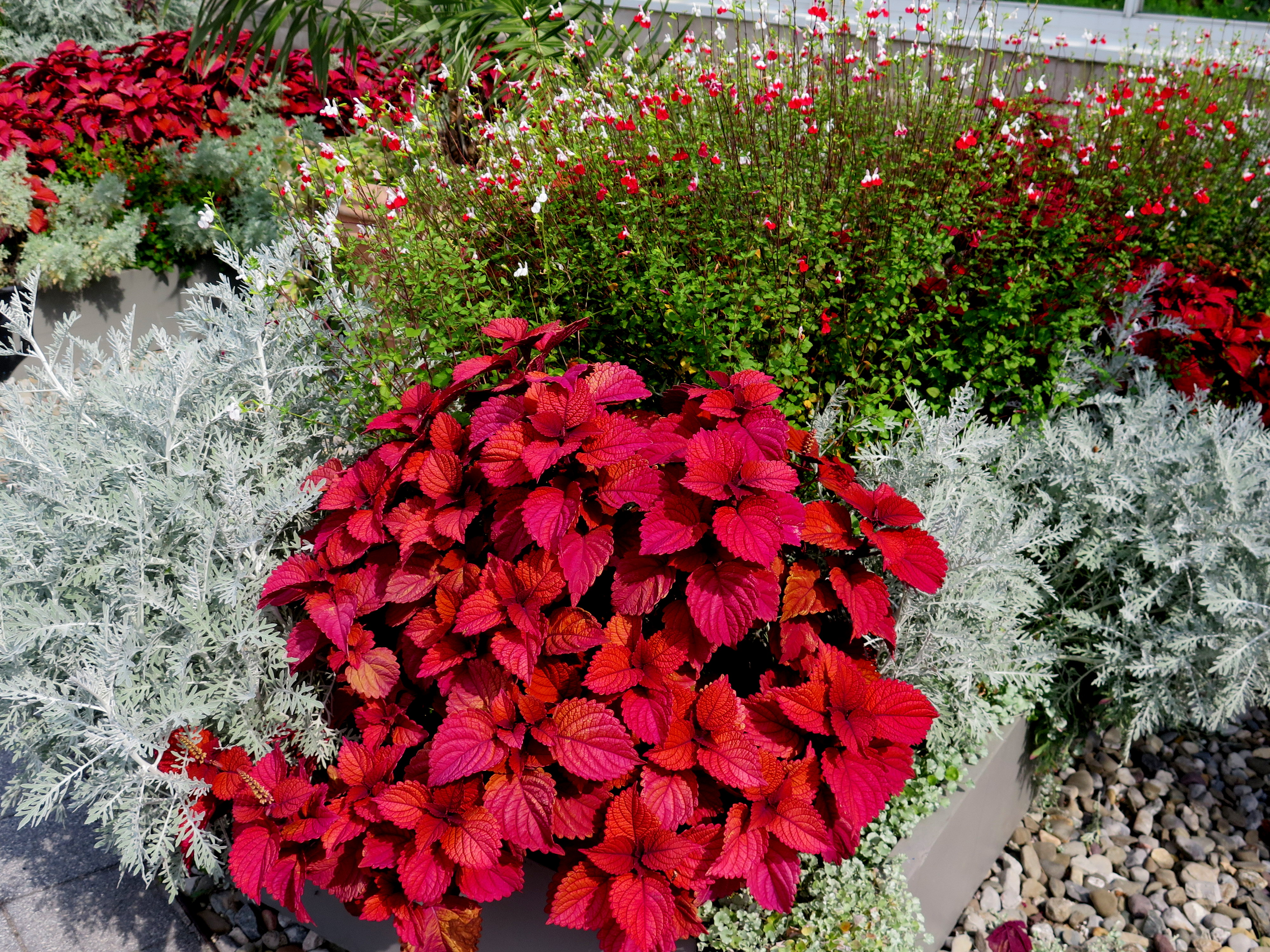
NYBG, Courtyard Plantings, Lotus and Water Lily Ponds Carole Di Tosti)

NYBG, Enid A. Haupt Conservatory, Courtyard Plantings (Carole Di Tosti)

NYBG, Enid A. Haupt Conservatory, Courtyard Plantings (Carole Di Tosti)
And there are frogs in the swampland and wild plants area of the Garden. I have heard them in the area of the Native Plant Garden.
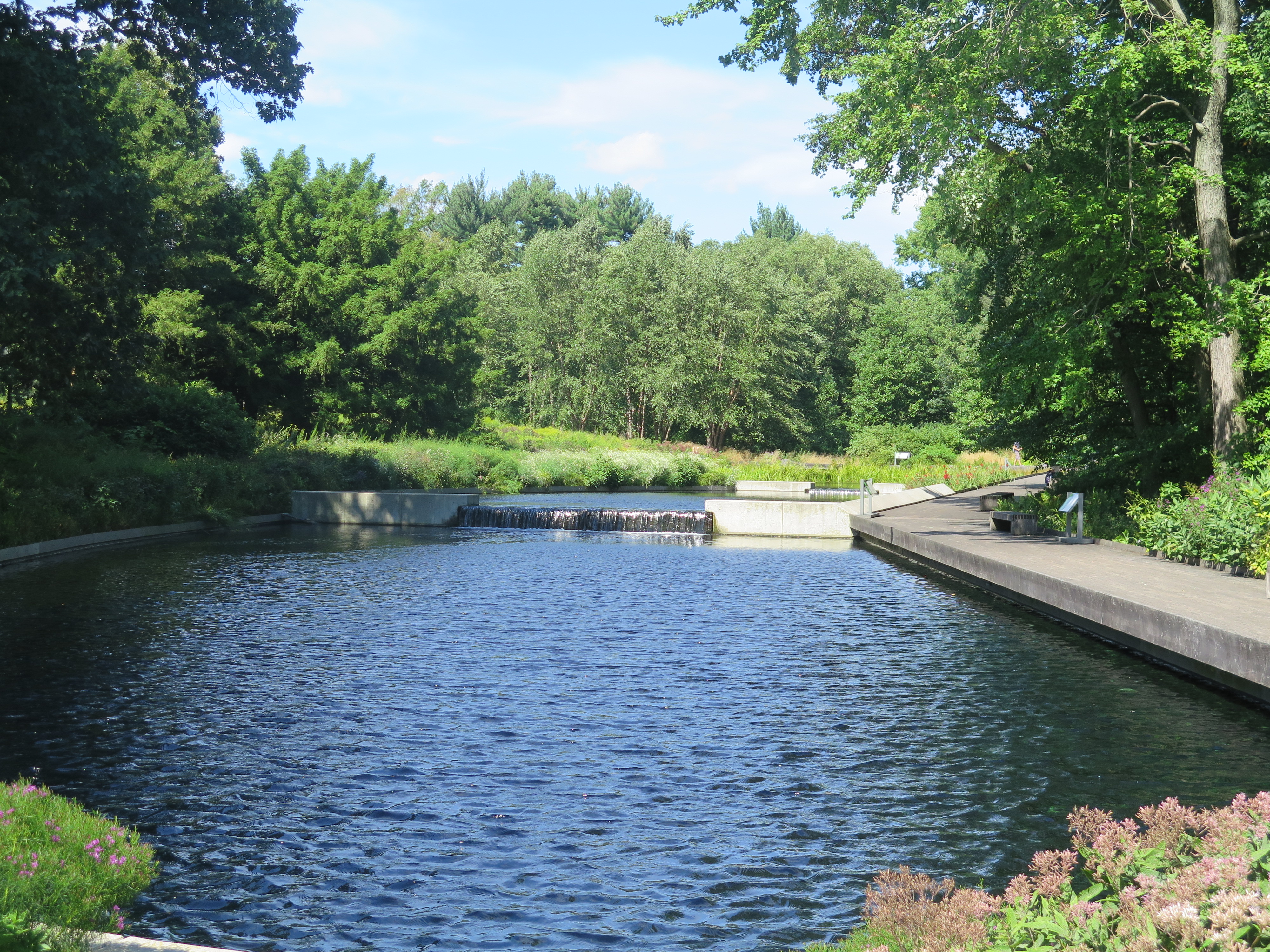
NYBG, Native Plant Garden Water features (Carole Di Tosti)
I have also seen hummingbirds and cardinals in that area. The birds are as beautiful as the flowers that line the water features.

NYBG, Native Plant Garden (Carole Di Tosti)

NYBG, Native Plant Garden wildflowers attracting hummingbirds and nesting cardinals (Carole Di Tosti)
You will need a timed ticket to enter the Garden even if you do not go into the Enid A. Haupt Conservatory. If you are a NYC resident, your entrance fee is discounted. If you go on Wednesdays, you may visit the Garden for free. Members may enter the grounds and the Enid A. Haupt Conservatory for free.
For information and tickets go to the NYBG website. https://www.nybg.org/visit/admission/?keyword=NYCResidentZIPCheck
Sign up for the newsletter to keep apprised of the activities happening in the next weeks and discover whether there will be a Holiday Train Show with limited access and reserved tickets.
 CAROLE DI TOSTI