Category Archives: Tribeca Festival 25th Anniversary
‘The Leader’ Starring Tim Blake Nelson, Via Farmiga, Jim Parsons at Tribeca Festival
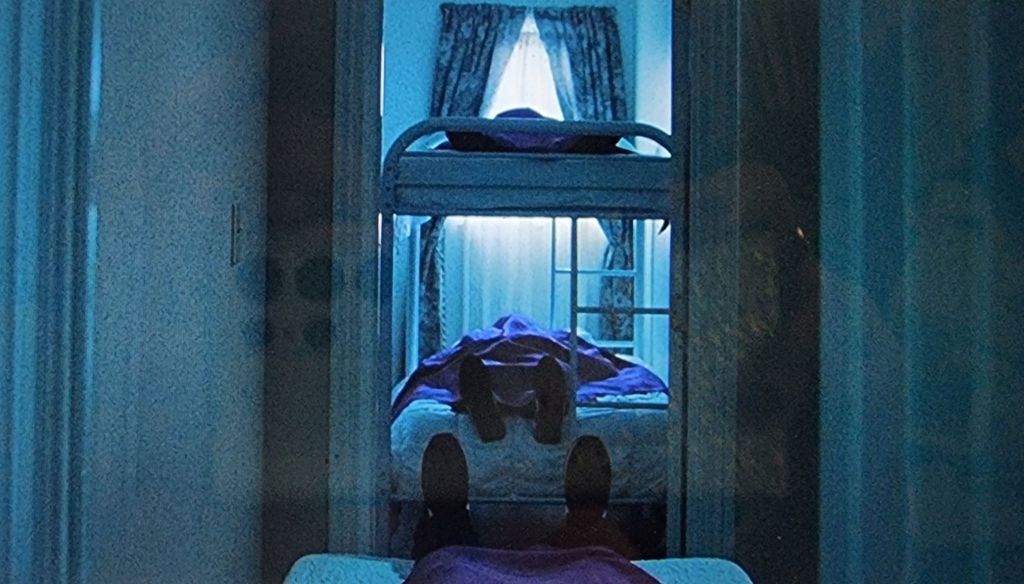
The Leader
Gobsmacking performances, a dynamite, well researched script and attention to humanity and emotional resonance make Michael J. Gallagher’s The Leader one to see. The film, entered in the “Spotlight Narrative” category, had its world premiere at Tribeca Festival. Gallagher who acutely shepherded his actors to create authentic, heart-felt, spot-on performances hits it out of the ballpark. His unsparing and human examination of the Heaven’s Gate cult makes the film imminently watchable.
In the talk back after the screening Gallagher referenced the massive amount of material (videos, documents, writings, news stories, etc.) he researched. He did this to come to grips with how and why thirty-nine cult members who lived near him would unalive themselves in the largest mass suicide on American soil. After the project started, stopped, started, Gallagher continued his research. By degrees, he brought his cast onboard securing Tim Nelson Blake who did his own extensive research. After 10 years they completed the film. However, Gallagher affirms the difficulty of understanding the “why” of the cult’s message or actions. Likewise, many psychologists and researchers have attempted to analyze what the Heaven’s Gate cult meant to itself. The story continues for some members who didn’t join “the evacuation”(unaliving), and still carry the torch believing in the cult and its leaders.
The story begins with the meeting of Applewhite and Nettles
Gallagher’s storytelling begins with the formation of the group by Marshall Herff Applewhite (Tim Blake Nelson) and Bonnie Lu Nettles (Vera Farmiga). In following their journey to the end of their lives Gallagher explores the macabre behaviors and polemic of the cult. To do this he effectively varies his cinematography i.e. close-ups in interview format vs. illustrative scenes between cult members. He moves fluidly from past to present in a well-honed script to reveal how Applewhite and Nettles gained a following. Some stayed with them for 20 years.
Applewhite and Nettles meet in a hospital.There, Nettles gets Nelson’s Applewhite to swallow a tube to pump his stomach. He’s ingested pills to kill himself. Gallagher suggests Bonnie’s comforting, kind manner stimulates him toward life. Cleverly, the filmmaker begins at this point of crisis for Applewhite and sets the stage for the end result coming full circle decades later when Applewhite convinces others to “shed their vehicles” and “connect with the next level” (kill themselves). But for Bonnie’s interference to save Applewhite’s life years earlier, the cult never would have existed.
Bonnie’s overall influence
As the filmmaker chronicles their travels, we note Bonnie influences and drives their success. When she sees that their message doesn’t draw people in, she encourages Applewhite to change and evolve a message which works. They continue to change it incorporating New Age ideas of consciousness, aliens and mysticism to attract “students” to their classes. Eventually, they rework their message so that they are extraterrestrial beings sent to Earth to guide humanity to the next level of existence. The message appeals. Those who join them, leave their families, disengage from society and former friends and wait to be evacuated from the planet.
Importantly, The Leader sensitively chronicles the “how” of what the group did. Gallagher does compress timely events. He shortens the time of Bonnie’s death to the group’s communal removal to “the next level.” In actuality, over a decade passes. Thus, the film’s factual basis has been altered for storytelling purposes.
Gallagher centers on feelings
If anything, much of what Gallagher suggests centers on feelings and emotions. For example, Applewhite continued to tweak the cult’s message after Bonnie’s death. To keep them close he symbolically marries each member. Though her death may have contributed to their decision to join her at “the next level” it isn’t the only reason they unalive themselves. Gallagher raises enough questions in his film to provoke additional reading and investigation into the series of events that can only be described as weird and astounding.
The film explores the personalities and emotions behind the cult members, so we can more easily identify with them. Indeed, Jim Parsons as Warren and Simon Rex as David particularly reveal nuanced performances. If the media painted the cult members as crazies, Gallagher counters this with human portrayals. Accordingly, finger-pointing should revert to an acknowledgement of human vulnerability with empathy. Finally, the film’s overarching themes warn that cults’ exist and happen because of nuclear family dysfunction, lack of communication and love and bonding with family. The cynical culture focusing on materialism, commercialization and indecency provokes the establishment of cults.
Farmiga’s Bonnie encourages and revitalizes Nelson’s Applewhite. They find a home in each other, though theirs was a platonic relationship. As leaders they forbid cult members sexual relationships. Some of the scenes created to “fight” sexual desire are humorous. But the response when the “culprits” confessed sexual acts gives one pause.
The ensemble performances in addition to Farmiga and Nelson’s in depth portrayals carefully walk the line between farce and shocking. The film captures a chapter in the history of American doomsday cults that offers more room for study.
‘American Zoo’ Catskill Game Farm Secrets Exposed at Tribeca Festival
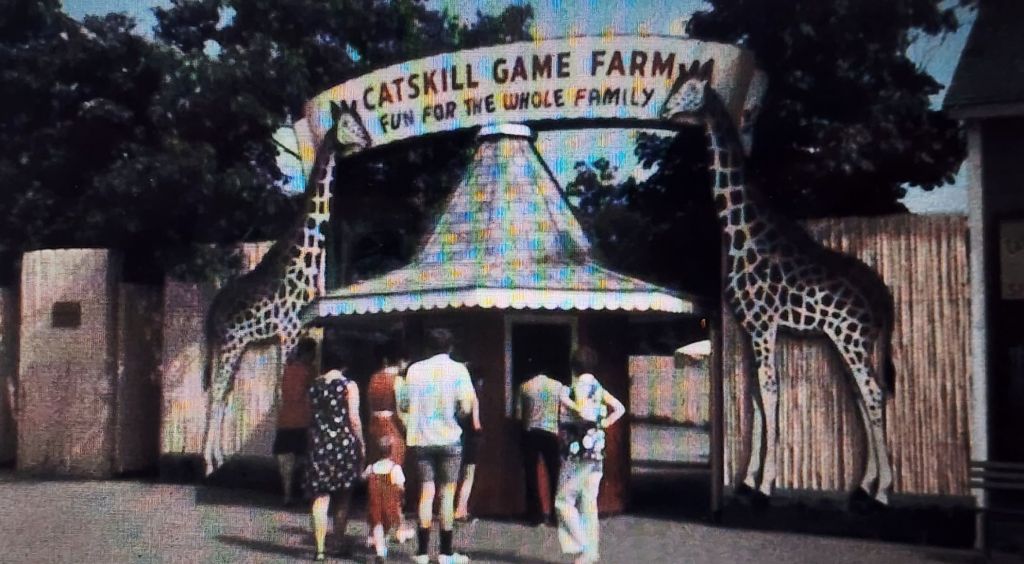
American Zoo
In its world premiere at Tribeca Festival 2026, Tim Travers Hawkins outdoes himself in his riveting expose American Zoo, a story of dark and light about America’s first private zoo. The documentary builds to many essential thematic points. One theme asks to what extent do private companies commit untoward practices and illegal violations to enhance their profitability by avoiding public scrutiny and governmental interference? When the business involves families and children shouldn’t they be trusted to keep a mandate that puts ethics and care first? Or does success and money trump all ethical and moral considerations? Unfortunately, in the last twenty years and especially during the current administration the latter question seems rhetorical.
Investigating the private zoo inspired by the American Dream
Proving this theme, one feature of his complex, fact-based documentary, Travers uses extensive interviews and found valuable material, including reels of home movies, archived documents, books and photos, and photos from family legacies. With these, he opens up a new avenue of exploration into upstate New York’s Catskill Game Farm. The documentary slips under the joy, peace and fun of the amazing place and the owners’ striking idea (at the time) to allow animals to roam free and enjoy their lives.
But underneath the clean, white American brand, lurked an association with Hitler’s criminal crony Hermann Göring. For those unfamiliar with the treacherous, infamous German, Hermann Göring was a high-ranking Nazi official and founder of the Gestapo. Those who wore the cap or uniforms with the skull and crossbones were instrumental in moving forward with the genocidal extermination of Jews and other undesirables in the Eastern European concentration camps during WW II.
Did the owner know one individual in particular had close ties with the Nazis and Göring? By the time folks thought to ask questions, the owner and key players had died. Only the children remained. One daughter (a scientist in a family dynasty of German zoologists named Heck) knew of the darkness. She went on the record about her grandfather while she was dying of cancer in Scotland. Using her interview, and interviews with the zoo owner’s daughter, zookeepers, workers, spouses and researchers, an enlightened view of the Catskill Game Farm emerges.
The film’s structure
Travers Hawkins structures his fascinating film in three sections. But first, he introduces the Game Farm through period radio and TV ads and videos of those who daily visited the farm which was a success because it fostered love of animals and stoked interest in exotic animals that were facing extiinction.
A Wonderland of Animals in the Heart of the Borscht Belt
If you ask any veteran New Yorker who vacationed upstate, they may tell you about the Catskill Game Farm. It was a lovely first-of-its-kind private zoo that expanded its grounds and added exotic animals never seen before to the delight of families and children that numbered into the millions before the Catskill Game Farm fell into disrepair and closed in 2006.
America’s very first (and largest) privately owned zoo was opened by German immigrant Roland Lindemann in 1933.h A host of zookeepers and employees who lived and worked there in community for the love of animals kept the Game Farm going for 73 years. Though the pay was low, they enjoyed their time there and even offered to buy it when Lindemann’s daughter found the business grew harder to turn a profit. But at the peak of its success, families who visited found its peaceful, lovely surroundings heavenly. Little did they know it held a dark side which would have given them pause.
A Turning Point
Lindemann loved animals, but came about procuring them for his zoo sometimes in an untoward way (poaching). During the process he understood how some species were going extinct because of hunting parties slaughtering the beautiful creatures for wasteful fun, not even using their bodies. One way to counteract this was through eugenics, conserving their DNA, and breeding programs to prevent animals going extinct.
So for the good of conservation and preservation in 1959, Lindemann invited Dr. Heinz Heck from Berlin to the Catskill Game Farm. He made him zoo director and gave him free reign to establish a genetics program which attempted to research a way to prevent future animal extinctions. In another pathway, Heck and his father, who would come to visit summers, worked on a program to reverse engineer animals that had an important place in German history and folklore. As it turns out, in the heart of an area that was a summer resort for those who had been through the horrors of the Holocaust, Heck was working on the genetics of animals that symbolized strength, heavily romanticized in the Nazi Party’s mythology. In other words if they brought back these mythic creatures, their “resurrection” would be a symbolic affirmation of the romantic ideals of Nazism which could never be extinguished.
The last third of the film
In the last third of the film, Travers Hawkins’ tie ins with the Heck’s (father and son) genetics and breeding program and the Nazi party are astounding. On the one hand, Heck and his grandfather had two successes. Travers Hawkins follows these details through interviews with Heck’s daughter and archived photos and materials. Also, the home videos are essential in telling the story of the research. The director follows the story to its tragic conclusion. Perhaps if the Catskill Game Farm had become a non profit, received grants from the government, the research would have continued under regulations and for the betterment of science and the planet. It was not to be.
American Zoo currently screens at Tribeca Festival. https://tribecafilm.com/films/american-zoo-2026

