‘Diana the Musical,’ Starring Jeanna de Waal, a Foray Into the Tabloids

Billions of words and their attendant photos have attempted to characterize The Princess of Wales, Diana Spencer, including the statements she contributed in her well publicized television interviews. Regardless, the many iterations of her life (Diana the Musical, Spencer, The Crown, documentaries, etc.) are fictionalized. We will never know the true details of her story nor move beyond the tip of the iceberg, though much has been made of The Crown’s accuracy.
As a result any commentary, criticism and discussion about the fictions that are presented with or without music related to her life are disingenuous. It is a sly continuation of what raised her to glory and contributed to her death. Recognizing that I am one of the hundreds of journalistic hypocrites, I prefer not to pile on adding to the glossy, hyperbolic, acerbic criticism that has been written about Diana the Musical, directed by Christopher Ashley, currently at the Longacre Theatre.
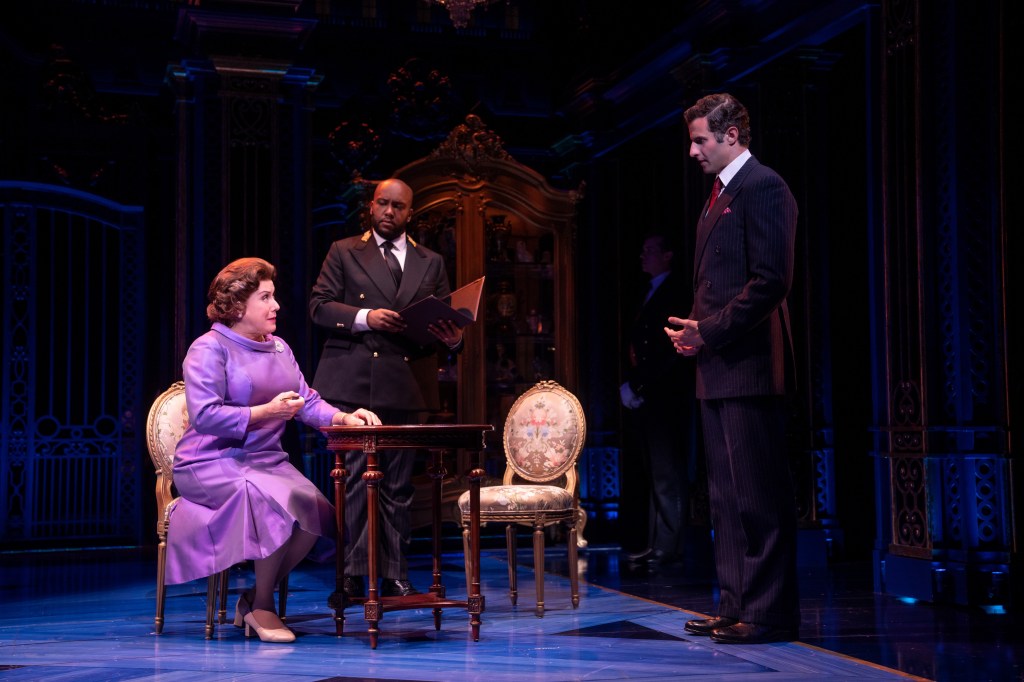
In this review, I look “through a lens darkly” at the musical with the intention of praising what may be the salient artistry of the production and avoiding the “critics’ mess.” At the least, Diana the Musical will add to the overall evolution of musical theater, for good or ill. As such it should be viewed with more than blindly gleeful excoriations.
The musical, backed by the Schubert Organization and a boatload of other renowned producers, including La Jolla Playhouse, is the work of the creative team of Joe DiPietro (book & lyrics), and David Bryan (music & lyrics). The team won Tonys for Memphis (2010), and other awards, including DiPietro’s Drama Desk for Best Book of Nice Work If You Can Get It. Bryan, a founding member of Bon Jovi (keyboardist), is a Grammy winner. And both have teamed up on their next musical Chasing the Song, also workshopped at La Jolla Playhouse.

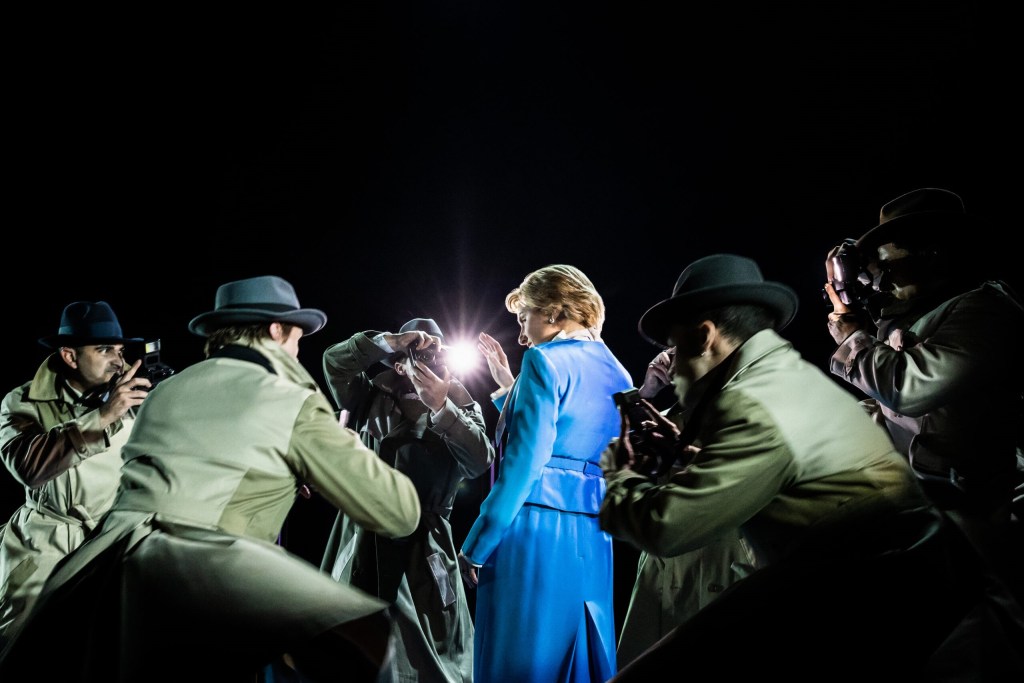
The key to understanding their perspective about Diana The Musical is at the top of the production. Right before it begins with its bang-up opening number, “Underestimated”, six PAPARAZZI dressed in tan, flared overcoats with matching hats, looking like “spies” appear amidst flashes of light. Rapidly, like Thespis, the first actor to go solo from the chorus in ancient Greek theater, one PAPARAZZI steps out and says, “Was there ever a greater tabloid tale?” Then all race off.
From the bright light backdrop emerges Diana, the golden-throated Jeanna de Waal, who pulls off the waggish theatricality and endearing Diana persona with great flare and emotional nuance. As she sings “Underestimated,” we are reminded that she, the Diana avatar, upended everyone’s expectations and made waves, changing the nature of the monarchy as perceived by the British tabloids and vulture media, astutely turning their word swords into their own “proper entrails.”
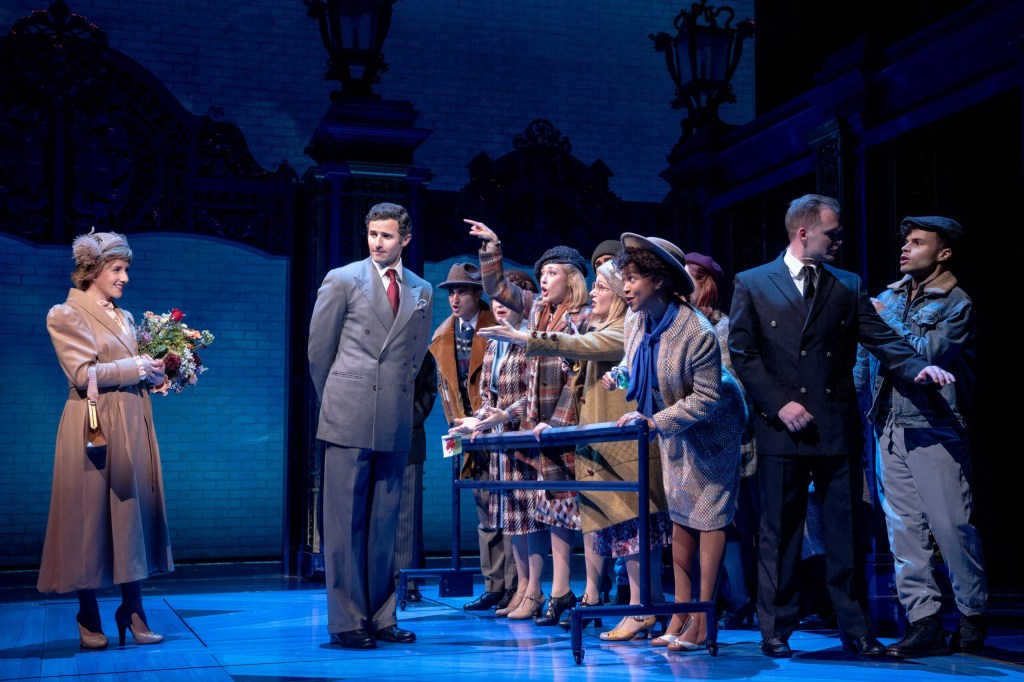
Thus, with this PAPARAZZI’S “greatest tabloid tale” establishing the “smart-alecky,” flippant tone, approach and poignant conclusion, we understand the creators’ vision and the development of Diana The Musical as a “tabloid story” in what follows to be a flashback of the press’ “facts” of her life with the royals. Importantly, we are thrust into examining ourselves as the consumers, predators, voyeurs that kept and still keep that story “alive,” the facts confused, and lines, between fictionalized gradations of truth, blurred. As the production infers, the tabloids of the time, principally those of the Murdock empire, became the staging ground for the launching of the princess. They keenly, exploited this image for its money-making potential with suppositions and crass lust for gossipy sensationalism that the public and above all “journalists” “ate up” and still consume in musical plays.
To confuse the medium that the creators expose in all its lurid tawdriness with the conveyance of the subject matter (the production), which twits and exposes the tabloid’s boorish insensitivities is an arrogant presumption. It’s as bad as Facebook’s misinterpretation of sardonic irony. Facebook’s algorithms don’t “get” irony; their robotics are literalists incapable of understanding nuance, irony, sarcasm, ridicule.
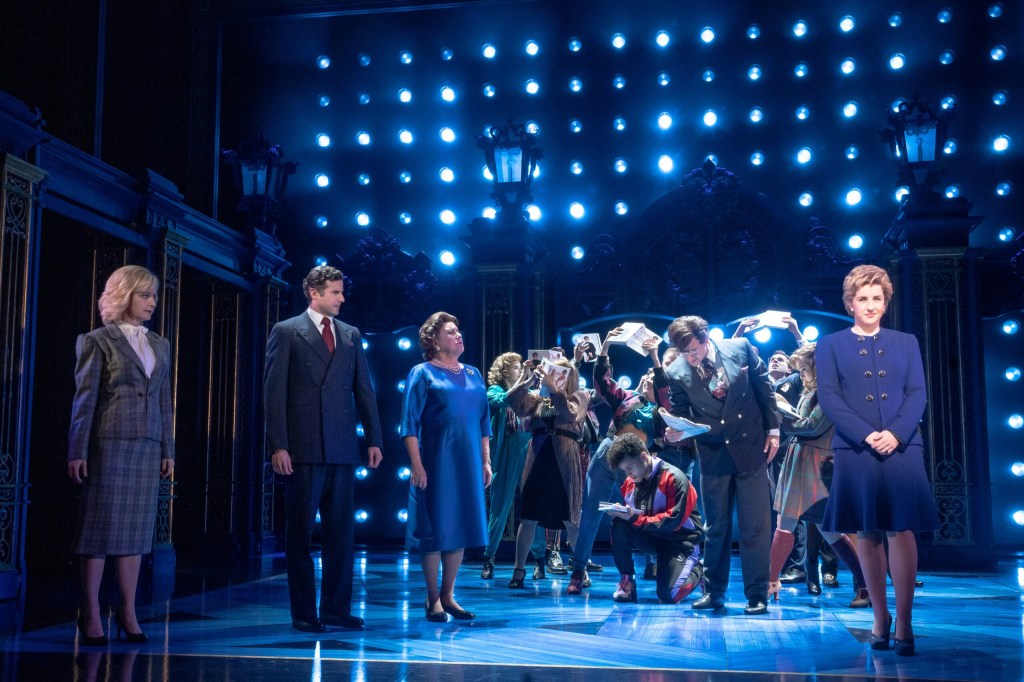
Likewise, to view Diana The Musical as a literalist caught up in the arc of the story, clicking off the remembered events one may have consumed from the tabloids, papers, TV series or documentaries, one misses the humor, irony and the sometimes intentionally sophomoric rhymes and cleverly repetitive music. The repetition implies Diana copy was all of the same piece. Additionally, one will miss the unfolding of the final revelations and themes: that tabloids spread misinformation because they can with a believing populace; tabloids act as an equalizer of the great to bring them low to sate the sub rosa jealousy of the “little people;” tabloids mine humiliation, create torment and demean by erecting idols then smashing the “adored” with their humanity. Murdock’s tabloids propelled the Diana “story” and gossipy dirt like no other.
Revolting? Indeed, and that’s one of the points of the musical. Enjoy it and burn yourself with understanding. Don’t enjoy it, see its “messy crassness,” you miss the production’s raison d’etre and specifically miss this point: the tabloids encouraged the spin of the public’s belief in “the people’s princess,” then damned her for being what they created. They adored her above the Queen and royal family but were jealous of her and slapped her continually each time they covered her. Ironically, they yearned for her death, indirectly causing it so they might mourn a tragedy of their creation in perpetuity. To view the monstrous tabloid process in Diana The Musical as anything but ironic is daft, dumb and blind.
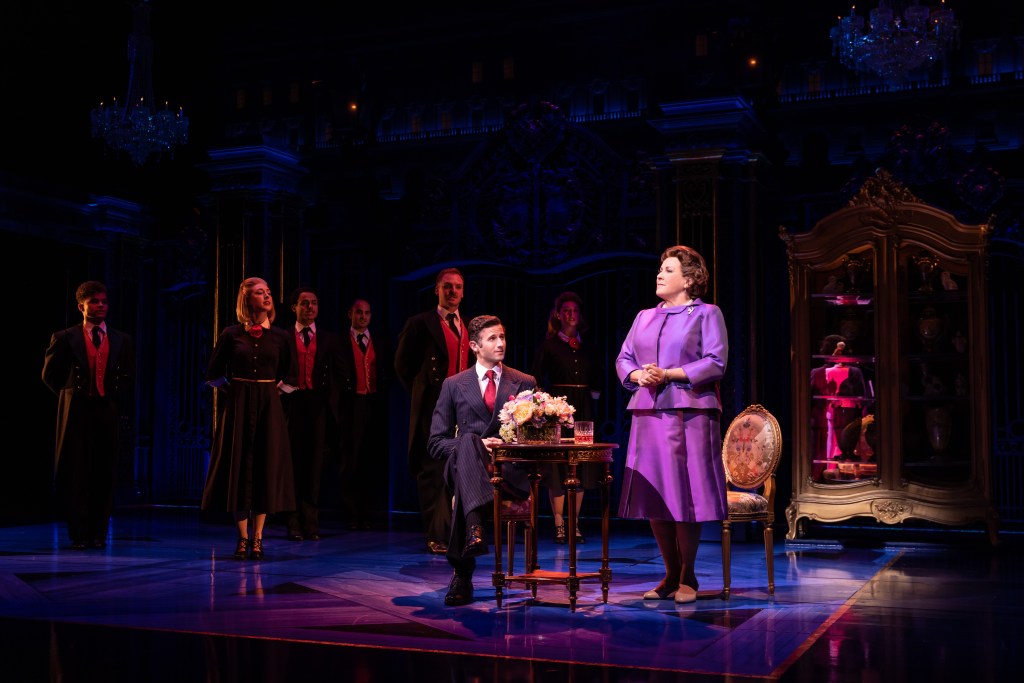
The tabloid portrait of Diana is what the musical delivers, the glorious creation to please the masses and journalists. She was beautiful copy in all her forms, as was the monarchy, they pitted her against as her foe. But the production reveals that tabloids refused to take responsibility for their cause in her death. DiPietro and Bryan, in keeping with the phenomenon they criticize and expose (the public’s obsession with her, the press’ sensationalism which exacerbates it), never connect the paparazzi directly to her death. None of the actors dressed as paparazzi appear on stage at the conclusion, for she doesn’t die. Diana steps from flashing lights into the upstage darkness as the ensemble sings about her “lighting the world.” It is the image, her persona, that “lights the world,” as she lives forever immortalized in fictionalizations: movies, plays, TV series, etc.
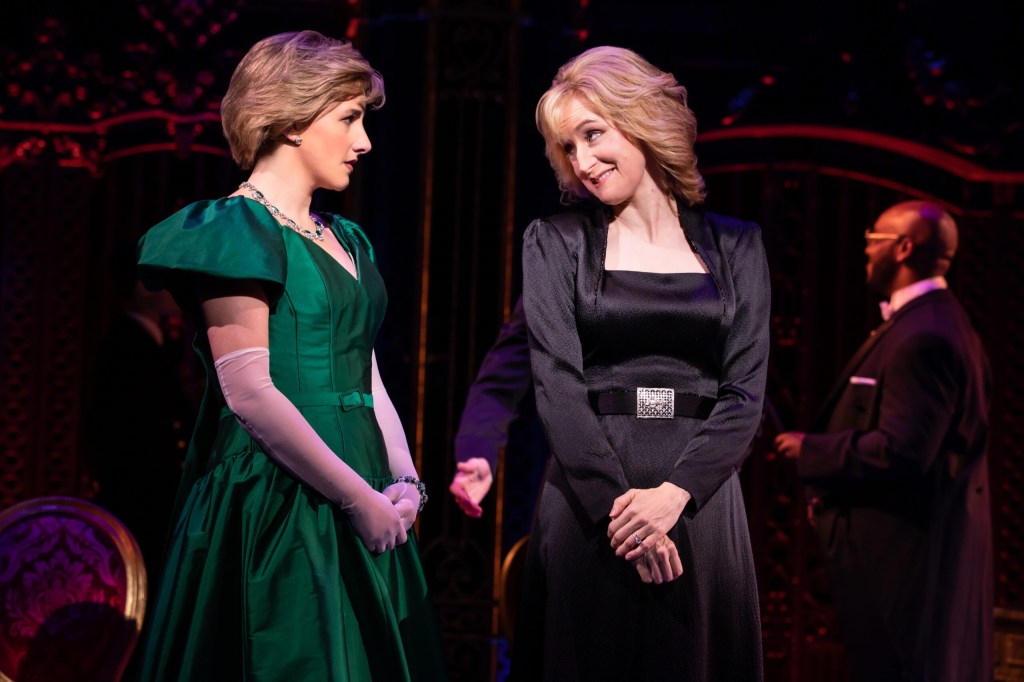
In Diana The Musical it is the tabloid’s creatures we see as the well-publicized events of her life are made into hyperbole for public consumption. In the musical we witness her dating Prince Charles (Roe Hartrampf is wonderful as Charles in his development as the unmarried beleaguered, sometimes loving, then increasingly unhappy, angry, Diana nemesis), encouraged by Camilla (” Whatever Love Means Anyway”). Erin Davie is the perfect avatar for what we believe Camilla would be and do to keep Charles allured. She is a proper villain. There are enough jokes concerning her looks and strange sustainability with Charles as she bests Diana in his affections.

The tabloid’s cultural obsession with Diana’s looks, mien and beauty outshining the unfortunate looking Camilla is twitted throughout. The question floats over the relationship as the tabloids played up Diana’s beauty and Camilla’s ferocious mediocrity: how could Charles choose to be with Camilla and not Diana? Clearly, those are the manifestly superficial, shallow, cultural mores of tabloid journalism which value appearance over soul. They are not Prince Charles’ values.
DiPietro and Bryan take us through the Diana chronology, from the marriage (the quick change up of wedding dresses is excellent), the two children, Prince Charles being unable to give up Camilla as Diana must give up the dashing James Hewitt (Gareth Keegan). The crises mount until Diana voids her royal position by becoming a fashion icon who scandalously controls the media (the hysterical “The Dress”), as DiPietro and Bryan make their scathing critical ironies with facetious lyrics and buoyant music. It’s not all rock/pop upbeat cadence. Only the humorous, waggish songs retain the beat. Indeed, some of the harmonies are luscious (“If”).
Throughout, Charles’ relationship with Camilla holds, while Diana establishes a solid relationship with her maturing self, which grows apart from him, for he is a lost cause. Interestingly, the Queen editorializes about the overwhelming oppression of the monarchy in her own life (“An Officer’s Wife”), which Kaye sings affectingly in the song that identifies how the monarchy’s institutions changed Elizabeth’s relationship with Phillip. In her quasi empathy with Charles and Diana and Charles and Camilla, Judy Kaye’s rendition recalls a similar pathos expressed in The Crown. Only for duty did Elizabeth give up being the demure wife.
The tabloid wind-up dolls act exactly as we expect them to. And there’s even an over-the-top interjection by Barbara Cartland (Judy Kaye dressed in fluffy pink from top to toe). Cartland introduces us to James Hewitt as the instrument of vengeance in Diana’s life,”Here Comes James Hewitt.” Kaye as Cartland plies her influence on Diana and comments on Charles and Camilla’s affair, and Diana’s affair with Hewitt (“Him & Her, & Him & Her”).

Having Kaye do double duty as Queen Elizabeth and Barbara Cartland, both the head of empires in their own right, is brilliant and humorous. Kaye plays it off, enjoying the ironic joke. In the beginning of Act II Kaye gives the Queen’s tiara to the music conductor to hold as she switches roles. Cartland’s advice to Diana (a former romance fan), is that her novels are fantasy, romance is dead and in real life, men lie and cheat. The irony that an avatar of romance fiction warns the reigning fairy tale princess of the time that her prince is a cad is priceless.
Finally, the interjection of Andrew Morton (Nathan Lucrezio), who Diana “spills her guts” to (“The Words Came Pouring Out”), is an important addition in the evolution of Diana’s maturing persona, as she moves from under the oppression of the monarchy and gains her own revenge. From replicas of the royal’s iconic clothing (William Ivey Long), to the tell-tale hair (Paul Huntley), to the pat twists and turns in the Diana story, all unwind with irony and humor. Interestingly, the ravenous audience and the press are the butt of DiPietro’a and Bryan’s joke in addition to the royals. Indeed, no one escapes their ridicule, not even Cartland and Andrew Morton (Zach Adkins).
In keeping with the antic, amused and ironic perspective, many of the songs knock it out of the park. Kelly Devine’s choreography for the “Snap, Click” sinister twirling of the paparazzi around Diana with spinning movement, as they unspool their “tabloid tale” is excellent. It conveys the momentum of how storytelling gains a life of its own. The paparazzi and press become impassioned in their hunt for the prize statement, photo, revelation which they encourage then weave into Diana iconography.
“She Moves in the Most Modern Ways,” resounds with humor and cheek. It is sung by Kaye’s Queen, Davie’s Camilla, Holly Ann Butler as Sarah Spencer (Diana’s sister confidante), Hartrampf’s Charles, Andre Jordan as Colin and Anthony Murphy as Paul Burrell (who is also hysterical singing “The Dress” with De Waal, Kaye and the ensemble). The song codifies the press’s indictment of the monarchy as stuffily dead. Diana shaking things up is both a benefit and liability.
Of course, the theatricality Diana creates is marvelous copy. Throughout the production, Jeanna De Waal does not drop a stitch of the persona in the arc of the press’ vision of her. Her irony, sweetness, fury and flippant attitude beautifully captures the creatives’ vision. The song “This Is How Your People Dance” when Diana listens to Bach with Charles and the others, while imagining a rock concert with her favorites, where all but Camilla “shake it up” is riotous. From that point on it was clear to me what DiPietro and Bryan were about.

Finally, the creators emphasize the bare bone facts referenced by the media that, understanding what she was up against in her marriage, suffering without proper allies to rescue her, Diana Spencer carved out her own approach to her position in the royal corporation which had “winked at” Charles’ relationship with Camilla Parker Bowles. Growing into her own burgeoning identity, she empowered herself, using the media for great causes (the scene in the AIDS ward is poignantly done), that had not been taken up by anyone until she became involved.
Allegedly, for the royals, this was an embarrassingly mischievous and rebellious turn. To the media this was laudatory, though perhaps, self-serving. For Diana personally, we will never understand the mixture of altruism, concern and self-interest. Throughout, the press, not unlike with Marilyn Monroe, helped create her charismatic persona which to this day is hot copy. And it is that which Diana The Musical makes very clear with ironic twists that at bottom are an indictment of us all.
This is one to see if you remember that the tastelessness is all on the press and the public who clamored for the avatar Diana and the royals they received. Despite that underlying terrible truth, Diana The Musical expresses that message with humor, silliness, waggish irony and brilliance. Kudos to the creatives: David Zinn (scenic design), Natasha Katz (lighting design), Gareth Owen (sound design), the musical team and Ian Eisendrath (music arrangement and supervision). For tickets and times visit the website by CLICKING HERE.
LaChanze Stars in ‘Trouble in Mind’ Alice Childress’ Brilliant Play at American Airlines Theatre

Alice Childress finally receives a proper Broadway premiere in the Roundabout Theatre Company’s very humorous and profound production of Trouble in Mind, directed by Charles Randolph-Wright. Childress’ work, which stars an exceptional lead cast (LaChanze, Chuck Cooper, Michael Zegen, Brandon Michael Hall, Jessica Frances Dukes, Danielle Campbell), is a complex, sardonic and LOL play. It explores the cultural backdrops, impossible Civil Rights issues in the nation and their impact on the world of New York City theater in the 1950s.
The theatrical lens that Childress uses employs her own life experiences as an actress who never received roles which would allow her to express the full range of her talents onstage because of her skin color. Indeed, very few of the black theater actors were treated with the respect they deserved, tethered to the stereotypical roles that continued to foment institutional racism in the South and the North because such roles “comforted” the audiences and solidified the power structure.
It is to her credit and our great appreciation that Childress was a maverick who wrote Trouble in Mind (1955), that was well received off Broadway, but whose backers wanted major cuts and extrapolations before they brought it to Broadway to stem their fear of offending the largely white audience and hurting receipts. Rather than agree with having her artistic truthfulness destroyed to line the pockets of the producers, though it would further her career, Childress took a stand and pulled the play. Her actions present a beacon of courage for artists everywhere. Nevertheless, in refusing to compromise the themes, characters and indictments of the play against racism, she became a martyr for great theater art, and the work was excluded for 66 years from a Broadway presentation until this year.
Though others took up the cause and presented her play in various venues (it is being done in London), historically this incident indicates the dark clouds that hover over Broadway and theater to this day in issues of censorship, whether right or left, and the sub rosa, sometimes unspoken but understood restrictions placed upon artists and writers, whose works have great moment for our time, but who will never be given a hearing because of the gatekeepers and inherent power structure which shoots them down for whatever reason.
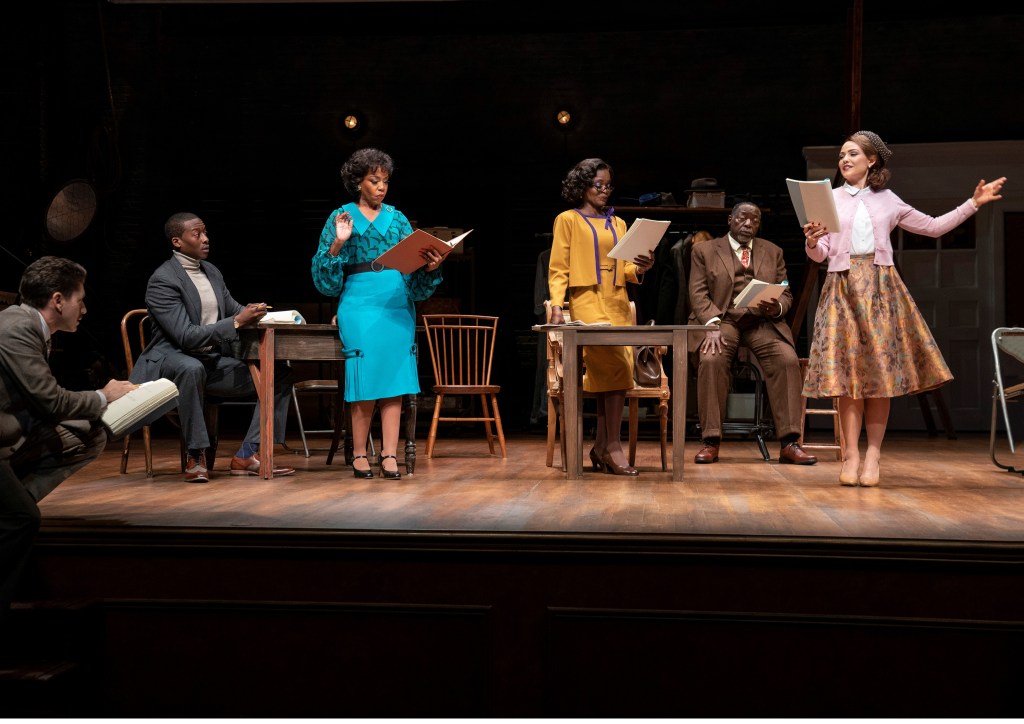
Trouble in Mind cleverly exposes this type of racist, sexist banishment and oppression with ridicule and ironic humor to powerful effect. The playwright reveals the hierarchy and dualism (controlled vs. controllers), of the theater world using a play within a play structure. The power structure is nullifying; there is no collaboration to make a better production. There is only the insistence in maintaining what is, killing artistry with repetition and dead, wooden characters, relationships and themes to pamper audiences.

Thus, in the name of entertainment, truth is sacrificed and the vital purpose of theater, to touch peoples’ lives and bring people together in a sense of community, is never fully realized. Indeed, Childress shows that such mediocre and superficial plays result in the wiping out of the true nature, identity, relationships and reactions of Black people historically in the US, depriving society of the spectacular contributions of a people and culture they refuse to acknowledge.
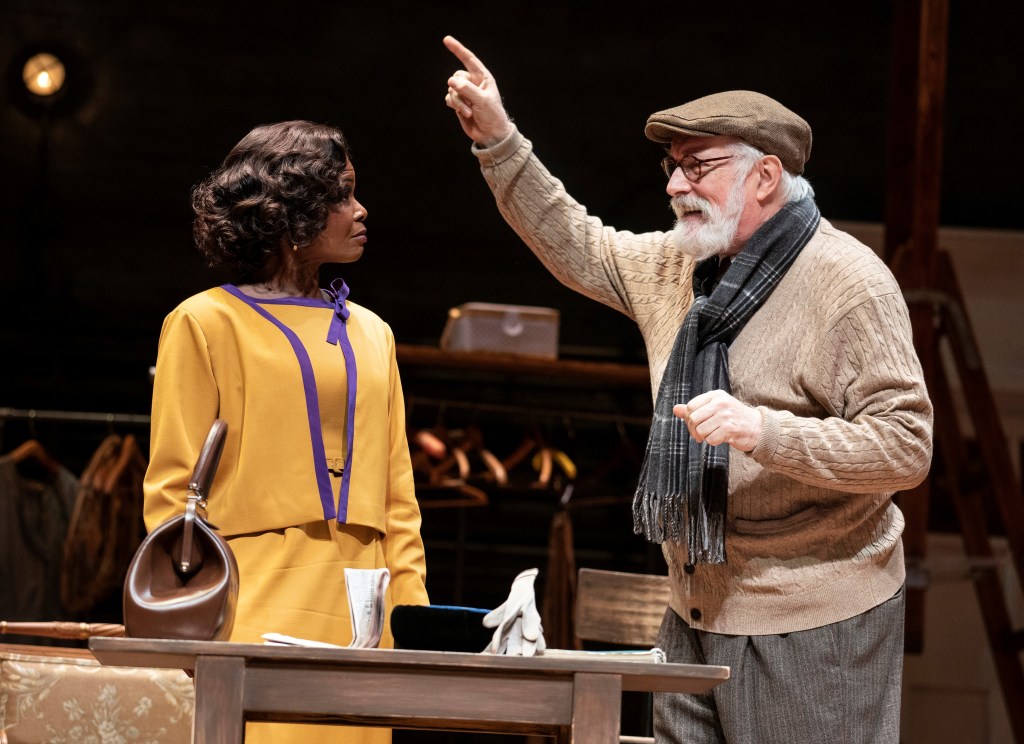
As the play opens Childress hints at this when experienced actress Wiletta Mayer (the incisive LaChance) shows the ropes to inexperienced John Nevins (the collected, often innocently funny Brandon Michael Hall), in how to deal with their director Al Manners (an ironic name if ever there was one). Michael Zegen portrays the increasingly stressed and unlikeable director, a difficult role, with nuance and fervency. Wiletta, with the help of veteran actors Sheldon Forrester (the inimitable and drop dead hysterical Chuck Cooper), and Millie Davis (the fine Jessica Frances Dukes), show John how to subtly “Yasss” the director, and second guess what he wants without being abrasive and obstructionist. For example, one inside joke is milked throughout the play: Wiletta tells John not to say he’s “inexperienced.” “Just tell him you were in Porgy and Bess as a child!” Since Childress prepped the audience for this joke, when it is reiterated to Manners, its double meaning is hysterical.

Schooling John in how to negotiate being black in white theater is superbly rendered by LaChanze, Cooper, Dukes and Hall to reveal the key themes of the play. Humor has helped blacks be incredibly resilient survivors as they continually dupe their “handlers” about what they really feel. On the other hand it has been soul killing to not be real and authentic. We understand this torment when Wiletta finally confronts the director with her truth because she is tired of the charade of “getting over” while subjugating herself and her identity. An elucidating irony reveals this is double indemnity. Such oppression is suicidal to whites as they push the racist line of the patriarchy to the point where such higher ups limit their artistic endeavors, achievements and bottom line for themselves.
How much more might theater be enriched if truthful revelations were embraced regarding all cultures and races? It would be life affirming and life changing. But the walking dead don’t know the difference. Instead, they refuse to be offended.
After Wiletta, Sheldon and Millie “educate” John in the black etiquette theater manual of how to be a success in the company of whites, he proves such a superior pupil in navigating the racist white attitudes, that he uses their knowledge against them, confused about his core self. As the audience is made knowledgeable about blacks’ dual identities, it realizes that it is being ridiculed with Childress’ brilliant set ups of humor. This is an indictment of the culture which “can’t handle” the reality that they are bigots and their racism must be coddled. The epitome of this sardonic thread is the truth that blacks are actually the polite, smart adults in “putting up with” whites’ necessary inhumanity of racism when, via projection, they are treated as children who don’t know much of anything. Who is duping whom in self-betrayal?
The playwright’s ironies are sage. Indeed, the audience, like the white controllers, is being “had,” if they think blacks enjoy oppression, insult and having their civil rights and humanity negated. A pure pleasure is how Childress presents all of these aforementioned themes and relates them to our culture today.
I find it interesting that the original producers were so worried that they actually had the “sensitivity” to realize that the play indicts the audience’s bigotry and racism. Or maybe they were upset at something else? Their own bigotry? The joke is wide-ranging, but the producers weren’t laughing, though the joke was on them, when Childress refused to change her work.
Act I is rife with the humor that the veteran actors, Sheldon, Millie and Wiletta set up to be mined throughout until in Act II, Wiletta has “had it.” The requisite subtle irony to soft peddle racism no longer appeals because she wants to be a great actress and the lies of bigotry are getting in the way. When Zegen’s Al Manners attempts to tell her how to be “natural” and not “think,” and that by thinking, she doesn’t “get” the character, LaChanze’s Wiletta boils with rage as he demeans her talent. And that anger spills over when she questions Manners about her character’s reactions in a scene when she is trying to protect her son from a lynch mob. The mother’s response and the son’s response is inauthentic, fake, and indeed, kowtows to white supremacists. The implication of her questions is clear.

When LaChanze’s Wiletta aptly confronts Zegen’s Manners about this, the explosion is inevitable. Manners walks away throwing the production in jeopardy and the other actors who need the money for the entire run are thrown into a tailspin. Trouble in Mind concludes in uncertainty. Though Wiletta took a stand confronting the director in the hope of evolving the play into an authentic rendering, only she is satisfied. For her it is worth it even if she destroys her career, which we understand by the end is meaningless if she, herself, can’t be who she really is. Childress ends with hope: Wiletta recites Psalm 133 to Henry (the excellent Simon Jones), as a spiritual petition and prayer for things to be better in the future.
Thus, we understand what happens if a black actor even dares to question the power structure represented by Manners; it’s potentially over. The play within a play ends but Wilette/Childress goes on. It is a prescient twist upon an ironic twist, considering that it took 66 years for the indictment of Broadway’s white power structure to finally be presented by the Roundabout with Trouble in Mind. What’s even more ironic is that the message still pertains.
To conclude. Last night, I sat next to an experienced actor and his wife, a Rutgers professor and casting director. Both affirmed that “getting a play produced” is the most difficult and heart-wrenching process in theater today. Childress indicates some of the reasons in her amazing work which targets racism, chauvinism, and sexism. Importantly, her timeless play’s themes relate to every “ism” that one might lay bare about human nature and oppression in the arts, especially by those who exploit creatives to gain the highest profits, while starving the artistic team, playwrights, actors. This has been especially egregious for those of color.
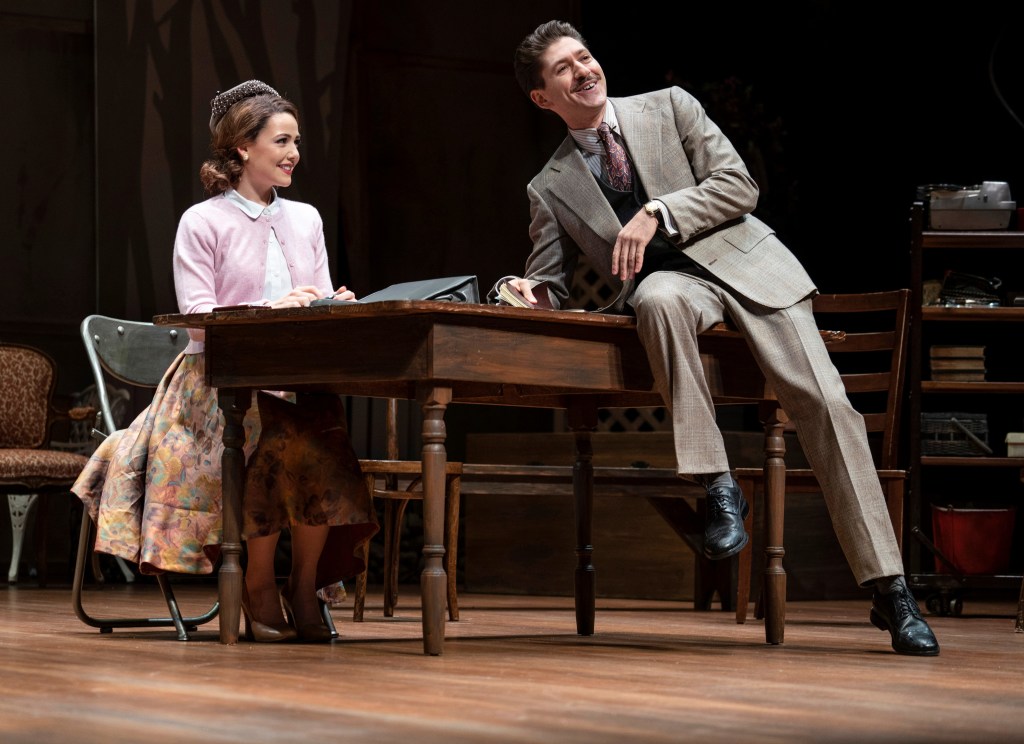
Sadly, this bigotry and discrimination is allegedly done for the sake of “entertainment.” The result is mediocrity and a fear of novel, original work. Instead, there is a steady repetition of old standby revivals or shows created from blockbuster films; there are few quality dramas or even musical productions. What has been sacrificed, is as Trouble in Mind reveals. Theater, the paramount live medium to touch lives. stir our humanity, bring community, and create a better society has been diminished. And there is no Tinker Bell to come along and revive it, thus far.
Trouble in Mind is a step in the right direction, however. Bravo to Roundabout to stage it.
Kudos to the additional actors who made this production sing with truth and humor. Alex Mickiewicz as Eddie Fenton and Don Stephenson as Bill O’Wray. Final shout outs go to Arnulfo Maldonado (set design), Emilio Sosa (costume design), Kathy A. Perkins (lighting design), Dan Moses Schreier (sound design) and the other creatives. You don’t want to miss the fine cast, Childress’ priceless, sharp wit and this long awaited Broadway premiere. For tickets and times go to their website CLICK HERE.
‘Nollywood Dreams’ a Comedic Farce With Intriguing Undertones

Jocelyn Bioh (School Girls; or, The African Mean Girls Play), and director Saheem Ali her frequent collaborator (Merry Wives of Windsor), once again work comedic magic in Nollywood Dreams, a farce that twits burgeoning Nigerian Cinema in the 1990s, yet makes a statement about dreaming, and dreamers influenced by countries with jaded, hypocritical values.
The production makes the most of the Newman Mills Theater’s intimacy with heightened, particular and detailed scenic design by Arnulfo Maldonado,, that cleverly enhances Bioh’s characters, set changes, story arc and thematic focus. Dede Ayite’s appealing and over-the top costume design and Nikiya Mathis’ hair and wig design encourage the actors to pull out all the stops. These production elements especially enhance the actors’ characterizations and encourage their freedom to humorously tear up Bioh’s witty celebrity inferences with grace and humor, that moves the production along at a well-paced clip.
If Bioh’s characterizations are superb, even greater is the cast that inhabits the recognizable celebrity types and their acolytes with definition, depth and unique authenticity. The humor is organic and situational, and part of the laugh riot comes at witnessing how other countries, i.e. Nigeria, emulate some of the worst of American, to wit “Hollywood” culture through a lens brightly. Thus, Bioh’s farce not only humorously underscores and gently ridicules Nollywood cinema, but it also satirically rocks the most shallow and nauseating American entertainment transference, save the send up of Oprah in the TV hostess Adenikeh by the fabulous Abena. Interestingly, Nollywood cinema has grown by leaps and bounds to be one of the most productive engines globally.

The plot is as simplistic as the Hollywood pie that actors refuse to eat for fear of going over their 18 BMI. Ayamma Okafor (the lovely Sandra Okuboyejo), dreams of being an actress, as she and her older sister Dede (the jealous, know-it-all humorously portrayed by Nana Mensah), run their parents’ travel agency. They intend to move up in the world beyond their middle class status, of course, influenced by the US and other capitalist countries. The siblings are well drawn with the older Dede continually chiding Ayamma, dumping the work on her and generally being a scutch. Then events break for the sweet but down-to-earth Ayamma and she becomes Dede’s rival for the man in their dreams (for different reasons), the gorgeous star Wale (the sweet and adorable Ade Otukoya).
In all the gossip magazines that Dede reads, confirmed by the guests on Adenikeh’s TV show, we learn the backstory and the stakes for the characters. The gobsmacking Wale is slated to be in the next film from director and all-around big producer who learned the ropes in America, Gbenga Ezie (Charlie Hudson, III has the energetic, compromised Hollywood director/schmoozer down perfectly). However, to spur interest, cleverly, the big man announces a nationwide open audition for the part of the female lead in his next film, “The Comfort Zone” (how Bioh introduces the title and the name of the lead character is hysterical). For Ayamma, this is the opportunity she has dreamed about, to be able to raise herself up into stardom as an actress. Meanwhile, Dede will just settle as second best to marry Wale.

Bioh ratchets up the sibling rivalry when Ayamma asserts herself and visits Gbenga’s offices to get the part and play against Wale to prove she is a great actress and can make something of herself. In Gbenga’s office, we see the allure of possible future starlet vs. potentially predatory director. Enjoying the visit of the lovely Ayamma, an ingenue of innocence, we note that Gbenga never misses an opportunity with the ladies. Gbenga allows her to read with the actress and his former partner Fayola (the Nollywood “Hallie Berry with the Tina Turner legs”). The “fix is in.” He will most likely cast Fayola in the part to prevent her spilling the dirt on him which would put him in jail.
Emana Rachelle portrays the wild and dramatic Fayola with vibrance, humor and sheer joy. Ayite and Mathis’ costumes, shoes, wigs give even more umph and fabulousness to Emana’s Fayola, whose gestures and movements, like Abena’s, celebrate those they imitate and gently ridicule. The women are in conflict against each other for the part of Comfort; the sisters are in conflict for Wale, and Adenikeh wants in and will use her leverage in whatever way possible to be with Wale and Gbenga. Interestingly, Hudson III’s king manipulator Gbenga keeps them all allured. Meanwhile, Ade’s Wale, with quiet confidence oozing sensitivity, the honey which every woman loves, sits back and is himself.
The actors are having a blast as is the audience. And we even get to see a clip of The Comfort Zone which is a LOL overacting extravaganza at its best. Special kudos to David Weiner’s and Jiyoun Chang’s lighting design, Palmer Hefferan’s sound design, Alex Basco Koch’s projection design. It’s a shame that the run of Nollywood Dreams isn’t longer. It’s a wonderful romp with depth, for it exposes the broken promises and seductions which are the dark side of the predatory entertainment industry. Thanks to the creative team, Saheem Ali-director, Bioh and especially the ensemble who are seminal performers. It is clear they listen to each other to remain “in-the-moment” authentic. All make this production memorable.
To see Nollywood Dreams, you must act fast. It is over November 28th. For tickets and times go to the MCC website and CLICK HERE.
‘KURT VONNEGUT: UNSTUCK IN TIME,’ a Brilliant, Heartfelt Documentary by the Director of ‘Curb Your Enthusiasm’

Kurt Vonnegut (1922-2007) is perhaps one of the most insightful novelists and humorists of the twentieth-twenty-first century. Robert B. Weide, whose funny bone and fascination with great comedians (he won awards for his work on his documentaries about Lennie Bruce and W.C. Fields) found him helping Larry David launch Curb Your Enthusiasm which he then directed the first five years of the show, winning awards.
That Weide adored Vonnegut as a teenager and was influenced in his career by Vonnegut’s sardonic humor and philosophical, dire wisdom that translated into crazy characters and sci-fi-like plots, seems a no brainer; for at heart, Vonnegut, like all comedians creates humor and irony from soul hell and torment. Where Weide stands out from the rest of the Vonnegut acolytes is that early on in his struggling career, he contacted Vonnegut expressing interest in making a documentary about his hero. When Vonnegut accepted, Weide began the long journey (almost 40 years) to get the film made.
However, like much of what we experience in life, it is the journey that is paramount, and for both Vonnegut and Weide, the journey of working together, connecting and becoming friends seemed to be the most vital enjoyment of their collaboration. That eventually, Weide was able to sift through the mounds of Vonnegut pictures, family films, Weide interviews with family, and Vonnegut on trains and in cars and taking stock of the video clips of his speaking tours to cobble together a noteworthy and maverick film about Vonnegut’s life, will be treasured by fans and newbees alike.
Most importantly, the film introduces an entirely new generation of ironists and satirists to Vonnegut’s soulful miseries turned into sardonic social commentary. Vonnegut always found the human comedy of politics, cultural idiocies and their attendant propaganda pushers cannon fodder for his word bazookas. Weide, who wrote and produced the film and co-directed it with Don Argott, with his editing team, selected the most salient Vonnegut quotes from his works and interspersed them with clips of his videoed tours to pepper a chronicle of Vonnegut’s life in a back and forth circular narration. When useful, Weide has Sam Waterson read some of the quotes from the novels, etc. The rendering is enthralling and what emerges is the everyman that even the most jaded of nihilists will find themselves agreeing with, despite themselves.

What makes the film extraordinary is that in becoming so familiar with his subject, Weide’s conveyance to present him is as a documentary in a documentary. In structure, it becomes downright Vonnegutesque. Vonnegut continually interrupted the flow of action in some of his novels by interjecting the writer’s voice, indeed, perhaps his alter ego in an absurd fashion as we see in drawings in Breakfast of Champions.
Likewise, Weide interrupts his Vonnegut chronicle to interject his thoughts about Vonnegut and his own life in making the documentary. Weide parallels the time period of his life with his ongoing interviews and communications with Vonnegut, critics and his children. He acts almost as an apologist would in averring and showing why it took him so long to make the film. What I find so memorable is that we see both men aging into success and/or the next stages of their lives. It is ironic that now, after his death, Vonnegut is turning over a new chapter in having his legacy brought forth once more; interestingly, though not a lot of fans followed him here, though he never left off writing. With his revitalized legacy in Weide’s film, he will be rediscovered, discovered, read and reread, and appreciated or damned for his great levity and sage quips and droll, nightmare plot scenarios…and his essays and short stories.
As a writer I found the documentary in a documentary structure intriguing and rather tongue-in cheek. It twits the documentary genre because Weide makes it very clear that he is completely enamored of this great social satirist and writer and thrilled that he was his friend. That intimacy and revelation was Weide’s choice and at one point, he also makes it clear that with all that he has put into this film, there is much more that was left out, i.e. the personal moments that happened between the two friends.
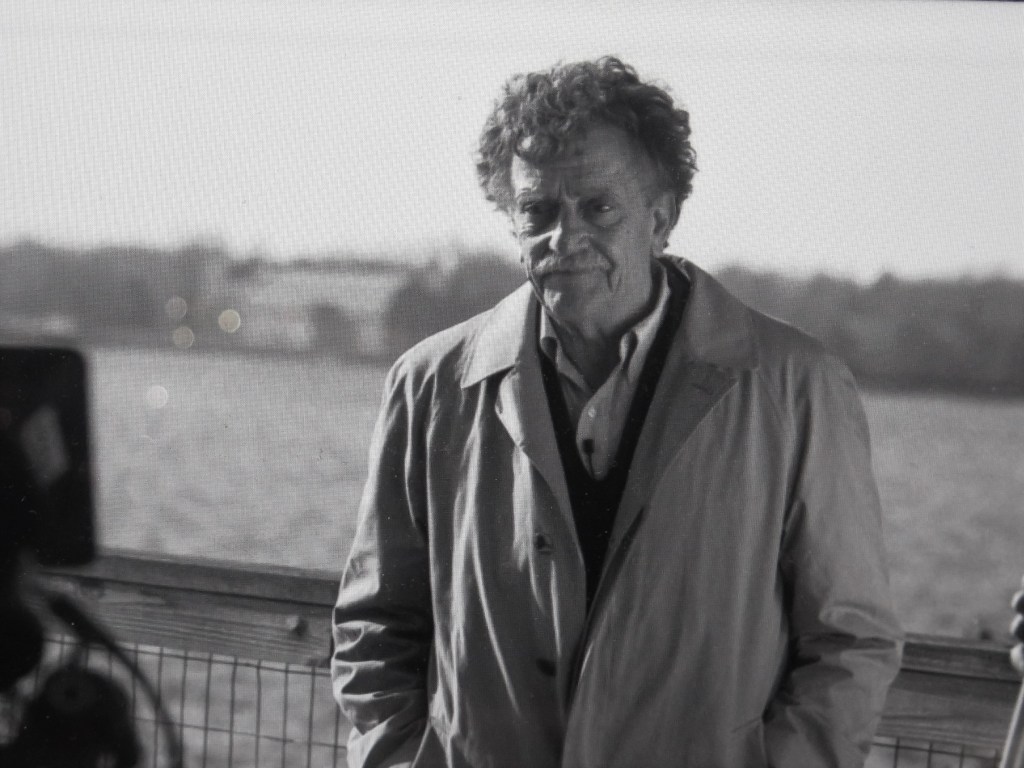
Rather than to point out all of the aspects of the Vonnegut chronicle, which Weide seems to leave no stone unturned in Vonnegut’s life, he shows the arc of Vonnegut’s career influences and development. Weide jumps around which makes the documentary intriguing, as he makes connections with his own insights and life, then jumps back and forth, past to present to past to current time. Superb. None of this is in chronological order per se; it is in thematic order. For example we discover late into the film that Vonnegut’s mom committed suicide. WHAT! We get to draw the conclusions as Vonnegut discusses how they found her.
We discover how and where Vonnegut grew up, his joining the service and fighting in WWII to experience the seminal aftermath of the bombing of Dresden, Germany which haunted him for all of his life even after he attempted to expurgate it in his first novel of great success, Slaughterhouse Five. The novel, was a war story about a man who’d become “unstuck in time,” with an ability to leap through life, out of time rather like the mystical experience Vonnegut explains he had in Germany when he envisioned the disaster of Dresden before it happened.
Weide leads us to discover how he developed his humor and social insights about technology; his brother with whom he was close was a world class scientist, forward thinking and forward moving. At times Vonnegut lived hand to mouth after he worked in the GE empire in Schenectady and left it because writing copy was nullifying. But his first wife encouraged him to write fiction; he supported himself writing short stories in the hey day of short story writers, for magazines like Colliers, until TV came and the market dried up. A key turning point in his life and career was the death of his sister and his brother-in-law. He accepted responsibility for taking in their four sons and raising them in a house of chaos. The interviews with Vonnegut’s children are priceless.
Vonnegut’s struggles were the nerve-wracking journey that ended in bankruptcy and forced the family to move and Vonnegut to teach to make some money until he struck gold with Slaughterhouse Five, became a celebrity, hobnobbed with famous writers and divorced his wife, though he stayed close to his three children. In the republication of the novels he wrote before Slaughterhouse Five, he earned enough money to be comfortable, if not happy; indeed, he became more ironic and annoyed and wrote about it with less success and popularity which he never returned to after the 1970s. It was around this time that Weide found him and the interviews with Vonnegut, his children and noted writers and friends and Vonnegut’s novel writing and speaking engagements continued, though his popularity waned. Interestingly, they collaborated on a film based on Vonnegut’s Mother Night, which was hugely unsuccessful.

Though some critics of the film find it distracting that Weide interjects himself in the film with their relationship, I found the clips profound. Weide is revealing the decades long influence Vonnegut had upon his life and career. Perhaps, it is one of the reasons that Weide even made the film at all; to get down as much as he could that fans would appreciate, for they understand Vonnegut’s profound influence. Yet, in what Weide left out, only he will be reminded of the most vital and personal portions he alone experienced, that he keeps as a treasure to himself. For those who don’t like Vonnegut, it’s a ho hum. For fans, their relationship humanizes Vonnegut who had clay feet after his divorce and falling off the Best Seller lists into a kind of writer celebrity oblivion.
However, as one does acknowledge with close friends, all of it, even what might be the little insignificances are important. And enough of the personal intimacies come through between Weide and Vonnegut and his family (smoking a Pall Mall cigarette with his daughter en memoriam) that I found myself broken-hearted that I got to experience Vonnegut in a new way, and that he left this planet and I was too caught up in my own life to stop a moment and reflect about his books and why they so moved me at the time. Though I was a great Vonnegut fan in college, I stopped reading him, put off by his son’s “revelations” about himself and his father.
For me and for others, Weide’s film opens up a new door to appreciate Vonnegut the social critic and voice of thunder railing against the worst of human ills. And we get to appreciate the how and why he was who he was, an American man who carved a place for himself in the minds of individuals to influence their thinking philosophically. For that alone this film is vitally current. Vonnegut fits with our time even more so than the time that found him resonant.
KURT VONNEGUT: UNSTUCK IN TIME is available in theaters and on VOD
VIEW TRAILER HERE.
New York Holiday Train Show, NYBG’s 30th Year Milestone Celebration
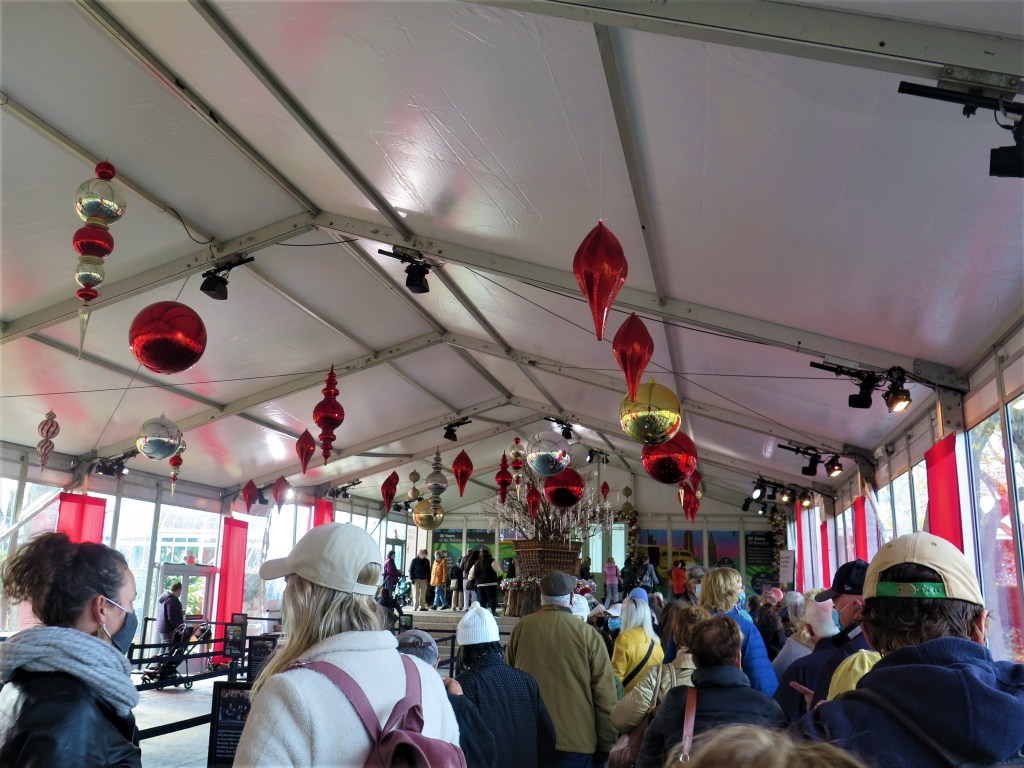
The parking lot was jam packed on Member Day, November 19th, as long standing and new members of New York Botanical Garden came to see the amazing architectural wonders ingeniously constructed from a variety of plant parts that are the showpiece along with the fun trains that comprise one of the most enjoyable exhibits at the Garden. The Holiday Train Show® (Saturday, November 20, 2021 – Sunday, January 23, 2022 from 10 a.m. – 6 p.m.) a favorite of New Yorkers, features new additions to its collection which now numbers over 190 structures.




After the trials of COVID, the shut down and restricted access of the last year, the Garden ushers in the 30th year for the train exhibit whose landmark building collection is designed by Applied Imagination’s team and then situated throughout the Haupt Conservatory and galleries in collaboration with the NYBG staff over a two week period.


In celebration of the NYBG Holiday Train Show’s 30th year, the creative team at Applied Imagination re-created one of the central aspects of the Garden: the LuEsther T. Mertz Library Building with the Lillian Goldman Fountain of Life, and the John J. Hoffee Tulip Tree Allee. These buildings and attendant features were declared a New York City Landmark in 2009. The care and effort taken to manifest these structures took thousands of hours of work. Take a moment to appreciate the designs and materials used to create the display. Especially appreciate the myrtle topiaries that simulate the Tulip Tree Allee.

The Holiday Train Show® may be appreciated on many levels. From the vantage point of a child’s, one delights as more than 25 model trains of various gauges careen, zip and plow along the miles of track laid down between the brilliant foliage and flowers and plantings graded to maximize happiness. For adults, there is always the astute appreciation of the craftsmanship and design of the New York landmarks.

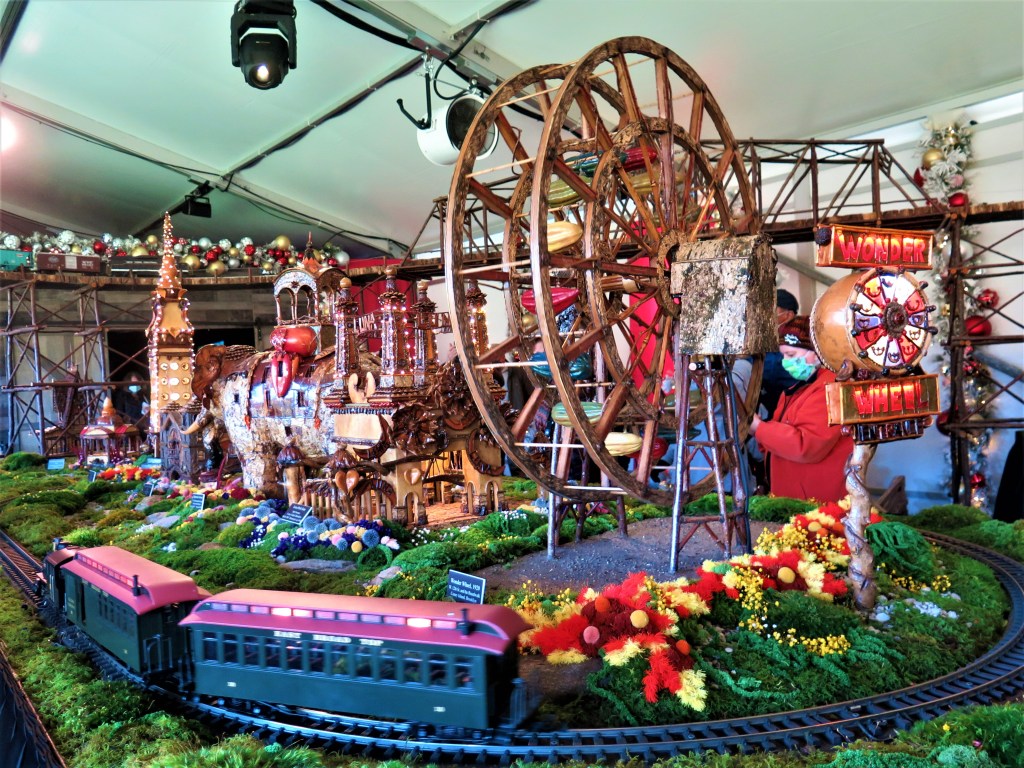


Whether in daylight or evening twilight, there is magic in being swept away into a miniaturized world of perfection created with loving artistry and passion that spills out into the hearts of the visitors of the exhibit who return many times during the season bringing friends, grandchildren and sweethearts. The holidays wouldn’t seem complete without the Garden’s Holiday Train Show® accompanied by a wealth of activities for children and adults during the Winter season.

For children, there’s the “Evergreen Express” in the Everett Children’s Adventure Garden (November 20, 2021–January 23, 2022). Make sure to dress warmly as you climb onto a kid-sized play train and move through additional activities at the mini-train table having fun with the wooden train cars. Along the way of your adventures which might including hiking through the landscape, stop at the outdoor musical instrument station for family jam sessions on marimbas, amadindas and drums. For self-guided explorations with your kids be aware of the times: daily (10 am-5 pm) Guided activities (click here) run on weekdays (1:30-2:30 p.m.) Saturdays, Sundays and Holidays (10 a.m.-2:30 p.m.) The Everett Children’s Adventure Gardens is included in all ticket types.

Exclusive benefits for Members of the NYBG are always welcome and prized. For members entrance to The Holiday Train Show® is free and the parking lot becomes swamped so you may have to park at the Fordham University parking lot across the street. Also, make your reservations online to schedule the days you want to visit so you aren’t closed out. The next Member Day is Friday, January 7, 2022 when you can take advantage of exclusive benefits, including free parking, 20% off at the NYBG Shop, 15% discount at all dining venues, and up to 4 half-price tickets for guests. For more Member benefits, CLICK HERE. If you aren’t already a Member of the Garden, sign up online today.

Throughout the show there are additional features to make your visit enjoyable and memorable. The Uptown Brass will be presenting festive selections of classical and popular holiday favorites. These professional musicians have been featured in venues throughout New York City. They will be performing for your pleasure on November 19, 20, 21, 26, 27, & 28; December 5, 23, 26, 27, 28, 29, & 30th at the Leon Levy Visitor Center (1, 2, & 3 p.m.) For more information about The Uptown Brass CLICK HERE.


In the Garden’s Sounds of the Season, listen to solo performers roll out the red carpet and rouse your spirits on weekends through December 26th in the Conservatory Entry Tent from 11 a.m. – 2 p.m. beginning with Louis Apollon (November 19 & December 4). Louis Apollon is a Brooklyn-based jazz-folk singer-songwriter. Other musicians include the Bronx-based DJ Collective and Community Organization Uptown Vinyl Supreme (November 27, 28, December 5, 11, & 12) and Darren Solomon (December 4) the Clio and Cannes Gold Lion award-winning composer, producer, bassist and keyboard player. For more on the musicians and additional performers CLICK HERE.

Another favorite, Holiday Classes are back where you will learn how to fill your home with the warm scents, tastes, and textures of the season. Interesting offerings include styling magnolia leaf wreaths and making decadent fruit preserves. For more information on other class offerings CLICK HERE.

As a part of the festivities during the Winter Season, celebrate the waning of sunlight with the brightening of NYBG’s GLOW, an enchanting outdoor color and light experience (November 24, 26, 27; December 2, 3, 4, 9, 11, 16, 17, 18, 23, 26, 27, 28, 29, 30; January 1, 6, 7, 8, 14, 15, 21, 22 from 5 p.m. – 10 p.m.). GLOW’s pageantry lights up NYBG’s iconic landscape and historic buildings turning them to whimsical beauty after the sun sets. This otherworldly illumination has been expanded to an additional 1.5 -miles of spectacular.

If is possible to see both The Holiday Train Show® and GLOW at a reduced price and savings. CLICK HERE. You will feel welcome with all of the activities offered. Talented performers dressed up in holiday costumes, stilt-walkers and other artists will stop for your selfies and family photos. And returning is the deft ice sculptor, always fun to watch as chips of ice are narrowed into figures and shapes. Taste local cuisine from the Bronx Night Market and enjoy a cocktail, beer, wine, and more from one of the festive. seasonal bars. For additional information and ticketing CLICK HERE.

Look for my future posts with specific details about the wondrous architectural collection created by Applied Imagination from natural materials i.e. twigs, leaves, seeds from trees and fruits, pods, gourds, acorns, bark, fungi, pine cone scales, nut shells, nuts and more. I absolutely love The Holiday Train Show and GLOW to usher in winter and waning sunlight as we move to the darkness of the shortest day of the year. Knowing I can venture to the Garden to lift my spirits with family and friends makes the light deprivation in our northern clime seem worth it. CLICK HERE FOR TICKETS AND PROGRAMS.
‘The Visitor,’ Not to be Underestimated, Extended at The Public

The Visitor, is a haunting musical based on Thomas McCarthy’s resonant, titular, award-winning film (2007). In its World Premiere, The Visitor has been extended at The Public Theater, and is ending December 5th, 2021. That we are able to see it at all, given the pandemic which made New York City the global epicenter of death, shuttering theater for months, is nothing short of miraculous.

The egregious hell of the previous administration, including its threatened overthrow of the nation led by the former president and white supremacists who oppose immigration and the constitutional rule of law, may influence one toward a jaded view of The Visitor as woefully “uncurrent.” Some critics suggested this. Indeed, that is dismissive of the musical’s inherent hope, goodness and prescience. Not to view it through the proper lens of historical time would be as limiting as the unjust institutions and failed immigration policies that the production thematically indicts.

The Visitor, acutely directed by Daniel Sullivan, takes place after 2001 during the administration of President George W. Bush Jr., when certain groups viewed Muslim immigrants as possible terrorists. The period 2001-2007 was a less divisive time in the nation, but our failed immigration policies did stagnate and worsen, setting us up for future debacles and the growth of white domestic terrorism. Nevertheless, if one’s sensibilities are too upended by the traumas of the Trump administration to enjoy the musical without keeping the 2001-2007 time period in mind, the themes and the human core of this work by Tom Kitt (music), Brian Yorkey (lyrics), Kwame Kwei-Armah & Brian Yorkey (book), will be overlooked and given short shrift.

The themes are relayed principally through the relationships established between white college professor Walter (David Hyde Pierce in an emotional and effecting portrayal), Syrian Tarek (the likeable Ahmad Maksoud), and his girlfriend from Senegal, Zainab (the golden voiced Alysha Deslorieux). Believing Walter’s Manhattan apartment has been vacated, Tarek and Zainab, tricked by an “Ivan,” have been staying there without Walter’s knowledge. What occurs after Walter discovers their presence, takes us back to a time before Donald Trump’s inhumane immigration policies, Republican party nihilism and Democratic governors’ establishment of sanctuary cities to protect the undocumented and waiting asylum seekers.
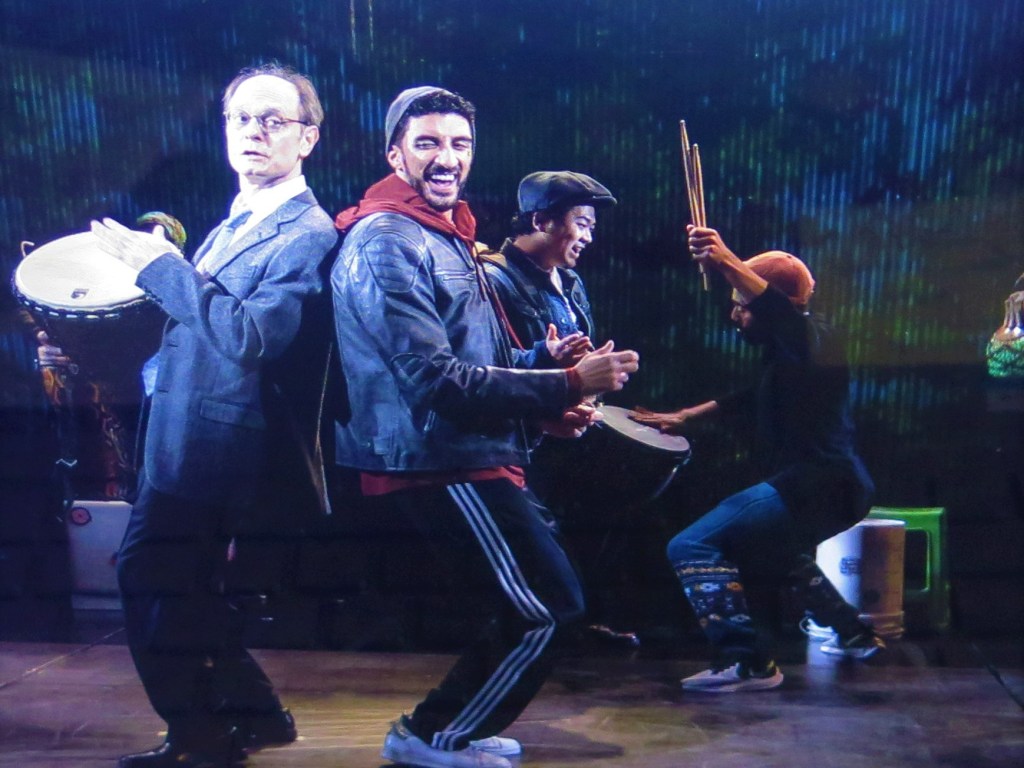
The opening numbers (“Prologue,” “Wake Up,” “Voices Through a Window”), establish why Walter is amenable to not behaving like a guard dog (who would note Zainab’s accent and Tarek’s swarthy looks), and immediately call the police to arrest the couple. Walter is a professor, not law enforcement. However, Zainab sees the precariousness of their situation and with passion mitigates their mistake (Zainab’s Apology”). After they leave, Walter finds Zainab’s sketch pad and runs after them. What results is an act of hospitality and generosity, as he allows the couple to stay until they find somewhere else to go.

Walter’s state of mind, character, background and the loss of his wife and emotional destitution prompt this irregular action. On the couple’s part, Zainab, who has been through an undocumented female’s hell which we later discover (“Bound for America”), doesn’t trust Walter and presses Tarek to leave, despite their desperate circumstances. David Hyde Pierce, a consummate actor whose Walter floats like a ghost without any sense of purpose, mission or happiness, sparks to interest identifying with the couple’s romantic love (“Tarek and Zainab,”). He wants to trust in their goodness and decency because he has already lost everything worth anything to him and he has nothing left to lose.

Walter, Tarek and Zainab take this incredible risk because of their overwhelming needs. All are visitors to this land of human decency which they extend to each other with hope and a faith that grows and changes their lives. When Tarek teaches Walter how to play one of his djembes (a goblet drum played with bare hands that originated in West Africa), and takes him to the park to play with others (the incredible “Drum Circle”), a bond is formed that will never be broken.
The production’s music (thanks to Rick Edinger, Emily Whitaker, musicians and the entire music team), solidifies the themes of friendship, unity, empathy, humanity. Significantly, the music suggests another vital theme. It is through our cultural differences via artistic soul expression, that the commonality among all of us may best be found. These themes, during what appears to be the height of racism and white supremacy in our nation today must be affirmed more than ever. The Visitor does this with subtlety like a grand slam in bridge played with three cool finesses.

At the first turning point in the production, the center starts to give way. Though Walter tries to advocate for the inaccuracy of the transit cops’ charges, Tarek is arrested for “jumping” a subway turn style after he pays but can’t fit himself and his drum through it. The cops’ action underscores the inequity of the justice system. If he were white, they probably wouldn’t arrest him. The cops find it “inconvenient” to believe Tarek’s explanation. Nor do they follow Walter’s advice to check his card to verify Tarek’s truthfulness.
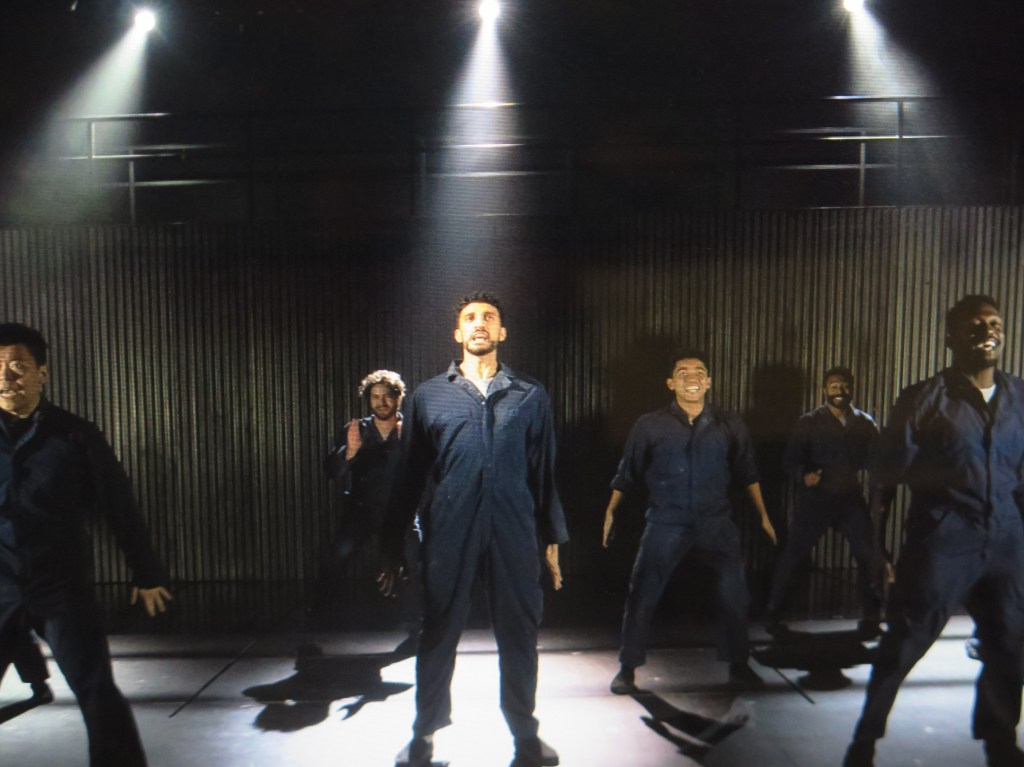
Discovering Tarek is undocumented, they put him in a detention center in Queens. Feeling responsible for Tarek’s situation, Walter hires an attorney, visits Tarek and keeps Zainab encouraged. It is in the detention center that we note the cruelty toward the undocumented, who are treated as criminals, though they are asylum seekers and willing to work for a better life for themselves. The music, lyrics and Lorin Latarro’s choreography, especially in “World Between Two Worlds” sung by Tarek, Walter and the Ensemble are superbly expressive, heart-wrenching and powerful.

As the stakes become higher in the second turning point, Tarek’s mother Mouna (the effecting, soulful Jacqueline Antaramian), visits Walter’s apartment looking for Tarek. Events complicate. Walter finds Mouna appealing and authentic. Mouna and Zainab ride the Staten Island Ferry. They finally become friends (“Lady Liberty”), and share how they believed the seductive promises of the “American Dream.” Because Mouna and Zainab may never see Tarek again in the U.S., Walter becomes the one they must turn to (“Heart in Your Hands,” “Blessings,” “Such Beautiful Music.”). Beyond hope (“What Little I Can Do”), Walter does his best, but the institutions fail him as they have failed us for years.
It is through the relationships with Tarek, Mouna, Zainab that Walter’s humanity and empathy are stirred to change his soul and his direction in life. It is the love for Tarek and the hope of his release that changes Mouna’s and Zainab’s relationship with each other. And their relationship with Walter establishes a new level of understanding that there are “good” people who will help. Finally, it is the stirring of Tarek’s concern for Zainab, that helps him realize his spiritual love and connection with her is not bounded by the material plane (“My Love is Free”), or held in by the walls of his jail cell, or deportation back to Syria. And it is that spiritual love for her and his connection to Walter that will help him face whatever he encounters.
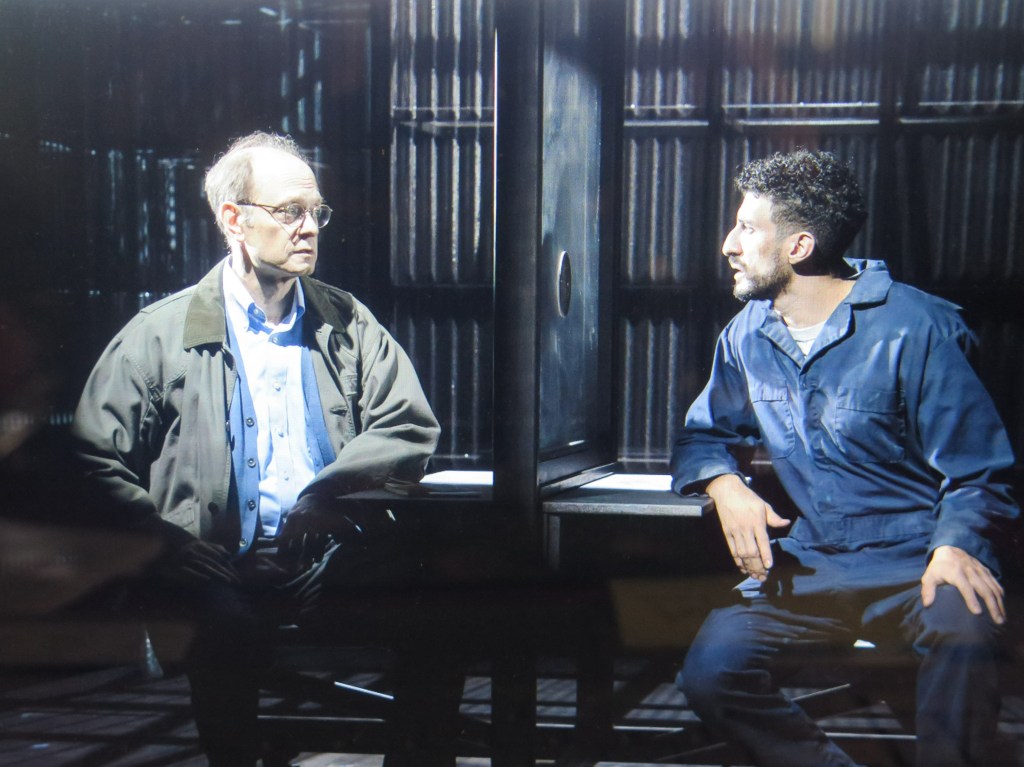
As an archetype for all sane individuals, Walter realizes the issues underlying Tarek’s, Zainab’s, Mouna’s situation. We are to agree with him, the creative team hopes. These individuals are not “the other” that their nationless position or the white supremacists’ stereotyping suggests they are: dangerous, encroaching, grifting. In the showstopping “Better Angels,” David Hyde Pierce prodigiously, emotionally expresses his song-prayer for Tarek. He petitions against the injustice of Tarek’s situation. Our nation should act better, but it has become unmoored from its founding ideals of liberty and the inalienable rights of human beings (“We hold these truths to be self-evident…”).
As Pierce sings, the irony of an older, white gentleman whose life has been bled out of him, standing in the gap for a young undocumented Syrian, who is full of vitality and hope, wanting to live his life to the fullest in a country that doesn’t deserve him, is beyond fabulous. It is also heartbreaking. Pierce, impassioned, speak/sings it out into the nether regions of spiritual consciousness. Is anyone listening? Have we forsaken our citizen right to help others?
I apologize for being moved for I thought of what was to come because of these failed immigration policies which continued and inspired the former President Donald Trump’s white supremacist agenda: kids in camps at the Southern Border, kids lost to parents for years, the undocumented dying in stifling heat and horrific conditions, proud Trumpers appreciating Steven Miller’s cruelty, while donating to grifter Steve Bannon’s fake “Build the Wall” fund.
The Visitor presciently, horrifically intimates what happens if injustice and cruelty are institutionalized and the populace is inured to it or worse, uses xenophobia as a whipping post to domestically terrorize others for pleasure’s sake. White supremacists have evolved to do so precisely because of failed immigration policies which a craven, unhinged politician exploits for his own grifting agenda.
Equally terrifying is the war of attrition against decency, and the lack of wisdom to appreciate this historically as revealed by The Visitor. If we consider that critics are inured/jaded not to see in The Visitor the failed state of our culture in 2001-2007, that augmented during and after the Obama administration, the loss of that understanding bears reviewing. And while many were thrilled with former President Obama, in the shadows, white supremacy groups grew by demonizing “the other.” Sadly, they blossomed to a “first wave,” who supported a president against democratic values, one who followed up with inhuman, indecent acts from immigration crimes to COVID deaths.
The character of Walter reminds white males it’s OK to be humane and decent and empathetic. To think this production is not “current” enough via its historical perspective is misguided.
In Kitt’s, Yorkey’s, Kwame Kwei-Armah’s musical, Tarek and Mouna symbolize the courageous willing who take horrific risks. We need to be reminded of this again and again. Sullivan’s profound direction prompts the musical to change our perspective through empathy and identification. Thematically, The Visitor suggests we no longer allow ourselves to be like inconsequential stones kicked around by politicians. What is it like to sustain the impossible hardship of leaving all that was familiar and comforting in the hope of escaping catastrophe, only to never gain the security sought (“Where Is Home?/No Home”)? As climate change continues to roil the planet and immigration issues worsen, we can’t drop a stitch of understanding or subdue an impulse to assist in whatever way we can.
The actors/singers, phenomenal swings, musicians and creative team stir us to listen to the production’s call to arms. We must reform our failed immigration policies that have caused horrific pain for asylum seekers and dreamers, as they wait for citizenship to no avail. Not only must changes be made, they must be made permanent so that no Executive Order, lawsuit or state can reverse it to pleasure white supremacists.
Specific shout outs to David Zinn’s evocative scenic design: the steel backdrop of the detention center and its ironic contrast, Walter’s comfortable apartment. Kudos to Toni-Leslie James (costumes), Japhy Weideman (lighting), and others who helped to make The Visitor a compelling, must-see production. For tickets and times visit the website: CLICK HERE.
‘The Dark Outside’ by Bernard Kops, Starring Austin Pendleton and Katharine Cullison
The Dark Outside by Bernard Kops currently at Theater for the New City is the renowned 94-year-old English playwright’s most recent work. The play uplifts the importance of family with themes of unity, love, encouragement, light and hope against the all-encroaching darkness that would turn family members against each other and destroy them. Kops’ lyrical play had a staged reading at London’s National Portrait Gallery in 2020. It is a great irony that The Dark Outside presciently foreshadowed the tenor of the times as the pandemic broke out and upended global society and culture right after the reading.
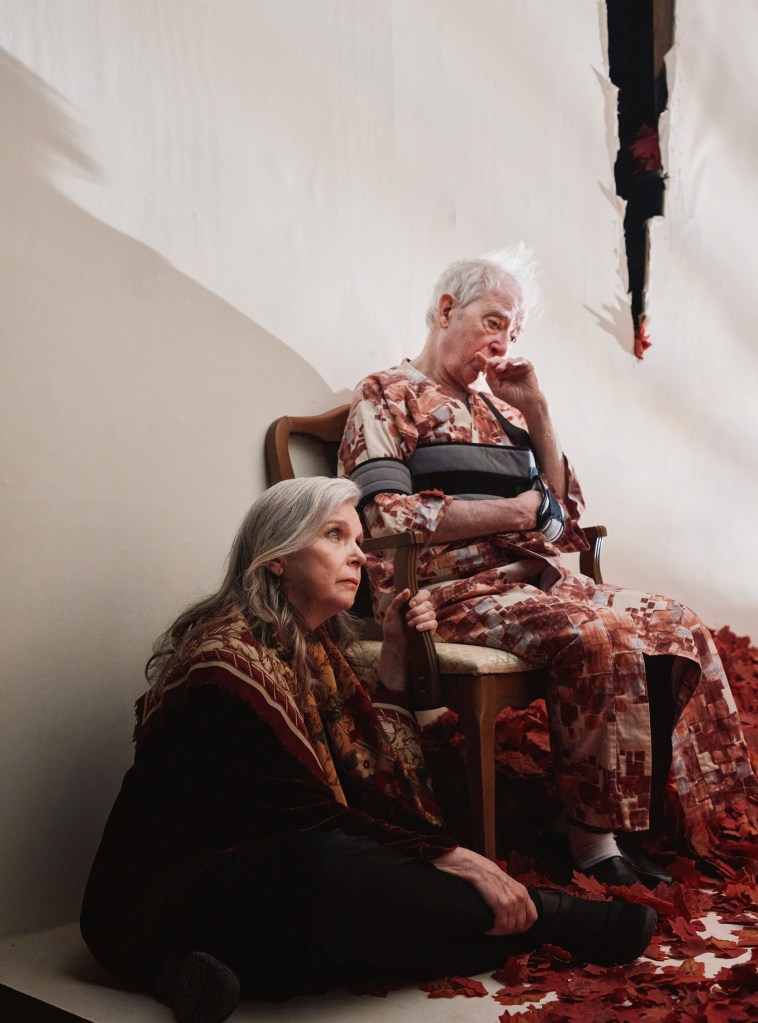
Through the COVID-19 chaos and upheaval, which bred uncertainty, want and fear, oftentimes, family provided the bulwark of steadfastness against psychic and physical infirmities and death. Disastrously, in the United States the divisiveness over how to handle COVID-19 became a political football which, to this day, divides families and ends friendships. Most importantly, Kops’ The Dark Outside reminds us of the moral, sociological and personal imperative of the family unit to sustain its members. Though the inevitable tribulations of life will come, they can be withstood through love’s immutable power.

In this premiere at Theater for the New City, director Jack Serio and the creative team deliver the beauty and sanctity of the play’s themes with a fascinating production that is incredibly timely. Serio highlights the British dramatist’s poetic sensibilities and notes Kops’ homage to archetypal character types through the production’s staging and overall design elements.
To achieve Kops’ ethereality, Serio selects minimalism. The production strips away material clutter and simplifies, using the bareness of space. In the atmosphere created, the superb acting ensemble conjures up the symbolic mulberry tree, the garden behind the house, the dinner, and more. All are in the service of Kops’ revelations about this family’s unity, inspired by the beautiful and loving mother and wife, Helen, portrayed with precision by Katharine Cullison and supported by the wounded, sensitive, poetic father and husband Paul, played by the impeccable Austin Pendleton.

At the outset, Kops introduces us to Paul (Pendleton) the father/husband, a former East London tailor who faces a life crisis after he loses the use of his arm in an accident. To inspire and encourage Paul, wife/mother Helen (Cullison) gathers their children, Penny (Kathleen Simmonds) Ben (Jesse McCormick) and Sophie (Brenna Donahue) to unify the family at the important occasion of celebrating Paul’s birthday.
As the play progresses, we discover that each of the children confronts conflicts and traumas in their own lives. Thus, the chaos that is outside on the streets and in the neighborhoods that Paul often refers to threatens to disturb and destroy each of the family members unless they are able to work through their problems, seeking the comfort of each other to tide them over to face another day.

Kops uses the majestic mulberry tree in the family’s garden to reveal the issues of the characters. For strength and peace, family members confess their angst and deep secrets to the tree whose life force listens and, in its silence, allows the characters to gain an inner solace and calm. Additionally, sisters Sophie and Penny share confidences. Sophie relates a horrific experience that caused her to leave college and spiral downward into emotional devastation and near destruction.
Sophie’s salvation is in coming home where she finds love, acceptance and redemption. Revitalized, Ben and Sophie receive great comfort in the arms and soul strength of Helen, who soothes and reassures both as she helps them overcome their inner hell. Paul’s great appreciation of his amazing wife is his continual blessing. Cullison and Pendleton are authentic and believable in the relationship they build of the loving couple. Thus, it follows that the children, despite their heart-rending troubles, have rightly come home to heal, as they receive encouragement and love from their parents.

Of the joys in this production are the poems and songs that are wide-ranging and eclectic. These, the family sings together or recites individually as expressions of emotion that are difficult to articulate. The songs resonate and recapture the play’s themes. They indicate how the family copes when a member needs help and uplifting. This is especially so in the poignant conclusion when Helen sweetly sings Paul to sleep with soothing grace. The moment is mythic in its power, and it is obvious that love’s sanctity is a balm which never falls short or fails. Thus, by the conclusion, joy returns to the household. The “darkness” has been thwarted with regard to Ben and Sophie who return to the family to complete the circle of love.

The only one who does not join them and leaves for New York City with her husband is Penny. In her move it is intimated that the wholeness of the family may remain incomplete for a season. But we have seen the strength of the archetypal mother who unites her children and husband. Regardless of whether the external darkness is in London or in New York City, Helen will continue to be the binding force that holds the family together with grace.
Jack Serio, the cast and the creative team have delivered the essence of Kops’ work and made it memorable. With the music and sound (Nick T. Moore) scenic design (Walt Spangler’s leaves are a lovely addition) the modulations of the darkness and light symbolism through Keith Parham’s lighting design, the production’s heightened moments are felt acutely. This is one that should be seen because of its cast and the symbolic iteration of one of Kops most heart-felt works.
The production runs at Theater for the New City until November 28th when Bernard Kops turns 95-years old. It is a feat for one of Europe’s best-known and most admired playwrights who the Queen awarded a Civil List pension for his services to literature. It is an award garnered by a very select few, namely Lord Byron, Wordsworth and Alfred, Lord Tennyson. For tickets and times go to the website https://theaterforthenewcity.net/shows/the-dark-outside/
Theater Review: ‘Trevor’ a New Musical at Stage 42, Based on the Titular Film

The musical Trevor with book and lyrics by Dan Collins and music by Julianne Wick Davis manages to run an emotional continuum from delightful, funny and whimsical to poignant, profound and heart-breakingly current. Based on the 1994 titular short film which inspired a suicide prevention organization, The Trevor Project, the musical comedy delivers without being a hokey, silly-serious “message” play. This is principally due to the vibrant direction by Marc Bruni, the fine cast lead by the impish Holden William Hagelberger, the energetic musical direction by Matt Deitchman and the ebullient choreography by Josh Prince.
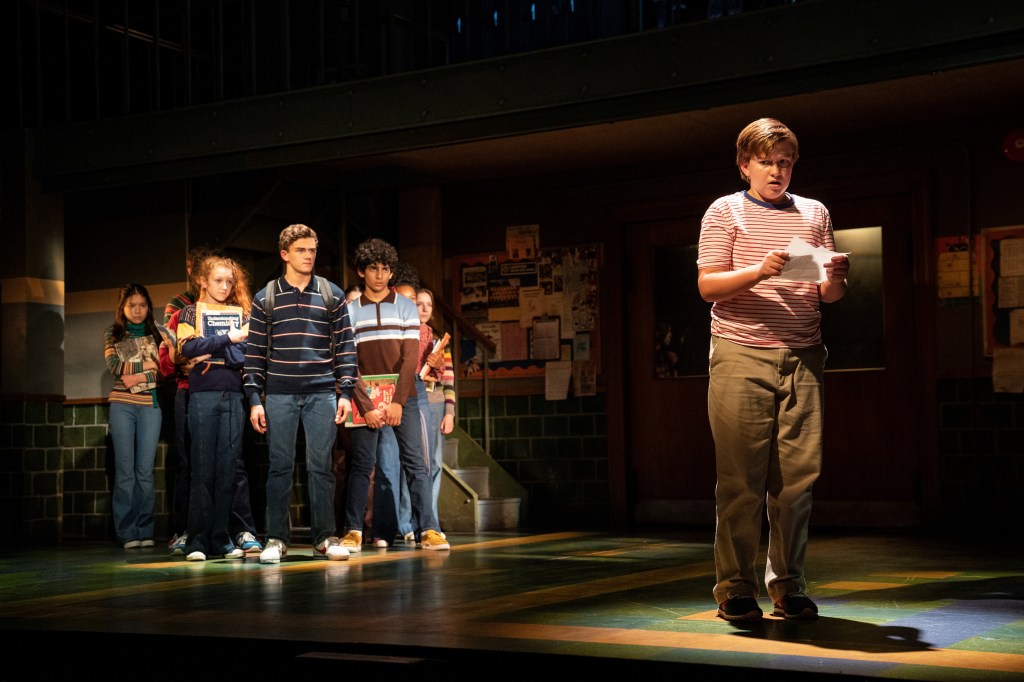
As a result, the musical comedy soars just high enough in the first act without burning itself up in the second, which takes a dark turn but remains ironic and soulfully empathetic. Its subject matter remains human and will touch even the most hard-hearted bigots who were never “cool” or “awesomely popular” in school. Above all Trevor touches upon the human need to be inspired by secret goals and dreams, which keep us enthusiasts of life and young at heart.
The original story by Celeste Lecesne generated the Academy Award-winning short film “Trevor” directed by Peggy Raiski and produced by Randy Stone. The film serves as an excellent foundation for the stage adaptation because it resonates with the familiar and never stands on sanctimony. Unfortunately, the all too probable “real life” situation provides the key conflict in the musical. What Trevor faces happens every day in a school in every school system in the nation to kids who are brave enough not to fit in despite the pain and bullying miscreants who will punish them for it out of cowardice and fear.

The musical in its New York premiere highlights the enthusiastic teen, Diana Ross fan and wanna be singer and performer Trevor, who is coming into his gay identity which he accepts and reconciles by the end of the production. Trevor lives in a suburb in 1981 before LGBTQ was “a thing” and at the outset of the AIDS crisis before it was “identified” as such. Neither of those factor into the arc of Trevor’s discovery and affirmation of himself which is a huge plus. Indeed, we are only caught up in the dramadey of this coming of age story without the angst or preachy assertions about gender identity. Trevor is and because he is, he is unequivocally acceptable and adorable in the human family.
Trevor’s uptight Catholic parents (Sally Wilfert, Jarrod Zimmerman) are clueless. Their fearful refusal to acknowledge that Trevor might be “gay” is humorous (thanks to Wilfert and Zimmerman). Their lack of understanding provides one of the conflicts in the production when they deliver Trevor to Father Joe, a Catholic priest for counseling. He is as helpful as a rock and Trevor’s reaction and the situation provides irony and humor. Importantly, Trevor must work out his own “redemption” for himself with the help of his friends, however difficult that is. Nevertheless, it is his talent and his dreams and interests that see him through the dark times.
Holden William Hagelberger is a likable and cheerful Trevor who is involved in his own world with his school friends, the funny geek Walter (Aryan Simhadri) and the awkward, humorous Cathy (Alyssa Emily Marvin) with glasses and rubber bands on her braces. Trevor is considered weird by the other kids in school, but fate throws him in with Pinky (the fine Sammy Dell) one of the most popular kids. Pinky is kind to Trevor who gives him help to hook up with Frannie (Isabel Medina).

As Pinky and Trevor become friendly, Trevor finds himself “falling for” Pinky, having his first crush on a guy. Unfortunately, the friendship turns sour when someone steals Trevor’s notebook which has entries that indicate how much Pinky means to him. When Trevor’s classmates treat him as an “invisible” to punish him for his “crush” on Pinky, Trevor is devastated and takes it out on himself.
The turning point in the play with the number “Your Life is Over,” is campy and staged well (as are most of the musical numbers). The serious subject of suicide (Trevor tries to OD on Aspirin) is dealt with as a Diva’s comedic irony, skirting the edge of darkness successfully. Yet, the seriousness of what occurs is noted with concern and reverence.
How Trevor comes out of his morass of emotions with the help of his friends, and specifically his trust in the magically realistic Diana Ross (Yasmeen Sulieman) who appears and disappears when he needs her, encourages and enlightens. Indeed, Diana Ross is an extension of Trevor’s talent and wisdom. In his reliance on this inner ethos, we are released into an uplifting resolution in Act II.
Trevor does not wear political correctness on its sleeve. Nor does it beat its breast with finger-pointing. In remaining real and human, the creators hit this production out of the ballpark with its humor, music and the ensemble’s energy. Its appeal is wide-ranging. Who would not uplift being decent and kind? Who would disavow the Golden Rule to do unto others as we would have them do unto us? These values are cross-cultural, cross-national, cross-global. In its message, the production is not self-aggrandizing nor pushing any political stance. How refreshing! As such, that is Trevor’s strength and why it should be performed in schools across the nation.
Kudos to the creative team, to the director’s apt shepherding of the ensemble who does a bang up job led by Diana Ross (Yasmeen Sulieman) Trevor (Holden William Hagelberger) and Pinky (Sammy Dell). For tickets and times to see this must-see musical go to their website. https://www.trevorthemusical.com/?gclid=Cj0KCQiA-K2MBhC-ARIsAMtLKRsWL0YelVs_Hh9DC-KAOX76sPUOKMSwC-3EmKmF0YoUMHsHeY_bhQEaAtPGEALw_wcB
‘F@ck This Job’ Award-winning Film at DOCNYC, Review
One of the most important films in the DOC NYC Festival 2021 (November 10-18) (https://www.docnyc.net/2021-festival/) is F@ck This Job. Thematically, the film concerns the press and media speaking truth to power in totalitarian countries which censor the facts so that the ruling regimes can maintain control while they grift their countries of billions of dollars. Journalists must decide if they should allow themselves to be silenced. They must decide whether or not to fight to represent the truth to the nations’ citizens, thereby risking their careers and lives. In the end one asks is it worth it to be a hero no one recognizes or cares about? But sometimes people do care and sometimes, one can make an incredible difference, though that was not their initial intention. F@ck This Job is both an inspiration and a cautionary tale for journalists everywhere, especially in countries touting themselves as democracies.
Director Vera Krichevskaya chronicles Russia from Medvedev’s presidency to Putin’s changing the Russian constitution (2018) to maintain power until 2036, something he swore he would never do. Simultaneously, the director reveals in tandem the parallel story of Natasha Sindeeva, a former music radio producer who looks to upgrade to a media manager and owner of a TV station, after she marries the rich banker Sasha who bankrolls her.
As the film opens in 2008, Krichevskaya, who has direct access to Natasha and Sasha as a friend and also a participant in their TV venture, intercuts the beautiful opulent wedding of Natasha and Sasha and the happiness of Medvedev’s election for Russians in what was then a thriving nation. All is bright pink and as rosy as Natasha’s pink Porsche, that zips happily around the streets of Moscow. In its brilliance, as the film melds two stories we understand the near cinema verité unveiling of an incredible history of a decade of events in Russia. One story mirrors the Russian citizens’ initial belief in a bright future with Medvedev. It is a vision which turns to dust as Russians realize that Putin is holding the reins of power from the shadows and is increasing his repression against journalists, Ukrainians, opposition leaders, protestors and anyone who stands against his grifting and accumulation of power and wealth at the expense of Russia’s prosperity.
Likewise, Natasha’s bright beginnings founding her TV station, the independent TVRain (Dozhd) media outlet hits a turning point. Her vision to create independent, light, glamorous media, since she had come from such an elegant universe as a music producer becomes swamped. Ironically, she labels the TV station the Optimistic Channel to signify Russia’s bright, rosy future and to forecast her skyrocketing success. But her notions upend when serendipitously, “Optimistic Channel” Dozhd TV, becomes the foremost truth-telling station in all of Russia, and a danger to Putin and his underlings at the United Russia Party.
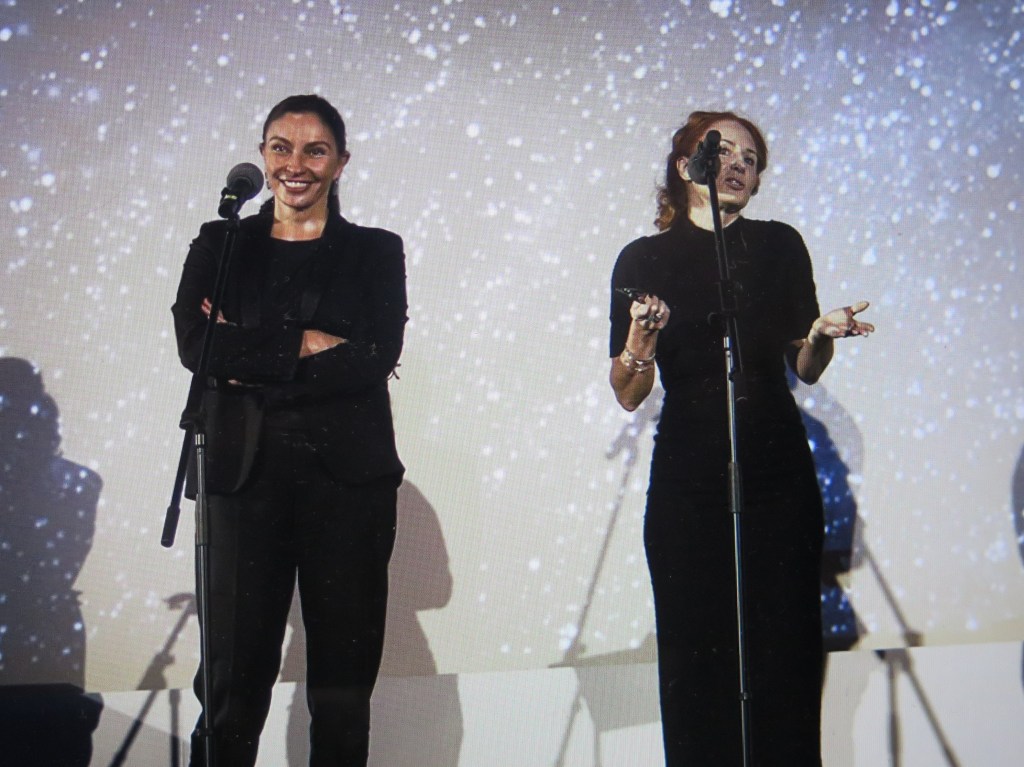
In her yearning to “be different” and current and “independent,” Natasha goes “against the grain.” She hires opposition reporters, minorities and LGBTQ journalists who are unique and fearsome. As a result, the audience loves the Optimistic Channel because they are not “afraid” of the truth. The station has many followers. Their “in the moment reporters” do “live feeds” of devastation, i.e. of the Ukraine war, of clashes of protestors and the police, of upheavals that reveal in real time Putin’s decline in popularity. No state media channel or any media channel for that matter covers such events which global news then picks up. The bright rosy future of Russia is indeed in the toilet. The oppressors then turn against Dozhd TV to make it impossible for them to cover their stories on the air or to criticize Putin’s regime via interviews with Alexander Navalny, Putin’s chief opposition leader that Russians support.
Natasha’s life’s work becomes her daily obsession for success as the only place where Russians can go to experience political and sexual freedom as an independent news station beyond Putin’s control. For example, during this unprecedented decade of modern Russian history of Putin’s growing oppression, Dozhd covers the war in the Ukraine, Navalny’s anti-corruption investigations, and Putin’s and the Russian state’s increasing lies and propaganda to smash Navalny’s gaining popularity.
Events move to the point where Dozhd itself becomes the daily news as they broadcast being evicted and shut down. Their lives are in jeopardy, their financial ruin eminent, all in front of a watching public. Natasha, her staff and the station are evicted and move from place to place trying to find somewhere to broadcast from. This happens a number of times. They flee with their equipment. At one point they continue streaming the news from Sasha’s apartment. Then finally, when all else fails and they have no place to physically call Dozhd home, they take the videos of their live feeds and put them on YouTube. By this point in time, Natasha who was wealthy has lost much of everything and Sasha is moving for a divorce.
Vera Krichevskaya’s video clips of what happens during the frenetic times of wheel and woe, evictions, financial losses, being taken off the air, are intercut with Putin’s proclamations that he is censoring no one and is not jeopardizing Dozhd TV. The director’s editing and footage are superb, as is her paralleling the life of Natasha with Russia throughout the decade. Both the populace and Natasha have had their eyes opened and one encourages the other. If not for the Russian people’s need for the truth, there would be no Dozhd TV. Also, the US and EU nations would not know what is happening inside Russia.

Significantly, the director reveals how Natasha evolves as a human being to understand what is important, what is heroic and what is vital. Fighting on the frontlines of the war between Global Truth and Russia’s Repressive Propaganda and malign influence, Natasha and her team put journalists who would be lazy, cowed, narcissistic and selfish to shame. Dozhd’s team risked their lives, lost money and love relationships in pursuing a greater purpose, resistance to Putin’s lies and propaganda. Would all journalists do the same and not be hacks for their editors.
When nothing is left, one knows the value of what is priceless, something which totalitarian governments and their leaders greatly fear and will kill to prevent its coming to the light. The documented truth. Getting the truth out is paramount in a culture where the state media produces only lies to fuel the wealth and power of the totalitarian, autocratic Russian regime under Putin. The same goes for other such regimes around the world. Krichevskaya’s film sounds the alarm loudly and clearly. For the press to be vital, it must be willing to put itself in jeopardy to get to the truth. If the media only exists for itself, it is useless, especially to a citizenry that intends to remain free.
VIMEO LINK: https://vimeo.com/590692770
The award winning F@ck This Job is a must-see film. For tickets and times go to the DOCNYC website. https://www.docnyc.net/program/?alpha=abc The Q and A with producers, director and subjects will be this Friday, November 12 at 7:15 pm Cinépolis Chelsea in NYC.
‘Morning Sun’ Starring Edie Falco, Blair Brown, Marin Ireland at MTC

Morning Sun by Simon Stephens directed by Lila Neugebauer, presented by Manhattan Theatre Club (New York City Center Stage 1), takes its name from the titular Edward Hopper painting. Hopper’s austere work is of a woman on her bed in bright sunlight staring out the window that faces a factory type building in the distance and rooftops below. The building is out of view from the high-floor perspective of the painted cityscape.
Edward Hopper came from the same hometown, Nyack, as the McBride family women who make reference to him with pride. The painting “Morning Sun” is symbolically appropriate, because Stephens’ protagonist (#1 or Charlotte/Charley) played with terrific focus and authenticity by Eddie Falco, is peering out the window of her life in a flashback life review. She recalls to remembrance her past, assisted by Blair Brown (#2, her mother) and Marin Ireland (#3 her daughter). The woman in the painting steeped in reflection and introspection mirrors Charley McBride.

Brown, Falco and Ireland represent three generations of the lower middle-class McBride women. We see their perspectives and lives as they discuss their relationship with Charley who is the centerpiece of the play. Brown and Ireland also portray the important friends, family and male partners who populated Charley’s life and who are central to the events that took her on her singular journey through the stages of youth, middle age and beyond.
The exposition begins after Charley cries out about safety and security for herself, like a child crying out in the dark. The others assure her she is safe, and calm her down. We understand this beginning to mean that Charley initially is in a place where she fears for her safety. Ironically, it comes to refer to her entire life as a question of unsafe uncertainty. Like every human being who confronts death every moment without accepting or understanding the conundrum of life in death, they move without fully grasping that their instinctive purpose is to stay alive until they leave this earthly plane.
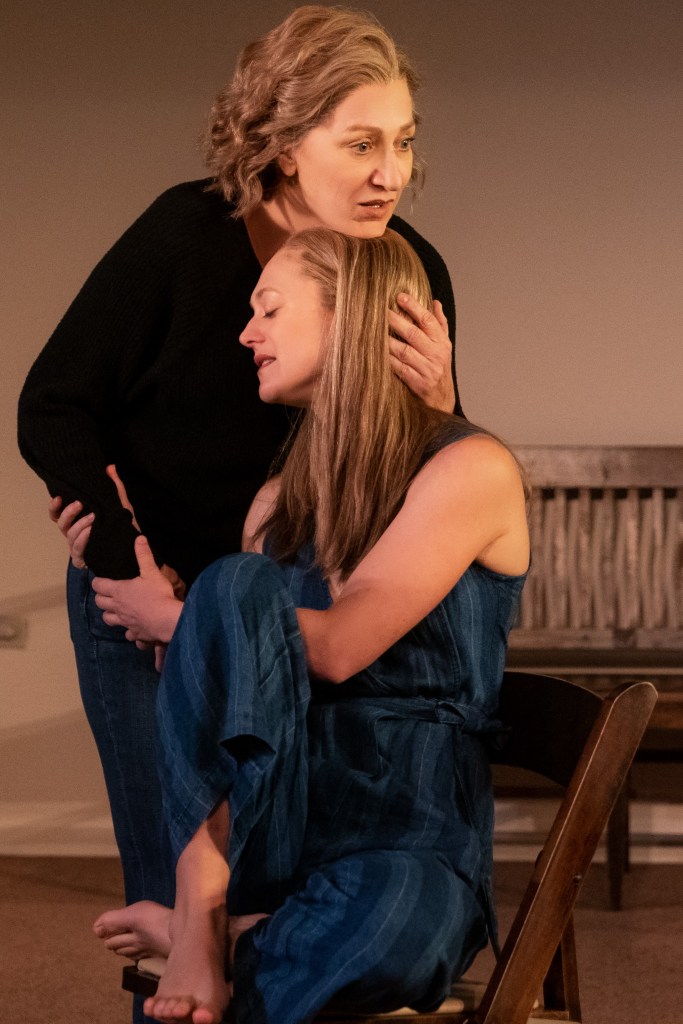
Stephens intimates that there is another consciousness, and the characters inhabit some netherworld in it. But he never clarifies the specifics and certainly not with any religious overlay. Thus, Charley’s cries have great moment. However, we don’t realize why this is so and to what she refers to in her cries until the conclusion, when Stephens reveals it.
With rapid-fire unveiling, the women stream through the beginning, middle and ending of Charley’s life assessment. Their exposition has break through dynamic moments where the women or men that #2 and #3 portray argue or disagree and resist Charley. The drama of a “life well or ill lived” is bled out of Charley’s existence which might be characterized as one of the invisible millions of “average” and “ordinary” women. These lived and died as New Yorkers making do, because they decided not to commit suicide and affirm their identity with an important emotional statement embracing death as a balm for their life’s miseries. Without much reflection or philosophical pondering, they a day-to-day existence.
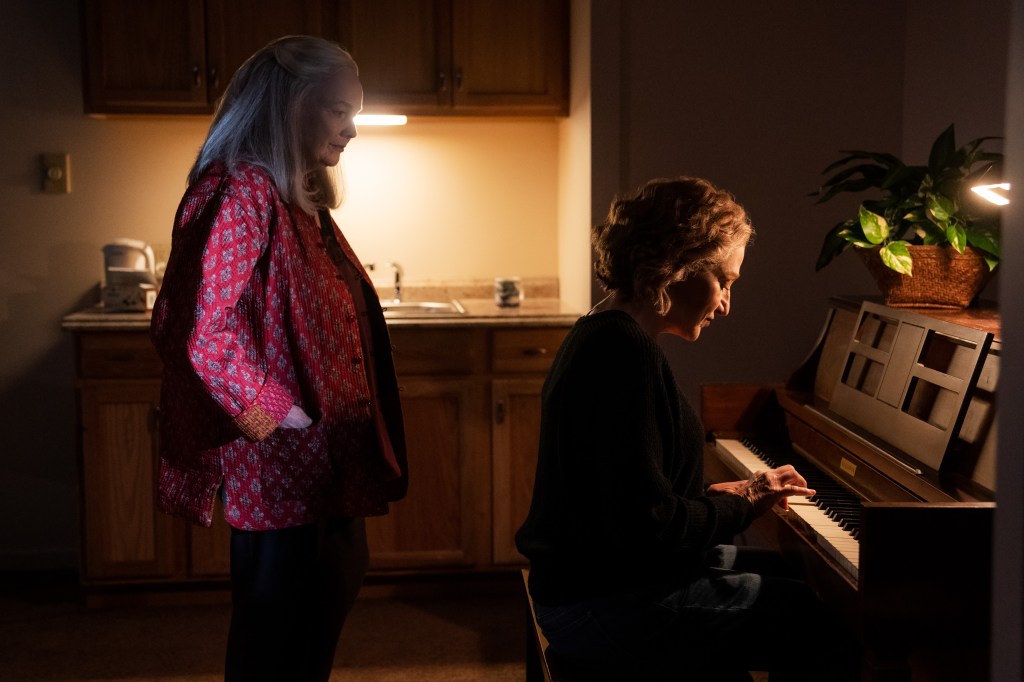
Charley’s chronicle is sandwiched between Claudette’s move to New York City and purchase of an apartment on 11th St. in Greenwich Village where she raises Charley, and years later when Charley comes back to visit and stay with Tessa after she moves to Colorado. The apartment bought on the cheap, in a questionable area grows in value and becomes the envy of all who hear of it, including the audience.
We learn that Claudette arrived in NYC to escape upstate New York and an untenable home-life. By degrees almost as an expanded laundry list, we learn of Claudette’s work, her husband, Charley’s father, Charley’s formative years, her friendship with Casey, her work as a receptionist at St. Vincent’s Hospital, her one-night stand with a pilot and her pregnancy and decision to keep Tessa as a single mother without extensive means. We also learn of Charley’s substantive partners, one abusive, the other kind.

The chronicle is also of New York City’s rise, fall and rise again, revealed as Stephens intertwines Charley’s personal events through the decades which are sometimes impacted by the culture. Ironically, Claudette wants to linger on the 60s, her generation, while Charley affirms the 70s is more important and it’s about “her life” after all. Thus, politics and the upheavals of the 1960s roll off Charley’s back without notice. We consider that Claudette’s viewpoints perhaps were shaped by that time, while Charley, the recipient of the benefits of the 60s social upheavals, remains unconcerned about them.
Throughout, as New York’s financial situation improves, there is discussion about the apartment and what to do with it. We discover that one of Charley’s partners, Brian, who Claudette can’t tolerate because he abused her daughter, persists in trying to get Charley to sell the place, even after they split up. Such discussions become points of humor, as every New Yorker at one time or another finds looking for a place to live, finding a place to live and staying once they’ve found it, one of the main preoccupations of being a New Yorker and living in the city.

Stephens’ vehicle of using #2 and #3 to supplement Charley’s perspective with the men and friends in her life offers an unsettling, unemotional scoping of a list of remembrances that speed us to the why and wherefore of Charley’s existence, however tedious it may be for the audience. The exposition in its great swaths of the non-confrontational is wearisome and uneventful. My neighbor in the audience slept through most of the play and at one point, I found myself almost joining him as I struggled to stay “woke.”
Clearly, Stephens is making a thematic point similar to one heralded by Thorton Wilder’s Emily in Act 3 of Our Town. That life, all of it, especially in its sameness and undramatic monotone is wonderful. Even if one’s life is dreary, monochromatic, dull and uneventful, it is up to us, the players, to bring purpose and meaning to it. This, Charley realizes by the end of the play. She understands the great importance of being a receptionist at St. Vincent’s after the hospital is shut down. She tells Tessa the amazing things about her that she loves.
Such realizations, Stephens suggests, arrive just on time for their full appreciation. Indeed, Charley understands by the end, that she misses what she took for granted as a privilege. Most importantly, those people, places and wants only resonate with her unique ethos and being.
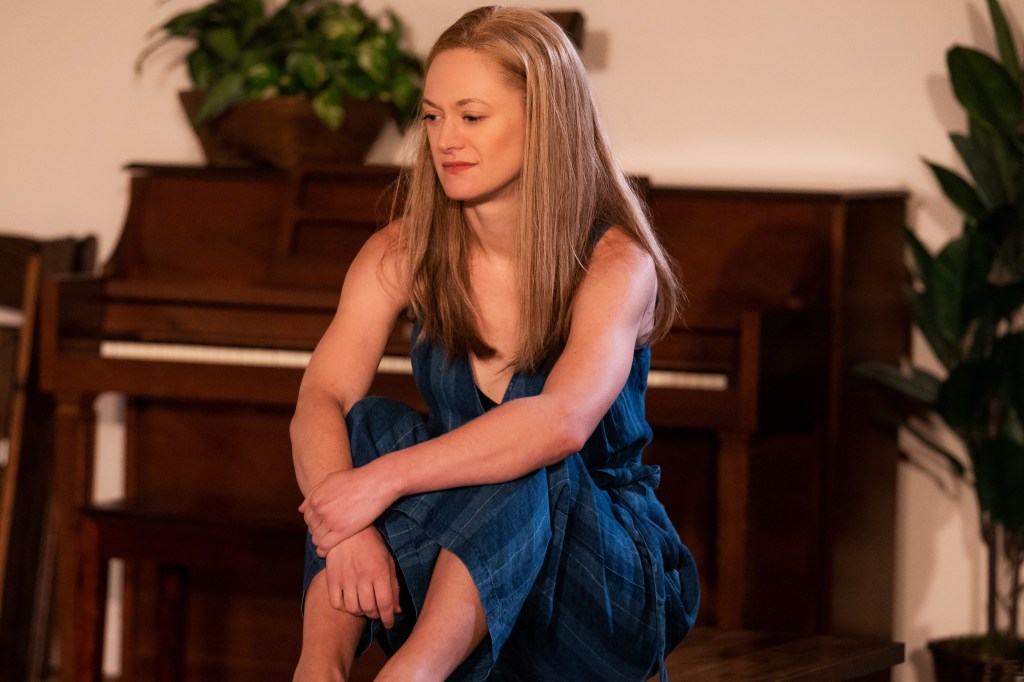
The strength of Stephen’s work which requires a yeowoman’s job of getting all of the details down is in the overall message and the last few minutes of the play which is an apotheosis for Charley and the audience. Throughout, Falco is a tour de force, in a role beautifully rendered, especially at the conclusion. Blair Brown and Marin Ireland are wonderful assistants, though Ireland needed to project and at times in her inward emotion-gathering became a faint wisp, indeed, in character, but not always articulated.
Director Lila Neugebauer properly stages Morning Sun in the ethers, not focusing on the material aspects of the production so that we listen carefully and take in the lives being shared with us. Though Charley’s journey is told in flashback narrative, we do come to trust the reliability of those who speak. This is a testament to the actors and director savoring the playwright’s work.

Kudos to the creative team: dots (scenic design) Kaye Voyce (costume design) Lap Chi Chu (lighting design) Lee Kinney and Daniel Kluger (sound design) Daniel (original music) Tom Watson (hair and wig design). For tickets and times go to https://www.manhattantheatreclub.com/shows/2021-22-season/morning-sun/
 CAROLE DI TOSTI