Blog Archives
Billy Crystal’s ‘860’ Teaches us how to Experience Heartbreak With Hope and Humor
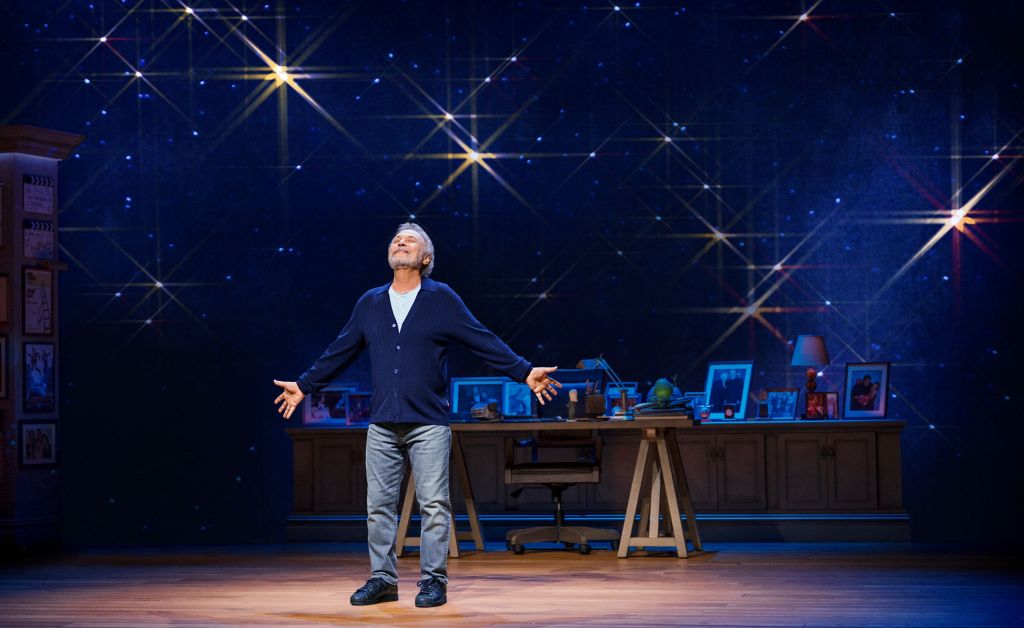
Though it may not seem so, to be able to say, “2025 was the worst year of my life,” and be alive to share reflections of wisdom and heartbreak about it is a great blessing. Billy Crystal’s solo show 860 memorializes his home in Southern California’s Pacific Palisades when a cataclysmic inferno consumed everything in its path. With love coming from the depths of his soul, Crystal shows it is possible to turn a curse into a blessing as he unfolds 860 with “a tear and a smile.” Overwhelmed, audiences have enthusiastically encouraged the show’s extension. Now it runs an additional month at the Imperial Theater through February14, 2027.
This valentine to New York City and America should not be missed, especially because none of us are aging backwards, a theme of 860. The opportunity of seeing Crystal in a live, one-man show embraced by a chorus of audience laughter and hushed silences only happened one other time. In 2004 after his mother’s passing, Crystal presented his memoir 700 Sundays, a two act autobiographical play, about growing up on Long Island. Twenty-two years later, 860, a beautifully crafted, fleet-footed, 95-minute show embodies another loss at later time in his life. In this autobiographical retrospective, Crystal admits his age has given him great pause. As with all of us past the half-way mark of 100-years old, it forces the life observer to review and assess epochal losses with new eyes and a lifetime of understanding.
What Crystal recounts with and for us as an impeccable, intuitive, gifted raconteur, bears witness to the tide and times of over the last 50 years in the United States. Crystal begins in the present with the impending doom of a fire raging, all stops pulled with video footage (some his own), alarms sounding, planes above and the life and death threat that he and wife Janice must leave. (Video design is by Hana S. Kim and Kylee Loera. Sound design is by Dan Moses Schreier. Lighting design is by Jen Schriever).
I am reminded of the 1985 film Out of Africa, when the servant, seeing the flames, warns Meryl Streep’s character Karen, that, “God is coming.” It’s the same imperative, for Crystal when his daughters call him and Janice, and tell them to leave. But leaving concerns everything in his office, which contains the most symbolically valuable possessions he has. (wonderfully created by Scott Pask’s scenic design.) These items, many gifted, are his career touchstones, upon which he unfolds his tales. The memorabilia which includes photographs and much more are the treasures which he discusses as he catches us up to how he and Janice began at 860.
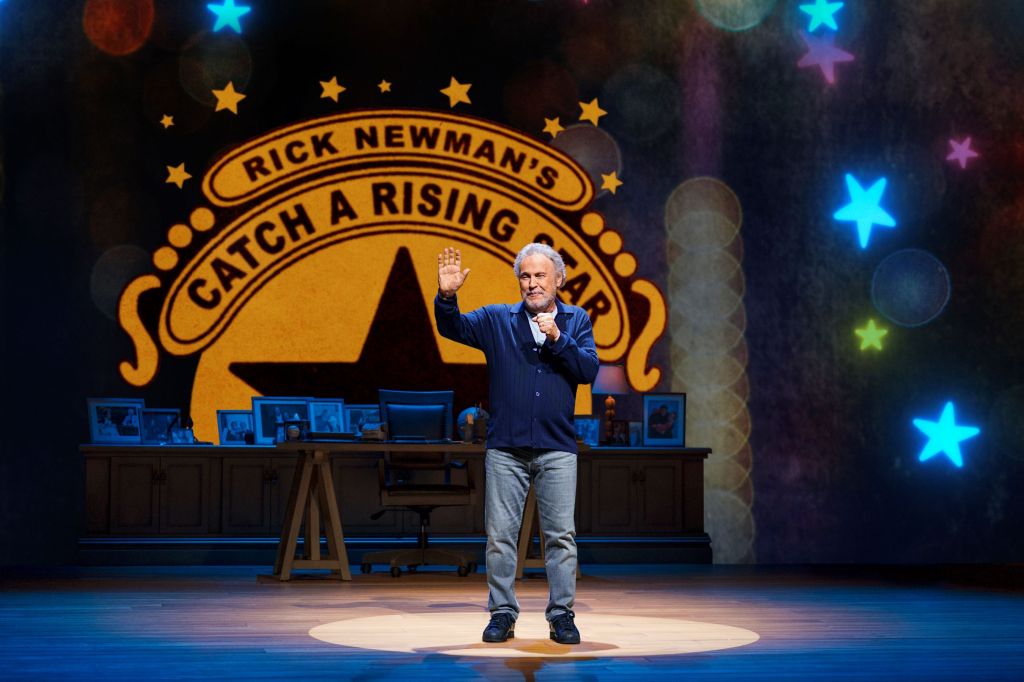
Flashing back to 1970, the play courses between present and past seamlessly tying both via memory and humorous, soulful anecdotes. That year Crystal graduated from NYU where he quips about his young, fast-speaking professor enamored of film, teaching the class how to use a shopping cart to dolly. Now, who could that have been? After his and Janice’s marriage and his encounter with Nixon and the Viet Nam war draft, a harrowing experience he cleverly converts with skill and irony, he relates a fascinating story about comedy managers, agents and one of the best, Jack Rollins. After watching his set, Rollins gives him invaluable advice he has been using ever since, especially after each comic vignette in the 860 show.
By degrees Crystal’s career as a comedian heated up, and allowed him to be a stay-at-home dad, a job he loved while Janice worked days, and he did stand-up nights. As Crystal discusses his first really professional job where he had an actual dressing room, we discover his funny exploits and talent as lightning on his feet. The episode where he once opened for Blood Sweat and Tears in Scranton, PA is mind blowing.
With Crystal’s steady work on TV in the comedy Soap, they couple had enough money to buy their first house in 1979, which was a deal and needed work. He was thirty-one and Janice was thirty, For forty-six years the Crystals lived at 860, his address in the Palisades, until it and most everything in it were taken from him.
Indeed, the conflagration dissolved physical items near and dear to the Crystals. He uses these artifacts as flash points of his amazing life. Some concern the unlikely people with whom he became close friends. Others, the comedy friends and actors no longer with us. Throughout, he melds in brief snippets with his daughters and Janice, the binding threads of the family tapestry. As he goes though stories and events not shared before, for example with Muhammad Ali who referred to him as “Little Brother,” or Robin Williams’s phone call of Ronald Reagan from hell, he astounds, mesmerizes. In the stories with celebrities he employs his comic genius with impressions. One story is more LOL or whimsical than another. Inevitably, he leaves us with the advice Jack Rollins told him decades ago, which he’s mastered in “spades.”
In his tie in with his bestie, director Rob Reiner relating anecdotes about When Harry Met Sally, he shares an improv and “stuff” that made it into the film. Considering that Reiner and his wife died in 2025, we anticipate the power and pain of retelling this story which is poignant and acute. In fact Crystal maintains a quiet reverence about his friend, whom he met when Norman Lear cast him to play the friend of Meathead in “All in the Family.” To say that Crystal took the friend role to heart belies that as understatement.
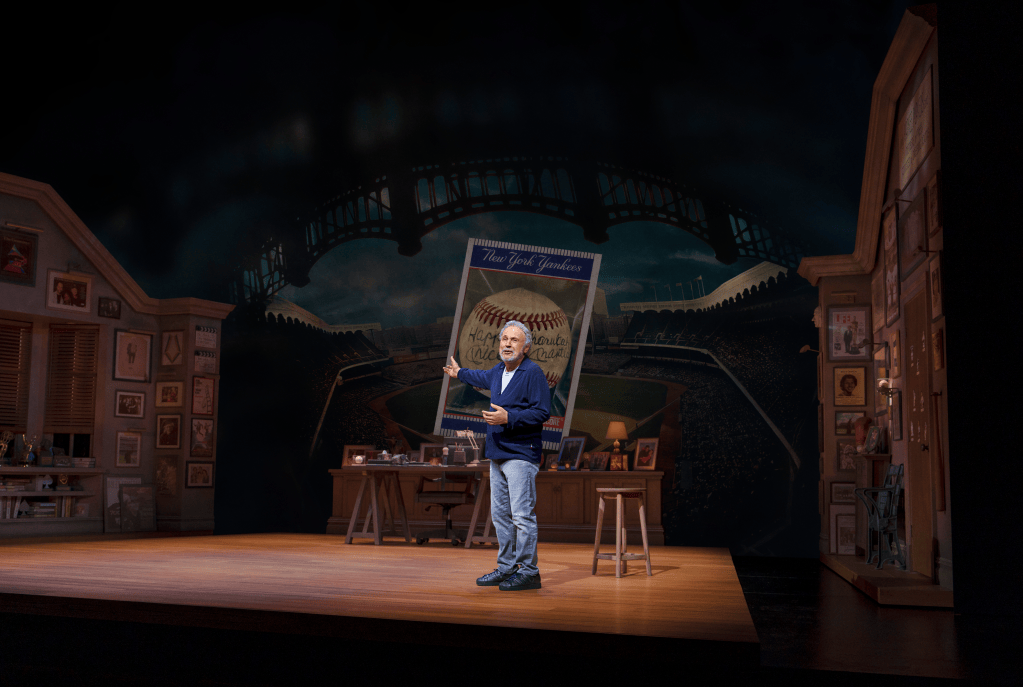
Crystal shares so many fabulous tales, (his memorabilia surrounding baseball is great), the realization dawns. We must never stray too far from the theme of evanescence and the necessity of putting one’s house in order. As Crystal relives the 2025 sorrows and sometimes riotous flashbacks, we engage in his moment-to-moment experience and reach catharsis with him. He acts. He lives on stage. He relives the moments resurrecting those who left us through loving mimicry. Ready for anything, Crystal’s high sensitivity to an audience, based on his talent doing stand-up, reaches an apotheosis. Especially in the retelling of certain anecdotes, for example the Usher twins, we understand Crystal’s unshakable faith, his uncanny ability to “go with the flow,” and see the otherworldly beyond “coincidences.” And we recognize the abiding sense that one must laugh at this most absurd of things placed in our hands, our own life.
What makes Crystal’s 860 so incredible?
First, the solo show rides a roller coaster from present to past to present throughout the 95 minutes as Crystal sifts the question of what remains of 860 and how much of the fire missed his treasures. Secondly, we feel down to our bones Billy Crystal’s desire to confront loss and heal from it: a moral imperative. If his life has been a fulfillment of the American Dream when early on he struggled for success with Janice who dreams with him, let’s get real. Dreams can bring living nightmares. How do you negotiate a fiery hell that wipes out the symbols of your “American Dream come true?” And on top of that how do you look at another nightmare event that involves someone close to you?
Crystal’s stories within one larger over-arching story of the fiery trial of his life contain within all his storytelling a parable of survival. How does one come through it? He acknowledges the signs and symbols, more than coincidences leading him. He offers to the audience these symbols, the most valuable of his treasures, the meaning of who he, Janice and his family are. The stories, embraced by all who sit and listen within the sound of his voice, like children, hear more than an exceptional, entertaining account. In the joy and pain with every breath exhaled in laughter is the ineffable magic of a life well lived. If Jack Rollins is looking on, he’s surely pleased.
860 runs without an intermission, 1 hour 35 minutes at the Imperial Theater billycrystal860.com.
‘Mr. Saturday Night,’ Billy Crystal, David Paymer, Dazzle With Comedic Genius and Heart
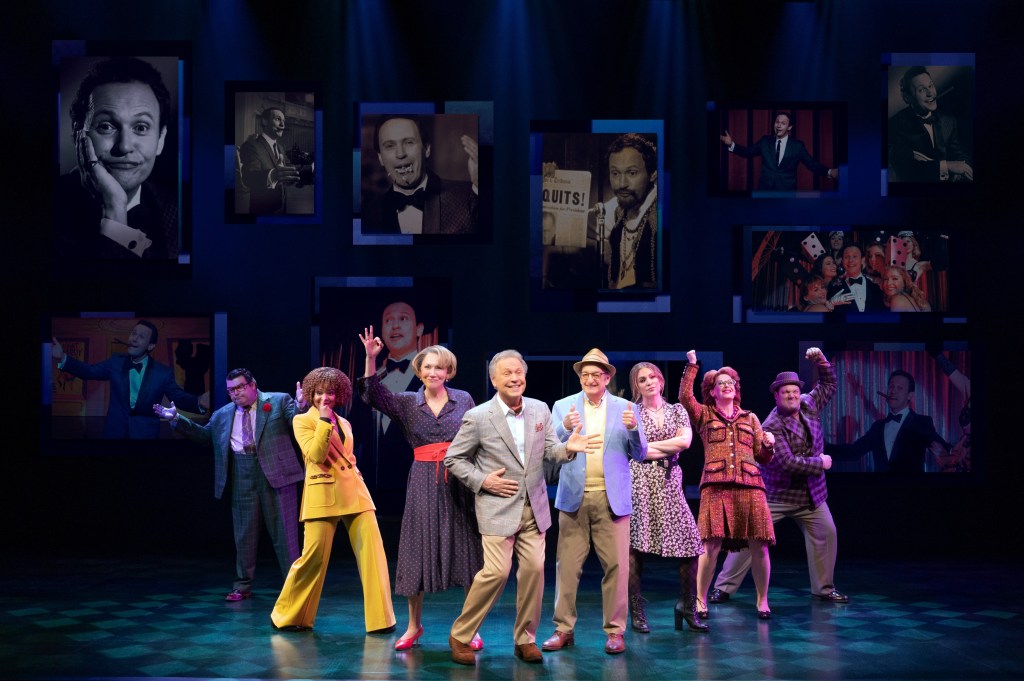
Billy Crystal’s reshaped Mr. Saturday Night at the Nederlander Theatre, directed with acute sensitivity by John Rando is based on Crystal’s 1991 Oscar nominated titular film. This production “hurts!” (in today’s parlance “kills:). Crystal embodies “Mr. Saturday Night” from head to toe. In the two act musical Buddy Young, Jr. (Crystal) luckily faces the opportunity of a second chance in his waning comedian years. With this do over, he gets to reexamine how he sabotaged his career with the hope of regenerating it. Most importantly, he faces the opportunity to revitalize his estranged relationship with his brother Stan (David Paymer reprises his Oscar nominated film role) and his non existent relationship with daughter Susan (the golden voiced and superb Shoshana Bean).
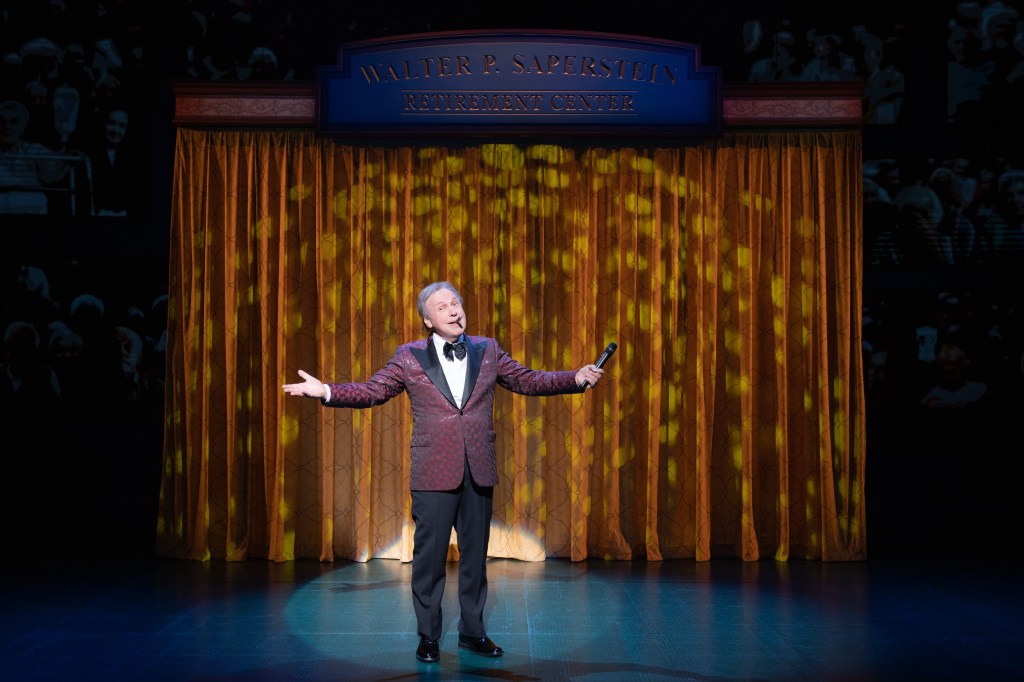
We all love second chances because we need so many of them. Buddy is no exception as the writers fashion his character to bump up against chance after chance. Indeed, in flashbacks from present to past to present, we note that as Buddy’s ego explodes with his successes, he eventually blows every chance that comes his way. When it is announced that he has died on TV (a symbolic reaffirmation of hope for a resurrection) Buddy plunges into the opportunity with the help of agent Annie Wells (Chasten Harmon covered by Tatiana Weschsler the night I saw the musical). The dramatic problem arises. Perhaps Buddy has gained the wisdom to retrieve the lost golden ring of success and once more establish himself. But what if he hasn’t?
This caveat is the crux of the conflict and arc of development. Can Buddy get out of his own way long enough to be the best human being he can be, absolving himself of past regrets with humility and aplomb? You’ll just have to see this reconfigured Mr. Saturday Night to find out
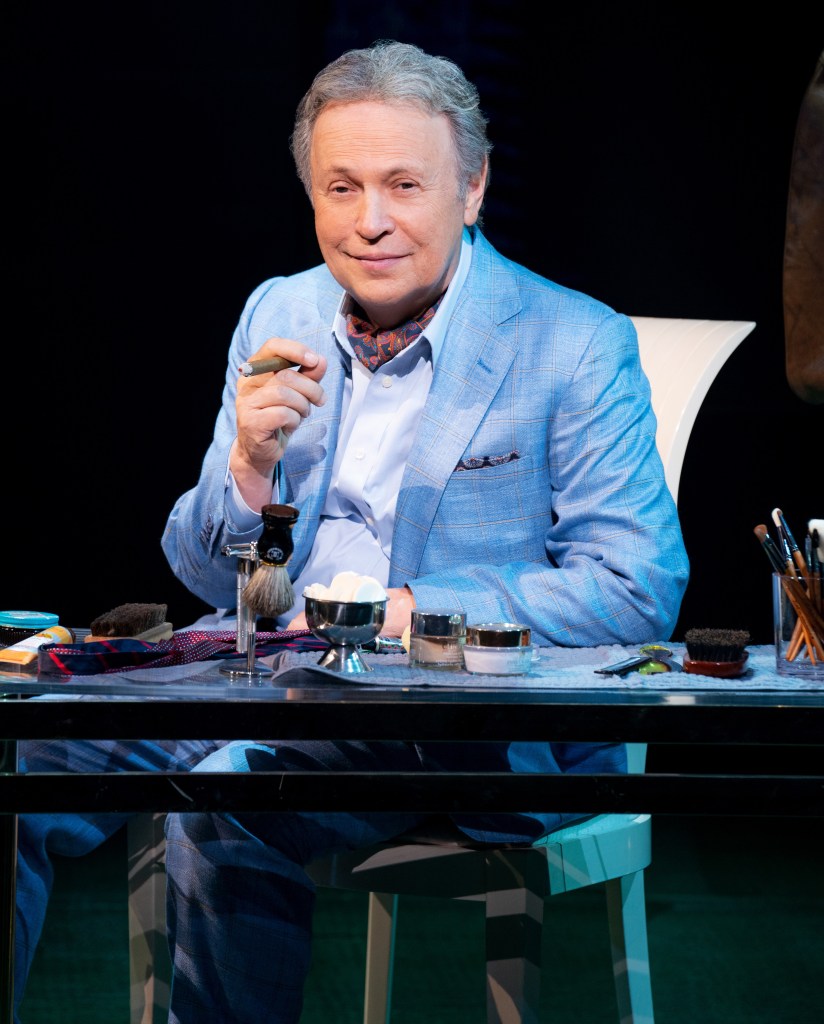
Crystal, himself is receiving a new thrust of fame in this upward moving transition in his career as a Broadway star going for his second Tony Award. He won a special Tony for 700 Sundays) doing what he enjoys, performing in front of a live audience every night. The production, despite a few twitches, is an absolute joy to see, and Crystal is the ebullient muse of hilarity, pattering jokes with lightening speed and seamless grace.
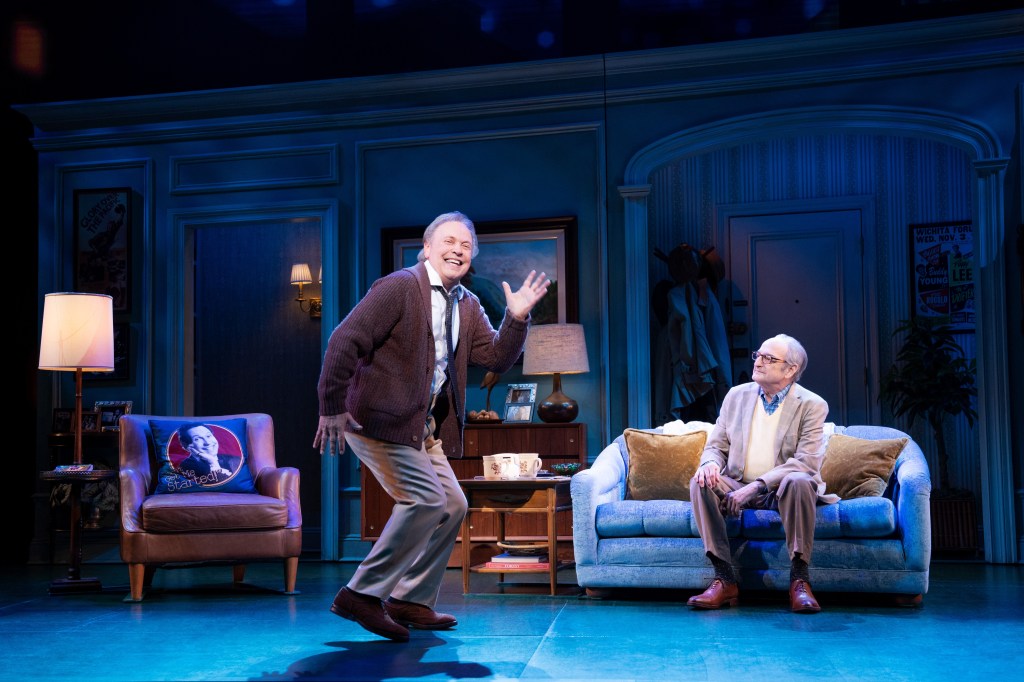
Reprising his role with Paymer, Crystal is the former Borscht Belt comedian, who once had a successful TV show until he didn’t. Paymer is his long suffering brother/manager/agent who was generous with his own salary during their heyday, but barely has enough to treat his girlfriend to a pricey dinner. Randy Graff does a fine job as wife Elaine, encouraging Bean’s Susan to “give her father a break.” “Putting up with her father is something Susan finally shutters with maturity and firmness, prompting Buddy to reassess, reevaluate and recalibrate or lose her love. The scene between Bean and Crystal against the warm background of the projections of the NYC brownstones and the doorway to Susan’s apartment and new relationship with her Dad is beautifully done.
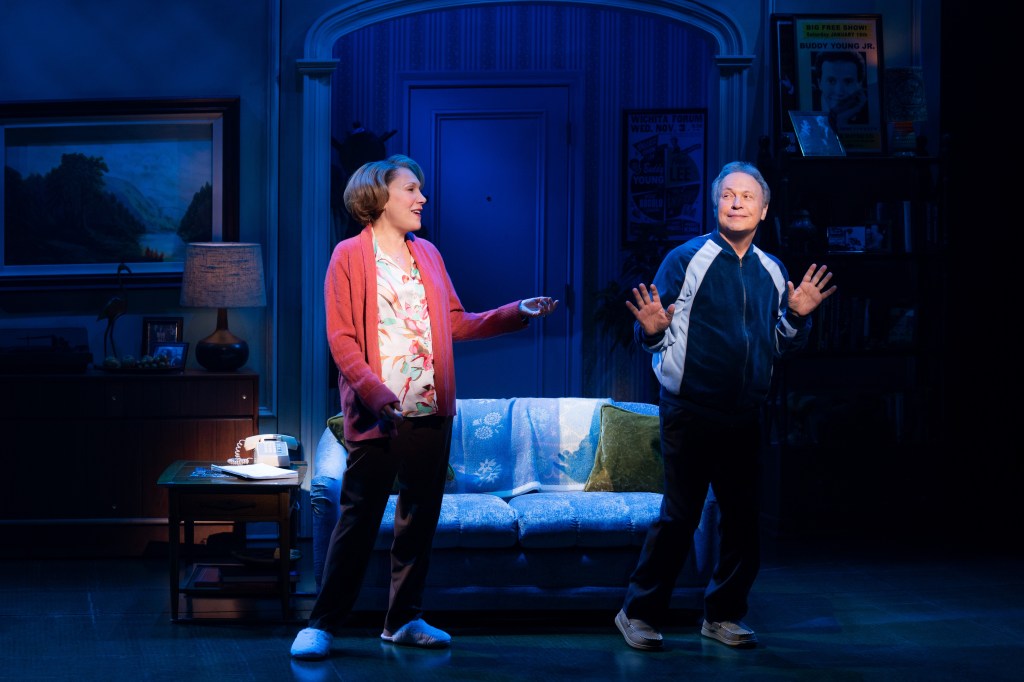
The production combines an endearing and poignant update with LOL vibrance. It soars with Crystal’s outstanding performance where he sings and dances, as one would expect seventy-something Buddy Young, Jr. to crow out a tune and jubilantly hop and skip some mildly energetic dance steps, sans flips, strenuous tap or break dancing. Indeed, Paymer and Crystal deliver their enjoyment “I Still Got It,” and companionship together and also dig deep when their characters hit the abyss: Paymer in the exceptional “Broken,” and Crystal in the profound “Any Man But Me.” Surprising, endearing, adorable, belly-laughing, fun, thoughtful and appealing, the principals are a team and appear to have fun making the audience laugh in a time when we desperately need to apolitically chortle and “fall out” in a life-affirming way.
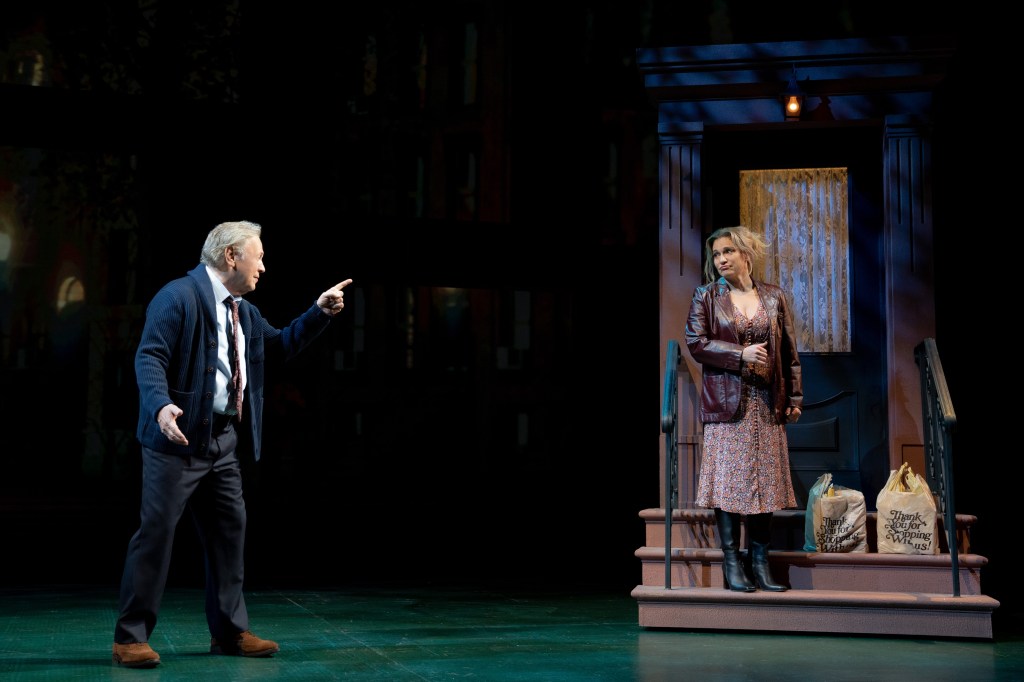
With Book by Billy Crystal, Lowell Ganz and Babaloo Mandel, Music by Jason Robert Brown and Lyrics by Amanda Green, the production has been nominated for five 2022 Tonys, including Best Musical, Book, Score (Brown and Green), Leading Actor in a Musical (Crystal), and Featured Actress in a Musical (Bean). What is marvelously stranger than fiction is that the film, if one reads the “critics” was not “the bomb,” it did not “kill” and it did not, in Buddy’s words “hurt them.” It flopped. Crystal and his creative team are to be credited for courage and gumption to try again, this time as a Broadway musical, one of the most difficult of creations and during an ongoing pandemic that no one likes to acknowledge.
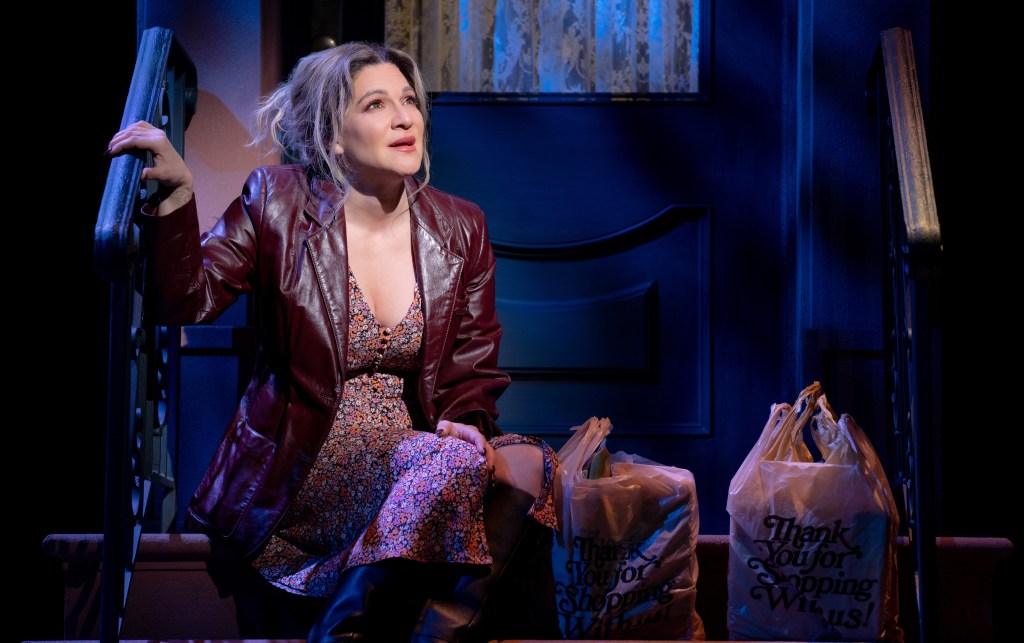
However, this is Mr. Saturday Night’s persevering second chance. With the added lift of the music and dance, and overall nostalgic silliness of 50s TV bits, where actors dress in hot dog costumes, cigarette boxes, etc., (Jordan Gelber, Brian Gonzales, Mylinda Hull) Mr. Saturday Night offers a retrospective on a history younger audiences don’t know. Also, it is an encomium to comedians who were huge greats in their time, some of whose stars still shine in films on Turner Classic Movies and black and white TV reruns.
The musical also highlights the importance of the Borscht Belt circuit in the Catskills, where comedians and entertainers could credibly try out their material and look for opportunities like Buddy did when he “covered” for Milton Berle at Farber’s. As the musical flashes back to Buddy, Stan and Elaine as twenty-somethings, we discover it is at Farber’s that he lands the gig that launches his successful career and Stan’s as agent and manager. The flashback also reveals how he met Elaine (Graff manages to be a convincing younger version of Elaine) whom he unwittingly “stole” from Stan in a a sour note between the brothers. Thus, the characterization and arc of development eventually reveal head on undercurrents of the strife between Crystal’s Buddy and Paymer’s Stan as a loop of pain which the actors convincingly inhabit and play battling each other.
All these events with his brother, long suffering wife and broken-hearted but defiant daughter reveal the depth of the characters. They also illuminate reasons for Buddy’s self-torment, ambition and feelings of inferiority all of which are the fountain of his comedy which is part insult comedy, part ironic defense, and the type of ridicule which makes angels laugh. But when it’s directed at the individual in question, it hurts for real as dismissive one upmanship. Buddy has a tough time differentiating Shakespeare’s, “All the world’s a stage,” and is continually making his entrance and never pausing long enough to realize he needs to exit.
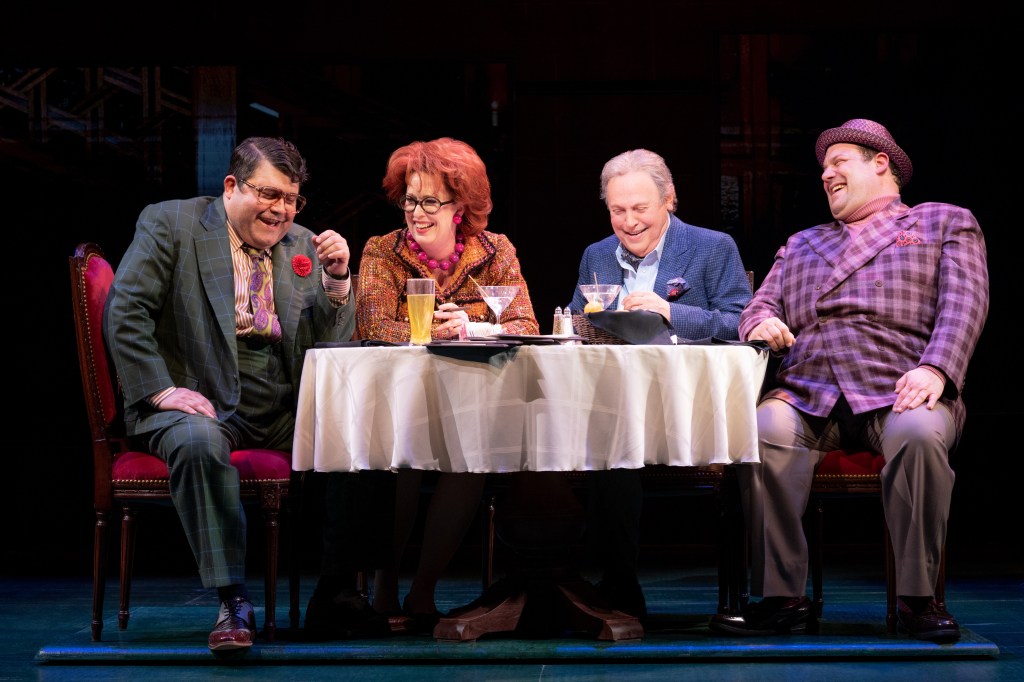
In an important scene with agent neophyte Annie (the fine Wechsler), Crystal’s Buddy gets to praise his comedy mentors. We note on the walls of the Friar’s Club and in projections a wide expanse of brilliant funny men and a few women of high humor. Buddy’s rant implies Annie should know the greats and this inspires her to do her research, then work like the devil to help Buddy get something which turns out to finally land as a part in a film. The role is funny and incredibly poignant and it requires Buddy audition, which he does. But after all the angst rehearsing and auditioning and blowing a chance at closeness with his daughter, his “big opportunity” is destroyed when the role is given to Walter Matthau. Bummer. Crystal handles this earth shattering moment with an ethos that’s believable Buddy. What he’s lost isn’t recoverable, for the loss isn’t just this part, its his mountainous history of regrets.
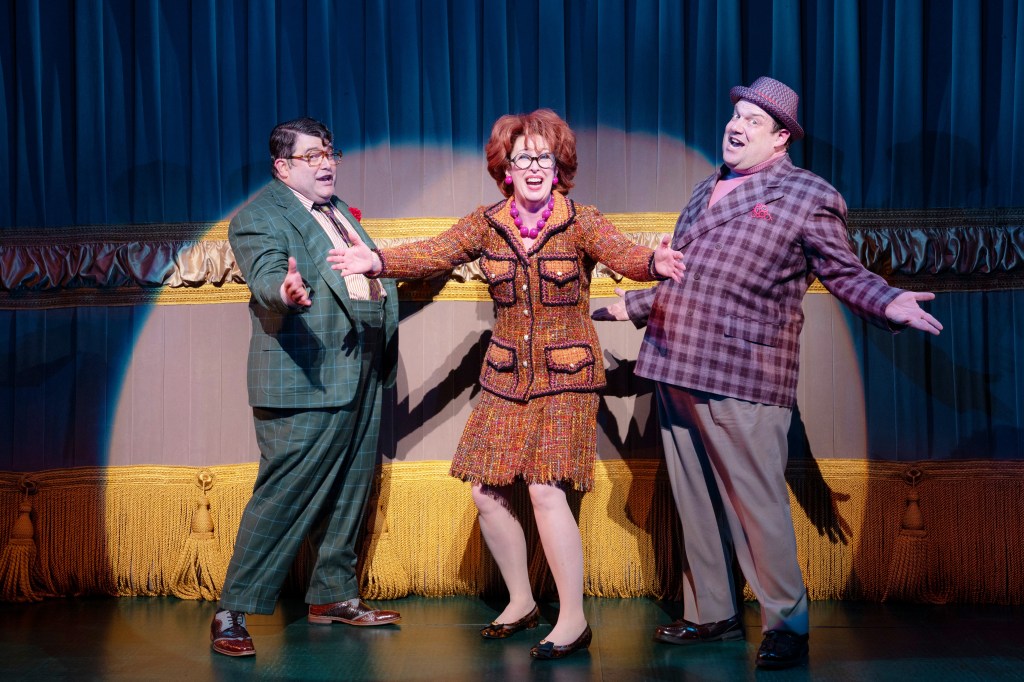
Unlike the film which referenced the comedian’s waning years from a younger man’s perspective (Crystal was in his forties, ironically “old” at that time), this Mr. Saturday Night shines in the age appropriate sequences. Interestingly, it is their younger portrayals by Paymer and Crystal as the twenty-somethings, that seem a stretch with wigs (Charles G. Lapointe) and make-up that don’t quite cohere.
However, when the flashback to Farber’s arrives, we’ve been prepped with jokes by the opening number “We’re Live” (Jordan Gelber, Brian Gonzales, Mylinda Hull). Then Buddy does his act at a retirement home (“A Little Joy”), which is a laugh riot. And by then, we’ve become acquainted with the premise, the announcement of Buddy’s death on TV, and his “new lease on his career” as agent Susan-Tatiana Wechsler sings “There’s a Chance, ” and excited Buddy and Stan sing and move to “I still Got It.” So, what’s a bad hair day for the two men returning to their younger days measured against the overall success of the well paced Act I that moves even more briskly through Act II and the conclusion after which Crystal takes a few audience questions? Well…(said with an upward lilt of a Jewish accent).
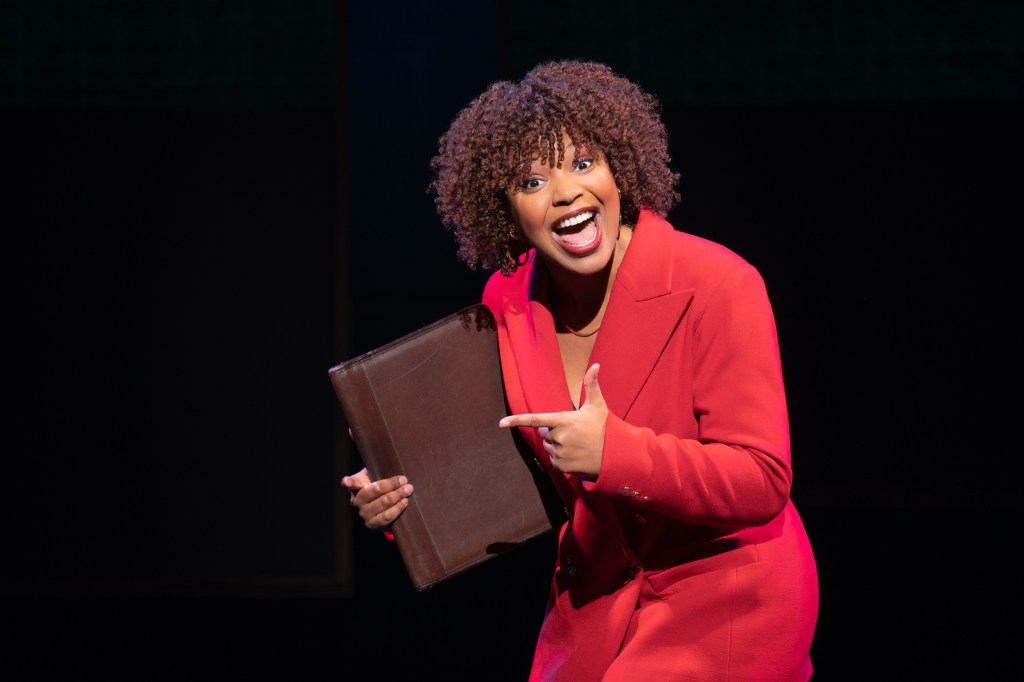
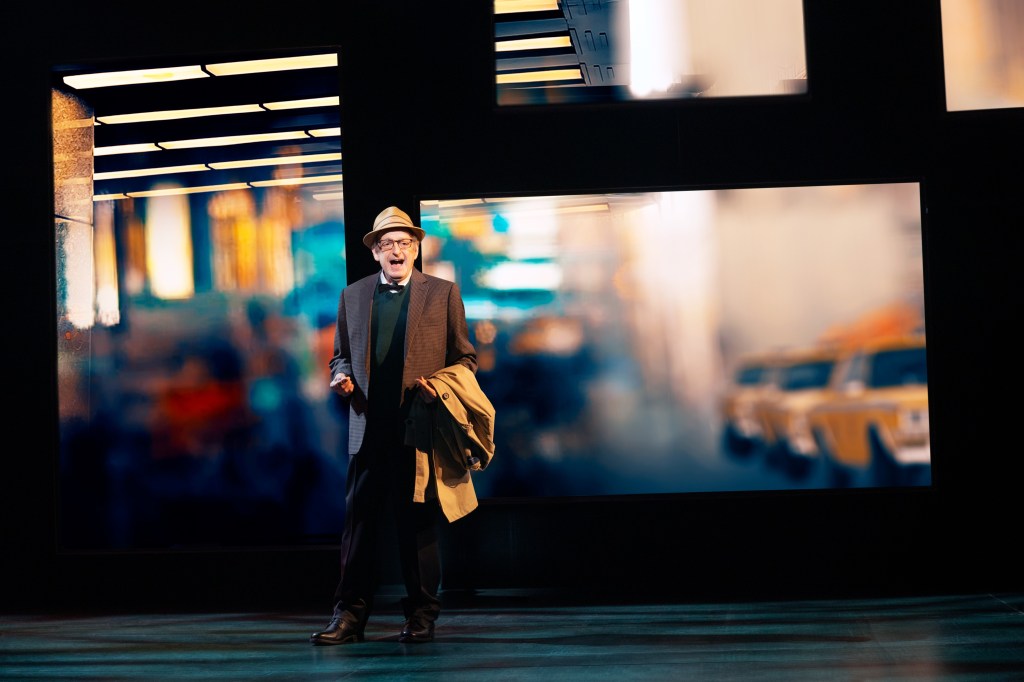
The themes of aging and regrets not answered, second, third and fourth chances, familial reconciliation, and redemption even for the incorrigible, spin in and out with a bow and a wink, superbly subtle. The sets of Buddy and Elaine’s home, Faber’s, the paneled Friar’s Club and the old time TV Studio designed by Scott Pask are spot-on, as is the costume design by Paul Tazewell & Sky Switser enhanced by Kenneth Posner’s lighting design and Kai Harada’s superb sound design. The Video & Projection Design is smashing, reminiscent of divided screens from the period, creating various effects pegged to the emotion of the scene.
The choreography by Ellenore Scott is just enough for this type of show and the actors are at ease and comfortable with their steps and movement. As silly as Elaine’s wishful thinking about leaving for “Tahiti” is, Graff pulls it off looking debonair and adorable. Thanks to Jason Robert Brown’s Arrangements and Orchestrations, David O’s Music Direction and Kristy Norter’s Music Coordination, the tone and tenor of the music fits with the book by Crystal, Ganz and Mandel, with Green’s lyrics. The time, effort and love shows, as all is held together by John Rando’s direction. Wow!
Get your tickets to this must-see show. You are not going to see this production with this cast again. For tickets and times go to their website: https://mrsaturdaynightonbroadway.com/

