Blog Archives
‘The Hairy Ape’ Eugene O’Neill’s Classic of Oligarchs and Apes at Irish Rep
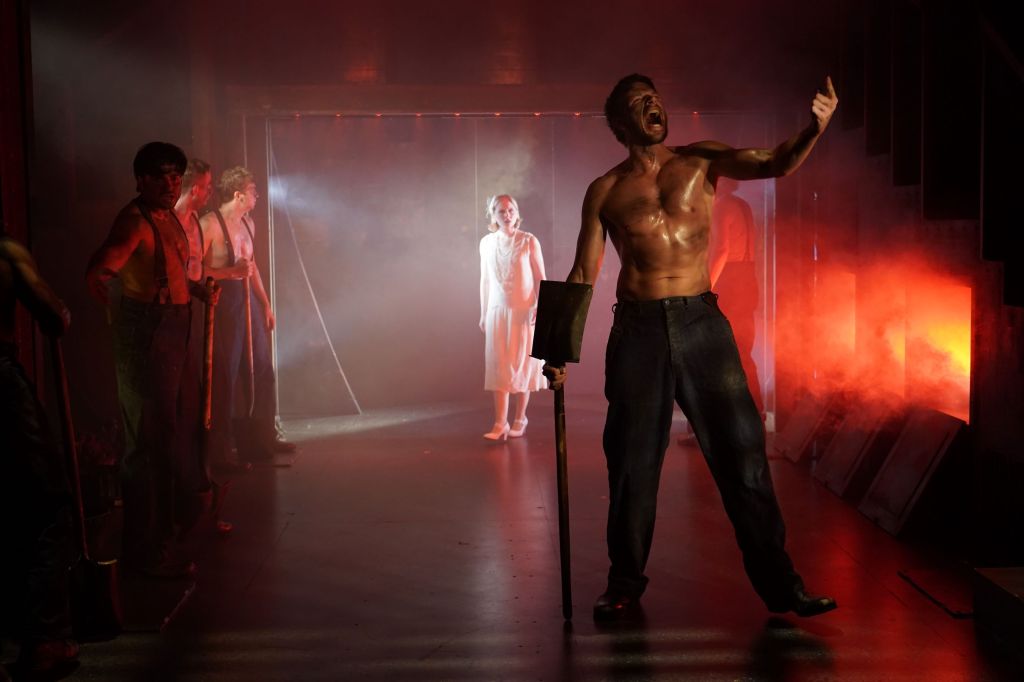
Eugene O’Neill labeled his 8-scene play The Hairy Ape “a comedy of Ancient and Modern life.” Surely, the playwright sardonically jested because the themes relayed through the journey of the anti-hero Yank (superbly portrayed by John Beavers) a fireman (coal stoker) on a luxury cruise ship, mirror those found in Greek tragedy. However, comedic elements at times peak through the fine revival directed by Ciarán O’Reilly which runs through Novmber15, 2026 at Irish Repertory Theatre.
The shattering of Yank’s proud ego (his fatal flaw), and his inability to recover immerses the audience in his fateful journey, and shakes us to the core. With empathy we follow Yank’s growing realization that he must redefine his purpose and identity which can never align or fit in with the corrupt society of uncaring, soul dead wealthy and oppressed working stiffs alike. Eventually, the truth of his discovery destroys him before he redeems himself and creates a place where he fits in.
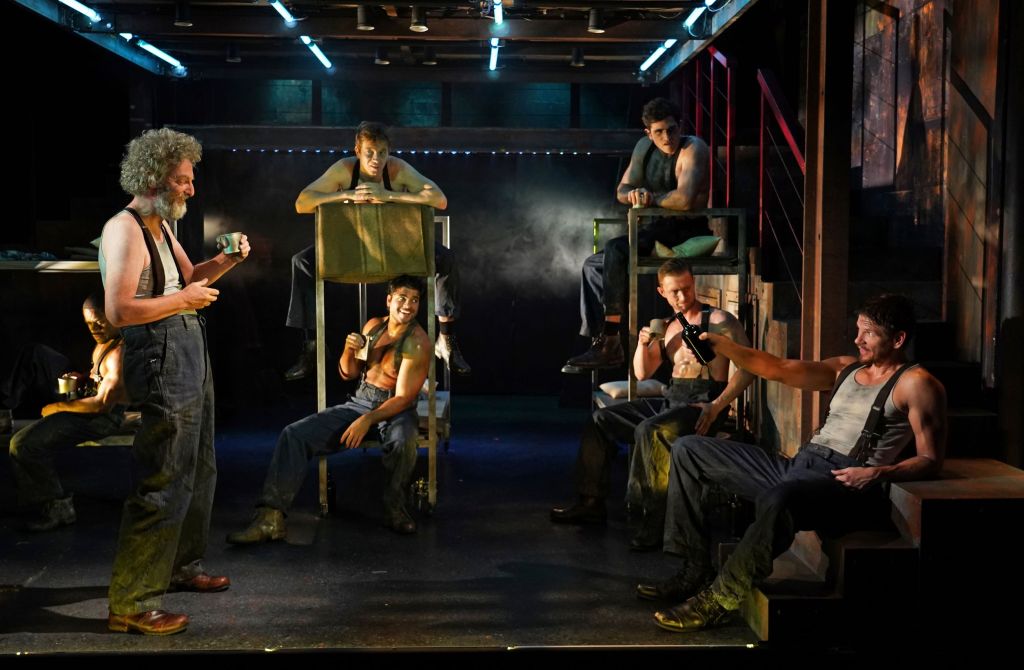
Initially, when O’Neill introduces Yank, we note his bellowing assertions of his sense of purpose. Amongst his fellow firemen shoveling coal, drinking and carousing on breaks to sustain themselves as they feed the fiery furnaces in the ungodly heat of the engine room, Yank projects confidence. In defining himself as integral to the movement of modern progress, he uplifts himself and his fellows’ importance to society. Without their work, their physical prowess and the steel-like resolve of what they face each back-breaking day, the weak, lazy, unregenerate upper classes could not sustain themselves.
Yank’s comments seem true enough. Certainly, the upper classes have always eschewed drudgery work and foisted it off on the lower, uneducated classes, who they also get to fight their wars to maintain their power and profits. This seems the case from feudalism to 1922, O’Neill’s setting. However, until Yank’s eyes are opened, he doesn’t understand class bigotry, nor how workers are exploited, disempowered and soul drained by a system rigged against them. Indeed, in the modern age, the wealthy deliver a double whammy.
Aligning the political class with themselves, the upper classes and captains of industry make the laws which oppress the slavish workers and mislead them to believe in the myths of getting ahead. As the underclasses dutifully pay taxes on their labor “never getting ahead,” the wealthy avoid paying their fair share because the politicians rig the system in their favor, having the courts and cops enforce the rigging. In O’Neill’s introductory jest, the play is so modern it is as current as today’s headlines.
Yank commands the conversation and men in Charlie Corcoran’s suggestive and stylized bunk room, and later in the smoking, red hot furnace room deep in the ship’s belly. Unfortunately, his brash, inflexible stance leaves no room for other viewpoints. Paddy’s lyrical comments about the clipper ships of the past with their healthful, unpolluted air and beauty, allowing the sailors to see the sunsets and appreciate the natural elements, are past their prime according to Yank. His uplifted mantra glamorizes the might and force of the ship’s engines representing industrialization. Despite its filthy, toxic, coal dust, and smoke-filled polluting byproducts, Yank embraces it pridefully, without thinking. He revels in “his place” there and proclaims the heat, filth and stink of the coal dust are the perfect climate for him, a man. “I’m what makes iron into steel! Steel, dat stands for de whole ting! And I’m steel—steel—steel! I’m de muscles in steel, de punch behind it.”
Through these oversized speeches which Beavers (Yank) and John Keating (Paddy) have made their own, we recognize O’Neill’s expressionism. This is the set up of ideas and symbols which O’Neill then mines throughout the rest of the play. Additionally, these symbols that Yank and the others express, become the platform from which Yank takes his great fall into the abyss which breaks him apart.
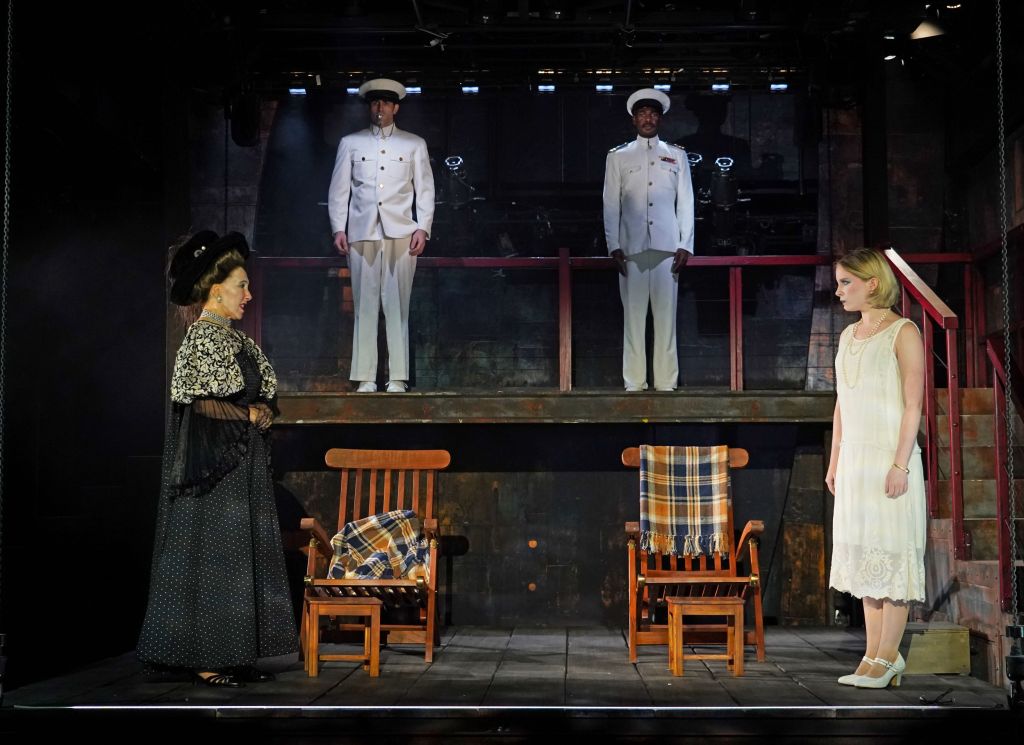
From the realistic set design of the “the lower depths” the scene moves to a view of the level above with two representatives from the upper class at leisure; their state which Yank suggested earlier is unproductive. The young Mildred (Elizabeth Teeter) and her aunt (Joanna Glushak) snipe at each other as they sun themselves on the upper deck of the cruise ship. Mildred, who wants to feel a sense of purpose, has taken classes in sociology. She intends to see “how the other half lives,” using the ship as her laboratory. By lying and leveraging her father’s position of ownership, she arranges a visit to the ship’s bowels, the engine room. Her aunt objects to the visit calling her a “poseur,” a hypocrite, questioning her sincerity. Afraid, to upset her father, the officers oblige Mildred and take her to the engine room.
At the worst time for her visit when Yank is raving at the Captain’s whistle, Mildred arrives emerging like a ghost into their midst. When she sees and hears Yank, he turns around aware of his fellow stokers’ silence at her entrance. As they look at each other in alarm, she defines him forever, calling him “a filthy beast,” and faints in disgust as the officers remove her. Yank attempts to recoup from her offensive observation of him, the antithesis of how he characterizes himself. Paddy suggests it’s “love at first sight,” humorously. The men tease Yank and discuss her classist slur. Gradually, they turn over the purpose of her visit to “look” at them. Paddy translates her look at Yank as if he was a “hairy ape.” Beside himself with rage at her humiliation, that he is lower than a man, Yank vows to find her, avenge himself and restore his smashed ego.
Unless one understands the depths of Yank’s despair and fury at her conversion of what he loved most about himself, “a manly man,” into an ape, his journey for vengeance and complete deterioration and loss of self makes no sense. By degrees Beavers expertly reveals Yank’s terrible desolation. Unable to release himself from “her truth,” he allows Long to take him to Fifth Avenue where the rich Mildred may be found in church (an ironic hypocrisy) or the exclusive shops that ironically feature a monkey fur jacket in an upscale store window that distracts the shoppers.
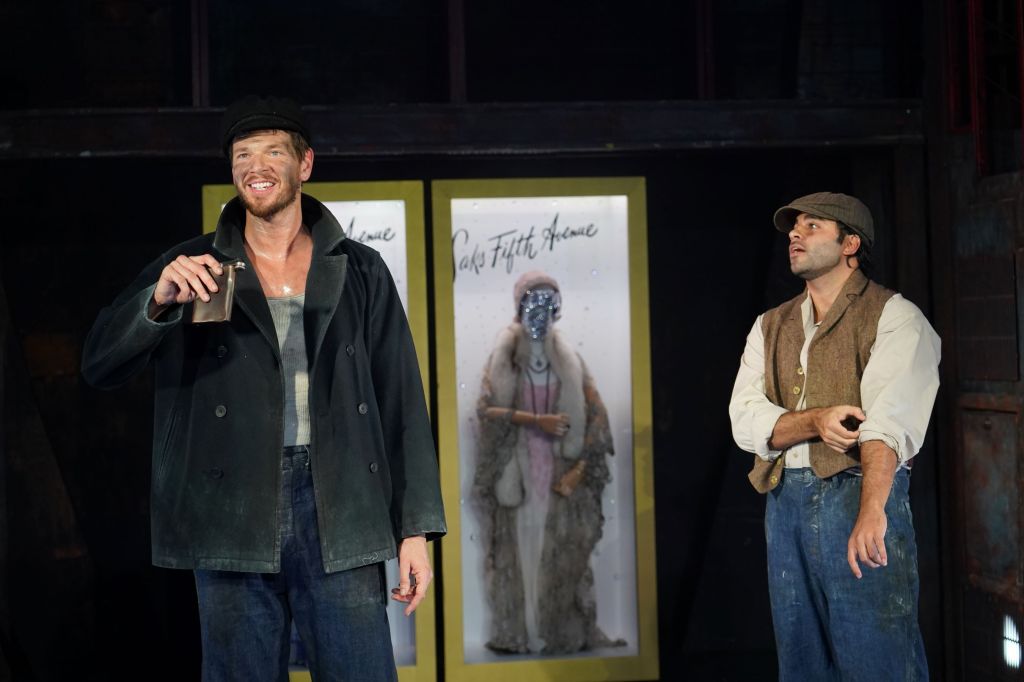
O’Reilly expressionistically stages the Fifth Avenue scene threading O’Neill’s symbolism of the fake, artificial society to highlight the contrast with the coal stoker. The wealthy wear stylized outfits and gesture like stiff, unreal figures. Their mannerisms references Yank’s earlier characterization of them not being alive. Yank, confused by the Fifth Avenue crowds, dressed symbolically in masks and glitter like jacked up, automatons, searches for Mildred. Not seeing her, angry, he attempts to confront and engage any of them in the medium he feels most comfortable, a physical fight. Ignored, rebuffed Yank’s behavior gets him thrown in jail. Only the police and Yank appear real. Normally dressed, Yank in his fireman’s jacket, and the cops in their uniforms provide a contrasting authenticity with “high society,” that ends in his being brutalized and caged (like a beast in the zoo).
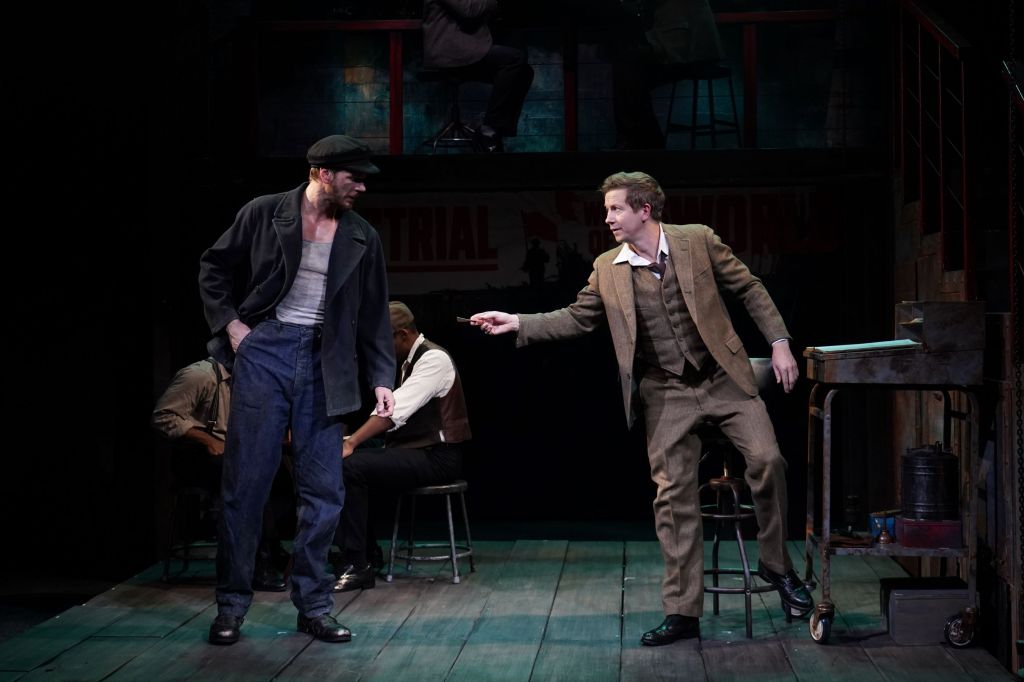
Getting tips about how to fight Mildred and her class from fellow prisoners, Yank ends up at the offices of the International Workers of the World. After five minutes of conversation with the Secretary (Adam Petherbridge) they reject his membership, suspect his weird, “stupid” comments and toss him onto the streets. The parallels between the wealthy and the IWW in their response to Yank are suggestive and telling. By this point Yank has completely lost his former confidence and perspective. By allowing others to judge him and cast him out, he feels alienation and isolation which overwhelm him. He realizes he can’t fit in.
Of course, the irony tantalizes philosophically. Not fitting in can be something wonderful. Individuals go to spiritual retreats, psychiatrists, writing classes or therapy sessions when the ego shatters and self-knowledge opens one’s mind and soul in awareness. Not fitting in with the toxic and corrupt is an advantage. Unfortunately, Yank has neither the money, the status, the intellectual or psychological means to lift himself up, make sense of his feelings and make his own place away from the nullifying society. O’Neill’s expressionism, well conveyed by the actors, creatives and O’Reilly’s direction, indicts the industrial, technological machinery of progress Yank thought emblazoned him but instead destroys him.
At O’Neill’s fascinating conclusion we note that Yank goes to a place seeking comfort, in order to look at himself in a different mirror. There, he sinks to a depth from which he never returns and never saw coming. And neither did the audience.
The Hairy Ape has no intermission and runs 1 hour 30 minutes on the Francis J. Greenburger Mainstage. https://irishrep.org/whats-on/the-hairy-ape
‘A Touch of the Poet’ The Irish Repertory Theatre’s Superb Revival of Eugene O’Neill’s Revelation of Class in America

The Irish Repertory Theatre’s activity during the COVID-19 pandemic is nothing short of award-winning. They have remained stalwart in presenting streaming live productions, filmed productions and filmed productions online by actors who have done their work solo from their own homes, which afterward are seamlessly brought together by creative technicians.
The latter phenomenon is perhaps the finest example of the tremendous effort the Irish Rep is ready to perform keeping in mind their unction to do no harm to actors, technicians and audience members during this incredibly dangerous time, where if you peruse statistics on Worldometer, the death toll in the U.S. marches toward the numbers of dead during four years of our involvement in WWII. Considering that the COVID atrocities have occurred over a 9 month period under the abdicated watch and depraved indifference of Donald J. Trump and the sleepwalking GOP, the death toll is staggering and egregious.
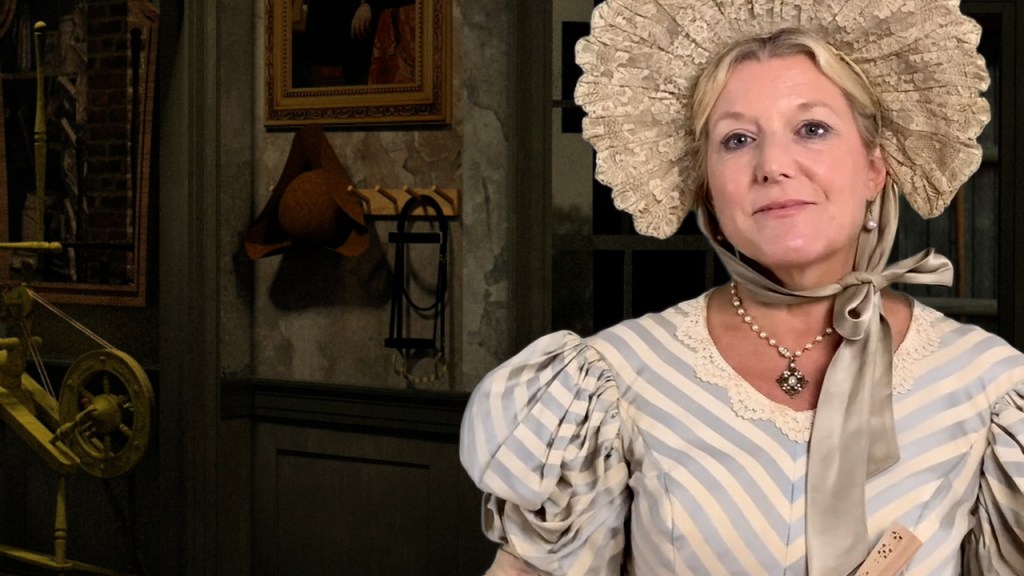
Thus, global watchers of Irish Repertory Theatre which hail from Australia to Ireland and all parts of the United States, are so grateful for the opportunities that engaged and talented actors and the Irish Rep’s creative team provide. As they unleash their talent and passion to create wonderful artistic performances, the productions help sustain us through this unprecedented crisis in our lives.
In their latest offering Eugene O’Neill’s A Touch of the Poet, the Irish Rep used the magnificent set they had created that was ready for production when the pandemic hit and New York was put on pause. With painstaking coordination, director Ciarán O’Reilly, the actors, technicians and artistic team configured a maverick presentation that launches the Irish Rep into new territory and reveals to other theater companies a way to deal with the vicissitudes of social distancing in performance. Each of the actors filmed their portrayals solo with attention to the staging of their actor/character counterparts.

The result is gobsmacking and actors’ performances are treasures. How they accomplished this feat of interaction keeping it dynamic and vital is beyond entertainment. The production of A Touch of the Poet is a profound recognition that with genius and collaboration, the breathtaking can result. And their collaboration elevates what many consider to be one of O’Neill’s more mediocre plays to one of illustrious depth.
This revival elucidates that in O’Neill’s work there is much that is parallel to our time as we follow the misfortunes and revelations of the humanity of the Melody family. In themes and characterizations we identify with the expose of Con Melody’s self-betrayal. Striking is his wanton self-abuse and the abuse of his wife and daughter as he pursues fantasies that no longer support the vitality of their lives and, in fact, hinder their appreciation of who they are and what they might be.
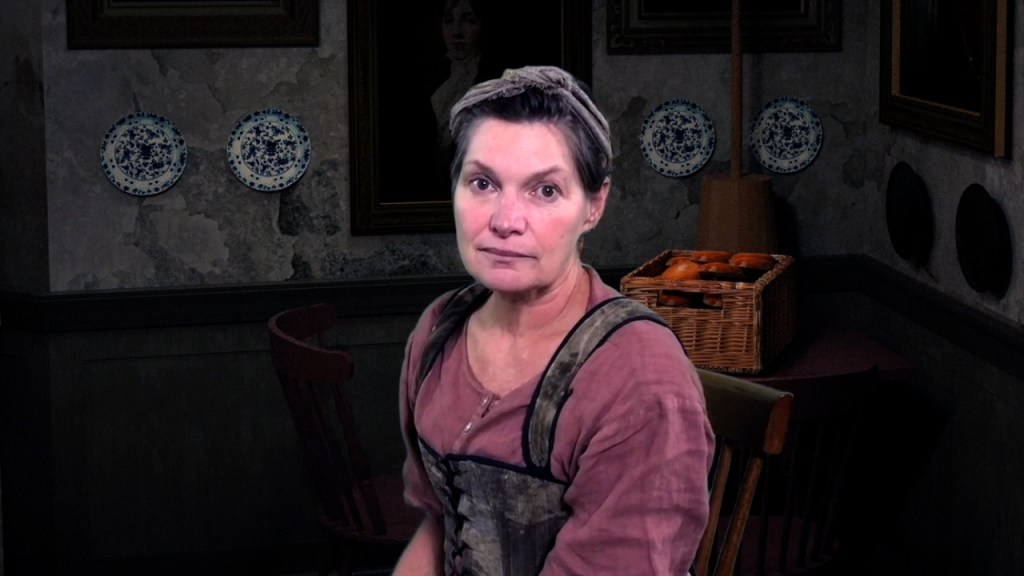
O’Neill sets his drama in Boston around 1828. The Melody family headed up by the alcoholic, self-destructive fantasist “Con” Melody (exquisitely portrayed by Robert Cuccioli) runs a ramshackle Inn with attached bar. Along with “Con,” are Sara (Belle Aykroyd) the stunning, truth-telling, rebellious foil to her father and Nora ( Kate Forbes) his pliant, subservient, fawning wife. The four live hand to mouth because Con abides in his glory days when he was a fiery and intrepid Major in the Dragoons, serving under the eventually exalted Duke of Wellington.
At the outset of the play, Jamie Cregan (Andy Murray gives a fine performance of Melody’s soldier underling and partner in brawling) provides the backstory of Con’s inner and outer conflict that Con has been unable to confront his entire life. Jamie explains how Con is an erstwhile gentleman with roots from the Irish peasant class that his father struggled to escape from. The father eventually advances himself and carves out an inheritance for Melody who is lifted into the airs of landed gentry and rises to a position of power in the British military.
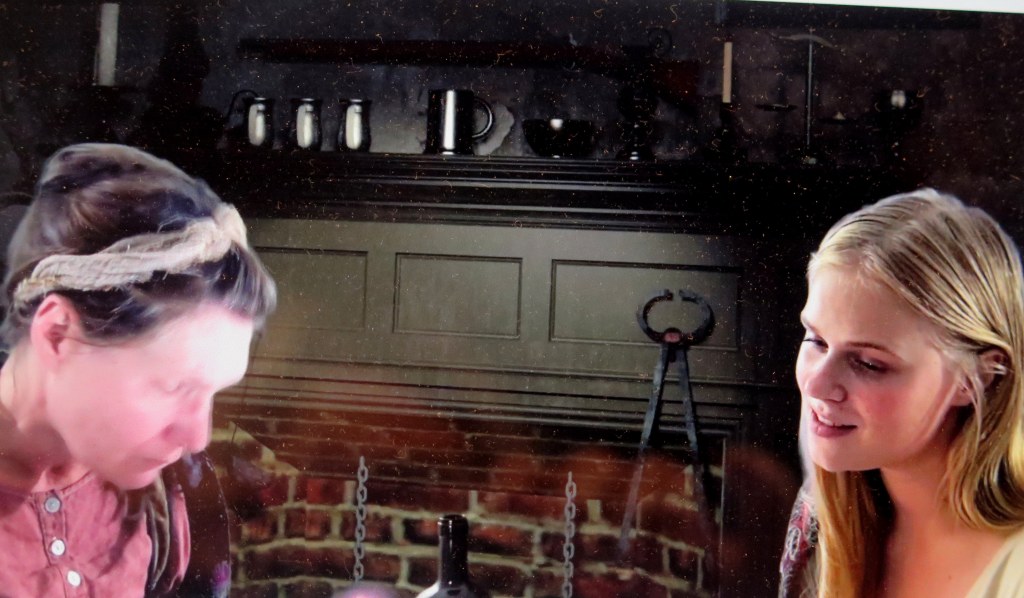
When Con’s philandering, drinking ways cause him to be sanctioned and ejected from his position as Major, Melody flees to the United States with Nora where they purchase the Inn and raise Sara. Swindled by a Yankee, who lies about the value and prosperity of the Inn, they barely scrape out an existence which is further impoverished by Con’s alcoholism and his inability to make his way in the United States.
Con’s relationship to Nora and Sara varies from drunken rages when he belittles and demeans both to guilty apologies and attempts to make amends with blandishments. Cuccioli balances the drunken bouts and insults with hasty apology that is both humorous and heartfelt. Through his spot-on portrayal we understand the impossibility of Con’s self-hatred and his attempt to escape both his alcoholism and his menial position in the new world as classism and discrimination drive him deeper into self-loathing. Cuccioli is particularly illuminating when he entertains the magical persona of “The Major.” As he affirms his exalted personage in a conveniently placed mirror, quoting Lord Byron, he imagines his long-lost greatness and gentility are still within.
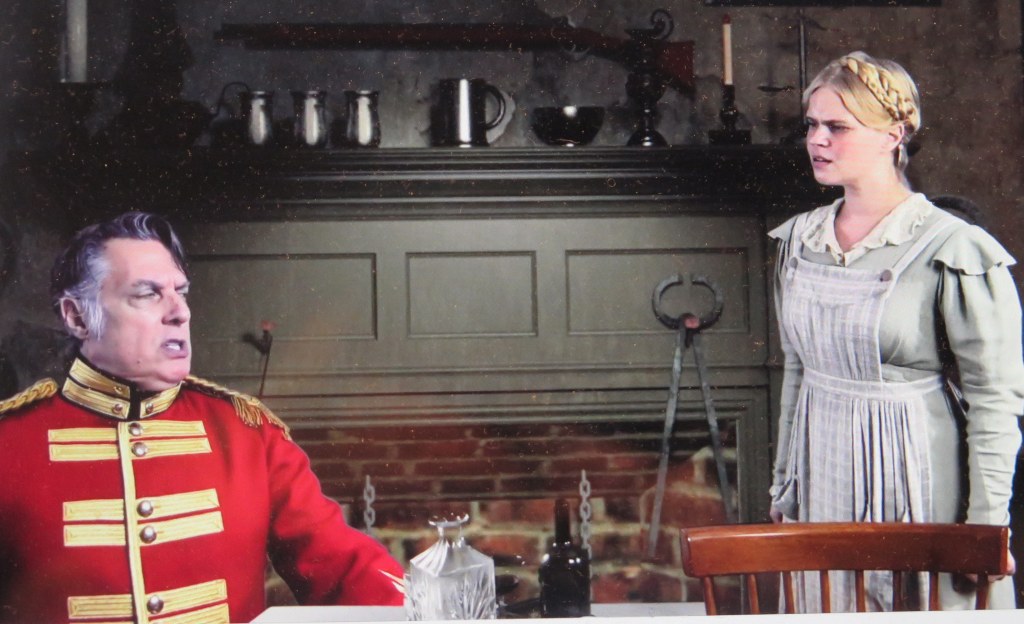
Indeed, Cuccioli’s stance, mien, presence convince us that he was once an individual of great deeds and valor and has fallen on hard times but will remain unbroken and unbowed. Nora adores him for she has “won” this dignitary’s love and that raises her own identity and self-esteem. Kate Forbes is just incredible as she mediates Nora’s self-recriminations, with her subservience to Con as she waits on his every whim. She never reproaches him for his abusiveness, indeed, she accepts his cruelties and disdain as worthy of her low station.
Cuccioli and Forbes relay powerful portrayals of these two individuals as they complete the dance of superior to menial externally which becomes the reverse when we see that Con needs to believe he is genteel and honorable, the stiff-upper-lipped gentleman of quality. However, ultimately, Nora dominates; Nora obliges and encourages him to fulfill her own assumptions about his love, as he lowers himself to rages and miscreant behavior.

Belle Aykroyd’s Sara who challenges Con’s treatment of Nora adds spark and fire to the dynamic of the family. She is the flint that ignites Con and inflames his drunken rages. She fills out the charged, family interplay with an amazing performance of irony and savagery. An instance of this occurs when Sara mocks Con’s puffery and “superiority” by putting on an Irish brogue and acting the menial. Apparently, Con has attempted to teach both Nora and Sara the finer ways, but Nora is unwittingly inflexible and Sara, who “knows better” enjoys defying her father at every turn.
Sara stirs the cauldron of infamy when she entices the guest of a wealthy land-owner to fall in love while she nurses him to health. Through her pursuit of him we learn of Nora’s own desires of greatness realized through her love of Con which becomes the similar road that Sara travels down. To raise her self-esteem in her own eyes and self-love, she becomes sexually involved with Simon Hartford (a blasphemy at the time) despite the threat of his mother Deborah Hartford’s (Mary McCann) disapproval. Deborah Hartford will make sure their relationship is doomed because of their class and economic differences.
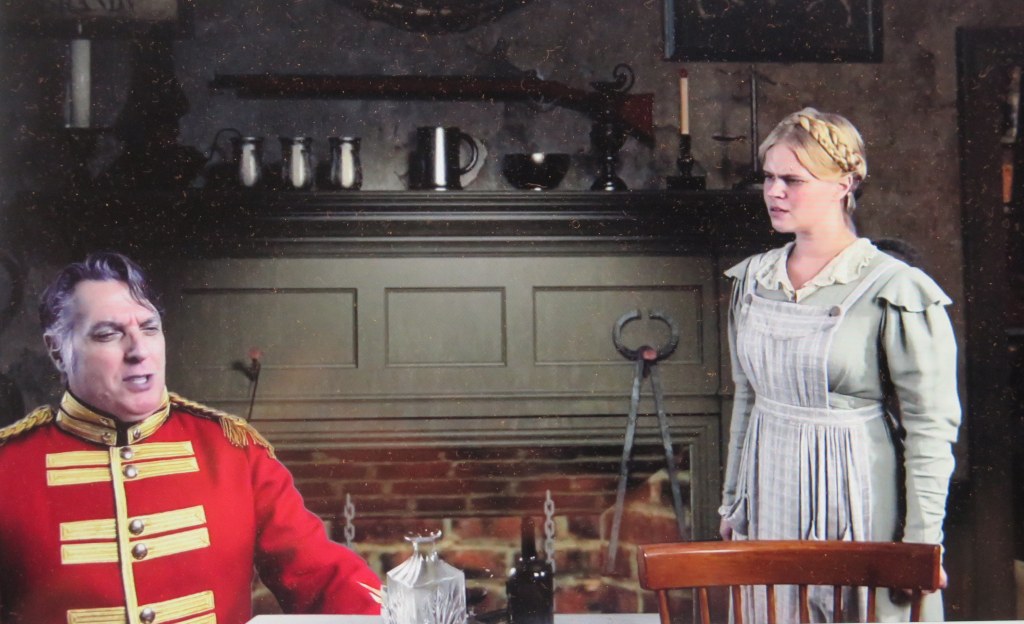
In the climax of the play which skirts the edges of physical confrontation, the actors seamlessly convey the action, considering each filmed his/her performance in their own homes. Thanks to the precise staging, it works when Con slaps Sara, when he caresses his wife at the conclusion with a new-found reverence of her patience and concern for him, and when he is physically bold in his attempts to kiss Deborah Hartford. Mary McCann’s staid and well-born Deborah Hartford is the perfect inducement for Con to entrap himself in one more perfidious and humiliating debasement.
From this juncture onward, we anticipate Con’s complete obliteration and the hope of a renewal. O’Neill satisfies; his ironic twists and Con’s ultimate affirmation of the foundations of his soul is as uplifting as it is cathartic. Now, his wife and daughter will have to adjust to this new day and redefine their expectations of their lives. Sara has already begun but the road she has chosen, like her mother’s is hard and treacherous with only her estimation of love to propel her onward.
Kudos to all the actors who negotiated the new medium of filmed staging on film and made it real. Likewise, kudos to the director who shepherded them through with extraordinary results. Last but not least are Alejo Vietti (costume design) Michael Gottlieb (lighting design) M. Florian Staab (sound design and mix) Ryan Rumery (original music) Sarah Nichols (video editor) April Anne Kline production coordinator.
This sensational collaboration magnifies the themes so you can greater appreciate O’Neill’s play of revelation and redemption through confronting one’s own shibboleths and destroying them. The revival shines a refreshing light on A Touch of the Poet and burnishes it with a new glory.
This is a production you must not miss. After this evening’s performance at 8 pm there are three more performances, two Saturday 31 October, and one performance on 1 November at 3 pm. For tickets to the online performances go to the listed site .https://web.ovationtix.com/trs/cal/32325?_ga=2.134261553.1367444511.160409768

