Blog Archives
‘Purpose’ Brandon Jacobs-Jenkins’ Riotous Play, Directed by Phylicia Rashad

In Purpose, Brandon Jacobs-Jenkins’ satiric family expose directed by Phylicia Rashad, we meet a patriarchal Black American civil rights icon, Solomon “Sonny Jasper (Harry Lennix), who is forced to confront his disappointments and foibles as his family gathers to celebrate the homecoming of his eldest son and namesake, Solomon “Junior” Jasper (Glenn Davis). Navigating the audience through treacherous familial waters with asides and intermittent, pointed narration, the youngest son Nazareth “Naz” Jasper (Jon Michael Hill), explores his family’s complicated legacy as he attempts to confront issues about his own identity and future.
Currently running at the Hayes Theater until July 6th, this ferocious, edgy and sardonic send up of Black American political and religious hypocrisy resonates with dramatic power. Its superlative performances and Rashad’s fine direction, make it a must-see. Importantly, in typical Brandon Jacobs-Jenkins style, the tour de force with jokes-a-plenty raises questions. It prompts us to reflect upon our own life intentions, as we examine the Jasper family’s dynamic through the acute perspective of the endearing, sensitive, vulnerable and authentic Naz. Hill is just terrific in a role which requires heavy lifting throughout.

As the play opens we note the subject matter and foundation upon which Jacobs-Jenkins’ moralistically satiric drama rests, namely the Jaspers (think along the lines of Jesse Jackson), whose heritage boasts of leaders in civil rights, congress and the protestant church. Todd Rosenthal’s lovely, well-appointed, Jasper family home represents prosperity, upward mobility and the success of the celebrated Black political elite. Solomon Jasper was Martin Luther King, Jr.’s heir apparent in the civil rights movement.
However, among other questions the play asks is, what happened to the substance and efficacy of the movement, considering the current “state of the union” under MAGA Party president Donald Trump, whose cabinet has no Black American member? What are the legacies of the Jasper’s faith? What is the heritage of their former Black radicalism, which Naz calls into question throughout the play, as the evening explodes into tragicomedy in front of unintended witness Aziza Houston (Kara Young)? As a result of the evening with the Jaspes, Aziza is horrified to see her civil rights icons, Solomon and Claudine, smashing her respect for them to smithereens during the family imbroglio in Act I.

Via an intriguing flashback/flashpresent device, Naz exposes and illustrates how the family’s shining history becomes obliterated by circumstances in the present “state of the family union,” which has not lived up to their patriarch’s illustrious expectations. Ultimately, Solomon Jasper, too, may be counted as not living up to his own personal expectations, a fact revealed by the conclusion of the second act, which further adds to his hypocrisy for giving Naz a hard time about his sexually, abstemious, personal choices..
With increasing intensity, the upheavals occur by the end of the first act and augment into further revelations and complications well into the second, until the wounds exposed are too great to ignore. Naz’s final synopsis and soulful, poignant comments solidify at the conclusion bringing this family retrospective together. His questioning wisdom leaves us as he is left, wondering what is the trajectory of this once august Jasper legacy, which Naz has chosen not to perpetuate. Not going into politics or the church, Naz selected a career in photography where he communes with nature’s beauty and peace.

Jacobs-Jenkins’ work is filled with contrasts: truth and lies, health and sickness, moral uprightness and moral turpitude. In fact the contrast of the outer image of the Jasper calm and sanctity versus the inner corruption and turmoil becomes evident with Jacobs-Jenkins’ character interactions throughout, heightened by Naz’s confidential asides.
Additionally, this contrast of superficial versus soul depth is superbly factored in by Rashad and Todd Rosenthal’s collaboration on set design. Initially, all is peaceful in their gorgeous home set up by matriarch Claudine Jasper (the excellent Latanya Richardson Jackson). The home’s beauty belies any roiling undercurrents beneath the family’s solid, upright probity. Perfection is their manufactured brand, which Aziza has bought hook, line and sinker as a Jasper fan.
To continue with the Jaspers’ “brand,” the inviting great room boasts a comfortable and lovely open layout-living room and dining room-backed by a curved staircase to the second level of bedrooms off the landing. The dark peach-colored walls are beautifully emphasized with white trim molding. The cherry wood furniture and cream colored sofa color-coordinate with the walls. The sofa is accented with appropriate pillows. Interspersed among furniture pieces are obvious antique heirlooms. Indeed, all is perfect with matching table runners and dining room tablecloth and napkins and dinnerware tastefully selected for its enhancing effect.

Prominently featured is the Jasper family heritage and legacy, a large portrait of Dr. Martin Luther King, Jr. proudly displayed on the first level, and a lesser portrait of political/cultural heir apparent, Solomon “Sonny” Jasper on the second floor landing. Surrounding the Sonny Jasper portrait are framed photos chronicling the civil rights warriors and family, shining their historical significance. When Aziza first arrives and is welcomed desperately by Claudine who fears Naz’s not bringing any woman home means he is gay, Aziza is gobsmacked by the house. Seeing the portraits and Solomon Jasper, she realizes who Naz really is. She is over the moon slathering blandishments to Sonny. Thrilled, she can’t help but take selfies with the Jaspers to send to her mom, a mutual fan. Naz is beyond humiliated and surreptitiously pleads with her to leave.
What does Naz know about his family that he fears Aziza will discover? If Aziza doesn’t leave quickly, his mother’s hospitality to divine who Aziza is will make sure she stays. Indeed, Jackson’s Claudine never fails in her intentions.
Against the storied backdrop of their illustrious past that Aziza worships, the garish present unfolds at dinner. It is the celebration of Junior’s homecoming and reunion with the family since his thirty month prison stay for embezzling campaign funds. Junior’s behavior is one of the gravest disappointments that Sonny holds against his son. For him it is unforgivable that his namesake who was to take his place has tarnished the Jasper name with corruption.

Thus, when Junior presents a birthday gift to Claudine, of the letters she wrote to him in prison in a lovely book, Sonny scoffs, especially after reading a particularly mundane letter. (Lennix’s reading of a sample letter is hysterical). Then, Sonny questions Junior who wants to exploit their family name and go on tour with the book of Claudine’s letters, and Claudine, lifting up the hellishness of his imprisonment like a martyr.
Ironically, bitterly, humorously, Sonny airs his disgust that Junior would present himself as a Nelson Mandella, as if Junior’s prison experience was in any way equivalent to the horrors of imprisonment used as a tool of oppression and racism throughout US history. Sonny is especially livid because Junior’s crimes ripped off his father and Blacks who supported him. Additionally, the time Junior did was easy because Sonny used his influence to get Junior into “a minimum security playground.” Though it is revealed that Junior has bi-polar disorder, (the scene when Glenn Davis manifests this is superb), Sonny lacks empathy for Junior. He dismisses his illness and says he got caught where other politicians don’t get caught because Junior is stupid.
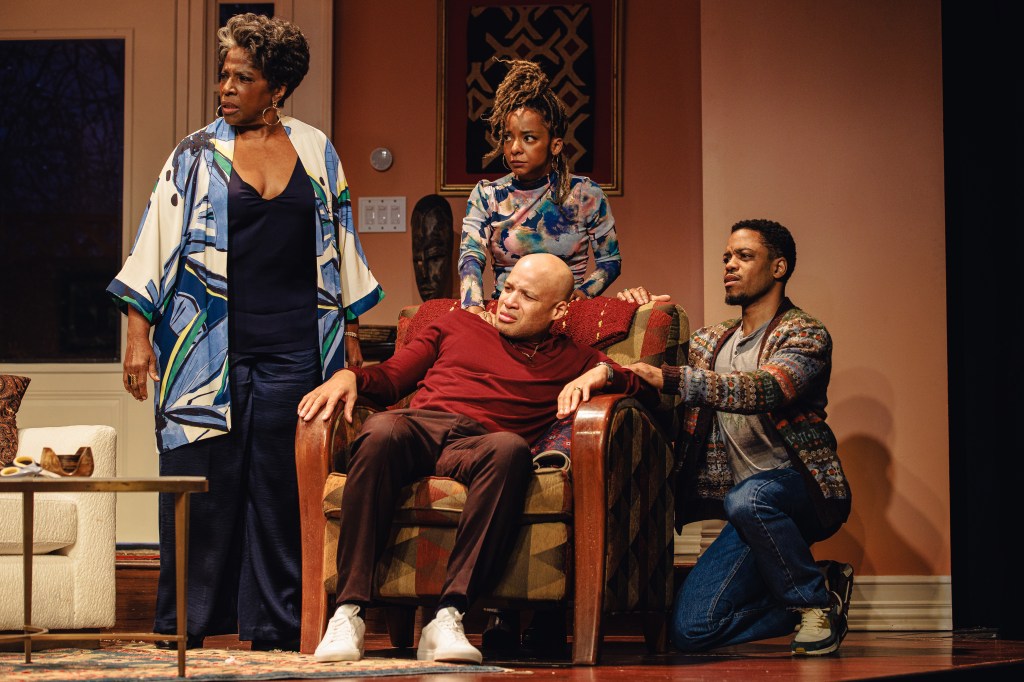
At dinner the dour Morgan (Alana Arenas), Junior’s wife, sits quietly at first. After Junior uplifts Claudine, Morgan claims neither he nor the Jaspers helped her through Junior’s mental breakdown. Nor does he acknowledge her visiting him through the prison experience with a present. Morgan rips into him and the family. They are “hucksters,” who don’t care about her and “have no sense of responsibility or remorse.” Listening to the Jasper’s accountants, Morgan signed their joint tax returns that implicated her in tax fraud with Junior. She has lost her career and will have to do time in prison for an error that she was ignorant about, trusting the family to not mislead her.
Thus, the artifice gradually peels away, shaped by the characters’ ever increasing digs at each other and Naz’s humorous perspective. To top it off, despite her promise to Naz that she will keep quiet, Aziza reveals how she trusts Naz to be the sperm donor for their child. This piece of information is a stick of dynamite for this religious family who chaffs at unmarried young people sleeping together. Then, when Claudine and Morgan go head to head and Morgan calls the family’s “honesty” into question and accuses Sonny of having “his fiftyleven other kids scattered all over this damn country,” Claudine loses it and gets violent.
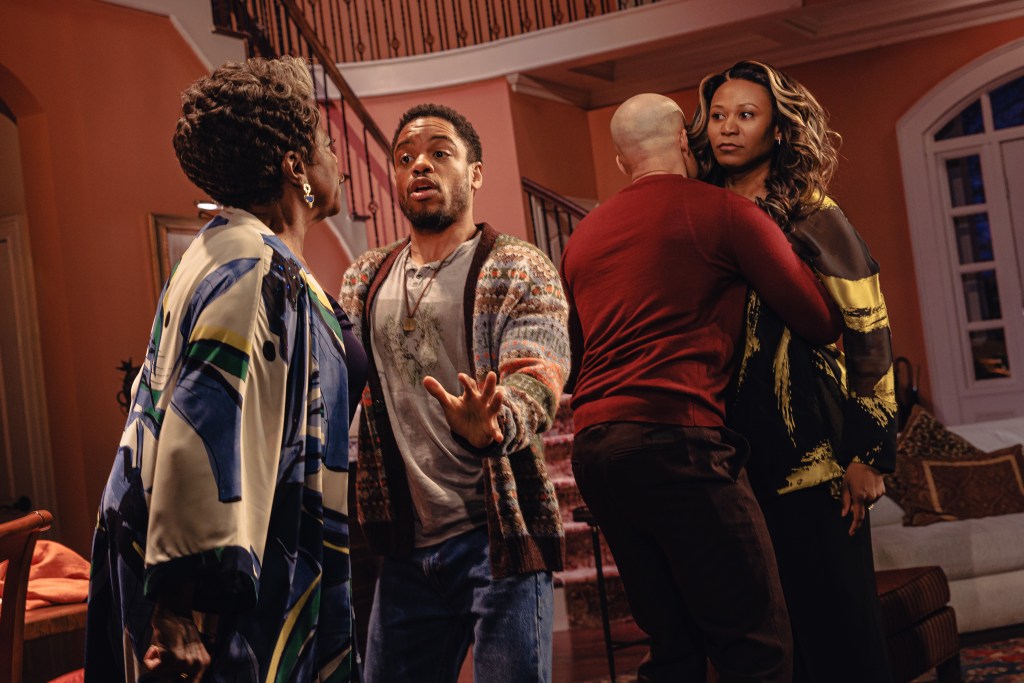
Ironically, the act ends with the patriarch blaming Claudine, “I have let you build this house on a foundation of self-deceit.” Sonny loudly declares the time is now for “redemption” and a “new era in this family – a new era of truth! Truth!”
Act II indicates how that “truth” is to come about, as Naz and Aziza argue about why she broke her promise to him. Abashedly, Naz disavows the violence that spilled out between his mother and Morgan. Meanwhile, the verbal and emotional violence has always been an undercurrent in the family that has never confronted their issues. In other words, the dissembling, the lies and the deceit have augmented until “enough is enough.” Aziza, caught up in the fray rethinks what she has seen and no longer has any wish to have Naz’s child from their “illustrious” DNA. Additionally, she has learned not to lionize any other civil rights icon or celebrity easily, again. Celebrities, like the Jaspers, are not saviors or worthy to be made into icons. They have clay feet if you see them up close and personal.

Though the first act sails smoothly, the second act digresses in part with Naz’s extensive dialogue and explanations, which might have been slimmed down. Nevertheless, as we learn about each family member’s complications, the intensity shifts. Though there is less humor, there is incredible poignancy and each of the actors have their moments to shine. Not only do we note the profound aspects of character complexity, we understand the difficulty of attempting to maintain an oversized legacy of greatness when one is an imperfect human being. Indeed, the one who comes out best appears to be Naz, until the conclusion. It is then we understand how the family has impacted him and in response, he has sent himself spinning into his own chaos, which he will have to unravel for himself. So do we all as we deal with our own legacy, heritage and family dysfunction.
Purpose is brilliant, if a tad unwieldy. However, the ensemble cracks sharply like lightening. Rashad has a deep understanding of Jacobs-Jenkins’ themes, dynamic characters, prickly relationships and the sub rosa levels of meaning in the interactions. The pace is lively despite the playwright’s wordiness and keeps the audience engaged.
Kudos to the creative team including those not already mentioned: Dede Ayite (costume design), Amith Chandrashaker (lighting design), Nikiya Mathis (hair & wig design), and Bob Milburn & Michael Bodeen (sound design). Purpose runs two hours fifty minutes with one intermission at the Helen Hayes Theater on 44th between 7th and 8th. https://purposeonbroadway.com/
Phylicia Rashad, Brandon J. Dirden in ‘Skeleton Crew,’ Workers vs. Corporates, a Worthy Fight at Manhattan Theatre Club
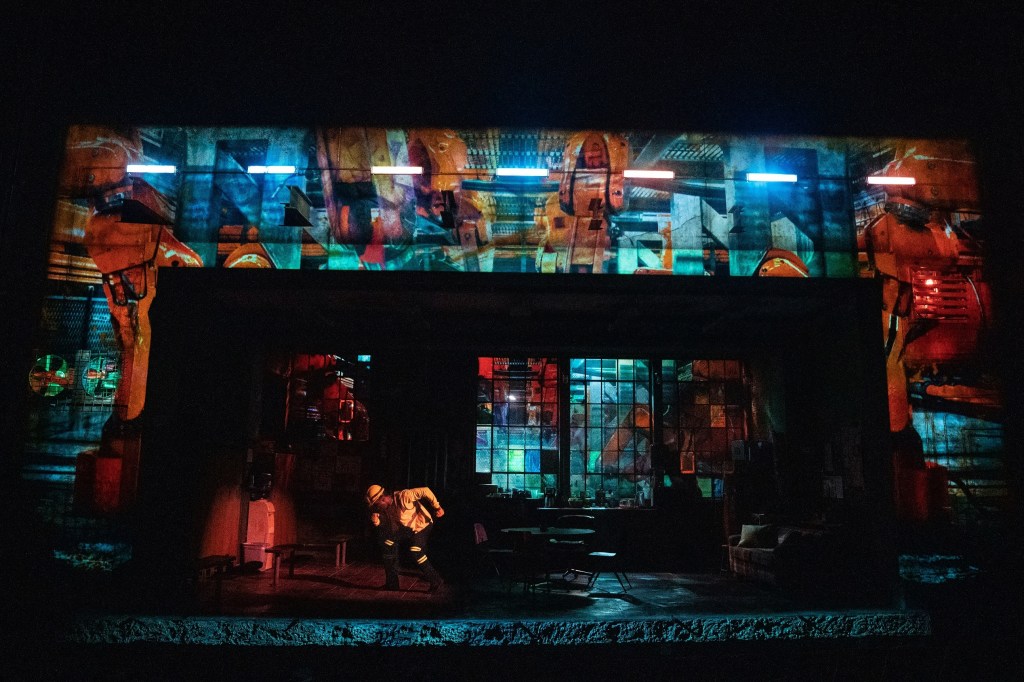
From the symbolic and representative opening salvos of gyrating piston Adesola Osakalumi, whose break dancing suggests the automation which is rendering the human scaling at the auto-stamping factory obsolete, to the well-hewn set by Michael Carnahan (the dusty, run-down, cold, shabby staff room where employees enjoy down-time) we understand that the four person skeleton crew in the Detroit plant will be ghosted as soon as budgetary financial reckonings are made by upper management. This is 2008 Detroit, US during the economic mortgage mess when investment bank Bear Stearns collapses and is bought over by JPMorgan Chase and Lehman’s a 150-year old booming institution goes belly up. People are losing their homes and living in their cars and cheesy motels in Florida. And, it is worse in Detroit whose booming success of the 1960s is a bust by the 1990s and there’s one plant left that is barely churning out product.
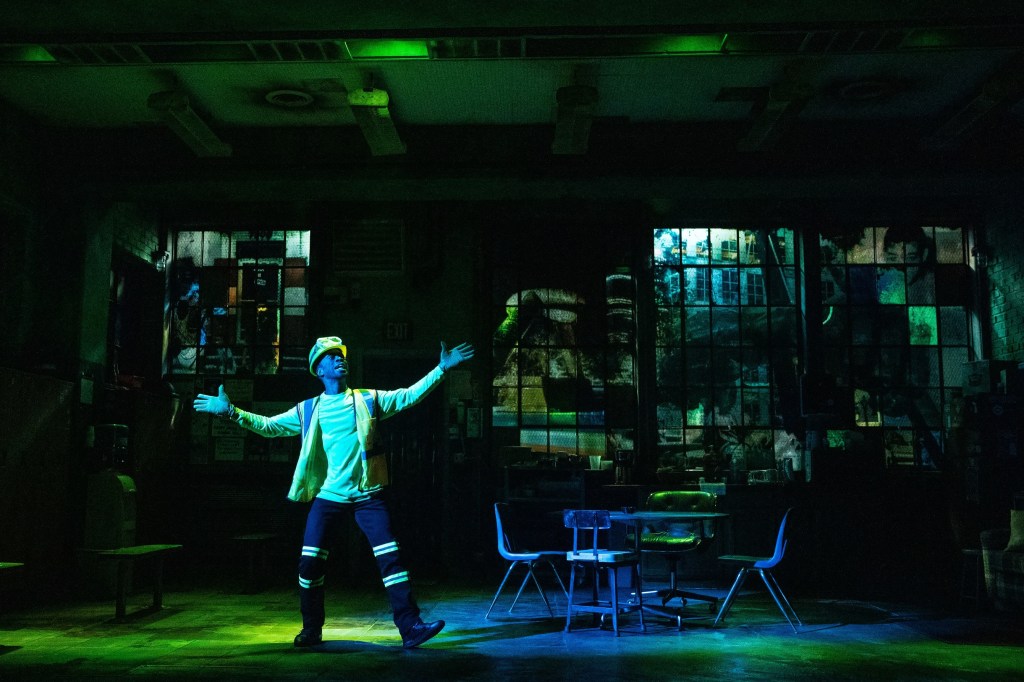
Skeleton Crew directed by the superb Tony Award® winner Ruben Santiago-Hudson, currently in revival at Manhattan Theatre Club after its intimate presentation Off Broadway at the Atlantic six years ago, hints at the tour de force Dominique Morisseau meant the last segment of her Detroit Project to be. The trilogy (The Detroit Project) is about Detroit’s life and times before and after the Reagan outsourcing debacle toppled the city from its glory as the country’s industrial fountain of youth. It includes Detroit-’67, Paradise Blue and Skeleton Crew.
The play has been given a glossy uplift using video projections of the robotic machinery of the assembly line etc. (excellent design by Nicholas Hussong). Coupled with the music (Rob Kaplowitz’s original music & sound design, and Jimmy Keys’ original music & lyrics) at the beginning and between salient scenes, we note the encroaching modernized doom that hammers the employee work force into unrecognizable bits, hyper-downsized from its greatness when Detroit was in its manufacturing heyday. The digital video projections supplant proscenium curtains which would normally frame the stage. As such, the plant’s relentless, driving automation is the outer frame of the stage and encapsulates the action and interactions in the staff room where workers take their breaks from the repetitive and monotonous production line.
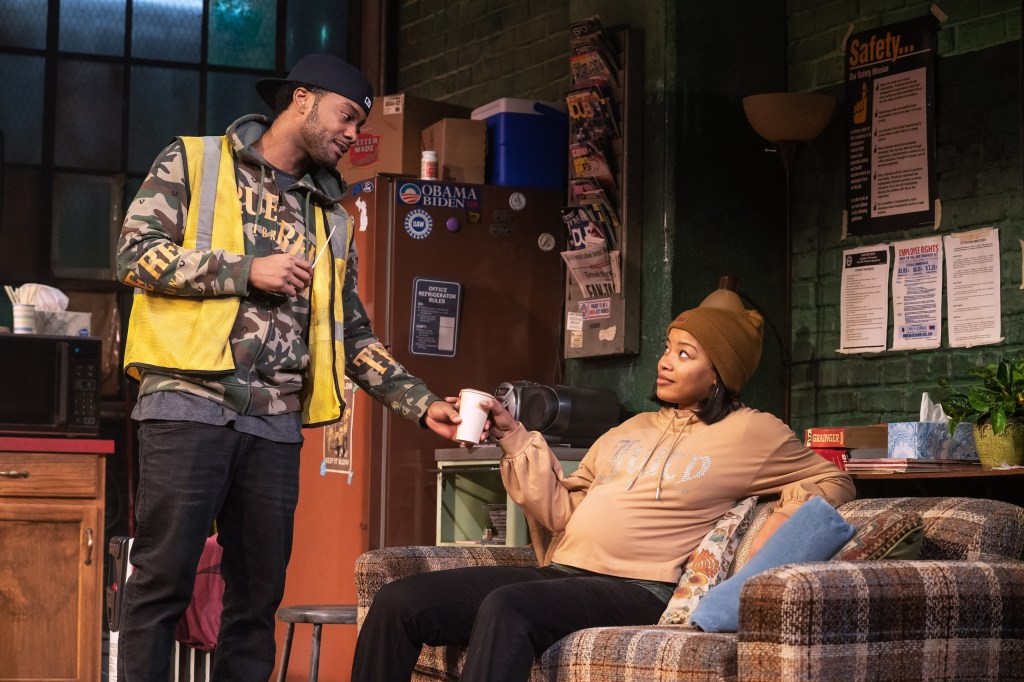
The contrast Morisseau’s dualism creates is trenchantly thematic. The defined “wasted, decrepit humans” are pitted against inevitable “progress” which especially grinds down the people whose loyalty and dedication to the industry have been turned against them. These management diminished unfortunates, like Faye (Tony Award® winner Phylicia Rashad) whose once magnificent efforts are discounted as “unprofitable,” didn’t see the “handwriting on the wall” to prepare for another career after working for the company 29 years in the hope of getting a “great” retirement package. Faye and others trusted the corporates to have their best interests and welfare at heart.
As Morisseau indicates in her characterization of Faye, stand-up employees projected their worthiness, values and integrity on their slimy directors and CEOs, mistakenly assuming they would be rewarded for hard work and effort. Ironically, it is the elite corporates who are the unworthy, lazy, greedy, un-Americans who made America “un-great” through Reagan’s tax laws that allowed them to outsource profits by closing plants and establishing factories anywhere but the United States.
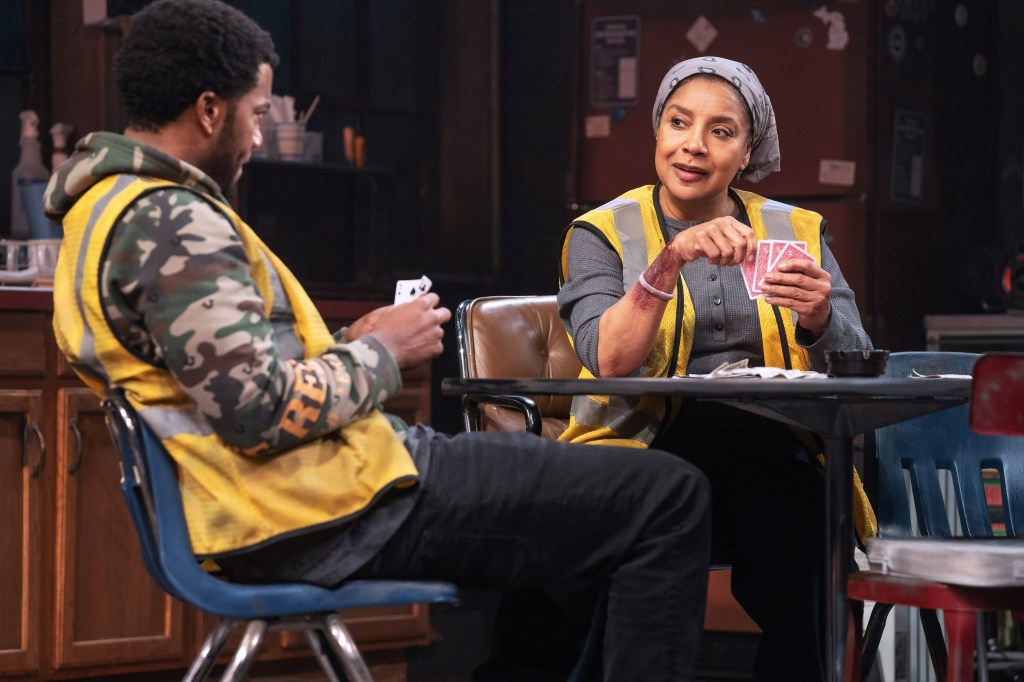
In view of the current debacle with supply chain issues, inflation and absence or overpricing of medical product needed to fight the ongoing health disaster (COVID-2022) which incompetent, do-nothing Republicans have fueled as a political stratagem, Skeleton Crew‘s themes are profound and incredibly current. The problems fourteen years later from the setting (2008, Detroit) are even worse with expanding economic inequality, oppression of the workforce, whether white or blue-collar, by oligarchic elites herding the intellectually infirm white supremacists with misdirection against the democratic institutions that could save them. The seeds of the current destructive forces are evidenced in Morisseau’s setting with the ghosting of Detroit’s last automotive plant where supervisor Reggie (the wonderful Brandon J. Dirden) Union Representative Faye (Phylicia Rashad) the energetic Dez (Joshua Boone) and the pregnant Shanita (the excellent Chanté Adams) work and stress out with each other in unity.
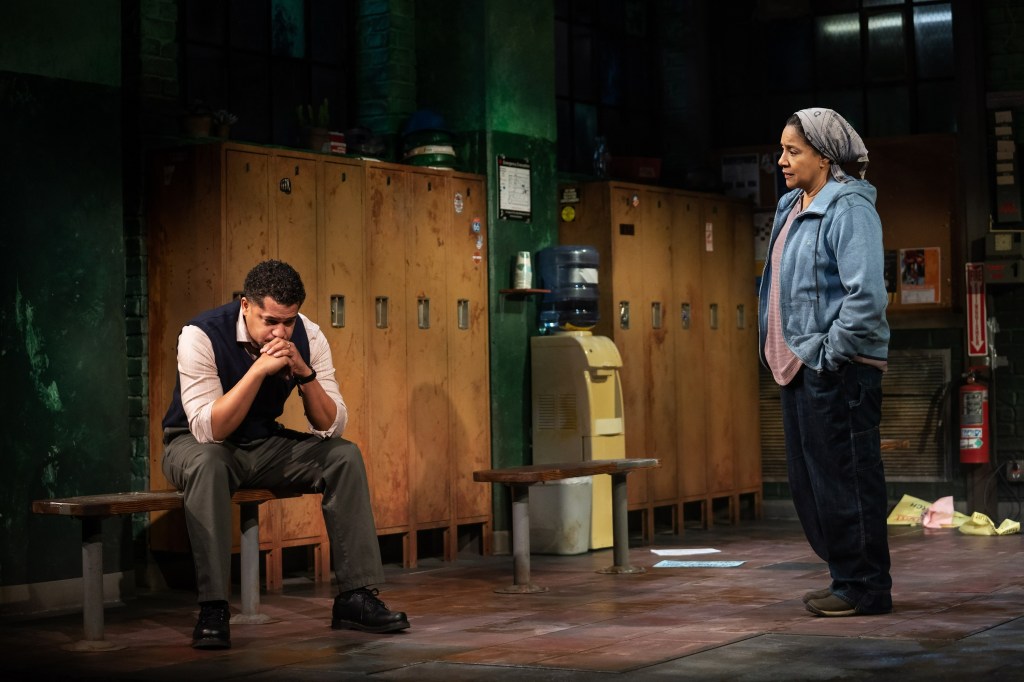
Within this framework we follow the devolution and evolution of these four who signify Morisseau’s special individuals who are the backbone of the nation. It is these who the elites would erase. Their ability to hope and thrive is sorely tested against the annihilating backdrop of demeaning corporate abuse which demands personal strength and communal support to over-leap it. With Morisseau it’s the people vs. “the corporate machine,” and as Morisseau spins the conflicts caused by the plant closure, personal self-destruction or revitalization are the direction for Faye, Dez, Shanita and Reggie, who prove to be likeable working class heroes with huge cracks and flaws that we recognize in ourselves.
Reggie who has been practically raised by Faye as family-she got him the position where he rose to management-is pressured and strained. He’s forced to walk a fine line, knowing what his bosses plan to do. Yet he must not tip their hand which would panic the workforce to strike or leave before the current contracted work is completed. Oppressed to enforce nit-picking rules, Reggie argues with Dez who may or may not be stealing and who sees him as a cold-hearted puppet of corporate.
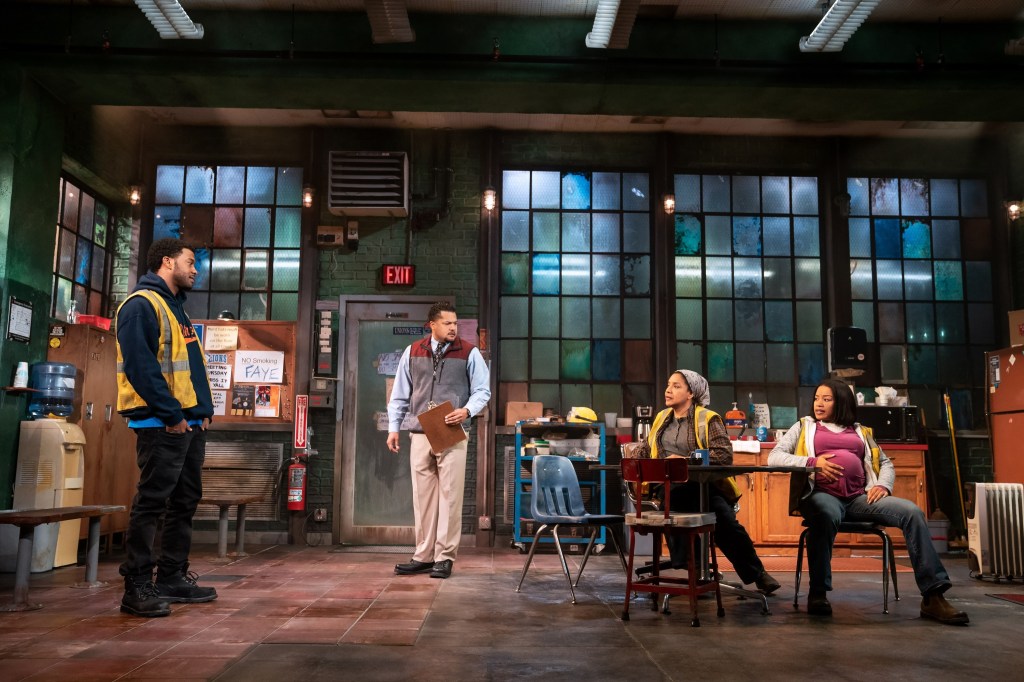
Likewise Reggie emotionally wrestles with Faye who must protect her union workers and herself deciding whether to retire early, which would mean an income loss after retirement. Shanita is pressured emotionally after she is dumped by her baby’s father. She faces being the sole support of her child. She enjoys working at the plant, though she’s a cog in the wheel, but she feels proud for her contribution to making product. Nevertheless, she is strained working and bearing up with her pregnancy, making doctor’s appointments and saving up money before and after she takes time off from the job she loves.
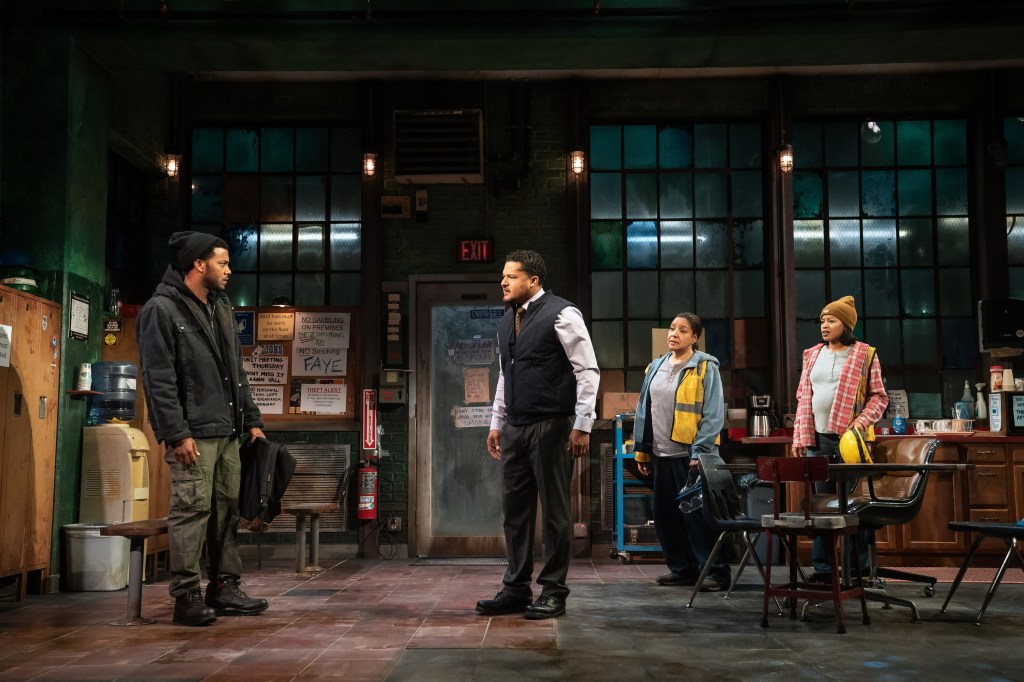
Morisseau excavates each of their struggles with authentic dialogue that is at times humorous, and powerful/poetic as the characters present their positions. Importantly, the playwright extends the reality of what it is to hold a decent job with benefits that is being pulled out from under the worker because the owners’ obscene profits aren’t big enough and government isn’t holding them to account. Thus, as the play progresses and we understand each of the characters’ dreams, we credit Dez for attempting to start his own business with friends, and we hope for Shanita’s child, in light of the nightmares she’s having over the uncertainty of her future. Additionally, we understand Reggie’s position though we expect him to stop his haranguing of the others and stand up to his bosses. We are thrilled when he finally does.

Interestingly, Faye, who appears to be the most solid and reliable is confronting her own devastation in addition to the cancer remission she is going through. Morisseau gradually unfolds each of the characters’ issues and at the end of Act I brings Dez and Reggie’s relationship to a turning point where Dez is about to be fired. When Faye steps in and counsels Reggie to stand up for Dez and the other workers, we question whether Reggie has the guts to or whether he will be a sell-out. The irony is Faye is great at negotiating and encouraging others, but she is lousy at taking care of herself. The revelation of this is poignant, and Morisseau opts to make every audience member put themselves in Faye’s shoes as she, too, “walks the line” between wanting to live or just throw in the towel and give up.
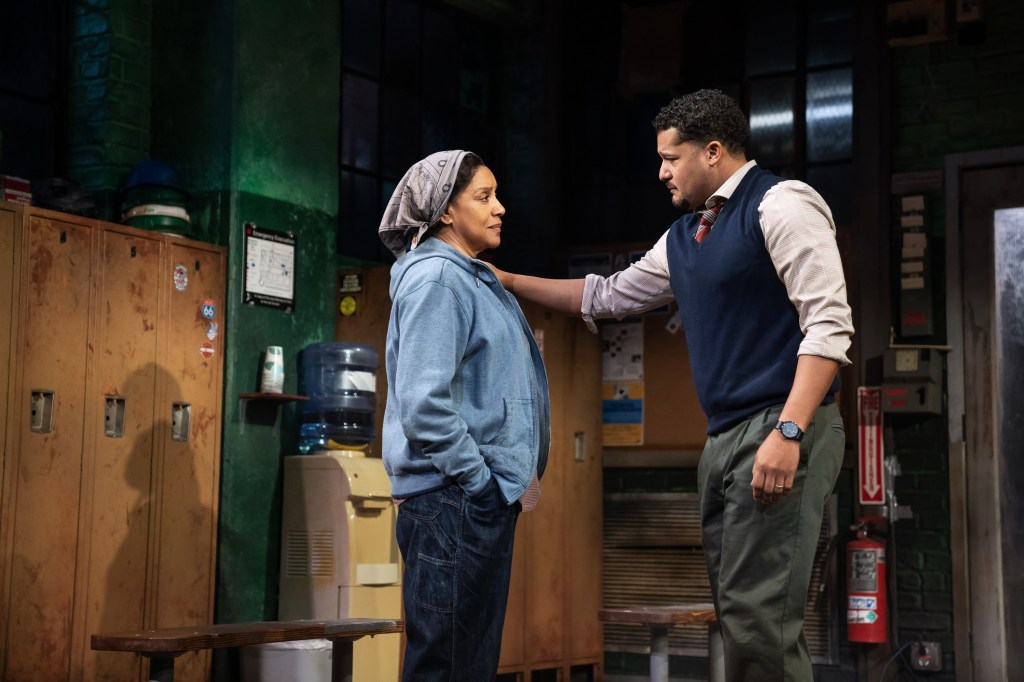
This is a strong ensemble piece and the acting is finely wrought. Unfortunately, some of the humor was lost on me because the actors weren’t always projecting in the cavernous space of the theater. Please actors, project and enunciate! Nevertheless, the passion and presence of Phylicia Rashad along with her counterpoint Brandon J. Dirden was heartfelt. The relationship they create reveals bonds that run deep into love and sacrifice. And the surprising relationship that blossoms between Boone’s Dez and Adams Shanita is beautifully effected by their graded, nuanced performances.
Ruben Santiago-Hudson understands Morisseau’s themes down to his soul’s bone marrow. The play’s visual elements represent the most vital of her themes and the characters are ourselves. We cannot help but be concerned for the conflicts the play presents which seem everpresent and unchanging. The current administration’s hope to “Build Back Better” during this time would appear to rectify the external circumstances of such characters who jump off the stage at us and populate our society. But the same corporate structure that Reggie fights is so entrenched, that soul progress is for the little people, these who are Morisseau’s besties. Perhaps that is the consolation. As for the corporate elites? As Reggie and Dez intimate, they are they’re own soul destruction. And that too is its own tragic consolation.
Kudos to the technical team mentioned above and Emilio Sosa’s costume design, Rui Rita’s lighting design, Adesola Osakalumi’s choreography and Cookie Jordan’s hair and wig design.
Morisseau’s play is dynamite in the hands of Hudson the artistic/technical team and these superb actors. This is a must-see. For tickets and times go to their website: https://www.manhattantheatreclub.com/shows/2021-22-season/skeleton-crew/
‘Phylicia Rashad Receives Lifetime Achievement Award at 2018 LPTW Theatre Awards’

Phylicia Rashad during her standing ovation upon receiving The Lifetime Achievement Award at the 2018 LPTW Theatre Women Awards, TimesCenter (Carole Di Tosti)
On Friday 16 March The League of Professional Theatre Women held their awards for outstanding accomplishments of women in the theater. With the #metoo movement in full swing and the entertainment industry highlighting the paltry showing of sterling women who have yet to be represented in parity and equity with men, the LPTW shines a special light on the tremendous capabilities of women in the industry. They have been doing this for years beginning with their pioneering efforts championing women in the theatre since their inception in 1984.
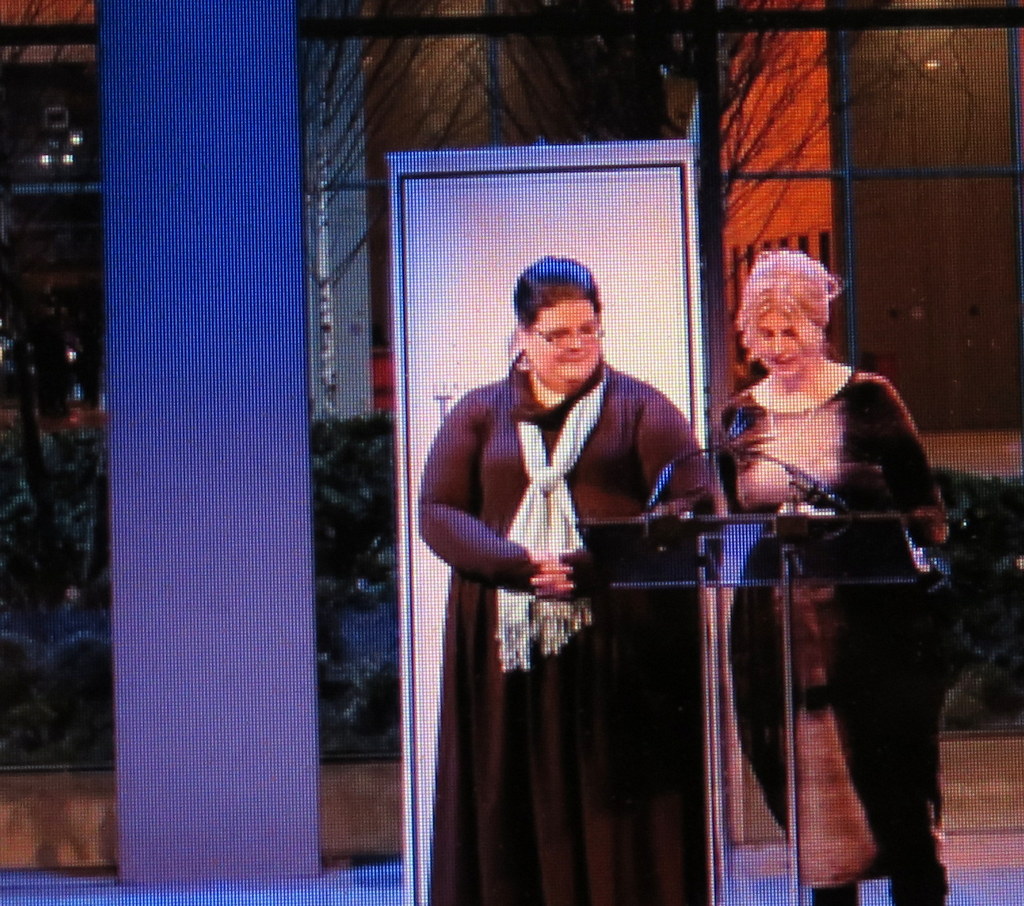
(L to R): LPTW Co-President Kelli Lynn Harrison and VP of Programming Ludovica Villar-Hauser, Artistic Director of Parity Productions. Opening remarks, 2018 LPTW Theatre Women Awards, TimesCenter (Ashley Garrett)
The importance of this organization at this time is not to be underestimated. The pernicious nature of male chauvinism, paternalism and the preeminence of patriarchy is deeply entrenched in the folkways of our culture and has risen its ugly head politically, indicating that only lip service had been given to women’s inclusion in the power game. Indeed, men have been dragged along with the arc of progress and justice continues to be flogged by men in power under cover of darkness. Meanwhile, all is smiles and compliments by men for women when the spotlight is on.

2018 League of Professional Women Theatre Awards pictures in the poster (L-R bottom row): Rohina Malik, Emily Joy Weiner, Cricket S. Myers (L-R top row): Linda Winer, Phylicia Rashad, Adrienne Campbell-Holt. On stage (L to R): Emily Joy Weiner, Jocelyn Bioh, Phylicia Rashad, Shelley Butler, Cricket S. Myers, Adrienne Campbell-Holt, Celia Keenan-Bolger, Roma Torre (Carole Di Tosti)
Well, women are bending the arc of progress toward their inclusion. It is enough that they are more than half the population, yet have been relegated to the back of the line when the golden rings of power are bestowed by other men. Indeed it is enough!
For years LPTW members identified the under-representation of women in positions of power and importance in the entertainment/theatre industry. And this ironically was not because women demonstrated a lack of creative talent, leadership abilities or phenomenal skill sets. It was because of surreptitious discrimination and a network of mores supported by men AND women wittingly and unwittingly. The concept that “boys will be boys” and women were less than “all that” reigned supreme in the competition for employment. Outstanding women had to push diligently, subtly and prodigiously to get a “place at the table” where men ultimately dominated. Women compromised their behaviors, attitudes, intelligence and creativity to meld into a preeminent male world of directors, playwrights, and design directors and assistants. Because of these pioneers, progress has been moving forward. But we have a long way to go before reaching parity and equity. Thankfully, “the whole world is watching.”
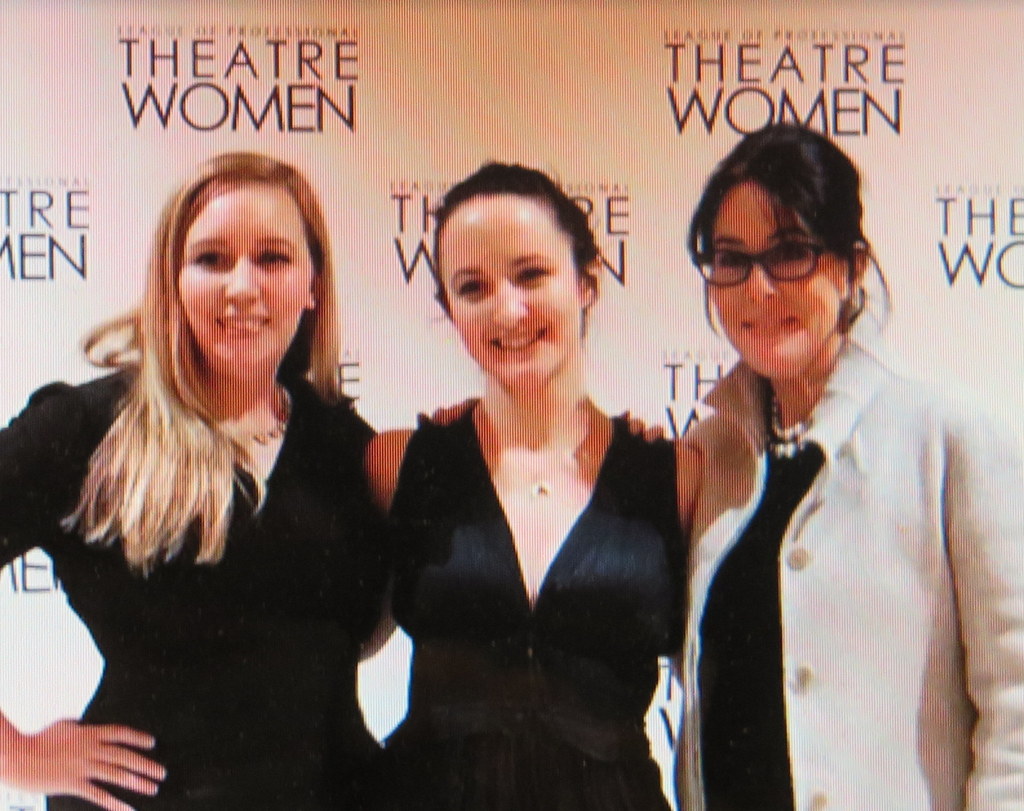
LPTW VP of Communications Kimberly Loren Eaton, Playwright Kate Hamill, Broadway Producer Catherine Adler on 2018 LPTW Theatre Women Awards Red Carpet (Ashley Garrett)
Thus, The League of Professional Theatre Women cannot be praised or recognized enough because they have been at the forefront of supporting women in the theatre world in the US and globally before there was creditable appreciation for womens’ indelible contributions. Over the years their numbers have grown. Their mission has thrived and gained critical mass especially in the current noxious political atmosphere. Now, more than ever their work, their efforts are a beacon to the international theatre community and entertainment industry because their values indicate there are no inconsequential roles, no “little” players. All are integral and vital if live theatre which makes a difference in the minds and hearts of citizens is to continue in its goal to uplift, instruct, unify and promote understanding between and among global communities.

Producer Brian Moreland with ‘Eclipsed’ Producer Danai Gueirira, Red Carpet at 2018 LPTW Theatre Women Awards, TimesCenter (Ashley Garrett)
The theatre community receives strength in its diversity of gender, ethnicity, religious beliefs and international participation. As a maverick organization their force and presence are unmistakable. It should be shouted from the rooftops. Thus, it is with gratitude to this organization for what they have accomplished in solidarity over the years that I enumerate the women and the awards the LPTW bestowed last Friday at The TimesCenter.
Florencia Lozano, Host
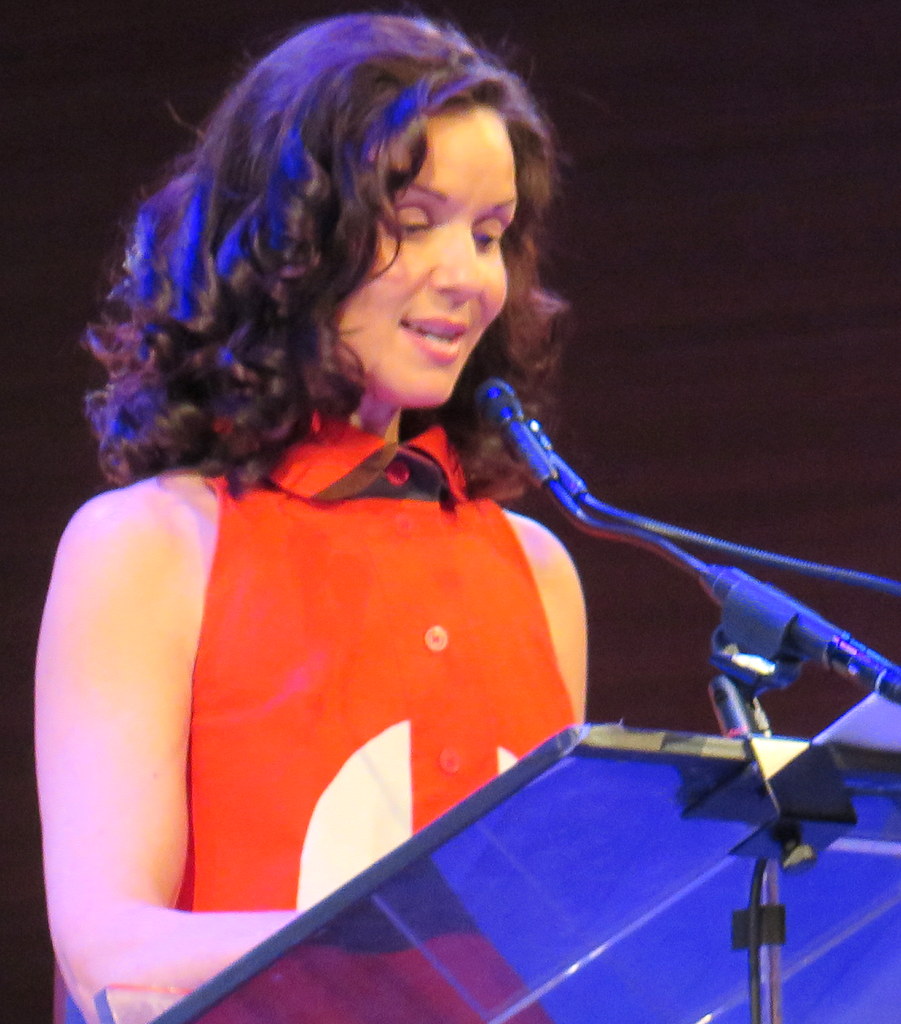
Florencia Lozano, 2018 LPTW Awards Host, TimesCenter, (Carole Di Tosti)
Florencia Lozano (@ilovelorca) actor, writer and performance artist with a multitude of TV, theatre and film credits is one of the original members of the LAByrinth Theater company and currently serves as LAB’s literary manager. Host of the LPTW Theatre Awards, Florencia Lozano introduced the presenters who then bestowed the awards.
The Lee Reynolds Award, Co-presented by Marshall Jones III & Wayne Maugans to Rohina Malik

Marshall Jones III, Co-presenter of The Lee Reynolds Award to Rohina Malik at the 2018 LPTW Theatre Women Awards, TimesCenter (Carole Di Tosti)

Wayne Maugans Co-presented The Lee Reynolds Award to Rohina Malik, 2018 LPTW Theatre Women Awards, TimesCenter (Carole Di Tosti)

Rohina Malik, recipient of The Lee Reynolds Award at the 2018 LPTW Theatre Women Awards, TimesCenter (Carole Di Tosti)
The Lee Reynolds Award is given annually to a woman or women active in any aspect of theatre whose work has helped to illuminate the possibilities for social, cultural or political change. Producing Artistic Director of the Crossroads Theatre Company and theatre professor at Rutgers University Marshall Jones III (#MarshallKJonesIII) and Wayne Maugans (@WayneMaugans) the Founding Artistic Director of Voyage Theater Company presented the Lee Reynolds Award to Rohina Malik (@rohina_malik). Her plays have been produced all over the country at various venues, and globally at two South African Theater festivals. She worked with Marshall Jones III and Wayne Maugans with their companies and has formed vital ongoing connections with them continually spurring on new works.
The Ruth Morely Design Award, Presented to Cricket S. Meyers by Shelley Butler
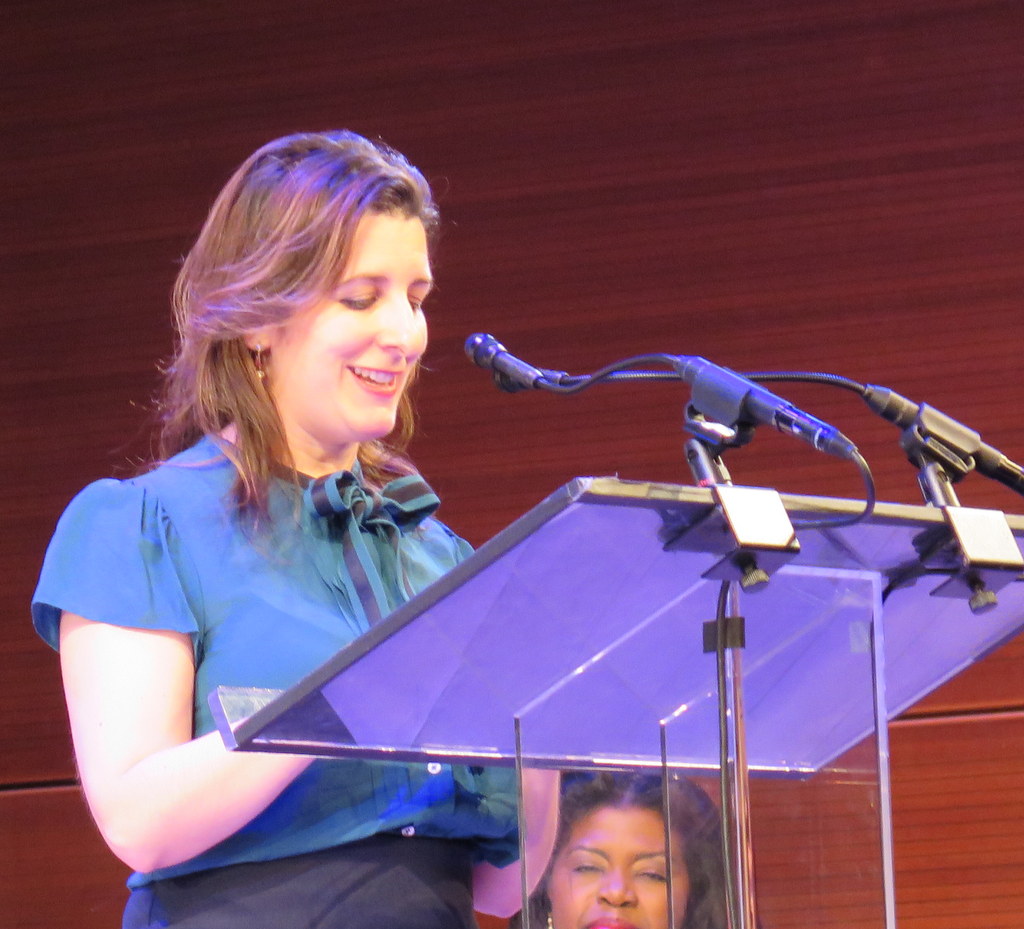
Shelley Butler presented the Ruth Morley Design Award to Cricket S. Myers at the 2018 LPTW Theatre Women Awards at the TimesCenter (Carole Di Tosti)
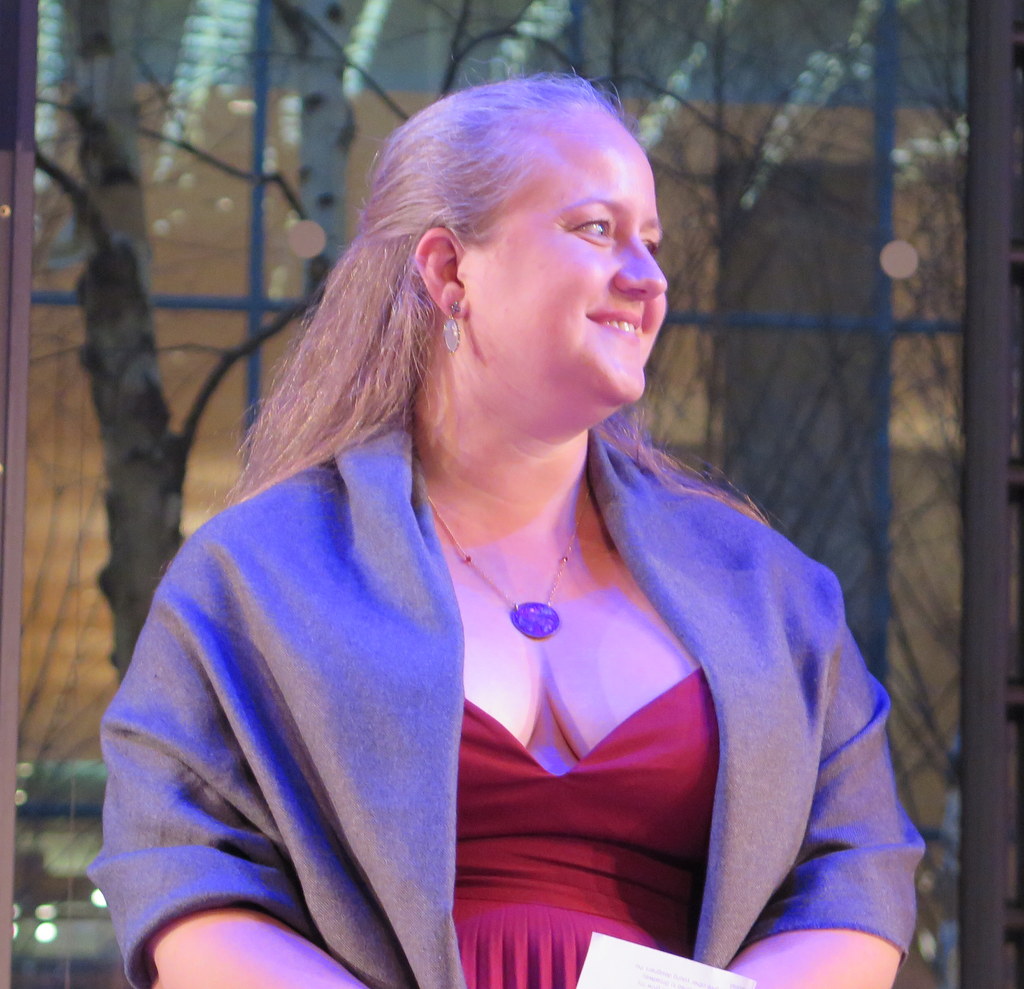
Cricket S. Myers, recipient of The Ruth Morley Design Award for Sound Design, 2018 LPTW Theatre Women Awards, TimesCenter (Carole Di Tosti)
The Ruth Morley Design Award, established in 1998 to honor leading film and theatre costume designer Ruth Morley, is given to an outstanding female theatre designer of costumes, scenery, lighting, sound or special effects. This year’s winner presented by director Shelley Butler (#ShelleyButler) was given to Cricket S. Myers (@sound_myers) for her award winning efforts in Sound Design.
The LPTW Special Award, Presented by Roma Torre to Linda Winer

Roma Torre, presented the LPTW Special Award to Linda Winer at the 2018 LPTW Theatre Women Awards, TimesCenter (Carole Di Tosti)

Linda Winer, recipient of The LPTW Special Award, 2018 LPTW Theatre Women Awards, TimesCenter (Carole Di Tosti)
A LPTW Special Award, presented to a remarkable theatre woman for her service to the League and to her field was given to award winning Linda Winer (#LindaWiner) by NY 1 theater critic, the award winning Roma Torre (@NY1 #RomaTorreNYC). Linda Winer was Chief Theatre Critic for Newsday from 1987-2017 and she has taught critical writing at Columbia University’s School of the Arts since 1992. Both women quipped about the idea that a theater critic might receive an award when in the past, “critics” were looked upon with skepticism and sometimes fear. Certainly, both of these women have provided a wealth of information about productions and have placed them in the historical record revealing the development of theater in this nation.
The Josephine Abady Award, Presented by Karen Kandel to Emily Joy Weiner
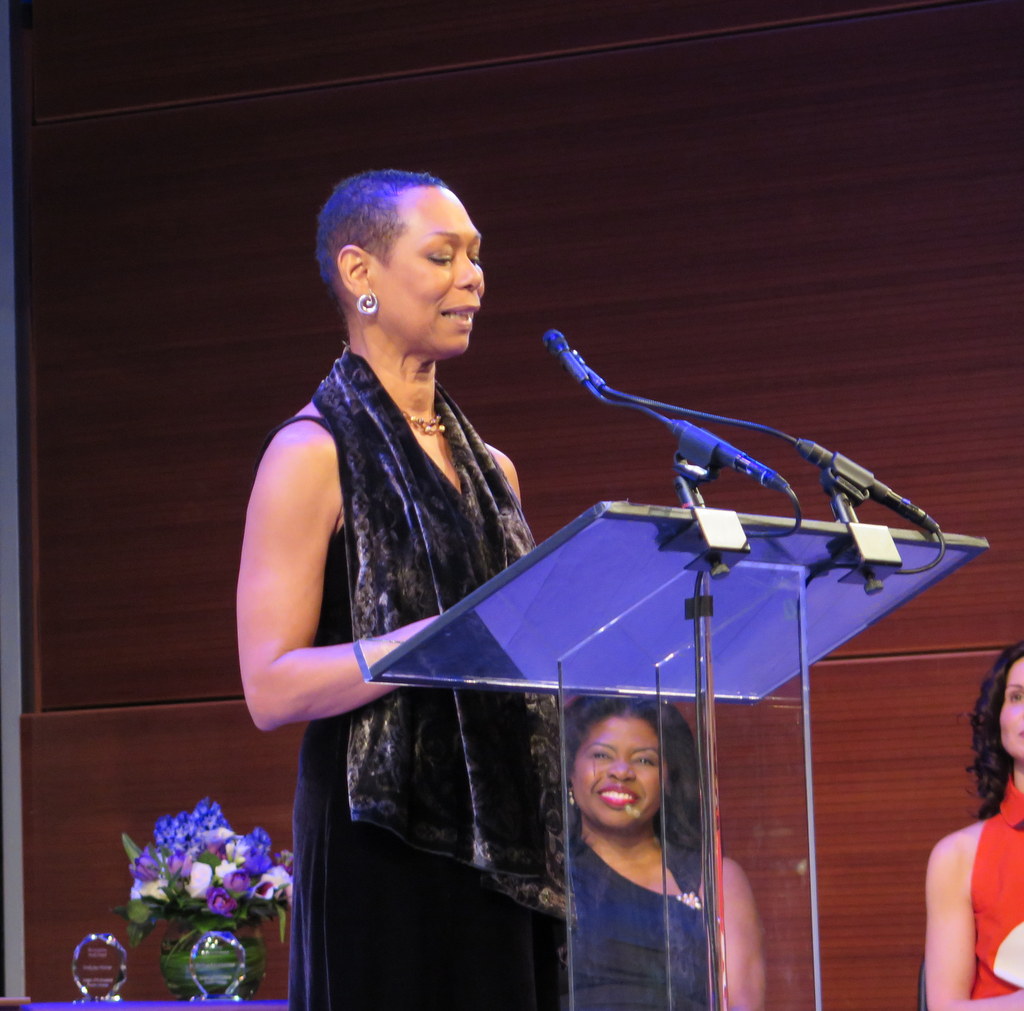
Karen Kandel presented the Josephine Abady Award to Emily Joy Weiner at the 2018 LPTW Theatre Women Awards, TimesCenter (Carole Di Tosti)

Emily Joy Weiner recipient of The Josephine Abady Award at the 2018 LPTW Theatre Women Awards, TimesCenter (Carole Di Tosti)
The Josephine Abady Award honors the memory of LPTW member Josephine Abady. The award goes to an emerging director, producer or creative director of a work of cultural diversity who has worked in the profession for at least five years. Emily Joy Weiner, Co-Founder and Artistic Director of Houses on the Moon Theater Company received the award presented by award winning Karen Kandel, Co-Artistic Director of NYC based theatre company, Mabou Mines. The Houses on the Moon Theater Company was founded in 2001 with the mission of telling untold stories in the interest of social justice. Emily Joy Weiner has been creating developing, performing, producing and directing new works with the Houses on the Moon Theater Company that address the sensitive issues of our time with community organizations and the talented company of artists.
The LPTW Lucille Lortel Award, Presented by Celia Keenan-Bolger to Adrienne Campbell-Holt
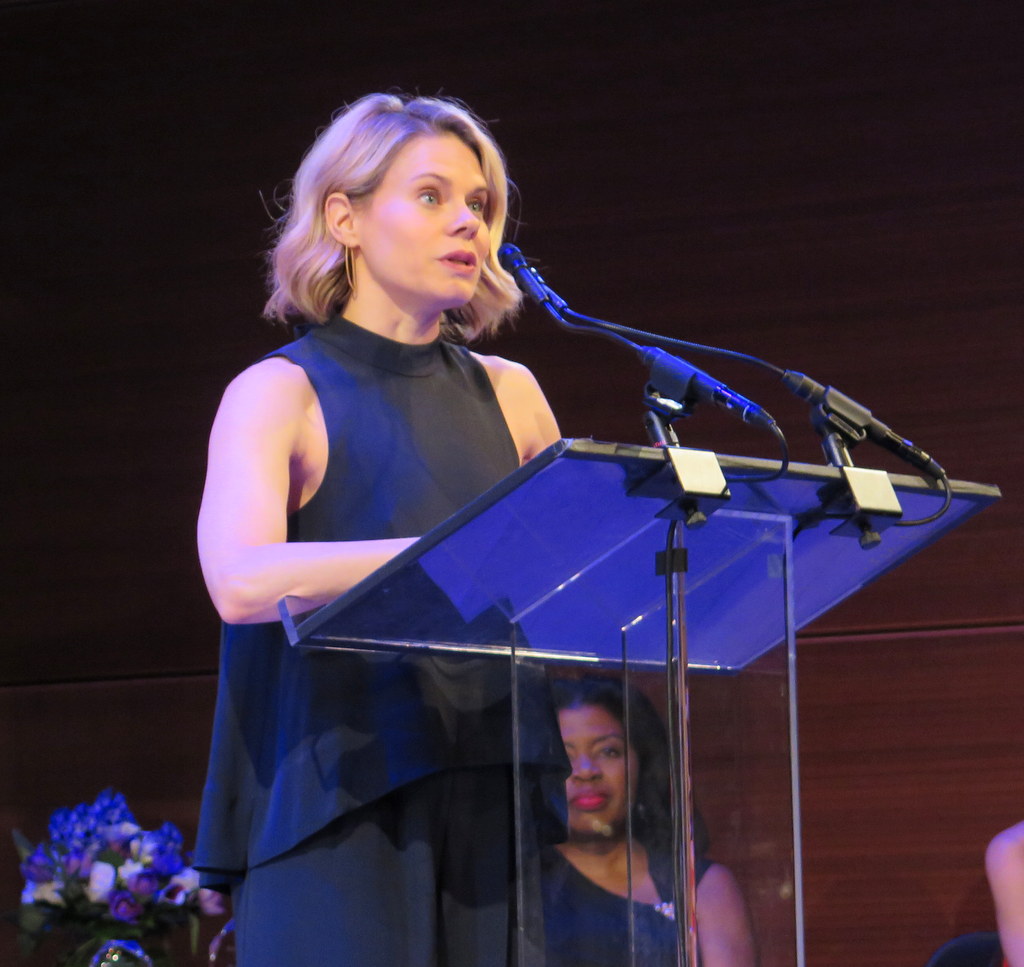
Celia Keenan Bolger presented the LPTW Lucille Lortel Award to Adrienne Campbell-Holt, 2018 LPTW Theatre Women Awards, TimesCenter (Carole Di Tosti)

Adrienne Campbell-Holt, recipient of The LPTW Lucille Lortel Award at the 2018 LPTW Theatre Women Awards, TimesCenter (Carole Di Tosti)
The LPTW Lucille Lortel Award is an award from the Lucille Lortel estate endowment to fund an award and grant. The award is given to “an aspiring woman in any discipline of theatre who exemplifies great creative promise and deserves recognition and encouragement.” This year’s award was presented to director Adrienne Campbell-Holt (@adriennecolt, @Colt_Coeur) by award winning actor Celia Keenan-Bolger (@celiakb). The grant was awarded to Ms. Campbell-Holt’s company, Colt Coeur. Adrienne Campbell-Holt inspired the women in the room with her remarks and encouragement to women playwrights to tell women’s stories. Women, above all are storytellers and she suggested that we must continue to push each other and the culture forward into a new day of acceptance and unity.
The Lifetime Achievement Award, Presented by Jocelyn Bioh to Phylicia Rashad

Phylicia Rashad receives a standing ovation for her well-deserved Lifetime Achievement Award at the 2018 LPTW Theatre Women Awards, TimesCenter (Carole Di Tosti)

Jocelyn Bioh presented the Lifetime Achievement Award to Phylicia Rashad at the 2018 LPTW Theatre Women Awards, TimesCenter (Carole Di Tosti)
The Lifetime Achievement Award presented to Phylicia Rashad (#PhyliciaRashad) needs no explanation and the honoree needs no introduction. The award was presented by Jocelyn Bioh (a Ghanaian-American writer/performer from NYC). Jocelyn Bioh (@Jjbioh) has carved a path for herself as an actor on Broadway and Off Broadway. She has appeared in film and TV. Jocelyn Bioh is also a playwright and is working as a staff writer on Spike Lee’s She’s Gotta Have it.

Phylicia Rashad, recipient of the Lifetime Achievement Award at the 2018 LPTW Theatre Women Awards, TimesCenter (Carole Di Tosti)
Phylicia Rashad has appeared in all entertainment venues, TV, Broadway and film. She has made lasting contributions throughout her career with her prodigious body of work. An example of this includes performances on Broadway in August Osage County, Cat on a Hot Tin Roof, Cymbeline (Lincoln Center Theater), August Wilson’s Gem of the Ocean for which she received a Tony Award nomination, A Raisin in the Sun (Tony and Drama Desk Awards), Into the Woods, Dreamgirls, The Wiz.
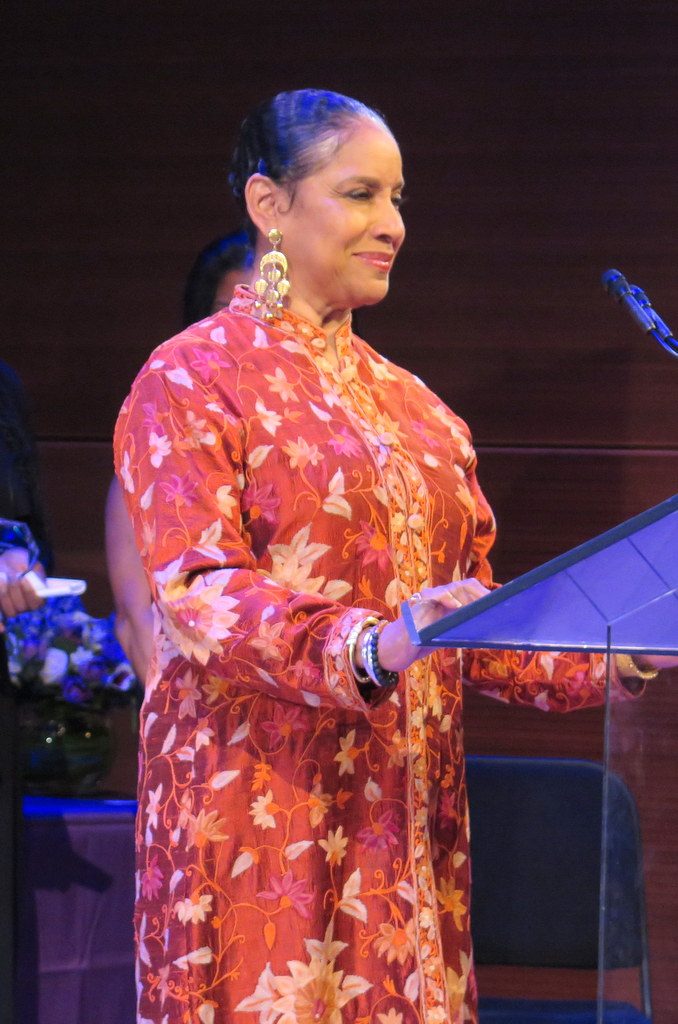
Phylicia Rashad recipient of the Lifetime Achievement Award, 2018 LPTW Theatre Women Awards, TimesCenter (Carole Di Tosti)
Off-Broadway she has appeared in A Midsummer Night’s Dream, Sunday in the Park with George, Head of Passes for which she won a Lucille Lortel Award, The Story, Helen, Everybody’s Ruby, Blue, The House of Bernarda Alba to name a few. She has performed in Regional Theater and has also directed Ma Rainey’s Black Bottom and Joe Turner’s Come and Gone at the Mark Taper Forum to mention two directorial achievements. She has directed many other productions at numerous venues for example, the Goodman Theatre, the Long Wharf Theatre, the McCarter Theatre, Ebony Repertory Theatre, Kirk Douglas Theatre, Westport Country Playhouse, Seattle Repertory Theatre. And she directed Four Little Girls at the Kennedy Center. She is simply sensational, and as Jocelyn Bioh affirmed, she is “regal,” she is “legendary.”
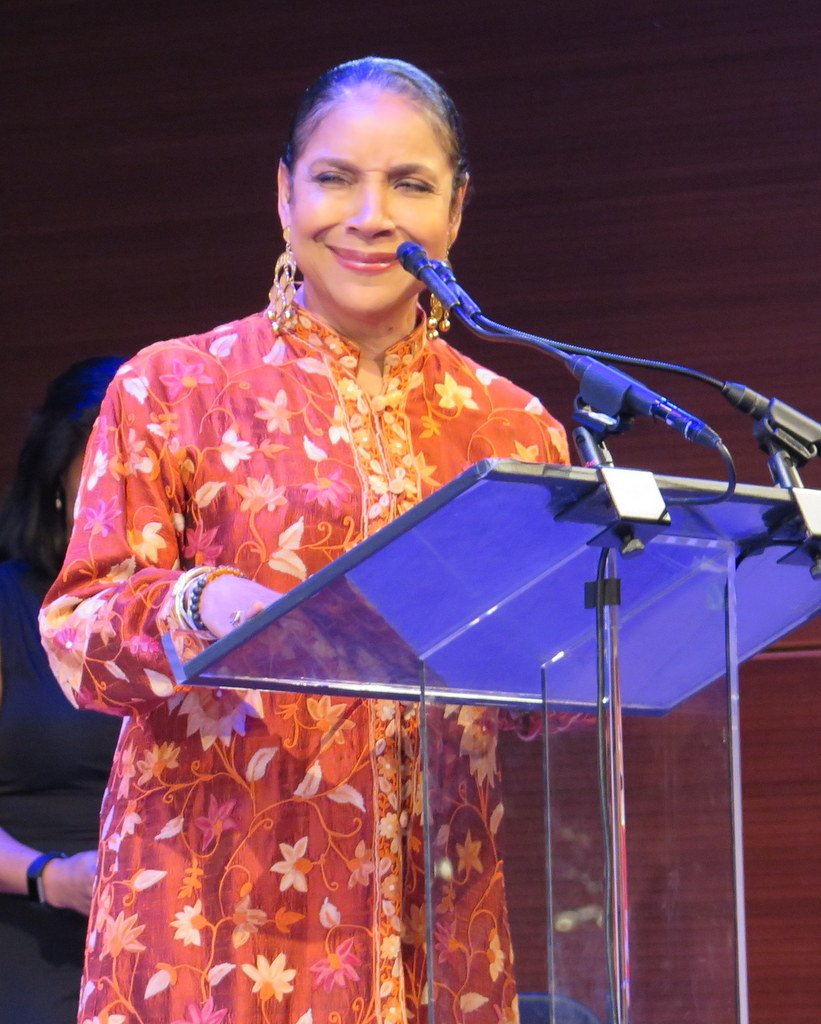
Phylicia Rashad received the Lifetime Achievement Award at LPTW Theatre Women Awards at the TimesCenter (Carole Di Tosti)
At the end of the evening a champagne toast heralded to celebrate the award winners and their presenters. Until another year! We’re looking forward to our members’ and exploits in 2018-2019. If you are currently a woman working in the theater globally as an actor, playwright, director, designer, consider viewing the LPTW website to check out their online community. This organization will help you network, meet individuals to spur on your career. Above all it encourages inclusion of women before we even were aware to ask for an “inclusion rider” in our contracts in the entertainment and theater industry. JUST DO IT!!! CLICK HERE FOR THE WEBSITE. Tweet @LPTWomen.
 CAROLE DI TOSTI