Blog Archives
Elevator Repair Service’s ‘Ulysses’ by James Joyce, a Review
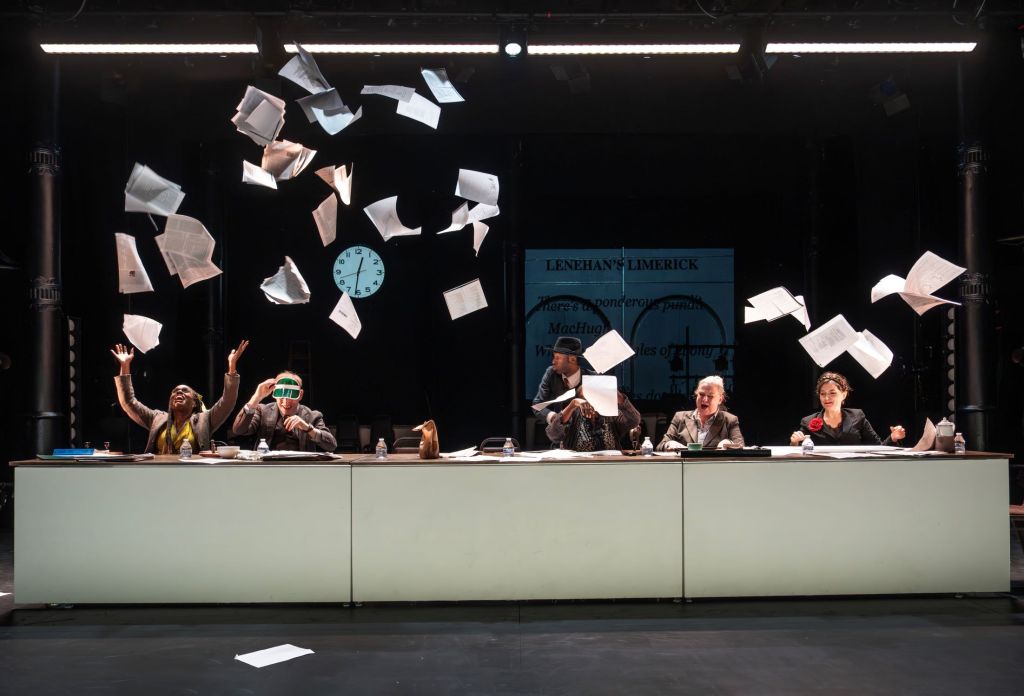
Elevator Repair Service became renowned when they presented Gatz, a verbatim six hour production of F. Scott Fitzgerald’s The Great Gatsby at the Public, as part of the Under the Radar Festival in 2006. Since their remarkable Gatz outing, they have followed up with other memorable presentations. It would appear they have outdone themselves with their prodigious effort in their New York City premiere of James Joyce’s opaque, complicated novel Ulysses. The near three-hour production directed by John Collins with co-direction and dramaturgy by Scott Shepherd, currently runs at The Public Theater until March 1, 2026.
At the top of the play Scott Shepherd introduces the play with smiling affability and grace. He directly addresses the audience, reminding them that “not much happens in Ulysses, apart from everything you can possibly imagine,” and that it happens in the span of a day beginning precisely at 8 a.m,, Thursday June 16, 1904 in Dublin, Ireland. Before Shepherd dons the character Buck Mulligan who appears at the beginning of the novel, he discusses that in the “spirit of confusion and controversy” (labels by critics), Joyce’s day in the life of three characters will be read with cuts in the text. Elevator Repair Service elected to remove Joyce’s text to redeem the time. The cuts are indicated by the cast “fast forwarding” over the narrative.
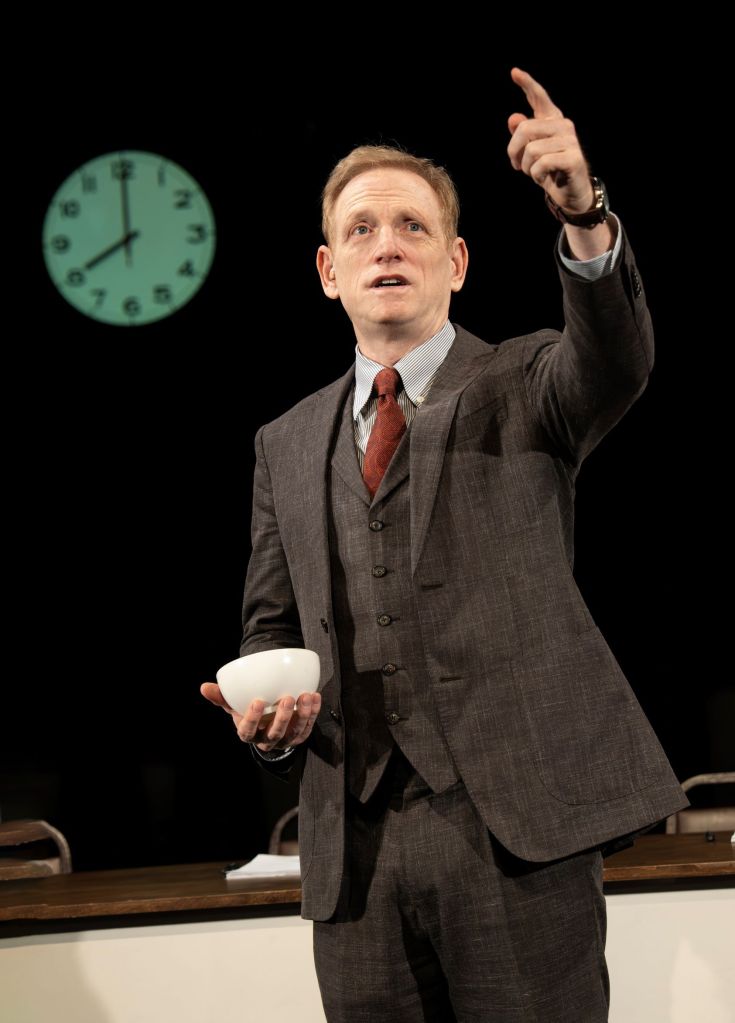
Collins and the creative team cleverly effect this “fast forwarding” with gyrating, shaking movement and action. Ben Williams’ design replicates the sound of a tape spinning forward. To anyone who may be following along with their own copy of the novel, the “fast forward” segments are humorous and telling. However, the cuts pare away some of the details and depths of character Joyce thought vital to include in his parallel of Dublin figures with the most important characters of the Odyssey: home returning hero Odysseus, long-suffering wife, Penelope, and warrior son, Telemachus.
After Shepherd’s introduction, Ulysses moves from a sedentary reading with multiple actors into a fully staged and costumed production as it progresses through the day’s events principally following Stephen Dedalus (Chisopher-Rashee Sevenson), who represents Telemachus, Leopold Bloom (Vin Knight), as Odysseus, and Molly Bloom (Maggie Hoffman) as Penelope.
The events illuminate these characters, and the cast superbly theatricalizes the novel’s humor, whimsy and farce. Some scenes more successfully realize Joyce’s playfulness and wit better than others. For example when Bloom decides to go to another pub after seeing the sloppy, gluttonous patrons of the first bar, the cast revels in portraying the slovenly, grotesque Dubliners. slobbering over their food. Additionally, the scene where Bloom faces his deepest anxieties shows Knight’s Bloom giving birth to “eight male yellow and white children.” Director Collins hysterically stages Bloom’s “labor” with Knight in the birthing position, legs apart, as Shepherd “catches” eight baby dolls he then throws to the attending cast members.
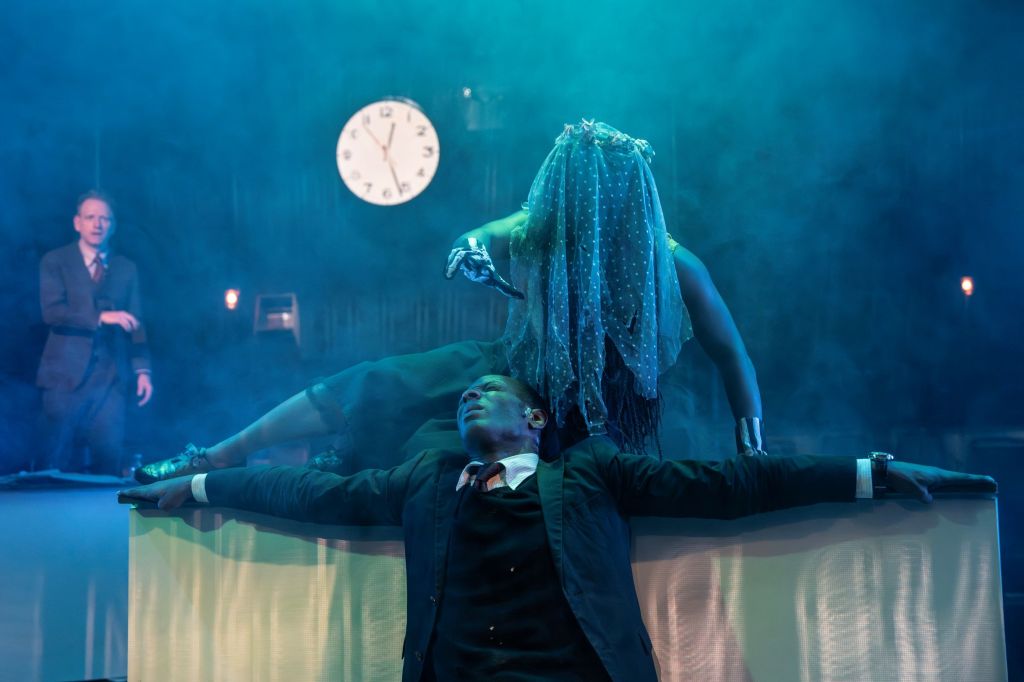
As costumes and props are added to the staging, we understand Leopold Bloom’s persecution as an outsider and a Jew. Also, wee note Stephen Dedalus as the writer/poet outsider who eventually joins Bloom, a father figure, who Bloom takes home for a time until Dedalus leaves to wander the night alone. Chistopher-Rashee Stevenson portrays the young Dedalus, a teacher whose unworthy friends lead him to drink and misdirection. Dedalus grieves his recently deceased mother and toward the end of the play has a nightmare visitation by her frightening, judgmental ghost.
For those familiar with the novel, the cast becomes outsized in rendering the various Dubliners that Knight’s Bloom and Stevenson’s Dedalus encounter. The dramatization is ultimately entertaining. We identify with Bloom as an Everyman, an anti-hero, who tries to get through the day in peace, while dismissing the knowledge that his wife Molly cuckolds him. Though he hasn’t been intimate with her since their baby Rudy died, he is unsettled that she conducts an affair with Blazes Boylan in their marriage bed at home. Somehow, Bloom has discovered that Molly who is a singer will be meeting with Boylan at 4 p.m. that afternoon. On his journey through the day he avoids confronting Boylan as they carry on with their activities around Dublin.
The ironic anti-parallel to the Odyssey, on the one hand, is that Molly Bloom is far from a Penelope who physically remained loyal to Odysseus, where Molly has an affair. On the other hand, late at night as Bloom sleeps with his feet awkwardly next to her face, we understand that Molly still loves Bloom and is emotionally and intellectually loyal. In her stream of consciousness monologue, seductively delivered by Maggie Hoffman, Molly arouses herself with memories of her relationship with Bloom when they were first together. It was then that she transferred a seed-cake from her mouth to his, sensually expressing her love.
Collins’s staging of the scene is humorous and profound. It defines why Molly has been present in Bloom’s consciousness throughout his strange journey traversing the streets of Dublin until he eventually finds his way home to her bed later that evening.
For those unfamiliar with Joyce’s novel, they will find the events and people a muddled hodgepodge that clarifies then becomes opaque, like a light switch turning on and off. Characters swap places with each other as seven actors take on numerous parts in a sometimes confusing array. Only Bloom, Dedalus and Molly stand out, true to Joyce’s vision for Ulysses for they embody Joyce’s themes about life. Thus, Bloom and Dedalus move through the day with flashes of brilliance, revelation, connection, irony and dread. Their reactions interest us. And Molly Bloom in her ending monologue puts a capstone on the vitality and beauty of a women’s perspective, as she experiences the sensuality and power of love for Bloom through reminiscence.
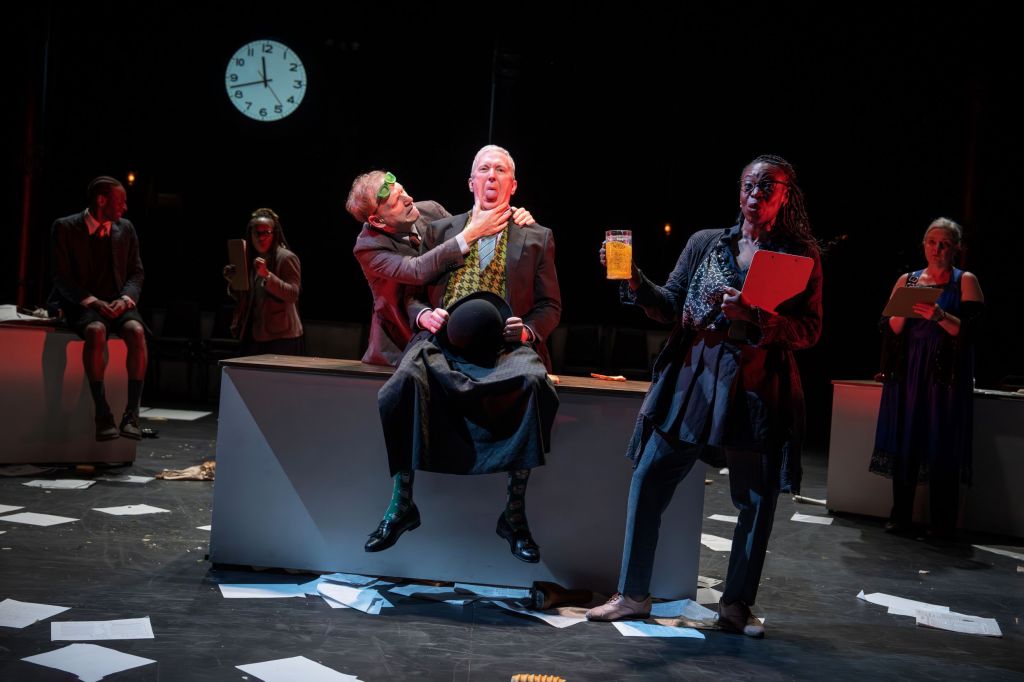
The costume design by Enver Chakartash reflects the time period with a fanciful modernist flourish that gives humor and depth to the personalities of the characters. For example Blazes Boylan (Scott Shepard) who has the affair with Molly wears a straw hat, outrageous wig and light suit that aligns with his jaunty gait. The scenic design by DOTS is minimalist and functional as is Marika Kent’s lighting design and Mathew Deinhart’s projection design. Most outstanding is Ben Williams’ acute, specific sound design which brings the scenes to life and follows the text adding fun and delight.
By the conclusion the audience is spent following the challenge of recognizing Joyce’s Dublin and the three unusual intellectuals and artists who he chooses to explore. Elevator Repair Service has elucidated the novel beyond what one might endeavor to understand reading it on one’s own. Importantly, they’ve made Ulysses an experience to marvel at and question.
Ulysses runs 2 hours 45 minutes with one intermission at the Public Theater through March 1, 2026. https://publictheater.org/productions/season/2526/ulysses
‘Van Gogh’s Flowers’ at New York Botanical Garden is Magnificent



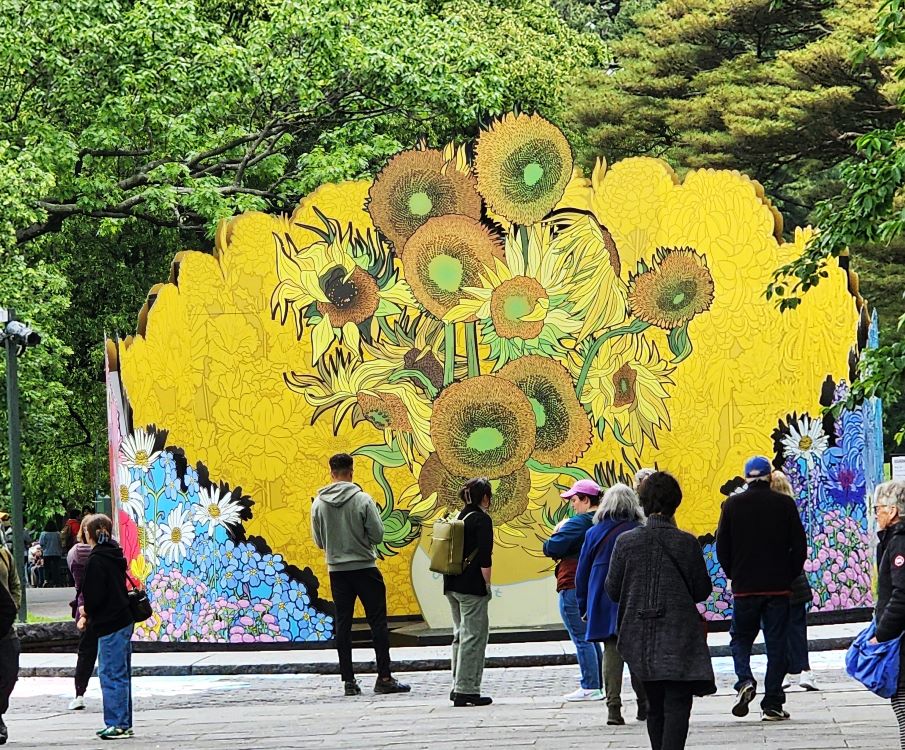
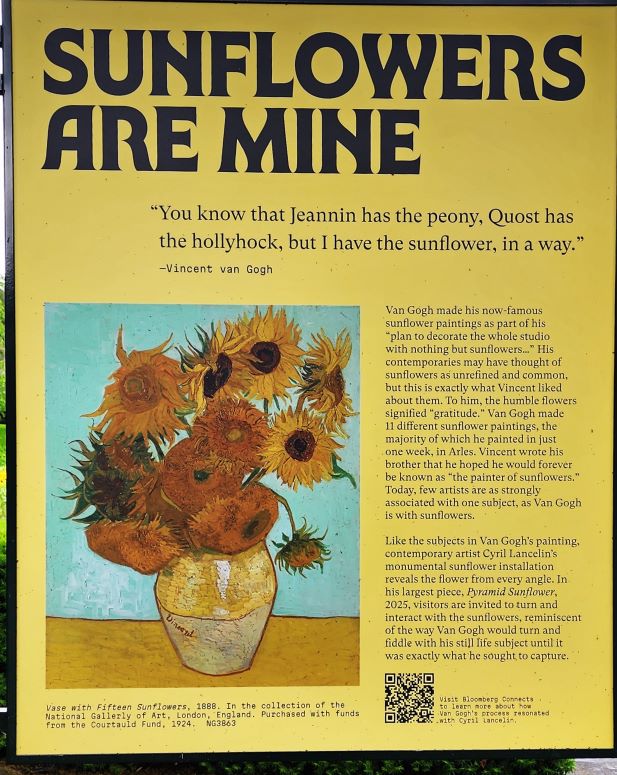
Van Gogh’s Flowers (May 24 through October 26, 2025)
Vincent van Gogh needs no introduction to art lovers. Happily, for them and even for those not acquainted with the iconic painter, the New York Botanical Garden’s spring exhibit Van Gogh’s Flowers is stunning. The memorable exhibit celebrates the work of the Dutch painter who decided to become an artist at 27-years-old.


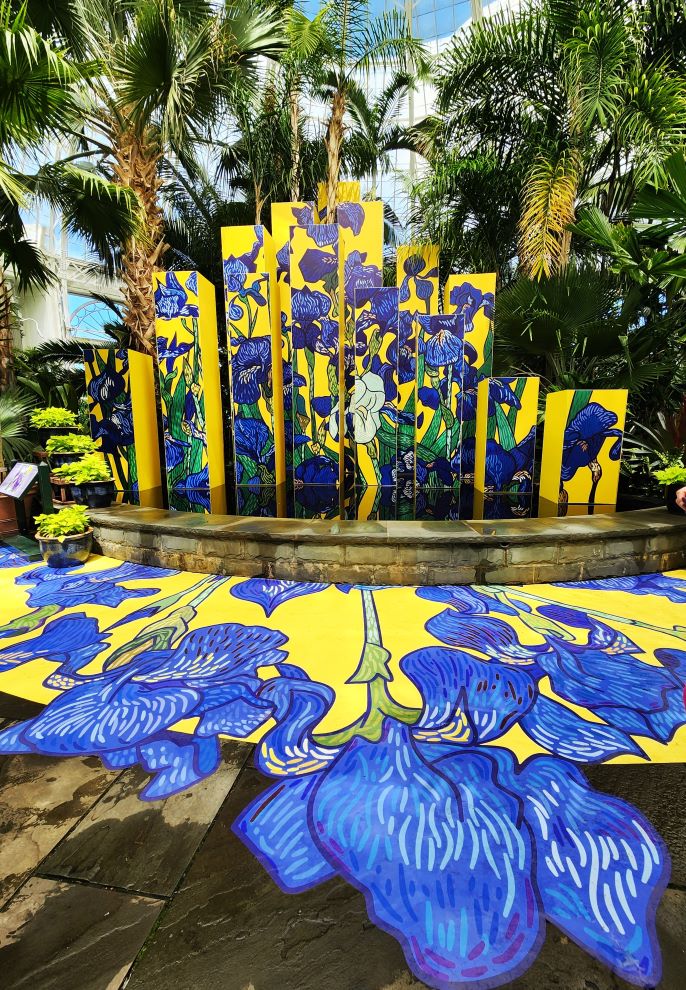
His was a decision that changed his life and the art world forever, according to the Vincent Van Gogh Museum in its discussion of Van Gogh’s life and journey toward the elusive greatness he never was able to realize while he was alive. Van Gogh’s Flowers runs from May 24 through October 26, 2025. The exhibit is not to be missed, principally because it highlights the way Van Gogh captured still lifes of flowers through his unique expression of color, light and form.

Reading through the stories of Van Gogh listed with various paintings on the Van Gogh Museum’s website, one is able to discover interesting facts about the junction of Van Gogh’s life and work. On the subject of flowers, the museum contains some of his floral still lifes. It’s fun to compare them with the specific paintings that inspired artists Amie J. Jacobsen, Graphic Rewilding’s Catherine Borowski and Lee Baker, and immersive artist, Cyril Lancelin.


All three contemporary artists contribute to the NYBG exhibit Van Gogh’s Flowers using their own mediums of expression.
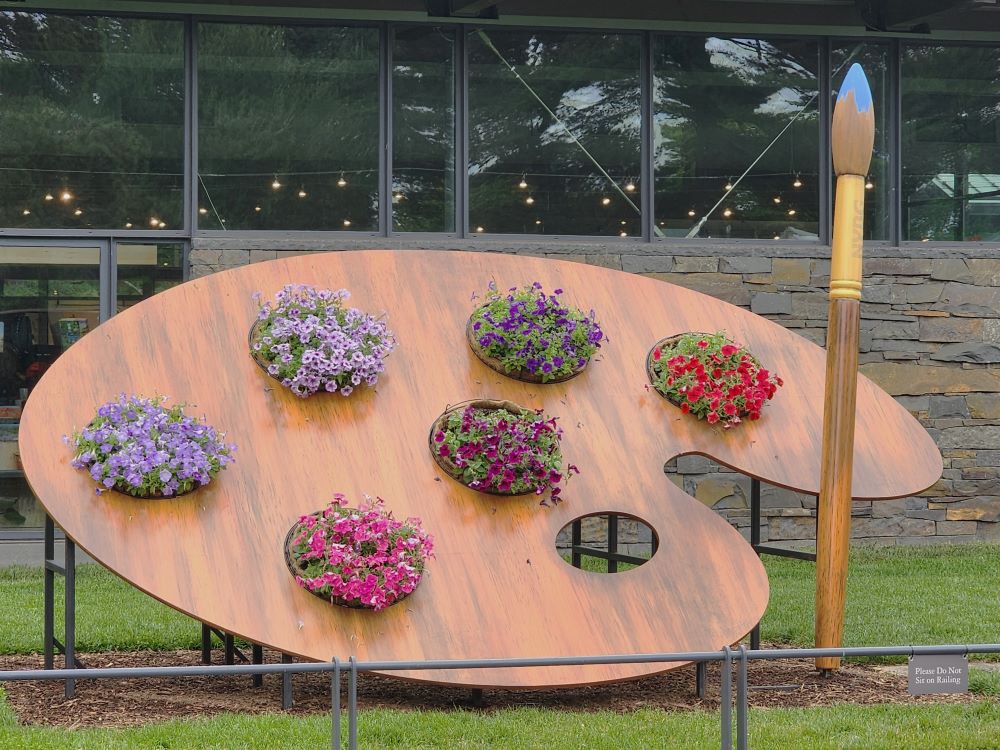
Visiting NYBG Van Gogh’s Flowers, one will want to read all of the signage with the quotes Van Gogh spoke during his lifetime to learn more about the mythic painter. The signage also pinpoints the designs of the featured artists found in the Enid A Haupt Conservatory walkways, in the indoor and outdoor reflecting pools and in the great plaza lawn. Van Gogh’s influence on them and on artists globally is a study in genius and the immutable verities that touch humanity and ground it in the pleasure of beauty and nature to move our souls out of ourselves into another way of being and consciousness.

Apparently, along his journey, Van Gogh painted flowers as a commercial venture, as he heard that such paintings were popular and lucrative. In Paris Van Gogh painted over 35 still life paintings of flowers, hoping that they would sell.


However, he had little luck selling them even though paintings of flowers were trending. His brother Theo wrote to their mother telling her that to help him, acquaintances would bring flowers for Van Gogh to paint every week.

After he ventured to the South of France, Van Gogh, whose intellect and mentality were always fragile, had a breakdown. It took him about a year to recover in a sanatorium at Saint-Rémy-de-Provence where he painted scenes he saw from his room. Interestingly, he didn’t paint the bars on the windows, perhaps signifying that in his creative spirit he was free as he was in his paintings as his mode of expression. Before and after recovering from his extended illness Van Gogh painted sunflowers (in Arles nearby), which to him symbolized gratitude. He used the color yellow extensively delighting in it. These and other details are found on the signage of the NYBG exhibit.
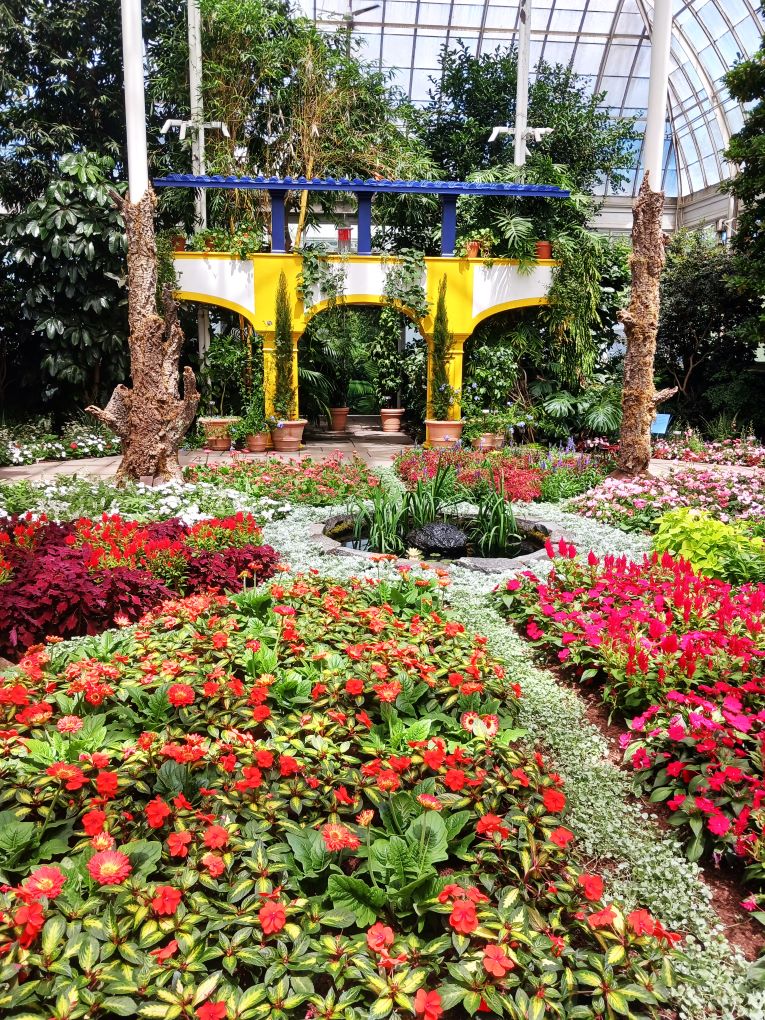
The NYBG exhibit features a placard of Van Gogh’s painting of the courtyard of the hospital at Saint-Rémy-de-Provence where Van Gogh found rest and recuperated as best he could. The showcase rotunda of the Enid A. Haupt conservatory features a reflection of Van Gogh’s courtyard painting with a similar structure suggested and the amazing plantings which are in a circular arrangement segmented florally like the spokes of a wheel. Just breathtaking.

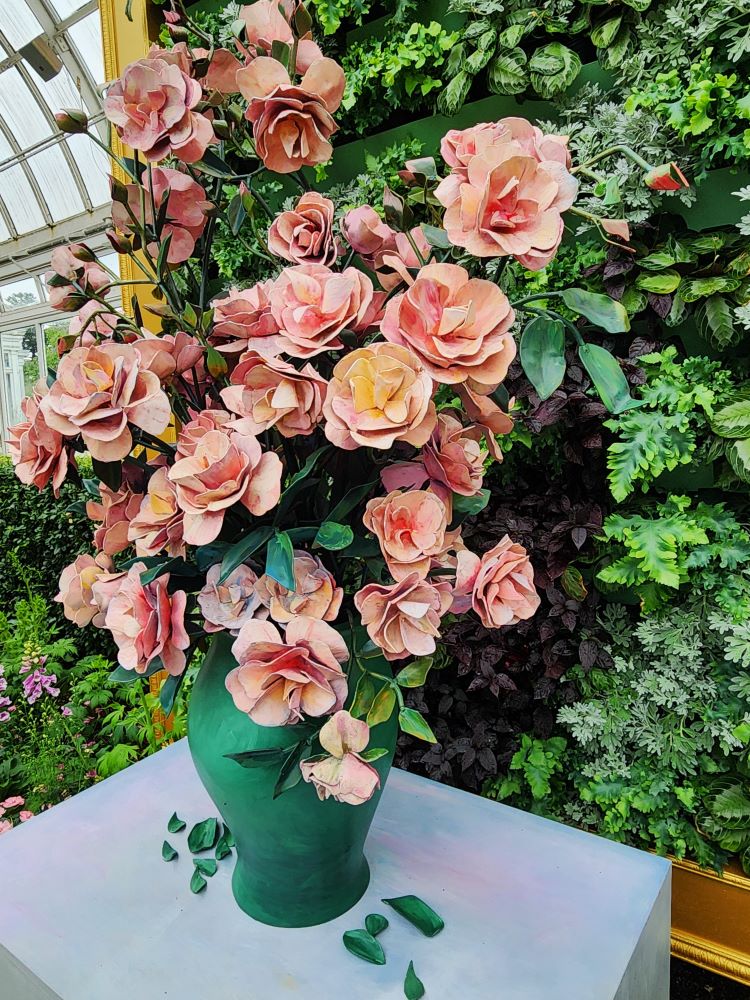
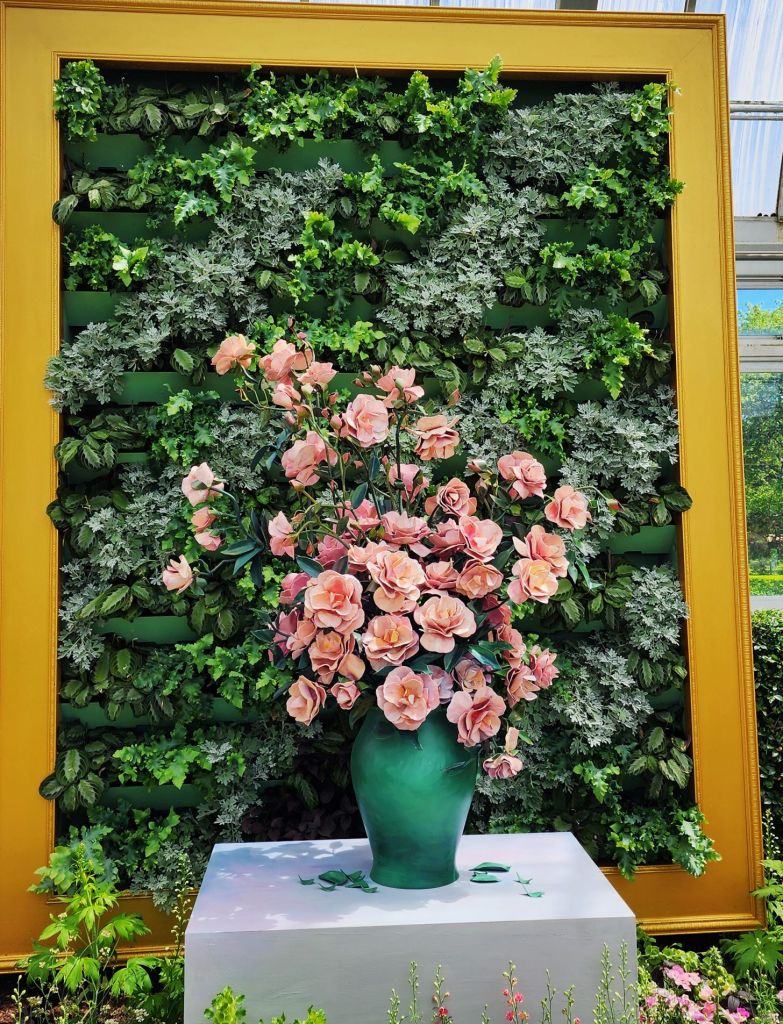
At the Garden, the paintings that inspired the artists Amie J. Jacobsen, Catherine Borowski and Lee Baker, and Cyril Lancelin are brought to life situated in gorgeous botanical displays along with the contemporary artists’ work.

Thanks to Cyril Lancelin, visitors can walk along a pathway that meanders through plantings of real and sculptured sunflowers (by Lancelin), a symbolic reflection of what Van Gogh found healing and restorative. For him sunflowers meant “gratitude.”

Vincent left the mental hospital in May 1890, he headed north to Auvers-sur-Oise. He met several artists there and continued painting fields, always using his beloved yellow. Then, one day in agitation, the story goes, he shot himself in a wheat field and died of his wounds some days later.

Van Gogh’s incredible legacy was a large body of art works: over 850 paintings and almost 1,300 works on paper. Visitors to NYBG’s Van Gogh’s Flowers will come to a new appreciation of how the natural world inspired Van Gogh. Most museums boast at least two or three of Van Gogh’s paintings which at auction command millions of dollars. In 1987 one version of Sunflowers sold for $37. 85 million. Today, those in the art world suggest the sunflower series of paintings would be in the hundreds of millions.
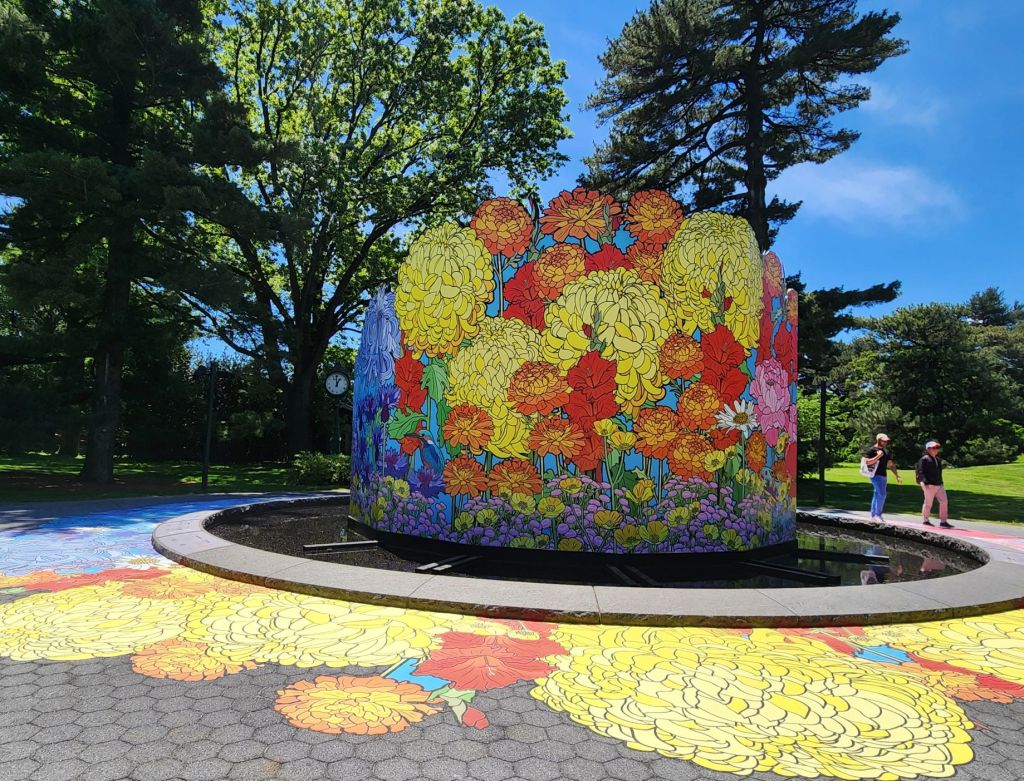

This amazing NYBG exhibit is a complete celebration of Van Gogh reflected in all of its programming. Complementary daytime programming on select dates during Van Gogh’s Flowers will offer engaging, interactive experiences, such as “Plein Air Drop-In and Paint,” engaging NYBG visitors’ creativity.
On select dates, Starry Nights will offer exhibition viewing in the glow of evening, with music and performers, drinks and food available for purchase. Conditions-permitting, after-dark Van Gogh-themed drone shows will take place on May 30, 31st and June 6th. These shows are New York City’s first at a cultural institution—bringing Starry Night to life before your eyes.
Finally, visitors can immerse themselves in the LEGO Botanical Garden pop-up. They can enjoy the hands-on make-and-take experience including a mini-Van Gogh sunflower creation.
For more information about this wonderful show and programming during the exhibit, go to the website, https://www.nybg.org/event/van-goghs-flowers/?gad_source=1&gad_campaignid=22428050313
 CAROLE DI TOSTI