Blog Archives
‘The Baker’s Wife,’ Lovely, Poignant, Profound
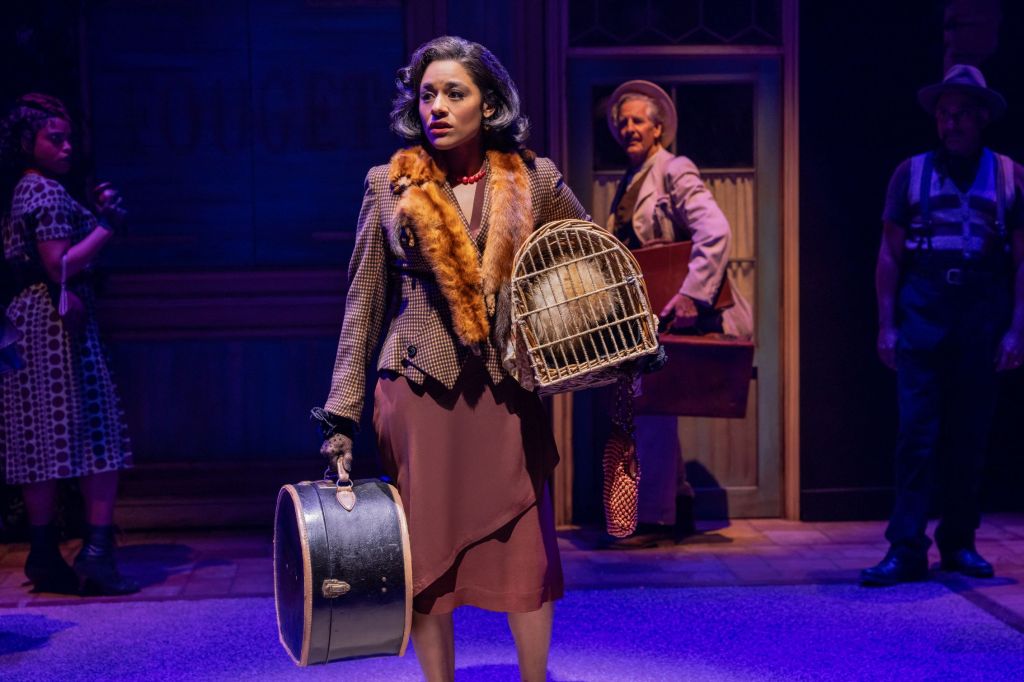
It is easy to understand why the musical by Stephen Schwartz (music, lyrics) and Joseph Stein (book) after numerous reworkings and many performances since its premiere in 1976 has continued to gain a cult following. Despite never making it to Broadway, The Baker’s Wife has its growing fan club. This profound, beautiful and heartfelt production at Classic Stage Company directed by Gordon Greenberg will surely add to the fan club numbers after it closes its limited run on 21 December.
Based on the film, “La Femme du Boulanger” by Marcel Pagnol (1938), which adapted Jean Giono’s novella“Jean le Bleu,” The Baker’s Wife is set in a tiny Provençal village during the mid-1930s. The story follows the newly hired baker, Aimable (Scott Bakula), and his much younger wife, Geneviève (Oscar winner, Ariana De Bose). The townspeople who have been without a baker and fresh bread, croissants or pastries for months, hail the new couple with love when they finally arrive in rural Concorde. Ironically, bread and what it symbolically refers to is the only item upon which they readily agree.
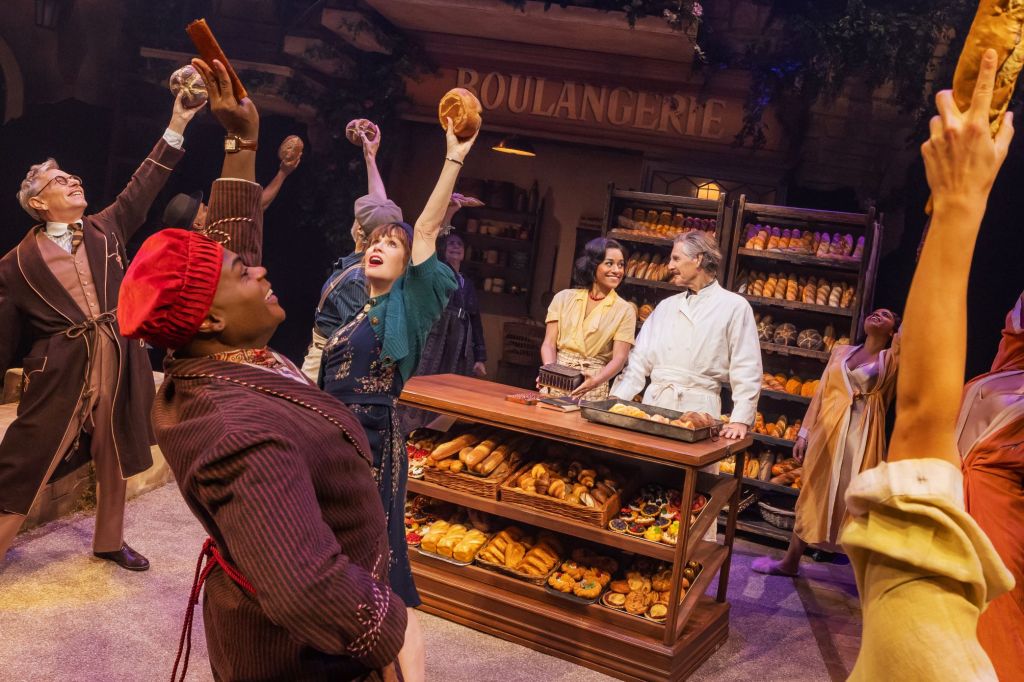
If you have not been to France, you may not “get” the community’s orgasmic and funny ravings about Aimable’s fresh, luscious bread in the song “Bread.” A noteworthy fact is that French breads are free from preservatives, dyes, chemicals which the French ban, so you can taste the incredible difference. The importance of this superlative baker and his bread become the conceit upon which the musical tuns.
Schwartz’s gorgeously lyrical music and the parable-like simplicity of Stein’s book reaffirm the values of forgiveness, humility, community and graciousness as they relate to the story of Geneviève. She abandons her loving husband Aimable and runs away to have adventures with handsome, wild, young Dominique (Kevin William Paul), the Marquis’ chauffeur. When the devastated Aimable starts drinking and stops making bread, the townspeople agree they cannot allow Aimable to fall down on his job. The Marquis (Nathan Lee Graham), is more upset about losing Aimable’s bread than the car Domnique stole.
Casting off long held feuds and disagreements, they unite together and send out a search party to return Geneviève without judgment to Aimable, who has resolved to be alone. Meanwhile, Geneviève decides to leave Dominique who is hot-blooded but cold-hearted. In a serendipitous moment three of the villagers come upon Geneviève waiting to catch a bus to Marseilles. They gently encourage her to return to Concorde, affirming the town will not judge her.
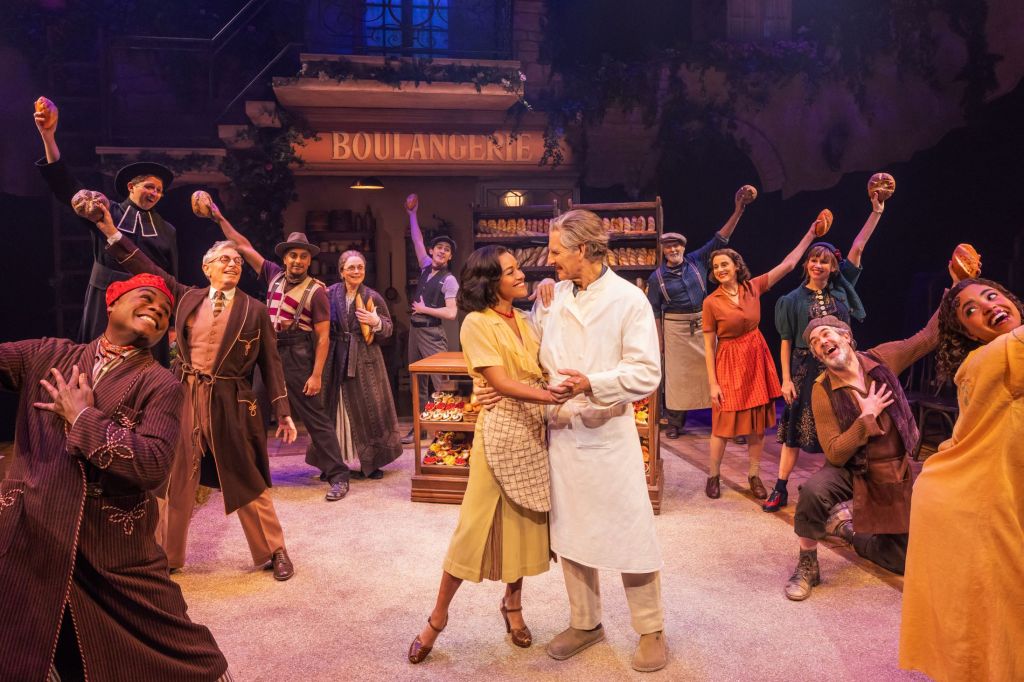
She realizes she has nowhere to go and acknowledges her wrong-headed ways, acting like Pompom her cat who also ran off. Geneviève returns to Aimable for security, comfort and stability, and Pompom returns because she is hungry. Aimable feeds both, but scolds the cat for running after a stray tom cat in the moonlight. When he asks Pompom if she will run away again, DeBose quietly, meaningfully tells Bakula’s Aimable, she will not leave again. The understanding and connection returns metaphorically between them.
Director Gordon Greenberg’s dynamically staged and beautifully designed revival succeeds because of the exceptional Scott Bakula and perfect Ariana DeBose, who also dances balletically (choreography by Stephanie Klemons). DeBose’s singing is beyond gorgeous and Bakula’s Aimable resonates with pride and poignancy The superb ensemble evokes the community of the village which swirls its life around the central couple.
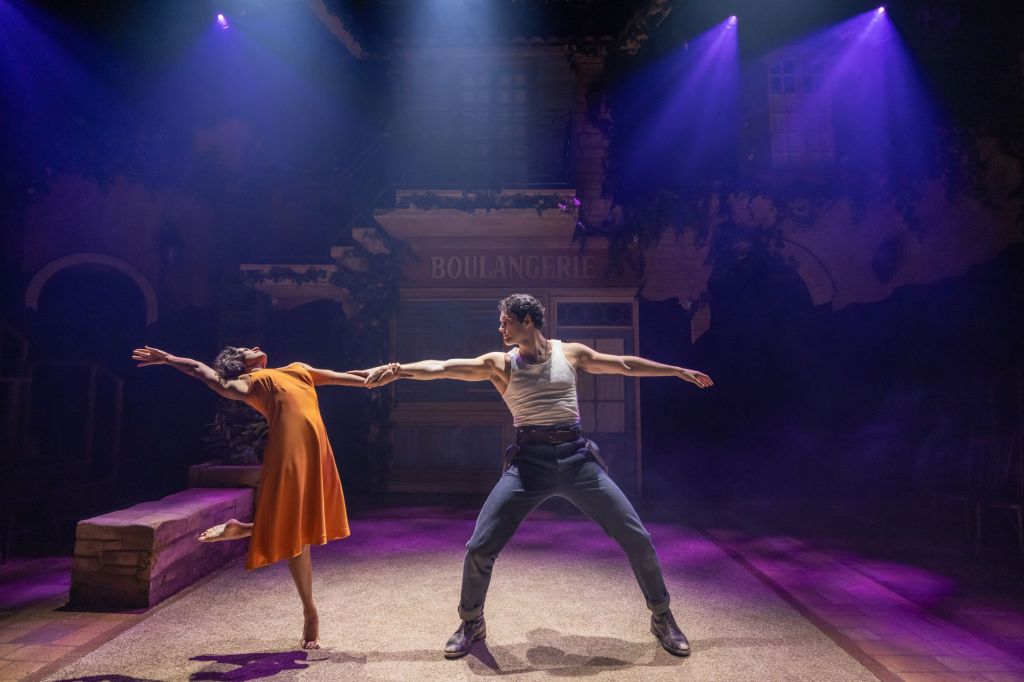
Greenberg’s acute, well-paced direction reveals an obvious appreciation and familiarity with The Baker’s Wife. Having directed two previous runs, one in New Jersey (2005), the other at The Menier Chocolate Factory in London (2024), Greenberg fashions this winning, immersive production with the cafe square spilling out into the CSC’s central space with the audience on three sides. The production offers the unique experience of cafe seating for audience members.
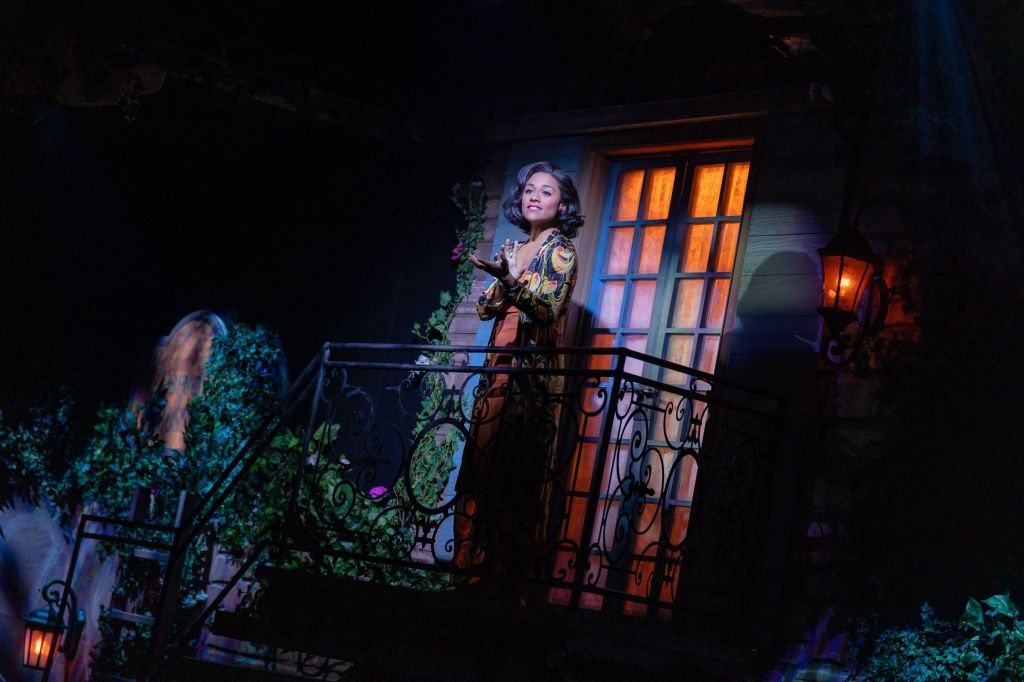
Jason Sherwood’s scenic design creates the atmosphere of the small village of Concorde with ivy draping the faux walls, suggesting the village’s quaint buildings. The baker’s boulanger on the ground floor at the back of the theater is in a two-story building with the second floor bedroom hidden by curtains with the ivy covered “Romeo and Juliet” balcony in front. The balcony features prominently as a device of romance, escape or union. From there DeBoise’s Geneviève stands dramatically while Kevin William Paul’s Dominique serenades her, pretending it is the baker’s talents he praises. From there DeBoise exquisitely sings “Meadowlark.”
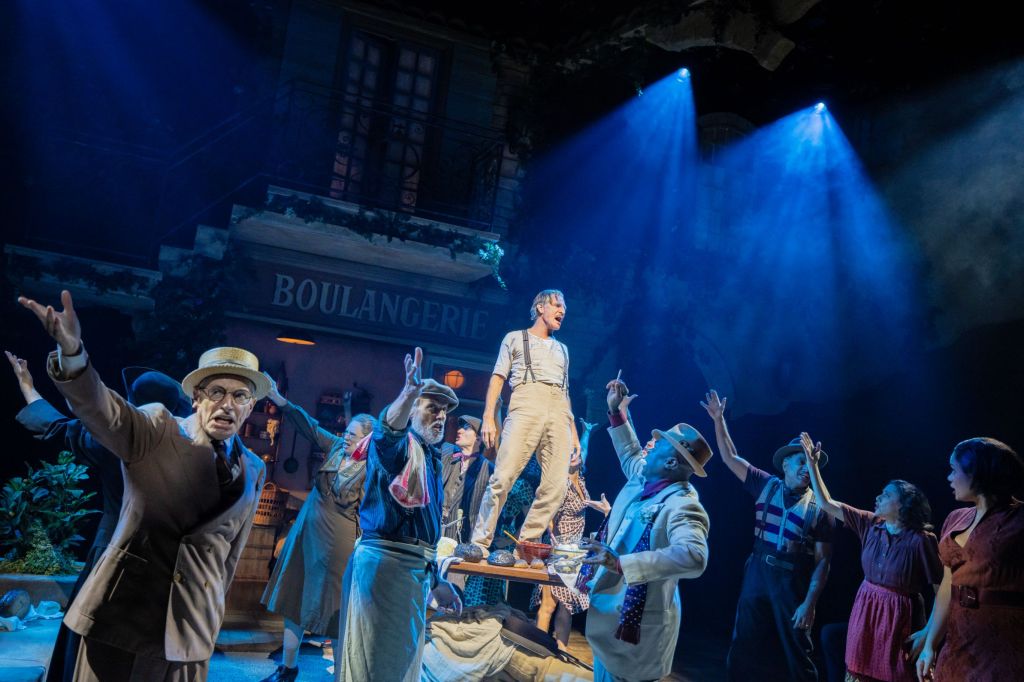
Greenberg’s vision for the musical, the sterling leads and the excellent ensemble overcome the show’s flaws. The actors breathe life into the dated script and misogynistic jokes by integrating these as cultural aspects of the small French community of Concorde in the time before WW II. The community composed of idiosyncratic members show they can be disagreeable and divisive with each other. However, they come together when they attempt to find Geneviève and return her to Aimable to restore balance to their collective, with bread for their emotional and physical sustenance.
All of the wonderful work by ensemble members keep the musical pinging. Robert Cuccioli plays ironic husband Claude with Judy Kuhn as his wife Denise. They are the cafe owning, long married couple, who serve as the foils for the newly married Aimable and Geneviève. They provide humor with wise cracks about each other as the other townspeople chime in with their jokes and songs about annoying neighbors.
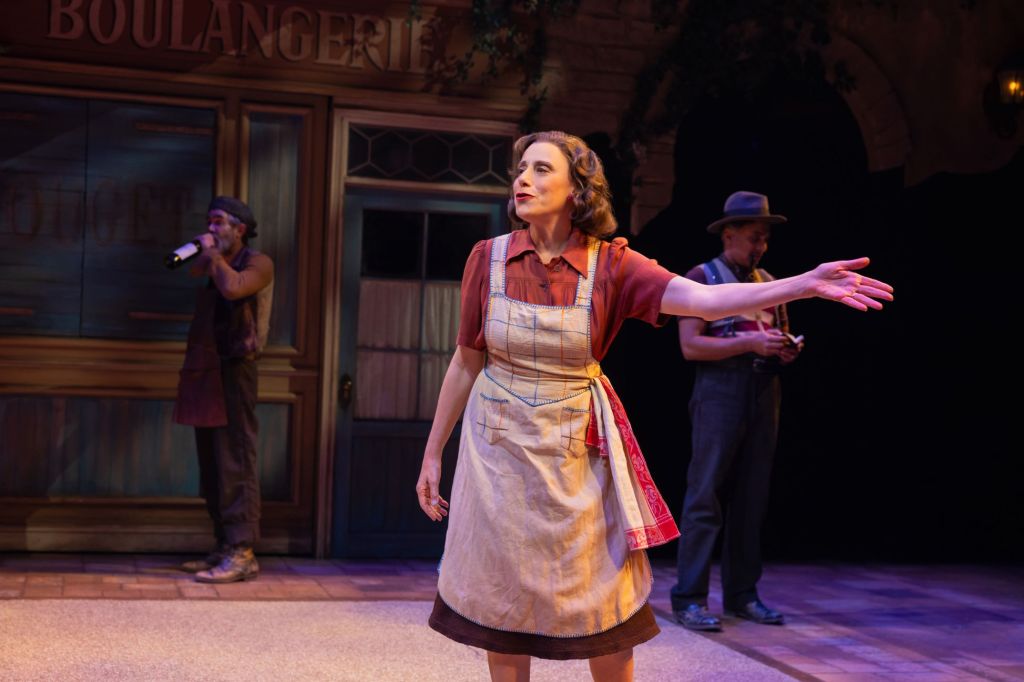
Like the other townspeople, who watch the events with the baker and his wife and learn about themselves, Claude and Denise realize the lust of their youth has morphed into love and great appreciation for each other in their middle age. Kuhn’s Denise opens and closes the production singing about the life and people of the village who gain a new perspective in the memorable signature song, “Chanson.”
The event with the baker and his wife stirs the townspeople to re-evaluate their former outlooks and biased attitudes. The women especially receive a boon from Geneviève’s actions. They toast to her while the men have gone on their search, leaving the women “without their instruction.” And for the first time Hortense (Sally Murphy), stands up to her dictatorial husband Barnaby (Manu Narayan) and leaves to visit a relative. She may never return. Clearly, the townspeople inch their way forward in getting along with each other, to “break bread” congenially as a result of an experience with “the baker and his wife,” that they will never forget.
The Baker’s Wife runs 2 hours 30 minutes with one intermission at Classic Stage Company through Dec. 21st; classicstage.org.
‘The Queen of Versailles,’ Fabulous Kristin Chenoweth Makes Dreams Realities
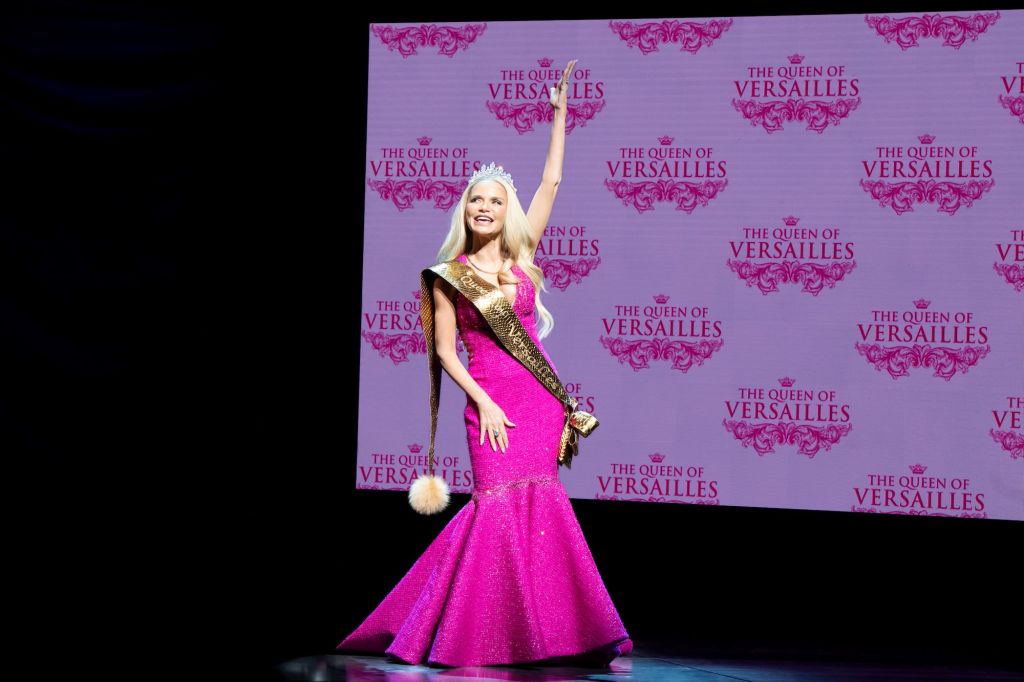
If the road to excess leads to the palace of wisdom (quote by English poet William Blake), do people know when they’ve reached their limit? When is enough enough? According to the themes of the new musical The Queen of Versailles, currently at the St. James Theatre, knowing this depends upon the seeker.
In the clever, sardonic musical, based on Lauren Greenfield’s titular documentary film and the life stories of Jackie and David Siegel, the question of excess and how to measure it shines into the darkness of American culture, conspicuous consumption, surgically enhanced, plastic looks, and meretricious values. With an ironic, humorous, no holds barred book by Lindsey Ferrentino, and music and lyrics by Stephen Schhwartz, the Siegel’s riches to more riches story, including the 2008 mortgage debacle, takes center stage. By the conclusion, the audience leaves shaken and maybe stirred, either with a bad taste in their mouths or with the prick of guilt in their consciences.
At its finest, The Queen of Versailles inspires the audience to peer into their own values and behavior and evaluate their souls to correct. Ultimately, it asks, do the Siegels have a worthwhile life or have they allowed their childhood poverty to overwhelm their good sense and inner emotional well being? Despite its ripe fun Ferrentino’s book and Schwartz’s music encourage a hard look at crass, materialistic greed that blinds the rich from using their largess for the social good. Lastly, it questions do the representative Siegels count the cost to live the oversized billionaire’s lifestyle which causes harm? To what extent has their craven indulgence choked off their lifeblood to their own destruction?
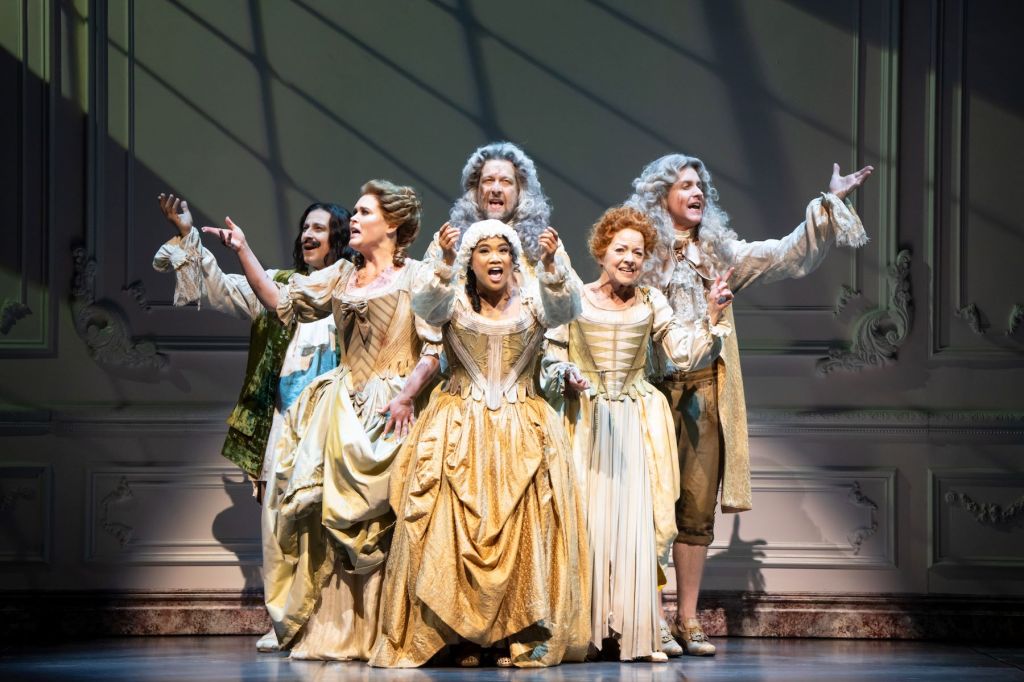
Starring an endearing, heartfelt and bubbly Kristin Chenoweth as the materially insatiable Jackie Siegel, and F. Murray Abraham as billionaire workaholic David Siegel, the New York premiere which has an end date of March 29, 2026, rings with disturbing truths. It’s farcical, dark elements present many themes. Chief among them is the theme that the Siegel’s shiny ostentation hides a sad emptiness that can never be fulfilled.
Framing the Siegel’s story with the key meme of Versailles, the mansion in France that 17th century Louis XIV, built as a memorial to his majesty, the opening scene and song (Pablo David Laucerica is King Louis XIV) replete with period chandeliers, furniture, costumed butlers and maids reveals how and why the Sun King built his palace on swampland (“Because I Can”). Without giving thought to the inequities in French society that necessitated the economic gap between royalty and its impoverished, destitute subjects, Jackie and David want one.
In a quick switch to the present (2006) we see the Siegel’s Versailles in progress. With construction scaffolding in the background and a documentary film crew in the foreground, Chenoweth’s Jackie glows as she sings “we want to have the very best for the biggest home in America because we can.” The fluid set design with appropriate props and pieces by Dane Laffrey, who also does the video design, brings perfect coherence to the Siegel’s intentions. It connects the idea of royal wealth manifest in Louis XIV’s lavish excess to their rich/famous lifestyle which reeks of tawdriness. Thanks to Michael Arden’s staging and direction and Cristian Cowan’s costumes, and Cookie Jordan’s hair and wig design, the shifts from the present to the court of Louis XIV and back solidly establish the trenchant themes of this profoundly current musical.
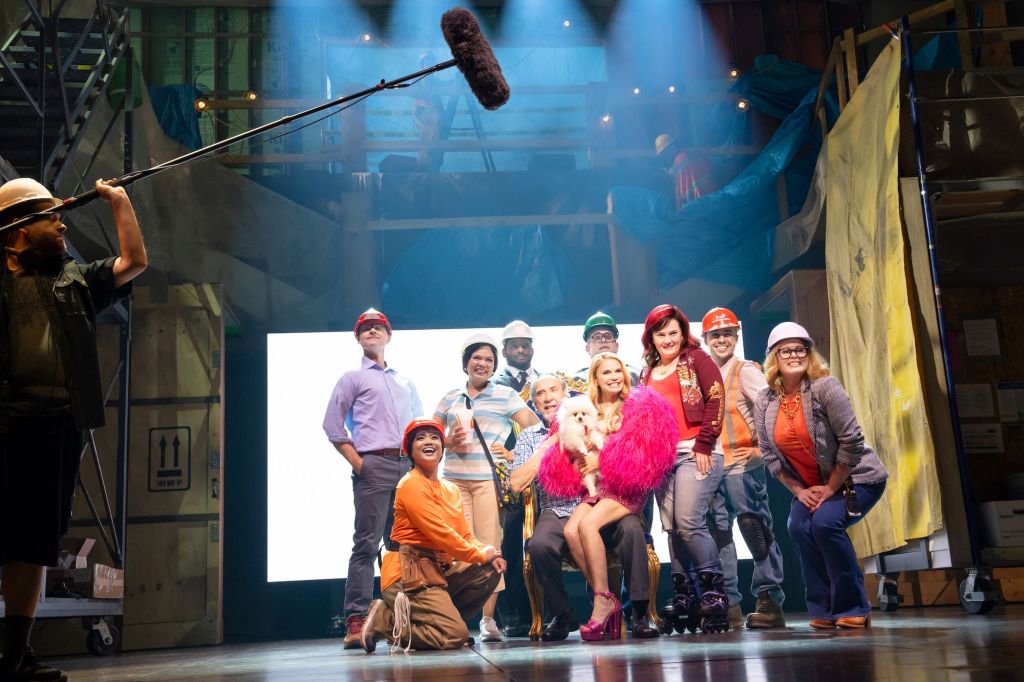
Presuming themselves American royalty, the Siegels hope to replicate a modern-day Versailles, like their mentor king. Indeed, they will best him. Their Versailles has whatever the family wants. This includes a jewelry-grade gem stone floor, an in-house Benihana (with all those tossed shrimp because David doesn’t like to stand on line), a spa, a pool with a stained glass roof, and a family wing with numerous bedrooms and bathrooms so Jackie doesn’t lose track of her seven kids.
After this opening salvo that mesmerizes like any show about the “lifestyles of the rich and presumptuous,” we discover that Jackie didn’t always come from wealth. In fact her story mirrors the old Horatio Alger “rags-to-riches” fable that Alger shaped into the American Dream, which abides today and which also influenced F. Scott Fitzgerald’s take on it in The Great Gatsby. Jackie, albeit a female dreamer, buys into the concept that if she pulls herself up with determination, works hard and does good works, she can lift herself into the upper classes.

We see how this manifests in the next segment of Chenoweth’s 17-year-old version of Jackie with her parents Debbie (Isabel Keating) and John (Stephen DeRosa) in their humble Endwell, New York home. Debbie and John count on Jackie to continue to work as many jobs as possible to become rich and famous like the titular show they watch together. Singing the song “Caviar Dreams,” a ballad that expresses beautifully a female Alger hero, we “get” Jackie’s drive and pluck to work day and night to achieve an engineering degree at IBM, then kick the job to the curb because it won’t give her wealth fast enough.
As she “keeps on thrustin” she makes a bold turn into marriage with alleged banker Ron (Michael McCorry Rose), who disappoints when he drags her to the Everglades, and opposes her Mrs. Florida win. When he physically abuses her, despite her pregnancy, Jackie leaves. Singing “Each and Every Day” beginning when Victoria is a baby, the scene switches to the present at the construction site and the teenage Victoria (the excellent Nina White) enters. Chenoweth’s Jackie soulfully finishes the song to Victoria in an important transitional moment. We understand Jackie as a survivor who loves her firstborn, who she claims saved her life.
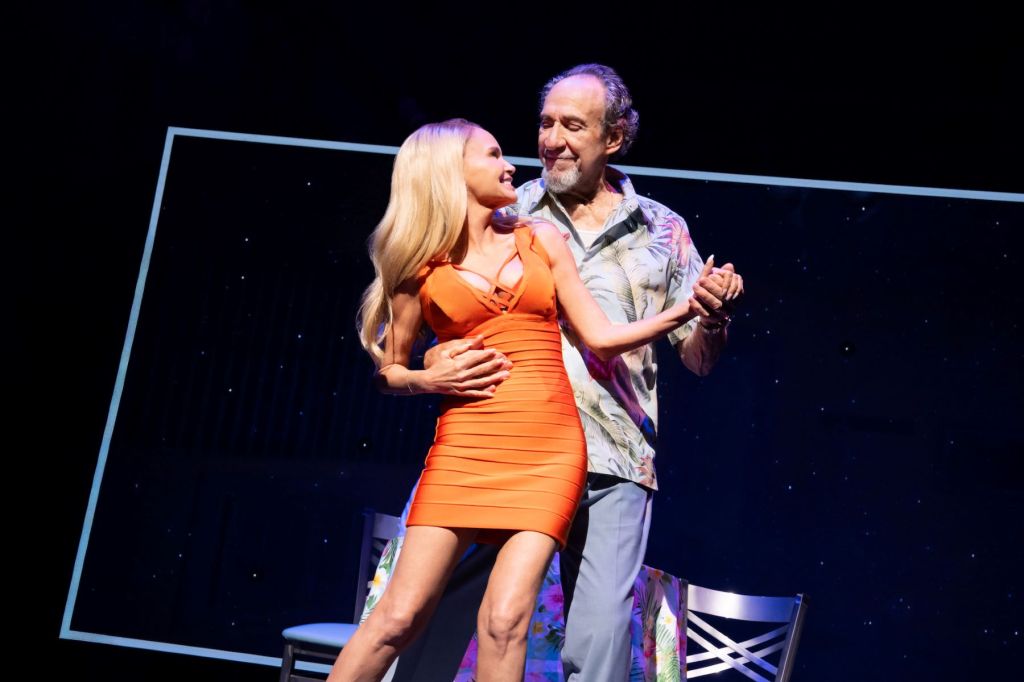
Not only does Jackie not look back, we learn she and baby Victoria lived in an apartment which “barely fit the baby’s crib and Jackie’s sleeping bag.” However, always “thrustin’ forward,” she recognizes opportunity when she goes to a party where she meets David Siegel, the CEO of Westgate Resorts. As it turns out, his impoverished childhood was similar to hers and left him with dreams of extreme wealth. F. Murray Abraham does justice to David throughout, first as a “cowboy” in the wild west of timeshares as son Gary (the fine Greg Hildreth) sings with the ensemble “The Ballad of the Timeshare King.” Occasionally, for emphasis, Abraham’s David chimes in with irony.
For example, David’s sales force make “one hundred percent of their sales on the first day.” Gary sings, “George W.’s president now, thanks to David Siegel.” When folks can’t afford the timeshare, Siegel helps them with financing from his bank, so the ensemble sings joyfully, “Yippee-I-owe-you-owe-we-owe.” We recognize the sardonic humor for David’s dishing out sub-prime mortgages to “anyone who breathes.” Of course this adds to the mortgage crises of 2008 which taxpayers foot the bill for. Eventually, the sub-prime loans bring his empire to the brink of bankruptcy as the crash swallows whole billionaires like David.

At that point, Jackie and David have been married with children and are two years into the Versailles construction having cycled through songs of their outsized wedding (“Trust Me”), a honeymoon trip to Versailles bringing back a scene of King Louis XIV and his courtiers. Smartly, Ferrentino and Schwartz reinforce their themes by joining past and present in the reprise “Because I Can and the “Golden Hour.”
However, conflict looms on the horizon. Though David and Jackie live their wildest dreams and birth child after child, daughter Victoria feels miserable, insular and ugly. “I know mom wishes I was prettier,” she sings in the poignant “Pretty Wins.” And in Act II in the superb “Book of Random” Victoria sings from her journal, the thoughts that she keeps hidden. Unlike her mother Victoria grounds herself in her current feelings of sadness brought on by reality, escapism fueled by drug addiction and scorn for their damaging and excessive lifestyle. However, when Jackie’s niece Jonquil (Tatum Grace Hopkins) arrives and Jackie takes her in, we think that Victoria has someone to confide in.
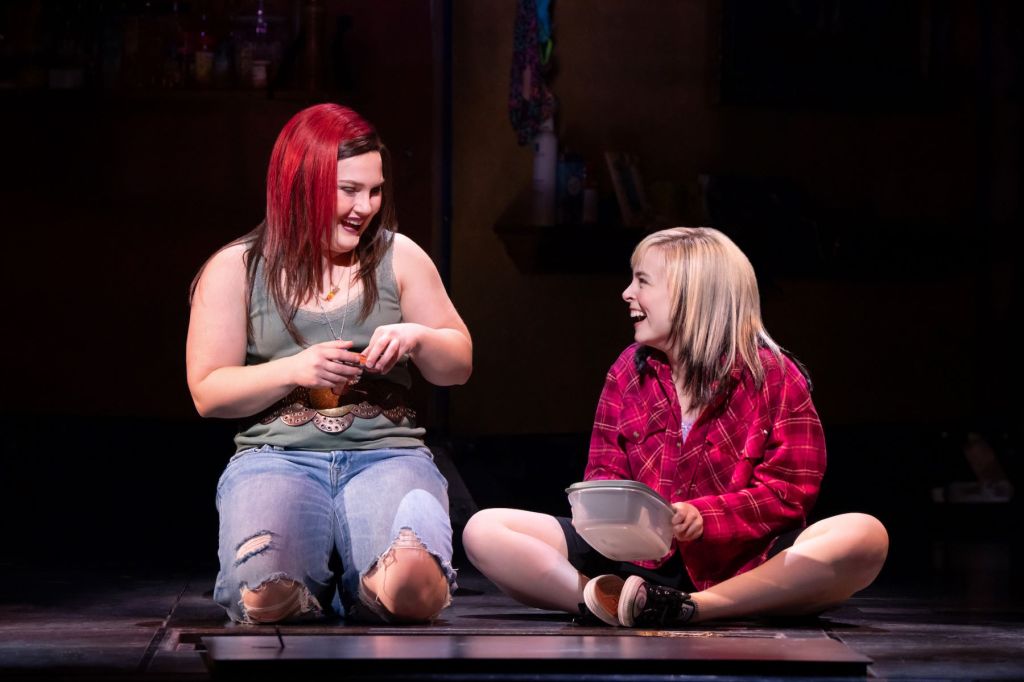
But Jonquil doesn’t understand Victoria’s dislike of Jackie’s appetite for more. And it doesn’t help Victoria that Jonquil becomes a clone of Jackie (“I Could Get Used to This.”). Ironically, when the crash happens and Victoria hears of the talk that they will sell Versailles to keep David from going belly up, she feels relief. In a farce-filled scene in the 17th century Versailles, with some of the most ironic lyrics, the Sun King chides the Siegels and Americans in the song “Crash.” “You thought you’d be egalitarian, let peasants own their own homes in some altruistic plan. Well, what were you expecting from a choice so rash? Crash…”
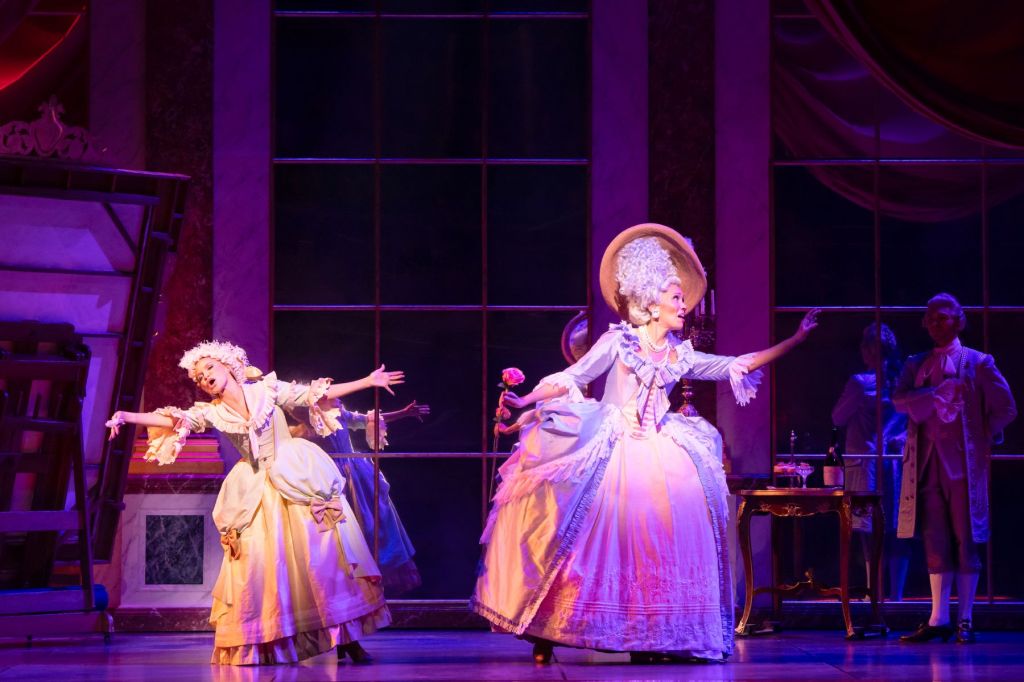
At the end of Act I, we have only Jackie’s spunk and perseverance (“This is Not the Way”), and David’s connections to rely on to bail them out of bankruptcy and foreclosure. Act II reveals that deus ex machina saves them when the government (taxpayers) bail out billionaires and banks. Naturally, the little people with no safety net lose their shirts. Where the peasants of France revolted against their royals (there is a humorous scene with the luckless Marie Antoinette on her way to the guillotine), in America, no one goes to jail because the banks and firms are “too big to fail.”
At the end of Act II, in a scene with King Louis XIV, in a reprise of “Crash,” King Louis and his courtiers sing as Marie Antoinette says “goodbye.” Here, Schwartz’s lyrics and tune underscore a crucial theme. America’s Aristocracy has cleverly worked it out that “democracy” will prevent revolutions. How? The rich have peasants “thinking they’re tomorrow’s millionaires; that you’re special privileges will someday soon be theirs.” And the ensemble adds, “No blade across the throat for you. Instead it seems your peasant class will all turn out to vote for you!” Thus, with no accountability for wrecking the economy and countless lives, the rich get richer, and Jackie and David, out of bankruptcy, continue building Versailles.
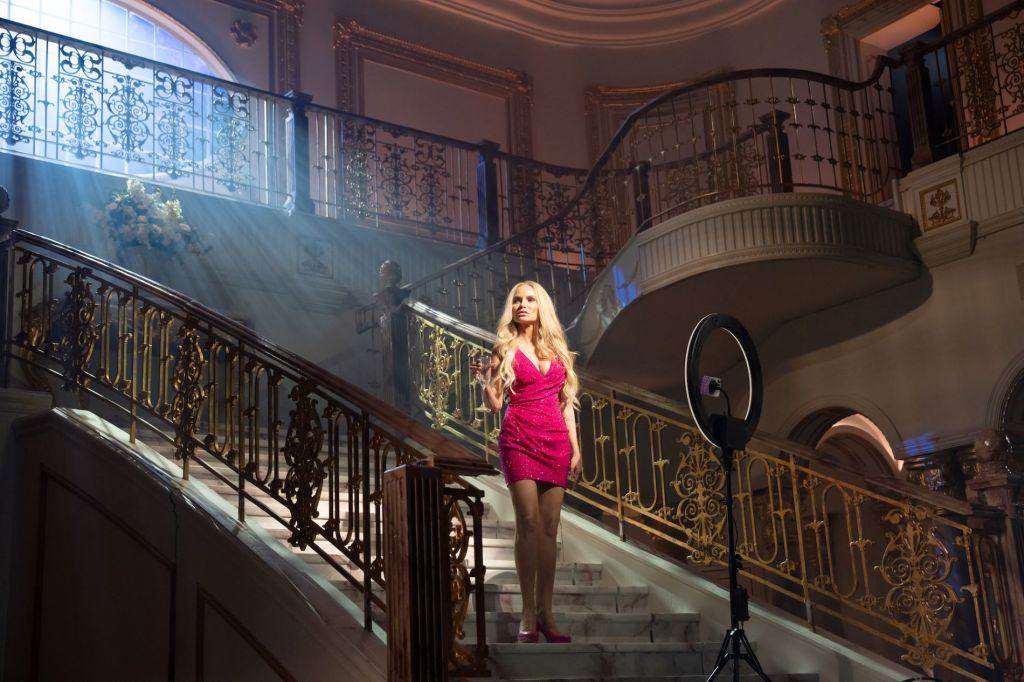
However, in all of the mayhem of trying to regain solvency, the Siegels sacrifice a family member. If material empires go on for centuries, flesh and blood does not. The unreality of excess belies mortality. But some folks never learn. Schwartz and Ferrentino ironically underscore this as Chenoweth’s Jackie holds a glass of champagne standing in front of a ring light. She speaks to a social media audience and hopes that, like her, they get their “champagne wishes and caviar dreams.”
The Queen of Versailles runs 2 hours 40 minutes with one intermission at the St. James Theatre. https://queenofversaillesmusical.com/
 CAROLE DI TOSTI