Blog Archives
Carrie Coon and Namir Smallwood are Frightening in Tracy Letts’ ‘Bug’

She’s a cocktail waitress. He’s a Gulf War vet. When they get together they create an unforgettable relationship in Tracy Letts’ sometimes comedic, mostly compelling psychological drama Bug, currently making its Broadway premiere at Manhattan Theater Club’s Samuel J. Friedman Theatre through February 8, 2026. Aptly directed by David Cromer for a maximum thrill ride, Agnes (Carrie Coon) and Peter (Namir Smallwood) gain each other’s trust in a world that increasingly threatens to destroy them.
Stellar performances by Coon (The White Lotus, The Gilded Age) and Smallwood (Pass Over on Broadway) carry the production through a slow build first act into the harrowing intensity and climactic finish of the second.
Letts’ chilling drama unfolds in a motel room on the outskirts of present-day Oklahoma City. Scenic designer Takeshi Kata features a typical mundane bedroom with cream colored walls and complementary cheesy lamps and appointments that spell out Agnes’ challenged socioeconomic position. By the second act, after a time interval during which Agnes and Peter panic and go through stages of emotional terror, the room’s once benign look transforms to a place whose inhabitants are under siege.
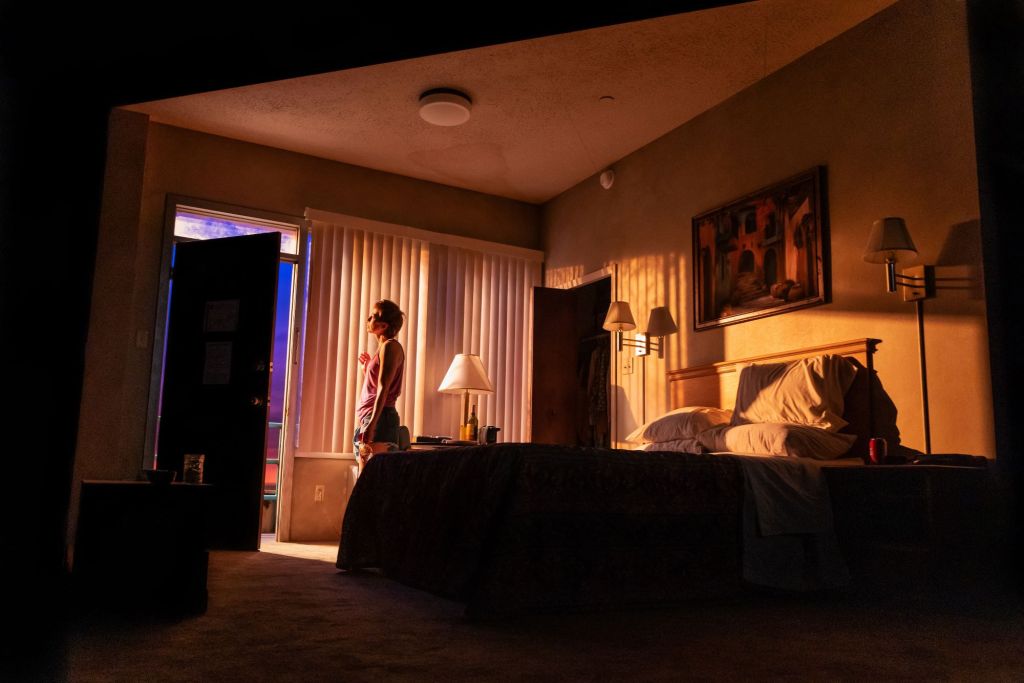
At this point Kata’s design shocks. It is then we understand how badly the situation has progressed in the minds of the characters .
At the top of the play we meet Agnes who lives in the motel room hiding out from her violent former husband Jerry Goss (Steve Key) an ex-convict. As Coon’s Agnes and her lesbian biker friend R.C. (Jennifer Engstrom) do drugs, R.C. warns Agnes to protect herself against Jerry whose prison release she questions because he is dangerous.
Ironically, Agnes asks about the background of the stranger using her bathroom. R.C. vouches for Smallwood’s Peter who she brought with her as they make their way to a party that R.C. also invites Agnes to. While R.C. is on the phone with personal business, Peter assures Agnes he is “not an axe murderer,” and expresses an interest in her.
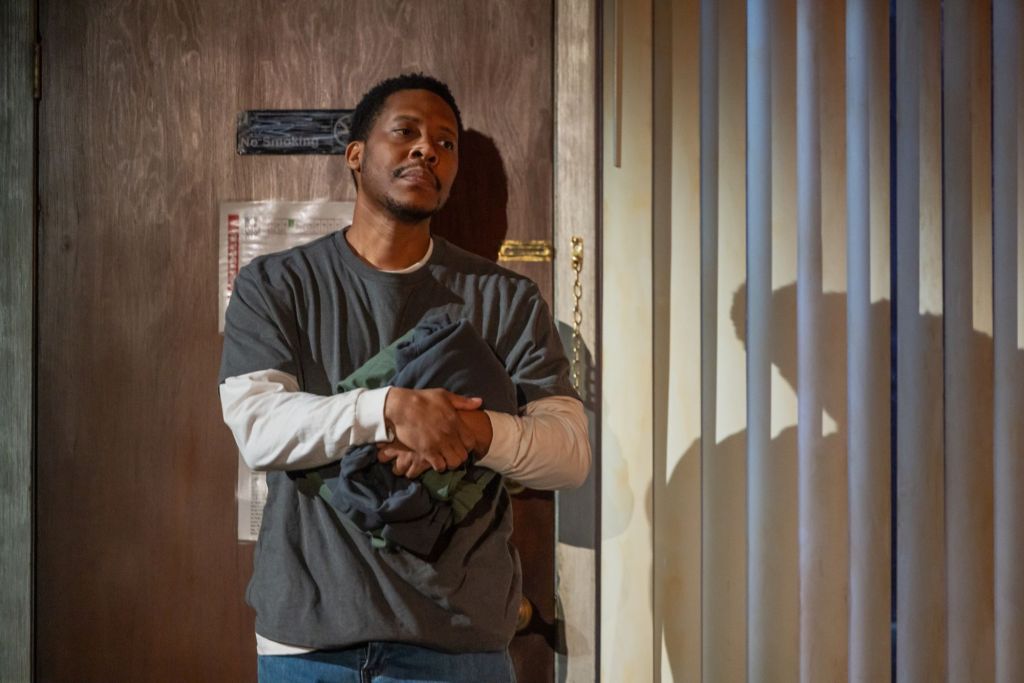
Instead of going to the party with R.C., both Agnes and Peter decide to hang out together and talk, feeling more comfortable getting to know each other than being in a larger crowd. It is during these exchanges and Peter’s staying overnight at Agnes’ invitation that her emotional neediness clarifies. When Jerry shows up, they argue and he hits Agnes. After Jerry leaves, Peter’s attentiveness draws her closer to him. As Agnes and Peter settle in and do drugs, they share secrets and bond. Increasingly Agnes’ perspective shifts. She accepts Peter’s world view and personal reality despite its extremism.
Though Peter says he should go, Agnes uses his hesitation to encourage him to stay, insisting upon it. She makes a symbolic gesture that clever viewers will note conveys her acceptance of Peter because of her emotional desperation more than a belief in his perspective and backstory.
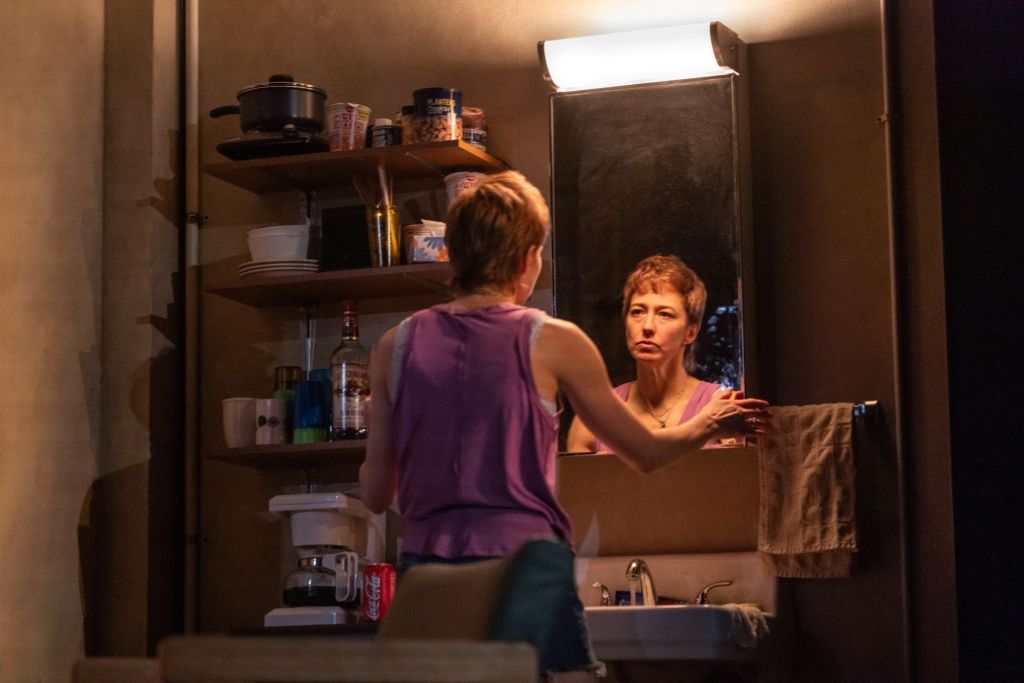
In the next act we see the extent to which Peter has made himself comfortable living with Agnes whose resolve against being with Jerry has strengthened because of her relationship with Peter. Because their concern and care for each other resonates with trust, Peter relaxes into himself. He examines his blood under a microscope and finds “proof” of a conspiracy theory that the government uses military vets and unsuspecting individuals as guinea pigs to experiment on. With convoluted half-truths about government cover-ups related to the war in Iraq, Oklahoma City bombing, the Tuskegee syphilis experiment and more, he panics, fearful that aphids bite him and Agnes, feed off their blood and infest their living space.
Convinced that egg sacks have been planted in him by doctors who also monitor and follow him with helicopters because he has gone AWOL, he persuades Agnes to accept his “bug” theory that he grounds in explanations. Together, they plan a way out of the infestation which has taken over their bodies and minds.
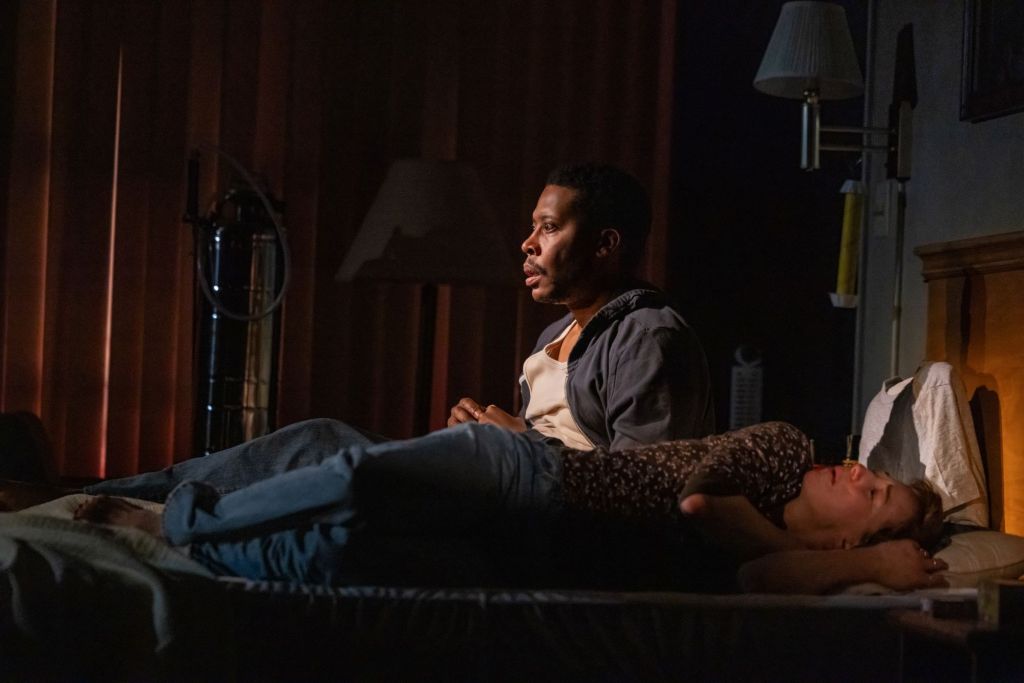
To complicate matters Dr. Sweet (Randall Arney) shows up and explains Peter’s medical case with R.C. and Jerry to legitimize taking Peter back with him to “Lake Groom.” Letts offers the intriguing possibility that there may be many truths about this situation. But without independent investigation and research, belief takes over. Whether Peter is part of an experiment and a guinea pig or not, Agnes expresses her love for him comforted by their bond which gives her life meaning. Within the horror of the infestation, they have found their emotional sustenance. Their relationship is their sanctuary from life’s pain.
Cromer’s vision and his shepherding of the fine performances by Coon and Smallwood make this stylized production all too real and terrifying. Thematically current, with various cultural attitudes related to government cover-ups, and conspiracy theories stoked by the questionable motives of those in power, the creative team’s efforts (Heather Gilbert’s lighting design, Josh Schmidt’s sound design) hit the sweet spot of relevance.
Though written decades ago, in Bug Letts intimates how and why certain women embrace what others deem to be their partner’s extremist perspectives. Wounded and seeking love, women like Agnes more easily accept their partner’s ideas, rather than search for facts and proof to dispute them. Governmental cover-ups of the truth fan the flames of extremist belief systems. The consequences can be socially and culturally devastating.
Bug runs 1 hour and 55 minutes with one intermission at the Samuel Friedman Theatre ( 47th St. between 7th and 8th) https://www.manhattantheatreclub.com/shows/2025-26-season/bug/
‘Archduke,’ Patrick Page and Kristine Nielsen are Not to be Missed
What is taught in history books about WWI usually references Gavrilo Princip as the spark that ignited the “war to end all wars.” Princip and his nationalist, anarchic Bosnian Serb fellows, devoted to the cause of freeing Serbia from the Austro-Hungarian empire, did finally assassinate the Archduke Franz Ferdinand and Duchess of Austria-Hungary. This occurred after they made mistakes which nearly botched their mission.
What might have happened if they didn’t murder the royals? The conclusion of Rajiv Joseph’s Archduke offers a “What if?” It’s a profound question, not to be underestimated.
In Archduke, Rajiv Joseph (Bengal Tiger at the Baghdad Zoo), has fun with this historical moment of the Archduke’s assassination. In fact he turns it on its head. With irony he fictionalizes what some scholars think about a conspiracy. They have suggested that Serbian military officer Dragutin “Apis” Dimitrijevic (portrayed exceptionally by Patrick Page), sanctioned and helped organize the conspiracy behind the assassination. The sardonic comedy Archduke, about how youths become the pawns of elites to exact violence and chaos, currently runs at Roundabout’s Laura Pels Theater until December 21st.
Joseph’s farce propels its characters forward with dark, insinuating flourishes. The playwright re-imagines the backstory leading up to the cataclysmic assassination that changed the map of Europe after the bloodiest war in history up to that time. He mixes facts (names, people, dates, places), with fiction (dialogue, incidents, idiosyncratic characterizations, i.e. Sladjana’s time in the chapel with the young men offering them “cherries”). Indeed, he employs revisionist history to align his meta-theme with our current time. Then, as now, sinister, powerful forces radicalize desperate young men to murder for the sake of political agendas.
In order to convey his ideas Joseph compresses the time of the radicalization for dramatic purposes. Also, he laces the characterizations and events with dark humor, action and sometimes bloodcurdling descriptions of violence.
For example in “Apis'” mesmerizing description of a regicide he committed (June, 1903), for which he was proclaimed a Serbian hero, he acutely describes the act (he disemboweled them). He emphasizes the killing with specificity asking questions of those he mentors to drive the point home, so to speak. Then, Captain Dragutin “Apis” Dimitrijevic dramatically explains that he was shot three times and the bullets were never removed. Page delivers the speech with power, nuance and grit. Just terrific.
Interestingly, the fact that Dimitrijevic took three bullets that were never removed fits with historical references. Page’s anointed “Apis” relates his act of heroism to Gavrilo (the winsome, affecting Jake Berne), Nedeljko (the fiesty Jason Sanchez), and Trifko (the fine Adrien Rolet), to instruct them in bravery. The playwright teases the audience by placing factual clues throughout the play, as if he dares you to look them up.
History buffs will be entertained. Those who are indifferent will enjoy the fight sequences and Kristine Nielsen’s slapstick humor and perfect timing. They will listen raptly to Patrick Page’s fervent story and watch his slick manipulations. Director Darko Tresnjak (A Gentleman’s Guide to Love and Murder), shepherds the scenes carefully. The production and all its artistic elements benefit from his coherent vision, his superb pacing and smart staging. Set design is by Alexander Dodge, with Linda Cho’s costume design, Matthew Richards’ lighting design and Jane Shaw’s sound design.
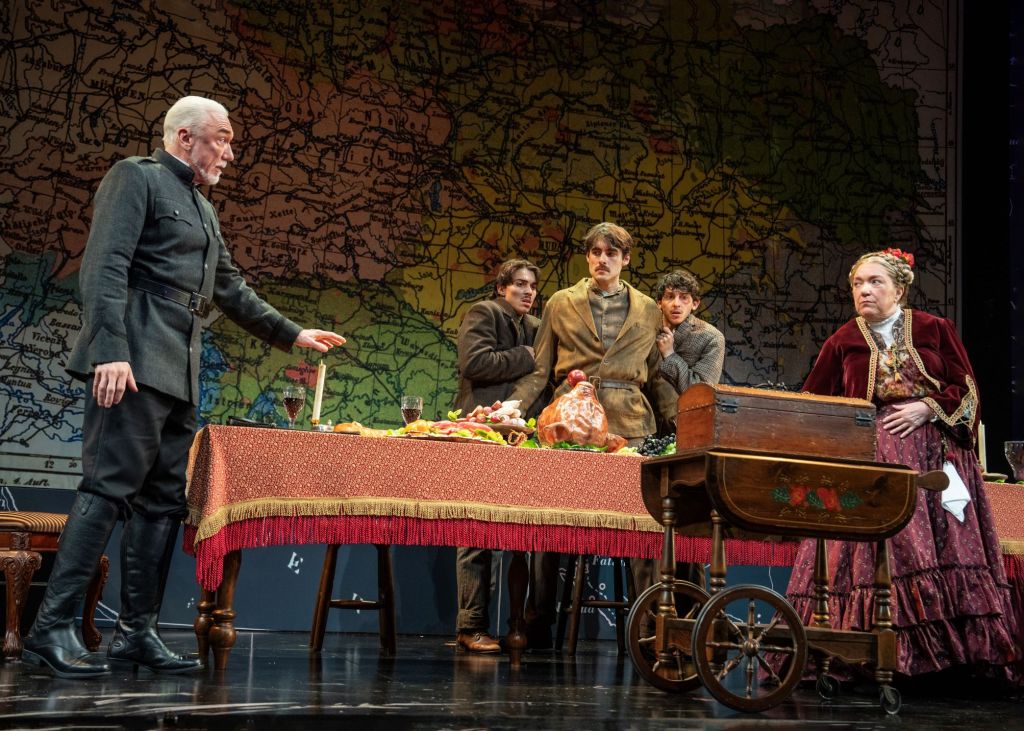
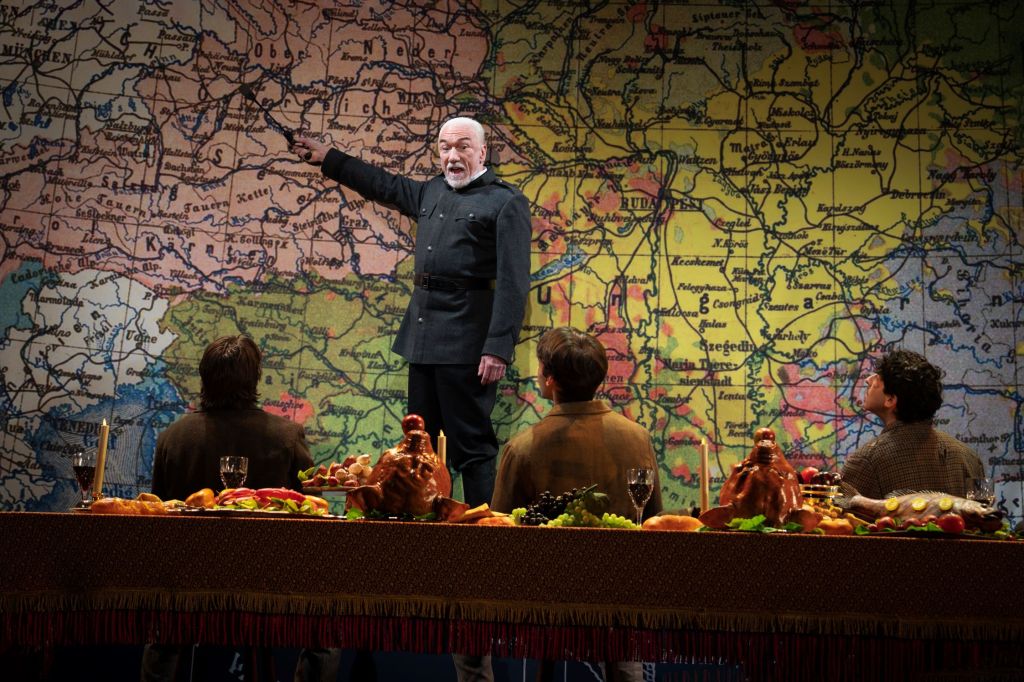
In Joseph’s re-imagining before “Apis” delivers this speech of glory and violence, the Captain has his cook stuff the starving, tubercular, young teens with a sumptuous feast. As they eat, he provides the history lessons using a pointer and an expansive map of the Austro-Hungarian empire. Like brainwashed lap dogs they agree with him when he tells them to. They are inspired by his personal story of glory and riches, and the luxurious surroundings. Notably, they become attuned to his bravery and sacrifice to Serbia, after their bellies are full, having devoured as much as possible.
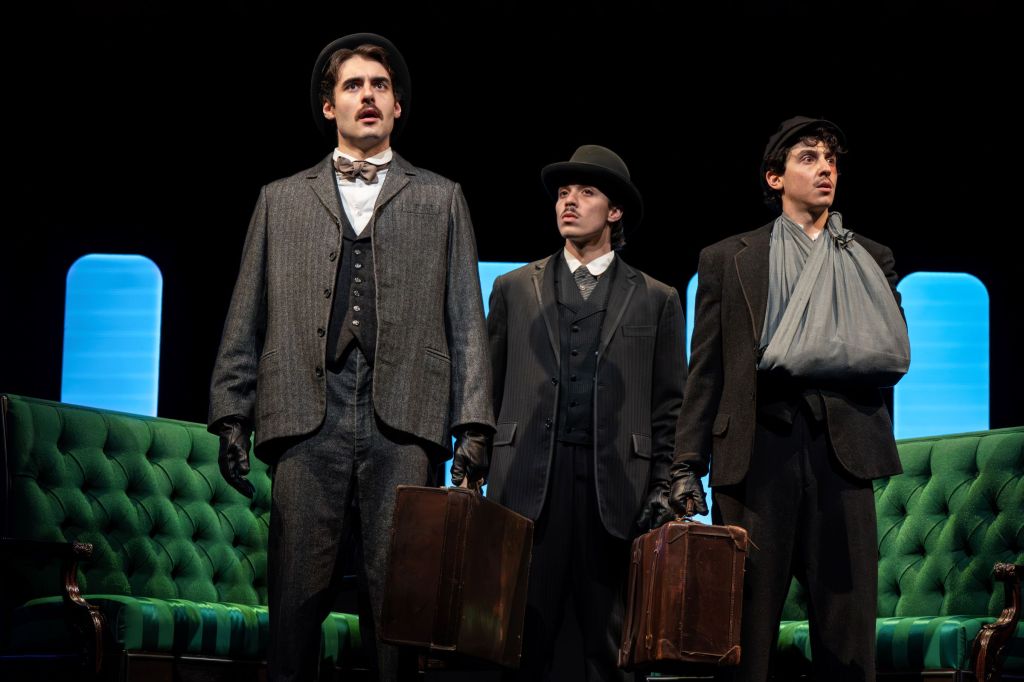
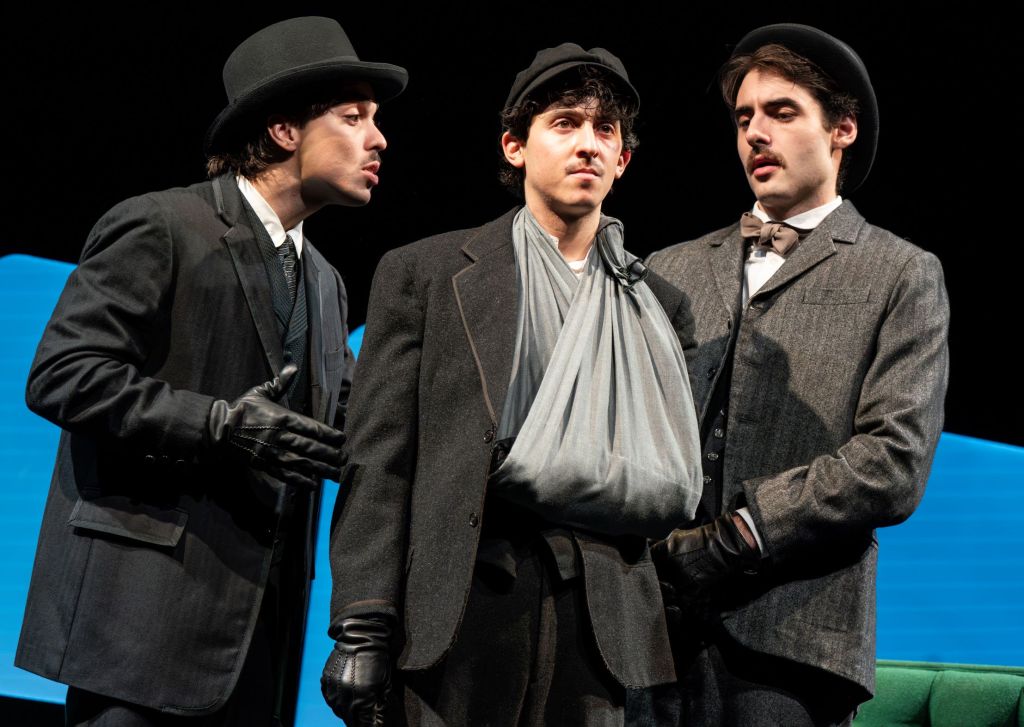
Why them and how did they get there? Joseph infers the machinations behind the “Apis'” persuasion in Scene 1, which takes place in a warehouse and serves as the linchpin of how young men become the dupes of those like the charming, well-connected Dimitrijevic. From the teens’ conversation we divine that a secret cabal cultivates and entraps desperate, dying young men. Indeed, in real life there was a secret society (The Black Hand), that Captain Dimitrijevic belonged to and that Gavrilo was affiliated with. The playwright ironically hints at these ties when the Captain gives Gavrilo and the others black gloves.
In the warehouse scene the soulful and dynamic interaction between Berne’s Gavrilo and Sanchez’s Nedeljko creates empathy. The fine actors stir our sympathy and interest. We note that the culture and society have forgotten these hapless innocents that are treated like insignificant refuse. As a result they become ready prey to be exploited. The nineteen-year-old orphans have similar backgrounds. Clearly, their poverty, purposelessness, lack of education and hunger bring them to a conspiratorial doctor they learn about because he is free and perhaps can help.
However, he gives them the bad news that they are dying and nothing can be done. As part of the plan, the doctor refers both Gavrilo and Nedeljko to “a guy” in a warehouse for a job or something useful and “meaningful.”
True to the doctor’s word, the abusive Trifko arrives expecting to see more “lungers.” After he shows them a bomb that doesn’t explode when dropped (a possible reference to the misdirected bombing during the initial attempt against the Archduke), Trifko browbeats and lures them to the Captain (“Apis”), with his reference to a “lady cook.”
Why not go? They are starving, and they “have nothing to lose.” The cook, Sladjana, turns out to be the always riotous Kristine Nielsen, who provides a good deal of the humor during the Captain’s history lessons, and the radicalization of the teens, the feast, sweets, and “special boxes” filled with surprises that she brings in and takes out. Nielsen’s antics ground Archduke in farce, and the scenes with her are imminently entertaining as she revels in the ridiculous to audience laughter.
With their needs met and their psychological and emotional manhood stoked to make their names famous, the young men throw off their religious condemnation of suicide and agree to martyr themselves and kill the Archduke to free Serbia. Enjoying the prospects of a train ride and a bed and more food, after a bit of practice, shooting the Archduke and Duchess, with “Apis” and Sladjana pretending to be royalty, they head off to Sarajevo. Since Joseph’s play is revisionist, you will just have to see how and why he spins the ending as he does with the characters imaging their own, “What if?”
The vibrantly sinister, nefarious Dragutin “Apis” Dimitrijevic, who seduces and spins polemic like a magician with convincing prestidigitation, seems relevant in light of the present day’s media propaganda. Whether mainstream, which censors information, fearful of true investigative reporting, or social media, which must be navigated carefully to avoid propaganda bots, both spin their dangerous perspectives. The more needy the individuals emotionally, physically, psychologically, the more amenable they are to propaganda. And the more desperate (consider Luigi Mangione or Shane Tamura or the suspect in the recent shooting of the National Guard in Washington, D.D.), the less they have to lose being a martyr.
Joseph’s point is well taken. In Archduke the teens were abandoned and left to survive as so much flotsam and jetsam in a dying Austro-Hungarian empire. Is his play an underhanded warning? If we don’t take care of our youth, left to their own devices, they will remind us they matter too, and take care of us. Political violence, as Joseph and history reveal, is structured by those most likely to gain. Cui bono? All the more benefit of impunity and immunity if others are persuaded to pull the trigger, cause a riotous coup, release the button, poison, etc., and take the fall for it.
Archduke runs 2 hours with one intermission at Laura Pels Theater through December 21st. roundabouttheatre.org.
‘The Weir’ Review: Drinks and Spirits in a remote Irish Pub
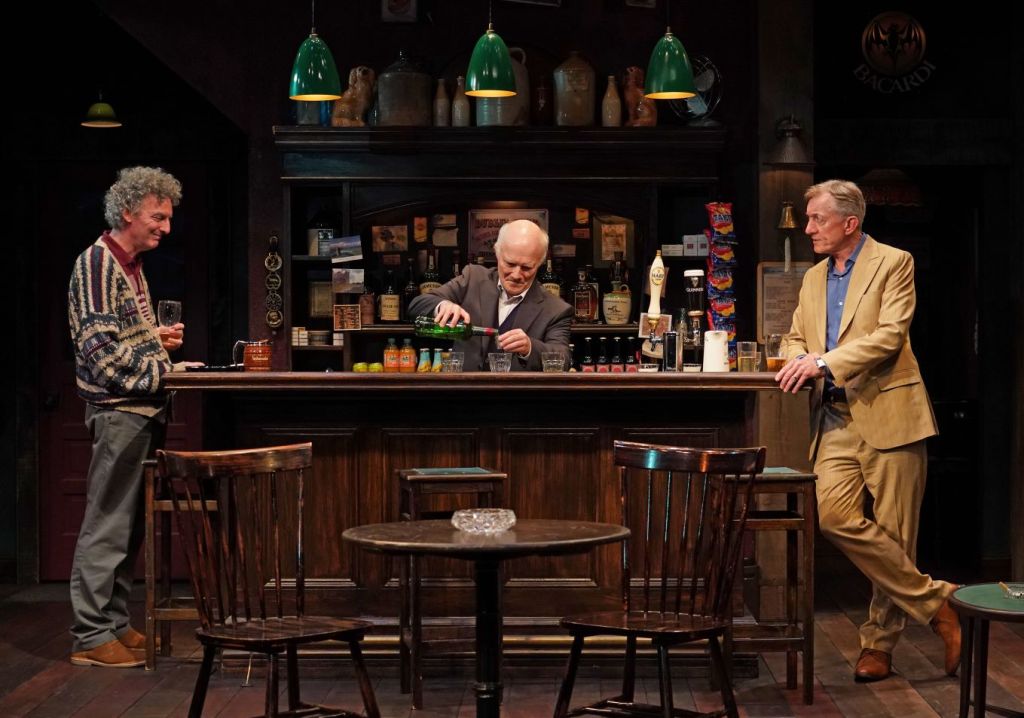
Conor McPherson’s The Weir currently in its fourth revival at Irish Repertory Theatre has evolved its significance for our time. It captures the bygone Irish pub culture and isolated countryside, disappeared by hand-held devices, a global economy and social media. Set in an area of Ireland northwest Leitrim or Sligo, five characters exchange ghostly stories as they drink and chase down their desire for community and camaraderie. Directed with precision and fine pacing by Ciarán O’Reilly, The Weir completes the Irish Rep’s summer season closing August 31st.
Charlie Corcoran’s scenic design of the pub with wooden bar, snacks, bottles, a Guinness tap and heating grate is comfortable for anyone to have a few pints and enjoy themselves at a table or nearby bench. With Michael Gottlieb’s warm, inviting lighting that enhances the actors’ storytelling, all the design elements including the music (Drew Levy-sound design), heighten O’Reilly’s vision of an outpost protective of its denizens and a center of good will. It’s perfect for the audience to immerse itself in the intimacy of conversation held in non-threatening surroundings.
On a dark, windy evening the humorous Jack drops in for drinks as a part of his routine after work at the garage that he owns. A local and familiar patron he helps himself to a bottle since he can’t draw a pint of Guinness because the bar’s tap is not working. Brendan (Johnny Hopkins) owner of the pub, house and farm behind it informs him of this sad fact. But no matter. There are plenty of bottles to be had as Jim (John Keating) joins Jack and Brendan for “a small one.” The entertainment for the evening is the entrance of businessman Finbar (Sean Gormley), who will introduce his client Valerie to the “local color,” since she recently purchased Maura Nealon’s old house.
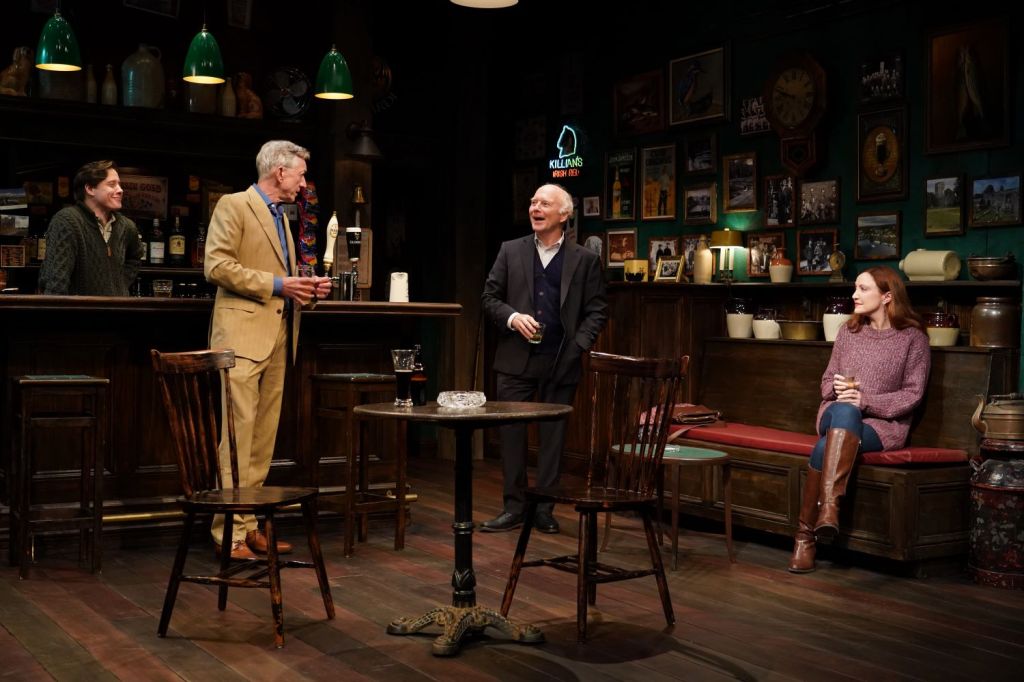
Initially, Jack, Jim and Brendan gossip about the married Finbar’s intentions as he shows up the three bachelors by escorting the young woman to the pub. Jim, caretaker of his mom, and Jack are past their prime in their late 50-60s. Brendan, taken up with his ownership of the pub and farm, is like his friends, lonely and unmarried. None of them are even dating. Thus, the prospect of a young woman coming up from Dublin to their area is worthy of consideration and discussion.
McPherson presents the groundwork, then turns our expectations around and redirects them, after Finbar and Valerie arrive and settle in for drinks. When the conversation turns to folklore, fairy forts and spirits of the area, Valerie’s interest encourages the men to share stories that have spooky underpinnings. Jack begins his monologue about unseen presences knocking on windows and doors, and scaring the residents until the priest blesses the very house that Valerie purchased.
Caught up in his own storytelling which brings a hush over the listeners (and audience), Jack doesn’t realize the import of his story about the Nealon house that Valerie owns. Thankfully, the priest sent the spirits packing. Except there was one last burst of activity when the weir (dam) was being built. Strangely, there were reports of many dead birds on the ground. Then the knocking returned but eventually stopped. Perhaps the fairies showed their displeasure that the weir interfered with their usual bathing place.
Not to be outdone, Finbar shares his ghost story which has the same effect of stirring the emotions of the listeners. Then, it is Jim who tells a shocking, interpretative spiritual sighting. Ironically, Jim’s monologue has a sinister tinge, as he relays what happened when a man appeared and expressed a wish, but couldn’t really have been present because he was dead.
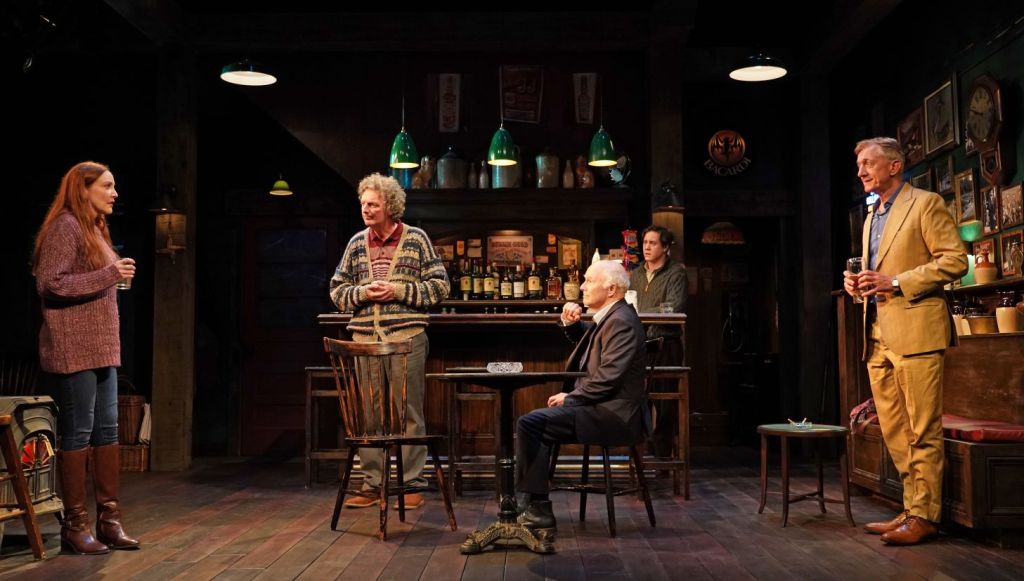
As drinks are purchased after each storyteller’s turn, the belief in the haunting spirits rises, then wanes as doubts take over. After Jim tells his story about the untoward ghost, Valerie goes to the bathroom in Brendan’s house. During her absence Finbar chides all of them. He regrets their stories, especially Jim’s which could have upset Valerie. With Jack’s humorous calling out of Finbar as a hypocrite, they all apologize to each other and drink some more. By this point, the joy of their conversation and good-natured bantering immerses the audience in their community and bond with each other. I could have listened to them talk the rest of the night, thanks to the relaxing, spot-on authenticity of the actors.
Then, once more McPherson shifts the atmosphere and the supernatural becomes more entrenched when Valerie relates her story of an otherworldly presence. Unlike the men’s tales, what she shares is heartfelt, personal, and profound. The others express their sorrow at what happened to her. Importantly, each of the men’s attitudes toward Valerie changes to one of human feeling and concern. Confiding in them to release her grief, they respond with empathy and understanding. Thus, with this human connection, the objectification of the strange young woman accompanied by Finbar at the top of the play vanishes. A new level of feeling has been experienced for the benefit of all present.
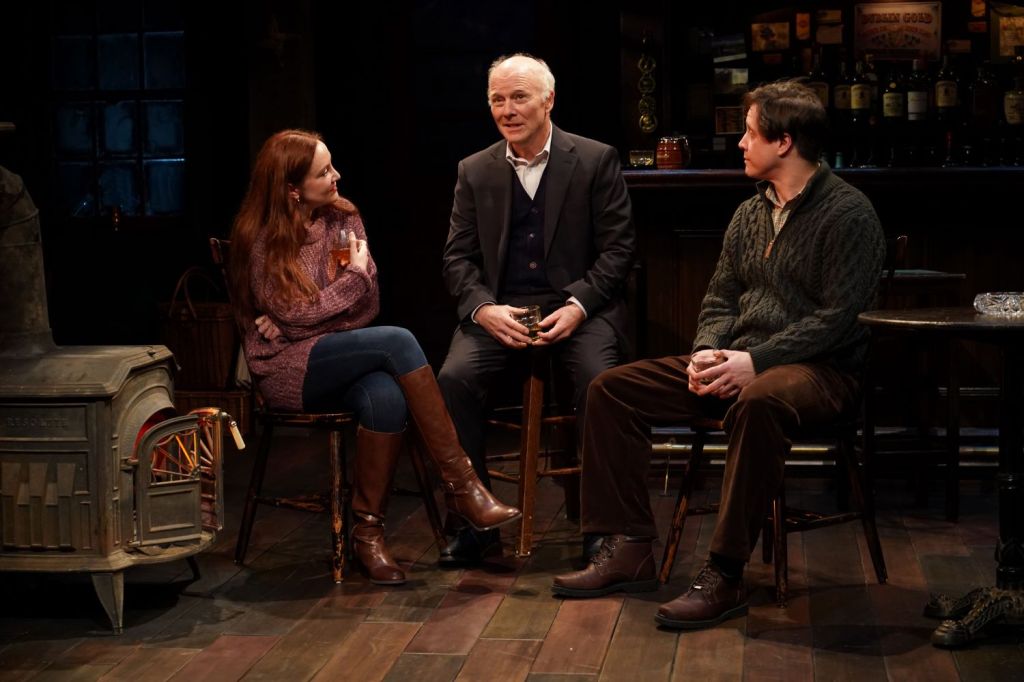
After Finbar leaves with Jim, McPherson presents a surprising coup de grâce. Quietly, Jack shares his poignant, personal story of heartbreak, his own haunting by the living. In an intimate emotional release and expression of regret and vulnerability, Jack tells how he loved a woman he would have married, but he let her slip away for no particularly good reason. Mentoring the younger Brendan not to remain alone like he did, Jack says, “There’s not one morning I don’t wake up with her name in the room.”
McPherson’s theme is a giant one. Back in the day when the world was slower, folks sat and talked to each other in community and conviviality. With such an occasion for closeness, they dispelled feelings of isolation and hurt. As they connected, they helped redeem each other, confessing their problems, or swapping mysteries with no certain answers.
As the world modernized, the ebb and flow of the culture changed and became stopped up, controlled by outside forces. Blocked by fewer opportunities to connect, people retreated into themselves. The opportunities to share dried up, redirected by distractions, much as a dam might redirect the ebb and flow of a river and destroy a place where magical fairies once bathed.
McPherson’s terrific, symbolic play in the hands of O’Reilly, the ensemble and creative team is a nod to the “old ways.” It reminds us of the value of gathering around campfires, fireplaces or heating stoves to tell stories. As companions warm themselves, they unfreeze their souls, learn of each other, and break through the deep silences of human suffering to heal.
The Weir runs 1 hour 40 minutes with no intermission at Irish Repertory Theatre (132 West 22nd St). https://irishrep.org/tickets/
New York Botanical Garden GLOW and the 32nd Holiday Train Show®



The NYBG Holiday Train Show®returns for its 32nd year. It is a magnificent stirring of the past in recalling the first train shows that were in the outdoor landscape in 1993, created by Applied Imagination’s founder Paul Busse. For more information about Applied Imagination’s collaborations with the NYBG and the artistry and process of Applied Imagination’s botanical spectaculars, click here.
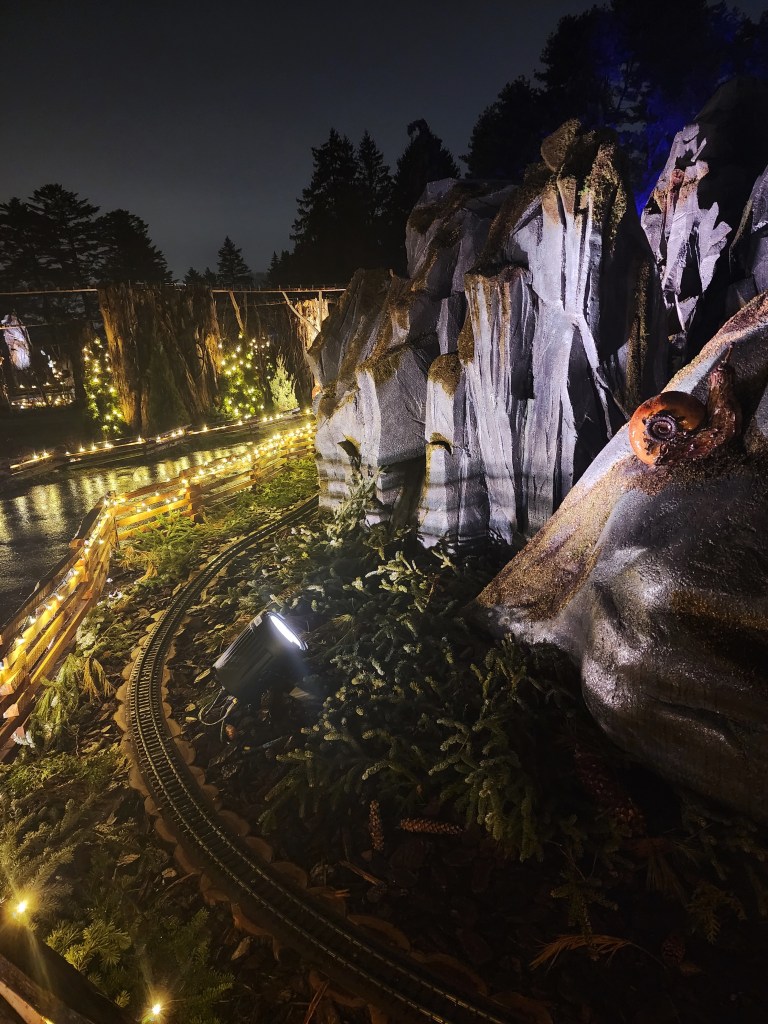
This year’s Train Show is fabulous and bigger than ever with more model trains and an “all-new outdoor display,” that is a magical woodland of fantastic fungi and creatures. Various slow and fast moving trains zip along merrily on raised trestles and around mountain landscapes on the Haupt Conservatory Lawn..
The NYBG Holiday Train Show®runs until Monday, January 15, 2024. For my article on my daytime visit to the Holiday Train Show® click here.
Importantly, On 2 REMAINING SELECT NIGHTS, SATURDAY, JANUARY 6 AND JANUARY 13, Holiday Train Show Visitors of all ages can enjoy NYBG GLOW, the OUTDOOR COLOR AND LIGHT EXPERIENCE, currently in its fourth year. It is just spectacular.




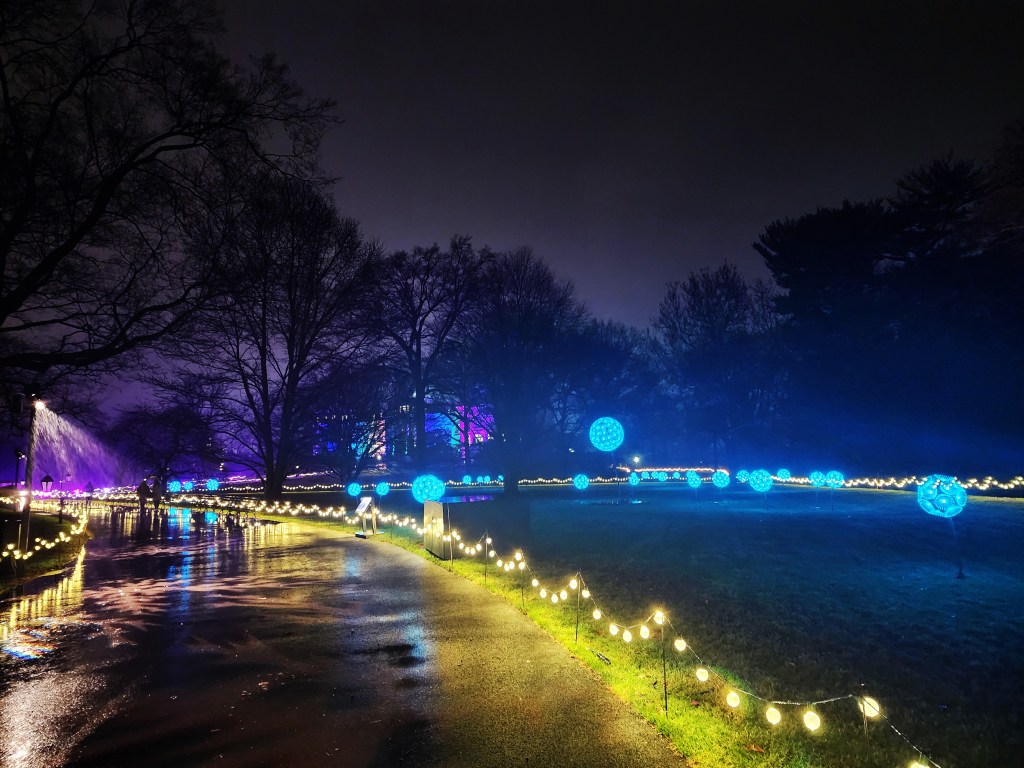
NYBG GLOW will take place from 5 to 10 p.m. on the following dates: Saturday, January 6; and Saturday, January 13, 2024.
Fan-favorite Bar Car Nights, for adults age 21 and over feature adults-only nighttime viewing of the Holiday Train Show and NYBG GLOW. These include light bites and curated beverages available for purchase. Visitors can sip their drinks and feast their eyes on the lighted, imperial beauty of the replicas (i.e. the old Penn Station, Grand Central Station, the Enid A. Haupt Conservatory) that speak of a time past whose like we shall never see again. There is one more Bar Car Night, Friday, January 5, 2024. Tickets are on sale now at nybg.org.

The night I visited, it was warm and misty. The grounds literally glistened with the very light rain and fog. The lights vibrated and as friends and I walked the landscape, the magic of the Garden made the title GLOW resonate with meaning.


Indoors, the Holiday Train Show twinkles with magic. Evenings are more mysterious in the Garden. The foliage seems more lush as the deep shadows suggest hidden secrets. The imagination runs wild as one moves along the walkways, to see an elf peer out from under a palm frond, then vanish in a nano second. Sounds of the train whistles and horns and clackings along the tracks accompany a variety of engines and cars, from passenger trains, to freights, to diesels to locomotives, trolley cars and whimsical fantastics (a bee car) buzzing along.

I enjoy catching glimpses of the trains jetting underneath the greenery and chugging past the beautifully crafted replicas of landmarks and iconic buildings from each of New York City’s five boroughs, as well as surrounding counties, i.e., Orange, Westchester and Columbia to name a few.
Thanks to artisans at Applied Imagination, currently run by Laura Busse Dolan, daughter of Paul Busse, who founded the show, the amazing, miniature landmarks are created from a myriad of plant parts, for example, artichoke leaves, seed parts, pistachio shells, walnuts, acorns, pine cones, tree bark, twigs, numerous leaves from plants, ranging from hedges to trees, a variety of gourds, pomegranates, etc.
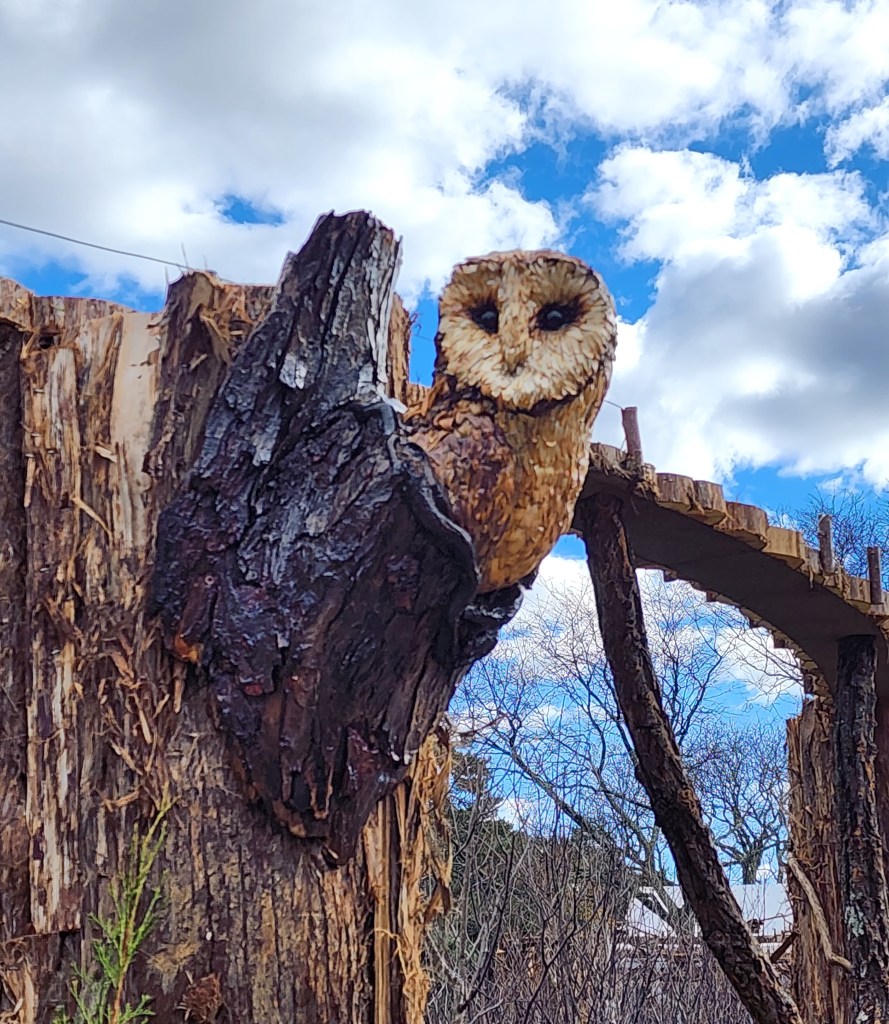


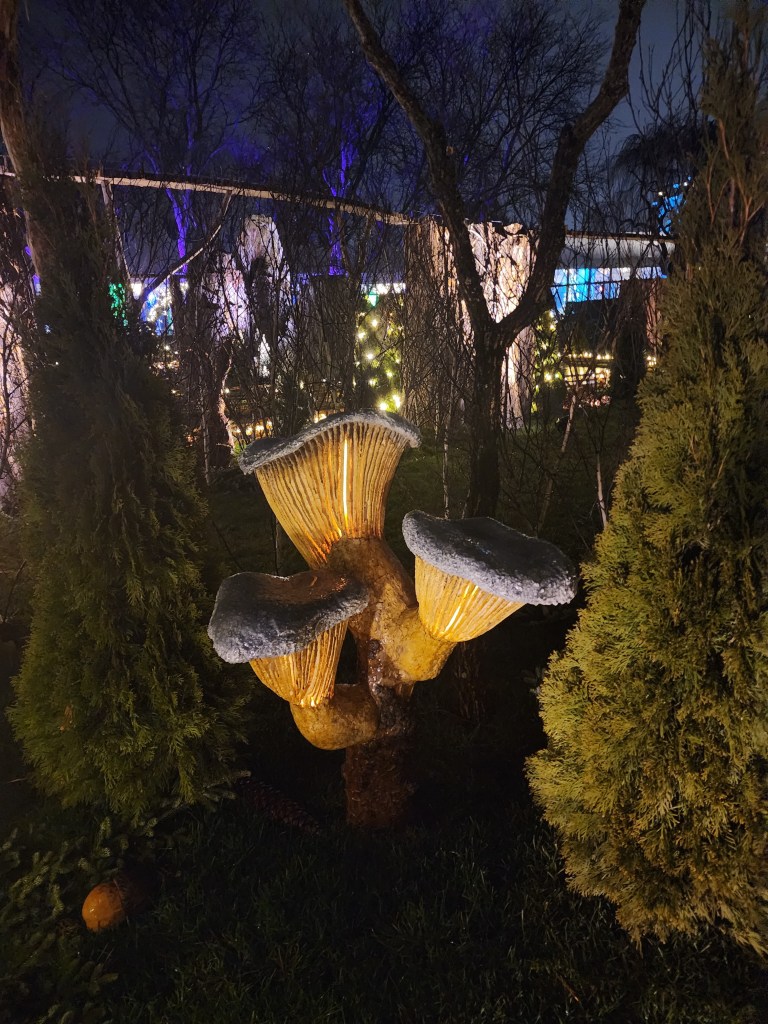
In the outdoor landscape, the toadstools and fungi that appear to be ceramic and plucked out of a Disney animation are actually carved wood finely shaped, shaved and smoothed, then painted cheerfully to shine a glossy surface. The detail of the fungi is mind-boggling and realistic. One can spend an hour taking in the near atomized work of the craftspeople whose creations are at the quality level of art. Look for animals, snails, the owl (made of artichokes) and other woodland creatures.


Indoors, some of the replicas I always look for include Clarke’s folly, a majestic Gilded Age mansion that was too costly to maintain and was torn down within a decade of its being finished.

The phenomenal row houses of New York City shine their lights in all their glory. I imagine living in one of the brownstone replicas that could easily fit into Edith Wharton’s New York City so cleverly portrayed in Age of Innocence. And another favorite is Poe Cottage. Every time I see it in the Train Show, I vow I must visit it. It is near the Garden in the Bronx.

The exhibit includes signage that explores the plants used to create the miniatures. It bears reading how the various parts are used to create structures like finials, roofs, portals, arches, bricks, mortar that visually look just like their counterparts. To an artisan at Applied Imagination, a pistachio shell might be the perfect part to complete a statue. In fact look for the pistachio shells on the angelic figures of the Kykuit replica (on the Rockefeller Estate) housed between the 360 degree display of Coney Island and Grand Central Station, and the doorway to the Enid A. Haupt Conservatory interior.


You won’t want to miss this years botanical theater of GLOW and the Holiday Train Show.® The exhibit’s wonder will cheer you up and resettle you into the joy of new beginnings in a new year.
 CAROLE DI TOSTI