Blog Archives
Sandra Hüller’s Astonishing Portrayal in ‘Rose’ at NYFF 2026
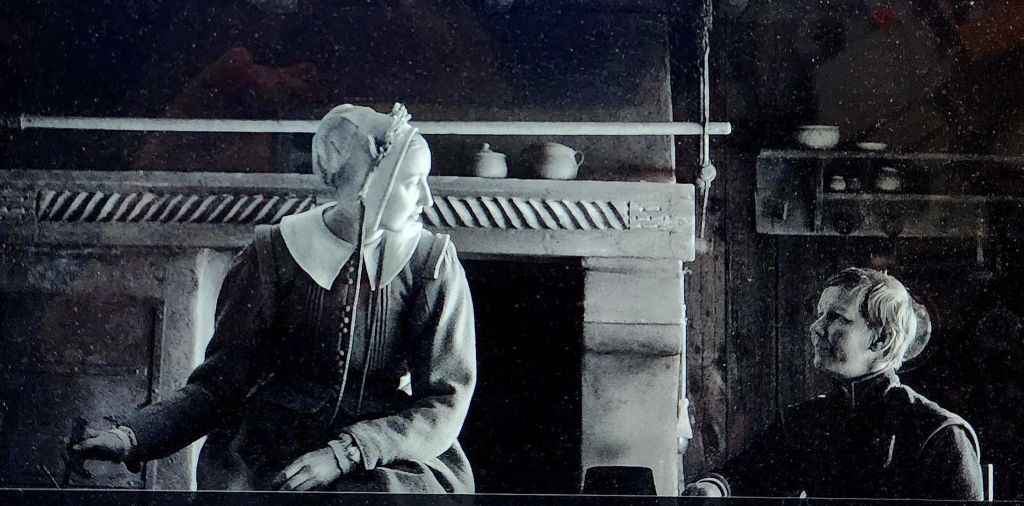
Starring Sandra Hüller, the film Rose, a haunting, historic drama with modern thematic overtones, made its New York Premiere in the Main Slate category at the 64th New York Film Festival. Unique, stark and boldly directed by Markus Schleinzer, he and co-writer Alexander Brom set the narrative in the 17th century. The story follows Rose, who fought as a soldier during the thirty years war in Europe.
Normally, women didn’t go into battle which was forbidden for them. However, Rose, disguised as a man, got away with her deception. We discover later she binds her breasts to flatten them. At times when she could be discovered, she wears a contraption which suggests male genitalia.
Throughout the stress to be careful to avoid discovery, Rose risked life and limb because of the autonomy and power she had as a soldier. As a result, she has the audacity and courage to continue masking her gender after leaving the battlefield. When she presents papers of inheritance and takes possession of a derelict, run-down property in a remote Protestant Village, she does so as a man. Clearly, the time and place dictate her choice and afford her the opportunity of a new independence. She will be beholden to no one, not to her commander, nor company nor comrades. Finally, “wearing the pants” places her beyond the oppression of a husband.
Told as a parable by a narrator (the effecting Marisa Growdalt) in voice over, Rose’s intriguing story gradually unfolds with very little dialogue by the characters in short, uncomplicated descriptions. Likewise, Rose says little, laconic, perceptive, present, careful. Without embellishment the narrator’s revelations and subsequent scenes in black, white and grey instruct its watchers without moralizing or preaching, Thus, unobtrusively, Schleinzer allows his camera to fall in love with the brave Rose as he follows her story through inspiration, hope and devastation.
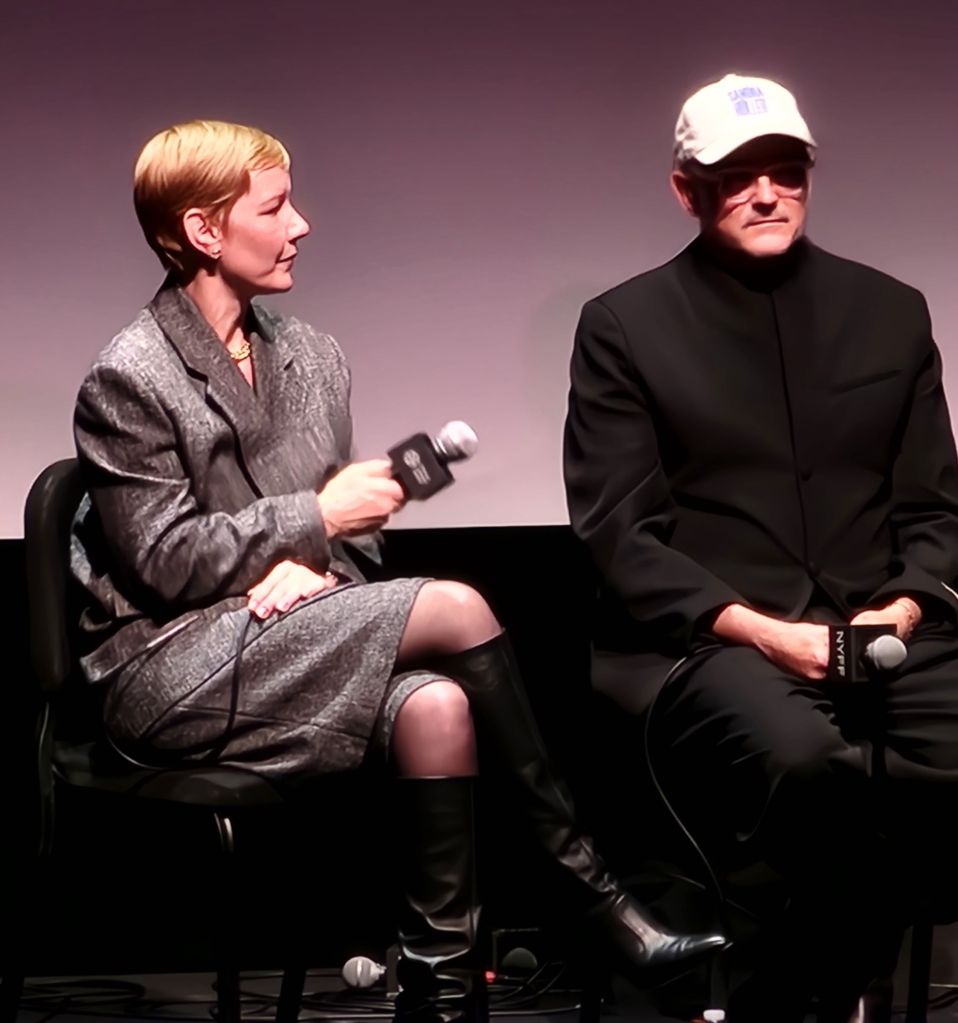
Shepherding the talents and perceptions of the incredible, affecting Hüller, Schleinzer explores this character Rose whom we cheer on as she makes a new life for herself as a farmer starting from scratch. With her beauty deranged and disfigured from a bullet that tore through her face, her femininity disappeared. As a badge of honor Rose carries the bullet, flattened from impact, on a chain around her neck. From time to time she savors it in her mouth, a reminder she made it out alive and this might be a second chance for her. What she does, seems to be figuratively and literally biting the bullet on the razor’s edge to keep up the ruse.
Nevertheless, familiar with how to deceive numbers of men while she fought next to them, and saw them die, that experience in duplicity and bravery served her well. She knows how to keep her head down and take possession of land in a country she defended for years. Schleinzer never reveals her past other than her disfigurement and soldiering. One step ahead of the townspeople, we do know her gender, but must fill in the gaps of missing information making assumptions about her.
Thus, the mysterious stranger who hires townspeople to help with the farm, gradually makes her way through their suspicions and breaks them down so they accept her, when they once thought her a “misfit.” Ambitious and able, Rose restores the house and barn, managing her helpers who respect her. When her neighbors have trouble during a storm, she allows them to use her barn to protect their sheep. In another instance, Rose kills a bear and saves the life of a towns person. Her reputation becomes mythic. Hard working, dutiful to God, attending church and being a good neighbor, the townspeople trust her as one of them.
Two turning points occur which ratchet up the humor and the suspense and bring Rose’s secret defiance of an oppressive and judgmental patriarchal system to bear. In a negotiation with her neighbor to buy land and his stream, he tells Rose she can have access to his stream only if she marries his daughter Suzanna (Caro Braun). Interestingly, Rose takes the risk of marrying and being found out with a clever twist. After the marriage she tells the father that the most important quality is the sanctity of Suzanna’s virginity and she will preserve it.
However, the father insists the lineage be carried on along with the inheritance, so Rose does her duty. Schleinzer reveals this in the shadows. Somehow, Rose convinces Suzanna their marriage has been consummated. But one day Suzanna shows up pregnant to Rose’s great surprise. How did it happen? How much does Suzanna know or suspect? Suzanna keeps that secret and we, like Rose, can only surmise she committed incest with her father or was with someone else. Importantly, in a silent agreement between them, Rose has managed to convince Suzanna of the benefits of protecting their relationship. However, both women don’t discuss who the real father of the child is.
Life progresses with happiness after the child’s birth, then tragedy strikes their sweet family unit. In attempting to work on their beehive, the bees sting Rose and she collapses. In the process of ministering to her, the maid notes Rose’s gender. When Rose recovers she reveals the truth to Suzanna and their friendship deepens with understanding. Rose gives Braun’s Suzanna a choice to leave or stay. In Suzanna’s choice, we note she prefers freedom and safety, experiencing independence and the privileges of self identity she never would have as a husband’s chattel. Thus, she keeps Rose’s secret and they live in harmony, but the narrator warns of trouble ahead.
Schleinzer maintains a unity of dramatic elements throughout with quiet calm in keeping with the structure and grace of the parable. Thus, the most violent scene that occurs is the confrontation scene among the townspeople, Rose and Suzaanna. As both women attempt to dismiss the “rumors” and maid’s testimony, Hüller’s Rose explodes with justification. She questions the humanity of the people who once respected and grew close to her. It’s the first time she gives voice and power to her feelings. Ironically, it is as if she comes face to face with the inexorable fate of slavish womanhood in that century. This is the reason why she ran away to be a soldier rather than be the demeaned, objectified hausfrau. Can her words change their minds?
Braun and Hüller create an, unforgettable, breathtaking scene. We hope for the women whose sin was to want what the men and thereby women forbade them to have: their own created identity. However, it cannot be. They must be punished for their crimes. And though they attempt escape, they are captured, put on trial, found guilty and are punished.
Rather than to have a horrifyingly, brutal,visually numbing conclusion, Schleinzer allows the narrator with as few words as possible to tell Suzanna’s and Rose’s tragic fate. In her narration it feels like an understatement, but Schleeinzer’s choice to keep it simple and brief sharpens our empathy. By siphoning off the dramatic, the spare description of what happened is more heartbreaking. and powerful. Ahead of their time, they don’t belong. The townspeople enslaved to that time and place cannot allow them to leave or live in a peace they create for themselves, despite the fact that they hurt no one. Theirs is an offense worse than murder.
Rose will be at NYFF 2026 until October 7, 2026. https://www.filmlinc.org/nyff2026/films/rose/ Look for it in theaters on December 11, 2026, and later on streaming platforms.
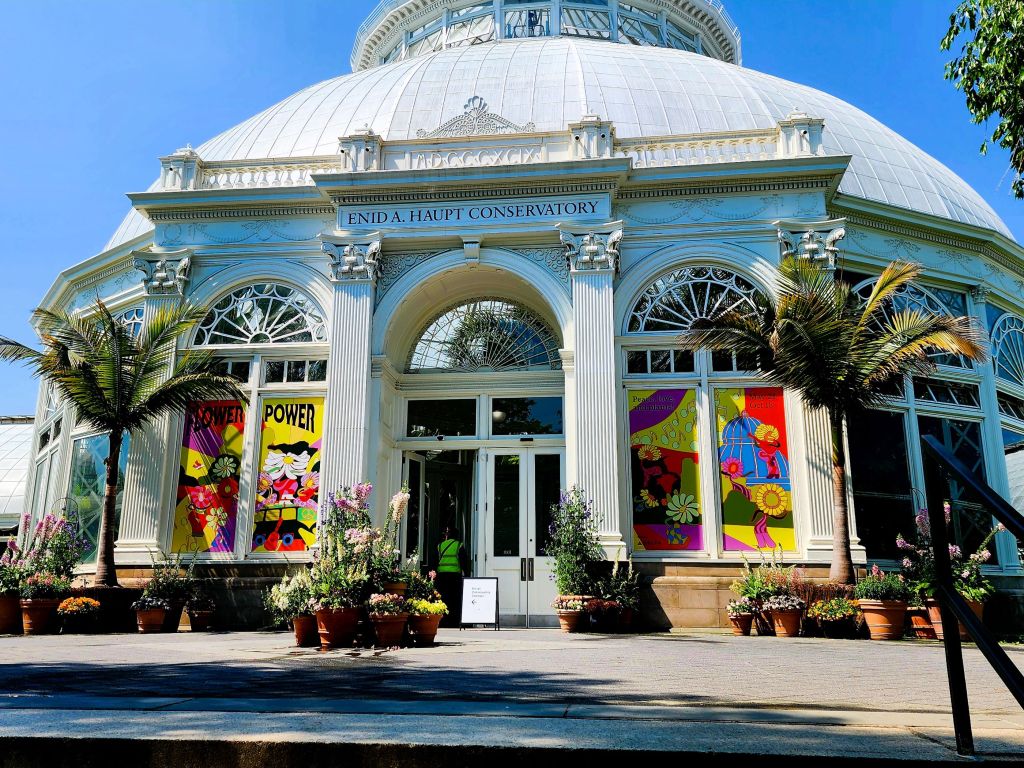
‘FLOWER POWER,’ Peace, Love and Plants at the New York Botanical Garden



Flower Power

The Multidisciplinary Exhibition Celebrating Flowers as a Cultural Symbol, Opens MAY 23, 2026.
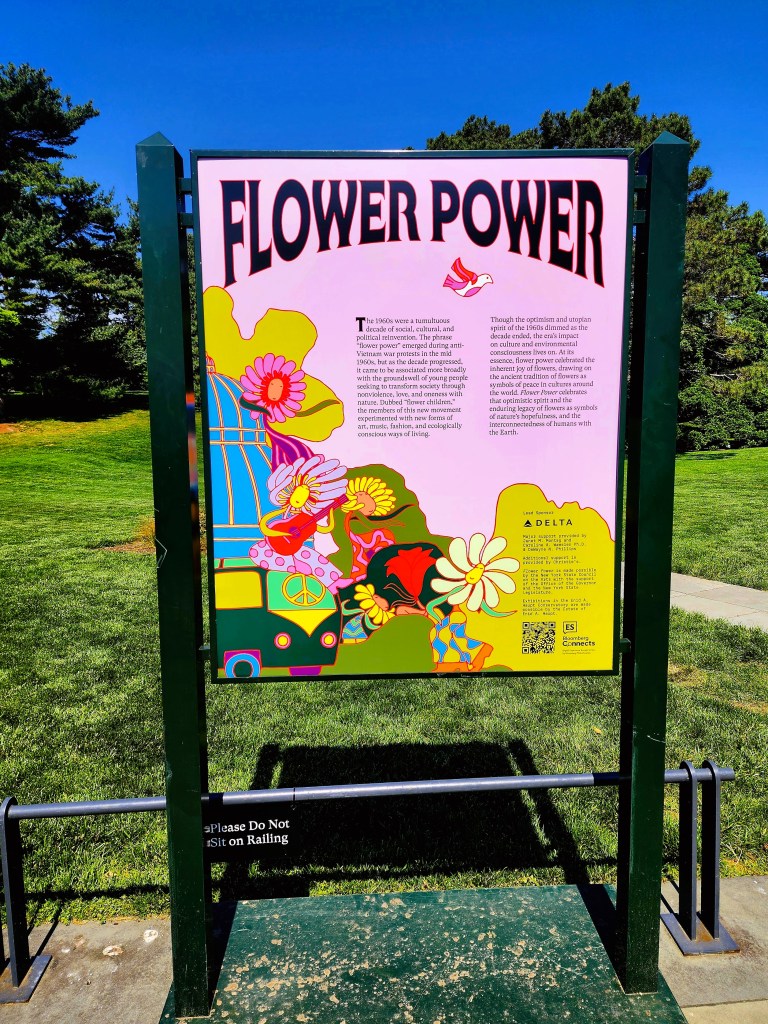

FLOWER POWER’S CONTINUED RELEVANCE


What more appropriate theme for the summer exhibition at NYBG could there be in our current times which are a throwback to the 1960s when the term “Flower Power” was coined by Allen Ginsberg. The hippies or “flower children” as they came to be known, protested to “make love, not war,” and demonstrated with flowers to replace weapons as they marched and sang, “all we are saying is give peace a chance.”
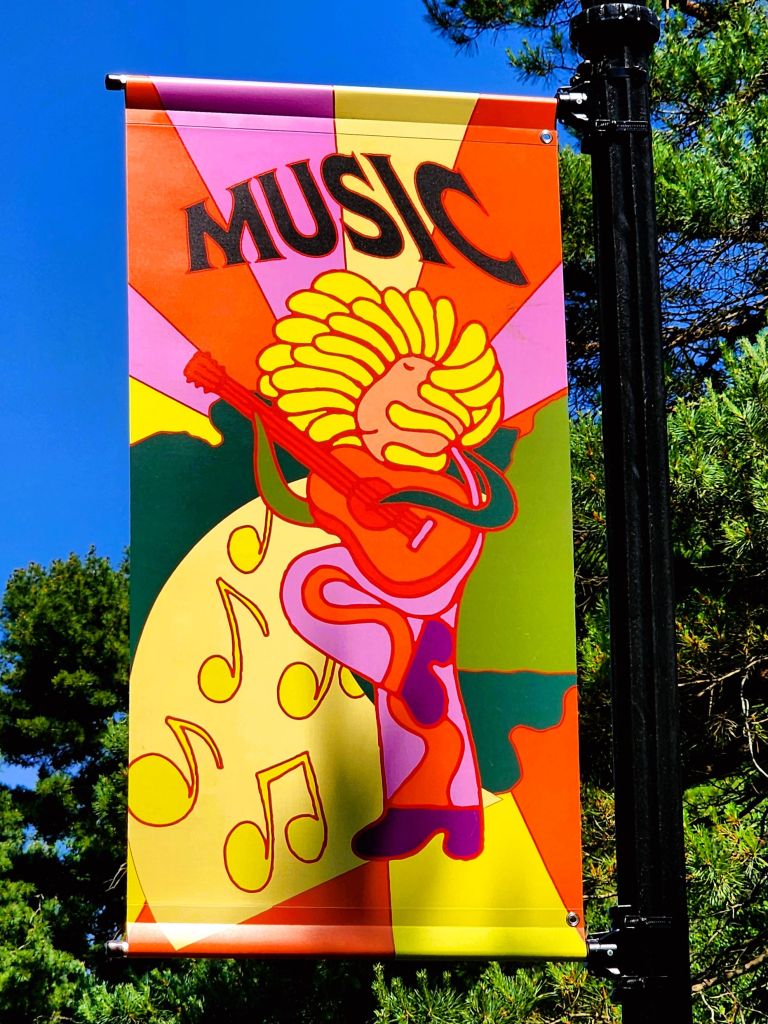
On college campuses throughout the nation the youth protested the Vietnam War. This gave rise to an explosion of cultural changes in the arts, social dynamic and environmental concerns. These revolutionized aspects of industry and perspectives, and also created a backlash of conservatism we are still experiencing today. The ideas from that time have remained continually relevant.
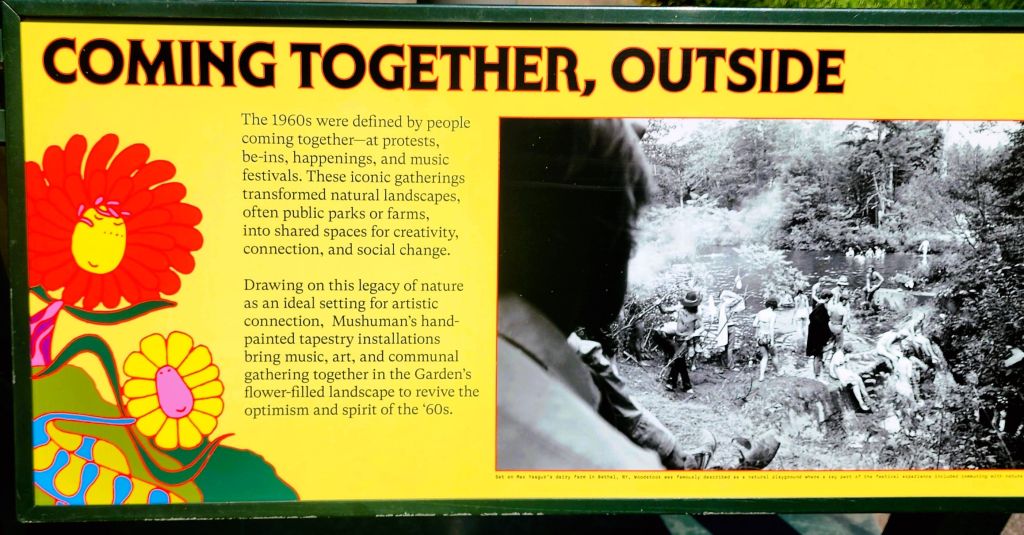
As a supreme irony, the theme is appropriate today, though that is the last thing that the NYBG team had in mind when they collaborated to come up with “Flower Power” over two years ago. When they arrived at this theme, little did they know that they were prescient, with a highly topical theme. There was a different administration in the White House and war was nowhere on the horizon, nor were the issues of the 1960s like equality, voting rights and equal opportunity an overarching concern. Never in the imagination of the NYBG team nor the 99% of our nation’s non-billionaires did we fathom that the “State of the Union” would be where it is today. The parallels are astounding.

FLOWER POWER AND WHAT IT REPRESENTS HAS BECOME A NECESSITY IN OUR LIVES AND FOR ALL TIME AS A VIBE FOR LIVING IN FREEDOM WITHOUT FINANCIAL OPPRESSION.
“Flower Power” conveys symbols of peace and love that advance closer relationships with the natural and human world. This is what NYBG’s mission is about.

How is this theme so timely? First, the country disagrees with the administration’s failed War in Iran which polls suggest is completely unpopular with the American people. Unlike the War in Viet Nam, the Iran War is a war which the administration started without congressional approval or justification. Furthermore, and worse, it was influenced by a leader who for forty years tried to get previous US leaders to attack Iran, to no avail. The current administration jumped to the influencer’s recommendation in error and without congressional consent.


GIVING PEACE, ECONOMIC AND ENVIRONMENTAL WISDOM A CHANCE THEN AND NOW
So now, the American people once more rely on “Flower Power,” and the idea to “give peace a chance.” Also, in the 1960s was the push for equality and an end to discrimination in voting rights. There were famous marches and the youth marches against the Viet Nam War melded with marches against segregation and for equal rights. Flower Power and the association of peaceful marches trended then. Who could possibly think that similar marches and protests would happen today or that voting rights would ever become an issue today?


THEN AS NOW: MARCHES
Ironically, there have been millions marching to show their displeasure with the current administration’s policies on war, on tariffs, on thousands of job cuts by DOGE, and on the January 2025 raid and privacy theft at the Treasury Department. It was then that Americans’ SS data which is to say access to Americans’ financial data, tax data, medical records and all records and information related to SS numbers was illegally downloaded to servers held by DOGE youngsters unauthorized by Congress to hold such data.

THEN AS NOW: LEGAL VIOLATIONS
This privacy breach unauthorized by Congress compromised and still compromises immigrants (not yet citizens who pay taxes) and citizens’ privacy in violation of federal and state law. This lawbreaking by the administration has not yet been corrected or punished. In addition protests have been against out-of-control inflation rates, tearing down of the White House East Wing and much more which in effect has been a war against those American people who are not billionaires.


THEN AS NOW: CIVIL RIGHTS ISSUES
Worst of all there have been protests against the dismantling of the Voting Rights Act with the attempt to gerrymander the Black population out of their voting rights in southern Red States. This recalls the Civil Rights marches during the 1960s. Since the Roberts court allowed gerrymandering in the Red States to reconfigure voting maps, the Court’s failure to uphold the Constitution has been done as an attempt to disenfranchise Southern Black people to prevent a majority Democratic congress. which will impeach and humiliate the occupant of the WH a third time with the intent of trying and jailing him for high crimes and misdemeanors.



WE NEED FLOWER POWER NOW!
If ever there was a time that begs for Flower Power, “coming together” to “give peace a chance” it is today. Completely unintentional as a prescient, current theme, the Garden team anticipated that the theme “Flower Power” presents a vibe, a mood, a style we should be embracing. The timeless theme lands at the right time. “Giving peace a chance and making love, not war” is what the country wants. The exhibition invites visitors to “come together” and embrace flowers as meaningful symbols in our own lives. Joanna L. Groarke, Vice President of Exhibitions and Programming at NYBG says, Flower Power reminds us that plats have always been a shared language, one that artists return to again and again to express hope, harmony and connection.”

The Garden-wide takeover also includes a gallery presentation (NYBG Mertz Library building) which features a display of paintings, photographs, screenprints and collages by artists from the 1960s and ’70s that depict flowers as symbols of peace and love. Andy Warhol’s Flowers (1964) is on view alongside the image used as source material for the work, a photograph taken by nature photographer and environmental activist Patricia Caulfield.

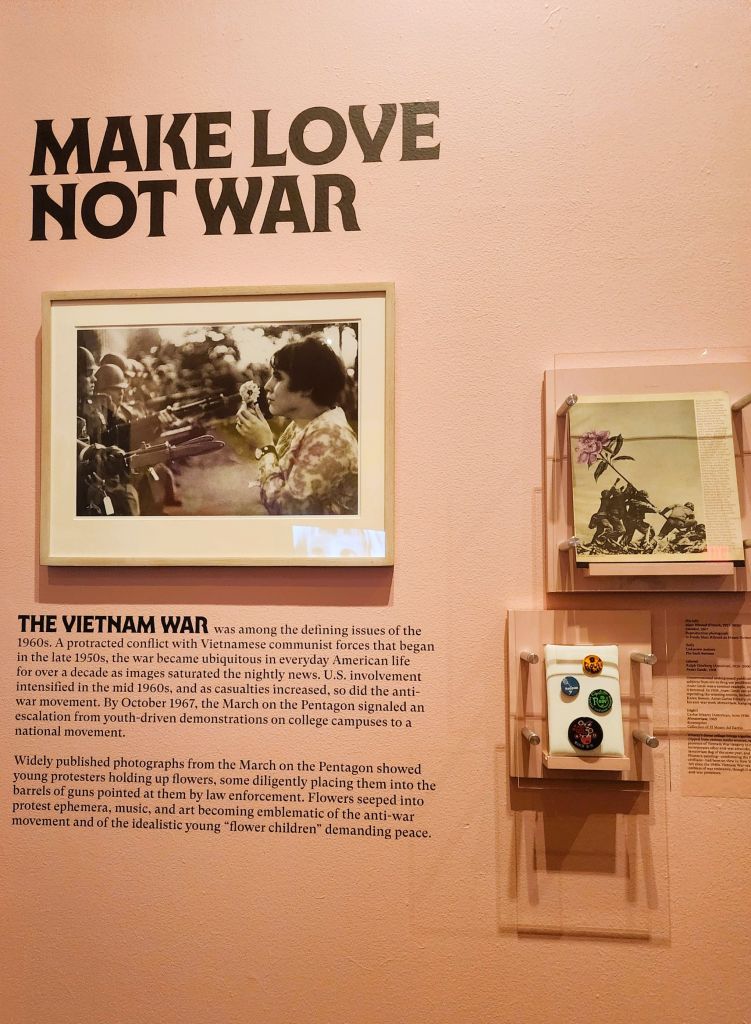
The famous photograph of an activist reacting to a firing arm and other archival photographs, news footage, memorabilia, books, art and first editions of critical feminist and environmental texts (Betty Friedan’s The Feminine Mystique and Rachel Carson’s Silent Spring are at the NYBG Mertz Library.
LIQUID LIGHT SHOWS ARE A MULTIMEDIA PERFORMANCE ART
On select evenings starting May 30, 2026 Flowr Power comes alive with an astonishing liquid light show and joyful live music. Each night features a headlining band on stage whose work brings a fresh, modern edge to the iconic and free-wheeling, spirited sound of the late ’60s. These include Ghost Funk Orchestra (May 30), Habibi (June 13), Evolfo (June 20) and Woods (June 27). Colorful visuals by LIQUID LIGHT LAB transform the Mertz Library facade into a mesmerizing psychedelic canvas.
FLOWER POWER RUNS THROUGH OCTOBER 18, 2026
For more information on GARDEN programing go to the NYBG site. https://www.nybg.org/event/flower-power/?gad_source=1&gad_campaignid=23859997109
These ‘Fallen Angels’ are Beautiful, Starring Rose Byrne and Kelli O’Hara
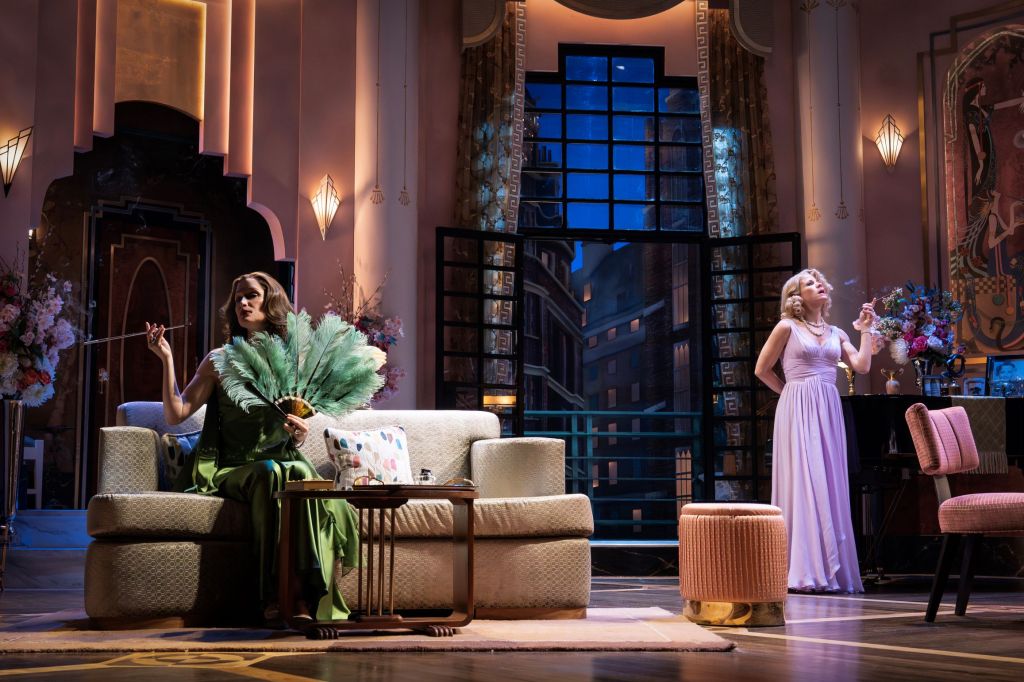
When Noël Coward’s comedy Fallen Angels was first performed in London, an official who was a censor in the Lord Chamberlain’s office denied its license because the married female characters had licentiously cavorted in premarital sex and planned to commit adultery. Only until the Chamberlain personally intervened, was the hilarious, slapstick comedy given its license and performed.
Far from being an “unpleasant play,” as critics suggested in 1923, Coward’s early work reveals his ingenious wit and love of turning situations on their heads. In this, Julia Sterroll (Kelli O’Hara) and Jane Banbury (Rose Byrne), riotously turn to alcohol to get up the courage to see Maurice, an old beau both were madly in love with at different times. When their affairs with Maurice ended, they married spouses who were the opposite of their lover and settled down. But the aftershocks of their love are very much ever present and cause the old friends to be jealous of one another, which they keep just under the surface of their close relationship. Then the “green-eyed monster” rears its ugly head when Maurice announces he is coming to visit them turning their settled lives inside out with riotous consequences. Fallen Angels is currently spreading its joyous, madcap delight at the Todd Haimes Theater through June 7, 2026 in a limited engagement.
O’Hara’s Julia and Byrne’s Jane are left to their own entertainments when husbands Fred (Aasif Mandvi) and Willy (Christopher Fitzgerald) go off on an overnight golf outing. After a relaxed breakfast with Fred before he leaves for golf, Julia brings up a divorce reported in the papers. With this theme of the end of love announced, Julia tells Fred she loves him but is not in love with him, Fred avers. His ego is upset that the passion and sex have gone out of the relationship, and companionship has taken its place as Julia suggests. Coward has cleverly set up the farcical conceit which he will play upon with wit, whimsy and alcohol, throughout the comedy because as it turns out, Jane feels similarly about her husband Willy.
Are the women teasing their spouses or are they serious about Julia’s suggestion she is not in love with Fred and Jane’s presentment that disturbs Willy? Clearly, the men don’t feel the same and still love their wives, they believe, and passionately. And why not? O’Hara ad Byrne are lovely. On the other hand their husbands, thanks to hair and make up by David Brian Brown and Victoria Tinsman, are not gorgeous Leo DiCaprio types to swoon over. They have aged and are not their wives physical equivalents.
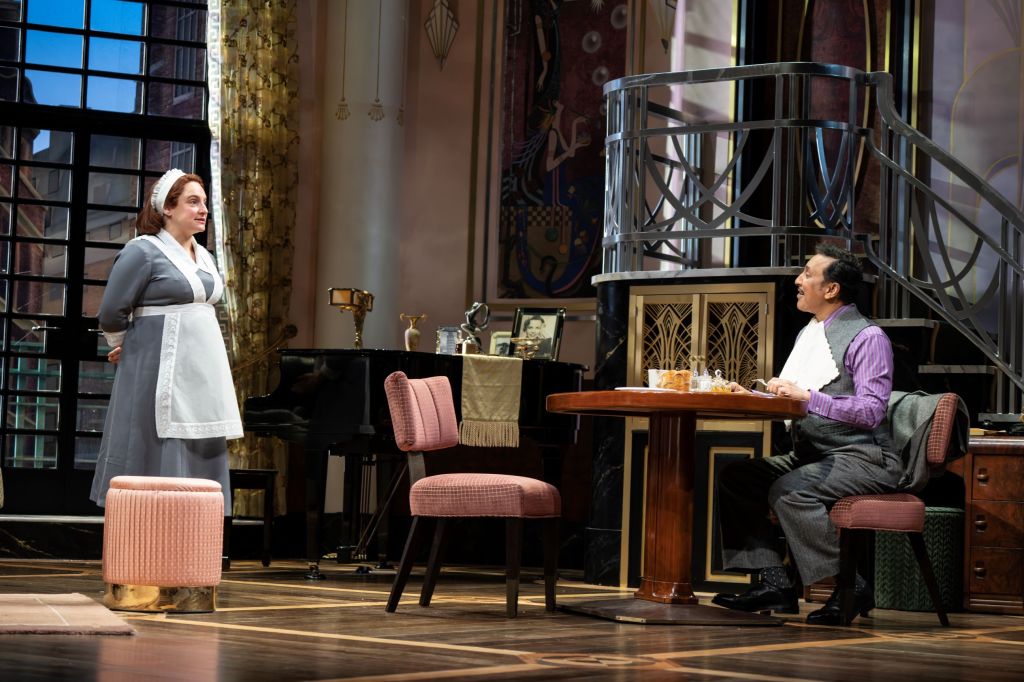
Not only is this a casting coup, by director Scott Ellis, it ridicules a patriarchal, cultural more in relationships and marriage about what is appropriate. It is incumbent upon lovely women to pretend that average looking men are “sexy” and “attractive,” if they have money and status. Clearly, the money and status are the alchemy that transforms the men’s looks. Also, clearly, Julia and Jane are younger than their husbands, another more that Ellis’ casting takes a swipe at.
After all, a wealthy older man with money is not to be seen with a status-downer, i.e. a fat, older woman (sorry, this is the psycho culture). The younger, more beautiful the woman he is with (eye candy), the more the average-looking man’s status and attractiveness increases. Of course the absurd end result of this is one-sided. Heaven forbid, if women practice the same and seek out younger men or more attractive men around their age as Maurice is. Abomination! Ellis takes advantage of these unspoken cultural folkways and enhances Coward’s wit because of his choice of the attractive TV persona he casts to play Mauice Duclos, their old flame, who is to- die-for-adorable in comparison to their husbands. He causes the fallen angels to fall more quickly and deeper into the abyss of “shame.”
Julia and Jane have married up for money. They have most probably compromised and settled for Fred and Willy, though if the situation was right, they easily would have gone with Frenchman Maurice if he proposed. Their husband’s wealth and status are revealed from their lifestyles, thanks to David Rockwell’s set design, a lovely Art Deco apartment with a balcony, large paintings, columns, appointments, and an eye-popping chandelier.
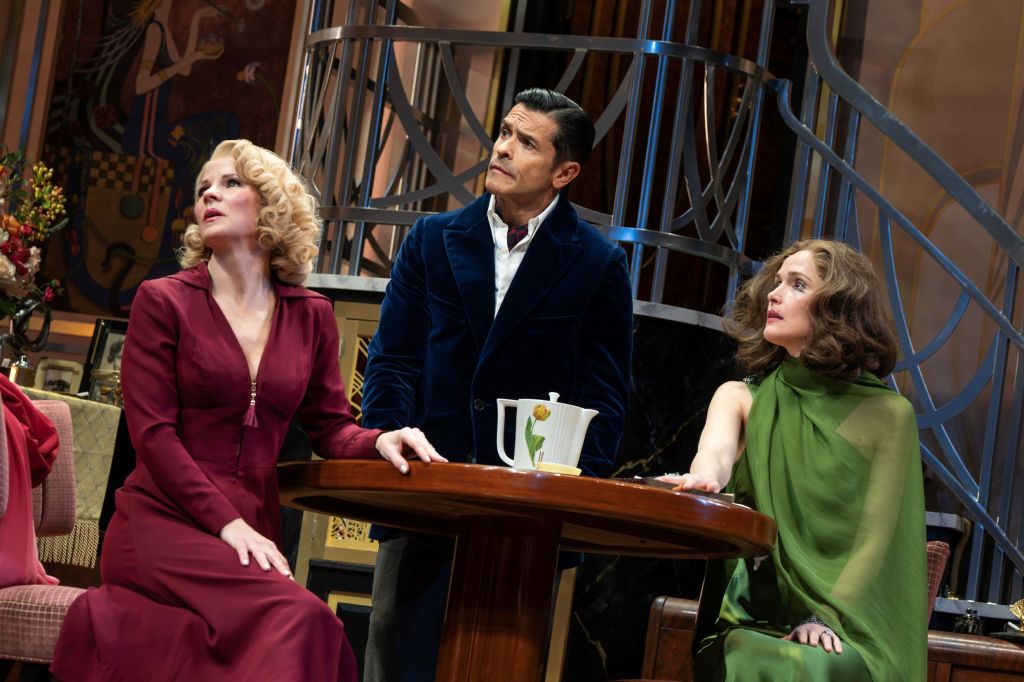
Their period costumes, dressing gowns, street clothes, evening gowns and accessories, designed by Jeff Mashie, show their personalities and economic status. Only Byrne could wear the deep emerald green, silky, long gown to cavort around in and look totteringly-elegant as the champagne, wine and cocktails wreck her balance. O’Hara’s pratfalls include sliding belly-front down a flight of stairs in a lavender gown with cinched waist and chiffon, floor-length skirt. She is beyond riotous. Both are dressed to the nines after having blown up their imaginations with expectation of the passion to come with their former lover.
Saunders (Tracee Chimo), their prodigiously qualified and hyperbolically talented servant bests then at every turn of a glass of alcohol. Chimo’s Saunders, a new hire, is smashing in the role of the foil, the straight woman whose sincerity at showing up the “angels” with her knowledge of piano, opera, languages, her prior appointments to exotic places, her infinite talents, and her expertise as a chef and efficient servant is breathtaking. Saunders deserves every tuppence she makes and reveals she is five times more accomplished than the leisure trad wives Jane and Julia who, by comparison, are useless toys, perishing of boredom. Chimo’s Saunders also has preternatural hearing and anticipates where Jane and Julia are going, a function of her job, which they find annoying because all they discuss is Maurice. Indeed, Saunders must not hear them go on and on. This sets up more Coward wit when the women change the subject to outrageous topics to throw off Saunders’ sniffing out their over-the-moon conversation about Maurice’s visit, which they fear will never come and must get drunk to salve their over-excited imaginations at the mere thought of him.
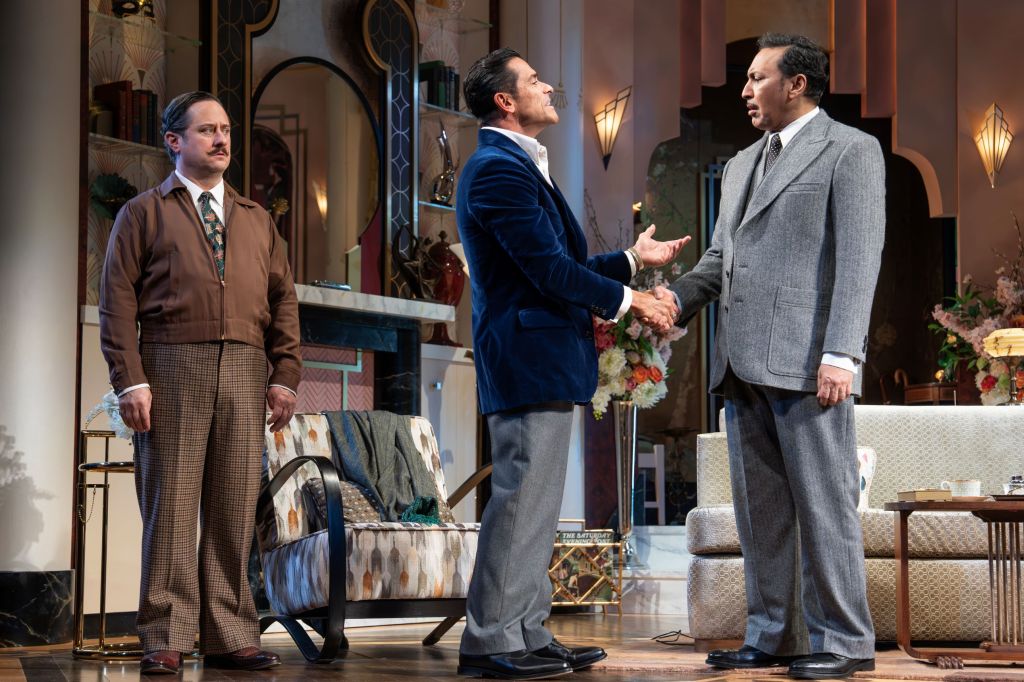
The mayhem and gradual explosion of their drunken riot is beautifully timed, staged and wrought. Byrne and O’Hara are world-class comedians.
The hilarity really explodes after the set up when the women wait for their beloved Maurice to appear before dinner, singing his praises, and drinking, and singing his praises during dinner, and drinking, and singing his praises, and drinking after dinner. As they drink, eat and swoon over Maurice, they are interrupted by phone calls which drive them to more drink because everyone but Maurice calls. Finally, even they become overwrought with their own fantasies and turn against each other, the jealousy manifesting. Jane stumbles and storms out. Julia is beside herself thinking Jane is meeting Maurice behind her back which ratchets the excitement and wild comedy toward the heavens.
Who will calm the situation down? Not the husbands. In shock at Jane’s treason Julia spills the beans to Willy, who conveniently shows up moments after Jane huffs out. He questions where his wife is. At the height of the chaos, when Fred and the wayward, back-stabbing Jane return, there’s another twist. The two women unite to fawn off their husbands’ probing queries about their antics. It is then that Coward, perfectly read by Scott Ellis, reveals the pièce de résistance. In walks the stunning Maurice, every inch the living fantasy brought to life in Mark Consuelos, who is having the time of his life. The audience was thrilled to see him. Indeed, he is Julia’s and Jane’s equivalent, but not for marriage, for love and passion.
Interestingly, the implication is that neither Julia or Jane would be adverse to a ménage à trois, if the situation wandered in that direction. Coward suggests this inherent possibility at the conclusion when Jane and Julia follow Maurice upstairs to see his apartment. (Ironically, he has moved into their building.) This most probably was another unspoken reason why the British censor withheld the comedy’s license. Seventy years later since Fallen Angels appeared in the U.S. the play has found its moment.
Fallen Angels runs 1 hour 30 minutes with no intermission at the Todd Haimes Theater though June 7, 2026. roundabouttheatre.org.
Carrie Coon and Namir Smallwood are Frightening in Tracy Letts’ ‘Bug’

She’s a cocktail waitress. He’s a Gulf War vet. When they get together they create an unforgettable relationship in Tracy Letts’ sometimes comedic, mostly compelling psychological drama Bug, currently making its Broadway premiere at Manhattan Theater Club’s Samuel J. Friedman Theatre through February 8, 2026. Aptly directed by David Cromer for a maximum thrill ride, Agnes (Carrie Coon) and Peter (Namir Smallwood) gain each other’s trust in a world that increasingly threatens to destroy them.
Stellar performances by Coon (The White Lotus, The Gilded Age) and Smallwood (Pass Over on Broadway) carry the production through a slow build first act into the harrowing intensity and climactic finish of the second.
Letts’ chilling drama unfolds in a motel room on the outskirts of present-day Oklahoma City. Scenic designer Takeshi Kata features a typical mundane bedroom with cream colored walls and complementary cheesy lamps and appointments that spell out Agnes’ challenged socioeconomic position. By the second act, after a time interval during which Agnes and Peter panic and go through stages of emotional terror, the room’s once benign look transforms to a place whose inhabitants are under siege.
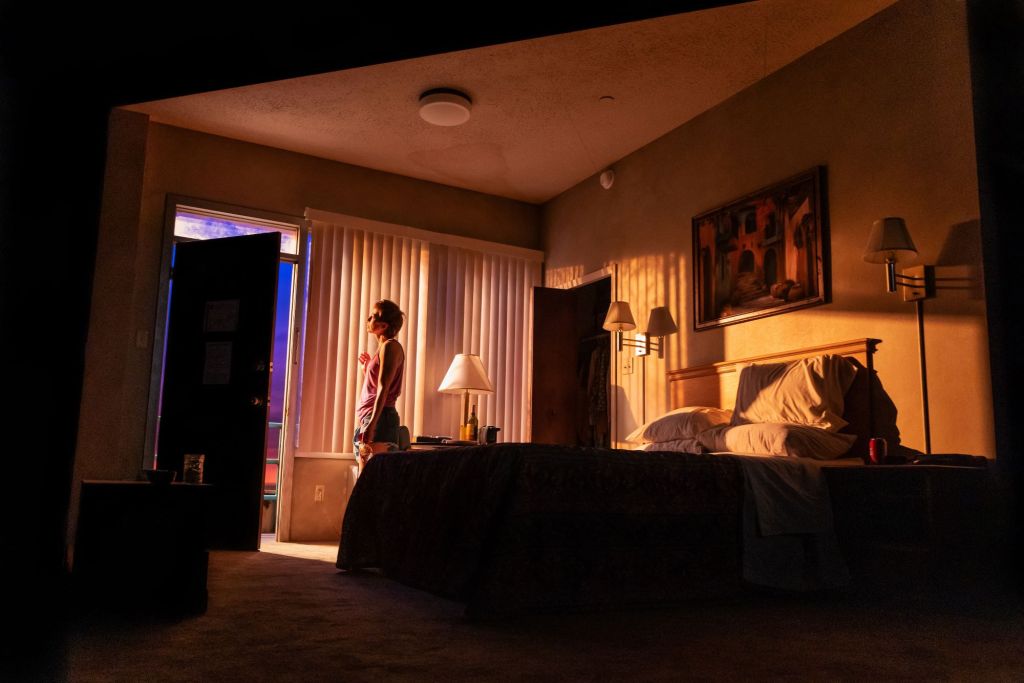
At this point Kata’s design shocks. It is then we understand how badly the situation has progressed in the minds of the characters .
At the top of the play we meet Agnes who lives in the motel room hiding out from her violent former husband Jerry Goss (Steve Key) an ex-convict. As Coon’s Agnes and her lesbian biker friend R.C. (Jennifer Engstrom) do drugs, R.C. warns Agnes to protect herself against Jerry whose prison release she questions because he is dangerous.
Ironically, Agnes asks about the background of the stranger using her bathroom. R.C. vouches for Smallwood’s Peter who she brought with her as they make their way to a party that R.C. also invites Agnes to. While R.C. is on the phone with personal business, Peter assures Agnes he is “not an axe murderer,” and expresses an interest in her.
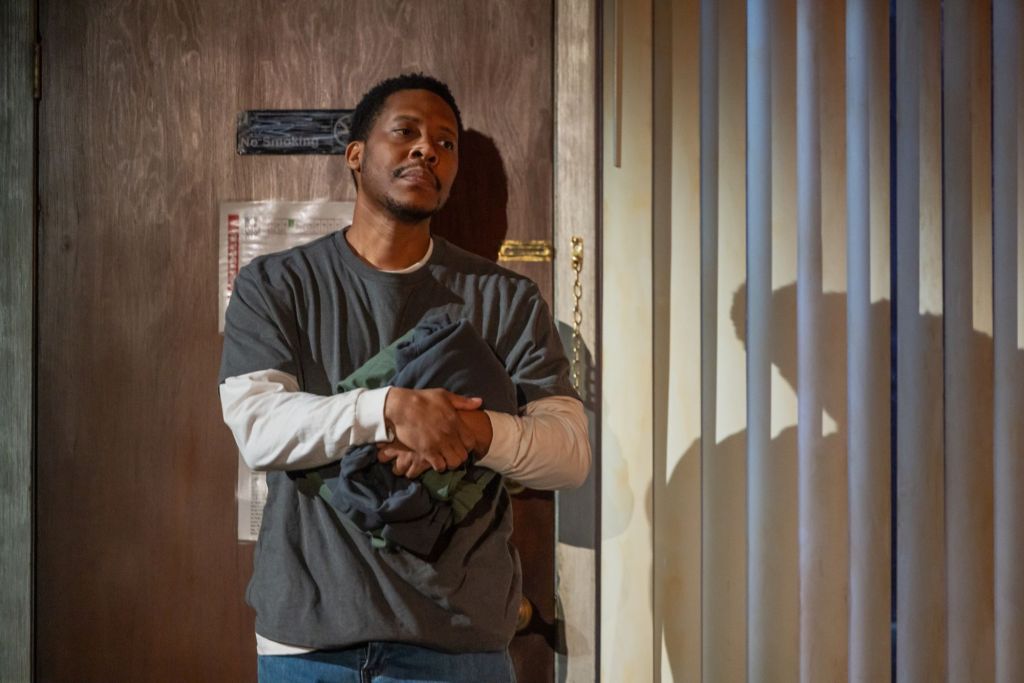
Instead of going to the party with R.C., both Agnes and Peter decide to hang out together and talk, feeling more comfortable getting to know each other than being in a larger crowd. It is during these exchanges and Peter’s staying overnight at Agnes’ invitation that her emotional neediness clarifies. When Jerry shows up, they argue and he hits Agnes. After Jerry leaves, Peter’s attentiveness draws her closer to him. As Agnes and Peter settle in and do drugs, they share secrets and bond. Increasingly Agnes’ perspective shifts. She accepts Peter’s world view and personal reality despite its extremism.
Though Peter says he should go, Agnes uses his hesitation to encourage him to stay, insisting upon it. She makes a symbolic gesture that clever viewers will note conveys her acceptance of Peter because of her emotional desperation more than a belief in his perspective and backstory.
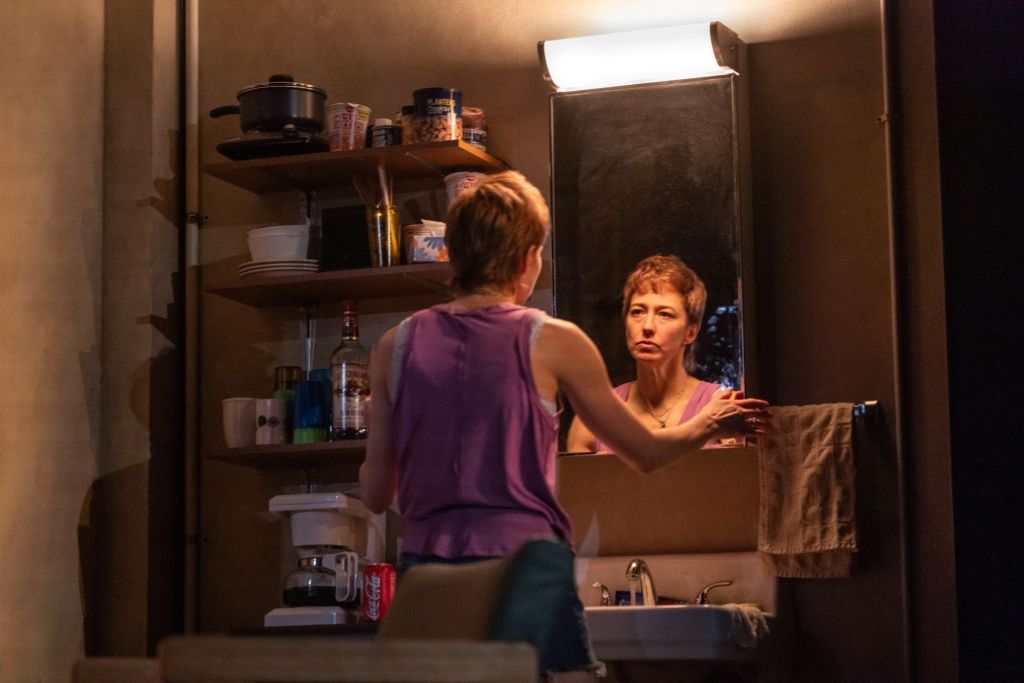
In the next act we see the extent to which Peter has made himself comfortable living with Agnes whose resolve against being with Jerry has strengthened because of her relationship with Peter. Because their concern and care for each other resonates with trust, Peter relaxes into himself. He examines his blood under a microscope and finds “proof” of a conspiracy theory that the government uses military vets and unsuspecting individuals as guinea pigs to experiment on. With convoluted half-truths about government cover-ups related to the war in Iraq, Oklahoma City bombing, the Tuskegee syphilis experiment and more, he panics, fearful that aphids bite him and Agnes, feed off their blood and infest their living space.
Convinced that egg sacks have been planted in him by doctors who also monitor and follow him with helicopters because he has gone AWOL, he persuades Agnes to accept his “bug” theory that he grounds in explanations. Together, they plan a way out of the infestation which has taken over their bodies and minds.
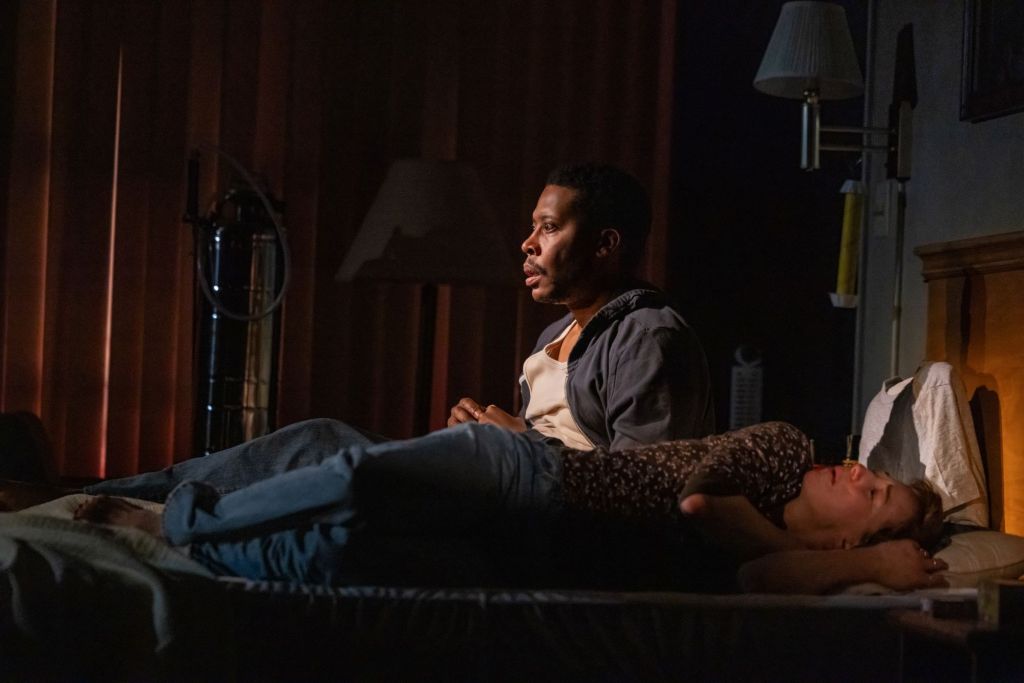
To complicate matters Dr. Sweet (Randall Arney) shows up and explains Peter’s medical case with R.C. and Jerry to legitimize taking Peter back with him to “Lake Groom.” Letts offers the intriguing possibility that there may be many truths about this situation. But without independent investigation and research, belief takes over. Whether Peter is part of an experiment and a guinea pig or not, Agnes expresses her love for him comforted by their bond which gives her life meaning. Within the horror of the infestation, they have found their emotional sustenance. Their relationship is their sanctuary from life’s pain.
Cromer’s vision and his shepherding of the fine performances by Coon and Smallwood make this stylized production all too real and terrifying. Thematically current, with various cultural attitudes related to government cover-ups, and conspiracy theories stoked by the questionable motives of those in power, the creative team’s efforts (Heather Gilbert’s lighting design, Josh Schmidt’s sound design) hit the sweet spot of relevance.
Though written decades ago, in Bug Letts intimates how and why certain women embrace what others deem to be their partner’s extremist perspectives. Wounded and seeking love, women like Agnes more easily accept their partner’s ideas, rather than search for facts and proof to dispute them. Governmental cover-ups of the truth fan the flames of extremist belief systems. The consequences can be socially and culturally devastating.
Bug runs 1 hour and 55 minutes with one intermission at the Samuel Friedman Theatre ( 47th St. between 7th and 8th) https://www.manhattantheatreclub.com/shows/2025-26-season/bug/
‘Chess,’ a Terrific Aaron Tveit, Lea Michele, Nicholas Christopher Electrify a Less Troubled Book
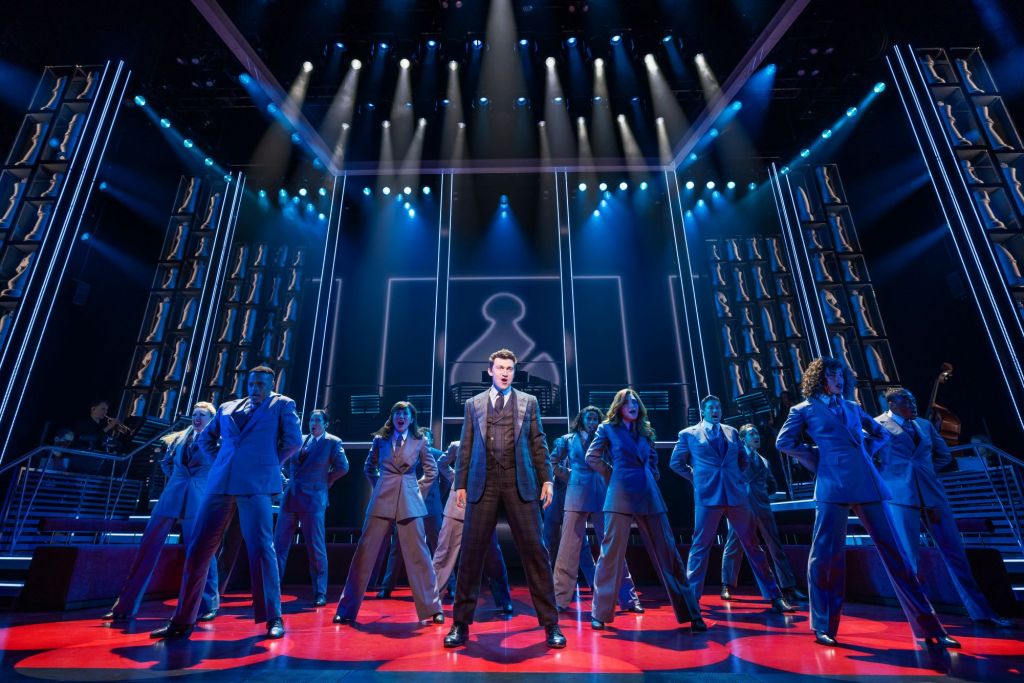
In all of the adventures of the musical Chess, from concept album to initial production in the West End (1986), to its Broadway premiere (1988), concerts, revivals, recordings and tours up to the present, there might be an object lesson in how to develop a winning book. The memorable score by Abba’s genius collaborators, Benny Andersson and Björn Ulvaeus will always resonate. But the musical with lyrics by Ulvaeus and Rice, and new book by Danny Strong may have alighted on the merry-go-round of success never to return to a troubled past. The musical currently runs at the Imperial Theatre until September 13, 2026.
Chess is acutely, incisively directed by Tony-award winner Michael Meyer (Swept Away, Hedwig). Meyer stages many of the numbers with the concert style approach. Kevin Adams’ lighting design of blues, reds, purples, yellows, effectively dramatizes the dynamic between and among the specific characters, the Soviets and Americans, and the shift of settings, i.e. Bangkok in Act II.
In its current iteration, the Broadway revival, starring three powerhouses in the lead roles, makes Tim Rice’s idea about a Cold War musical more coherent and interesting. This seems especially so if one lived through the hell of President Reagan’s escalating nuclear arms race with the Soviet Union, and saw the 1983 TV movie The Day After (about nuclear annihilation). Watched by 100 million viewers in one sitting, the TV movie, also watched by Reagan, allegedly influenced him against continuing proliferation.
Strong’s book ties in to the arms race, SALT talks, CIA and KGB compromises, and a controversial, frightening event (Able Archer ’83). All become aligned with two chess matches and chess gambits played by the Soviets and Americans to enable communications during a dangerous time in the 1980s, when nuclear war seemed imminent and chess was used as a form of negotiation to save face and make deals (“Difficult and Dangerous Times”).
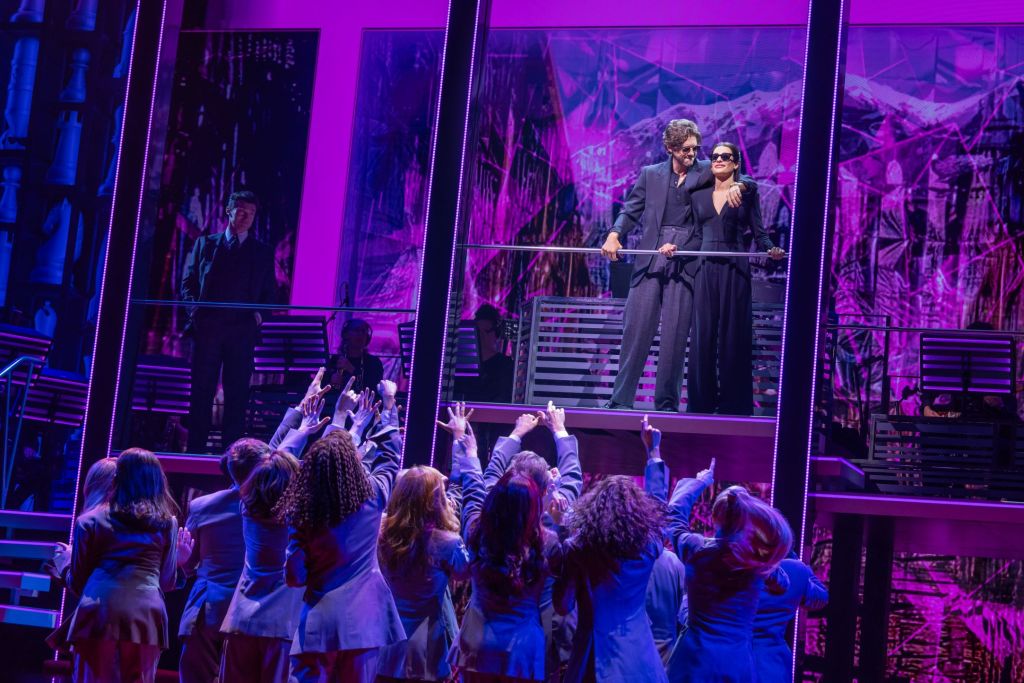
To frame the story, clarify the events with a through-line, and provide a critique, Strong presents this version of Chess through the perspective of an omnipotent narrator, The Arbiter, superbly played by Bryce Pinkham. Snapping his fingers to move the action, he introduces the players, as he selects and explains the events which the company enacts. Invariably, he shares his opinions. Accordingly, the characters subtly move around like chess pieces (the metaphor) in the Cold War game.
This is an important conceit that must not be overlooked as one becomes caught up in the powerful music, well choreographed dances, and love triangle between Freddie (Aaron Tveit), Florence (Lea Michele) and Anatoly (Nicholas Christopher). We thrill to their sterling voices and the ensemble’s striking dances. Amidst the glory, the emotion and the angst, Bryce Pinkham’s Arbiter holds the Cold War musical together and gives it a new coherence. He dishes up humor and irony as he tosses off snarky one-liners that sometimes relate the events of the past to events in the present. In one aside he infers the US and NATO countries are in a second Cold War.
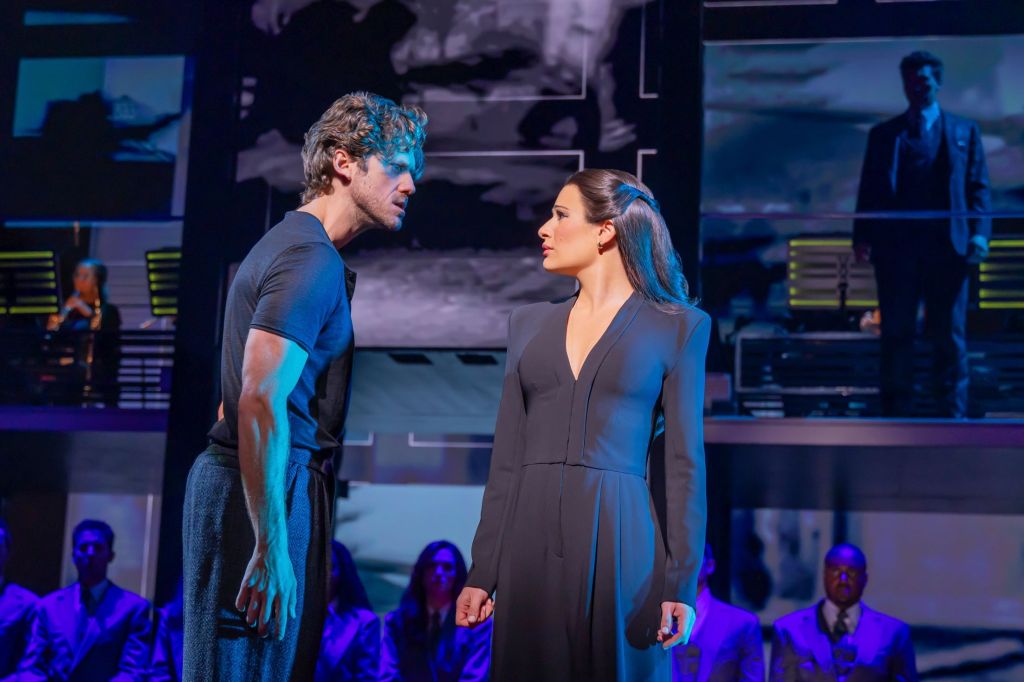
Accompanied by the ensemble, Pinkam’s Arbiter presents a wild and woolly number in which he introduces himself as a new character, and critiques his song (“The Arbiter”) with a confident, “I’m going to crush it.” Pinkham does “crush it,” then his character arbitrates the first chess match between Freddie and Anatoly. After the match Freddie’s Second, Florence, eventually falls out of love with wired Freddie (“Pity the Child #1), and into love with the depressive Anatoly (“Where I Want to Be”). The struggle for all to remain on an even keel against the backdrop of the spy games creates the musical’s tension and generates the fabulous songs.
In Strong’s book whether one agrees with the character’s attitude or not, Pinkham’s Arbiter presents clarity and the symbolism that the Soviets vs. the Americans “Cold War” was an overarching chess match containing a series of smaller chess matches between the players, even between Anatoly’s two love interests, his wife, Svetlana (Hannah Cruz) and Florence. Their powerful duet (“I Know Him so Well”), strikes gold in Act II. After Anatoly defects to England and lives with Florence, he plays against the Soviet champion Vladimir Viigand in Bangkok (Act II), which underscores the frightening Able Archer 83 event.
In Strong’s version, the CIA agent Walter de Courcey (Sean Allan Krill), and KGB agent and Anatoly’s chess mentor Alexander Molokov (Bradley Dean), negotiate compromises and deals behind the scenes of the first match and the second. Of course, this is for the purpose of winning the larger game of chess which is a deescalation of nuclear weapons to insure the safety of the planet. Indeed, there were real chess matches between the countries, and Pinkham’s Arbiter infers this with his suggestion that some of these events are true. The video projections go a long way toward filling in the gaps in information and de-mystifying what happened during the time befor the Berlin Wall fell.
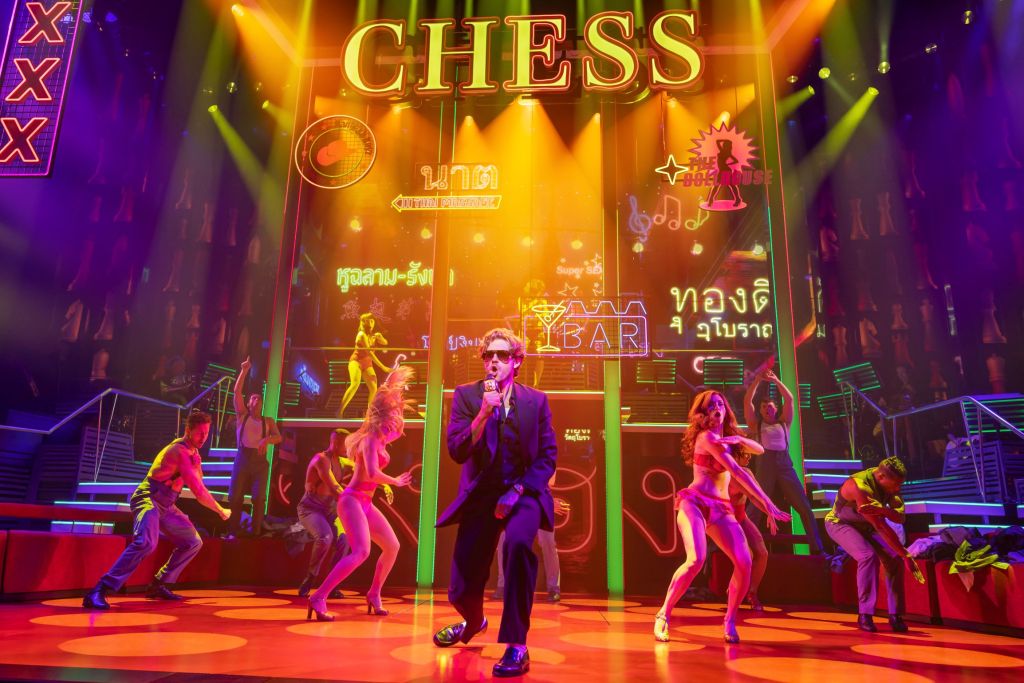
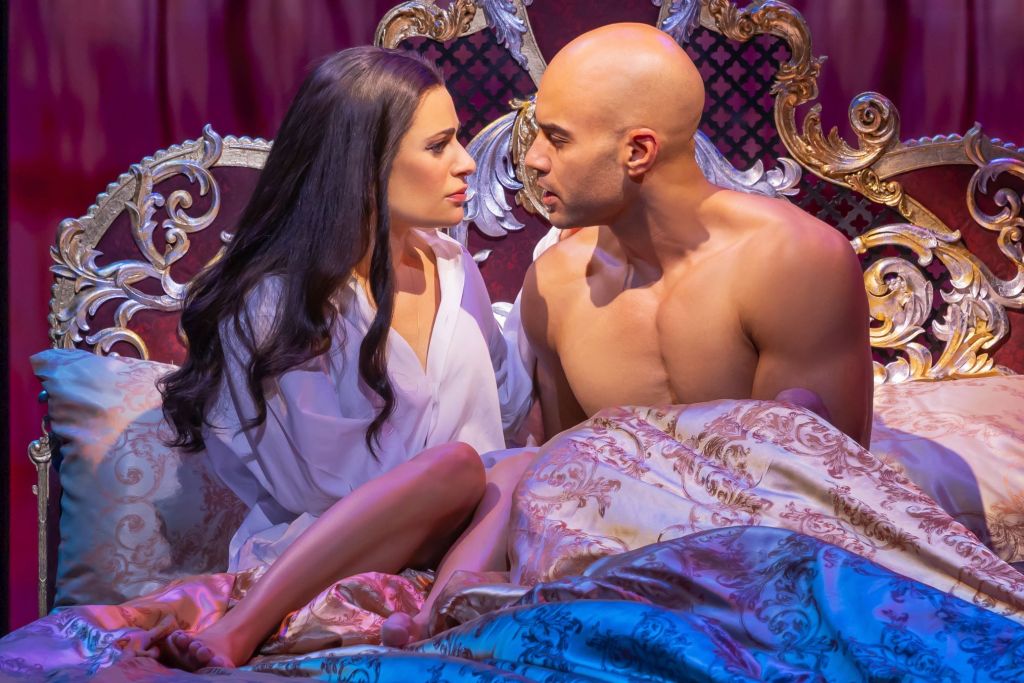
David Rockwell’s multi-tiered scaffolding enhanced by neon and chrome gives the production a stark, period look which is softened for an intimate bedroom scene between Florence and Anatoly with minimal props. Video by Peter Nigrini enhances the historical background needed to provide context, i.e. the Hungarian Revolution, or add interest. Lorin Latarro’s energetic, at times mannered (“Difficult and Dangerous Times” ), at times wild, erotic (“One Night in Bangkok”), energetic movement and dance enhance the ensemble’s pivotal numbers. These reflect the stereotypical thinking of that time, the cold war policy and the feverish, hot, atmosphere in Bangkok where the second chess match is held.
Appropriately, the ensemble’s tailored, grey suits (Tom Broecker), reflect the somberness of countries at war with the threat of their antagonisms heating up. The leads in dark colors contrast with the ensemble, and Anatoly’s wife dressed in maroon “leather.”
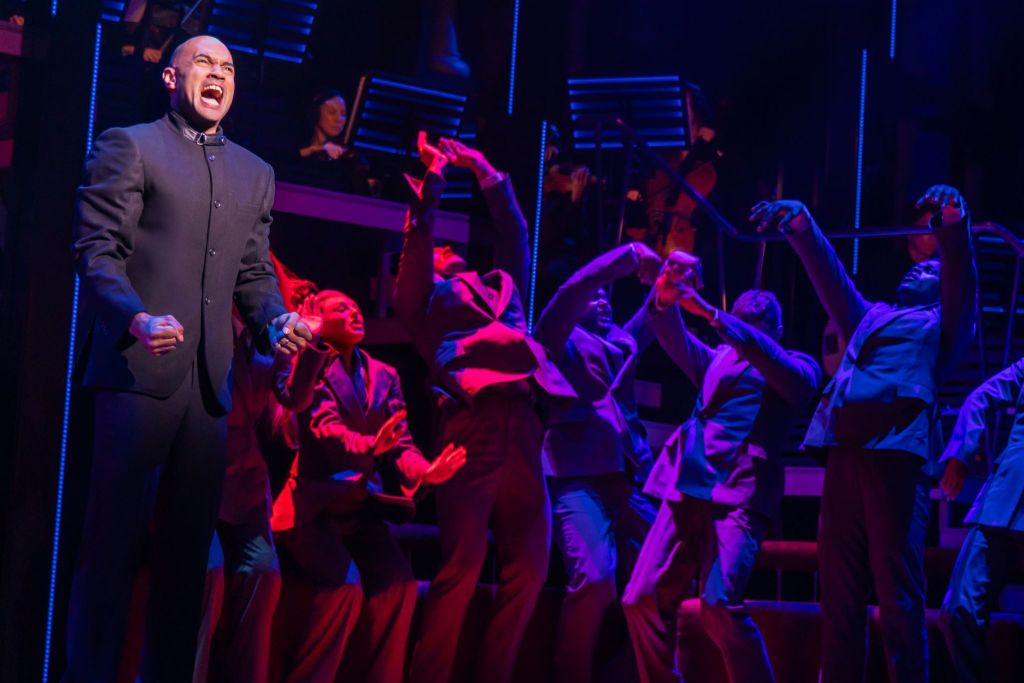
The phenomenal score played by an 18-20 piece orchestra with Ian Weinberger’s musical direction, and Anders Eljas and Brian Usifer’s orchestrations power up the ballads, pop rhythms and near operatic ensemble numbers gloriously. Finally, the orchestra, carefully positioned onstage by the back wall, is always witnessed by the audience who engages with it.
The sexy “One Night in Bangkok” received applause of recognition by the audience with the first notes of the charted global hit song (1984-85), as the exotic dancers and Tveit rocked Latarro’s movements with mastery. The superbly performed numbers by Tveit (“Pity the Child #2”), Michele (“Someone Else’s Story,” “Nobody’s Side”) and Christopher’s “Where I Want to Be” and “Anthem,” sung with the ensemble, are show-stoppers.
Finally, as the games conclude and presumably the first Cold War is over, Pinkham’s Arbiter sings “One Less Variation.” Then, Tveit, Michele, Christopher, Pinkham and the company end with the warning lyrics from “Nobody’s on Nobody’s Side”: “Never stay (a minute too long), don’t forget the best will go wrong, nobody’s on nobody’s side.”
Chess runs 2 hours 45 minutes with one intermission through September 26, 2026 at the Imperial Theater. chessbroadway.com.
Paris Daze (day 5) With Co-author of ‘The Haunted Guide to New Orleans’

Thursday was an eventful day. First, we were off to the Musée d’Orsay to see the John Singer Sargent exhibit which was presented in partnership with the New York Metropolitan Museum of Art. According to the d’Orsay, the exhibit John Singer Sargent Éblouir Paris was “organized in partnership with the Metropolitan Museum of Art in New York for the centennial of the artist’s death.” Both exhibits take a look at Sargent’s early career. The MET ran its Sargent and Paris exhibit April 27th through August 3rd, after which arrangements were made to send over the paintings to the Musée d’Orsay. In its exhibition material, the d’Orsay states that some of the Sargent paintings are being seen for the first time in France.
Since Rory and Rosary are working on their book about John Singer Sargent and Madame X, Rory was keen to continue her research into the painter and his subject, Parisian socialite, Madame Pierre Gautreau (the Louisiana-born Virginie Amélie Avegno; 1859–1915) who was married to a wealthy Parisian banker. Unable to get to the MET exhibit, Rory who had seen the painting of Madame X before, was happy to do more extensive research in the City of Light, which was held the culture and society that produced the scandalous reaction when Sargent’s painting was presented.
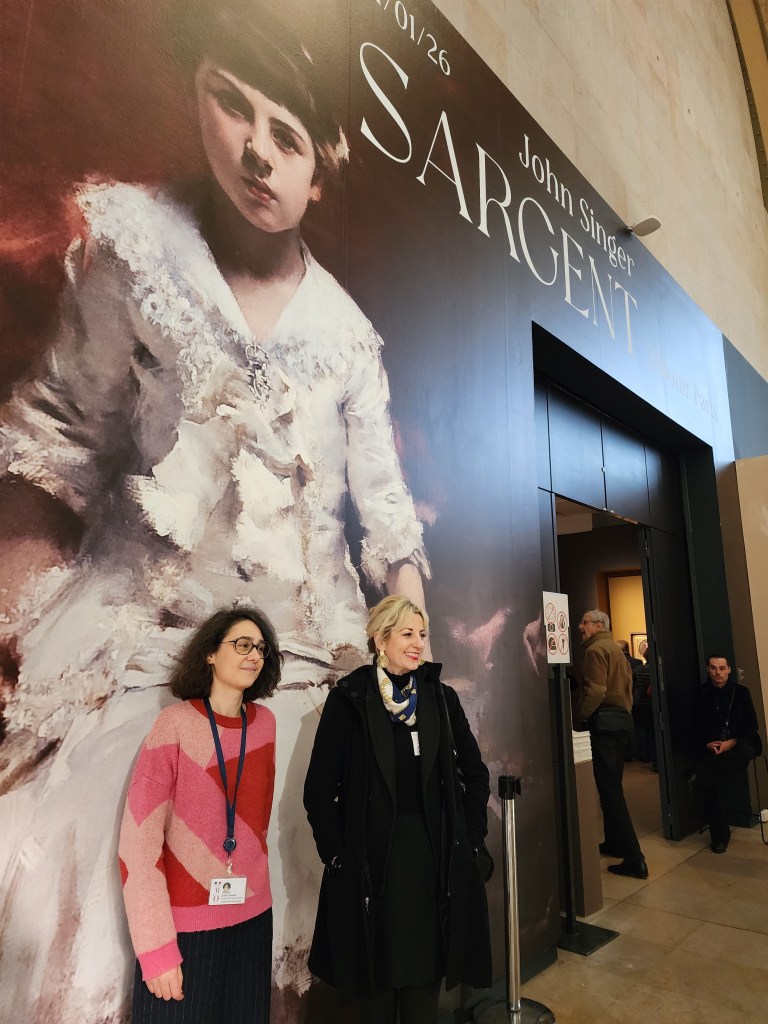
Rory contacted Lucie Lachenal-Taballet, who is a research engineer at the biblioteque interuniversitaire de la Sorbonne. Her expertise is in art criticism and the press in the 19th century. Ms. Lachhenal-Taballet graciously arranged for all of us to enter one hour early and see the Sargent exhibit before the crowds arrived.
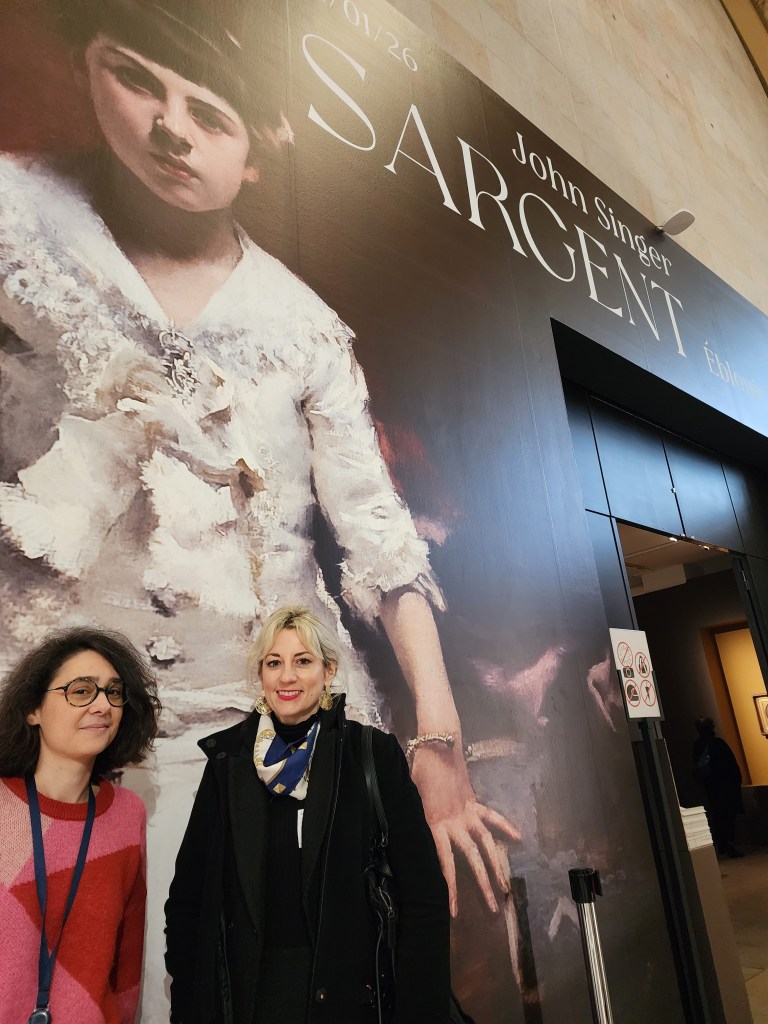
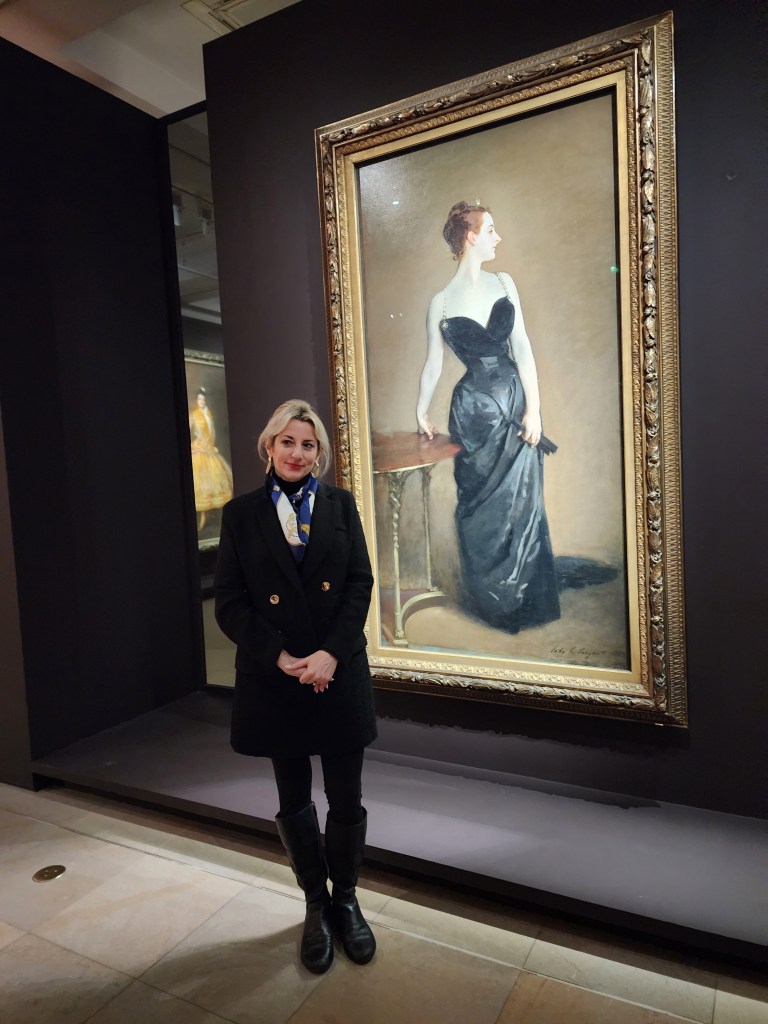
We each took our time viewing the paintings. I had seen the Sargent exhibit at the MET and noted the differences.
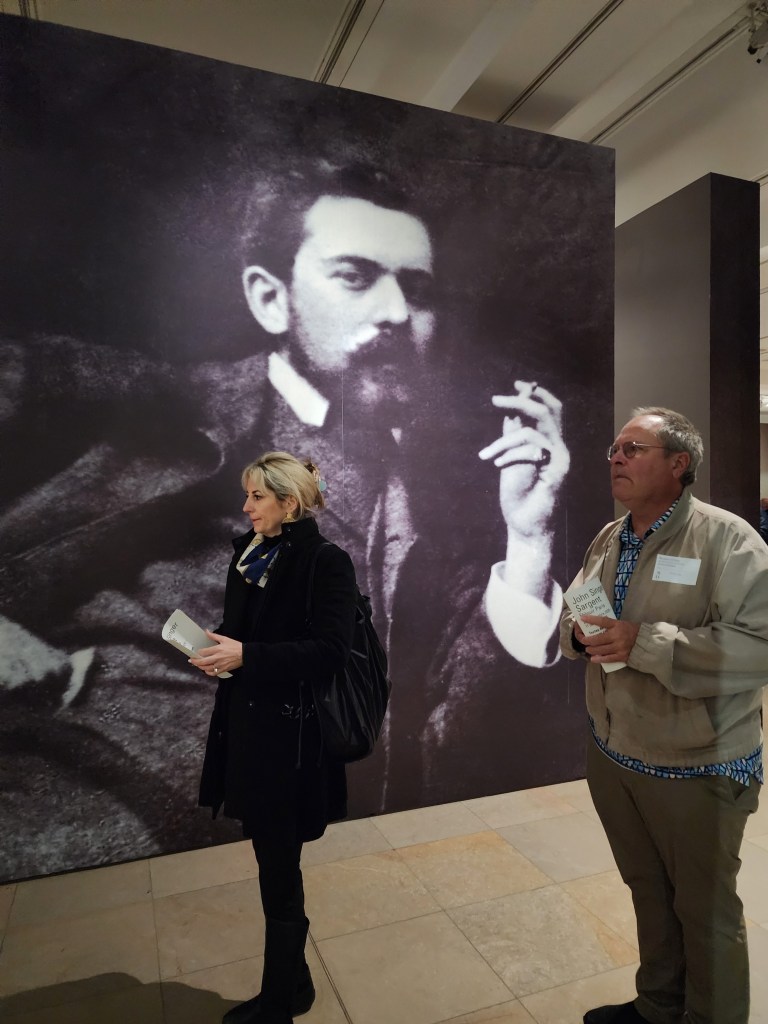
The d’Orsay perspective decidedly enhanced Sargent’s French influences with a selection of paintings under the tutelage of Carolus-Duran, one of his teachers in Paris. Some of these were absent from the MET exhibit. However, the MET included five paintings by other painters, Sargent contemporaries, teachers and influencers. An example is of Comtesse Potocka (Princesse Emmanuela Pignatelli di Cerchiara) painted by Léon Bonnat (1880). According to the MET description in the Sargent and Paris exhibition materials, “Bonnat was a significant and sought-after portraitist in the 1870s and 1880s, and one of Sargent’s teachers at the Ecole des Beaux-Arts.”
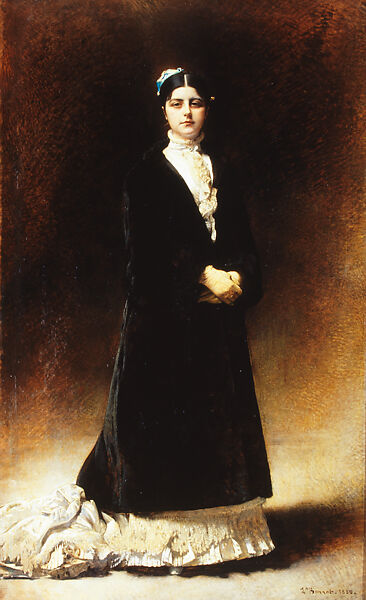
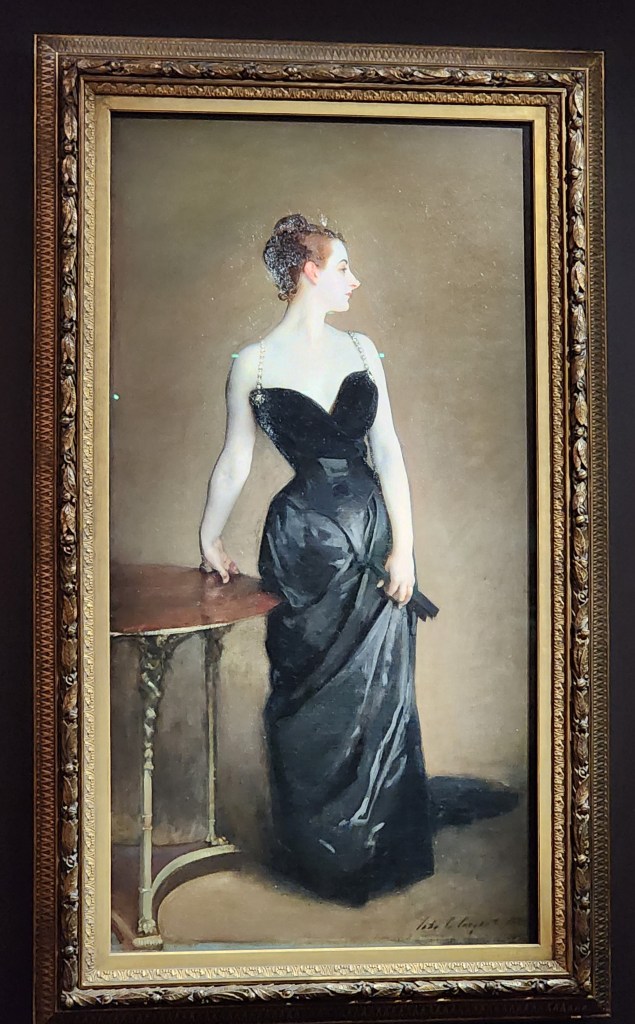
The MET used these paintings, like the one of Comtesse Potocka (Princesse Emmanuela Pignatelli di Cerchiara) to compare them with Sargent’s Madame X. In three of the paintings at the MET exhibit, the women subjects are examples of renown Parisienne socialites of the time. Similarly, two additional paintings are entitled “The Parisienne.” The painters are Leon Bonnat, Carolus-Duran, Edouard Manet, James McNeill Whistler and Charles-Alexandre Giron. All stunningly capture the historical, cultural period in Paris, revealing fashionable wealthy women of Parisian high society.
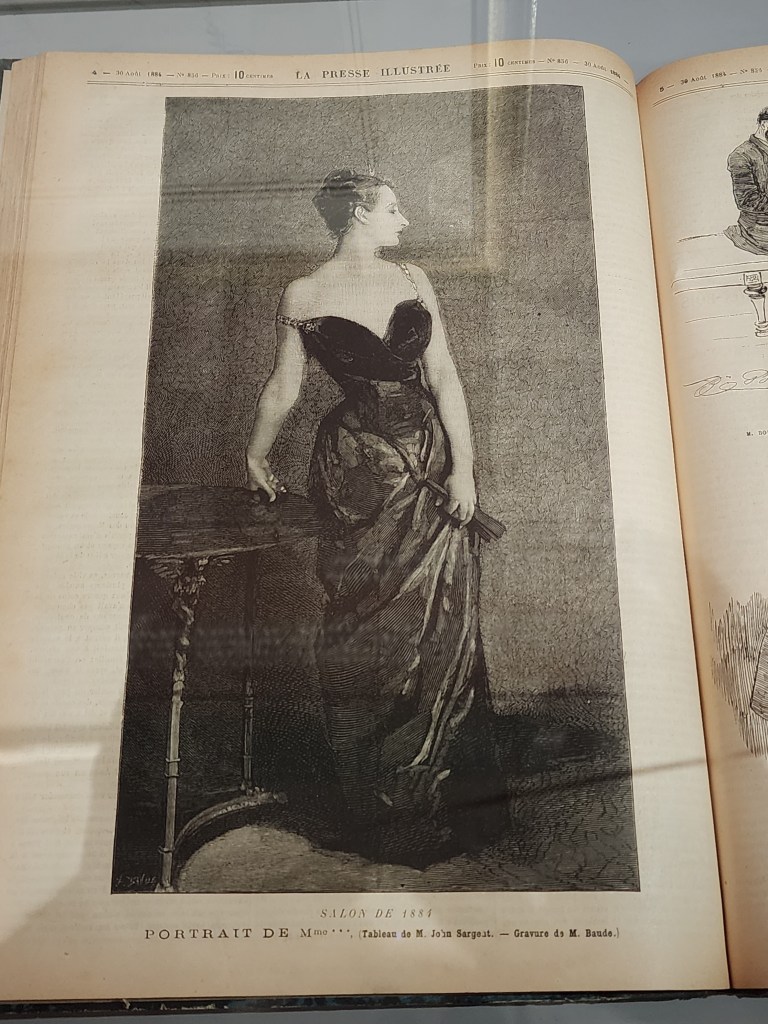
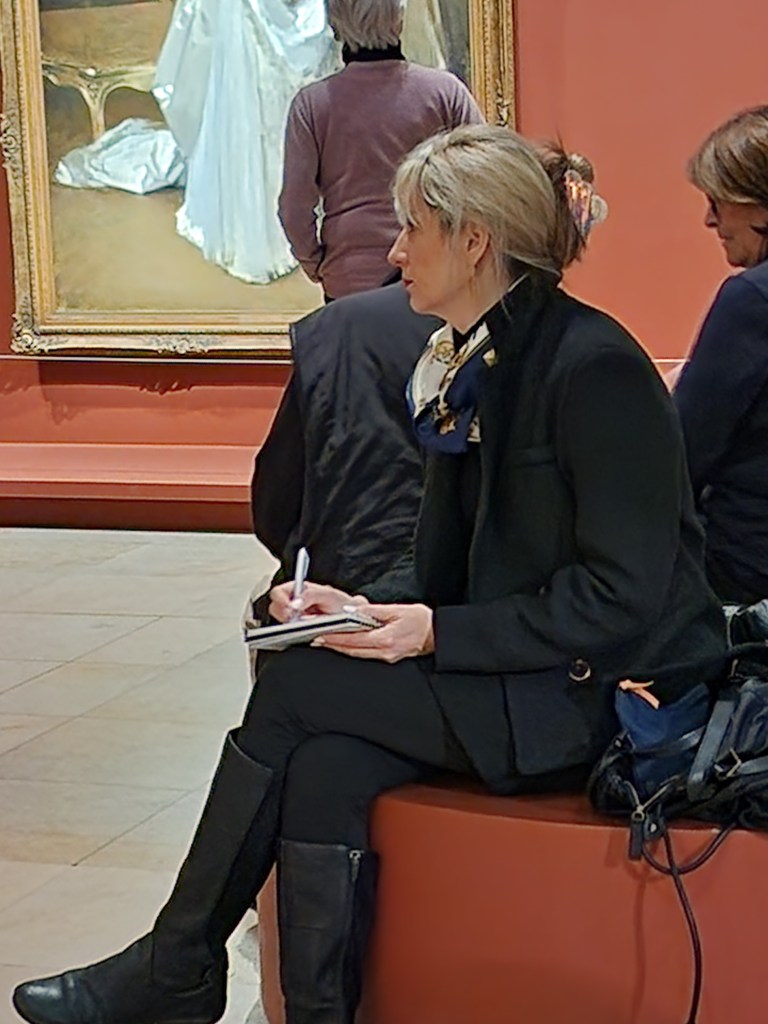
Interestingly, the d’Orsay’s exhibit didn’t include works from other painters to use as a comparison. So Rory spent time reflecting and taking notes on Sargent’s painting and various sketch studies he used in preparation for Madame X. She asked Bill and me about our impressions. When we finished with the exhibit, we headed off to other sections of the d’Orsay while Rory remained behind to study.
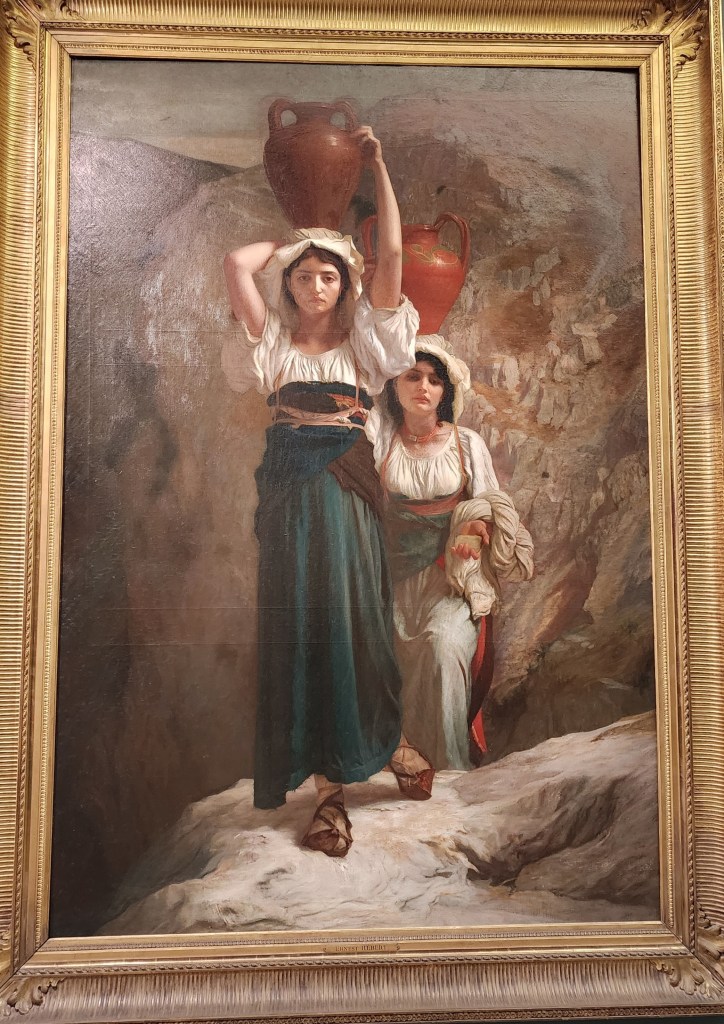
I looked at the Ernest Hébert paintings. (He is known for La Mal’aria in the d’Orsay collection). The exhibit included a few of his paintings of the peasants of Latium, strikingly beautiful works painted during his thirty year period in Italy.
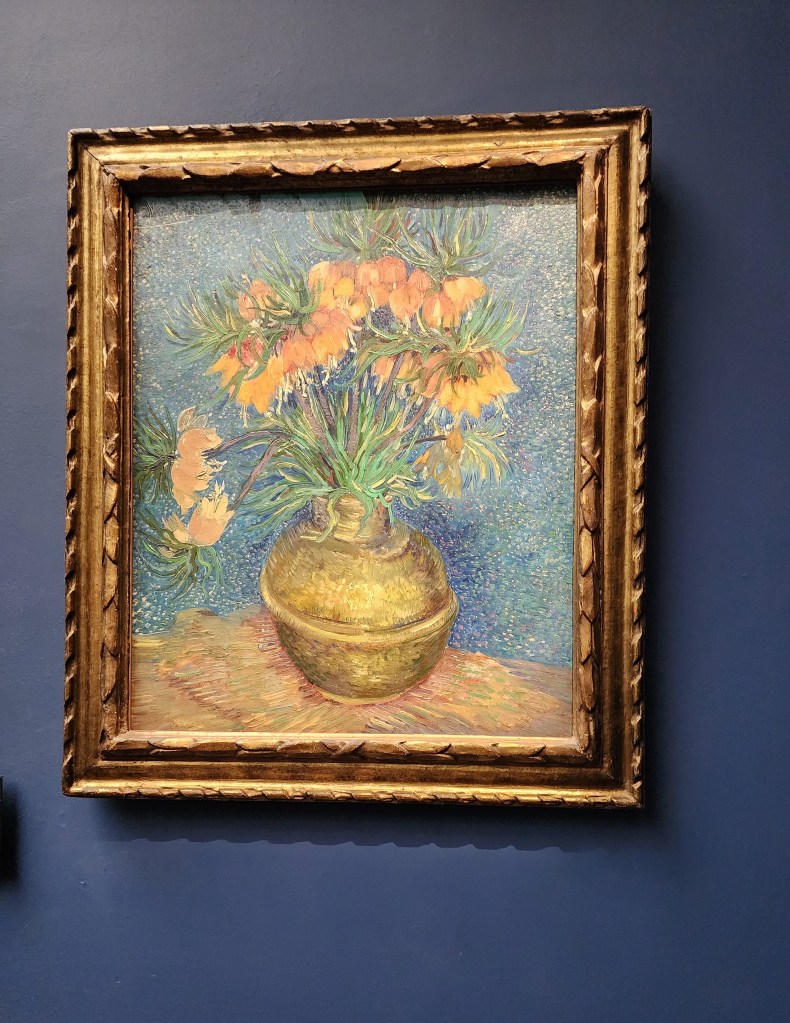
Also, I visited the Impressionists and looked at the van Goghs on display. I’ve written a play which references a lost van Gogh. My play, yet to be produced/published, was well received by workshop mentors, classmates, a partner I collaborated with and various friends I trust to read my work and be honest without feeling they need to flatter me.
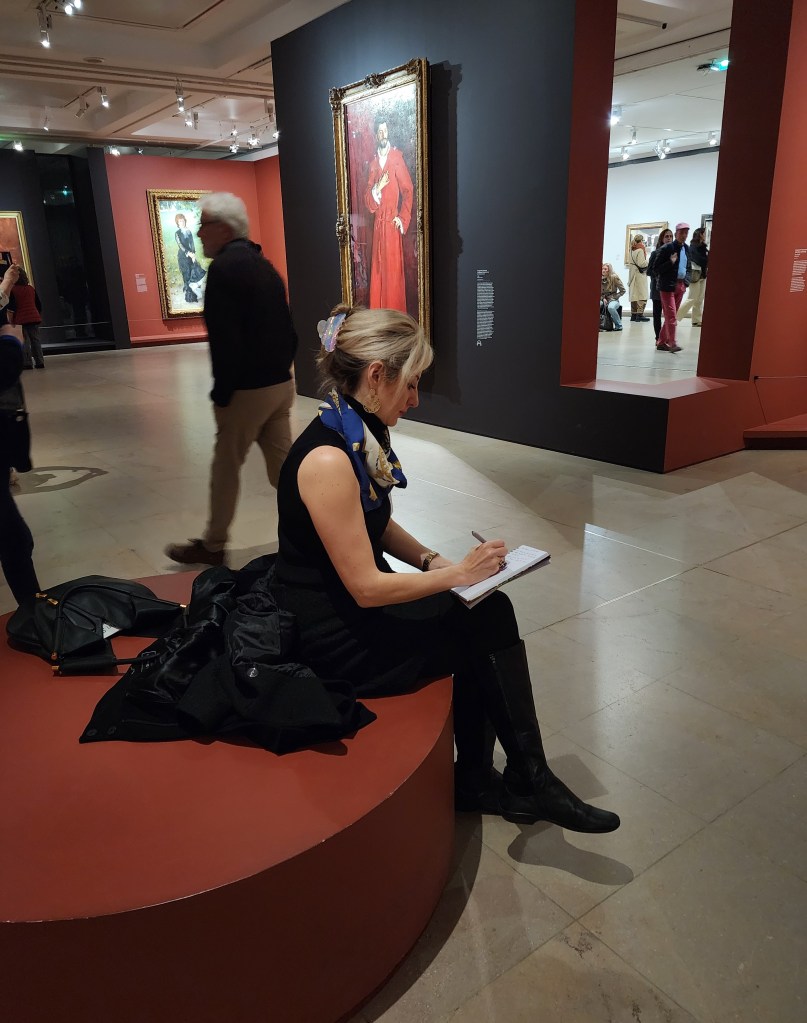
Rory continued with her research and notes, then readied herself for her appointment to interview Lucie about the exhibit, Sargent and other salient details that would be included in the book about the relationship between Sargent and Madam X. Apparently, after the painting’s presentation and the eruption of scandal, the close relationship between Madam X and Sargent fell apart. After her interview, Rory continued the rest of the day perusing the archives for any information she might find that would solidify and refine her impressions and hard information about Sargent and Madame Pierre Gautreau.

After viewing the Impressionists collection (I’ve seen the exhibit at the d’Orsay a number of times), I walked back along the Seine River to a favorite avenue in the fifth arrondissement, Boulevard Saint-Michel.


Walking up past the Sorbonne, and past the Pantheon, I arrived at the little park and environs where the TV series Emily in Paris had set-ups for various external shots.
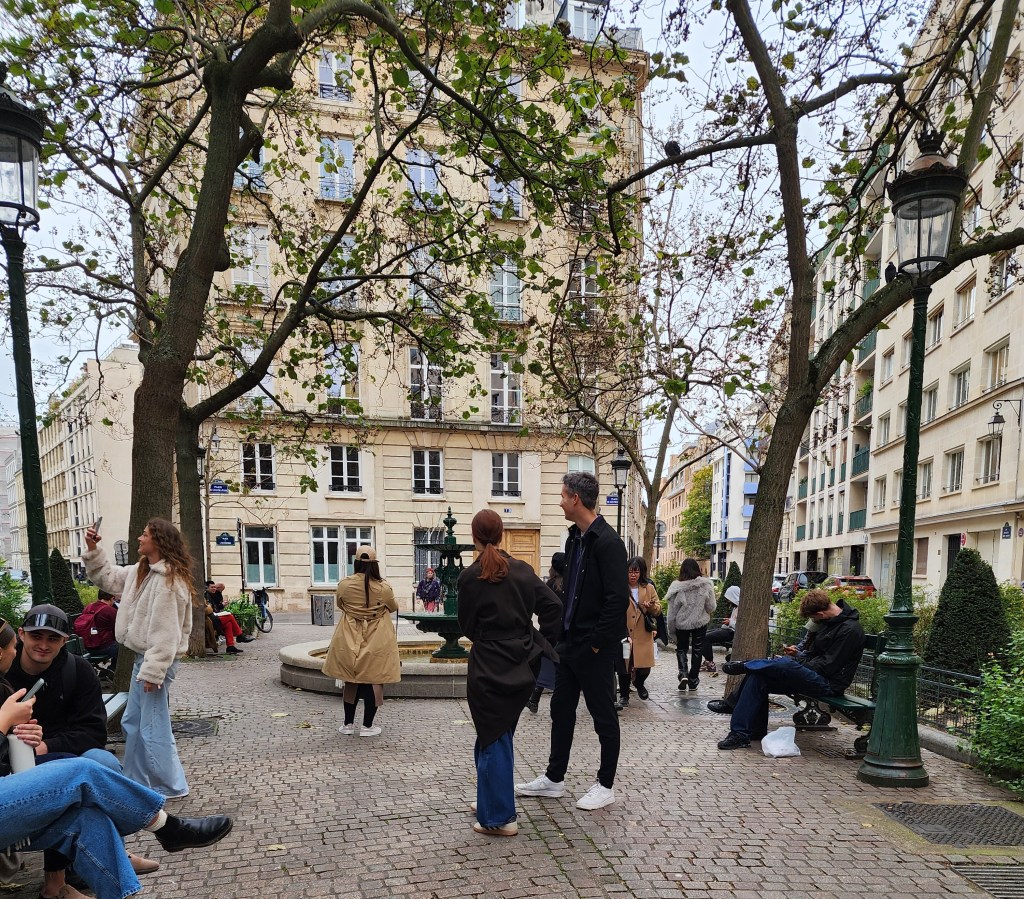
It’s around the corner of the Irish Cultural Centre and now, has become a tourist attraction. Years ago, when I walked through theis park with its lovely water fountain, it used to be empty.

After the team reconvened back at the Irish Cultural Centre, we took a cab to Foyer International d’Accueil de Paris (FIAP), where Rory was presenting the photography exhibit ‘Piercing the Veil.’
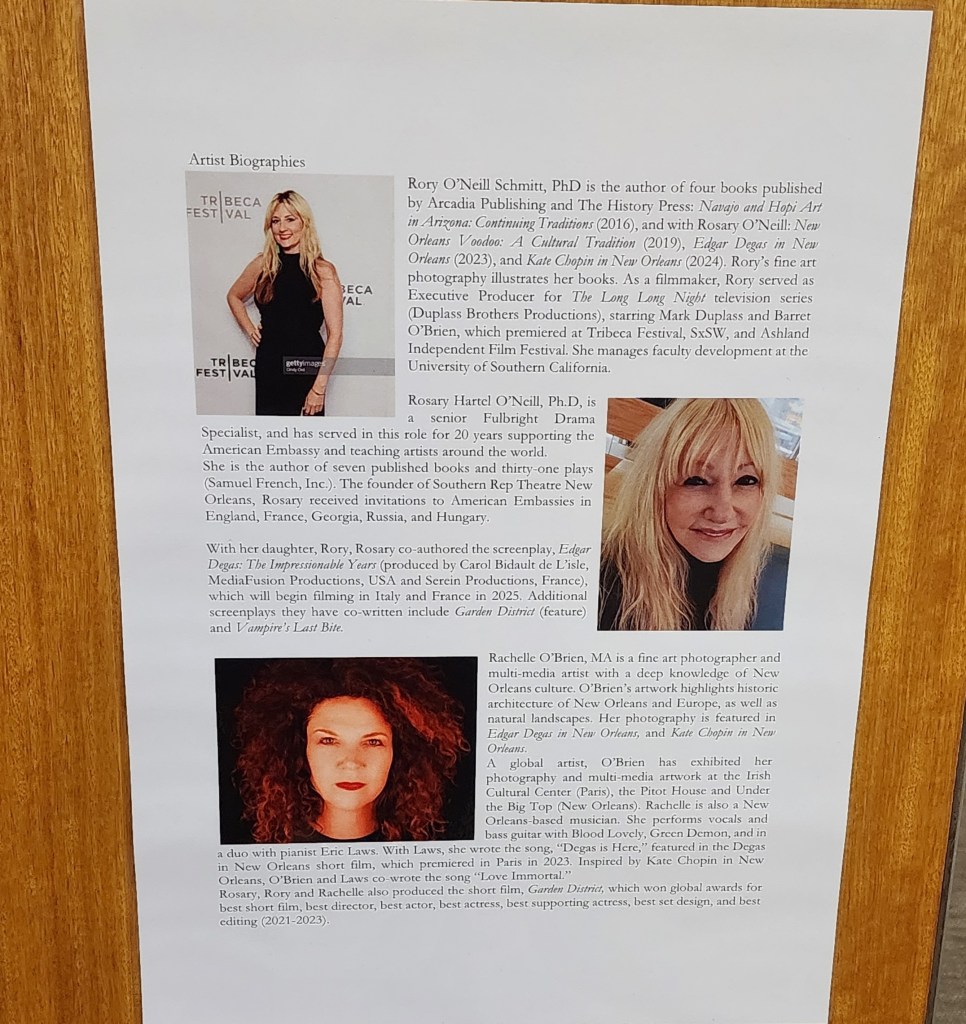
These were the photographs Rory, Amelie and the team had put up earlier in the week. Rory and sister Rachelle took the photographs of the various haunted buildings and New Orleans environs for The Haunted Guide to New Orleans. FIAP residents got to look at the photos since Monday. Now it was time for the formal opening of the exhibit.

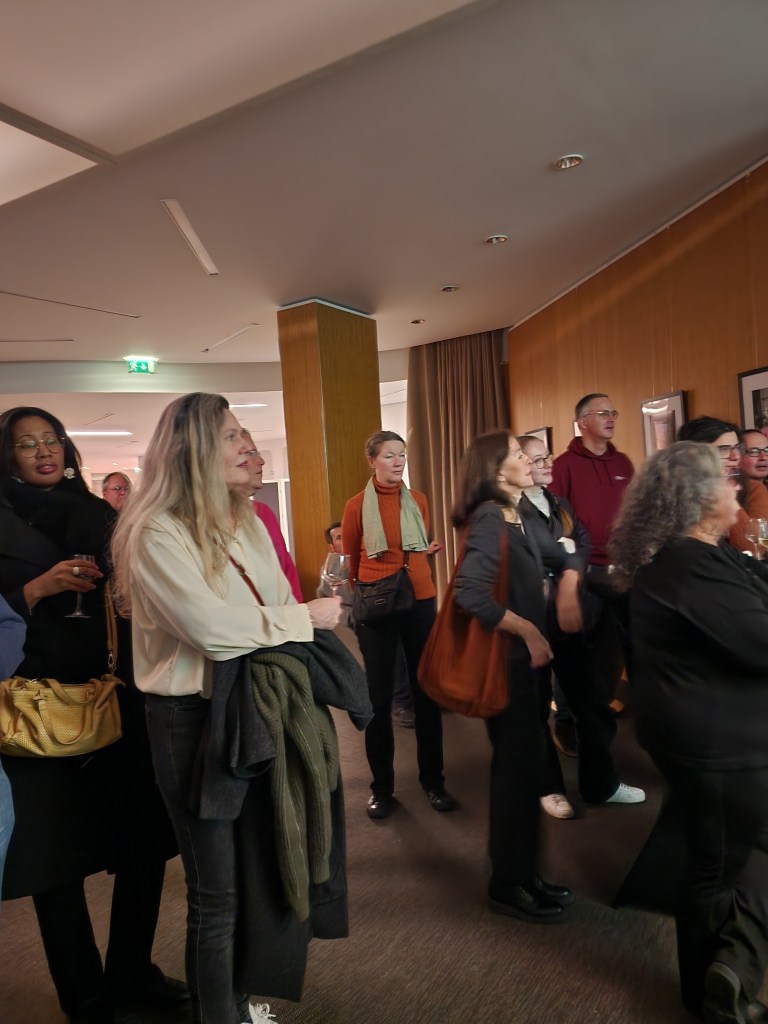
Amelie introduced Rory and the exhibit and then Rory continued in French, discussing the book and the photographs of New Orleans of buildings where ghosts have been sighted.
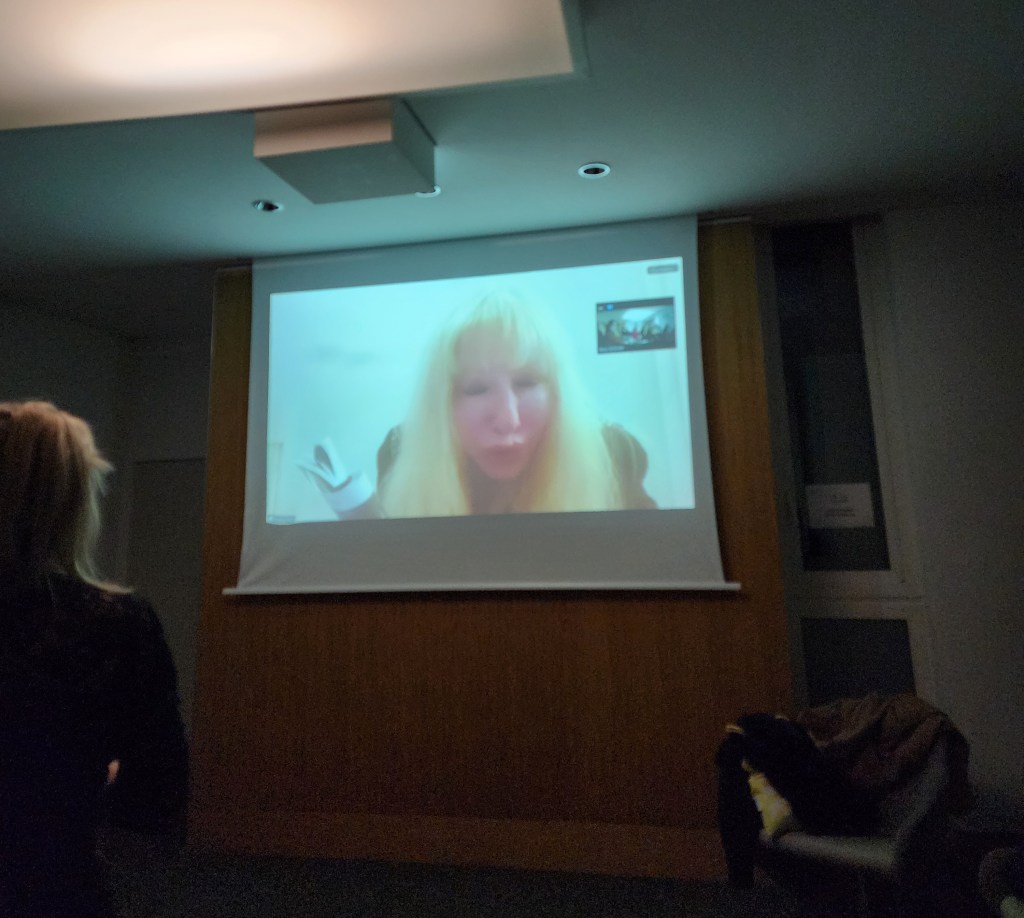

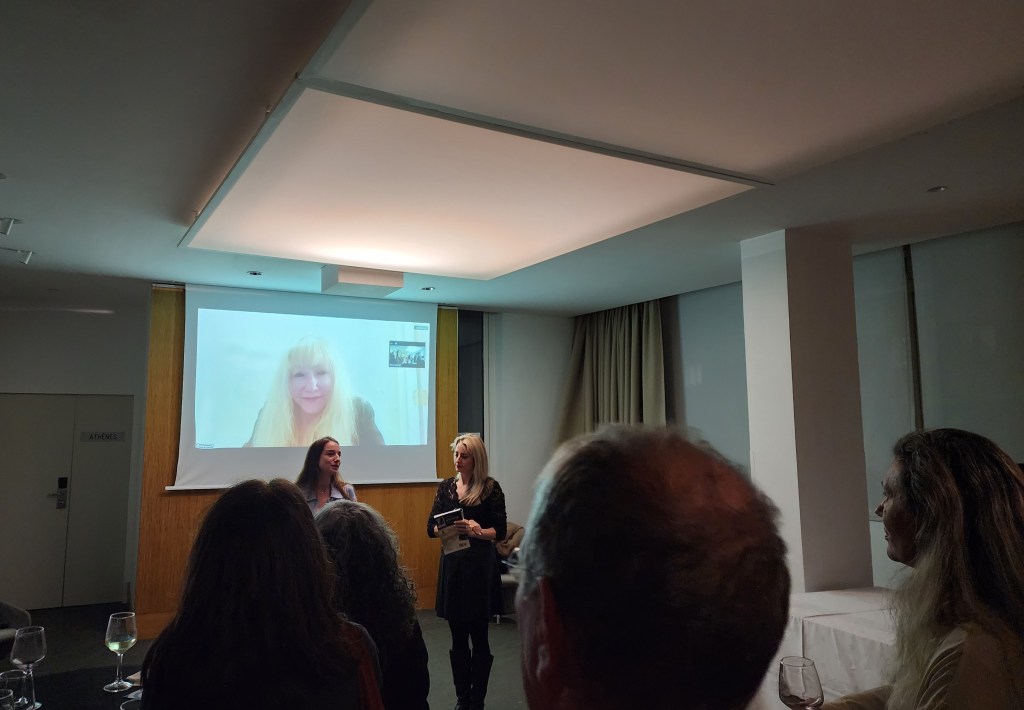
Before Rosary read from the introduction of The Haunted Guide to New Orleans, she shared some words of wisdom and humor in French gathering laughter from the crowd. Rosary, a former actress a long while ago, and a playwright in addition to her histories she’s worked on alone and with Rory is dramatic and theatrical. She can read the most boring, dull technical paper on how to set up barometric instruments for home use and make it interesting. Her reading of the book’s intro was superb.

Before, during and after the presentation, there were light bites and wine to accompany the nibbles, which added to the atmosphere of conviviality. Some of Rosary’s former friends stopped by and she spoke with them via Zoom.


A long time friend who was a liaison between France and New Orleans’ cultural affairs spoke to Rory about getting their books translated into French. Other friends were present and showed up to support Rory and Rosary’s new book release.
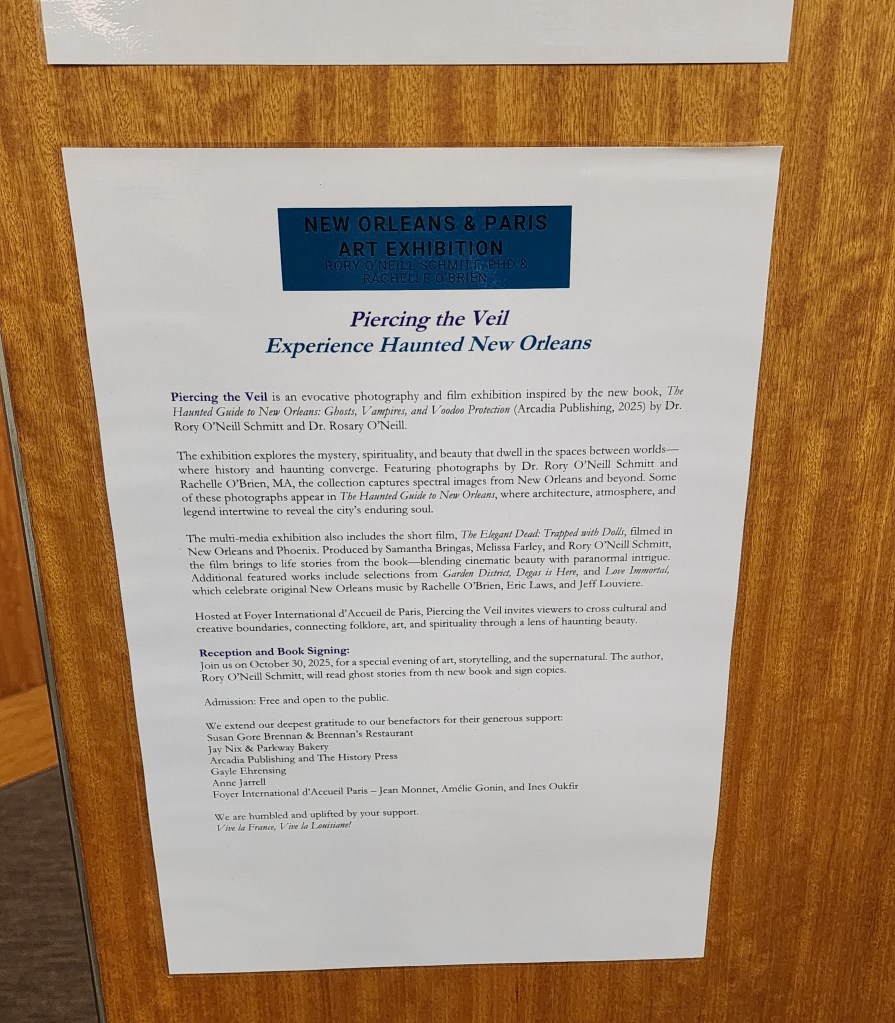
After Rosary’s dramatic reading there was a multi-media presentation of a short, spooky film, The Elegant Dead: Trapped With Dolls. Filmed in New Orleans and Phoenix, the film materializes the stories in the book and makes them palpable. Produced by Samantha Bringas, Melissa Farley and Rory O’Neill Schmitt, the film’s atmospheric haunting sends chills up and down one’s spine. The audience was rapt. until the end, then stayed for more conversation.
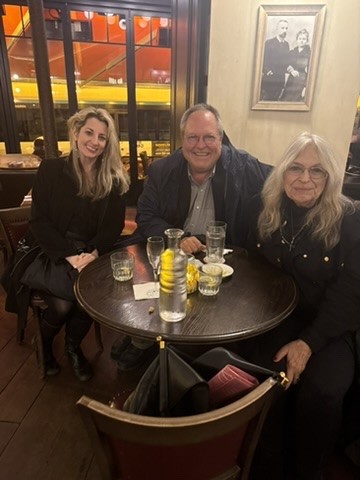
Ours was a long, fulfilling day that ended with a late dinner at a nearby restaurant that seems to always be open for everything lovely, including French onion soup, Le Comptoir du Panthéon.

