Blog Archives
‘The Baker’s Wife,’ Lovely, Poignant, Profound

It is easy to understand why the musical by Stephen Schwartz (music, lyrics) and Joseph Stein (book) after numerous reworkings and many performances since its premiere in 1976 has continued to gain a cult following. Despite never making it to Broadway, The Baker’s Wife has its growing fan club. This profound, beautiful and heartfelt production at Classic Stage Company directed by Gordon Greenberg will surely add to the fan club numbers after it closes its limited run on 21 December.
Based on the film, “La Femme du Boulanger” by Marcel Pagnol (1938), which adapted Jean Giono’s novella“Jean le Bleu,” The Baker’s Wife is set in a tiny Provençal village during the mid-1930s. The story follows the newly hired baker, Aimable (Scott Bakula), and his much younger wife, Geneviève (Oscar winner, Ariana De Bose). The townspeople who have been without a baker and fresh bread, croissants or pastries for months, hail the new couple with love when they finally arrive in rural Concorde. Ironically, bread and what it symbolically refers to is the only item upon which they readily agree.
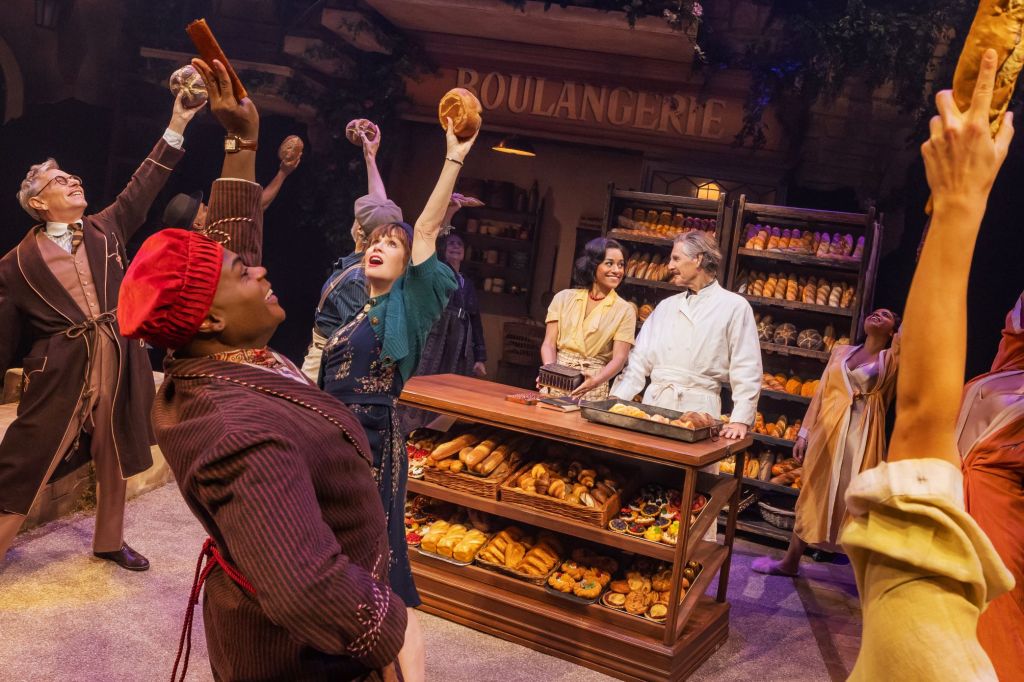
If you have not been to France, you may not “get” the community’s orgasmic and funny ravings about Aimable’s fresh, luscious bread in the song “Bread.” A noteworthy fact is that French breads are free from preservatives, dyes, chemicals which the French ban, so you can taste the incredible difference. The importance of this superlative baker and his bread become the conceit upon which the musical tuns.
Schwartz’s gorgeously lyrical music and the parable-like simplicity of Stein’s book reaffirm the values of forgiveness, humility, community and graciousness as they relate to the story of Geneviève. She abandons her loving husband Aimable and runs away to have adventures with handsome, wild, young Dominique (Kevin William Paul), the Marquis’ chauffeur. When the devastated Aimable starts drinking and stops making bread, the townspeople agree they cannot allow Aimable to fall down on his job. The Marquis (Nathan Lee Graham), is more upset about losing Aimable’s bread than the car Domnique stole.
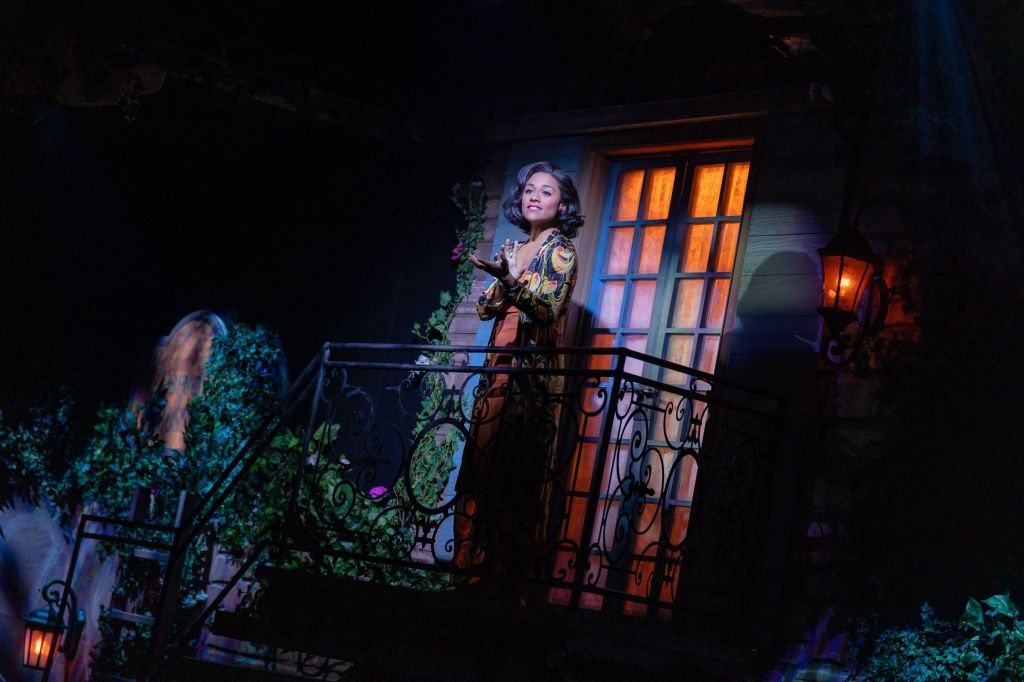
Casting off long held feuds and disagreements, they unite together and send out a search party to return Geneviève without judgment to Aimable, who has resolved to be alone. Meanwhile, Geneviève decides to leave Dominique who is hot-blooded but cold-hearted. In a serendipitous moment three of the villagers come upon Geneviève waiting to catch a bus to Marseilles. They gently encourage her to return to Concorde, affirming the town will not judge her.

She realizes she has nowhere to go and acknowledges her wrong-headed ways, acting like Pompom her cat who also ran off. Geneviève returns to Aimable for security, comfort and stability, and Pompom returns because she is hungry. Aimable feeds both, but scolds the cat for running after a stray tom cat in the moonlight. When he asks Pompom if she will run away again, DeBose quietly, meaningfully tells Bakula’s Aimable, she will not leave again. The understanding and connection returns metaphorically between them.
Director Gordon Greenberg’s dynamically staged and beautifully designed revival succeeds because of the exceptional Scott Bakula and perfect Ariana DeBose, who also dances balletically (choreography by Stephanie Klemons). DeBose’s singing is beyond gorgeous and Bakula’s Aimable resonates with pride and poignancy The superb ensemble evokes the community of the village which swirls its life around the central couple.
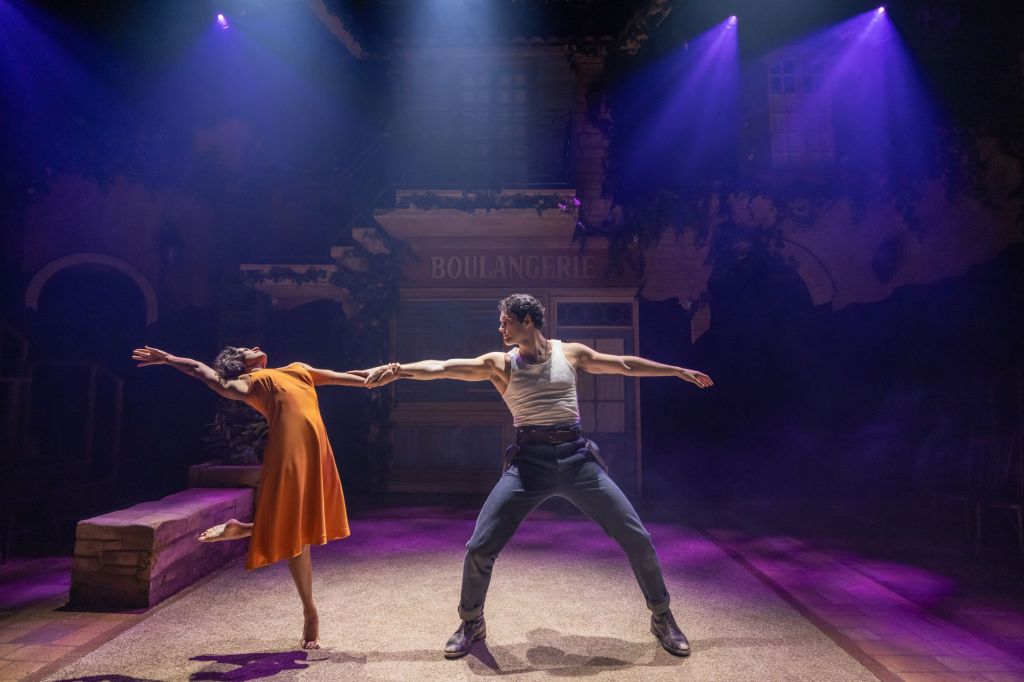
Greenberg’s acute, well-paced direction reveals an obvious appreciation and familiarity with The Baker’s Wife. Having directed two previous runs, one in New Jersey (2005), the other at The Menier Chocolate Factory in London (2024), Greenberg fashions this winning, immersive production with the cafe square spilling out into the CSC’s central space with the audience on three sides. The production offers the unique experience of cafe seating for audience members.
Jason Sherwood’s scenic design creates the atmosphere of the small village of Concorde with ivy draping the faux walls, suggesting the village’s quaint buildings. The baker’s boulanger on the ground floor at the back of the theater is in a two-story building with the second floor bedroom hidden by curtains with the ivy covered “Romeo and Juliet” balcony in front. The balcony features prominently as a device of romance, escape or union. From there DeBoise’s Geneviève stands dramatically while Kevin William Paul’s Dominique serenades her, pretending it is the baker’s talents he praises. From there DeBoise exquisitely sings “Meadowlark.”
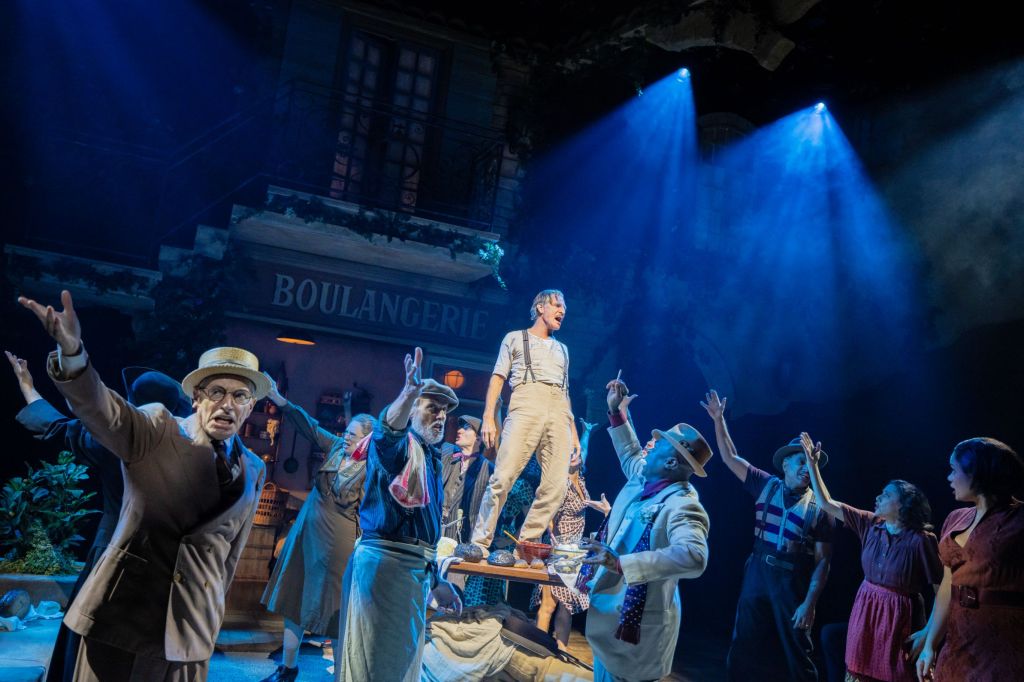
Greenberg’s vision for the musical, the sterling leads and the excellent ensemble overcome the show’s flaws. The actors breathe life into the dated script and misogynistic jokes by integrating these as cultural aspects of the small French community of Concorde in the time before WW II. The community composed of idiosyncratic members show they can be disagreeable and divisive with each other. However, they come together when they attempt to find Geneviève and return her to Aimable to restore balance to their collective, with bread for their emotional and physical sustenance.
All of the wonderful work by ensemble members keep the musical pinging. Robert Cuccioli plays ironic husband Claude with Judy Kuhn as his wife Denise. They are the cafe owning, long married couple, who serve as the foils for the newly married Aimable and Geneviève. They provide humor with wise cracks about each other as the other townspeople chime in with their jokes and songs about annoying neighbors.
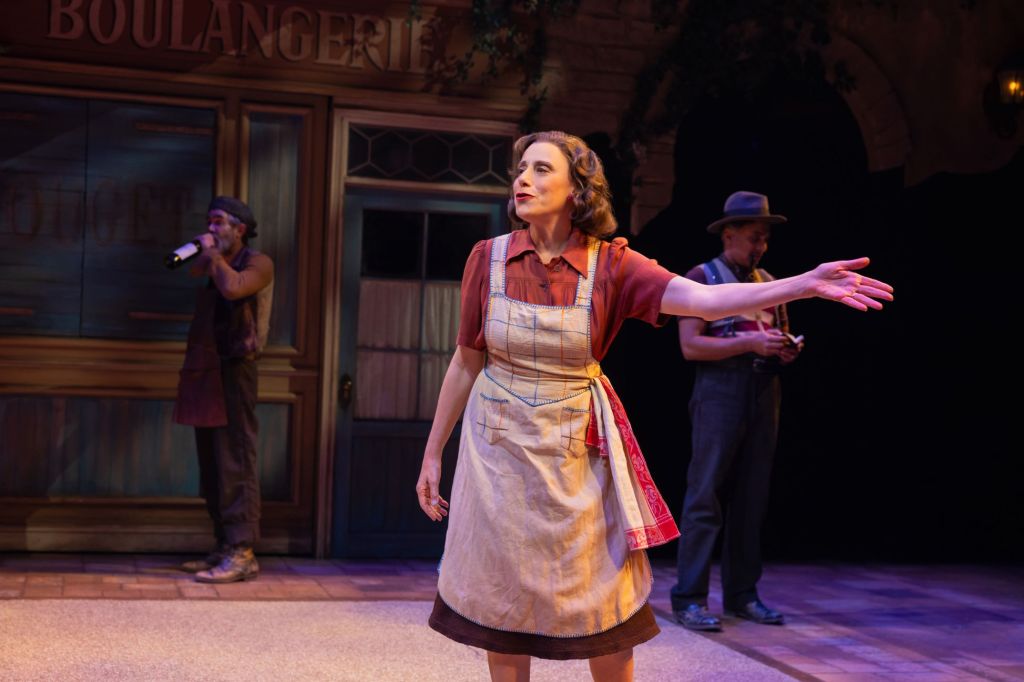
Like the other townspeople, who watch the events with the baker and his wife and learn about themselves, Claude and Denise realize the lust of their youth has morphed into love and great appreciation for each other in their middle age. Kuhn’s Denise opens and closes the production singing about the life and people of the village who gain a new perspective in the memorable signature song, “Chanson.”
The event with the baker and his wife stirs the townspeople to re-evaluate their former outlooks and biased attitudes. The women especially receive a boon from Geneviève’s actions. They toast to her while the men have gone on their search, leaving the women “without their instruction.” And for the first time Hortense (Sally Murphy), stands up to her dictatorial husband Barnaby (Manu Narayan) and leaves to visit a relative. She may never return. Clearly, the townspeople inch their way forward in getting along with each other, to “break bread” congenially as a result of an experience with “the baker and his wife,” that they will never forget.
The Baker’s Wife runs 2 hours 30 minutes with one intermission at Classic Stage Company through Dec. 21st; classicstage.org.
‘Late Fame’ Starring Willem Dafoe, 63rd NYFF
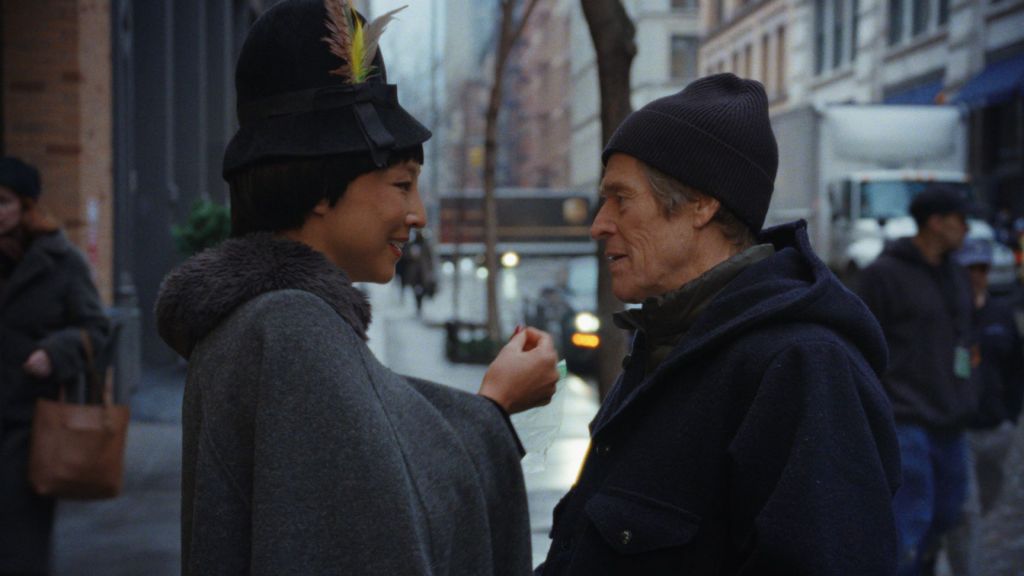
Adapted from the Arthur Schnitzler novella Late Fame, screenwriter Samy Burch (May/December) and director Kent Jones (Diana) shine a light on the West Village and Soho (circa 1970s) and Soho now at the height of its commercialization and development. With the incredible backdrop of factory buildings and West Village apartment buildings turned into fashionista haunts, and cobblestone streets still creating their unique atmosphere, a superb Willem Dafoe portrays the sensitive, once lauded poet Ed Saxburger. The craggy young man who had the world at his feet with the publication of his poetry book Way Past Go eventually gave up his typewriter to earn a modest living with a secure pension as a postal worker.
What happens to the passionate fire required to write poetry that gets published during a time when poetry was the lingua franca of the Village artist milieu, and Soho was the coolest place to be? If old soldiers fade away, does the same happen to promising poets whose work is well regarded but little read, then forgotten?
Late Fame investigates this phenomenon with atmosphere, nuance, irony and heart. It is Jones’ love letter to downtown Manhattan, vastly changed with remnants of its old beauty and undeveloped glory which made a comfortable home to artists of all stripes in the 1970s. Then, Dafoe’s character Ed Saxburger came East, spurred by the thought of fitting in with the artist colonies in Manhattan at that time.
The film which is in the Main Slate section at New York Film Festival is buoyed up by sterling performances from those assisting Dafoe, as he negotiates his empathetic protagonist who is stoic, reserved and charming, and a bit lost as he welcomes yet questions with open eyes his acceptance by a group of well-heeled twenty-somethings, who turn out to be poseur artists. Their mission is to recapture the ethos of Gregory Corso, Allen Ginsberg and others, but they are sorely out of their depth and lack the talent, grist and life wounds to do so.
The film unspools with Saxburger’s rediscovery by this exotic group of young would-be writers and philosophers branding themselves “the Enthusiasm Society.” An effete, wealthy Wilson Meyers (the excellent Edmund Donovan), leads the group of retrograde misogynists and artistes. When Saxburger asks where he found his book, with wide-eyed irony and pride, Meyers tells Saxburger he bought it at “Foyle’s on Charing Cross Road.” Indeed, Meyers uses Saxburger’s book as the equivalent to a museum piece around which Meyer centers his exploitation and cause célèbre.
On further discussion to introduce himself Meyers cavalierly asserts his and the Enthusiasm Society’s purpose to “stand against negativity” and the monetization of everything,” a mission that unravels when Saxburger gets to know him. Key to who they are, is that they distance themselves from lower lights, “the influencer culture, cellphone obsessed and technology maniacs.” These they excoriate, all the while imbibing the same waters because no one is paying attention. However, Saxburger is.
For example Meyers’ stunning, unhip apartment in the village, funded by his parents, is technologically outfitted to the max. The other members are equally flush, supported by their parents, a far cry from the struggling, self-made artists that they emulate. However, their hypocrisy and unawareness of self that Saxburger notes quietly, he puts aside momentarily. He is drawn in by their allurement as they gush over him.
Their earnestness could be worse. At least they aspire to be like legends of the past, so Saxubrger allows himself to be caught up in their artificial world, until the revelations come fast and furious after a poetic recital where various members read at a venue Myers procures. The actors portray these fellows as more of an Oxford-like clique of wannabe creatives who are callow, literary sophisticates. In their aspirations they will never achieve what Saxburger did as he struggled and was celebrated in reviews, even if for a bright moment that he himself extinguished by moving on.
Though these individuals are largely focused on the masculine, they allow the actress and singer Gloria (a fine Greta Lee) to float among them as the girlfriend of one or more of the members. When Ed finally joins the Enthusiasm Society live and they introduce Gloria, her flamboyance and mystery is a treat for Ed. She is more akin to him as an older, wiser, financially strapped actress who, like Ed, knows what it is to struggle for her craft. Unlike Ed, she may hold on longer because she is an opportunist who knows how to play the game. In his authenticity and truth, Saxburger probably said, “It’s enough. I’ve got to eat and support myself.”
Cleverly, Jones features Gloria front and center during a performance of Kurt Weill and Bertolt Brecht’s “Surabaya Johnny.” A chanteuse, Sally Bowles “divine decadence” type, Gloria lures Ed who finds her attractive, opaque and mysterious, unlike the others. During a brief scene they do drugs together and frolic down the streets, a nostalgic nod to the past.
Greta who is supposed to read poetry during the recital appears to be too overwrought to be able to credibly do it. Part of her act, however, she pulls through at the last minute stunning the audience. Finally, Saxburger reads his own work beautifully, though an audience member references his age, albeit tucked into a compliment. The shout out reminds him of where he was and now is with this ersatz glitterati. It’s a desultory in between.
Though Saxburger has a family back home and a brother dying, he stays in New York and doesn’t return to visit. That ground is never covered by Jones or the screenwriter. However, it substantiates that when Saxburger left his family and made a new life for himself in Manhattan.
In the present that life includes a culturally rich apartment with bookcases filled with books that he’s read, a nice touch by the set designer. Also, his group of working class friends that he plays pool with who don’t know his poetic past or his literary interests, have helped distract him from what was. We do see when he can’t write a new poem for the recital that his artistry has been put on indefinite hold. But it’s OK. Beyond these elements, this is a film about brief moments in time where the light shines and then dims only to shine once more before it goes out.
Jones’ work is noteworthy for the stellar performances. Dafoe who inhabits the role perfectly is sensational, and Lee and the others provide the foundation from which Dafoe easily and seamlessly establishes this intriguing and heartfelt character.
Tickets are still available at https://www.filmlinc.org/nyff2025/films/late-fame/
Writers! Regardless of Where You Stand in the Publishing Game, Enhance Your Social Media Presence.
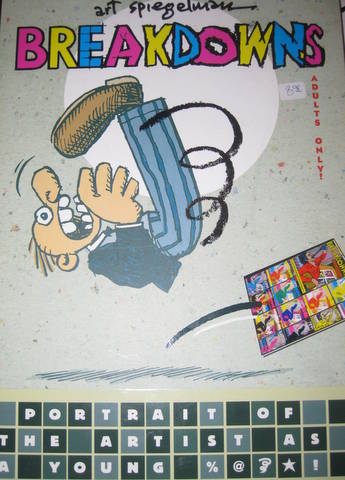
A Spiegelman fan,I purchased this copy at a used bookstore.
Brilliant best selling graphic artist and Pulitzer prizewinner Art Spiegelman of Maus I and Maus II fame struggled to get his work out there in the early 1970s. It was a process and there was even rejection of his incredible, iconic work. (Words cannot describe the graphic artistry and meaning of what he has done with Maus I and Maus II. You just have to check it out for yourself or not.) When he was attempting to get his book Breakdowns published (before he created Maus I) it didn’t go swimmingly. Decades later, after his many awards, global recognition and other publications, his editor at Pantheon was all for re-issuing Breakdowns and this time, Spiegelman was surprised and hesitant. But things had changed by 2007. You mean publishing and the cultu1re had galactically shifted from the days that Art Spiegelman was first establishing his career? Duh!
In those days, for Spiegelman, getting published was not unimportant. To many today, it is golden. It is the dream of established writers who may have faced writer’s block after years of success. It is the dream of those who have fallen off the charts and out of the hearts of former readers. It is the dream of the published whose first, second and third books have middling sales that tapered to .001% so that literary agents and editors won’t go near them. (Low percentages? Nil profit margins? Are you insane? How can the media CEOs sustain tremendous salaries and bonuses with such schlocky sales numbers?) It is the dream of the working writer who has written and published one book and is working on another in the hope of changing publishers/ agents and getting a better deal, though the first book sales were abysmal. The variables of situation are endless, unless of course, one is a hot name with an extensive platform, i.e. Bill O’Reilly (in which case the greatness of the work is immaterial, as long as there is name recognition and a ready mega platform).
The irony has been that for the last century, concepts and particular literati who have been favored by elites, the wealthy or politicos have been highly publicized. This creates an inherent censorship. The gatekeepers, the literary agents, the large presses have kept it that way to fuel ideas that elitists wanted the public to believe and be bound in by. So traditional media has worked in concert with the very wealthy. (Perhaps it is why Spiegelman was rejected for publication until he found an intelligent, prescient SMALL publisher who took a chance on him.) In many instances the middle class and general public’s reading tastes have been tailored to what elites have deemed, “great,” though their standards are merely opinions and predominately skewed to their agendas. Their concepts of great craft, writing and artistry often beggar the imagination.

Salman Rushdie tweets with his fans on Twitter and actually did battle last year with Facebook, winning with his great humor, irony and wit. Social media is one of the best ways to connect and keep in touch with your readers.
Needless to say, European publishers, more intellectual, knowledgeable in breadth and scope, courageous and less censoring, have allowed titles in that NEVER WOULD HAVE BEEN ACCEPTED IN THE US. And yet, we think we are a free and open democracy? (We are told that by traditional media hirelings though many medical books and controversial political content find publishing friends overseas or in Canada.) Well…traditional publishing has relied on TV to gather its stable of often un-meritorious but profitable properties. Writers, unfortunately, have been at the mercy of these “experts” in the field who often consider the art and craft of a work last, and consider the saleability first.

Apple was one of the companies sued by the DOJ for price collusion.
This former “state of the art” for the industrial media complex has been upended by Google. It has been overturned by Amazon, undercut by Facebook and thwarted by Twitter and other social media platforms and growing spheres like Storylane. How? Subtly and not so surreptitiously. When traditional media realized it had lost its edge and destroyed the bee hives producing their honey, their fear and greed and inability to ADAPT or wrap their brains around what was happening spurred them into old paradigm interventions that worked before: lobbying and price collusion.
Mistake. They’ve been held accountable and have been sued by the DOJ and a few have had to settle while others collude with the government for the best deal which may not be forthcoming since their profitability is much lower than Google’s and Amazon’s. You see traditional media became so comfy with their century long oligolopoly that they were caught up short without a chamber pot when Amazon undersold them. That’s all they could come up with to compete? While they were riding out the waves of the past, their navigation misdirected by the old paradigm, the innovators, like a huge roller, a mammoth tidal wave, a mega tsunami, capsized their hopes and dreams of profits. Now, they are paddling slowly while growing social media networks and companies like Google continue their innovations, investing money in R & D to create better product and to entice readers, writers and developers to improve.
Bottom line? Google is swamping the media that was! I will not refer to the traditional publishers by name. Unless they begin to accept mid-list and beginning writers, offering them credible crumbs, the writing community will eschew them completely in favor of working with e-publishers, small publishers, Createspace, et. al, and those in the online publishing paradigm. I give these censoring publishers who will have to spend more and more on costly promotions and PR campaigns less than 20 years. Unless they begin to innovate to create the “next best thing,” or unless they merge with Amazon or Google (Why would those companies want to merge with inefficient, ineffective, archaic and intractable platforms?) they will have disappeared, become a ghost memory, a ridiculous faux nightmares of elitism from which we have awakened. What was the name of that book seller that went bankrupt because its innovations were too little too late? Innovate or perish. Big name publishers are slowly writhing in the mud as their hand maidens, the agents, the PR personnel, the editors struggle, sucked downward with them, sinking further into the shifting, miry clay soon to be swallowed up in a sinkhole of their own making.
The diminishing present trend is that,unless you are President Obama or a politico or a faux or worthy celebrity, a salable commodity, a publishing company will not market you. You have to market yourself. Even if you are President Obama, you have to market yourself, appearing on old media, TV, etc. Wasn’t it Michelle Obama I saw ripping open the envelope for the Best Picture Oscar last night, via a feed from the White House? Folks, the President is savvy enough to have his social media hordes and teams busy marketing him online. It’s why the Republicans have been doing unmentionables in the dark. They can’t get into the light of Twitter/ Facebook, et. al. and sound rational.

Kristen Lamb, author, blogger and a member of the online writing community who inspires and nudges writers to get on with the craft and be persistent in achieving their goals.
So, writers, if it’s good enough for the Prez, it should be good enough for you. Kristen Lamb, social media maven and author, in a recent blog post discussed the hard work it takes to position yourself on social media platforms to establish a working, interactive community from which you can promote and sell your books. If you think it will take too much time, then hire a team to help you. Using hashtags, and signings and promotions and launches, you will be able to promote yourself on social media and continue to do so, long after a traditional publishing company has left you to ROT.
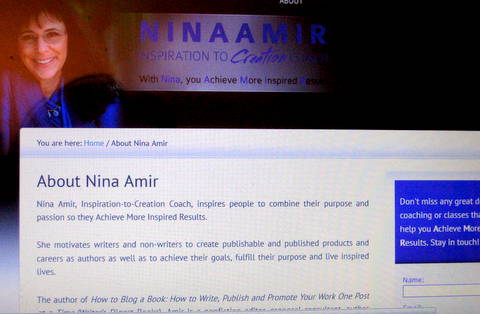
Nina Amir is a motivational coach who helps writers and non writers achieve their goals and live inspired lives.
How do you do this if you have been out of the loop for some time and find Facebook, Twitter, Tumblr, Youtube and Reddit loathsome? GET OVER YOURSELF! SNAP OUT OF IT! Swallow, take a deep breath and sign on for social media classes online. If you are a woman writer, then check into WOW Women on Writing. If you prefer live and hands on, there are many Continuing Ed. courses at various universities or colleges near you. Hopefully, you are not in this dire condition.
To help yourself and your writing career regardless of where you are…pick up the bullet at your current situation:
- Read about social media and take classes to learn how to post and interact on the most powerful sites (Twitter, Facebook, Reddit, Tumblr, Instagram, Pinterest, etc.)
- Start a few blogs and blog about subjects related to your writing, making sure to increase your readership and followership daily. Read other blogs faithfully and post comments on them, inviting them to guest on your blog.
- Be willing to spend at least 3-4 hours a day on social media and the same on your writing. Alternate this according to a schedule you make for yourself if you can’t spend the time.
- Once you’ve created a viable interacting platform and joined writers’ groups including those on Linked In and elsewhere, create your book pages and invite your followers.
- Somewhere in between all of this, you are writing your book, editing it or sending it out to be edited or working with an editor or an agent you get along with; one who is a friend and one you can trust.
- If you have done all of the above years ago and are in a slump, change it up and do something different. Shut down all online interaction for a day or a number of hours. Then review what seems to be working and what isn’t and jettison both for another day or period of hours. Go back and reassess and research. The change up will spur you on and revitalize you. If it doesn’t, seek a coach or someone to help you get out of the funk or open this up to your online writing community. Share, ask for comments and advice. Eventually the watershed moment will come. (Skip below as needed and move to the last paragraph.)
This is the beginning of a beautiful relationship with your online writing community and your team of writing friends who are intelligent, creative wordsmiths. You will keep many; you will lose many, but the journey is amazing, and eventually what was the hard work, when you look back after a year of doing this, will not appear to be so arduous after all.
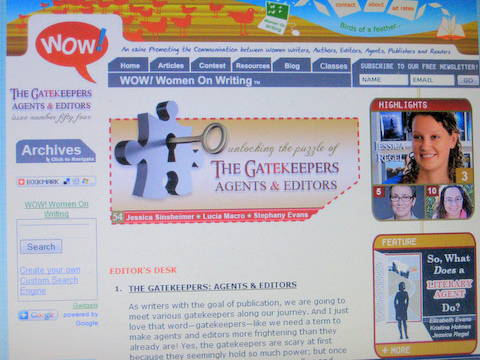
The following 2 sources might be helpful for those who are beginning, or those who have taken a hiatus and need to get back into it especially if you feel overwhelmed. I apologize for not including many more, but these should whet your appetite and they are easy.
Online writing source with classes: WOW Women on Writing. (Men can take these classes as well. They are not maternalistic.) I took classes with WOW and found them to be what I needed. I also had to put in the time to learn by trial and error. I have writing friends who refuse to do this and their many publications languish, but they are trying to use other venues to get going. (traditional media venues)
Helpful Books: How to Blog a Book by Nina Amir
We are Not Alone: The Writer’s Guide to Social Media by Kristen Lamb
Your successful publishing career can take years, but so can publishing via the traditional way, which may never come to pass as the industry is reeling in a downward spiral toward doom. I have a friend who self-published because he said he was getting old and he wanted to see his books in print. That was his dream. What is yours? Are you using your social media presence to achieve it?
 CAROLE DI TOSTI