‘Waiting for Lefty,’ Clifford Odets’ Timeless Depression-era Play Resonates With Music
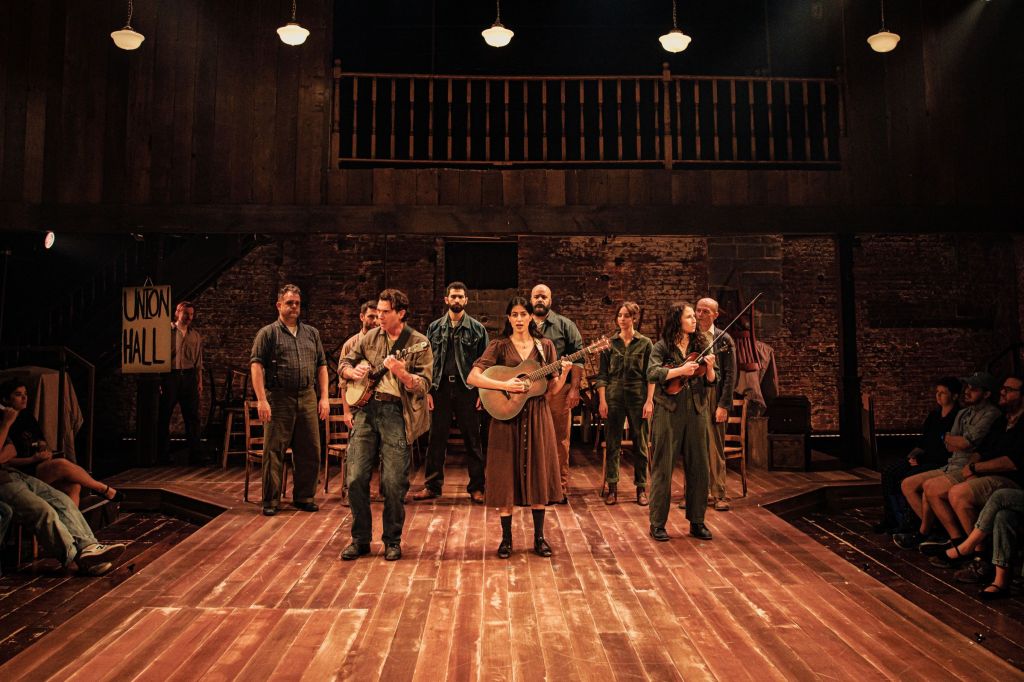
Set in a union hall during the Depression and based on a real NYC taxi-cab strike, though Odets later lied about this to the House Un-American Activities Committee, Waiting for Lefty concludes with a rallying cry to strike. What else can workers receiving low wages, facing high prices, poverty, hunger and sick children do?
Inspired by the edgy power of Odet’s play, and its unmistakable global relevance, especially to angry Americans who have massively protested an administration that supports criminal oligarchs, who expect not to pay income tax, let alone their fair share to fund programs for the neediest, actor Steven Pasquale (Bridges of Madison County, Assassins) jumped at the opportunity of directing Odet’s play with music. When Pasquale lengthened the short, one-act to 70 minutes with original music and arrangements by Yeller Tooth, and choreography by Susan Misner, he lifted an already timeless work into new territory. Now running at CSC, Waiting for Lefty, received an extension through November 29, 2026, because of audience enthusiasm .
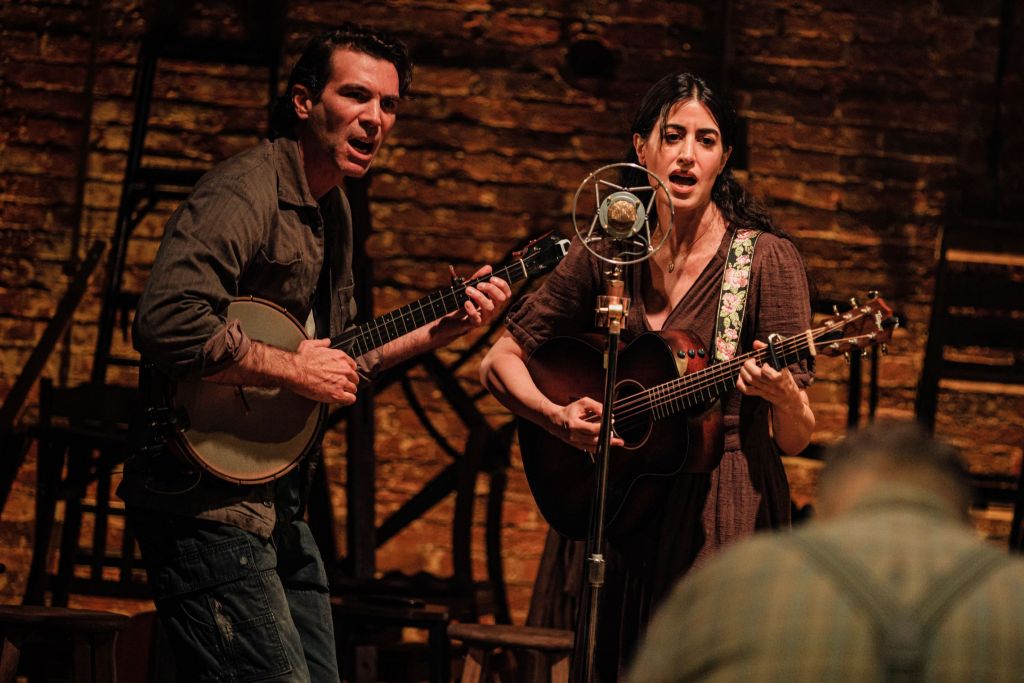
The play opens with the resistance song “Bella Ciao,” played by the American folk music husband -and-wife team, Sahar Milani and Cameron Scoggins. The song (Goodbye Beautiful), widely adopted by labor and socialist movements, has its roots in Northern Italy’s 19th-century folk songs and work songs. Then, young female seasonal rice laborers, who sang about harsh working conditions and exploitation by their bosses, tried to lift their spirits with the music.
This apt musical opening initiates Odet’s framing device, present-flashback-present. In the immediate present union workers fill the stripped down minimalist CSC theater space. With Mextly Couzin’s lighting design of hanging lamps and spotlights to provide shadows and atmosphere, the setting (ScottAdam Davis’ scenic design) engages the audience with surrealism and timeless transcendence. The final clamorous refrain of “Strike, Strike, Strike” dims to an uncertain futuristic darkness.
With the audience sitting on three sides, immediacy and intimacy of space unifies the players and watchers. Presumably part of the action, the audience symbolizes a few hundred drivers, fellow unionists, who the leaders must energize to stand against the greed and tyranny of the company. Of necessity, the leaders’ arguments must be inspiring and powerful enough to take on the bosses and their violent thugs, as they risk lives and their sub-standard jobs to make just a few bucks more.
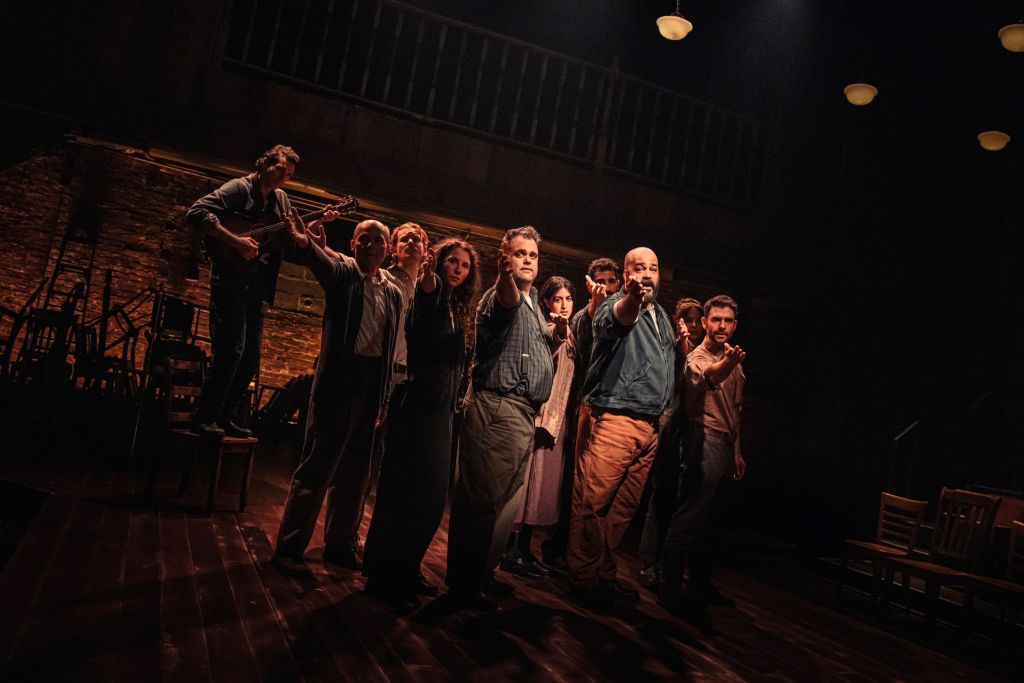
Hopefully, this call to action will work, for many have nothing left to lose. Odets features this in flashbacks, representative vignettes of the privation the working families face. Working 14-16 hour days with no overtime for a pittance, the unionists insist a strike will change things. Eventually it and this play and other cumulative actions led to FDR’s Fair Labor Standards Act and its amendments. Throughout, more noticeably toward the conclusion, actors playing drivers sometimes interject from the audience. Loudly rebuking the company owners, they argue with the co-opted, corrupt union boss, Harry Fatt (Greg Hildreth), who the company most probably pays to prevent tries the strike.
In flashbacks Odets shows the justification for striking. For example cabbie Joe (Raffi Barsoumian) argues with wife Edna (Tala Ashe, Tony nominee for English) about their impoverished home life. It concludes when she tells him she’s seeking material comfort elsewhere, with someone who is a particularly personal “slap in the face.”
Flashing to the present of the union meeting, we learn the members continue to wait for Lefty (Zach McNally) who they’ve elected as chairman of the strike committee. Lefty, a symbolic, Godot-like figure in Odet’s original script, made alive without dialogue by Pasquale. ambles around the playing space in a dream-state via Susan Misner’s choreographed movement. Intentionally opaque, Lefty appears to be wandering the city to return to the meeting as they wait for him. However, by the conclusion we understand his movements suggest something else. In fact all of the movement (choreographed by Misner) relates to the struggle of the workers to get to the next day. Some movement related acutely.
In a particularly prescient vignette, Miller, a lab scientist (Austin Durant) confronts Fayette, his boss (Henry Stram) in a devil’s bargain for a promotion. The industrialist wants him to assist Dr. Brenner in making poison gas for chemical warfare that will kill humans for future wars. In response, Miller objects in the name of human decency to the highly classified government project. With reproach, he reminds Fayette that millions died in the last war, a horrific war where Miller’s own brother died, Fayette offers the coup de grâce of oligarch weapons manufacturers, bankers who fund wars and oil companies everywhere. Fayette says, “If big business went sentimental over human life, there wouldn’t be big business of any sort.”
Miller, caught between a rock and a hard place faces a moral imperative when Fayette offers even more money for him to spy on Dr. Brenner. With a rebuke the audience appreciates, Miller responds with his own coup de grâce. Unfortunately, the project continued when Fayette finds someone without a conscience to do his bidding. The foreshadowing of the poison gas used in the camps looms in this vignette, “The Lab Assistant.”
Thematically, the music and songs truly stand out carrying the through line of human struggles between the wealthy and the needy. In fact the songs elevate Waiting for Lefty from “agitprop” to a spiritual resonance for humanity. Interspersed among the union hall speeches, rallying cries and the vignettes entitled “episodes” by Odets, the well known favorites connected and set off the original pieces. Effectively, the couple enlivens folk and protest standards Yip Harburg and Jay Gorney’s “Brother Can You Spare a Dime.” and “Union Song,” with lyrics by Woody Guthrie and music by Billy Bragg. A knockout led by Hildreth and Adam Kantor, “If I Didn’t Care” ironically suspends the action with “young love and hope” at the right moment, then drifts off to drops the audience back into the fray of fighting misery and want.
The memorable Waiting for Lefty puts a vibrant spin on relevant, impressive work which speaks for us today, and most probably as long as greedy, wicked plutocrats and their systems hold sway.
Waiting for Lefty runs 1 hour 10 minutes through November 29, 2026 at the Classic Stage Company, classicstage.org.
Special Event: During the extension week, a special Thanksgiving-eve matinee on Wednesday, November 25 at 2:00 PM features $66 tickets (including fees) as a thank-you to the community.

Posted on November 9, 2026, in Off Broadway and tagged Austin Durant, music, review, reviews, Steven Pasquale, Susan Misner, Tala Ashe, Waiting for Lefty, Yeller Tooth. Bookmark the permalink. Leave a comment.


Leave a comment
Comments 0