‘We’ll See’ the Latest Apple Family Play with Maryann Plunkett, Jay O. Sanders
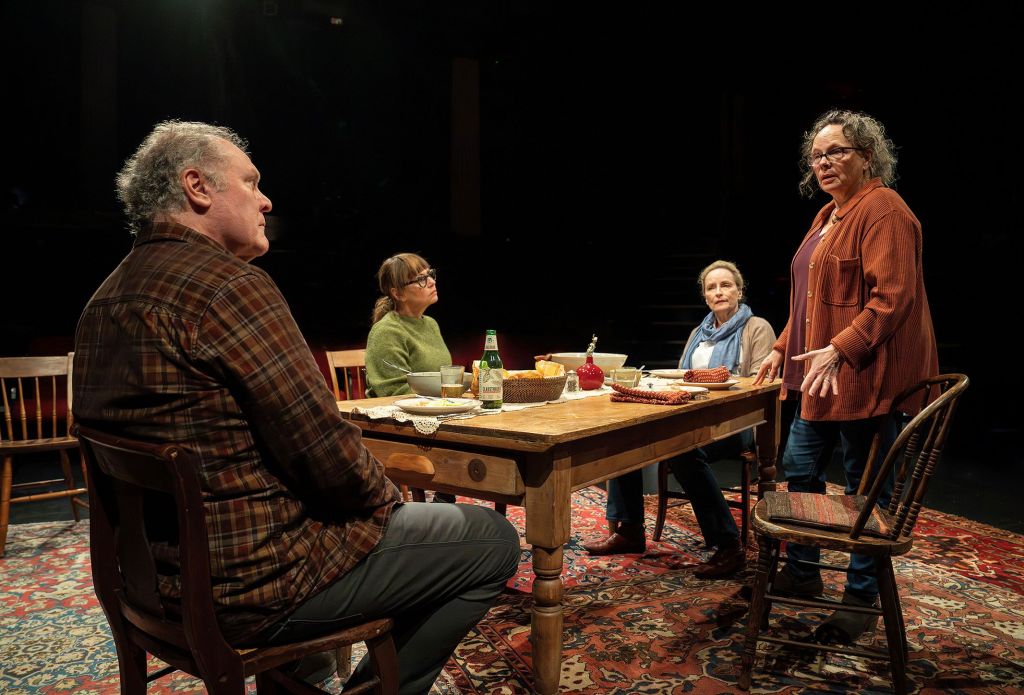
We’ll See is the next Apple Family play by writer and director Richard Nelson. The intimate drama unfolds in real time on the eve of the midterms on November 3, 2026. This World Premiere adds to the Apple Family Plays, now a series of 13 plays by Nelson, part of his Rhinebeck Panorama, that embraces three different families who live in the historic Hudson Valley town of Rhinebeck, N.Y. With all forgiven among family members the next installment feels like a reunion for those familiar with the Apple Family. This latest work in the series, which Nelson has written over the last 16 years, like the other plays, is a Public Theater presentation. Currently, it runs until November 29, 2026.
What does one do waiting for the results of perhaps the most crucial election for civil rights in a constitutionally democratic nation? Indeed, it’s a nation whose many citizens rally and march in “No Kings Protests” to stop the fascist, authoritarian felon in the White House from criminalizing every section of the government, via a complicit, treasonous, Republican House and Senate.
On election night does one turn on a live podcast, or check one’s phone to follow the results and sustain the horror of an easy win as Republican House Speaker Mike Johnson assures? Does one join others at a local Democratic headquarters watching and hoping, with the thought that, regardless of outcome, they must continue to organize against the nation’s “divider-in-chief” who will continue to proclaim his mandate of tyranny because of “massive” support from his racist, uncivil supporters? Because of the possibility of another “red” win, even citizens of democratic nations globally fear for the US, because of the results of the 2024 election. Unfortunately, that election’s popular vote overwhelmingly favored the “leader” of hate, bigotry, undemocratic ideals and sexual perversion.
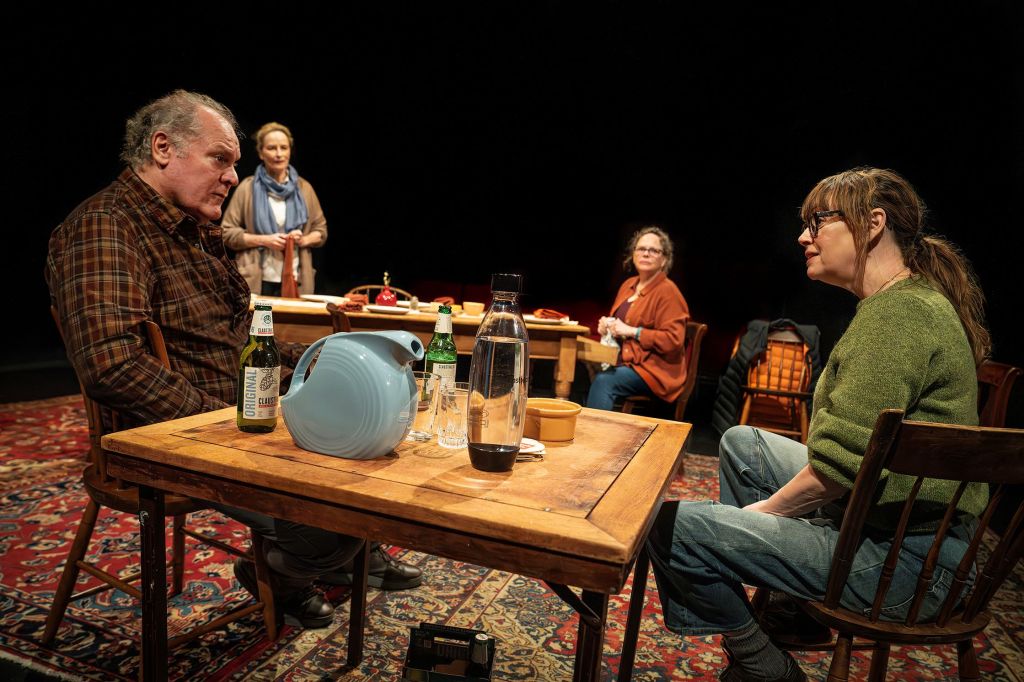
Or does one turn to like-minded family to affirm the principles of democratic decency and equality? Does one seek community and love over a family dinner celebrating hope for a national electoral overthrow of the criminal cabal of politicians. Such politicians support the looting, killing and vitiating of the 14th amendment. Shouldn’t such a family seek comfort from each other to escape from the barrage of “news” about an unfit, disqualified, insurrectionist leader whose voice makes them physically sick enough to vomit?
For the above reasons the Apple family chooses unity and each other’s company on this night of nights for uplifting conversation and conviviality with a few caveats. They will not discuss politics or rail against the voluminous list of traitorous constitutional violations of “he” and “they,” the despised party members. Also, the Apples’ will not honor any of them by name, especially “him.” Second, they will rally around inspirational topics. And, they will discuss their own lives and feelings about their current, personal situations. Additionally, they will not look at their phones, turn on the radio, or TV to check the election results.
During the first fifteen minutes of the play in the conversation about a migrant celebration of Thanksgiving, sisters Barbara (Maryann Plunkett) and Marian (Laila Robins) sing a historical song (“Emigrant’s Lament”), once sung by the Hutchinson family singers. From then on we know who they are and what they value. Throughout, we note the nuanced themes which Nelson cleverly works in with understatement. In fact the “given” for the Apple family gathering on this night is that they see their lives and the lives of citizens and migrants alike in imminent danger from the current government. Clearly, they oppose actions that “he” and his party have traitorously undertaken in a rejection of traditional American democratic ideals laid out in the Declaration of Independence and Constitution. For them “he” is a clear and present danger.
Interestingly, Nelson also makes their views manifest through the pauses and what they agree not to talk about. Thus, we understand their profound sorrow about what “he” has done to the United States and what citizens like themselves have allowed “him” to do inadvertently. Because citizens have not effectively stopped or removed him for all time, that has placed them in their own personal, moral conflagration.
For after all, evil flourishes when “good” people do nothing. Therefore, if they presume to “see” themselves as good, then what are they? Who are they for allowing hateful criminals to “lead” the country, kidnap migrants off the streets to fulfill ICE agents’ quotas, and fill up bank accounts of detention centers’ owners? Barbara in particular refers to an incident that occurred in the park. Of course the Thanksgiving celebration for her ESL students must be quietly done without publicity because migrants will be there.
Thus, on this night will their one, voice one vote count for something? All of these ideas prevail throughout We’ll See, and some of the siblings, for example, the youngest, Jane (Sally Murphy), in quieter moments, ask questions about their own and by extension their family’s American identity as Marian refers to what “he” has made them become.
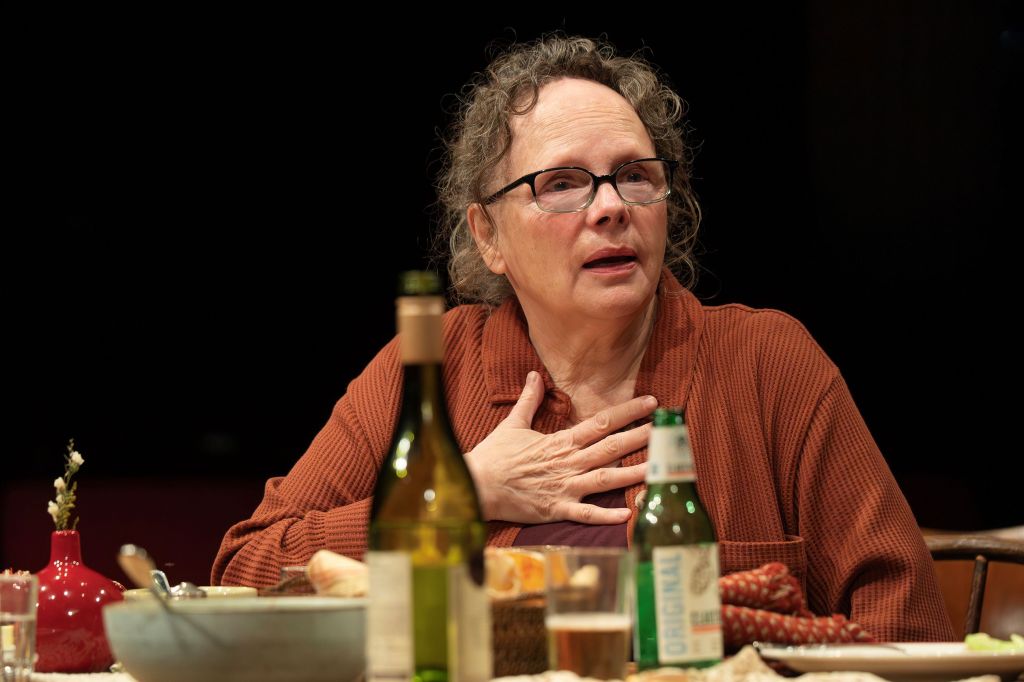
Maryann Plunkett’s Barbara, the eldest Apple sibling, hosts the dinner with Marian (Laila Robins) who lives with her. The dinner includes Jane and brother Richard (Jay O. Sanders) who leaves to pick up his actress girlfriend Yvonne Winters (Yvonne Woods). Through key junctures, Barbara, a 74-year-old English teacher encouraged to retire by the principal, a former student who didn’t align with her, leads the conversation. For example, she gives the opening and closing statements of the play. Not only does she recite poems which relate to the plays themes, she discusses various incidents in her classes with students.
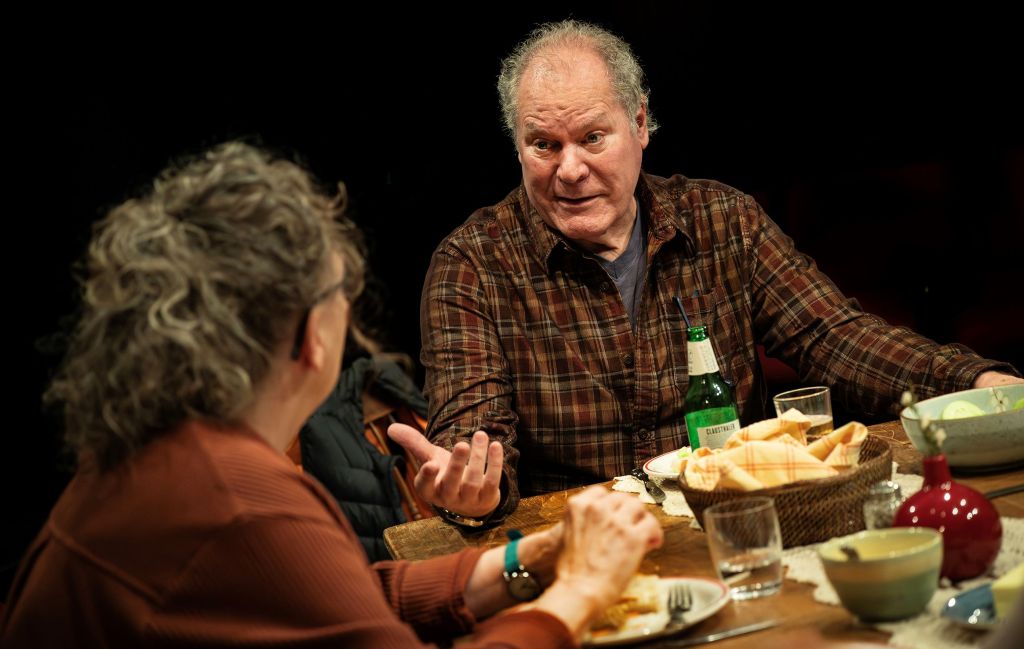
As a result, all of the others chime in with a familiar camaraderie creating an intimate, slowly-paced, relaxed atmosphere. During the evening they share personal stories, tell lame jokes, tease one another, make wisecracks or compliments about each other, relate interesting philosophical anecdotes, discuss Rhinebeck history, and much more. Yvonne discusses the healing aspect of theater, relating a pointed incident with an autistic child.
Every now and then they discuss other family members not present, i.e. how Tim, Jane’s husband, changed his voting site (from Rhinebeck to Brooklyn where they also live), and how he is covering for another actor in a play. Incidentally, Jane brings up her dislike of Rhinebeck’s change of voting site from the wonderful, historic Town Hall to a retirement facility, a point that strikes a nerve because she and Richard work on a project about Rhinebeck’s history. Ironically, her dislike about the change segues to her real dislike, the Democrats, for not caring to change things that relate to her life. She infers their complicity with the majority party. And at some point she finally admits she didn’t vote. With understanding, Barbara chides her a few times that she should have. Perhaps, she would feel less depressed, more hopeful.
Obviously the four siblings and Yvonne care deeply about the American experiment and live their lives to uphold it, if the government does not. Clearly, listening to this group of artists, teachers and lawyers (Richard) one feels a part, encouraged by the atmospheric dinner (the food is real), the incredible ensemble work, the direction, and the creative team supporting Nelson’s vision. Jason Ardizzone-West’s minimal and domestic set, Susan Hilferty’s homely costume design complete the portrait of a family that represents thinking citizens. Though we may not have such a family, we long for their community and empathize with it. Seeing the play after the midterm results, Barbara’s parting words, “We’ll See,” directed to three audience members (the audience is on three sides in the Barbaralee theater), are an ongoing meme for the country’s uncertain future.
We’ll See runs 110 minutes with no intermission at the Public, extended until November 29, 2026 https://publictheater.org/productions/season/2627/well-see/

Posted on November 11, 2026, in Public Theater and tagged art, Jay O. Sanders, Laila Robins, Mary Ann Plunkett, Public Theater, Rhinebeck-NY, Richard Nelson, Sally Murphy, The Public, Theater, We'll See, Yvonne Woods. Bookmark the permalink. Leave a comment.


Leave a comment
Comments 0