‘Mrs. Doubtfire,’ a Family Musical Comedy That Is Present and Sorely Needed
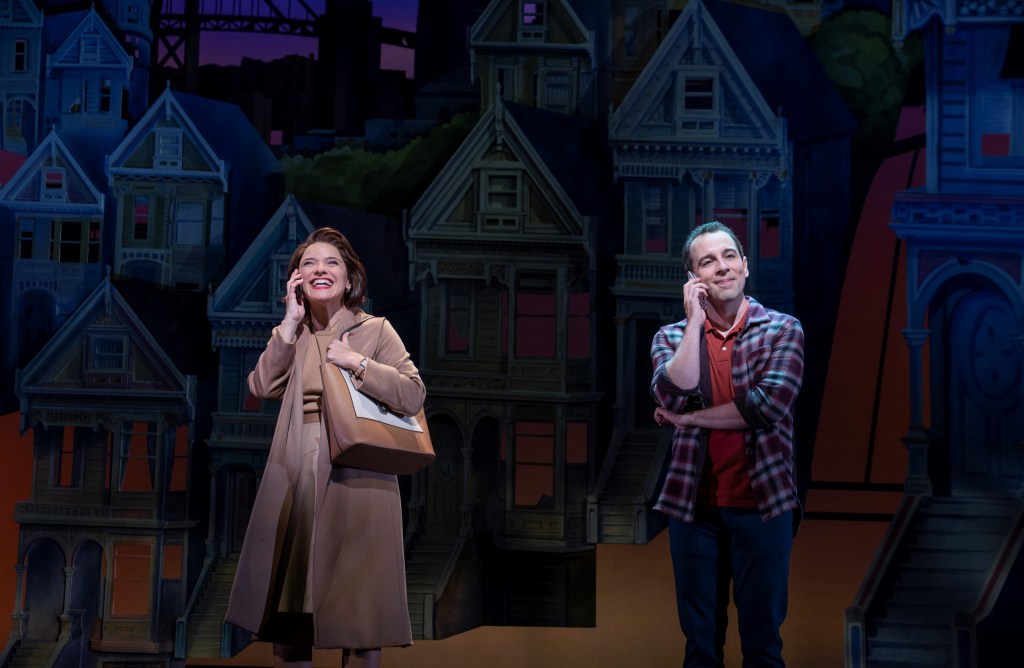
It is to the credit of the producers and creative team that they have taken another approach to the iconic 1993 film Mrs. Doubtfire (starring beloved Robin Williams) by enhancing its vibrant situational humor with emotional musical resonance in an adaptation currently on Broadway at the Stephen Sondheim Theatre. Thankfully, Doubtfire (music and lyrics by Wayne Kirkpatrick and Karey Kirkpatrick; book by Karey Kirkpatrick and John O’Farrell) reminds us of the vitality of timeless verities, unity despite division, love despite differences, compromise toward the best solutions possible. Mrs. Doubtfire reveals that with love and faith all things can work together. And a sense of humor helps.
How the actors, director, technical team configured the book and music to emphasize these themes is the focus of this reviewer. If you are looking to be entertained by Doubtfire opprobrium, stop reading now. I thought the production of Mrs. Doubtfire, shepherded by the always fine director Jerry Zaks, hits its mark. Audiences are loving it, if critics are twisting its worth unjustly and inanely to make it their footstool to appear “clever” and in vogue.
Based on the titular Twentieth Century Studios Motion Picture, the Broadway adaptation deepens the comedy and characterizations of Daniel, Miranda and the children with its musical numbers (“I Want to be There,” “What the Hell,” “Let Go”). In these we understand the emotional price and the grind that a family endures in the grip of a painful divorce when it is too arduous to work through the seemingly limitless difficulties.
Lydia, the eldest daughter, leads the ensemble, Miranda and Daniel to expose the conflict between her parents and indicate how it is derailing all of their lives. This happens during a photograph sitting Miranda has arranged in the hope of cataloguing the kids’ ages. Daniel upends Miranda’s wish for a family photo when his shenanigans, which are funny and endearing, work the opposite effect on Miranda and ultimately destroy the photographer’s camera, disappearing any chance for a photo. Lydia (the excellent, on-point Analise Scarpaci) and the others note the handwriting on the wall and imminent divorce in the opening song “What’s Wrong With This Picture.”

The irony is that Miranda wants a reassuring picture of a happy family, and Daniel, despite himself, is not able to give that photo, representative of the family she wants. Both parents are disunited, not in sync, skewed. One is reminded of the Facebook photos people post of themselves, i.e. the “wildly loving couple” who behind closed doors, is completely miserable. Fronting on Facebook and inciting jealousy in their “friends” is the only modicum of happiness they can suck out of the relationship which is doomed.
Likewise, the symbolism of the scene and the song are clear; the differences between this couple run deep into life approaches and right brain, left brain schematics. Miranda is organized and ambitious, intending to be her own entrepreneur. Daniel, a voice actor is highly imaginative, creative, his own person and all heart. The kids are the bridge, but instead of being the way to cross over and make the most of each parent’s attributes to benefit the family dynamic, the “adults” exploit the kids who become the linchpin to make each other miserable, incapable of navigating productive “family” roles and interactions. Each sees the other as “obstructive” and wants the other to be more like their own perspective of a “Dad” and a “Mom.” Their inflexibility is ultimately self-destructive and as in many families makes divorce inevitable.

Lydia gets it; her parents and siblings are in denial; the ensemble concurs in the refrain. Daniel is belittled and made to appear unfit by Miranda who casts herself in the role of mother superior, a termagant. She ironically justifies herself, placing the blame on Daniel’s behavior, annoyed that “he” has made her into the woman she “swore she’d never be.” Clearly, both are revving each other’s engines and are at fault, but circumstance, Daniel’s fears and Miranda’s overwrought nature lay the brunt of the fault at Daniel’s door, and he accepts this, a clue to his heart and future flexibility to change.
When he breaks her rules by taking the kids out of school to have a birthday party for son Christopher (the appropriately gangly, awkward Jake Ryan Flynn) and a stripper shows up by mistake, Miranda is provoked beyond forgiveness. It will take a miracle for Miranda to ever compromise with Daniel again. Thus, the set up for the miracle of Mrs. Doubtfire is born after the divorce is finalized by the end of the song “What’s Wrong With This Picture.” However, the irony of Daniel’s wacky “picture” continues when unsuspecting Miranda hires him for the Nanny position and his appearance and gender is skewed but not his heart. The photograph metaphor which threads throughout (Daniel is even removed from Miranda’s photo wall) is finally corrected by the musical’s end (“As Long As There is Love”).

Miranda (the lyrically voiced Jenn Gambatese who gives a nuanced performance showing Miranda’s growth in forgiving Daniel) remains unmoved when Daniel pleads his case in family court to receive joint custody in “I Want to Be There.” As Daniel, Rob McClure’s petition to the judge is beautifully heartfelt and stirring. Indeed, throughout, McClure’s skills (singing, voices, break dancing, dancing, rapping, looping, hand puppeteering) and exhaustive energy and enthusiasm in a role that requires he be present in season and out are incredible. He makes Mrs. Doubtfire his own, and as a result she is authentic and real.
This authenticity McClure conveys to the hilt so that you forget he IS Doubtfire and are surprised when he isn’t. This switcheroo becomes all the more hysterical when he uses the voice of Daniel, dressed up as the plump but extremely agile elderly Scotswoman and then reverts to Doubtfire’s voice when he is in the role of himself as Daniel. This occurs a number of times i.e. auditioning for Miranda on the phone, with son Christopher when he blows his cover and as he prepares for a surprise visit by court liaison officer Wanda Sellner (the extraordinarily voiced Charity Angel Dawson) who is checking his apartment to make sure it is fit for visitation with his kids.
When we see the transformations and costume (Catherine Zuber) wig (David Brian Brown) make-up and prosthetic changes (Tommy Kurzman) which occur in the twinkling of stage time’s eye, we are amazed at the “seamless” effort it takes. Kudos to the team for making it so. The switches are humorous and crucially revealing: each time McClure’s Daniel redeems himself being Mrs. Doubtfire, we know it is for the love of his children and to gain his self-respect. Though the deception is morally questionable, it is forgivable because his portrayal is award winningly brilliant and endearingly wise. Ultimately, it is the step which fosters understanding, allows Miranda breathing room to be her own person, and brings the family closer together.

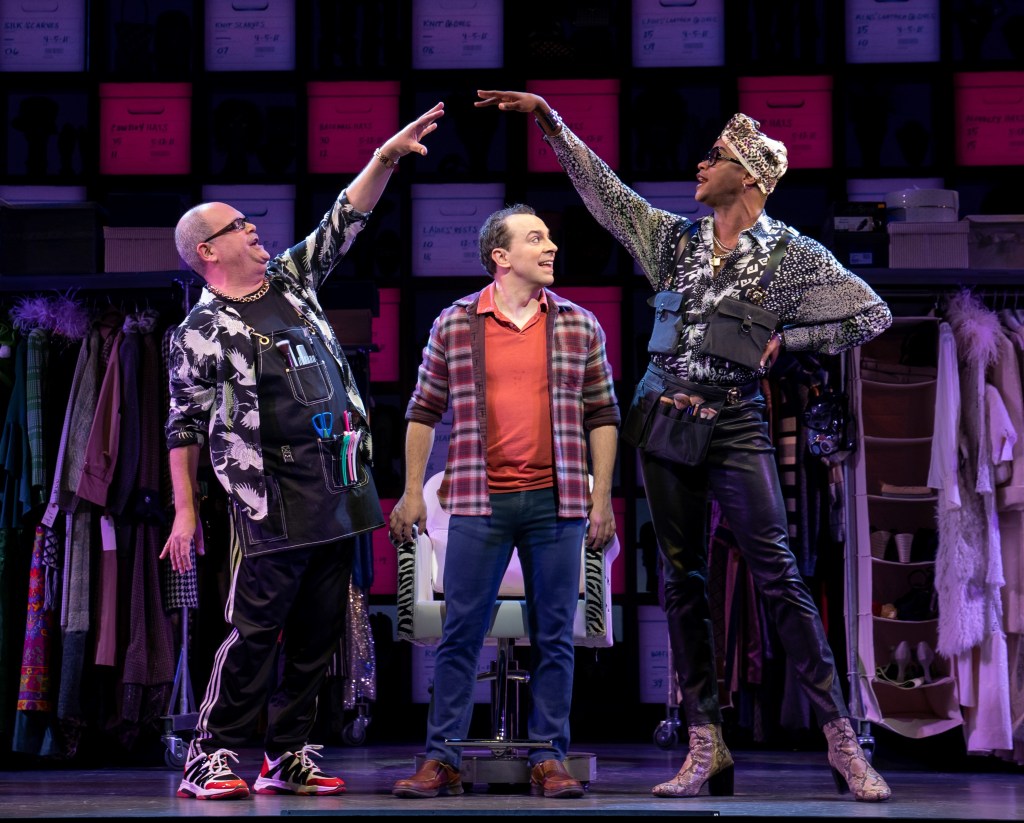
Humorously wonderful scenes occur throughout. One is when Daniel calls on his brother Frank (the hysterical Brad Oscar) and his partner Andre (the magnetic J. Harrison Ghee) for help to make him into the iconic Nanny that Miranda cannot refuse. After costumers and hair and wig designers Frank and partner Andre run through a roster of amazing women (female ensemble members show up as Cher, Jackie O., Donna Summers, Diana Spencer, etc.) that emerge from their talented fingertips in “Make Me a Woman,” Daniel avers that his role is a Scottish born widow past 60. Changing course, they produce versions of their perception of iconic women of a certain age who are the antithesis of the glamorous fashion icons that paraded across the stage minutes before.
Out come tall, diesel men dressed in the same outfit (a forerunner of Doubtfire’s) pronounced to be Janet Reno, Eleanor Roosevelt, Margaret Thatcher, Julia Child and a masked Oscar Wilde in a farcical getup. The irony is hysterical: it twits Andre’s and Frank’s viewpoint and disdain of the unfashionable but formidably strong women as not being the “feminine” ideal. The idea of what constitutes a “woman” and genderism is turned on its head by Andre and Frank, which reveals lightening wit that certainly will offend some critics because it is daringly in your face.
Tragically, what is “politically incorrect” in one part of the country is searingly popular in another; so the criticism of the production being outdated in terms of genderism is slim-sighted, considering that culturally/geographically not even sections of New York City maintain the current “correct” views (i.e. Staten Island, Beach Channel, Breezy Point) related to gender. Many in these areas, including upstate New York (one of the supposedly most liberal states) take offense at “political correctness.” What to do?

In another LOL scene when Frank and Andre visit Daniel to deliver an additional wig for his new Nanny role, Wanda Sellner (the coldly autocratic court appointed officer) visits Daniel’s apartment, interrupting Frank and Andre’s mission. What ensues is a fast-paced quartet of dramatic irony as Frank, Andre and Daniel try to front an increasingly suspicious Wanda Sellner about whose sister the elderly woman is and why Daniel as Doubtfire (who has lost his prosthetic device out the window) won’t look directly at Wanda Sellner, which he finally does with banana creme pie on his face that makes him unrecognizable.
That the audience has been let in on the truth about Doubtfire’s gender, his “losing face-out the window” and Frank’s shouting nervously to cover his lies, makes the scene all the more riotous. Dawson is superb in her fierceness which escalates the humorous tension that the men and the audience feel as they fear Sellner’s hound-like nose will sniff out Daniel’s deception.
Brad Oscar’s priceless screaming delivery is tuned to rhythmic sonority with assists by straight woman Charity Angel Dawson and J. Harrison Ghee to bring on the belly laughs. Their crack-fire delivery accompanies Rob McClure’s costume and voice switches portraying two individuals at once in split second lag time. The tension only subsides with the audience’s audible sigh of relief, when Andre (Ghee) posing as the FBI on a phone call to Sellner rescues Daniel from Sellner’s adversarial, witchy clutches which gain steam and develop in Act II.

Zaks’ direction to shepherd the quartet’s superb pacing achieves a rhythm that is glorious and pitched for gales of laughter. By this point the audience is rooting for Rob McClure’s Daniel, taken over by his incredible sincerity and loving father/mother, man/woman Mrs. Doubtfire. Indeed, men do well as women, a gender trope that one must not miss if one is “getting it all in,” “going with the flow” and not luxuriating and indulging one’s sensibilities in offense at the genderisms the writers play off of. Importantly, another theme underscored by Mrs. Doubtfire is that that rigidity (from the political right or the left) whether it be in forcing others to adhere to one’s expectations or deeming “the way one should be” provides no easy answers or road to compromise. It indeed takes time and openness and flexibility and kindness for compromises to be reached.
Daniel masters Miranda in an area of vulnerability by making himself invaluable as the Nanny and housekeeper assuming motherly roles, while Miranda stokes her entrepreneurial skill. Additionally, he attempts to satisfy his court requirements to maintain a job, securing one as a janitor for a TV station. It is in this scene that we are introduced to an outdated children’s program which steers us into hilarity provided by the exceptional Peter Bartlett as Mr. Jolly. As Jolly, Bartlett bumbles and fumfers telling time with puppets Ratty and Mousey. His producer boss Janet Lundy (the stone-faced, funny Jodi Kimura) groans about being fired unless the Mr. Jolly Show is updated to snap and pop. Bartlett’s pauses, musing and timing as the near doddering Mr. Jolly is smack down LOL organic. This scene is cracker-jack great!

In attempting to bring order out of chaos at the Hillard home, as Doubtfire, Daniel sets the kids doing their homework (turning off their phones, etc.) and receives cooking lessons from Chefs Amy, Ann and Louis who appear from his tablet magically to show Doubtfire how to cook a “nutritious, delicious meal,” in record time, including how to spatchcock a chicken. In “Easy Peasy” Rob McClure and the ensemble in well coordinated, rapidly timed moves gyrate around the stage. He grandly catches a chicken and sticks of butter that fall from the ceiling as the ensemble sings and dances. During this wild cook-off, look for the hysterical pharmaceutical commercial break by a Rectisol Doctor (David Hibbard) complete with list of side effects including death.
The meal which smokes Daniel out (a take-off on the film when Williams sets Doubtfire’s breasts on fire) gives him an appreciation for Miranda’s home cooked meals. Failing once more, he orders take out which he then arranges in a finely set table for Miranda, the kids and her work partner Stuart who intends to be her beau. The hilarity ends in revelation; he lost his place at the table, and Mrs. Doubtfire won’t replace him there. He has the growing realization that he will never be back at that table as their Dad, and in fact Doubtfire is an encumbrance to what he really wants, back in Miranda’s good graces. The impetus becomes if he is to see his children at all as their Dad and not the character he has created, he must get a job that can pay an affordable living wage.

The opportunity arises when beat box artist Loopy Lenny, a guest on the Mr. Jolly Show, leaves his “loop machine” which Daniel cannot resist playing with as he mops the area. In “About Time,” Daniel loses himself in remastering a cooler version of telling time with Ratty and Mousey that crackles with his exceptional voice skills. Upon hearing his genius at work Janet Lundy is impressed to offer him the possibility of a job on the show. With hope of this new job, Daniel digs in as Mrs. Doubtfire having reversed all he had contributed to making a disaster as their Dad. In “Rockin’ Now” Mrs. Doubtfire leads the ensemble in Daniel’s self-affirmation, lifted out from Miranda, his kids and Frank and Andre’s perception of him as a loser. He sees himself as a brilliant fixer and vital, purposeful individual.
A number of points are made during this hysterical number where McClure’s mobility with 30 pounds of rubber dancing and twirling Doubtfire’s plaid skirt is beyond funny and delightful. One is that Daniel could only change and express his loving heart with a wall of rubber separating him from those who saw him negatively and didn’t know how to encourage his goodness (a shortcoming of theirs). Secondly, as a character he is able to do that which he resisted as Daniel, who continually provoked Miranda. Conning her and the kids is a weird kind of payback proving he is as superior as she presented herself to be. However, when Lydia and Christopher discover who is under the rubber, the question remains, how long will Daniel be able to front Miranda and Sellner who hold the power of his rights as a father?
In Act II the risks of discovery become greater as Lydia and Christopher watch their father pull off Mrs. Doubtfire as a plus size model, showing Miranda’s sportswear line as he and the Ensemble models sing and dance in “The Shape of Things To Come” for an audience of buyers and store representatives. Dressed in a colorful skimpy outfit revealing a sports line for “all shapes and ages,” once again Daniel’s phenomenal talents save the day and get deep pocket customers for Miranda kicking off her entrepreneurship. In the song’s lyrics, the shift from actors with BMI 20 figures proud to look in the mirror to Mrs. Doutfire’s 30 BMI figure that can do extraordinary moves is a telling slap in the face to the guilt inducing diet and weight loss industry: a great irony.
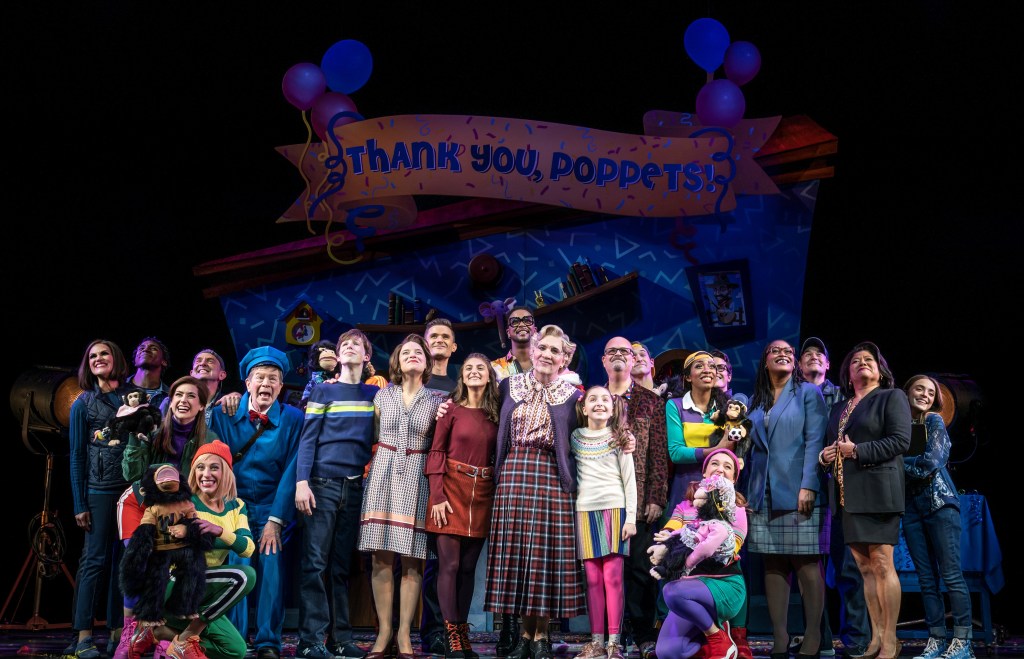
Mrs. Doubtfire has made a world of difference for Miranda who is beginning a relationship with Stuart (“Big Fat No”) and resolving the end of her relationship with Daniel (“Let Go”) who is miserable (“Clean Up The Mess”). In a conundrum obstructed by having to be Mrs. Doubtfire as he grows invisible with his children, he faces a reckoning with Sellner who puts together the viral Doubtfire sports model video and other information she receives from Miranda about Daniel. The reckoning begins in Sellner’s office when Daniel is supposed to appear with “his sister” Mrs. Doubtfire and turns into a surreal scene with Sellner as a magical, witchy type spirit proclaiming his doom in “Playing With Fire.”
Charity Angel Dawson pulls out all the stops wailing retribution for him in a shimmery red/orange dress against a fiery backdrop as a chorus line of Doubtfires send off Lydia, Chris and Natalie (Avery Sell) away from him presumably forever. Then the ensemble Doubtfires close in on him, singing the refrain, “The Truth Will Make You Free,” while sweeping their brooms in a haunting dance as Sellner sings her glory. And eventually the power of Sellner’s presence and voice along with the Doubtfires circling, engulf him dressing him in the hated Doubtfire costume and persona. The backdrop and set returns him to Miranda’s house where the final arrangements are set in motion for his big reveal that ends the charade once and for all (“He Lied to Me,” “Just Pretend”).
However, the truth with his reveal results in his redemption and Miranda’s acknowledgement that his true heart had to masquerade as Doubtfire for a time to show her and him what he was capable of. Additionally, with his new job on a TV Show starring Mrs. Doubtfire, the family is reminded of Daniel’s goodness. With the help of Sellner who shows her true colors and acknowledgement of Daniel’s love for his children, Miranda is convinced that Daniel must see and take care of Natalie, Christopher and Lydia with a joint custody arrangement (“As Long As There is Love”).
I have nothing but praise for Mrs. Doubtfire which is a whirlwind of emotion, comedy, farce, genius pacing, singing, dancing and crisp dialogue acutely directed and performed by the prodigiously talented Rob McClure who is breathtaking, as the other actors shine equivalently in their roles to assist him. The music, a combination of pop, hip hop, ballad and more functions to raise the emotional stakes at each turning point and grows from Daniel’s and Miranda’s struggle with each other. Mrs. Doubtfire’s book is well adapted by Kirkpatrick and O’Farrell and runs deep in this production because of the songs (Kirkpatrick and Kirkpatrick) their symbolism, the hybrid comical farce and continual pushing of the envelope to embrace Daniel’s guilt and imagination (“Playing With Fire”) (“Easy Peasy”).
Kudos to Ethan Popp for musical supervision, arrangements and orchestrations. Special kudos to Lorin Latarro for her choreography. Both bring a myriad of new elements to Mrs. Doubtfire and make it shine greater than the film.
The technical aspects (movable sets) are well devised for speed, and are well thought out and wrought for the quick scene changes and farcical, magical moments mentioned. Kudos to David Korins (scenic design) and Philip S. Rosenberg (lighting design) and Brian Ronan (sound design) as well as aforementioned Catherine Zuber, David Brian Brown and Tommy Kurzman. I loved the lighting and outlines of the cityscape, the Hillard household and touches needed for the success of various scenes (“Easy Peasy”).
The production is a superb adaptation combining the known and the new. It should be seen a few times because inevitably, there is so much to glean you will miss the symbolism and the profound characterizations which appear stereotypical initially, but are resonant and vital as are the themes mentioned. For tickets and times go to their website: CLICK HERE.
‘Clyde’s’ by Lynn Nottage, a Devil of a Comedy at 2NDSTAGE
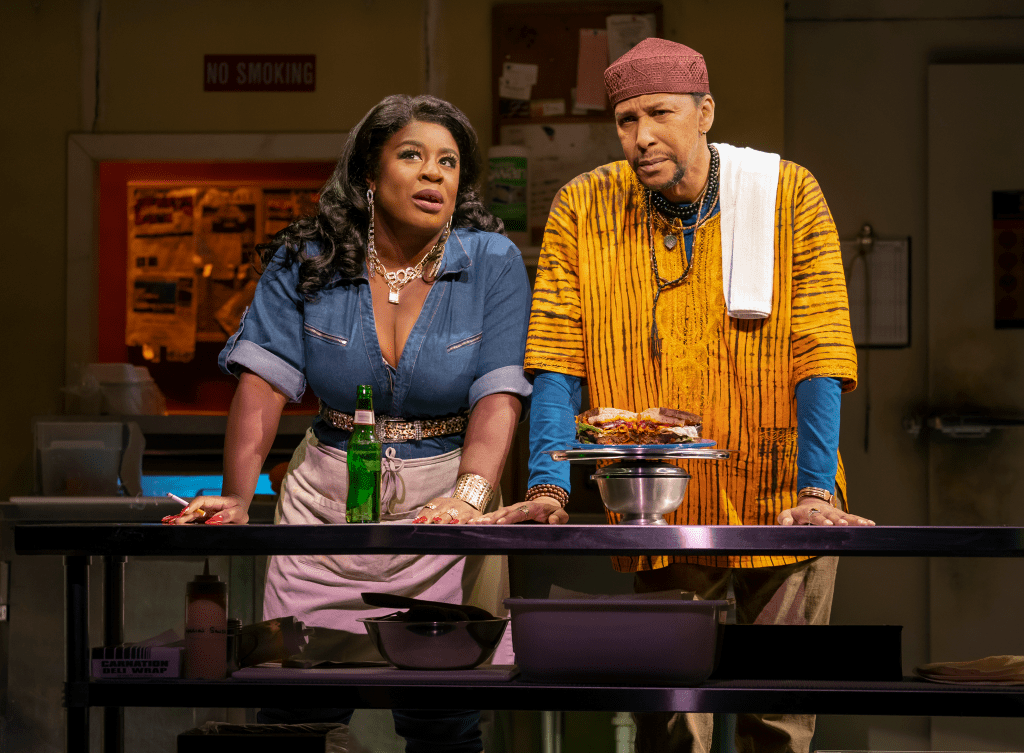
Lynn Nottage’s play Clyde’s presented by 2nd Stage, currently at the Helen Hayes Theater, is an intriguing switch off from her dramas for which she’s won two Pulitzer Prizes (Sweat-2017, Ruined-2009). Nottage is the first African American woman to do so. Clyde’s combines ironic and other-worldly elements with comedic twists galore and an expose of problematic cultural issues that empathy and social unity help to resolve. Her hybrid work lights a path for playwrights who want to stretch their own talents. Additionally, the uniquely defined characters and situations, which show she is unafraid to push the envelope, indicate that she will continue to evolve as an exceptional playwright. Clyde’s exemplifies the best of Nottage in “spades.”
Acutely directed with precision and grace by Nottage’s long-time collaborator Kate Whoriskey, Clyde’s highlights a group of down and out former convicts newly released from prison who can, to their great misfortune, only find work as cooks at the greasy spoon, truck-stop diner in Berks County Pennsylvania known as Clyde’s. The joint is named for its owner (the electric and terrifying Uzo Aduba), who operates it with a hands on approach and who is an insidiously bullying and unapologetic former convict herself.
Nottage has humorously configured Clyde as the mythic female “biach” employer who is hyperbolic and cruel in all her ways. She is the type that sends grown men screaming to the bathroom to do a line of coke, so they don’t brain her with a meat mallet. She is the malevolent force that sends women weeping into the arms of their former brutal lovers seeking financial support, so they don’t have to suffer her wrath ever again. Indeed, the sadistic dominatrix is the last person on earth you would ever want to work for. And as such, she’s an outsized and marvelous character, as delectable as Montrellous’ scrumptious sandwiches.
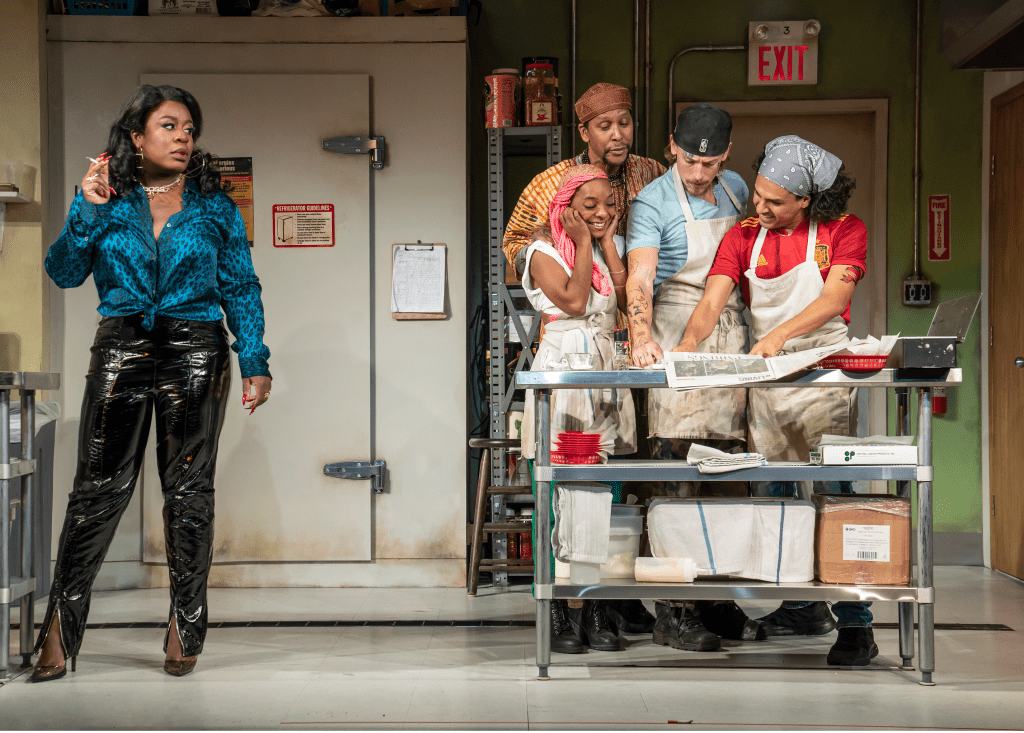
Uzo Aduba as Clyde brings the laughter and fear, having a blast violating every politically correct action and attitude toward the new ex-con addition to her cooking staff. Ironically, he is, a white supremacist in hiding (portrayed beautifully by Edmund Donovan), who is laying low to keep the job, and trying to make the peace with his three black/hispanic co-workers, who at another time in his life, he would have scorned and abused.
Clyde breathes fire over the veteran staff like a dragon-lady. They include the chef guru sandwich maker/leader Montrellous (the wonderful Ron Cephas Jones); Rafael (the hot-blooded, sensitive, full of life Reza Salazar); and the empathetic, dynamic Letitia. Portrayed with nuance by Kara Young, Letitia eventually stands up to Clyde with impunity. By the end of the play, we come to know the deep, resilient and loving core of each of these former convicts down to the reason why they went to prison. And we understand that in each of their former lives, there, but for the grace of God go any of us.

Nottage’s craft and Whoriskey’s incisive shepherding of her actors to encourage their spot-on authenticity allow us to stand in these ex-cons’ shoes and wish that every good thing might happen to them. Of course Nottage has us especially wishing they escape the claws of the sinister Clyde. Indeed, though Clyde appears to be looking for any excuse to fire them and return them to the Arctic reaches of emotional devastation from whence they came, perhaps her tough discipline and brutality does reveal a knowledge of how to help ex-cons succeed. At the least her iron discipline betrays a good heart somewhere behind the wall of titanium armor she’s had to create to confront a callous society. She makes it very clear that she is as hard as concrete to survive in the culture that would see her dead and forgotten, rather than help her climb out of the abyss ex-cons face upon release back into the environs that indirectly provoked their prison sentences.
The explosive situation yields a myriad of possibilities as Nottage and Whoriskey unspool the relationships among the cooks who eventually form their own solid community led by their sensei Montrellous. Cephas Jones is masterful. His Montrellous quietly motivates the staff to make the “perfect” sandwich which embodies the goodness of life and manifests the sublime taste of everything beautiful that artistic foody genius expresses. Montrellous is likened to a Christ figure of love, peace and encouragement against Clyde’s Satanic, sardonic, sadistic boss woman, reputed to have made a “deal with the devil” to keep alive Clyde’s her reason d’etre.

It is rollicking fun to watch Jones’ Montrellous and Aduba’s Clyde as they confront each other in a dynamic relationship that begins at the top of the play. Montrellous tantalizes Clyde to taste his heavenly sandwich as he shares a story of his past. She humorously resists him in never sampling the goodness he’s created, nor agreeing with how he’s conducted himself. Immediately, we understand who both are; Clyde is unrelenting in her icy, dark approach toward humanity. Montrellous is open-hearted, light-filled and clever. He teaches the staff that the fastest way toward amity is through the hospitality and deliciousness of something home-made with love. Of course Clyde resists him. Their relationship is symbiotic until it isn’t.
Nottage moves the play briskly forward as Clyde, the ever-psychically draining task-master compels her cooks to sling out food that lures truckers hungry from their long hauls. Montrellous peacefully sidesteps her attitude and encourages his mates to their high calling of making the enlightened sandwich to bring them the pride and strength of this new calling. As the food is plated, Clyde pops up at the window where she collects their sandwiches, dishing abuse, making searing quips and sizzling taunts. And when she enters the kitchen, they must watch out, for her snarky epithets may turn physical to keep her charges in line.
This comedy with a profound message insinuates itself with flavorful intricacy. Soon we’re hooked. How, when and where our favorite ex-cons become the chefs that Montrellous inspires them to be, despite working in a hell hole and at cross-purposes with a seemingly malevolent tiger-lady, who pushes them to the emotional brink to fail, is a revelatory sight to behold. You will just have to see the play for the organic process of how the hopes of the ex-cons and Montrellous’ faith in humanity spins out by the conclusion.
The themes are all there in Nottage’s merry-go-round of antic figures. The culture has ground down these sterling individuals and deprived them of encouragement and self-love so that they’ve landed in prison through a single act. This is an indictment Nottage presses. Additionally, she suggests individuals like Clyde can become like devils pressured to abuse their staff in order to tow the bottom line.

Even a small dive like Clyde’s reflects a microcosm of the corporate macrocosm of abuse. What happens in Clyde’s, as humorous as it is, speaks volumes. It is representative of the monumental struggle that exists between the “right to work” tyrannical employer, for whom constitutional rights do not exist, and those who need to survive and will take any job that they can get. Indeed, Nottage’s sub rosa theme is there must be a better, more decent way. And of course, through the attitude and mien of Montrellous we see it enacted, encouraged and through it, a way of escape for the ex-cons.
Clyde’s works on so many levels. One may appreciate the raw humor, the symbolism, the characterizations which are priceless and memorable and the vital and current themes. This is a play of representative men and women, who have had to work terrible jobs to put food on the table. Finally, the play speaks to those professional or amateur chefs who love to eat and prepare “the food of life,” so that others may come and receive health, wholeness and love. Look for the especially salient themes. You will not be disappointed and may even fall in love with this unforgettable production.
Final kudos go to the creative team whose set design, props (real sandwiches…yum), lighting effects, sound and costumes help to hit this out of the theater ballpark. These include Takeshi Kata (scenic design); Jennifer Moeller (costume design…I loved Clyde’s jazzy, sexy outfits for a truck-stop hostess); Christopher Akerlind (lighting design…there were dimmed lights for Montrellous’ sacred, life-changing sandwich); Justin Ellington (sound design…his eerie music was appropriate for the sacred sandwich); Cookie Jordan (hair and wig design). Finally, Justin Hicks’ original music was spot on for the tone and tenor of Clyde’s.
This is the perfect production for this time of year or any time of year. For tickets and times visit the website: CLICK HERE.
‘Cullud Wattah’ The Flint Water Crisis, Advocacy Theater at Its Best
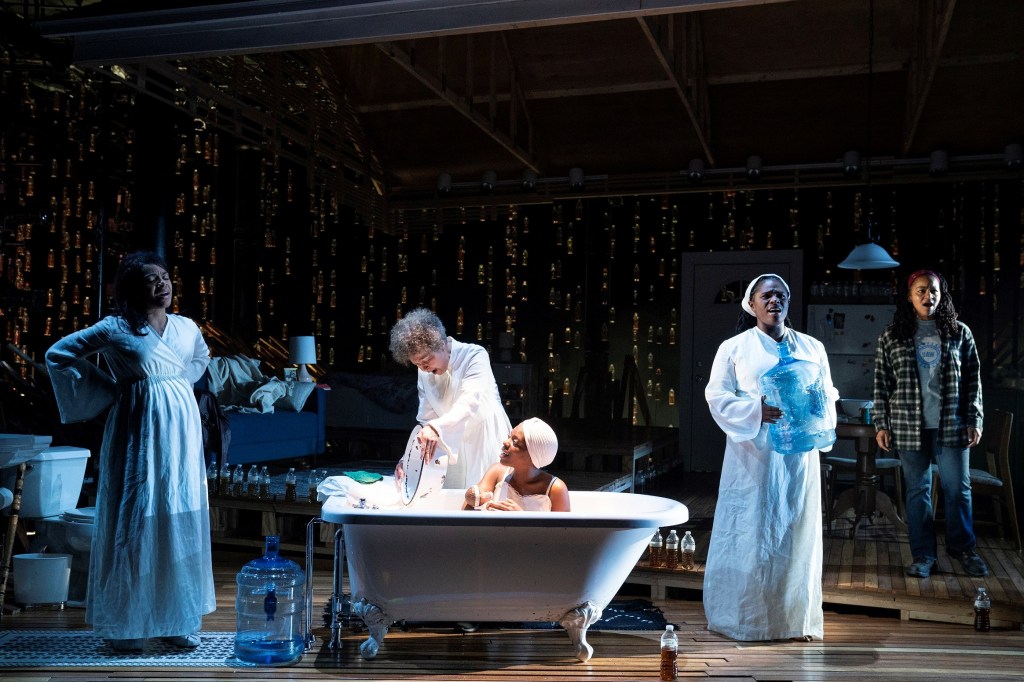
Flint, Michigan’s water crisis is ongoing as Erika Dickerson-Despenza clearly establishes in the world premiere production of Cullud Wattah currently at The Public Theater. Directed by Candis C. Jones, the play is evocative, heartfelt and praiseworthy in its power to shock and anger the audience, as it clues them in to the Cooper family’s stoic struggles to get to the next day. Their trials become more arduous and earth-shattering as they confront the irreparable contamination of their water supply that is slowly killing them because they were notified too late by city and state officials of its toxicity.
Dickerson-Despenza gradually evolves the situation acquainting us with three generations of the Cooper family of women, who live in the house that Marion (the edgy Crystal Dickinson) and her deceased husband purchased through their hard work at the GM plant which outsourced, downsized and ended his job. Thus, to make money, her husband joined the military where he was later killed in the U.S. war with Afghanistan.
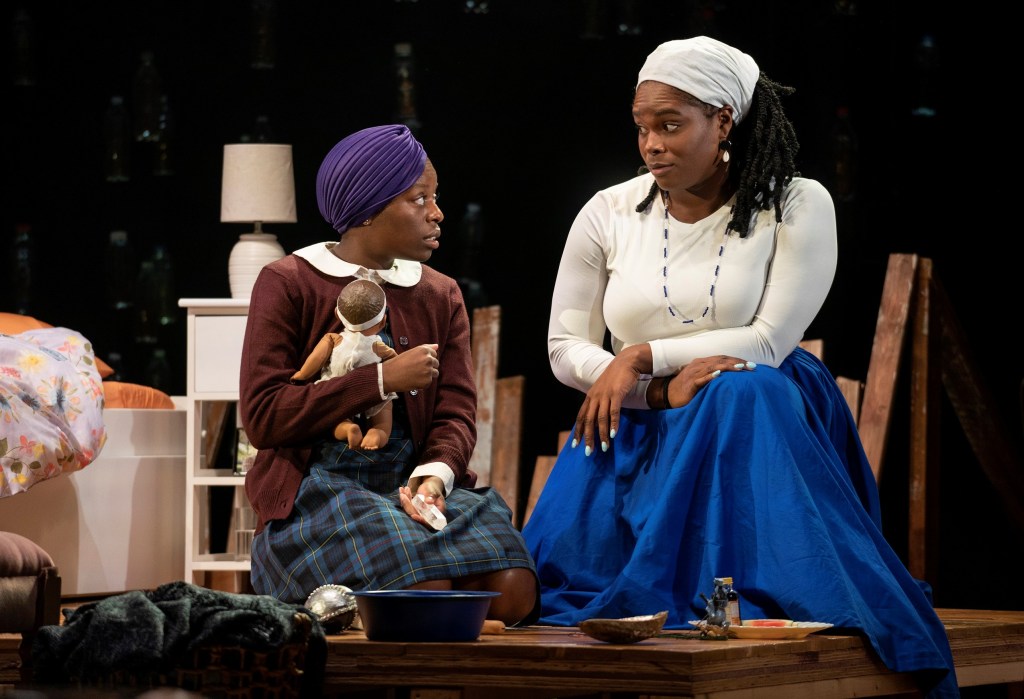
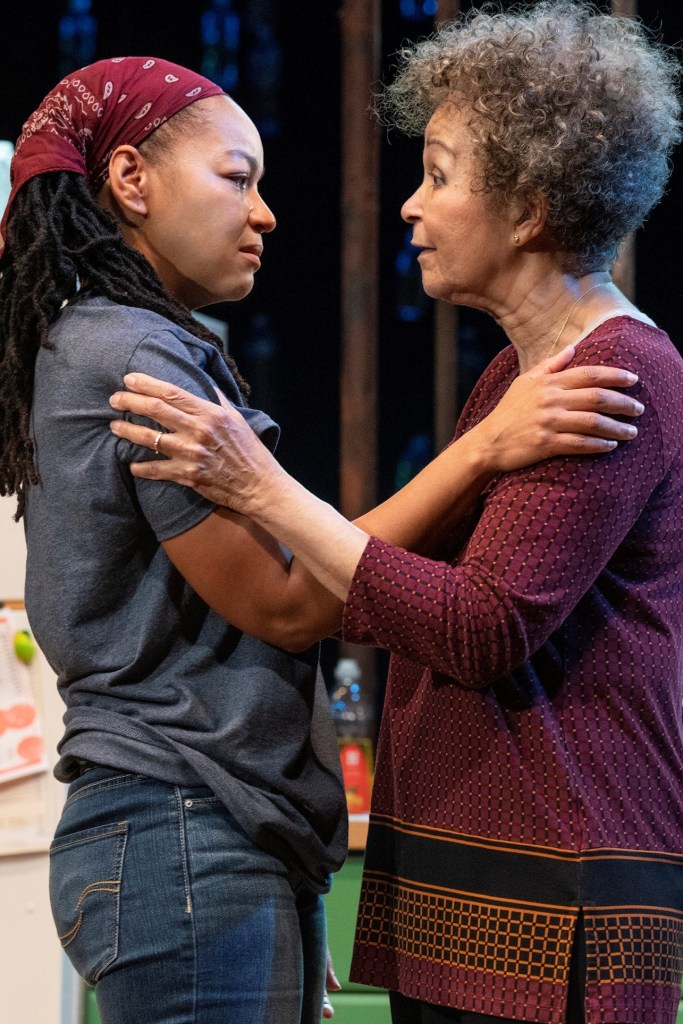
Living in the Flint house with Marion are her mother, Big Ma (the humorous and no nonsense Lizan Mitchell), her pregnant sister Ainee (the superb and empathy evoking Andrea Patterson), and Marion’s two daughters Plum, the totem-like representative for all Flint’s younger children, portrayed by Alicia Pilgrim, and Reesee. As Reesee, Lauren F. Walker delivers an apt portrayal of the strong, self-determined older daughter, who loses faith in her relationship to the Yoruba water goddess Yemoje. The Yoruba water goddess doesn’t make good on her promise to protect the family from hardship and injury.
Dickerson-Despenza’s work is culturally powerful. Her characters establish their ancestry through dialect and dialogue using an easy Black accented speech, save Marion who has been influenced and perhaps soulfully compromised by working at the General Motors plant for most of her life.
Though General Motors has provided opportunity, it has been responsible for abusing its employees when they protested for better working conditions and wages. During the play Ainee reminds Marion that GM polluted the Flint River for years and abusive workers (members of the Klan) killed their father and took vengeance out on their mother, Big Ma, for her work actions against the company. These work actions left Big Ma disabled.
Through family discussions of the crisis, with the news Big Ma listens to running in the background, the facts of the dangerous situation are manifest. City and state officials are accountable for switching the water supply to the toxic Flint River from Lake Huron, fulfilling their campaign promise to “save money.” Their platform for reelection (fiscal responsibility), did the opposite negligently and incompetently. They discounted that the Flint River had been polluted with toxic sludge from GM for years.k The water was completely undrinkable and unusable. However, since the water was mostly going into the black community and since that community contributed less in property taxes, officials wantonly ignored the danger lurking in their unresearched, inherently racist and negligent actions.
Interestingly, the city and state grew a conscience when GM noted that the water needed for their industrial process to build engines was corroding and destroying their product and bottom line. GM screamed to change the water back to the clean Lake Huron water source. Avoiding GM’s closure or litigation to sue for damages, Flint city officials and the state of Michigan responded. However, only GM received the clean water.
When word of the situation leaked, city officials and then Republican Michigan Governor Rick Snyder wickedly lied. They declared the water was safe to drink. Their lies killed, destroyed families and cost billions of dollars in medical bills and future liabilities for sick adults and children. The financial burden to educate and medically care for young children brain damaged by lead poisoning and confronting other ills (cancer) from the water is ongoing and especially egregious. The cost to Michigan and the entire nation is many millions more than the money “saved” by switching water supplies.
We learn during the play that Marion, knowledgeable about this situation at GM, withholds the secret from her family. Though she attempts to bring the clean water from GM to their home, it is too late. Eventually, her silence backfires on her through Plum’s sickness and the ill effects of rashes, hair loss and other conditions the family endures from being poisoned by the toxic soup coming from their faucets.
Dickerson-Despenza uses Ainee as the foil in the arguments supporting the “good” that GM did for Flint versus their criminal behavior. They didn’t protect their workers and they committed abusive acts against the union. Ainee’s stance is an indictment against GM and the workers who allowed themselves to be compromised and exploited. She argues with Marion that she owes GM nothing, and must become involved in a Class Action lawsuit against the city and officials for their negligence and responsibility in decimating the Flint community by not warning them about the toxic water.
As the situation unfolds, we learn how each of the women respond in dealing with the crisis on a personal level and as a member of the Cooper family. Ainee attempts to become an activist, though this runs counter to Marion who is moving up at GM, despite their initial attempt to lay her off. How Marion manages to finesse herself an opportunity is revealed later in the play.
Marion’s daughter Reesee attempts to keep sane during the crises by praying and giving offerings to the Yoruba goddess of water which she reveals to Plum as a secret because Big Ma is religious and doesn’t approve of black folk gods. Plum attempts to take control of the situation with her mathematical skills, figuring out how much daily water they need for each of their activities.
Big Ma prays to the Christian God and helps with the chores and generally chides each of them if they step over the line of decency, especially with regard to vulgar language. However, the rock of the family is Marion. She is the only one able to work. She takes care of their financial burdens with no help from the others and is pressured by their debts: Plum’s medical bills, the upkeep of the house, their great quantity of water purchases, utilities and more.
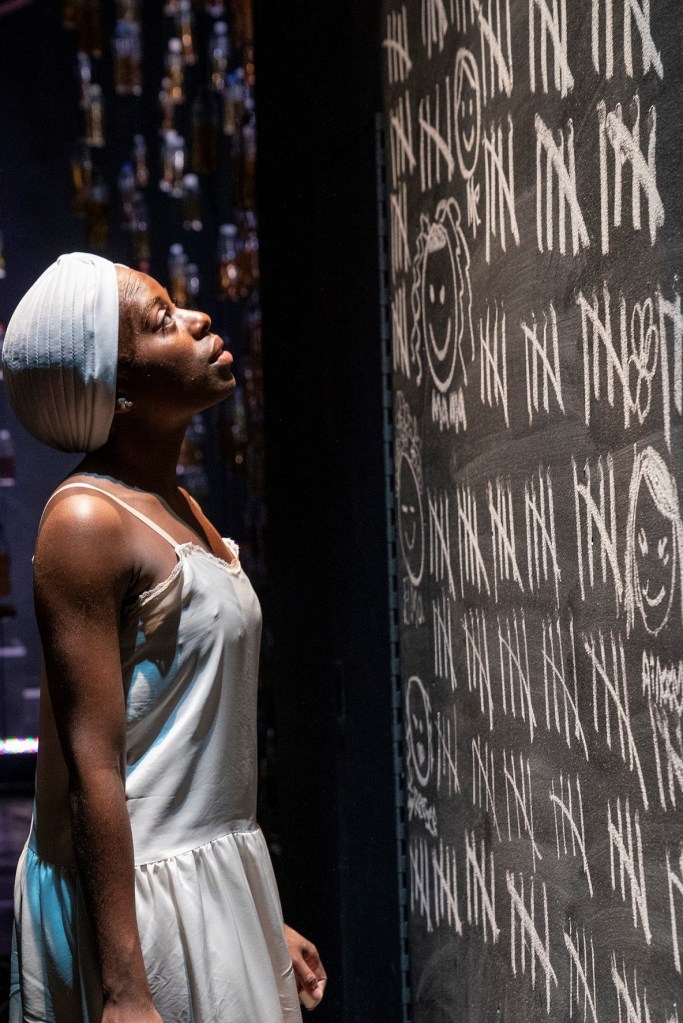
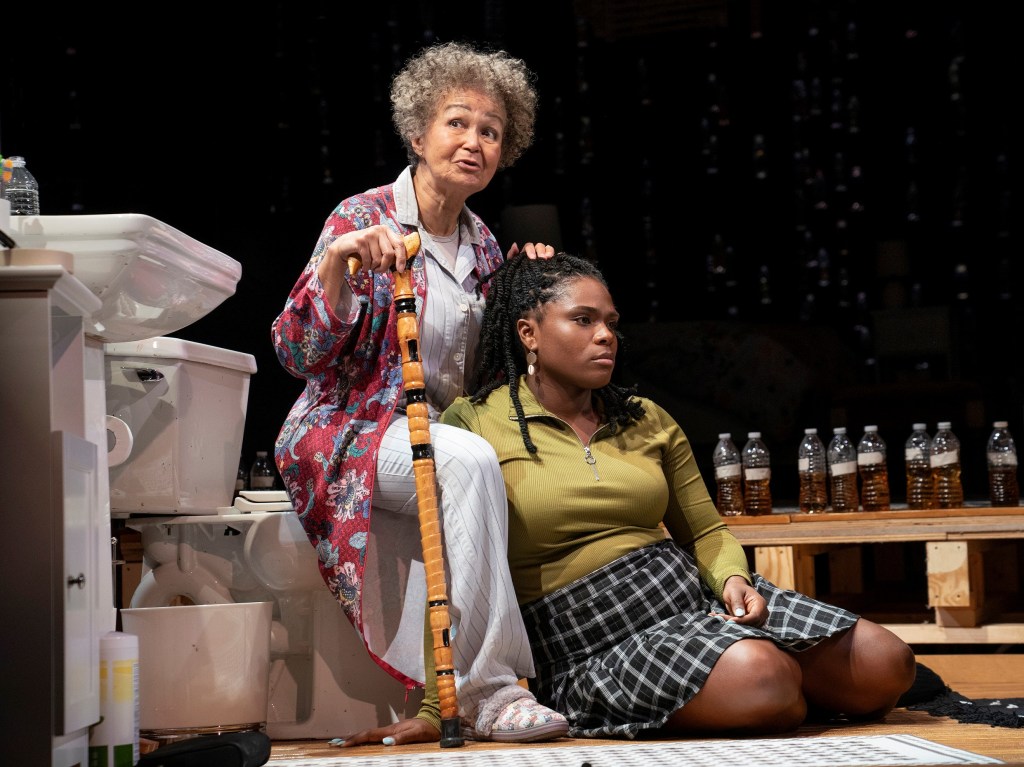
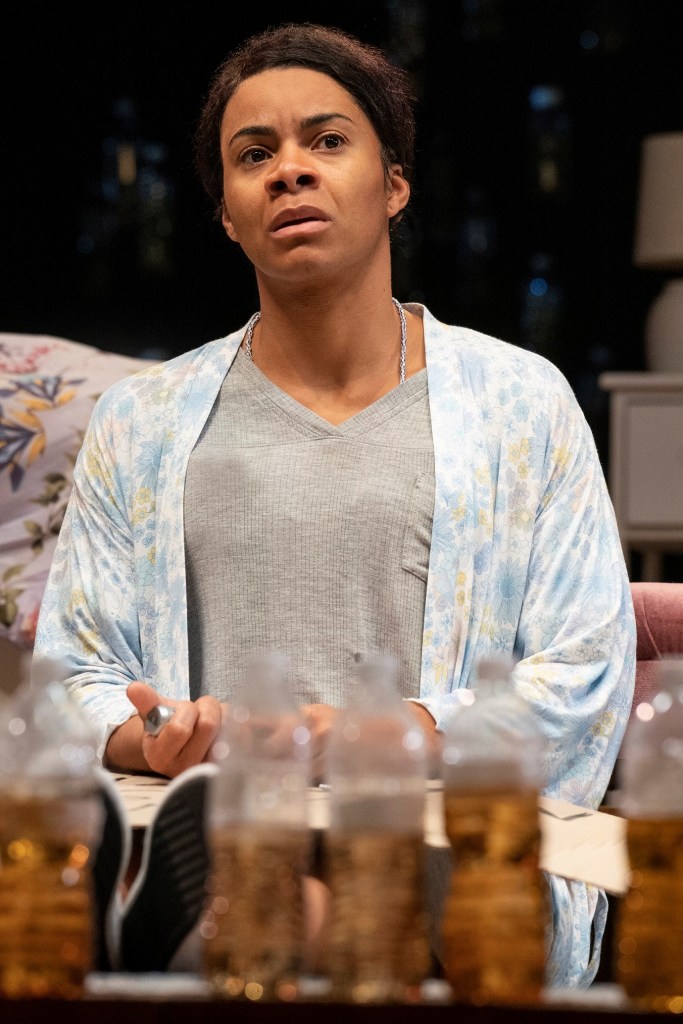
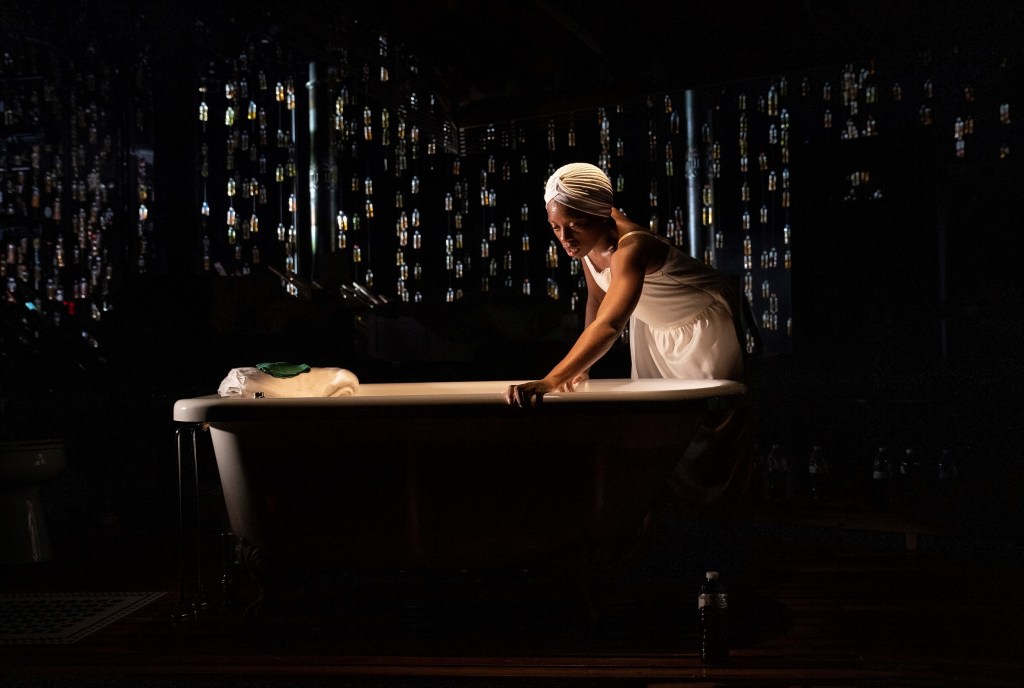
The playwright’s details about the bottles of water required to wash vegetables, the turkey and trimmings for Thanksgiving dinner, the water needed to clean and take care of their daily needs is a staggering reminder of how much water we use in our lives. Wherever you turn in the theater, you see the reminder of the importance of clean water via Adam Rigg’s wonderful set design. Through Plum, who is dying because of the corrupted water, we note the numbers. At the play’s beginning, she chalks off the days Flint’s water supply has been corrupted since 2014: it is in the thousands surrounding the walls of the theater. On sides of the stage, Riggs has suspended bottles of water hanging down against the walls. It looks clean, but is it? The stage is filled with bottles of yellow, toxic water that the women label as a record that their water supply is still contaminated.
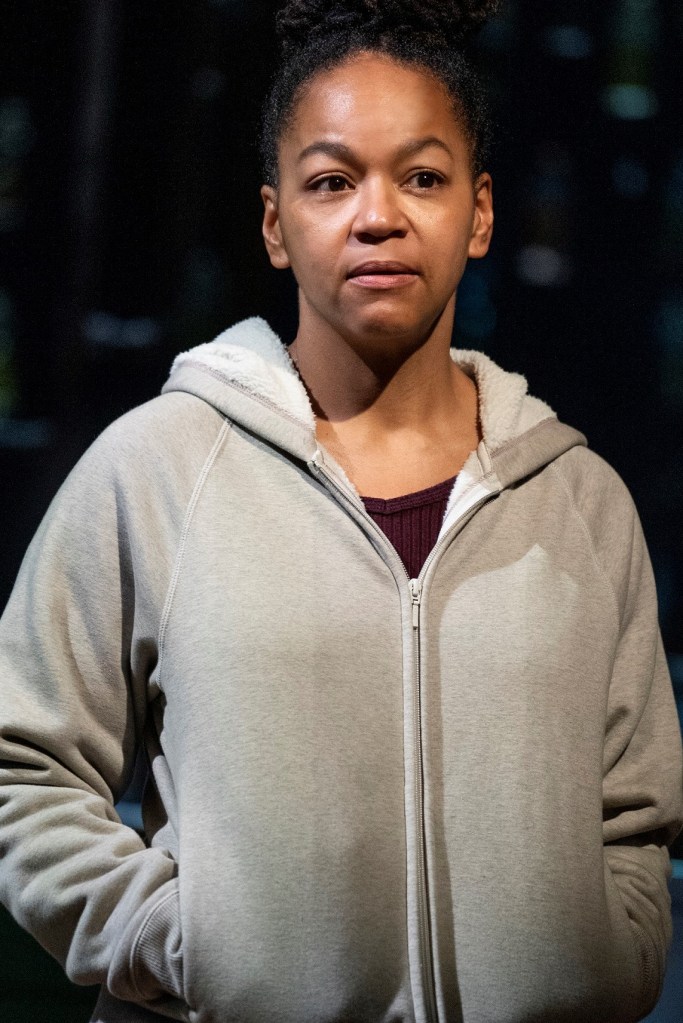
Dickerson-Despenza’s themes are paramount, ironically timeless as well as politically current. What happens when an elite power structure controls the resources all of us need to thrive? What happens if the corporate elites are discriminatory, partisan, bigoted killers at heart? What happens if the people in powerful government positions are those they pay off to continue destroying the communities they despise, the voices that must be heard, but are killed off to keep them silent and the power structure intact? Is this institutional racism at work or is it random, an example of the banality of evil?
Cullud Wattah is essentially a play about water as a life source spiritually, psychically and materially using the horrific backdrop of Flint, Michigan to show how Republicans and corporates (represented by GM) amorally decimated the black community with impunity safeguarded by bought corporate-backed politicos for decades. Breaking down the will, soul and spirit of a community, oppressing it, makes it easier for politicians and their donors to overcome their righteous voices and resistance. Soon, unable to maintain and uphold their rights in a country whose laws guarantee “life, liberty and the pursuit of happiness” but don’t judicially, oppressors to staunch their rights, their democracy, their one voice one vote. Thus, corporates compromise democracy weakening the laws that protect citizens.
Dickerson-Despenza leaves no stone unturned in claridly, unapologetically dramatizing the painful, terrible crimes against humanity represented by the Cooper family as a microcosm of the macrocosm. The abomination not only concerns Flint, Michigan, it threatens every community in the US and every global town and city. The higher ups briefly mentioned on Big Ma’s newscasts are as invisible in the play as a clear glass of water looks clean. You have to get up close and examine the molecular structure to note the contamination, corruption and poisonous, corrosive toxicity.
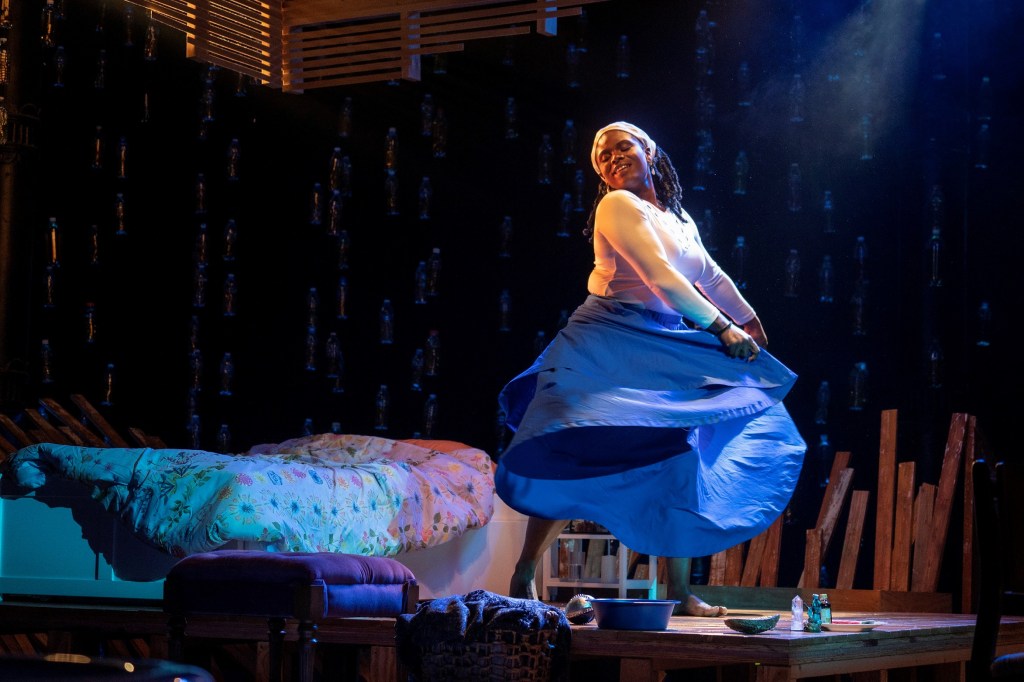
Dickerson-Despenza’s vision for this production is acute and profound. Jeanette Oi-Suk Yew’s lighting design and Sinan Refik Zafar’s sound design and composition includes a digital blow up of the litigation against the city and state officials. That the blow up of the litigation is not visibly large enough for the back row to see the fine print is symbolic. Such litigation is not enough to compensate the Cooper family for what they have endured in psychic and emotional suffering. And indeed, lengthy jail terms for the Republican officials, including the former disgraced Governor Snyder, must be leveled, if not as a deterrent to Republicans seeking positions of power to line their pockets, but as a warning for citizens to not elect such wanton, miscreant criminally minded individuals, regardless of political party.
To elect moral, efficacious officials, one has to bring out a microscope and “test the waters.” With the lies politicos glibly use to get elected, and the collusion between them and corporations to abuse the public trust and communities where they settle, this appears to be impossible. However, thanks to Republicans, you can see whether the water is clean or dirty and can assess if the politicians have the public’s interest at heart. Republican extremists which govern their party are making it very obvious that their water is filthy and toxic. Like the former governor of Michigan, they have made their intentions and will crystal clear.
Cullud Wattah covers much ground and speaks volumes about victims, activists and the unseen criminal politicos who abuse their citizens. In its unabashed indictment of racism that emerges from the discussions and conflict between Ainee and Marion, are the warnings. If this happens in one community, it can happen in every community, because certain parties don’t care who is hurt, who dies as long as they 1)make money 2)get away with murder. The title is symbolic inferring the beautiful spirit and resilience of these women who are black. Of course, it refers to Flint’s water which is yellow, and the fact that officials criminally saw “fit” to let the blacks (the cullud) drink it, a hate crime which the federal government must address.
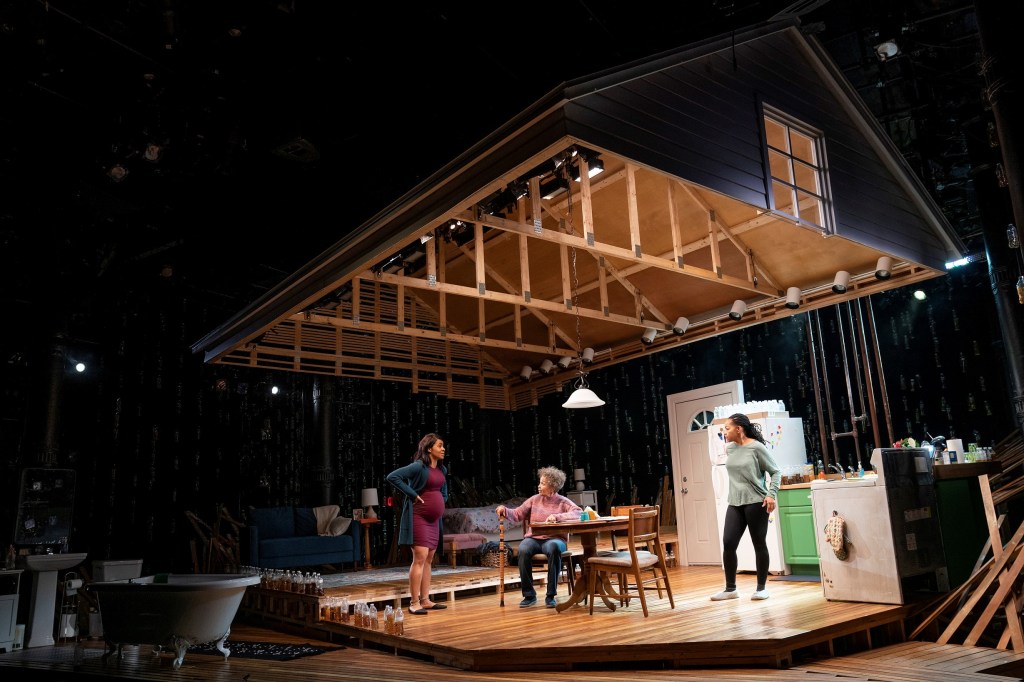
The play is heartbreaking with terrifically current themes. The particular irony and idiocy of white supremacists is that they believe their bought “Republican” politicians will always have their best interests at heart. Those white folks who lived in Flint also drank contaminated water and suffered, but predominately, the black community was hit: this is a crime of federal proportions.
Polluted water, like COVID, is not subject to race. Regardless of your heritage, you get sick. Polluted politicians are subject to race to get elected. Once in office, in their amoral perspectives, the election gives them the legitimacy and impunity to harm citizens regardless of race, creed, religion. But the truly wicked ones unleash their hatred on specific communities, deemed to be too “weak,” to protest and be heard. Flint is emblematic of this. It is to her great credit that Erika Dickerson-Despenza’s Cullud Wattah, its director Candis C. Jones, the wonderful actors and the astute creative team brought this play to The Public. It needs to be seen across the U.S.
Kudos to the creative team not heretofore mentioned: Kara Harmon (costume design), Earon Chew Healey (hair, wigs and makeup design). Cullud Wattah is a must see that runs until December 12th at the Public Theater. For tickets and times CLICK HERE.
‘Diana the Musical,’ Starring Jeanna de Waal, a Foray Into the Tabloids

Billions of words and their attendant photos have attempted to characterize The Princess of Wales, Diana Spencer, including the statements she contributed in her well publicized television interviews. Regardless, the many iterations of her life (Diana the Musical, Spencer, The Crown, documentaries, etc.) are fictionalized. We will never know the true details of her story nor move beyond the tip of the iceberg, though much has been made of The Crown’s accuracy.
As a result any commentary, criticism and discussion about the fictions that are presented with or without music related to her life are disingenuous. It is a sly continuation of what raised her to glory and contributed to her death. Recognizing that I am one of the hundreds of journalistic hypocrites, I prefer not to pile on adding to the glossy, hyperbolic, acerbic criticism that has been written about Diana the Musical, directed by Christopher Ashley, currently at the Longacre Theatre.
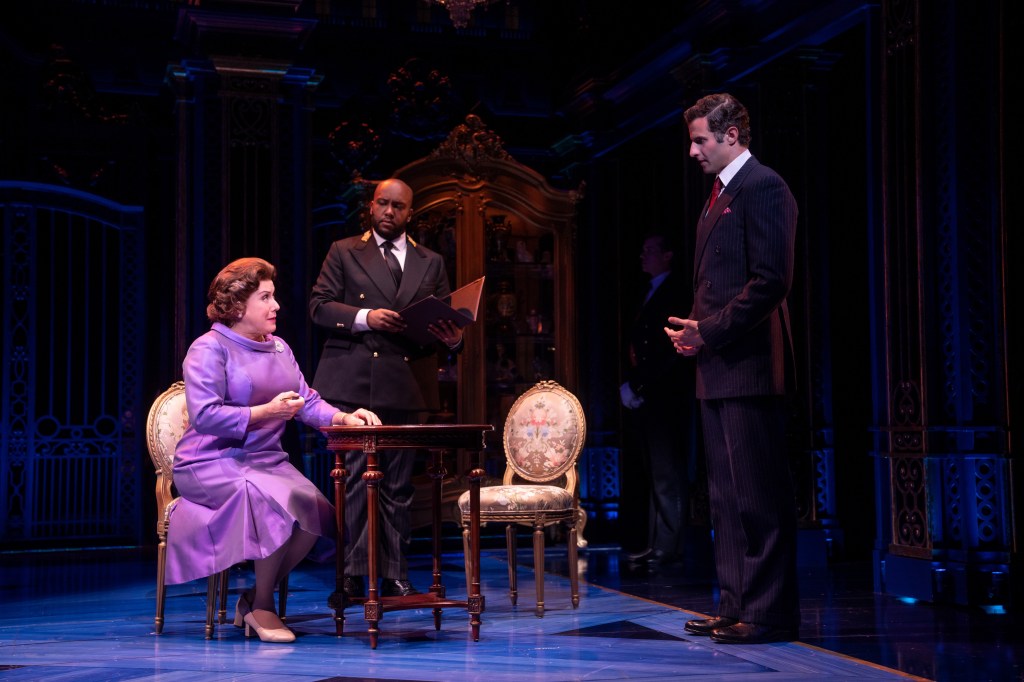
In this review, I look “through a lens darkly” at the musical with the intention of praising what may be the salient artistry of the production and avoiding the “critics’ mess.” At the least, Diana the Musical will add to the overall evolution of musical theater, for good or ill. As such it should be viewed with more than blindly gleeful excoriations.
The musical, backed by the Schubert Organization and a boatload of other renowned producers, including La Jolla Playhouse, is the work of the creative team of Joe DiPietro (book & lyrics), and David Bryan (music & lyrics). The team won Tonys for Memphis (2010), and other awards, including DiPietro’s Drama Desk for Best Book of Nice Work If You Can Get It. Bryan, a founding member of Bon Jovi (keyboardist), is a Grammy winner. And both have teamed up on their next musical Chasing the Song, also workshopped at La Jolla Playhouse.

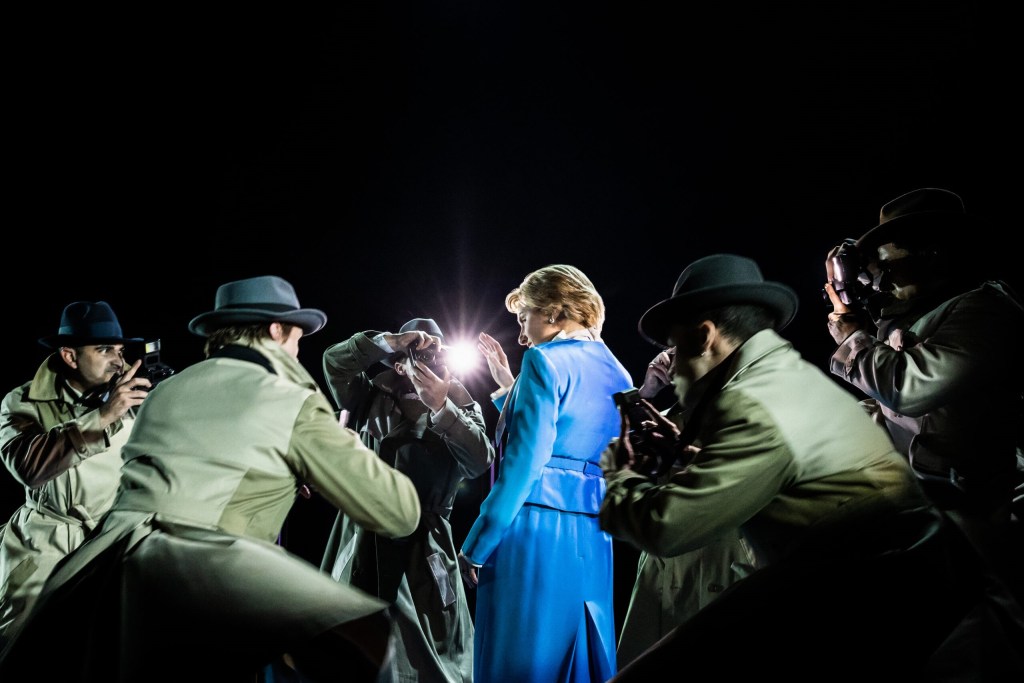
The key to understanding their perspective about Diana The Musical is at the top of the production. Right before it begins with its bang-up opening number, “Underestimated”, six PAPARAZZI dressed in tan, flared overcoats with matching hats, looking like “spies” appear amidst flashes of light. Rapidly, like Thespis, the first actor to go solo from the chorus in ancient Greek theater, one PAPARAZZI steps out and says, “Was there ever a greater tabloid tale?” Then all race off.
From the bright light backdrop emerges Diana, the golden-throated Jeanna de Waal, who pulls off the waggish theatricality and endearing Diana persona with great flare and emotional nuance. As she sings “Underestimated,” we are reminded that she, the Diana avatar, upended everyone’s expectations and made waves, changing the nature of the monarchy as perceived by the British tabloids and vulture media, astutely turning their word swords into their own “proper entrails.”
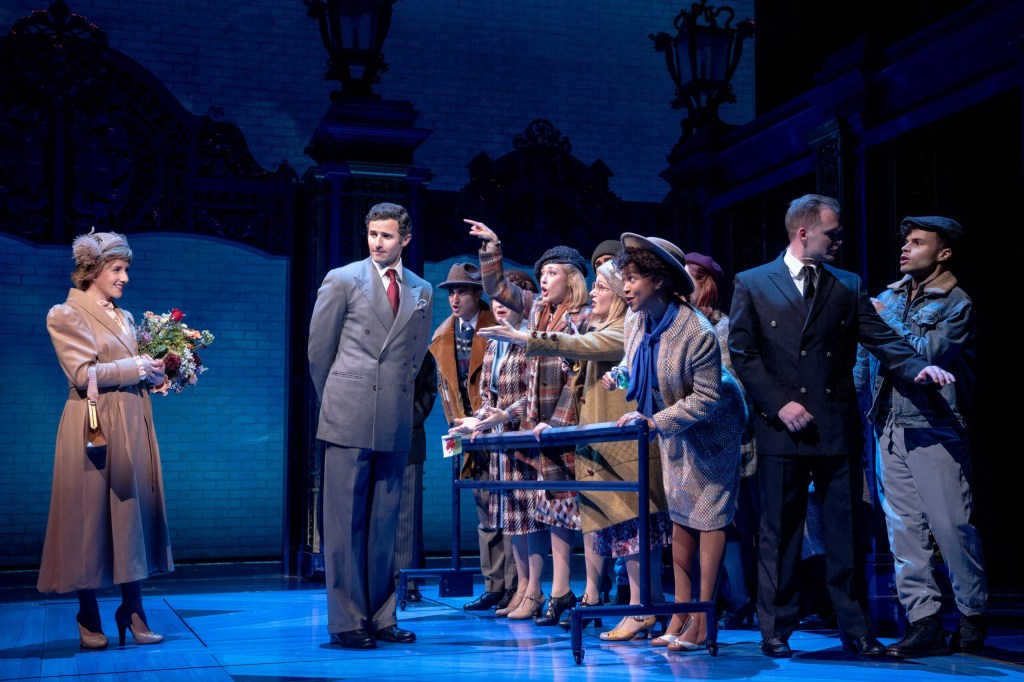
Thus, with this PAPARAZZI’S “greatest tabloid tale” establishing the “smart-alecky,” flippant tone, approach and poignant conclusion, we understand the creators’ vision and the development of Diana The Musical as a “tabloid story” in what follows to be a flashback of the press’ “facts” of her life with the royals. Importantly, we are thrust into examining ourselves as the consumers, predators, voyeurs that kept and still keep that story “alive,” the facts confused, and lines, between fictionalized gradations of truth, blurred. As the production infers, the tabloids of the time, principally those of the Murdock empire, became the staging ground for the launching of the princess. They keenly, exploited this image for its money-making potential with suppositions and crass lust for gossipy sensationalism that the public and above all “journalists” “ate up” and still consume in musical plays.
To confuse the medium that the creators expose in all its lurid tawdriness with the conveyance of the subject matter (the production), which twits and exposes the tabloid’s boorish insensitivities is an arrogant presumption. It’s as bad as Facebook’s misinterpretation of sardonic irony. Facebook’s algorithms don’t “get” irony; their robotics are literalists incapable of understanding nuance, irony, sarcasm, ridicule.
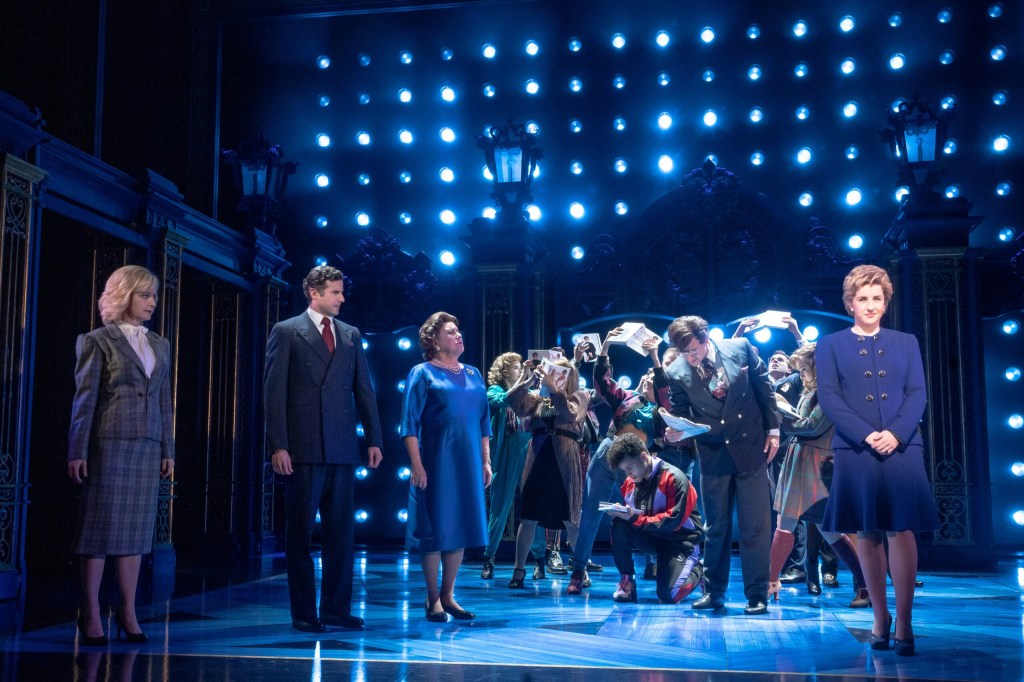
Likewise, to view Diana The Musical as a literalist caught up in the arc of the story, clicking off the remembered events one may have consumed from the tabloids, papers, TV series or documentaries, one misses the humor, irony and the sometimes intentionally sophomoric rhymes and cleverly repetitive music. The repetition implies Diana copy was all of the same piece. Additionally, one will miss the unfolding of the final revelations and themes: that tabloids spread misinformation because they can with a believing populace; tabloids act as an equalizer of the great to bring them low to sate the sub rosa jealousy of the “little people;” tabloids mine humiliation, create torment and demean by erecting idols then smashing the “adored” with their humanity. Murdock’s tabloids propelled the Diana “story” and gossipy dirt like no other.
Revolting? Indeed, and that’s one of the points of the musical. Enjoy it and burn yourself with understanding. Don’t enjoy it, see its “messy crassness,” you miss the production’s raison d’etre and specifically miss this point: the tabloids encouraged the spin of the public’s belief in “the people’s princess,” then damned her for being what they created. They adored her above the Queen and royal family but were jealous of her and slapped her continually each time they covered her. Ironically, they yearned for her death, indirectly causing it so they might mourn a tragedy of their creation in perpetuity. To view the monstrous tabloid process in Diana The Musical as anything but ironic is daft, dumb and blind.
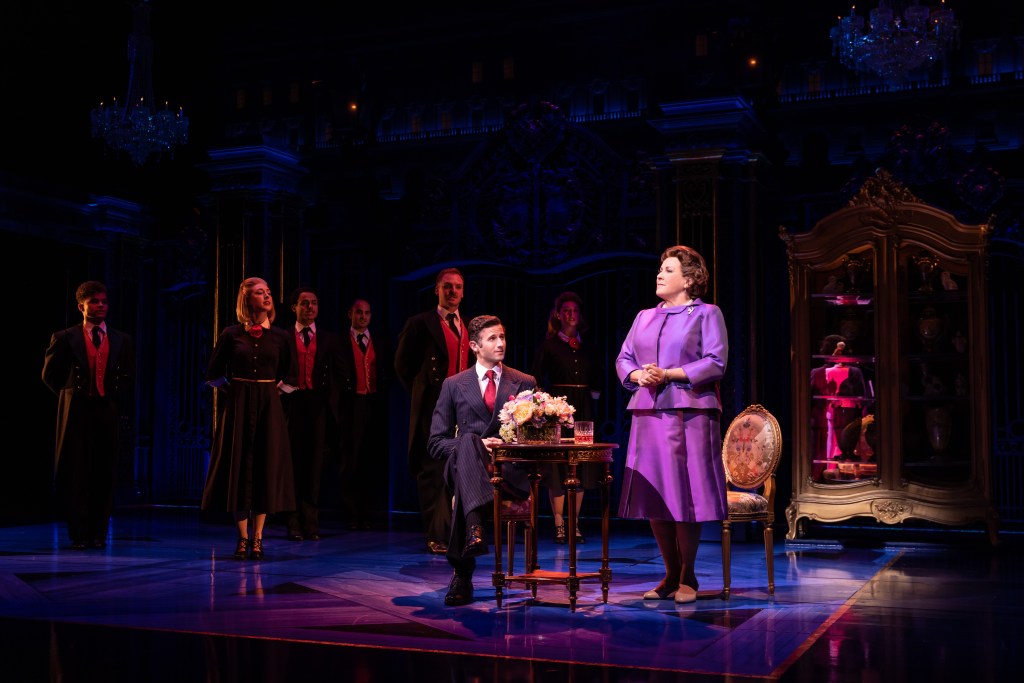
The tabloid portrait of Diana is what the musical delivers, the glorious creation to please the masses and journalists. She was beautiful copy in all her forms, as was the monarchy, they pitted her against as her foe. But the production reveals that tabloids refused to take responsibility for their cause in her death. DiPietro and Bryan, in keeping with the phenomenon they criticize and expose (the public’s obsession with her, the press’ sensationalism which exacerbates it), never connect the paparazzi directly to her death. None of the actors dressed as paparazzi appear on stage at the conclusion, for she doesn’t die. Diana steps from flashing lights into the upstage darkness as the ensemble sings about her “lighting the world.” It is the image, her persona, that “lights the world,” as she lives forever immortalized in fictionalizations: movies, plays, TV series, etc.
In Diana The Musical it is the tabloid’s creatures we see as the well-publicized events of her life are made into hyperbole for public consumption. In the musical we witness her dating Prince Charles (Roe Hartrampf is wonderful as Charles in his development as the unmarried beleaguered, sometimes loving, then increasingly unhappy, angry, Diana nemesis), encouraged by Camilla (” Whatever Love Means Anyway”). Erin Davie is the perfect avatar for what we believe Camilla would be and do to keep Charles allured. She is a proper villain. There are enough jokes concerning her looks and strange sustainability with Charles as she bests Diana in his affections.

The tabloid’s cultural obsession with Diana’s looks, mien and beauty outshining the unfortunate looking Camilla is twitted throughout. The question floats over the relationship as the tabloids played up Diana’s beauty and Camilla’s ferocious mediocrity: how could Charles choose to be with Camilla and not Diana? Clearly, those are the manifestly superficial, shallow, cultural mores of tabloid journalism which value appearance over soul. They are not Prince Charles’ values.
DiPietro and Bryan take us through the Diana chronology, from the marriage (the quick change up of wedding dresses is excellent), the two children, Prince Charles being unable to give up Camilla as Diana must give up the dashing James Hewitt (Gareth Keegan). The crises mount until Diana voids her royal position by becoming a fashion icon who scandalously controls the media (the hysterical “The Dress”), as DiPietro and Bryan make their scathing critical ironies with facetious lyrics and buoyant music. It’s not all rock/pop upbeat cadence. Only the humorous, waggish songs retain the beat. Indeed, some of the harmonies are luscious (“If”).
Throughout, Charles’ relationship with Camilla holds, while Diana establishes a solid relationship with her maturing self, which grows apart from him, for he is a lost cause. Interestingly, the Queen editorializes about the overwhelming oppression of the monarchy in her own life (“An Officer’s Wife”), which Kaye sings affectingly in the song that identifies how the monarchy’s institutions changed Elizabeth’s relationship with Phillip. In her quasi empathy with Charles and Diana and Charles and Camilla, Judy Kaye’s rendition recalls a similar pathos expressed in The Crown. Only for duty did Elizabeth give up being the demure wife.
The tabloid wind-up dolls act exactly as we expect them to. And there’s even an over-the-top interjection by Barbara Cartland (Judy Kaye dressed in fluffy pink from top to toe). Cartland introduces us to James Hewitt as the instrument of vengeance in Diana’s life,”Here Comes James Hewitt.” Kaye as Cartland plies her influence on Diana and comments on Charles and Camilla’s affair, and Diana’s affair with Hewitt (“Him & Her, & Him & Her”).

Having Kaye do double duty as Queen Elizabeth and Barbara Cartland, both the head of empires in their own right, is brilliant and humorous. Kaye plays it off, enjoying the ironic joke. In the beginning of Act II Kaye gives the Queen’s tiara to the music conductor to hold as she switches roles. Cartland’s advice to Diana (a former romance fan), is that her novels are fantasy, romance is dead and in real life, men lie and cheat. The irony that an avatar of romance fiction warns the reigning fairy tale princess of the time that her prince is a cad is priceless.
Finally, the interjection of Andrew Morton (Nathan Lucrezio), who Diana “spills her guts” to (“The Words Came Pouring Out”), is an important addition in the evolution of Diana’s maturing persona, as she moves from under the oppression of the monarchy and gains her own revenge. From replicas of the royal’s iconic clothing (William Ivey Long), to the tell-tale hair (Paul Huntley), to the pat twists and turns in the Diana story, all unwind with irony and humor. Interestingly, the ravenous audience and the press are the butt of DiPietro’a and Bryan’s joke in addition to the royals. Indeed, no one escapes their ridicule, not even Cartland and Andrew Morton (Zach Adkins).
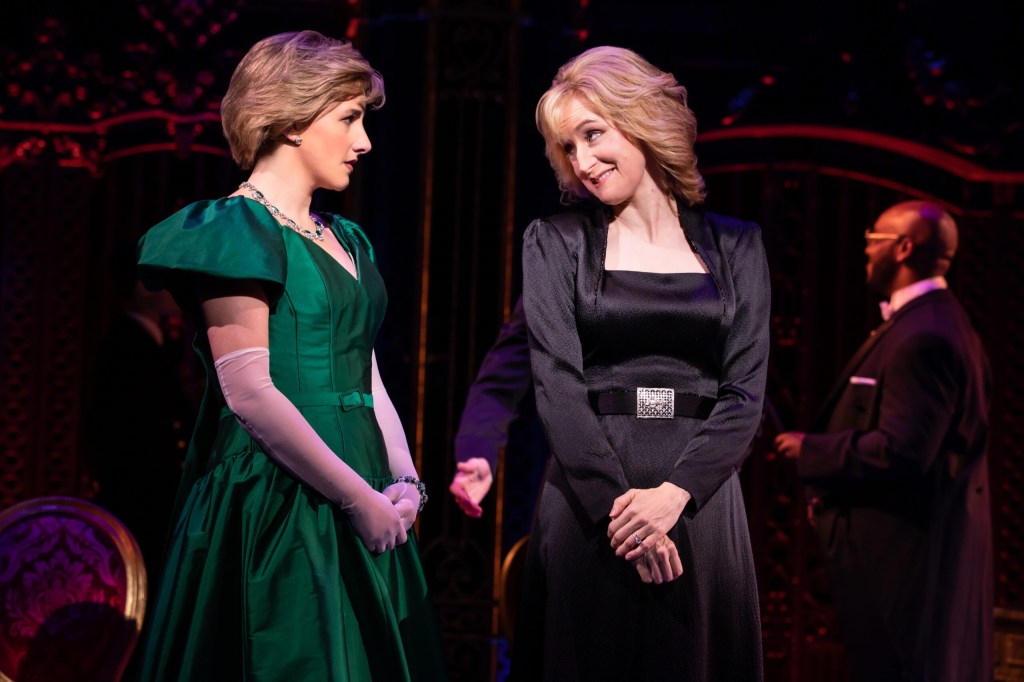
In keeping with the antic, amused and ironic perspective, many of the songs knock it out of the park. Kelly Devine’s choreography for the “Snap, Click” sinister twirling of the paparazzi around Diana with spinning movement, as they unspool their “tabloid tale” is excellent. It conveys the momentum of how storytelling gains a life of its own. The paparazzi and press become impassioned in their hunt for the prize statement, photo, revelation which they encourage then weave into Diana iconography.
“She Moves in the Most Modern Ways,” resounds with humor and cheek. It is sung by Kaye’s Queen, Davie’s Camilla, Holly Ann Butler as Sarah Spencer (Diana’s sister confidante), Hartrampf’s Charles, Andre Jordan as Colin and Anthony Murphy as Paul Burrell (who is also hysterical singing “The Dress” with De Waal, Kaye and the ensemble). The song codifies the press’s indictment of the monarchy as stuffily dead. Diana shaking things up is both a benefit and liability.
Of course, the theatricality Diana creates is marvelous copy. Throughout the production, Jeanna De Waal does not drop a stitch of the persona in the arc of the press’ vision of her. Her irony, sweetness, fury and flippant attitude beautifully captures the creatives’ vision. The song “This Is How Your People Dance” when Diana listens to Bach with Charles and the others, while imagining a rock concert with her favorites, where all but Camilla “shake it up” is riotous. From that point on it was clear to me what DiPietro and Bryan were about.

Finally, the creators emphasize the bare bone facts referenced by the media that, understanding what she was up against in her marriage, suffering without proper allies to rescue her, Diana Spencer carved out her own approach to her position in the royal corporation which had “winked at” Charles’ relationship with Camilla Parker Bowles. Growing into her own burgeoning identity, she empowered herself, using the media for great causes (the scene in the AIDS ward is poignantly done), that had not been taken up by anyone until she became involved.
Allegedly, for the royals, this was an embarrassingly mischievous and rebellious turn. To the media this was laudatory, though perhaps, self-serving. For Diana personally, we will never understand the mixture of altruism, concern and self-interest. Throughout, the press, not unlike with Marilyn Monroe, helped create her charismatic persona which to this day is hot copy. And it is that which Diana The Musical makes very clear with ironic twists that at bottom are an indictment of us all.
This is one to see if you remember that the tastelessness is all on the press and the public who clamored for the avatar Diana and the royals they received. Despite that underlying terrible truth, Diana The Musical expresses that message with humor, silliness, waggish irony and brilliance. Kudos to the creatives: David Zinn (scenic design), Natasha Katz (lighting design), Gareth Owen (sound design), the musical team and Ian Eisendrath (music arrangement and supervision). For tickets and times visit the website by CLICKING HERE.
LaChanze Stars in ‘Trouble in Mind’ Alice Childress’ Brilliant Play at American Airlines Theatre

Alice Childress finally receives a proper Broadway premiere in the Roundabout Theatre Company’s very humorous and profound production of Trouble in Mind, directed by Charles Randolph-Wright. Childress’ work, which stars an exceptional lead cast (LaChanze, Chuck Cooper, Michael Zegen, Brandon Michael Hall, Jessica Frances Dukes, Danielle Campbell), is a complex, sardonic and LOL play. It explores the cultural backdrops, impossible Civil Rights issues in the nation and their impact on the world of New York City theater in the 1950s.
The theatrical lens that Childress uses employs her own life experiences as an actress who never received roles which would allow her to express the full range of her talents onstage because of her skin color. Indeed, very few of the black theater actors were treated with the respect they deserved, tethered to the stereotypical roles that continued to foment institutional racism in the South and the North because such roles “comforted” the audiences and solidified the power structure.
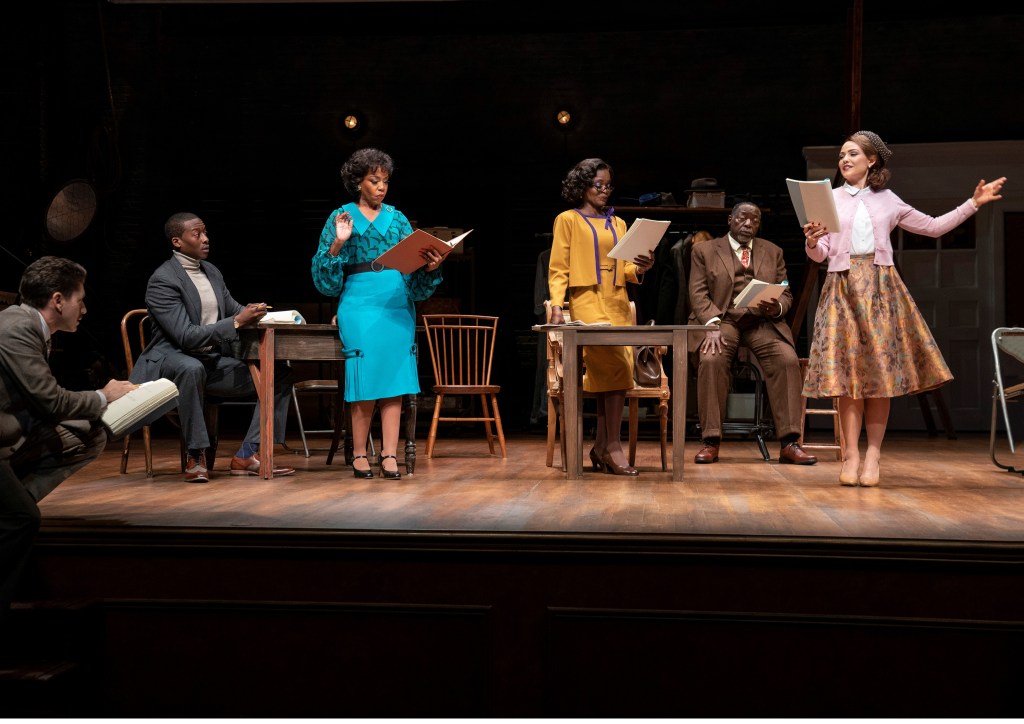
It is to her credit and our great appreciation that Childress was a maverick who wrote Trouble in Mind (1955), that was well received off Broadway, but whose backers wanted major cuts and extrapolations before they brought it to Broadway to stem their fear of offending the largely white audience and hurting receipts. Rather than agree with having her artistic truthfulness destroyed to line the pockets of the producers, though it would further her career, Childress took a stand and pulled the play. Her actions present a beacon of courage for artists everywhere. Nevertheless, in refusing to compromise the themes, characters and indictments of the play against racism, she became a martyr for great theater art, and the work was excluded for 66 years from a Broadway presentation until this year.
Though others took up the cause and presented her play in various venues (it is being done in London), historically this incident indicates the dark clouds that hover over Broadway and theater to this day in issues of censorship, whether right or left, and the sub rosa, sometimes unspoken but understood restrictions placed upon artists and writers, whose works have great moment for our time, but who will never be given a hearing because of the gatekeepers and inherent power structure which shoots them down for whatever reason.
Trouble in Mind cleverly exposes this type of racist, sexist banishment and oppression with ridicule and ironic humor to powerful effect. The playwright reveals the hierarchy and dualism (controlled vs. controllers), of the theater world using a play within a play structure. The power structure is nullifying; there is no collaboration to make a better production. There is only the insistence in maintaining what is, killing artistry with repetition and dead, wooden characters, relationships and themes to pamper audiences.

Thus, in the name of entertainment, truth is sacrificed and the vital purpose of theater, to touch peoples’ lives and bring people together in a sense of community, is never fully realized. Indeed, Childress shows that such mediocre and superficial plays result in the wiping out of the true nature, identity, relationships and reactions of Black people historically in the US, depriving society of the spectacular contributions of a people and culture they refuse to acknowledge.
As the play opens Childress hints at this when experienced actress Wiletta Mayer (the incisive LaChance) shows the ropes to inexperienced John Nevins (the collected, often innocently funny Brandon Michael Hall), in how to deal with their director Al Manners (an ironic name if ever there was one). Michael Zegen portrays the increasingly stressed and unlikeable director, a difficult role, with nuance and fervency. Wiletta, with the help of veteran actors Sheldon Forrester (the inimitable and drop dead hysterical Chuck Cooper), and Millie Davis (the fine Jessica Frances Dukes), show John how to subtly “Yasss” the director, and second guess what he wants without being abrasive and obstructionist. For example, one inside joke is milked throughout the play: Wiletta tells John not to say he’s “inexperienced.” “Just tell him you were in Porgy and Bess as a child!” Since Childress prepped the audience for this joke, when it is reiterated to Manners, its double meaning is hysterical.

Schooling John in how to negotiate being black in white theater is superbly rendered by LaChanze, Cooper, Dukes and Hall to reveal the key themes of the play. Humor has helped blacks be incredibly resilient survivors as they continually dupe their “handlers” about what they really feel. On the other hand it has been soul killing to not be real and authentic. We understand this torment when Wiletta finally confronts the director with her truth because she is tired of the charade of “getting over” while subjugating herself and her identity. An elucidating irony reveals this is double indemnity. Such oppression is suicidal to whites as they push the racist line of the patriarchy to the point where such higher ups limit their artistic endeavors, achievements and bottom line for themselves.
How much more might theater be enriched if truthful revelations were embraced regarding all cultures and races? It would be life affirming and life changing. But the walking dead don’t know the difference. Instead, they refuse to be offended.
After Wiletta, Sheldon and Millie “educate” John in the black etiquette theater manual of how to be a success in the company of whites, he proves such a superior pupil in navigating the racist white attitudes, that he uses their knowledge against them, confused about his core self. As the audience is made knowledgeable about blacks’ dual identities, it realizes that it is being ridiculed with Childress’ brilliant set ups of humor. This is an indictment of the culture which “can’t handle” the reality that they are bigots and their racism must be coddled. The epitome of this sardonic thread is the truth that blacks are actually the polite, smart adults in “putting up with” whites’ necessary inhumanity of racism when, via projection, they are treated as children who don’t know much of anything. Who is duping whom in self-betrayal?
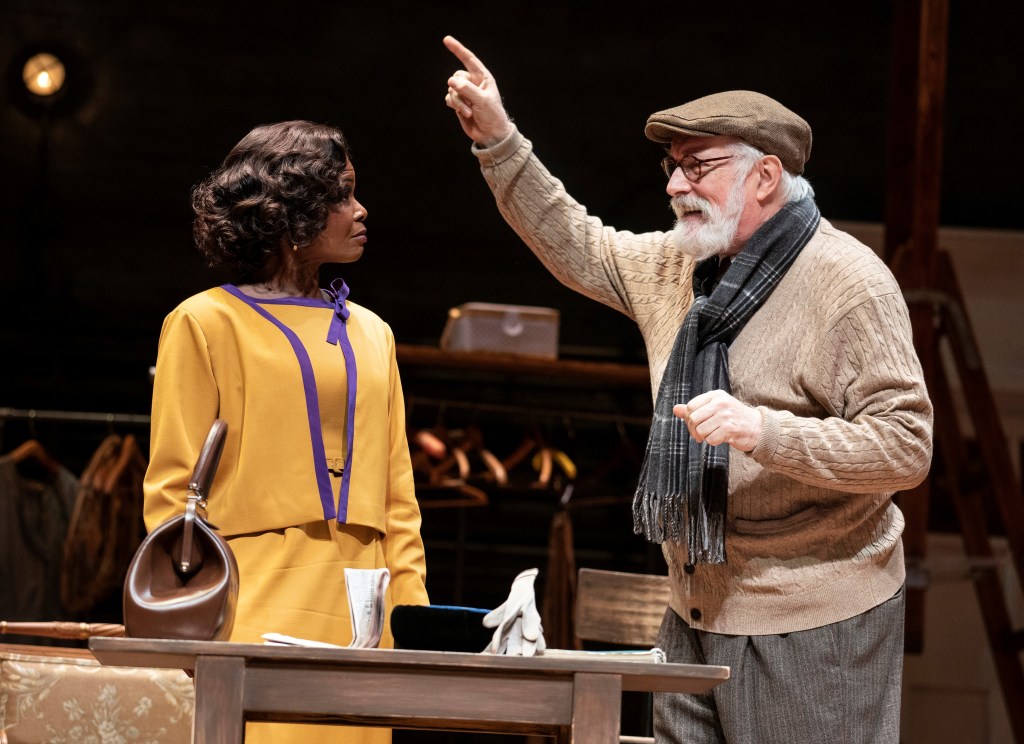
The playwright’s ironies are sage. Indeed, the audience, like the white controllers, is being “had,” if they think blacks enjoy oppression, insult and having their civil rights and humanity negated. A pure pleasure is how Childress presents all of these aforementioned themes and relates them to our culture today.
I find it interesting that the original producers were so worried that they actually had the “sensitivity” to realize that the play indicts the audience’s bigotry and racism. Or maybe they were upset at something else? Their own bigotry? The joke is wide-ranging, but the producers weren’t laughing, though the joke was on them, when Childress refused to change her work.
Act I is rife with the humor that the veteran actors, Sheldon, Millie and Wiletta set up to be mined throughout until in Act II, Wiletta has “had it.” The requisite subtle irony to soft peddle racism no longer appeals because she wants to be a great actress and the lies of bigotry are getting in the way. When Zegen’s Al Manners attempts to tell her how to be “natural” and not “think,” and that by thinking, she doesn’t “get” the character, LaChanze’s Wiletta boils with rage as he demeans her talent. And that anger spills over when she questions Manners about her character’s reactions in a scene when she is trying to protect her son from a lynch mob. The mother’s response and the son’s response is inauthentic, fake, and indeed, kowtows to white supremacists. The implication of her questions is clear.

When LaChanze’s Wiletta aptly confronts Zegen’s Manners about this, the explosion is inevitable. Manners walks away throwing the production in jeopardy and the other actors who need the money for the entire run are thrown into a tailspin. Trouble in Mind concludes in uncertainty. Though Wiletta took a stand confronting the director in the hope of evolving the play into an authentic rendering, only she is satisfied. For her it is worth it even if she destroys her career, which we understand by the end is meaningless if she, herself, can’t be who she really is. Childress ends with hope: Wiletta recites Psalm 133 to Henry (the excellent Simon Jones), as a spiritual petition and prayer for things to be better in the future.
Thus, we understand what happens if a black actor even dares to question the power structure represented by Manners; it’s potentially over. The play within a play ends but Wilette/Childress goes on. It is a prescient twist upon an ironic twist, considering that it took 66 years for the indictment of Broadway’s white power structure to finally be presented by the Roundabout with Trouble in Mind. What’s even more ironic is that the message still pertains.
To conclude. Last night, I sat next to an experienced actor and his wife, a Rutgers professor and casting director. Both affirmed that “getting a play produced” is the most difficult and heart-wrenching process in theater today. Childress indicates some of the reasons in her amazing work which targets racism, chauvinism, and sexism. Importantly, her timeless play’s themes relate to every “ism” that one might lay bare about human nature and oppression in the arts, especially by those who exploit creatives to gain the highest profits, while starving the artistic team, playwrights, actors. This has been especially egregious for those of color.
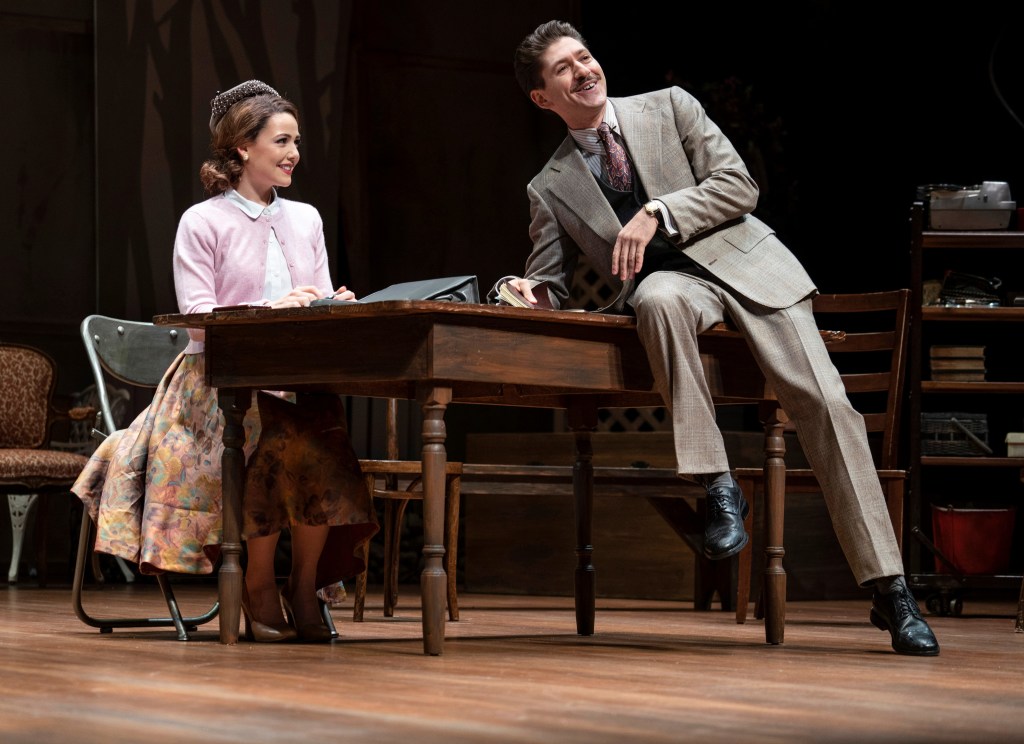
Sadly, this bigotry and discrimination is allegedly done for the sake of “entertainment.” The result is mediocrity and a fear of novel, original work. Instead, there is a steady repetition of old standby revivals or shows created from blockbuster films; there are few quality dramas or even musical productions. What has been sacrificed, is as Trouble in Mind reveals. Theater, the paramount live medium to touch lives. stir our humanity, bring community, and create a better society has been diminished. And there is no Tinker Bell to come along and revive it, thus far.
Trouble in Mind is a step in the right direction, however. Bravo to Roundabout to stage it.
Kudos to the additional actors who made this production sing with truth and humor. Alex Mickiewicz as Eddie Fenton and Don Stephenson as Bill O’Wray. Final shout outs go to Arnulfo Maldonado (set design), Emilio Sosa (costume design), Kathy A. Perkins (lighting design), Dan Moses Schreier (sound design) and the other creatives. You don’t want to miss the fine cast, Childress’ priceless, sharp wit and this long awaited Broadway premiere. For tickets and times go to their website CLICK HERE.
‘Nollywood Dreams’ a Comedic Farce With Intriguing Undertones

Jocelyn Bioh (School Girls; or, The African Mean Girls Play), and director Saheem Ali her frequent collaborator (Merry Wives of Windsor), once again work comedic magic in Nollywood Dreams, a farce that twits burgeoning Nigerian Cinema in the 1990s, yet makes a statement about dreaming, and dreamers influenced by countries with jaded, hypocritical values.
The production makes the most of the Newman Mills Theater’s intimacy with heightened, particular and detailed scenic design by Arnulfo Maldonado,, that cleverly enhances Bioh’s characters, set changes, story arc and thematic focus. Dede Ayite’s appealing and over-the top costume design and Nikiya Mathis’ hair and wig design encourage the actors to pull out all the stops. These production elements especially enhance the actors’ characterizations and encourage their freedom to humorously tear up Bioh’s witty celebrity inferences with grace and humor, that moves the production along at a well-paced clip.
If Bioh’s characterizations are superb, even greater is the cast that inhabits the recognizable celebrity types and their acolytes with definition, depth and unique authenticity. The humor is organic and situational, and part of the laugh riot comes at witnessing how other countries, i.e. Nigeria, emulate some of the worst of American, to wit “Hollywood” culture through a lens brightly. Thus, Bioh’s farce not only humorously underscores and gently ridicules Nollywood cinema, but it also satirically rocks the most shallow and nauseating American entertainment transference, save the send up of Oprah in the TV hostess Adenikeh by the fabulous Abena. Interestingly, Nollywood cinema has grown by leaps and bounds to be one of the most productive engines globally.

The plot is as simplistic as the Hollywood pie that actors refuse to eat for fear of going over their 18 BMI. Ayamma Okafor (the lovely Sandra Okuboyejo), dreams of being an actress, as she and her older sister Dede (the jealous, know-it-all humorously portrayed by Nana Mensah), run their parents’ travel agency. They intend to move up in the world beyond their middle class status, of course, influenced by the US and other capitalist countries. The siblings are well drawn with the older Dede continually chiding Ayamma, dumping the work on her and generally being a scutch. Then events break for the sweet but down-to-earth Ayamma and she becomes Dede’s rival for the man in their dreams (for different reasons), the gorgeous star Wale (the sweet and adorable Ade Otukoya).
In all the gossip magazines that Dede reads, confirmed by the guests on Adenikeh’s TV show, we learn the backstory and the stakes for the characters. The gobsmacking Wale is slated to be in the next film from director and all-around big producer who learned the ropes in America, Gbenga Ezie (Charlie Hudson, III has the energetic, compromised Hollywood director/schmoozer down perfectly). However, to spur interest, cleverly, the big man announces a nationwide open audition for the part of the female lead in his next film, “The Comfort Zone” (how Bioh introduces the title and the name of the lead character is hysterical). For Ayamma, this is the opportunity she has dreamed about, to be able to raise herself up into stardom as an actress. Meanwhile, Dede will just settle as second best to marry Wale.

Bioh ratchets up the sibling rivalry when Ayamma asserts herself and visits Gbenga’s offices to get the part and play against Wale to prove she is a great actress and can make something of herself. In Gbenga’s office, we see the allure of possible future starlet vs. potentially predatory director. Enjoying the visit of the lovely Ayamma, an ingenue of innocence, we note that Gbenga never misses an opportunity with the ladies. Gbenga allows her to read with the actress and his former partner Fayola (the Nollywood “Hallie Berry with the Tina Turner legs”). The “fix is in.” He will most likely cast Fayola in the part to prevent her spilling the dirt on him which would put him in jail.
Emana Rachelle portrays the wild and dramatic Fayola with vibrance, humor and sheer joy. Ayite and Mathis’ costumes, shoes, wigs give even more umph and fabulousness to Emana’s Fayola, whose gestures and movements, like Abena’s, celebrate those they imitate and gently ridicule. The women are in conflict against each other for the part of Comfort; the sisters are in conflict for Wale, and Adenikeh wants in and will use her leverage in whatever way possible to be with Wale and Gbenga. Interestingly, Hudson III’s king manipulator Gbenga keeps them all allured. Meanwhile, Ade’s Wale, with quiet confidence oozing sensitivity, the honey which every woman loves, sits back and is himself.
The actors are having a blast as is the audience. And we even get to see a clip of The Comfort Zone which is a LOL overacting extravaganza at its best. Special kudos to David Weiner’s and Jiyoun Chang’s lighting design, Palmer Hefferan’s sound design, Alex Basco Koch’s projection design. It’s a shame that the run of Nollywood Dreams isn’t longer. It’s a wonderful romp with depth, for it exposes the broken promises and seductions which are the dark side of the predatory entertainment industry. Thanks to the creative team, Saheem Ali-director, Bioh and especially the ensemble who are seminal performers. It is clear they listen to each other to remain “in-the-moment” authentic. All make this production memorable.
To see Nollywood Dreams, you must act fast. It is over November 28th. For tickets and times go to the MCC website and CLICK HERE.
‘KURT VONNEGUT: UNSTUCK IN TIME,’ a Brilliant, Heartfelt Documentary by the Director of ‘Curb Your Enthusiasm’

Kurt Vonnegut (1922-2007) is perhaps one of the most insightful novelists and humorists of the twentieth-twenty-first century. Robert B. Weide, whose funny bone and fascination with great comedians (he won awards for his work on his documentaries about Lennie Bruce and W.C. Fields) found him helping Larry David launch Curb Your Enthusiasm which he then directed the first five years of the show, winning awards.
That Weide adored Vonnegut as a teenager and was influenced in his career by Vonnegut’s sardonic humor and philosophical, dire wisdom that translated into crazy characters and sci-fi-like plots, seems a no brainer; for at heart, Vonnegut, like all comedians creates humor and irony from soul hell and torment. Where Weide stands out from the rest of the Vonnegut acolytes is that early on in his struggling career, he contacted Vonnegut expressing interest in making a documentary about his hero. When Vonnegut accepted, Weide began the long journey (almost 40 years) to get the film made.
However, like much of what we experience in life, it is the journey that is paramount, and for both Vonnegut and Weide, the journey of working together, connecting and becoming friends seemed to be the most vital enjoyment of their collaboration. That eventually, Weide was able to sift through the mounds of Vonnegut pictures, family films, Weide interviews with family, and Vonnegut on trains and in cars and taking stock of the video clips of his speaking tours to cobble together a noteworthy and maverick film about Vonnegut’s life, will be treasured by fans and newbees alike.
Most importantly, the film introduces an entirely new generation of ironists and satirists to Vonnegut’s soulful miseries turned into sardonic social commentary. Vonnegut always found the human comedy of politics, cultural idiocies and their attendant propaganda pushers cannon fodder for his word bazookas. Weide, who wrote and produced the film and co-directed it with Don Argott, with his editing team, selected the most salient Vonnegut quotes from his works and interspersed them with clips of his videoed tours to pepper a chronicle of Vonnegut’s life in a back and forth circular narration. When useful, Weide has Sam Waterson read some of the quotes from the novels, etc. The rendering is enthralling and what emerges is the everyman that even the most jaded of nihilists will find themselves agreeing with, despite themselves.

What makes the film extraordinary is that in becoming so familiar with his subject, Weide’s conveyance to present him is as a documentary in a documentary. In structure, it becomes downright Vonnegutesque. Vonnegut continually interrupted the flow of action in some of his novels by interjecting the writer’s voice, indeed, perhaps his alter ego in an absurd fashion as we see in drawings in Breakfast of Champions.
Likewise, Weide interrupts his Vonnegut chronicle to interject his thoughts about Vonnegut and his own life in making the documentary. Weide parallels the time period of his life with his ongoing interviews and communications with Vonnegut, critics and his children. He acts almost as an apologist would in averring and showing why it took him so long to make the film. What I find so memorable is that we see both men aging into success and/or the next stages of their lives. It is ironic that now, after his death, Vonnegut is turning over a new chapter in having his legacy brought forth once more; interestingly, though not a lot of fans followed him here, though he never left off writing. With his revitalized legacy in Weide’s film, he will be rediscovered, discovered, read and reread, and appreciated or damned for his great levity and sage quips and droll, nightmare plot scenarios…and his essays and short stories.
As a writer I found the documentary in a documentary structure intriguing and rather tongue-in cheek. It twits the documentary genre because Weide makes it very clear that he is completely enamored of this great social satirist and writer and thrilled that he was his friend. That intimacy and revelation was Weide’s choice and at one point, he also makes it clear that with all that he has put into this film, there is much more that was left out, i.e. the personal moments that happened between the two friends.
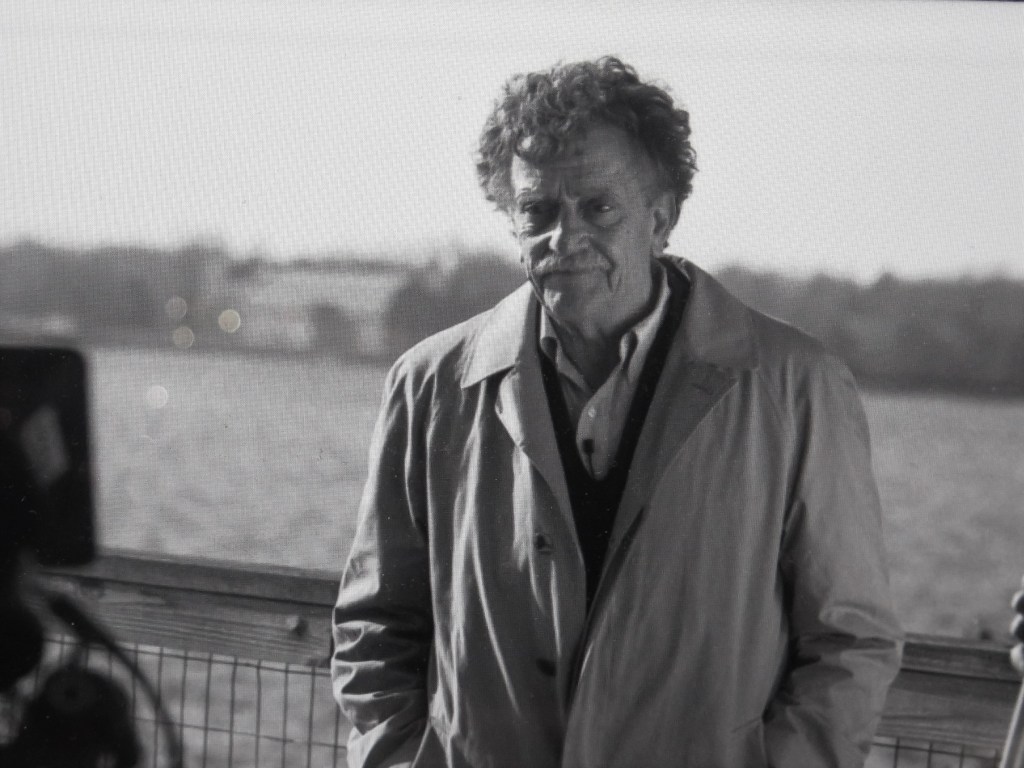
Rather than to point out all of the aspects of the Vonnegut chronicle, which Weide seems to leave no stone unturned in Vonnegut’s life, he shows the arc of Vonnegut’s career influences and development. Weide jumps around which makes the documentary intriguing, as he makes connections with his own insights and life, then jumps back and forth, past to present to past to current time. Superb. None of this is in chronological order per se; it is in thematic order. For example we discover late into the film that Vonnegut’s mom committed suicide. WHAT! We get to draw the conclusions as Vonnegut discusses how they found her.
We discover how and where Vonnegut grew up, his joining the service and fighting in WWII to experience the seminal aftermath of the bombing of Dresden, Germany which haunted him for all of his life even after he attempted to expurgate it in his first novel of great success, Slaughterhouse Five. The novel, was a war story about a man who’d become “unstuck in time,” with an ability to leap through life, out of time rather like the mystical experience Vonnegut explains he had in Germany when he envisioned the disaster of Dresden before it happened.
Weide leads us to discover how he developed his humor and social insights about technology; his brother with whom he was close was a world class scientist, forward thinking and forward moving. At times Vonnegut lived hand to mouth after he worked in the GE empire in Schenectady and left it because writing copy was nullifying. But his first wife encouraged him to write fiction; he supported himself writing short stories in the hey day of short story writers, for magazines like Colliers, until TV came and the market dried up. A key turning point in his life and career was the death of his sister and his brother-in-law. He accepted responsibility for taking in their four sons and raising them in a house of chaos. The interviews with Vonnegut’s children are priceless.
Vonnegut’s struggles were the nerve-wracking journey that ended in bankruptcy and forced the family to move and Vonnegut to teach to make some money until he struck gold with Slaughterhouse Five, became a celebrity, hobnobbed with famous writers and divorced his wife, though he stayed close to his three children. In the republication of the novels he wrote before Slaughterhouse Five, he earned enough money to be comfortable, if not happy; indeed, he became more ironic and annoyed and wrote about it with less success and popularity which he never returned to after the 1970s. It was around this time that Weide found him and the interviews with Vonnegut, his children and noted writers and friends and Vonnegut’s novel writing and speaking engagements continued, though his popularity waned. Interestingly, they collaborated on a film based on Vonnegut’s Mother Night, which was hugely unsuccessful.

Though some critics of the film find it distracting that Weide interjects himself in the film with their relationship, I found the clips profound. Weide is revealing the decades long influence Vonnegut had upon his life and career. Perhaps, it is one of the reasons that Weide even made the film at all; to get down as much as he could that fans would appreciate, for they understand Vonnegut’s profound influence. Yet, in what Weide left out, only he will be reminded of the most vital and personal portions he alone experienced, that he keeps as a treasure to himself. For those who don’t like Vonnegut, it’s a ho hum. For fans, their relationship humanizes Vonnegut who had clay feet after his divorce and falling off the Best Seller lists into a kind of writer celebrity oblivion.
However, as one does acknowledge with close friends, all of it, even what might be the little insignificances are important. And enough of the personal intimacies come through between Weide and Vonnegut and his family (smoking a Pall Mall cigarette with his daughter en memoriam) that I found myself broken-hearted that I got to experience Vonnegut in a new way, and that he left this planet and I was too caught up in my own life to stop a moment and reflect about his books and why they so moved me at the time. Though I was a great Vonnegut fan in college, I stopped reading him, put off by his son’s “revelations” about himself and his father.
For me and for others, Weide’s film opens up a new door to appreciate Vonnegut the social critic and voice of thunder railing against the worst of human ills. And we get to appreciate the how and why he was who he was, an American man who carved a place for himself in the minds of individuals to influence their thinking philosophically. For that alone this film is vitally current. Vonnegut fits with our time even more so than the time that found him resonant.
KURT VONNEGUT: UNSTUCK IN TIME is available in theaters and on VOD
VIEW TRAILER HERE.
New York Holiday Train Show, NYBG’s 30th Year Milestone Celebration

The parking lot was jam packed on Member Day, November 19th, as long standing and new members of New York Botanical Garden came to see the amazing architectural wonders ingeniously constructed from a variety of plant parts that are the showpiece along with the fun trains that comprise one of the most enjoyable exhibits at the Garden. The Holiday Train Show® (Saturday, November 20, 2021 – Sunday, January 23, 2022 from 10 a.m. – 6 p.m.) a favorite of New Yorkers, features new additions to its collection which now numbers over 190 structures.




After the trials of COVID, the shut down and restricted access of the last year, the Garden ushers in the 30th year for the train exhibit whose landmark building collection is designed by Applied Imagination’s team and then situated throughout the Haupt Conservatory and galleries in collaboration with the NYBG staff over a two week period.

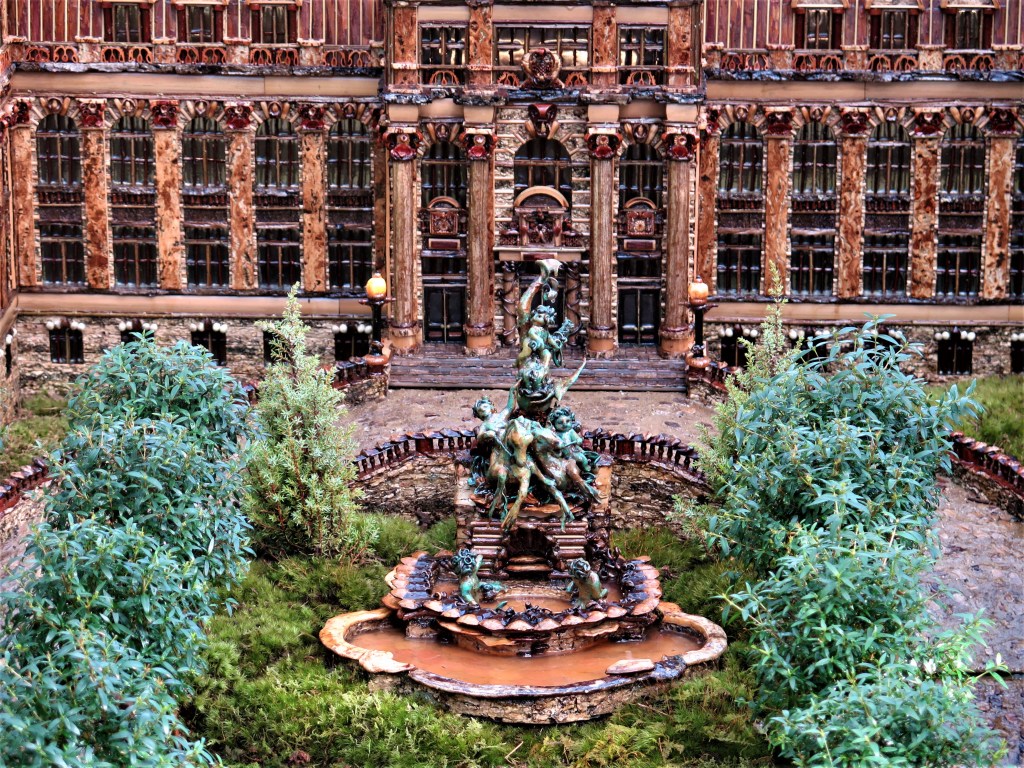
In celebration of the NYBG Holiday Train Show’s 30th year, the creative team at Applied Imagination re-created one of the central aspects of the Garden: the LuEsther T. Mertz Library Building with the Lillian Goldman Fountain of Life, and the John J. Hoffee Tulip Tree Allee. These buildings and attendant features were declared a New York City Landmark in 2009. The care and effort taken to manifest these structures took thousands of hours of work. Take a moment to appreciate the designs and materials used to create the display. Especially appreciate the myrtle topiaries that simulate the Tulip Tree Allee.

The Holiday Train Show® may be appreciated on many levels. From the vantage point of a child’s, one delights as more than 25 model trains of various gauges careen, zip and plow along the miles of track laid down between the brilliant foliage and flowers and plantings graded to maximize happiness. For adults, there is always the astute appreciation of the craftsmanship and design of the New York landmarks.

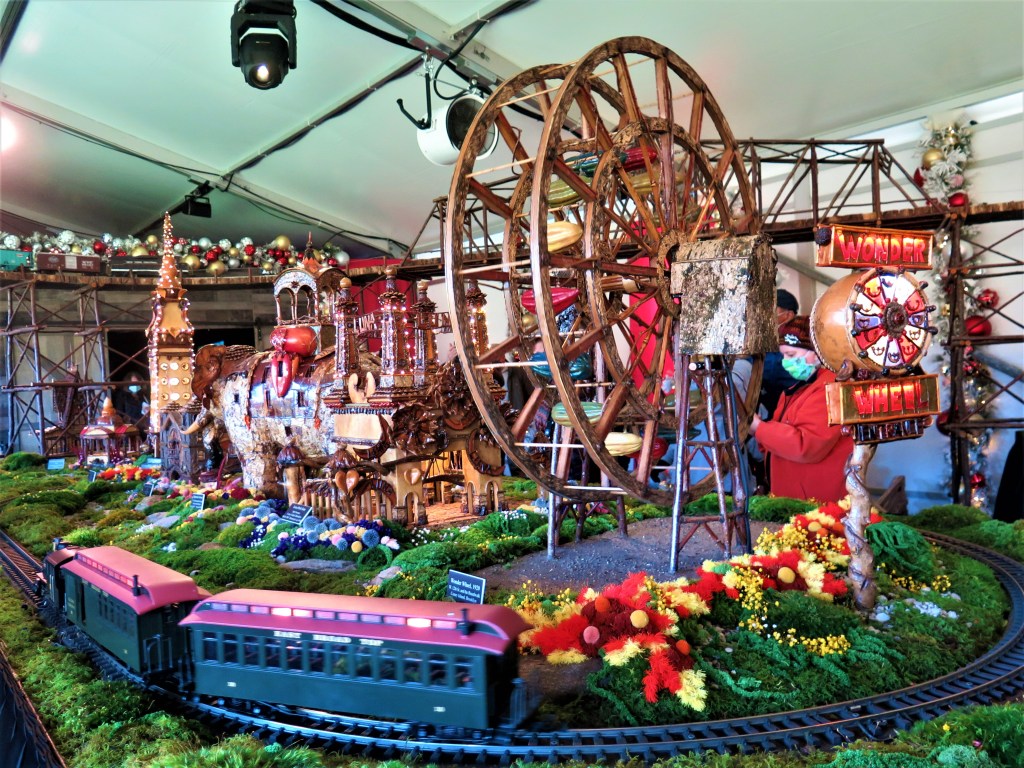


Whether in daylight or evening twilight, there is magic in being swept away into a miniaturized world of perfection created with loving artistry and passion that spills out into the hearts of the visitors of the exhibit who return many times during the season bringing friends, grandchildren and sweethearts. The holidays wouldn’t seem complete without the Garden’s Holiday Train Show® accompanied by a wealth of activities for children and adults during the Winter season.

For children, there’s the “Evergreen Express” in the Everett Children’s Adventure Garden (November 20, 2021–January 23, 2022). Make sure to dress warmly as you climb onto a kid-sized play train and move through additional activities at the mini-train table having fun with the wooden train cars. Along the way of your adventures which might including hiking through the landscape, stop at the outdoor musical instrument station for family jam sessions on marimbas, amadindas and drums. For self-guided explorations with your kids be aware of the times: daily (10 am-5 pm) Guided activities (click here) run on weekdays (1:30-2:30 p.m.) Saturdays, Sundays and Holidays (10 a.m.-2:30 p.m.) The Everett Children’s Adventure Gardens is included in all ticket types.

Exclusive benefits for Members of the NYBG are always welcome and prized. For members entrance to The Holiday Train Show® is free and the parking lot becomes swamped so you may have to park at the Fordham University parking lot across the street. Also, make your reservations online to schedule the days you want to visit so you aren’t closed out. The next Member Day is Friday, January 7, 2022 when you can take advantage of exclusive benefits, including free parking, 20% off at the NYBG Shop, 15% discount at all dining venues, and up to 4 half-price tickets for guests. For more Member benefits, CLICK HERE. If you aren’t already a Member of the Garden, sign up online today.

Throughout the show there are additional features to make your visit enjoyable and memorable. The Uptown Brass will be presenting festive selections of classical and popular holiday favorites. These professional musicians have been featured in venues throughout New York City. They will be performing for your pleasure on November 19, 20, 21, 26, 27, & 28; December 5, 23, 26, 27, 28, 29, & 30th at the Leon Levy Visitor Center (1, 2, & 3 p.m.) For more information about The Uptown Brass CLICK HERE.


In the Garden’s Sounds of the Season, listen to solo performers roll out the red carpet and rouse your spirits on weekends through December 26th in the Conservatory Entry Tent from 11 a.m. – 2 p.m. beginning with Louis Apollon (November 19 & December 4). Louis Apollon is a Brooklyn-based jazz-folk singer-songwriter. Other musicians include the Bronx-based DJ Collective and Community Organization Uptown Vinyl Supreme (November 27, 28, December 5, 11, & 12) and Darren Solomon (December 4) the Clio and Cannes Gold Lion award-winning composer, producer, bassist and keyboard player. For more on the musicians and additional performers CLICK HERE.

Another favorite, Holiday Classes are back where you will learn how to fill your home with the warm scents, tastes, and textures of the season. Interesting offerings include styling magnolia leaf wreaths and making decadent fruit preserves. For more information on other class offerings CLICK HERE.

As a part of the festivities during the Winter Season, celebrate the waning of sunlight with the brightening of NYBG’s GLOW, an enchanting outdoor color and light experience (November 24, 26, 27; December 2, 3, 4, 9, 11, 16, 17, 18, 23, 26, 27, 28, 29, 30; January 1, 6, 7, 8, 14, 15, 21, 22 from 5 p.m. – 10 p.m.). GLOW’s pageantry lights up NYBG’s iconic landscape and historic buildings turning them to whimsical beauty after the sun sets. This otherworldly illumination has been expanded to an additional 1.5 -miles of spectacular.

If is possible to see both The Holiday Train Show® and GLOW at a reduced price and savings. CLICK HERE. You will feel welcome with all of the activities offered. Talented performers dressed up in holiday costumes, stilt-walkers and other artists will stop for your selfies and family photos. And returning is the deft ice sculptor, always fun to watch as chips of ice are narrowed into figures and shapes. Taste local cuisine from the Bronx Night Market and enjoy a cocktail, beer, wine, and more from one of the festive. seasonal bars. For additional information and ticketing CLICK HERE.

Look for my future posts with specific details about the wondrous architectural collection created by Applied Imagination from natural materials i.e. twigs, leaves, seeds from trees and fruits, pods, gourds, acorns, bark, fungi, pine cone scales, nut shells, nuts and more. I absolutely love The Holiday Train Show and GLOW to usher in winter and waning sunlight as we move to the darkness of the shortest day of the year. Knowing I can venture to the Garden to lift my spirits with family and friends makes the light deprivation in our northern clime seem worth it. CLICK HERE FOR TICKETS AND PROGRAMS.
‘The Visitor,’ Not to be Underestimated, Extended at The Public

The Visitor, is a haunting musical based on Thomas McCarthy’s resonant, titular, award-winning film (2007). In its World Premiere, The Visitor has been extended at The Public Theater, and is ending December 5th, 2021. That we are able to see it at all, given the pandemic which made New York City the global epicenter of death, shuttering theater for months, is nothing short of miraculous.

The egregious hell of the previous administration, including its threatened overthrow of the nation led by the former president and white supremacists who oppose immigration and the constitutional rule of law, may influence one toward a jaded view of The Visitor as woefully “uncurrent.” Some critics suggested this. Indeed, that is dismissive of the musical’s inherent hope, goodness and prescience. Not to view it through the proper lens of historical time would be as limiting as the unjust institutions and failed immigration policies that the production thematically indicts.

The Visitor, acutely directed by Daniel Sullivan, takes place after 2001 during the administration of President George W. Bush Jr., when certain groups viewed Muslim immigrants as possible terrorists. The period 2001-2007 was a less divisive time in the nation, but our failed immigration policies did stagnate and worsen, setting us up for future debacles and the growth of white domestic terrorism. Nevertheless, if one’s sensibilities are too upended by the traumas of the Trump administration to enjoy the musical without keeping the 2001-2007 time period in mind, the themes and the human core of this work by Tom Kitt (music), Brian Yorkey (lyrics), Kwame Kwei-Armah & Brian Yorkey (book), will be overlooked and given short shrift.

The themes are relayed principally through the relationships established between white college professor Walter (David Hyde Pierce in an emotional and effecting portrayal), Syrian Tarek (the likeable Ahmad Maksoud), and his girlfriend from Senegal, Zainab (the golden voiced Alysha Deslorieux). Believing Walter’s Manhattan apartment has been vacated, Tarek and Zainab, tricked by an “Ivan,” have been staying there without Walter’s knowledge. What occurs after Walter discovers their presence, takes us back to a time before Donald Trump’s inhumane immigration policies, Republican party nihilism and Democratic governors’ establishment of sanctuary cities to protect the undocumented and waiting asylum seekers.
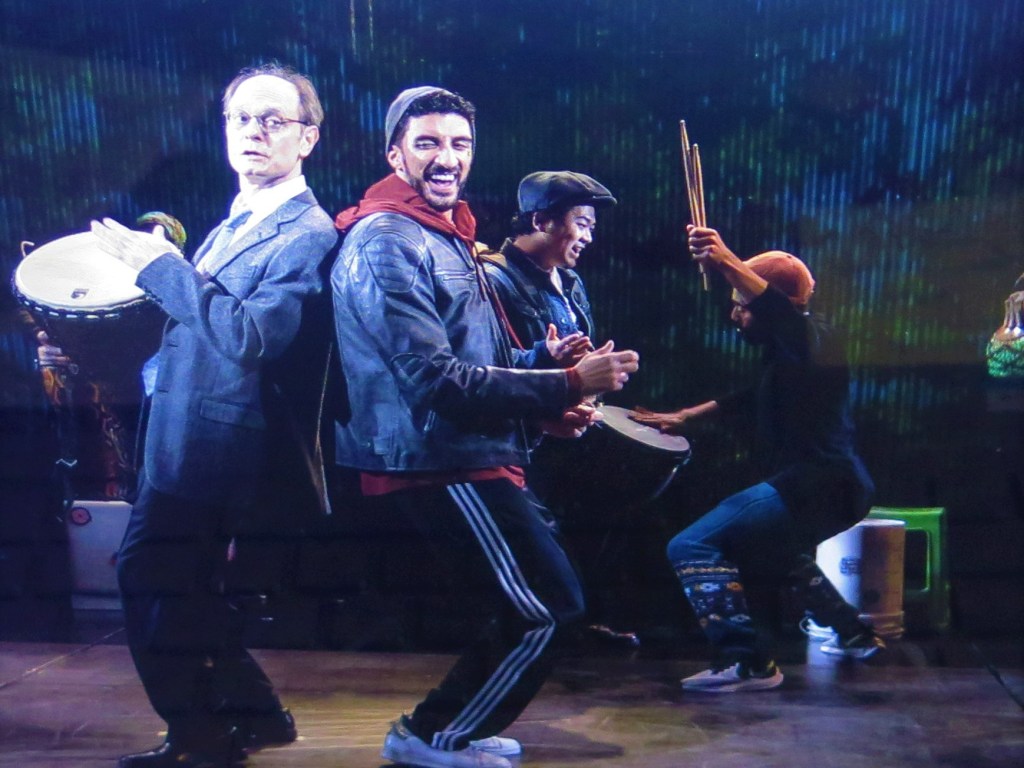
The opening numbers (“Prologue,” “Wake Up,” “Voices Through a Window”), establish why Walter is amenable to not behaving like a guard dog (who would note Zainab’s accent and Tarek’s swarthy looks), and immediately call the police to arrest the couple. Walter is a professor, not law enforcement. However, Zainab sees the precariousness of their situation and with passion mitigates their mistake (Zainab’s Apology”). After they leave, Walter finds Zainab’s sketch pad and runs after them. What results is an act of hospitality and generosity, as he allows the couple to stay until they find somewhere else to go.

Walter’s state of mind, character, background and the loss of his wife and emotional destitution prompt this irregular action. On the couple’s part, Zainab, who has been through an undocumented female’s hell which we later discover (“Bound for America”), doesn’t trust Walter and presses Tarek to leave, despite their desperate circumstances. David Hyde Pierce, a consummate actor whose Walter floats like a ghost without any sense of purpose, mission or happiness, sparks to interest identifying with the couple’s romantic love (“Tarek and Zainab,”). He wants to trust in their goodness and decency because he has already lost everything worth anything to him and he has nothing left to lose.

Walter, Tarek and Zainab take this incredible risk because of their overwhelming needs. All are visitors to this land of human decency which they extend to each other with hope and a faith that grows and changes their lives. When Tarek teaches Walter how to play one of his djembes (a goblet drum played with bare hands that originated in West Africa), and takes him to the park to play with others (the incredible “Drum Circle”), a bond is formed that will never be broken.
The production’s music (thanks to Rick Edinger, Emily Whitaker, musicians and the entire music team), solidifies the themes of friendship, unity, empathy, humanity. Significantly, the music suggests another vital theme. It is through our cultural differences via artistic soul expression, that the commonality among all of us may best be found. These themes, during what appears to be the height of racism and white supremacy in our nation today must be affirmed more than ever. The Visitor does this with subtlety like a grand slam in bridge played with three cool finesses.

At the first turning point in the production, the center starts to give way. Though Walter tries to advocate for the inaccuracy of the transit cops’ charges, Tarek is arrested for “jumping” a subway turn style after he pays but can’t fit himself and his drum through it. The cops’ action underscores the inequity of the justice system. If he were white, they probably wouldn’t arrest him. The cops find it “inconvenient” to believe Tarek’s explanation. Nor do they follow Walter’s advice to check his card to verify Tarek’s truthfulness.
Discovering Tarek is undocumented, they put him in a detention center in Queens. Feeling responsible for Tarek’s situation, Walter hires an attorney, visits Tarek and keeps Zainab encouraged. It is in the detention center that we note the cruelty toward the undocumented, who are treated as criminals, though they are asylum seekers and willing to work for a better life for themselves. The music, lyrics and Lorin Latarro’s choreography, especially in “World Between Two Worlds” sung by Tarek, Walter and the Ensemble are superbly expressive, heart-wrenching and powerful.

As the stakes become higher in the second turning point, Tarek’s mother Mouna (the effecting, soulful Jacqueline Antaramian), visits Walter’s apartment looking for Tarek. Events complicate. Walter finds Mouna appealing and authentic. Mouna and Zainab ride the Staten Island Ferry. They finally become friends (“Lady Liberty”), and share how they believed the seductive promises of the “American Dream.” Because Mouna and Zainab may never see Tarek again in the U.S., Walter becomes the one they must turn to (“Heart in Your Hands,” “Blessings,” “Such Beautiful Music.”). Beyond hope (“What Little I Can Do”), Walter does his best, but the institutions fail him as they have failed us for years.
It is through the relationships with Tarek, Mouna, Zainab that Walter’s humanity and empathy are stirred to change his soul and his direction in life. It is the love for Tarek and the hope of his release that changes Mouna’s and Zainab’s relationship with each other. And their relationship with Walter establishes a new level of understanding that there are “good” people who will help. Finally, it is the stirring of Tarek’s concern for Zainab, that helps him realize his spiritual love and connection with her is not bounded by the material plane (“My Love is Free”), or held in by the walls of his jail cell, or deportation back to Syria. And it is that spiritual love for her and his connection to Walter that will help him face whatever he encounters.
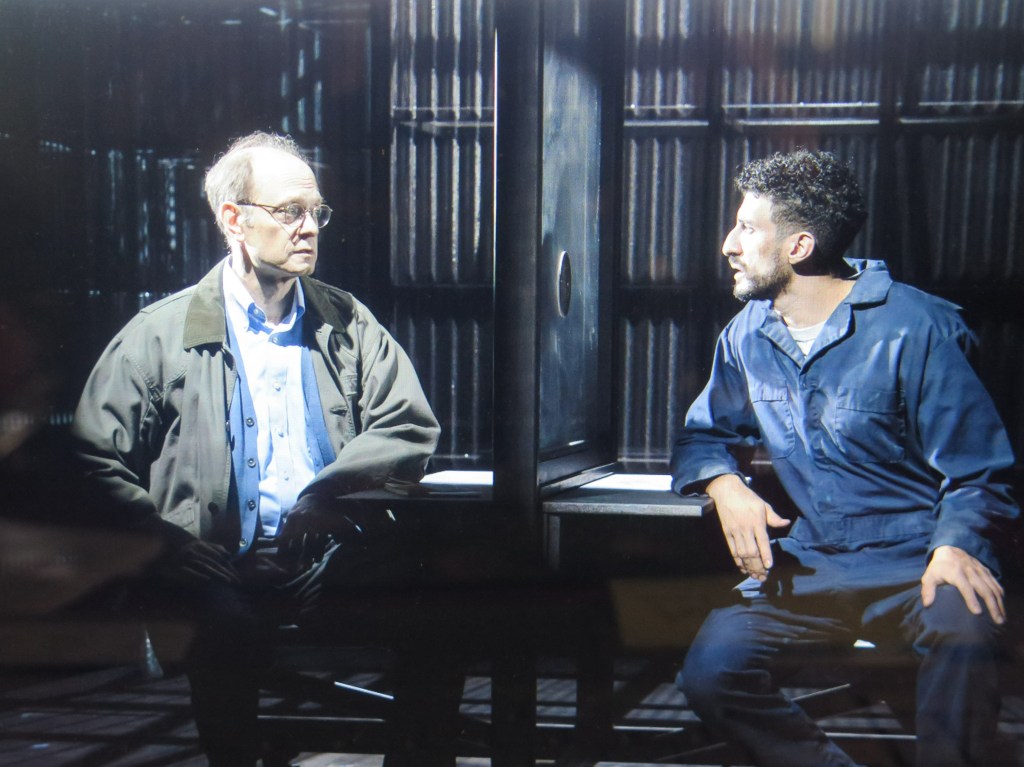
As an archetype for all sane individuals, Walter realizes the issues underlying Tarek’s, Zainab’s, Mouna’s situation. We are to agree with him, the creative team hopes. These individuals are not “the other” that their nationless position or the white supremacists’ stereotyping suggests they are: dangerous, encroaching, grifting. In the showstopping “Better Angels,” David Hyde Pierce prodigiously, emotionally expresses his song-prayer for Tarek. He petitions against the injustice of Tarek’s situation. Our nation should act better, but it has become unmoored from its founding ideals of liberty and the inalienable rights of human beings (“We hold these truths to be self-evident…”).
As Pierce sings, the irony of an older, white gentleman whose life has been bled out of him, standing in the gap for a young undocumented Syrian, who is full of vitality and hope, wanting to live his life to the fullest in a country that doesn’t deserve him, is beyond fabulous. It is also heartbreaking. Pierce, impassioned, speak/sings it out into the nether regions of spiritual consciousness. Is anyone listening? Have we forsaken our citizen right to help others?
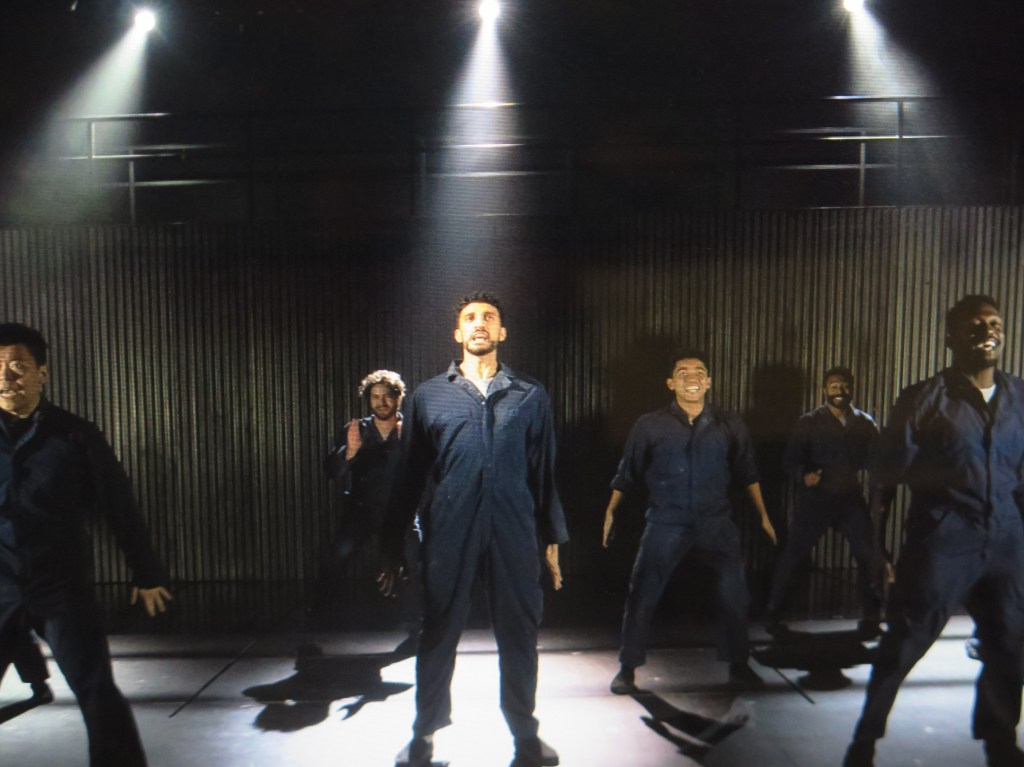
I apologize for being moved for I thought of what was to come because of these failed immigration policies which continued and inspired the former President Donald Trump’s white supremacist agenda: kids in camps at the Southern Border, kids lost to parents for years, the undocumented dying in stifling heat and horrific conditions, proud Trumpers appreciating Steven Miller’s cruelty, while donating to grifter Steve Bannon’s fake “Build the Wall” fund.
The Visitor presciently, horrifically intimates what happens if injustice and cruelty are institutionalized and the populace is inured to it or worse, uses xenophobia as a whipping post to domestically terrorize others for pleasure’s sake. White supremacists have evolved to do so precisely because of failed immigration policies which a craven, unhinged politician exploits for his own grifting agenda.
Equally terrifying is the war of attrition against decency, and the lack of wisdom to appreciate this historically as revealed by The Visitor. If we consider that critics are inured/jaded not to see in The Visitor the failed state of our culture in 2001-2007, that augmented during and after the Obama administration, the loss of that understanding bears reviewing. And while many were thrilled with former President Obama, in the shadows, white supremacy groups grew by demonizing “the other.” Sadly, they blossomed to a “first wave,” who supported a president against democratic values, one who followed up with inhuman, indecent acts from immigration crimes to COVID deaths.
The character of Walter reminds white males it’s OK to be humane and decent and empathetic. To think this production is not “current” enough via its historical perspective is misguided.
In Kitt’s, Yorkey’s, Kwame Kwei-Armah’s musical, Tarek and Mouna symbolize the courageous willing who take horrific risks. We need to be reminded of this again and again. Sullivan’s profound direction prompts the musical to change our perspective through empathy and identification. Thematically, The Visitor suggests we no longer allow ourselves to be like inconsequential stones kicked around by politicians. What is it like to sustain the impossible hardship of leaving all that was familiar and comforting in the hope of escaping catastrophe, only to never gain the security sought (“Where Is Home?/No Home”)? As climate change continues to roil the planet and immigration issues worsen, we can’t drop a stitch of understanding or subdue an impulse to assist in whatever way we can.
The actors/singers, phenomenal swings, musicians and creative team stir us to listen to the production’s call to arms. We must reform our failed immigration policies that have caused horrific pain for asylum seekers and dreamers, as they wait for citizenship to no avail. Not only must changes be made, they must be made permanent so that no Executive Order, lawsuit or state can reverse it to pleasure white supremacists.
Specific shout outs to David Zinn’s evocative scenic design: the steel backdrop of the detention center and its ironic contrast, Walter’s comfortable apartment. Kudos to Toni-Leslie James (costumes), Japhy Weideman (lighting), and others who helped to make The Visitor a compelling, must-see production. For tickets and times visit the website: CLICK HERE.
‘The Dark Outside’ by Bernard Kops, Starring Austin Pendleton and Katharine Cullison
The Dark Outside by Bernard Kops currently at Theater for the New City is the renowned 94-year-old English playwright’s most recent work. The play uplifts the importance of family with themes of unity, love, encouragement, light and hope against the all-encroaching darkness that would turn family members against each other and destroy them. Kops’ lyrical play had a staged reading at London’s National Portrait Gallery in 2020. It is a great irony that The Dark Outside presciently foreshadowed the tenor of the times as the pandemic broke out and upended global society and culture right after the reading.
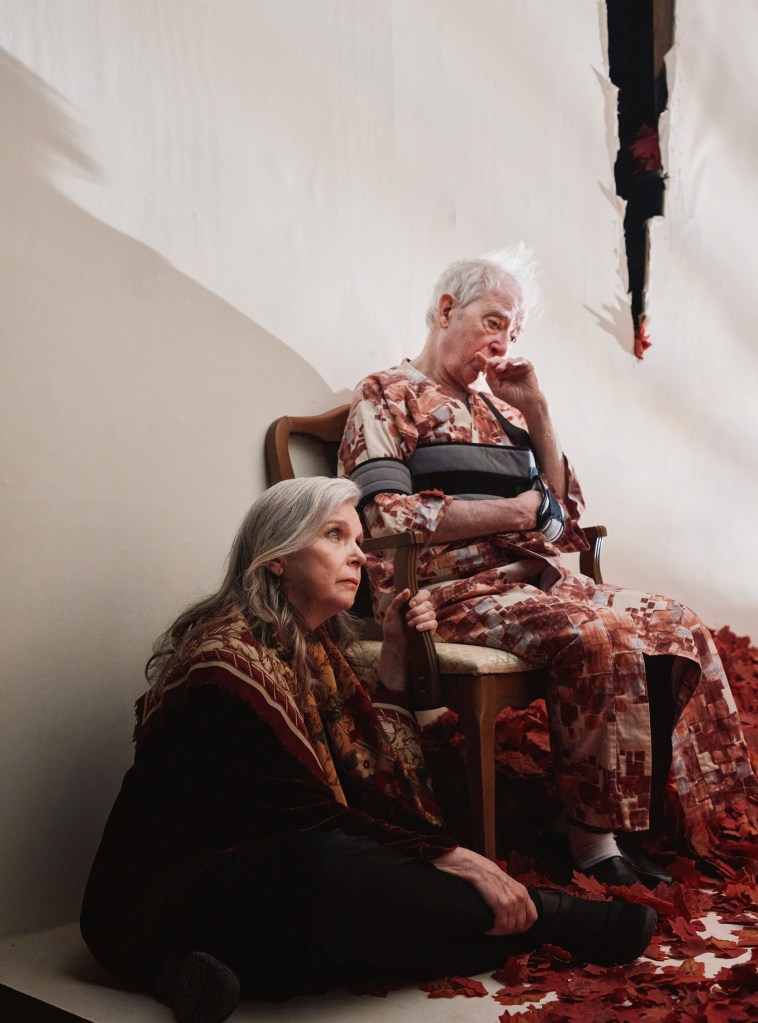
Through the COVID-19 chaos and upheaval, which bred uncertainty, want and fear, oftentimes, family provided the bulwark of steadfastness against psychic and physical infirmities and death. Disastrously, in the United States the divisiveness over how to handle COVID-19 became a political football which, to this day, divides families and ends friendships. Most importantly, Kops’ The Dark Outside reminds us of the moral, sociological and personal imperative of the family unit to sustain its members. Though the inevitable tribulations of life will come, they can be withstood through love’s immutable power.

In this premiere at Theater for the New City, director Jack Serio and the creative team deliver the beauty and sanctity of the play’s themes with a fascinating production that is incredibly timely. Serio highlights the British dramatist’s poetic sensibilities and notes Kops’ homage to archetypal character types through the production’s staging and overall design elements.
To achieve Kops’ ethereality, Serio selects minimalism. The production strips away material clutter and simplifies, using the bareness of space. In the atmosphere created, the superb acting ensemble conjures up the symbolic mulberry tree, the garden behind the house, the dinner, and more. All are in the service of Kops’ revelations about this family’s unity, inspired by the beautiful and loving mother and wife, Helen, portrayed with precision by Katharine Cullison and supported by the wounded, sensitive, poetic father and husband Paul, played by the impeccable Austin Pendleton.

At the outset, Kops introduces us to Paul (Pendleton) the father/husband, a former East London tailor who faces a life crisis after he loses the use of his arm in an accident. To inspire and encourage Paul, wife/mother Helen (Cullison) gathers their children, Penny (Kathleen Simmonds) Ben (Jesse McCormick) and Sophie (Brenna Donahue) to unify the family at the important occasion of celebrating Paul’s birthday.
As the play progresses, we discover that each of the children confronts conflicts and traumas in their own lives. Thus, the chaos that is outside on the streets and in the neighborhoods that Paul often refers to threatens to disturb and destroy each of the family members unless they are able to work through their problems, seeking the comfort of each other to tide them over to face another day.

Kops uses the majestic mulberry tree in the family’s garden to reveal the issues of the characters. For strength and peace, family members confess their angst and deep secrets to the tree whose life force listens and, in its silence, allows the characters to gain an inner solace and calm. Additionally, sisters Sophie and Penny share confidences. Sophie relates a horrific experience that caused her to leave college and spiral downward into emotional devastation and near destruction.
Sophie’s salvation is in coming home where she finds love, acceptance and redemption. Revitalized, Ben and Sophie receive great comfort in the arms and soul strength of Helen, who soothes and reassures both as she helps them overcome their inner hell. Paul’s great appreciation of his amazing wife is his continual blessing. Cullison and Pendleton are authentic and believable in the relationship they build of the loving couple. Thus, it follows that the children, despite their heart-rending troubles, have rightly come home to heal, as they receive encouragement and love from their parents.

Of the joys in this production are the poems and songs that are wide-ranging and eclectic. These, the family sings together or recites individually as expressions of emotion that are difficult to articulate. The songs resonate and recapture the play’s themes. They indicate how the family copes when a member needs help and uplifting. This is especially so in the poignant conclusion when Helen sweetly sings Paul to sleep with soothing grace. The moment is mythic in its power, and it is obvious that love’s sanctity is a balm which never falls short or fails. Thus, by the conclusion, joy returns to the household. The “darkness” has been thwarted with regard to Ben and Sophie who return to the family to complete the circle of love.

The only one who does not join them and leaves for New York City with her husband is Penny. In her move it is intimated that the wholeness of the family may remain incomplete for a season. But we have seen the strength of the archetypal mother who unites her children and husband. Regardless of whether the external darkness is in London or in New York City, Helen will continue to be the binding force that holds the family together with grace.
Jack Serio, the cast and the creative team have delivered the essence of Kops’ work and made it memorable. With the music and sound (Nick T. Moore) scenic design (Walt Spangler’s leaves are a lovely addition) the modulations of the darkness and light symbolism through Keith Parham’s lighting design, the production’s heightened moments are felt acutely. This is one that should be seen because of its cast and the symbolic iteration of one of Kops most heart-felt works.
The production runs at Theater for the New City until November 28th when Bernard Kops turns 95-years old. It is a feat for one of Europe’s best-known and most admired playwrights who the Queen awarded a Civil List pension for his services to literature. It is an award garnered by a very select few, namely Lord Byron, Wordsworth and Alfred, Lord Tennyson. For tickets and times go to the website https://theaterforthenewcity.net/shows/the-dark-outside/
 CAROLE DI TOSTI