2021 SXSW Film Festival Review ‘Executive Order’ in its World Premiere

Executive Order, ‘Medida Provisória,’ the dynamic, often poetic dystopian thriller shot on location in Rio de Janeiro, Brazil, draws one in with its immediacy. Though set in the distant future, its contemporary issues and alignment with the BLM movement, reparations for cultures formerly oppressed by slavery, and the authoritarian deportation of immigrants by the former Trump administration resonate with horrific, thematic fury.
Directed by Lázaro Ramos, written by Ramos and Lusa Silvestre with co-writers Aldri Anunciação and Elisio Lopes Jr., the writers based the film on the play “Namíbia, Não!” byAldri Anunciação (2009-2011). The narrative feature (in Portuguese, with English subtitles) won an award for best screenplay at Indie Memphis Film Festival. Judges at Moscow International Film Festival and Indie Memphis FF nominated Ramos, a renowned actor and first time filmmaker, for Best Narrative Feature.

The music, oftentimes poetic, unique script, cinematography and spot-on acting talents (Alfred Enoch, musician/actor Seu Jorge, Taís Araújo, Mariana Xavier) indicate why the film won awards. Most probably more awards will follow through this film festival season at 2021 SXSW and elsewhere.
From the outset the opening scenes alert us to trouble ahead. We discover that the high-melanins (the word black has been banned from the culture’s wordspeak) have been cheated out of reparations indemnifying a 500 year-old history of slavery. Mrs. Elenita, selected as the symbolic representative to receive reparations to indemnify the country’s history of slavery, never receives payment. The government locks her out of the bank and breaks the promises it made. Later, Antonio overhears an official claim that giving reparations would bankrupt and crash the economy. Indeed, the official identifies the problem. As the Western Hemisphere’s largest population of people with African ancestry, Brazil paying indemnities to approximately 75 million out of 211 million-plus inhabitants would rock the nation.

Attorney Antonio (Alfred Enoch) sues the government for reneging on its promises to high-melanins. He requests an alternate compensation program. This sets in motion an increasingly noxious series of events to thwart the just payment of indemnifications.
Initially, the writers include satire and comedy presenting the positions of the officials and city council versus the discussions of Antonio, his journalist/blogger friend and roommate Andre (Seu Jorge) Capitu, (Taís Araújo) Antonio’s pregnant wife, and Andre’s white girlfriend (Sarah Mariana Xavier). The humor and satire increases when the government offers a volunteer program to “go back from where they came from.” This would substitute for monetary reparations. This program instituted by the “Ministry of Return” sounds as sinister and wicked as all the deportation programs for immigrants throughout recent history.

Against this backdrop Antonio, Andre, Capitu and Sarah appear successful as middle class contributors of society. Surely, they’ve moved up the social and economic ladder to establish their right to remain in the country of their choosing. Their birthright stamped on their passports gives credence to this. However, as the net closes around them, circumstances change and worsen.
Initially, the classy volunteer program to entice high-melanins to leave includes a “one way ticket” to their dream spots in Africa. There, they may settle in a country of their choice. The scene where “volunteers” choose various countries (one selects Hawaii) becomes humorous, considering a number of them don’t even look “high-melanin.” And some even attempt to use the “return yourself” program to vacation in desirable luxurious areas.
Of course, the campaign to “return yourself,” remains a failure because of its inefficiency and inability to lure and successfully repatriate the thousands of “high-melanins” back to Africa. Brazilians refuse to go because of their positions of social comfort with their language, culture, family and friends. Africa remains a continent with countries as remote, unfamiliar and unappealing as Antarctica. The arguments to stay mirror the arguments Frederick Douglass used with U.S. President Lincoln who suggested to Douglass that the United States might send back freed African slaves to Africa. However, the slave catchers and the Southern planters and others did such a fine job of wiping out the former slaves’ culture, language and society that almost all of the slaves on U.S. shores after 100 years didn’t know their ancestry.
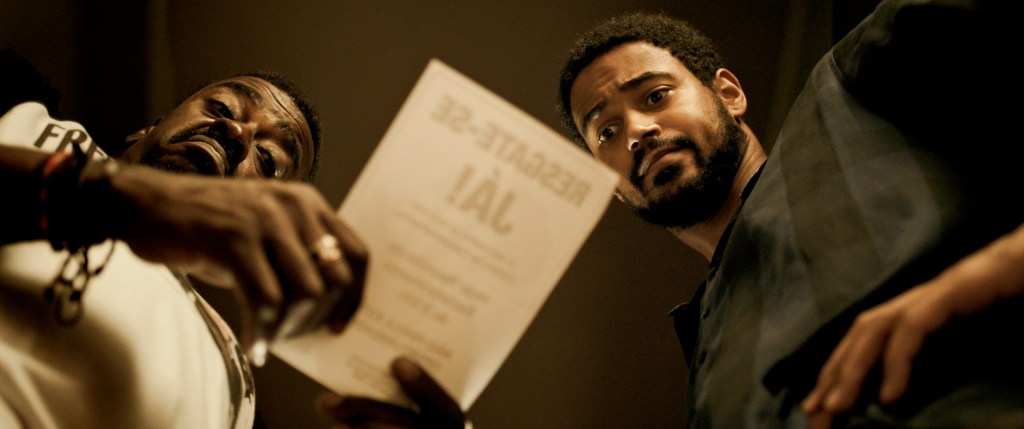
Not finding even Angola (formerly colonized by Portugal) comforting, the high-melanins go nowhere and the conditions of institutional racism persist and become terrifying. Indeed, the government employs authoritarianism and passes Executive Order 1888 to legally deport its high-melanin population using law enforcement and armed guards to round them up and send them away. (1888 is the year that Brazil abolished slavery)
We assume that the deportations succeed and the high-melanins arrive at their destinations. But we never see this and we don’t witness holding pens or detention centers. Filmmakers emphasize scenes of individuals, rounded up against their will, running from police, being beaten in the “catchings.” With regard to the removals, we note the chaos, confusion and heavy-armed tactics. Also, filmmakers reveal the wickedness of the government officials as cogs representing the banality of evil. Finally, the deportations occur swiftly so no outside countries intervene. Themes of genocide, the holocaust, the injustice of deportation, racism, discrimination rise to a haunting level.

However, the Ministry of Return loses control of its “smooth operation.” Problems occur with the “hold-outs” and a resistance movement strengthens as Antonio and Andre hide out in their apartment building. They attempt to remain strong despite the officials and European types attempting to starve and dehydrate them. Additionally, they turn off their power and block their cell communications. Filmmakers add a convenient loophole so that the police cannot storm buildings to pull out the resisters.
An additional problem occurs when Antonio’s wife Capitu, a doctor, goes into hiding in an Afro-Bunker as part of the resistance to avoid capture. Some of the most poetic and striking scenes occur in this place of refuge. The conflicts between Antonio and Andre heighten the dramatic tensions in their relationship. As they attempt to survive, they spur their own resistance movement that goes digital, gains global attention and inspires the nation.
Executive Order grapples with vital themes and contemporary topics making it acute, insightful and powerful. Strengthened by its superb performances, non-stop tension and excitement, filmmakers excel in their cinematic storytelling. Additionally, the high concept builds in the fear factor that this surreal story happens in parts of China, Russia and elsewhere on the planet currently. The film empowers toward human rights advocacy and social justice.
This must-see film can be found at 2021SXSW platforms. Look for it at its roll-out online.
LIVECHAT / EXECUTIVE ORDER @ SXSWLivechat with Director / Co-writer Lázaro Ramos Thursday, March 18 at 3:00pm PDT / 5:00pm CDT / 6:00pm EDT
2021 SXSW Film Festival Review ‘The Oxy Kingpins’
The documentary The Oxy Kingpins currently screening online at the 2021 SXSW Film Festival is an important film which highlights the Opioid Crisis and more importantly defines the medical industrial complex’s role in addicting the US. to its toxic, lethal drugs. Within the Oxy network are the pharmaceutical manufacturers, distributors, retailers, hospitals, doctors, pain clinics and street dealers who ride the OxyContin train for its mega profits.

The documentary emphasizes that the big pharma corporations who are responsible for killing Americans, have walked between the raindrops and not been brought to task, criminally or civilly. In their cool towers above the fray, the CEOs are the unseen criminals. Meanwhile, it is the users, dealers, doctors and pharmacists, like little fish in the wide net, who are caught, tried and convicted for their abuse and often illegal and unregulated distribution of OxyContin (oxycodone). Nevertheless, the pharmaceutical companies have encouraged the distributors to find loopholes in regulations for distribution. In not adhering to the regulations, opioid use has run amuck and the towns where this has been felt the most have been devastated.
Co-directed and produced by Brendan Fitzgerald and Nick August-Perna, the excellent documentary lays the blame where it should be placed. It advocates for criminal as well as civil penalties leveled on the knowing perpetrators who seek to addict their clients then absolve themselves of any guilt or responsibility while raking in their ill-gotten gains. Again and again, the theme of profits over people comes to the fore. Also, as a sub theme we note that a conservative government reduces the need for regulations and their enforcement at the behest of lobbyists. The filmmakers remind us that political parties who eschew enforcing regulations, only hold the “little people” accountable. This is doubly destructive for it punishes by abusing the public with harmful chemicals it should protect it from. Secondly, it expects that they foot the bill cleaning up the mess the unregulated corporations caused to begin with.
The filmmakers get on the inside of the crisis by elucidating the trail of evidence from dealer all the way up to manufacturer revealing that at the highest levels the willful, deceitful and criminal negligence of corporations are directly responsible for the Opioid Epidemic. Fitzgerald and August-Perna state at the end that 700,000 Americans from 1999 -2019 have lost their lives to opioid overdoses or attenuating deaths.

The documentarians reveal the most salient information by interviewing attorney Mike Papantonio and shadowing him cinema verite style as he collects information for the case he is bringing against pharmaceutical companies and distributors. He is joined with a legion of attorneys who are working the case along with Nevada attorney Bob Eglet who is trying the case in Nevada because the laws are more favorable to obtaining documents as part of a public health crisis. If they can win it in Nevada, that will open the doors to win similar cases in other states.
Through interviews, brief cinema verite shots of the Nevada courtroom with plaintiffs and defendants, interviews with various dealers and one former user, we understand what is at stake with the “Big Three” corporations who are the OXY Kingpins of the title. These are drug makers McKesson, AmeresourceBergen and Cardinal Health. Along for the ride are CVS, Walgreens and perhaps others like Walmart may be added.
These are the invisibles one wouldn’t readily associate with the opioid crisis because initially it was Purdue Pharma owned by the Sackler family that has been sued and held civilly liable, though there is a disagreement about the amount of the penalties and whether the company should operate in another form. Nevertheless, like the “Big Three” the Sackler family has not been charged with any criminal penalties associated with their pushing their formula of OxyContin and heavily marketing it to doctors emphasizing that it was a non-addictive pain reliever. Unsuspecting doctors and pharmacists initially believed that the drug was non-addictive. In other words, the Sackler family has not been criminally convicted or even charged with the fraud they perpetrated to addict and kill for the sake of billions.

By the time those in the business of pain relief discovered OxyContin’s properties, they became addicted to the profits. Sadly, the cost to cities, towns and rural communities across the nation has been in the trillions of dollars. The corporations responsible for the crisis expect the American taxpayer to clean up their toxic disaster and have lied in hearings to congress as tobacco CEOs lied with practically the same rhetoric. When asked about accountability, the CEO OF McKesson, John Hammergren, the CEO of Cardinal Health, George Barrett, and the CEO of AmeresourceBergen, Steve Collis, to a man said they “did not believe their company contributed” to the opioid epidemic.
Nevertheless, as Alex, former dealer who landed in prison insists, the CEOs of these pharmaceutical companies are the biggest drug pushers of OxyContin. Not only should the companies be held accountable civilly for the devastation leveled on families, the CEOs should be tried criminally. The intent for the suit in Nevada is to do just that on April of 2021.
Alex, now a legal businessman, ran his OxyContin business from Miami, the drug capital of the US. Alex provides the background information of how dealers like him moved from weed to heroin to OxyContin and back to heroin. And he discusses how addicted patients get fake scripts that pharmacists fill. And doctors write scripts like dispensing candy. Alex was on the lowest level in the network of how OxyContin manufacturing, distribution and retailing exploded to the point of abuse. He, the other former dealers who went to prison, Jay, the Cowboy, and user Anne affirm that it is always the “little people” the DEA is interested in. Federal agencies avoid dealing with the manufacturers and distributors who are in effect “legal” drug pushers.
The OXY Kingpins provides a valuable perspective, revealing the impact of corporations on our society’s ill-health and how willing they are to addict and destroy us for billions of dollars. This is made all the more egregious if they can put amoral, hedonistic and wanton CEOs who are concerned only about the corporation’s bottom line at the power points of the company. Look for this documentary at 2021 SXSW screening platforms and when it comes live.
WINNER! 2021 London International Filmmaker Festival ‘Garden District’

UPDATE: GARDEN DISTRICT WON IN THREE CATEGORIES:
BEST FILM/ OLEY SASSONE
BEST ACTOR/ BRYAN BATT
BEST ACTOR/ BARRET O’BRIEN
The charm and loveliness of old world New Orleans upended by new world vitality and determination characterizes the the short film Garden District, screening in competition at the 2021 London International Filmmaker Festival. Money isn’t funny and the Dubonnet family who has recently buried filthy rich patriarch, Peter Dubonnet is thrown into a crises of relative inheritance. Which heir becomes the executor of the estate? Will he or she be generous or grasping with the siblings in dispensing it?
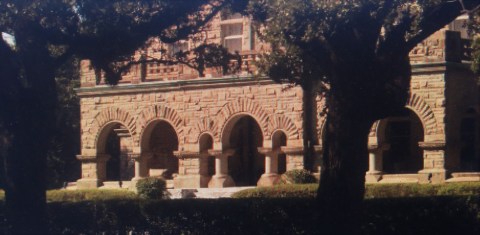
Oh, and there is a catch. Peter changed the will, scribbling it in long hand with a recognizable signature. However, since nothing is irrevocable except death, this DIY will, written on a yellow sheaf of paper from a legal pad, is history. The long suffering matriarch Irene Dubonnet (Janet Shea) and her lover Clovis (Carl Palmer) will challenge the will and alter its main stipulation after one year.

It is then Peter conditioned that Irene must choose one heir from the list of family members. And it is clear Irene favors her failed artistic son Rooster Dubonnet (Bryan Batt). Perhaps after a year, Rooster will be sober enough to stand without swaying, while he expresses his talents, finishing his seascapes of poisonous and predatory sea creatures. Ah, yes. What does one do with the family members when dividing the estate, especially when the in-laws like Quint Legere (Barret O’Brien) have gambling debts with creditors who crush knuckles and smash kneecaps?

The Garden District is a deliciously wicked, tongue-in-cheek, good vs. evil romp in one of the most beautiful settings in the United States. It is conceived and written as a TV series by Rosary O’Neill based on her experiences as a 7th generation New Orleanian. Directed by Oley Sassone with a keen eye toward pacing, substance and rich production values, Sassone shepherds the actors to elicit nuance and irony with spot-on authenticity. Particularly strong is the scene between Shea and Batt as the mother attempts to force her son to understand the power she holds to dispense what is most precious to her upon him. Money! Because it’s easily gotten and his goals lie elsewhere, Rooster is not interested.

On another geographical parallel is her son-in-law Quint, whose desperation for funds to pay off his debts to gangsters and keep his body whole, riles and disgusts her. As Quint, O’Brien’s destructiveness and panic emanates from his soul. Addiction, whether it be alcohol or gambling snuffs out purpose, love and direction in these two foundering males. Interestingly, daughters, Kitten Dubonnet (Kelly Lind) and Jasmine may be overshadowed by their mother who dominates, now that Peter is dead. Most probably, it is the men, with the assistance of one of the daughters, who will attempt to exert their will, either through failure or connivance, upon an equally manipulative Irene Dubonnet, who must save herself or become their prey.

The Garden District’s mansion setting is spectacular; the production values are gorgeous; the music is sonorously effective and derivative. There is the relaxed charm and atmosphere of New Orleans that pervades the film. It’s a delicious feeling to become involved in the foibles of others who readily admit they are backed into a corner, or on the brink of the abyss, curious to take a leap, never to return. As a TV series, this looks to be a light and juicy winner that we ache for after the tribulations of COVID.
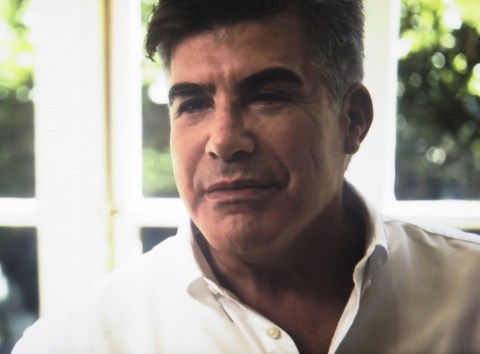
To get a taste of this up and coming TV series Garden District, go to the 2021 London International Filmmaker Festival online digital platform by CLICKING HERE. Become reacquainted with an insider’s look at the New Orleans’ upper crust to understand that money guarantees little and the love of money roots well in a garden of evil.
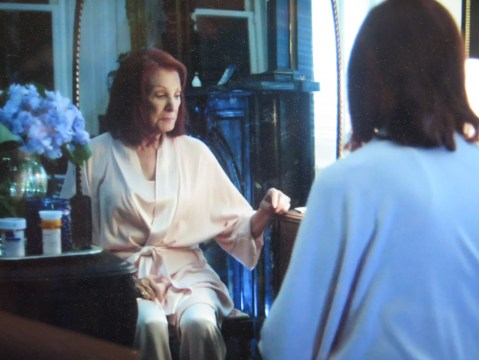
Garden District has been deservedly nominated for the following awards in the Shorts Category at the 2021 London International Filmmaker Festival.
- Best Short Film
- Best Director: Oley Sassone
- Best Lead Actor in a Short Film: Bryan Batt & Barrett O’Brien
- Best Lead Actress in a Short Film: Janet Shea
- Best Editing: Arvid Cristina
Athena Film Festival Review: ‘Dilemma of Desire’
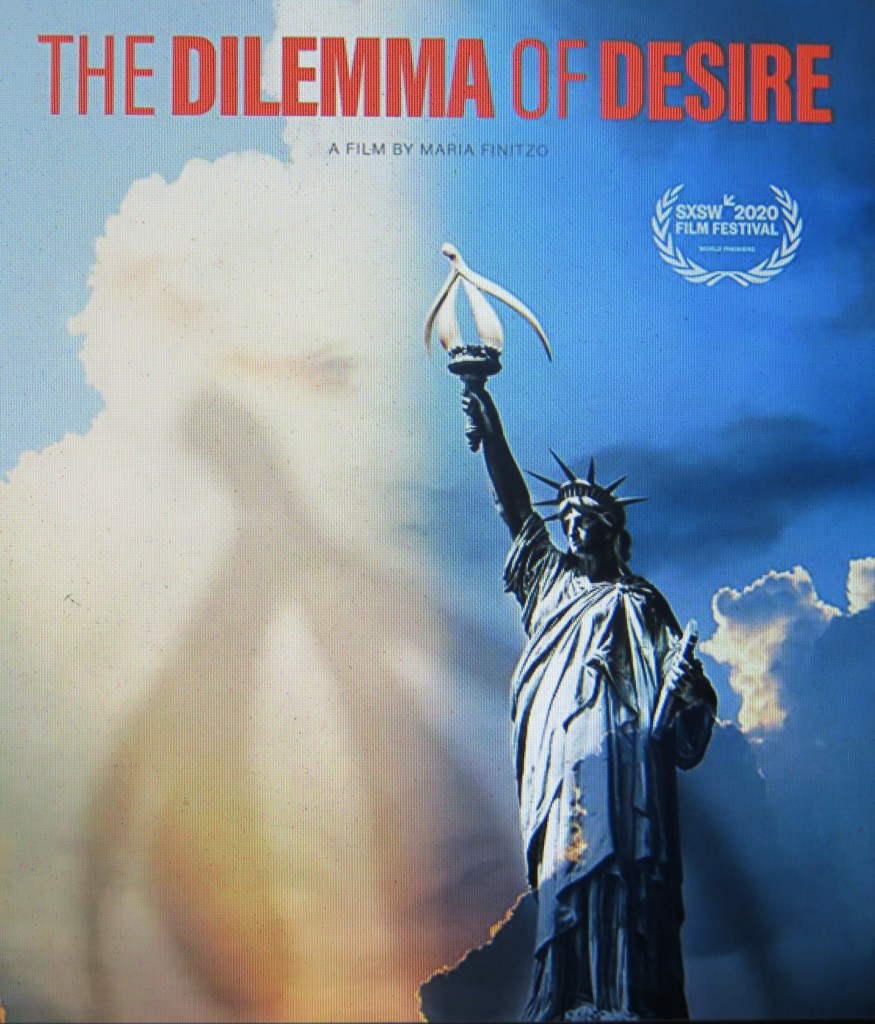
Maria Finitzo’s documentary The Dilemma of Desire, currently screening virtually at the Athena Film Festival, examines female sexuality and pleasure against the backdrop of the repressive, toxic and macho culture represented by the former Trump administration, QAnon, Trumpers, “Christians,” the paternalistic Republican Party and all caught up in the “normalcy” of misogynistic, homophobic, xenophobic and racist folkways. Interestingly, Democrats and other political parties are not exempt from an examination of the patriarchy in this film. The myths and follies of patriarchal thought and behavior are ancient and baked in by males, females and non gender described, who have bought into the lies of female sensuality for millennia.

More specifically, it has been males who define their own machismo by the ways that they oppress and control women. To dominate, whether for the profit motive or more psychological reasons, males and accepting females define conceptualizations of beauty, femininity, sensuality and the pleasure they are psychologically and scientifically able to seek based upon these confined and erroneous definitions. Finitzo, a two-time Peabody Award-winner blows apart the taboos and shameful strictures about how women must think, react and define their bodies and their sensuality. Focusing on four women who have broken open the boundaries in themselves to understand their bodies, Finitzo conducts extensive interviews with them as they help empower others in their journey deeper into their own sexuality and sensuality.

Finitzio approaches central themes that paternalism for centuries has rendered women powerless and voiceless, manifested in the simple act that women do not even understand or know their own sexual organs to be able to draw them. This lack of literacy about their sensuality and sexuality has been a revelation in the life and work of Sophia Wallace, whose work about “Cliteracy,” Finitzio uses as a focal point around which she creates the grist of this documentary about four women who in their own way are attempting to change folkways and cultural assumptions about female pleasure and desire.

Memed by artist Sophia Wallace, “Cliteracy” is the scientific knowledge that the clitoris is fundamental to the female orgasm. The lies that the vagina is the seat of desire is a myth propagated by males, for obvious reasons. When women have felt let down in sex with their partners, they have taken the shame and blame upon themselves. The educated male has countered this with his empathetic understanding that female genitalia is more complex and deserves its own attention during intimacy. If the male partner is not empathetic or understanding, women for centuries have been left to “endure” sex as a chore and do it to beget children which they alone have been tasked to raise until recent times. Women who have established intimate relationships with women have actually received much more sensual pleasure during their lifetimes. Thus, the idea that most women don’t experience vaginal pleasure during intercourse (only 25% do according to the scientific data Finitzio states in the film) is a much needed revelation that Dilemma of Desire emphasizes.

Using her interviewees as gatekeepers into this revelation, Finiztio chronicles key points about how the patriarchy has kept women in the darkness about their own bodies. The end result has been to hamper their freedom, their voice, their courage, their empowerment. The documentarian examines how Wallace is changing culture; how Dr. Stacey Dutton, a neuroscientist, enlightens medical science about the biology of the clitoris; how Dr. Lisa Diamond unravels outdated notions about women’s arousal; and how Ti Chang, an industrial designer, creates elegant vibrators for women that look nothing like the novelty toys in sex shops which are useless and created by men. To elucidate what these four have discovered, Finitzio interviews Umnia, Becca, Jasmine, Sunny, and Coriama who provide their life experiences about themselves and their relationships with men and women in their investigation of their own body’s capability of receiving pleasure.

Finitzio’s work is mind-blowing. She uses a maximum of effort to cobble together the interviews and create the backdrops that enhance the commentary of these truth-tellers. The cinematography, music and editing all enhance the overarching message that to be free, women must understand all parts of their being to appreciate all of who and what they can be. A defining moment comes when Sophia Wallace discusses what she heard from her cousin about her grandmother’s confession. Their grandmother had five children, but didn’t think she had ever experienced an orgasm or pleasure during sex. Meanwhile, of course, their grandfather’s experience was a sure thing. For Wallace, this was an eye-opening tragedy because her grandmother didn’t understand or enjoy what her body was capable of experiencing because she was intellectually, philosophically, culturally, sensually chained by the patriarchy whether wittingly or unwittingly.
This is a must-see film for men, women, non-binary, all who are walking around in a fleshly body and want to break free from the dilemma of desire that especially ties women up in knots and oppresses them in all of their being. The point is to understand and become “cliterate.” At least that opportunity must be allowed and Sophia Wallace’s work should be in a book, not just on a TEDTALK or as a conceptual museum piece in an art gallery. Thus far, book publishers are afraid to deal with such an important and culturally revelatory work. The excuse is that female editors are hesitant about sharing the information in book form with other females in the industry, for example libraries, universities. The fear exemplifies why “cliteracy” has remained in the realm of the arcane and it is a tragedy of oppression.
Finitzio’s film spotlights the core issues of this tragedy. And in due season, Wallace will be known globally in print as well as virtually for her work “Cliteracy.” Dilemma of Desire is screening on the Athena Film Festival website and other screening platforms. CLICK HERE FOR ALL THE ATHENA FILM FESTIVAL OFFERINGS INCLUDING THIS EXTRAORDINARY FILM.
Athena Film Festival, Toronto Film Festival: ‘Beans’

Beans Tracey Deer’s award winning narrative film, inspired by true events, is one of the superb offerings this year at the 11th Annual Athena Film Festival. Throughout March, Athena FF is holding digital Q and As, screenings, talks and more, all uplifting women in film’ and women’s leadership. It is the only women’s film festival in New York City, and sans pandemic it is held at Barnard College. Hopefully, Athena Film Festival will return live for its myriad activities, screenings, conferences, Q and As, parties and awards ceremonies in 2022.
The events in Beans and major thrust of the narrative are inspired by Tracey Deer’s own experiences as a young girl going through the cataclysmic trials of the Mohawk Resistance in the community of Kanesatake, near the Town of Oka, on the north shore of Montreal, Canada. Written by Tracey Deer and Meredith Vuchnich, Beans is a hybrid coming of age story and social justice film set against the backdrop of a 78-day standoff (11 July–26 September 1990) between Mohawk protesters, Quebec police, the RCMP and the Canadian Army. The standoff arose when without permission or negotiation Mohawk land was grabbed by developers who intended to expand a golf course and build condos on lands disputed since 1760 and which involved desecrating an ancient cemetery.

During this Oka Crisis, the character “Beans,” whose Indigenous Mohawk name is Tekahentahkhwa (played by the excellent Kiawentiio) learns to appreciate her identity as a Mohawk. She vies between accepting her mother’s wish for her to go to a tony white school to establish a better life for herself and hanging tough with cruel, bullying April (Paulina Alexis) who abuses and exploits Beans’ yearning for friendship using power dominance and browbeating to release her own inner torments.
Tracey Deer’s characterizations are spot-on, as are the actors who portray Beans, April, and Bean’s mom Lily (Rainbow Dickerson). All of the women are representative. Lily is attempting to raise her daughters, teach them successful values, yet negotiate her husband who is a protestor and warrior battling with his countrymen for Mohawk land rights. Beans is torn between her father’s fight and showing what tough resistance is and growing up to be a young woman apart from her mother’s selecting an identity for her and expanding beyond the “sweet-natured,” innocent, good girl.
As Beans worms her way into April’s cold heart by obeying her instruction, and accepting April’s toughening-up abuse, she learns the warrior way to be brash, bullying and fear-inspiring. However, when her eyes are opened to the difficulties April has with her family, Beans learns that becoming inured to pain and not expressing emotion is self-damaging.

Throughout Beans’ and her family’s journey through the, at times harrowing and punishing 78-day standoff, we see their courage in resistance.. They suffer brutalization from the surrounding community who is caught up in the events. The themes of the film about social activism in returning Indigenous lands back to the Mohawk, represent an ongoing struggle by various Indigenous populations who still fight against land grabs that began when European colonials first visited the Americas. For the Mohawk in this area of Quebec, the Provincial government and Canada have still not returned the land to them, though the cemetery is untouched and the golf course has not been expanded. Subsequently, the Mohawk still seek the lands which belong to them in this ancient dispute which continues to this day.
Beans was the opening night film in the festival. Look for it on IMBD and elsewhere for its performances, storyline and fine direction by Tracey Deer. It is deserving of the awards it won: three awards at festivals (Tracey Deer won VIFF for Best Canadian Feature Film). It was nominated for five other awards.
Reflections on ‘The Gardener’by Lanie Robertson, With a Stellar Cast in its World Premiere Online
Stacy Keach Zoom Theater, the “good friends of Lincoln Center Theater” is offering a free virtual event to benefit The Actor’s Fund. The world premiere of Lanie Robertson’s magnificent play The Gardener is streaming live until February 18, 2021 on this link. https://www.stacykeachzoomtheater.com/

Starring Ed Harris as Claude Monet, Stacy Keach as the Prime Minister of France, Georges Clemenceau, and Amy Madigan as Monet’s stepdaughter Blanche, the playwright spins out the days which become the turning point in the lives of Monet and Clemenceau as they reaffirm the closeness of their relationship as good friend,s who inspire each other to benefit the culture and world around them.
Robertson begins the play identifying elements that essentially intimate the cultural times in which both men, lived though not through specific dates. The chronology is abstruse. For example Monet has lost his wife Camille and his son, Jean which has devastated him. And he refers to these events and their impact on him as does his stepdaughter Blanche. At the top of the play we follow the discussion that Clemenceau has survived an assassination attempt which identifies the time around 1919 after WWI. After the assassination attempt which Monet and Blanche believe killed Clemenceau, he turns up jocularly alive to visit Monet. The painter is at Giverny, Monet’s studio and garden, which he is planting and developing and to which Monet refers as his true legacy.

Interestingly, Clemenceau doesn’t “get the love” Monet expresses about the flora and fauna of the garden environs which Monet works day and night, and has come to know as intimately as he knows his paint’s thickness on his variety of brushes. Clemenceau claims he prefers the city noises, uproar and busyness of street hustle and bustle and his life as a politician, journalist and Prime Minister of France.
Much is subtext and inference in this play which draws one into the mystery of these two icons. It may force one to look up more information about the time, Monet’s greatest of masterpieces and this statesman of France who was prickly, Republican (in the French sense of the word) a humanist, Monet’s good friend and lover of art. I cannot imagine a better selection of cast than Amy Madigan, Ed Harris and Stacy Keach who also acutely directed this vibrant production.

Of course though Clemenceau could not have foreseen the romance of Giverny for global tourism and posterity, art lovers and professionals alike understand the importance of Giverny’s gardens to Monet’s final works; the garden informed his painting and provided the inspiration and respite to innovate and be energized to the muses of the creative process. Thus, both Monet’s garden and his works have become synonymous with Monet’s complicated genius and artistry.
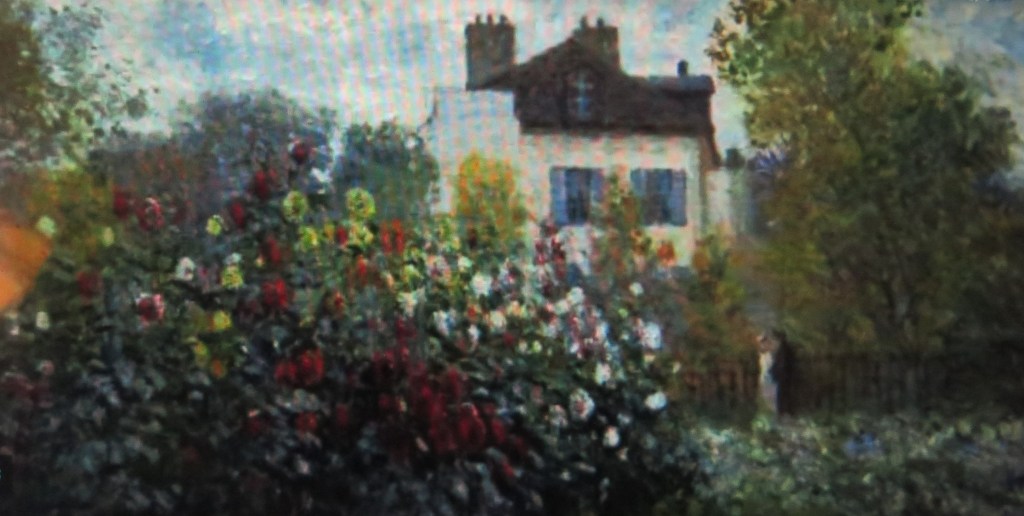
What is intriguing about Robertson’s The Gardener, which heightens this interplay of Monet’s artistic talent being dependent upon his skill as a gardener, is the vitality of Monet’s relationship with Clemenceau. Again, this is inferred as the great unspoken. It was Clemenceau who after Monet died, arranged for the display of Monet’s Nymphéas (Water Lilies) cycle which eventually ended up in 1927 at Orangerie, now Musée de l’Orangerie in Paris, France. Clemenceau understood the greatness of Monet’s intention to symbolize the hope of peace, and healing power of nature, light and solace of the garden to soothe and renew the souls of soldiers who returned emotionally and psychically deadened after the hellish abyss of WWI. Clemenceau’s attraction to Monet’s work and friendship, was reaffirmed in 1908 and lasted to the end of their lives. Robertson suggests Clemenceau sought Monet and his work for its power to revitalize and restore his being. The friends’ connection lies beyond the veil, in an ineffable, immutable bond. And if one investigates further, theirs was an agreed upon arrangement that was fated for all time.

What is not spoken of in the play, Robertson alludes to and the brilliant actors convey, inhabiting these iconic individuals. It is Monet’s Water Lilies masterpiece that he worked on for three decades and to which Clemenceau encouraged him to add panels. The day after the Armistice in 1918 was when Monet asked Clemenceau to take two panels which he signed on Victory day and offer them to the State. Clemenceau was the intermediary to have Monet’s “great decoration” displayed in the way Monet wanted, a display that he finalized the conceptualization of right after his son Jean died. Thus, when Harris as the bereft Monet discusses Jean’s death with Clemenceau and the sonorous and vital Amy Madigan as Blanche expresses her grandfather’s great grief and hers at Jean’s loss, we understand why Monet sent away everyone from his home. We understand his need to be alone for his final work to be finished. We understand (sorry for the spoiler alert) why Blanche leaves with Clemenceau. It is for the greatness of what is to come; and all contributed in their way to its becoming.

This “becoming” achieved its final form in the arrangement of the panels in the Orangerie as a panoramic frieze exhibited seamlessly to embrace the viewer in two elliptical rooms. The two panels at Clemenceau’s suggestion grew to 8, though Monet pledged more. But these 8 are the apotheosis of the Water Lilies cycle that Monet had begun thirty years before. He meant it to be his final contribution to the uplifting of France and perhaps for all time and for all of the world, as a monument to peace.
It has been said that Clemenceau encouraged Monet to create a total of 19 paintings some of which Monet destroyed. Indeed, Monet held them all back, hoping to achieve greater and greater perfection until he could work on them no longer, and his death released the paintings to Clemenceau in 1926. In1927 Clemenceau secured the 8 panels to establish the exhibit which is the impressionist’s monumental achievement, not necessarily appreciated nor understood by the public in 1927 or the next decade.

However, when one visits the Musée de l’Orangerie, one experiences the arrangement of Monet’s unique vision of form and color in a watery landscape that is sprinkled with waterlilies, shimmering ripples, willow branches, tree and cloud reflections, varying shades of light and dark green vegetation, all suggesting the ethereal qualities of light and air. Symbolized beautifully is the thread of life these natural elements that were conceived in Monet’s consciousness and then manifested in his garden which, for as long as it remains, imbues the eternal as does the “great decoration.”

Monet said about his creation, it is the “illusion of an endless whole, of a wave with no horizon and no shore.” Assuredly, the “elliptical shape of the rooms” suggests the mathematical symbol for infinity. The panels are a seamless continuum in time and space materialized. Likewise, Monet conceptualized his garden, planted, watered and cultivated the rich soils to express a beauty which he materialized using his vast array of knowledge of florals and accompanying plants to align the inner eye with the infinite, the eternal. His Garden and Monet’s exhibit in Musée de l’Orangerie are nonpareil.
This production is broadly relevant in its themes and scope. What better way to memorialize the message to remain uplifted through art in our time of mob violence at the Capitol, the horrifying insurrection against democracy, a noxious political divide and a pandemic. What could be better than to view the exchanges between two exceptional actors portraying cultural giants looking back to a similar time (the aftermath of the brutal WWI and the Spanish flu epidemic) as they worked to bring the hope of peace through the halo of artistic expression.

Harris, Keach and Madigan give brilliant performances re-imagining individuals we are barely acquainted with but know culturally. Memorable is Madigan’s humorous taking down of Harris’ Monet when as Blanche, she is outraged that Monet gives her pate to the cats, the sumptuous pate that she slaved. Her specific and factual description of what it took to make pate back in the day is marvelous. The actors convey the humanity of these greats at a still point in time that allows us to identify, engage and appreciate their friendship and the value of such friendships in times of great trouble.
The messages, themes and parallels of that time to this carry great relevance and currency for us today. Bravo and thanks to Robertson, Harris, Keach, Madigan and the creative team for this superb and unforgettable zoom theater experience. To see it CLICK HERE. https://www.stacykeachzoomtheater.com/ IT ENDS ON FEBRUARY 18, 2021. You will be happy you did. And after you finish watching, donate to The Actor’s Fund, CLICK HERE
New York Botanical Garden: Intimate ORCHID Spotlight Replaces Annual Exhibit

As a result of the pandemic, the New York Botanical Garden has changed its approach regarding its annual orchid exhibition. In keeping with safety and security for New Yorkers, Garden members and guests, the annual Orchid Show will return in 2022. As a replacement, the Garden is focusing on a personal and close-up view of orchids without the fanfare, showiness and crowds.

This year unusual orchids and other plants from NYBG’s permanent collections will be displayed in select galleries of the Enid A. Haupt Conservatory on February 20–April 4, 2021.

Continuing with reduced indoor capacity, The New York Botanical Garden (NYBG) is forgoing its traditional orchid exhibition presenting a limited Spotlight on Orchids and other permanent plant collections in the Enid A. Haupt Conservatory. A visit to select galleries of the Conservatory will reveal displays of orchids in brilliant white and striking colors set against the foliage of aroids, ferns, and bromeliads. The plantings highlight how the orchids might be found in nature as they blend seamlessly with their surroundings.

The approach brings attention to orchids in their habitats and emphasizes investigation of orchids as one of the largest of plant families in their their variety with differences in their shape, size and color to attract pollinators. Orchids thrive on every continent except Antarctica and can be found even the desert gallery of the Enid A. Haupt Conservatory.

As visitors walk through the various galleries, they will be able to view and explore unique orchids from NYBG’s renowned collections from around the world. The Garden is known for its rare orchids. Don’t forget to take a long, lingering look at the glass case between the galleries where many of the Garden’s rare and small orchids enjoy their special, controlled environment. Also, check out the artful floral creations. These are fashioned by Botanical Garden horticulturists. The creations combine expressive orchids from the popular Moth orchids (Phalaenopsis) to lady slippers (Paphiopedilum) with rocks, tree trunks, vines, and other found materials.

NYBG looks forward to the return of its annual Orchid Show in 2022.

The Spotlight on Orchids runs from Saturday, February 20, through Sunday, April 4, 2021; 10 a.m. to 5 p.m.

Tickets for Spotlight on Orchids is open to all visitors with the purchase of an advance, timed Garden Pass + Conservatory ticket, which includes access to the Enid A. Haupt Conservatory and outdoor gardens and collections. Click on http://nybg.org/visit for more information or tickets.
KUSAMA: Cosmic Nature at New York Botanical Garden


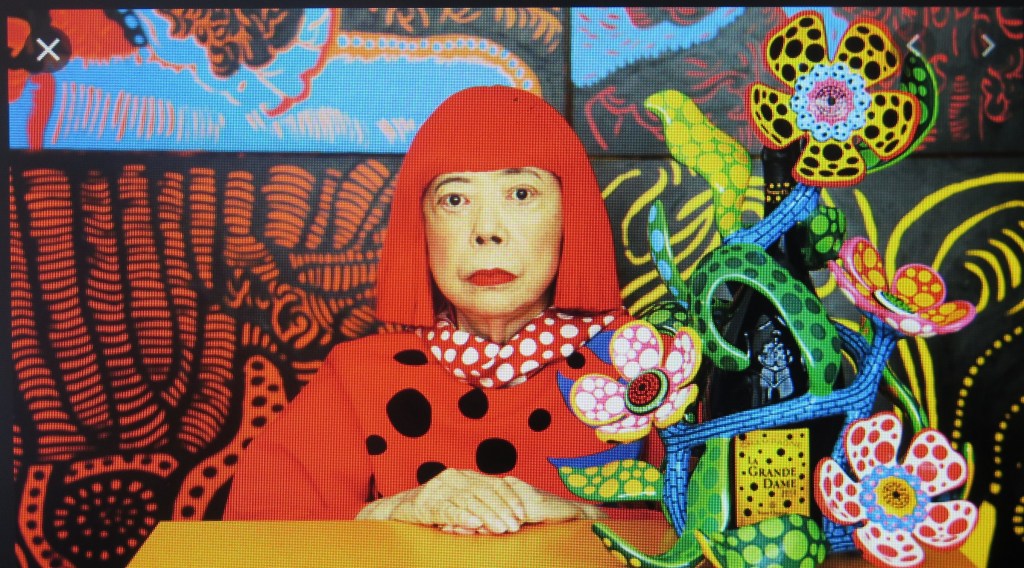
The New York Botanical Garden is presenting its expansive 2021 exhibition, KUSAMA: Cosmic Nature. The internationally celebrated Japanese artist Yayoi Kusama is being featured for the Spring season since the exhibit was postponed in 2020 because of the COVID-19 pandemic. The exhibition includes four experiences that will debut at the Garden which is the exclusive venue for KUSAMA: Cosmic Nature. The exhibition will be installed across NYBG’s landscape, in and around the Enid A. Haupt Conservatory, and in the LuEsther T. Mertz Library Building. Timed, limited-capacity tickets for the landmark presentation go on sale to the public March 16, 2021, at https://www.nybg.org/event/kusama/
KUSAMA: Cosmic Nature
Members-Only Benefits
KUSAMA: Cosmic Nature Members-Only Benefits
- Exclusive Member ticket Pre-Sale, March 11-15
- Complimentary exhibition and Garden admission – visit again and again, for free!
- Exclusive Members-Only Preview Day, April 9
- At the Patron Level, enjoy the best of the exhibition with a dedicated Patron pre-sale beginning March 9, complimentary Infinity Mirrored Room tickets when interior access begins, and special viewing opportunities.

Experience Yayoi Kusama’s profound connection with nature
Contemporary Japanese artist Yayoi Kusama is one of the most popular artists in the world, drawing millions to experience her immersive installations.
Exclusively at NYBG, Kusama reveals her lifelong fascination with the natural world, beginning with her childhood spent in the greenhouses and fields of her family’s seed nursery. Her artistic concepts of obliteration, infinity, and eternity are inspired by her intimate engagement with the colors, patterns, and life cycles of plants and flowers.

Explore Kusama’s eternal love for plants
Spectacular installations feature Kusama’s multifaceted art, including monumental floral sculptures that transform NYBG’s 250-acre landmark landscape.
Across the grounds, discover installations that include the artist’s legendary Narcissus Garden (1966/2021) in the Native Plant Garden. Nearby, marvel at Ascension of Polka Dots on the Trees (2002/2021), where soaring trees are adorned in vibrant red with white polka dots. The horticultural spectacle across the landscape changes throughout the seasons, with tulips and irises in spring, dahlias and sweetpeas in summer, and pumpkins and chrysanthemums in fall.
In and around the Enid A. Haupt Conservatory, Kusama’s work comes to life through a seasonal progression of violas, salvias, zinnias, chrysanthemums, and other colorful annuals, while her plant-inspired, polka-dotted sculptures are nestled among meadow grasses, bellflowers, and water lilies, including Hymn of Life—Tulips (2007) in the Conservatory Courtyard Hardy Pool. Her mesmerizing Pumpkins Screaming About Love Beyond Infinity (2017) is on view in the Visitor Center gallery.
In the LuEsther T. Mertz Library Building, explore paintings, biomorphic collages, sculpture, and works on paper inspired by Kusama’s deep knowledge of nature, and in the adjacent Ross Gallery, enjoy Walking Piece (ca. 1966), a multiscreen digital projection of a performance work from the artist’s collection.

See new monumental and immersive works
New monumental sculptures Dancing Pumpkin (2020) and I Want to Fly to the Universe (2020) make their debut in the NYBG landscape. They join the artist’s first-ever obliteration greenhouse, Flower Obsession (2017/2021).
Patron pre-sale begins March 9, 10 a.m. ET
Member and Corporate Member pre-sale begins March 11, 10 a.m. ET
Public tickets on sale: March 16, 10 a.m. ET
FOR TICKETS GO TO THE FOLLOWING LINK
‘Mustard’ 2021 Origin 1st Irish Theatre Festival Solo Production

In the award winning solo production Mustard performed by Eva O’Conner and directed by Hildegard Ryan, the condiment of various shades of yellow and heat gains a new symbolism and significance. The award-winning comedy/drama, an offering of the 2021 Origin 1st Irish Theatre Festival online, is from Fishamble: The New Play Company based in Dublin. Mustard has been screening online in January because of the pandemic.
The Origin 1st Irish Theatre Festival is presented yearly. Because of the pandemic, this is the first year it has been streaming productions online, including a total of 20 events, with panels on various topics. One, for example, concerns producing during the pandemic.
Mustard originally premiered at the Edinburgh Fringe Festival in 2019, where it won the 2019 Lustrum Award, Edinburgh, and the 2019 Scotsman Fringe First Award. It was also nominated for the Scottish Mental Health Awards 2019. Eva O’Conner was last seen in the 2020 Origin 1st Irish Theatre Festival in Maz & Bricks. She is a superb performer whether in a two-hander or solo as in Mustard which she also wrote.
How O’Connor inhabits the the retelling of the story of the love possessed, lovelorn, hollowed-out character E is absolutely authentic and moment to moment mesmerizing. Her dynamic enactment of E’s relationship with a stunning, professional cyclist from London is both humorous and striking in its approach, as she develops the shades of difference between passion and obsession, between sexual addiction and love. All of this is accomplished in the name of the character’s yearning for a lasting relationship and a dollop of madness on the side.
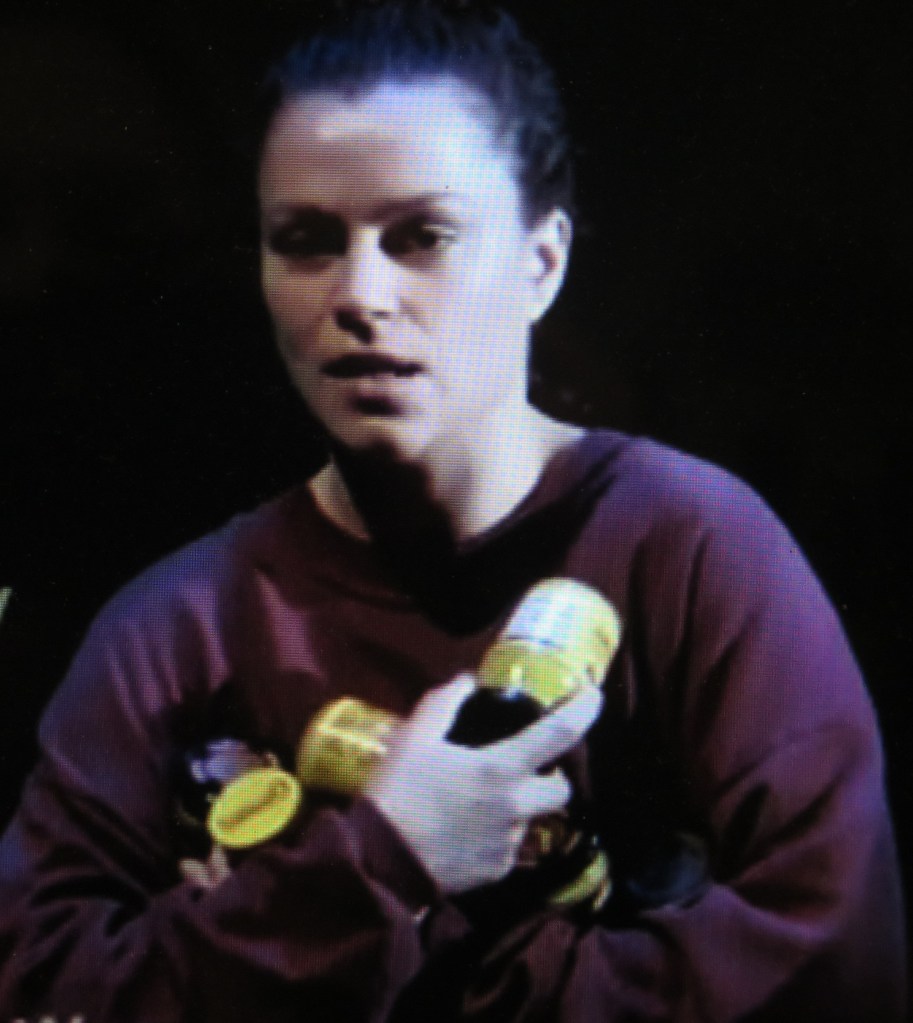
What E discovers about herself is her ability to maximize self-loathing. As she reflects back on the relationship, she encounters her stifling obsession for the cyclist who demeans her with a series of annihilating events. The humiliation and embarrassment of her dead-on emotional suffocation and idolatry of him as her “love” object consumes her. And, it renders her immobile in an acute depression which she endures by returning home to mom. Vying between want and repulsion because she allowed the cyclist (a Brit) to redefine her being, she realizes she crafted this eternal fire of “love” for him into a weapon of emotional self-destruction.
Her only release is “mustard.” How she employs the condiment to salve her soul, psyche and physical yearning becomes an active segment of E’s account. We watch fascinated as she sets the stage for the moment of maximum catharsis and pain, curious about how all of the various props she has brought with her, a bucket, a clothesline, etc. figure into the context of her explaining the “love” affair with this “guy” whom she’s lived with for almost a year.

O’Connor performs the characters of E, her evangelical mother and her English sometime lover with personality and spot-on revelation. Her relationship with her mother is humorously delivered with Irish accent and gesturing. Her adoration of the cyclist and her final answer to his effrontery, slaughtering her soul, is disclosed in heady wonder. Over all, O’Connor’s dialogue, descriptions, infusions of rhythmic language and unique interplay of the characters is beautiful, lush, unique and thrilling. For anyone who has experienced a similar stripping down to raw nerve by a “love interest,” this is a must see. O’Connor and her character’s emotionally mad ride are unforgettable.
After twenty minutes of viewing, it is obvious why O’Connor won awards for her play, incisively and excellently directed by Hildegard Ryan. Once again Fishamble: The New Play Company proves itself to be on the cutting edge of drama and comedy that is significant, as it expresses the depths of human emotion and feeling with dramatic ardor and vitality.
You can still see the last week of the 2021 Origin 1st Irish Theatre Festival by going to their website to view the calendar of events; these end on January 31st. For tickets to plays and the calendar of events CLICK HERE. For tickets to Mustard whose last performances are on Wednesday, 27th January at 8 pm and Sunday, 31st of January at 2 pm, click on this link. CLICK HERE for MUSTARD. You’ll be glad you did.
Raindance Film Festival Review: ‘Everybody Flies’
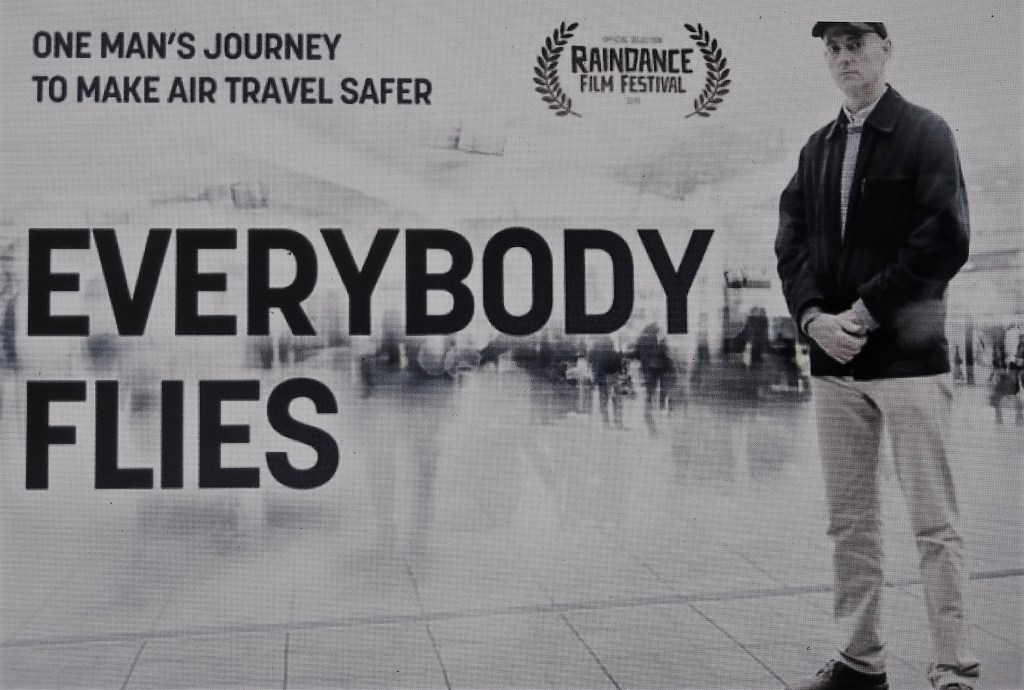
Before the pandemic how many times a year did you fly on a commercial airline? Did you ever smell anything in the ambient air during the flight? If you did, was the smell like stinky feet?
Tristan Lorraine, former Airline Captain directed and wrote the documentary Everybody Flies, presented by Fact Not Fiction Films. The documentary highlights an explosive revelation about something we take for granted on flights because we trust the aviation industry, the FAA and airline companies to build flight worthy aircraft that will not crash. Indeed, statistics have proven that flying is safer than driving. But is it?
If we examine the interior of planes and specifically the environment within the cabin, we must reconsider airline safety. After seeing Lorraine’s film, one may think twice about getting on an older aircraft of an airline company that has recorded toxic fume events which are highly dangerous and have led to debilitating physical conditions for those who were not only passengers but especially for the flight crews who over time suffer from the cumulative effects of breathing toxic air.
An aircraft toxic fume event occurs when bleed air used for cabin pressurization and air conditioning in a pressurized aircraft is contaminated by fluids such as engine oil, hydraulic fluid, anti-icing fluid, and other potentially hazardous chemicals which are carcinogenic and also cause nerve damage. Some events are visible and all are aware of the smoky, misty air which smells like what it is, air contaminated by dangerous substances. But other times the toxic molecules are invisible, not apprehended by the passengers or crew. Nevertheless, if one checks for these substances by testing the furniture, walls and other surfaces in the cabin interior, their residue is present, indicating the air is contaminated microscopically.
Using longitudinal research over eighteen years compiling videos of comprehensive eye-witness testimony, factual scientific data and evidence about toxic bleed air, Lorraine makes the inexorable case that not only does poisonous air waft into plane cabins, that air causes severe physical and mental damage to victims who suffer after fume events from the harmful chemicals they inhaled. In one instance Lorraine interviews a pilot. He became paralyzed and couldn’t move his arms. But for the co-pilot the plane might have crashed.
The specific chemical pollutant which Lorraine discovered in the leaking oil that is most devastating is tricresyl phosphate (TCP). Though at one time the air filtration systems and compressors not connected to engines prevented toxic chemicals from entering the air supply, those systems were abandoned. Instead, the current system which is subject to engine oil leak bleeds and toxic cabin air is present on every plane, If there is an engine oil leak, despite Hepa filters, invisible molecules infiltrate the air conditioning and invade the passengers’ and crew members’ lungs.
Interestingly, Hepa filters can strain out virus molecules; so COVID-19 can’t be spread easily on planes. However, Hepa filters do not strain out the smaller molecules in TCP. Although fume events don’t happen regularly because they are a function of a number of problems occurring together, minor events are more prevalent. It is these that have a cumulative effect on frequent flyers, flight crews and those who travel more during the year than those passengers who fly once every four to five years.
Lorraine’s interviews with airline staff and passengers are spot-on. Because Lorraine experienced a toxic fume event which ended his career, he knows which questions to ask and which to use to follow up for specific noteworthy details. Ironically, until doctors eventually identified the cause of the poisonings in former airline staff who were perplexed by their physical suffering, the air quality issues on planes were diminished by regulating agencies in collusion with airline companies and manufacturers. Air quality problems were dismissed and “company men” using a “banality of evil” modus operandi compared the air quality in planes to that in home kitchens and other benign environments.
Lorraine proves to be thorough in his investigations to smack down the lies of the airline industry which is more concerned about profit than the people on their flights. With a toxicity monitoring device Lorraine measures the air quality in various places from his kitchen to a London street to an airplane cabin. By comparison the cabin’s toxicity numbers were astronomical, proving the regulators and companies cannot to be trusted to have their clients best interests or welfare at heart. Of course, holding to account airline companies, chemical manufacturers, the FAA and other agencies who regulate the use of such chemicals has been difficult. Not only have airlines been in collusion with the FAA, etc., they have stalked and investigated litigants who sued them after toxic fume events, as Lorraine revealed in interview video clips with toxic fume event sufferers.

According to the research accomplished for the film the Federal Aviation Administration identified “204 fume events recorded in its ‘Service Difficulty Reports’ (SDR) database since October.” Recently, there have been notable events, one including Spirit Airlines in 2018. A “noxious, burning odor” caused a Spirit Airline plane to make an emergency landing July 27th 2018. The flight was diverted to Myrtle Beach International Airport in South Carolina after passengers identified the fumes and subsequently were treated for headaches, nausea and difficulty breathing. No one swabbed down the plane to check for a residue of chemicals. They should have.
Interestingly, there was no hazardous material found on the plane. Nevertheless, the 220 people on board had breathed in and filtered through their lungs and into their blood streams poisonous molecules. Passenger Mary Vincent Randall filed a lawsuit in Manhattan Supreme Court about the smell which caused her “serious and permanent injuries.” Hopefully, her litigation will be successful.
Lorraine points out that lawsuits for damages because of toxic fume events can go on for years and end up costing the litigants thousands. The companies have lawyers on retainer and are willing to spend the money to bankrupt them in order to make the litigant “go away.” Averse to negative publicity, airline companies will move heaven and earth to prevent “bad press” from tarnishing what they have promoted as a safe mode of travel. This is why the truth has not gotten out to the flying public who, when they find out and it hits critical mass, will force the industry to make corrections insuring there is safe air on all planes.
Until then, the airline industry’s reprobate, negligent behaviors persist. Lorraine points out the horrific irony of this. The problem could be solved with filters more effective than Hepa filters to prevent contaminants from entering the cabin via bleed air. And the FAA and regulators could mandate all airline companies change the air systems on planes so that the air filtration systems and compressors are not connected to engines.
Lorraine has devoted years of his life to provoke all those in the industry to make airplanes as safe as their reputations say they are. With his hard work as evidenced in this film to alert the public, and with the efforts of the unions as attention is brought to the issue, change is happening, though it is slow.
Most importantly, Lorraine’s whistleblowing reminds us that the airline industry is more concerned about profits than people and that is why some consider the solutions to fix the problem too onerous to do anything about. On the flip side Lorraine shows that other companies are making effective changes by using different air filtration systems which actually are not more costly. He highlights that the Boeing 787 is one such plane that has a safer air filtration system. Additionally, using a stronger, more efficient filter that locks out the toxic molecules would make a great difference in preventing the hazards of toxic fume events in cabin air.
Lorraine’s documentary is a wake up call for the public. We must be aware of the potential catastrophe of the possibility of toxic fume events to petition congressional representatives. Above all we must show continued, fervent support for airline industry unions as they endeavor to make cabin air safe. Considering that before the pandemic, millions of people were flying every day, and now the numbers are millions fewer, the hiatus has some positive consideration for passengers and crew who are on international long hour flights not experiencing toxic fume events simply by not flying. For the longer one is on a plane with invisible contaminated air molecules, the greater the physical harm. In relaying the information Lorraine’s message is clear with credible and frightening documentation as we see ourselves in the shoes of those witnesses who have suffered from toxic air poisoning.
Everybody Flies is a must see film, especially if you are a frequent flyer. The airline industry must be held accountable. The changes which will insure safe cabins along with comfortable flights must become a universal, global mandate. Lorraine’s documentary goes a long way in helping to make this possible.
 CAROLE DI TOSTI