Blog Archives
‘Becky Shaw’ Brilliant Acting, in a Mind-blowng Play
Becky Shaw is titled for the female character who shows up one-third of the way into the play written by two-time Pulitzer Prize finalist Gina Gionfriddo. The character Becky Shaw is the linchpin that sets the hellish interactions in motion as the wheel goes round in this profoundly drawn comedy of dark complications. When the pieces of the puzzle fit at the conclusion revealing who the play is actually about, the revelation shatters. Perhaps the adage people are hell (a theme of Jean Paul Sarte’s No Exit) has validity here. For by the conclusion we certainly see the hell continuing into the future of all the characters Gionfriddo sets in motion in her tight, sardonic, superbly woven comedy. Smartly directed with pace by Trip Cullman, the Broadway premiere of Becky Shaw currently runs at the Helen Hays Theater through June 14, 2026.
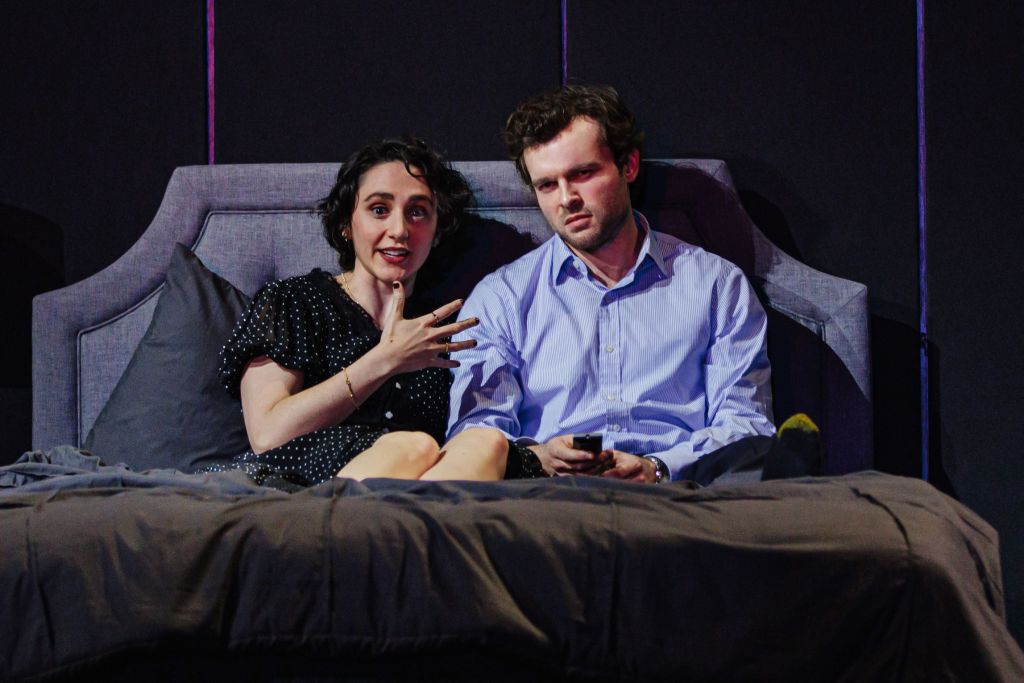
We expect the opposite of darkness at the top of the play as Gionfriddo brightly introduces us to the sharp retorts and humorous thrust and parry between family/friends Suzanna (Lauren Patten), a psychology grad student and Max (Alden Ehrenreich), a money manager handling her recently deceased father’s estate. It turns out these two have been like family for over twenty years for Max was adopted by her father. So they grew up together and know each other’s insides and outsides and count on each other in a symbiotic way for emotional support and purposefulness. Max runs interference for Suzanna, helping her with her imperious, controlling mother Susan (Linda Emond), who, to Suzanna’s disgust, has taken up with a younger opportunistic man because she has money and needs him emotionally, sexually and psychologically.
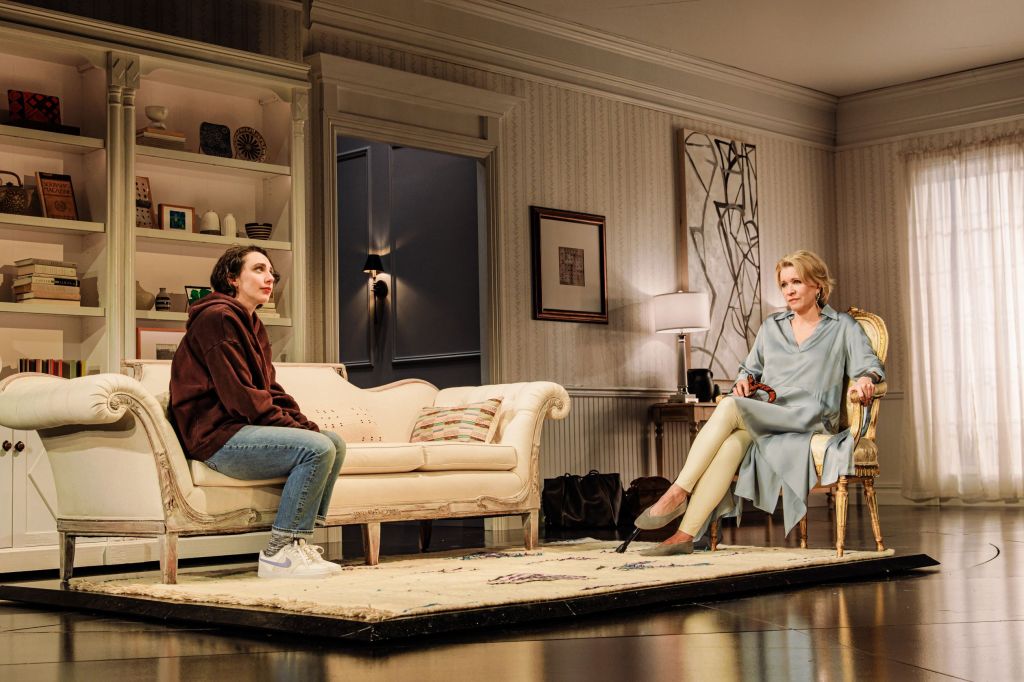
During Suzanna’s and Max’s discussion of Susan, her man and the family’s dwindling finances, we understand how domineering, remote and unavailable Susan is when she drops by Suzanna’s room to talk to her daughter and Max. After her snide remarks to Suzanna, Susan makes her demands known, ignores Max’s explanation why funds had been siphoned from the family business by their accountant, and leaves after stating she will be taking Lester with her to dinner and everywhere else, especially her bed. Bereft at losing her father though he passed four months ago, Suzanna turns to Max for comfort. And he is there for her in a way he never was before, assuring her it will not change their relationship.
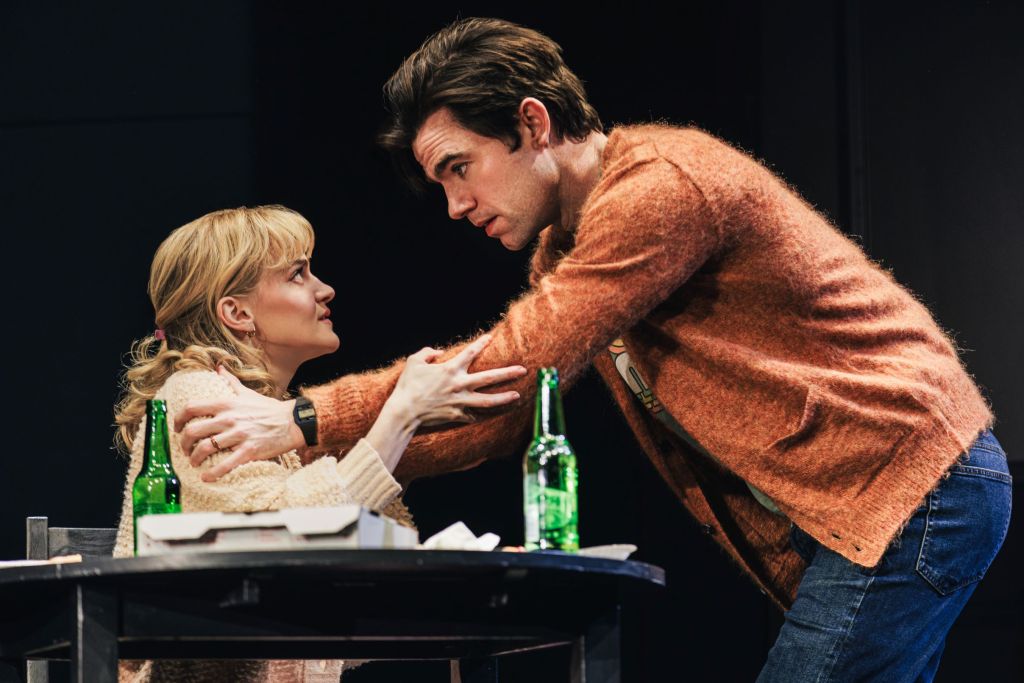
Because of their close family dynamic, Max’s comedic, ironic responses as the wiser person and Suzanna’s dependence on him, though there is only one year difference in age, sets up the next step into intimacy. This doesn’t surprise and seems natural when Max assures Suzanna sex is not as she suggests “epic,” and it doesn’t have to change anything as they make love. Unexpectedly, the stage crew upends Max who initially watches with surprise then helps them as they move in tables and chairs and rearrange the room (David Zinn’s excellent, symbolic design displaying Cullman’s insightful vision.). Max exits following Suzanna as the former hotel room in New York City becomes Suzanna’s apartment in Rhode Island, months later. Strangely during the set up, a skier in a jazzy, hot outfit zooms across the stage. In the next scene we understand this transition.
The scene opens into a modest apartment with the same dark walls as the hotel room reflecting the lack of prosperity and luxury because of the family’s diminishing finances. However, we expect to see Suzanna and Max follow up their new found intimacy in better digs since Max has money, but that’s not the case. Gionfriddo effects a bend in the characters’ journeys when we note Suzanna has a new man whom she met on the ski slopes. In a whirl wind romance, she marries the younger office worker and unproven writer Andrew (Patrick Ball), on the rebound from Max and mourning her father’s death. Andrew manages to distract her, somewhat, but thing have indeed upended from Max and Suzanna’s sexual encounter which was “epic,” after all.
Suzanna’s needy personality forces her to move from the familiar Max who loves her but hesitates, to Andrew, whose kindness and savior complex propels her with little thought to permanently coupling. This marriage to someone she doesn’t know opens the door to Becky Shaw (Madeline Brewer), Andrew’s co-worker, a college drop-out though obviously smart. Down on her luck, with little money, no car and the desperation to prove herself less of a loser at thirty-five because of bad life choices, Becky Shaw manipulates others with an eerie, savvy, innocence.
Andrew’s savior complex draws him to needy women like a dog to bacon, so he listens to Becky’s problems. With Max nearby in Boston on business, Suzanna and Andrew arrange a double date with independent, prosperous Max and the needy, pretty Becky. Knowing the sardonic, Max as intimately as she does, with his no nonsense snarkiness and duty-bound obligation to her mother, we wonder how Suzanna could set Max up after their intimacy. Additionally, how could she agree to Andrew’s co-worker who is more Andrew’s equal than Max’s? Without thought Andrew and Suzanna agree to this date for Becky and Max clearly for their own ulterior reasons whether they realize it or not. Max’s hilarious, blunt comment about Becky’s dress (Kate Voyce’s costumes) dials up the initial introductions to tense, though Suzanna and Andrew front for her. But the double date fizzles because of a complication with Susan. So Becky and Max go out on a town Max doesn’t know and Becky can’t afford.
Gionfriddo’s characterizations are incredibly rich, nuanced and perceptive. Humorously apparent are the foibles of people trying to extricate themselves from emotional mine fields while endangering themselves the more they attempt escape. And so it goes for the men who fall prey to Becky Shaw’s steely velvet machiavellian femininity and Suzanna’s hapless fear of being alone.
The introduction of Becky Shaw into the family dynamic brings another turning point. Becky’s smarmy desperation has found new, welcome ground upon which to seed itself. Cleverly, she mines an unfortunate incident that happens on their dinner date, which she exploits as an irresistible damsel in distress who needs salvation twice. One salvation is from the upsetting incident which she believes Max mishandled. The second is from inconsiderate Max who is not particularly empathetic or responsive to her charms to answer her numerous phone calls and soothe her soul. With his behavior as proof that she is a loser, her desperation sends her to the brink. She must be rescued from her misery, and the white knight to do it is Andrew, who feels guilty for introducing her to Max and is thus responsible to help her get over her distress and impulse to self-harm.
Meanwhile, when Suzanna’s fear of losing Andrew to Becky manifests, she involves Max. She chides him for Andrew’s sake and on Becky’s request. The mounting chaos erupts like a volcano. It will take someone of Susan’s ironic gravitas and queenly stature to “save the day.” With her threat to Suzanna that Andrew may cheat on her, to allowing Becky to wait at the house instead of at the train station so she can be around Max, Susan encourages the same dependency, fear and desperation she feels with Lester to be unleashed on Max and Suzanna via the subtle machinations of Becky and Andrew. For future entertainment to assuage her chronic illness, Susan will referee and make presumptuous determinations about the two couples.
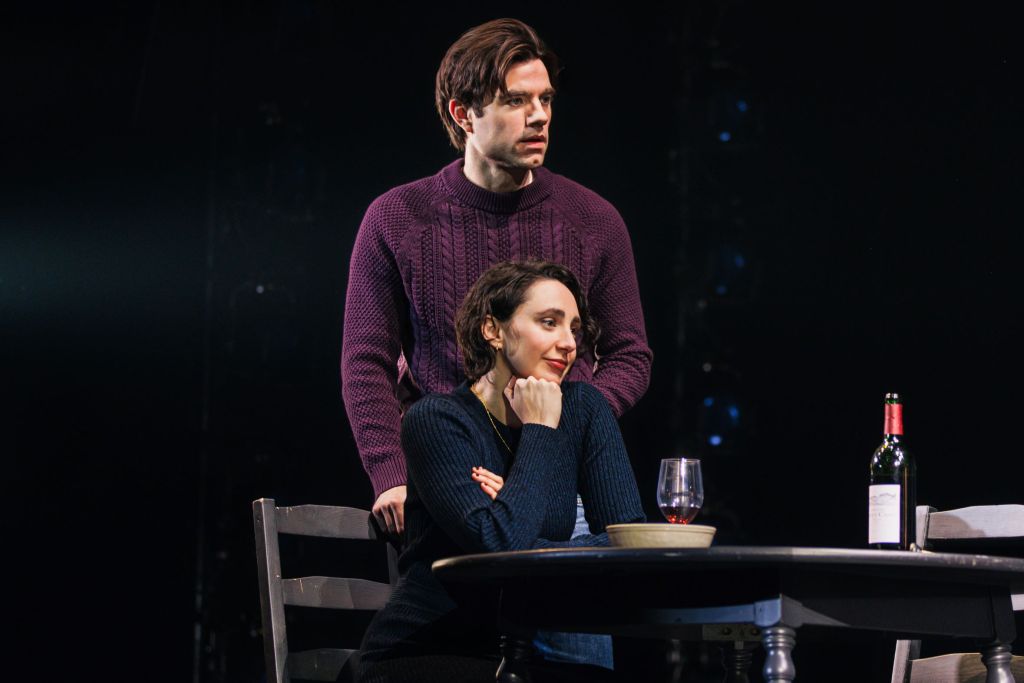
If not for the exceptional ensemble, and perfect timing of one liners and Cullman’s expert shepherding of the actors, Gionfriddo’s work would not soar into the heavens as it does. Cullman’s vision, especially the changing of scenes (Stacy Derosier’s lighting and M.L.Dogg’s sound design) conveys themes and symbolism. The contrast between the darkness of the city hotel rooms and the couple’s apartment against the creme colored beige decor and appointments of Susan’s upscale house in Richmond, Virginia reminds us of the safety and security of wealth even on the downhill slide to someone like Becky who is on the edge of poverty.
Financial problems create desperate individuals who prey upon those with money. The irony at the conclusion is that Max has the wealth and holds the cards, but he becomes the most vulnerable to be exploited, not only financially but psychically. Alden Ehrenreich gives an amazing portrayal of a character who we feel has the most to lose. Predators Becky and Andrew will bind up Max and Suzanna with each manipulation, demand and velvet gloves of domination, as Susan watches and criticizes. What we’ve seen is only the beginning.
Becky Shaw runs 2 hours 25 minutes through June 14 at the Helen Hayes Theater. 2st.com.

